European Journal of Physical Education and Sport Science
ISSN: 2501 - 1235 ISSN-L: 2501 - 1235 Available on-line at: www.oapub.org/edu
doi: 10.5281/zenodo.3748022 Volume 6 │ Issue 3 │ 2020
RESEARCH REVIEW FOR
THE PRESENCE OF PHYSICAL LITERACY IN THE WORLD
Alta Thermou, Vassiliki Rigai
Department of Educational Sciences and Early Childhood Education, University of Patras, Rio Patras, Greece
Abstract:
The concept of Physical Literacy was reinvigorated twenty-five years ago by M. Whitehead and has since gained an ever broader ground in all continents. It essentially
describes a human activity of great importance, the individuals’ embodied ability to
maintain their movement throughout the life course in order to enhance their quality of
life. Because physical literacy was associated with various aspects of an individual’s life
and with all ages, numerous groups around the world adopted its objectives and principles, specific policies were developed and programmes were implemented for its promotion, while books were written and several scientific articles were published on the subject. The purpose of this study was to review the research literature to establish what is currently known about the extent to which Physical Literacy has been achieved in all countries. It specifically studies which countries implemented physical literacy programmes and promotion policies, what results these brought, who they were targeted at, and who were responsible for their implementation. The study also investigates whether the assessment/measurement of physical literacy is possible and necessary, as well as which other areas of life and knowledge it can be associated with. A systematic collection and review of papers related to Physical Literacy was chosen by searching databases and the worldwide web. Their content was then systematically analysed with the content analysis method. NVivo12 qualitative data analysis software was used as a tool for codifying and analysing collected data. Research data indicate an increased interest in the concept of physical literacy, its implementation and advancement globally, mostly in Canada and the United Kingdom. The policies proposed in most countries are mostly associated with the field of education and least associated with sports, recreation or public health. A variety of programmes were found, mostly related with childhood, while the shortage of programmes focused on adults is registered as a great gap in the course of consolidating physical literacy. The non-linear nature of the concept requires
rejection of conventional assessment methods and adoption of a combination of qualitative and quantitative methods for the evaluation of interventions. However, the term still seems to be unclear, many times resulting in its confusion with other similar concepts. Studies focusing on the results of physical literacy programmes are long-term
and this is why a lot of them are still in progress. People’s awareness and mobilisation in this specific field nevertheless signal an encouraging sign for the future and for having healthier societies.
Keywords: physical literacy, physical education, embodied dimension, systematic research review, content analysis
1. Introduction
The notion of Physical Literacy (PL) was reinvigorated in 1993 by Margaret Whitehead at the International Association of Physical Education and Sport for Girls and Women
Congress in Melbourne, Australia, describing it as ‘a human capability with considerable
significance and philosophical support’ (Whitehead, 2013: 25). Although PL can be tracked back to the early 1900’s (Corbin, 2016), Whitehead provided a much clearer
definition and theoretical positioning of PL. Its holistic conceptualisations offered the
potential to capture the complexity of society’s propensity to fail to maintain a lifetime of
physical activity. As result the notion of PL has become more widely used in the last few years and was received as an issue of great significance or even as a potential panacea for the ongoing lack of physical activity embedded in large proportions of Western Society. According to Len Almond (2010), it stresses the failure of our societies and prevention policies to manage the complex issue of internalising the value of physical exercise and treating it as a priority for the well-being and enrichment of people’s lives. Unsuccessful
prevention policies are also demonstrated by World Health Organisation data which stress that the continuously rising sedentary-life behaviors among the young cause a rapid increase in the risk factors for their health (WHO, 2002). The previous findings are further advocated by a considerable increase in overweight and obese persons in the last three to four decades (Gately, 2010), which stresses the need for immediate action both at a global and personal level.
This distressing picture and the lack of any perspective for its direct reversal prompted Margaret Whitehead to reflect on those philosophical schools that attribute to the individuals’ movement and embodied dimension a great value for their life, and urged her coin the term ‘Physical Literacy’ (Whitehead, 2013). Thus, the philosophical
origins of the term come from the representatives of existentialism and phenomenology, such as Sartre and Merleau–Ponty, who –by rejecting the principles of dualism–
capabilities (Whitehead, 2008). At the same time, PL acknowledges the individuals’
capacity to have a productive and contented embodied interaction with the world since
individuals are ‘beings–in–the–world’ (Whitehead, 2008: 285) and they are shaped
through their interaction with the world.
Briefly, then, the term of PL is defined as the motivation, confidence, physical competence, knowledge and understanding to maintain physical activity throughout the life course in order to lead a quality life (Whitehead, 2010a: 5). PL is not an alternative meaning of physical education, nor is it in competition with it, because physical education is a subject area of the curriculum, whereas PL is a target of physical education but instead of relying on the curriculum only, it concerns the whole life of the individual. In order to acquire PL we need to view it as an ongoing process dependant on the
individual’s interests and capabilities (Roetert & MacDonald, 2015), a journey rather than
a destination (Whitehead, 2010b). The key, therefore, for its understanding is found in recognising movement as a fundamental dimension of human existence and a necessary element for good health and utilisation of life to its fullest (Edwards et al., 2017).
In the course of its twenty-five years of presence in current international bibliography, the term of PL has sparked interest in various countries around the world and conquered all of the continents. Books have been written, studies have been conducted, its supporters have increased, and political decisions have been taken. Even the International Physical Literacy Association (IPLA) was established in 2014 with the principal aim of promoting PL all over the world. The greatest interest has been shown in North America (Canada and the USA), as well as in Europe (United Kingdom, Netherlands, Malta), Africa, Asia and Oceania (Australia and New Zealand), revealing that PL is no longer an idea of the United Kingdom only, where it was first proposed, but instead transcends continents, cultures and populations (Durden–Myers, Green, & Whitehead, 2018).
The purpose of this study was to review the research literature to establish what is currently known about the extent to which PL has been achieved in all countries, and especially:
• Which policies and what programmes were developed internationally to promote PL and which countries made the most systematic attempts in that direction? • Which groups are targeted by the implementation of PL and who are responsible
for its promotion and implementation?
• How is PL reinforced in practice and what are the results of interventions aimed at its promotion?
• Is any assessment/measurement of PL possible and what tools should be used? • Which other aspects of life has PL been associated with?
• Has PL as a term remained consistent until today with the philosophy and origins which Whitehead herself had founded it on from the beginning?
2. Material and Methods
For the investigation of the study questions the method of systematic review of the literature on PL was chosen and the review was conducted using electronic databases (Scopus, NCBI, Heal-link, PubMed, CrossMark, Google Scholar), together with manually searching relevant papers. After the specification of basic criteria for selecting appropriate texts (papers published up to the end of 2018 in English or in Greek in scientific journals or in conference proceedings) came an in-depth research into the bibliography using the term ‘physical literacy’ as keywords. The process of review and
of the subsequent creation of basic conceptual categories was concluded with data recording, analysis and result interpretation.
At the data analysis stage, the frequency of occurrences of each subject matter was identified, and the content was codified and organised in groups based on the research questions. At first the original categories were created and after the review of scientific articles and PL-related bibliography the following final categories and subcategories were formed in order to codify the material:
(1) PL implementations
(a) Countries (USA, Canada, Venezuela, Great Britain, Wales, Scotland, Northern Ireland, Malta, Czech Republic, Holland, Australia and New Zealand).
(b)Programmes.
(c) Assessment (Necessity, Tools, Assessment forms, Framework, Limitations). (d)Instructors (Physical education instructors, Mainstream educators).
(e) Extensions.
(f) Results (PL reinforcement factors, Intervention results, Different approaches to PL).
(g)Target groups (Minors, Adults, Special needs individuals). (2) Similar concepts.
The qualitative research software NVivo 12 was a valuable tool in the content analysis of material during the process of codification, creation of sets and links, search with queries, presentation with models, storage and verification of material.
3. Results and Discussion
For the purpose of the study 170 scientific articles (some 1700 pages) on PL were studied; their publication date in scientific journals was up to the end of 2018. Of the total number of articles selected, 45 were about school-age children, 30 articles on PL in early years (0–
5), eight on young age-adolescence, two on adults-elders, and two articles on children with special educational needs.
3.1 Implementation countries and programmes
than one country. Nine of them are about Canada, eight about the USA, eight about Great Britain, six about Australia, five about New Zealand, five about Northern Ireland, four about Scotland, four about Wales, two each about Sweden, Holland, and Venezuela, and finally one article each about the Czech Republic, Malta, and Africa.
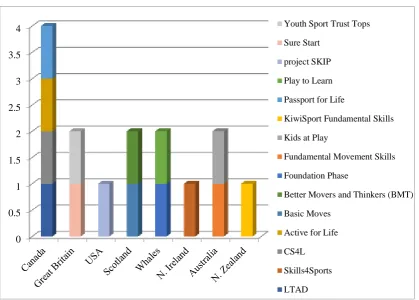
Out of a total of 15 programmes for PL promotion implemented (Figure 1), Canada ranks first with four programmes, followed by Great Britain, Scotland, Wales and Australia with two programmes each and, finally, the USA, Northern Ireland and New Zealand with one programme each.
Figure 1: PL programmes by country
One of Canada’s best known programmes is Long Term Athletic Development (LTAD), which is the framework programme for all Canada’s National Athletic
Organisations for the promotion of PL to individuals throughout their lives. It is addressed to both high performance sportspeople and lay people who want to participate in exercise for recreation and the benefits to their health (Corbin, 2016). Another programme, the Canadian Sport for Life(CS4L), is structured around Whitehead’s thinking
for the concept of PL and organised depending on the three age stages of children (Keegan et al., 2013). The programme titled Passport for Life advances the awareness, assessment, development and progress of PL among students and educators. Finally, the Active for Life programme is aimed at assisting parents who support their children to conquer the proposed levels of daily exercise (Spengler, 2015).
In Great Britain, the organisation Youth Sport Trust has created various programmes (TOPS programmes) aimed at forming physically literate, and therefore healthy individuals, and has developed connections with the rest of Europe, Asia, Russia
0 0.5 1 1.5 2 2.5 3 3.5
4 Youth Sport Trust Tops
Sure Start project SKIP Play to Learn Passport for Life
KiwiSport Fundamental Skills Kids at Play
Fundamental Movement Skills Foundation Phase
Better Movers and Thinkers (BMT) Basic Moves
and Africa (Keegan et al., 2013). Also, the British Government launched the Sure Start programme targeted at downgraded and low-income populations and funds the Sport England organisation which supports PL-based initiatives (Spengler, 2015).
The Play to Learn programme is implemented in Wales in order to drive teachers
to incorporate PL principles in their instruction. Although it is not focused only on PL, it promotes the development of motor skills, problem solving, motivation and self-confidence (Rainer & Davies, 2013). Also, in 2008 Wales put into action a holistic system based on play, in order to develop PL in children aged 3–7, which was called Foundation
Phase (Spengler, 2015). This system places the child at the very heart of the programme
and its holistic character promoted embodied interaction with the environment in all fields, therefore laying the foundations for PL (Wainwright, 2013). Furthermore, in 2012 the Welsh Government launched a group titled Schools and Physical Activity Task and Finish Group (SPATAF) in an effort to ensure that PL has become an indispensable part of physical education and an evolving skill equally important to writing and reading (Rainer & Davies, 2013).
In Scotland two are the major programmes developed for PL. The first one is Basic
Moves created by the University of Edinburgh and established on the belief that children
should be offered a multitude of learning opportunities for a long period of time and by a lot of adults, knowledgeable of the subject, in order for them to succeed in acquiring the required skills (Keegan et al., 2013). Better Movers and Thinkers (BMT) is the second programme aimed at developing PL by paying attention to motor and cognitive abilities in order for the children to be able to move and think in an upgraded manner.
One of the PL programmes in Australia is Fundamental Movement Skills (FMS), which was later used by Great Britain and Northern Ireland. Also, the Kids at Play programme is for children at birth age to five years old, which generally focuses on healthy nutrition, breast-feeding, and active playing.
PL in Northern Ireland is promoted by governmental bodies through their strategies, policies and programmes (Spengler, 2015). For instance, the Skills4Sport (S4S) programme is aimed at developing motor and athletic skills in young people which will lead them to a long-term commitment to physical activity and sports (Keegan et al., 2013). An example of good practices is the institution of PL coordinators in Northern Ireland schools aimed at implementing PL in the school environment by the foundation of the network of Active Schools Partnerships (McKee et al., 2013).
PL in New Zealand has been equated to fundamental motor skills like running, jumping and throwing (Almond, 2013). The major programme is Kiwi Sport, which is a government-funded initiative concerned primarily with child-centered athletic activities. Later this programme was expanded to Kiwi Sport Fundamental Skills, which aims at the acquisition of all the necessary skills by children in order to be helped to succeed in
sports. Also, the manual ‘Developing Fundamental Movement Skills՚ was written as an aid to those teachers, trainers, parents and others who wished to promote the motor skills of children aged 5–12 in a playful mode (Keegan et al., 2013).
object control skills, providing personalised, differentiated guidance. Its activities and feedback comply with the developmental stage of each child, which is key for motivation and self-confidence (Goodway et al., 2013). It is worth mentioning that many academics in South America, in Venezuela, refuse to adopt the term of PL. Although the term itself is not used, the educational system of Venezuela has objectives and a vision which are
consistent with PL (Lopez de D’Amico, 2013).
Research studies performed in Malta, the Czech Republic, Sweden, and Holland do not report implementation of any specific programmes for PL promotion.
Finally, only ten out of the 170 analysed articles propose the adoption of specific policies by countries for the promotion of PL and the majority of them concerns mostly changes in education (9/10), while scarce references are made to community and sports policies (2/10). Only one reference was found to recommended policies in the sectors of public health, recreation and the media (1/10).
3.2 Target groups and implementation agencies
PL is addressed to children in the whole age range, including children with special educational needs as well as adults. The research studies collected dealt in their majority with children in their preschool and school years. More specifically, out of the seven studies found about the subject of implemented PL programmes, five examined the effects of these programmes on the motor skills of children at school age compared to those of traditional curricula. Just one study was found to examine the way that individuals with special needs understand the term of PL and demonstrates the existence of vagueness around this concept.
Adults seem to lag behind in PL, although it has repeatedly been emphasised that PL engages all ages and is a lifelong journey. During this study only one programme was found about adults and elders, which was developed in Canada, but its name is not explicitly mentioned.
Research data on the promoting agents undertaking to promote PL came completely from research conducted in Canada and underscore disagreement on the promoting agents. In some Canadian States mainstream educators have undertaken to promote PL, while in other states it is the role of physical educators. In particular, only about 40% of elementary schools in Canada hire physical educators, in contrast with secondary education where hirings are more (Stanec & Murray–Orr, 2011).
While research data illustrate that the two sorts of educators show no large differences in their understanding of the term, the difference in their understanding appeared to be connected to their years of service. Those who had up to 15 years of service understood the concept of PL better compared to those with 16–30 years of service. The study has demonstrated that this may be due to the fact that the latest education programmes for Canadian educators include PL so younger teachers are better acquainted with the term (Stoddart & Humbert, 2017).
(Stoddart & Humbert, 2017). Furthermore, no studies were found in this category either as to the role of the community in developing PL.
3.3 Intervention outcomes
Regarding the results of interventions aimed at the promotion of PL, numerous studies are listed. As an example, the implementation of the Successful Kinesthetic Instruction for Preschoolers (SKIP) programme in preschoolers with motor delay in the States showed that the provision of well-structured instructions for motor skills, the opportunities for exercise, adequate equipment and the personalisation of activities bring significant improvements in the fundamental motor skills and restore children’s delays (Goodway,
Crowe, & Ward, 2003). Positive and very promising seem to be the results of implemented programmes like BMT in Scotland (Dowens, Dalziell, & French, 2013) and FMS in Australia, (McKee et al., 2013), but studies of a wider scale are still in progress.
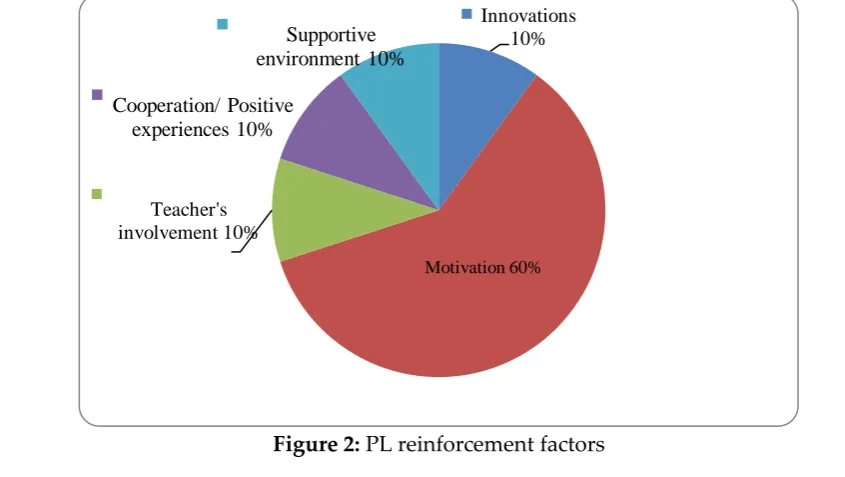
The majority of studies found on the reinforcing factors of PL in practice are focused on the connection of student motivation for commitment to exercise with supportive teaching (Figure 2). This includes teachers’ support and interest in the students’ problems and wants, organisation before the learning process, the students’
being informed about the content and the structure of the lesson, organisation during the learning process, the teachers’ explanation of the rationale of the work, and support which takes into account the students’ viewpoint (Haerens et al., 2013; Reeve et al., 2002;
Reeve & Jang, 2006; Reeve, 2009; Vansteenkiste et al., 2004). In addition, collaborative learning and individualised instruction maximise the outcomes of the process, because
they take into account the individuals’ social and psychological factors and place
motivation in the heart of PL implementation (Myers, 2013). Some further factors include the supportive climate maintained by the instructor in the school class and rewards (Bannon, 2013), cooperation and the positive experiences earned by the children (Patriksson & Persson, 2013), the use of innovations (Penney, Clarke, & Kinchin, 2002, as quoted in Hastie & Wallhead, 2015: 137), and the teacher’s participation (Conlin, 2013).
Figure 2: PL reinforcement factors
Innovations 10%
Motivation 60%
Teacher's involvement 10% Cooperation/ Positive
experiences 10%
3.4 PL Assessment/Measurement
As regards the research issue of PL assessment/measurement which is a critical subject, the studies in their majority (81%) consider the necessity of and ability to assess PL as positive, compared to only 19% which maintain that PL is a concept impossible to measure. Two are the main methods used to assess/measure PL: qualitative and quantitative research methods. Qualitative methods offered the possibility to assess primarily the cognitive and emotional part, which is affected by PL, and less the motor part of the individuals, because these methods largely rely on personal assessments and perceptions (Edwards et al., 2018).
The vast majority (88%) of studies conducted with the application of quantitative methods of assessment/measurement appears not to be founded on the philosophical tendencies of phenomenology, existentialism and monism or at least they do not declare so manifestly (Edwards et al., 2018). A constraint in quantitative measurement is timing of tests, which does not allow for capturing the quality of movement at a given moment. Furthermore, it may cause a competitive setting if applied wrongly, which is in conflict with the philosophical background and the holistic dimension of the concept of PL. Nevertheless, its advantages include the required low cost and limited time, undemanding management of data, the possibility to administer tests in a variety of
settings, and the convenient assessment of the tests’ degree of reliability and validity.
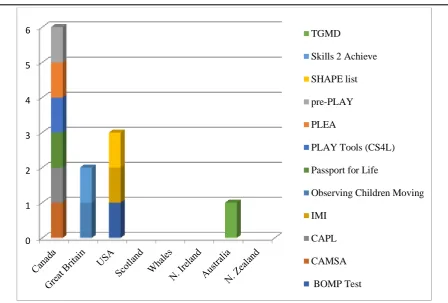
Figure 3: Assessment tools by country
More specifically, CAMSA was developed in Canada as a tool for measuring fundamental, complex and combined skills in children aged 8–12; it accurately reflects the developmental changes in motor skills through the test–retest technique (Longmuir et al., 2017). CAPL was designed as a measurement tool, an assessment manual and a
means of data collection. It includes assessment tools of the individual’s progress in all
of the main sectors of PL, such as daily activity behavior, physical competence, knowledge, understanding, motivation and confidence (Corbin, 2016; Longmuir, 2013). Passport for Life is a tool with measurements for three different age groups: 3–6, 7–9, and 10–12 years, which makes it particularly versatile. It offers an overall picture of the
children’s level of movement, their motivation, self-confidence in participation and their skills, as it focuses on their holistic development and appears to be the most appropriate
to depict the emerging picture of children’s PL at a particular time, given the fact that
both CAMSA and CAPL are mainly focused on the assessment of motor skills (Robinson & Randall, 2017). PLAY Tools is another tool for children aged seven and up, which measures their movement competence: stability, object control and transport, their motivation and confidence in remaining active, as well as how they interact with each other (Mandigo et al., 2013). Pre–PLAY Tool is for infants of 18 months up to their
preschool age, it is completed by nursery teachers and measures the infants’ movement
competences, coordinated movements, motivation and enjoyment (Cairney, 2018). Finally, PLEA is an assessment tool of programmes promoting PL, focused on their degree of success, on what is effective and what is ineffective, and whether PL boosts cooperation among different sectors (Green et al., 2018).
0 1 2 3 4 5
6 TGMD
Skills 2 Achieve
SHAPE list
pre-PLAY
PLEA
PLAY Tools (CS4L)
Passport for Life
Observing Children Moving
IMI
CAPL
CAMSA
No tool has been developed in the USA specifically for the assessment of PL only.
SHAPE America has published a list of criteria (SHAPE List) for the desired outcomes of
physical education in the psychomotor, cognitive and emotional field of elementary students. Tool Intrinsic Motivation Inventory (IMI) created by Deci and Ryan (1985, cited by Morgan, Bryant, & Diffey, 2013: 145) is also used; it contains assessment scales for measuring enjoyment, effort and abilities of individuals within the protected environment of a school class. In addition to the assessment tools mentioned above, many times assessment tests of motor capabilities are also used for measuring physical literacy, such as the Bruininks–Oseretsky Test (BOMP Test).
Tools Skills2Achieve and Observing Children Moving are two tools created in Great Britain. Skills2Achieve is addressed to teachers who are invited to answer questions about healthy, social, thinking and physical me issues, but no special emphasis is given to commitment or motivation, which makes it less relevant as an assessment tool of PL (Green et al., 2018: 4). Observing Children Moving is essentially CD content which
facilitates teachers in observing and analysing children’s movement. Its targets are to
comprehend the stages of motor development and design high-quality physical education (Delaney et al., 2008).
Assessment tool Test of Gross Motor Development–2 (TGMD) is used in Australia as a norm–referenced measure of common gross motor skills but it is not PL-specific. Finally, although no assessment tool has been developed in Greece, nevertheless a study was found which examines the validity of the Canadian tool CAMSA in children aged 8–
12 in Greece (Dania, Kaioglou, & Venetsanou, 2018).
3.5 PL association with other fields
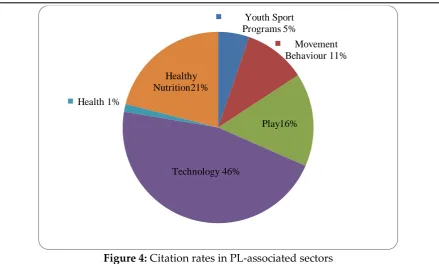
Another research question studied is related to the life aspects PL has been associated with. The study results (Figure 4) reveal that PL has primarily been associated with the use of technology, and more specifically exergames and active videogames, at a rate of 46.1% in citations in the corpus of bibliography. Other fields associated with PL are healthy diet in citations at a rate of 21.1%, as well as playing at a rate of 15.8%. In particular, a research studying the association of PL with playing revealed that free, non-structured and semi-structured playing (at a playground) can improve children’s PL. Quite
interesting is also the association of PL with the desired levels of physical behavior (meeting the physical activity guidelines) in a study conducted in Canada (Belanger et al., 2018), at a citation rate of 10.5%. Running athletic programmes for the young, in order to positively influence their development, has been associated with PL with citations at a rate of 5,2%. As Allan, Turnnidge and Côté (2017) have supported, if PL is properly
implemented, it has the potential to lead to a positive growth of the young people’s
Figure 4: Citation rates in PL-associated sectors
Regarding the evolution of the term throughout the years, it seems that many countries, like Australia, New Zealand, the Czech Republic and Holland, which had become interested and adopted the term, in the course of years interpreted it differently. PL is exclusively defined in those countries in terms of developing the individual’s
fundamental motor skills (Spengler, 2015; Hyndman & Pill, 2017). On the other hand, Canada, the United Kingdom and the USA belong to the countries which remain most
loyal to PL’s definition as expressed originally by Whitehead (Shearer et al., 2018). A more holistic approach of the term is being adopted in those countries, one that embraces the cognitive, motor and emotional fields and complies more with the original definition (Spengler, 2015).
The research data showed that there is an issue of identifying or confusing the term of PL with similar concepts like health literacy, sports literacy (Corbin, 2016) or physical education. Also, conducted studies (Tonna, 2013; Vašíčková & Hřibňák, 2013) illustrate
that a share of the people have not yet been familiarised with the term and are uncertain about what it means and what it entails. Lastly, the majority of educators have partially or minimally understood this term (Robinson, Randall, & Barrett, 2018; Stoddart & Humbert, 2017), while only a small portion of them are capable of stating its concept clearly (Stoddart & Humbert, 2017).
4. Discussion
After reviewing 170 scientific articles it is evident that during the twenty-five years following the original appearance of PL, the term constantly gains ground and various efforts have been made internationally for its promotion. As Whitehead herself mentions in her interview (Spengler, 2015), we are heading in the right direction since the term is
Youth Sport Programs 5%
Movement Behaviour 11%
Play16%
Technology 46% Health 1%
now used worldwide and numerous groups around the world have adopted the targets and principles of PL, while also attempting to integrate it in the design of their curricula. Research data showed that ventures in favor of PL have been undertaken in Europe and
North America, as well as in Australia. Literature supports that signs of the term’s
acceptance are also found in countries like South America and Asia, even though the most active countries in this field are Canada and the UK, where the term had been embraced and its importance stressed since many years ago (Roetert & Jefferies, 2014). Based on our research data, the relevant literature and Aspen Institute (Spengler, 2015), Canada has witnessed the greatest progress in the design, application and assessment of PL programmes. Canada aims at securing that every child will have become physically literate before entering adolescence (Mandigo et al., 2009).
The policies proposed in most countries are much more related with the educational sector and least with sports, recreation, public health and the community
framework, a fact which far from fully complies with PL’s target to make individuals maintain movement and participate in real exercise for life. Also, the partial assessment of the impact of PL-promotion programmes was manifested, because it relies on long-lasting studies, many of which have not yet been completed (Newport, 2013).
As regards the target groups for PL implementation, the found positive outcomes of its promotion programmes are consistent with several studies conducted mainly in preschoolers (Hastie, 2017), which have shown that after the implementation of specific
interventions considerable progress is noted in children’s competences both in gross
movement and in object control (Logan et al., 2011; Riethmuller, Jones, & Okely, 2009; Williams et al., 2008). Unfortunately, the lack of focused programmes on adults is a large gap in the course of consolidating PL. Programmes proposed for younger ages are not easily applicable to older ages because they fail to take into account the age-related
changes in the individuals’ physiology and their motor competencies (Jones et al., 2018). The need of educators for greater support and further training was also illustrated in this study both as to the ways they can include PL in their classes and their understanding of the term (Robinson, Randall, & Barrett, 2018), as well as to the ways they can support their students to that direction (Stoddart & Humbert, 2017). In one such study its results showed the close relationship between supportive teaching and motivation on the one
hand and the levels of students’ exercising in their physical education classes on the other (Haerens et al., 2013).
Despite the fact that there are large deviations in the views of which educators (physical education teachers or typical teachers) are more suitable to teach PL at school (Stanec & Murray–Orr, 2011), the promotion of PL –beyond the role of school, the state and the community– equally relies on other people too, such as parents and trainers. It is noteworthy however that while parents are the major models for movement for their children and equally responsible for the development of PL in them, they seem to know
almost nothing about the term and continue to use the terms of ‘physical exercise’ and ‘wellbeing’ exclusively, an observation which is further strengthened by the fact that no
In the field of PL assessment/measurement, use is mainly made of movement assessment battery tests which assess the general motor competence of individuals, and not necessarily their PL, such as the Bruininks–Oseretsky Test (BOMP Test), the Test of Gross Motor Development–2 (TGMD) and the Movement Assessment Battery for Children (MABC) (Delaney et al., 2008). It is worth mentioning here the belief that these tests offer insufficient information because they focus on fundamental motor competencies and overlook those motor competencies that show deep and essential knowledge of motor skills (Giblin, Collins, & Button, 2014). Also, they diverge from the definition and characteristics leading to progress in the journey of PL, which contains much more than fundamental motor skills (Whitehead, 2010b).
The abundance of assessment tools seemed to make them very difficult for the teachers to handle, because teachers are not able to know which is the most appropriate tool for their own children group and their particular teaching setting (Robinson & Randall, 2017). However, assessment of individuals based on age criteria is against the background of PL, which advocates that every individual needs to be assessed based on his/her capabilities and his/her personal starting point (Green et al., 2018). This non-linear nature of the concept calls for the abandonment of conventional assessment methods and the adoption of a combination of qualitative and quantitative methods, which will better
represent the individual’s overall progress in PL without losing the holistic character of
the concept (Edwards et al., 2018; Green et al., 2018). A proposal is to shift from plain assessment, based on vague criteria, to assessing progress made in the course of time (Masters, 2013). In fact, research data show that there is no perfect way of assessment/measurement, but each time the best possible one is applied, the one that the specific conditions and resources allow for, in the best judgment of each educator (Barnett et al., 2018). For this reason, IPLA proposes the use of the term ‘progress chart’ instead of the terms ‘assessment’, ‘measurement’ or ‘estimation’.
PL is closely associated with the field of technology. Although physical games remain the best activity for children, technology can be an alternative for some people, because it offers a secure environment for the development of fundamental motor skills and more enjoyable experiences than the exercise of the conventional curriculum or of sedentary video games (Sun & Gao, 2014). For example, improvement was recorded in
the individuals’ attitude towards exercise through exergames (George et al., 2016).
Because exergames combine exercise with playing, they can be an objective, accessible
and easy to use method of monitoring an individual’s progress to PL and their usage
outcomes can function comparatively among countries helping in the creation of a model design and application of education towards PL (Giblin, Collins, & Button, 2014).
compare different interpretations and assess the measuring efforts and intervention programmes and policies at a global level (Shearer et al., 2018).
5. Conclusion
In conclusion, the study results have highlighted that the whole venture of implementing PL is still at an early stage in many countries. With the exclusion of Canada and the UK which have established promotion policies and implemented intervention programmes for the development of PL, many countries were found to still have a rather vague understanding of this specific concept. Professionals and non-professionals, as well as trainees seem to not have fully comprehended the term, while confusion is extensively evident of the terms of PL and physical education. Also, the identification of PL with the fundamental motor competencies misses the remaining and crucial dimensions of the
concept. This leads some researchers to maintain that in essence it’s simply a different name for the same subject. Another element which makes the acceptance of the term by all difficult is that the generation of results from interventions promoting PL requires long-term studies, many of which are still in progress. However, the awareness and mobilisation of countries in this specific field is a very encouraging sign for the future and for building healthier societies.
Closing the study, its two central limitations need to be underlined in order for them to be taken into account in the future for the conduct of a pertinent systematic review of scientific articles. The first is related to the search for articles written in English (168 articles) and Greek (two articles), which limits the application range of PL in other countries. The second one concerns the search of articles in the databases that the University of Patras had access to, as well as Google search engine, while the search of bibliographical data was completed in December 2018.
Conflict of interest
Each author certifies that they have no commercial associations that might pose a conflict of interest in connection with the submitted article.
About the Authors
Alta Thermou works as a kindergarten teacher and completed her Master Studies in
‘Language, art and culture in education’ in Department of Educational Sciences and Early
Childhood Education, University of Patras (Greece).
References
Allan, V., Turnnidge, J., & Côté, J. (2017). Evaluating Approaches to Physical Literacy Through the Lens of Positive Youth Development. Quest, 69(4): 515–530. doi: 10.1080/00336297.2017.1320294.
Almond, L. (2010). Physical literacy and the older adult population. In Physical Literacy throughout the lifecourse, edited by Margaret Whitehead, 116–129. International Studies in Physical Education and Youth Sport. London & New York: Routledge, Taylor and Francis Group.
Almond, L. (2013). Physical Literacy and Fundamental Movement Skills: an introductory critique. In Physical Literacy. Bulletin 65, Journal of Sport Science and Physical Education,edited byBen Weinberg, 81–89. Berlin: ICSSPE.
Bannon, C. (2013). An Investigation into Teaching Strategies and Assessment Methods to foster Physical Literacy. In Physical Literacy. Bulletin 65, Journal of Sport Science and Physical Education,edited byBen Weinberg, 200–204. Berlin: ICSSPE.
Barnett, L.M., Dudley, D., Lubans, D.R., Telford, R., Bryant, A., Roberts, W., Morgan, P., Schranz, N., Weissensteiner, J., Vella, S. et al. (2018). Guidelines for the selection of physical literacy measures in physical education in Australia. Journal of Teaching in Physical Education, 38(2): 119–125. doi: 10.1123/jtpe.2018–0219.
Belanger, K., Barnes, J., Longmuir, P., Anderson, K., Brumer, B., Copeland, J., Gregg, M., Hall, N., Kolen, A., Lane, K. et al. (2018). The relationship between physical literacy scores and adherence to Canadian physical activity and sedentary behaviour guidelines. BMC Public Health, 18(Suppl 2): 1042–1049. doi: 10.1186/s12889–018–
5897–4.
Cairney, J., Clark, H., James, M., Mitchell, D., Dudley, D, & Kriellaars, D. (2018). The Preschool Physical Literacy Assessment Tool: Testing a New Physical Literacy Tool for the Early Years. Frontiers in Pediatrics, 6(138): 1–9. doi: 10.3389/fped.2018.00138.
Conlin, G. (2013). Teacher pupil relationships. In Physical Literacy. Bulletin 65, Journal of Sport Science and Physical Education, edited by Ben Weinberg, 379–384. Berlin: ICSSPE.
Corbin, Ch. (2016). Implications of Physical Literacy for Research and Practice: A Commentary. Research quarterly for exercise and sport, 87(1): 14–27. doi: 10.1080/02701367.2016.1124722.
Dania, Α., Kaioglou, V., & Venetsanou, F. (2018). Reliability of the Canadian Agility and
Movement Skill Assessment Test Protocol in Greek Children 8–12 Years of Age. In Proceedings of the 26th International Congress on Physical Education & Sport, Komotini,
18–20 of May 2018.
Dowens, T., Dalziell, A., & French, J. (2013). Physical Education in Scotland; BMT (Better Movers and Thinkers) and Physical Literacy. In Physical Literacy. Bulletin 65, Journal of Sport Science and Physical Education, edited by Ben Weinberg, 307–312. Berlin: ICSSPE.
Dudley, D., Cairney, J., Wainwright, N., Kriellaars, D., & Mitchell, D. (2017). Critical Considerations for Physical Literacy Policy in Public Health, Recreation, Sport, and Education Agencies. Quest, 69(4): 436–452. doi: 10.1080/00336297.2016.1268967.
Durden–Myers, E., Green, N., & Whitehead, M. (2018). Implications for Promoting Physical Literacy. Journal of Teaching in Physical Education, 37(3): 262–271. doi: 10.1123/jtpe.2018–0131.
Edwards, L., Bryant, A., Keegan, R., Morgan, K., & Jones, A. (2017). Definitions, Foundations and Associations of Physical Literacy: A Systematic Review. Sports Med, 47: 113–126. doi: 10.1007/s40279–016–0560–7.
Edwards, L., Bryant, A., Keegan, R., Morgan, K., Cooper, S.M., & Jones, A. (2018). Measuring Physical Literacy and Related Constructs: A Systematic Review of Empirical Findings. Sports Med, 48(3): 659–682. doi: 10.1007/s40279–017–0817–9. Gately, P. (2010). Physical literacy and obesity In Physical Literacy throughout the lifecourse,
edited by Margaret Whitehead, 83–99. International Studies in Physical Education and Youth Sport. London & New York: Routledge, Taylor and Francis Group. George, A., Linda, R., & Byrne, J. (2016). Impact of Nintendo Wii Games on Physical
Literacy in Children: Motor Skills, Physical Fitness, Activity Behaviors, and Knowledge. Sports, 4(3): 1–10. doi: 10.3390/sports4010003.
Giblin, S., Collins, D., & Button, Ch. (2014). Physical Literacy: Importance, Assessment and Future Directions. Sports Med, 44(9): 1177–1184. doi: 10.1007/s40279–014–
0205–7.
Goodway, J., Brian, A., Ho Chang, S., Famelia, R., Tsuda, E., & Robinson, L. (2013). Promoting Physical Literacy in the Early Years Through Project SKIP. In Physical Literacy. Bulletin 65, Journal of Sport Science and Physical Education, edited by Ben Weinberg, 122–130. Berlin: ICSSPE.
Goodway, J., Crowe, H., & Ward, P. (2003). Effects of Motor Skill Instruction on Fundamental Motor Skill Development. Adapted physical activity quarterly, 20(3): 298–314. doi: 10.1123/apaq.20.3.298.
Green, N., Sheehan, D., Roberts, W., & Keegan, R. (2018). Charting Physical Literacy Journeys Within Physical Education Settings. Journal of Teaching in Physical Education, 37(3): 272–279. doi: 10.1123/jtpe.2018–0129.
Hastie, P. & Wallhead, T. (2015). Operationalizing physical literacy through sport education. Journal of Sport and Health Science, 4(2): 132–138. doi: 10.1016/j.jshs.2015.04.001.
Hastie, P. (2017). Revisiting the National Physical Education Content Standards: What Do We Really Know About Our Achievement of the Physically Educated/Literate Person? Journal of Teaching in Physical Education, 36(1): 3–19. doi: 10.1123/jtpe.2016–
0182.
Hyndman, B. & Pill, S. (2017). What’s in a concept? A Leximancer text mining analysis of physical literacy across the international literature. European Physical Education Review, 24(3): 292–313. doi: 10.1177/1356336X17690312.
Jones, G., Stathokostas, L., Young, B., Wister, A., Chan, S., Clark, P., Duggan, M., Mitchell, D., & Nordland, P. (2018). Development of a physical literacy model for older adults – a consensus process by the collaborative working group on physical literacy for older Canadians. BMC Geriatrics, 18(1): 13–28. doi: 10.1186/s12877–017–
0687–x.
Jurbala, P. (2015). What Is Physical Literacy Really? Quest, 67(4): 367–383. doi: 10.1080/00336297.2015.1084341.
Keegan, R., Keegan, S., Daley, S., Ordway, C., & Edwards, A. (2013). Getting Australia moving: establishing a physically literate & active nation (game plan). Australia: University of Canberra.
Logan, S., Robinson, L., Wilson, A., & Lucas, W. (2011). Getting the fundamentals of movement: a meta–analysis of the effectiveness of motor skill interventions in children. Child: care, health and development, 38(3): 305–315. doi: 10.1111/j.1365–
2214.2011.01307.x.
Longmuir, P., Boyer, Ch., Lloyd, M., Borghese, M., Knight, E., Saunders, T., Boiarskaia, E., Zhu, W., & Tremblay, M. (2017). Canadian Agility and Movement Skill Assessment (CAMSA): Validity, objectivity, and reliability evidence for children 8–12 years of age. Journal of Sport and Health Science, 6(2): 231–240. doi: 10.1016/j.jshs.2015.11.004.
Longmuir, P. (2013). Understanding the Physical Literacy Journey of Children: the Canadian Assessment of Physical Literacy. In Physical Literacy.Bulletin 65, Journal of Sport Science and Physical Education, edited by Ben Weinberg, 277–283. Berlin: ICSSPE.
Lopez de D’Amico, R. (2013). About Physical Literacy in Venezuela. In Physical Literacy. Bulletin 65, Journal of Sport Science and Physical Education,edited byBen Weinberg, 368–371. Berlin: ICSSPE.
Mandigo, J., Francis, N., Lodewyk, K., & Lopez, R. (2009). Position Paper: Physical literacy
for Educators. Canada: Brock University, Physical and Health Education Canada.
Masters, G. (2013). Towards a growth mindset in assessment. Camberwell: Australian Council for Educational Research Occasional Essays.
McKee, M., Breslin, G., Haughey, T., & Donelly, P. (2013). Physical Literacy Coordinators & Active School Partnerships in Northern Ireland. In Physical Literacy.Bulletin 65, Journal of Sport Science and Physical Education, edited by Ben Weinberg, 300–306. Berlin: ICSSPE.
Morgan, K., Bryant, A., & Diffey, F. (2013). The Effects of a collaborative mastery Intervention Programme on Physical Literacy in Primary PE. In Physical Literacy. Bulletin 65, Journal of Sport Science and Physical Education,edited byBen Weinberg, 141–154. Berlin: ICSSPE.
Myers, E. (2013). Motivation and Physical Literacy: How can Motivation levels of female Pupils be improved within KS3 Basketball Physical Education Lessons? In Physical Literacy. Bulletin 65, Journal of Sport Science and Physical Education, edited by Ben Weinberg, 183–189. Berlin: ICSSPE.
Newport, A. (2013). Helping young Children in the early Years to foster a lifelong Love of being physically active. In Physical Literacy. Bulletin 65, Journal of Sport Science and Physical Education,edited byBen Weinberg, 115–121. Berlin: ICSSPE.
Patriksson, G. & Persson, C. (2013). Physical literacy among inactive Swedish young people. An interview study of a neglected group in sport science research. Gothenburg: University of Gothenburg, Department of food and nutrition, and sport science. Rainer, P. & Davies, J. (2013). Physical Literacy in Wales – the Role of Physical Education.
In Physical Literacy.Bulletin 65, Journal of Sport Science and Physical Education,edited byBen Weinberg, 290–299. Berlin: ICSSPE.
Reeve, J. & Jang, H. (2006). What Teachers Say and Do to Support Students’ Autonomy
During a Learning Activity. Journal of Educational Psychology, 98(1): 209–218. doi: 10.1037/0022–0663.98.1.209.
Reeve, J., Jang, H., Hardre, P., & Omura, M. (2002). Providing a Rationale in an Autonomy–Supportive Way as a Strategy to Motivate Others During an Uninteresting Activity. Motivation and Emotion, 26(3): 183–207. doi: 0146–
7239/02/0900–0183/0.
Reeve, J. (2009). Why Teachers Adopt a Controlling Motivating Style Toward Students and How They Can Become More Autonomy Supportive. Educational Psychologist, 44(3): 159–175. doi: 10.1080/00461520903028990.
Riethmuller, A., Jones, R., & Okely, A. (2009). Efficacy of Interventions to Improve Motor Development in Young Children: A Systematic Review. Pediatrics, 124(4): 782–792. doi: 10.1542/peds.2009–0333.
Robinson, D. & Randall, L. (2017). Marking Physical Literacy or Missing the Mark on Physical Literacy? A Conceptual Critique of Canada’s Physical Literacy
Assessment Instruments. Measurement in physical education and exercise science, 21(1): 40–55. doi: 10.1080/1091367X.2016.1249793.
Journal of Teaching in Physical Education, 37(3): 288–298. doi.org/10.1123/jtpe.2018–
0135.
Roetert, P. & MacDonald, L.C. (2015). Unpacking the physical literacy concept for K–12 physical education: What should we expect the learner to master? Journal of Sport and Health Science, 4(2): 108–112. doi: 10.1016/j.jshs.2015.03.002.
Roetert, P. & Jefferies, S. (2014). Embracing Physical Literacy. Joperd, 85(8): 38–40. doi: 10.1080/07303084.2014.948353.
Shearer, C., Goss, H., Edwards, L., Keegan, R., Knowles, Z., Boddy, L., Durden–Myers, E., & Foweather, L. (2018). How Is Physical Literacy Defined? A Contemporary Update. Journal of Teaching in Physical Education, 37(3): 237–245. doi: 10.1123/jtpe.2018–0136.
Spengler, J. (2015). Physical Literacy: A Global Environmental Scan. The Aspen Institute Project Play. Washington D.C.: The Aspen Institute.
Stanec, A. & Murray–Orr, A. (2011). Elementary Generalists’ Perceptions of Integrating
Physical Literacy into Their Classrooms and Collaborating with Physical Education Specialists. PHENex Journal, 3(1): 1–18.
Stoddart, A.L. & Humbert, L. (2017). Physical Literacy is…? What Teachers Really Know. PHEnex Journal, 8(3): 1–18.
Sun, H. & Gao, Y. (2014). Impact of an active educational video game on children’s
motivation, science knowledge, and physical activity. Journal of Sport and Health Science, 5(2): 239–245. doi: 10.1016/j.jshs.2014.12.004.
Tonna, L. (2013). Physical Literacy: The Maltese Perspective. In Physical Literacy.Bulletin 65, Journal of Sport Science and Physical Education,edited byBen Weinberg, 337–343. Berlin: ICSSPE.
Vansteenkiste, M., Simons, J., Soenens, B., & Lens, W. (2004). How to Become a Persevering Exerciser? Providing a Clear, Future Intrinsic Goal in an Autonomy–
Supportive Way. Journal of Sport & Exercise Psychology, 26(2): 232–249. doi: 10.1123/jsep.26.2.232.
Vašíčková, J. & Hřibňák, M. (2013). Physical Literacy from the Perspective of Czech Pupils and Teachers: Results from a Pilot Study. In Physical Literacy. Bulletin 65, Journal of Sport Science and Physical Education, edited by Ben Weinberg, 321–325. Berlin: ICSSPE.
Wainwright, N. (2013). Physical Literacy in the foundation Phase in Wales. In Physical Literacy. Bulletin 65, Journal of Sport Science and Physical Education, edited by Ben Weinberg, 131–140. Berlin: ICSSPE.
Whitehead, M. (2008). Physical Literacy: Philosophical Considerations in Relation to Developing a Sense of Self, Universality and Propositional Knowledge. Sports Ethics and Philosophy, 1(3): 281–298. doi: 10.1080/17511320701676916.
Whitehead, M. (2010a). Introduction. In Physical Literacy throughout the lifecourse,edited by Margaret Whitehead, 3–9. International Studies in Physical Education and Youth Sport. London & New York: Routledge, Taylor and Francis Group.
Education and Youth Sport. London & New York: Routledge, Taylor and Francis Group.
Whitehead, M. (2013). The history and development of physical literacy. In Physical Literacy. Bulletin 65, Journal of Sport Science and Physical Education, edited by Ben Weinberg, 22–28. Berlin: ICSSPE.
WHO (World Health Organization) (2002). The World Health Report 2002: Reducing Risks,
Promoting Healthy Life. Switzerland: WHO.
Williams, H., Pfeiffer, K., O’Neill, J., Dowda, M., McIver, K., Brown, W., & Pate, R. (2008).
Creative Commons licensing terms