Volume 16, Number 11–12 November–December 2005
ISSN 1034 7674
State Health Publication PH 060051
NSW
Public
Health
Bulletin
CoNteNtS
continued on page 178
GettING ReSeARCH INto PoLICY
AND PRACtICe
GUeSt eDItoRIAL
Philip Davies
Her Majesty’s Treasury
London
Shelley Bowen
The Sax Institute
Sydney
Over the past decade or so there has been a growing interest
in not only gathering the best available evidence on effective
public health interventions, but also on how to use this evidence
to make better policy and practice decisions. In 1993 Oxman
and colleagues suggested that there are ‘no magic bullets’ for
achieving effective dissemination and use of evidence, rather
one must use a range of mechanisms in order to get evidence
into practice.
1Lomas has offered similar advice and suggested that
‘multi-faceted activities’ are required in order to ‘retail’ evidence and
promote research utilisation.
2Above all, for Lomas, getting
evidence into policy and practice requires active management
of the available evidence rather than passive diffusion. This
requires ‘product champions’ who will take responsibility for
promoting the use of available evidence, as well as
evidence-based guidelines, the co-ordination of implementation
activities, the involvement of relevant stakeholders (including
patients and citizens), and incentives to use evidence (including
financial incentives).
Stocking has suggested three requirements for getting evidence
into practice—‘observability’ (or transparency) of the available
evidence; ‘trialability’ of the available evidence (does it
work in my context?); and ‘demonstrable relative advantage’
(will the use of the available evidence enhance the health
care provided in some noticeable way, over and above doing
something else or doing nothing at all?).
3177 Guest editorial: Getting research into policy and practice
180 What evidence informs government population health policy? Lessons from early childhood intervention policy in Australia
185 Building capacity in injury research transfer
187 HIV prevention and community engagement: 15 years on
189 Improving sun protection behaviour through evidence-based campaigns
192 Building evidence and support for a strategy to counter smoking images in movies
195 SNAP: A journey from research to policy to implementation and back 199 An ‘evidence Check’ system
for facilitating evidence-informed health policy
201 the role of economic analysis in policy making—a tobacco control case study
204 Bug Breakfast in the Bulletin: Varicella zoster
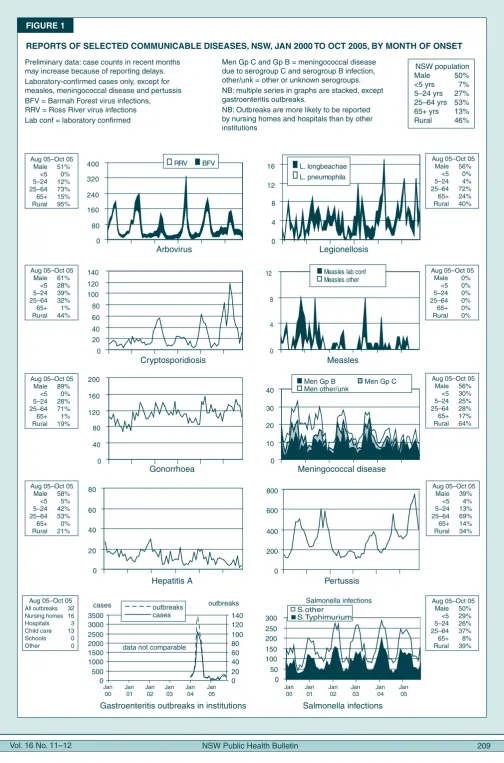
205 Communicable Diseases report NSW for September and october 2005
208 Quarterly Report: Australian Childhood Immunisation Register
212 2005 Index
Davies has supported all of these ideas for getting evidence into practice and has also noted that open, democratic and non-hierarchical environments might be more conducive to research utilisation than those that are operated by rank, status or hierarchy.4,5 Davies has also suggested the importance of establishing ownership of a policy or practice issue, and of the available evidence on effective interventions, by the most senior decision makers in an organisation. Failure to do so can result in a lack of responsibility and accountability for the use of evidence, and a reliance on less robust influences. It is also important to recognise the many factors other thanresearch evidence that influence policy making and practice, including experience, expertise, judgement, resources, habit and tradition; lobbyists and pressure groups; and contingencies.
Presentation and communication of the available evidence is also important. Too often research evidence is inaccessible to key decision makers either because it is published in journals that are not read by policy makers or practitioners, or is presented in ways that are dense, verbose, written in jargon or are otherwise impenetrable. Appropriate sources and formats for presenting evidence include user-friendly websites and printed documents that are clear, concise and coherent. The Canadian Health Services Research Foundation has proposed a 1:3:25format for presenting research evidence. This consists of a one-page summary of key points and messages; a three-page executive summary that supports the one-page; and a full report of no more than 25 pages that provides substantiation of what is presented in the one-page and three-page documents.6
GettING eVIDeNCe INto PUBLIC HeALtH IN NSW
The papers presented in this special edition of the NSW Public Health Bulletin allow many of these principles of getting research into policy and practice to be demonstrated empirically. Bowen, Zwi and Sainsbury in ‘What evidence informs population health policy? Lessons from early childhood intervention policy in Australia’ argue that the breadth and complexity of the public health field calls for a variety of types of evidence to be used to inform policy making and practice. This paper also makes the point that governments draw on a variety of types of evidence, other than research evidence, to inform decisions. Interviews with policy actors revealed that four types of evidence were required: evidence of the problem, evidence of effectiveness, evidence of effective implementation, and evidence of cost effectiveness.
Poulos and Zwi in ‘Building capacity in injury research transfer’ report on the role of translation task groups (TTGs) in getting research evidence into policy and practice. The principal role of TTGs is to ‘enhance the linkage between researchers, policy makers and other stakeholders, and to foster the development of policy-sensitive researchers and evidence-sensitive policy makers’. Poulos and Zwi report
on two current TTGs in NSW, one focussing on road safety and the other on the prevention of falls in elderly people. Both TTGs identified personal contact with policy makers as the most critical factor in getting evidence into policy and practice. Poulos and Zwi note that ‘two-way communication aids both the dissemination of emerging research, and the setting of the research agenda’. The authors also point out that ‘research evidence requires active management, rather than the assumption that “the evidence would speak for itself”’.
Another public health issue that requires effective knowledge transfer is the prevention of HIV. Salter in ‘HIV prevention and community engagement: 15 years on’ presents an overview of the National Centre in HIV Social Research’s (NCHSR) work in this area. He also notes the importance of collaboration between health care providers and researchers, and argues that ‘health providers are being encouraged to turn to research to both inform and justify their service delivery decisions, and researchers are increasingly expected to engage policy makers and research consumers in both the construction and dissemination of research’. Salter adds that this involves integrating knowledge transfer with community engagement, and the work of many health and community agencies. Integrated and strategic planning of both research and service responses is also seen as being very important to successful knowledge transfer and effective prevention.
Jones et al offer the important message that in order to get best evidence into policy and practice we need to find effective ways of changing behaviour. The authors propose social marketing as one way of doing this. They note that despite the use of social marketing techniques in the areas of smoking cessation, healthy eating, drug use and physical activity they have been under-used in preventing skin cancer (a major public health challenge for Australia). Drawing on systematic review evidence the authors suggest ways in which social marketing might be used to change Australians’ behaviour so as to reduce exposure to the sun and prevent skin cancer.
can combine their respective strengths to present a feasible solution that is not only based on sound evidence but will also satisfy the many technical and practical issues involved in implementing the strategy’.
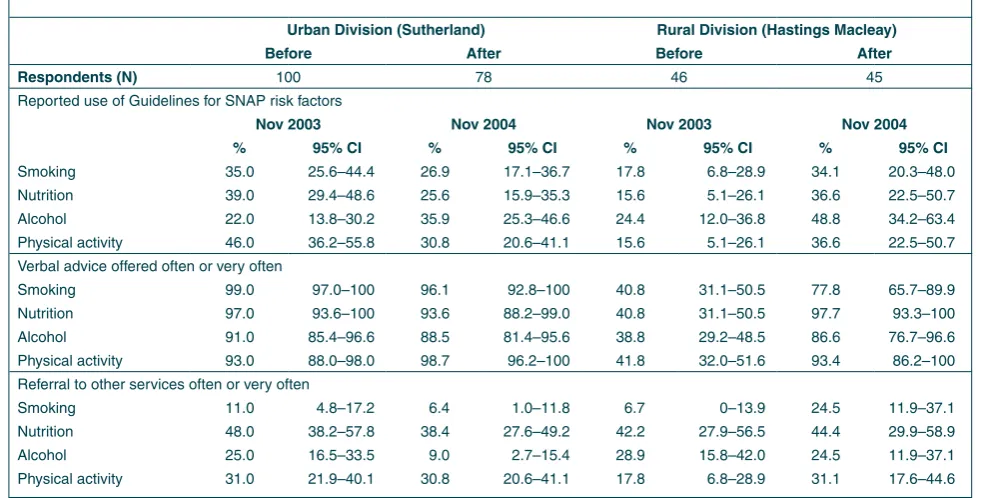
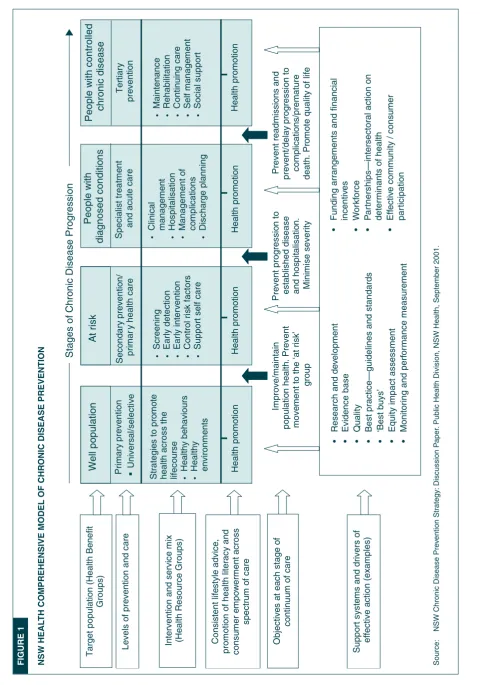
Harris and Powell Davies in ‘SNAP: A journey from research to policy to implementation and back’ present an account of the SNAP (Smoking, Nutrition, Alcohol, Physical activity) prevention program and the actions needed to enhance greater systematic implementation of effective primary care interventions. The SNAP program involves actions at the levels of clinical consultations, the general practitioner practice, the Division of General Practice, and state and national levels against seven broad outcome areas (organisational structures and roles; financing systems; workforce planning, education and training; information management and information technology; communication, community awareness and patient education; partnerships and referral mechanisms; and research and evaluation). NSW Health has funded an implementation trial of the SNAP framework, the main results of which are presented in Harris and Powell Davies’s paper. The authors report that ‘a number of the tools and guidelines developed in the trial have been widely disseminated across Australia—notably the SNAP guide, which was published by the Royal Australian College of General Practitioners and distributed to all general practitioners, with funding from the Australian Government Department of Health and Ageing’. By integrating primary care services with other community agencies, as well as state and national bodies, the SNAP program has achieved some success in linking policy, practice and research and improving the risk management of these major public health challenges.
Campbell and Rubin in ‘An “Evidence Check” system for facilitating evidence-informed health policy’ present a tool, called Evidence Check, ‘to facilitate access to high quality research reviews that could inform policy development across NSW Health’. Evidence Check has been produced for the Sax Institute to provide NSW Health users with a commissioning tool, a directory of experts who can undertake reviews, and a team of knowledge brokers who
can liaise between policy makers and researchers and advise appropriately. This tool will help enhance the development of ‘intelligent customers’ of evidence (the demand side) as well as the provision of ‘intelligent providers’ (the supply side).
The paper by Tang and Penman reminds us of the potentially important contribution of economic analysis to the evidence to inform policy and practice. It also demonstrates the cost and benefits to NSW of reducing smoking. There are two clear messages from this study: reducing smoking would benefit the economy of NSW and will, in particular, be of greatest benefit to the poorest households in NSW. Tobacco control is a case example that demonstrates that research evidence faces many challenges in the decision-making process and, on its own, is usually not enough to bring about change. Empirical evidence is but one factor influencing decision-making. It must compete at times with stronger political and economic influences, and vested interests, in the shaping of policy. As noted by the authors, doing this relies on much more than just producing good research and calls for research design that considers the impact of broader factors in decision-making.
The papers presented in this special issue of the NSW Public Health Bulletin provide both evidence and encouragement to those eager to link research evidence to policy and practice. It is also encouraging to learn that the substantive public health issues covered in this issue are common to other countries as well as Australia, and there is a growing body of evidence from around the world on how to respond to them effectively.
Since guest editing this issue of the Bulletin, Shelley Bowen has left the Sax Institute to pursue full time study for a doctorate.
RefeReNCeS
Oxman AD, Thomson MA, Davis DA, Haynes RB. No magic bullets: a systematic review of 102 trials of interventions to improve professional practice, Can Med Assoc J 1993; 153(10), 1423–31.
Lomas J. Retailing research: increasing the role of evidence in clinical service for childbirth. The Millbank Quarterly
2003, 71(3), 439–75. 1.
2.
See the Sax Institute’s website, www.saxinstitute.org.au, for: information about the Institute, its governance and members
information about the 45 and Up Study, a long-term study of ageing. The study will recruit 250,000 people aged 45 and over in NSW and follow them for many years
Evidence Check, a new system to facilitate the commissioning of research reviews relevant to policy the Coalition for Research to Improve Aboriginal Health (CRIAH), a partnership between the Aboriginal Health and Medical Research Council and the Sax Institute. CRIAH develops research partnerships to address priority issues for Aboriginal communities and build capacity among Aboriginal health researchers up and coming events such as the Second Health Policy and Research Exchange in October 2006 links to public health and health services research centres in NSW
significant new research projects and findings from researchers in NSW.
• •
• •
Stocking B. Promoting change in clinical care, Quarterly in Health Care 1992, 1, 56–60.
Davies PT. Changing policy and practice. In Dawes MG, Davies PT, Gray A, Mant J, Seers K, editors. Evidence-based practice: A primer for health professionals, 2nd edition, London, Churchill Livingstone, 2004.
Davies PT. Is evidence-based government possible? Jerry Lee Lecture, 4th Campbell Colloquium, Washington D.C.
3.
4.
5.
19 February 2004. Available at www.policyhub.gov.uk/ news_item/jerryleelecture1202041.pdf. Accessed 22 February 2006.
Canadian Health Services Research Foundation. Reader-friendly writing-1:3:25, Communication Notes, Ottawa, Canadian Health Services Research Foundation, 2001. Available at: www.chsrf.ca/knowledge_transfer/pdf/cn-1325_e.pdf. Accessed 22 February 2006.
6.
Shelley Bowen PhD candidate University of NSW Anthony Zwi
School of Public Health and Community Medicine University of NSW
Peter Sainsbury Population Health Community Health
Sydney South West Area Health Service
Given that we know that policy making is ‘iterative, continuous, incremental, subject to review and inherently political’1, how does evidence feed into policy?
The term ‘evidence-based policy’ has become routinely used in government policy deliberations, but the rhetoric is often not matched by the reality. The systematic integration of evidence into policy and practice is rare. There is also ongoing debate on what constitutes evidence for policy. This paper proposes a way of categorizing, according to source, the evidence used for policy making. We draw on the literature and on the ideas and experiences of the key people (referred to here as policy ‘actors’) involved in the development of policies that support families and the early years of life in NSW and South Australia. The findings from this study suggest that a variety of types of evidence inform health policy making. This challenges the public health community to broaden its ideas on what constitutes evidence for policy and to recognize the validity of different types of evidence in better informing the policy process. Policy making is complex; appreciating the interplay of people, processes and politics is critical if such processes are to be understood. While policy actors are constantly encouraged to base their policy making on evidence, this is extremely difficult given the limited quality of available policy-relevant research to inform the breadth
of public health issues. One response to navigating the use of evidence in policy making is to adopt an ‘evidence-informed’ approach 2 that considers how different types of information may be transformed into evidence for policy making. We seek not to detract from the value of high quality research evidence, but rather to recognize that even when such evidence is available, governments still draw on a variety of other forms of evidence to more comprehensively inform their decisions.
HoW ARe eVIDeNCe AND PoLICY mAkING LINkeD?
The evidence movement has its origins in evidence-based medicine, ‘the conscientious, explicit and judicious use of current best evidence in making decisions about the care of individual patients’.3 However, the public health community has been struggling with attempts to transfer the concept of evidence-based medicine to policy and practice. 4,5 Recent literature has transformed the notion of evidence from clinical interventions and direct pathways to practice to evidence in complex policy settings in which people, processes and politics need be considered.2,6-9 The term ‘evidence-based decision making’ has emerged to describe the use of the best possible evidence when dealing with real life circumstances.3,10-12
Rychetnik and colleagues (2004) encourage the judicious use of a range of research and evaluation evidence.9,13 There is increasingrecognition of complementary and competing evidence in the policy process, building on scientific research3,10,14-18, although health policy decisions remain primarily based on experience and opinion, with little use of available research evidence.18-23 Davies et al 24 describe the ‘hot debate’ raging around definition and propose that the term ‘evidence influenced practice’ would emphasise the need to be context sensitive, examining what works and in what context.
WHAt eVIDeNCe INfoRmS GoVeRNmeNt PoPULAtIoN HeALtH
PoLICY? LeSSoNS fRom eARLY CHILDHooD INteRVeNtIoN
The UK Cabinet Office propose that expert knowledge, existing domestic and international research, available statistics, stakeholder consultation, evaluation of previous policies, new research, and secondary analyses, inform policy development.12,15 This suggests that evidence is data that can be turned into information and may be sourced from a variety of areas.25
The aim of this paper is to use the experiences of views of policy makers to categorise the forms of evidence used in the policy making process.
metHoDoLoGY
Building on concepts from the literature, this paper also draws on 35 semi-structured, in-depth interviews with policy actors in South Australia (n=10) and NSW (n=25) over 2004 and 2005. Interviewees were selected on the basis of their involvement in committees, roles in policy and government, authorship of grey and published literature, identification on relevant web sites, reference in the media and through ‘snowballing’ during an initial round of interviews. Interviewees included politicians, political advisors, researchers, journalists and a range of public servants at various levels in government departments and regional health services.
Interview questions focussed on:
when and why the policy area becomes important what sorts of information inform policy
what ‘evidence’ means in this policy area
what evidence is useful to the policy process and when
what drives policy: evidence, equity or something else?
interests of decision-makers: is it in evidence of what works or evidence that describes a problem?
eVIDeNCe IN eARLY YeARS PoLICIeS
In recent years there has been significant policy investment in prevention and early intervention strategies with families in NSW and South Australia. Families First NSW and Every Chance for Every Child, South Australia, emerged as whole-of-government approaches to providing children with a good start in life. One strategy within these policies is supporting mothers and new babies through nurse home visiting. Delivery of nurse home visiting differs in the two states. NSW offers a universal first home visit to all new mothers and their babies. In South Australia, a universal first visit is offered as well as sustained regular home visiting over a two-year period to those most in need.
These programs have been heralded throughout their development as equity promoting, solution focused and evidence based.26,27 Policies that focus on early childhood intervention with parents and young babies provide a powerful opportunity for public health improvement and •
• • •
•
•
impact on lifelong health and other positive social outcomes for children. These two policies were selected for study as they provide critical insights into health policy development and the role of evidence.
fINDINGS fRom INteRVIeWS: WHAt DID PoLICY ACtoRS SAY ABoUt tHe eVIDeNCe? The term ‘evidence’ can mean many things to many people: ‘is it information from a trial or something we did yesterday?’ asked one informant. There appear to be two views on the nature of evidence: many believe that ‘evidence’ implies research while others acknowledge that in policy decision-making, research evidence is complemented by a breadth of information which includes, but is not restricted, to research.
Interviewees described ‘hard’ and ‘strong’ forms of research evidence, with hard evidence measured by randomised controlled trials (RCTs) or other forms of rigorous studies (Box 1). Different research evidence was sought for four distinct purposes in the development of these policies: evidence of the problem, evidence of effectiveness, evidence of effective implementation and evidence of cost effectiveness (Box 2). The ‘hard and visible science’ of brain development largely generated by Dr Bruce Perry28 from the United States was a particularly influential piece of evidence informing early years policy development. Policy actors described this evidence as symbolic in its graphic display of brain size in nurtured and neglected babies. A source of intervention evidence was a 15-year RCT by Olds and colleagues of the long-term effects of home visiting on child abuse and neglect.29
A second source of intervention evidence is the Perry preschool studies in the United States. These studies followed the lives of 123 poor African American children
Box 1
ReSeARCH AS tHe oNLY LeGItImAte SoURCe of eVIDeNCe: qUoteS fRom INteRVIeWS WItH PoLICY ACtoRS, NSW AND SoUtH AUStRALIA, 2004–2005
‘you know hard evidence, if you like, would be studies that have a before and after. They have a control group and they have multiple sites’
‘it [evidence] is the empirical science of brain development’
‘the strongest evidence from the literature was home visiting by nurses’
‘Evidence is an RCT’
for up to 40 years and measured the effects of a high quality preschool education program on school failure and associated problems.30,31 Synthesis of the evidence on these and other intervention studies formed the base for reports that demonstrate cost effectiveness of investing in nurse home visiting. The economic benefits of early
intervention are found in the Rand Corporation report in the United States.32 A NSW Health discussion paper 27 modeled the actual costs associated with delivery of nurse home visiting programs statewide. The critical ‘how it can be done’ evidence to guide effective implementation is a gap in these policy examples, as little is known and almost nothing published on what actually occurs during home visits by nurses.
Policy actors also identified a breadth of evidence relevant to policy context (Box 3). Such insights derive from sources ranging from clinical trials to experiences and knowledge of what people think, whether determined informally or through community polling and surveys. A ‘full continuum of information’ was proposed as critical to policy making by one participant, and should include the sciences, experience and opinion. The experience of other programs was considered key to informing policy making. These experiences may come from individuals or via reports, the ‘grey literature’, not necessarily evaluated sources. In contrast to the comment that ‘evidence is an RCT’, others stated that evidence is not ‘level 1 RCT evidence’ for policy making. Clearly those involved in policy making have different views, equally strongly held, about the nature of evidence.
oUR SYNtHeSIS: A WAY of UNDeRStANDING eVIDeNCe foR PoLICY mAkING
There are many ideas concerning what constitutes evidence in the policy environment, the answer being dependant upon the question being asked. Evidence of the impact of a clinical intervention will involve something very different to the evidence for effective interventions by health professionals in the home with families. An RCT may be a reasonable method for one whereas qualitative methods may be required for the other.33,34 Review of the literature and the findings from this study support the idea of evidence-informed policy making which ‘sees the use of different types of information in a variety of forms and
Box 2
exAmPLeS of eVIDeNCe tHAt INfoRmeD eARLY YeARS PoLICY DeVeLoPmeNt IN AUStRALIA
Purpose of evidence Source of evidence
What’s the problem evidence
(descriptive) Observational data: Presentation of impact on child (neuro) development of abuse by Dr Bruce Perry*
What works evidence (intervention)
Published study/reports: Perry Preschool (Highscope) project in the United States—30 year follow
up (1993)31; 40 year follow (2005)30
Published study: Long term effects of home visitation on maternal life course and child abuse and
neglect: fifteen year follow up of a randomised control trial, David Olds et al, JAMA — (1997)29
How it works evidence (implementation)
Some insights in Olds29, RAND Corporation report32 and the Perry Preschool study 31
What it costs evidence
(economic) Discussion paper: Costing home visiting for NSW; NSW Health (1998)
27
Report: RAND Corporation in the United States—$1spent = $7+ saved32
*Seminar & NSW Cabinet presentations by Dr Bruce Perry, hosted by University of Newcastle & NSW Cabinet Office, 8 and 9 May 2000, ‘The impact of abuse on child development’, ‘Responding helpfully to children who have been abused’.
Box 3
USING A BReADtH of SoURCeS of eVIDeNCe: qUoteS fRom INteRVIeWS WItH PoLICY ACtoRS, NSW AND SoUtH AUStRALIA, 2004–2005
‘The other sort of evidence is empirical evidence about what people think, about community polling or public surveys and things like that’
‘A combination of things, anecdotal, wisdom, cross sectional studies, RCTs etcetera. It is a full continuum of information’
‘Well it’s not level 1 RCT evidence’
‘we started pulling in all of the overseas evidence about programs and things around Australia…We said alright these are all of the different levels and examples of evidence’
‘it’s some sort of empirical observation or set of empirical observations or modeling of possible and probable empirical outcomes’
‘General literature, studies all the sorts of things you usually use in a literature review including grey literature, trials, studies etcetera, to small pilot type studies’
‘Informal interviews with colleagues in other states formed the evidence for this policy’
‘The other piece of evidence was the US government accounting for its review of the economic benefits of early intervention prevention’
from a variety of sources, reflective of and responsive to, the policy and practice context’.2
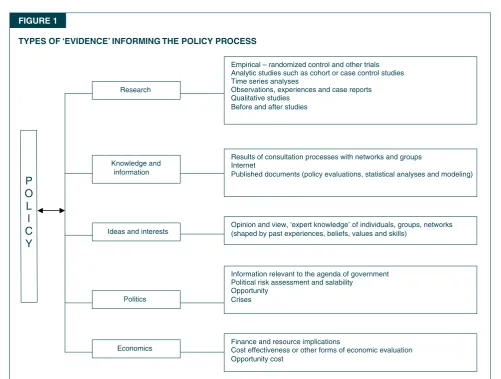
We can discern at least five types of information that inform policy development: research, knowledge, ideas and interests, politics, and economics (Figure 1). Can all or some of these types of information be called evidence for policy?
This model describes the forms of information and influences on policy making. Do we name these non-research types of information ‘evidence’? Is scientific research the only form of evidence that has a rightful place as the basis of the policy process? What definition of evidence best serves policy? If we continue with the idea that scientific research, ‘hard evidence’, is the only appropriate form of evidence, then ‘evidence-based policy’ is seldom achievable. And while the other four types of evidence are at risk of being ignored by researchers and policy analysts, these are in reality drawn upon for decision-making and often have greatest impact on real-life decisions.
If we recognise that a breadth of evidence informs policy making, then this should affect how we approach the production and use of such evidence. Irrespective of the source of the evidence—for example political or policy
science, or economics, RCT or focus group discussion— the pursuit of the highest quality and most robust evidence is essential.
This model aims to identify the information sources in public health policy making. It helps determine areas where we could be building the evidence base for making decisions. It will not, however, tell us which of these forms of evidence is most important, or how to weight them in one or other contexts; this warrants further work.
CoNCLUSIoN
The views of policy actors in Australia exposed different understandings of the nature and use of ‘evidence’ for policy. These findings resonate those from the United Kingdom and Canada.12,33Drawing on these views and the literature, we have developed a model to help navigate the development and use of evidence in policy making. This synthesis demonstrated that a variety of types of evidence inform policy making. Considering evidence to be derived from research, knowledge, interests and ideas, political and economic information challenges us to commission, produce, sharpen and use a variety of sources, forms and formats of evidence in policy making.
fIGURe 1
tYPeS of ‘eVIDeNCe’ INfoRmING tHe PoLICY PRoCeSS
Empirical – randomized control and other trials Analytic studies such as cohort or case control studies Time series analyses
Observations, experiences and case reports Qualitative studies
Before and after studies Research
Knowledge and information
Politics Ideas and interests
Economics
Results of consultation processes with networks and groups Internet
Published documents (policy evaluations, statistical analyses and modeling)
Opinion and view, ‘expert knowledge’ of individuals, groups, networks (shaped by past experiences, beliefs, values and skills)
Information relevant to the agenda of government Political risk assessment and salability
Opportunity Crises
P O L I C Y
Finance and resource implications
RefeReNCeS
Lin V, Gibson B. Evidence-based health policy: Problems and possibilities. South Melbourne: Oxford University Press, 2003.
Bowen S, Zwi A. Pathways to “Evidence-informed” policy and practice: A framework for action. PLoS Medicine 2005; 2: 106–11.
Sackett DL, Rosenberg WMC, Muir Gray JA, Haynes RB, Richardson WS. Evidence based medicine: What it is and what it isn’t. Br Med J 1996; 312: 71–2.
Newman K, Pyne T, Leigh S, Rounce K, Cowling A. Personal and organizational competencies requisite for the adoption and implementation of evidence-based healthcare. Health Services Management Research 2000; 13: 97–110.
Niessen LW, Grijseels EWM, Rutten FFH. The evidence-based approach in health policy and health care delivery. Soc Sci Med 2000; 51: 859–69.
Kingdon JW. Agendas, alternatives and public policy. New York: NY: Harper Collins, 1995.
Dobbins M, Ciliska D, Cockerill R, Barnsley J, DiCenso A. A framework for the dissemination and utilization of research for health-care policy and practice. Online Journal for Knowledge Synthesis for Nursing 2002; Nov 18: 9; 7:
606–10.
Shaxson L. Is your evidence robust enough? Questions for policy makers and practitioners. Evidence and Policy 2005; 1: 101–11.
Rychetnik L, Hawe P, Waters.E, Barratt A, Frommer M. A glossary for evidence based public health. J.Epidemiol Community Health 2004; 58: 538–45.
Nutbeam D. Evidence based, public policy for health: matching research to policy need. Evidence 1996.
Nutbeam D. Improving the fit between research and practice in health promotion: Overcoming structural barriers. Can J Public Health 1996; 87: 18–23.
Davies P. Is evidence-based government possible? 19 February 2004. Washington DC, 4th Annual Campbell Collaboration Colloquium.
Frommer M, Rychetnik L. From evidence-based medicine to evidence-based public health. In Lin V, Gibson B, eds.
Evidence-based health policy: Problems and possibilities. Melbourne: Oxford University Press, 2003: 56–69.
Mays N, Pope C, Popay J. Systematically reviewing qualitative and quantitative evidence to inform management and policy making in the health field. J Health Serv Res Policy
2005; 10: S1:6-S1:20.
The Cabinet Office. Professional policy making for the 21st century. London, The Cabinet Office, 1999.
Elliot H, Popay J. How are policy makers using evidence? Models of research utilisation and local NHS policy making.
Journal of Epidemiology and Community Health 2000; 54, 461–8.
Hayward S, Ciliska D, DiCenso A, Thomas H, Underwood EJ, Rafael A. Evaluation research in public health: barriers to the production and dissemination of outcomes data. Can J Public Health 1996; 87: 413–7.
Black N. Evidence based policy: proceed with care. Br Med J 2001; 323: 275–9.
1.
2.
3.
4.
5.
6.
7.
8.
9.
10.
11.
12.
13.
14.
15.
16.
17.
18.
Baessler CA, Blumberg M, Cunningham JS. Medical-surgical nurses’ utilization of research methods and products.
Medsurgical Nursing 1994; 3: 113–21.
Pappaioanou M, Malison M, Wilkins K, Otto B, Goodman RA, Churchill REet al. Strengthening capacity in developing countries for evidence-based public health: the data for decision-making project. Soc Sci Med 2003; 57: 1925–37. Bohannon RW,.LeVeau BF. Clinicians’ use of research findings: A review of literature with implications for physical therapists. Physical Therapy 1986; 66: 45–50.
Luker KA, Kendick M. An exploratory study of the sources of influence on the clinical decisions of community nurses.
Journal of Advanced Nursing 1992; 17: 457–66.
Nutbeam D. How does evidence influence public health policy? Tackling health inequalities in England. Health Promot J Austr 2003; 14: 154–8.
Davies H, Nutley S, Smith P. What works? Evidence-based policy & practice in public services. Bristol. Bristol: Policy Press, 2000.
Bardach E. A practical guide for policy analysis: the eightfold path to more effective problem solving. New York: Seven Bridges Press, 2000.
Department of Human Services. Early childhood services initiative: sustained home visiting program model. South Australia, Department of Human Services, 2003.
Wraith C, Kakakios M, Alperstein G, Nossar V, Wolfenden S. Achieving health outcomes for children in NSW— Strengthening families and communities. Sydney: NSW Health, 1998.
Perry BD, Pollard R, Blakely T et al. Childhood trauma, the neuro-biology of adaptation and use-dependent development of the brain: How states become traits. Infant Mental Health Journal 1995; 16: 271–9.
Olds DL, Eckenrode J, Henderson CR, Kitzman H, Powers J, Cole Ret al. Long term effects of home visitation on maternal life course and child abuse and neglect: Fifteen year follow up of a randomised control trial. JAMA 1997; 278: 637–43. Schweinhart L, J Montie J, Xiang Z, Barnett W S, Belfield C R, Nores M. Lifetime effects: The High/Scope Perry preschool study through age 40 (monographs of the High/ Scope Education Research Foundation, 14). Ypsilanti, MI: High/Scope Press, 2005.
Schweinhart L, J, Barnes HV, Weikart DP. Significant benefits: The High/Scope Perry preschool study through age 27 (monographs of the High/Scope Education Research Foundation, 10). Ypsilanti, High/Scope Press, 1993. Karoly L, Greenwood PW, Everingham SS, Hoube J, Kilburn MR, Rydell et al. Investing in our children: What we know and don’t know about the costs and benefits of early childhood intervention. Santa Monica: Rand Corporation, 1998. Lomas J, Culyer T, McCutcheon, McCauley L, Law S.
Conceptualizing and combining evidence for health system guidance. Canadian Health Services Research Foundation, 2005: 1–43.
Penn et al. Our synthesis: a way of understanding evidence for policy making. London: Government Social Research Unit, 2005.
19.
20.
21.
22.
23.
24.
25.
26.
27.
28.
29.
30.
31.
32.
33.
Roslyn Poulos and Anthony Zwi
School of Public Health and Community Medicine The University of New South Wales
This paper was written on behalf of the Injury, Trauma, Rehabilitation Partnership (see Box 1)
BACkGRoUND
Injury is a leading cause of mortality, morbidity and disability in Australia. In recognition of the national burden of injury, the area of injury prevention and control was endorsed as a national health priority in 1986. Despite this, however, there has been a substantial mismatch between the identification of injury as a problem and the level of funding available for injury research.1 Late in 2004, a NSW consortium of academic institutions (Box 1)was awarded a five-year National Health and Medical Research Council Capacity Building Grant in Population Health Research to build capacity in population approaches to injury prevention and control. Four injury domains were identified for ongoing research (road safety, falls, sports and work-related injuries) across a number of thematic areas, one of which includes the translation of injury research into policy and practice.
Enhancing the interface between research on the one hand, and policy and practice on the other, is crucial to ensuring the widespread adoption of effective interventions and strategies. The literature abounds with theories on how to improve ‘linkage and exchange’2, yet empirical research remains limited. This paper builds upon the concept of a Translation Task Group, which was suggested by one of the authors (Zwi) as a component of the Capacity Building Grant. The concept has developed its own momentum and is a structure through which to broker productive relationships between researchers, policy makers, practitioners and other stakeholders. This paper reports some of the early outcomes of Translation Task Group activity to address injury.
tHe RoLe of tRANSLAtIoN tASk GRoUPS As part of the Capacity Building Grant, we have developed with our consortium researchers two Translation Task Groups, one focusing on road safety and the other on falls. Currently, both groups comprise internationally recognised researchers and a number of early career researchers. Initial meetings have been held to identify the role of such groups and to determine appropriate membership. These meetings also recognised the need to form, in the near future, a further Translation Task Group with a focus on Indigenous safety. This group will traverse the injury domains and address specific issues of relevance to the Indigenous community with respect to the development and implementation of injury prevention and safety policies.
For the purpose of the project we have defined a Translation Task Group as ‘a group that is able to enhance linkage and
BUILDING CAPACItY IN INjURY ReSeARCH tRANSfeR
sensitive researchers and evidence-sensitive policy makers with the aim of improving the development of policy appropriate research and improving the dissemination and uptake of research into policy and practice’. It is intended that membership be broadened to a wider range of stakeholders including 3:
government representatives who have the potential to facilitate the presentation of research evidence at policy making forums
practitioners who can apply new knowledge to practice
social marketers and health journalists, who have the potential to stimulate wider interest
representatives from relevant community groups, who may assist and enable the dissemination of information to the public.
All of these groups will have a role in influencing the research agenda.
Although only in their very early stages, the Translation Task Groups are already proving beneficial. First, they provide the opportunity for researchers in common theme areas, but from different institutions, to come together and reflect on their respective and combined experiences. This has led to the identification of a number of common difficulties in facilitating the transition of research into policy and practice, which can later be addressed. For example, among the road safety researchers there was an appreciation that research evidence was only one influence among many political priorities. The perception of scientific naiveté of policy makers, the turnover of ministerial advisory staff and the lack of scientific consensus in the field were among the significant barriers identified. Researchers in falls prevention with a focus on falls in older people identified some significant successes with clear evidence-informed policy already in place.4
In terms of enhancing the research-policy interface, both Translation Task Groups identified personal contact with policy makers as the most critical factor in getting evidence into policy and practice. Two-way communication aids both the dissemination of emerging research and the setting of the research agenda. 5 Translation Task Groups were recognised as a forum through which this communication could be enhanced.
Second, the groups have identified areas in which researchers require development of their skills. Both groups recognised the need to influence and interact with the policy process rather than assume that the evidence would speak for itself.6,7 Researchers felt limited in their ability to advocate for policy change, not only because this takes time, but also because they felt they lacked the skills necessary to be effective policy advocates. Similarly, an improved understanding of the policy making process •
•
•
many outside government bureaucracy and that ‘researchers need to acquire a more sophisticated understanding of the policy process’. 3 An active program of skill development in this area is planned in the next six months and will be assessed in terms of its effectiveness in enhancing linkage and exchange. It will be important, within this agenda, to improve understanding of the policy-related roles of a wide range of actors operating within the policy environment, as policy makers are themselves not a homogeneous group. Finally, the initial meetings have generated a new research agenda describing the process of translation. The road safety grouphas formulated a methodology for a qualitative study to examine the experiences of established researchers in order to document the barriers to, and facilitators of, research uptake and dissemination in the area of road safety. It is planned that this research will inform the ongoing role of the group and aid in the determination of its membership. Thefalls group has identified a successful Health Research Partnership Grant as a model for how policy makers, researchers, practitioners, government and private enterprise can work effectively together to set research agendas and disseminate evidence. Research to document this apparently successful process is planned.
eVALUAtIoN
Indicators of the contribution of Translation Task Groups will need to include measures of process, impact and outcome. While these are yet to be defined, initial suggestions have included measures such as the number of groups established with consideration of the range and breadth of stakeholders and the regularity of meetings; the creation of educational activities designed to meet the needs of members (for example, policy training for researchers, or research training for policy makers); actions around policy and practice arising directly from the groups (for example, new dissemination strategies for emerging research, ministerial briefings, media activities); new research partnerships between stakeholders; and scientific presentations and peer-reviewed papers on our research at the translation interface.
Outcome measures, however, will prove the most challenging to evaluate. While some research may be directly incorporated into policy, this is rare and most research is likely to act through a much slower and indirect route8, and may entail a process of adoption, adaptation and action.9 However, in such cases, attributing policy change to a particular research intervention or output will be difficult.
In addition to the specific research agenda arising from individual Translation Task Groups, we are studying the formation and function of the groups as part of an action research agenda that combines our desire to both change practice and enhance knowledge. Consequently, group members will be actively involved throughout the process of the study, so that their discussions and reflections on the process informs subsequent stages of both the research
and the implementation of the groups. We hypothesise that a Translation Task Group will be an effective instrument through which to promote policy-sensitive research and effect knowledge transfer. Adaptations on the concept may also be applicable to other research areas. Our findings should provide empirical data on which to develop strategies to maximize the contribution of Australian injury research to policy and practice.
ACkNoWLeDGemeNt
Roslyn Poulos was supported in carrying out this work by a National Health and Medical Research Council Population Health Capacity Building Grant in Injury Prevention, Trauma and Rehabilitation.
Box 1
memBeRSHIP of tHe INjURY, tRAUmA, ReHABILItAtIoN PARtNeRSHIP
Injury, Trauma, Rehabilitation is a collaborative program auspiced by the NSW Injury Risk
Management Research Centre, the University of New South Wales; the George Institute for International Health, the University of Sydney; the Prince of Wales Medical Research Institute, the University of New South Wales; the School of Public Health and Community Medicine, the University of New South Wales; and the Rehabilitation Studies Unit, the University of Sydney.
RefeReNCeS
National Health and Medical Research Council. Paradigm shift. Injury: from problem to solution. New research directions. Canberra: NHMRC, 1999.
Lomas J. Using ‘linkage and exchange’ to move research into policy at a Canadian Foundation. Health Aff, 2000. 19(3): 236–40.
Black N. Evidence based policy: proceed with care.BMJ
2001; 323: 275–8.
NSW Department of Health. Management policy to reduce fall injury among older people. Sydney, NSW Department of Health, 2003.
Innvaer S, Vist G, Trommald M, Oxman A. Health policy makers’ perceptions of their use of evidence: a systematic review. J Health Serv Res Policy 2002. 7(4): 239–44. Sommer A. How public health policy is created: scientific process and political reality.Am J Epidemiol 2001. 154(12, Suppl): S4-S6.
Lavis JN, Robertson D, Woodside JM, McLeod CM, Abelson J. How can research organizations more effectively transfer research knowledge to decision makers. The Milbank Quarterly 2003. 81(2): 221–48.
Weiss CH. The many meanings of research utilization.Public Adm Rev 1979. Sept/Oct: 426–31.
Bowen S, Zwi AB. Pathways to ‘evidence-informed’ policy and practice: A framework for action. PLoS Med 2005; 2(7), e166. Available at: http://medicine.plosjournals.org/ archive/1549-1676/2/7/pdf/10.1371_journal.pmed.0020166-L.pdf. Accessed 10 March 2006.
1.
2.
3.
4.
5.
6.
7.
8.
Michael Salter
Community Liaison Officer
National Centre in HIV Social Research
The translation of research findings into evidence-based health promotion remains an important challenge in HIV prevention. Despite an increasing emphasis on establishing ‘community engagement’ and ‘knowledge transfer’ frameworks within health research, there has been little discussion of either the long-term nature of this work or the maintenance of the linkages between organisations and individuals that result from it. This article will provide an overview of the work of the National Centre in HIV Social Research (NCHSR) in this area, and will highlight the importance of reflexivity and adaptability in established knowledge transfer systems in the context of changing social, political and epidemiological environments.
CommUNItY eNGAGemeNt At NCHSR
From its very inception, NCHSR has been embedded in the network of community and government partnership that has characterised Australia’s response to the HIV epidemic. NCHSR was established in 1990 following an approach to Macquarie University from members of the AIDS Council of NSW, who believed that social research had an important role to play in crafting effective HIV education and prevention.1 The initial project that gave rise to the Centre was the Social Aspects of the Prevention of AIDS (SAPA) study, a joint effort between researchers and community partners. 2 The SAPA survey was developed collaboratively, and results were disseminated through community reports and feedback sessions.
NCHSR has a dual mandate to inform both the government and the community response to the threat of HIV, and community engagement is central to that task. Today, the framework of community engagement is similar to that established in the early 1990s, albeit in an expanded form. NCHSR is now host to two significant programs of community engagement and knowledge transfer. The commonwealth-funded Research Link project is now in its sixth year. Research Link has enabled NCHSR to hire a full-time Community Liaison Officer, who works with community educators and health promoters in translating social research into policy. NCHSR’s hosting of the Consortium for Social and Policy Research on HIV, Hepatitis C and Related Diseases, funded by the NSW Department of Health, has also made it possible to develop a program of capacity-building workshops for workers in the HIV, hepatitis C and sexual health sectors, and a Masters program in health, sexuality and culture.
Research dissemination and knowledge transfer at NCHSR has traditionally occurred in the context of community engagement. If data collection is the flow of information to NCHSR through community partnerships, then knowledge
HIV PReVeNtIoN AND CommUNItY eNGAGemeNt: 15 YeARS oN
transfer is the movement of research findings from NCHSR back to community partners. Knowledge transfer at NCHSR has been one aspect of a complex system of interactions between researchers, research participants and community stakeholders. This can be described as the ‘community liaison’ model of research transfer3 and, although our dissemination efforts have always had an impact beyond community stakeholders, it is an activity that we have traditionally targeted at those stakeholders in particular.
A long-term program of community engagement has had a number of outcomes, both for NCHSR and for our stakeholders. Community engagement demands a specific style of work from researchers that has benefits for NCHSR beyond the processes of knowledge generation and transfer. It requires a reflexive and team-orientated approach that has a ripple effect throughout the entire organisation. In addition, the involvement of stakeholders in research development provides a series of checks and balances that entrenches accountability and ultimately produces higher quality research by enabling new personal and professional experiences and insights.
Community engagement provides stakeholders with access to relevant and timely information, but perhaps a more important outcome is the research literacy that comes with proximity to the whole of the research process. Stakeholders are not the passive recipients of knowledge transfer, but partners in developing research ideas, writing grants, guiding projects and formulating conclusions. In any given project, community members and stakeholders provide not only the raw data, but also the expertise to understand and interpret that data. Through partnership with us and other research centres, the HIV community sector has developed a significant level of familiarity and comfort with research as a whole, and the demonstrated capacity to access research findings and incorporate them in practice.
CHANGeS IN tHe WoRk of CommUNItY eNGAGemeNt
our community engagement work, acknowledging that they are related but distinct endeavours.3
A number of important changes within our organisation, and in the context within which we work, also requires us to re-evaluate our community engagement and knowledge transfer strategies. Over the past five years, our research program has expanded beyond HIV and sexual health to include viral hepatitis and injecting drug use, both nationally and internationally. These new research foci have brought NCHSR into contact with a broader range of communities and populations across the country and the Asia–Pacific region. As the NCHSR research agenda expands, the work of community engagement takes on complex new dimensions. After a 16-year partnership, HIV community stakeholders demonstrate high levels of research literacy and significant buy-in to the NCHSR research program. In contrast, new stakeholders may be less familiar with social research, or may be working in contexts in which they have considerably fewer resources and less capacity to engage with research agendas, which has a direct influence on their receptivity to research.6 The early days of research partnerships are often characterised by negotiation over the ownership of both data and outcomes, and these are sensitive discussions that have consequences for both the relevance of research findings to affected communities and stakeholders, and the subsequent impact of these research findings.
Medical and epidemiological developments have also had an impact on both the direction of our research and the research needs of our partners. Since the introduction of highly active antiretroviral therapy in 1996, the HIV sector as a whole has had to adjust to the needs of an HIV-positive population who are now living with HIV rather than dying from AIDS-related conditions. In the view of some community partners, this has resulted in a perceived increased need for more research relating to health determinants and health systems implementation. Other stakeholders require information on health promotion, education, and the evaluation of intervention strategies. Others have interests in broader issues of gay and lesbian health. Some of these issues may intersect with the remit of the NCHSR research agenda; others may not. However, even the partial decoupling of our agenda from those of longstanding stakeholders requires delicate handling.
ReSPoNDING to CHANGe IN CommUNItY eNGAGemeNt
Identifying and responding to changes in community engagement has required an integrated planning response. Strategic planning is central to a well-coordinated community engagement strategy7, and in 2004 the Centre initiated a macro-level strategic review to provide an opportunity for institutional reflection on the specificity and clarity of our mission. The strategic plan, released in
mid-2005, identified a number of key responses to changes in community engagement and knowledge transfer:
Regular consultation frameworks: A collaborative
research agenda, in and of itself, is a powerful strategy in promoting knowledge transfer and the application of research findings by research partners.8 The strategic planning process found a need for a more structured and planned approach to community consultation and NCHSR is in the process of establishing a schedule of regular, formal consultations.
Memorandum of understanding: As part of the
consultation process, NCHSR is drawing up a Charter for Community Engagement, a collective ‘memorandum of understanding’ that articulates the NCHSR approach to community engagement. As notions of ‘community engagement’ and ‘knowledge transfer’ shift and change, the purpose of the Charter is to articulate some formal commitments to community engagement as part of the research and dissemination process to ensure that NCHSR remains accountable to our community partners in these regards.
Diversification of research output: Community
reports have typically been targeted at education and health promotion managers, but mechanisms for disseminating research to workers at the coalface of HIV prevention have been limited. NCHSR is exploring the possibility of crafting shorter fact sheets that summarise relevant research findings in a manner accessible to both the HIV community sector and health workers more broadly. We are also discussing with community and health sector partners effective means of distributing these resources.
Online dissemination: One of the central challenges in
the dissemination of health research findings is simply getting information onto the desks of practitioners.6 The increasing prevalence of broadband enables online dissemination in a way that has not previously been possible. It enables us, for instance, to distribute fact sheets directly to workers, rather than rely on organisations to circulate printed reports on our behalf. However, online and offline research dissemination strategies need to be coordinated and complementary, which requires a strategic and managed approach to knowledge dissemination.
Benchmarking and evaluation: Measuring community
engagement is a challenge, but it dovetails closely with changes in the education and research sectors. 5 Ideally, the evaluation of engagement strategies should be a cumulative study of the links between activities, outcomes and the overall context of community engagement. It could take the form of a yearly audit, in which community stakeholders are asked a series of questions about their awareness of opportunities to engage with NCHSR and their satisfaction with those mechanisms. We are presently looking into community •
•
•
•
engagement benchmarks and evaluation criteria, at a macro and organisational level, in terms of the quality, quantity and timeliness of engagement programs and policies.
While research suggests that our traditional modes of community engagement and dissemination (community reports, feedback sessions and seminars) are our most effective tools in the array of knowledge transfer techniques6, community engagement and knowledge transfer are dynamic and adaptive processes. Taking stock of existing processes and emerging opportunities ensures the stability of stakeholder relationships and augments the effectiveness of dissemination strategies. The quality of research output is heightened when stakeholders have a central place in the generation of knowledge and understanding. Knowledge transfer, in its simplest sense, is the feedback mechanism in an economy of knowledge powered by engagement and collaboration.
RefeReNCeS
Kippax S, Kinder P. Reflexive practice: The relationship between social research and health promotion in HIV prevention. Sex Education 2002; 2: 91–104.
1.
Kippax S, Connell RW, DowsettGW, Crawford J. Sustaining safe sex: Gay communities respond to AIDS. London: Falmer Press, 1993.
Mitchell A, Wals J. The community model of research transfer. In Lin V, Gibson B, editors Evidence-based health policy: Problems and possibilities. Melbourne: Oxford University Press, 2003: 263–71.
Black N. Evidence based policy: Proceed with care. British Medical Journal 2001;323: 275–9.
National Health and Medical Research Council. A model framework for consumer and community participation in health and medical research. Canberra:NHMRC, 2005. Available at www.nhmrc.gov.au/publications/synopses/ r22syn.htm.
Del Santo T, Goldberg S, Choice P. Exploratory research in public social service agencies: An assessment of dissemination and utilization, Journal of Sociology and Social Welfare 2002; 24(4): 59–81.
Barnett K, Hattis P. Toward a more strategic approach to community engagement: A commentary. Journal of Health and Human Services Administration 2002; 25: 204–14. Cameron R, Brown KS, Best A.J. The dissemination of chronic disease prevention programs: Linking science and practice. Canadian Journal of Public Health 1996, 87(S2), S50–S53.
2.
3.
4.
5.
6.
7.
8.
Sandra Jones, Lyn Rees, Keryn Johnson Centre for Health Behaviour and Communication Research University of Wollongong Anita Tang
The Cancer Council New South Wales
Australia has the highest incidence of skin cancer in the world. Skin cancer is the most common form of cancer in Australia, with incidence rates outnumbering all other forms of cancer by more than three to one. The Australian health system spends more money on the diagnosis and treatment of skin cancer than on any other cancer, an estimated $420m each year.1 The majority of these skin cancers could be prevented if the public could be persuaded to adequately protect themselves from the sun.
Social marketing is well placed to guide the development of sun protection programs, as it is orientated to achieving voluntary behaviour change at a group or community level. It is a knowledge discipline grounded in behavioural and communications theory that has developed from commercial marketing, with an underlying difference of being driven by a motivation to change consumer behaviour
ImPRoVING SUN PRoteCtIoN BeHAVIoUR tHRoUGH
eVIDeNCe-BASeD CAmPAIGNS
for the social or individual ‘good’, rather than for company profit.2 An understanding of the theory and practice of social marketing provides a foundation for the development of communication campaigns aimed at changing the community’s health-related behaviour. However, many organisations that conduct communication campaigns do not adequately consider these factors in the development of their campaigns.
Social marketing has been used in the areas of smoking cessation, healthy eating, drug use and physical activity promotion. It has been used to a lesser extent for primary prevention of skin cancer.3 As a result, there is no documented evidence on how best to utilise social marketing within sun protection campaigns. In a specific application to sun protection, this project will investigate the use of social marketing and advertising communications theory in practice, and systematically apply the theory and research in the development of a demonstration campaign by the Cancer Council New South Wales.
metHoD AND ReSULtS to DAte
Phase one—Formative research
1. Identification of the use of relevant theory in sun protection research and practice
The project commenced with a literature search to identify research on the use of social marketing and advertising communications theory and strategies to develop and conduct primary prevention campaigns that have potential for use within sun protection campaigns. This has provided a framework with which to analyse past and present sun protection programs via the systematic review and in-depth analysis of communication strategies.
1.1 Systematic review of sun protection primary prevention programs
A series of systematic reviews will be undertaken on published and unpublished primary prevention programs that have been implemented over the past 25 years. The reviews will examine the extent of use of social marketing and communication theory in practice within sun protection programs, and identify effective elements within these programs.
Preliminary analysis of 21 published studies targeted at children and their sun protection behaviours (utilizing pre and post designs with comparison groups) has confirmed low utilisation of social marketing within past programs. The analysis revealed only one program where it was stated that a social marketing process had been used in the program’s development. However, other elements that sit within the social marketing framework (such as the use of behavioural theory and formative research, the targeting of secondary audiences and the utilization of environmental changes to facilitate behaviour change) were used within many of the interventions. The combination of these elements appeared to produce effective outcomes, though increased effectiveness could not be predicted following the use of any one element.
No studies reported segmentation of the target audience or discussed tailoring of messages for specific subgroups within the larger target group. These approaches could be useful in sun protection campaigns because if the target market is segmented into smaller, more homogenous groups, sun protection messages can be tailored to address the attitudes and perceptions of the group and to appeal more specifically to them. Also, while research studies on specific message factors for sun protection are evident on literature review, little of this research appears to have been utilised within programs to date. Further work will broaden inclusion criteria and commence systematic review on interventions targeting adolescents and adult populations. 1.2 In-depth analysis of sun protection communication campaigns
An in-depth analysis will be undertaken of recent (in the past five years) sun protection communication campaigns from Australia, the United States, the United Kingdom
and Canada that have completed impact or outcome evaluations. Within Australia, this will include campaigns currently conducted by the Australian Cancer Society, the state and territory Cancer Councils, government-funded organisations, and other non-profit cancer organisations. International campaigns will be those conducted by national or statewide cancer societies or public health organisations within the United States, Canada or the United Kingdom, dependent on the availability of campaigns materials. This analysis will specifically examine communication strategies used within these campaigns.
2. Selecting and investigating the target audience
2.1 Identification and review of literature to determine current knowledge and sun protection behaviour in the target markets
A comprehensive literature review will be conducted to examine current sun protection knowledge and behaviour, and particularly the effects of previous sun protection interventions on attitudes and behaviours in the Australian population. A preliminary review of current literature identified those segments of the population at risk of developing skin cancer, and current patterns of behaviour in relation to sun protection within these segments. 2.2 Consultation with a panel of experts
As part of broader project management processes, a project reference group was established to ensure expert consultation and participatory management decision-making.4 The group consisted of the Cancer Council New South Wales Chief Executive Officer and relevant experts from the Cancer Council in the areas of retail, marketing and communications, health strategy and campaigns, media and skin cancer prevention. The group also included experts from the University of Wollongong in marketing, social marketing and health behaviour, as well as the project manager and PhD students.
The format for the meeting utilised a clear goal-oriented agenda and an evidenced-based platform on which to base the discussion. A summary of the current literature was presented, detailing which segments of the population were at risk of developing skin cancer and which segments had modified their behaviour and adopted positive sun protection practices. A historical review of sun protection programs provided by the Cancer Council allowed reflection on which segments had previously been targeted and current priorities for the council. After reflecting on these presentations the group participated in a facilitated discussion in order to make a decision regarding the primary segmentation of the target market. Various established techniques were used to facilitate the discussion. These included brainstorming to generate all relevant variables and concept mapping to draw out a consensus regarding the variables discussed.5
market (because the risk factors and behaviours in skin cancer prevention vary predominantly by age).6 Additional demographic variables would be considered as secondary segmentation variables and would be further explored as part of formative research with the target market. This is consistent with the findings of Kotler, Lee and Roberto, who describe how target audience segmentation often uses one primary basis to segment a market, with each segment then ‘further profiled and perhaps narrowed, by using additional important and relevant variables that predict response to strategies’.7
2.3 Determining the effects of previous sun protection within the target market
Consistent with the principle of market segmentation, qualitative and quantitative research will be undertaken with the target market. Likely areas of investigation include perceived susceptibility to skin damage, perceived severity of sun damage, attitudes towards tanning, and the influence of family and friends on sun protection behaviours. Phase two—Application of formative research
Development of best-practice guidelines and a comprehensive sun protection campaign
A detailed set of guidelines for the development and implementation of sun protection campaigns will be developed from the results of Phase one. The research team will also develop a comprehensive social marketing plan for a sun protection campaign for the Cancer Council. The content of this plan will incorporate the best-practice guidelines and formative research.This plan will focus on the four key elements of marketing campaigns—product, price, place and promotion—and will include elements from advertising theory such as communication objectives and positioning, execution tactics, and media strategy. It is hoped that further funding will be secured to evaluate the implementation and outcomes of this campaign.
DISCUSSIoN
While social marketing processes have rarely been used in sun protection campaigns, the preliminary work undertaken has shown that social marketing offers a useful framework that can accommodate elements already used within campaigns, as well as adding other elements that could lead to improved effectiveness. Areas relating to behavioural and communication theory appear under-developed in many
sun protection programs, with little use of segmentation on attitudinal or behavioural grounds, and minimal attention to message factors within the programs reviewed. This gap between t