Świątoniowska Natalia, Dudek Krzysztof, Szymczyk Anna, Jankowska-Polańska Beata. Factors associated with adherence in patients with type 2 diabetes mellitus. Journal of Education, Health and Sport. 2018;8(12):192-209. eISNN 2391-8306. DOI
http://dx.doi.org/10.5281/zenodo.2093318
http://ojs.ukw.edu.pl/index.php/johs/article/view/6361
The journal has had 7 points in Ministry of Science and Higher Education parametric evaluation. Part B item 1223 (26/01/2017). 1223 Journal of Education, Health and Sport eISSN 2391-8306 7
© The Authors 2018;
This article is published with open access at Licensee Open Journal Systems of Kazimierz Wielki University in Bydgoszcz, Poland
Open Access. This article is distributed under the terms of the Creative Commons Attribution Noncommercial License which permits any noncommercial use, distribution, and reproduction in any medium, provided the original author (s) and source are credited. This is an open access article licensed under the terms of the Creative Commons Attribution Non commercial license Share alike.
(http://creativecommons.org/licenses/by-nc-sa/4.0/) which permits unrestricted, non commercial use, distribution and reproduction in any medium, provided the work is properly cited. The authors declare that there is no conflict of interests regarding the publication of this paper.
Received: 25.11.2018. Revised: 30.11.2018. Accepted: 08.12.2018.
Factors associated with adherence in patients with type 2 diabetes mellitus
Natalia Świątoniowska1, Krzysztof Dudek2, Anna Szymczyk3,
Beata Jankowska-Polańska4
1Department of Clinical Nursing, Faculty of Health Sciences, Wroclaw Medical University, Poland, PhD student,
MS, e-mail: [email protected], ORCID ID: 0000-0003-4211-9205
2Department of Logistic and Transportation Systems, Wroclaw University of Technology, Poland, PhD, e-mail:
[email protected], ORCID ID: 0000-0002-9442-989X
3Specjalized Hospital A. Sokołowskiego in Wałbrzych, Poland, MS, e-mail: [email protected], ORCID
ID: 0000-0002-2491-2413
4Department of Clinical Nursing, Faculty of Health Sciences, Wroclaw Medical University, Poland, PhD,
Assistant Professor,e-mail: beata.jankowska-polań[email protected], ORCID ID: 0000-0003-3132-8044
Summary
Introduction. Only 50 - 75% of patients surveyed adhere to therapeutic recommendations in the treatment of chronic diseases. It is estimated that half of the patients discontinue therapy after one year from the start of treatment. Failure to comply with therapeutic recommendations often leads to complications of diabetes. New methods are now being sought to help diabetics adhere to the recommendations of the therapeutic team. According to the World Health Organization, interventions to improve adherence have a greater impact on health than the development of treatment.
Material and methods. 150 patients (96 women) 65.2 ± 11.8 years of age who were treated for exacerbation of type 2 diabetes were examined with their own questionnaire regarding compliance with the therapeutic recommendations and a standardized HBI (Health Behavior Inventory) questionnaire to assess health behaviors.
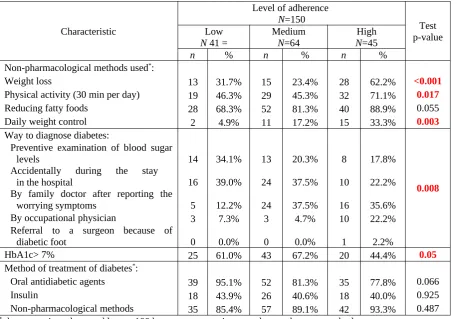
Results. A high degree of compliance with pharmacological recommendations was presented by 30%, the average 42,7%, and low 27,3% patients. High level of adherence was presented by people aged 50-69 (p<0.001), higher education (p=0.042), in a relationship (p=0.026), living in the countryside (p=0.029). People with a high level of compliance with pharmacological recommendations more often followed behavioral recommendations regarding weight reduction (62.2% vs. 23.4% vs. 31.7%), physical activity (71.1% vs. 45.3% vs. 46.3%) and daily weight control 33.3% vs. 17.2% vs. 4.9%). In the comparative analysis of the level of adherence, depending on the selected variables, it was observed that the higher level of compliance was for people who were diagnosed with comorbidities (compliance with the recommendations 6.6 vs. 5.1 in people without additional diseases), in non-smokers than in those who smoked tobacco ( 6.9 vs. 6.1), in subjects with hemoglobin HbA1C 7% than
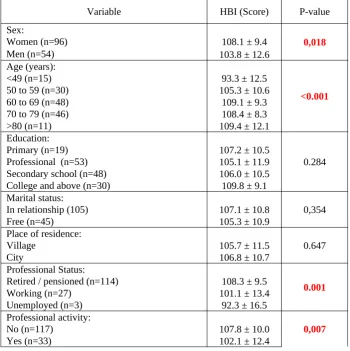
in HbA1C patients> 7% (7.0 vs. 6.6). The level of adherence to recommendations was the lowest in patients treated with the combination regimen (tablets+insulin; p=0.024). High level of health behaviors was presented more often by women compared to men (108 vs. 103), older people compared to younger ones (age 60-69 HBI=109.1 vs. age up to 49 years HBI=93.3), pensioners compared to economically active people or unemployed (108.3 vs. 101.1 vs. 92.3). In multivariate analysis, the independent predictors of adherence to pharmacological therapeutic recommendations are the absence of co-morbidities and older age (β=0.212, p=0.005).
Conclusions. Patients with diabetes have a moderate level of adherence and the compliance with health behaviors. An independent predictor which has a positive influence on the HBI is the old age (the older the patient, the better the level of adherence). The predictor which reduced the level of adherence and the HBI was the absence of comorbidities.
Introduction
Type 2 diabetes is the most frequently diagnosed form of diabetes in the world. Recently there has been a significant increase in the incidence of diabetes. In the European Region 64 million people has diabetes - 33 million women and 31 million men (aged> 18 years). 23.5 million people aged 20-79 are living with undiagnosed diabetes [1]. According to the latest research from 2013, in Poland diabetes affects around 2.7 million people, which gives 8% of the Polish population. They are forecasting an increase in the number of diabetics by 80% over the next 20 years. The reasons for this phenomenon sees the insufficient prevention and aging population. It is worrying that over half a million people are not aware of their disease [2].
Adherence to treatment is defined by four notions: adherence, compliance, persistence and concordance. Adherence is the extent to which the patient achieve therapeutic recommendations. Compliance determines the percentage of medication. Persistence refers to the perseverance of therapy, specifically the time in which the drug is taken, and the concordance describes the patient-doctor collaboration in the choice of therapy and responsibility for the decisions taken. [3]
In Poland, the problem of non-adherence is serious. The CODE 2 results confirmed 20% adherence during 1/5 of year by diabetes taking statins, antihypertensive and hypoglycemic medication [4]. 31% of patients used only part of the packaging of medicines, and took 25% of all prescription drugs portion [5]. Taking into consideration the implementation of prescriptions, 20-30% of medicines is never bought and only 40% of patients fill the next prescription. In addition, the patients often buy drugs and do not take them. Therefore, there can be no assurance that the bought drugs are later regularly taken by the patient [6].
The treatment of diabetes is based on the glycemic control and the prevention of early and late complications. The Polish Diabetes Association recommends using of complex therapy of diabetes. In addition to pharmacological treatment, an important part of treatment methods are non-pharmacological (behavioral), ie. proper diet and exercises. Normalization of blood glucose level can be achieved only when patients adhere to treatment recommendations. Data in the literature indicate that only 50% of patients respects these therapeutic regimen [7].
patient adherence and behavior, socio-demographic factors, health care system, medical staff attitude and course of the disease. Patient education is central to achieving a high level of adherence. Diabetologic education still needs to invest and develop standards. The authors also point to the mental health of the patient. Depression, anxiety and lack of acceptance of the disease often negatively affect the level of alignment in type 2 diabetes. Problems with adherence of patients should be identified individually, in order to adopt effective measures to eliminate the cause of non-adherence. Currently, new methods are being sought to facilitate diabetics adherence to the therapeutic team. It is worth emphasizing that, according to the World Health Organization, interventions aimed at improving adherence are more important and have greater impact on health than the development of treatment.
In most literature raises the question of the impact of socio-demographic factors - age and gender - on the level of adherence. Review of the literature provides ambiguous results. Some researchers say that older age correlated with better fulfillment of recommendations. Older patients, because they are mostly retired or pensioned, have more amount of time for regular life, physical activity and fulfill diet obligations [8]. On the other hand, these patients due to comorbidities have difficulties to meet the therapeutic requirements [9]. The literature also put forward the issue of non-adherence in youthful age. These patients often revolt and do not accept their disease [10]. Many studies have shown a connection between sex and the ability to change lifestyle in order to reduce the risk of the disease [11,12,13,14]. In the study Fitzgerald et al., on the group of 1202 diabetics, it was observed that men are more likely to adhere to treatment recommendations in order to maintain health, while women only see the negative impact of the disease on their lives. It depends on the sex-filled type of recommendations. Women more often measure blood glucose level and adhere to dietary recommendations, and men coped better with planning regular physical activity [15].
Authors of this study have tried to identificate factors associated with adherence of patients with diabetes mellitus type 2. Therefore, the aim of the study was to investigate the effect of selected variables on the degree of adjustment to the therapeutic recommendations in patients with type 2 diabetes.
Material and methods
were enrolled. We used a standardized questionnaire to assess the level of health behaviors and a own survey to assess the level of adherence. Socio-clinical data were obtained from patient medical records.
In its own survey addressed issues related mainly to the method of treatment, the results of laboratory tests, vital signs, presence of comorbidities, early and late complications of diabetes, self-care and adherence to pharmacological treatment. Questions relating to the adherence was 12 and covered both intentional and unintentional non-adherence pharmacology. The survey highlighted the problems of forgetting, intentional skipping doses of medication, discontinuation of medication taking due to poor or well-being. In the survey put forward the problem of difficulty in filling a prescription and too high prices of drugs. Depending total score in own survey patients were divided into 3 groups: group I (> 8 points) low adherence, group II (8-10 points), the medium adherence, group III (11-12 points) high adherence.
Healthy Behavior Inventory (HBI) by Zygfryd Juczyński consists of 24 questions. It is used to assess compliance of non-pharmacological and determine the level of health behavior: preventive behavior, healthy eating habits, positive mental attitudes and health practices. Respondents answer questions about the frequency of the task in selecting the appropriate value on a scale from 1 to 5 (1 - almost never, 2 - rarely, 3 - sometimes, 4 - often, 5 - almost always). The range of points obtained by the patient is in the range 24 - 120 points. The more points get the patient, the greater the intensity of compliance with health behaviors. The resulting points are converted into stens.
Results
Sociodemographic and clinical characteristics of patients, depending on the level of adherence
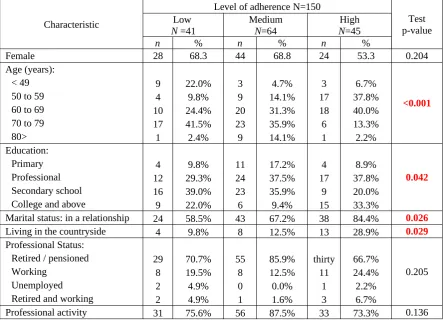
concerned younger people aged 50-69 years. Among people with a high level of compliance, most people had higher education (33.3%) and secondary education level (20%) while in the group with low and medium level of adherence with the most were people with secondary education level (39% and 35.9%) and professional education level (29.3% and 37.5%). The test groups were varied according to marital status, patients being in relationships were more often than not in the group with a high level of adherence (84.4% vs 58.5% in the group with low adherence). The analysis showed that in the group with higher levels of adherence were more people living in rural areas (tab. 1).
Table 1. Socio-demographic characteristics of patients according to the groups of adherence
Characteristic
Level of adherence N=150
Test p-value Low
N =41
Medium
N=64
High
N=45
n % n % n %
Female 28 68.3 44 68.8 24 53.3 0.204
Age (years):
<0.001
< 49 9 22.0% 3 4.7% 3 6.7%
50 to 59 4 9.8% 9 14.1% 17 37.8%
60 to 69 10 24.4% 20 31.3% 18 40.0%
70 to 79 17 41.5% 23 35.9% 6 13.3%
80> 1 2.4% 9 14.1% 1 2.2%
Education:
0.042
Primary 4 9.8% 11 17.2% 4 8.9%
Professional 12 29.3% 24 37.5% 17 37.8%
Secondary school 16 39.0% 23 35.9% 9 20.0%
College and above 9 22.0% 6 9.4% 15 33.3%
Marital status: in a relationship 24 58.5% 43 67.2% 38 84.4% 0.026
Living in the countryside 4 9.8% 8 12.5% 13 28.9% 0.029
Professional Status:
0.205
Retired / pensioned 29 70.7% 55 85.9% thirty 66.7%
Working 8 19.5% 8 12.5% 11 24.4%
Unemployed 2 4.9% 0 0.0% 1 2.2%
Retired and working 2 4.9% 1 1.6% 3 6.7%
Professional activity 31 75.6% 56 87.5% 33 73.3% 0.136
with distressing symptoms). However, people with low adherence were predominantly those who had been diagnosed with diabetes accidentally during hospitalization.
Table 2. Clinical characteristics of patients according to the groups of adherence
Characteristic
Level of adherence
N=150 Test
p-value Low
N 41 = MediumN=64 NHigh=45
n % n % n %
Non-pharmacological methods used*:
Weight loss 13 31.7% 15 23.4% 28 62.2% <0.001
Physical activity (30 min per day) 19 46.3% 29 45.3% 32 71.1% 0.017
Reducing fatty foods 28 68.3% 52 81.3% 40 88.9% 0.055
Daily weight control 2 4.9% 11 17.2% 15 33.3% 0.003
Way to diagnose diabetes:
0.008
Preventive examination of blood sugar
levels 14 34.1% 13 20.3% 8 17.8%
Accidentally during the stay
in the hospital 16 39.0% 24 37.5% 10 22.2%
By family doctor after reporting the
worrying symptoms 5 12.2% 24 37.5% 16 35.6%
By occupational physician 3 7.3% 3 4.7% 10 22.2%
Referral to a surgeon because of
diabetic foot 0 0.0% 0 0.0% 1 2.2%
HbA1c> 7% 25 61.0% 43 67.2% 20 44.4% 0.05
Method of treatment of diabetes*:
Oral antidiabetic agents 39 95.1% 52 81.3% 35 77.8% 0.066
Insulin 18 43.9% 26 40.6% 18 40.0% 0.925
Non-pharmacological methods 35 85.4% 57 89.1% 42 93.3% 0.487
* the proportions do not add up to 100 because some patients used more than one method
We compared the level of adherence depending on the selected variables. Higher adherence concerned persons with comorbidities (level of adherence 6.6 vs. 5.1 in patients without additional diseases), non-smokers of tobacco than in smokers (6.9 vs. 6.1) and patients with hemoglobin HbA1C 7% than in HbA1c> 7% (7.0 vs. 6.6). The level of
adherence was higher in patients treated with insulin than in patients treated with tablets (7.3 vs. 6.8), and the lowest was in patients treated with insulin and tablets (6.3). Surprising result of the study is the level of adherence depending on the amount of medication. The highest adherence was in people taking large amounts of medication daily at -7.2 people taking 16-20 tablets vs. 5.6 in those taking less than 5 tablets per day.
Table 3. Comparision analysis according to selected clinical variables
Variable The level of adherence P-value
Comorbidities:
0,004
Yes (n=145) 6.8 ± 1.3
No (n=5) 5.1 ± 2.0
Nicotine addiction:
0.012
No (n=124) 6.9 ± 1.2
Yes (n=26) 6.1 ± 1.7
Time from DM diagnosis:
0,055
≤5 years (n=31) 6.2 ± 2.0
6 - 10 years (n=35) 7.1 ± 0.8
11 - 20 years (n=57) 6.7 ± 1.2
>20 years (n=27) 7.0 ± 1.2
Glycated hemoglobin:
0.043
HbA1C 7% (n=62) 7.0 ± 1.1
HbA1C> 7% (n=88) 6.6 ± 1.5
Method of treatment of diabetes:
0,024
The tablets (n=86) 6.8 ± 1.3
Insulin (n=20) 7.3 ± 0.9
Tablets + insulin (n=44) 6.3 ± 1.5
Number of medications daily:
0.003
To 5 (n=12) 5.6 ± 2.2
6 - 10 (n=69) 7.0 ± 1.0
11 - 15 (n=51) 6.5 ± 1.5
16 - 20 (n=14) 7.2 ± 0.9
Over 20 (n=4) 6.6 ± 0.9
Discontinuation of medication <0.001
No (n=130) 7.0 ± 1.1
Yes (n=20) 5.0 ± 1.8
Table 4. Comparision analysis according to selected clinical variables of HBI
Variable HBI (Score) P-value
Sex:
0,018
Women (n=96) 108.1 ± 9.4
Men (n=54) 103.8 ± 12.6
Age (years):
<0.001
<49 (n=15) 93.3 ± 12.5
50 to 59 (n=30) 105.3 ± 10.6
60 to 69 (n=48) 109.1 ± 9.3
70 to 79 (n=46) 108.4 ± 8.3
>80 (n=11) 109.4 ± 12.1
Education:
0.284
Primary (n=19) 107.2 ± 10.5
Professional (n=53) 105.1 ± 11.9
Secondary school (n=48) 106.0 ± 10.5
College and above (n=30) 109.8 ± 9.1
Marital status:
0,354
In relationship (105) 107.1 ± 10.8
Free (n=45) 105.3 ± 10.9
Place of residence:
0.647
Village 105.7 ± 11.5
City 106.8 ± 10.7
Professional Status:
0.001
Retired / pensioned (n=114) 108.3 ± 9.5
Working (n=27) 101.1 ± 13.4
Unemployed (n=3) 92.3 ± 16.5
Professional activity:
0,007
No (n=117) 107.8 ± 10.0
Yes (n=33) 102.1 ± 12.4
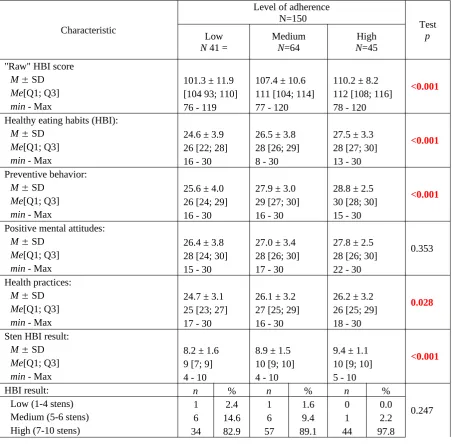
The level of the health-related behaviors (HBI) depending on the level of adherence
Table 5. Analysis of health behaviours depending on the adherence levels
Characteristic
Level of adherence
N=150 Test
p
Low
N 41 = MediumN=64 NHigh=45
"Raw" HBI score
<0.001
M SD 101.3 ± 11.9 107.4 ± 10.6 110.2 ± 8.2
Me[Q1; Q3] [104 93; 110] 111 [104; 114] 112 [108; 116]
min - Max 76 - 119 77 - 120 78 - 120
Healthy eating habits (HBI):
<0.001
M SD 24.6 ± 3.9 26.5 ± 3.8 27.5 ± 3.3
Me[Q1; Q3] 26 [22; 28] 28 [26; 29] 28 [27; 30]
min - Max 16 - 30 8 - 30 13 - 30
Preventive behavior:
<0.001
M SD 25.6 ± 4.0 27.9 ± 3.0 28.8 ± 2.5
Me[Q1; Q3] 26 [24; 29] 29 [27; 30] 30 [28; 30]
min - Max 16 - 30 16 - 30 15 - 30
Positive mental attitudes:
0.353
M SD 26.4 ± 3.8 27.0 ± 3.4 27.8 ± 2.5
Me[Q1; Q3] 28 [24; 30] 28 [26; 30] 28 [26; 30]
min - Max 15 - 30 17 - 30 22 - 30
Health practices:
0.028
M SD 24.7 ± 3.1 26.1 ± 3.2 26.2 ± 3.2
Me[Q1; Q3] 25 [23; 27] 27 [25; 29] 26 [25; 29]
min - Max 17 - 30 16 - 30 18 - 30
Sten HBI result:
<0.001
M SD 8.2 ± 1.6 8.9 ± 1.5 9.4 ± 1.1
Me[Q1; Q3] 9 [7; 9] 10 [9; 10] 10 [9; 10]
min - Max 4 - 10 4 - 10 5 - 10
HBI result: n % n % n %
0.247
Low (1-4 stens) 1 2.4 1 1.6 0 0.0
Medium (5-6 stens) 6 14.6 6 9.4 1 2.2
High (7-10 stens) 34 82.9 57 89.1 44 97.8
Correlation analysis of selected variables with the level of adherence
Table 6. Spearman's rank correlation coefficients (rho) and their significance (P) for the analyzed predictors of adherence and health-related behaviors (HBI).
Variable
Domain HBI
HBI - sum
(score) Adherence(score) Healthy
eating habits
Preventive behavior
Positive mental attitudes
Health practices
No comorbidities p r=0.0340664 = rp==-0.1940.017 rp==-0.1050.201 rp==-0.1700.038 rp==-0.1310.110 rp==-0.2330.004 Hyperglycemia
in the last 3 months rp =-0.0250759 = rp==-0.0770.348 rp==-0.0780.342 p r=0.0500547 = rp==-0.0420.609 rp==-0.1800.027
Age (years) rp==0.2180.007 p=r=0.2040.012 p=r=0.1840.024 p<r=0.378 0.001 p<r=0.310 0.001 p=r=0.0110.892
Multiple-factor analysis showed that statistically significant independent determinants of good adherence was lack of concomitant diseases (β=-0.805, p=0.009).
Table 7. Single- and multiple-factor regression analysis results for the variables studied against HBI scores
Predictor
Health-related behaviors (total HBI score)
Single-factor analysis Multiple-factor analysis
b p P
Age (years) 0.285 0.001 0.212 0.005
The only independent predictor of the assessment of health behaviors was age. The group of patients with older age characterized better adherence to health behaviors (β=.212, p=.005); (tab.7).
Discussion
[image:11.595.70.518.328.391.2]Other available research of the level of adherence indicate that about 20% of diabetics do not apply the prescribed hypoglycemic, antihypertensive drugs and statins for one-fifth of the year [4]. The study of Świerzyńska et al. revealed that patients with type 2 diabetes most often declared adherence to dietary and physical activity, but it was not confirmed by laboratory findings [18]. Too few patients and their families participate in diabetes education [19]. Similarly, in our study, the level of adherence to other forms of treatment was unsatisfactory. Patients in our study, the least adhered with the recommendations of daily physical activity and weight reduction.
In our study, the respondents represented a high level of behavioral adherence. The average score of the HBI was 104-110 points. In the light of the research it is the high result. In Juczyński's studies indicator of health behavior for diabetics was 92.44 and was lower than that obtained by us [16,20].A surprising result of this study was the relationship between more drugs and a high level of adherence. The authors did not pay attention to patient's caregivers helping in preparing doses of medication. In addition, hospitalized patients received medications prepared by the staff and taken in his presence.
suffered only from type 2 diabetes had significantly lower adherence compared to those with coexistenced chronic diseases. On the other hand, the study of Rolnick et al. confirmed that the coexistence of hypertension, depression and hyperlipidaemia was associated with a lower adherence [24].
In type 2 diabetes, level of adherence has a significant influence on the course of the disease. According to the World Health Organization, interventions aimed at improving adherence are more important and has bigger impact on health than the development of treatment. Determine what group of patients adhere to recommendations in the lowest degree, and to find the cause of this condition are key elements of the strategy to improve the effectiveness of treatment. Level of adherence to the pharmacological recommendations also tested using the assay of glycated hemoglobin.
The patient's self-assessment of adherence was square with the level of glycated hemoglobin. Respondents characterized by better alignment of diabetes had significantly higher level of adherence than those with uncontrolled diabetes. Our results are consistent with published studies [29,30]. Study on the Malaysian population showed that respondents who declared inferior pharmacological adherence had higher percentage of glycated hemoglobin [29]. According to Zhang Y et al., depression has an influence on the level of glycated hemoglobin and glycemic control. Patients with depression had a higher HbA1c levels (7.9 ± 2.0 vs. 7.7 ± 2.0%, p=0.008). These patients often reported hypoglycemia and had less time to adhere to the recommended diet, exercise, foot care and medicines. Depression among other variables (young age, low education, long disease duration, use of tobacco, high body mass index, insulin) was independently associated with failing to achieve target HbA1c. The relationship between depression and glycemic control has become irrelevant after switching to diet, exercise and medication [30]. The study of Wong MC et al. did not confirm the correlation between HbA1c and adherence [31].
al. (15%). This result is similar with the result of research of Łagoda et al. relating to heavy smoking of diabetes [36,37]. In contrast, an interesting result of this study is the observation that non-smokers had significantly higher level of adherence than smokers.
Often the lack of will power [35,39] or even the patient's personality [40] have become a major cause of low adherence [35,39]. According to data from the DAWN 41% of patients report psychological problems [41]. The study of Kostrzewa - Zabłocka et al. confirmed the association of mental health problems of non-adherence to the treatment [39].
Conclusions
1. Patients with diabetes have a moderate level of adherence and the compliance with health behaviors.
2. An independent predictor which has a positive influence on the HBI is the old age (the older the patient, the better the level of adherence).
3. The predictor which reduced the level of adherence and the HBI was the absence of comorbidities
References
[1] Karwowska P. Światowy Dzień Zdrowia 2106. Pokonać cukrzycę. [cyt: 14.04.2018]. Dostępny na URL: http://www.pzh.gov.pl/download/7443/
[2] Zdrojewski T, Topór-Mądry R, Strojek K, Wojtyniak B, Wysocki M i wsp. Raport na temat cukrzycy w Polsce. Światowy Dzień Zdrowia - Cukrzyca 2016 - Warszawa 13.04.2016 - NIZP PZH. Dostępny na URL: http://www.pzh.gov.pl/download/7441/
[3] Szczęch R, Szyndler A, Kolasińska-Malkowska K, Narkiewicz K, Tykarski A. Jak poprawić skuteczność terapii nadciśnienia tętniczego? Doświadczenia programu edukacji pacjentów w ramach Polskiego Projektu 400 Miast. Via Medica. 2006;10(5):525–535.
[4] Broncel M, Jabłonowska E, Wójcik K. Znaczenie złożonych schematów leczenia w jednej tabletce w wybranych dziedzinach terapeutycznych. Medycyna Rodzinna. 2015;2:79-88.
[6] Gaciong Z, Kardas P. Nieprzestrzeganie zaleceń terapeutycznych – od przyczyn do praktycznych rozwiązań. [cyt: 02.05.2018]. Dostępny na URL: http://www.polpharma.pl/upload/2016/01/podr-fund.pdf
[7] Bosworth HB, Fortmann SP, Kuntz J et al. Recommendations for Providers on Person-Centered Approaches to Assess and Improve Medication Adherence. Journal of General Internal Medicine. 2017; 32(1): 93-100.
[8] Kardas1 P. (2007). Przyczyny, uwarunkowania i następstwa nieprzestrzegania zaleceń terapeutycznych w warunkach podstawowej opieki zdrowotnej. Clinical and Experimental Medical Letters, supl. B, 1-48.
[9] Albright, T. L., Parchman1 M. i Burge1 S. K. (2001). Predictors of self-care behavior in adults with type 2 diabetes: An RRNeST study. Family Medicine, 33, 354-360.
[10] Krousel-Wood M, Thomas S, Muntner P et al. Medication adherence: A key factor in achieving blood pressure control and good clinical outcomes in hypertensive patients. Curr Opin Cardiol 2004; 19: 357–362.
[11] Fleury, J., Keller, C. i Murdaugh, C. (2000). Social and contextual etiology of coronary heart disease in women. Journal of Womens Health and Gender Based Medicine, 9, 967-978.; [12] King, K. M. i Arthur, H. M. (2003). Coronary heart disease prevention. Views on
women’s gender-based perception and meanings. Journal of Cardiovascular Nursing,4, 274-281.
[13] Ostrowska, A. (1999). Styl życia a zdrowie. Warszawa: Wydawnictwo IFiS PAN.
[14] Rodin, J. i Salovey1 P. (1997). Psychologia zdrowia. W: I. Heszen-Niejodek i H. Sęk (red.), Psychologia zdrowia. Warszawa: PWN.
[15] Fitzgerald, J. F., Anderson, R. M. i Davis, W. K. (1995). Genderdifferences in diabetes attitudes and adherence. Diabetes Educator, 21,523-529.
[16] Juczyński Z. Measurement instruments in the promotion and psychology of health. Warsaw: Psychological Test Workshop, Polish Psychological Society, 2001, pp.110–115, 162–167.
[17] Jankowska-Polanska B, Uchmanowicz I, Chudiak A i wsp. Psychometric properties of the Polish version of the eight-item Morisky Medication Adherence Scale in hypertensive adults. Patient Prefer Adherence. 2016;10:1759-66.
[19] Matej-Butrym A, Butrym M, Jaroszyński A. Samoocena przestrzegania zaleceń
lekarskich a gospodarka węglowodanowa u chorych na cukrzycę typu 2. Family Medicine & Primary Care Review. 2015; 17(2): 111–114.
[20] Kowalczyk-Sroka B, Marmurowska-Michałowska H, Cieślik A et al. Healthy behaviours among diabetics and medical staff. Ann UMCS. 2003;58:105–110.
[21] Hadi N. Determinant factors of medication compliance in hypertensive patients of Shiraz, Iran. Arch Iran Med 2004; 7: 292–296.
[22] Elmer PJ, Obarzanek E, Vollmer WM et al. Effects of comprehensive lifestyle
modification on diet, weight, physical fitness and blood pressure control: 18-month results of a randomized trial. Ann Intern Med 2006; 144: 485–495.
[23] Karaeren H, Yokuşoğlu M, Uzun S et al. The effect of the content of the knowledge on adherence to medication in hypertensive patients. Anadolu Kardiyol Derg 2009; 9: 183–188.
[24] Rolnick SJ, Pawloski PA, Hedblom BD et al. Patient characteristics associated with medication adherence. Clinical Medicine & Research. 2013; 11(2): 54-65.
[25] Ashur ST, Shah SA, Bosseri S et al. Illness perceptions of Libyans with T2DM and their influence on medication adherence: a study in a diabetes center in Tripoli. Libyan J Med. 2015 Dec 28;10:29797.
[26] Al-Haj Mohd MM, Phung H, Sun J et al. The predictors to medication adherence among adults with diabetes in the United Arab Emirates. J Diabetes Metab Disord. 2016 Aug 9;15:30.
[27] Markowicz A, Molsa M, Tłuczykont M i wsp. Przestrzeganie zaleceń lekarskich (compliance) u chorych na cukrzycę leczonych w opiece ambulatoryjnej. Diabetologia Kliniczna. 2013, 2(5), 165–171.
[28] Adamska K, Jaworska M, Korzon-Burakowska A i wsp. Wpływ edukacji na parametry wyrównania cukrzycy i jakość życia chorych na cukrzycę typu 2 leczonych insuliną. Diabetologia Praktyczna. 2010; 11(2): 46–53.
[29] Chung WW, Chua SS, Lai PS et al. The Malaysian Medication Adherence Scale (MALMAS): Concurrent Validity Using a Clinical Measure among People with Type 2 Diabetes in Malaysia. PLoS One. 2015 Apr 24;10(4):e0124275.
[31] Wong MC, Wu CH, Wang HH et al. Association between the 8-item Morisky medication adherence scale (MMAS-8) score and glycaemic control among Chinese diabetes patients. J Clin Pharmacol. 2015 Mar;55(3):279-87.
[33] Tatoń J. Edukacja i psychologia terapeutyczna – nowy kierunek ulepszania wyników leczenia i jakości życia przewlekle chorych. Medycyna Metaboliczna 2005; 9: 3–7.
[34] Reeve E, Wiese MD. Benefits of deprescribing on patients' adherence to medications. International Journal of Clinical Pharmacy. 2014; 36(1): 26-9.
[35] Matej-Butrym A, Butrym M, Jaroszyński A. Analiza przyczyn nieprzestrzegania zaleceń lekarskich przez chorych na cukrzycę typu 2. Family Medicine & Primary Care Review. 2011; 13(3): 449–451.
[36] Adamek R, Gromadecka-Sutkiewicz M, Kalupa W i wsp. Palenie tytoniu, alkohol i aktywność fizyczna wśród pacjentów z cukrzycą typu 2. Przegląd Lekarski 2012; 69(10): 944-946.
[37] Łagoda K, Kamińska K, Kobus G i wsp.: Ocena wiedzy pacjentów na temat profilaktyki zespołu stopy cukrzycowej. Przegląd Kardiodiabetologiczny. 2009; 4: 64-70.
[38] Majkowska L, Tejchman K, Ślozowski P i wsp.: Ocena poziomu edukacji chorych na cukrzycę typu2 w Szczecinie i okolicach. Diabetologia Doświadczalna i Kliniczna. 2003; 3: 501-508.
[39] Hawryluk J, Kostrzewa-Zabłocka E. Zespół wypalenia osobowości w cukrzycy typu 2. Zdrowie i dobrostan. 2015; 2: 207-221.
[40] Dudzińska M, Kowalczyk M, Malicka J i wsp. Ocena zmian w zakresie samokontroli wśród pacjentów z cukrzycą typu 2 po wdrożeniu insulinoterapii – badanie prospektywne. Family Medicine & Primary Care Review. 2013; 15(3): 315–317.