Copyright © 2011 (Joan Pedro). Licensed under the Creative Commons Attribution Non-commercial No Derivatives (by-nc-nd). Available at http://ijoc.org.
The Propaganda Model in the Early 21st Century
Part I
JOAN PEDRO
Universidad Complutense de Madrid
This two-part article explores Herman and Chomsky’s propaganda model from diverse angles, with the aim of deepening its current dynamism and validity for explaining mass media production and content in advanced capitalist democracies. Part I of the contribution studies the contemporary relevance of the five components or “filters” that comprise the model, relates them to ongoing sociohistorical developments, and focuses on the different interactions affecting the media in the context of power relations. It then analyzes the situations in which the spectrum of media opinion is more open. Part II focuses on the validity of the model for explaining news content both in countries other than the United States and on the Internet, as well as for explaining media products other than news. This is followed by an examination of the possibility of expanding and modifying the model by incorporating other factors, which may be considered secondary filters.
Edward S. Herman and Noam Chomsky outlined the propaganda model (PM) for the first time in the 1988 book Manufacturing Consent: The Political Economy of the Mass Media. The model was conceived from the perspective of the political economy of communication to explain the behavioral and performance patterns of the U.S. mass media in relation to news production. The original version of the model focuses on the propaganda dimension of information by identifying five filters (ownership, advertising, information sourcing, flak, and anti-communism) through which information must pass before seeing the light. According to the authors, these filters constitute the most decisive elements that influence what appears as “news,” pointing to the fact that one of the essential features of the information is its character as propaganda to serve elite interests.1 According to the model, although the media also fulfill different
Joan Pedro: [email protected] Date submitted: 2010–03–23
functions—such as offering entertainment, for example—one of their essential characteristics is their propaganda function. By propaganda, it is meant that most of the news content is oriented toward social reproduction, i.e., the continuation of the capitalist class system, especially in its neoliberal form. This means that information is usually framed within the parameters of elite interests, and that certain topics and ideas tend to be exculded. In Chomsky and Herman’s terminology, the role of the media is to try to manufacture consent, and to mobilize bias in favor of the corporate and political elite (although it should be noted that the PM does not theorize on the actual effects or reception of the audiences).
In the early 21st century, there has been an enriching debate and engagement on the PM in academic circles. This is somewhat surprising because, just as the authors had expected based on the assumptions and predictions of the model itself (Chomsky, 1989), the reception that the PM received upon its initial publication was, in general terms, negative. According to Herring and Robinson, the PM has been marginalized in the U.S. academic sphere because the sphere itself “is very strongly disciplined by the operation of the filters outlined in the propaganda model” (2003a, p. 562) although, they explain, these filters operate differently. Because of the PM’s anti-elitist perspective, it proves unable to pass through the very filters that it identifies. Andrew Mullen (2010a) has studied the inclusion of the PM in European and North American scholarship (in journals, textbooks, conferences, etc.), finding a low presence. For example, only 2.6% of the articles analyzed referred to the model. Mullen has also found that, even when the PM does actually appear in journals and textbooks, there is little engagement and discussion; in most cases, it appears merely as a bibliographical reference or in texts which include only a few lines or paragraphs referring to it.
According to Mullen (2010b) and Klaehn and Mullen (2010a), reception of the PM can be divided into two distinct phases. The first phase encompasses the late 1980s and the 1990s, when the PM was received with hostility, indifference, or outright dismissal. The second phase, started in the early 2000s, has been marked greater engagement and significant debate.
During the first phase, little theoretical work was done on the scientific improvement of the model, apart from the reflections of the authors themselves.2 Klaehn and Mullen (ibid., p. 14) have
summed up the main criticisms that the PM received during this period: Critics charged that the PM overstated the power of the “propaganda system” and downplayed popular opposition to elite preferences (LaFeber, 1988); presented a “conspiratorial” view of the media (Entman, 1990; Lemann, 1989; Nelson, 1989); constituted a blunt instrument for analysis (Schudson, 1989); was “political” (Salmon, 1989); was deterministic, functionalist, and simplistic (Eldridge, 1993; Golding & Murdock, 1991; Schlesinger, 1989); and neglected the impact of journalistic professionalism (Goodwin, 1994; Hallin, 1994).
Observations were also made by Cohen and Rogers (1991) during this phase. In a New Left Review article featuring Chomsky’s social thought, the authors stress three limitations of the PM: 1) The
direction of that society. To better understand the relationship of this concept to the PM, see Klaehn (2002, 2003a). See also Domhoff (1998), Mills (1956), and Schwartz (1987).
elite are not always free of illusions and confusions; 2) ideologies generated by the elite are not always functional to their interests; and 3) the importance of propaganda for social conformity is overstated (since several material “non-ideological” dimensions have a stronger impact), and Herman and Chomsky’s notion of ideology is restrictive and not consistent enough.
Among the authors critical of the PM during the second wave, Klaehn and Mullen (2010a) identify Corner (2003), Lang and Lang (2004a, 2004b), and Brahm (2006). Comer doubts that the PM could offer new insights for European scholarship. He questions whether the propaganda model could be applied to countries other than the United States, and whether journalists are aware of the functioning and role of the propaganda system. He also charges the PM with offering a totalizing and finalizing view of media performance.
The Langs’ starting point is opposite to Herman and Chomsky’s, since they hold a liberal-pluralist approach to media performance. Thus, they deny that the media operates as the PM suggests, because, they argue, media production is frequently adversarial. Their most pertinent observations relate to the sourcing filter. According to the Langs, there is a symbiotic relationship between sources and media personnel, which leads not only to collaboration, but also to confrontation when their interests do not coincide. They also hold that journalists have professional norms that help to prevent media servitude.
Finally, Brahm criticizes Chomsky’s personality and the “dangerous” intellectual trend he represents, but does not engage with the substance of the PM.
Chomsky (1989) and Herman (1988, 1990, 1996, 2000), as well as the two of them working together (2004a, 2004b; interview with Mullen, 2009a) and Klaehn (2002, 2003a, 2003b) have all responded to and rebutted most of the criticisms levelled at the PM during both phases.
Apart from the critics, at the beginning of the 21st century, a small group of authors emerged who, based on a theoretical and ideological perspective similar to that of Herman and Chomsky, have worked on strengthening, updating, refining, and expanding the model.
Klaehn and Mullen (2010a, 2010b) have contextualized and framed the PM within the tradition of critical sociological theory, highlighting the centrality of the concept of power for both sociology and the PM. According to the authors, the PM offers a way of understanding the relationships between media and society in capitalist, liberal-democratic systems that is firmly rooted within the Marxist-radical tradition, especially in the political economy approach based on a structuralist-conflict perspective. They explain how this approach challenges the liberal-pluralist perspective. Klaehn and Mullen (ibid.) also offer an account of the PM’s reception and present some reasons for it. Finally, the authors introduce the three central hypotheses and five operating principles of the model, and suggest ways in which it may complement other approaches that analyze the relationships between power and communication.
Moreover, Mullen has focused on the validity of the hypothesis put forward in the PM, and on its current relevance as a model to explain media behavior. In particular, he has investigated and verified the second-order predictions, i.e., that the PM and other radical critiques of mass media performance will be ignored and systematically marginalized within academia (since the work that enters the mainstream generally supports the established power; 2008, 2010a). He has also reported on PM conference proceedings (2007, 2009b) and co-edited an issue of Westminster Papers in Communication and Culture dedicated to the PM (2009c), which includes an interview the author conducted with Chomsky and Herman on several topics, including the different hypotheses and predictions of the model (2009a).
Herring and Robinson (2003a, 2003b) have also found supportive evidence of the second-order predictions by studying the PM’s reception in U.S. scholarly circles and comparing it to the better reception of the (overlapping) indexing hypothesis advanced by Bennet (1990) and Hallin (1986).
Klaehn and Mullen (2010a) also identify two authors who both hold a sympathetic stance toward the PM and offer constructive criticism in an attempt to extend its explanatory power (Boyd-Barrett, 2004; Sparks, 2007). Boyd-Barrett criticizes the PM for not offering methodologies for determining the relative weight of independent filters in different contexts. He also argues that there is a lack of precision in the characterization of some of the filters. Moreover, he suggests that, since the model privileges structural factors, it eschews or marginalizes intentionality. Based on this premise, Boyd-Barrett proposes to extend the PM with a sixth filter consisting of the “buying out” of journalists or their media, i.e., the penetration of government and corporate agencies in the media to employ it for misinformation and propaganda. After making the case for this new component, he applies the extended six-filter model to the reporting by The New York Times of the build-up toward the U.S. invasion of Iraq in 2003.
journalistic compliance; and 6) the fact that journalists, as wage laborers, are potential allies in class struggle, since they can also fight against power and propaganda.
Other authors, such as Babe (2005), Eglin (2005), Everton (2005), Jensen (2005), Scatamburlo-D’Annibale (2005), and Winter and Klaehn (2005); Cromwell and Edwards (2006); Robertson (2006, 2008); and the contributors to the issue of the Westminster Papers in Communication and Culture on the PM (see Mullen, 2009c), have also contributed to discussion of the PM.
There has also been engagement with the model in recent years in Spain, where several scholars and journalists participated in a congress on the PM and subsequently published a book (Sierra & Vázquez, 2006), which features muldisciplinary contributions focusing on its epistemological foundations (Sierra, 2006), the model’s relation to the thought of Orwell (Pineda, 2006), changes in U.S media legislation and the preponderance of the first filter (Segovia, 2006), how propaganda and ideology are used to rewrite the past (Huici, 2006), applications of the PM to the Spanish media with regard to Kosovo (Sapag, 2006) and Afghanistan (Miralles, 2006), and its applicability to Russian media coverage of the Chechnya war (Vázquez, 2006). Sierra also suggests that, when analyzing the creation of audiences, the sale of advertising, and the increasing of profits, the PM should include greater consideration of the specific logic of capital in the current sociohistorical process. According to Sierra, by not dealing with this theoretical horizon, Chomsky and Herman produce an abstract and idealist interpretation of the concepts of elite and power. Also in Spain, Pineda (2002) has offered a general overview of the PM, and Pedro (2009) has evaluated the development of the filters and the PM’s validity.
In addition, there have been several conferences in recent years that have confirmed the renewed interest in the model on an international level (e.g., Conway Hall, 25 Red Lion Square, London, February 2004; Universidad de Sevilla, Spain, 2006; University of Windsor, Canada, May 2007; Northumbria University, England, December 2008).
A recent engagement with the PM can, thus, be observed, but overall, these works have rarely made an impact in mainstream circles. However, Chomsky has suggested “that the ‘Propaganda Model’ is one of the best-confirmed theses in the social sciences” (2002, p. 18). In fact, the hypotheses drawn from the principles of the PM have been extremely well proven, even, as noted by Sparks (2007, p. 69), by authors who ignore the model but have arrived at very similar conclusions. Submitting a model to empirical examination is an important step toward validating it; however, it is also necessary to analyze the relevance, consistency, and exhaustiveness of its operating principles or categories (for the PM, the filters), and their capacity for application to a wide range of general contexts (in order to consider the largest possible number of phenomena involved in the formation of media content), as it is a given that the more universally applicable a model, the greater its validity.
Based on these premises, Part I of the contribution focuses on an analysis of each of the filters to assess their validity and current relevance, as well as their relative importance in news production. Part II consists of both an evaluation of their validity for understanding the production of content in contexts and media products that Herman and Chomsky had not originally considered, and a consideration of the possibility of adding new filters.
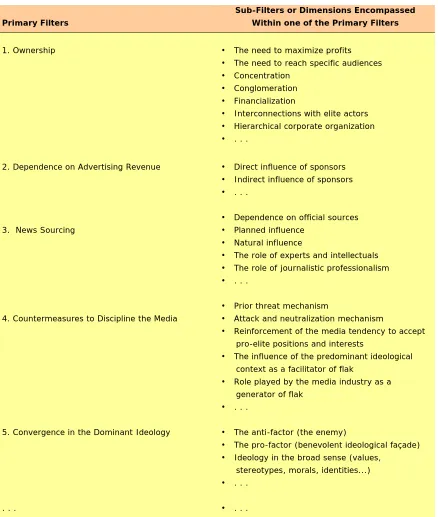
Table 1. Synthesis of the Propaganda Model: Primary Filters and Sub-Filters.
Primary Filters
Sub-Filters or Dimensions Encompassed Within one of the Primary Filters
1. Ownership • The need to maximize profits
• The need to reach specific audiences • Concentration
• Conglomeration • Financialization
• Interconnections with elite actors • Hierarchical corporate organization • . . .
2. Dependence on Advertising Revenue • Direct influence of sponsors • Indirect influence of sponsors • . . .
3. News Sourcing
• Dependence on official sources • Planned influence
• Natural influence
• The role of experts and intellectuals • The role of journalistic professionalism • . . .
4. Countermeasures to Discipline the Media
• Prior threat mechanism
• Attack and neutralization mechanism
• Reinforcement of the media tendency to accept pro-elite positions and interests
• The influence of the predominant ideological context as a facilitator of flak
• Role played by the media industry as a generator of flak
• . . .
5. Convergence in the Dominant Ideology • The anti-factor (the enemy)
• The pro-factor (benevolent ideological façade) • Ideology in the broad sense (values,
stereotypes, morals, identities...) • . . .
Table 2. Synthesis of the Propaganda Model: Secondary Filters.
Secondary Filters that Operate Under the Constraints of the Set of Primary Filters
1. The role of journalists 2. Journalistic professionalism 3. Technology
. . .
As all the different interactions between phenomena affecting the media take place within a complex and changing social organization, no definitive hierarchy can be assigned. However, as Klaehn & Mullen (2010a, 2010b) have stressed, it is important to consider the concept of power when examining the operation of the media. Although the concept of power has been controversial and studied from many perspectives, Castells’ contemporary definition is very useful for the current discussion:
Power is the relational capacity that enables a social actor to influence asymmetrically the decisions of other social actor(s) in ways that favor the empowered actor’s will, interests, and values. Power is exercised by means of coercion (or the possibility of it) and/or by the construction of meaning on the basis of the discourses through which social actors guide their action. Power relationships are framed by domination, which is the power that is embedded in the institutions of society. The relational capacity of power is conditioned, but not determined, by the structural capacity of domination. Institutions may engage in power relationships that rely on the domination they exercise over their subjects. (2009, p. 10)
In addition, Castells holds that “mass communication . . . is shaped and managed by power relationships, rooted in the business of media and the politics of the state” (ibid., p. 3).
affectations which change over time, and that the power relations should be at the center of research involving the media and other social objects of study (Babe, 2009; Martín Serrano, 1977; Marx, 1975; Mosco, 1996).
Based on this approach, the different components are divided according to the impact they have on media performance. The original components are considered primary filters, since they have the most structural weight (are most dominant) in mass media operations. The sub-filters refer to dimensions with specific effects on media production which can be better understood in the context of a particular filter. Other influences on the media, such as the role of journalists, professional journalistic standards, and technology, qualify as secondary filters that operate under the constraints of the set of primary filters. It is argued that these factors have influence in some aspects of mass media production, but not in its general orientation. Although a relative influence is granted, the role they perform is, to a great extent, conditioned by the broader political-economic context: They are more dependent than dominant. If the influence exerted by these three factors was as strong, or stronger, than the primary filters, the media system would be notably different, since less servitude to the elite would be expected; this, in turn, would invalidate the PM.
As a means of making the model more dynamic, the article focuses on the latest research on the PM by incorporating relevant debates, criticisms, and proposals, relates the filters to diverse historical and political-economic dimensions, offers contemporary examples, and stresses the mutual influences between both the filters and the sub-filters.
1. Validity and Current Relevance of the PM: Analysis of the Filters
Before developing the operation of each of the filters, it is important to contextualize Herman and Chomsky’s model. As mentioned above, Klaehn and Mullen (2010a), and Mullen (2009c) place the PM within the tradition of Marxist and radical mass media criticism (RMMC, see Berry & Theobald, 2006)— specifically, in the political economy approach. According to Theobald, the PM “was not a path-breaking work; it re-formulated ideas already long present within the tradition of RMMC. It did, however brilliantly crystalise the ideas and develop them in an accesible and relevant way for its generation” (ibid., p. 237). The PM components have thus been objects of study for a long time. However, it should also be noted that the PM has some particularities, especially with regard to how it understands the relationships between the state, corporations, ideology, power, human actors, and the capitalist system, which leads Mullen to assert, based on the work of Edgley (2009), that “the political economy approach adopted by Herman and Chomsky is distinctive within the Marxist-radical tradition” (2009c, p. 7).
[T]he media are . . . part of an ideological arena in which various class views are fought out, although within the context of the dominance of certain classes; ultimate control is increasingly concentrated in monopoly capital; media professionals, while enjoying the illusion of autonomy, are socialized into and internalize the norms of the dominant culture; the media, taken as a whole, relate interpretive frameworks consonant with the interests of the dominant classes, and media audiences, while sometimes negotiating and contesting these frameworks, lack ready access to alternative meaning systems that would enable them to reject the definitions offered by the media in favour of consistently oppositional definitions. (Gurevitch et al., 1982, p. 2)
With the linguistic and cultural turn initiated in the 1980s, postmodern media studies have become an influential paradigm. By displacing power onto the individual and rejecting global models, postmodern thought is, indeed, contrary to what the PM posits.3 One of the most relevant changes in
media scholarship undertaken since the postmodern turn is the division between cultural studies and political economy, which, in the past, had shared epistemological ground and political concerns. As Babe (2009) has noted, poststructuralists have taken cultural studies in a different direction from the ideas of its original founder figures. By emphasizing language, active audience reception, and semiotics, and by eluding society’s material basis, poststructuralist cultural studies legitimize and reinforce the status quo and the actualized asymmetrical power relations. This culturalist school posits the independence of the “supertructure,” and criticizes the economic determinism of political economy. However, as Babe explains, central founding figures in both traditional political economy and cultural studies have advocated a dialectical relationship between the economic base and the cultural superstructure. The PM is inclusive enough to consider components belonging to both spheres. It emphasizes the mutual influences between social and economic constraints, political forces, ideology, and other cultural dimensions. It thus acknowledges that many different forces co-constitute the media system, but it also examines power relations as a way of identifying and analyzing the most preeminent characteristics of the mass media that facilitate its propaganda role at the service of the elite.
Some of the arguments and contributions by authors working from these different perspectives will be raised, so as to provide the broader context within which the PM and its components can be situated. In addition, the discussion of the filters takes into account some of the general objections to the model. This involves considering more elements and establishing relations between them, with the aim of showing that, contrary to some critics’ views (Corner, 2003; Golding & Murdock, 1991; Schlesinger, 1989), it is not a deterministic, totalizing, or reductionist model. Moreover, the factors that Sparks (2007) identifies as necessary to extend and refine the PM are taken into account, along with the observations of Boyd-Barrett (2004), Corner (2003), Goodwin (1994), and Schlesinger (1989), which suggest that there is a need to operationalize the PM by addressing both how and when the filters operate, and their relative importance. The starting point of the PM is that the model would operate more effectively when the elite are united, and that, when there is division, there will be some room for a wider range of opinions. However, as Herman (interview with Mullen, 2009a) has noted, there are no rules with regard to when
elite consensus or dissensus might exist, only observations. The author’s main observation is that elite consensus is likely to be strong when fundamental class interests are at stake—for example, when the imperial state projects power abroad. Following these reflections, this article does not identify laws on elite union/division, nor does it assign a specific place to each of the filters in the abstract. Instead, it examines concrete cases where the filters are influential, connects them with contemporary sociohistorical dimensions, and focuses on the different interactions taking place in the context of power relations.
1.1. Filter 1: Ownership
For political economy, the private ownership of the mass media is a crucial factor in explaining media production, since it considers that this factor sets its general orientation. The PM offers an encompassing view in which the different elements of ownership are interconnected with other social and cultural phenomena, circumscribing communication possibilities. While for the pluralist-liberal approach, private ownership and the market assure diversity and the independence of the media, the PM holds that these factors lead the media to fully integrate into the structures and logic of power.
A starting point is that, as group of private companies operating in a capitalist market, the primary objective of the mass media is not to inform or entertain, but to turn a profit, without which it would cease to exist. The need to maximize profits4 has highly significant consequences for the products offered, as these must be designed to meet this objective. Media products are merchandise, and as such, their value and capacity to yield a profit depends on the laws of the market—not on public interest, democratic value, or the satisfaction of needs. It is the exchange value that predominates over the use value. Audiences must consume content designed in such a way that the time and attention they dedicate make the product profitable in terms of advertising investment. Media products must therefore be geared toward creating an audience that constitutes a group of potential consumers, rather than a group of individuals with diverse media needs or members of a democratic society. For this reason, products that would not be commercially successful will tend to be avoided, and others that will generate greater profits will tend to be submitted for them, resulting in a homogenous and narrow range of products.
The market tendency is to ignore those people and things that do not serve its goals, and to promote individualist values of accumulation as a prime objective, the satisfaction of needs through material acquisition, often unattainable symbolic aspirations, and other values that are generally framed within an axiological perspective that diverts attention from the actual living conditions of the population. All of this is at the expense of community-oriented values, principles of equality, and the public interest. This can be seen, as noted by Herman (1995, pp. 178–179), in the reduction of children’s programming, due to the fact that children do not usually form part of the preferred target audiences of the advertisers that financially sustain the media. This is a clear example of market failure due to what economists call externalities, all those effects that are not taken into account by the market. The positive effects of children’s programming (a positive externality) are not considered, nor are the negative externalities of the excessive exploitation of sex and violence. The tendency of the market and of capital is unlimited
4 The phrases in bold refer to the different dimensions encompassed within the filters and are included in
expansion through the elimination of obstacles, such as programming that does not promise a significant return.
This commodification of media production thus leads to the colonization of non-commercial media practices, which are displaced as the use and enjoyment of communication becomes increasingly identified with consumption. At the social level, this market hegemony has fostered an environment in which the necessary public space reserved for social, community, and cultural practices not mediated by capital has been progressively overtaken by commercial transaction processes of market production-(distribution)-consumption. At the level of communication, this means that non-economic social and anthropological relations of communicative exchange are giving way to economic reproduction, reducing the possibilities for any social development outside of this commercial logic. According to Habermas (1984, 1985, 1989), the way to counterbalance the institutional structures of the system is through an ideal model of communicative interaction in the public sphere. This is where subjective rationalities of the lifeworld are expressed versus the formal rationality of the system, allowing for mutual understanding and democratic development. However, as the German author has stressed, our everyday life is increasingly penetrated by the formal rationalities of the system. In other words, the systemic structures (the external perspectives, such as the rationalities of profit, bureaucracy, or technocracy) are trying to displace the lifeworld (the subjective perspective of the actors). Therefore, the process of communicative action is being disturbed by external forces in a process of what may be called spatialization, or geographic expansion (Harvey, 2000, 2003; Mosco, 1996). According to Harvey, a key feature of capitalism is geographic expansion, or the “molecular process of capital accumulation in space and time” (2003, p. 26). This is the process by which capital and “economic power flows across and through continuous space, towards or away from territorial entities . . . through the daily practices of production, trade, commerce, capital flows . . . flows of information, cultural impulses, and the like” (ibid., pp. 26–27). Although for Harvey (2000, 2003) there are spaces of hope where social change can be materialized, these have to confront the capitalist process of geographical expansion and spatial reorganization geared toward capital accumulation and cultural hegemony.
objective of the media (the situations in which the media may provide more varied and better quality news—situations that are sometimes related to profitability—will be discussed later).
A second factor that is important to highlight is that, since Herman and Chomsky wrote their book, the media industry has undergone an intense process of concentration due both to a market logic whereby businesses need to be highly profitable in order to survive, and an environment favorable to deregulation that has been promoted by the political powers (for example, through the Telecommunications Act of 1996 in the United States). As Bagdikian has thoroughly documented, the number of dominant major corporations in the U.S. media market dropped from 50 in 1984 to 26 in 1987, to 10 in 1996 (Bagdikian, 1997), and finally to 5 in 2004 (Bagdikian, 2004). Added to these Big Five is another group of around 100 second-tier firms that also operate internationally, and which collectively handle the majority of the world's mass media (McChesney, 2008, pp. 318–320).
Because of the logic of the capitalist market itself, and because of the need for these corporations to expand, grow, and diversify their risks, there is a trend toward more mergers, resulting in a greater concentration of ownership in the industry, and thus in higher economic entry barriers to be able to own a media outlet. A.J. Liebling’s famous observation that freedom of the press is only guaranteed to those who own one has assumed greater relevance, as only a very small group of extremely rich people are able to become media proprietors. The direction taken by the media can only be overseen by those who already belong to the elite and have the capital necessary to make the investment. The upper echelons of the media industry are therefore occupied by people who share an interest in maintaining the status quo of the class system. This concentration of media ownership—and by extension, power— is, as Baker (2007) has pointed out, incongruous with any standard view of democracy in which egalitarianism and self-determination are considered basic premises, as the implementation of such principles necessitates the distribution and dispersal of power and control over the media.
In addition to this interconnection between media groups, it is also important to highlight their
conglomeration. Much of the media belongs to large, horizontally and vertically integrated multimedia
conglomerates characterized by cross ownership. In this way, the owner corporations are able to partially control the production and marketing channels for each individual market or sector, while also holding both the same and different types of media in different markets. Moreover, horizontal integration allows for multi-sector diversification, whereby conglomerates that own media outlets also participate in other economic and financial sectors, often as controversial as the armaments industry, the nuclear industry, the food industry, the oil industry, or the real estate industry. In most cases, journalists are not able to criticize the business operations or investments of their media corporation, or the conglomerate to which it belongs. As Klinenberg points out:
same time, owners of publicly traded newspaper companies have good reason to expect that they should favor the “brands” of the family. (2003, para. 11)5
A fourth factor to consider is the fact that the concentration of media outlets into mega-conglomerates, with the support of neo-liberal policies, has resulted in greater financialization of the media industry through the penetration of bank and financial capital, with a consequent increase in the number of managers from the financial sector on the boards of directors and as shareholders in media companies. As Almirón (2008) has concluded, due to the need for corporate efficiency, for the development of self-financing models, for expansion, and for the establishment of strategic alliances, the interests of media groups have been intensified by the financial sector, which has become a primary news topic, industry partner, client, sponsor, and lender. In her study of the coverage of tax havens—of which banks are major beneficiaries—Almirón (2005) found that, in the newspaper El País (which has ties with the banking sector), of a total of 876 articles that mentioned tax havens between 1976 and 2004, 82.3% made no reference to banks.
In a context of financial globalization and corporate concentration, the relationships between these industrially diversified media groups, the most powerful corporations and financial institutions, lobbyist groups, and political forces has grown closer. In terms of corporate objectives, each corporation aims to maximize sales, profit levels, and market share. This puts them in competition with other corporations. It can have important effects when their interests and objectives with regard to issues like war, the sectors of the economy to be fostered, or the environment are in conflict. That is why Marxist approaches place emphasis on the different factions of capital. However, corporations also have general interests in common, such as preserving the capitalist system, taming the state, denigrating rival ideologies, controlling the masses, etc., and they cooperate in order to achieve these objectives. That is why they can be understood as elite power groups.
There is thus a process of interconnections between the elite actors. Media groups form alliances with one another to ensure their own survival, with the result that their interests coincide even more. Auletta referred to this phenomenon as Keiretsu, which is the Japanese word for a “horizontal web of joint partnerships.” In a study of six of the most important media corporations, Auletta found that “each of the six companies has joint ventures with one or more of the others in the United States or abroad or both” (1997, p. 225). The function of the Keiretsus is made clear in the following comment by former Liberty Media president Peter Barton:
The six executives at Liberty Media sit on more than 40 corporate boards. Their function is to act not just as watchdogs for our investments but also as relationship managers with our partners. In this way, we can link pieces of our portfolio to create strengthened alliances, new businesses, and shared economics. (ibid.)
5 As of this article’s publication, General Electric has sold a majority stake in the NBC Universal group to
The media and other corporations share direct interests, for example, through interconnected boards of directors, strategic alliances, joint ventures, or merchandising agreements (Mosco, 1996). They also share indirect interests, such as their need for the continued thriving of both the investment banks that finance parts of their operations and the stock market (in which media companies also participate), because they depend on the cheap flow of information that the corporations provide, and also because the major corporations, as sponsors, are the main agents ensuring the media’s survival.
The media conglomerates and the political powers are in a situation of tacit collusion stemming from the dependence of media groups on the subsidies, concessions, and deregulation policies of governments; on the political forces as a source of information; and on the funding they receive from institutional advertising. It is also customary in the United States for media groups to make generous donations to the two major political parties and members of the Federal Communications Commission. Another common occurrence in the United States is the phenomenon of “revolving doors,” whereby a member of one of these three main powers goes on to participate actively in another of the powers. This phenomenon is not exclusive to the United States, as the elite form a transnational class; thus we find former heads of government such as Spain's José María Aznar working as consultants for Rupert Murdoch’s News Corporation.
These groups that dominate the communication sector thus form part of a small international elite network with business and social ties to each other. Although they are in competition and battle tactically for the market, they also share the interests and strategic economic and ideological objectives of their class. There is a considerable literature on the emerging transnational capitalist class. For example, Fennema (1982), Useem (1984), Mattera (1992), Robinson and Harris (2000), Sklair (2000), Carroll and Fennema (2002), and Beder (2006a, 2006b) have all presented empirical evidence of an emerging network of interlocking corporate directorates. Operating through these networks, together with elite planning organizations, such as the Bilderberg Group, the European Round Table of Industrialists (ERT), the Trilateral Commission, and others, the corporate sector has pursued its interests in a systematic way on a national and international level (Beder, 2006a, 2006b; Carroll & Carson, 2003; van Apeldoorn, 2000, 2002).
Obviously, it could not be expected that the news content produced by transnational groups would attack the interests of the parent company. As David Cromwell notes:
[P]ress freedom is limited by the simple fact that the owners of the media corporations are driven by free market ideology. How likely is it, then, that such owners would happily allow their own newspaper, radio or TV station to criticize systematically the “free market” capitalism which is the source of his material wealth? (2002, para. 4)
company, it is advisable for the employees to act in accordance with the desires of those who pay them. Moreover, journalists work in a professional environment which fosters the internalization of the company’s norms, values, and editorial line. In order to avoid psychological dissonances, journalists’ thought may easily conform to the publishable thought expected by the company.
This concentration of private media outlets interconnected with the political forces and the financial-economic sector, as well as the need to increase profits, has various consequences. These include the reduction of foreign correspondents (McChesney, 2008, pp. 103–104, 119–120), the reduction of capital provided for investigative journalism (ibid., pp. 41–43), the increase in soft news at the expense of hard news (Gans, 2003, p. 28), the “disempowerment” of journalists (ibid., pp. 21–35), the emergence of “multiskilled” journalists (Klinenberg, 2000), the oversimplification of content (Jamieson, 2000), infotainment (Thussu, 2008), and the collapse of the barrier between “Church” (the editorial agenda) and “State” (the corporate agenda) (Gans, 2003, p. 24). Furthermore, this structural feature of the media has contributed significantly to the conversion of the huge, highly organized public relations apparatuses of corporations (Dinan & Miller, 2007) and government propaganda (Miller, 2004) into two of the most important sources of information for the media. It is thus clear that media ownership is a decisive factor in the direction taken in the industry, one that constitutes an obstacle to audience comprehension of both the different events reported and their own place and condition in society.
The Ownership dimension, with its various interrelated elements, therefore has a major influence on news content by marking out the editorial line to be taken and allocating resources according to commercial and ideological interests that favor certain types of information and perspectives while marginalizing others.
1.2. Filter 2: Dependence on Advertising Revenue
This second filter is closely related to the first, as the main source of financial support for most media outlets consists of the money received from sponsors for advertising. Although, for the analysis of certain individual case studies, it can be difficult to measure the specific role played by this second filter, the direct influence and the indirect influence of advertisers has been extremely well established. For example, the works of Barnouw (1978) and Turow (1997) are of great value in this respect. But in particular, the work of Bagdikian (1997, 2003), documenting the long history of both the influence of corporate sponsors and cases in which advertising has been withdrawn due to media content being too “controversial” has been especially influential. In Spain, journalist Javier Ortiz has provided numerous examples that he witnessed firsthand:
advertising campaign with us because we had reported that the company had certain labor problems. (2002, pp. 80–81)
The developments of marketing and new technologies have fostered an increased corporate presence in the media through corporate workers’ regular contact with journalists, through their payment for product placement (including virtual placement), through advertorials, or through the production of reports and videos by public relations departments that provide the media outlets with cheap information (Farsetta & Price, 2006).
The indirect influence occurs without any form of intentional pressure, because advertisers are the financers who ensure the survival and growth of media outlets. This makes it difficult for the media to question their interests and activities. Media content must conform as much as possible to what sponsors are looking for in an outlet to advertise their products.
The importance of not “biting the hand that feeds you” cannot be underestimated, and its effect is highly visible in media content, made evident by the large quantity of information that serves the function of maintaining the status quo, the suppression of information that does not meet the needs of corporations to build a positive public image, and the transmission of consumer values and a commercial axiological perspective that helps to create an atmosphere conducive to the sale of their products. This “program environment” must establish an appropriate buying mood to ensure the receptiveness of potential consumers. As a spokesperson for General Motors put it, his company “would not advertise on a TV program about atrocities in Iraq,” while an advertising executive explained that “you don’t want to run a humorous commercial next to horrific images and stories” (Hart & Hollard, 2005, para. 5).
This dependence on advertising revenue also promotes the commercialization of content (with the rise of “infotainment,” lifestyle journalism, etc.) and the exclusion of information and programs that do not fit within this logic, due to the need to reach either wide audiences or audiences with purchasing power and the right psychodemographic characteristics to form part of the advertiser's target market. In other words, the media financing model promotes types of content produced with a view to business, rather than to the democratization of society. According to the premises of the PM, information is molded by the five filters interacting and reinforcing each other. It is therefore logical to conclude that a visible effect consistent with the influence of this filter, although in combination with the other four, is the drastic reduction in news stories about worker issues, in favor of an increased presence of business news (McChesney, 2008, p. 47).
and the biggest beneficiaries of the neoliberal globalization process, the trend toward favoring the policies, values, and ideology of globalization has been constant, in spite of its negative global consequences (see Navarro, 2007).
In the current era of crisis and major upheavals, the role the media is playing is one that reflects the tactical battles between elite factions, with the occasional inclusion of critical voices that give the illusion of free and open debate, which are beginning to make themselves heard through general strikes, demonstrations, and other forms of protest. Apart from the minimal space conceded to dissenting voices, the media must generally comply with the demands of the advertisers; otherwise, they would lose advertising revenue. This has the subsequent effect of threatening the survival of media outlets providing alternative information, and thus promotes concentration.
According to Cromwell and Edwards (2006), the dependence on sponsors and other elements that have tied the media up in the corporate system has had a significant effect on the presentation of news on global warming and climate change. These authors have studied the limits of the media debate, noting that, although wide and dramatic coverage has been given to climate change, the presentation of the issue has omitted the intrinsically unsustainable nature of capitalism as a system of economic development based on the need to maximize profits through an increased productivity and mass consumption that savagely devours natural resources and subordinates nature and life itself to profitability. They also show how the media have kept silent about the ongoing strategies of corporations to stop any rational action from being taken to combat the climate chaos, about their activities contributing to pollution, and about the millions of dollars spent in propaganda and corporate advertising. The media have also conveyed the idea of a globally shared responsibility without indicating the main parties responsible (except in general references to “China” or “America”). There has also been a habitual use of publicity, i.e., articles favorable to the interests of the corporations which, theoretically, have not been paid for, and which are therefore presented as news stories or informative reports. The full details of the causes of the planet's environmental problems tend to be left out in the corporate media, while unsustainable mass consumption continues to be promoted. Babe (2005) has studied press coverage of environmental issues in Canada, particularly on global warming and the Kyoto Protocol, concluding that this coverage essentially reflects the interests of the business sector.
Finally, the new culture of free online-access and print newspapers has provoked an even greater dependence on advertising and, due to the technological possibilities, greater marketing and business opportunities for corporations.
1.3. Filter 3: Sourcing of News in the Media
Herman and Chomsky explain that, due to the need to cut costs and because of the intimate relationship between the media and the political and corporate sectors, in a context of urgent news delivery and deadline pressures, news production suffers from an intrinsic dependence on official
sources for information, resulting in these sources’ high levels of visibility and acceptance (1988).
on them for their content and business operations. As a result, they habitually rely on these sources, according them authority, credibility, and legitimacy. On the other hand, information originating from marginal sectors receives very little coverage and is treated with skepticism, thereby making the elite the main group establishing the tone and the agenda of topics to be addressed. Bennet’s (1990) research on the indexing hypothesis supports this idea of sourcing bias, since it finds that the media tend to index the range of voices and viewpoints expressed in official circles, especially by the the mainstream government debate. While it is necessary to acknowledge, following Lang and Lang (2004a, 2004b) and Sparks (2007), that sometimes journalists may also confront powerful sources, media’s dependence and complicity with these sources can be understood as a structural feature, both because of the asymmetrical power relations between journalists and official sources, and because of the media’s dependence on the information provided by the latter.
In this filter, it is important to distinguish between the planned influence and natural
influence of the information providers. Official sources customarily attempt to set the agenda of topics
and the way they are to be presented. As Dinan and Miller (2007) have docuemented, there is a huge public relations system organized by corporations and states to shape the news agenda and bury the news that may be contrary to their interests. In addition, due to their natural dependence on these sources, the media also routinely turn to them for information and accept it without question, bypassing even a need for influence campaigns. There are thus two different dimensions to this filter. One is the capacity of the elite to provide information and their self-interest in doing so; the other is the way in which the media rely on official sources.
According to the agenda-setting theory (McCombs, 2004), the news agenda of the media is mainly set by three factors: “major sources who provide information for news stories, other news organizations, and journalism’s norms and traditions” (ibid., p. 117). These are thus considered central gatekeeping factors which filter and shape reality. Moreover, the theory holds that there is a transfer of salience from the news agenda to the public agenda, both in the political and the corporate realm (Carroll & McCombs, 2003). The news agenda is the way by which the media influence the public’s perception of what the important topics are, what topics are not important, and which attributes are to be emphasized. Several important case studies of the topics that the media selects and excludes from public debate can be found in the work of Chomsky and Herman (1988). One such example is their analysis of how the U.S. media focused on and emphasized the massacres of the Khmer Rougue in Cambodia and omitted the role of the United States, while it buried the information available on the massacres in East Timor carried out by the Indonesian dictator and client Suharto.
[T]he money the military spends on winning hearts and minds at home and abroad has grown by 63 percent, to at least $4.7 billion this year, according to Department of Defense budgets and other documents. That’s almost as much as it spent on body armor for troops in Iraq and Afghanistan between 2004 and 2006. (Associated Press, 2009)
In terms of the influence of the private sector, an increased desire and capacity among corporations to control information is also evident. But to understand how both the political and private sectors influence information, it is important to consider the second dimension, i.e., how and why the media rely on official sources. The media increasingly rely on the information, public relations material, and propaganda provided by the elite because, as Gandy (1982) points out, this represents a significant “information subsidy” which allows them to cut production costs. A study by Cardiff University found that 19% of the articles in the British press and 17% of the television news analyzed came wholly or mostly from public relations material. The study also shows that this material
often finds its way into news via agency copy, which many journalists often see as an authoritative source. This means that the heavy reliance on the wires and other media (47% of press stories rely wholly or mainly on wire copy and other media) is, in effect, a conduit for further PR influence on news. (Franklin et al., 2008, para. 9)
In all, “60% of press articles and 34% of broadcast stories come wholly or mainly from one of these ‘pre-packaged’ sources” (ibid, para. 4). The research also makes reference to a significant consequence of the constraints resulting from the reinforcement of corporative imperatives, a consequence which affects the dependence on these sources: “While the number of journalists in the national press has remained fairly static, they now produce three times as much copy as they did 20 years ago” (ibid., para. 3) This data is consistent with the conclusions of journalist Davies (2008), who explains the rise in distortions and propaganda in the British media as being basically due to the fact that there are fewer staff and resources to produce more stories in a context of a need for continuous production. This corporate pressure means that journalists don’t have time to be able to compare sources and stories. In the United States, according to Rampton and Stauber (1995), 40% of what was published in the press in the mid-1990s was reproduced directly from press releases issued by company public relations departments.
Because of the way in which the media operate, the presence of propaganda and public relations material is not an isolated phenomenon. It occurs within a general context of dependence on official sources, resulting in a natural or unplanned influence. Without the need to resort to costly influence campaigns, the corporate and political sectors have regular access to the media as an arena in which to express themselves. For example, a study by Media Tenor Ltd. found that it is 35 times more likely for one to hear representatives of corporations than representatives of workers’ organizations on U.S. television (Howard, 2002).
in a campaign of disinformation and marginalization of anti-war voices. The case of “embedded” journalists has possibly been one of the most paradigmatic examples: At the beginning of the war in March 2003, there were a total of 775 journalists in Iraq whose role was to accompany the troops and report the official military version of events (Powell, 2004). Another example is that of Judith Miller, whose false information published in The New York Times provided by Ahmed Chalabi (leader of the Iraqi National Congress [INC], a group supported and directed by the government and the U.S. Pentagon to promote regime change in Iraq), was used by the Bush government as an argument for invading Iraq (for a more detailed analysis, see Boyd-Barrett, 2004). In addition to these examples, the data on the routine sources used confirm the importance of this filter in the coverage of the war. According to a study conducted by FAIR in October 2003, former or current government and military officials accounted for 76% of the 319 sources of news on Iraq on the network stations (Whiten, 2004). The reliance on these types of sources, which are rarely questioned, has resulted in the de facto transmission of pro-war propaganda. According to information documented by the Center for Public Integrity (Lewis & Reading-Smith, 2008), President Bush and seven other top-level officials in his administration made 935 false statements that formed part of a well-orchestrated disinformation campaign about the threat posed by Iraq. The study also indicated that “much of the wall-to-wall media coverage provided additional, ‘independent’ validation of the Bush administration's false statements about Iraq.”
In the United Kingdom, the choice of sources also significantly affected the presentation of information:
Of 12,447 Guardian and Observer articles mentioning Iraq in 2003 on the Guardian Unlimited website, Ritter was mentioned in only 17, mostly in passing. Denis Halliday, who set up the UN’s oil-for-food programme in Iraq, and who blamed the US and British governments for the huge death toll of Iraqi civilians under sanctions, was mentioned in two articles. His successor, Hans von Sponeck, who also resigned in protest at sanctions, received five mentions. The Independent mentioned Ritter only eight times in 5,648 articles on Iraq in 2003. Ritter’s disarmament claim received fewer than a dozen brief mentions in the Guardian the year before. (Cromwell & Edwards, 2004, para. 3)
With the rise of phenomena such as the concentration of ownership and commercialization of the media; or the coordination, capacity, and capital of governments and corporations for the provision of news material; or the development of think tanks, lobbying groups, and business organizations and institutions, there is no doubt that the significance of this third filter has increased.
1.4. Filter 4: Flak or Countermeasures to Discipline the Media
The standard liberal view holds that the media is independent from other powers. However, one can certainly observe the will and capacity of the agents of the elite to control information. Although a certain level of variety and dissidence can be expected in the media of formal capitalist democracy (for the purposes of profitability, needing to offer products that satisfy a more progressive audience, to maintain the appearance of democracy and diversity, etc.), there are other elements, such as the organized responses of corporations and governments, which impose limits on the plurality and scope of information made public.
The mechanisms used by these agents to discipline the media “can take the form of letters, telegrams, phone calls, petitions, lawsuits, speeches and bills before congress, and other modes of complaint, threat and punitive action” (Chomsky & Herman, 1988, p. 26). These countermeasures have three essential dimensions. First of all, they act as a prior threat mechanism before the news is produced. If a journalist or editor is considering publishing information that may be received negatively by the elite, it would be logical to drop the idea to avoid having to confront an organized and powerful system of countermeasures. Secondly, there is an attack and neutralization mechanism that comes into play when inconvenient information is revealed. The veracity and credibility of the information will be attacked in order to neutralize the effect on society of this unpleasant news. On a more general level, the pressures from powerful entities act as a reinforcement of the media tendency to accept pro-elite opinions
and interests, for fear of being accused of being unpatriotic, leftist, or anti-business, or of not sufficiently
attacking totalitarian regimes.
It is also important to note the influence of the predominant ideological context as a
facilitator of flak. The contexts of exaggerated patriotism and the “war against terror” promoted since
Even when the audience and the profits are high, there are cases in which the political imperative outweighs all other considerations. The case of Phil Donahue on MSNBC is a perfect example of this point. According to Mitchell:
Phil was really their star before the war. And he actually took the radical position of occasionally having antiwar people on . . . . And because of that, he was accused of being insufficiently patriotic, and so he was, shortly thereafter, was (sic) let go at the network, even though his ratings were higher than anyone else. (2008, para. 18)
A memo filtered by NBC explained the problems with Donahue's program in ideological terms: His show presented a “difficult public face for NBC in a time of war . . . . He seems to delight in presenting guests who are anti-war, anti-Bush and skeptical of the administration’s motives” (Greenwald, 2008).
It is not only corporations and governments that exercise their influence on journalists and editors through flak; the media groups themselves have also made use of their greater level of power to silence dissident elements and promote a pro-establishment media culture, accompanied by arguments about the independence and noble achievements of the press. In other words, the media industry itself
plays an important role as a generator of flak.
It is important to note, as has been thoroughly documented by Alterman (2003), the widespread campaign of conservatives in general, but with the significant participation of the right-wing media, against the “liberal media,” which has fostered a shift to the right on the news spectrum, an increased subjection to corporate agendas, and a reluctance to challenge the official line for fear of accusations of anti-patriotism, anti-Americanism, or leftism. In this flak of media against media, not only have the supposedly progressive media been attacked, but also journalists who genuinely oppose the policies of the elite have been targeted with the aim of discrediting them. The case of John Pilger is well-known, as it has even entailed the creation of the verb “to pilger” or “pilgerize” to refer to a way of presenting information that is characterized by sensationalism, distortion of facts, and leftist propaganda. According to Chomsky, the term was “invented by journalists furious about his incisive and courageous reporting, and knowing that the only response they are capable of is ridicule” (2005, para. 14). Another well-known case is that of Naomi Klein, who has been harshly criticized by The Economist and The New Republic, among others, with the aim of discrediting her work. As anti-establishment journalists know all to well, the phenomenon is widespread.
the media, was to reject his arguments out of hand and criticize him personally (Cromwell & Edwards, 2008; FAIR, 2008). Similarly, when Bourdieu (1997) appeared on French television to criticize journalism and television itself, journalists reacted by criticizing him.
With the advent of the Internet, new dimensions of flak have emerged. As Herman has pointed out, there has been a “growing influence of right-wing bloggers as flak agents” (in Mullen, 2007). Furthermore, many journalists have begun choosing to express themselves through their blogs and other Internet sites, something that is not generally pleasing to media directors, as demonstrated by CNN journalist and producer Chez Pazienza’s dismissal for no other reason than having a blog (Pazienza, 2008). In Spain, there have also been clear signs of the willingness of the major media outlets to discipline freelance journalists who regularly publish articles online. For example, the newspaper El País threatened journalist Pascual Serrano with legal action if he didn’t remove from his non-corporate website Rebelión.org a critical piece that included text from an article by Nobel Prize winner Mario Vargas Llosa originally published in the newspaper, on the basis that it violated copyright. The article, which was published on other websites with lower readerships that received no demands for its removal, only contained a quote from the Vargas Llosa article, prompting Serrano’s lawyer to assert that it fell legally within the terms of quotation rights (Serrano, 2007).
The general ideological atmosphere (related to Filter 5) and the power of the institutions of the elite to defend themselves clearly point to a general line of direct and indirect intimidation on the part of the establishment, which is becoming increasingly forceful and diversified in its efforts to marginalize opinions that threaten its interests.
1.5. Filter 5: Anti-Communism as a Control Mechanism — Today, Convergence in the Dominant Ideology
Herman has updated this filter to include the belief in the miracle of the market:
The triumph of capitalism and the increasing power of those with an interest in privatization and market rule have strengthened the grip of market ideology, at least among the elite, so that regardless of evidence, markets are assumed to be benevolent and even democratic (“market populism” in Thomas Frank’s phrase) and nonmarket mechanisms are suspect, although exceptions are allowed when private firms need subsidies, bailouts, and government help in doing business abroad. (Chomsky & Herman, 2002, pp. xvii–xviii)
Moreover, the support for the capitalist market entails the promotion of consumerism and commercialism.
The logic of this two-pronged ideological mechanism consists in the exploitation of dichotomies according to the Manichaean division between us and them, good and evil, friends and enemies. This entails the use of strategies of othering: Instead of building bridges for human understanding and cooperation, according to Edward Said (1979), the strategy of othering uses a set of prejudices to represent the others as different from ourselves, and to stress their alleged weaknesses versus our alleged strengths. This makes the target group more vulnerable to exclusion, domination, and aggression.
The original model considers ideology in its most explicitly political dimension. However, ideology has many other faces, so that, in addition to examining the ideological features of war propaganda, economic indoctrination, or political persuasion, it is also necessary for the PM to understand the concept of ideology in a broader sense of the term, as noted by Cohen and Rogers (1991). Although it is not the aim of this article to explore these other dimensions of ideology, there is a need for empirical research into media representations that contribute in a broad sense to a world view oriented toward the consensus of the prevailing social, economic, political, and cultural system. This involves all elements that, by their nature, contribute to social control, making it more difficult for individuals to comprehend the reality of the world around them, and has its reflection, for example, in the social values, moral principles, stereotypes, and identities that the media select and represent in particular ways.
The best way to define this is as Convergence in the Dominant Ideology. As has been shown in the analysis in this article, the dominant ideology plays an important role in each of the previous filters, naturalizing and promoting a type of information consistent with elite interests. The rhetoric of the dominant ideology is always flexible, as the elite themselves will gradually transform it in keeping with their interests. For this reason, it is advisable to use a category broad enough to encompass the ideological variations that occur in political, intellectual, and academic discourse. The dominant ideology is constantly shedding its skin in order to continue defending capitalism as the best form of organization and justifying the activities of the rulling elite.
propaganda in favor of “our side” (as defined by the elite) the appearance of being legitimate and necessary. The “War on Terrorism” constitutes an important element of the dominant ideology today, as it enables a division of the world that is closely connected to the idea of the “Clash of Civilizations” and the moral superiority of the West to intervene in other countries for the good of the people of the world. The category is sufficiently broad and vague to encompass any official enemy, to foster fear and justify its criminalization and attack. Indeed, in determining who is to be considered a terrorist:
[T]he various definitions tend to be applied with ad hoc criteria, depending on the interests that need to be satisfied at the time, so that certain groups will be added to the lists published by the State Department only to be subsequently removed, and vice versa. (Tortosa, 2008, p. 4)
The pretext for the war on terrorism has been supported by arguments for humanitarian intervention (Bricmont, 2006), based on a deep-rooted belief in the media and the political sphere in the good intentions behind the major powers’ actions and objectives in other countries (“our causes are just”). This is particularly notable in the United States, but it can also be observed in other countries of the center. For example, historian Mark Curtis (2003) has described how the British media promote the concept of “Britain’s basic benevolence” to disguise and justify reprehensible practices by its government, such as violations of international law, collusion in human rights abuses, or support for repressive states.
In describing the U.S. national culture, Zinn distinguishes two profound dimensions, one temporal, the other spatial: “One is an absence of historical perspective. The other is an inability to think outside the boundaries of nationalism” (2006, para. 3). These limits lead to “the arrogant idea that this country is the center of the universe, exceptionally virtuous, admirable, superior” (ibid., para. 12).
These two factors, which are promoted by various institutions, are clearly evident in the United States, but they are also present in other countries of the center. This particular way of understanding the world and one’s place in it acts like a kind of prism that profoundly affects the perspective from which the media offer their representations of the world. But it also influences the topics to which the public is exposed. For example, research conducted on the Spanish press found that:
[N]ews is concentrated in certain specific zones and countries that are the closest culturally and in terms of development. The results of the study show that, on average, each country of the center was represented by 24.9 news items over the period covered by the sample, while each country of the periphery was only represented by 3.93 news items. (Penalva, 1999, p. 160)
Furthermore,