Chapter 6
Slide 6.2
Learning objectives
• After this lecture, you will be able to:
– Identify the main elements of an enterprise system – Appreciate the importance of transaction processing
systems, process control and office automation systems to the operational management of a business;
– Appreciate the importance of decision support
systems, information reporting systems and executive information systems in providing information for
managerial decision making.
Management issues
• From a managerial perspective, this lecture
Slide 6.4
Enterprise and Functional BIS
• Business Information Systems can be
categorised into Operations and Management
systems which can be implemented as either
Enterprise systems
– Support the business processes of an
organisation across any functional boundaries that exist within that organisation.
– Use internet technology to connect the business with suppliers, customers and partners.
Slide 6.6
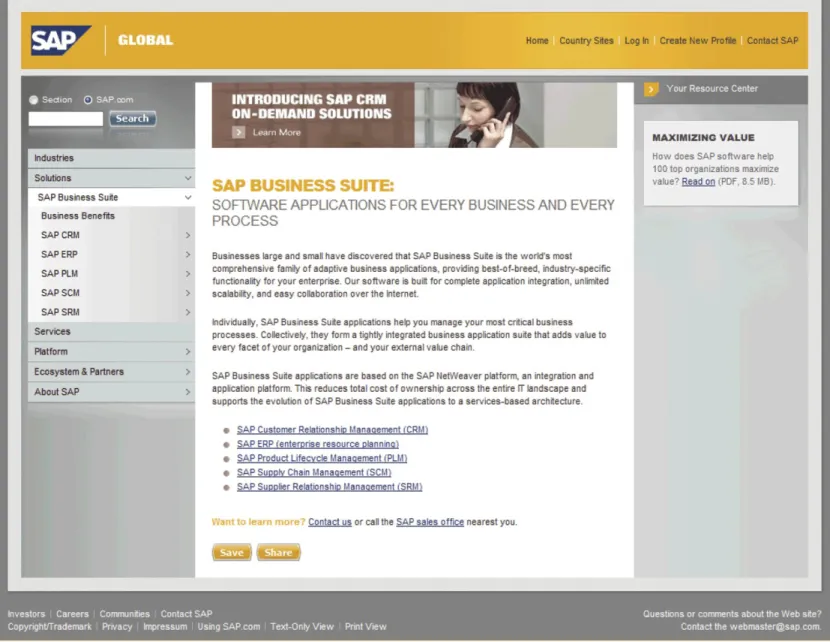
Figure 6.1 Enterprise applications from SAP
Enterprise resource planning (ERP)
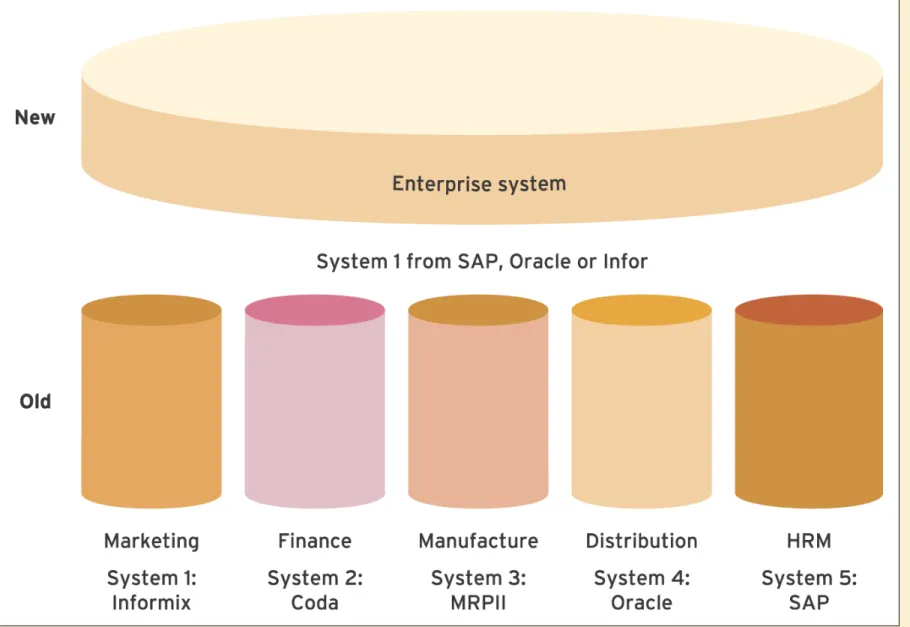
– ERP provides a single integrated solution from a single supplier for major business functions such as marketing, finance etc.
– Advantage of ERP is it removes ‘information islands’ (separate applications and data in different parts of the company).
Slide 6.8
Supply chain management (SCM)
– A supply chain consists of the series of
activities that moves materials from suppliers through the organisation to customers.
– Supply chain management is the management of this material flow.
– Organisations in the supply chain can have
Slide 6.10
Customer relationship management (CRM)
• CRM systems are designed to integrate the
range of information systems that contain
information regarding the customer.
• These can include customer data collection,
customer data analysis and salesforce
Supplier relationship management (SRM)
• These systems refer to all the activities involved with obtaining items from a supplier, including procurement, transportation and warehousing. • Procurement is an important aspect of SRM as
the cost of materials can represent a substantial amount of the total cost of a product or service. • Choosing a supplier is another important aspect
Slide 6.12
Business information systems
• BIS can be divided into 2 broad categories:
• Operations information systems (OIS)
– Systems that support an organisation’s business activities
• Management information systems (MIS)
Types of operations information systems
• Transaction processing systems (TPS): These are
used to manage the exchange of information and funds between a company and third parties such as customers, suppliers and distributors.
• Office automation systems (OAS): OAS are used to
manage the administrative functions in an office environment and are often critical to service-based industries.
• Process control systems: These are important in the
Slide 6.14
Transaction processing systems (TPS)
• These systems involve recording and processing of data that results from an organisation’s
business transactions
– real-time (online) processing of balance enquiries in a cashpoint system
– Batch processing of customer bills for utilities
Office automation systems
• Systems intended to increase the productivity of office workers.
• Groupware
– Assists teams of people working together through facilities such as email and teleconferencing within or between companies
• Document imaging process (DIP)
Slide 6.16
Office automation systems
• Workflow management systems (WFMS)
• Automate a business process by providing a structured framework to support the process as
follows:-– Assign tasks to people
– Allow collaboration between people sharing tasks – Retrieve information needed to complete a task e.g.
customer details
– Provide an overview of the status of each task
Process control systems
• These systems support and control manufacturing processes.
– Materials requirements planning (MRP) aims to ensure the right amount of stock is held for the production schedule.
– CAD/CAM – provides a graphics program which allows the design (CAD) and automated
Slide 6.18
Types of management information
systems
• Decision support systems (DSS). These provide information and models in a form to
facilitate tactical and strategic decision making. • Information reporting systems (IRS). These
provide pre-specified reports for day-to-day decision making.
• Executive information systems (EIS). These provide senior managers with a system to
Decision support systems (DSS)
• Provide information in a form to facilitate tactical and strategic decision making
• Types of DSS include
– Expert systems – Represent the knowledge and decision-making skills of specialists
Slide 6.20
Information reporting systems (IRS)
Systems used to generate reports for
decision-making
• Periodic reports such as weekly sales summary • Exception reports triggered by events such as
Executive Information Systems (EIS)
• Provide senior managers with information to assist in making tactical and strategic decisions.
– Provide summary information on key performance indicators, integrate data from a wide variety of
sources including competitor data and market information.
Slide 6.22
Departmental applications
These are systems based within departments of an organisation which may require application-specific software.
• Human resources – job analysis and design, job management and recruitment
• Marketing – marketing information systems and telemarketing software