Effects of regulating intestinal
microbiota on anxiety symptoms: A
systematic review
Beibei Yang, Jinbao Wei, Peijun Ju, Jinghong Chen
To cite: Yang B, Wei J, Ju P, et al. Effects of regulating intestinal microbiota on anxiety symptoms: A systematic review. General Psychiatry 2019;32:e100056. doi:10.1136/ gpsych-2019-100056
Received 23 January 2019 Revised 28 February 2019 Accepted 03 March 2019
Shanghai Key Laboratory of Psychotic Disorders, Shanghai Mental Health Center, Shanghai Jiao Tong University School of Medicine, Shanghai, China
Correspondence to Dr Jinghong Chen; chenjh_ 008@ hotmail. com © Author(s) (or their employer(s)) 2019. Re-use permitted under CC BY-NC. No commercial re-use. See rights and permissions. Published by BMJ.
AbsTrACT
background Anxiety symptoms are common in mental diseases and a variety of physical disorders, especially in disorders related to stress. More and more basic studies have indicated that gut microbiota can regulate brain function through the gut-brain axis, and dysbiosis of intestinal microbiota was related to anxiety. However, there is no specific evidence to support treatment of anxiety by regulating intestinal microbiota.
Aims To find evidence supporting improvement of anxiety symptoms by regulation of intestinal microbiota.
Methods This systematic review of randomised controlled trials was searched based on the following databases: PubMed, EMBASE, the Cochrane Library, OVID, Web of Knowledge, China National Knowledge Infrastructure (CNKI), Wanfang Data, VIP databases and SinoMed. The retrieval time dated back to 25 July 2018. Then we screened research literatures based on established inclusion and exclusion criteria. Quality evaluation for each included study was done using the Cochrane risk of bias and the Jadad scale.
results A total of 3334 articles were retrieved and 21 studies were included which contained 1503 subjects. In the 21 studies, 14 chose probiotics as interventions to regulate intestinal microbiota and six chose non-probiotic ways such as adjusting daily diets. Probiotic supplements in seven studies contained only one kind of probiotic, two studies used a product that contained two kinds of probiotics and the supplements used in the other five studies included at least three kinds of probiotics. In the studies that used treatment as usual plus interventions regulating intestinal flora (IRIF) as interventions (five studies), only non-probiotic ways were effective (two studies), which means 40% of studies were effective; in the studies that used IRIF alone (16 studies, 11 studies used probiotic ways and 5 studies used non-probiotic ways), 56% of studies could improve anxiety symptoms, and 80% of studies that conducted the non-probiotic interventions were effective, while 45% of studies that used probiotic supplementations had positive effects on anxiety symptoms. Overall, 11 studies showed a positive effect on anxiety symptoms by regulating intestinal microbiota, which indicated 52% of the 21 studies were effective, and there were five studies that used probiotic supplements as interventions and six used non-probiotic interventions. In addition, it should be noted that six of seven studies showed that regulation of intestinal microbiota could treat anxiety symptoms, the rate of efficacy was 86%.
Conclusions We find that more than half of the studies included showed it was positive to treat anxiety symptoms by regulation of intestinal microbiota. There are two kinds of interventions (probiotic and non-probiotic interventions) to regulate intestinal microbiota, and it should be highlighted that the non-probiotic interventions were more effective than the probiotic interventions. More studies are needed to clarify this conclusion since we still cannot run meta-analysis so far.
bACkground
Anxiety disorder is a mental disorder with anxiety symptoms as the main clinical mani-festation, with a global incidence of 3%–25%, and the incidence in chronic diseases, such as cancer, cardiocerebrovascular disease, irri-table bowel syndrome (IBS), is 1.4%–70%.1 Studies2 have shown that up to 33.7% of people will be affected by anxiety symptoms during their lifetime. Those with a longer course of disease are often accompanied by social cognitive impairment, which has serious impact on patients and society. Therefore, the treatment of anxiety is very important. Clin-ical principles for the treatment of physClin-ical diseases with anxiety symptoms are usually based on the relief of somatic symptoms, and the use of psychiatric drugs, psychotherapy and other treatments can be combined under the premise of ensuring treatment efficacy. In China, anxiety symptoms often are confused with somatic symptoms and neglected in clin-ical practice.3 Therefore, the anxiety symp-toms often could not be treated timely and effectively.
The trillions of microorganisms located in the gut are called gut microbiota, and they perform important functions in the immune system and metabolism by providing essen-tial inflammatory mediators, nutrients and vitamins.4 Besides, Toll-like receptors (TLR) can specifically recognise lipopolysaccharide (LPS) molecules in pathogenic microorgan-isms, especially TLR4. After the LPS of the gut microbiota activates the TLR, the NF-κB pathway which regulates the expressions
on September 12, 2020 by guest. Protected by copyright.
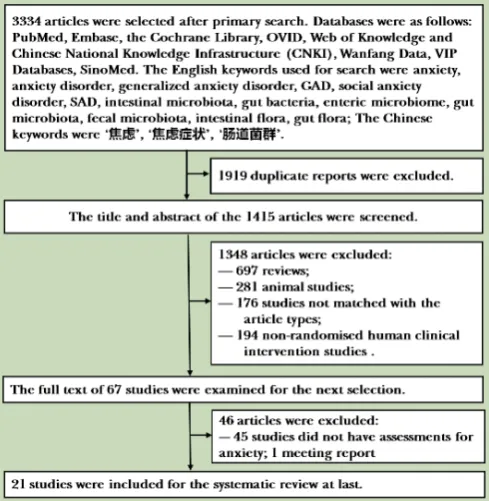
Figure 1 Flowchart of the study. 21 studies were selected for the systematic review after retrieving the databases based on the search strategy.
of many inflammatory mediators and cytokines is acti-vated. The long-term existence of this immune activa-tion can make brain funcactiva-tions change which finally lead to the kinds of mental disorders like anxiety disorder.5–7 Furthermore, studies indicated that gut microbiota could have an impact on the function of the hypothalamus-pi-tuitary-adrenal axis which could lead to changes in brain functions.8 Additionally, a growing number of basic and clinical studies have shown that intestinal flora can modu-late communication between the gut and the brain9 via the gut-brain axis, which10 mainly includes the nervous system, immune system and endocrine system. When intestinal flora is affected, a series of changes in physical and/or mental symptoms can occur.11
Animal studies have demonstrated that germ-free mice pretended to have anxiety-related behaviours and this condition could be changed by regulating gut micro-biota.12–16 However, there is no consensus on whether anxiety symptoms can be improved by regulating gut microbiota. Therefore, this systematic review was conducted to provide clarification and new ideas for clin-ical treatment.
MeThods search strategy
The following databases were searched up to 25 July 2018: PubMed, EMBASE, the Cochrane Library, OVID, Web of Knowledge, China National Knowledge Infrastructure (CNKI), Wanfang Data, VIP Databases and SinoMed. The search terms were as follows: (anxiety OR anxiety disorder OR generalized anxiety disorder OR GAD OR social anxiety disorder OR SAD) AND (intestinal micro-biota OR gut bacteria OR enteric microbiome OR gut microbiota OR fecal microbiota OR intestinal flora OR gut flora). The Chinese search terms were “焦虑” or “焦 虑症状”, AND “肠道菌群”. The retrieval strategy and keywords were modified for different databases. At the same time, we conducted literature traceability to find further relevant research.
Inclusion and exclusion criteria of literature
Inclusion criteria
The inclusion criteria were as follows: (1) patients: the subjects were patients with anxiety symptoms no matter what the diagnoses were and all patients should have been assessed by at least one kind of anxiety scale; (2) interven-tions versus comparisons: (A) treatment as usual (TAU) plus interventions regulating intestinal flora (IRIF, such as the supplementary of probiotic, changing diet habits, and so on) versus TAU, (B) IRIF alone versus placebo; (3) outcomes: the main outcome of the study was the anxiety symptom measured by kinds of anxiety assessment scales, such as the Hospital Anxiety and Depression Scale (HADS), the Beck Anxiety Inventory (BAI), the State-Trait Anxiety Inventory (STAI), and so on; (4) studies: the study must be a clinical randomised controlled study.
Exclusion criteria
The exclusion criteria were: (1) non-clinical randomised controlled trials; (2) non-human studies; (3) reviews; (4) study protocols; (5) data incomplete experiments like meeting reports and so on; and (6) repeated reports.
Literature screening and data extraction
The literature screening process of this study is shown in figure 1. The literature search was performed inde-pendently by two researchers (B-BY, J-BW) according to the search strategy. If the two search results were different, the two researchers reviewed the literature together and analysed the reasons for the differences. If the opin-ions were still inconsistent, a third person (P-JJ) would examine and make the final decision. If there was a lack of information in the literature, it was supplemented by contacting the author. We developed the data extraction table for data extraction and verification, and extraction contents included (A) basic information for research; (B) methods of included research; (C) subjects; and (D) interventions and outcomes.
Quality evaluation of literature
Risk of bias evaluation: the included studies were assessed by two independent investigators based on the risk of bias assessment method recommended by the Cochrane manual version 5.3.0. The specific contents included: (A) random sequence generation; (B) allocation conceal-ment; (C) whether to use the blind method (blinding of the subjects and the treatment providers, blinding of the result evaluators); (D) incomplete results data; and (E) other potential risks affecting authenticity. When there
on September 12, 2020 by guest. Protected by copyright.
were differences between the two evaluators, a third person would make the decision.
Evidence quality assessment:The scoring standards of Jadad scale were as follows: (A) randomisation: (1) the method of randomisation was described and it was appropriate (two points), (2) the study was described as randomised (one point), (3) not randomised or inappropriate method of randomisation (zero point); (B) concealment of allocation: (1) the method of allo-cation concealment was described appropriately (two points), (2) the study was described as using allocation concealment method (one point), (3) did not describe the method of allocation concealment (zero point); (C) double blinding: (1) the method of double blinding was described and it was appropriate (two points), (2) the study was described as double blind (one point), (3) no blind or inappropriate method of blinding (zero point); (D) withdrawals and dropouts: (1) a description of with-drawals and dropouts (one point), (2) did not describe the follow-up (zero point). One to three points is consid-ered low quality and four to seven points as high quality.
resuLTs
basic characteristics of the included literature
The research process is shown in figure 1. A total of 3334 studies were included after retrieving articles from five English databases and four Chinese databases based on the search strategy, and the released deadline of the studies was 25 July 2018. First, 1919 unrelated studies were removed, with 1415 studies remaining in the secondary step. After reading the titles and summaries, 1348 arti-cles were excluded. Finally, after reading the remaining 67 articles, 46 were removed (45 lacking assessments of anxiety and 1 was a meeting report) with 21 studies remaining for the systematic evaluation.
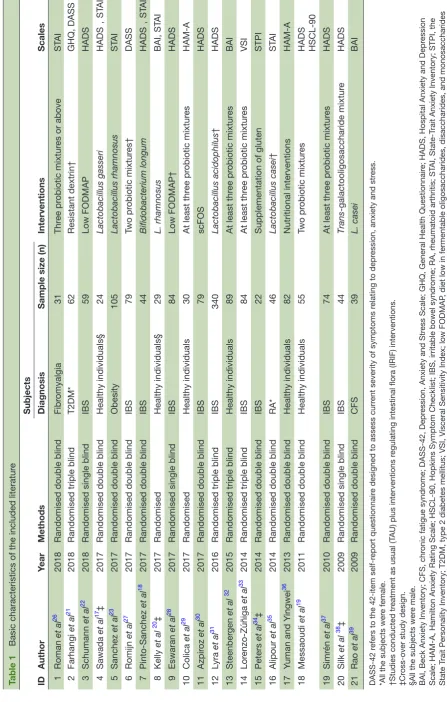
The details of the 21 papers included are shown in table 1. A total of 1503 subjects were included in the 21 studies, including patients with IBS (10 studies), healthy controls (six studies) and other patients with chronic diseases such as: chronic fatigue syndrome (CFS), rheu-matoid arthritis (RA), obesity, fibromyalgia and type 2 diabetes mellitus. Five studies conducted TAU plus IRIF when the TAU did not affect the results: three studies used a single kind of probiotic as interventions and two studies conducted non-probiotic ways (supplementary of the resistant dextrin or a diet low in fermentable oligo-saccharides, dioligo-saccharides, and monosaccharides and polyols [low FODMAP]). The studies that used IRIF alone (16 studies) could be divided into two catego-ries: (1) probiotic interventions (11 studies): (A) single probiotic interventions (four studies), and most of the probiotics were Lactobacillus, (B) two studies used two probiotic mixtures: the Swiss Lactobacillus and the long
Bifidobacterium mixture, (C) five studies used at least three probiotic mixtures: Lactobacillus, Streptococcus, Bifidobac-terium, and so on; (2) five studies conducted non-probi-otic interventions, including low FODMAP, short-chain
fructooligosaccharides (scFOS), regulating diet, using
trans-galactooligosaccharide mixture, and so on. The most used questionnaires for assessing anxiety symp-toms included the HADS (nine studies), the STAI (seven studies), the BAI (two studies), Hamilton Anxiety Rating Scale (HAM-A; two studies), and so on, with five studies choosing two different scales: Sawada and colleagues17 and Pinto-Sanchez and colleagues18 used HAD and STAI; Messaoudi and colleagues19 used HAD and the Hopkins Symptom Checklist-90; Kelly and colleagues20 used STAI and BAI; Farhangi and colleagues21 used HAM-A and a 42-item self-report questionnaire designed to assess the current severity of symptoms relating to depression, anxiety and stress (Depression, Anxiety and Stress Scale-42). Except for Schumann and colleagues22 choosing yoga as the intervention in control group, the interventions of the other studies in the control group were matched with the experimental group. All the supplements could not be distinguished by appearance and taste which ensured the blindness of the subjects.
research quality
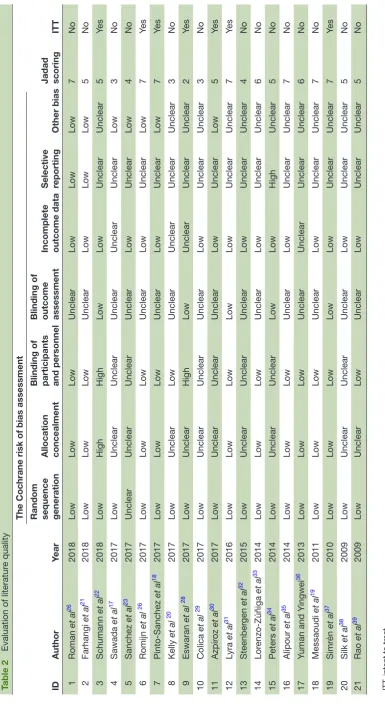
The results of the quality assessment are shown in table 2. Of all the 21 studies, only Sanchez and colleagues23 did not mention methods of random sequence generation, resulting in a rating of ‘unclear’, and the other studies were all rated as ‘low’. According to the Jadad scale, 81% of the included studies were ≥4 points and assessed as high quality. In addition, 33% of the studies conducted intent-to-treat analysis in order to maintain the random infor-mation, ensuring the equilibrium between the groups. Seventeen studies mentioned the rate of withdrawal and/ or dropout, which were ≤20% (the reasons are shown in table 3). In summary, the overall quality of the 21 articles included in this study was high.
Therapeutic effects
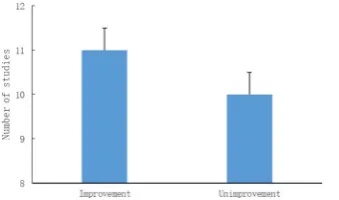
Eleven of 21 studies showed that regulation of intestinal microbiota could improve anxiety symptoms, of which five studies conducted probiotic interventions and six studies used non-probiotic interventions like low FODMAP. That means that 52% of studies showed a positive effect on improving anxiety symptoms by regulating intestinal microbiota, seen in figure 2. In the five studies that used TAU plus IRIF, the anxiety symptoms were improved all by non-probiotic ways (two studies) while the other three studies that used one kind of probiotic were all invalid. So, we could find that 40% of studies that used TAU plus IRIF were positive and 56% of studies that used IRIF alone could improve anxiety symptoms. Anxiety assess-ment questionnaires included HADS, STAI, BAI and HAM-A. This also indicated that no matter what kinds of measures were taken, and regardless of the assessment scales, anxiety symptoms could be improved by regulating gut microbiota. It is worth mentioning that the efficiency of supplementation of non-probiotic preparations is as high as 86%, which suggested that in addition to supple-menting probiotics, it is worth noticing by clinicians to
on September 12, 2020 by guest. Protected by copyright.
Table 1
Basic characteristics of the included literatur
e ID Author Year Methods Subjects Interventions Scales Diagnosis
Sample size (n)
1
Roman
et al
26
2018
Randomised double blind
Fibr omyalgia 31 Thr ee pr obiotic mixtur
es or above
ST AI 2 Farhangi et al 21 2018
Randomised triple blind
T2DM* 62 Resistant dextrin† GHQ, DASS 3 Schumann et al 22 2018
Randomised single blind
IBS 59 Low FODMAP HADS 4 Sawada et al 17 ‡ 2017
Randomised double blind
Healthy individuals§ 24 Lactobacillus gasseri HADS , ST AI 5 Sanchez et al 23 2017
Randomised double blind
Obesity 105 Lactobacillus rhamnosus ST AI 6 Romijn et al 27 2017
Randomised double blind
IBS 79 Two pr obiotic mixtur es† DASS 7 Pinto-Sanchez et al 18 2017
Randomised double blind
IBS 44 Bifidobacterium longum HADS , ST AI 8 Kelly et al 20 ‡ 2017 Randomised Healthy individuals§ 29 L. rhamnosus BAI, ST AI 9 Eswaran et al 28 2017
Randomised single blind
IBS 84 Low FODMAP† HADS 10 Colica et al 29 2017 Randomised Healthy individuals 30
At least thr
ee pr obiotic mixtur es HAM-A 11 Azpir oz et al 30 2017
Randomised double blind
IBS 79 scFOS HADS 12 Lyra et al 31 2016
Randomised triple blind
IBS 340 Lactobacillus acidophilus † HADS 13 Steenber gen et al 32 2015
Randomised triple blind
Healthy individuals
89
At least thr
ee pr obiotic mixtur es BAI 14 Lor enzo-Zúñiga et al 33 2014
Randomised triple blind
IBS
84
At least thr
ee pr obiotic mixtur es VSI 15 Peters et al 34 ‡ 2014
Randomised double blind
IBS
22
Supplementation of gluten
STPI 16 Alipour et al 35 2014
Randomised double blind
RA* 46 Lactobacillus casei † ST AI 17
Yuman and Y
ingwei
36
2013
Randomised double blind
Healthy individuals 82 Nutritional interventions HAM-A 18 Messaoudi et al 19 2011
Randomised double blind
Healthy individuals 55 Two pr obiotic mixtur es HADS HSCL-90 19 Simr én et al 37 2010
Randomised double blind
IBS
74
At least thr
ee pr obiotic mixtur es HADS 20 Silk et al 38 ‡ 2009
Randomised single blind
IBS 44 Trans -galactooligosaccharide mixtur e HADS 21 Rao et al 39 2009
Randomised double blind
CFS
39
L. casei
BAI
DASS-42 r
efers to the 42-item self-r
eport questionnair
e designed to assess curr
ent severity of symptoms r
elating to depr
ession, anxiety and str
ess.
*All the subjects wer
e female.
†Studies conducted tr
eatment as usual (T
AU) plus interventions r
egulating intestinal flora (IRIF) interventions.
‡Cr
oss-over study design.
§All the subjects wer
e male.
BAI, Beck Anxiety Inventory; CFS, chr
onic fatigue syndr
ome; DASS-42, Depr
ession, Anxiety and Str
ess Scale; GHQ, General Health Questionnair
e; HADS, Hospital Anxiety and Depr
ession
Scale; HAM-A, Hamilton Anxiety Rating Scale; HSCL-90, Hopkins Symptom Checklist; IBS, irritable bowel syndr
ome; RA, rheumatoid arthritis; ST
AI, State-T
rait Anxiety Inventory; STPI, the
State T
rait Personality Inventory; T2DM, type 2 diabetes mellitus; VSI, Visceral Sensitivity Index; low FODMAP
, diet low in fermentable oligosaccharides, disaccharides, and monosaccharides
and polyols; scFOS, short-chain fructooligosaccharides.
on September 12, 2020 by guest. Protected by copyright.
Table 2
Evaluation of literatur
e quality
ID
Author
Year
The Cochrane risk of bias assessment
Jadad scoring
ITT
Random sequence generation Allocation concealment Blinding of participants and personnel Blinding of outcome assessment Incomplete outcome data Selective reporting
Other bias 1 Roman et al 26 2018 Low Low Low Unclear Low Low Low 7 No 2 Farhangi et al 21 2018 Low Low Low Unclear Low Low Low 5 No 3 Schumann et al 22 2018 Low High High Low Low Unclear Unclear 5 Ye s 4 Sawada et al 17 2017 Low Unclear Unclear Unclear Unclear Unclear Low 3 No 5 Sanchez et al 23 2017 Unclear Unclear Unclear Unclear Low Unclear Low 4 No 6 Romijn et al 26 2017 Low Low Low Unclear Low Unclear Low 7 Ye s 7 Pinto-Sanchez et al 18 2017 Low Low Low Unclear Low Unclear Low 7 Ye s 8 Kelly et al 20 2017 Low Unclear Low Unclear Unclear Unclear Unclear 3 No 9 Eswaran et al 28 2017 Low Unclear High Low Unclear Unclear Unclear 2 Ye s 10 Colica et al 29 2017 Low Unclear Unclear Unclear Low Unclear Unclear 3 No 11 Azpir oz et al 30 2017 Low Unclear Unclear Unclear Low Unclear Low 5 Ye s 12 Lyra et al 31 2016 Low Low Low Low Low Unclear Unclear 7 Ye s 13 Steenber gen et al 32 2015 Low Unclear Unclear Unclear Low Unclear Unclear 4 No 14 Lor enzo-Zúñiga et al 33 2014 Low Low Low Unclear Low Unclear Unclear 6 No 15 Peters et al 34 2014 Low Unclear Unclear Low Low High Unclear 5 No 16 Alipour et al 35 2014 Low Low Low Unclear Low Unclear Unclear 7 No 17
Yuman and Y
ingwei 36 2013 Low Low Low Unclear Unclear Unclear Unclear 6 No 18 Messaoudi et al 19 2011 Low Low Low Unclear Low Unclear Unclear 7 No 19 Simr én et al 37 2010 Low Low Low Low Low Unclear Unclear 7 Ye s 20 Silk et al 38 2009 Low Unclear Unclear Unclear Low Unclear Unclear 5 No 21 Rao et al 39 2009 Low Unclear Low Unclear Low Unclear Unclear 5 No ITT
, intent to tr
eat.
on September 12, 2020 by guest. Protected by copyright.
Table 3 Adverse effects and reasons for withdrawal and/or dropout
ID Author Year Adverse events (n)
Reasons for withdrawal
Intervention group (n) Control group (n) 1 Roman et al26 2018 Intestinal discomfort (2) Reasons unrelated to the
intervention (2)
Non-therapeutic adherence (2)
2 Farhangi et al21 2018 No serious adverse events Did not consume the supplement
(1) Received anti-inflammatory medication (2), diet change (1), did not consume the supplement (3)
3 Schumann et al*22 2018 FODMAP group: a major
depressive episode (1), a mild self-reported depressive episode (1), unwanted loss of weight (1)
Due to the adverse events (1), scheduling problems (1), compliance (2)
Loss of interest (1), scheduling problems (2)
Yoga group: a newly diagnosed deep leg vein thrombosis (1), back pain (1)
4 Sawada et al17 2017 Abdominal pain, sleep
disturbance, particularly in the placebo group
No data provided
5 Sanchez et al23 2017 No data provided Poor compliance to the treatment
(1)
6 Romijn et al27 2017 Dry mouth, sleep disruption Antibiotic use (1), antidepressant
use (2), participant choice (4)
Antibiotic use (2), stressful life events (1)
7 Pinto-Sanchez
et al18 2017 No serious adverse events related to study product Antibiotic use (3), antidepressant use (1) Antibiotic use (1), antidepressant use (1)
8 Kelly et al20 2017 Side effects were negligible No data provided
9 Eswaran et al28 2017 No data provided Lost to follow-up: not returning
calls (1), started antibiotics (1), too expensive (1); discontinued intervention: too limiting (1), moved out of state (1)
Discontinued intervention: failed to make symptom reports (2)
10 Colica et al29 2017 No data provided 2 subjects voluntarily stopped the
treatment
1 subject voluntarily stopped the treatment
11 Azpiroz et al30 2017 Intake of scFOS was well
tolerated and the number of adverse events was similar in the scFOS (18) and placebo (21) groups†
Colonic lavage prior to the rectal sensitivity test (1), antibiotic treatment (1)
12 Lyra et al31 2016 Treatment-emergent AEs: GI
disorders, gastroenteritis and influenza
IP-related AEs: mild GI symptoms (7 placebo, 7 low dose and 9 high dose)
Two SAE cases: pneumonia and syncope; neither was associated with the IP or any trial procedure
Low dose—adverse event (4), lost to follow-up (3), other (4), protocol violation (1), withdrawal of consent (5) High dose—adverse event (10), other (3),
protocol violation (1), withdrawal of consent (4)
Adverse event (3), lost to follow-up (2), other (2),
protocol violation (3), withdrawal of consent (6)
13 Steenbergen et
al32 2015 No data provided No data provided
14 Lorenzo-Zúñiga
et al33 2014 No adverse drug reactions High dose: loss to follow-up (3),discontinued intervention (3)
Low dose: loss to follow-up (3), discontinued intervention (3)
Loss to follow-up (5), discontinued intervention (5)
15 Peters et al34 2014 No data provided‡ No data provided
16 Alipour et al35 2014 No adverse effects Did not follow the study protocol (8/6)
17 Yuman and
Yingwei36 2013 No data provided No data provided
Continued
on September 12, 2020 by guest. Protected by copyright.
ID Author Year Adverse events (n)
Reasons for withdrawal
Intervention group (n) Control group (n) 18 Messaoudi et al19 2011 No data provided No data provided
19 Simrén et al37 2010 No adverse events Lack of effect of the treatment (5), factors unrelated to the study
(2) 20 Silk et al38 2009 Moderate diarrhoea (1–3.5 g
placebo), mild nausea (1–7.0 g placebo, 1–3.5 g prebiotic)
Felt the study was too demanding (3), felt the placebo caused diarrhoea (1), took part in another probiotic study (1), took a commercially available probiotic preparation during baseline (2)
21 Rao et al39 2009 No significant adverse events Reasons unrelated to the intervention (4)
GI disorders refer to gastrointestinal tract disorders, including abdominal discomfort, abdominal distension, abdominal pain, constipation, diarrhoea and flatulence.
*None of these events were adjudged to relate to the study interventions. †Did not provide details.
‡One patient ceased the whey challenge (treatment first received) prematurely because of intolerable symptoms after lunch on day 2. AE, adverse effect; FODMAP, fermentable oligosaccharides, disaccharides, and monosaccharides and polyols; GI, gastrointestinal ; IP, investigational product; SAE, serious adverse event; scFOS, short-chain fructooligosaccharides.
Table 3 Continued
Figure 2 Outcomes of included studies. 11 of 21 studies showed that regulation of intestinal microbiota could improve anxiety symptoms, while 10 studies didn't show positive effects.
improve the anxiety symptoms by regulating the intes-tinal flora through non-probiotic methods.
Adverse effects and dropouts
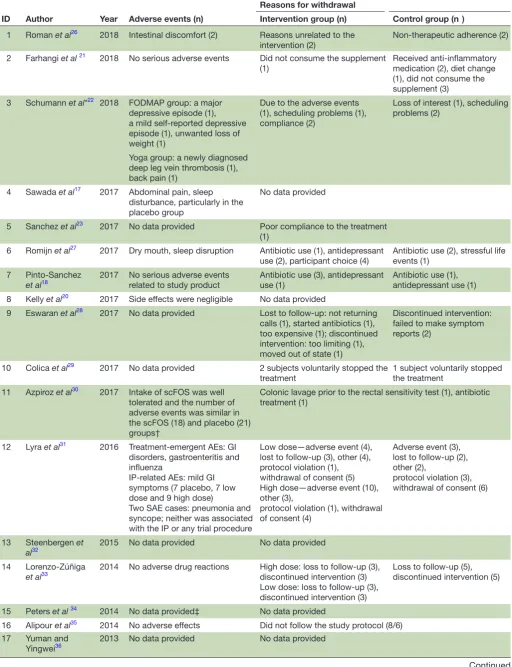
Most of the studies did not report serious adverse events, and only four studies reported mild adverse effects such as dry mouth, senestopathia and diarrhoea. Schumann and colleagues22 reported two serious events related to major depressive episodes and deep leg vein thrombosis, but none of these events were determined to relate to the study interventions. In short, no matter which interven-tion was taken, the probability of serious adverse reacinterven-tions was extremely low, and it is safe to improve the anxiety symptoms by regulating the intestinal flora. Besides, the dropout rates did have significant impacts on the results. The details of side effects and reasons for dropout are shown in table 3.
dIsCussIon Main findings
First of all, more than half of the 21 studies included in this paper showed that regulating intestinal flora can effectively improve anxiety symptoms. Of the 14 studies that used probiotics as the intervention, 36% of the studies were effective, while six of the seven studies
using non-probiotics as interventions were effective, and the effective rate was 86%. As for the five studies that used the TAU plus IRIF as interventions, only studies that conducted non-probiotic ways were positive; and non-probiotic interventions were also more effective in the studies that used IRIF alone, for 80% of studies could improve anxiety symptoms in the studies that performed non-probiotic interventions while 45% were effective in the studies that used probiotic ways. So we can easily find that although we can regulate the intestinal flora in two ways, the non-probiotic intervention is significantly better than the probiotic intervention. The reasons for this result may be as follows: (A) The energy source of gut microbiota growth is mainly food.24Adjusting the gut microbiota through modulating dietary structure can directly change the energy supplying structure of gut microbiota and this plays a decisive role in the growth of gut microbiota, so the effect is obvious. (B) Although the studies all conducted probiotic interventions, the species of the probiotics were diverse and there were survival competitions in implanted flora and primitive flora, which may lead to not all the imported probiotics being effectively implanted. (C) Most intervention times of included studies were 4–8 weeks. This might be too short to significantly increase the abundance of the imported microbiota, so that the subjects’ original intestinal flora could not be effectively adjusted.
Second, 67% of the studies used probiotic interven-tion to regulate intestinal flora, while only 33% of the studies used non-probiotic ways such as low FODMAPS, scFOS and supplementary resistance dextrin. On the one hand, this indicates that more and more researchers have realised that microflora plays an increasingly important role in human health, but on the other hand, the func-tion of diets in daily life has been neglected by people. As mentioned above, the effect of dietary structure adjustment is better than that of probiotic supplements. In the future, more attention can be paid to the regu-lation of intestinal flora through non-probiotic ways, or
on September 12, 2020 by guest. Protected by copyright.
the combination of probiotic and non-probiotic means, which may have unexpected effects.
In addition, the subjects were patients with chronic diseases comorbid with anxiety symptoms or healthy indi-viduals. Chronic diseases included IBS, CFS, RA, obesity and fibromyalgia. Sixty-seven per cent of chronic disease subjects were patients with IBS, indicating that anxiety symptoms are common in intestinal-related chronic diseases. After reviewing the studies about the patholog-ical mechanism of IBS published in recent years, Raskov and colleagues25 found that the gut-brain axis played a central role in the persistence of IBS and the microbiota played a key role. In the study, the improvement of anxiety symptoms in patients with IBS by adjusting intestinal flora was further evidence of the gut-brain axis mechanism. Last but not least, the vast majority of studies have not reported serious adverse events related to interventions, regardless of what kinds of interventions were conducted. Another point that should be paid attention to was that 67% of six articles about healthy individuals have shown positive effects on anxiety symptoms, this may be strong evidence to support the hypothesis that anxiety symptoms can be relieved by modulating gut microbiota.
Only four studies reported mild adverse reactions such as dry mouth, internal perceptual discomfort and diar-rhoea. In summary, more than half of the studies have shown that the intestinal flora could be modulated to alle-viate anxiety symptoms and was extremely safe.
Limitations
Due to the differences in the research design types, subjects, interventions and anxiety assessment scales of the 21 articles included, the overall heterogeneity was too large and it was not suitable for meta-analysis. Fifty per cent of the 10 studies on IBS showed that the inter-ventions were effective. Therefore, for patients with IBS, more studies are needed to verify whether it is possible to clinically treat the anxiety symptoms of patients with IBS by regulating intestinal flora. We did not register on PROSPERO whether the individuals had different kinds of diseases or were healthy individuals, rather we recorded all as having the same symptom—anxiety.
Implications
In the clinical treatment of anxiety symptoms, in addition to the use of psychiatric drugs for treatment, we can also consider regulating intestinal flora to alleviate anxiety symptoms. Especially for patients with somatic diseases who are not suitable for the application of psychiatric drugs for anxiety treatment, probiotic methods and/or non-probiotic ways like low FODMAPs can be applied flexibly according to clinical conditions. However, there are still some studies showing that the effect of regulating intestinal flora to improve anxiety symptoms is limited. Therefore, more relevant clinical intervention studies should be carried out with the unified anxiety assess-ment scales and statistical methods being used to clarify
the relationship between intestinal flora adjustment and improvement of anxiety symptoms.
Correction notice This article has been corrected since it was first published.
This article was not published under an Open Access licence. This has now been corrected.
Acknowledgements The authors thank the translators and reviewers of this article.
Contributors BY: retrieval and screening of literature, bias assessment, data entry,
statistical analysis and writing the paper. JW: retrieval and screening of literature, and bias assessment. PJ: bias assessment and guidance of statistical analysis. JC: thesis topic selection and writing modification.
Funding National Natural Science Foundation of China (81571326, 81501153) and
National Key R&D Program of China (2017YFC0909200).
Competing interests None declared.
Patient consent for publication Not required.
Provenance and peer review Not commissioned; externally peer reviewed.
data sharing statement No additional data are available.
open access This is an open access article distributed in accordance with the
Creative Commons Attribution Non Commercial (CC BY-NC 4.0) license, which permits others to distribute, remix, adapt, build upon this work non-commercially, and license their derivative works on different terms, provided the original work is properly cited, appropriate credit is given, any changes made indicated, and the use is non-commercial. See: http:// creativecommons. org/ licenses/ by- nc/ 4. 0/.
reFerenCes
1. Remes O, Brayne C, van der Linde R, et al. A systematic review of
reviews on the prevalence of anxiety disorders in adult populations. Brain Behav 2016;6:e00497.
2. Bandelow B, Michaelis S. Epidemiology of anxiety disorders in the
21st century. Dialogues Clin Neurosci 2015;17:327–35.
3. Neuropsychological and Behavioral Neurology Group of the Chinese Medical Association Neurology branch. Expert consensus on diagnosis and treatment of anxiety, depression and somatization
symptoms in general hospitals. Chinese Journal of Neurology
2016;49:908–17.
4. Carding S, Verbeke K, Vipond DT, et al. Dysbiosis of the gut
microbiota in disease. Microbial Ecology in Health & Disease
2015;26.
5. Lemaitre B, Nicolas E, Michaut L, et al. The dorsoventral regulatory
gene cassette spätzle/Toll/cactus controls the potent antifungal
response in Drosophila adults. Cell 1996;86:973–83.
6. Takeda K, Akira S. TLR signaling pathways. Seminars in Immunology
2004;16:3–9.
7. Zhu C, Xu J, Lin Y, et al. Loss of microglia and impaired
Brain-Neurotrophic factor signaling pathway in a comorbid model of
chronic pain and depression. Front Psychiatry 2018;9.
8. Sudo N, Chida Y, Aiba Y, et al. Postnatal microbial colonization
programs the hypothalamic-pituitary-adrenal system for stress
response in mice. J Physiol 2004;558:263–75.
9. Mohajeri MH, La Fata G, Steinert RE, et al. Relationship between the
gut microbiome and brain function. Nutr Rev 2018;76:481–96.
10. Foster JA, McVey Neufeld K-A. Gut-brain axis: how the microbiome
influences anxiety and depression. Trends Neurosci 2013;36:305–12.
11. Chen J. Comorbidity investigations of gastrointestinal disorders with
mental disorders in patients or animals. J Depress Anxiety 2017;06.
12. Neufeld KM, Kang N, Bienenstock J, et al. Reduced anxiety-like
behavior and central neurochemical change in germ-free mice. Neurogastroenterol Motil 2011;23:255–e119.
13. Clarke G, Grenham S, Scully P, et al. The microbiome-gut-brain axis
during early life regulates the hippocampal serotonergic system in a
sex-dependent manner. Mol Psychiatry 2013;18:666–73.
14. Desbonnet L, Clarke G, Shanahan F, et al. Microbiota is essential for
social development in the mouse. Mol Psychiatry 2014;19:146–8.
15. Arentsen T, Raith H, Qian Y, et al. Host microbiota modulates
development of social preference in mice. Microb Ecol Health Dis
2015;26.
16. Collins SM, Kassam Z, Bercik P. The adoptive transfer of behavioral phenotype via the intestinal microbiota: experimental evidence and
clinical implications. Curr Opin Microbiol 2013;16:240–5.
on September 12, 2020 by guest. Protected by copyright.
Beibei Yang is currently studying on a master's program in Shanghai Mental Health Center affiliated to Shanghai Jiao Tong University School of Medicine. Her interests include the effects of early stress on neuropsychiatric systems and the pathophysiological mechanisms of brain-gut axis in mental diseases.
17. Sawada D, Kawai T, Nishida K, et al. Daily intake of Lactobacillus
gasseri CP2305 improves mental, physical, and sleep quality among Japanese medical students enrolled in a cadaver dissection course. J Funct Foods 2017;31:188–97.
18. Pinto-Sanchez MI, Hall GB, Ghajar K, et al. Probiotic Bifidobacterium
longum NCC3001 reduces depression scores and alters brain activity: a pilot study in patients with irritable bowel syndrome. Gastroenterology 2017;153:448–59.
19. Messaoudi M, Lalonde R, Violle N, et al. Assessment of
psychotropic-like properties of a probiotic formulation (Lactobacillus helveticus R0052 and Bifidobacterium longum R0175) in rats and
human subjects. Br J Nutr 2011;105:755–64.
20. Kelly JR, Allen AP, Temko A, et al. Lost in translation? The potential
psychobiotic Lactobacillus rhamnosus (JB-1) fails to modulate stress
or cognitive performance in healthy male subjects. Brain Behav
Immun 2017;61:50–9.
21. Farhangi MA, Javid AZ, Sarmadi B, et al. A randomized controlled
trial on the efficacy of resistant dextrin, as functional food, in women with type 2 diabetes: targeting the hypothalamic-pituitary-adrenal
axis and immune system. Clin Nutr 2018;37:1216–23.
22. Schumann D, Langhorst J, Dobos G, et al. Randomised clinical
trial: yoga vs a low-FODMAP diet in patients with irritable bowel
syndrome. Aliment Pharmacol Ther 2018;47:203–11.
23. Sanchez M, Darimont C, Panahi S, et al. Effects of a diet-based
weight-reducing program with probiotic supplementation on satiety efficiency, eating behaviour traits, and psychosocial behaviours in
obese individuals. Nutrients 2017;9.
24. Milani C, Duranti S, Bottacini F, et al. The first microbial colonizers of
the human gut: composition, activities, and health implications of the
infant gut microbiota. Microbiol Mol Biol Rev 2017;81:e00036–17.
25. Raskov H, Burcharth J, Pommergaard H-C, et al. Irritable bowel
syndrome, the microbiota and the gut-brain axis. Gut Microbes
2016;7:365–83.
26. Roman P, Estévez AF, Miras A, et al. A pilot randomized controlled
trial to explore cognitive and emotional effects of probiotics in
fibromyalgia. Scientific Reports 2018;8.
27. Romijn AR, Rucklidge JJ, Kuijer RG, et al. A double-blind,
randomized, placebo-controlled trial of Lactobacillus helveticus and
Bifidobacterium longum for the symptoms of depression. Aust N Z J Psychiatry 2017;51:810–21.
28. Eswaran S, Chey WD, Jackson K, et al. A Diet Low in Fermentable
Oligo-, Di-, and Monosaccharides and Polyols Improves Quality of
Life and Reduces Activity Impairment in Patients With Irritable Bowel
Syndrome and Diarrhea. Clin Gastroenterol Hepatol 2017;15:1890–9.
29. Colica C, Avolio E, Bollero P, et al. Evidences of a new Psychobiotic
formulation on body composition and anxiety. Mediators Inflamm
2017;2017:1–10.
30. Azpiroz F, Dubray C, Bernalier-Donadille A, et al. Effects of scFOS
on the composition of fecal microbiota and anxiety in patients with irritable bowel syndrome: a randomized, double blind, placebo
controlled study. Neurogastroenterol Motil 2017;29.
31. Lyra A, Hillilä M, Huttunen T, et al. Irritable bowel syndrome symptom
severity improves equally with probiotic and placebo. World J
Gastroenterol 2016;22:10631–42.
32. Steenbergen L, Sellaro R, van Hemert S, et al. A randomized
controlled trial to test the effect of multispecies probiotics
on cognitive reactivity to sad mood. Brain Behav Immun
2015;48:258–64.
33. Lorenzo-Zúñiga V, Llop E, Suárez C, et al. I.31, a new combination of
probiotics, improves irritable bowel syndrome-related quality of life. World J Gastroenterol 2014;20:8709–16.
34. Peters SL, Biesiekierski JR, Yelland GW, et al. Randomised clinical
trial: gluten may cause depression in subjects with non-coeliac
gluten sensitivity - an exploratory clinical study. Aliment Pharmacol
Ther 2014;39:1104–12.
35. Alipour B, Homayouni-Rad A, Vaghef-Mehrabany E, et al. Effects
of Lactobacillus casei supplementation on disease activity and inflammatory cytokines in rheumatoid arthritis patients: a randomized
double-blind clinical trial. Int J Rheum Dis 2014;17:519–27.
36. Yuman Y, Yingwei Z. Study on intestinal flora changes and nutritional intervention in nursing students before examination in
higher vocational colleges. Chinese Journal of Health Psychology
2013;21:1904–5.
37. Simrén M, Ohman L, Olsson J, et al. Clinical trial: the effects of a
fermented milk containing three probiotic bacteria in patients with irritable bowel syndrome - a randomized, double-blind, controlled
study. Aliment Pharmacol Ther 2010;31:218–27.
38. Silk DBA, Davis A, Vulevic J, et al. Clinical trial: the effects of a
trans-galactooligosaccharide prebiotic on faecal microbiota and
symptoms in irritable bowel syndrome. Aliment Pharmacol Ther
2009;29:508–18.
39. Rao AV, Bested AC, Beaulne TM, et al. A randomized, double-blind,
placebo-controlled pilot study of a probiotic in emotional symptoms
of chronic fatigue syndrome. Gut Pathog 2009;1.
on September 12, 2020 by guest. Protected by copyright.