Http://www.ijetmr.com©International Journal of Engineering Technologies and Management Research [1-13] IJETMR
MUL-TIBIOMETRIC PATTERN RETRIEVAL USING INDEX CODE TO
IMPROVE RESPONSE TIME
Mr.Avinash A.Karad 1, Prof. Shailja Kadam 2 1, 2
Department of Electronics Engineering, Terna Engineering College, INDIA
Abstract:
In a biometric identification system, the identity corresponding to the input data (probe) is typically determined by comparing it against the templates of all identities in a database (gallery). Exhaustive matching against a large number of identities increases the response time of the system and may also reduce the accuracy of identification. Onaway to reduce the response time is by designing biometric templates that allow for rapid matching, as in the case of Iris Codes. An alternative approach is to limit the number of identities against which matching is performed based on criteria that are fast to evaluate. We propose a method for generating fixed-length codes for indexing biometric databases. An index code is constructed by computing match scores between a biometric image and a fixed set of reference images. Candidate identities are retrieved based on the similarity between the index code of the probe image and those of the identities in the database.
The proposed technique can be easily extended to retrieve pertinent identities from multimodal databases. Experiments on a chimeric face and fingerprint bimodal database resulted in an 84% average reduction in the search space at a hit rate of 100%. These results suggest that the proposed indexing scheme has the potential to substantially reduce the response time without compromising the accuracy of identification.
Keywords:
Biometric identification, Response time, Iris codes, multi-model database.
Cite This Article: Mr.Avinash A.Karad, and Prof. Shailja Kadam, “MUL-TIBIOMETRIC PATTERN RETRIEVAL USING INDEX CODE TO IMPROVE RESPONSE TIME”
International Journal of Engineering Technologies and Management Research, Vol. 3, No. 4(2016)1-13.
INTRODUCTION 1.
1.1.MULTI-BIOMETRIC
1. An authentication technology using different biometric technologies such as fingerprints, facial features, Signature, and vein patterns in the identification and verification process. The use of Multi-Biometrics takes advantages of the capabilities of each biometric technology while overcoming the limitations of a single technology.
Http://www.ijetmr.com©International Journal of Engineering Technologies and Management Research [1-13]
Multimodal biometrics systems are expected to be more reliable due to the presence of multiple traits
3. Multimodal biometric systems are those that fuse more than one physiological and (or) behavioural characteristic for enrolment, verification, or identification.
1.2.WHY MULTI-BIOMETRIC IDENTIFICATION?
The use of multiple biometric sources for human recognition, referred to as multi-biometrics, mitigates some of the limitations of unimodal biometric systems by increasing recognition accuracy, improving population coverage, imparting fault-tolerance, and enhancing security [3].
Limitations of Unimodal biometric systems as:
1. Susceptibility of biometric sensors to noise. This can lead to inaccurate matching, as noisy data may lead to a false rejection.
2. Unimodal systems are also prone to interclass similarities within large population groups e.g In case of identical twins, facial feature leads to inaccurate matching, as bad data may lead to a false rejection.
3. Incompatibility with certain population. Elderly people and young children may have difficulty enrolling in a fingerprinting system, due to their faded prints or underdeveloped fingerprint ridges.
4. Finally, Unimodal biometrics is vulnerable to spoofing, where the data can be imitated or forged.
The most compelling reason to combine different modalities is to improve the recognition rate. This can be done when biometric features of different biometrics are statistically independent. There are other reasons to combine two or more biometrics. One is that different biometric modalities might be more appropriate for the different applications. Another reason is simply customer preference.
The International Committee for Information Technology Standards (INCITS) Technical Committee M1, Biometrics, and researchers have described methods for performing multi-biometric fusion [3]. In general, the use of the terms multimodal or multi-multi-biometric indicates the presence and use of more than one biometric aspect (modality, sensor, instance and/or algorithm) in some form of combined use for making a specific biometric verification/identification decision [3].
1.3.SIGNIFICANT CONTRIBUTIONS
Searching a biometric database for an identity is usually done by comparing the probe image against everyenrolled identity in the database and generating a ranked list of candidate identities. Depending on the nature of the matching algorithm, the matching speed in some systems can be slow. New representation schemes that allow for faster search and, therefore, shorter response time are needed [5].
Http://www.ijetmr.com©International Journal of Engineering Technologies and Management Research [1-13]
data of every identity in the database, and (2) In most biometric systems, the false accept error grows with the size of the database [5]. Therefore, filtering the database in order to reduce the number of potential candidates for matching is a desirable component of any large-scale biometric system.
Filtering a biometric database can be accomplished using two distinct schemes: classification and indexing. A classification scheme partitions the database into several classes. The class of the input data is first estimated and, subsequently, the input is compared only against those identities in the database belonging to that class. The main limitation of classifying biometric data is the unbalanced distribution of the identities across the various classes. This problem exists in the traditional Henry fingerprint classification system [6] as well as techniques for face, palm print, and iris classification.
Indexing schemes, on the other hand, assign an index value to every biometric template. However, the indices of two biometric images pertaining to the same identity are unlikely to be the same because the process of data acquisition and processing is subject to noise. Therefore, indexing systems retrieve those identities whose indices are similar to the index value of the input data. The input image is matched only against the retrieved identities thereby reducing the identification time and, potentially, the identification error rate.
The proposed indexing technique relies on the use of a small set of reference images for each modality. A modality-specific index code is generated by matching an input image against these reference images, resulting in a set of match scores. During identification, the index code of the input image is compared to the index codes of the enrolled identities in order to find a set of potential matches. The index codes of multiple modalities are fused to improve the accuracy of indexing resulting in a robust and efficient indexing system. This approach relies on a matcher, which is an integral part of every automated biometric identification system. Because the generated index codes are compact and their similarity can be computed rapidly, the approach has low storage requirements and can improve the system response time even for small databases.
Biometric identification system have huge underlying biometric database. In this large identification system, the goal is to determine the identity of a subject from a large set of users already enrolled in biometric database. Though the state-of-art biometric identification algorithm work well for small database in terms of accuracy and response time but fail to scale well for large databases.
Http://www.ijetmr.com©International Journal of Engineering Technologies and Management Research [1-13]
Classification and indexing can be used to filter the search space during identification process. Classification is procedure where data points are placed into different groups called classes, based on their quantitive information and already classified data points. These classified classes could be overlapping. In identification, the class of query biometric is first identified and then it is compared to each biometric present in the class. In indexing, biometric feature vectors re indexed and assigned the index value using different indexing techniques. The given query is only compared to templates which have comparable index.
2. MATERIALS AND METHODS
2.1.INDEX CODES FOR MULTIMODAL DATABASE
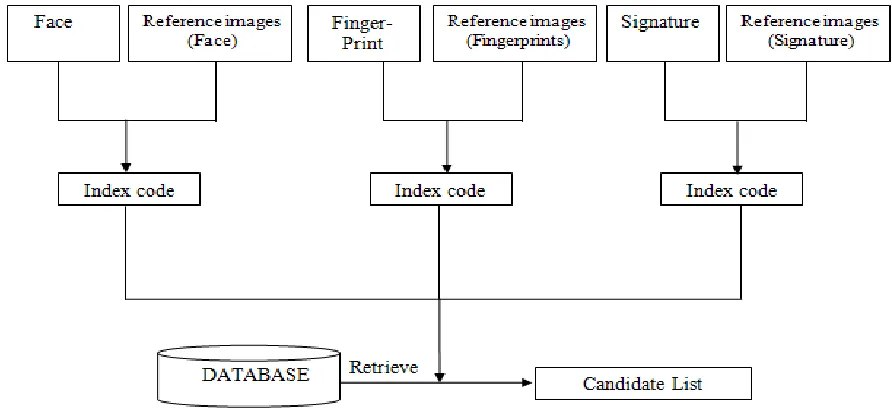
In biometric identification, it is crucial that the correct identity is in the candidate list even if this results in a longer list. Index codes are stored separately for each modality thereby making the indexing scheme flexible in including more modalities or excluding a certain modality. The ability to exclude a modality from the indexing process is valuable when prior knowledge indicates that a certain modality is unreliable or when data for a modality are missing. General approach for indexing multimodal databases is shown in Fig. 4.2.1
Figure 2.1: Indexing three modalities. Three index codes are generated separately, one for each modality. The information from the three modalities is combined during retrieval.
The techniques mentioned above either use features implicit in the biometric image or statistics extracted from the biometric feature vector. To avoid the complexity of designing new feature extraction routines, we propose an indexing scheme based on match scores. The input image is sequentially matched against images in the database. The sequence of matching is dictated by the similarity between the match scores obtained for the input and the corresponding scores for the images in the database. For this purpose, a matrix that contains the pair wise match scores of all
Http://www.ijetmr.com©International Journal of Engineering Technologies and Management Research [1-13]
to perform additional image processing for filtering purposes. However, storing the matrix of match scores for a database containing millions of images can be prohibitive.
2.2.FACE INDEXING
The approach is based on the classical eigenface method and uses the coefficients of projection to rank the database images with respect to each eigenface. The probe is ranked in the same way and a local search is performed for each eigenface to find the database image that is closest to the probe. Thus, the reduction in the search space depends on the number of eigenfaces used. A face database was split into a predefined number of classes by applying a clustering technique on parametric models of the enrolled faces. However, instead of performing classification by assigning the probe to a specific cluster, the set of distances between the probe and the centroid of each cluster was used as an index vector. Retrieval was based on the similarity among index vectors.
2.3.FINGERPRINT INDEXING
The first published fingerprint classification method, the Henry classification system [5], was based on the spatial configuration of singular points present in fingerprint patterns. Because of problems with occlusion, noise, and the potential lack of precision in locating singular points, more recent fingerprint indexing techniques are based on minutiae points. The indexing methods require the application of image processing techniques which are specific to the indexing method. To avoid the complexity of designing new feature extraction routines, Maeda et al. [23] developed a retrieval method based on match scores. They adopted a sequential search process in which filtering was performed based on the correlation between the set of match scores that were already computed for the probe and the corresponding match scores for the images in the database that were not yet visited. In this technique, a matrix that contains the pair wise match scores of all images in the database has to be permanently stored and updated for each newly enrolled identity. A drawback of this approach is that storing the matrix of match scores for a database containing millions of images can be impractical.
2.4.SIGNATURE INDEXING
A signature is any written specimen in a person's own handwriting meant to be used for identification. A signature verification (SV) system authenticates the identity of any person, based on an analysis of his/her Signature through a set of processes which differentiates a genuine signature from a forgery signature. The precision of signature verification systems can be expressed by two types of error: the percentage of genuine signatures rejected as forgery which is called False Rejection Rate (FRR); and the percentage of forgery signatures accepted as genuine which is called False Acceptance Rate (FAR).While dealing with any signature verification system, we take FRR and FAR as its performance estimate parameters.
2.5.PARAMETERS OF THE PROPOSED INDEXING SCHEME
Http://www.ijetmr.com©International Journal of Engineering Technologies and Management Research [1-13]
Although most data collection protocols impose strict constraintson the data acquisition process, noise in the input imagescan significantly impact the match scores and, consequently, the index codes. The association between two index codes can be measured by their correlation. Index codes belonging to the same identity are expected to have a strong positive correlation. Index codes belonging to different identities are expected to be uncorrelated. We used the Pearson product-moment correlationcoefficient
Ρ(Sx,Sy)=Cov(Sx,Sy)/[Var(Sx) Var(Sy)]1/2
Index codes can also be viewed as points in a Euclidean space,and the similarity between them can bemeasured by their spatialproximity. Two examples of such measures are the Euclidean distance
n
ι2(Sx,Sy)=( Ʃ(Sxi-Syi)2 )1/2 i=1
and the cosine similarity
cos(Sx,Sy)=Sx.Sy/(Sx.Sx)1/2(Sy.Sy)1/2
where “ ” is the dot product.
2.6.EVALUATION OF INDEXING PERFORMANCE
The performance of indexing algorithms is commonly evaluated using the hit rate and penetration rate. The hit rate is the percentage of probes for which the corresponding gallery image with the correct identity is retrieved by the indexing mechanism [6]
Hit rate = Nh N
Where Nh is the number of tests in which the correct identity is present in the candidate list and N is the total number of tests. The penetration rate is the average reduction in the search space achieved by the indexing scheme.
N Penetration rate = 1 ∑ Li
N i=1 M
Where Li is the number of identities in the candidate list of the ith input image and M is the number of identities in the database and N = M.
2.7.HARDWARE AND SOFTWARE REQUIREMENT
Table 2.1: Hardware and Software Requirement
Hardware Pentium P4 PC with Processor 2.4 GHz, 1 GB RAM, 40 GB HDD.
Http://www.ijetmr.com©International Journal of Engineering Technologies and Management Research [1-13]
3. RESULTS AND DISCUSSIONS
3.1.WORKING OF SYSTEM
The proposed method discussed earlier is simulated using MATLAB 7.0 Version.
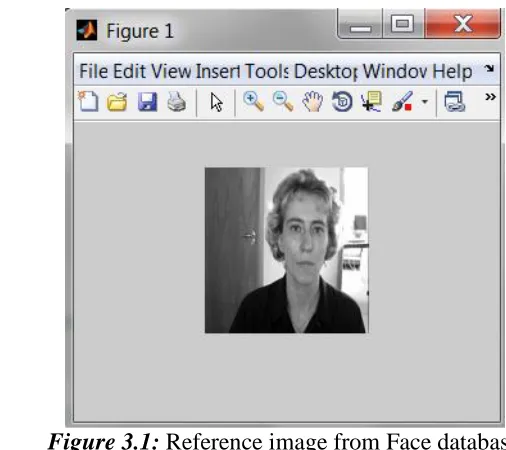
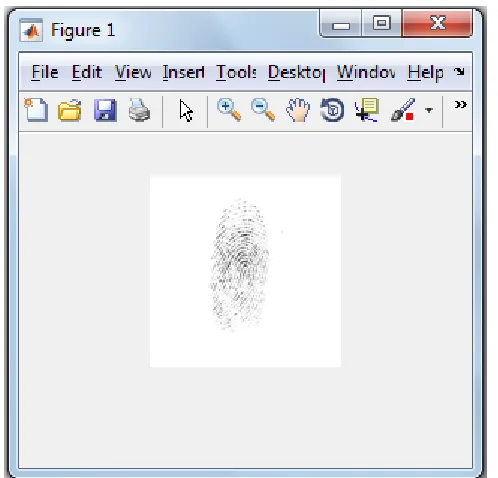
In this Approach we have tried to recognize face, fingerprints and signature of users by storing the samples in database.
The effect of the distance measure by evaluating the overlap between the distribution of genuine and imposter distances index codes. The equal error rate (EER) calculated for these distributions are shown in table.3.1.
Table 3.1: EER calculation Pearson’s
coefficient
COS similarity Euclidean distance
Face database 0.0076 0.0758 0.0894
Fingerprint database
0.0248 0.0493 0.0729
Signature database 0.035 0.116 0.130
The reference images in the following experiment were selected by applying max-mean rule on the entire database. The identities corresponding to the reference images were removed from the database when evaluating the performance of indexing.
The effect of the number of reference images was evaluated using a fixed probe set from the database.
3.1.1. FACE DATABASE
Http://www.ijetmr.com©International Journal of Engineering Technologies and Management Research [1-13]
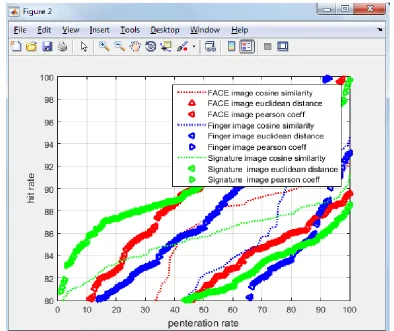
Figure 3.2: Indexing performance of three distance measures on Face database.
3.1.2. FINGERPRINT DATABASE
Http://www.ijetmr.com©International Journal of Engineering Technologies and Management Research [1-13]
Figure 3.4: Indexing performance of three distance measures on Fingerprint database.
3.1.3. SIGNATURE DATABASE
Http://www.ijetmr.com©International Journal of Engineering Technologies and Management Research [1-13]
Figure 3.6: Indexing performance of three distance measures on Signature database.
3.1.4. COMBINE DATABASE
Http://www.ijetmr.com©International Journal of Engineering Technologies and Management Research [1-13]
4. CONCLUSIONS & RECOMMENDATIONS
We proposed an indexing technique for multimodal biometric databases and showed its effectiveness in reducing the search space during identification. Thus, the proposed scheme is capable of reducing the response time of biometric identification systems. Our technique only relies on the availability of a matcher and can be incorporated into any biometric system without the need to implement additional image processing algorithms. The proposed indexing scheme is universal and is applicable to any type of multi-biometric system, such as those using multiple classification algorithms, multiple biometric traits, or different samples of the same biometric trait.
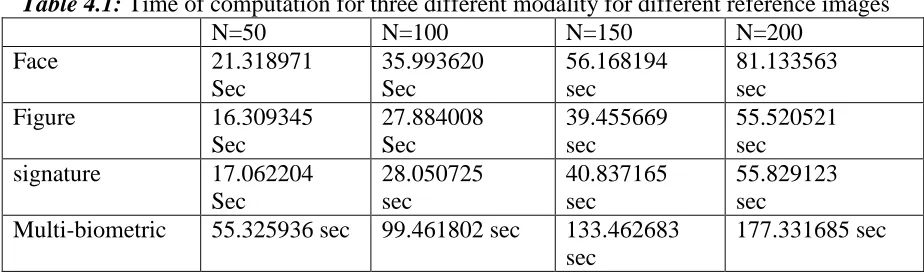
Table 4.1: Time of computation for three different modality for different reference images
N=50 N=100 N=150 N=200
Face 21.318971
Sec 35.993620 Sec 56.168194 sec 81.133563 sec
Figure 16.309345
Sec 27.884008 Sec 39.455669 sec 55.520521 sec
signature 17.062204 Sec 28.050725 sec 40.837165 sec 55.829123 sec
Multi-biometric 55.325936 sec 99.461802 sec 133.462683 sec
177.331685 sec
5. ACKNOWLEDGEMENTS
I would like to express my sincere gratitude towards my guide, Prof. Shailja Kadam, guidance and encouragement, they provided during the ME Dissertation. This work would have not been possible without their valuable time, patience and motivation. I thank them for making my stint thoroughly pleasant and enriching. It was great learning and an honor being their student.
I am deeply indebted to Dr. Seema Beday (Head of Department) and Prof. Smita Kulkarni (ME coordinator) and the entire team in the Electronics Department. They supported me with scientific guidance, advice and encouragement, they were always helpful and enthusiastic and this inspired me in my work.
I take the privilege to express my sincere thanks to Dr. S. M. Jagade, our Principal for providing the encouragement and much support throughout my work.
I wish to thank my classmates for their invaluable support throughout my project. I wish to thank all those who helped me directly or indirectly for completion of this project.
Http://www.ijetmr.com©International Journal of Engineering Technologies and Management Research [1-13]
I will strive to use the gained skills and knowledge in the best possible way, and will continue to work on their improvement, in order to attain desired career objectives.
6. REFERENCES
[1] Anil K. Jain, Arun Ross Member, IEEE, and Salil Prabhakar, Member, “An Introduction to Biometric Recognition” IEEE transactions on circuits and systems for video technology, vol. 14, no. 1, January 2004.
[2] A. Mhatre, S. Palla, S. Chikkerur, and V. Govindaraju, “Efficient search and retrieval in biometric databases,” Biometric Technol.Human Identification II, vol. 5779, no. 1, pp. 265–273, 2005.
[3] Ashish Mishra, Multimodal Biometrics it is: Need for Future Systems, International Journal of Computer Applications (0975 – 8887), Volume 3 – No.4, June 2010.
[4] Arun Ross “An introduction to multibiometrics”, West Virginia University, Morgantown, WV 26506 USA [email protected], http://www.csee.wvu.edu/˜ross, September 2007.
[5] A. Gyaourova and A. Ross, “A coding scheme for indexing multimodal biometric databases,” in Proc.IEEE Computer Society Workshop on Biometrics at the Computer Vision and Pattern Recognition(CVPR) Conf., Miami, FL, Jun. 2009.
[6] Aglika Gyaourova, Arun Ross “Index codes for Multi-biometric pattern retrieval”, IEEE transactions oninformation forensics and security,Vol.7,No.2,April 2012.
[7] Bir Bhanu, Fellow, IEEE, and Xuejun Tan, Student Member, Fingerprint Indexing Based on Novel Features of Minutiae Triplets IEEE transactions on pattern analysis and machine intelligence, vol. 25, no. 5, may 2003.
[8] B. Takács, “Comparing face images using the modified Hausdorff distance, Pattern Recognition”., vol. 31, no. 12, pp. 1873–1881, 1998.
[9] K.-H. Lin, K.-M. Lam, X. Xie, and W.-C. Siu, “An efficient human face indexing scheme using eigenfaces,” in Proc. Int. Conf. Neural Networks And Signal Processing, Dec. 2003, vol. 2, pp. 920–923.
[10] Lin Hong and Anil Jain, Fellow, “Integrating Faces and Fingerprints for Personal Identification” IEEE transactions on pattern analysis and machine intelligence, vol. 20, no. 12, December 1998.
[11] Lihong Zheng and Xiangjian , “Classification Techniques in Pattern Recognition” Faculty of IT, University of Technology, Sydney PO Box 123, Broadway NSW 2007, Sydney, Australia.
[12] Lan;shi-Qiang Gao;Hui Tang;Xiao-Yuan Jing,” Multi-Modal Biometrics Pixel Level Fusion and KPCARBF Feature Classification for Single Sample Recognition Problem “,Image and signalprocessing,2009,CISP’09.
[13] R. S. Germain, A. Califano, and S. Colville. Fingerprint matching using transformation parameter clustering. IEEE Computational Science & Engineering, 4(4):42–49, 1997. [14] http://www.biometric solutions.com/applications/index.php
[15] http://www.creativeworld9.com/2011/03/abstract-on-biometrics.html
Http://www.ijetmr.com©International Journal of Engineering Technologies and Management Research [1-13] [17] Offline signature verification and recognition by support vector machine Emre Özgündüz,Tülin Şentürk and M. Elif KarslıgilComp.Engg Department, Yıldız Technical University Yıldız , Istanbul,
[18] Off-line Signature Verification Based on Fusion of Grid and Global Feat Ures.Using Neural Networks shashi kumarDR1,,K BRaja2,RK Chho taray3 Sabyasachi Pattanaik41Deptof CSE, C IOT , Bangalore 2Dept of ECE,University VCOE, Bangalore University, Bangalore 3Dept of CSE, SECM,Orissa 4Department of Computer Science, F.M. University, Balasore, Orissa
[19] Handwritten Signature Verification using Instance Based Learning Priya Metri , Ashwinder Kaur Department of Computer Engineering MIT COE , Pune
[20] Aha, 1989] D. W. Aha. Incremental, instance-based learning of independent and graded concept descriptions. In Sixth International Workshop on Machine Learning, Detroit, MI, 1989. Morgan Kaufmann.