_____________________________
Abstract
There are numbers of different performance measurement systems, all designed in order to enhance the organizational performance. Many companies show interest and attempt to implement a system for measuring organizational perfor-mance, but not many of them are successful in it.
One of the key problems that companies face after creation of the system for measuring organization performance is its implementation. During the implementation, companies face with different problems and barriers. The main goal of this paper is to research the main challenges that companies face in the phase of the implementation of a system for measuring organizational performance in the food industry in the Republic of Macedonia.
The paper first reviews the challenges for successful implementation of performance measurement systems that are emphasized in the literature, and after that proceeds with analysis of the main challenges regarding the implementation that companies from the food industry in the Republic of Macedonia are facing based on a perception of the employee.
The overall survey findings show that the greatest challen-ge when implement a performance measurement model is the proper selection of the right KPI and providing real data.
Dr
.S
c.
Mar
ija MI
D
OVSK
A PETKO
SKA
, Dr
.Sc.
Mil
ena
BOSHKO
SKA
KLI
SAR
OS
K
I, Dr.Sc
. Gjorgji MA
NC
HESKI
Challenges for successful implementation
of Performance measurement system –
case study food industry in the Republic
of Macedonia
Keywords: performance measurement systems; organizational per-formance; implementation; challenges;
JEL Classification: P17 Performance and Prospects
1. Introduction
There are many systems for measuring and managing organizational performance, all designed in order to help managers in this complex business environment. Designing a performance measurement system is a matter of widespread interest among scientists and business sector. The Performance Measurement System consists of methodologies, metrics, processes, and software tools (Neely, Gregory, & Platts, 2005). It represents a link between operational, financial and strategic goals. The need for implementation of a system for measuring organizational performance is imminent. For successful implementation of the system it is necessary to meet certain preconditions. A successful performance measurement system is a set of performance indicators that provide the company with useful information that further helps to manage, control, plan and perform activities (Najmi, Fan, & Rigas, 2005).
goals (Simons, Performance measurement and control systems for implementation strategy: text & cases, 2000).
Designing a performance system is a complex process. One of the key issues that should be addressed is how to design specific performance indicators. It is known that inadequate design of performance indicators can lead to dysfunctional behavior. Designing performance indicators involves much more than simply specifying a formula. There are other issues that are important in designing indicators such as the purpose of the indicator, the frequency of measurement, and the source of data that should be taken into account. Despite the great interest in this issue of designing a performance measurement system, there is still no specific answer to the question what should contain a well-designed performance measurement system.
2. Phases for development of a performance measurement system
In terms of the key phases in the development of the performance measurement system, (Bourne & Neely, Designing, Implementing and Updating Performance Measurement Systems, 2000) underlines the four key phases: designing, implementing, using and updating performance indicators.
1. Design performance measures - this phase can be further divided into identifying the key objectives to be measured and designing measures for them. There is a strong agreement among researchers with regard to this issue that performance indicators should arise from the strategy. In other words, this phase usually begins with the definition of important strategic goals of the company, which are further specified in the key goals that need to be achieved at the lower goals of the company. Then the actual performance indicators are designed in accordance to the key objectives.
2. Implementation of Performance measures - this phase is defined when systems and procedures are put in place to collect and process the data that enable measurement to be carried out regularly. This may involve computer programming to monitor the data that are already used in the system and to present them in a more significant way. This may involve the initiation of new procedures and initiatives. 3. Using Performance measures - This phase is divided into two main
utilization to measure the success of the implementation of the strategy. Secondly, the information and feedback from the indicators should be used to check the assumptions and test the validity of the strategy. It should be noted here that strategies change over time, and therefore, when the strategy changes, it is necessary to change the performance indicators and to adapt to the new strategy.
4. The fourth phase is a continuous adjustment of the performance measures. This phase involves continuous monitoring and harmonization of the indicators with the set objectives. The dynamic business environment and the conditions in which the companies operate constantly change, and therefore it is necessary to change the goals. Precisely because of this, it is necessary to change the set indicators and their alignment with the goals. This includes exactly this stage.
In this paper, the attention is on the second phase - the implementation, specifically to the challenges that companies face in the implementation of the system for measuring organizational performance. The main need for implementation and application of a performance measurement system is the need for transparency in the performance of the company's goals. Through the application of this system the managers and all employees are allowed to have better control over the performance of the activities.
The challenge of implementing a performance measurement system is reflected in the following areas:
- Technical - to provide the required data quality, to create an application that is easy to use, so that data can be easily visualized; - Organizational - to create a business culture that will enable the
implementation of systems for measuring organizational performance, to adapt the processes, to provide adequate strategic control of the processes;
Of course, the implementation and application of the Systems for measuring organizational performance, in itself, entails certain problems that companies can face (managers and other employees and stakeholders). As one of the most common problems faced by users of the systems for measuring organizational performance are the following:
Excessive diversity - there are a number of systems for measuring organizational performance and there is no possibility of having a general system. It is only possible for their modification and adjustment of the needs in a particular case.
Quality of information - the quality of the provided information can also be a problem for proper implementation. The output quality of the systems for measuring organizational performance depends primarily on the quality of the input data.
Difficulties in the integration of information systems - integrating the system for measuring organizational performance with other systems is also one of the key activities for its successful application. This system must be integrated into the company's existing system.
Lack of linking to the strategy - one of the biggest reasons elaborated by researchers about the failure to implement organizational performance measurement systems is its disconnection with the strategy set.
Basic differences in how the strategy is set up and how it is performed - the existence of the strategy is not enough in itself, what is important to companies is its execution.
Difficulties in defining indicators - one of the main problems facing companies is the definition and selection of Key Performance Indicators that need to include them in the Organizational Performance Measurement System. Here it is necessary to start from the strategy and strategic goals. That is, key performance indicators are in line with strategic goals.
3. Research findings
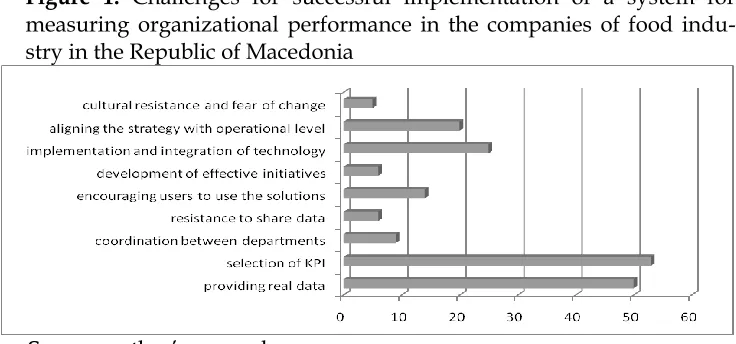
In order to research the challenges that companies in the food industry in the Republic of Macedonia faced with in the phase of implementation of the systems for measuring organizational performance, 73 companies from this industry have been surveyed. Companies face different types of challenges and barriers when implementing the system. According to the results obtained from the conducted research, the biggest challenge for the respondents is the selection of Key Performance Indicators. The respondents consider that it is very difficult to properly define and select the right KPI. In order to overcome this, managers are offered several types of techniques and methods for easier identification and selection of key performance indicators such as: Individual or group sessions for defining Key Performance Indicators, Overview of Key Performance Indicators from previous reports and others, using Analytic Hierarchy process methodology for selection etc.
Another challenge most managers and other employees face in are providing real data for the required measurements. After defining the key performance indicators, it is necessary to provide the actual data needed for their measurement. Companies have a wide range of data. They are located on various reports, databases. It is a challenge for them to use all these data from the organizational performance measurement system. Such an outcome can be overcome by using various types of applications and software that allow the connection of one system to another and the use of data from all systems.
Figure 1: Challenges for successful implementation of a system for measuring organizational performance in the companies of food indu-stry in the Republic of Macedonia
Source: author’s research
In order to research certain dependence between challenges that companies from the food industry faced with certain other parameters, several hypotheses have been tested.
H0: there is no dependence between the challenges that companies are facing in the phase of the implementation of the organizational performance measurement system and the phase in which the company is located when it comes to the concept of measuring organizational performance.
H1: there is dependence between the challenges that companies are facing in the phase of the implementation of the organizational performance measurement system and the phase in which the company is located when it comes to the concept of measuring organizational performance.
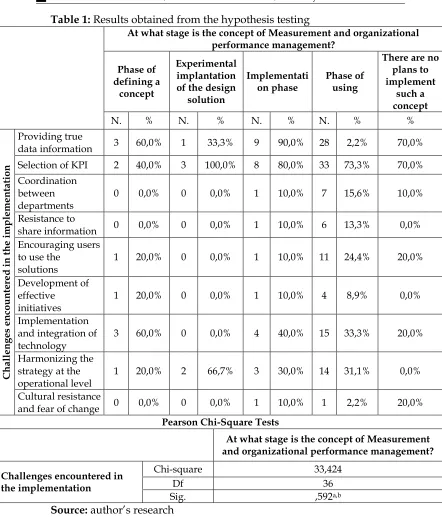
Table 1: Results obtained from the hypothesis testing
At what stage is the concept of Measurement and organizational
performance management? Phase of defining a concept Experimental implantation of the design
solution
Implementati
on phase Phase of using
There are no plans to implement
such a concept
N. % N. % N. % N. % %
Ch al le n ge s en cou n te re d in th e imp le me n ta ti on Providing true
data information 3 60,0% 1 33,3% 9 90,0% 28 2,2% 70,0%
Selection of KPI 2 40,0% 3 100,0% 8 80,0% 33 73,3% 70,0%
Coordination between
departments 0 0,0% 0 0,0% 1 10,0% 7 15,6% 10,0%
Resistance to
share information 0 0,0% 0 0,0% 1 10,0% 6 13,3% 0,0%
Encouraging users to use the
solutions
1 20,0% 0 0,0% 1 10,0% 11 24,4% 20,0%
Development of effective
initiatives
1 20,0% 0 0,0% 1 10,0% 4 8,9% 0,0%
Implementation and integration of
technology 3 60,0% 0 0,0% 4 40,0% 15 33,3% 20,0%
Harmonizing the strategy at the operational level
1 20,0% 2 66,7% 3 30,0% 14 31,1% 0,0%
Cultural resistance
and fear of change 0 0,0% 0 0,0% 1 10,0% 1 2,2% 20,0%
Pearson Chi-Square Tests
At what stage is the concept of Measurement and organizational performance management?
Challenges encountered in the implementation
Chi-square 33,424
Df 36
Sig. ,592a,b
On the basis of the obtained data present in the table it can be seen that Asymp. Sig. (2-sided) or p> 0.05, which means that the zero hypotheses is accepted, and the alternative hypothesis is rejected. This means that there is a statistically significant link between the variables. That is, there is a dependence between the challenges that companies face when implement an organizational performance measurement system and the phase in which the company is in when it becomes for the concept of measuring organizational performance. From the obtained results it follows that the individual hypothesis H1 - is accepted.
Further the research continues to test the following hypothesis:
H0: there is no dependence between factors affecting the organizational performance and barriers in the implementation of the system for measuring organizational performance
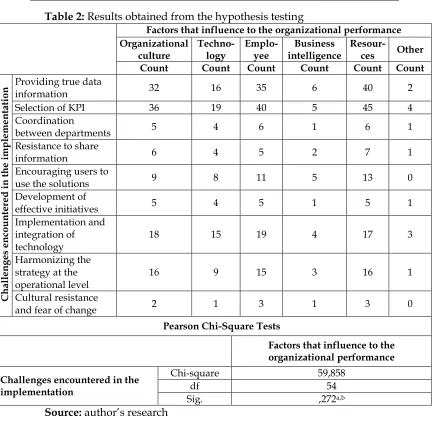
Table 2: Results obtained from the hypothesis testing
Factors that influence to the organizational performance Organizational culture Techno-logy Emplo-yee Business intelligence
Resour-ces Other
Count Count Count Count Count Count
Ch al le n ge s en cou n te re d in th e imp le me n ta ti on
Providing true data
information 32 16 35 6 40 2
Selection of KPI 36 19 40 5 45 4
Coordination
between departments 5 4 6 1 6 1
Resistance to share
information 6 4 5 2 7 1
Encouraging users to
use the solutions 9 8 11 5 13 0
Development of
effective initiatives 5 4 5 1 5 1
Implementation and integration of technology
18 15 19 4 17 3
Harmonizing the strategy at the
operational level 16 9 15 3 16 1
Cultural resistance
and fear of change 2 1 3 1 3 0
Pearson Chi-Square Tests
Factors that influence to the organizational performance
Challenges encountered in the implementation
Chi-square 59,858
df 54
Sig. ,272a,b
Source: author’s research
influence on the organizational performance. From the obtained results it follows that the individual hypothesis H1 - is accepted.
4. Conclusion
Performance measurement systems are an important part of the decision-making process and performance improvements. They provide information that is crucial in making the right decisions. One of the most important phases in the development of the system for measuring organizational performance is the implementation phase. Companies face with different challenges in this face. The overall survey findings show that the concept for measuring organizational performance in the companies of food industry in the Republic of Macedonia is still not fully developed, but there are few companies that have implement and use some system for measuring organizational performance. According to the respondents the greatest problem and challenge when implement a performance measurement model is the proper selection of the right key performance indicators and the providing real data. Other important reasons, why implementation of the system fails is that the strategy is not harmonize with the operational level, as well as the integration of the system for measuring performance with technology and other systems in companies.
As one of the most important barriers faced by the companies from the food industry in the Republic of Macedonia when it comes to the implementation and application of the system for measuring organizational performance are the following:
- Lack of managerial skills;
- Negative attitude and mistrust of the employees towards the system; - There are no development strategies for the system.
Managers do not have the appropriate skills to enable the proper implementation and application of the system. Mainly this problem arises from the fact that most of the companies in the food industry in the Republic of Macedonia are small and medium-sized businesses in which managers are both owners, but also executors of many other functions. Hence they do not have the appropriate skills.
activities, they understand it as something that can have a negative impact on their work. That is, as a kind of additional control, that creates additional pressure in the work.
Implementation and application of the system is not sufficient for its successful operation in the future. It requires developing an appropriate strategy that will enable its development and continuity in its work. The strategy that applies to the system must be aligned with other company strategies to enable it to develop properly.
List of References
Bourne, M., & Neely, A. (2000). Designing, implementing and updating performance measurement systems. International journal of operation and production management.
Franco Santos, M., Marr, B., Neely, A., Kennerly, M., Micheli, P., & Gray, D. (2007). Towards a definition of a business performance measurement system. International journal of operations & production management. Kaplan, R., & Norton, D. (2001). Transforming the Balanced Scorecard from
Performance Measurement to Strategic Management: Part I. Accounting Horizons.
Najmi, M., Fan, I., & Rigas, J. (2005). A framework to review performance measurment systems. Business process management journal.
Neely, A. (2005). The evolution of performance measurement research: Developments in the last decade and a research agenda for the next. International journal of operational and production management, vol. 25, iss: 12.
Neely, A., Gregory, М., & Platts, К. (1995). Performance Measurement System Design: A Literature Review and Research Agenda. International Journal of Operations & Production Management, 15.
Santos, F., Kennerley, M., Micheli, P., & Martinez, V. (2007). Towards a definition of a business performance system. International journal of operations and production management 27
Simons, R. (2000). Performance measurement and control systems for implementing strategy: text & cases. Prentice Hall, Upper Saddle River, NJ.