1. ENTOMOL. SOC BRIT COLUMBLA 96, DECEMBER 1999
An annotated checklist of the ants
(Hymenoptera: Formicidae) of British Columbia
KEN NAUMANN
29
DEPT. OF BIOLOGY, LANGARA COLLEGE 100 W 49 AVE. VANCOUVER, BC V5Y 2Z6
WILLIAM B. PRESTON
946 MCMILLAN AVE. WINNIPEG, MB R3M OV6GORDON L. AYRE
1ABSTRACT
This paper lists the ant species reported from, or likely to be found within British Columbia. Localities are given for each species, as are ecological notes and keys to the reported subspecies, genera, and species.
INTRODUCTION
The ants of British Columbia have been surprisingly poorly studied, despite their ubiquitousness. Buckell (1927, 1932) produced two checklists of species collected in BC, however few areas of thc province were surveyed and some of the listed species have been reclassified or may have been misidentified. Blacker (1992) presented a more detailed list of species personally collected near Victoria, and Blades and Maier (1996) made an extensive collection of ar1hropods, including ants, on Mt. Kobau, near Osoyoos. Beyond these, researchers are left with lists from nearby provinces and states including southern and central Alberta (Sharplin 1966), the Yukon (Francoeur 1997), Washington (Smith 1941), Idaho (Yensen el al 1977), Montana (Wheeler and Wheeler 1988), and Alaska (Nielsen, 1987). This paper provides an introduction to the ant species reported to occur, or likely to be found, within BC Ecological notes and localities arc also given and keys are provided for species repotied from within BC
The list of BC ant spccies and their localities was compiled ti'om a number of sources, including literature references, from preserved specimens in institutional collections, and the personal collcctions of the authors.
Keys were modified fi'om those of 1 IOlldobler and Wilson, (1990~ subfamilies and genera), Creighton (1950; most species), Wheeler and Wheeler (1986~ many species), Francoeur (1973; Formica fusca group), (Wilson 1955; Lasius), and (Snelling 1973; Slenamma). Where possible, thcsc keys werc checked for case of use against idcntified specimens.
Ant systematics are tife with synonomies and ta-.:onomic disagTeements and the taxonomy of several of the most common genera in the province, such as Myrmica, Leptotho/'ar, and Formica are particularly mes~y For example, Lepto/homx lIIusconllll is treated here as a single species but actually represents a complex of closely related species. As a result, literature outside of the most recent revisions may he misleading. For the most part, we have used the nomenclature of Bolton (1995) and Smith (1979) and mostly avoided the use of suhspecilic names, although they arc common in the older literature. I ,IsIs of synonomies, useful especially for disentangling older literature, can also he found in the above-mentioned references.
30 J. ENTOMOL SOC BRlT. COLUMBIA 96, DECEMBER 1999
British Columbia encompasses a greater range of landfonns and climates than any other province in Canada. The landfonns can be roughly grouped into a series of parallel systems that fUn nOlthwest to southeast. Weather systems, moving predominantly fi'om the west, interact with the parallel mOlll1tain systems to produce wet belts and rain shadows. This vmiability of climate, combined with diverse topography and a wide range of latitude, produce twelve distinct biogeoclimatic zones within the province (Farley, 1979; Krajina, 1959) and a wide range of potential habitats for ant species.
ANNOTATED LIST OF Be ANTS
Localities are referenced by author or by the location of preserved specimens, ie, UBC
=
the Spencer Entomology Museum at the University of British Columbia; the Canadian National Collection (CNC); the Wallis Museum, Entomology Dept., University of Mantioba, Winnipeg (WM; mostly collected by G. L. Ayre); the Royal British Columbia Museum in Victoria (RBCM); and the collections of the authors, e.g. GLA=
G. L. Ayre; KN=
1<. Naumann; WBP=
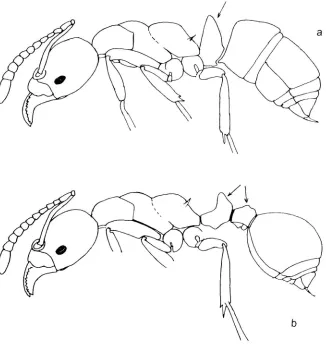
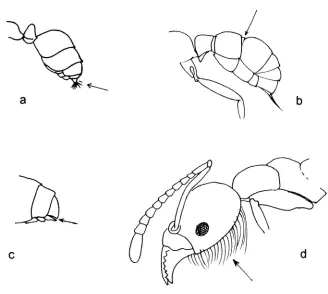
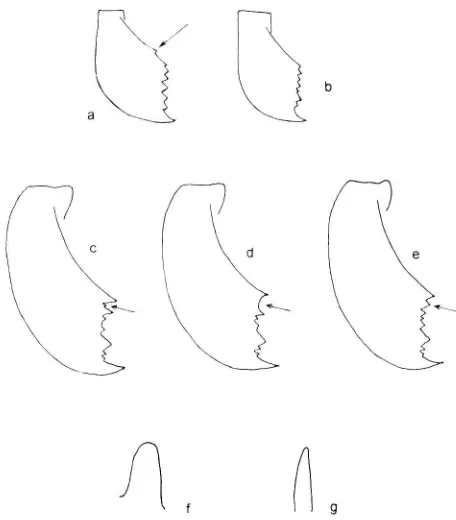
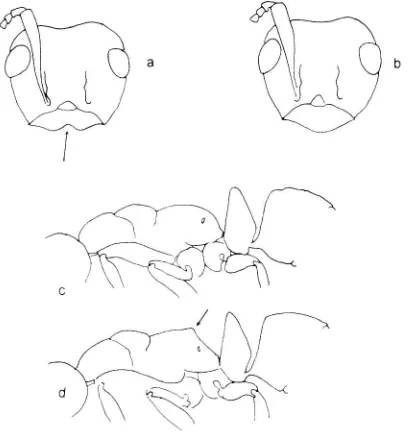
W. B. Preston. When several localities are given for a species they are listed by region, and in the following order: Vancouver Island and the Gulf Islands, the Lower Mainland, The Southem Intelior, the Columbia and Kootenays, the Cariboo-Chilcotin, and the NOIth. Species denoted by * have not been reported from BC, but have from neighbouring areas. Species denoted by **, although repOlied from BC, may have been accidentally impOlied or misidentified in the literature.Most of the anatomical tenns used in this paper are diagrammed in Figures I and 2. Others are explained in the text. Approximate sizes are described as follows: minute = less than 2 mm long; small
=
2-4 mm; medium=
4-6 mm; large=
6-8 mm; and very large=
greater than 8 mm. The descriptions of behaviour include some tenns which may bc new to those unfamiliar with social insects. For example, polygynous species are those that can have more than one queen per colony. Absconding is the rapid removal of the colony to a new location. Polymorphism is the occun'ence of more than one size category or morphological worker caste in a nest. The largest workers are called majors, or soldiers if they speciali7.c in defense of the nest, and the smaller workers are called minors. Cleptobiotic species rob the food stores or scavenge from the rcfusc piles of another species but do not necessarily nest in close association with it. Xenobiotic species, also known as guest ants, live in the nest of host species and obtain food f)'om them but generally keep their brood separate. Inquilines, also known as a pennanent or obligate social parasites are queens that spends their entirc life cycle in the nest of a host species; host workers care for the queen's rcproductive offspnng. Such parasitic species may producc few or no workers of their own. Temporary social parasitism occurs when a quecn usurps the nest of a host specIes. Eventually her daughters replace the host workers. Dulotic, or slave-making, species raid the nests of other species, capture brood and rear them as enslaved nestmates. Nest budding is a fOlm of colony multiplication in which one or more queens and a subgroup of workers leave an established nest to found another nearby For a more detailed glossary of telminology see Holldobler and Wilson (1990)Poncrinac Amhlyopone
Members of this genus are found in wooded areas, especially where well shaded. They are generally subtelTanean. The workers are timid and slow moving, and the queen forages when nest founding. There are no distinctive worker castes, and the stinged workcrs rcsemble the always wingless queens.
1. ENTOMOL Soc BRIT. COLUMBIA 96, DECEMBER 1999 31
brown predators.
Localities: Galiano Island (UBC)~ Yale - in a rotten Douglas fir stump in dense forest (WM)~ Washington (Smith 1941)
Myrmicinae
Myrmica
Members of this genus live in moderately-sized colonies of 500-1500 workers, building their nests in soil, rotten wood, or under objects They are camivores and/or collectors of honeydew. Many species from northem North America are closely related to Palearctic species. As a rule, they are inoffensive ants and will flee when disturbed. Undisturbed workers are rather sluggish As in all the MYlmicinae, the pupae are never enclosed in cocoons. The following species are characterized by a dull head and alitrunk and a strongly shining gaster.
*M. a/askensis Wheeler: Typical of the transcontinental boreal forest. Nests mostly in dead wood. Medium-sized. Some authorities consider this to be a vanety of M. incolllpleta. This species acts as the host of the xenobiotlc species, Fonnicoxenus quebecensis and mdividuals of the latter have been collected at Overlander Falls, along the upper Fraser River, and }.If. alaskensis itself has been found at several localities near Jasper, Alberta (Buschinger et al.
1994). RepOlted also from the Yukon (Francoeur 1997) and Alaska (Nielson 1987)
M. hrevispinosa Wheeler: Nests in open sandy habitat", often near stream valleys or the shores of pcnnanent water bodies. Head dark reddish-brown to yellowish-red, alitlllnk yellowish-red, gaster very dark red to dark reddish-brown Small to medium sized
Localities NOith Vancouver (WM)~ Summerland (WM)~ Oliver (WBP)~ Kamloops~ Chilcotin region~ Cariboo region (Buckell 1932), Also repOlted from Alberta (Sharp lin 1966)~ Alaska (Nielsen 1987)~ Idaho (Yensen et al. 1977) and Montana (Wheeler and Wheeler 1988),
M. /ati/rons Starke RefelTed to M, elllelymw Forel in most of the literaturc I-lead and alitrunk coarsely lllgose and reddish-brown, Gaster may be slightly darkcr. Medium sized (4-4.5 mm). Localities: Victoria (Blacker 1992)~ Lytton (RI3CM)~ Osoyoos (between 800 and 1500 m elevation) (Blades and Maier 1996, listed as
M,
tahoensis), Also repOlted from Albel1a (Sharp lin, I 966)~ Idaho (Y cnsen et aI., 1977) and Montana (Wheeler and Wheeler 1988)M. incompieta Provancher: FOlms large, polygynous colonies in moist, gTassy habitats, or at forest or hog edges. Head and gaster dark and with coarse suleatlons (grooves). Medium sized ants (4 -6 mm long).
Localities: Victoria (Blacker 1992)~ Lens Creek, Mesachie Lake - in a log (RBCM), Mission (UBt)~ Sicamous - nest in soil in a meadow~ Field - wlder a stone in dense forcst (WM); Flathead (WBP); Minnic Lake (Buckell 1932); Westwick I.ake., Stanley (in the Cariboo rcgion); I.ac La Hache (RBCM); Blue River (WPB). Specimens ofM. incolllp/eta have also been collected in the ROCK)' Mtns and Pcace River region of Alhel1a (Shaq1lin, 1966); in the Yukon (Francoeur
1997), Idaho (Yensen et al. 1977) and Montana (Wheeler and Wheeler 1988).
M. lohijrons Pergande: Nests in and near boreal bogs or other moist areas that are temporarily flooded, or nverbanks Workers are small with reddish-hlaek gaster and head and reddish-yelolow to dUSK)' red alitrunk. Listed Ii'olll the Yukon (Francoeur 1997) and reported to occur 11'0111 New Me:-;ico and Nevada to Alaska (Wheeler and Wheeler 1986)
Manica
32 J ENTOMOL Soc BRIT. COLUMBIA 96, DECEMBER 1999
creeks or river bottoms. Underground galleries are often connected to the sUiface by holes in the bottom of one or more small craters. Workers usually have an orange color and will bite or sting in defense of the nest They have an unhurried but not sluggish gait Their food source is unknown, but Wheeler and Wheeler (1986) suggest that they feed on ants of other genera.
M. hunteri (Wheeler): Nests in openings in coniferous forests. Concolorous, yellowish-red to dark reddish brown, with a dull head and alitrunk and strongly shining gaster. Medium-sized to large ants (5 - 7 mm).
Localities: Fruitvale - nest under a stone, surrounded by sand, in a larch/spruce forest (WM). Also reported from Alberta (Sharplin 1966); Idaho (Yensen et at. 1977) and Montana (Wheeler and Wheeler 1988).
M. invida Wheeler: Referred to as M, mutica (Emery) in most of the literature. This species is more xerophilous than most members of this genus and prefers unshaded nest sites. Found mostly in the drier regions of southern BC, although there is also a report from Alaska (Wheeler and Wheeler 1986). Capable of inflicting a painful sting, but rarely does unless the nest is disturbed. Small to medium-sized. Concolorous yellowish-red to dark reddish-brown. Head and alitrunk dull, gaster strongly shining.
Localities: Summerland - tunnelled into the exposed gravel bank of a creek (WM); Oliver (WBP). Also reported from Alberta (Sharplin 1966) and Idaho (Yensen et at. 1977).
Pogonomyrmex
Also known as harvester ants, this group is widespread throughout southwestern North America, but is poorly represented in BC. They collect seeds. Nests are built in soil, fully exposed to the sun.
P. salin us Olsen: (= P, owyheei Cole) Nests are conical pebble mounds, with basal entrances and peripheral clearings. They are usually about 50 cm across at the base, and low. These ants are active harvesters that store and eat large quantities of seeds. A dump of chaff can often be seen at the edge of the nest The workers are pugnacious and can inflict a painful sting. They are medium-sized to large and brown to red in colour.
Localities: At low elevation sites in the Okanagan south of Pen tic ton (Buckeli 1927); specifically Osoyoos; Oliver; Keremeos (Buckell 1932; Blades and Maier 1996; WBP).
Stenamma
Members of this genus usually form colonies of several dozen individuals In wooded areas, beneath logs, stumps, branches, rocks, moss or debris. They feed mostly on other arthropods.
Workers are sluggish, timid, and rarely seen outside of the nest
S. diecki Emery: Nests, usually of about 100 workers, are found in rotten wood or under objects, often in shaded sites. They are adapted to various habitats - Blacker (1992) reported that they can be found in red cedar forests These are small ants (3.5 mm), slender, and dark reddish brown. Head dull, alitrunk moderately shining, and gaster strongly shining.
Localities: Victoria; Thetis Island (Blacker 1992); Yale - nest under the bark of a rotting stump in dense deciduous forest (WM). Also listed from Idaho (Yensen et al. 1977) and Washington (Smith 1941).
J. ENTOMOL. Soc. BRIT. COLUMBIA 96. DECEMBER 1999 33
(Snelling 1973)
**S. brevicorne Mayr Quoted by Buckell (1927) (as S neoarcticum) as occuning in BC, but
Smith (1979) considers this small-workered species to occur east of Colorado. Smith (1957)
shows the westernmost occurrences in Nebraska and Minnesota. Gregg (1963) lists this species ii'om Colorado.
Aphaenogaster
Most Aphaenogaster species nest in the soil beneath some protecting object. They are
predominantly camivores, and also show rapid and well-organized absconding behavior in the
presence of a major threat from enemies or flooding. They can be distinguished from Myrmica species by possessing unpectinated (non-comb-Iike) spurs on the hind tibiae (Mynl1ica spurs are
comb-shaped) and their colonies are also usually more populous (Cole 1942). Aphaenogaster
workers are more slender and shining. Workers are most often seen above ground in the evening
A. occidentalis Emery: It usually prefers open and dry nest sites, fOlming nests of several hundred
individuals. Workers are slow moving and may hide when disturbed. They are small to
medium-sized (4-5 mm), brown to reddish brown, with head dull, or the posterior portion shining, alitrunk feebly shining, and the gaster strongly shining.
Localities Victoria; Thetis Island (Blacker 1992); Vancouver (UBC); Yale; Lytton; Lillooet
(CNC); Osoyoos (below 1500 m, Blades and Maier 1996; WBP); Westbank - under a stone in
open ground (WM; WBP); Summerland; Oliver; Savona; Anarchist Mountain - under a stone in
open fir and pme forest; Kalamalka Lake (WM); Lower Nicola (WBP); Kamloops (Buckell
1932); Balfour (WBP); Slocan district (UBC); Trail; Waneta (WM); Chilcotin region (Buckell 1932).
PheidoLe
These ants are mainly seed harvesters, and although the genus includes many species, they are found predominantly in the aJ'id southwest of North America. The majors characteristically
have very large heads, and may act as seed huskers or soldiers. Colonies usually contain less than
300 individuals and are found in the soil, either under stones or without cover.
P. cali/ornica Mayr: Nests under objects. Major workers are small and vary from concolorous yellow to bicoloured with head and alitrunk red and gaster dark-reddish brown. Minor workers are minutc «2 mm), and bicoloured. Both worker classes are shining.
Localities Osoyoos (Buckell 1927; UBC) Blades and Maier (1996) report Pheidole sp. ii'om
Osoyoos (probably cali/ornica?). Listed from Washington by Smith (1941).
Monomorium
These are small ants, adaptable with respect to nesting sites. They may nest in preformed cavities such as openings in plant litter or rotting wood or spaces in the walls of buildings.
M. pharaonis (Linnaeus) This is a tramp species, i.e., widely distributed because of human commerce and living in close association with humans, and a notable house pest that probably arrived in North America from Africa or tropical Asia. Workers are small, stingless, and the colow' is light reddish-yellow to brown with the gaster somewhat darker. The head and alitrunk are densely punctate (covered with minute pits). Multiqueen colonies can contain up to 300,000 workers. It is a common pest in apartments in Vancouver.
34 J ENTOMOL. Soc. BRIT. COLUMBIA 96, DECEMBER 1999
the Pacific Northwest, it has been reported from Alberta (Sharplin 1966); Idaho (Yensen el af.
1977) and Montana (Wheeler and Wheeler 1988).
Solenopsis
These ants are often small and lestobiotic (living in, and stealing from, the nests of other species). The group includes a notable pest, the fire ant, S. invicla, an import from Brazil, which has become an agricultural and public health problem in the southeastell1 United States.
S. molesta (Say): A lestobiotic species that occasionally infests houses, establishing nests in woodwork and masonry. They are omniverous and will eat insects, seeds, and honeydew, as well as meats, bread, grease, fruits, nuts, and sweets. Strongly shining, minute ants (approximately
1.3 mm long), mostly reddish-brown in color.
wcalitics Osoyoos (WM; Buckell 1932), below 800 m (Blades and Maier 1996); Westbank
-under stones, tunnelled into soil, and in creek banks; Summerland -taken with an excavated nest
of Manica mulica; Oliver; Lillooet (WM); flathead (WBP). Buckell (1927) reported this insect to be common throughout BC Also reported from Alber1a (Sharplin 1966); Alaska (Nielsen
1987); Idaho (Yensen el af. 1977) and Montana (Wheeler and Wheeler 1988).
Leptothorax
These species nest in livmg or dead trees, decaying wood, soil, or stumps. Because of
inconspicuous habits and small colonies (50 -200 workers) they are often overlooked. Many nest by choice in preformed cavities. Nests often adjoin those of other, larger ant species, and thc workers may steal food from the larger nest. Some species arc inquilines (social parasites) that
lack a worker caste, and others dulotic (conducting slave raids in which brood, and especially
pupae, are removed to the home nest).
*L. acervorum (fabricius) Reported from the Yukon by Francoeur (1997).
*L. faberi Busehinger: An obligate social parasite of the "L. lIIuscorUIll group" sensu laID. Queens are more likely to be found than workers, and they can be differentiated from their hosts by larger size, darker colour, and the presence of a post-petiolar ventral spine. Described from
Jasper National Park in Alberta (Buschinger 1981). Francoeur (1997) rep0l1ed a Leplot/lOrax.
sp. nr.faberi from the Yukon.
L. muscorum (Nylander): This name has been applied to what is a complex of species, including the most northell1 new world ants. By comparing chromosomes numbers, Loiselle e/ af. (1990)
determined that the complex includes at least four species in Nor1h America. They are found mostly in woodland" where they nest in decaying stumps, logs, or under logs or rocks. Small ants,
mostly dark reddish-brown in color. Head and alitrunk are dull, and the gaster strongly shining.
Distribution extends from Arizona through to Alaska and the North West Territories, and
throughout northell1 Europe. Some authorities, e.g. Creighton (1950), consider L. lfIuscorUIII to
be solely an old world species, and refer to our species (complex) as L. canadensis Provancher.
wcalities: Victoria (Blacker 1992); Cordova Bay; Vancouver; North Vancouver (WM); Hope
(RBCM); Osoyoos (between 800 and 1500 m elevation) (Blades and Maier 1996); 94 Mile House (RBCM); Chileotin region (Buekell 1932); Westwood Lake (Cmiboo region: UBC); Lens Mountain (RBCM) Also reported from Montana (Wheeler and Wheeler 1988)
L. nevadensis Wheeler Blackish, 2.5 mm workers, bearing 12 segmented antennae with dark
coloured clubs
1. ENTOMOL. Soc. BRIT. COLUMBIA 96, DECEMBER 1999 35
and Maier 1996); Oliver (WBP); BalfOlu' (WBP); Waneta - nests fOlli1d in mixed open torest and
dry benchland, one tunnelled under the bark of a decayed stump (WM). Also repOlted fi'om
Montana (Wheeler and Wheeler 1988).
L. nitens Emery: Found under rocks and in duff Small, pale yellow ants.
Localities: Osoyoos (below 800 m elevation) (Blades and Maier 1996); Washington (Smith
1979); and Idaho (Yensen et al. 1977)
*L. retractus Francoeur: Nests in dead wood in forested habitats. Found in the Yukon (Francoeur 1997).
L. rugatulus Emery: Nests in dry, grassy sites, under wood, stones, in decaying wood, or under grass clumps. Small (25-3 mm), with dull head and alitrunk, gaster strongly shining Solidly
built, with a box-shaped ali trunk.
Localities: Victoria (Blacker 1992); Vernon (UBC); Lillooet (WM); Osoyoos (below 1500 m elevation)(Blades and Maier 1996); Westbank -in soil under a log; Summerland -in open forest
in a ponderosa pine cone embedded in the soil (WM); Cache Creek (RBCM); Balfour (WBP);
Waneta (WM). Also reported from Montana (Wheeler and Wheeler 1988).
Formicoxenus
This genus was revised by Francoeur el al. (1985) and includes several species that were
previously included in the genus Leptolhorax. The ants of this genus are characterized by a
xenobiotie lifecycle and the production of several types of functional queens including winged
individuals with fully developed alitrunks (gynomorphs), wingless individuals without wing
-associated thoracic structures (ergatomorphs), most of which act as workers, and intenTIorphs,
which are intermediate in morphology.
*F. diversipilosus (Smith): A guest ant in the nests of FOl1nica obscuripes, F. ravida, and F.
integroides. Reported from Washington (Alpelt and Akre 1973), and Idaho (Yensen et al.
1977)
F. quebecensis Francoeur: A guest in colonies of Mynllica alaskaensis. Distinct tj'om other
members of the genus in having both winged and non-winged males.
Localities: Overlander Falls (along the upper Fraser River), and repo1ted [rom several sites near
Jasper, Alberta (Busehinger et al. 1994).
*
F. provancheri (Emery) A guest ant of MYl7l1ica incompleta Might be found, together withits host, in many locations in the province. Reported from Albcrta (Francoeur el al. 1985) and
Montana (Wheeler and Wheeler 1988).
Doronomyrmex
This genus contains species that are obligate social parasites, i.e., they produce few or no workers and reproduce when a queen usurps the colony of another species.
*D. pocahontas Buschinger: An obligate social parasite of a small member of the Leptothorax
musconml complex Described from Jasper National Park, Alberta by Buschinger (1979).
Tetramorium
36 J ENTOMOL. SOC BRlT COLUMBIA 96, DECEMBER 1999
*T. caespitum (Linnaeus): This species may be of European origin. It builds colonies under stones, near building foundations, and commonly infests houses where the omnivorous workers seem to show a preference for meat or grease. Workers are small, and dark reddish or brownlsh
-black, although they appear black in the field. Found in Washington (Smith 1979) and probably occurs in towns in Be.
Dolichoderinac
These are mostly small, drab coloured ants. They are characterized by a single segmented pedicel, no constriction between the first and second gastric segments, and a slit-like eloacal
orifice. The pupae are naked.
Tapinoma
Workers commonly attend honeydew secretors such as aphids. They also emit a substance that smells like butyric acid.
T. sessile (Say): An adaptable species that may nest in the soil beneath objects or infest houses. Nests may contain thousands of individuals. Workers are 2.5 -3 mm long and yellow-brown to blackish in colour.
Localities: Victoria (WM; Blackcr 1992); Cordova Bay (WM); Courtenay (UBC); Mesachie Lake (WM, RBCM); Mission (RBCM); Osoyoos (from vallcy bottom to 1850 m elevation,
Blades and Maier 1996; also WEP); Olivcr (WM, WBP); Penticton; Kamloops (Buckell 1932);
Lillooet (Buckell, 1932; WM), Vernon (UBC); Sicamous; Westbank; Savona; Anarchist Mountain (WM); Cache Creek (RBCM); Balfour (WEP); Columbia Lake (WM); Flathead
(WEP); Chilcotin region (Buckell 1932) Also rep0l1ed from the Yukon (Francoeur 1997) and Montana (Wheeler and Wheeler 1988).
Liometopum
These ants nest 111 the soil beneath covcr, or under bark or 111 trce crevices. The nests, which are sub-divided by paper-like material, arc ollen diflicult to find. Thc workers commonly foragc in single file, and many attend honeydew seeretors. Thcy are pugnacious and eject a substance
that smells like butyric acid when threatened.
**L. apiculatum Mayr: Workers are small to medium-sized and dark rcddish-brown. Reportcd by Buckell (1932) Irom Naramata, however, Smith (1979) dcscribed this species as OCcul1'ing in the U.S. southwest and Mcxico, in foothills at elevations of 1,000 -2,000 m.
Formicinae
This subfamily is the predominant group in North America. They are especially common in Be. They lack a sting but are able to cjcct formic acid when disturbcd.
Brachymyrmex
These ants usually build small colonies in the soil, under objects. Thcy attend honeyde w-secreting insects.
B. depilis Emery: Nesl<; m'c Il1 the soil under some object. Workers arc minute (1.5-2 mm), pale hrown, slow-moving, and inconspIcuous. They tecd chicOy on honeydcw secretcd hy aphids and mcaly bugs on the roots of plants, and spend almost all of their time underground.
J ENTOMOL. Soc BRIT. COLUMBrA 96, DECEMBER 1999 37
Camponotus
These are called the carpenter ants because of their preference for making nests in wood.
They do however, also nest in the soil, and under or in hollow twigs or branches. Workers are highly polymorphic and can become aggressive and bite in defense of a nest.
C. essigl-hyatti complex: Small colonies with several dozen to a few hundred workers. Workers are smooth and shining and vary in size from small to large. Specimens collected by G. L Ayre in Osoyoos in 1972 were determined at the time by R. Snelling to belong to the essigi-hyalli
complex. These specimens key out to C cf hyatti Emery using the keys of Snelling (1988) and
Wheeler and Wheeler (1986). They may be a new species in this complex Localities: Osoyoos, under the bark of sage brush, Artelllesia tridentata (WM).
C. herculeanus (Linnaeus): Large colonies can be found in rotting logs and stumps, especially
of conifers. A common stIUctural pest. The head and gaster of the major workers are black and
the alitIUnk black anteriorly and red posteriorly. Head [md alitIUnk moderately shining, the gaster dull Workers are large to very large.
Localities Mesachie Lake (WM); Princeton (VBC); Cache Creek (RBCM); Clinton; Lillood (WM); Douglas Lake, Revelstoke, Invelmere (Buckell 1932); Anow Lake (Buckell 1927);
Chilcotin and Cariboo regions (Buckell 1932); Blue River (WBP). Also reported from the
Yukon (Francoeur 1997); Alaska (Nielsen 1987); the N0I1h West Territories (Brown 1949);
Alberta (Sharp lin 1966), Idaho (Yensen et
a
r
1977) and Montana (Wheeler and Wheeler 1988)This species no doubt occurs in n0l1hem BC as well
C. laevigatus (Smith): Has habits similar to C herculeanus and is also occasionally found in
buildings Buckell (1927) reported that this species was not common, and could usually be taken
from fir logs at higher elevations. Workers are large to very large, and entirely black and shining,
often with bluish reflections.
Localities: Thetis Island (Blacker 1992); Cordova Bay (RBCM); Nanaimo; Osovoos (between 800 to 1500 m elevation, Blades and Maier 1996; WEP); Westbank (WEP); Lillooet (WM);
Cranbrook (Buckell 1932); Lens Creek (RBCM). Also reported from Montana (Wheeler and Wheeler 1988)
C. modoc Wheeler: Some consider this a subspecies ofC hel'culeanus. Workers are medium-si/.ed to very large, black with golden yellow setae ~nd pubescence on the gaster. The head is
feebly shining to dull, and the alitIUM and gaster dull Nests or several hWldred to 1000 workers are usually found under or in wood, and workers may be seCJl climbing trees, possibly to take
honey dew li'om aphids.
Localities: Victoria; Thetis Island (Blacker 1992); Brentwood Bay (WM); Mesachie Lake (RBCM); Qualicum Beach (WBP); North Vancouver (WM); Port Coquitlam (WEP);
Vancouver; Armstrong (KN); Oliver (WBP); Sununerland; Greenwood; Clinton; Lens Creek;
Lytton (RBCM); Columbia Lake; Fruitvale, (WM); Baltour; Flathead (WBP); Chilcotin region
(Buckell 1932); Lac la Hache (RBCM). Also reported li'om Montana (Wheeler and Wheeler 1988).
C. nearcticus Emery: Constructs small nests in dead twigs and branches, under the bark of live or dead trees, in galls, pine cones, rotting logs, stumps, tence posts, or roofing. Medium-sized to very large.
Localities: Osoyoos (below 800 m elevation) (Blades and Maier 1996); Balfour (in house;
38 J ENTOMOL. Soc BRIT. COLUMBLA 96. DECEMBER 1999
C. noveboracensis (Fitch): This may, like C. modoc, also be a subspecies ofC. herculeanus,
and is also an occasional house pest. Workers are dull, varying to head and alitrunk dull with a
moderately shining gaster. The head is black to reddish black, alitrunk red, and gaster black, and
the size large to very large
Localities: Mesachie Lake (RBCM); Port Coquitlam (WBP); Oliver (WBP; Buckell 1932);
Keremeos, (Buckell 1932); Lillooet (WM); Lytton; Lens Creek, (RBCM); Chilcotin region
(Buckell 1932). Also in Alberta (Sharplin 1966) and Idaho (Yensen et al. 1977).
*
c.
semitestaceus Emery: Nests under stones, or in soil SW1TIounted by low craters. Workers are large to very large; the largest workers have a reddish head, pale yellow ali trunk and antelior of the gaster with the remainder of the gaster brown. Found 111 Washington (Smith 1979).C. vicinus Mayr: Nests in soil under stones, or rotting wood buried in the soil. The head and
gaster are black, and the alitrunk and legs red, although some small workers may appear entirely
black in the field. Large to very large May be largely noctumal (Blacker 1992).
Localities Victoria; Thetis Island (Blacker, 1992); Mesachie Lake (RBCM); Galiano Island;
Vancouver (UBC); Coquitlam (WBP); Osoyoos (below 1500 m elevation, Blades and Maier
1996; WBP); Oliver (WBP); Rock Creek; Vemon; Kamloops; Nicola Lake; Lillooet; (Buckell 1932); Westbank (WBP; WM); Anarchist Mountain; Oliver; Kalamalka Lake (WM); Lytton;
Lens Creek; Robertson Valley; Clinton (RBCM); Summerland; Penticton (WM); Balfow' (WBP); Waneta (WM); Chilcotin region (Buckell 1932) Also reported from Montana (Wheeler and
Wheeler 1988)
Lasius
Members of this group build nests in exposed soil, under objects, or in rotting wood. The
colonies are small to medium-sized, and the workers may attend or foster honeydew-excreting
insects. Many of the species found here have a holarctic distribution.
L. alienus (Foerster): Prefers well or partially shaded woodlands, although occasionally found
in open areas. Nests are found under rotting logs or rocks, and may contain several thousand workers. May invade houses. Workers are small (2.3-3 mm), dull, and dark reddish-brown.
Localities: Victoria (Wilson 1955); Mesachic Lake (RBCM); Cordova Bay; N0I1h Vancouver
(WM); Vancouver CUBC; WBP); Queen Charlotte Islands (UBC); Hope (RBCM); Manning Park (Wilson 1955); Yale (WM); Osoyoos (WM); Oliver (WBP); Okanagan Falls (Buckell 1932); Westbank (WM); Lillooct (Wilson 1955); Monashee Mountains; Emerald Lake (near Field) (Wilson 1955); Slocan (UBC); Fruitvale; Waneta, (WM); 70 Mile House (RBCM); Blue River
(WBP). I\lso reported from Montana (Wheeler and Wheeler 1988).
L. crypticus Wilson: Nests under stones or builds crater nests in open areas. Workers are small
and reddish-brown
Localities: Osoyoos (below 1500 m elevation; Blades and Maier, 1996); Oliver (WEP);
Westbank; Greenwood; Savona; Columbia Lake (WM). Also repOItedfj'om Montana (Wheeler and Wheeler 1988).
L.fallax Wilson: Nests under stones in forest clearings. Workers are small and brown.
l<>calities: Osoyoos (between 800 and 1500 m elevation) (Blades and Maier 1996) Also
rep0I1ed from Montana (Wheeler and Wheeler 1988).
h-J ENTOMOL soc BRIT. COLUMBIA 96, DECEMBER 1999 39
yellow alitrunk and gaster.
Localities: Westbank (WM); Osoyoos; Chilcotin region (Buckell 1932). Listed from Idaho
(Yensen et at. 1977) and Montana (Wheeler and Wheeler 1988).
L. neoniger Emery: Builds nests with a sandy crater or nests under stones in open areas The
distribution ofthis species may be influenced by a tendency to nest along roadsides. The small,
dark reddish-brown workers tend honeydew-secreting insects.
Localities Osoyoos (below 800 m elevation)(Blades and Maier 1996); Oliver (WEP);
Annstrong (WM). Reported from Alberta (1966); the Yukon (Francoeur 1997); Idaho (Yens en
et al. 1977) and Montana (Wheeler and Wheeler 1988).
*L. niger (Linnaeus): nests under stones in both forest and open situations. Found 1I1
Washington (Smith 1979) and Idaho (Yensen et al. 1977). Wheeler and Wheeler (1986)
consider that this is in fact L alienus.
L. palLitarsis (Provancher): Usually nests in forested areas, U1 rotting logs and stumps, or under stones, but is sometimes abundant in grasslands. Eats a variety of foods and is sometimes
associated with aphids and coccids An occasional house pest Workers are approximately 35
mrn long and brown. The head is shining, the ali trunk and gaster moderately shining. Distributed
throughout all of southem BC, and in the north, west of the Rock.)' Mountains.
Ulcalities Victoria (Wilson 1955); Mesachie Lake (RBCM); Brentwood Bay; Cordova Bay (WM); Alert Bay (Wilson 1955); Galiano Island (UBC); Vancouver (WBP; WM; UBC); North
Vancouver; Deep Cove (WM); Chilliwack (Wilson 1955); Yale (WM); Osoyoos (between 800
and 1500 m elevation) (Blades and Maier 1996); Tenace (Wilson 1955); Sicamous (WM);
Salmon Ann (Buckell 1932); Penticton; Chase; Glacier; Howser (Selkirk Mtns)(Wilson 1955);
Balfour (WEP); Fruitvale; Kilmaird (WM); Creston (WBP); 100 Mile House; 70 Mile House;
Lac La Hache, (RBCM); Tete laune Cache (WEP) Reported [rom Alaska (as L sitkaensis;
Nielscn 1987). Also reported from Montana (Wheeler and Wheeler 1988).
L. subumbratus Viereck: A temporary social parasite of L pallital'sis It nests under stones or
rotting logs. Workers are small and concolorous reddish-yellow. The head and gaster are shining
and the alitnmk moderately shining.
Localities: Keremeos (Buckcll 1932). Listed from Idaho (Yensen et al. 1977) and Montana
(Wheeler and Wheeler 1988).
*
L. umbratus (Nylander) Is reported fi-om Albel1a (Sharplin J 966); Idaho (Yensen et al. 1977)and Montana (Wheeler and Wlleeler 1988). Workers are small with shiny, yellowish-red head
and gaster and a dull, reddish-yellow alitnmk.
L. vestitus Wheeler: Small yellowish-brown, strongly shining ants The entire body of the
workers is covered with long, mostly erect, silk.), yellow setae. So much so, in fact, that the gaster
has the appearance of a brush in side view. Said to be concentrated along the Pacific coast
(Wilson 1955) but 1I1 the US found inland as far as Idaho (Yensen el al 1977) and Nevada (Wheeler and Wheeler 1986).
Ulcalities: Nanaimo; rorbidden Plateau (Vancouver Island)(Wilson 1955)
A canthomyop.\'
Most members of this genus nest 1I1 the soil, usually beneath obleets, but they arc also l(lllJ1ct
nesting in rotting logs and stLU11pS, under basements, or arOLUld the IC)Wlctations of buildings. They
40 J ENTOMOL. Soc. BRIT. COLUMBIA 96, DECEMBER 1999
citronella or lemon-verbena odor, and the winged queens are often mistaken for termites. Most,
or all are temporary social parasites of Lasius species. The workers are relatively slow moving
and run about when disturbed. They are small «4 mm), yellow to yellowish-brown, and shining.
Their food is mainly honeydew from aphids or coccids.
A. coloradensis Wheeler Nests mostly under stones. Small, strongly shining ants with a
brownish-yellow head and gaster and a yellow alitrunk
Localities: 70 Mile House (RBCM). Also found in Albel1a and south to New Mexico (Smith,
1979), including Montana (Wheeler and Wheeler 1988).
A. interjectus Mayr: Found in woodlands, pastures, and meadows, under objects, near
foundations, or in the open with a small mound.
Localities: Kamloops (Buckell 1932). Listed from Idaho (Yensen et at. 1977) and Montana
(Wheeler and Wheeler 1988).
A. latipes (Walsh): Nests are found in open woodlands, meadows, or pastures, in exposed soil
with a mound, or at the base of stumps. The workers are small and shining, with brown head,
brownish-yellow alitrunk, and brown to brownish-yellow gaster They are distributed coast to
coast in southern Canada.
Localities Vancouver (KN); Lillooet (CNC); Kamloops (Buckell 1932); Keremeos CUBC). Also
reported from Montana (Wheeler and Wheeler 1988).
A. occidentalis (Wheeler): Nests under stones in dry sandy soiL Workers are small and
yellowish-brown in colour.
Localities Westbank (WM). Also reported from Montana (Wheeler and Wheeler 1988).
**A. claviger (Roger) Reported by Buckell (1932) from Penticton; Minnie Lake and the
Chilcotin region, but considered by Smith (1979) to be a species of eastern North America
Myrmecocystus
The species ofthis genus arc mostly predator-scavengers but they also collect honeydew, and
unusually, the carbohydrate rich secretions of plants. They are associated with arid climates and
are best known for the presence of individuals known as repletes. Repletes act as living storage
jars for honeydew or nectar; their gasters can swell to the size of a pea. They hang suspended
from a gallery ceiling until their stores are required by the colony.
M. testaceus Emery: This noctumal species fonns nests in well drained, stony or sandy soils.
Workers are medilll11-sized and shining, with yellow head and alitnmk, browlllsh-yellow gaster,
and large, black eyes.
Localities Osoyoos (below 800 m elevation) (Blades and Maier 1996).
Formica
This is the largest genus of ants north of Mexico Although most species arc predators and
scavengers and will collect honeydew, they show a great diversity of habits and can be subdivided
into several species groups. They are mostly medium-sized to large ants, with the workers
commonly 4 -8 mm long, although some species may be smaller. They release fonnic acid as
a defensive compound.
Neogagates group. These ants fOlm small colonies (to several hundred individuals) in soil,
J. ENTOMOL Soc. BRlT. COLUMBIA 96, DECEMBER 1999 41
enslaved by members of the microgyna and sanguinea species groups. All workers have a shining surface.
F. lasioides Emery: Commonly found in grasslands under stones or in nests with exposcd entrances or small craters. The workers are small to mediwn-sized and the colow-can be vatiable but the head and gaster are usually reddish-black and the alitrunk dus")' red or yellowish-red. There are a few erect setae on the antelmal scapes. Shining to strongly shining. They are distributed coast to coast in southern Canada and nOith into Alaska.
Localities: Hope (RBCM); Kamloops; Vernon; Nicola (UBC); Osoyoos (above 800 m elevation)(Blades and Maier 1996); Lillooet; Anarchist Mountain; Summerland; Edgewood (WM); Lens Mountain (RBCM); Chi1cotin region (Buckell 1932). Reported from Alberta (Sharplin 1966); Idaho (Yensen et
at.
1977) and Montana (Wheeler and Wheeler 1988).F. manni Wheeler: Nests under stones in gravelly or sandy soil, usually in at-id areas Head and alitrunk reddish-yellow and gaster reddish-black varying to head and alitrunk reddish-brown, gaster black. Small to medium-sized and shining. Workers are fast and timid, although large colonies may be aggressive,
Localities Lac du Bois (near Kamloops), (UBC). Listed from Idaho (Yensen et
at.
1977).F. neogagates Emery: Nests in woodlands, under various covering objects, and often forming a mound of soil. Head and gaster dusky red and alitrunk dat-k reddish brown vatying to head dat-k red dorsally and brown ventrally, alitrunk reddish-yellow with brown markings, and gastcr dark reddish brown. Small to medium-sized and strongly shining.
Localities Osoyoos (below 800 m elevation)(Blades and Maier 1996), (Buckell 1932; UBC); Oliver (Buckell 1932; VEC); Greenwood (WM); Westbat1k (WM; CNC); Cache Creek (RBCM); Chi1cotin region (Buckell 1932). Also reported from Montana (Wheeler and Wheeler 1988).
F. vinculans EmelY: Considered by some to be a subspecies of F. neogagates. Nests in open, SUl1l1y, prairie-like locations utilizing some vegetative debris. When nests are disturbed, the workers display aggressive alaIID. Alitrunk paler than head and gaster.
Localities Osoyoos (Maier and Blades 1996).
*
F. bradleyi Wheeler: This species occurs 111 sandy regions. The workers are small to medium-SIZed and yellowish red. Reported from Alberta (Sharplin 1966); Idaho (Yensen et al. 1977) and Montana (Wheeler and Wheeler 1988).Fusca group. Nests are in the soil and are usually started under a protecting object. The nest entrance is sunounded by a low mound or incgular crater of soil. Members of this group are commonly used by slave-making Formica species. The workers are generally fast and timid, but actively defend large colonies. This group is discussed in detail by Francoeur (1973).
F. accreta Francoeur: Relatively docile ants, black, and 4-7 mm long. Nests may contain over 1000 workers, at-e found in the soil, and at-e usually started under a rock or object. Blacker (1992) repOited this to be the most conspicuous ant in Victoria.
Localities: Thetis Island (Blacker 1992); Victoria; Sidney; James Island (near Saanich); New Westminster; Kootenay Lake (Francoeur 1973). Also repOited from Washington; Idaho and Montana (Francoeur 1973).
42 J ENTOMOL. SOC. BRIT. COLUMBIA 96, DECEMBER 1999
and Oregon. To our knowledge this is the first report of this species in Canada. Localities: Kalamalka Lake (WM); Oliver; Balfour (WBP).
F. argentea Wheeler: Nests in open or semi-open areas; usually in sandy soil, under a rock or with a low mound. Very active ants, they ocassionally infest houses. Workers are small to
medium-sized, and brownish-black with a silvery luster given by the pubescence. This species occurs coast to coast in North America.
Localities: Cordova Bay (WM); Victoria; Hope (Francoeur 1973); Osoyoos (from valley bottom
to 1850 m elevation) (Blades and Maier 1996); Lytton (RBCM); Lillooet (Buckell 1932);
Princeton (UBC); Vernon; Kelowna; Penticton; Kaslo; Creston; Cranbrook (Francoeur 1973);
Trail; Waneta (WM) Also reported from Montana (Wheeler and Wheeler 1988)
F. fusca Linnaeus Nests in a wide variety of situations. Workers ~mall to medium-sized. I-lead
dusky red, alitrunk and gaster dark reddish-brown varying to concolorous black with pale
appendages. Shining, especially the head and gastcr. Found (i'om Arizona to the Yukon and east to Newfoundland, and probably throughout much of Be.
u,calities: Patricia Bay; North Vancouver (WM); Terrace (Francoeur 1973); Manning Park
(UBC); Osoyoos; Kaleden (Buckell 1932); Vernon, (UBC); Westbank; Anarchist Mountain (WM); Lillooet (WM, CNC); Merritt; Kaslo; Selkirk Mountains (Francoeur 1973); Flathead (WBP); Lac La Hache (RBCM); Chilcotin and Cariboo regions (Buckell 1932) Also repOJted from Montana (Wheeler and Wheeler 1988)
*
F. gagatoides Ruzky An apparently holarctic species that resembles F. neorufi barb is Found in northern Scandinavia and Siberia and reported from the Yukon by Francoeur (1997).F. hewitti Wheeler: Nests under rocks, in rotting logs in open or in semi-open, late-succession
boreal forests. Medium-sized and dark brown to reddish-black. Head and alitrunk feebly shinlllg, gaster shining
Localities: Oliver (WBP); Loon Lake (near Kamloops)(Francoeur 1973); Emerald Lake (near
Field) (Buckell 1927; 1932) Listed from AlbeJu (Sharplin 1966); the Yukon (Francoeur 1997); Idaho (Yensen e/ al. 1977) and Montana (Francoeur 1973; Wheeler and Wheeler 1988).
F. montana Emery: A praIrie species that builds caJthen mounds, sometimes 1I1corporating thatch or covered with grass.
Localities: Trail (CNC, WM); Alberta (Sharplin 1966) and Montana (Wheeler and Wheelcr
1988).
F. neociara Emery: Usually found in sandy soils in grasslands or open woods; sometimes at the
base of plants, and sometimes 111 low, loose mounds of vegetation and excavated soil with many entranccs. Adapts easily to man-made environments. Often fomls populous colonies. Workers 3-4 mm long with blackish gaster, red-brown alitrunk and head red ventrally and reddish-black dorsally
Localities Mesachie Lake (RBCM); North Vancouver (WM); Chilliwack; Oliver, (L:3uckell 1927, 1932); Alexandria (UBC); Penticton; Okanagan Falls; Vernon (Francocur 1973); Lower
Nicola; Westbank; Osoyoos; Malakwa; Tete Jaune Cache, (WBP); Field; Golden, (Francoeur
1973); Columbia Lake, (WM); Lac La I-lache, (RBCM); Clinton; Chilcotin region (W3C);
Ilazeiton (Francoeur 1973). Reported fr'om the Yukon (Francoeur 1997); NOlth West
J ENTOMOL Soc BRIT COLUMBIA 96, DECEMBER 1999 43
F. neorufibarbis Emery: A dominant ant in the boreal and alpine forests of North Amenca;
usually nests in rotting wood, and occasionally under stones, or in decaying sphagnum moss. The
small to medium-sized workers are timid, and show a black head and gaster and red alitrunk.
Localities: Victoria (Blacker 1992); Vancouver Island; Vancouver (Francoeur 1973); Stave
Lake; Manning Park CUBC); Port Coquitlam (WBP); Similkameen district (UBC); Men'itt
(Francoeur 1973); Lower Nicola (WBP); Osoyoos (between 800 and 1500 m; Blades and Maier
1996; Buckell 1927, 1932); Kelowna; Kaslo; Invermere (Buckell 1927, 1932); Kaslo; Mount
Revelstoke; Carbonate (East Kootenay); Field (Francoeur 1973); Flathead (WBP); Tete Jaune
Cache (WBP); Barkerville; Chilcotin region (Buckell 1927, 1932); Ten'ace; Queen Charlotte
Islands; Liard Hot Springs (Alaska Highway) (Francoeur 1973). Also reported from the Yukon
(Francoeur 1997) and Montana (Wheeler and Wheeler 1988).
F. pacifica Francoeur: The workers are small to medium-sized and have a fine, dense, bronze
pubescence on the alitrunk, and a dark head and gaster. In Victoria, they are often found between
cracks in concrete (Blacker 1992).
Localities Clayoquot Sound (UBC); Rosedale (Francoeur 1973); Port Coquitlam (WBP);
Washll1gton (Francoeur 1973); Idaho (Yensen et al. 1977).
F. podzolica Francoeur: Forms populous, polygynous, crater-like or mound-like nests in boreal
and alpine forests, commonly in sandy soil on beaches or shores. Rarely, organic matter is
incorporated into the nest. May collect some seeds. Workers are black to blackish-brown,
medium-sized to large, shy, and are found from coast to coast in North America, and as far north
as the North West Tenitories and Alaska. Wheeler and Wheeler (1988) consider that this species
is
F.
subsericea Say, although they are treated as separate species by Francoeur (1973). In ourkey, we treat them as a single species.
Localities Nanaimo; Cordova Bay (WM); Vancouver CUBC); Agassiz (Francoeur 1973); Lytton
(UBC); Jackass Mountain (WM); Cache Creek (RBCM); Osoyoos (above 800 m elevation) (Blades and Maier 1996); Westbank (WM, WBP); Oliver; Jesmond; Loon Lake (near
Kamloops); Lower Nicola (WBP); Kaslo; Fort Steele; Field; Golden; Cranbrook (Francoeur
1973); Balfour (WBP); Lac la Hache (RBCM); Prince George (UBC); Terrace; Rolla (Francocw'
1973). Listed from the Yukon by Francoeur (1997).
F. subpo/ita Mayr: Constructs crater or mmmd-like nests, with one to four openings, in sandy or gravelly soil in dry areas. Occasional honeydew and seed collectors. Small to medium-sized ants
with strongly shining head and gaster and feebly shining alitrunk. Head yellowish-red, alitrunk
brown, and gaster dusky red.
Localities Victoria (Blacker 1992); Vancouver Island (Francoeur 1973); Malakwa (l3uckcll
1927); Osoyoos (below 1500 m elevation) (Blades and Maier 1996); Oliver; Okanagan Falls;
Kamloops; Lillooet (Buckell 1932); Lytton (UBC, RBCM); Vaseux Lake; Kelowna (Francoeur
1973); Westbank (CNC, Francoeur 1973); Williams Lake (Francoeur 1973); Chilcotin Region
(Buckell 1932); Alberta (Sharplin (1966); Idaho (Yensen et at. 1977); Washington (Francoeur
1973) and Montana (Wheeler and Wheeler 1988).
F. transmontanis Francoeur Almost nothing is known about the ecology of this species.
Localities Lillooet; Seton Lake (Francoeur 1973); Malakwa eWBP); Tete Jaune Cache; Balfour
(WBP); Fort Steele; Terrace (Francoeur 1973); Jack Ass Mountall1 (WM); Lcns Mountain
(RBCM).
F. xerophila Smith. Nests are founded under stones or wood and sometimes show craters or
44 J ENTOMOL. SOC BRlT COLUMBIA 96, DECEMBER 1999
reddish-yellow alitrunk, and a head that is reddish-yellow ventrally and dark reddish-brown dorsally. Francoeur (1973) reported this species from four states: Arizona, Utah, California, and Washington and stated that it appears to prefer arid environments. To our knowledge this is the first report of its occurrence in Canada.
Localities Oliver; Osoyoos; Penticton (WBP).
Exsecta gTOUp. These ants build conspicuous mounds in fields, woods, or at the edges of woods.
Nests may be founded by budding or by queens acting as temporary social parasites
*
F. ulkei Emery: F OIlTIS large mound nests, occasionally with a covering of plant debris, and located in clearings or edges of clearings in woodlands. The workers are large. Has been found at Edson and Peace River Albelia, predominantly in coniferous forests, but not in the mountains (Sharplin 1966). May be found in the Peace River region.Rufa group. Nests are usually started beneath objects. Later they are marked by soil mounds or use of thatching, depending upon the species. We have followed the example of Wheeler and Wheeler (1986) by combining this and the following group (microgyna) in the keys, because with samples of workers only, the two groups are otherwise difficult to distinguish
*F. dakotensis Emery: Usually found in grasslands but also reported from spruce bogs. Nests in earthen mounds or under stones or grass clumps, occasionally banked with detritus. Workers are mediunl-sized and feebly shining. The largest workers in a colony tend to have dark red heads, yellowish-red alitrunks, and reddish-brown to black gasters. Distributed from the Maritimes to Alaska, and south to New Mexico (Smith 1979), and therefore likely to be found in at least parts ofBC Has been found in the foothills and the Peace Rivcr region of Alberta (Sharp lin 1966), from the Yukon (Francoeur 1997), and Montana (Wheeler and Wheeler 1988).
F. integroilies Emery Nests are built under logs and stumps banked WIth plant debris, and may contain tens of thousand of workers. The subspecies F integroides integroides is likely to be found in the coastal mountains and on the west slope of the Cascades, and the subspecics F.
integroides propinqua on the eastern slope (Smith 1979). Wheeler and Wheeler (1986) consider these two to be separate species. Workers are 5-8 mm long and dull. Major workers have orange heads, brown alitrunks, and reddish-brown gasters. Minors arc morc unifolmly blackish-brown.
Localites: North Vancouver (OLA); Nicola (Buckell 1927); Osoyoos (below 1500 m elevation) (Blades and Maier 1996); Salmon Arm (Buckell 1932); Princeton (UBC); Westbank; Summerland; Kamloops; Lillooet (WM); Lytton (RBCM); Lowcr Nicola (WBP). Also reported from Montana (Wheeler and Wheeler 1988)
**
F. laeviceps Creighton: Nests mostly under stones and logs, in open area.,;. Workers are small to large. The head is reddish, alitrunk yellow with brown markings, and the gaster black. Localities: A single alate queen was found in a car at Revelstoke but may have entered the car east of the Rockies (WBP). Reportcd from Montana (Whcelcr and Wheeler 1988).F. obscuripes Fore!: Nests in open area.~. Nests are usually lIlitiated at the base of a plant, while the finished nest IS a large dome-shaped mound of dctritus with some thatching. At highcr elevations, the nests are often smaller and under a stone The workers arc active and will bite readily. This is onc of the commoncst ants in BC Mcdium-sizcd to large. Head and alitrunk are yellowish to reddish-brown, and thc gastcr black
J ENTOMOL. Soc. BRIT. COLUMBIA 96. DECEMBER 1999 45
(Buckell 1932); Lillooet; Greenwood (WM); Chilcotin region (Buckell 1932); Alberta (Sharplin
1966); Idaho (Yensen et af. 1977), and Montana (Wheeler and Wheeler 1988).
F. ohscuriventris Mayr: Nests in forests under logs and stones. Moderate use of thatching. Nests include small and large workers. Smaller workers are dull but larger workers have dull heads and feebly shining alitrunks and gasters. Heads are reddish, alitnmks brown or reddish-brown, and gasters with each segment reddish brown anteriorly and black posteriorly
Localities Sicamous (WM); Oliver; Balfour (WBP); Alberta (Sharp lin 1966); Idaho (Yensen
et al. 1977) and Montana (Wheeler and Wheeler 1988).
F. oreas Wheeler: Nests are found in wooded areas or grasslands, under stones or logs banked with debris. Workers range in size from small to large. Head and ali trunk are brownish, although sometimes yellowish-brown in larger workers, and the gaster dark reddish-brown to brown. Largest workers with head moderately shining, alitmnk and gaster dull. Smaller workers dull to feebly shinmg.
Localities Oliver (Buckell 1932); Christina Lake; Kamloops (WM); Chilcotin region (Buckell 1932\ Albelta (Sharp lin 1966); Idaho (Yensen e/ al. 1977) and Montana (Wheeler and Wheeler 1988).
F. ravida Creighton (= F. haelllorrhoidalis Emery) Found in areas of moderate to sparse vegetation cover. The nests are usually started under logs or stones, later incOIporating moderate
amounts of thatch Workers are medium-sized to large with yellowish-red heads, reddish-yellow alitrunks, and dark reddish-brown gasters.
Localities Victoria (UBC); Westbank (WM, WBP); Osoyoos (n'om valley bottom to 1850 m
elevation) (Blades and Maier 1996; WM); Savona; Lillooet (WM); Balfour (WBP); Trail; Columbia Lake (WM); Blue River (WBP). Also reported from Montana (Wheeler and Wheeler 1988)
F. suhnitens Creighton: Usually nests in grasslands Nests are under stones and banked with
deblis, or are dome shaped mounds of thatch and detritus. Workers m'e small to large The head is yellowish-red, ali trunk brown, and gaster reddish-black.
Localities: Vancouver (WM); Westbank (CNC; WM); Fruitvale: Trail; Field (WM). Reported
also from Washington; Alberta (Smith 1979) and Idaho (Yensen el af. 1977)
Microgyna !:,'roup. Nests are usually thatched, the thatch scattered about the nest opening so as
to resemble a flattened disc Queens are believed to be temporm), social parasites of other Formica species. They enter host colonies, are accepted by host workers, and produce their own workcr brood. Eventually the host workers die out.
F. densiventris Viereck: (= F. rasilis Wheeler) Nests under stones or logs. The workers are small to medium-sized, dull, with reddish-brown head and alitmnk, and black gaster.
Localities Westbank (GLA; WM); Lillooet (CNC); Idaho (Yensen el al. 1977).
F. microgyna Wheeler: Nests are usually begun under stones, in meadows or open forests. Thatch may be ineOIporated as the nest grows. The workers are small to medium-sized, mostly
brownish, and dull to feebly shining.
Localities: Osoyoos (above 1500 m elevation) (Blades and Maier 1996) Also reported ii'om
Montana (Wheeler and Wheeler 1988)
46 J ENTOMOL soc. BRIT. COLUMBIA 96, DECEMBER 1999
Localities: Oliver (WM). Also reported from Montana (Wheeler and Wheeler 1988)
F. whymperi Fore!: Small nests under stones and logs, banked with plant debris. The workers
are medium-sized, dull, with head and alitrunk reddish-yellow varying to dark brown, in all cases covered with dark brown infuscation, and gaster dark reddish-brown
Localities Emerald Lake (near Field)(Buckell 1927, 1932)~ Alaska (Nielsen 1987)~ Idaho
(Yensen et at. 1977) and Montana (Wheeler and Wheeler 1988). Probably 111 nor1hem BC as
well
Sanguinea group. These are facultative slave makers of other Formica species, i.e., they often
have slaves but can survive without them. They take over a nest by killing or driving off the host
workers. Some also conduct slave raids.
F. curiosa Creighton: Workers are medium-sized to large, concolorous reddish-yellow, and dull.
Their host is Formica lasioides. Reported by Smith (1979) as having been found in Be. Also
reported from Montana (Wheeler and Wheeler 1988).
F. obtusopilosa Emery: Small colonies in meadows or grasslands. Workers are small to large
with reddish brown to yellowish-red head and alitrunk, and black gaster Head and gaster are feebly shining and the alitrunk is dull Known to take 1'. neogagates slaves.
Localities: One stray collected at Oliver (WBP). Also reporied from Montana (Wheeler and Wheeler 1988).
*
F. puberula Emel), Workers are medium-sized to large and feebly shirting I·lead dark red to yellOWIsh-red with dark brown to yellowish-red markings, alitrunk reddish-brown to brown, gaster dark reddish-brown. Hosts are F altipes, 1'. bradleyi, F fusca, F hewilli, Fneorufibarbis, F pallidefiilva, 1'. rasilis, and 1'. subpolita. Listed from Alberta (Sharplin 1966), Idaho (Yensen et at. 1977) and Montana (Wheeler and Wheeler 1988).
*
F. subintegra Emery Workers are 5 -6 mm long, with a brown gaster and reddish-yellow head, alitrunk and legs. Although Smith (1979) suggests a distribution that includes only eastem Norih America, this species was reported by Buckell (l927~ 1932) from Vaseux Lake~ and by Sharplin (1966) from Alberta.F. aserva Fore!: (= F subnuda Emery) This ecologically versatile species will construct colorues in sunny locations in stumps or under stones, in fields, pastures, and forests. The nests may contain several hundred workers. Head and alitrunk of workers blood red, gaster black. Workers 6-8 mm long. Hosts are F accreta, F altipetens, F fusca, F montana, F neorufibarbis, and
F subpoLita. The range extends from Arizona through to Alaska (Smith 1979).
Localities: Cordova Bay~ Victoria (WM); Hope (RBCM, WBP)~ Salmon Alm (Buckell 1932);
Cache Creek CUBC); Osoyoos (above 1500 m elevation) (Blades and Maier 1996)~ Anarchist
Mountain (WM); l3alfour; Flathead (WBP); Lac La Hache (RBCM)~ Tete Jaune Cache (WEP). Also listed from Alaska (Nielsen 1987); Alberta (Sharplin 1966)~ the Yukon (Fnmcoeur 1997)~ Idaho (Yensen et al. 1977) and Montana (Wheeler and Wheeler 1988) Undoubtedly occurs 111 northem BC as well.
Polyergus
1 ENTOMOL SOc. BRIT. COLUMBIA 96, DECEMBER 1999 47
p, hreviceps Emery: The workers are medium-sized to large, pubescent, and yellowish-brown, except for the tip of the gaster which is slightly darker. The head and alitrunk are dull and the gaster feebly shining There is a sudden and strong enlargement near the distal end of the antennal scape. Potential local hosts are F argentea, F jusca, F neoc/ara, F neonifibarbis,
F pallidejulva, and F subpolita.
Localities Osoyoos (between 800 and 1500 m elevation) (Blades and Maier 1996); Lillooet (CNC); Westbank (WM); Chilcotin region (Buckell 1932). Also listed from AlbeI1a (Sharplin 1966); Idaho (Yensen et al. 1977) and Montana (Wheeler and Wheeler 1988).
DISCUSSION
In general, the diversity of ants in British Columbia is poor compared with more southern areas of North America even though the divcrsity of landfornls and climatic zones is high. The relatively small number of species in this list (73 species repOlted from within BC) may be due in part to limited collecting and identification but it is probably also influenced by British Columbia's northern location. Table I illustrates the well-known decrease in ant diversity with increased latitude in the nOlthern hemisphere In the southern hemisphere, there is a con'esponding decrease in species as the south pole is approached (Kusnezov 1957) As Table I shows, BC's ant diversity, as represented by this chccklist, is more or less expected lor our regIon.
There is also a decrease in species with increasing elevation (Kusnezov 1957). For example, Montana has 76 species of ants (Wheeler and Wheeler 1988) while North Dakota, with a generally lower elevation, has 86 species (Wheeler and Wheeler 1963). However, this differcnce may also be due, in part, to more llltensive collecting in the latter state /\s Table I shows, Montana and Idaho, both generally of the same latitude, also difTer in species diversity Idaho, WIth a greater ant diversity, has more arcas of low elevation, extends further south, has a milder elimate than states to the east oCthe Continental Divide (Hambridge, 1941), and southern Idaho has few geographical baniers betwccn it and the rich ant diversity of southwest North /\merica. It should not comc as a surplise that Blitish Columbia, with its diversity of landfonns and ocean-modcratcd climatc, has morc ant species than in Manitoba, with 52 species (Wheeler et af. 1989)
Table 1
Numbers of ant species reported from arcas of North America at difTercnt latitudes. Location Latitude No. Repolted Species Reference
Central Alaska 62-66° N 18 Nielson (1987)
Yukon 60-69° N
British Columbia 49-60° N
Montana 45-49° N
Idaho 42-49° N
Nevada 35-24° N
Texas 26-37° N
Costa Rica 8-11° N
18 73 76 115 176 181 329 Francoeur (1997) This paper
Wheeler and Wheeler (1988) Yensen et al. (1977) Wheeler and Wheeler (1986) Wheeler et af. (1989) Wheeler e t al. (1989)
In this paper, we have not discussed e:\otie ant species temporarily establIshed indoors. Naumann (1994) repolted on two tropical species, WaslIlannia auropullctata Roger (Myrmicinae) and Paratl'echilla longicomis Emery (Fonnieinae) established 111 a Vancouver tropical display These species require high temperatures and humidity and arc unlikely to surVIve outside of the e:\hibit
48 J. ENTOMOL. SOc. BRIT. COLUMBIA 96, DECEMBER 1999
The greatest numbers of species (and collectors) are likely to be fOlUld in drier and wanner areas of the south such as the Okanagan and Boundary districts. In aspects of plant life and climate,
those areas represents the northern fringe ofthe Great Basin, an area rich in ant species, and also
containing many biological transition zones. Northern British Columbia, on the other hand, has
been particularly neglected with regards to collecting. Recently, Francoeur (1997) has listed the species known to occur in the Yukon, and many of them can probably be found in northern British Columbia. Small and subterranean species are also likely to be underrepresented in collections relative to those species that have larger workers, larger colonies, and active,
terrestrial foragers It is hoped therefore, that future work will add to the list of species presented here and to our knowledge of the distribution and ecology of individual species.
ACKNOWLEDGEMENTS
Thanks to R Cannings (RBCM), W. Gallaway,
H.M.
Henderson, 1.M.
Heron, R Knight, K Needham, G. Roberts, S, Seward, G, Sutherland, andM.
Walters for help with this project. Twoanonymous reviewers made immense improvements to the manuscript. FlUlds from the Langara College Research Committee contributed towards publication costs.
REFERENCES
Alpert, G.D. and R.D. Akre. 1973. Distribution, abundance and behavior of the inquiline ant Lep/o/horax dil'ersipilosus. Annals of the Entomological Society of America 66:753-760.
Blacker, N.C. 1992. Some ants (Hymenoptera: Formicidae) from southern Vancouver Island, British
Columbia. Journal of the Entomological Society of British Columbia 89:3-12.
Blades, D.CA and C.W. Maier. 1996. A survey of grassland and montane arthropods collected in the southern Okanagan region of British Columbia. Journal of the Entomological Society of British Columbia 93 :49-74. Brown. W.L. 1949. A few ants [rom the MacKenzie River delta. Entomological News 60:99.
Bolton, B. 1995. A New General Catalogue of the Ants of the World. Harvard University Press, Cambridge, MA
Buckell, E.R. 1927. An annotated list of the ants of British Columbia. Proceedings of the Entomological Society of British Columbia 24:30-34.
Buckell, E.R. 1932. A list of the ants of British Columbia. Proceedings of the Entomological Society ofJ3ritish Columbia 29:22-25.
Buschingcr. A 1979. Doronomynnex pocahontas n. sp .. a parasitic ant from Alberta, Canada (Hymenoptera, Formicidae). Insectes Sociaux 26:216-222.
Buschinger. A 1981. Lepto/horaxfaberi n. sp., an apparently parasitic ant from Jasper National Park, Canada (Hymenoptera, Formicidae). Psyche, Cambridge 89: 197-209.
Buschinger, A, R.D. Schumann and 1. Heinze. 1994. First records of the guest ant Fonnicoxenus quebecensis Francoeur from western Canada (Hymenoptera, Formicidae). Psyche 101 :53-57.
Cole, AC. Jr. 1942. The Ants of Utah. American Midland Naturalist 28:358-388.
Creighton, W.S. 1950. The Ants of North America. Bulletin oCthe Museum of Comparative Zoology. Harvard University 104: 1-585.
Farley, AL. 1979. Atlas of British Columbia People. Environment and Resource Use. University of British
Columbia Press, Vancouver, BC.
Francoeur, A 1973. Revision taxonomique des especes nearctiques du groupe jilsca. genre Fomlica (Formicidae, Hymenoptera). Memoires de la Societe Entomologique du Quebec 3:1-316.
Francoeur, A 1997. An Annotated Checklist of the Ants of the Yukon. in Insects of the Yukon. Danks, H. V.
and 1.A Downes eds. Biological Survey of Canada Monograph Series No.2., pp 901-910.
Francoeur, A. R. Loiselle and A Buschinger. 1985. Biosystematique de la tribu Leptothoracini (Forrnicidae,
Hymenoptera). I. Le genre Formicoxenus dans la region Holarctiquc. Le Naturaliste Canadien (Rev. Ecol. Syst.) 112343-403.
Gregg, R.E. 1963. The Ants of Colorado. University of Colorado Press, Boulder.792 p.
l'lambridge, G., Ed. 1941. Climate and Man. Yearbook of Agriculture. United States Department of Agriculture. 1248 p.
Holldobler, B. and E.O. Wilson. 1990. The Ants. Harvard University Press, Cambridge, MA
J. ENTOMOL. Soc BRIT COLUMBIA 96, DECEMBER 1999 49
Kusnezov, N. 1957. Numbers of species of ants in faunae of different latitudes. Evolution II: 298-299.
Loiselle, R., A. Francoeur, K. Fischer and A. Buschinger. 1990. Variations and taxonomic significance of the
chromosome numbers in the Nearctic species of the genus Leptotliorax (s.s.) (Formicidae: Hymenoptera). Caryologia 43:321-334.
Naumann, K. 1994. An occurrence of two exotic ant (Formicidae) species in British Columbia. Journal of the Entomological Society of British Columbia 91 :69-70.
Nielson, M.G. 1987. The ant fauna (Hymenopera: Formicidae) in northern and interior Alaska: a survey along
the trans-Alaskan pipeline and a few highways. Entomological News 98:74-88.
Sharplin, J. 1966. Annotated list of the Formicidae (Hymenoptera) of central and southern Alberta. Quaestiones Entomologicae 2:243-253.
Smith,D.R. 1979. Superfamily Formicoidea. In: Krombein, K. V., P.O. Hurd Jr., D.R. Smith, and B.D. Burks (Eds.) Catalog of Hymenoplera in America North of Mexico. Volume 2. Apocrita (Aculeata). Smithsonian Institute Press, Washington, DC. pp 1323-1467.
Smith, F. 1941. A List of the ants of Washington state. Pan-Pacific Entomologist 17:23-28.
Smith, M.R. 1957. Revision of the Genus Stenamflla Westwood in America North of Mexico (Hymenoptera, Formicidae). American Midland Naturalist 57( I): 133-174.
Snelling, R.R. 1973. Studies on California ants. 7. The genus Stenamma. Los Angeles County Museum of
Natural History Contributions in Science 245. 39 pp.
Snelling, R.R. 1988. Taxonomic Notes on Nearctic Species of Camponotus, Subgenus Myrmentoma
(Hymenoptera: Formicidae) In: E.J. Trager (Ed.) Advances in Myrmecology. pp 55-78.
Snelling, R.R. and W.F. Buren, 1985. Description of a new species of slave-making ant in the Formica sanquinea group (Hymenoptera: Formicidae). The Great lakes Entomologist 18:69-78.
Wheeler, G.C. and 1. Wheeler. 1963. The Ants of North Dakota. University of North Dakota Press, Grand Forks, NO.
Wheeler, G.C. and 1.N. Wheeler. 1986. The Ants of Nevada. Natural History Museum of Los Angeles, Los Angeles, CA.
Wheeler, G.C. and 1. Wheeler. 1988. A Check/ist of the Ants of Montana. Psyche 95: I 01-114.
Wheeler, G.C., 1. Wheeler, T.D. Galloway and G.L. Ayre. 1989. A list of the ants of Manitoba. Proceedings of the Entomological Society of Manitoba 45:34-49.
Wilson, E.O. 1955. A monographic revision of the ant genus Lasius. Bulletin of the Museum of Comparative Zoology, Harvard University 113: 1-20 I.
50
mandible
antennal fossa
J ENTOMOL Soc. BRIT. COLUMBIA 96. DECEMBER 1999
/funiculus
scape
mesonotum
...-mesoepinotal
suture
alitrunk
spiracle----"<:::--~t---
epinotum