REVIEW
Metabolic engineering of microorganisms
for production of aromatic compounds
Damla Huccetogullari
1,2, Zi Wei Luo
1,2and Sang Yup Lee
1,2,3*Abstract
Metabolic engineering has been enabling development of high performance microbial strains for the efficient pro-duction of natural and non-natural compounds from renewable non-food biomass. Even though microbial produc-tion of various chemicals has successfully been conducted and commercialized, there are still numerous chemicals and materials that await their efficient bio-based production. Aromatic chemicals, which are typically derived from benzene, toluene and xylene in petroleum industry, have been used in large amounts in various industries. Over the last three decades, many metabolically engineered microorganisms have been developed for the bio-based produc-tion of aromatic chemicals, many of which are derived from aromatic amino acid pathways. This review highlights the latest metabolic engineering strategies and tools applied to the biosynthesis of aromatic chemicals, many derived from shikimate and aromatic amino acids, including l-phenylalanine, l-tyrosine and l-tryptophan. It is expected that
more and more engineered microorganisms capable of efficiently producing aromatic chemicals will be developed toward their industrial-scale production from renewable biomass.
Keywords: Aromatic compounds, Metabolic engineering, Synthetic biology, Shikimate pathway, Phenylalanine, Tyrosine, Tryptophan
© The Author(s) 2019. This article is distributed under the terms of the Creative Commons Attribution 4.0 International License (http://creat iveco mmons .org/licen ses/by/4.0/), which permits unrestricted use, distribution, and reproduction in any medium, provided you give appropriate credit to the original author(s) and the source, provide a link to the Creative Commons license,
and indicate if changes were made. The Creative Commons Public Domain Dedication waiver (http://creat iveco mmons .org/
publi cdoma in/zero/1.0/) applies to the data made available in this article, unless otherwise stated. Background
Petroleum-derived chemicals have been essential in modern society because of their high demand in manu-facturing fuels, solvents and materials among others. To cope with the grand concerns associated with global cli-mate change and limited availability of fossil resources in the future, there has been much effort exerted to develop microbial strains capable of producing diverse chemi-cals and materials from renewable resources. Aromatic chemicals are important in chemical, food, polymer and pharmaceutical industries since they serve various
pur-poses [1, 2]. While bio-based processes for the
produc-tion of a few aromatics have been commercialized [3], the
majority of aromatic compounds are chemically synthe-sized due to the inefficiency of their biological produc-tion or even the lack of an appropriate bioproducproduc-tion
process. With the rapid advances in systems metabolic engineering tools and strategies, however, microbial pro-duction of aromatic compounds has seen a considerable
progress over the past few years [4]. By this approach,
chemical processes for the synthesis of various aromat-ics using petroleum-derived benzene, toluene and xylene (BTX) as the starting materials can be replaced by bio-based sustainable and environmentally friendly processes using renewable non-food resources.
The chemicals that have been produced by microor-ganisms can be classified as natural (native or non-native)
and non-natural ones [5, 6]. Among aromatic compounds
produced in microbial systems, for example, the plant-originated aromatics such as phenolic acids, flavonoids, stilbenoids, coumarins and their derivatives are natural
chemicals but non-native to many microorganisms [7].
On the contrary, some other common aromatic
chemi-cals including cis,cis-muconic acid and styrene are
non-natural chemicals. Since the vast majority of microbially produced aromatic chemicals are derived from shikimate (SHK) and aromatic amino acids including l-phenyla-lanine (l-PHE), l-tyrosine (l-TYR) and l-tryptophan
Open Access
*Correspondence: [email protected]
1 Metabolic and Biomolecular Engineering National Research Laboratory,
(l-TRP), we herein categorize these aromatic compounds into (i) intermediates and derivatives of the SHK path-way, and (ii) aromatic amino acids (l-PHE, l-TYR and l-TRP) and their derivatives, on the basis of different bio-synthetic pathway modules from which they are derived
(Fig. 1).
In this paper, we review the current status of microbial production of various aromatic compounds focusing on metabolic engineering tools and strategies employed. In particular, those aromatic compounds that have been produced in engineered microbial cell factories from renewable feedstocks are described according to the different biosynthetic modules, with highlights on the construction of biosynthesis pathways, enzyme engineer-ing, modulation of metabolic fluxes, omics- and mod-eling-based technologies. These strategies and design principles can also be implemented in the future for microbial production of new and more complex aromatic compounds.
Engineering the central carbon metabolism for aromatic precursors
Metabolic intermediates in the SHK pathway and in the aromatic amino acid biosynthesis pathway are good precursors for the production of various aromatic
compounds. However, these metabolites do not typically accumulate during the metabolic reactions due to the tight regulation. To enhance metabolic fluxes towards the SHK and aromatic amino acid pathways, several well-defined conventional strategies that have been employed include: (i) replacing the native phosphotransferase sys-tem (PTS)-mediated glucose uptake syssys-tem with alter-natives, (ii) increasing availability of the two key SHK pathway precursors, phosphoenolpyruvate (PEP) and erythrose-4-phospahte (E4P), (iii) down-regulating car-bon fluxes towards competing and catabolic pathways of precursors, and (iv) enhancing the bottleneck enzyme reactions.
Phosphoenolpyruvate is considered a rate-controlling precursor in the SHK pathway since it is also needed for the PTS system responsible for the uptake and phosphorylation of particular sugars and sugar deriva-tives and also for the biosynthesis of cellular materials
[8]. To decrease PEP consumption by PTS during sugar
uptake, alternative carbon sources such as xylose and l-arabinose that do not require PTS for their uptake have been employed. It was reported that the use of xylose as a sole carbon source resulted in production of 820.18 mg/L of 4-hydroxymandellic acid (4-HMA) in an
engineered Escherichia coli, whereas the use of glucose
(See figure on next page.)
Fig. 1 De novo biosynthesis of various aromatic compounds derived from the SHK and aromatic amino acid biosynthesis pathway. Abbreviations
yielded 747.13 mg/L 4-HMA [9]. Also, the use of a non-PTS system which does not consume PEP is an alterna-tive way for sugar transport. For example, through the facilitated diffusion with ATP-based phosphorylation, glucose can be first transported by galactose permease
(GalP), and then phosphorylated by glucokinase in E.
coli [10]. In a mutant E. coli strain lacking PTS, the
car-bon flux was successfully increased towards aromatic amino acid pathway due to the elevated glucokinase activity leading to rapid glucose consumption, although
the specific cell growth rate was lower than that of the
wild-type strain [11]. To investigate the effect of
non-PTS system on production of 3-deoxy-d-arabinohep-tulosonate 7-phosphate (DAHP) as a starting precursor in the SHK pathway, the performance of
3-dehydroqui-nate (DHQ) synthase-deficient E. coli strains having PTS
and non-PTS were compared. In the E. coli strain
hav-ing the non-PTS system, the yield of DAHP on glucose
was 1.65-fold higher than that obtained with the E. coli
a non-PTS system together with overexpression of sev-eral key genes that encode DAHP synthase, transketolase and chorismate (CHA) mutase-prephenate dehydratase,
resulted in a l-PHE overproducer strain of E. coli with
the yield of 0.33 g/g glucose [13]. The non-PTS system of
Zymomonas mobilis was also used to improve the
cellu-lar PEP availability in combination with the native
non-PTS system in E. coli. In particular, the glucose facilitator
encoded by glf in Z. mobilis transports glucose by
facili-tated diffusion, whereas that encoded by galP in E. coli
transports glucose by proton symport system. Glucose transport by both systems is followed by the glucokinases using ATP-based phosphorylation. When compared to
the native non-PTS in E. coli, the heterologous Z.
mobi-lis non-PTS system was more efficient since it enabled
production of 60 g/L DHS with higher productivity [14].
Besides the well-known PTS systems, a new non-PTS system was recently reported as myo-inositol
trans-porter (encoded by iolT1) in Corynebacterim glutamicum
[15]. Through deletion of the transcriptional regulator
protein encoded by iolR that inhibits the expression of
iol gene cluster, the non-PTS system of C. glutamicum
was activated, leading to production of 4.01 g/L of cis,cis
-muconic acid with the highest yield of 22% mol/mol
glu-cose in E. coli [16].
To increase the PEP pool, several other useful strate-gies employed include: overexpression of PEP-forming enzymes (i.e., PEP synthase and PEP carboxykinase) or inactivation of PEP-degrading enzymes (i.e., pyruvate
kinases and PEP carboxylase) [3]. Although the
inac-tivation of PEP-degrading enzymes modulated carbon flux towards the SHK pathway, cell growth decreased by almost a half probably due to the accumulation of byproducts such as acetate and pyruvate and decrease of TCA intermediates. On the other hand, the increase in the PEP synthase activity positively affected aromatic compound production, especially when transketolase
was also overexpressed [17].
Increase of the E4P pool also improves formation of DAHP. Since the first studies that showed the
contribu-tion of E4P to the synthesis of DAHP [18] and aromatic
compounds [19], its overexpression has been one of the
strategies popularly used in aromatic compounds pro-duction. As an intermediate of the pentose phosphate (PP) pathway, E4P is synthesized from
sedo-heptulose-1,7-biphosphate [20].
Engineering the SHK pathway and its derivatives The SHK pathway links the central carbon metabolism to the biosynthesis of aromatic amino acids including
l-TRP, l-TYR and l-PHE [21]. This pathway
compris-ing seven successive enzymatic reactions leads to the biosynthesis of CHA, a key aromatic precursor, which is
also a branch point for the biosynthesis of three aromatic
amino acids as well as diverse aromatic compounds [22,
23]. Intermediates in the SHK pathway are also
precur-sors for the biosynthesis of diverse secondary
metabo-lites especially in plants [24]. As these intermediates are
important for the biosynthesis of various derivative aro-matic compounds, development of strategies for their efficient production is a key for the de novo synthesis of numerous aromatic compounds.
Since the first chemical synthesis of p-hydroxybenzoic
acid (PHBA) from benzene on industrial scale in 1980’s, PHBA and its derivatives have been extensively used for the synthesis of liquid crystal, paraben (a preservative used in cosmetic and pharmaceutical products), phenol
and others [25, 26]. Alternatively, PHBA is naturally
pro-duced through one-step conversion from CHA by the
ubiC-encoded CHA pyruvate-lyase during the synthesis
of ubiquinone in E. coli, or through cascade reactions
from CHA through phenylpropanoids, i.e., p-coumaric
acid, in the plant secondary metabolism [25, 27]. By
mimicking this natural pathway of E. coli, metabolically
engineered C. glutamicum was able to produce PHBA
to the highest titer and yield of 36.6 g/L and 41% (mol/
mol), respectively [26], which were higher than those
achieved with engineered E. coli [25]. Apart from the
conventional metabolic engineering strategies such as the elimination of competing pathways through inactivation of enzymes involved in the central carbon metabolism
(i.e., ldhA-encoded lactate dehydrogenase, pyk-encoded
pyruvate kinase, hdpA-encoded haloacid dehalogenase)
and in SHK pathway (qsuB-encoded dehydroshikimate
dehydratase, qsuD-encoded shikimate dehydrogenase,
pobA-encoded 4-hydroxybenzoate hydroxylase), the
use of PHBA-resistant UbiC from Providencia
rustigia-nii and growth-arrested bioprocess proved to be
effec-tive for increasing PHBA production in the engineered
C. glutamicum. Additionally, a mutated aroG gene from
E. coli and the native aroCKB that encodes CHA
syn-thase, SHK kinase and DHQ synsyn-thase, respectively, were
overexpressed via chromosomal integration [26]. In E.
coli, the enhanced central carbon flux towards CHA
was accomplished by overexpressing transketolase in PP pathway and feedback insensitive DAHP synthase
(AroFfbr), DHQ synthase, SHK kinase,
5-enolpyruvylshi-kimate 3-phosphate (EPSP) synthase and CHA synthase
in SHK pathway [25]. Although Saccharomyces cerevisiae
can tolerate high concentration of PHBA up to 38.3 g/L
[28], the engineered yeast produced PHBA only to
milli-gram levels under either batch operation in shake-flask or pulsed-feeding in fermenter mainly due to excessive
by-product formation [28, 29]. An E. coli–E. coli co-culture
system has also been developed for PHBA production.
was engineered to produce and secrete DHS, which was
assimilated by the engineered E. coli strain harboring the
downstream pathway through the DHS importer ShiA to produce PHBA. Also, the sugar utilization pathways in both strains were manipulated for independent carbon
source utilization. When these two E. coli strains were
co-cultured, 2.3 g/L of PHBA was produced from a
mix-ture of glucose and xylose [30].
cis,cis-Muconic acid is a dicarboxylic acid used as a
precursor in the chemical synthesis of adipic acid, a major building block for the synthesis of nylon.
Cur-rently, cis,cis-muconic acid is produced by petrochemical
processes. Biological production of cis,cis-muconic acid
has also been developed, either through biotransforma-tion of aromatic substrates (e.g., benzoate) or via de novo biosynthesis from renewable sources (e.g., lignin and
glu-cose) [31]. On the basis of its presence as an
intermedi-ate metabolite both in the β-ketoadipintermedi-ate pathway during
aromatic hydrocarbon degradation in bacteria [32–34]
and the ubiquinone biosynthesis pathway [35], cis,cis
-muconic acid has been biosynthesized through two dif-ferent pathways using DHS or CHA as a SHK pathway
precursor [36]. After the first report on microbial
pro-duction of cis,cis-muconic acid employing DHS as
pre-cursor [37], the strategies have been mainly focused on
optimizing the heterologous pathway comprising DHS dehydratase, PCA decarboxylase and catechol
1,2-dioxy-genase. The highest titer of cis,cis-muconic acid reported
is 36.8 g/L using an engineered E. coli harboring the
aroZ-encoded DHS dehydratase and aroY-encoded
PCA decarboxylase from Klebsiella pneumonia, and
catA-encoded catechol 1,2-dioxygenase from
Acineto-bacter calcoacetius [38]. By using the same metabolic
engineering strategy with DHS as precursor, 2-pyrone-4,6-dicarboxylic acid has also been produced. The high-est 2-pyrone-4,6-dicarboxylic acid titer of 16.7 g/L was achieved by combining the downstream
heterolo-gous bioconversion steps catalyzed by asbF-encoded
DHS dehydratase from Bacillus thuringiensis, pmdAB
-encoded PCA 4,5-dioxygenase and pmdC-encoded
4-carboxy-2-hydroxymuconate-6-semialdehyde
dehydro-genase from Comamonas testosteroni [39]. Using an E.
coli–E. coli co-culture system, 4.7 g/L of cis,cis-muconic
acid was produced from a glucose/xylose mixture [30].
While earlier studies mainly focused on
produc-ing cis,cis-muconic acid from DHS, the recent studies
employed CHA derivatives as precursors, i.e., anthranilic acid, 2,3-dihydroxybenzoic acid (2,3-DHBA), PHBA,
salicylic acid [40–43]. Among them, the pathway derived
from salicylic acid yielded gram-level of cis,cis-muconic
acid in shake-flask experiments [43], whereas the
pro-duction levels by using the other precursors remained quite low. For instance, the biosynthetic pathway of
cis,cis-muconic acid derived from anthranilic acid was
inspired by the anthranilate degradation pathway
fol-lowed by subsequent formation of catechol and cis,cis
-muconic acid in Actinobacter and Pseudomonas [40].
The Rhizobium radiobacter 2,3-DHBA decarboxylase
(BDC) was also reported to convert 2,3-DHBA to
cat-echol through its promiscuous activity [41]. Additionally,
S. cerevisiae has also been engineered for biosynthesis
of cis,cis-muconic acid from DHS by introducing
candi-date genes from different organisms, but cis,cis-muconic
acid production was rather inefficient (Table 1) [28, 44,
45]. When comparing the recent microbial platforms for
cis,cis-muconic acid production, one remarkable example
is the engineered Pseudomonas putida strain that showed
enhanced activity of aroY-encoded PCA decarboxylase
from Enterobacter cloacae, resulting from co-expression
with other small proteins called EcdB and EcdD. These proteins led to the conversion of PCA to catechol rather
than the intermediate in β-ketoadipate pathway [46].
By combining synthetic cis,cis-muconic acid pathway
with further bioconversion reaction catalyzed by enoate
reductase (ER) from Bacillus coagulans, microbial
pro-duction of adipic acid was achieved in engineered S.
cere-visiae, although the final titer of adipic acid was low [47].
Vanillin (4-hydroxy-3-methoxybenzaldehyde), a widely used fragrance and aroma agent in various industries, is one of the first aromatic compounds produced by engineered microbial systems. Its microbial produc-tion is considered as an eco-friendly alternative to the traditional methods (i.e., extraction from seedpods of orchids and lignin/hydrocarbon (guaiacol)-based
syn-thesis) as reviewed elsewhere [48]. While vanillin is
intrinsically synthesized as a secondary metabolite in
Vanilla planifolia through pathways not fully
under-stood [49], a few actinomycetes, such as Streptomyces
setonii 75vi2 (recently known as Amycolatopsis sp. strain
ATCC 39116) and Amycolatopsis sp. HR167, are also
capable of producing vanillin as an intermediate in their
ferulic acid degradation pathway [50, 51]. This
degrada-tion pathway can vary with initial reacdegrada-tions in different microorganisms, which has been previously reviewed in
detail [49]. In addition, Pseudomonas sp. strain HR199
was also reported to synthesize vanillin from ferulic acid and eugenol by the contribution of native enzymes such
as fcs-encoded feruloyl-CoA synthetase, ech-encoded
enoyl-CoA hydratase/aldolase and aat-encoded
B-keto-thiolase [52]. This pathway is based on the so-called
CoA-dependent retro-aldol mechanism, and it is
inher-ently present in a number of microorganisms, i.e.,
Delf-tia acidovorans [53], Pseudomonas fluorescens AN103,
Amycolaptosis sp. strain HR167 [49] and P. putida [54].
Metabolic engineering of a native vanillin producer P.
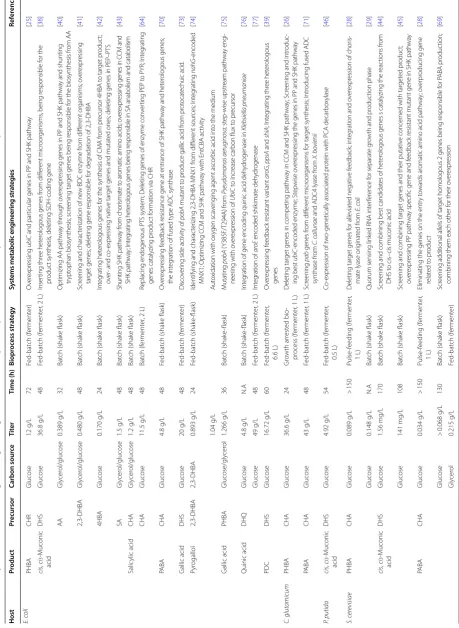
Table 1 T he sy st ems metab
olic engineering str
at egies on shik ima te pa th w ay f or the micr obial pr oduc tion of ar oma tic c omp ounds Host Pr oduc t Pr ecursor Carbon sour ce Tit er Time (h) Biopr oc ess str at egy Sy st
ems metabolic eng
ineering str at eg ies Ref er enc es E. c oli PHBA CHR Glucose 12 g/L 72 Fed-bat ch (f er ment er) O ver expr essing ubiC and par
ticular genes in PP and SHK path
wa y [ 25 ] cis , cis -M uconic acid DHS Glucose 36.8 g/L 48 Fed-bat ch (f er ment er , 2 L) Inser ting thr ee het er
ologous genes fr
om diff
er
ent micr
oor
ganisms
, being r
esponsible f
or the
pr
oduc
t synthesis
, deleting
SDH-coding gene [ 38 ] AA Gly cer ol/glucose 0.389 g/L 32 Bat ch (shak e flask)
Optimizing AA path
wa
y thr
ough o
ver
expr
essing genes in PP and SHK path
wa
y and shunting
tr
ypt
ophan biosynthesis; scr
eening tar
get genes being r
esponsible f
or the biosynthesis fr
om AA [ 40 ] 2,3-DHBA Gly cer ol/glucose 0.480 g/L 48 Bat ch (shak e flask) Scr
eening and charac
ter
ization of ne
w BDC enz
yme fr om diff er ent or ganisms; o ver expr essing tar
get genes; deleting gene r
esponsible f
or deg
radation of 2,3-DHBA
[ 41 ] 4HBA Glucose 0.170 g/L 24 Bat ch (shak e flask) Int eg rating het er
ologous genes f
or the synthesis of CM
A fr
om pr
ecursor 4HBA t
o tar get pr oduc t; ov er
- and co
-expr
essing nativ
e tar
get genes and mutat
ed ones; deleting genes in PEP
–PT S [ 42 ] SA Gly cer ol/glucose 1.5 g/L 48 Bat ch (shak e flask)
Shunting SHK path
wa y fr om chor ismat e t o ar
omatic amino acids; o
ver
expr
essing genes in C
CM and SHK path wa y; I nt eg rating het er
ologous genes being r
esponsible in SA anabolism and catabolism
[ 43 ] Salic ylic acid CHA Gly cer ol/glucose 1.2 g/L 48 Bat ch (shak e flask) CHA Glucose 11.5 g/L 48 Bat ch (f er ment er , 2 L)
Replacing endogenous PT
S syst
em; D
eleting genes of enz
yme con
ver
ting PEP t
o PYR; I
nt
eg
rating
genes catalyzing pr
oduc
t f
or
mation via CHR
[ 64 ] PABA CHA Glucose 4.8 g/L 48 Fed-bat ch (shak e flask) O ver expr essing f eedback r
esistance gene at entrance of SHK path
wa
y and het
er
ologous genes;
the int
eg
ration of fused t
ype ADC synthase
[ 70 ] G allic acid DHS Glucose 20 g/L 48 Fed-bat ch (f er ment er) Disco ver
ing side ac
tivit
y of
pobA
mutant t
o pr
oduce gallic acid fr
om pr ot ocat echuic acid . [ 73 ] Pyr ogallol 2,3-DHBA 2,3-DHBA 0.893 g/L 24 Fed-bat ch (shak e-flask)
Identifying and charac
ter
izing 2,3-DHBA MNX1 fr
om diff er ent sour ces; I nt eg rating nahG -encoded
MNX1; Optimizing C
CM and SHK path
wa
y with EntCBA ac
tivit y [ 74 ] 1.04 g/L Aut
oxidation with o
xy
gen sca
veng
ing agent ascor
bic acid int
o the medium
G allic acid PHBA Glucose/gly cer ol 1.266 g/L 36 Bat ch (shak e-flask) M utating pobA (Y385F/T294A) fr om Pseudomonas aeruginosa; st ep -wise upstr eam path wa y eng i-neer
ing with o
ver expr ession of U biC to incr ease car
bon flux t
o pr ecursor [ 75 ] Quinic acid DHQ Glucose 4.8 g/L N.A Bat ch (shak e-flask) Int eg
ration of gene encoding quinic acid deh
ydr ogenase in Klebsiella pneumaniae [ 76 ] Glucose 49 g/L 48 Fed-bat ch (f er ment er , 2 L) Int eg ration of ar oE encoded shik imat e deh ydr ogenase [ 77 ] PDC DHS Glucose 16.72 g/L 60 Fed-bat ch (f er ment er , 6.6 L) O ver expr essing f eedback r esistant var iant ar oG , ppsA and shiA ; Int eg rating thr ee het er ologous genes [ 39 ] C. glutamicum PHBA CHA Glucose 36.6 g/L 24 Gr owth ar rest ed bio -pr ocess (f er ment er , 1 L) D eleting tar
get genes in competing path
wa
y in C
CM and SHK path
wa
y; S
cr
eening and intr
oduc -ing best ubiC -encoded enz yme; St ep wise o ver expr
essing the genes in PP and SHK path
wa y [ 26 ] PABA CHA Glucose 43 g/L 48 Fed-bat ch (f er ment er , 1 L) Scr eening pab genes fr om diff er ent micr oor ganisms f or tar
get synthesis; I
ntr
oducing fused ADC
synthase fr
om
C. c
allunae
and ADC4 lyase fr
om X. bo vienii [ 71 ] P. putida cis , cis -M uconic acid DHS Glucose 4.92 g/L 54 Fed-bat ch (f er ment er , 0.5 L) Co -expr
ession of t
w
o-genetically associat
ed pr
ot
ein with PCA decar
bo xylase [ 46 ] S. c er evisiae PHBA CHA Glucose 0.089 g/L > 150 Pulse -feeding (f er ment er , 1 L) D eleting tar
get genes f
or alle viat ed negativ e f eedback ; int eg
ration and o
ver
expr
ession of chor
is-mat
e lyase or
ig inat ed fr om E. c oli [ 28 ] Glucose 0.148 g/L N.A Bat ch (shak e flask)
Quorum sensing link
ed RNA int
er fer ence f or separat e g ro
wth and pr
oduc tion phase [ 29 ] cis , cis -M uconic acid DHS Glucose 1.56 mg/L 170 Bat ch (shak e flask) Scr
eening and combining best candidat
es of het
er
ologous genes s catalyzing the r
eac
tions fr
om
DHS t
o cis–
cis muconic acid
[ 44 ] Glucose 141 mg/L 108 Bat ch (shak e flask) Scr
eening and combining tar
get genes and their putativ
e concer
ned with tar
get ed pr oduc t; ov er expr
essing PP path
wa
y specific gene and f
eedback r
esistant mutant gene in SHK path
wa y [ 45 ] PABA CHA Glucose 0.034 g/L > 150 Pulse -feeding (f er ment er , 1 L)
Eliminating the genes on the entr
y t
owar
ds ar
omatic amino acid path
wa y; o ver pr oducing gene relat ed t o pr oduc t [ 28 ] Glucose > 0.068 g/L 130 Bat ch (shak e flask) Scr
eening additional allels of tar
get homologous 2 genes being r
esponsible f
or P
ABA pr
oduc
tion;
combining them each other f
or their o
from ferulic acid [55]. On the other hand, a recombinant
strain of E. coli XL1-Blue harboring the corresponding
heterologous genes fcs and ech was also developed for
vanillin production from ferulic acid. The vanillin titer was further improved to 5.14 g/L in shake-flask experi-ments by reducing the acetyl-CoA consumption through
overexpression of gltA (encoding citrate synthase) and
deletion of icdA (encoding isocitrate dehydrogenase)
[56]. In another report, 7.8 g/L of vanillin was produced
from ferulic acid by a two-stage process using E. coli
whole-cell biocatalysts harboring coenzyme-independent
decarboxylase/oxygenase [57]. Despite high titers of
van-illin, the requirement of the expensive substrate ferulic acid is a drawback associated with the aforementioned biotransformation processes. To replace ferulic acid with a relatively inexpensive substrate, such as eugenol, an
engineered E. coli was developed by introducing vaoA
-encoded vanilly alcohol oxidase from Penicillium
sim-plicissimum. This strain was able to produce 0.3 g/L of
vanillin through two-step biotransformation process [58].
In addition to biotransforming ferulic acid, eugenol and isoeugenol for vanillin production, a number of studies have shown de novo vanillin production from renewable and even cheaper substrates such as glucose. In an initial
study, an engineered E. coli strain expressing the aroZ
-encoded DHS dehydratase from the mold fungus
Podos-pora anserine and human catechol-O-methyltransferase
(COMT) was used to first produce vanillic acid from glucose. This was followed by further reduction of
vanil-lic acid to vanillin by whole-cell catalysis of Neurospora
crassa having the required activity of aromatic carboxylic
acid reductase (ACAR) [59]. Thereafter, the whole
syn-thetic vanillin pathway was successfully reconstructed in
both Schizosaccharomyces pombe and S. cerevisiae strains
using the Nocardia iowensis ACAR, which eliminated the
need for a separate whole-cell catalysis step. Moreover,
the C. glutamicum phosphopantetheinyl transferase was
co-expressed in the engineered S. cerevisiae strain for
activation of ACAR, and endogenous alcohol
dehydro-genases in the S. cerevisiae host were deleted to prevent
reduction of vanillin to vanilly alcohol. In the engineered
S. pombe, vanillin production was enhanced by
introduc-ing the Arabidopsis thaliana UDP glycosyltransferase
that converts vanillin to β-d-glucoside. The use of β
-d-glucoside could reduce the toxicity caused by vanillin at
high concentrations, and the microbially produced β
-d-glucoside can be subsequently converted back to
vanil-lin through enzymatic conversion [60]. Through deletion
of the pyruvate decarboxylase-encoding gene that was suggested by in silico genome-scale metabolic
simula-tion, the vanillin β-d-glucoside production could be
improved to 500 mg/L in engineered S. cerevisiae, which
was fivefold higher than that obtained with engineered S.
pombe [61].
Salicylic acid (2-hydroxybenzoic acid) is widely used in the pharmaceutical industry owing to its analgesic,
anti-inflammatory and antipyretic activities [62]. In nature,
it is synthesized in plants and bacteria to serve as a sig-nal molecule and a precursor in the production of
iron-chelating siderophore, respectively [63]. Even though the
salicylic acid biosynthetic pathway has been well studied previously, only recently the highest salicylic acid titer
of 11.5 g/L was achieved via CHA in engineered E. coli,
in which the native PTS was replaced by GalP/Glk sys-tem and the downstream glycolytic pathway was blocked
to enhance the precursors towards SHK pathway [64].
Apart from E. coli, C. glutamicum was also engineered to
produce salicylic acid to a concentration of 100 mg/L in
shake-flask experiments by introducing the irp9-encoded
bifunctional isochorismate synthase/isochorismate
pyru-vate lyase from Yersinia enterocolitica (Table 1) [65].
The glycosylated form of salicylic acid, salicylate 2-O
-β-d-glucoside (SAG), was also successfully produced in
engineered E. coli by the addition of the A. thaliana
glu-cosyltransferase to the existing salicylic acid biosynthetic
pathway [66]. The SAG titer of 2.5 g/L was achieved by
using a co-culture system. In this system, one
recombi-nant E. coli strain harboring the upstream salicylic acid
pathway was used to produce salicylic acid, which was
converted to SAG by the second E. coli strain expressing
a codon-optimized A. thaliana glucosyltransferase gene
[67].
p-Aminobenzoic acid (PABA) is a widely used
com-pound in pharmaceutical, resin and dye industries, and is currently produced from petroleum-derived toluene. PABA is also a natural metabolite in the folate biosynthe-sis in plants and bacteria synthesized through a two-step conversion of CHA catalyzed by aminodeoxychoris-mate (ADC) synthase and 4-amino-4-deoxychorisaminodeoxychoris-mate
(4ADC) lyase [68]. The first microbial production of
PABA was achieved in S. cerevisiae by overexpressing
ABZ1-encoded PABA synthase from another S.
cerevi-siae species and also by deleting ARO7 (encoding CHA
mutase) and TRP3 (encoding indole-3-glycerolphosphate
synthase/anthranilate synthase complex) in the
aro-matic amino acid pathway [28]. Using this engineered S.
cerevisiae strain, the effects of different carbon sources
(glucose, glycerol and glycerol/ethanol mixture) on PABA production were also investigated based on the results obtained from in silico analysis. Among the car-bon sources examined, the highest PABA titer and yield reached 215 mg/L and 2.64% mol/mol carbon,
respec-tively, using glycerol/ethanol mixture [69]. Compared
to the engineered yeast, engineered E. coli harboring
synthase), pabC (encoding 4ADC lyase), and E. coli
aroFfbr (encoding feedback resistant AroF) produced
4.8 g/L of PABA by fed-batch fermentation [70]. The
highest PABA titer of 43 g/L was achieved by an
engi-neered C. glutamicum harboring the best combination
of Corynebacterium callunae pabAB and Xenorhabdus
bovienii pabC in fed-batch culture [71].
Pyrogallol, also known as 1,2,3-trihydroxybenzene, is an important platform chemical used in food, pharma-ceutical and polymer industries. Currently it is chemi-cally synthesized from gallic acid in the presence of HCl, where gallic acid is obtained by enzymatic conversion of
gallotannin (tannic acid) using tannese [72]. However,
this process for commercial production of pyrogallol is limited due to the low yield of gallotannin obtained by plant extraction. The characterization of genes that encode tannese and gallic acid decarboxylase in a
num-ber of microorganisms, such as Streptococcus
gallolyti-cus, Lactobacillus plantarum and Pantoea agglomerans,
pioneered the research on microbial production of pyro-gallol. Starting with DHS in SHK pathway, PCA and
gal-lic acid were sequentially synthesized in engineered E.
coli by aroZ-encoded DHS dehydratase from K.
pneu-moniae and mutated pobA-encoded PHBA hydroxylase
from Pseudomonas aeruginosa, respectively. Using this
engineered E. coli, the highest reported gallic acid titer
of 20 g/L was achieved from glucose in fed-batch fer-mentation. To produce pyrogallol from gallic acid, this
E. coli strain was further engineered by introducing aroY
(encoding PCA decarboxylase) from K. pneumonia since
the desired enzymatic activity for this conversion was shown by non-oxidative decarboxylase isolated from
Pantoea agglomerans. However, the pyrogallol
produc-tion was not detected [73]. In recent study, pyrogallol has
been synthesized from CHA via 2,3-DHBA catalyzed by
2,3-DHBA synthase and 2,3-DHBA 1-monoxygenase. E.
coli overexpressing the native 2,3-DHBA synthase and
an efficient 2,3-DHBA 1-monoxygenase (encoded by
nahG) from P. putida produced 201.5 mg/L of pyrogallol
from glucose. Pyrogallol production by this recombinant strain was further improved to 1035.8 mg/L by increase of flux to SHK pathway, modular pathway optimization
and reduction in pyrogallol autoxidation [75]. Moreover,
1266.4 mg/L of gallic acid was also produced via CHA by
engineered E. coli harboring a highly efficient mutated
PobA from Pseudomonas aeruginosa in shake flasks [76].
Quinic acid (QA), commonly used as synthons in phar-maceutical industry, is currently produced from phenol or benzene by petrochemical processes. QA is among the first produced cyclohexane carboxylic acids by engi-neered microorganisms with the discovery of its
catabo-lism in K. pneumoniae. QA production from glucose
was first achieved in an engineered E. coli expressing the
K. pneumoniae qad gene encoding QA dehydrogenase
[76]. In another study, overexpression of the E. coli aroE
encoding the native SHK dehydrogenase and knocking
out aroD encoding DHQ dehydratase resulted in
produc-tion of 49 g/L QA from glucose by fed-batch culture [77].
Based on the biosynthesized QA in these studies, down-stream chemical processes were also developed to pro-duce other important industrial quinone derivatives such
as benzoquinone and hydroquinone [77, 78].
Arbutin, a glycosylated hydroquinone in plant metab-olism, finds applications in cosmetic industry due to its whitening activity that inhibits tyrosinase-mediated melanogenesis. It also serves as an microbial, anti-inflammatory and anti-oxidant agent. Compared to chemical processes, enzymatic methods for arbutin production is more favorable due to the regioselectivity, mild operation conditions and use of fewer toxic chemi-cals. In this regard, various plant- and microbial-based approaches have been investigated for enzymatic pro-duction of arbutin from hydroquinone using a series of glycosylation enzymes originated from different
organ-isms [78]. De novo biosynthesis of arbutin from glucose
was achieved for the first time in an engineered E. coli
strain expressing the genes encoding the flavin adenine dinucleotide-dependent 4-hydroxybenzoate
1-hydroxy-lase (MNX1) from Candida parapsilosis and uridine
phosphate glucose (UPDG)-based hydroquinone
gluco-syl transferase (AS) from Rauvolfia serpentine. Further
enhancement of the SHK pathway flux and optimiza-tion of initial glucose concentraoptimiza-tions improved arbutin
production up to 4.2 g/L in shake flasks [79]. In a recent
study, the highest reported arbutin titer of 6.79 g/L was
achieved by engineered Pseudomonas chlororaphis
expressing the aforementioned MNX1 and AS genes
from the genome [80].
Gastrodin, a phenolic glycoside found in plants, serves as a drug substance based on its sedative, hyp-notic, anticonvulsive and neuroprotective activities. It is currently produced by either chemical synthesis or extraction from plants. In nature, some organisms
(e.g., Rhizopus chinensis) have the ability to transform
p-hydroxybenzaldehyde to gastrodin [81]. Although the
natural gastrodin biosynthesis pathway in plants has not been fully identified, de novo production of gas-trodin from glucose has been reported in engineered
E. coli harboring an artificial metabolic pathway. This
synthetic pathway was derived from PHBA, which
was further converted by the Nocardia carboxylic acid
reductase, endogenous alcohol dehydrogenases and
an engineered Rhodiola glycosyltransferase. The
engi-neered E. coli overexpressing the pathway genes
A number of aromatic amines have also been pro-duced from glucose by expanding the SHK
path-way via CHA in E. coli host (Fig. 2). The key step of
the artificial biosynthesis of these aromatic amines was the formation of 4-aminophenylpyruvate from CHA by the sequential activities of
4-amino-4-deox-ychorismate synthase (encoded by papA),
4-amino-4-deoxychorismate mutase (encoded by papB)
and 4-amino-4-deoxyprephenate dehydrogenase
(encoded by papC) from Streptomyces venezuelae
and Streptomyces pristinaespiralis. Subsequently, this
biosynthetic pathway was branched into 4-aminophe-nylacetaldehyde and 4-aminophenylalanine by the reac-tions catalyzed by phenylpyruvate decarboxylase and aminotransferase, respectively. In the last step, 4-ami-nophenylacetic acid and 4-aminophenylethanol were produced from 4-aminophenylacetaldehyde, while 4-aminocinnamic acid and 4-aminophenylethylamine
were produced from 4-aminophenylalanine [83].
Engineering the biosynthesis pathway of aromatic amino acids and their derivatives
Three aromatic amino acids, l-PHE, l-TYR and l-TRP, are derivatives of CHA and are synthesized through the formation of specific intermediates such as phenylpyru-vate, 4-hydroxyphenylpyruvate and anthranilic acid, respectively. Hence, not only aromatic amino acids but also these intermediates play important roles as useful precursors for the production of diverse aromatic acids, alcohols, hydrocarbons, ketones, and aromatic natural compounds (mostly involved in phenylpropanoid path-way). Metabolic engineering for the production of these derivative aromatic products will be described separately according to each of the three aromatic amino acid path-ways they are derived from.
l‑PHE pathway derivatives
From l-PHE biosynthetic pathway, the majority of the microbially produced aromatic compounds are derived from two major precursors, phenylpyruvate and l-PHE,
which are summarized in Table 2.
d-Phenylglycine (d-PHG) serves as a precursor in the production of semi-synthetic antibiotics including
ceph-alosporin and penicillin [84], and it is either chemically
produced from phenol or enzymatically synthesized by resolution of racemic mixtures originating from fine
chemicals [85]. Microbial biosynthesis of d-PHG from
glucose has been achieved through a three-step artificial pathway after phenylpyruvate, which consisted of the
successive formation of S-mandelate, phenylglyoxylate
and d-PHG catalyzed by hmaS-encoded
4-hydroxyman-delate synthase of Amycolatopsis orientalis, hmo-encoded
4-hydroxymandelate oxidase of Streptomyces coelicolor
and hpgAT-encoded stereoinverting
hydroxyphenylg-lycine aminotransferase of P. putida, respectively. The
engineered E. coli expressing these enzymes and with
deletions of the aspartate aminotransferase-encoding
aspC and aromatic amino acid
aminotransferase-encod-ing tyrB genes produced 102 mg d-PHG per gram dry
cell weight (DCW) from glucose [84]. Moreover,
l-phe-nylglycine (l-PHG), a precursor in the production of sev-eral antibiotics and taxol, was also produced by replacing the HpgAT in the d-PHG pathway with
l-4-hdroxyphe-nylglycine aminotransferase (encoded by hpgT) from A.
orientalis and S. coelicolor. The engineered E. coli
har-boring these heterologous enzymes produced 51.6 mg/g
DCW of l-PHG from glucose [86].
Mandelic acid is one of the aromatic fine chemicals pri-marily used in pharmaceutical industry and for resolution of racemic alcohols and resins. Compared to chemical methods, enzymatic synthesis of mandelic acid is more attractive as it can afford stereoisomers of mandelic acid.
An engineered E. coli strain expressing the A. orientalis
Fig. 2 The metabolic engineering approaches to microbial production of SHK pathway derivatives. A microbial co-culture system developed for
HmaS and with deleted competing pathways produced
0.74 g/L of S-mandelate from glucose. By further
express-ing the S. coelicolor Hmo and d-mandelate
dehydroge-nase (encoded by dmd) from Rhodotorula graminis in the
S-mandelate-producing E. coli, 0.68 g/L of R-mandelate
was produced from glucose [87]. By replacing the A.
ori-entalis HmaS with a more efficient isozyme from
Nocar-dia uniformis in an engineered S. cerevisiae, 236 mg/L of
Similar to d-PHG, d-phenylalanine (d-PHE) is also a building block in the production of semi-synthetic antibiotics such as penicillin and cephalosporin. As a l-stereoisomer, l-PHE is synthesized from phenylpyru-vate by l-PHE aminotransferase, however, such an ami-notransferase with d-stereoisomer activity (i.e., d-PHE aminotransferase) for producing d-PHE is still lack-ing. Therefore, microbial biosynthesis of d-PHE has been achieved by using the d-amino acid
aminotrans-ferase (Dat) in Bacillus species instead. Three Dats from
Bacillus subtilis, Bacillus licheniformis and Bacillus
amyloliquefaciens were compared through 3D
struc-tural modeling and experimental screening. When the
best-performing Dat from B. subtilis was expressed in
an l-PHE-producing E. coli, 1.72 g/L of d-PHE was
pro-duced from glucose in bioreactor fermentation [89].
Phenyllactic acid (PhLA) is a potential monomer that can be used in the production of sustainable polyesters by chemical polymerization with other bio-based
mono-mers [90]. Both d-PhLA and l-PhLA have been
biosyn-thesized through one-step reduction of phenylpyruvate.
An l-PHE-overproducing E. coli expressing the pprA
-encoded phenylpyruvate reductase from Wickerhamia
fluorescens produced 29 g/L of d-PhLA from glucose in
bioreactor fermentation with optimized conditions [91].
In the same E. coli strain, l-PhLA was also produced
from glucose by replacing PprA with the ldhA-encoded
lactate dehydrogenase from Pediococcus acidilactici [91].
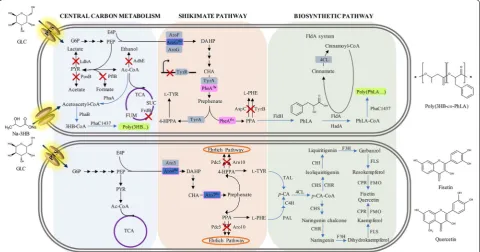
For advanced applications, d-PhLA was co-polymerized with 3-hydroxybutyrate to make novel aromatic
polyes-ters by engineered E. coli through one-step fermentation.
In achieving this, the pivotal steps were the choices of a suitable CoA-transferase and an engineered
polyhy-droxyalkonate synthase (Fig. 3) [92].
Phenylpropanoids constitute a response system in plant metabolism to protect plants against various changes in their environment. Also, they are important precur-sors in the production of various chemicals used in food, pharmaceutical and cosmetic industries. Biosynthesis of phenylpropanoids starts with the formation of cinnamic acid, which is a key branch point leading to the
biosyn-thesis of various other phenylpropanoids [93]. Metabolic
engineering of phenylpropanoids has been focused on cinnamic acid and its derivatives including several sec-ondary metabolites such as flavonoids, stilbenoids,
cou-marins, among other phenylpropanoids [7].
Cinnamic acid (CA) is chemically synthesized either through the Perkin reaction by heating benzaldehyde and
acetic anhydride with sodium acetate [94] or through the
Knoevenagel condensation of malonic acid and aromatic
aldehydes [95]. In plants, l-PHE is catalyzed by
pheny-lalanine ammonia-lyase (PAL) to yield trans-CA [96].
While some PALs such as the yeast Rhodosporidium
toruloides PAL possess the alternative capability to
con-vert l-TYR to p-hydroxycinnamic acid in addition to
converting l-PHE to CA [97], the Streptomyces
mar-itimus PAL shows a high substrate selectivity towards
l-PHE, and it has been used for the biosynthesis of CA
in engineered E. coli [98]. Expression of the R. toruloides
PAL in a solvent-tolerant and mutated P. putida strain
with enhanced supply of the precursor l-PHE led to
pro-duction of 0.741 g/L CA [99]. Moreover, Streptomyces
liv-idans, well-known for its superior biomass-assimilating
ability, was also engineered to produce CA by expressing
the S. maritimus PAL, which resulted in 210, 450, 460,
300 and 130 mg/L of CA in shake-flask cultures from glu-cose, glycerol, raw starch, xylose and xylan, respectively
[100]. By using 30 g/L of cello- and xylo-oligosaccharide
as carbon sources, CA production levels by engineered
S. lividans reached 490 and 450 mg/L, respectively [101].
The engineered E. coli strain expressing the PAL/TAL
from Rhodotorula glutinis or A. thaliana was evaluated
for CA production in different carbon sources (i.e., glu-cose, xylose or arabinose, as well as a mixture of these three sugars mimicking the lignocellulosic hydrolysate).
As a result, E. coli carrying the A. thaliana TAL/PAL
using arabinose produced the highest CA titer [102].
In addition to the conventional approach using TAL/ PAL, microbial CA production has also been achieved
by the fldABCI-encoded phenyllactate dehydratase from
Clostridium sporogenes [103–105]. Under optimized
oxy-gen conditions, two-step bioprocess approach enabled 1.7 g/L of CA through stepwise production of d-PhLA
and CA in E. coli strain expressing W. fluorescens pprA
and C. sporogenes fldABCI, respectively [105]. In a most
recent study, the highest reported CA titer of 6.9 g/L was
achieved by engineered E. coli harboring a PAL in a
fed-batch culture [106].
Styrene is a petroleum-derived chemical produced from dehydrogenation of ethylbenzene, and it is also formed by non-oxidative decarboxylation of CA via
microbial biosynthesis [107]. Although the
bioconver-sion of CA to styrene was shown almost a century ago
[108], the first artificial biosynthetic pathway for styrene
production from glucose was only established recently,
through deamination of l-PHE by the A. thaliana PAL2
-encoded lyase followed by decarboxylation of CA to
styrene by the S. cerevisiae FDC1-encoded ferulate
decar-boxylase. While phenylacrylate decarboxylase from S.
cerevisiae was also identified to be able to decarboxylate
CA, the higher styrene titer of 260 mg/L was achieved
through the use of PAL2 and FDC1 [107]. A co-culture
system of S. lividans strains expressing the S. cerevisiae
FDC1 and S. maritimus PAL was developed to produce
Table 2 T he sy st ems metab
olic engineering str
at egies on phen ylalanine pa th w ay f or the micr obial pr oduc tion of ar oma tic c omp ounds Pr oduc t Pr ecursor Carbon sour ce Host Tit er Time (h) Biopr oc ess str at egy Sy st
ems metabolic eng
ineering str at eg ies Ref er enc es Phen ylp yruvat e der ivativ es d -PHG S-M A Glucose E. c oli 0.036 g/L 24 Bat ch (shak e-flask) Int eg
rating genes encoding f
eedback r
esistant D
AHP and bifunc
tional chor ismat e mutase/pr ephenet e deh ydratase; D eleting thr
ee genes in competing path
wa
y using PP
A and CHA; C
onstruc tion 3-st ep ar tificial path wa y fr
om CHA t
o d -PHG [ 84 ] l -PHG S-M A Glucose E. c oli – 48 Bat ch (shak e-flask) Scr eening bett er H pg T ac tivit y fr om diff er ent sour ces; D
eleting genes in competing path
wa
y using PP
A; Construc tion 3-st ep ar tificial path wa y fr
om CHA t
o l -PHG [ 86 ] S-M A PPA Glucose E. c oli 0.74 g/L 24 Bat ch (shak e-flask) Int eg
rating genes encoding f
eedback r
esistant D
AHP and bifunc
tional chor ismat e mutase/pr ephenet e deh ydratase; Their o ver expr
ession with S-M
A; D
eleting genes r
esponsible f
or synthesis of
l -TRP , l -T YR and l
-PHE in competing path
wa
ys using CHA; C
onstruc tion 3-st ep ar tificial path wa y fr
om CHA t
o R-M A [ 87 ] R-M A S-M A 1.02 g/L 84 S-M A PPA Glucose S. c er evisiae 0.236 g/L 120 Bat ch (shak e-flask) Scr eening bett er H maS ac tivit y fr om diff er ent micr oor ganisms; O ver expr
essing genes (
encoding
pentafunc
tional pr
ot
ein and f
eedback t
w
o iso
zyme of r
esistant D
AHP synthase); D
eleting genes phen ylp yruvat e decar bo xylase t o r
educe flux t
owar ds Ehr lich path wa y [ 88 ] d -PHE PPA Glucose E. c oli 1.72 g/L 60 Fed-bat ch (f er -ment er , 15 L) Scr
eening and homology based modeling of
d
-aminoacid transf
erase (Dat) fr
om thr ee Bacillus species; Construc ting ar tificial d
-PHE synthetic oper
on including each
D at gene [ 89 ] l -P hLA PPA Glucose E. c oli 1.9 g/L 24 Bat ch (shak e-flask) Int eg ration f eedback
-resistant allel of gene in
volv
ed in SHK and
l
-PHE amino acid path
wa
y; D
eleting
genes in competing path
wa
y using CHA. I
ntr
oducing lac
tat
e deh
ydr
ogenase with het
er ologous phen ylp yruvat e r educ tase [ 91 ] P oly-(3HB- co -d -PhLA) PPA Glucose E. c oli 13.9 g/L 96 Fed-bat ch (f er -ment er , 6.6 L)
Identifying and intr
oducing the gene encoding C
oA transf
erase; int
eg
rating gene of enz
yme r
esponsible
con
version fr
om glucose t
o
d
-P
hLA. M
odulating flux under diff
er ent pr omot ers [ 92 ]
Cinnamic acid
d -P hLA Glucose E. c oli 1.7 g/L 30 (aer obic phase) Bat ch cocultur e (shak e-flask) Int eg rating phen ylp yruvat e r educ tase -coding pprA fr om Wick erhamia fluor esc ens in d -P hLA pr oducer strain; I nt eg rating phen yllac tat e deh ydratase -coding fldABCI fr om Clostridium spor ogens
in CA pr
o-ducer strain; P
er
for
ming st
ep
wise pr
ocess; Optimizing cultivation time of aer
obic phase f
ollo w ed b y anaer obic one [ 105 ] Phen ylalanine der ivativ es P inosylvin Cinnamo yl-Co A Glucose + CA C. glutami -cum 0.121 g/L 72 Bat ch (shak e-flask) D eleting thr
ee gene clust
er
; I
nt
eg
rating 4CL and ST
S-coding genes fr
om plant sour
ces; Supplying ceru
-lenin t
o inhibit ac
tivit
y of enz
ymes in fatt
y acid synthesis using malon
yl-CoA [ 116 ] Cinnamo yl-Co A Glucose E. c oli 0.281 g/L 48 Bat ch (shak e-flask) Construc ting t w o expr
ession modules; Optimizing expr
ession le
vels b
y combining pr
omot er t ype and cop y number in these expr ession modules; D esig ning upstr eam path wa y module to dir ec t car bon flux to war ds pr ecursor ; D esig ning do wnstr eam path wa
y module t
o pr
oduce the molecule of int
er est [ 117 ] Chr ysin Pinocembr in G alac tose + acetat e S. c er evisiae 0.001 g/L 92 Bat ch (shak e-flask) Intr
oducing and o
ver expr essing parsle y FSI gene int
o biosynthetic pinocembr
in path wa y [ 162 ] G alac tose + raffinose 0.002 g/L 92 Bat ch (shak e-flask) Intr
oducing and o
ver
expr
essing snapdragon gene (
encoding fla
vone synthase II) and y
east gene
(encoding P450 r
educ
tase) int
o biosynthetic pinocembr
in path wa y Pinocembr in Glucose + l -PHE E. c oli 0.0094 g/L 36 Bat ch (shak e-flask) Intr oducing FNS1 gene fr om Petr oselinum crispum int
o biosynthetic pinocembr
in metabolic path
wa
y
compr
ising P
AL/T
AL, 4CL, CHS, CHI and A
CC ( encoded b y dtsR1 and ac cBC ) [ 164 ]
Cinnamic acid
l -PHE Glucose + casami -noacids E. c oli 6.9 g/L 86 Fed-bat ch (f er -ment er , 2 L) Scr eening appr opr iat e pr omot er t o expr ess Str eptomy
ces maritimus P
AL
gene; I
nv
estigating the eff
ec
t of
diff
er
ent supplements in f
eeding solution on pH-stat f
ed-bat ch f er mentation [ 106 ] St yr ene CA Glucose E. c oli 0.26 g/L 29 Bat ch (shak e-flask) Intr
oducing genes encoding plant phen
ylalanine ammonia lyase and y
east trans-cinnamat e decar bo xy -lase int o l -PHE o ver pr
oducer strain lack
ing multiple genes and expr
essing genes encoding f
eedback
resistant enz
ymes in SHK path
wa y [ 107 ] P inocem -br in Cinnam yl-Co A Glucose E. c oli 0.710 g/L 36 Bat ch (shak e-flask) O ver expr essing malonat e car rier
- and malonat
e synthase
-coding genes in
volv
ed in the malonat
e assimi -lation path wa y; R epr essing ac tivit
y of t
w
o genes in fatt
y acid path
wa
y b
y the addition of cerulenin
[ 159 ] G alang in Pinocembr in Glucose + l -PHE E. c oli 0.001 g/L 36 Bat ch (shak e-flask) Intr oducing F3H and FLS gene fr om Citrus species int
o biosynthetic pinocembr
in metabolic path
wa
y
compr
ising P
AL/T
AL, 4CL, CHS, CHI and A
cellobiose or xylo-oligosaccharide, which however did
not lead to an increase in styrene production [109].
Hydroxycinnamic acids are a group of CA derivatives,
which mainly consist of p-hydroxycinnamic acid (p
-cou-maric acid), 3,4-dihydroxycinnamic acid (caffeic acid) and 4-hydroxy-3-methoxycinnamic acid (ferulic acid)
[110]. There is a sequential bioconversion from p
-cou-maric acid to ferulic acid through caffeic acid. These hydroxycinnamic acids will be described in the following section as they are derived from the l-TYR biosynthesis pathway.
Among various flavonoids, pinocembrin as a plant secondary metabolite is an important substance used in food and pharmaceutical industries thanks to its anti-inflammatory, anti-microbial, anti-cancer and
neuropro-tective activities [111]. In plant metabolism, pinocembrin
is a branch point for the biosynthesis of several other fla-vonoids including galangin, dihydroflavonol and chrysin, through enzymatic modifications in its core structure. Microbial production of pinocembrin and related flavo-noids will be discussed later as both l-PHE and l-TYR
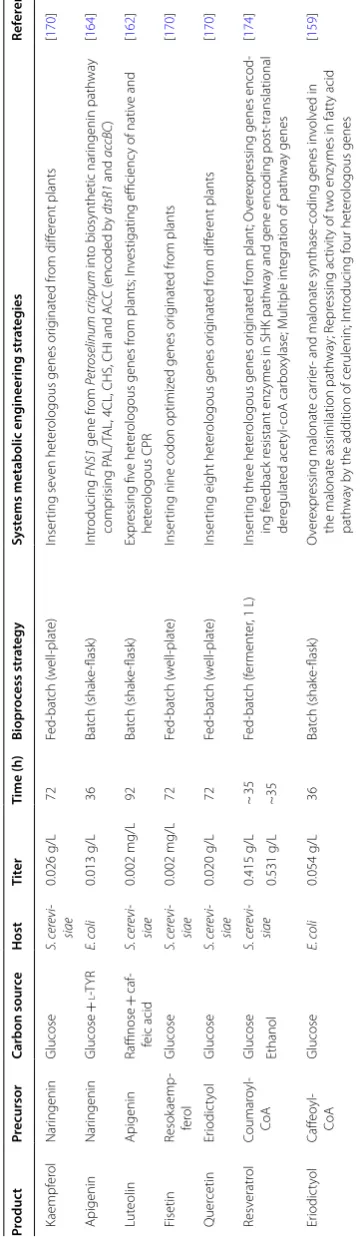
Fig. 3 The metabolic engineering approaches to microbial production of aromatic amino acid derivatives. A systematic study for the de novo
biosynthesis pathways are involved in producing these molecules.
Among non-flavonoid phytochemicals in plants, stilbenes (stilbenoids) are polyphenolic secondary metabolites, which come to the fore with the 1,2-diphe-nylethylene nucleus. Similar to flavonoids, stilbenes are synthesized to defense plants against various environ-mental stresses such as wounding, fungal infection, UV radiation, etc. They are also important drug substances because of their anti-cancer, anti-inflammatory and
anti-obesity activities [112, 113]. Well-known stilbenes
produced by microbial systems are resveratrol, pteros-tilbene, piceatannol, pinosylvin, etc. The natural bio-synthesis of stilbenes follows a similar pathway to those of flavonoids and phenylpropanoids through the inter-mediary formation of CoA esters, i.e., cinnamoyl-CoA
and p-coumaroyl-CoA. These aromatic CoA esters,
cin-namoyl-CoA and p-coumaroyl-CoA, are condensed with
three malonyl-CoA units by stilbene synthase (STS) to produce the stilbene backbone, followed by the forma-tion of pinosylvin and resveratrol, respectively. In a simi-lar fashion, t-piceatannol is also produced using caffeic acid as a starter unit. Additionally, various more complex stilbenes are synthesized through modifications of the stilbene backbone using reactions including
glycosyla-tion, methylaglycosyla-tion, oligomerization and prenylation [114].
Microbial production of pinosylvin from glucose was
accomplished in an engineered E. coli harboring PAL,
4-coumaric acid CoA-ligase (4CL) and STS. Through the use of an evolved STS with higher catalytic activity as well as the addition of cerulenin for increased malonyl-CoA pool and l-PHE for precursor supply, the pinosylvin
titer was increased up to 91 mg/L [115]. Engineered C.
glutamicum expressing the same set of enzymes
respon-sible for pinosylvin synthesis was also developed, which produced 121 mg/L pinosylvin from CA supplemented
[116]. Moreover, the highest reported pinosylvin titer of
281 mg/L was achieved by an engineered E. coli
harbor-ing the pinosylvin synthetic pathway optimized through a
rational modular approach [117].
l‑TYR pathway derivatives
The l-TYR biosynthesis pathway starts with the forma-tion of 4-hydroxyphenylpyruvic acid (4-HPPA) from SHK pathway. Thus, microbial production of 4-HPPA and
l-TYR derivatives are dependent on this pathway (Table 3).
Despite the biosynthesis of many l-TYR derivatives, only a few 4-HPPA derivatives have been biosynthesized in engineered microbes.
4-Hydroxyphenyllactic acid (4-HPLA) is known for its anti-fungal activity against several species of filamentous
fungi, and it is naturally produced by Bifidobacteria and
Lactobacilli. The biosynthesized 4-HPLA via l-TYR in
engineered microbes were used as a precursor to further produce other compounds such as aromatic polyesters
[92] and salvianic acid A [118].
Salvianic acid A (also known as danshensu and
3-(3′,4′-dihydroxyphenyl)-2-hydroxypropanoic acid) is a
natural compound in the plant Salvia miltiorrhiza, and
it is attractive because of its anti-oxidant and therapeutic activities. Even though the natural biosynthesis pathway of salvianic acid A has not been fully revealed, an artifi-cial biosynthetic pathway for salvianic acid A has been
constructed in E. coli through a two-step
bioconver-sion from 4-HPPA catalyzed by Lactobacillus pentosus
d-lactate dehydrogenase (encoded by mutated d-ldh) and
E. coli hpaBC-encoded hydroxylase complex [118].
Co-expression of these two enzymes resulted in two different metabolic pathways characterized by particular interme-diates 4-HPLA and 3,4-dihydroxyphenylpyruvate, due to
the different sequence of the reactions catalyzed (Fig. 1).
To enhance flux towards 4-HPPA, a modular approach was applied by constructing three expression plasmids harboring the pathway genes within modules such as
aroGfbr-tyrAfbr-aroE, ppsA-tktA-glk and hpaBC-d-
ld-hY52A, along with deletion of ptsG, pykA, pheA and tyrR.
As a result, the highest reported salvianic acid A titer of
7.1 g/L was achieved in shake-flask cultures [118].
Fur-thermore, these gene expression modules were integrated
into the E. coli chromosome to overcome the issues with
plasmid instability and requirement of expensive antibi-otics, which however resulted in lower salvianic acid A
titer [119].
Rosmarinic acid (RA) is an ester of 3,4-dihydroxyphe-nyllactic acid and caffeic acid, and is biosynthesized from
l-PHE and l-TYR in several plants such as Rosmarinus
officinalis, Salvia officinalis and Perilla frutescens [120].
RA and its derivatives such as isorinic acid and lithosper-mic acid are promising compounds in pharmaceutical and nutraceutical industries owing to their anti-oxidant, anti-bacterial, anti-inflammatory, anti-allergic,
neuro-protective and anti-viral activities [121]. According to
the elucidated metabolic pathway in Coleus blumei, RA
is synthesized from two intermediate precursors 4-cou-maroyl-CoA and 4-hydroxyphenyllactic acid (4-HPLA) derived from l-PHE and l-TYR, respectively. To obtain 4-coumaroyl-CoA, l-PHE is catalyzed sequentially by PAL, cinnamic acid 4-hydroxylase (C4H) and 4CL, while 4-HPLA is produced from l-TYR by tyrosine aminotrans-ferase and hydroxyphenylpyruvate reductase (HPPR).
Thereafter, 4-coumaroyl-4′-hydroxyphenyllactate is
yielded from 4-coumaroyl-CoA and 4-HPLA by RA synthase (RAS). In the last step, the above intermediate is hydroxylated by a cytochrome P450 monooxygenase
Table 3 T he sy st em metab
olic engineering str
at egies on t yr osine pa th w ay f or the micr obial pr oduc tion of ar oma tic c omp ounds Pr oduc t Pr ecursor Carbon sour ce Host Tit er Time (h) Biopr oc ess str at egy Sy st
ems metabolic eng
ineering str at eg ies Ref er enc es 4-HPP A der ivativ es
Salvianic acid A
4-HPP A Glucose E. c oli 7.1 g/L 70 Fed-bat ch (shak e-flask) Intr oducing het er
ologous gene f
or glucose transpor
t; deleting genes r
esponsible f
or
PEP and pr
ecursor consumption, and transcr
iptional r epr ession; O ver expr essing genes
in PP and SHK path
wa
y; R
eplacing genes encoding f
eedback -sensitiv e pr ephenat e deh ydr
ogenase and D
AHP synthase with r
esistant ones [ 118 ] Glucose E. c oli 5.6 g/L 60 Fed-bat ch (F er ment or , 5 L) λ R
ed homologous r
ecombination of the modules mentioned in pr
evious study along
with similar metabolic eng
ineer ing strat eg ies [ 119 ] R osmar inic acid 4-HPP A Glucose E. c oli 0.13 g/L 30 Bat ch (shak e-flask) Inser
ting LDH, HP
AH and
RAS-coding genes in
l -T YR o ver -pr oducing strain [ 123 ] L-TYR der ivativ es T yr osol 4-HPP A Glucose E. c oli 0.573 g/L 48 Bat ch (shak e-flask) Intr
oducing gene encoding p
yruvat e decar bo xylase (PDC ) fr om S. c er evisiae ; deleting
genes in competing path
wa
ys t
o modulat
e flux t
owar ds 4-HPP A [ 125 ] l -T YR Tyr osine E. c oli 1.203 g/L 20 Whole -cell Intr oducing aminotransf
erase gene int
o biosynthetic t
yr osol path wa y l -T YR Glucose E. c oli 0.531 g/L 36 – Intr
oducing plant gene encoding ar
omatic amino acid synthase that enables one
-st ep con version of l -T YR t o 4-HP AA [ 126 ] H ydr ox yt y-rosol l -T YR Glucose E. c oli 0.268 g/L 30 Bat ch Intr
oducing genes encoding f
eedback
-r
esistant D
AHP synthase and pr
ephenat
e deh
y-dr
ogenase; D
eleting genes r
esponsible f or transcr iptional r epr ession; O ver expr essing genes t o modulat e car
bon flux t
o D AHP [ 129 ] Salidr oside Tyr osol Glucose/x ylose E. c oli – E. coli 6.03 g/L 129 Fed-bat ch co -cultur e (f er men -tor , 5 L) Construc ting t w o strains . D
eleting genes r
esponsible f
or PEP consumption, tran
-scr
iptional r
epr
ession, competing path
wa
ys
, GL
C consumption in t
yr
osol pr
oducer
upstr
eam strain. D
eleting genes r
esponsible f
or XYL and UDP
-GL
C consumption, and
TYR synthesis in do
wnstr
eam salidr
oside pr
oducer strain. O
ver
expr
essing genes in PP
path wa y. [ 127 ] p -C oumar ic acid l -T YR Glucose S. c er evi -siae 1.93 g/L 72 Fed-bat ch (w ell-plat e) O ver expr
essing genes in SHK path
wa
y a het
er
ologous
TA
L
gene; D
eleting genes in
competing path wa ys [ 135 ] C aff eic acid p -coumar ic acid Glucose/gly c-er ol + PHCA E. c oli 2.8 g/L 24 Whole -cell biocatalysis Eng ineer
ing P450 h
ydr ox ylase f or desir ed ac tivit y t o con ver t p -coumar
ic acid t
o caff eic acid [ 141 ] p -HS p -coumar ic acid Glucose P. putida 17.6 g/L ~ 64 Tw
o-phase decanol syst
em
D
eleting gene encoding f
erulo
yl-coenz
yme A compet
es f or p -coumarat e int er mediat es; Intr oducing t w o het er ologous genes , pal and pdc [ 152 ] Nar ingenin Coumar oyl-Co A Glucose E. c oli 0.474 g/L 24 Bat ch (shak e-flask) A ccor ding t
o genome scale model
, deleting/do
wn-r
egulating genes in
TCA c
ycle; o
ver
-expr
essing genes in C
CM and malonat
e assimilation path
wa
y
[
160