World Maritime University
The Maritime Commons: Digital Repository of the World
Maritime University
World Maritime University Dissertations Dissertations
2000
Strategic challenges facing classification societies :
possible future scenarios and proposed solutions
for China Classification Society
Jiang Liang
World Maritime University
Follow this and additional works at:http://commons.wmu.se/all_dissertations
Part of theStrategic Management Policy Commons
Recommended Citation
Liang, Jiang, "Strategic challenges facing classification societies : possible future scenarios and proposed solutions for China Classification Society" (2000).World Maritime University Dissertations. 288.
WORLD MARITIME UNIVERSITY
Malmö, Sweden
STRATEGIC CHALLENGES FACING
CLASSIFICATION SOCIETIES
Possible future scenarios and proposed solutions
for China Classification Society
By
LIANG JING
China
A dissertation submitted to the World Maritime University in partial fulfilment of the requirement for the award of the degree of
MASTER OF SOCIENCE
in
MARITIME ADMINSITRATION AND ENVIORNMENTAL PROTECTION
2000
Declaration
I certify that all the material in this dissertation that is not my own work has been identified, and that no material is included for which a degree has previously been conferred on me.
The contents of this dissertation reflect my own personal views, and are not necessarily endorsed by the University.
(Signature)
(Date)
Supervised by: Jan-Åke Jönsson
Associate Professor, Maritime Safety and Environment Protection
World Maritime University
Assessor: John Liljiedahl
Lecturer, Maritime Safety and Environment Protection World Maritime University
Co-assessor:
Acknowledgement
I could not have the opportunity to study here in WMU without the firm support from my colleagues, Mr Li Kejun, Chairman and President of China Classification Society, Mr Liu Fusheng, Vice Presidnet, Mr Fan Qiang, Head of Department, Mr Wan Lin and Ms Cheng Xiu. My work would not be completed without their input.
I am most grateful for Tokyo Foundation, who offers me scholarship and includes me in its network of WMU graduates, from which I will surely benefit a lot.
My heartfelt gratitude goes to Mr Jan-Äke Jönsson, my supervisor, who has been greatly encouraging and put forward invaluable recommendations and comments on my work.
My gratitude also goes to all the staff members of WMU for their encouragement, co-operation and assistance during the past seventy months, particularly during the preparation of my dissertation.
I would also like to thank my colleague students for inspiring me.
Last but by no means least, I would like to thank my family for their love, encouragement and sacrifice when I am away.
Abstract
Title of Dissertation: Strategic challenges facing classification industries:
Possible future scenarios and proposed solutions for China Classification Society
Degree: MSc
With the development of world economy and trade, shipping industry has undergone great changes for the recent years. This trend will be maintained for the years to come.
Classification societies have been playing an increasingly important role in the world maritime circle by setting up technical standards regarding hull and structure of ships, providing technical verification and other related technical services. For the recent 30 years, the International Association of Classification Societies (IACS), the only non-governmental technical organisation holding consultative status with the International Maritime Organisation (IMO), has developed into one of the most widely respected organisations. On the other hand however, classification societies have been facing increasing public criticisms for its involvement in marine accidents.
The topic is to clarify the role of classification societies in the maritime world, examine the interrelationship between classification societies and other maritime partners and the environment of classification societies.
Classification Society (CCS) from various aspects. Finally, the author makes proposals and recommendations for CCS in order to achieve and maintain higher standard of service thus improving its competitiveness in the world market and promoting safety and pollution prevention more substantially.
TABLE OF CONTENT
Declaration Ackowledgement Abstract
Table of Contents
List of Tables and Figures List of Abbreviations
1. Introduction
2. The role of classification societies in the maritime world
2.1 Origins of classification societies 2.3 Early development
2.3 Establishment of the International Association of Classification Societies (IACS)
2.4 The role of classification societies led by IACS in maritime industry 2.5 IACS safety initiatives in recent ten years
3. The interrelationships
3.1 Maritime safety involving interrelated elements 3.2 IMO- the key role
3.3 IACS and IMO; class rules and IMO Convention 3.4 Classification society and Flag State
3.5 Classification society and Port State 3.6 Classification society and industries
4.1 Increased focus on human element 4.2 Over-regulation
4.3 Growing power of PSC regime 4.4 Substandard shipping
4.5 IACS and quality
4.6 Class facing increased expectation and criticism 4.7 Proliferation of inspection
4.8 Liability
4.9 Intra-IACS competition and possible merger
5. Challenges and opportunities facing China Classification Society (CCS)
5.1 China's maritime development 5.2 Development of CCS
5.3 CCS' activities in IACS
5.4 Strength and weakness as compared to other IACS Members
6. Conclusion and recommendations
Bibliography
Appendix 1 IACS Code of Ethics
List of Tables and Figures
Table 1 Summary of Status of Conventions Table 2 IMO Relevant Instruments
Table 3 Regional PSC Regimes
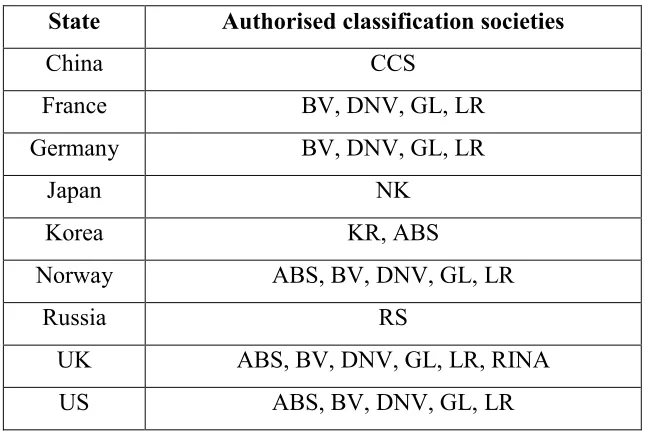
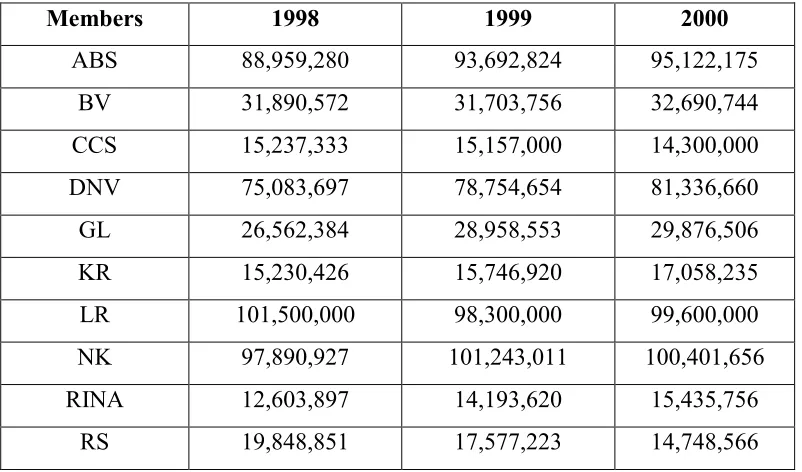
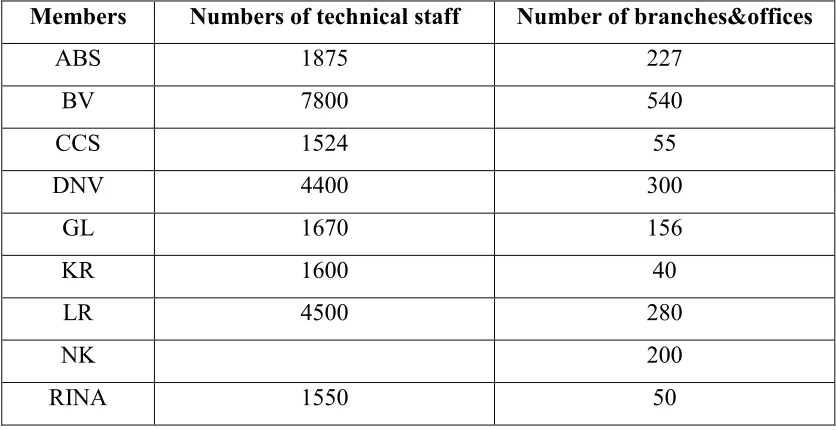
Table 4 Governments and their Authorised Classification Societies Table 5 Gross Tonnage of IACS Member Societies
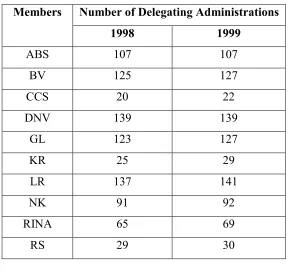
Table 6 Delegation of Authority by Administrations
Table 7 Technical Staff and Overseas Offices of IACS Member Societies Table 8 USCG Announced List of Targeted Class in 1999
Figure 1 Responsibility Chain
List of Abbreviations
ABS American Bureau of Shipping
BV Bureau Veritas
CAP Condition Assessment Program CCS China Classification Society CDI Chemical Distribution Institute CMI Comite Maritime International
COLREG 1972 Convention on the International regulations for Prevention Collision at Sea, 1972
COMPASS Computer-aided Plan Approval Software System COSCO China Ocean Shipping (Group) Company
CRS Croatian register of Shipping CSSC China State Shipbuilding Corp.
DNV Det Norske Veritas
ESP Enhanced Survey Programme
EU European Union
FSA Formal Safety Assessment FSI Flag State Implementation GDP Gross Domestic Product
GL Germenischer Lloyd
IACS International Association of Classification Society ILU Institute of London Underwriters
IMCO Inter-governmental Maritime Consultative Organisation IMO International Maritime Organisation
Intertanko International Association of Independent Tanker Owners IRS Indian Register of Shipping
ITF International Transport Federation KR Korean Register of Shipping
LL 1966 International Convention on Load Line, 1966 LR Lloyd's Register of Shipping
MARPOL 73/78
International Convention on Prevention of Pollution from Ships, 1973, as modified by the Protocol of 1978
MOC Ministry of Communications
MOFTEC Ministry of Foreign Trade and Economic Co-operation MOU Memorandum of Understanding
NK Nippon Kaiji Kyokai
OCIMF Oil Company International Maritime Forum
OECD Organisation for Economic Co-operation and Development PRS Polish Register of Shipping
PSC Port State Control
QSCS Quality System Certification Scheme RINA Registo Italiano Navale
RS Russian Maritime Register of Shipping SARQS Shipbuilding and Repair Quality Standards
SOLAS 1974 International Convention for the Safety of Life at Sea, 1974 SSMIS Ship Survey Management System
STCW 1978 International Convention on Standards of training, Certification and Watchkeeping for Seafarers, 1978
SWOT Strength, Weakness, Opportunities and Threats TM 1969 Tonnage Measurement of Ships, 1969
TOCA Transfer of Class Agreement UI Unified Interpretation
UN United Nations
UR Unified Requirement
Chapter 1 Introduction
During the past four decades, the shipping industry witnessed a significant change in terms of the setting, as well as the implementation of international standards.
It has long been known that shipping is an international industry. The most appropriate way to improve safety at sea and the protection of the marine environment is through actions on an international basis. The International Maritime Organisation (IMO) has concentrated on developing international standards, cultivating a culture of safety within the shipping industry and ensuring that all of the maritime partners are of the highest practicable quality. These efforts have been successful with growing public awareness of safety and pollution prevention, and increasingly civilised and responsible maritime operations. However, accidents continue to occur, due to inadequacy of safety standards and procedures, lack of awareness of safety standards, human error and unsafe practices under commercial pressure.
There is a circle of involvement with various partners concerned with safety at sea, which makes the task of maintaining standards extremely difficult.
Classification can be traced back to more than two centuries ago. It is evolutionary and has contributed massively to marine safety thanks to its unique technical expertise and experience. Always at the cutting edge of technology, it has committed to developing and applying technical standards on ship's structure, engineering and electrical systems. Led by the ten Members of the International Association of Classification Societies (IACS), classification societies have gained wide respect, great responsibility and at the same time, increasing criticism.
Through analysis of the inter-relationship between classification societies and IMO, Flag State, Port State and other parties involved in maritime circle, the author is seeking an approach for classification to balance the technical, commercial and political factors which are the main pillars of safety and pollution prevention.
China Classification Society (CCS) is one of the growing classification societies which arouses wide attention among the maritime partners. For a young classification society in a developing country, CCS is faced with great challenges. By adopting strength, weakness, opportunities and threat (SWOT) analysis, the author also attempts to identify the strength and weakness of CCS and propose solutions for CCS to create opportunities and meet the challenges.
Chapter Two
2. The role of classification Societies in the maritime world 2.1 Origins of classification societies
One cannot speak about ship safety and marine environmental protection without remembering the significant role played by classification Societies.
Classification societies came into existence in the 18th century to fulfil a need that was shared by all business interests connected with the operation of ships, i.e. owners, underwriters, shippers, and bankers. They accepted risks in varying degrees and an independent technical verification on the condition and seaworthiness of a ship became a fundamental necessity in seeking methods of reducing some of these risks. Of all the parties concerned, the underwriters probably had the greatest total involvement and it is not surprising that it was the underwriters who took the first steps to "class" ships according to whether the ships constituted good or bad risks from the construction and maintenance point of view.
Following LR, Bureau Veritas (BV) was established in 1825, Registo Italiano Navale (RINA) in 1861, American Bureau of Shipping (ABS) in 1862, Det Norske Veritas (DNV) in 1864 and Germenischer Lloyd (GL) in 1867. At the turn of the last century in 1899, the Japanese classification society Nippon Kaiji Kyokai (NK) was formed. There are others added to the list, including the Polish Register of Shipping (PRS), China Classification Society (CCS), the Korean Register of Shipping (KR), the Croatian register of Shipping (CRS), The Russian Maritime Register of Shipping (RS), the Indian Register of Shipping (IRS) and the Klasifikasi Indonesia, etc.
The first known register of ships was published in 1764, which was a tribute to Edward Lloyd as well. The Register included details of vessel ownership, characteristics and condition but based on unstated and differing standards of the earlier surveys. The notion of "first class" was only valid for the first eight years in the life span of many ships.
In those early days, classification societies were employed and paid by the underwriters for the technical service offered, though later on, it has become a custom and practice for shipowners to pay for class surveys.
In 1834, LR was reconstituted by joining two other British registers and two basic principles were decided and have been followed to this day. One was that the governing body should be representatives of all maritime sectors ranging from shipowner, shipper, underwriter, etc.; the other was that a uniform standard for ship construction and subsequent maintenance should be adopted in the form of written rules.
2.2 Early development
examination of production steel took place in 1855, while classification of propulsion machinery began in 1880. Class rules for steel ships were first drafted in 1888, and rules for oil-fired ships followed in 1898 --- just a year after the first steam turbine went to sea (J. R. G. Smith, 1999).
As soon as these Rules came into use, it was a natural development to establish permanent qualified staff both in outports and Head Office so that ships could be built under survey and maintained to the prescribed standard on a world-wide basis.
The overall management of classification society was exercised by a governing body that consisted of duly elected representatives from the shipping industry with the prime object of providing an impartial professional service for the benefit of all sectors of the industry. In order to achieve uniformity of practice, outports surveyors’ recommendations were submitted to Head Office for vetting.
In short, the function of classification society in those days was to set up and update the technical rules, regulations, standards and guidelines; to examine and approve the plans, and to survey the ship as long as their life within the Register. Data on ship operation and in-service experience gained was built into new design and new ships with continual improvement in strength and safety. This remains unchanged for all these years.
Among those functions, standard-setting and ensuring that the standards are complied with are the main functions of classification society. The standards for the construction and subsequent maintenance of ships are published in the form of Rules. There are a wide variety of Rules, such as:
• Rules and regulations for the classification of ships
• Rules for floating docks
• Rules for inland waterways ships
• Rules for refrigerated stores (on board) and cargo installation (on board)
• Rules for ships for liquefied gases
• Rules for bulk chemical tankers
• Rules for submersibles and diving systems Etc.
Whilst classification society played a very important role in maintaining standards and securing the safety of ships and their cargo, governments have been concerned about safety of life at sea since the late 19th century.
As stated above, LR in 1835 introduced a requirement about the safety relationship between freeboard and draught, known as LR Rule, which was used by responsible owners on a voluntary basis until 1880. In the United Kingdom, about that time, Samuel Plimsoll was instrumental in passing the UK Merchant Shipping Act requiring a freeboard mark, which was called the “Plimsoll Line”, to be marked on the ship’s side. It was not until 1890 that freeboard tables for limiting draft, proposed by LR, were used as a basis for the Shipping Act requiring freeboard to be calculated and marked accordingly. Class rules became the basis of compliance with requirements of a Flag State in this respect.
In 1930, an International Conference was held in London and ended up with the 1930 Load Line Conventions ratified by the majority of the Nations attending the meeting.
The classification societies continue to play their traditional role in providing the insurance industry with the necessary technical data for each vessel seeking cover. Furthermore, it is also becoming common practice of Flag State to authorise them to issue, on their behalf, the necessary statutory certificates stipulated by the international conventions.
Those leading classification societies are appointed by most flag administrations as Recognised Organisations (RO) to do surveys and issue or endorse many of these certificates on their behalf.
2.3 Establishment of the International Classification Societies (IACS)
One cannot speak about classification Society without mentioning the IACS.
There are approximately 40 classification societies in the world but more than 90% of the world merchant tonnage – over 522 million gross tonnage – is classed by the ten Members and three Associates of the IACS.
The idea of establishing such an organisation was associated with the Load Line Convention of 1930. The Convention recommended collaboration between classification societies to secure “as much as uniformity as possible in the application of the standards of strength upon which freeboard is based…”
In 1968 IACS was formed by the seven leading classification societies, namely ABS, BV, DNV, GL, LR, NK, and RINA. Individual class standards were harmonised by agreeing on uniform technical requirements which have increasingly become the underlying technical fabric of maritime safety.
Classification Societies may be admitted as Members of the Association only by decision of the Council subjected to the following requirements:
• Compliance with the IACS Quality System Certification Scheme (QSCS) is mandatory for IACS Member and Associate status and the Council has the power to take appropriate actions in this context
• Active participation in IACS Working Groups over a 3- year period
• 30 years experience as a classification society with own rules
• Classed fleet of not less than 1500 ocean-going vessels (over 100 Gross Tonnage) with an aggregate total of not less than 8 million Gross Tonnage. In the case of dual classed vessels, only 50 per cent of the number and gross tonnage of such vessels shall count towards a Society's classed fleet and aggregate Gross Tonnage.
• Professional Staff of 150 exclusive surveyors and 100 technical specialists all of whom should be qualified and trained in accordance with IACS Procedures.
• Possession of a valid IACS Quality System Certificate of Conformity
• Observance of Code of Ethics
For associates,
• 15 years experience as a Classification Society with its own Classification Rules which at least incorporate IACS Unified Requirements
• Classed fleet of not less than 750 ocean-going vessels (over 100 Gross Tonnage) with an aggregate total of not less than 2 million Gross Tonnage. In the case of dual classed vessels, only 50 per cent of the number and gross tonnage of such vessel shall count towards a Society’s classed fleet and aggregate Gross Tonnage
• Professional Staff of 75 exclusive surveyors and 50 technical specialists all of whom should be qualified and trained in accordance with IACS Procedures
• Rules and Register both published in English and regularly updated
• Has implemented and maintained procedures and procedural requirements at least equivalent to those contained in IACS Procedures, and IACS Procedural Requirements
• Possession of valid Quality System Certificate of Conformity
• Observance of Code of Ethics
• Confidential Procedural Requirements will be released to prospective applicants after satisfactory demonstration of compliance with other criteria for use in preparation for QSCS audit.
During a 3 year initial probationary period the Associate would have to:
• Be re-audited annually
• Maintain open records and satisfy any complaints about failure to conform to IACS Procedures and Procedural Requirements.
After a 3 year probationary period an Associate may retain its status provided it continues to comply with the foregoing quantitative and qualitative requirements (IACS Charter, 1998).
With its ten Members and three Associates, IACS has become a crucial partner in the international maritime circle in terms of their combined and unique level of classification knowledge and experience in contributing to maritime safety and its regulatory regime.
2.4 The role of classification societies led by IACS in maritime industry
There is no other system than classification that provides shipowners, shipbuilders, charterers, insurers and financiers with a high level technical service that covers all merchant ships from design and construction to the end of their operational lives. When the governments began the process of formulating marine safety regulations, first independently and later under the auspices of the IMO, it was considered unnecessary to provide detailed requirements as these were covered by classification, ranging from hull structure to essential engineering and electrical systems. Therefore, in the maritime world, the classification society has been called the technical leader and the standard-setter and remains at the forefront of technological development. They are playing not only a crucial but a multi-dimensional role. They perform tasks delegated by the flag states, provide technical verification for marine underwriters and shipping industries, and offer a great service to shipowners as well.
Based on the principle of independence, integrity and impartiality, classification societies define themselves as non-governmental, non-profit-making technical body, which implements its rules solely on the basis of technical judgements in pursuit of safety of life at sea, without being influenced by the commercial or political consequences of its decision.
classification societies as well, which unfortunately decreased the standard of services offered by them. Above all, their sole customer, who pays the bill, is the shipowner, which is exactly the fact that led a number of critics to accuse the classification societies of having conflicting interests, i.e. statutory duties on one hand and on the other hand “pleasing” the shipowners. They are criticising classification societies for failure to carry out their duties at a level so strict that it could “displease” their customer.
Thanks to the efforts of the leading classification societies made through the IACS, the classification has a much better reputation today compared with the situation many years ago. In 1969, IACS was granted status with the IMO and is the only non-governmental organisation with observer status that is able to develop rules. In cooperation with IACS, IMO proceeds to set out guidelines for the recognition of classification societies and IACS itself has imposed a self-regulatory scheme on its Members to maintain and improve the quality of classification.
Today, IACS’ ten Members and three Associates class over 90% of the world total merchant tonnage of more than 522 million gross tonnage. The 46,000 ships classed by IACS Societies take up half of the total fleet by number of ships. They conduct over 600,000 ship surveys annually, with their 6,000 surveyors supported by nearly 6,000 technical staff in almost 1,600 offices worldwide. They invest over $70 million annually in ship structural and engineering research and development (IACS, 1998). IACS societies are authorised by more than 100 Member States of the International Maritime Organisation (IMO) to undertake statutory international and national regulation compliance surveys and to issue the necessary certification on their behalf. IACS has over the past thirty years systematically developed more than 200 IACS Unified requirements (UR) and Interpretations (UI).
• To promote the improvement of the standards of safety at sea and to prevent pollution of the marine environment;
• To consult and cooperate with international and national maritime organisations
• To maintain close co-operation with the world maritime industries without giving up independence.
Guided by the objectives, IACS launched its Quality Certification Scheme (QSCS) in 1991 to ensure integrity and the highest standards in ship’s classification service. The scheme sets and monitors rigorous standards and has been strengthened further to invoke standards more rigorous than the requirements of ISO 9001.
As is well known, the IMO is the United Nations’ organisation responsible for ship safety and maritime pollution prevention. IACS, holding consultative status with IMO, has been playing an active part in he work of IMO through contribution to the development of all the major international conventions.
However, no single organisation can alone bear the responsibility for the safety of shipping. Shipowners and operators, charterers, financiers, underwriters also have an important role to play. Each has to understand what the other does, cooperate and have a meaningful dialogue with the others (O’Ferrall, 1996). Bearing this in mind, IACS liases closely with numerous maritime safety organisations, shipping interest groups and other associations including the International Chamber of Shipping (ICS), the Oil Companies International Maritime Forum (OCIMF), Intertanko, Intercargo, Institute of London Underwriters, etc.
2.5 IACS safety initiatives in recent ten years
Classification as a whole experienced difficulties through the 1980s due to the depressing shipping market with low freight rates and the worldwide trend to minimise ship maintenance. The problem of substandard ships, whether caused by design defaults, high age, poor maintenance, inadequate crewing or a mixture of all these, came to a head with the appallingly high rate of bulk carrier losses and casualties of 1990 and 1991. Classification Societies found themselves under a harsh spotlight. A number of casualties with structural failures appeared to be in class and often with one of the most reputable IACS Member Societies. Class was accused of failing to do its duty. Questions were even raised as to whether the basic class rules were good enough.
To meet the challenge of a changing industry, IACS Council decided in 1990 to make radical changes. IACS Code of Ethics and QSCS were established to address efficiency, discipline and communications. The Permanent Secretariat in London was set up in 1992 and quickly began to communicate more effectively with the industry, its critics and the media.
The intensive efforts made by IACS to respond to the challenges have resulted in a range of maritime safety initiatives:
• The first in a continuing series of IACS initiatives towards a safer bulk carrier fleet was taken in 1992. IACS produced a new UR for the corrosion protection of ballast tanks and cargo holds – and revised guidance notes for bulk carrier surveys.
• In 1993, IACS adopted minimum side shell frame web thickness requirements.
• In 1994, an important manual on bulk carrier survey and repair – Bulk Carriers -Guidelines for Surveys, Assessments and Repair of Hull Structure was published.
• In late 1994, IACS council launched the largest single research effort in the Association’s history with a major investigation into how older bulk carriers could be made safer.
• 1995 marked important progress by IACS in the further development of its unique contribution to the safety of an increasingly elderly fleet. Its mid-year council meeting agreed on the implementation of a programme of seven marine safety initiative:
1. Transfer of Class Agreement (TOCA), designed to eliminate the possibility of required repairs being avoided by “class-hopping” and to ensure that the gaining society accepts the vessel for its classification only after all the overdue surveys, recommendations or conditions of class previously issued against the vessel have been completed as specified by the losing society.
2. Transparency of classification and statutory information, whereby the IACS Societies have extended the range of classification and statutory information readily available upon proper request.
4. Procedure for Employment and Control of Non-exclusive Surveyors, limiting the employment of non-exclusive surveyors.
5. Procedure for Surveyor Activity Monitoring, ensuring that surveyor has carried out the survey satisfactorily in compliance with the Rules and Process Instructions.
6. Procedure for Qualification and Training of Surveyors
7. Procedure for Responding to Port State Control (PSC), defining the co-operation and assistance to be given by surveyors during PSC inspection.
With conformance audited through QSCS, the programme has been further tightened.
• Also in 1995, the Procedural Guidelines for Members’ involvement in certifications for the International Safety Management Code (ISM Code) were established.
• At the end of 1996, new Conditions of Class were announced requiring higher strength reserves in older ships and stronger new ships with greater margins of safety and survivability.
• 1997 saw the research and publication by IACS of its ever first comprehensive guide to Shipbuilding and Repair Quality Standards (SARQS).
• 1998 also marks the entry into force of the ISM code for all “phase one” vessels. IACS Members are responsible for a high proportion of auditing for ISM Code compliance and playing a leading role in developing and ensuring consistency in Code implementation.
• 1998 also saw the new and revised IACS UR entering into force on 1 July 1998 giving higher strength criteria and new Condition of Class for existing bulk carriers.
Chapter 3
3. The interrelationship
3.1 Maritime safety involving interrelated elements
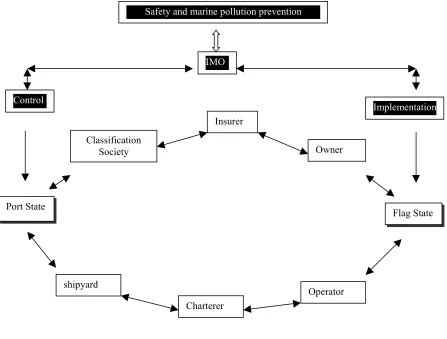
Several years ago, the International Association of Independent Tanker Owners (Intertanko) put forward a concept of "responsibility chain".
Figure 1
Safety and marine pollution prevention
IMO
Control
Port State
Implementation
Flag State Classification
Society
Insurer
Owner
shipyard
Charterer
Safe shipping involves an interrelated system of interests and activities, and each has its roles and responsibilities to achieve the desired outcome. Flag, shipyard, owner, operator, cargo owner, charterer, port, terminal, pilot, seafarer, regulator and P&I Club have been playing distinct roles in this "responsibility chain". (See Figure 1)
As shown in the above figure, IMO sets up standards on safety and pollution prevention based on the proposals made by Flag States, that are both users and providers of international shipping services. Flag States that are parties to the various IMO Conventions, have the responsibility to implement those standards on ships flying their flag. Classification societies are involved through delegation of authority from the Flag States to certify ships and shipping companies as complying with international and national regulations. The Governments execute Port State Control (PSC) to ensure that the ships entering their ports or passing through their waters, are complying with international Conventions. Shipowners/operators are regulated by Flag State, Port State and class and it is their obligation to maintain their ships in a safe and seaworthy condition. Shipyards build ships up to standards. Insurers provide mechanisms by which shipowners can finance and distribute the liability costs connected with operating their vessels. By setting up lower premiums for higher standard ships, insurers are playing a role in encouraging safe operations.
Over the years, the evolution of the marine industry "has led to a position where, today, there is no single leader in this area… if we are to ensure ongoing satisfactory standards and the elimination of substandard tonnage, full and proactive co-operation between the various interests will be essential" (Bell, 1995).
3.2 IMO, the key role
One cannot imagine a maritime world without the key role played by the IMO.
Organisation (IMCO) to facilitate co-operation on maritime matters. It was concluded that IMO would devote entirely to co-operation on governmental regulations and practices on technical matters, and encourage and facilitate general adoption of highest practicable standards for maritime safety, efficiency of navigation and control of marine pollution.
In 1982, IMCO changed its name to the International Maritime Organisation (IMO), the only specialised UN agency exclusively dealing with matters related to safe shipping and cleaner seas. Furthermore, it attracted both traditional maritime countries and countries with considerable shipping interests to become Member States. It now consists of 157 Member States and 2 Associate Members. In order to establish formal links with various maritime interests and enable them to participate in the work of various committees and sub-committees of IMO, it has granted consultative status to 54 non-governmental organisations and 36 inter-governmental organisations.
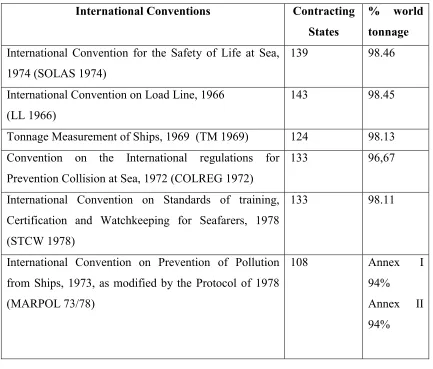
SUMMARY OF STATUS OF CONVENTIONS as at 31 March 2000
International Conventions Contracting
States
% world tonnage
International Convention for the Safety of Life at Sea, 1974 (SOLAS 1974)
139 98.46
International Convention on Load Line, 1966 (LL 1966)
143 98.45
Tonnage Measurement of Ships, 1969 (TM 1969) 124 98.13 Convention on the International regulations for
Prevention Collision at Sea, 1972 (COLREG 1972)
133 96,67
International Convention on Standards of training, Certification and Watchkeeping for Seafarers, 1978 (STCW 1978)
133 98.11
International Convention on Prevention of Pollution from Ships, 1973, as modified by the Protocol of 1978 (MARPOL 73/78)
108 Annex I
94% Annex II 94%
Table 1
(Source: http://www.imo.org/imo/convent/summary.htm)
* Lloyd's Register of Shipping - World Fleet Statistics as at 31 December 1998)
sustainable by the various interests as displayed in the responsibility chain. Marine industry operates in a delicate environment and extra caution needs to be exercised in order not to disturb the balance existing between the involved interests. A common understanding between the Member States and the industry needs to be reached and the understanding and constructive exchange of views can only be achieved through IMO where international solutions can be debated and achieved.
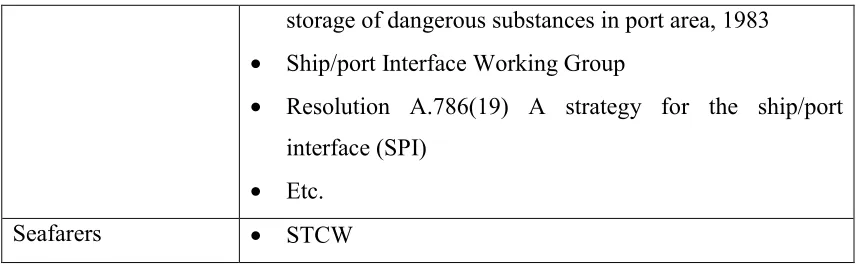
Indeed, IMO has been playing a key role in the responsibility chain. To link up the various players, IMO has established the following instruments of various natures:
Maritime players Some Relevant Instruments
Flag state • SOLAS
• LL
• MARPOL
• STCW
• COLREG
• TM 1969
• Flag State Implementation Subcommittee
• Resolution A.481(XII) Principles of safe manning
• Resolution A.788(19) Guidelines on implementation of the ISM Code by Administration
• Resolution A.847(20) Guidelines to assist Flag States in the implementation of IMO instruments
• MSC/Circ.889 Self-assessment of Flag State performance
• Etc.
Port State • SOLAS
• LL
• MARPOL
• COLREG
• Resolution A.787(19) Procedures for Port State Control
• Etc.
Shipowners/operators • SOLAS
• LL
• MARPOL
• STCW
• COLREG
• TM 1969
• International Safety Management (ISM) Code
• Resolution A.741(18) International management code for the safe operation of ships and for pollution prevention
• Resolution A.788(19) Guidelines on implementation of the ISM Code by Administration
• Etc.
Classification society • SOLAS
• LL
• Resolution A.739(18) Guidelines for the Authorisation of Organisations Acting on Behalf of the Administration
• Resolution A.789(19) Specification on the Survey and Certification Functions of recognised Organisations Acting on Behalf of the Administration
• MSC/Circ. 710 Model agreement for the authorisation of organisation acting on behalf of the Administration
• Etc.
Terminal operators • MARPOL 73/78
• International Maritime Dangerous Goods (IMDG) Code, as amended
storage of dangerous substances in port area, 1983
• Ship/port Interface Working Group
• Resolution A.786(19) A strategy for the ship/port interface (SPI)
• Etc.
Seafarers • STCW
Table 2
Through the establishment of such a regulatory regime, the IMO manages to ensure an effective and fast rule-making mechanism backed up by "a rigorous enforcement mechanism" which applies the rules indiscriminately (Pamborides, 1999).
3.3 IACS and IMO; class rules and IMO Conventions
The international instruments developed by IMO address in detail safety aspects other than hull structures and essential shipboard engineering systems. It is the classification that embodies the technical rules, regulations, standards, guidelines and associated surveys and inspections concerning the design, construction and through-life compliance of a ship's structure and essential engineering and electrical systems. (IACS, 1997). IMO respects class rules as the technical foundation for a safer world fleet and the elimination of sub-standard ships.
Class rules are produced on the basis of considerable research and developments as well as the results of service feedback received continuously through hull and machinery survey reports. They contain detailed requirements for:
• Materials
• Ship structures
• Main and auxiliary machinery
• Control engineering system
• Electrical installation
• Survey during construction and periodic surveys of ships in service
Today a classification process has developed, which is based on class rules. Plans are examined and approved, ships are surveyed through construction, class is granted and certificates are issued and the ships are surveyed periodically as long as they stay within the register. The information flows back to each classification society with regard to the operation of the ships, their technical difficulties and a vast amount of experience gained, which enables the lessons learnt to be built into new designs and new ships so that a gradual improvement can be made in safety and the ability to take advantage of technological development.
or with applicable national standards of the administration which provides an equivalent level of safety"(SOLAS Chapter II-1, Regulation 3-1). Compliance with class rules became a precondition for compliance with statutory requirements of the international maritime safety regime.
To avoid duplication, IMO does not make class regulations and classification society does not duplicate the International Conventions by making separate rules for stability aspects or for safety aspects such as fire safety, lifeboat, liferaft, lifejackets and other life-saving appliance, or for navigational aids, lights and sound signals, radio equipment and pollution prevention equipment. (J. R. G Smith, 1998)
The functions of the classification society and the IMO are separate but related. Classification societies, mainly the Member Societies of IACS, produce and apply class rules and at the same time apply the requirements of some IMO Conventions on behalf of more than 100 Administrations.
In one word, the internationally recognised standards for ship safety and marine pollution prevention are attained by compliance with both the rules of a classification society and the regulations of the applicable International Conventions.
3.4 The relationship between classification society and Flag State
Under the provision of SOLAS 1974 and LL 1966, the Flag State is responsible for promulgating these International Conventions and for taking all other steps that may be necessary to give them full and complete effect. In other words, the Flag State has the responsibility to:
• Establish national laws and regulations for ship safety in general
• Decide, based on international standards, national safety standards for the design, construction and operation of ships
It is inarguable that the Flag State carries the primary and full responsibility for the overall development and implementation of safety regulations. There are different ways of accomplishing Flag State Implementation (FSI). One way is to put more responsibilities on shipowners. However, experience has shown that even if there are responsible shipowners, there are also many not so responsible. It is also difficult in some cases for the Flag State to exercise full and continuous control over some of the ships entitled to fly its flag that do not regularly call at a port of the Flag State. It is hard for a Flag State to employ inspectors at foreign ports to exercise control. Even if it has large technical resources itself, it is difficult to do all kinds of qualified technical evaluations related to ship safety.
These problems have been partly overcome by Flag State authorising classification societies, who have sufficient expertise and world-wide availability of highly qualified personnel to act on its behalf. In the 1960's and 1970's when there was major expansion in open registry, those flags of convenience registries did not have the capabilities to administer and regulate compliance with their own national and international safety standards. Classification societies became increasingly involved in statutory surveys on behalf of Flag State.
The evolutionary relationship between Flag State and classification society has also led to the fact that on the one hand, Flag State requires that hull and machinery shall be built to class rules and on the other hand, class surveys are carried out in accordance with the provisions established by Flag State through IMO, related to stability and load line, fire prevention and pollution prevention.
In every case, the Flag State shall fully guarantee the completion and efficiency of the inspection and survey, which is covered by a written agreement between the Flag State and the classification society. The Flag State must have such means as performance assessment or audit to monitor the delegated classification society to ensure that the work is being adequately and satisfactorily performed. The delegated classification society, in order to demonstrate the quality of its service, normally has an effective quality system in place. In this respect IACS, based on and beyond the applicable requirements of ISO9001:1994, has set up a Quality System Certification Scheme (QSCS), which is recognised by IMO.
Classification societies work for and are monitored by Flag States when surveying ships for statutory compliance with international requirements. Nevertheless, it is the Flag State that is primarily responsible for the ships in its fleet.
3.5 Classification societies and Port State
Shipping is an international business. It is therefore not unusual for a vessel not to call at a port of its Flag State for quite a long period of time. It is not unusual that a vessel trades in an area far away from its Flag State due to the rules of supply and demand. Consequently, the enforcement of the national legislation of the Flag State over its vessels becomes practically impossible. This would be the case particularly with small States having fleets disproportionately larger than the size of their administration. The international community, recognising the difficulties faced with Flag States, sought ways of assisting them.
exercise any type of control, but would not take any action in response to the reports sent to them by Port States. By then, Port States did not inspect foreign vessels in their ports on behalf of the Flag States. Instead they had jurisdiction both to legislate and to enforce such legislation on foreign vessels visiting their ports. Port State Control (PSC) has become an alternative enforcement regime of international standards, called "last safety net". PSC protects port/coastal states' interest and has a beneficial influence on Flag State control as well with its experience gained from inspection as valuable backup and supplementary source.
Generally speaking, over these years, provisions allowing for PSC were introduced in a number of IMO Conventions, including LL 1966, SOLAS 1974, MARPOL 73/78, STCW 78 and COLERG 1972.
The introduction of the new concept of PSC created new problems due to unilateral national legislations. IMO realised that an attempt to introduce a co-ordinated, global system of application of PSC would be extremely necessary and extremely difficult as well.
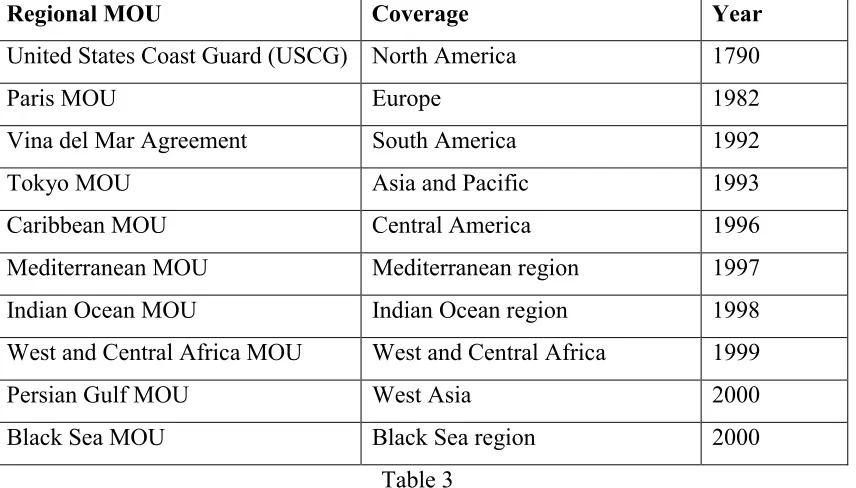
Regional MOU Coverage Year
United States Coast Guard (USCG) North America 1790
Paris MOU Europe 1982
Vina del Mar Agreement South America 1992
Tokyo MOU Asia and Pacific 1993
Caribbean MOU Central America 1996
Mediterranean MOU Mediterranean region 1997
Indian Ocean MOU Indian Ocean region 1998
West and Central Africa MOU West and Central Africa 1999
Persian Gulf MOU West Asia 2000
Different ports have different characteristics and therefore a global system would be destined to fail. Instead, IMO encourages its Members to proceed to regional co-operation in the application of PSC. By the year 2000, a full global coverage by regional regimes will be established by the Memorandum of Understanding (MOU) as listed in Table 3.
Regional co-operation embraces exchange of information between the co-operating maritime authorities, harmonised inspections and avoidance of unfair competition between ports of neighbouring States.
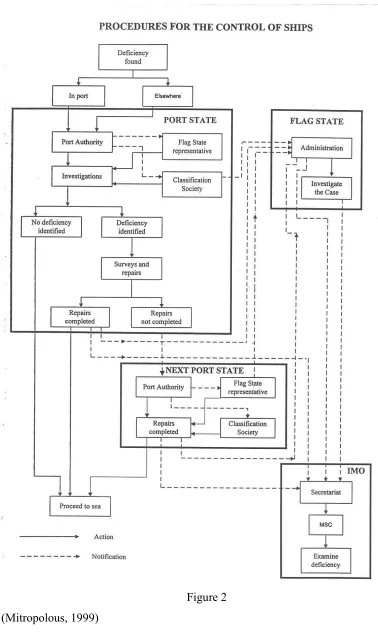
As mentioned previously, SOLAS 74 and LL 66 provide provisions for PSC procedures to be followed by the Port States with regard to foreign ships visiting their ports. (See Figure 5). In the whole process, the classification society is an important player due to the inseparable relationship between class rules and statutory regulations. In measuring compliance with international and statutory regulations, "PSC takes class rules as the vital point of reference." (Mathiesen, 1998) Full co-operation with PSC is an obligation for the classification society, particularly the IACS Societies. IACS strongly supports PSC and has been involved in the development and training programs for some regional MOUs, especially as regards the vital link between IMO Conventions and class rules. By making relevant class data available to the Port State and making positive use of the ship detention data provided by PSC, IACS has maintained a working partnerships with PSC. In case that a ship in class is detained due to class-related deficiencies, IACS surveyors will attend onboard the ship to give assistance when necessary. Liasing with the Flag State in accordance with authorisation agreement and providing services for owners, IACS Societies also try to ensure that both are fully aware of the actions being taken.
3.6 The relationship between classification society and industries
Indeed, an owner is ultimately responsible for the quality of the ship. Whether a classification society acts to check compliance with its structural rules or conformance with the statutory regulations of the vessel's Flag State, it requires the fullest co-operation of the owner who retains the ultimate responsibility - the "duty of care" for the safe maintenance, operation and manning of his ships.
There are owners committed to high quality ships and safe operations. Regretably, there are substandard ships and companies making profit from a lower cost of operation at the sacrifice of safety, which makes responsible operators disadvantaged. According to the statistics of OECD published in 1996, in case of a 20-year-old bulk carrier, it would cost the shipowner as high as US $7,500 per day if he is committed to the maximum possible safety standard and US $3,250 per day in order for it to be in compliance with the basic requirements of IMO Conventions. What is of great importance is that the same vessel may continue to be operational but below the internationally accepted standards on a cost of US$2,750 per day. Obviously, the shipowner of the substandard vessel is saving himself US$500 per day, US$182,500 per year as compared to the "compliance" vessels, let alone the "maximum" ones. The shipping industry is highly competitive and the art of minimising the operational cost can determine the success or failure of a shipowner.
Charterer, another partner in the maritime world, is playing an increasingly important role in an increasingly fragmented shipping market. Unlike the shipowner, the charterer is merely making a choice of his carrier based on knowledge, experience, data and price. The industry itself has been seeking ways, such as the Ship Inspection Reporting Exchange (SIRE) system, to assist charterers in selection of vessels. At the present stage, classification societies have not yet been involved in the vessel selection process. Nevertheless, charterers are represented in the governing body of classification societies. Views have been expressed that charterers should employ classification societies so as to gain access to the vessel's condition, thus making selection decisions.
Financially discriminating against the substandard ships by demanding higher premiums and interest for the extra risks, insurance companies and banks have a role to play to encourage safe operation. Same views have been held by various interests regarding insurers and banks that they should also use the service of classification societies. Such a possibility would give them access to the class recommendations in respect of any ships being entering into agreement with those companies and banks.
Chapter 4
4. The environment and development trends of classification societies 4.1 Increased focus on human element
Figure 3
Detailed analysis of ship accidents shows that human element plays an important role in most of the accidents. (See Figure 3)
The most important task of IMO today is to find ways of developing and improving the human resources on which the shipping industry depends. The introduction of the
HIGH CONSEQUENCE ACCIDENT
ENVIRONMENT HUMAN
80%
DESIGN OPERATIONS CONSTRUNCITON
80%
SOCIETY
ORGANISATION
INDIVIDUAL
ISM Code was a major part of this process. Statistics published by the Swedish Club show that insurance claims concerning ships applying the Code have fallen significantly compared with those who do not apply the Code. The difference is approximately 30%.
Traditionally, classification societies have focused only on the technical aspects of new and in service vessels. In recent years, it has become obvious that there is a limit to improvements in the safety, if emphasis is only placed on the technical aspects. On one hand, IACS adopts unified procedures for qualification and training of its surveyors and monitoring of survey activities to build on its own human resources; on the other hand, IACS welcomes the steps of IMO to include the human element in further improvement of ship safety. In this respect, IACS has set up harmonised system for the interpretation of the ISM Code and certification of compliance with the Code and has been offering ISM Code certification capabilities world-wide.
4.2 Over-regulation
It is believed by all that IMO is the only system to formulate international standards for safety and pollution prevention. The effectiveness of the standards is wholly and solely dependent on the effectiveness of government enforcement of those standards.
To some extent, however, the industry is deluged by an ever increasing body of regulations that, for many countries, are difficult to follow, let alone implementation. Mr O'Neil, Secretary-General of IMO, conceded this fact by saying that over the last three and a half decades, IMO has adopted several shelves full of rules and regulations and although they have certainly helped to improve the situation, they can only be effective if they are put into practice and are enforced; and this is not always the case. (1997)
organisation - also provides that "…the Council and the Committee entertain proposals for new Conventions or amendments to existing Conventions only on the basis of clear and well-documented demonstration of compelling need… having regard to the cost to the maritime industry and the burden on the legislative and administrative resources of Member State…" There are increasing demands for a synergy between market forces and optimum regulation. Also aware of such a challenge, IMO has adopted Formal Safety Assessment (FSA) methodology in its rule-making process, making more systematic evaluation of the cost involved in safety and environmental protection.
On one hand, efforts should be made by rule-makers to balance safety standards and industrial competitiveness and on the other hand however, it is even more urgent to comply with exiting rules than developing new ones.
4.3 Substandard shipping
the operating costs of the companies committed to "quality" or "compliance" and those of the substandard companies with substandard ships is very big (See 3.6).
The solution to the present situation is easy for everyone to see: reduce the unfair gap and make it more expensive to operate in a substandard shipping mode than in a compliance or quality mode. All players in the shipping industry are responsible for the solution.
Instead of making more and higher standards, IMO should focus on the application of the existing ones; Flag State fulfils primary responsibility for implementation of those standards and as Port State at the same time, for enforcement of compliance through the PSC system; classification societies need to re-assert their determination to maintain what they believe are safe standards in spite of the pressure to relax them.
Quality shipping, as indicated by J. M. S. Smith, the Chief Operating Officer of Liberian International Ship and Corporate Registry, could be Utopia. (2000) Such Utopia cannot possibly be achieved unless there are quality shipowners, quality registries, quality classification societies and quality crews.
4.4 IACS and quality
Quality shipping is a campaign initiated by the European Community aiming at properly enforcing the internationally agreed standards, eradicating substandard ships and deterring and penalising substandard shipowners and operators. The classification society has a significant role to play in such a campaign due to its safety responsibility as fully explained in the previous chapters.
from commercial pressures, which is necessary to ensure an acceptable quality of performance.
European Community adopted the 94/57/EC Directive on Common Rules and Standards for Ship Inspection and Survey Organisation and for the Relevant Activities of Maritime Administrations, whereby only those Recognised Organisations in line with the Directive are considered as fulfilling quality standard and allowed to carry out statutory surveys and certification on behalf of the EU Member States.
With its high standard and fund of knowledge and experience, all IACS Societies are regarded as the "quality classification society".
Quality shipping embraces compliance with existing international standards and more importantly, embodies continuous improvement. Much of the extensive work done by IACS Members in recent years has been aimed at improving the quality of service which, in turn, will aid shipowners to maintain a quality ship in operation. IACS introduced the Quality System Certification Scheme (QSCS) as a mandatory requirement for ongoing Membership of the Association. The safety initiatives implemented and the research and development projects launched by IACS over the past decades are all dedicated to integrity and quality. Much has been done and is under way for improvement of the quality in shipping.
4.5 Class is facing increased expectation and criticism
The sinking of the 25-year-old tanker Erika with spill of at least 10,000 tonnes of heavy oil off the French coast in December 1999 "reflected badly on all of us in the marine classification profession." (Iarossi, 2000) The tanker was classed with RINA, having transferred from BV and has passed special survey 18 months before. When a vessel goes through a special survey and its class certificate is renewed, the world expects this vessel will be able to operate safely for an additional five years' period. However, in the case of Erika, the vessel broke into two and sank due to a massive structural failure.
Three months after the Erika causality, a Panamanian bulk carrier Leader L sank with the loss of 18 lives due to structural faults again. The vessel was built to ABS class and classed by PRS when the causality occurred. Her ISM Code certificate was provided by the Panamanian Administration and her operator's Document of Compliance was provided by BV.
The class has come under almost unprecedented pressure. The question of how and if class can exercise its traditional rule enforcement effectively in the more intense and competitive environment has been raised. IACS made strong response to the challenge by a number of significant new measures including strengthening survey procedures on ships over 15 years old and setting up an investigation board to assist Flag States in investigating some casualties. These initiatives have been well received by the maritime industry. While in a separate development, the European Commission is drawing up new safety measures, including inspection of the Recognised Organisations, sanction regime, financial liability and more stringent qualitative criteria.
4.6 Proliferation of inspections
Today ships are constructed and maintained in a safe manner partly due in part to the surveys of classification societies. The classification system has served the industry well and been well recognised.
Insurers, due to their great financial involvement, have also established conditional surveys to ships to be insured. The Rules of most insurers state that a ship that has applied for entry may be required to be submitted to survey by a surveyor appointed by the club.
To serve the oil companies, Oil Companies International Maritime Forum (OCIMF) initiated its vetting system for chemical and liquefied gas ships - Condition Assessment Program (CAP) - and created the Ship Inspection Report Exchange (SIRE) to share the inspection data among Members. Similarly, there is Chemical Distribution Institute (CDI) inspection. Both are designed to assure oil and chemical companies that a vessel complies with standards and regulations.
The International Transport Workers' Federation (ITF), an international trade union with a very influential network in all major maritime nations, has established the "blue certificate" system to inspect vessels in line with ITF standards to promote favourable national legislation to seafarers and wages and social security.
There is also Salvage Association's structural survey and numerous others.
the ship in port is faced with multiple inspections by sometimes as many as 30 different inspectors, each with their agenda, the masters are put under great strain.
There are interesting voices suggesting that classification societies should be employed by charterers, insurers, banks, etc. so as to harmonise all the inspections in one package, which places a high degree of confidence on class but an equally great responsibility as well. As Mr Robin Bradley, Permanent Secretary of IACS, said, "there is a potential for rationalisation of inspections, but work needs to be done to ensure consistency and level standard. It must also overcome the issue of liability for organisations considering relying on others' inspection. (Bradley, 2000)
4.7 Liability
The world demands higher standards of ship safety, operation and environmental protection and classification societies bear a great responsibility for these standards. The greater the responsibility is, the greater the potential liability they expose themselves to. Up to now, classification societies have been protected by courts from claims raised by cargo interests against them.
For the above reasons, the courts accepted the arguments of class societies that, in general, they do not owe a duty of care to anybody else apart from their customer, i. e. shipowner.
However, as classification societies have been playing an increasingly important role, not only shipowners, but insurers, charterers, Flag States and others rely on class to one degree or another. To remain at the forefront of technological development, classification societies must base decisions on original research. The risk is huge and the potential liabilities are huge.
The Comite Maritime International (CMI), the influential legal organisation, has proposed an international contractual regime which would hold classification societies liable and protect them from unlimited liability. There has been debate over appropriate level at which liability should be capped. It appears that it is only a matter of time before the court will give in to the demands of other sector of the industry… (Pamborides, 1999)
4.8 Intra-IACS competition and possible merger
The establishment and continued growth of IACS are the results of active co-operation between classification societies. Today, through their spirit of co-co-operation within IACS, IACS Societies co-ordinate their individual developments and standards, and with open discussions thy can generate new concepts of class needed for the shipping industry.
There are competitions as well and the competitions are getting intense. Various arguments have been put forward that the intra-IACS competition is not only
of IACS, "Competition among Societies must not be prevented, restricted or distorted. Competition helps to keep the Societies flexible, alert and cost-conscious to the benefit of the entire marine community. Competition between Societies shall be on the basis of service (technical and field) rendered to the marine industry but must not lead to compromises on safety of life and property at sea or to the lowering of technical standards. "
IACS societies must do their best to ensure a healthy combination of competition and co-operation and more importantly, to ensure the unity and solidarity of the Association.
There are divisive forces both from outside and from inside the Association. Due to the impact of the Erika disaster, some industrial partners who have had working relationships with all IACS Societies now decide to choose only some from the ten IACS Societies. There are rumours that within IACS, a super-IACS might be set up consisting of three or four larger Societies. If this does happen in the future, smaller and medium sized Societies will find it increasingly difficult to do business. The long expected consolidation of the classification sector would also be broken by full mergers between IACS Societies as a solution to unification of rules, funding investment, reducing costs and optimum utilisation of resources.
Chapter 5
5. Challenges and opportunities facing China Classification Societies (CCS) 5.1 China’s maritime developments
One cannot speak about a nation’s maritime industry without looking at the overall economic development.
China, as not only a major but dominant trader in the world, has enjoyed rapid growth since it adopted the open-door policy in 1978.
China’s population takes up 22% of the world’s total. Chinese economy grew on average 8.4% annually between 1978 and 1992, and this growth has accelerated since 1990 and now exceeds 10%. The GDP of China, which reached $5 trillion in 1996, is expected to exceed $7.3 trillion by the turn of the century and $20 trillion by year 2012, which will be equal to the projected GDP of Japan in year 2000 and that of the US in year 2012.
For twenty years, exports have been a major pillar of the Chinese economic growth. Exports of manufactured goods and imports of high technology and advanced machinery and equipment are increasing aggressively. Last year, exports accounted for 19% of gross domestic product. The total value reached US$ 183 billion, almost 20 times of the size in 1978. With China's process in regaining World Trade Organization (WTO) membership, the exports, in which it is globally competitive, will increase. On the other hand, China has to open its door to increase imports in other sectors. All of this has resulted in making China’s foreign trade grow at a rate of over 12% in volume and 13.2% in value per year. China is expected to surpass Japan in foreign trade within 5 years and the US within 20 years if current trends are maintained.
With its ever-growing population, the increasingly closer trading relationship between China and other countries and its rapid economic development, the maritime industry in China will develop intensively and extensively in the new millennium.
China enjoys a coastline of 18,000 kilometres in length and major waterways such as Yangtze, Pearl and Yellow Rivers. Since 1985 China has invested more in its port development than the rest of the world combined. It has not only modernised and expanded its ports, but also developed many new ports. Container terminal developments along the coast are expected to continue with an average of 800,000 TEU capacity added each year. By year 2000, China is expected to have container traffic of over 25 million TEUs, including Hong Kong.
Its cautious port and fleet expansion and development have been linked increasingly to internal infrastructure and economic development in line with the opening policy. In 1984, the first foreign-flagged ship owned by a foreign shipping company called at Chinese port; in 1986, the first representative office of a foreign shipping company was set up in China and in the same year, the first joint venture with foreign shipping company was established; in 1991, the first solely foreign-owned shipping company was set up in China. Today, there are in China more than 120 joint-ventured shipping companies, 350 representative offices of foreign shipping companies, 70 solely foreign-owned shipping companies and 15 representative offices of 8 foreign classification societies. Chinese government has entered into maritime agreement with 52 countries (Hong, 1999).
the competition from overseas shipping companies, which started operation in China in the early 1990s under favourable policies from the Chinese government. These are the driven forces for China’s shipping market to grow.
In short, since the adoption of China’s market economy and opening policy, Chinese economy has been growing at an amazing speed and has become the world’s tenth largest trading nation. Maritime industry, as a result, will continue to grow at a phenomenal pace. All these provide great opportunities for classification societies.
5.2 Development of CCS
As classification society is the technical service provider to the shipping industry and shipping is by nature an international industry, the classification societies have to face all the aspects of globalisation, i.e. global market, global competition, different legal frameworks and different maritime policies. The establishment of CCS is a result of the globalisation in China’s maritime sector.
The following decade saw the Cultural Revolution, during which the national economy was deteriorated to such an extent that it will take years and years to catch up with the outside world.
In 1973, the Chinese Government regained its status with IMO. ZC served as the authorised organisation to conduct statutory surveys and issue certificates in accordance with the relevant international conventions. In 1978, when China adopted its reform and opening policy, ZC published in English the Rules for the Construction of Sea-going Steel Ships and started to prepare for establishment of permanent overseas offices. In 1983, the first Register of Ships of ZC was published and in the same year, the Computer-aided Plan Approval Software System (COMPASS) and the Ship Survey Management Information System (SSMIS) were developed.
ZC, in every sense, was a domestic-oriented governmental agency at that time. When faced with a trend of globalisation, ZC needed radical changes. Policy changes, however, always take time. It was not until 1986 that CCS, the China Classification Society, was established within ZC to meet the growing need of market expansion. For the period from 1986 to 1998, ZC was coexisting with CCS while its role in providing survey service was diminishing and that in administration was strengthened. CCS, on the other hand, has been functioning as the body to undertake both classification surveys and statutory surveys to customers, both at home and abroad. In 1993, the class notation was changed from “ ★ ZCA” to “ ★CSA 5/5” 1. In late 1998, with the nation-wide restructuring, ZC and CCS were split and ZC merged into the newly established Maritime Safety Administration of China as the national register and CCS became an independent, non-governmental, pure technical organisation.
1indicating that the ships' hull and machinery have been constructed under the supervision of the