Wengel-Woźny Karina, Szefczyk-Polowczyk Lucyna, Zygmunt Agata. Stress in the teaching profession. Journal of Education, Health and Sport. 2015;5(6):191-210. ISSN 2391-8306. DOI 10.5281/zenodo.18491
http://ojs.ukw.edu.pl/index.php/johs/article/view/2015%3B5%286%29%3A191-210 https://pbn.nauka.gov.pl/works/564786
http://dx.doi.org/10.5281/zenodo.18491
Formerly Journal of Health Sciences. ISSN 1429-9623 / 2300-665X. Archives 2011 – 2014
http://journal.rsw.edu.pl/index.php/JHS/issue/archive
Deklaracja.
Specyfika i zawartość merytoryczna czasopisma nie ulega zmianie.
Zgodnie z informacją MNiSW z dnia 2 czerwca 2014 r., że w roku 2014 nie będzie przeprowadzana ocena czasopism naukowych; czasopismo o zmienionym tytule otrzymuje tyle samo punktów co na wykazie czasopism naukowych z dnia 31 grudnia 2014 r.
The journal has had 5 points in Ministry of Science and Higher Education of Poland parametric evaluation. Part B item 1089. (31.12.2014). © The Author (s) 2015;
This article is published with open access at Licensee Open Journal Systems of Kazimierz Wielki University in Bydgoszcz, Poland and Radom University in Radom, Poland
Open Access. This article is distributed under the terms of the Creative Commons Attribution Noncommercial License which permits any noncommercial use, distribution, and reproduction in any medium, provided the original author(s) and source are credited. This is an open access article licensed under the terms of the Creative Commons Attribution Non Commercial License (http://creativecommons.org/licenses/by-nc/3.0/) which permits unrestricted, non commercial use, distribution and reproduction in any medium, provided the work is properly cited. This is an open access article licensed under the terms of the Creative Commons Attribution Non Commercial License (http://creativecommons.org/licenses/by-nc/3.0/) which permits unrestricted, non commercial
use, distribution and reproduction in any medium, provided the work is properly cited. The authors declare that there is no conflict of interests regarding the publication of this paper.
Received: 21.04.2015. Revised 28.05.2015. Accepted: 10.06.2015.
STRESS IN THE TEACHING PROFESSION
Karina Wengel-Woźny1, Lucyna Szefczyk-Polowczyk2, Agata Zygmunt3
Medical University of Silesia
1Doctoral Studies, School of Health Sciences in Katowice 2
Doctoral Studies, School of Farmacy with the Devision of Laboratory Medicine in Sosnowiec 3Doctoral Studies, School of Medicine in Katowice
Adres do korespondencji: Łowoszów, 46-300 ,ul. Krzywa 16 Adres e-mail: [email protected]
Abstract
Introduction. Teaching profession dates back to ancient times, when formulation of an ideal of a man with comprehensively developed personality was primarily based on such values as wisdom and knowledge. The profession of a teacher/master was influenced by many factors and underwent numerous transformations over the centuries. Aim. The aim is to assess the impact of stress and burnout at work and functioning of the teachers. Material and methods. The survey was conducted using a proprietary questionnaire consisting of 21 questions, in which the respondent select one of the following answers. The study assured full anonymity. The survey was conducted among a group of randomly selected teacher of primary, middle and secondary schools operating in the province of Opole. Results. As a result of conducted research it appeared that 54% of respondents many times a week feel stress related to their work. There are 28% of surveyed to sense nervous tension due to their professional occupation. 10% among them admit to experience this kind of stress up to twice a week whereas 8% of them tend to feel stressed once a week or less often. Conclusions. It is obvious that stress cannot be totally eliminated out of teacher profession. However we can reduce its size by applying a number of tools. These can be following: Implementation of educational programs dedicated for teachers- programs which aim at minimizing consequences of stress on teacher’s health and life as well as on their environment. Organizing of workshops of “coping with stress” and with difficult situations; education of behaving in situations of “overload”. The change of system of educating teachers and gaining professional competences.
Key words: stress, teacher, teaching profession, occupational burnout.
INTRODUCTION
Teaching profession dates back to ancient times, when formulation of an ideal of a man with comprehensively developed personality was primarily based on such values as wisdom and knowledge. The profession of a teacher / master was influenced by many factors and underwent numerous transformations over the centuries.
found in surveys conducted at that time among professionally active teachers that about one-third of them suffered from various types of occupational stress (Benisz,1997,p.207-212).
The teaching profession is particularly associated with stress influencing people who perform this post. Tension occurring in a workplace can interfere with teaching and educational process, undermining the efforts of both, students and teachers. Furthermore, the impact of stressors along with the lack of ability of coping with their effects can also cause occupational (job) "burnout" of teachers.
Theoretical models of stress and occupational burnout
The concept of stress appeared in the scientific literature for the first time in the 50s of the last century. H. Selyegwas the first who used the term in the literature (Selye,1960, p.70).
According to Gatchel et al. "stress is the process where environmental factors threaten organism’s homeostasis or violate it and where the body reacts to danger" (Gatchel,Baum,Krantz,1989,p.10). These can include their positive stimulimobilising or negative destabilising our actions. These factors affect our body triggering a series of reactions known as "General Adaptation Syndrome" (GAS) (Huber,2010,p.268-275).
This syndrome occurs in three phases. The first phase is the alarm, where mobilisation of the whole body takes place ("encountering and becoming familiar with the stressor").The second phase is the resistance, where mechanisms of adaptation to negative factors are initiated. The organism seems to cope with the stressor at this phase. The third phase occurs with long-term impact of stressors on the body, which is no longer capable of dealing with them. It is called the phase of exhaustion, where processes permanently disabling functions of the human body occur and eventually lead to death (Gryszczuk,p.111-115).
In Poland, the first definition of psychological stress was tailored in the 60s of the twentieth centuryby J. Reykowski, who claimed that stress is the ratio of stressors and characteristics possessed by an individual toreactions exhibited in a response to these stressors(Reykowski, 1966,p.20).
An issue of imbalance was also analysed by J. Strelau. He arguedthat the stressful situation occurs when disharmony between challenges posed to an individual and its capabilities takes place.
Occupation and stress
of people influenced by this phenomenon results in an increase of financial outlays allocated in the fight against stress affecting us in the workplace (Chmiel,2003,p.10-15).
An important aspect of psychological research is to analyse issues related to communication in the workplace, ways of human resources management and the ability to motivate others. Recently, an issue of occupational stress in the workplace has become the main subject of research. In the era of innovative technology, the number of people exposed to biological and chemical health-affecting factors in the workplace is reducing. At the same time the number of people exposed to psychosocial factors in the workplace has increased (Banasiewicz,2005,p.14).
There are several approaches to occupational stress, but most of these models underline the interaction between the individual psychological dispositions of an employee and the challenges posed by working environment. These models refer to very popular theory by R. Lazarus (Ogińska-Bulik, Kaflik-Pieróg,2009,p.25).
Stress occurring incidentally in our lives or stress of moderate intensity not necessarily has to have negative effects. On the contrary, it can be positive lymobilising. However, prolonged stress or stress of a very severe nature may reflect in behavioural changes. The higher intensity of these changes and the greater their quantity, the more negative consequences in human life they cause (Hetherington,2004,p.43).
Researchers involved in the studies on stress distinguished two groups of responses to this factor. They include direct reactions to stress and late effects of stress (Borucki,1988,p.32-35).
Direct reactions to stress
Ch. Sheridan and S. Radmacher define direct response to stress as "body's casual response to challengesposed by the stressor" (Sheridan,Ratmacher,1998,p.19). E.J. Neidhardt groups stress symptoms into three categories:
Behavioural reactions, which include: tics, nail biting, motor hyperactivity, reduced appetite, alcohol abuse, insomnia andabsentmindedness.
Psychological reactions including, inter alia: concentration difficulties, aggression, loss of confidence, constant fatigue, low self-esteem and a feeling of constant anxiety.
Physiological and somatic reactions, such as: frequent urination, jaw clenching, increased blood pressure and heart rate, sweating, and dilated pupils (Neidhardt,Weinstein,Conry,1996,p.18).
Cognitive reactions occur in the form of noticeable changes in the efficiency of mind functioning, which include for example: default reasoning, assessment difficulties and intrusive thoughts.
Emotional reactions include emotional states that occur during times of stress or are results of it.
Physiological reactions do not reveal during direct observation. Their characteristic feature is to mobilise the body to combat stress.
Behavioural reactions, include obvious changes in the behaviour, such as apathy and drowsiness (Terelak,1997,p.275-324).
Late effects of stress
The response to stress may be delayed. Appearing several days or even weeks after the stressful situation it causes a great confusion, because symptoms that arise are not assigned to a situation that caused them (Dobrowolska,1980,p.52-54).
Long-term effects of stress include: apathy, hopelessness, helplessness, passivity and changes in the attitude towards oneself and others (Murgatroyd,2000,p.18).
Symptoms such as melancholy, depression, wrath and anger can also indicate exposure to a strong, long-lasting stress. This situation can also manifest itself through the desire of dominating others and aggression. Furthermore, it can lead to the occurrence of neurotic and mental disorders (Bargiel-Matusiewicz,Podbielski,Klasik,2004,p.188-192).
Long-term outcomes of occupational stress are usually split in the literature into two groups: psychological and health consequences. According to many researchers, the risk of diseases referred to as psychosomatic or stress-related, which include diabetes, hypertension, gastric and duodenal ulcers, migraines ,ischemic heart disease and skin disorders, is conditioned by psychosocial factors occurring in the workplace. In contrast, health effects of a stress include diseases of the digestive, nervous and cardiovascular systems. They can also include diseases associated with impaired functioning of the immune system. Nevertheless, stress is not the only factor that contributes to health disorders. It can cause dysregulation of the body's defense mechanisms, which in turn can trigger disease processes or lead to intensification of already existing symptoms (Dudek,Waszkowska,1996,p.107-112).
Occupational burnout - causes, symptoms and prevention
customers or patients, superiors or colleagues are a giving party. They generally feel quite badly and emotionally, mentally and physically drained. Such an individual feels helpless and hopeless, is incapable of getting excited with work and lacks the joy of life. Occupational burnout is not usually a consequence of incidental traumatic events, but slowly progressing mental exhaustion".
In Polish literature the first descriptive, etiological and symptomatic model of occupational burnout was given by H. Sęk - the author of pioneering studies on this phenomenon in our country. Her proposition of characteristics of this phenomenon was as follows: "occupational burnout begins discretely and is usually not recognised by the person it concerns. At the beginning there are fatigue, tension, irritability and hyperactive response to changes joined with signs of mental and physical exhaustion. A state of chronic tension due to stress unmodified by remedial actions is sometimes accompanied by a loss of energy, discouragement and depression, but restricted only to a professional life. Tired and disappointed doctors, teachers, social workers, cope with increasing difficulty with the requirements of customers, parents, patients and supervisors. They work a lot, but inefficiently. They complain about bad mannered, lazy, aggressive students, demanding customers, ungrateful and recalcitrant patients, not seeing that some of these impressions stem from a sense of their own incompetence in dealing with their professional situation. Instead of rational realistic assessment of the situation and making a deep reflection on own profession, they already exhibit the first signs of excessive and defensive distancing. Nurses, doctors and teachers shorten the time of contact, avoid meetings, transform care into supervision, use explicit labeling, humiliate and depersonalise" (Sęk,1996,p.134 – 135).
Characteristics and scale of the phenomenon in teaching profession
The phenomenon of occupational burnout is more common among professions that can be described as "social and service at the same time", such as teachers, doctors, nurses, social workers, therapists, priests, psychologists, etc. It is at the same time regarded in a professional contextand thus is called occupational burnout.
teachers. This situation undoubtedly affects the omnipresence of stress at school, which is experienced in the same way by the teachers, tutorsand principals.
1 A key factor for the progression of burnout is an overall experience of a failure in dealing with stress and emotional burdens associated with the profession. Burnout is not only a direct consequence of a chronic occupational stress, but also stress which is not modified by any remedial activity (Litzke,Schuh,2007).
Occupational burnout syndrome includes three major symptoms often referred to asstages of burnout:
1.Emotional exhaustion
It is defined as the physical and mental depletion, loss of energy and strength, and chronic fatigue. The most obvious problem solution seems impossible to achieve.
2.Depersonalisation
It means becoming indifferent and insensitive to people who we are in business relations with. Typical depersonalization techniques regarding teachers include: labeling students, their objectification, stereotyping. These techniques allow for distancing from contacts with students, distancing from difficult professional issues and allow avoiding contacts requiring emotional involvement. In the sphere of behavior it manifests itself in limiting time of close contacts, reluctance to extracurricular activities, doing tests instead of discussions, rare contacts with parents and formalisation of meetings with them, also blaming students and using penalties.
3. A lack or lowered satisfaction with the profession (a sense of a failure)
It leads to a negative assessment of own work and its results, causes depression, a sense of a failure, loss of productivity and incompetence in dealing with problems.
Stressors at school work facilitating occupational burnout
As it was previously indicated, burnout is a consequence of stress experienced by anindividual in professional relations.Ch. Maslachmain theoretician on burnout issues, treats it as a crisis of professional activity due to the lack of fitness between the person and widely understood work (also as an organisation). He assumes that the greater mismatch between the person and the profession is, the greater is the likelihood of burnout incidence.
Reasons for occupational burnout are typically located within three areas:
Individual factors
A) factors associated with mental capabilities of an individual:
autonomy, passivity, low activity, perfectionism, external location of a sense of control, low ability to cope with stress, low remedial competence, avoidance of difficult situations.
B) factors related to competence / skills of an individual:
inadequate vocational training, poor professional skills, low self-efficacy, self-belief that I can’t do it, I can’t handle it, idealistic approach to work, professional mysticism, poor interpersonal skills.
Interpersonal factors
In correctrelations with supervisors and co-workers, especially: interpersonal conflicts, hostile rivalry, resentments, lack of mutual trust, impaired communication, verbal aggression, bullying.
Organisational factors
• stressors associated with professional position: work load, ambiguity of duties; • stressors associated with physical environment: difficult working conditions;
• stressors associated with mode of work: rush, excessive control, insufficient assistance; • stressors associated with function of an employee as a member of the organisation: experiencing marginalisation, exclusion, negligence, autocratic governance;
• stressors associated with professional development: lack of opportunities for promotion, lack of career prospects;
• stressors associated with simultaneous operation within and beyond the organisation: conflict of professional and family roles (Maslach,1996,p.80) .
Based on years of research on burnout Ch. Maslach, who is a social psychologist, suggested that the probability of incidence of this phenomenon and its accumulation increases in the presence of irregularities in the six following areas of work: duties, control, reward, community, justice and values. They make working conditions in favourable for people and contribute to the occurrence of burnout core symptoms i.e., exhaustion, cynicism and sense of ineffectiveness of professional activities.
These areas determine which factors of burnout an employee is exposed to in a professional environment. It should also be noted that usually they do not occur in an isolated manner. Moreover, they do not act independently but rather mutually exacerbating tension and stress experienced by the employees.
Theories on coping with stress
appraised as taxing or exceeding the resources of the person. (Bargiel-Matusiewicz,2004)" The term "coping" may have three meanings: coping as a process, style, and as a strategy (Heszen - Niejodek,2000,p.12 -43).
The style of coping with stress is typical, personality-driven way of withstanding external and internal taxing demands. Scientific literature provides different groups of examples of stress-coping manners, e.g. task-focused, avoidance-focused and person-focused styles.
Many researchers devoted their studies to the search for these traits of personality that promote effective coping with severe stress. Based on these studies scholars tailored a theory that people who are sociable, assertive, energetic, and hungry for excitement achieve sufficient results in combating stress. There are certain personality traits that are aimed at confrontation. People exhibiting such traits are more open to external assistance offered in the fight against stress (Rothbaum,Weisz,Snyder,1982,p.5-37).
In contrast, negative personality traits that hinder effective coping with stress are hostility, social anxiety, anger, depressiveness, susceptibility, and impulsivity (Borys,Majkowicz,2003,p.337-348).
Strategies used in dealing with stressful situations can affect health not only directly, by affecting the course of biochemical reactions in the human body, but also indirectly through the use of stimulants such as alcohol, drugs, medications or nicotine. Research has shown that people who use a strategy focused on the problem had less adverse effects of stress than those taking evasive strategies (Ogińska-Bulik,Kaflik-Pieróg,2009).
Making teachers aware of the dangers posed by stress will aid shaping skills involved in creating a learning-friendly environment for both students and teachers. Acquiring skills in fields of classroom management, motivating students to learn, planning and conducting lessons stimulating students' creativity and innovation will enablea teacher to leave the stage of survival and his/her transition to the stage of mastership in career development, thus becoming a way of coping with stress. One of the primary factors helping to avoid failure is the ability to plan lessons in advance. Choosing the right exercises and scheduling them in the correct order will stimulate the development of students' interests (Bullough,2009,p.6).
discipline in the classroom and its effective management. Achieving the desired level of control over the class depends on careful preparation and organisation at the beginning of the school year. Continuous improvement of the professional competence is also a way of dealing with stress by teachers, because the sense of own professional competence prevents the risk of mental burden, emotional drainage and as a consequence occupational burnout.
Practical ways of coping with stress and occupational burnout of the teaching staff
Very important in preventing and overcoming occupational burnout phenomenon is knowledge and awareness of it. An individual who chooses a profession considered to be at the risk of occupational burnout incidence should become familiar with this phenomenon already during training and at every stage of it. A possibility of an access to information and assistance while performing professional work becomes very important and can be provided in the forms of various training courses offering either improvement of knowledge and awareness or acquisition of necessary skills and competencies. According to Ch. Maslach and S. Leiter prevention of occupational burnout syndrome includes maintenance of a balance among the six areas of professional work, which are: appropriate workload, a sense of control and choice, experiencing recognition and appropriate award system, a sense of connection with other colleagues, system of values linked with the workplace and the value and importance of work (Anczewska, Roszczyńska,2004,p. 3-4).
There are three areas of actions to prevent burnout syndrome:
Mental Hygiene - understood as a measure to protect from negative things. Examples of activities in this area include: expanding interests, findingand having a hobby, physical activity and sports, and finally learning how to relax. The latter case is not just about the form (meeting friends, treatingoneself with small indulgence), but also the ability of finding time to relax while daily planning.
Dealing - individual strategies used by people experiencing stress and/or aggravating situations. These can be, for example:
- attempting to solve the problem and treating the situation as a challenge; - ability of looking at the bright sides of difficult situations;
- acquisition of experience and skills in problem-solving; - development of competence;
- pinpointing the source of a danger, seeking information about an issue;
- refraining from actions (favorable when we have no influence on the situation); - attempts to predict the situation and emotional experiencing it;
- use of aid;
Social Support - a form of internal-help provided to each member within different social groups: family, friends, neighbours, fellows, colleagues.
Help with the elimination of the effects of occupational burnout in volves: - development of social and interpersonal skills;
- carrying out anti-stress / coping with stress training; - development of realistic career beliefs;
- initiating the development of non-work related interests;
- setting realistic goals, increasing motivation, highlighting positive sides of a chosen profession.
Coping with the symptoms of occupational burnout involves specific mobilisation of an organism for conscious and unconscious actions to prevent, reduce, or eliminate the stress and to tolerate its effects. M. Haney distinguished six basic elements essential in coping with stress and occupational burnout:
- positive attitude - our mind and our beliefs are of a paramount importance for successful coping with stress;
- relaxation and breathing - relaxation combined with rhythmic breathing calms down and refreshes quickly;
- healthy eating habits - the essence is to know and understand the basics of rational nutrition; - physical activity - finding appropriate forms of physical activity, and systematically performing them help to release from the physical and mental stress
- time management - prevents the lack of time from controlling us and making us feel stressed;
- assertiveness - it helps us to control our lives, avoid negative stress and prevents us from causing it in others (Haney,Boenish,2007,p.10).
A professional teacher should be a healthy, happy and integrated person. These featureshelp achieving personal balance. The above-mentioned assertiveness enables to express oneself in dealing with others in a firm, dignified, confident manner without violating rights of other people (Fijewski,1993,p.36).
Assertiveness involves vigorous defense of oneself and own rights devoid of un justifiedsense of guilt and anxiety in a calm and consistent manner. H. Fensterheimtailored five laws regulating assertive behaviour:
1. You have the right to do whatever you want, as long as it does not hurt anyone else.
2. You have the right to preserve your dignity through assertive behaviour, even if it hurts someone else, as long as your intentions are not aggressive, but assertive.
3. You have the right to present your requests to others as long as you acknowledge that the other person has the right to refuse.
4. There are such situations between people, in which the rights are not obvious. Nevertheless you always have the right to discuss and clarify this matter with another person.
5.You have the right to exercise your rights.
The teacher, able to exercise own rights, express own opinions and at the same time respect the rights of others will also know how to effectively pursue the objectives and feel completed in the chosen profession (Wachowiak,2001,p.21).
AIM OF THE STUDY
The aim is to assess the impact of stress and burnout at work and functioning of the teachers.
MATERIAL AND METHODS
The survey was conducted using a proprietary questionnaire consisting of 21 questions, in which the respondent select one of the following answers. The questions concerned the prevalence of stress among teachers and the impact of the occurrence of stress at work. The questionnaire also included questions about burnout syndrome. The study assured full anonymity. By contrast, before handing the questionnaire respondents, they show the purpose for which they were carried out the study.
In a study including 50 teachers participated including 38 women, who represent 76% and 12 surveyed groups of men, who account for 24% of the study group, as shown in the diagram (Figure 1).
Figure 1 Respondent`s sex
The study involved 16 people aged 25-29, 18 aged 30-39, 11 aged 40-49 years old and only 5 people aged over 50 years. Percentage distribution of the study group by age is shown in the graph (Figure 2).
Figure 2 Respondent`s age
[image:12.595.73.438.482.712.2]years while only 3 people with seniority over 15 years. Percentage distribution of the study group, taking into account seniority in the teaching profession are shown in the graph (Figure 3).
Figure 3 Respondent`s working length
RESEARCH RESULTS
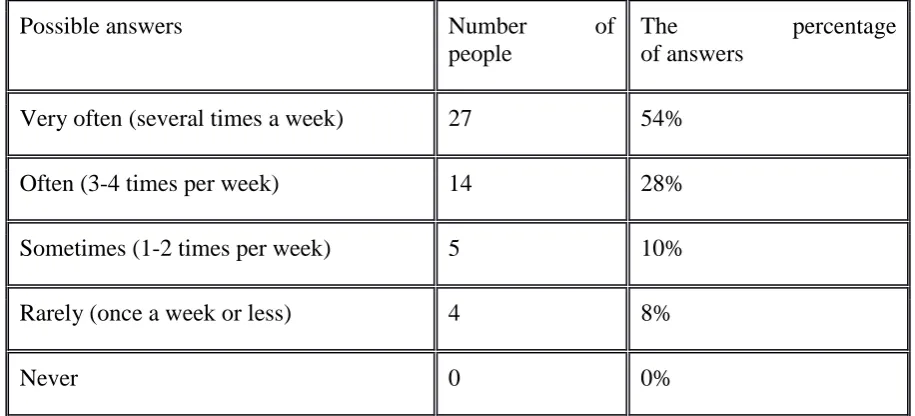
Table 1. The subjective perception of work-related stress in the opinion of respondents.
Possible answers Number of
people
The percentage
of answers
Very often (several times a week) 27 54%
Often (3-4 times per week) 14 28%
Sometimes (1-2 times per week) 5 10%
Rarely (once a week or less) 4 8%
Never 0 0%
[image:13.595.61.519.453.661.2]to twice a week whereas 8% of them tend to feel stressed once a week or less often. All of the surveyed acclaimed that stress is common at their work place (Table 1) .
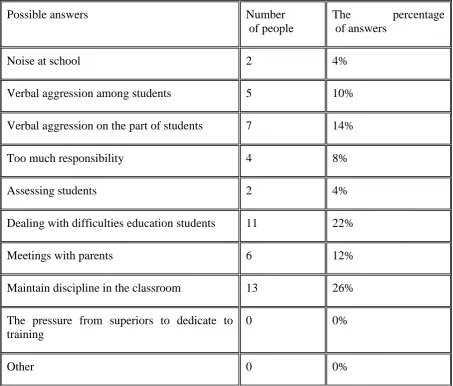
Table 2. Causes of stress at work, in the opinion of respondents.
Possible answers Number
of people
The percentage of answers
Noise at school 2 4%
Verbal aggression among students 5 10%
Verbal aggression on the part of students 7 14%
Too much responsibility 4 8%
Assessing students 2 4%
Dealing with difficulties education students 11 22%
Meetings with parents 6 12%
Maintain discipline in the classroom 13 26%
The pressure from superiors to dedicate to training
0 0%
Other 0 0%
[image:14.595.64.518.140.526.2]Table 3. Feelings associated in the face of stress experienced by the respondents.
Possible answers Number of people The percentage
of answers
Fear 2 4%
Anxiety 5 10%
Restlessness 3 6%
Anger 9 18%
Discouragement to work 8 16%
Nervousness 9 18%
Tiredness 10 20%
Passivity, indifference 4 8%
As the answer for the question: what feelings do you experience when being in stress? Respondents agreed that tiredness (20%) and anger with anxiety (18%) are ones they face most often. There are 16% of surveyed teachers to admit that stress discourages them from their work. The feeling of fear is felt by 10%. Apart from indifference (8%) they feel anxiety (6%) and fright (4%) (Table 3).
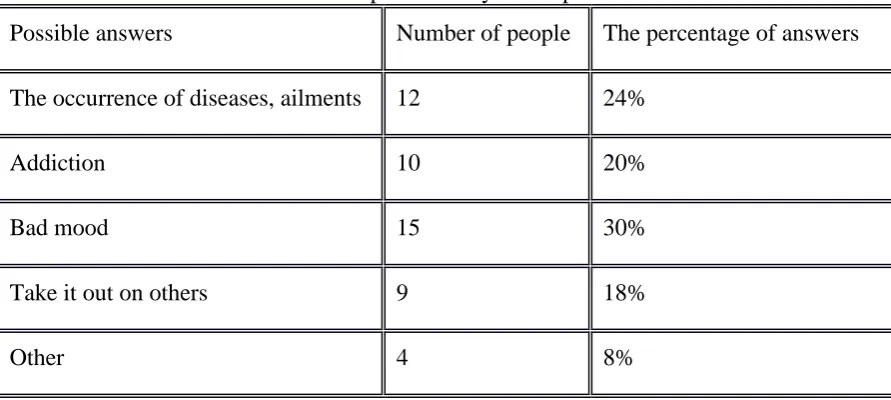
Table 4. The effects of work stress experienced by the respondents.
Possible answers Number of people The percentage of answers The occurrence of diseases, ailments 12 24%
Addiction 10 20%
Bad mood 15 30%
Take it out on others 9 18%
[image:15.595.65.518.85.394.2] [image:15.595.66.512.536.736.2]If analyzing answers for the question: what are the effects of stress experienced at work place? We can see that 30% of respondents indicate bad mood as the most common result of stress. For 24% of them there occur health problems. One-fifth of them indicated addictions as a consequence of stress at work. There are 18% among them to admit to shake their stress off. Nearly one out of ten (8%) experiences other results of stress experienced at work (Table 4).
Table 5. The perception of work as a burden on the respondents.
Possible answers Number of people The percentage of answers
Yes 26 52%
No 9 18%
I have no opinion 15 30%
More than half of respondents (52%) admit that work is a disorder for them. 18% of the questioned people don’t perceive their work as a burden. Every third one doesn’t have opinion on it (Table 5).
Table 6. Forcing to hide their own emotions in the opinion of the respondents. Possible answers Number of people The percentage of answers
Definitely yes 13 26%
Rather yes 16 32%
Propably no 11 22%
Definitely no 6 12%
Hard to say 4 8%
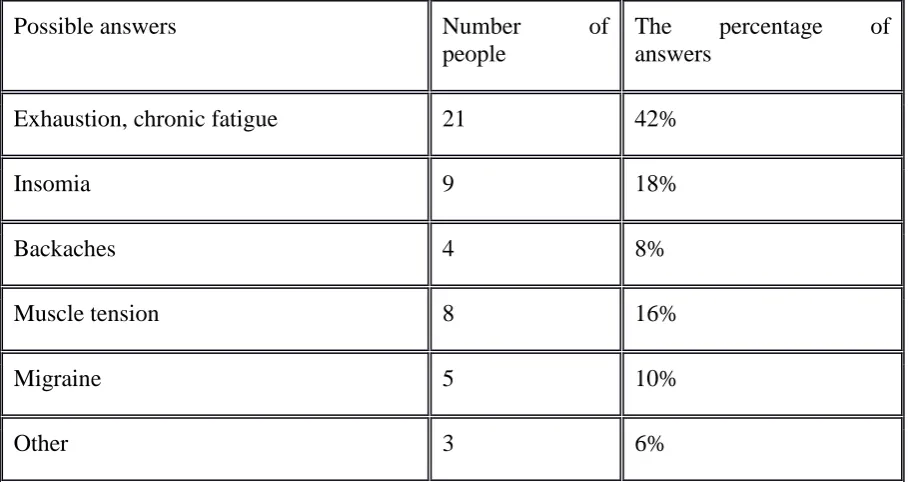
[image:16.595.76.499.215.357.2] [image:16.595.86.485.492.691.2]Table 7. The most common symptoms experienced by the respondents.
Possible answers Number of
people
The percentage of answers
Exhaustion, chronic fatigue 21 42%
Insomia 9 18%
Backaches 4 8%
Muscle tension 8 16%
Migraine 5 10%
Other 3 6%
Respondents agree that compliment they face most often is a chronic exhaustion. One out of five surveyed confirm suffering from insomnia (18%). There are 16% of them to indicate muscles tension as a compliment to occur most often. What is more, 8% of respondents suffer from backstroke pain whereas 6% indicate other symptoms as faced on a regular basis (Table 7).
DISCUSSION
[image:17.595.64.519.86.327.2]presence of stress and stress stimuli. Bauer and colleagues showed that the main stressful factor is the interaction with the students. In the case of 43% of the respondents is experienced verbal aggression, intimidation (4%) and destruction of property (7%) (Bauer et al, 2007). On the other hand, in the study 14% of respondents admit that charges of verbal aggression is a source of stress. In my research Pyżalski and Plichta point to the fact that 34% of teachers feel mentally exhausted after meetings with parents (Pyżalski, Plichta, 2007). Similarly they acknowledge teachers who participated in the study. Twelve percent of them confirms that meetings with parents are the reason for them experienced nervous tension.
Bauer and colleagues pay attention to the behavior of parents towards teachers that are a source of stress for teachers incentives. Among the stressful behaviors they stand out: complaints - 43%, accusations - 21%, verbal aggression - 5% (Bauer et al, 2007).
A study shows that more than half of respondents (52%) perceive their work as a burden. Pyżalski J. indicates a much higher percentage of confirming this statement. As many as 86% of teachers feel that their loads are higher than in other professions.
CONCLUSIONS
1. Surveyed teachers agree that feelings they experience most often due to stress at work are tiredness and anxiety. Most of them claim harmoniously that side effects of stress are bad mood, illnesses and other compliments and addictions. These can be the first symptoms of occupational burnout where tension, weariness and bad mood have direct impact on performed job. Results of this research show out that vast majority of the questioned teachers experience impotence at their work as well as for most of them work is just a burden. They also agree that most common compliment they meet are exhaustion and chronic fatigue. 2. Most of the respondents is of opinion that keeping discipline in class room and raising up
students cause the most of stress.
Thanks to conducted research we can see that stress is a common phenomenon in teacher’s job. That is why it is important to provide assistance for them. Working with pupils and students is an unpredictable mission. The occupation of teacher requires readiness, creativity and engagement.
Implementation of educational programs dedicated for teachers- programs which aim at minimizing consequences of stress on teacher’s health and life as well as on their environment,
Organizing of workshops of “coping with stress” and with difficult situations; education of behaving in situations of “overload”,
Giving a possibility of meeting psychologist when needed,
The change of system of educating teachers and gaining professional competences. Recapitulating theoretical concepts on stress and occupational burnout and conducted empiric research it is worth taking a look at today’s world in which there are a lot of challenges to be met by teachers. How these challenges will be interpreted, how good we are ready to meet and face them, is an issue for us.
References
1. Benisz H. Stres w zawodzie nauczyciela i podstawowe zasady zdrowego życia. Wychowanie Fizyczne i Zdrowotne. 1997; 5: 207-212.
2. Selye H. Stres życia. Warszawa: PZWL; 1960.
3. Huber L. Style adaptacyjne do sytuacji stresowych w różnych grupach wiekowych, a choroby cywilizacyjne XXI wieku. Probl Hig Epidemiol. 2010; 91(2): 268-275.
4. Gryszczuk A. Pojęcie stresu w medycynie i psychologii. Psychiatria. 2008; 5(3): 111-115. 5. Reykowski J. Funkcjonowanie osobowości w warunkach stresu psychologicznego.
Warszawa: PWN; 1966..
6. Chmiel N. Psychologia pracy i organizacji. Gdańsk: Wyd. GWP; 2003.
7. Banasiewicz A. Człowiek w nowoczesnej organizacji. Toruń: Wyd. Adam Marszałek; 2005.
8. Ogińska-Bulik N., Kaflik-Pieróg M. Stres zawodowy w służbach ratowniczych. Łódź: Wydawnictwo Akademii Humanistyczno-ekonomicznej w Łodzi; 2009.
9. Hetherington A. Wsparcie psychologiczne w służbach ratowniczych. Gdańsk: Gdańskie Wydawnictwo Psychologiczne; 2004.
10.Borucki Z. Stres organizacyjny- następstwa, modyfikatory. Gdańsk: Wydawnictwo Uniwersytetu Gdańskiego; 1988.
11.Sheridan Ch., Ratmacher S. Psychologia zdrowia. Warszawa: Instytut Psychologii Zdrowia; 1998.
12.Neidhardt E. J., Weinstein M. S., Conry R. F. Jak opanować stres. Lublin: M & A Communications Polska; 1996.
13.Terelak J. Wsparcie społeczne a radzenie sobie ze stresem bezrobocia. W: Terelak J. (red.). Studia z psychologii stresu. Warszawa: ATK; 1997: 275-324.
14.Dobrowolska D. Praca w życiu człowieka. Warszawa: Instytut wydawniczy CRZZ; 1980. 15.Murgatroyd S. Poradnictwo i pomoc. Poznań: Zysk i S-ka; 2000.
16.Bargiel-Matusiewicz K., Podbielski Z., Klasik A. Współczesne rozumienie stresu. Wiadomości lekarskie. 2004; 57 (3-4): 188-192.
17.Dudek B., Waszkowska M. Ochrona zdrowia pracowników przed zagrożeniami w miejscu pracy. Medycyna Pracy. 1996; 56(5): 107-112.
19.Litzke S., Schuh H. Stres, mobbing i wypalenie zawodowe. Gdańsk: GWP; 2007.
20.Maslach C., Jackson SE., Leiter MP. Maslach Burnout Inven-tory Manual. California: Consuling Psychologists Press; 1996.
21.Bargiel-Matusiewicz K., Podbielski Z., Klasik A. Współczesne rozumienie stresu. Wiadomości lekarskie. 2004; 57: 188-192.
22.Heszen- Niejodek I. Stres i radzenie sobie- główne kontrowersje. W: Herszen- Niejpdek I., Ratajczak Z., (red.). Człowiek w sytuacji stresu. Katowice: Wydawnictwo Uniwersytetu Śląskiego; 2000: 12-43.
23.Rothbaum F., Weisz J. R., Snyder S. Changing the world and changing the self: A two- process model of perceived control. Journal of Personality and Social Psychology. 1982; 42: 5-37.
24. Borys B., Majkowicz M., Majkowicz H. Radzenie sobie ze stresem w różnych grupach służb ratowniczych. Psychiatria Polska. 2003; 37 (2): 337-348.
25.Bullough. R. Początkujący nauczyciel. Gdańsk: GWP; 2009.
26.Anczewska M., Roszczyńska J. Jak uniknąć wypalenia w pracy z chorymi. Warszawa: Instytut Psychiatrii i Neurologii; 2004.
27.Haney M, Boenish Ed. Twój stress. Gdańsk: GWP; 2007. 28.Fijewski P. Jak rozwinąć skrzydła. Warszawa: INTRA; 1993.
29.Król-Fijewska M. Stanowczo, łagodnie, bez lęku, czyli 13 wykładów o asertywności. Warszawa: INTRA; 1993.
30.Wachowiak P. Profesjonalny menedżer. Warszawa: Difin; 2001.
31.Marten Z, Stres w pracy nauczyciela, Instytut Psychologii Wyższej Szkoły Humanitas w Sosonowcu,2013,s.99-110.
32.Reece-Peters C, Teachers' issues: A case for mental health. Paper presented at the Biennial Conference of The University of the West Indies Schools of Education, 23-25 April,St. Augustine, Trinidad and Tobago,2013
33.Bauer J. i wsp, Working conditions, adverse events and mental health problems in a sample of 949 German teachers. Int Arch Occup Environ Health. 2007, 80:442–449. 34.Pyżalski J, Plichta P, Kwestionariusz Obciążeń Zawodowych Pedagoga (KOZP),
Podręcznik. Łódź, Wyd. UŁ, 2007.