www.biogeosciences.net/9/1441/2012/ doi:10.5194/bg-9-1441-2012
© Author(s) 2012. CC Attribution 3.0 License.
Biogeosciences
Threshold of carbonate saturation state determined by CO
2
control experiment
S. Yamamoto1, H. Kayanne1, M. Terai1,*, A. Watanabe2, K. Kato3, A. Negishi3, and K. Nozaki3 1The University of Tokyo, Hongo 7-3-1, Bunkyo-ku, Tokyo 113-0033, Japan
2Tokyo Institute of Technology, O-okayama 2-12-1, Meguro-ku, Tokyo 152-8552, Japan 3National Institute of Advanced Industrial Science and Technology, Umezono 1-1-1, Tsukuba, Ibaraki 305-8568, Japan
*now at: Air Water Inc., 2-6-40, chikkoshinmachi, Nishi-ku, Sakai, Osaka 592-8331, Japan
Correspondence to: S. Yamamoto ([email protected])
Received: 12 August 2011 – Published in Biogeosciences Discuss.: 26 August 2011 Revised: 25 March 2012 – Accepted: 28 March 2012 – Published: 17 April 2012
Abstract. Acidification of the oceans by increasing anthro-pogenic CO2emissions will cause a decrease in biogenic cal-cification and an increase in carbonate dissolution. Previous studies have suggested that carbonate dissolution will occur in polar regions and in the deep sea where saturation state with respect to carbonate minerals ()will be<1 by 2100. Recent reports demonstrate nocturnal carbonate dissolution of reefs, despite a a (aragonite saturation state) value of >1. This is probably related to the dissolution of reef car-bonate (Mg-calcite), which is more soluble than aragonite. However, the threshold offor the dissolution of natural sediments has not been clearly determined. We designed an experimental dissolution system with conditions mimicking those of a natural coral reef, and measured the dissolution rates of aragonite in corals, and of Mg-calcite excreted by other marine organisms, under conditions ofa>1, with controlled seawaterpCO2. The experimental data show that dissolution of bulk carbonate sediments sampled from a coral reef occurs ata values of 3.7 to 3.8. Mg-calcite derived from foraminifera and coralline algae dissolves atavalues between 3.0 and 3.2, and coralline aragonite starts to dis-solve whena= 1.0. We show that nocturnal carbonate dis-solution of coral reefs occurs mainly by the disdis-solution of foraminiferans and coralline algae in reef sediments.
1 Introduction
The oceans are a large carbon reservoir that absorbs atmo-spheric CO2, which then equilibrates to bicarbonate (HCO−3) and carbonate (CO23−) ions. More than 30 % of the CO2 emitted into the atmosphere by human activities is taken up by the oceans (Sabine et al., 2004), lowering the pH of sur-face water and decreasing the saturation state (Kleypas et al., 2006). Future uptake of CO2by the oceans is predicted to reduce seawater pH by 0.3 to 0.5 units over the next few decades (Caldeira and Wickett, 2003).
The saturation state of seawater for a given mineral is a measure of the thermodynamic potential for the mineral to form or dissolve. The saturation state of calcium carbonate ()is defined as follows:
= [Ca2+] × [CO23−]/Ksp∗ (1) where [Ca2+] and [CO23−] are the concentrations of Ca2+and CO23−, respectively, andKsp∗ is a product of the equilibrium concentrations of Ca2+and CO23−.
Hence, the formation of calcium carbonate is thermody-namically favorable when >1.0, but is unfavorable when <1.0. Oceanic uptake of CO2causes an increase in hy-drogen ion concentration [H+] and a decrease in carbonate ion concentration [CO23−], leading in turn to a decrease in.
1442 S. Yamamoto et al.: Threshold of carbonate saturation state
As a result, will rise by carbonate dissolution. The carbonate–bicarbonate system acts as a buffer to atmospheric CO2levels and ocean acidification. Hence, carbonate disso-lution results in an increase to the buffer capacity. If we are to predict future changes in the carbon balance between the atmosphere and the ocean accurately, and the degree of con-sequent ocean acidification, it is crucial that we understand this buffer system.
Previous studies have mainly investigated the effects of elevated pCO2 on the net production and calcification of marine organisms by laboratory experiments. For example, Langdon and Atkinson (2005) showed that by 2065 the coral calcification rate will decrease by 40 % to 83 % compared with pre-industrial levels. Data from Gattuso et al. (1998), Leclercq et al. (2000), Marubini et al. (2001, 2002), and Rey-naud et al. (2003), meanwhile, predict a decline of only 1 % to 18 %. Although there are differences between low- and high-sensitivity data sets, the calcification rates of marine or-ganisms are expected to decrease.
The value ofvaries with carbonate mineralogy, and the solubility of Mg-calcite varies according to the magnesium content. In general, minerals with a higher Mg content show higher solubility, but the solubility of synthetic and biogenic Mg-calcite varies under laboratory conditions, and there is variability in the solubility of biogenic Mg-calcite from dif-ferent organisms (Morse and Mackenzie, 1990).
At present,a(aragonite saturation state) values are 1 to 2 in high-latitude regions, and 3 to 4.5 in low-latitude regions. Although carbonate dissolution at low latitudes (e.g. coral reefs) was not predicted, net dissolution under conditions of a>1 has been observed at several coral reef sites (Boucher et al., 1998; Leclercq et al., 2002; Kayanne et al., 2005; Yates and Halley, 2006; Nakamura and Nakamori, 2009). These studies have shown that dissolution is possible even when a>1, due to the high solubility of Mg-calcite. When the Mg content is>8 % to 12 %, Mg-calcite dissolves more read-ily than aragonite (Plummer and Mackenzie, 1974; Bischoff et al., 1987; Morse et al., 2006).
Morse and Mackenzie (1990) divided the solubilities of Mg-calcite into three major categories: (1) Plummer and Mackenzie (1974) solubility; (2) the “best-fit” biogenic Mg-calcite solubilities (Bischoff et al., 1987; Walter and Morse, 1984); and (3) synthetic Mg-calcite solubilities (Bischoff et al., 1987; Mucci and Morse, 1984). Of these, category 1 has the highest values for Mg-calcite solubility, with the solu-bility of 12 % to 15 % mol Mg-calcite exceeding aragonite solubilities by a factor of five. Category 2 shows signifi-cantly higher solubilities than category 3 due to the instabil-ity of biogenic factors, although the overall trend in category 2 is similar to that in category 3. While categories 2 and 3 reflect the thermodynamic solubilities of biotic and abiotic Mg-calcite, it is likely that category 1 reflects kinetic (rather than thermodynamic) factors, including the retention of re-active surface particles due to minimal sample cleaning and
lack of annealing (Bischoff et al., 1993; Morse et al., 2007). However, category 1 does reflect reactivity in nature.
The relationship betweenand the kinetic dissolution rate of synthetic and biogenic calcium carbonates in the labora-tory has been described by Keir (1980). Hales and Emerson (1997) reviewed the result of Keir (1980) and made correc-tions to their original measurements. However, these disso-lution rates are not consistent with those obtained from field observations. Moreover, no Mg-calcite dissolution experi-ments have been performed using natural seawater and used total alkalinity or dissolved inorganic carbon in estimating avalues and dissolution rates. Indeed, it ispCO2 that al-tersa; consequently, laboratory studies need to seta val-ues usingpCO2to attain consistency with the environment. It is essential to determine the relationship betweenand the kinetic dissolution rate of biogenic Mg-calcite in order to understand naturally buffering systems.
The aim of this work is to clarify the relationship between a and the rate of Mg-calcite dissolution. We measured the dissolution rate of coralline aragonite and Mg-calcite ex-creted by several organisms under conditions ofa>1, us-ing an experiment system that controlledpCO2in seawater. We measured theathreshold of biogenic Mg-calcite, calcu-lated by total alkalinity (AT)and dissolved inorganic carbon (CT).
2 Methodology
2.1 Experimental design
We designed an experimental system with conditions match-ing those of a natural coral reef. Carbonate sediments were collected from Shiraho reef and prepared with mini-mal treatment (ultrasonic cleaning and drying). Shiraho reef (24◦220N, 124◦150E) is situated at the southeast coast of
Ishigaki Island. Natural seawater was used for the dissolution experiment and theavalue of the seawater was controlled by CO2, rather than by HCl or NaOH.
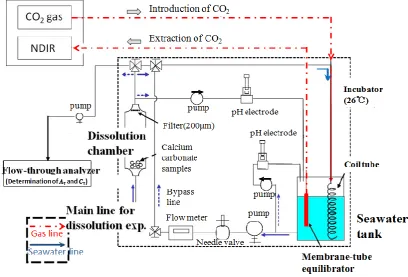
The experimental system (Fig. 1) consists of four compo-nents: a seawater tank, a dissolution chamber, a CO2 gas unit, and a flow-through analyzer forATandCT. The exper-imental procedure is described below.
Fig. 1. Experimental set-up.
seawater was circulated through the seawater line (dissolu-tion line). AT and CT were measured again after several hours, both in the middle and at the end of the experiment. The experiment was performed as a time series, andATand CTwere analyzed periodically through its duration.
The conditions for each experiment are listed in Table 1. Temperature in the incubator was maintained at 26◦C and the dissolution experiment was performed at seven different pCO2levels for bulk sediment, four levels for coralline algae and foraminiferans, and three levels for coral.
2.2 System components
Seawater tank: CO2gas was introduced to the seawater by using a 3.5 m coiled tube with a single small hole to allow for bubbling and equilibration. The coiled tube is made of fluo-rocarbon polymers and is a closed system. SeawaterpCO2 in the tank was monitored continuously by using a mem-brane tube and NDIR similar to the system used by Saito et al. (1995).
Dissolution chamber: By using a pump, seawater was in-troduced to the dissolution chamber (600 ml) from the sea-water tank. Carbonate samples for dissolution experiments were placed in this chamber. Mesh filters (200 µm) were af-fixed to both sides of the chamber to prevent loss of samples. CO2gas unit: Gas mixtures of CO2at concentrations be-tween 420 and 2210 ppm were prepared by mixing CO2free
gas (passed through soda lime traps to remove trace CO2) with pure CO2using two mass flow controllers, and then dis-solved in seawater. The gas flow rate was 400 ml min−1 in all experiments.
Flow-through analyzer: The sample seawater was intro-duced directly to the flow-through analyzer (Kimoto Electric Company Limited) by switching the flow line (Kimoto et al., 2001; Watanabe et al., 2004). Certified reference materials (A. Dickson, University of California) were used to calibrate the system. Sodium carbonate solutions were used for the CTcalibration. The analytical accuracies ofATandCTwere within 3 µmol kg−1 and standard deviations of AT andCT were 1.1 µmol kg−1and 2.1 µmol kg−1respectively (Kimoto et al., 2002; Watanabe et al., 2004).
2.3 Samples
For the dissolution experiment, we used commercially avail-able seawater (Nihon-Aquarium-Service Co., Ltd.) collected from a depth of 500 m at 34.7◦N, 139.4◦W (near Izu
1444 S. Yamamoto et al.: Threshold of carbonate saturation state
Table 1. Condition for each experiment.
Samples Incubator seawater:sample pCO2[ppm] a
temperature (by weight )
Bulk sediment 26◦C 310:1 420, 590, 750, 820, 1110, 1290, 2030 3.5, 2.9, 2.5, 2.4, 1.9, 1.7, 1.2 Coralline algae 26◦C 310:1 570, 830, 1070, 2000 2.9, 2.3, 1.8, 1.2
Foraminifera 26◦C 310:1 510, 570, 1240, 2210 3.2, 2.9, 1.7, 1.1
Coral 26◦C 310:1 1070, 1550, 2100 1.9, 1.6, 1.1
Fig. 2. Composition of sediment samples (%).
coral zonation could be seen. The sediment was collected in August 2007, and the coral and coralline algae in October 2007. Samples were cleaned in an ultrasonic bath sonicator and dried at 40◦C for about 12 h.
The major size fraction of the coral reef sediment was from
−1.0 to 0.0 φ (1 to 2 mm), from which 800 particles were separated for each dissolution experiment. We consider that our dissolution experiment represents the actual reef environ-ment, because this size fraction (1 to 2 mm) represents 40 % of the size spectrum within the reef sediments. The min-eralogy of each sample was identified by X-ray diffraction (XRD) analysis. The samples consisted of coral, foraminifer-ans, and coralline algae (see Fig. 2). The MgCO3 content was estimated by the position of the peak X-ray strength (Goldsmith and Graf, 1958). The magnesium contents of the coralline algae and foraminiferans were 16.5±0.4 and 13.3±0.4 mol %, respectively, and the coral was pure arag-onite.
2.4 Calculation
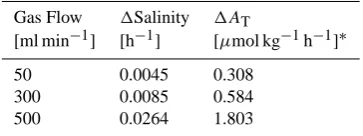
[image:4.595.57.275.158.329.2]TheAT of seawater increases by 2 moles for every 1 mole of calcium carbonate dissolution. The carbonate dissolution rate is measured by analyzing the change inAT. Salinity changes also affect theAT. Hence, small salinity changes that occurred due to evaporation over the course of the ex-periment were corrected for by using pre-determined rela-tionships between gas flow and salinity change rate. Dry gas
Table 2. Relationship between change of gas flow, salinity andAT.
Gas Flow 1Salinity 1AT
[ml min−1] [h−1] [µmol kg−1h−1]∗
50 0.0045 0.308
300 0.0085 0.584
500 0.0264 1.803
*Assuming that initialAT= 2350 µmol kg−1
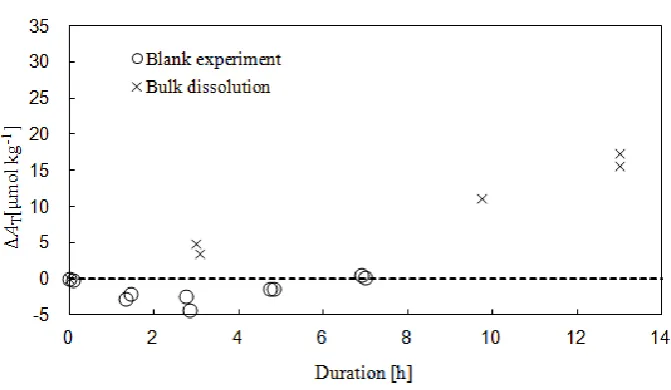
is required to produce the exactpCO2values, so the bubbling of CO2into the seawater causes evaporation, and the salinity rises during each experiment. Table 2 shows a series of CO2 volume flows with the resultant salinities after 7 h. Salinity increases in direct proportion to the gas mass flow, allow-ing it to be calibrated durallow-ing the experiment accordallow-ing to the post-experiment salinity value. Figures 3 and 4 show time se-ries ofATwithout and with salinity calibration.ATincreased even in the experiment without a carbonate sample; however, after salinity calibration, the change in nAT(normalized to-tal alkalinity) was about 2 to 3 µmol kg−1, a value within the error range of the measurement. Using Eq. (3),ATwas stan-dardized to a constant salinity, and the dissolution rate was then calculated:
nAT=AT × Saverage/Ssample (3)
where nAT is the normalized total alkalinity (µmol kg−1), representing the total alkalinity standardized to the salinity; Saverageis the average salinity during all the experiments; and Ssample is the calibrated salinity according to Table 2. CT was also standardized to salinity, and nCT (normalized dis-solved inorganic carbon, µmol kg−1)was obtained. Salin-ity was measured using a salinometer (PORTASAL 8410A, Guildline Instruments Limited). IAPSO (International Asso-ciation for Physical Sciences of the Ocean) standard seawater was used for calibration. The precision of salinity analysis is
±0.003.
Dissolution rates were calculated as follows:
[image:4.595.336.518.205.273.2]Fig. 3. Blank experiment and bulk dissolution (before salinity calibration).
Fig. 4. Blank experiment and bulk dissolution (after salinity calibration).
of the carbonate sample over the course of the experiment, andt is the duration of the experiment. Due to the design of the system, a small amount of seawater remains in the pump and tubes at the end of each run. However, we can confirm that only a small amount of seawater (10 ml = less than 0.5 % of total volume) remained in the pump at the end of each experiment, and this was corrected for when determining the mass balance ofAT. SeawaterfCO2 anda values were calculated fromAT,CT, seawater temperature, and salinity, using the calculation program CO2sys (http://cdiac.esd.ornl. gov/oceans/co2rprt.html; DOE, 1994). The total scale for
pH was used in all calculations, employing the equilibrium constants (K1 and K2)reported by Mehrbach et al. 1973; refit by Dickson and Millero, 1987).
3 Results
[image:5.595.128.464.342.537.2]1446 S. Yamamoto et al.: Threshold of carbonate saturation state
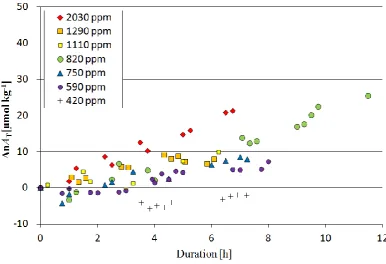
Fig. 5. The result of bulk dissolution experiment (nATand duration).
between 6 and 25 µmol kg−1. No increase in nAT was ob-served whenpCO2was 420 ppm, and the change in nATwas highest whenpCO2was 2030 ppm.
Figure 6 shows the average dissolution rates, calculated from nATchanges, plotted against averageda. The average dissolution rate was fastest (4.0×10⁻³% h−1)whenawas 1.3 and slowest whenawas 3.7.
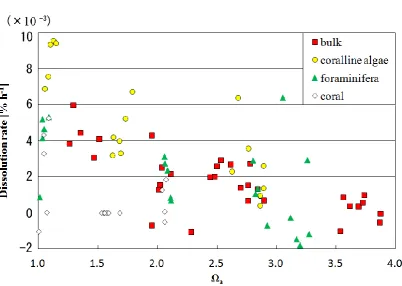
Similarly, Fig. 7 shows the results of dissolution experi-ments on coralline algae, foraminiferans, and coral, together with those of the bulk sediment. In all cases, the dissolu-tion rate increases asadecreases. The threshold value of foraminiferan and coralline algal dissolution is 3.0< a< 3.2, and that of the bulk sediment is 3.7< a<3.8. The dis-solution rate of the coral shows no significant change when 1.5< a<2.0.
4 Discussion
At any given value ofa, the relative dissolution rate is typ-ically in the order of coralline algae>foraminiferans = bulk sediment>coral (Fig. 7). As in earlier studies (Bischoff et al., 1993; Morse et al., 2006, 2007), the differences among samples presumably resulted from the solubility differences of minerals with varying Mg content.
4.1 Relationship between solubility anda
We compared the solubilities obtained in this study with those measured previously (Morse and Mackenzie, 1990)
using thea threshold of coralline algae and foraminifera. The solubility of biogenic Mg-calcite is calculated using two different methods: Plummer–Mackenzie solubility (Plum-mer and Mackenzie, 1974) and biogenic best-fit solubility (Walter and Morse, 1984; Bischoff et al., 1987). Thevalue of Mg-calcite (16 mole % Mg) is 0.2 by the former method and 0.8 by the latter, whena= 1.0. This discrepancy orig-inates from differences in pretreatment and the experimental method (Bischoff et al., 1993; Morse et al., 2006). For ex-ample, the Plummer–Mackenzie method carbonate samples were washed in an ultrasonic bath and then dried, whereas for the biogenic best-fit solubility they were not only washed in an ultrasonic bath, but were chemically treated with H2O2 to remove organic matter.
In the present work, the −log(Ksp∗) values of coralline algae (16.5 mol±0.4 mole % Mg) and foraminiferans (13.3 mol±0.4 mole % Mg) are 7.80 and 7.82, respec-tively, and according to Plummer and Mackenzie (1974),
−log(Ksp∗) value of 12.7 mole % Mg is 7.82. Our samples were cleaned only in an ultrasonic bath and dried at 40◦C
Fig. 6. The relationship between average dissolution rate anda(bulk).
[image:7.595.98.501.368.654.2]1448 S. Yamamoto et al.: Threshold of carbonate saturation state
Fig. 8. Relationship between bulk dissolution rate and total calcu-lated dissolution rate.
1.0< a<1.1. Alternatively, biogenic aragonite may be slightly more soluble than synthetic aragonite because of its heterogeneity and instability.
4.2 Evaluation of Mg-calcite dissolution
The relationship between dissolution rate anda, as obtained from the present experiments, is as follows:
Bulksediment: Dissolution rate(i.e.DRbulk)(% h−1) (5)
= −0.0015×a + 0.0056
Foraminifera: Dissolution rate(i.e.DRFora)(% h−1) (6)
= −0.0027×a + 0.0081
Corallinealgae: Dissolution rate(i.e.DRCA)(% h−1) (7)
= −0.0045×a + 0.0143
According to Eqs. (5) to (7), the net dissolution of bulk sed-iment was zero at 3.7< a<3.8 and 3.0< a<3.2 for foraminiferans and coralline algae.
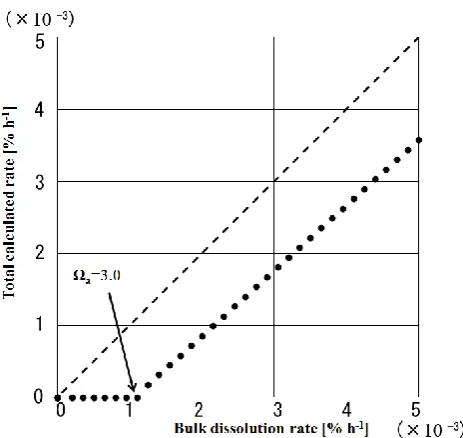
Figure 8 shows the total dissolution rate (i.e. the dissolu-tion rate of Foraminifera + coralline algae) plotted against the bulk dissolution rate. The value of the y-axis is given as follows:
Total calculated dissolution rate
=DRfora × (Foraminifera/Bulk)+ (8) DRCA × (Corallinealgae/Bulk)
The composition ratio is derived from Fig. 2; in the case of a negative dissolution rate, a value of zero was used, assum-ing no precipitation of calcium carbonate. In Fig. 8, DRbulk
should be equal to the total calculated dissolution rate (DR) if foraminiferans and coralline algae are the only dissolving grains in the bulk sediment; however, DR is smaller than DRbulk, especially fora>3.0.
The sediment samples consist of 75 % foraminiferans, coralline algae, coral, and other aragonite; 3 % echinoids, and 22 % “other minerals”; the latter two components were not included in the calculations. The echinoid test is composed of Mg-calcite with a low MgCO3 content (8.0 mole % Mg), corresponding to a small contribution to the bulk dissolution rate. The “other minerals” are consid-ered to be calcite or Mg-calcite, because they did not acquire coloration when dyed with Co(NO3)2(aragonite colors red-purple), and over 95 % of the sediment in the Shiraho reef is carbonate. Any minerals in the minor fraction appear to be much more soluble than the foraminiferans and coralline algae, meaning that we may have underestimated the disso-lution rate. However, at least∼70 % of the dissolution can be explained from foraminiferan and coralline algal dissolution, and this finding is applicable to reef environments where sed-iment grains consist mainly of these biogenic carbonates. 4.3 Comparison of the present results with field
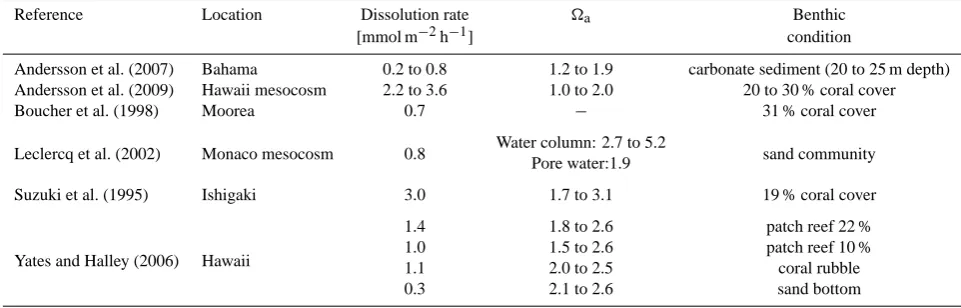
observations
We compared the results of bulk dissolution rate vs.afrom this study with previous research. Assuming a density of calcium carbonate (Dc)of 2700 kg m−3, a porosity of coral reef sediment (Pc) of 0.45 (Morse and Mackenzie, 1990), the molecular weight of calcium carbonate (M)of 100, and only the uppermost 0.01 m of sediment being responsible for dissolution (dd), the dissolution rate (R) was converted from % h−1to mmol m−2h−1as follows:
R[mmolm−2h−1] = (Dc × Pc ×dd/M) × DRbulk (9)
= 1215 × DRbulk(= −0.0015 × a + 0.0056), according to Eq. (5)
= −1.8 ×a + 6.8
Table 3. Carbonate dissolution rates reported from carbonate environments and mesocosms.
Reference Location Dissolution rate a Benthic [mmol m−2h−1] condition
Andersson et al. (2007) Bahama 0.2 to 0.8 1.2 to 1.9 carbonate sediment (20 to 25 m depth) Andersson et al. (2009) Hawaii mesocosm 2.2 to 3.6 1.0 to 2.0 20 to 30 % coral cover Boucher et al. (1998) Moorea 0.7 − 31 % coral cover
Leclercq et al. (2002) Monaco mesocosm 0.8 Water column: 2.7 to 5.2 sand community Pore water:1.9
Suzuki et al. (1995) Ishigaki 3.0 1.7 to 3.1 19 % coral cover
Yates and Halley (2006) Hawaii
1.4 1.8 to 2.6 patch reef 22 % 1.0 1.5 to 2.6 patch reef 10 % 1.1 2.0 to 2.5 coral rubble 0.3 2.1 to 2.6 sand bottom
4.4 Future impact of ocean acidification on Mg-calcite dissolution
The burning of fossil fuels and future uptake of CO2by the oceans are predicted to reduce a to 2.0 to 3.0 by 2100 (Kleypas et al., 2006). Because high Mg-calcite is more sol-uble than both calcite and aragonite, it is the first responder to the decreasing saturation state of seawater (Andersson et al., 2003, 2007, 2009; Morse et al., 2006). The present re-sults show that the thresholda of biogenic Mg-calcite in taxa such as coralline algae and foraminifera is 3.0 to 3.2. Mg-calcite is dissolved only nocturnally at present, but will eventually begin to dissolve diurnally also.
Kayanne et al. (2005) estimated the community calci-fication rate to be 70 to 127 mmol m−2day−1 for Shi-raho Reef. If the average daytime a value becomes 3.0 and the night-time value becomes 2.0, the carbonate dissolution rate will be 1.4 mmol m−2h−1 diurnally and 3.2 mmol m−2h−1 nocturnally (see Eq. (9)), which equals at least 55.2 mmol m−2day−1. Because the sandy regions are about three times larger than the coral habitats at Shi-raho reef (Kayannne et al., 2005), Mg-calcite dissolution in these sands will have a major influence on the Shiraho reef ecosystem. Moreover, the decreased calcification caused by the decline ofawould result in negative net calcification of carbonate ecosystems at Shiraho reef in the future.
Supplementary material related to this article is available online at: http://www.biogeosciences.net/9/ 1441/2012/bg-9-1441-2012-supplement.zip.
Acknowledgements. We thank E. Shimabukuro and M. Taira for their kind cooperation during the field survey at Ishigaki Island. M. Tsuda and T. Tokoro are also acknowledged for their help in analyzing the seawater samples. This work was supported by a Grant-in-Aid for Scientific Research on Innovative Areas,
“Coral Reef Science for Symbiosis and Coexistence of Human and Ecosystem under Combined Stresses” (No. 20121006), of the Ministry of Education, Culture, Sports, Science and Technology (MEXT), Japan.
Edited by: J.-P. Gattuso
References
Andersson, A. J., Mackenzie, F. T., and Ver, L. M.: Solution of shallow-water carbonates: an insignificant buffer against rising atmospheric CO2, Geology, 31, 513–516, 2003.
Andersson, A. J., Bates, N. R., and Mackenzie, F. T.: Dissolution of carbonate sediments under risingpCO2and ocean acidification: observations from Devil’s Hole, Bermuda, Aquat. Geochem., 13, 237–264, 2007.
Andersson, A. J., Kuffner, I. B., Mackenzie, F. T., Jokiel, P. L., Rodgers, K. S., and Tan, A.: Net Loss of CaCO3 from a subtropical calcifying community due to seawater acidifica-tion: mesocosm-scale experimental evidence, Biogeosciences, 6, 1811–1823, doi:10.5194/bg-6-1811-2009, 2009.
Bischoff, W. D., Mackenzie, F. T., and Bishop, F. C.: Stabilities of synthetic Mg-calcites in aqueous solution: comparison with biogenic materials, Geochim. Cosmochim. Acta, 51, 1413–1423, 1987.
Bischoff, W. D., Bertram, M. A., Mackenzie, F. T., and Bishop, F. C.: Diagenetic stabilization pathways of Mg-calcites, Carb. Evap, 8, 82–89, 1993.
Boucher, G., Clavier, J., Hily, C., and Gattuso, J.-P.: Contribution of soft-bottoms to the community metabolism (primary production and calcification) of a barrier reef flat (Moorea, French Polyne-sia), J. Exp. Mar. Biol. Ecol., 225, 269–283, 1998.
Caldeira, K. and Wickett, M. E.: Anthropogenic carbon and ocean pH, Nature, 425, 365–365, 2003.
1450 S. Yamamoto et al.: Threshold of carbonate saturation state
DOE: Handbook of Methods for the Analysis of the Various Param-eters of the Carbon Dioxide System in Sea Water, v. 2, edited by: Dickson, A. G. and Goyet, C., ORNL/CDIAC-74, 1994. Gattuso, J.-P., Frankignoulle, M., Bourge, I., Romaine, S., and
Bud-demeier, R. W.: Effect of calcium carbonate saturation of sea-water on coral calcification, Global Planet. Change, 18, 37–46, 1998.
Gattuso, J.-P., Allemand, P. D., and Frankignoulle, M.: Photosyn-thesis and calcification at cellular, organismal and community levels in coral reefs: a review on interactions and control by car-bonate chemistry, Am. Zool., 39, 160–183, 1999.
Goldsmith, J. R. and Graf, D. L.: Relation between lattice constants and composition of the Ca-Mg carbonates, Am. Mineral, 43, 84– 101, 1958.
Hales, B. and Emerson, S.: Evidence in support of first-order disso-lution kinetics of calcite in seawater, Earth Planet. Sc. Lett., 148, 317–327, 1997.
Kayanne, H., Hata, H., Kudo, S., Yamano, H., Watanabe, A., Ikeda, Y., Nozaki, K., Kato, K., Negishi, A., and Saito, H.: Seasonal and bleaching-induced changes in coral reef metabolism and CO2 flux, Global Biogeochem. Cy., 19, GB3015, doi:10.1029/2004GB002400, 2005.
Keir, R. S.: The dissolution kinetics of biogenic calcium carbonates in seawater, Geochim. Cosmochim. Acta, 44, 241–252, 1980. Kimoto, H., Kayanne, H., Kudo, S., Nozaki, K., Negishi, A., and
Kato, K.: A high time-resolution analyzer for total alkalinity of seawater, based on continuous potentiometric measurement, Anal. Sci., 17, Supplement, i415–i418, 2001.
Kimoto, H., Nozaki, K., Kudo, S., Kato, K., Negishi, A., and Kayanne, H.: Achieving High Time-Resolution with a New Flow-through Type Analyzer for Total Inorganic Carbon in Sea-water, Anal. Sci., 18, 247–253, 2002.
Kleypas, J. A., Feely, R. A., Fabry, V. J., Langdon, C., Sabine, C. L., and Robbins, L. L.: Impacts of ocean acidification on coral reefs and other marine calcifiers: a guide for future research, report of a workshop held 18-20 April 2005, St. Petersburg, FL, sponsored by NSF, NOAA, and the US Geological Survey, 2006.
Langdon, C. and Atkinson, M.: Effect of elevatedpCO2on pho-tosynthesis and calcification of corals and interactions with sea-sonal change in temperature/irradiance and nutrient enrichment, J. Geophys. Res., 110, C09S07, doi:10.1029/2004JC002576, 2005.
Leclercq, N., Gattuso, J.-P., and Jaubert, J.: CO2 partial pres-sure controls the calcification rate of a coral community, Global Change Biol., 6, 329–334, 2000.
Leclercq, N., Gattuso, J.-P., and Jaubert, J.: Primary production, respiration, and calcification of a coral reef mesocosm under in-creased CO2partial pressure, Limnol. Oceanogr., 47, 558–564, 2002.
Marubini, F., Barnett, H., Langdon, C., and Atkinson, M. J.: De-pendence of calcification on light and carbonate ion concentra-tion for the hermatypic coral Porites compressa, Mar. Ecol. Prog. Ser., 220, 153–162, 2001.
Marubini, F., Ferrier-Pages, C., and Cuif, J. P.: Suppression of growth in scleractinian corals by decreasing ambient carbonate ion concentration: A cross-family comparison, Proc. R. Soc. London, Ser. B, 270, 179–184, 2002.
Mehrbach, C., Culberson, C. H., Hawley, J. E., and Pytkow-icz, R. M.: Measurement of the apparent dissociation constants of carbonic acid in seawater at atmospheric pressure, Limnol. Oceanogr., 18, 897–907, 1973.
Morse, J. W. and Mackenzie, F. T.: Geochemistry of sedimentary carbonates, Elseiver Science Publishing Co., 707 pp., 1990. Morse, J. W., Andersson, A. J., and Mackenzie, F. T.:
Ini-tial responses of carbonate-rich shelf sediments to rising atmo-sphericpCO2and ocean acidification: role of high Mg-calcites, Geochim. Cosmochim. Acta, 70, 5814–5830, 2006.
Morse, J. W., Arvidson, R. S., and Luttge A.: Calcium Carbonate Formation and Dissolution, Chem. Rev., 107, 342–381, 2007. Mucci, A. and Morse, J. W.: The solubility of calcite in seawater
of various magnesium concentrations, It = 0.697 m at 25◦C and one atmosphere total pressure, Geochim. Cosmochim. Acta, 48, 815–822, 1984.
Nakamura, T. and Nakamori, T.: Estimation of photosynthesis and calcification rates at a fringing reef by accounting for diurnal variations and the zonation of coral reef communities on reef flat and slope: a case study for the Shiraho reef, Ishigaki Island, southwest Japan, Coral Reefs, 28, 229–250, 2009.
Plummer, L. N. and Mackenzie, F. T.: Predicting mineral solubility from rate data: application to the dissolution of Mg-calcites, Am. J. Sci. 274, 61–83, 1974.
Reynaud, S., Leclercq, N., Romaine-Lioud, S., Ferrier-Pages, C., Jaubert, J., and Gattuso, J. P.: Interacting effects of CO2 partial pressure and temperature on photosynthesis and calcification in a scleractinian coral, Global Change Biol., 9, 1660–1668, 2003. Sabine, C. L., Feely, R. A., Gruber, N., Key, R. M., Lee, K.,
Bullis-ter, J. L., Wanninkhof, R., Wong, C. S., Wallace, D. W. R., Tilbrook, B., Millero, F. J., Peng, T.-H., Kozyr, A., Ono, T., and Rios, A.: The oceanic sink for anthropogenic CO2, Science, 305, 367–371, 2004.
Saito, H., Tamura, N., Kitano, H., Mito, A., Takahashi, C., Suzuki, A., and Kayanne, H.: A compact seawaterpCO2measurement system with membrane equilibrator and nondispersive infrared gas analyzer, Deep-Sea Res. Pt. I., 42, 2025–2033, 1995. Suzuki, A., Nakamori, T., and Kayanne, H.: The mechanism of
production enhancement in coral reef carbonate system: model and empirical results, Sediment Geol., 99, 259–280, 1995. Walter, L. M. and Morse, J. W.: Mg-calcite stabilities: a
re-evaluation, Geochim. Cosmochim. Acta, 48, 1059–1069, 1984. Watanabe, A., Kayanne, H., Nozaki, K., Kato, K., Negishi, A.,
Kudo, S., Kimoto, H., Tsuda, M., and Dickson, A. G.: A rapid precise potentiometric determination of total alkalinity in sea-water by a newly developed flow-through analyzer designed for coastal regions, Mar. Chem., 85, 75–87, 2004.