ISSN 0975-928X
Research Article
Molecular classification of Maize cytoplasms in a breeding program
Colombo. N1*, Presello, D.A.2, Kandus M.1, G.E. Eyherabide2 and J.C. Salerno1
1
Instituto de Genética, CNIA, INTA, CC 25 (1712) Castelar, Argentina.
2
Estación Experimental Agropecuaria Pergamino, INTA, Ruta 32 Km 4.5, Pergamino. Argentina. *Email: [email protected]
(Received: 13 Dec 2011; Accepted: 09 May 2012)
Abstract
Cytoplasmic male sterility (CMS) is maternally inherited in most of higher plants species. Together with nuclear restorer genes (Rf), CMS cytoplasms contribute significantly to the efficient production of hybrid seed. Three main types of male sterile cytoplasms are known in maize: T, S and C, which can be distinguished by crossing with specific restorer lines. Recently, PCR markers have been developed allowing the identification of different cytoplasms quickly and accurately. Our objective was to classify the cytoplasm type of maize inbred lines used in our breeding program and F1s obtained from crosses between CMS lines and elite maize lines using PCR multiplex. A multiplex PCR protocol was optimized for our conditions. We obtained the molecular classification of the analyzed cytoplasms. The optimized protocol is a valuable tool to trace male sterile cytoplasms and determine hybrid seed purity in our maize breeding program.
Keywords
Maize, cytoplasmic male sterility, molecular markers, hybrid seed production.
Introduction
Cytoplasmic male sterility (CMS) is a maternally inherited trait which determines the breakdown of functional pollen production (Rhoades, 1933). CMS is a good example of the interactions between nuclear and mitochondrial genome in plants. While male sterility is caused by mitochondrial chimeric genes, fertility restoration depends on nuclear genes
(Rf genes) which suppress the cytoplasmic
dysfunction reducing the expression of CMS-associated genes. Moreover, CMS/Rf systems significantly increase the efficiency of hybrid seed production eliminating the need of emasculation and assuring normal seed set in F1 (Schnable and Wise, 1998). In maize, there are three main groups of male sterile cytoplasms: T (Texas), S (USDA) and C (Charrúa). These cytoplasms are defined according to which specific Rf genes cancel male sterility. CMS T is restored sporophytically by two complementary dominant restorers, Rf1 and Rf2. CMS C is restored sporophytically by the dominant
Rf4 gene and by two additional independent genes,
Rf5 and Rf6. Restoration of CMS S is gametophytic and requires the dominant gene Rf3, though a novel thermo-sensitive restorer, Rf9, has been reported recently (Newton et al., 2009; Gabay-Laughnan et al., 2009).Traditional classification of male sterile cytoplasms by test crossing with lines carrying different Rf genes (Beckett, 1971) is time and labour consuming. Early attempts to improve the efficiency of cytoplasm discrimination used
et al., 1980) as well as RFLPs (Borck and Walbot, 1982). However, these methods are not adequate for a breeding program due to their cost and time
requirements. Recently, knowledge of the
molecular basis of CMS has allowed the design of specific primers corresponding to the mitochondrial DNA regions associated with each type of male
sterile cytoplasm -the T-urf13 region in T
ISSN 0975-928X
Material and Methods
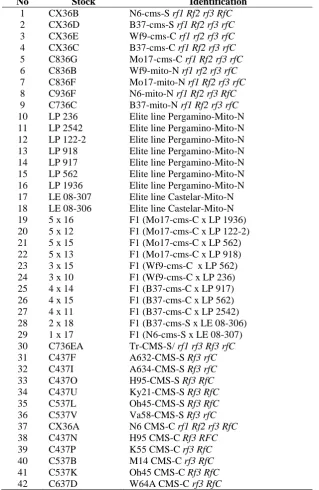
Plant material: Five maize inbred lines carrying CMS-S and CMS-C as well as their maintainer lines and thirteen inbred lines carrying Rf genes on CMS-S and CMS-C cytoplasms were obtained from the Maize Genetics and Genomics Database -Maize GDB- (Lawrence et al., 2007). Maize elite lines were obtained from breeding programs at INTA. Eleven F1s between CMS donor lines and elite lines were obtained at the experimental field (Table 1).
Molecular analysis: Total DNA was extracted from leaves of seedlings according to Saghai-Maroof et al., (1984). The following primers developed by Liu et al, (2002) were used in a single multiplex reaction: CMSTF5´CATGAAATGGGTGAAGTCTCTTTC-3´ CMSTR5´AAGAGAAAGGGAGACTTTGGTCCC-3´ CMSCF 5´-ATGCTAATGGTGTTCCGATTCC-3´ CMSCR 5´-AGCATCATCCACATTCGCTAG-3´ CMSCR 5´-AGCATCATCCACATTCGCTAG-3´ CMSSR 5´-AGTTCGTCCCATATACCCGTAC-3´ The expected amplicons for cytoplasms T, C and S were 440 pb, 398 pb and 799 pb, respectively (Liu et al., 2002). The PCR mix was as in Liu et al, (2002) except that no additives were added to enhance the specificity of the reaction. Taq DNA polymerase was from Fermentas, Vilnius, Lithuania. The thermal profile was as follows: 94ºC for 3 min followed by 35 cycles at 94ºC for 1 min, 55ºC for 30 sec, 72ºC for 1 min, with a final extension at 72ºC for 10 min. PCR products were separated on 1.5% (v/w) agarose gels stained with ethidium bromide and visualized under UV light. A pair of
universal primers amplifying a region of
mitochondrial DNA (nad4 exon 1:
3´-CAGTGGGTTGGTCTGGTATG-5´; nad4 exon 2:
3´-TCATATGGGCTACTGAGGAG-5´) was used following Demesure et al., (1995). All reactions were carried out in triplicate using
independent DNAs.
Results and Discussion
Identification of male sterile cytoplasm type by test crossing is time consuming, labour intensive and not precise. Development of molecular methods
based on PCR amplification of specific
mitochondrial DNA regions associated with each type of male sterile cytoplasm allow a more effective classification of CMS types. PCR markers for cytoplasm type discrimination have been
(2002), shortening the time of the PCR reaction, using both reduced cycling times and fewer cycles. As expected, ~ 400 and 800 bp products were observed in lines carrying C and S cytoplasm respectively, whereas no product was obtained in lines with normal cytoplasm (Figure 1).
As no product is amplified from the normal type cytoplasm with this assay, we amplified another mitochondrial sequence common to all cytoplasm types, corresponding to an intron located between the exons 1 and 2 of the gene nad4 (Demesure et al., 1995). Amplification of this region produced the expected ~ 1.7 kb product in all inbred lines (Figure 2), thus providing a PCR control for lines with normal cytoplasm. Our results confirmed previous data about cytoplasm type provided by MaizeGDB and by maize breeding programs at INTA (Table 1). Eleven crosses between CMS inbred lines and elite lines were made and F1 seedlings were used to check their cytoplasm types. As expected for a maternally inherited trait, the hybrids had the same cytoplasmic type as their mother plant (Figure 3). Our results corroborated the usefulness of this technique to trace sterile cytoplasms during their introgression into elite lines and to determine genetic purity of F1 seed. Ensuring the genetic purity of parental lines and hybrids is a prerequisite to realizing the full potential of the hybrids. Several PCR-based markers have been reported in rice which not only discriminate between CMS lines and their cognate maintainer lines, but also serve to assess the genetic purity of the hybrids (Dwivedi et al., 2008).
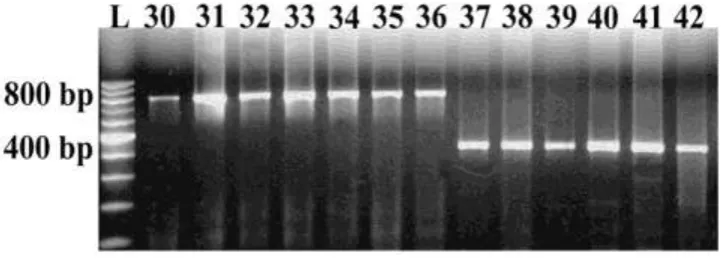
Figure 4 shows the cytoplasm type of 13 inbred
lines carrying Rf genes on different CMS
cytoplasms. Molecular classification of the
cytoplasm type agreed with data provided by MaizeGDB and by maize breeding programs at INTA (Table 1). These lines will be chosen as donors of Rf genes based on their efficiency of fertility restoration in our field conditions. Moreover, they will be used to develop segregating populations in order to look for molecular markers closely associated to Rf genes. These markers will be used in the future to apply marker-assisted selection during the development of restorer lines, in order to enhance the efficiency of hybrid seed production.
ISSN 0975-928X
maize cytoplasm, significantly reducing time for cytoplasm characterizations compared to classical method of testing with restorers for each known type of CMS.
In conclusion, we have optimized a multiplex PCR protocol for our conditions which allowed us to classify not only the cytoplasm types of inbred lines of maize but also those of F1s plants. The optimized protocol is a valuable tool both to screen maize cytoplasms and to asses hybrid seed purity in our maize breeding program.
Acknowledgment: This work was supported by PNCER-021321, Instituto Nacional de Tecnología Agropecuaria, INTA, Argentina.
References
Beckett, J.B. 1971. Classification of male-sterile cytoplasms in maize (Zea mays L.). CropSci., 11: 724 – 727.
Bork, K.S. and Walbot, V. 1982. Comparison of the restriction endonuclease digestion patterns of mitochondrial DNA from normal and male sterile cytoplasms of Zea mays L. Genetics,102: 109 - 128.
Demesure, B., Sodzi, N. and Petit, R.J. 1995. A set of universal primers for amplification of polymorphic non-coding regions of mitochondrial and chloroplast DNA in plants.
Mol. Ecol., 4: 129 - 131.
Dewey, R.E., Levings, C.S.III. and Timothy, D.H. 1986. Novel recombinations in the maize mitochondrial genome produce a unique transcriptional unit in the Texas male-sterile cytoplasm. Cell, 44: 439 – 449.
Dewey, R.E., Timothy D.H. and Levings C.S.III. 1991. Chimeric mitochondrial genes expressed in the C male-sterile cytoplasm of maize. Curr. Genet., 20: 475 – 482.
Dwivedi, S., Perotti, E. and Ortiz, R. 2008. Towards molecular breeding of reproductive traits in cereal crops. Plant Biotechnol. J., 6: 529 – 559. Engelke, T., Terefe, D. and Tatlioglu, T. 2003. A PCR-based marker system monitoring CMS-(S), CMS-(T) and (N)-cytoplasm in the onion (Allium cepa L.). Theor. Appl. Genet., 107: 162 – 167.
Forde, B.G., Oliver, R.J.C. and Leaver, C.J. 1980. Classification of normal and male-sterile cytoplasms in maize. I Electrophoretic analysis of variation in mitochondrially synthesized proteins. Genetic,s 95: 443 - 450.
Gabay-Laughnan S., Kuzmin, E.V., Monroe, J.M., Roark, L.M. and Newton, K.J. 2009. Characterization of a Novel Thermo-sensitive Restorer of Fertility for CMS-S in Maize. Genetics, 182: 91 – 103.
Havey, M.J. 1995. Identification of cytoplasms using the polymerase chain reaction to aid in the
extraction of maintainer lines from open-pollinated populations of onion. Theor. Appl. Genet., 90: 263 - 268.
Kemble, R.J., Gunn, R.E. and Flavell, R.B. 1980. Classification of normal and male-sterile cytoplasms in maize. II. Electrophoretic analysis of DNA species in mitochondria.
Genetics, 95: 451 - 458.
Kim, D.H. and Kim, B.D. 2005. Development of SCAR markers for early identification of cytoplasmic male sterility genotype in chili pepper (Capsicum annuum L.). Mol. Cells, 20: 416 - 422.
Lawrence, C.J., Schaeffer, M.L., Seigfried, T.E., Campbell, D.A. and Harper, L.C. 2007. MaizeGDB's new data types, resources and activities. Nucleic Acids Res., 35: D895 - 900. Liu, Z., Peter, S.O., Long, M., Weingartner, U., Stamp, P.
and Kaeser, O. 2002. A PCR Assay for Rapid Discrimination of Sterile Cytoplasm Types in Maize. Crop Sci., 42: 566 – 569.
Newton, K.J., Stern, D.B. and Gabay-Laughnan, S. 2009. Mitochondria and chloroplasts. In Maize Handbook, Volume II, Genetics and Genomics, J.L. Bennetzen and S. Hake (Eds.), Springer Science + Bussiness Media, LLC, New York, p 481-503.
Rhoades, M.M. 1933. The cytoplasmic inheritance of male sterility in Zea mays. J.Genet., 27: 71 - 93. Saghai-Maroof, M., Soliman, K., Jorgensen, R. and
Allard, R. 1984. Ribosomal DNA spacer-length polymorphisms in barley: Mendelian inheritance, chromosomal location and population dynamics. P. Natl. Acad. Sci. USA,
81: 8014 - 8018.
Schnable, P.S. and Wise, R.P. 1998. The molecular basis of cytoplasmic male sterility and fertility restoration. Trends Plant Sci., 3: 175 - 180. Stojałowski, S., Lapiński, M. and Szklarczyk, M. 2002.
Identification of sterility-inducing cytoplasms in rye using the plasmotype–genotype interaction test and newly developed SCAR markers. Theor. Appl. Genet., 112: 627 - 633. Vancetovic, J., Vidakovic, M., Ignjatovic-Micic, D.,
Nikolic, A., Markovic, K. and Andelkovic, V. 2010. The Structure of Sterile Cytoplasm Types within a Maize Genebank Collection. Russ. J. Genet., 46: 836–840.
Xu, G.W., Cui, Y.X., Schertz, K.F. and Hart, G.E. 1995. Isolation of mitochondrial DNA sequences that distinguish male-sterility-inducing cytoplasms in Sorghum bicolor (L.) Moench. Theor. Appl. Genet., 90: 1180 – 1187.
ISSN 0975-928X
Table 1. List of cultivars evaluated. Identification includes the cytoplasm type from the seed stock records.
No Stock Identification
1 CX36B N6-cms-S rf1 Rf2 rf3 RfC
2 CX36D B37-cms-S rf1 Rf2 rf3 rfC
3 CX36E Wf9-cms-C rf1 rf2 rf3 rfC
4 CX36C B37-cms-C rf1 Rf2 rf3 rfC
5 C836G Mo17-cms-C rf1 Rf2 rf3 rfC
6 C836B Wf9-mito-N rf1 rf2 rf3 rfC
7 C836F Mo17-mito-N rf1 Rf2 rf3 rfC
8 C936F N6-mito-N rf1 Rf2 rf3 RfC
9 C736C B37-mito-N rf1 Rf2 rf3 rfC
10 LP 236 Elite line Pergamino-Mito-N
11 LP 2542 Elite line Pergamino-Mito-N
12 LP 122-2 Elite line Pergamino-Mito-N
13 LP 918 Elite line Pergamino-Mito-N
14 LP 917 Elite line Pergamino-Mito-N
15 LP 562 Elite line Pergamino-Mito-N
16 LP 1936 Elite line Pergamino-Mito-N
17 LE 08-307 Elite line Castelar-Mito-N
18 LE 08-306 Elite line Castelar-Mito-N
19 5 x 16 F1 (Mo17-cms-C x LP 1936)
20 5 x 12 F1 (Mo17-cms-C x LP 122-2)
21 5 x 15 F1 (Mo17-cms-C x LP 562)
22 5 x 13 F1 (Mo17-cms-C x LP 918)
23 3 x 15 F1 (Wf9-cms-C x LP 562)
24 3 x 10 F1 (Wf9-cms-C x LP 236)
25 4 x 14 F1 (B37-cms-C x LP 917)
26 4 x 15 F1 (B37-cms-C x LP 562)
27 4 x 11 F1 (B37-cms-C x LP 2542)
28 2 x 18 F1 (B37-cms-S x LE 08-306)
29 1 x 17 F1 (N6-cms-S x LE 08-307)
30 C736EA Tr-CMS-S/ rf1 rf3 Rf3 rfC
31 C437F A632-CMS-S Rf3 rfC
32 C437I A634-CMS-S Rf3 rfC
33 C437O H95-CMS-S Rf3 RfC
34 C437U Ky21-CMS-S Rf3 RfC
35 C537L Oh45-CMS-S Rf3 RfC
36 C537V Va58-CMS-S Rf3 rfC
37 CX36A N6 CMS-C rf1 Rf2 rf3 RfC
38 C437N H95 CMS-C Rf3 RFC
39 C437P K55 CMS-C rf3 RfC
40 C537B M14 CMS-C rf3 RfC
41 C537K Oh45 CMS-C Rf3 RfC
ISSN 0975-928X
Figure 1. Identification of cytoplasm types in maize inbred lines by PCR. Lanes 1 to 18 correspond to inbred lines mentioned in Table 1. Lane 19: positive control includes DNA from inbred lines 1, 3 and 8. L: 100 bp ladder.
ISSN 0975-928X
Figure 3. Identification of cytoplasm types in F1s by PCR. Lanes 19 to 29 correspond to hybrids mentioned in Table 1. L: 100 bp ladder.