[Elakkiya et al., 3(6): June, 2016] ISSN 2349-4506
Impact Factor: 2.545
G
lobal
J
ournal of
E
ngineering
S
cience and
R
esearch
M
anagement
http: // www.gjesrm.com © Global Journal of Engineering Science and Research Management
[104]
CONGESTION CONTROL IMPROVED QoS ROUTING SCHEME FOR WIRELESS
SENSOR NETWORK
A. Elakkiya*, B. Santhana Krishnan, Dr. M. Ramaswamy
* PG student Department of Electrical Engineering, Annamalai University, Tamil Nadu, India
Asst professor Department of Electrical Engineering, Annamalai University, Tamil Nadu, India
Professor Department of Electrical Engineering, Annamalai University, Tamil Nadu, India
DOI:
10.5281/zenodo.56717
KEYWORDS
: Congestion control, DARA, energy consumption, wireless sensor network, QoS, shortest path.
ABSTRACT
Wireless sensor network is distributed self-governing sensors used to monitor the physical conditions of the environment. They are constructed by nodes where each of them is connected to sensors. These sensor nodes acquire real time information and transmit the information. When large number of sensor nodes are active in transmitting the information there is a possibility of congestion in the data packets. Congestion occurs due to buffer overflow, channel contention, packet collision, reporting rate, many to one nature, dynamically time varying wireless channel condition. Hence, congestion needs to be controlled in order to improve the Quality of Service (QoS) of the system in terms of packet loss which in turn decreases network performance. Many congestion control algorithms are available in literature. It is proposed to develop a QoS based congestion avoid Relative Coordinate Rumour Routing protocol with a straight line random walk approach. The main aim is to assess the performances of the proposed protocol under various scenario and considering dissimilar parameters such as network size or the positions of Beacon nodes. Performances are evaluated through network simulator2.The simulation results indicate superiority of proposed scheme compared with congestion based Rumour Routing, in terms of performance indices with minimum packet loss.
INTRODUCTION
A wireless sensor network consists of the distributed autonomous sensors to monitor physical or environmental conditions, such as temperature, sound, vibration, pressure, motion, or pollutants[1]. The physical parameters and the information of the interactions, in conjunction with the arable wireless network conditions, may result in unpredictable behaviour in terms of the traffic load variations and the link capacity fluctuations. The network condition is worsened by link bit errors, medium contention or potential handoff operations in wireless networks. These hostile factors are likely to occur in WSN environments, thus increasing the possibility of congestion. In data networking and queuing theory, network congestion occurs when a link or node is carrying so much data that its quality of service deteriorates[2].
[Elakkiya et al., 3(6): June, 2016] ISSN 2349-4506
Impact Factor: 2.545
G
lobal
J
ournal of
E
ngineering
S
cience and
R
esearch
M
anagement
losses and increased transmission latency and has direct impact on the energy efficiency and congestion must be efficiently controlled.Congestion may lead to indiscriminate dropping of data (i.e., high-priority (HP) packets may be dropped while low-priority (LP) packets are delivered). It also results in an increase in energy consumption to route packets that will be dropped downstream as links become saturated. As nodes along optimal routes are depleted of energy, only non-optimal routes remain, further compounding the problem. To ensure that data with higher priority is received in the presence of congestion due to LP packets, differentiated service must be provided. Congestion not only wastes the scarce energy due to a large number of retransmissions and packet drops, but also hampers the event detection reliability.
Fig. 1 Congestion in Wireless Sensor Network
PROPOSED METHODOLOGY
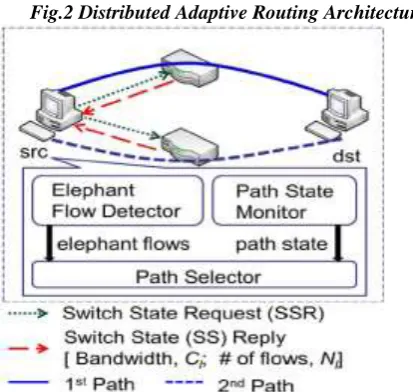
The proposed approach has involved three key design issues. First, it uses a lightweight distributed end-system-based path selection algorithm to move flows from overloaded paths to under loaded paths to improve efficiency and prevent hot spots. Second, it uses hierarchical addressing to facilitate efficient path selection. Each end system can use a pair of source and destination addresses to represent an end-to-end path, and vary paths by varying addresses. Third, the proposed approach places the path selection logic at an end system to facilitate practical deployment, as a datacenter network can upgrade its end systems by applying software patches Figure 2 shows how the Distributed Adaptive Routing Architecture (DARA’s) system components adopted in the proposed scheme. Since the proposed approach choose to place the path selection logic at an end system.
[Elakkiya et al., 3(6): June, 2016] ISSN 2349-4506
Impact Factor: 2.545
G
lobal
J
ournal of
E
ngineering
S
cience and
R
esearch
M
anagement
http: // www.gjesrm.com © Global Journal of Engineering Science and Research Management
[106]
A switch in DARA has only two functions: (1) it forwards packets to the next hop according to a pre-configured routing table; (2) it keeps track of the Switch State and replies to end systems’ Switch State Request (SSR). The proposed method implements this function using the open flow protocol. An end system has three components as shown in Figure 2.
i. Elephant Flow Detector ii. Path State Monitor iii. Path Selector.
ELEPHANT FLOW DETECTOR
The Elephant Flow Detector monitors all the output flows and treats one flow as an elephant once its size grows beyond a threshold. It is proposed to use 250KB as the threshold value. This is because according to a re- cent study, more than 85% of flow are less than 100 KB. In network terms, a traffic flow consists of a unidirectional set of packets of the same transport protocol (either UDP or TCP) sharing the same source and destination IP addresses and ports. Accordingly, the totality of network traffic can be viewed as a superposition of multiple flows, each carrying different application traffic, from one side of the Internet to the other. Qualitatively, elephant flows are streams of packets which contribute to network load substantially more than the rest of the flows. Typically, network managers and administrators define a threshold value to discern between elephants and mice.
Obviously, such threshold value depends on the network-size. For instance, in a typical core router with more than 50000 flows traversing it per second, a flow that occupies, say 0:1% of the total traffic volume, can be considered as an elephant. However, in a local area network router with 1000 flows per second, such threshold may be too low. Accordingly, three types of elephant flows are possible: elephants can be intensive and short-duration traffic streams (type 1), long-short-duration flows at low packet rates (type 2), or long-short-duration high-bandwidth (type 3), which are the biggest elephants.
PATH STATE MONITOR
The Path State Monitor sends SSR to the switches on all the paths and assembles the SS replies in Path State.
Path State
The path state indicates the load on each path. Based on both the path state and the detected elephant flows, the Path Selector periodically assigns flows from overloaded paths to under loaded paths. The rest of this section presents more design details of DARD, including how to use hierarchical addressing to select paths at an end system , how to actively monitor all paths’ state in a scalable fashion, and how to as- sign flows from overloaded paths to under loaded paths to improve efficiency and prevent hot spots .
FLOW DIAGRAM OF PROPOSED SYSTEM
[Elakkiya et al., 3(6): June, 2016] ISSN 2349-4506
Impact Factor: 2.545
G
lobal
J
ournal of
E
ngineering
S
cience and
R
esearch
M
anagement
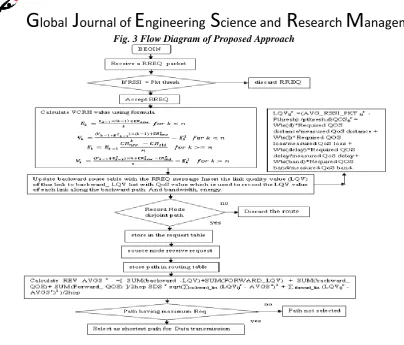
Fig. 3 Flow Diagram of Proposed ApproachSIMULATION RESULTS
The proposed network designed with two fifty mobile nodes placed in a region of 1000m × 1000m. The exercise endeavours to observe the performance of the network deliberated to exchange the data of size 1000 KB between three sources and destination as visioned in Figure 4. The NS2 simulation measures the performance metrics with a specified time frame of two hundred seconds using QOS based congestion avoid improved Rumour routing. The Figures 5 to 9 exhibit the various metrics that include the number of packets received, packet loss, throughput, energy expended and routing delay.
[Elakkiya et al., 3(6): June, 2016] ISSN 2349-4506
Impact Factor: 2.545
G
lobal
J
ournal of
E
ngineering
S
cience and
R
esearch
M
anagement
http: // www.gjesrm.com © Global Journal of Engineering Science and Research Management
[108]
The number of packets seems to increase with time showcasing the highest increase in QoS based congestion avoid improved rumor routing as seen from Figure 5.
Fig. 5 Packet Received Vs Time
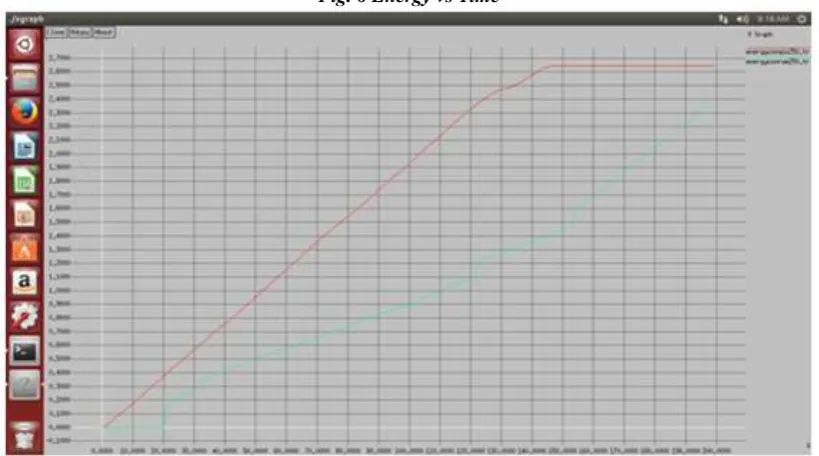
The energy expenditure shown in Figure 6 elucidates the capacity of QoS based congestion avoid improved Rumour routing to find out an energy efficient path for the packets in compare with other routing technique to achieve the significant improvement in lifetime of the network
Fig. 6 Energy vs Time
[Elakkiya et al., 3(6): June, 2016] ISSN 2349-4506
Impact Factor: 2.545
G
lobal
J
ournal of
E
ngineering
S
cience and
R
esearch
M
anagement
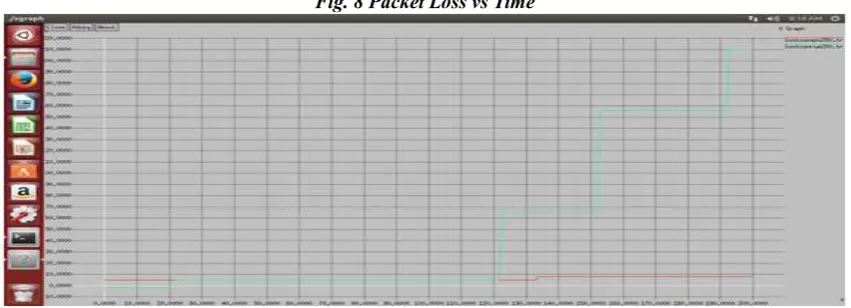
Fig. 7 Routing Delay vs TimeWhile the graph in Figure 8 echoes the minimum loss of packets for proposed approach over other routing schemes.
Fig. 8 Packet Loss vs Time
[Elakkiya et al., 3(6): June, 2016] ISSN 2349-4506
Impact Factor: 2.545
G
lobal
J
ournal of
E
ngineering
S
cience and
R
esearch
M
anagement
http: // www.gjesrm.com © Global Journal of Engineering Science and Research Management
[110]
The bar chart shows the network Packet Delivery Ratio (PDR) in Figure 10 for QoS based routing offers the highest PDR over other routing schemes. The results elucidate to consolidate the fact that the proposed approach outperforms with its counterparts and explore the ability of proposed approach in the field of routing era.
Fig. 10 Packet Delivery Ratio vs Number of Nodes
The listed values in Table.1echoes the suitability of the QoS based congestion Rumour routing to turn up at the permissible indices for the network. Comparative study has been carried out with nodes variation and packet size variation reflects the use of routing the data through an improvement in the network performance.
Table 1 Performance Comparison With Node Variation
CONCLUSION
An exhaustive comparative study has been carried out to reveal the relative merits of the proposed new QoS based congestion control routing method and relative results are displayed to support an increase in the performance of the network. The NS2 graphs have been obtained to ascertain the higher number of packets received, minimum packet loss, larger throughput, lesser delay and minimum use of energy for transferring the data between specified nodes.
[Elakkiya et al., 3(6): June, 2016] ISSN 2349-4506
Impact Factor: 2.545
G
lobal
J
ournal of
E
ngineering
S
cience and
R
esearch
M
anagement
ACKNOWLEDGMENT
The authors thank the authorities of Annamalai University for providing the necessary facilities in order to accomplish this piece of work.
REFERENCES
1. Madhav Bokare and Anagha ralegaonkar, "Wireless Sensor Network: A Promising Approach for Distributed Sensing Tasks", Excel Journal of Engineering Technology and Management Science, Vol.1, pp.1-9, 2012. 2. Xinhao Yang, Juncheng Jia, Shukui Zhang and Ze Li, "Congestion Control Based on Consensus in the
Wireless Sensor Network", International Journal of Distributed Sensor Networks, pp.1-7, 2013.
3. Manpreet Kour, Bhisham Sharma and Dr. Trilok C. Aseri, "A Study of Traffic Redirection Based Congestion Control Protocols for Wireless Sensor Networks", IJCST , Vol. 6, Issue 2, 2015.
4. H. Manikandan, S. Swaminathan, A. Srinivasan and H. Prabavathi, "An Energy Efficient Congestion Control Mechanism of WSN using Intelligent Agents", Research Journal of Applied Sciences, Engineering and Technology, Vol.6, issue 24, pp.4607-4614, 2013.
5. Sunitha G P, Dilip Kumar S M and Vijay Kumar B P, "Classical and Soft Computing based Congestion Control Protocols in WSNs: A Survey and Comparison", International Journal of Computer Applications, pp.0975 – 8887, 2014.
6. Sweeta A.Kahurke and Bhushion N. Mahajan," Implementation of Priority Based Scheduling and Congestion Control Protocol in Multipath Multi-Hop WSN" , International Journal of Recent Technology and Engineering, Vol.1, Issue-2, pp.103-108, 2012.
7. James DzisiGadze, DelaliKwasiDake and Kwasi Diawuo, "Adaptive Congestion Control Protocol for Wireless Sensor Networks", International Journal of Wireless and Mobile Networks, Vol. 5, No. 5, pp.129-144, 2013.
8. Qi Li1, Zongwu Ke, Duanfeng Xia and Yuxia Sun, "A Routing Protocol for Wireless Sensor Networks with Congestion Control", Communications and Network, pp.156-160, 2013.
9. Jilani Sayyad and Dr. Nitin Choudhari, "Priority Based Congestion Control Protocol and Fair Rate Allocation in WSN", International Journal of Engineering Sciences and Research Technology, pp.393-404, 2014.
10. Neelu Rajput , Dr. Dharm Singh and Dr. Naveen Choudhary, "Longer Distance Hop Count based Priority Congestion Control Technique for Wireless Sensor Networks", Global Journal of Computer Science and Technology: E Network, Web & Security, Vol.14 Issue 4, 2014.
11. Shuchi Sharma and Anand Nayyar, "Mint-Route to Avoid Congestion in Wireless Sensor Network", International Journal of Emerging Trends and Technology in Computer Science, Vol.3, Issue 2, pp.91-94, 2014.
12. A.Anuba Merlyn and A. Anuja Merlyn, "Energy Efficient Routing For Reducing Congestion and Time Delay in Wireless Sensor Network", International Journal of Computer Networks and Applications Vol.1, Issue 1, pp.1-10, 2014.
13. Majid Gholipour, Abolfazl Toroghi Haghighat and Mohammad Reza Meybodi, "Hop-by-hop Traffic-Aware Routing to Congestion Control in Wireless Sensor Networks", EURASIP Journal on Wireless Communications and Networking, pp.1-13, 2015.