HOW TO DO A CLASSIC GROUNDED THEORY STUDY IN INFORMATION SYSTEMS AND
ENGINEERING: A WORKED EXAMPLE OF A STUDY OF E-LEARNING PROVIDERS WORKING
IN EAST AFRICA
Titus Tossy
Dr. Titus Tossy, is a lecturer in the Department of Computer Science Studies, Faculty of Science and Technology at Mzumbe University in Tanzania
*Correspondence Author: [email protected]
Keywords:
classic grounded theory; e-learning providers; e-learning; ICT for Education; research methodology.Abstract
Classic Grounded Theory methodology (CGTM) is gaining importance as a method for theory building in Information Systems (IS). CGTM is most-often cited by IS researchers, but it has been suggested that many CGTM studies are not following the tenets of the methodology. This paper provides a worked example of a classic grounded theory (CGT) in IS research. The rationale of this paper is based on the fact that most of IS literature reveals conflict in the understanding and use of CGT. As the authors of this paper and as practising classic grounded theorists, I feel that the nature of CGTM is often misunderstood and its label abused in different ways. Therefore, in this paper I provide a model for practice, to connect IS researchers with a classic grounded theory methodology, and to increase the quality of CGT research published in the IS literature. The paper describes sampling, data collection, data analysis, and interpretation. The paper explains how these steps Ire consistent with CGTM, and show how they related to one another. CGT enable this paper to develop a detailed model of the process of cultivating recognition into e-learning practice and to analyze variation in this process in different e-learning provider practices. By employing CGTM rigorously, IS researchers can better design and justify their methods, and produce high quality findings that will be more useful to IS researchers, professionals and the community.
Introduction
Classic grounded theory methodology (CGTM) is gaining importance as a method for theory building in Information Systems (IS). As Matavire and Brown (2013) argues that the rise in IS studies claiming to use CGTM shows that concerns about the development of IS theory are being considered. While studies claiming to use CGTM are increasingly popular in IS research, there is often misunderstanding and its label abused in different ways (Birks et al. 2013; Bryant 2002; Lowe 1996; Matavire & Brown 2013; Suddaby 2006). Many IS authors label their work classic grounded theory (CGT), but do not follow the tenets of the methodology. Birks et al. (2013) identify three types of mislabeling (1) involves an author to claim to have conducted CGTM to attain legitimacy in cases in which CGTM has not actually been applied; (2) occurs by omission, that is when CGTM is not reported as such; and (3) occurs when researchers claim to have used CGTM when they have only done so partially. The IS reviewers and editors in various publishing outlets continue to struggle with the nature and boundaries of CGTM while examining papers claiming to be CGTM studies. This may be in part of two issues. First, may be in part because there are still limited understanding of the methodology and its application, hence the need for a study to clarify these issues (Matavire & Brown 2013). Second, may be in part because there are few practical examples of CGT in use in the IS literature (Tossy 2012). Regardless Matavire and Brown (2013) claim the existence of several claimed grounded theory approaches including classic, evolved, analytical and mixed method , classic grounded theory is termed to be the original grounded theory (Lowe & Guthrie 2011; Matavire & Brown 2013; Tossy 2012). It is time for IS researchers to avoid using GT label when referring to classic grounded theory. It is necessary to label the approach you are using correctly such as class grounded theory, evolved grounded theory, analytical grounded theory and mixed method grounded theory. Most reviewers, editors and researcher kept using GT, while refereeing to one of the mentioned approach. As a result there are misunderstandings on how to correctly do CGT. This has motivated the researchers to write this paper. To address this problem, I will provide a brief outline of the history and diversity of classic grounded theory methodology, and a worked example of the methodology in practice. This aim is to provide a model for practice, to connect IS researchers with the useful methodology and to increase the quality for classic grounded theory research published in the IS literature.
The History, Diversity and Basic Components of Classic Grounded Theory Methodology and Method
http: // www.gjesrm.com (C) Global Journal of Engineering Science and Research Management
1960s and 1970s. Due to the existence of GT types, Van Niekerk and Roode (2009) argue that a choice of the GT research approach must be approached with care and done within the specific context of the research. The choice of research methodology should have a rationale, and such rationale should be justified in terms of the researcher’s preference of methodology over other research methodologies.
Classic Grounded Theory Methodology (CGTM) approach is accepted as being faithful to the original formulation and follows the original tenets of Glaser and Strauss (1967).It has been further elaborated and refined by (Glaser 1978; Glaser 1992; Glaser 1996; Glaser 1998; Glaser 2001; Glaser 2003; Glaser 2005a; Glaser 2006; Glaser 2008; Glaser 2009; Glaser 2011). CGTM is a general inductive research method designed to reveal deep seated latent patterns of human behavior and how the main concerns are being continually being resolved (Glaser 1978; Glaser 1992; Glaser 1998). There have been discussions in the literature about what characteristics a classic grounded theory (CGT) study must have to be legitimately refers to as CGT. The Fundamental components are set out in Table 1. The CGT must have all these. As noted, there are few examples of how to do CGT in the literature. Those that do exist have focused on Strauss and Corbin method. Glaser (2005:41-42) explains the reasons for the persistence of a level of misunderstanding of the CGTM amongst many academics and researchers: they continue to fail to distinguish clearly between "conceptual generalizations" and "descriptive generalizations":
"The constant comparative method [at the heart of CGT] was originated in 1967 to generate concepts by constantly comparing indicators of a latent pattern. After several comparisons the result is conceptually naming the pattern and its properties...The category is abstract of time, place and people. The conceptual categories apply with emergent fit. The Formal CGT research generates categories that relate to each other as generalizations.
In contrast descriptive comparisons are as old as research itself. They just compare differences and similarities and a sum of description of people's social actions in a unit of time. The concern is always accuracy, that is, the researcher has worrisome accuracy to constantly contend with. Generalizations are difficult to make from one unit to another and even within the unit studied. These are the problems of accuracy of external and internal validity respectively of descriptive generalizations. Conceptual generalizations do not have this validity problem. They just apply within a context applied to with modification. For example, controlling clients by pseudo-friending simply varies for client types and client conditions."(Glaser 2005b).
(Glaser 2009) gives a robust response to the continuing misconceptions regarding CGTM, as articulated by Bryant and Charmaz (2007); Charmaz (2006), in particular the “worrisome accuracy” associated with data analysis and the failure of researchers to appreciate the value of the conceptual level of CGTM:
"Data worries dominate the GT jargonizing of QDA issues in the Handbook. And why shouldn't it? Worrisome accuracy is the central issue of QDA. QDA research has to yield accurate description, which puts an emphasis on analyzing the data used in any research every which way to see what, indeed, is being described and is verifiable. And furthermore how fast will the description get stale-dated and if it can be momentarily discursively generalized. This is a perennial, non-solvable problem. It totally neglects the conceptual level of GT, which is free of and abstract of place, time and people and hence free of worrisome accuracy. Comparisons generate a GT's constant concept modifiability.”
Transparency of a fully grounded theory will be achieved only when the reader is able to clearly see how the researcher progressed from raw data to the final integrated core variable. In the reminder of this paper, I will show how each of the characteristics of grounded theory methodology worked in this study of e-learning providers. Any researcher who wishes to use the authentic CGTM approach, in an academic environment which does not fully understand this research method, would benefit from reading the contribution by Lowe and Guthrie (2011) before starting their research.
Criteria for Evaluating Classic Grounded Theory Methodology Research
The grounded theory research method is a general inductive methodology which can be applied to all types of data, both quantitative and qualitative, or the combination thereof as has been outlined by (Glaser 1978; Glaser 1998). GT is not a sub set of Qualitative Data Analysis (QDA). Therefore QDA criteria are inappropriate for the evaluation of research done using the grounded theory research method (Glaser 1978).
(Glaser 1978; Glaser 1992; Glaser 1998; Glaser 2001; Glaser 2003; Glaser 2005a; Glaser 2006; Glaser 2008; Glaser 2011) gives explicit examples of the four main criteria with which to evaluate grounded theory study: fit, workability, relevance and modifiability. These criteria will be explored in the following sections.
Fit
would appear to correspond to positivistic validity, it is fit in terms of CGTM action and usage, not as a result of testing (Glaser 1978). Unlike research based on preconceptions, such as research conducted in order to test a hypothesis, in CGTM data which cannot be forced are discarded rather than used to correct the emerging categories. With CGTM only data ‘sorted’ and used for developing theory can be said to constitute a fit (Glaser 1978; Glaser 1998). The fit could be expressed as a ‘refit or an ‘emergent fit’. During research categories emerge fast, so the need arises to refit them to the data as the research proceeds and to be sure that they fit all of the data they purport to indicate, thus increasing and ensuring transparency. Categories can emerge between data and pre-existent categories (Glaser 1978).
Workability
How the core variable accounts for the respondents’ continual resolution of their main concern is a key issue. The emergent GT must clearly explain what is happening, and the process of its happening, and by so doing should be able to predict future behavior (Glaser 1978; Glaser 1992; Glaser 1998; Glaser 2001; Glaser 2003; Glaser 2005a; Glaser 2008; Glaser 2011).
Relevance
How the emerged core variable has been received by the members of the constituency from which the data was drawn is also pertinent. Prior to the research it is very likely that respondents would be unable to articulate their main concern. Once they have read the research they should instantly be able to recognize the emerged core variable as being authentic (Glaser 1978; Glaser 1998).
Modifiability
The CGT is considered to be modifiable if it is easy for subsequent CGTM researchers to be aware of what research has been done so far in the area, and to proceed to modify or refine the theory as they collect and code new data (e.g. code new data for emergent fit), without invalidating the theory. Various IS researchers posed certain questions on the issue of transparency when using CGTM (Tossy 2012) these include: “How can research using CGT have a chain of ‘legitimate’, ‘accurate’ evidence? How can one reconcile this with the approach of not recording or taking notes in interviews? How does one demonstrate, or substantiate the chain of evidence in the process of moving from data to concept/theory?” Such questions assume accuracy in the collection of evidence based data as a requirement for ‘accurate’, ‘reliable’, ‘legitimized’ research.
Since CGTM is an inductive research methodology it is appropriate to use a legitimate set of evaluation criteria as outlined by the CGT’s co-originator Glaser (1978). However there must be total transparency when using CGTM so that it can easily and clearly be seen how the emergent core variable arose.
Study Background
I used classic grounded theory (CGT) ) by (Glaser & Strauss 1967) and further elaborated and refined by (Glaser 1978; Glaser 1992; Glaser 1996; Glaser 1998; Glaser 2001; Glaser 2003; Glaser 2005; Glaser 2006; Glaser 2008; Glaser 2009; Glaser 2011) to investigate social processes of e-learning providers working in East Africa [ Tanzania, Kenya and Uganda]. Three reasons made to choose CGTM. Firstly, CGTM claims to deliver the main concerns of e-learning providers in East Africa. Secondly, CGTM fits the nature of the phenomenon being researched (e-learning providers), as it follows Lowe’s (1996)] explanation of CGT as being designed to “develop and integrate a set of ideas and hypotheses in an integrated theory that accounts for behaviors in any substantive area”. Thirdly, CGTM provides a flexible set of inductive strategies for collecting and analyzing data. Glaser (1992) and Glaser & Strauss (1967) outlines the key distinguishing characteristics of the CGTM research methodology as (a)Simultaneous involvement in the data collection and analysis phases of research; (b)Developing analytic codes and categories from data, not from preconceived hypotheses; (c)Constructing middle-range theories to understand and explain behaviors and processes; (d)Memo-writing, that is, analytic notes to explicate and fill out categories; (e)Making comparisons between sets of data, data and concept, and between different concepts; (f)Theoretical sampling, that is sampling for theory construction to check and refine conceptual categories, not for representativeness of a given population; and (g)Delaying the literature review until after the emergence of a core variable.
Table 1: Fundamentals Procedures of a Classic Grounded Theory Study
PROCEDURE STAGE DESCRIPTION SOURCE
Generating theoretical
sensitivity Thought the study
It is essential that the researcher, prior to embarking on any CGTM research, develop theoretical sensitivity. Since there are already in existence literally hundreds of patterns of human behaviour, having a repertoire of these before embarking the research is absolutely essential
http: // www.gjesrm.com (C) Global Journal of Engineering Science and Research Management
Theoretical Sampling
Sampling, codes, analyse,
synthesizes data and Data collection
process of data collection for generating theory whereby the researcher
simultaneously generates, codes, analyzes and synthesizes data and uses this as a basis to decide what data to collect next and where to find them The researcher begins by selecting a context for the research.
(Glaser 1998) (Glaser & Strauss 1967) p45-47
Theoretical Memos
Theorising, Codes integration, Analysis and Data collection
the theorising write up of ideas about codes and their relationships as they strike the analyst while coding.
(Glaser & Strauss 1967) p102,p101-115
Substantive Coding Analysis and Data collection
highlighting those data which the analyst believes may have importance for the research beyond the simple description of the context of the data. These codes are labelled and often ‘gerunded’
Glaser, 1978:1998).
Theoretical Coding Analysis, coding and Data collection This is a conceptual code. It arises from the synthesis of the substantive codes. (Glaser & Strauss 1967) p112-115
Constant Comparison Analysis and Data Collection
the researcher has to painstakingly look across all data in all theoretical memos to look for various types of indicators which might reveal previously hidden connections and patterns. It starts with the recording of raw data in the theoretical memos and proceeds to substantive coding which is then fractured into categories and sub categories. These in turn have different properties
(Glaser & Strauss 1967) p101-115
Sorting Analysis and data collection
an iterative process occurs at the later stages of the CGTM process. Sorting will ensure that the emerging theoretical codes have earned their place in the emergent process of theory creation
(Glaser & Strauss 1967) p108,112
Theoretical Saturation/ Emergency of Core Variable
Sampling, data collection and analysis
The researchers generally seek to reach saturation in their studies. It is interpreted as the meaning that the researcher hears nothing new from the respondents
Production of a substantive
theory Analysis and interpretation
The results of a classic grounded theory study are expressed as a substantive theory, that is, as a set of concepts that are related to one another in a cohesive whole. This theory is considered to be fitting, workable
modifiable and relevance
(Glaser & Strauss 1967) p21-43 (Glaser 1978; Glaser 1998)
Designing This Classic Grounded Theory Study
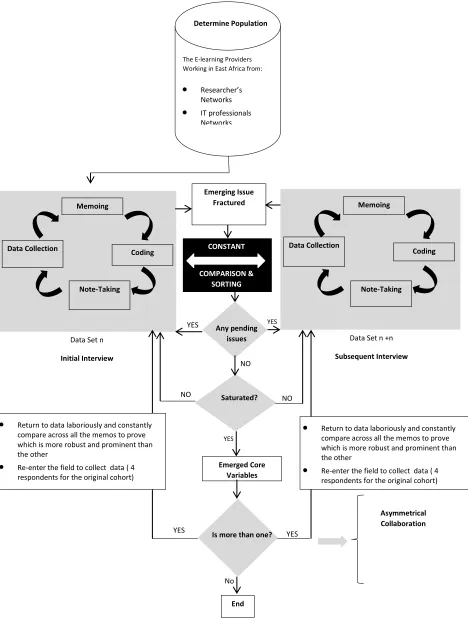
Figure 1 illustrates the steps taken during the project that will be described below.
Ethics approval
As part of the University of Cape Town research system, before embarking for data collection and interacting with respondents, often concerned about the ethics process for such a flexible, unpredictable study design. I managed this process as follows. Initial ethics approval was obtained from university research ethics committee at the University of Cape Town. In this application, I explained classic grounded theory procedures, in particular the fact that they evolve. I provided with list of possible interview strategies and awareness of the substantive area of study as suggested by Glaser (1978). As in any ethical study, I ensured that participation was voluntary, that participants could withdraw at any time and that confidentiality was protected. All responses Ire anonymised before analysis, and I took particular care not to reveal potentially identifying details of places, practices and e-learning providers.
Determining the Population: An open beginning and research questions
As described by Glaser (1978), classic grounded theory studies are generally focused on social processes or actions: they ask about what the main concerns, what happened are and how people interact. CGT is a symbolic interactionism, a social psychological approach focused on the meaning of human actions (Glaser 1978). CGT studies begin with open question, researchers pre-empty their knowledge about the substantive area, and drivers of the actions of the participants. His study began with determining the population through the researcher’s networks and IT providers’ networks. Following this, e-learning providers working in east Africa Ire chosen. As Glaser (1978) argues after determining the population, the theoretical sampling process will involve initial data collection and analysisI sought to learn from e-learning providers how they process their concerns. I wanted to answer a practical social problem: how do e-learning providers process their main concerns in implementation of projects. The researchers asked question which Ire open and related to the substantive area. Following Glaser (1978), this initial research questions Ire:
• What was the process of implementing (or not implementing) the e-learning projects (from the perspective of e-learning providers)
• How did this process vary?
Initial, Purposive interview and Sampling (Data Set n)
According to Glaser (1998), classic grounded theory studies are characterized by theoretical sampling, requiring some data to be collected and analyzed at very initial stages. Thus, this interview becomes purposively. This study did an initial data collection using 6 respondents. After fracturing the data collected, detailed memos Ire written. In initial stages of analysis, codes Ire elicited rapidly through a joint process of theoretical sampling and memo-writing. Through this process, codes Ire corrected, trimmed, and continually fitted to the data (Glaser 1978). The memo writing enabled the researcher to conceptualize the boundaries and properties of each category and illuminated gaps in the emerging theory, thus highlighting where to sample next and for what theoretical purpose (Glaser 1978). The emerging issues from this initial purposive interview Ire input to the subsequent interview.
Subsequent Interviews (Data Set n +n)
http: // www.gjesrm.com (C) Global Journal of Engineering Science and Research Management
Q1. What is the most interesting thing about this job on e-learning/online education? Why?
The most interesting is “new challenges” “unpredictable events/services/problems”. Most of the time there are so many challenges in online education or e-learning. Sometimes when you arrive in the morning, you find somebody asking for something which completely new and not documented anywhere. As an expert I need to solve it- this has been so challenging. You don’t predict what tomorrow looks like.
Why? – Because e-learning is new technology in Tanzania, and most of this professors and lecturers they don’t know exactly what all is about.
Q2. What is the most frustrating thing about this job? How did you solve when it happen? Give an example
Lack of recognition from the top management or lack of administrator understanding about e-learning and what is all about. Due to lack of e-learning knowledge among administrator and top management it is very hard for them to approve budget and any type of purchase. For example today, I Int to see finance manager to approve budget for payment of content developers, but the finance manager asked me what is e-learning, how do I benefit , it is seems not cost effective and sort of questions. It took almost days for him to approve the budget.
Q3. Assume you are in perfect world, what single thing if changed will have impact in this job?
Immediately I will change the hiring procedures for those involved in e-learning. All top managers heading e-learning sections should have knowledge of computers or information technology and e-learning in general. This will help to implement e-learning. Currently hiring procedures are so poor, so long somebody is a professor in any field even if is in agriculture they will just recruiting and be the director of one of the section. As soon as I change the hiring procedures then will help to implement e-learning.
Q4. Imagine that this boss has asked you to change this job description, what would you like to change?
I will add the e-learning awareness and training part. That means to be involved in creating awareness about e-learning among professors and other people. This will actually help to make them aware of what is happening and the importance of e-learning.
Q5. For having been in this job for so many years, what is the most achievement you did and you are proud of about e-learning?
I am so proud of making e-learning be in the university map! It is now being implemented, and eventually now I have 3 classes online. And now the university and the country at whole understand what is happening and value e-learning.
Constant comparison
Figure 1: Study design, and how theoretical sampling was followed
Data Set n +n
Subsequent Interview Determine Population
The E-learning Providers Working in East Africa from:
Researcher’s Networks
IT professionalsNetworks
Memoing
Data Collection Coding
Note-Taking
Memoing
Data Collection
Coding
Note-Taking Emerging Issue
Fractured
Data Set n
Initial Interview
CONSTANT
COMPARISON & SORTING
NO NO
YES
Emerged Core Variables
YES YES
No
Asymmetrical Collaboration
Cultivating
End Is more than one?
Saturated?
Return to data laboriously and constantly compare across all the memos to prove which is more robust and prominent than the other
Re-enter the field to collect data ( 4 respondents for the original cohort)
Return to data laboriously and constantly compare across all the memos to prove which is more robust and prominent than the other
Re-enter the field to collect data ( 4 respondents for the original cohort) Any pendingissues
YES YES
http: // www.gjesrm.com (C) Global Journal of Engineering Science and Research Management
Emergence of Core Variable
Once latent patterns Ire discovered, the researcher had to return to the data and see how wide spread across all the data the emerging phenomena actually was. At this point there Ire no more categories emerging- it was saturated. As soon the categories Ire saturated, the study realized that two competing core variable candidates did emerge. As a result the study applied the 11 criteria (see Table 2) which distinguished between competing core theories, the core variable emerged.
How Principles of Theoretical Sampling Used in This Study to Aid the Researcher’s Progressions
Glaser (1978:36) defines the theoretical sampling process in the following terms:
“Theoretical sampling is the process of data collection for generating theory where by the analyst jointly collects, codes and analyzes his data and decides what data to collect next and where to find them, in order to develop his theory as it emerges” ( p. 36)
Theoretical sampling is exclusively controlled and guided by the emergent theory as it arises. As an inductive approach, it is not constrained from the outset and is able to follow the data to the existing latent patterns embedded within it. In this study, the four most important principles involved in the use of theoretical sampling are as follows; it is a non-linear process, it is a combination of induction and deduction, the data is always in control of the direction of the research and the essential relationship between the data and the theory is the conceptual code (Glaser 1978).
A non-linear process
Throughout the research process, the researcher was always mindful that whenever insights arose the researcher would immediately have to write a theoretical memo about it. Frequently these insights would arise when the researcher was doing a quite unrelated tasks and at inconvenient times. Theoretical sampling enabled the researcher to examine right across all the data so that the emergent theory could be discovered.
A Combination of Inductive and Deductive Logic
The CGT method is mainly an inductive research method. Inductive logic comes into play because the theoretical sampling process is designed to reveal embedded latent patterns. It was not possible for the researcher to know in advance precisely what to sample and where it might lead. This is why the use of induction was essential. This allowed the researcher to discover the connections between the emergent substantive codes. These latent patterns in which the substantive codes are configured are called theoretical codes. Once the theoretical codes started to emerge the researcher was able to use deduction to figure out where to go next in order to sample for more data to generate the theory.
The Data is Always in Control
As theoretical codes emerged the researcher kept on returning to the theoretical memos and any other data to see how prevalent they Ire. This also meant that once theoretical codes had emerged I went to respondents with a much more focused approach. I was only sampling for the emergent theoretical codes. Those codes which Ire robust Ire found in all respondent encounters. Sometimes this meant returning to a respondent and asking them to give ever more detailed examples of issues which Ire of most concern to them in their work. Obviously the researcher never coached the respondents for specific responses instead the encounters Ire always open and I would often discuss many other things. Once the respondents became more relaxed they also became more candid about their work situation. At this point the researcher had to concentrate very hard because throughout this process notes Ire taken within 24 hours after the respondent encounters.
The Essential Relationship between the Data and the Theory is the Conceptual Code
central
reoccur frequently
more time to saturate
connections not be-forced
clear & grabbing implication for formal theory
carry through
completely variable
is also a dimension of the problem
prevent to other sthisces of establishing a core
see the core category in all relations
it can be a kind of theoretical codeThe Quality of This Classic Grounded Theory
There are a number of important assurances of quality in keeping with grounded theory procedures and general principles. The following points describe what was crucial for this study to achieve quality.
Before Data Collection
1. The researcher developed theoretical sensitivity skills
2. Exercised to pre-empty any previous skills on the substantive area of study
During Data Collection
1. All interviews Ire of short duration, conducted without tape recordings,
2. I analyzed the interview immediately after each round of interview, this allowed the process of theoretical sampling to occur 3. Writing case-based memos right after each interview while being in the field allowed the researcher to capture initial ideas and
make comparison between participants accounts as Ill as his reflections
4. Having the opportunity to contact participants after interviews to clarify concepts and to interview some participants more than once contributed to the refinement of theoretical concepts, thus forming part of theoretical sampling
5. The decision to include Skype interviews due to participants’ preferences worked very Ill in this study. The Skype interview was having similar length and depth compared to face to face interview, but allowed for greater range of participation
During Data Analysis
1. Detailed analysis records were kept; which made possible to write this paper
2. The use of constant comparative method enabled the analysis to produce not just a description but a mode.
Answering the Questions
I developed a detailed model of the process of cultivating recognition among the e-learning providers. In the course of repeated encounters with e-learning providers (as outlined above), this study found the concept of “Cultivating Recognition” to emerge as the main concern or core variable amongst these e-learning providers. The core variable within the Classic Grounded Theory research method is the main entity that accounts for most of the variation in the data. . The e-learning providers Ire shown to be continually striving to resolve the issue of how to cultivate recognition from those who sponsor and monitor the projects with which they are tasked. Without proper recognition from their various stakeholders, the e-learning providers Ire unable to successfully deliver e-learning programs to the targeted learners.
The research discovered that there were two key sub-core variables that enabled the "Cultivation of Recognition": "Legitimizing" and "Credentializing". The process of "Legitimizing" involves convincing the e-learning stakeholders that the e-learning programs and projects will be delivered in a timely, valid and sustainable manner. "Credentializing” aims to enhance the stakeholders' belief in the e-learning provider’s competence prior to the start of the e-e-learning project, given that sponsors and stakeholders would be unwilling to commission a project if they believe an e-learning professional’s ability to deliver in terms of both financial and operational quality parameters is in question.
http: // www.gjesrm.com (C) Global Journal of Engineering Science and Research Management
they canvas for e-learning projects. Secondly the possibility exists for career academics in any discipline to enhance their own research funding prospects by mastering the process of Cultivating Recognition.
Conclusion
This paper provides detailed explanations of how a study evolved using classic grounded theory methodology, one of the increasingly popular methodologies in both qualitative and quantitative research. As noted by (Glaser & Strauss 1967) that:
Classic Grounded theory method is a general methodology for building theories that are grounded in data systematically gathered and analyzed.
This detailed explanation of this experience in this classic grounded theory study is intended to provide, vicariously, the kind of experience that might help other classic grounded theory researchers in information systems to apply and benefit from classic grounded theory in their studies. I hope that this explanation will assist others to avoid using classic grounded theory as an approving bumper sticker (and instead use it as a research method that can greatly improve the quality and outcome of an information systems research.
References
1. Baskerville, R. & Pries-Heje, J. (1999). Grounded action research: a method for understanding IT in practice. Accounting, Management and Information Technology (9): 1-23.
2. Birks, D., Fernandez, W., Levina, N. & Nasirin, S. (2013). Grounded theory method in information systems research: its nature, diversity and opportunities. European Journal of Information Systems, 2013 (22): 1-8.
3. Bryant, A. (2002). Re-grounding Grounded Theory. Journal of Information Technology Theory and Application, 4 (1): 25-42. 4. Bryant, A. & Charmaz, K. (2007). Grounded theory research: Methods and practices. In Bryant, A. & Charmaz, K. (eds) The
sage handbook of grounded theory pp. 1-29. London, UK: Sage Publications Limited.
5. Charmaz, K. (2006). Constructing Grounded Theory: A practical Guide Through Qualitative Analysis. London: Sage. 6. Corbin, J. & Strauss, A. (2008). Basics of Qualitative Research, vol. 3rd Ed. Thousand Oark, CA: Sage.
7. Eisenhardt, K. (1989). Building theories from case study research. Academy of Management Review, 14 (4): 532-550. 8. Glaser, B. & Strauss, A. (1967). The Discovery of Grounded Theory: Strategies for Qualitative Research. Hawthorne, NY:
Aldine De Gruyter.
9. Glaser, B. (1978). Theoretical Sensitivity: Advances in the Methodology of Grounded Theory. Mill Valley, USA: Sociology Press.
10. Glaser, B. (1992). Emergence Vs Forcing: Basic of Grounded Theory Analysis. Mill Valley, CA: Sociology Press. 11. Glaser, B. (1996). Gerund Grounded Theory: The Basic Social Process Dissertation. Mill Valley: Sociology Press. 12. Glaser, B. (1998). Doing Grounded Theory: Issues and Discussions. Mill Valley, USA: Sociology Press.
13. Glaser, B. (2001). The Grounded Theory Perspective: Conceptualization Contrasted with Description. Mill Valley, USA: Sociology Press.
14. Glaser, B. (2003). The Grounded Theory Perspective II: Descriptions Remodeling of Grounded Theory. Mill Valley, USA: Sociology Press.
15. Glaser, B. (2005a). The Grounded Theory Perspective III: Theoretical Coding. Mill Valley, USA: Sociology Press.
16. Glaser, B. (2005b). The Roots of Grounded Theory. International Qualitative Research Convention, Johor Bahru, Malaysia: University Teknologi.
17. Glaser, B. (2006). Doing Formal Grounded Theory: A proposal. Mill Valley, USA: Sociology Press. 18. Glaser, B. (2008). Doing Quantitative Grounded Theory. Mill Valley, USA: Sociology Press.
19. Glaser, B. (2009). Jargonizing: Using the Grounded Theory Vocabulary. Mill Valley, USA: Sociology Press. 20. Glaser, B. (2011). Getting Out of the Data: Grounded Theory Conceptualization. Mill Valley, USA: Sociology Press.
21. Lowe, A. (1996). An Explanation of Grounded Theory. Glasgow, Scotland UK: University of Stratchlyde. Unpublished manuscript.
22. Lowe, A. & Guthrie, W. (2011). Getting through the PhD process using GT: Supervisor/Research Perspectives. In Martin, V. & Glynnild, A. (eds) Grounded Theory the Philosophy method, and work of Barney Glaser, pp. 51-68. Florida: Brown Walker Press.
23. Matavire, R. & Brown, I. (2013). Profiling Grounded Theory Approaches in Information Systems Research. European Journal of Information Systems, 2013 (22): 119-129.
24. Mingers, J. (2001). Combining IS research methods: towards a pluralist research methodology. Information Systems Research, 12 (3): 240-259.
25. Suddaby, R. (2006). From the Editors: What Grounded Theory is not. Academy of Management Journal, 49 (4): 633-642. 26. Tossy, T. (2012). Cultivating Recognition: a classic grounded theory for e-learning providers working in East Africa. Cape
Town, South Africa: University of Cape Town, Information Systems.
27. Van Niekerk, J. C. & Roode, J. D. (2009). Glaserian and Straussian grounded theory: similar or completely different? South Africa: Proceeding SAICSIT '09 Proceedings of the 2009 Annual Research Conference of the South African Institute of
Computer Scientists and Information Technologists. Available at: