Available Online at www.ijpret.com
647
INTERNATIONAL JOURNAL OF PURE AND
APPLIED RESEARCH IN ENGINEERING AND
TECHNOLOGY
A PATH FOR HORIZING YOUR INNOVATIVE WORK
A DISTRIBUTED MOBILE CLOUD COMPUTING ARCHITECTURE FOR THE
MULTIMEDIA SERVICES OF CELLULAR (MOBILE) PHONE
PRIYANKA G. PADMANE1, PROF. KARUNA G BAGDE2
HVPM COET Amravati.
Accepted Date: 27/02/2014 ; Published Date: 01/05/2014
\
Abstract: Mobile cloud computing (MCC) is emerging as a new paradigm for supporting a
broad range of multimedia services of cellular phone (mobile). MCC alleviates the burden of storage and computation on mobile devices. Mobile Cloud Computing (MCC) has revolutionized the way in which mobile subscribers across the globe leverage services on the go. The mobile devices have evolved from mere devices that enabled voice calls only a few years back to smart devices that enable the user to access value added services anytime, anywhere. MCC integrates cloud computing into the mobile environment and overcomes obstacles related to performance (e.g. battery life, storage, and bandwidth), environment (e.g. heterogeneity, scalability, availability) and security (e.g. reliability and privacy). In this article, we describe the design requirements and architecture for MCC. The novelty in this architecture is an integrated cloudlet and base station subsystem that can meet application-level quality of service requirements and allow mobile resource provisioning close to the user. We also propose a connection handoff mechanism among cloudlets and discuss related resource management challenges for MCC.
Keywords: Cloud Computing, Mobile Cloud Computing, Challenges in MCC, Research Areas
in MCC
Corresponding Author: MS. PRIYANKA G. PADMANE Access Online On:
www.ijpret.com
How to Cite This Article:
Priyanka Padmane, IJPRET, 2014; Volume 2 (9): 647-653
Available Online at www.ijpret.com
648
INTRODUCTION
WHAT IS MCC?
Figure 1:- Mobile Cloud Computing
Delivering cloud services in a mobile environment brings numerous challenges and problems. Mobile devices cannot handle complicated applications due to their innate characters. Also, it is impossible that a mobile device is always online, the offline solution of the device need be considered as well. The absence of standards, security and privacy, elastic mobile applications requirement may obstruct the development of Mobile Cloud Computing. In order to understand the challenges and provide further scope for research, an understanding of this novel approach is essential.
WHAT IS MCC Architecture?
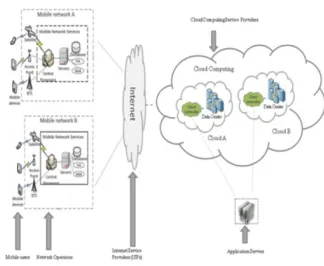
Figure 2:- Mobile Cloud Computing Architecture
Available Online at www.ijpret.com
649
processors that are connected to the servers providing mobile network services. Here, services like AAA (Authentication, Authorization and Accounting) can be provided to the users based on Home Agent (HA) and subscribers data stored in databases. The subscribers’ requests are then delivered to a cloud through the Internet. Cloud controllers present in the Cloud, process the requests to provide the mobile users with the corresponding cloud services. These services are developed based on the concepts of utility computing, virtualization and service-oriented architecture. The details of cloud computing will be different in different contexts. The major function of a cloud computing system is storing data on the cloud and using technology on the client to access that data. Some authors mentioned that Cloud Computing is not entirely a new concept. Cloud Computing has manifested itself as a descendent of several other computing areas such as Service-oriented Architecture, grid and distributed computing, and virtualization and inherits their advancements and limitations. They introduced Cloud Computing as a new paradigm in the sense that it presented a superior advantage over the existing under-utilized resources at the data centers. Several business models rapidly evolved to harness this technology by providing software applications, programming platforms, data-storage, computing infrastructure and hardware as services. Cloud is also introduced as a type of parallel and distributed system consisting of a collection of interconnected and virtualized computers that offer computing resources from service providers to customers meeting their agreed SLA (Service Level Agreement).
WHAT IS DISTRIBUTED CLOUD COMPUTING Architecture?
The rapid increase in the use of multimedia services and applications on mobile devices has led IT companies to evolve their technologies to cope with the multimedia requirements.
Cloud computing, which is a new
Content-centric paradigm can fulfill these requirements by providing data and computing resources on demand. It allows
Users to access infrastructure, platforms, and software at low cost. For example, Amazon provides its users personal storage spaces with Simple Storage Services (S3) and ability to perform extensive computation on the data using Elastic Compute Cloud (EC2). Likewise, Google’s App Engine allows users to develop and deploy their applications on Google’s platform.
Available Online at www.ijpret.com
650
computing and mobile technology. MCC is defined as the infrastructure where both data storage and processing are offloaded from mobile devices to the cloud, bringing mobile applications a much broader range of users. MCC overcomes the limitations of mobile devices by moving the data processing and storage to the powerful platforms located in the cloud.
The objective of this article is to address the challenges of mobile services in terms of data management and networking, and develop an architecture that can lead to the design of MCC. In particular, our focus is on the retrieval and communication of pre or chestrated multimedia data, which imposes several resource management challenges on designing an MCC architecture. The main technical challenges are highlighted as follows,
• Heterogeneous networks and QoS requirements: Multimedia services may span multiple
heterogeneous network protocols, such as second generation (2G), 3G, and Long Term Evolution (LTE), with different quality of service (QoS) requirements. Dynamic resource allocation protocols are needed to meet these.
• Heterogeneous multimedia data: Distributed mobile services such as video over IP,
Available Online at www.ijpret.com
651
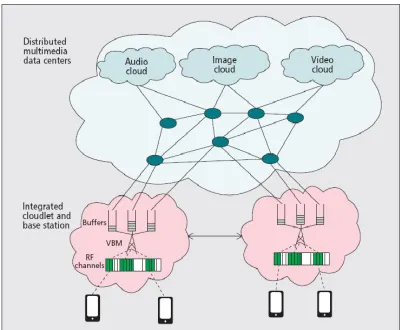
Figure 3:- Distributed Cloud Architecture for multimedia Services
In the above figure 3, we perceive a distributed multimedia cloud architecture for mobile users that consists of distributed multimedia data centers, and integrated cloudlet and base station. The proposed MCC supports this environment. It can be noted that MCC architecture has two major components; a set of distributed multimedia data centers and an integrated cloudlet and base station subsystem.
We assume that the data centers act as repositories for multimedia information. A multimedia data center in the cloud retrieves the requested data from the database and communicates it to the cloudlet over the Internet. The cloudlet then transmits the multimedia information to mobile users on the RF channels. The MCC architecture overcomes the high latency that results from the direct communication between a large number of mobile users and multimedia data centers. The cloudlet ensures QoS to mobile users by managing the interface between the Internet and the mobile network. It coordinates with allocation of RF resources through its local base station.
Available Online at www.ijpret.com
652
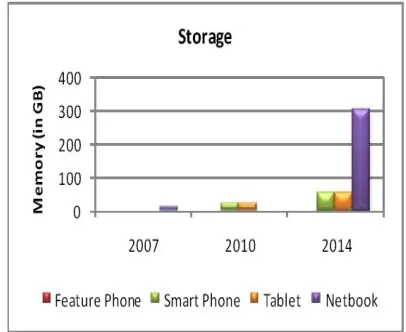
Figure 4(a):- Performance comparison of mobile and fixed devices
Figure 4(b):- Performance comparison of mobile and fixed devices
CONCLUSION
Mobile Cloud Computing, as a development and extension of Cloud Computing and Mobile Computing, is the most emerging and well accepted technology with fast growth. The combination of cloud computing, wireless communication infrastructure, portable computing devices, location-based services, mobile Web etc has laid the foundation for the novel computing model. In this paper we have given an overview of Mobile Cloud Computing that includes architecture, benefits, key challenges, present research and open issues.
Available Online at www.ijpret.com
653
that provides a “close-to-the-user” proxy functionality and performs dynamic allocation of resources. In addition, we have presented a functional layered architecture that includes a set of functions and protocols to support multimedia applications and services. We have also presented the connection handoff mechanism among cloudlets and its related challenges. In addition, we have discussed prospective challenges in managing resources including buffer and RF channels.
ACKNOWLEDGEMENT
I am really thankful to the Almighty. I am also thankful to my guide Prof. K. G. Bagde, (Computer Science Department, H.V.P.M COET AMRAVATI), who helped me for various researches in the paper presentation. I also convey my thanks to all the staff members of H.V.P.M COET AMRAVATI for helping me out in this paper.
REFERENCES
1. Lei Yang, Jiannong Cao, Shaojie Tang, Tao Li, Alvin T.S. Chan, “A Framework for Partitioning and Execution of DataStream Applications in Mobile Cloud Computing,” in 5th International Conference on Cloud Computing (CLOUD), IEEE,
2. M. Venkataraman and M. Chatterjee, “Quantifying Video-QoE Degradations of Internet Links,” IEEE/ACM Trans. Net., vol. 20, no. 2, 2012, pp.
3. D. Hong and S. Rappaport, “Traffic Model and Performance Analysis for Cellular Mobile Radio Telephone Systems with Prioritized and Non-Prioritized Hand off Procedures,” IEEE Trans. Vehic. Tech
4. Y. Qin, D. Huang, and X. Zhang, “Vehicloud: Cloud computing facilitating routing in vehicular networks,” in Trust, Security and Privacy in Computing and Communications (Trust Com), 2012