Exercise prescription for patients with non-specific chronic low back pain: a qualitative exploration of physiotherapy practice
Robert Colin Stenner
A thesis submitted in partial fulfilment of the requirements of the University of the West of England, Bristol for the degree of Doctor of Philosophy
This research programme was carried out in collaboration with the Faculty of Health and Applied Sciences, University of the West of England, Bristol
Abstract
Background: Providing an effective exercise prescription process for a patient with non-specific chronic low back pain (NSCLBP) within the limits of time that a busy clinician faces is a challenging task. Emerging research has indicated that partnership in care and shared decision making are important for people with NSCLBP, and calls for further investigation into the
approaches used to prescribe exercise.
Objective: To explore the characteristics and processes of physiotherapy exercise prescription for patients with NSCLBP, and investigate how shared decision making and patient partnership are addressed by physiotherapists in this process.
Design: A qualitative study using a philosophical hermeneutic approach. In phase one of the study eight physiotherapists were each observed on three occasions undertaking their usual clinical activities. They participated in brief interviews after each observation and a later in depth semi-structured
interview. In phase two semi-structured interviews with eight patients including use of some brief patient vignettes was undertaken to provide a rich descriptive text of their personal experiences of receiving exercise as part of the management of their NSCLBP, and their involvement in decisions regarding their treatment plans. In depth iterative hermeneutic strategies were used to interpret the texts and identify the characteristics and
processes of exercise prescription for patients with NSCLBP. .
Analysis: Thematic analysis (Braun and Clarke, 1996) was employed to search for themes and patterns from the observations and interviews with physiotherapists and patients.
Findings: The findings provide a complex understanding of how
ii
orientations, cognitive and decision making processes, and assumptions about patients.The overall feeling of the patients was that the role they played in the therapeutic interaction was a marginal one, such that the therapist was dominant in structuring the interactions, leaving the patients feeling disempowered to question and contribute.
Acknowledgments
I am extremely grateful to my supervisors, Professor Shea Palmer, Dr
Theresa Mitchell and Dr Annette Swinkels for their continued support, advice and ever so inspiring research interests and ideas. They were courageous enough to become part of my studies team and I am forever indebted to them for their unwavering encouragement and sense of humour, I maintain that I could not have chosen better supervisors.
I am grateful to the financial support of the Chartered Society of Physiotherapy Charitable Trust for their generous Educational Award
I would like to thank all the patients and staff in the physiotherapy
departments across Somerset for their participation, insightful comments and continued support. I would also like to acknowledge the help and assistance given to me by Carol-Ann Regan, who has supported me throughout, and I am grateful for her patience with me.
Special thanks are due to Sara Harding my line manager who has been unstinting in her backing and encouragement to me throughout this PhD.
Regretfully neither of my parents are alive to witness me completing this journey, but I know they both would have been very proud.
I would also like to make special mention of my adorable yellow labrador Ronnie, who spent many hours patiently sat by my side watching me tap away at the keyboard no doubt wondering what I was up to and why he had to wait for his tea or to go for a walk.
Finally, I am forever grateful to my partner Carolyn, for her enduring
iv
PhD and has looked after me in so many ways. In return I have been able to expand her knowledge about ontology, epistemology and the finer nuances of Philosophical Hermeneutics. This is clearly an unfair exchange, and I am very grateful for her tolerance.
Contents
List of Tables... xi
List of Figures ... xii
Glossary ... xiii
Abbreviations ... xxi
Chapter 1: Introduction and Thesis Overview ... 1
1.0 Introduction ... 1
1.1 Background – epidemiology and historical context ... 1
1.2 Exercise and chronic low back pain ... 5
1.3 Involving patients in clinical decision making: Evolution of the patient-centred approach ... 8
1.3.1 Patient-centred care ... 10
1.3.2 The patient as a unique individual ... 16
1.3.3 Sharing power and responsibility and engaging patients in decision making ... 17
1.4 Philosophy of physiotherapy and clinical practice ... 23
1.5 Motives for undertaking the study ... 26
1.6 Summary of the next chapters ... 29
1.7 Chapter summary ... 30
Chapter 2: Literature Review ... 32
2.0 Introduction. ... 32
vi
2.1.1 Evidence for the effectiveness of exercise therapy in the management of non-specific chronic low back pain
(NSCLBP) ... 33
2.1.2 Search strategy ... 33
2.1.3 Results ... 36
2.1.4Limitations of included systematic reviews ... 37
2.1.5 Summary of included systematic reviews ... 38
2.1.6 Defining exercise interventions ... 39
2.1.7 Description of included systematic reviews ... 48
2.1.8 Summary ... 54
2.2 Musculoskeletal physiotherapy and patient-centred care ... 55
2.2.1 Search strategy ... 55
2.2.2 Results ... 58
2.2.3 Models of patient-centred care in musculoskeletal physiotherapy ... 63
2.2.4 Patient-centred care in musculoskeletal physiotherapy practice... ... 65
2.2.5 Patients’ preferences and experiences of exercise therapy for NSCLBP ... 74
2.2.6 The exercise dilemma or how to cope with clinical equipoise ... 77
2.3 Chapter summary ... 79
Chapter 3: Methods and Methodology ... 81
3.0 Introduction ... 81
3.1 Philosophical orientation ... 81
3.1.1 Ontology (What is real?) ... 82
3.1.3 Philosophical Hermeneutics ... 85
3.2 Choice of methodology ... 89
3.2.1 Rejecting objectivity ... 90
3.2.2 Researcher’s pre-understandings ... 93
3.2.3 Sampling strategy ... 101
3.3 Methods of data collection ... 105
3.3.1 Observations - preparing to enter the field ... 108
3.3.2 Data collection and recording ... 109
3.3.3 Limitations of observations ... 115
3.3.4 Interviews ... 118
3.3.5 Type of interview ... 119
3.3.6 Relationships with the interviewees ... 123
3.3.7 Management of the interviews ... 125
3.3.8 Outcomes of the interviews... 130
3.4 Ethical issues ... 130
3.5 Data analysis ... 134
3.5.1 Application of hermeneutic principles to the analysis ... 134
3.5.2 Step 1 – Creating the texts ... 137
3.5.3 Step 2 – Identifying interesting features ... 139
3.5.4 Step 3 – Initial coding... 139
3.5.5 Step 4 – Development of themes ... 143
3.5.6 Step 5 – Refining the themes ... 144
3.5.7 Step 6 – Producing the report ... 148
3.6 Evaluating the quality of the research process ... 148
3.6.1 Credibility ... 151
viii
3.6.3 Dependability ... 154
3.6.4 Confirmability ... 155
3.7 Chapter summary ... 156
Chapter 4: Findings - Phase One (Physiotherapists) ... 157
4.0 Introduction ... 157
4.1 Main theme: Exercise as the mainstay of treatment ... 160
4.1.1 Sub-theme: It’s just part and parcel of the package . 160 4.1.2 Sub-theme: Exercise prescription experts? ... 161
4.2 Main theme: I want them to exercise ... 164
4.2.1 Sub-theme: Defining the options available ... 164
4.2.2 Sub-theme: Anticipated benefits of exercise... 166
4.2.3 Sub-theme: I try and get people to think about it from my point of view ... 169
4.2.4 Sub-theme: Checking patient understanding ... 175
4.2.5 Sub-theme: Checking patient’s ability to implement the plan ... 177
4.3 Main theme: Which exercise? - the tension between evidence and everyday practice ... 179
4.3.1 Sub-theme: Interpreting the evidence ... 179
4.3.2 Sub-theme: The exercise needs to be fun ... 181
4.3.3 Sub-theme: It depends on what I find ... 182
4.3.4 Sub-theme: Giving therapy for therapists needs ... 187
4.4 Main theme: Compliance-orientated more than concordance based ... 189
4.4.1 Sub-theme: Lack of time ... 189
4.4.3 Sub-theme: The fear of pain ... 192
4.4.4 Sub-theme: Keep it simple ... 195
4.5 Summary of the analysis ... 196
Chapter 5: Findings – Phase Two (Patients) ... 199
5.0 Introduction ... 199
5.1 Main theme: Patients’ expectations and patients’ needs are not synonymous ... 203
5.2 Main theme: Information is necessary but often not sufficient ... 206
5.2.1 Sub-theme: There was a fairly vague explanation of what might be wrong ... 206
5.2.2 Sub-theme: Review of management options ... 208
5.2.3 Sub-theme: Benefits of exercise ... 209
5.3 Main theme: Not all decisions need to be shared ... 211
5.3.1 Sub-theme: Patient differences over preferred decision making role ... 211
5.3.2 Sub-theme: There has to be an element of trust ... 217
5.4 Main theme: Wanting to be treated as an individual ... 220
5.5 Main theme: Ongoing support is important ... 223
5.6 Summary of the analysis ... 225
Chapter 6: Discussion ... 228
6.0 Introduction ... 228
6.1 Review of the study ... 228
6.1.1 Reliance on exercise ... 232
x
6.1.3 Interpretation of the term ‘exercise prescription’ ... 239
6.1.4 Barriers and facilitators to implementation of shared decision making ... 241
6.1.5 Importance of information sharing ... 244
6.1.6 Improving communication skills and developing ‘activated’ patients ... 248
6.1.7 Making care personal ... 253
6.2 Strengths and limitations of this study ... 257
6.2.1 Strengths of the research... 257
6.2.2 Limitations of the research ... 261
6.3 Self-understanding and changes to researcher’s pre-understandings ... 264
6.4 Conclusion ... 269
References... 275
Appendix A Phase 1 - Participant Information Sheet [Therapist] ... 304
Appendix B Phase 1 - Interview & Observation Therapist Consent Form ... 308
Appendix C Phase 1 - Participant Information Sheet [Patient] ... 309
Appendix D Phase 1 - Observation Consent Form [Patient] ... 313
Appendix E Flyer – Phase 2 ... 314
Appendix F Phase 2 – Patient Participant Information Sheet ... 315
Appendix G Phase 2 – Patient Interview Consent Form ... 319
Appendix H Phase 2 - Patient Vignettes ... 320
Appendix I Contact Summary Sheet (T8P2) ... 322
Appendix J Phase 1 – Interview Schedule ... 324
Appendix L Example Coding Table for Phase One ... 328
Appendix M Example Coding Table for Phase Two ... 337
Appendix N Example Text Interpretation Summary (Phase One) ... 345
Appendix O Example Text Interpretation Summary (Phase Two) ... 348
List of Tables Table 1.1 Dimensions of patient (person) centred care as identified from key conceptual writings (adapted from Duncan, Entwistle and Liddle, 2010) ... 12
Table 1.2 Essential elements, ideal elements and general qualities of shared decision making: emphasis in commonly cited models (adapted from Makoul and Clayman, 2006) ... 21
Table 1.3 Key proposed elements of shared decision making related to physiotherapy... 22
Table 2.1 Key words used for searching electronic databases ... 35
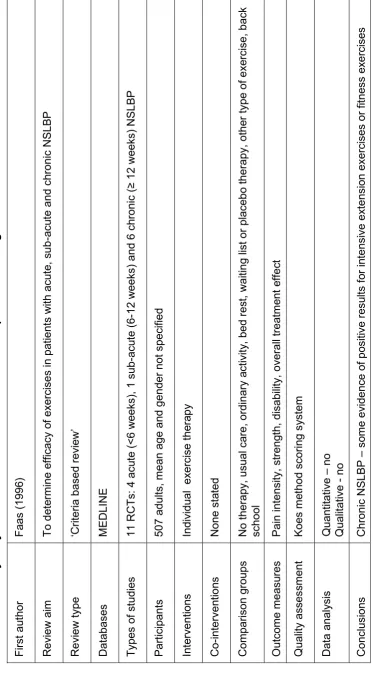
Table 2.2 Summary of systematic reviews retrieved for closer inspection following database search ... 41
Table 2.3 Key words used for searching electronic databases ... 57
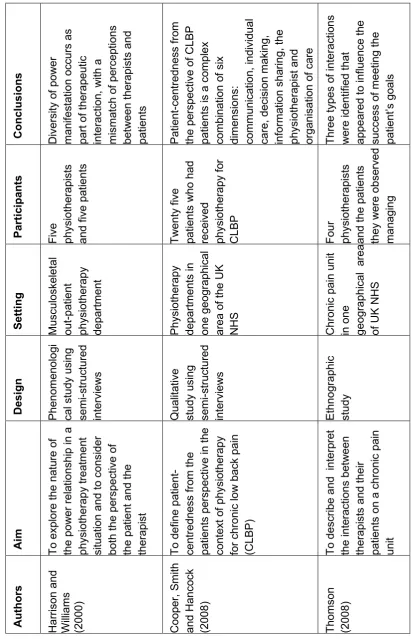
Table 2.4 Summary of qualitative studies ... 60
Table 2.5 Summary of systematic reviews ... 71
Table 3.1 The six phases of thematic analysis (reproduced from Braun and Clarke, 2006) ... 136
Table 3.2 Criteria to critically appraise findings from qualitative research (adapted from Lincoln and Guba, 1985 and Finlay, 2006) ... 150
Table 4.1 Summary of participant physiotherapists’ key characteristics 158 Table 4.2 Themes and sub-themes relating to the characteristics and processes of exercise prescription and the degree to which physiotherapists involve patients with NSCLBP in decisions regarding their care ... 159
Table 5.1 Age and gender distribution of individual interviewees ... 201
xii
Table 5.3 Themes and sub-themes relating to the experiences,
information and decision support needs of patients with NSCLBP ... 202 Table 6.1 Contrasting the study findings to the key elements of
shared decision making ... 230 Table 6.2 Potential barriers to sharing decisions identified from this
study ... 243
List of Figures
Figure 1.1 Spectrum of patient clinician interaction (Elwyn, Edwards
and Kinnersley, 1999) ... 18 Figure 2.1 Results of search strategy (1) ... 37 Figure 2.2 Results of search strategy (2) ... 58 Figure 2.3 Patient reported dimensions of patient-centredness
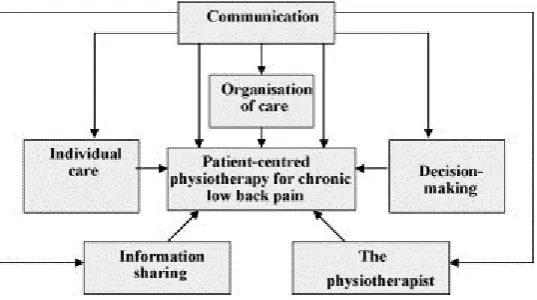
(Reprinted from Cooper, Smith and Hancock, 2008, with permission
from Elsevier) ... 63 Figure 3.1 Use of the hermeneutic circle as applied to this study
(adapted from Paterson and Higgs, 2005) ... 88 Figure 3.2 The sequence of interviews with and observations of
physiotherapists and their patients ... 106 Figure 3.3 Example of blank contact summary sheet (see Appendix I
for a completed example) ... 114 Figure 3.4 An example of the two analyses conducted on each
section of transcript, together with the resolved interpretation in the
Glossary
Adherence: The extent to which a person’s behaviour corresponds with agreed recommendations from a healthcare provider (WHO, 2003).
Bias: Factors other than those investigated, which may influence the findings of a study (Parahoo, 2006).
Biomedical Model: The traditional approach to the diagnosis and treatment of illness. The physician focuses on the defect, or dysfunction, within the patient, using a problem-solving approach. The medical history, physical examination, and diagnostic tests provide the basis for the identification and treatment of a specific illness. The medical model is thus focused on the physical and biologic aspects of specific diseases and conditions (Waddell, 1993).
Biopsychosocial Model: Is a general model or approach positing that biological, psychological and social factors, all play a significant role in human functioning in the context of disease or illness. Indeed, health is best understood in terms of a combination of biological, psychological, and social factors rather than purely in biological terms (Waddell, 1993).
Bracketing: Scientific process in which a researcher suspends or holds in abeyance his or her presuppositions, biases, assumptions, theories, or previous experiences to see and describe the phenomenon (Gearing, 2004). Codes: Identify a feature of the data that appears interesting to the analyst, and refers to the most basic segment, or element, of the raw data or
information that can be assessed in a meaningful way regarding the phenomenon (Braun and Clarke, 2006).
xiv
Compliance: The extent to which the patient’s behaviour matches the healthcare provider’s recommendations (WHO, 2003).
Conceptual (theoretical) framework: The use of concepts and/or theories to underpin a study (Parahoo, 2006).
Concordance: Involvement of patients in decision making, in which the health professional and the patient have an equal partnership. They share their knowledge and experiences with each other so that an understanding can be reached and a decision about the management of a condition can be made (Moffat, 2004).
Confirmability: Is concerned with ensuring that the researcher can be shown to have acted in good faith. Not overtly allowing personal values or theoretical inclinations manifestly to sway the conduct of the research and findings derived from it (Lincoln and Guba, 1985).
Constructivism: Is a theory to explain how knowledge is constructed when information comes into contact with existing knowledge that has been developed by experiences (Hammersley, 2000).
Credibility: The extent to which the findings of a study reflect the experience and perceptions of those who provided the data. They must also be credible to those who subsequently read the report (Parahoo, 2006).
Dependability: A term used as a parallel to reliability in quantitative
research. One way for a research study to demonstrate dependability is for the process to be audited (Lincoln and Guba, 1985).
Effectiveness: The extent to which a specific intervention, when used under ordinary circumstances, does what it is intended to do. Clinical trials that assess effectiveness are sometimes called pragmatic or management trials (Parahoo, 2006).
Epistemology: The theory or science of the method or grounds by which knowledge is developed (Blaikie, 2000).
Equipoise: A situation in which a healthcare professional (and/or patient) does not have a clear preference as to which treatment option should be chosen (Elwyn et al., 2000).
Evidence based medicine: The conscientious, explicit and judicious use of current best evidence in making decisions about the care of individual patients. The practice of evidence-based medicine means integrating individual clinical expertise and patients values and expectations with the best available external clinical evidence from systematic research (Sackett et al., 1996).
Exercise (for spinal pain): Physical exertion, with instruction or advice of a physiotherapist, aimed at gaining increased movement of spinal joints,
increased strength of spinal muscles, increased general fitness, building core stability and/or reducing symptoms. (CSP, 2006).
Exercise prescription: A specific plan of fitness or health-related activities that are designed for a specified purpose, which is often developed by a fitness or healthcare specialist for and in collaboration with the patient. Due to the specific and unique needs and interests of the patient, a successful prescribing process will be an agreement that builds on the experiences, beliefs and wishes of the patient to decide whether, when and how they exercise. The goal of exercise prescription should be successful integration of exercise principles and behavioral techniques that motivates the
participant to achieve their goals (Suleman and Heffner, 2008).
Fusion of Horizons: Describes the activity of understanding. Each individual occupies a horizon and in attempting to understand another thing or person or text they extend their own horizon to embrace and ‘fuse’ with that of another (Lawn, 2012).
xvi
understanding is achieved by the circular process of comparing the whole text with its constituent parts (Koch, 1999).
Hermeneutics: The theory or philosophy of the interpretation of meaning of a text. The main objective of hermeneutics is human understanding,
understanding what people say and do, and why (Koch, 1996).
Heterogeneity: The condition or state of being different in kind or nature (Parahoo, 2006).
Homogeneity: Of the same kind or nature; essentially alike (Parahoo, 2006). Hypothetico-deduction: A research strategy designed to test a hypothesis. A hypothesis is developed from a theory using deductive logic, and then tested using a research method, commonly a comparative experiment. If the hypothesis is not corroborated by the experiment (i.e. it is falsified), then the theory it is derived from is called into question (Edwards and Richardson, 2008).
Interpretivism: Is the belief that people continuously make sense of the world around them and different people may have different interpretations of the same phenomena. Interpretivism is a blanket term for a collection of approaches broadly called ‘qualitative’ that share an opposition to the logical ‘positivists’ notion of studying people as objects (Parahoo, 2006).
Meta-analysis: Is a form of research on research. It refers to methods focused on contrasting and combining results from different studies, in the hope of identifying patterns, sources of disagreement, or other interesting relationships that may come to light in the context of multiple studies (Parahoo, 2006).
Minimal Clinically Important Difference: Minimal clinically important differences (MCID) are patient derived scores that reflect changes in a clinical intervention that are meaningful for the patient (Wright et al., 2012). Non-specific low back pain: Non-specific low back pain is tension,
including the joints, discs and connective tissues, may contribute to symptoms. The lower back is commonly defined as the area between the bottom of the rib cage and the buttock creases. Some people with
non-specific low back pain may also feel pain in their upper legs, but the low back pain usually predominates. The syndrome of radicular pain due to nerve root compression (sometimes called sciatica) is a different clinical syndrome (NICE, 2009).
Objectivity: A term used in research approaches in which the researcher remains detached from respondents by not letting their subjective views influence the data they collect and analyse (Parahoo, 2006).
Ontology: A direction in philosophy concerned with the nature of being and existence. Ontology describes structures, their properties and powers, and the interplay of mechanisms which produces events (Holloway, 1997).
Outcome measures: A physical therapy outcome measure is ‘a test or scale administered and interpreted by physical therapists that has been shown to measure a particular attribute of interest to patients and therapists and is expected to be influenced by intervention’ (Mayo et al., 2011).
Patient-centred care: Care that is respectful of and responsive to individual preferences, needs and values, and ensures that patient values guide all clinical decisions (Committee on Quality of Health Care in America, Institute of Medicine Report - Crossing the Quality Chasm, 2001).
Phenomenology: The study of things as they appear to us - as they are perceived and experienced. In a general sense, phenomenology often means ‘in terms of (our) experience’. The phenomenology of everyday life refers to our lived experience and consciousness (Hartwig, 2007).
xviii
positivism should be compared with the more subtle approach which has come to be known as post-positivism (Holloway, 1997).
Post Modernism: This is an intellectual movement (towards the end of the 1950s) which rejects the notion of ‘truth’ and ‘reality’ as objective, and
rationalism as the only way to think. Post modernists believe that knowledge is co-created (by participants and researchers) (Parahoo, 2006).
Preference sensitive: In circumstances where there are a number of options leading to different outcomes, and the ‘right’ decision depends on a patient’s own particular set of needs and outcome goals, the condition is said to be preference-sensitive (Wennberg, 2010).
Prejudices (pre-understandings): Is a central concept in hermeneutics. Gadamer (1976) argued that prejudice is not something negative, erroneous or something we should try to eliminate, but that instead we only have
access to the world through our prejudices, It is not so much our judgements as our prejudices that constitute our 'being'. Gadamer believed that it is impossible not to take them into the process of interpretation, arguing that it is only through our ‘prejudices’ that we can begin to understand, in other words there can be no understanding without having first understood (Gadamer, 1976).
Purposive sampling: This type of sampling involves the researcher
deliberately choosing who to include in the study on the basis that these are the best available people to provide data on the issues being researched (Mays and Pope, 2000).
Randomisation: The process of allocating participants by chance to separate groups that compare different treatments or other interventions. Randomisation gives each participant an equal chance of being assigned to any of the groups (Parahoo, 2006).
Respondent validation: Respondent validation, or as described in this research ‘text interpretation summaries’ includes techniques in which the investigator's account is compared with those of the research participants to establish the level of correlation (Mays and Pope, 2000).
Self-efficacy: Is the term used to describe how people judge their own competence or ability to succeed in specific situations to complete tasks and reach goals (Bandura, 1977).
Self-Management: Is an individual’s ability to manage the symptoms, treatment, physical and psychosocial consequences and lifestyle changes inherent in living with a chronic condition. Efficacious self-management encompasses ability to monitor one’s condition and to effect the cognitive, behavioural, and emotional responses necessary to maintain a satisfactory quality of life (Barlow et al., 2002).
Self-Management Support: The assistance caregivers give patients with chronic disease in order to encourage daily decisions that improve health related behaviours and clinical outcomes. Self-management support can be viewed in two ways: as a portfolio of techniques and tools that help patients choose healthy behaviours; and a fundamental transformation of the patient– caregiver relationship into a collaborative partnership (The Health
Foundation, 2011).
Shared decision making: Shared decision making is a process in which clinicians and patients work together to clarify treatment, management or self-management support goals, sharing information about options and preferred outcomes with the aim of reaching mutual agreement on the best course of action (Coulter and Collins, 2011).
Systematic Review: A form of literature review in which all available research studies on a particular topic are identified, analysed and synthesised (Parahoo, 2006).
xx
set in (rich) detail, and interprets various aspects of the research topic (Attride-Stirling, 2001).
Themes: A theme captures something important about the data in relation to the research question, and represents some level of patterned response or meaning within the data set (Braun and Clarke, 2006).
Transferability: A term used as a parallel to external validity or
generalisability in quantitative research. A rich account or ‘thick description’ of the research findings will allow others to make a judgement about the possible transferability of the findings to other situations (Lincoln and Guba, 1985).
Triangulation: Is a process by which the same problem or phenomenon is investigated using a combination of different methods, theories, data and/or researchers in the study (Flick, 2007).
Trustworthiness: Confidence that the data is accurate and reflects reality. It establishes and assesses the quality of qualitative research that provides an alternative to reliability and validity (De Poy and Gitlin, 1998).
Abbreviations
ACSM: American College of Sports Medicine CDSR: Cochrane Database of Systematic Reviews CLBP: Chronic Low Back Pain
CSAG: Clinical Standards Advisory Group CSP: Chartered Society of Physiotherapy
DARE: Database of Abstracts of Reviews of Effects DESIs: Decision Support Interventions
DH: Department of Health GP: General Practitioner
HEP: Home Exercise Programme
HPC: Health and Care Professions Council iCSP: interactive CSP
IU: Intolerance of Uncertainty LBP: Low Back Pain
MCID: Minimal Clinically Important Difference MESH: Medical Subject Headings
MSk: Musculoskeletal
NHS: National Health Service
NHS R&D: National Health Service Research and Development NICE: National Institute for Health and Clinical Excellence NSCLBP: Non-specific Chronic Low Back Pain
xxii
OR: Odds Ratio
PEDro: Physiotherapy Evidence Database PPA: Physiotherapy Pain Association
RCGP: Royal College of General Practitioners RCTs: Randomised Controlled Trials
REC: Research Ethics Committee SRs: Systematic Reviews
UK: United Kingdom
Chapter 1: Introduction and Thesis Overview
1.0 Introduction
In this thesis I have used a hermeneutic research approach to explore the concept of exercise prescription as applied to patients presenting with non-specific chronic low back pain (NSCLBP) and to contribute to a broader understanding and interpretation of the patients’ involvement in the decision making process. The study is introduced in this chapter. Firstly, I discuss the background to the clinical problem of NSCLBP, and introduce the role of exercise in its management. I then provide background information on the evolution of the patient-centred care approach, models of shared decision making, and how these fit with the philosophy of physiotherapy clinical practice. I will then discuss my personal and professional motivation for the study. Finally, I will provide a brief summary of the following chapters in this thesis.
1.1 Background – epidemiology and historical context
C h a p t e r O n e : I n t r o d u c t i o n a n d T h e s i s O v e r v i e w | 2
Back pain has typically been regarded as either ‘acute’ or ‘chronic’, with the literature offering different definitions in terms of time as to what constitutes acute or chronic low back pain (CLBP). CLBP is a long term condition commonly encountered by physiotherapists, which has typically been defined as ‘pain that continues for longer than 3-6 months’ (Spitzer, Le Blanc and Du Puis, 1987; Hayden, van Tulder and Tomlinson, 2005a; van Middelkoop et al., 2010) and has been regarded by some as likely to continue indefinitely. However, Von Korff and Saunders (1996) propose that the course of back pain for most people presenting in primary care is recurrent and therefore not acute or chronic in the usual sense of these terms. Within the first year after an acute episode, 60-80% of patients will suffer a recurrence, suggesting that classifying patients with back pain as acute or chronic based on the duration of the initial episode alone may be inadequate. More recent guidelines (Chartered Society of Physiotherapy (CSP), 2006; National Institute for Health and Clinical Excellence (NICE), 2009) have used the term ‘persistent’ to describe pain that has been present for at least six weeks which may resolve partially or fully but may often recur. The term ‘persistent’ describes recurring pain of this nature more precisely than the word ‘chronic’, but for the purposes of this study the term chronic will be employed, as it continues to be the term most widely used in the literature.
“Non-specific low back pain is tension, soreness and/or stiffness in the lower back region for which it is not possible to identify a specific cause of the pain. Several structures in the back, including the joints, discs and connective tissues, may contribute to symptoms. The lower back is commonly defined as the area between the bottom of the rib cage and the buttock creases. Some people with non-specific low back pain may also feel pain in their upper legs, but the low back pain usually predominates. The syndrome of radicular pain due to nerve root compression (sometimes called sciatica) is a different clinical syndrome” (NICE, 2009 p.4).
Although an advocate of diagnostic triage, Waddell (2005) has suggested that non-specific low back pain (NSLBP) is not a good clinical diagnosis as it fails to provide any biological basis for real understanding, with treatment often being based on unproven hypotheses. Attempts have been made to achieve consensus on the sub classification of LBP (McCarthy et al., 2006), however NSLBP currently largely remains the accepted and agreed terminology.
For the purposes of this study I have defined non-specific chronic low back pain (NSCLBP) as:
Pain persisting for 8 weeks or more, or more than 3 episodes of pain within a 12 month period to reflect the recurrent nature of the condition. Eight weeks was chosen as it is considered to be beyond the period of spontaneous recovery for most LBP (Pengel et al., 2003).
C h a p t e r O n e : I n t r o d u c t i o n a n d T h e s i s O v e r v i e w | 4
Diehl and Rosenthal (1986) concluded that patients who were advised to take 2 days bed rest returned to work faster than those advised to take 7 days. These two studies radically changed the approach to the management of LBP, forming the basis for the Clinical Standards Advisory Group (DH, 1994) recommendations that shorter periods of bed rest were better than longer periods and prompting a change to a more active exercise based approach to the management of LBP.
The concept of exercise as a method to improve general (physical and psychological) well-being is not new, but began in the 1960s with the ‘Sport for All’ initiative in the UK. The emphasis was not on high levels of fitness and intensive exercise but on promoting moderate exercise to improve general health. More recently Sir Liam Donaldson in his official annual report ‘On the State of the Public Health’ (DH, 2009) described exercise as nature’s cure, with physical activity being crucial to good health. He is quoted as saying:
“The potential benefits of physical activity to health are huge. If a medication existed that had a similar effect on preventing disease, it would be hailed as a wonder drug or miracle cure” (DH, 2009 p.21). Aspects of exercise can be defined in many different ways according to intention, outcome and location. In terms of intention Caspersen, Powell and Christenson (1985) distinguish between physical activity and exercise, with physical activity defined as:
“Any bodily movement produced by skeletal muscles that results in energy expenditure” (Caspersen, Powell and Christenson, 1985 p.127).
and exercise defined as:
Distinctions can be drawn in terms of the outcome of the behaviour, for example intensive physical exercise that improves cardiovascular fitness and moderate physical exercise that improves general health status, and in terms of location; occupational activity performed as part of the individual’s work, and leisure activity carried out in the individual’s leisure time.
Since the 1980s, research literature has increasingly explored advice to stay active and exercise in the management of LBP. van Tulder, Koes and Bouter (1997) concluded that exercise can be a relatively inexpensive, easily administered treatment method, which may prove to be the most effective solution for patients whose pain appears to be so resistant to many other treatment options. However, the usefulness of exercise has not gone entirely unchallenged, and a number of questions regarding its exact prescription and method of application still remain to be answered.
1.2 Exercise and chronic low back pain
The search for effective interventions for LBP has resulted over the past three decades in moves towards a biopsychosocial approach to the management of LBP (Waddell, 1993; DH, 1994; Von Korff and Saunders, 1996; Croft et al., 1996). The available evidence suggests that as LBP becomes chronic, psychosocial factors become more important, and a purely passive approach to management should be avoided in favour of active exercise and rehabilitation. Emphasis should be on encouraging patients to stay active and continue normal daily activities, gradually increasing their physical activities along with encouragement to stay at or return to work as early as possible, with information designed to enhance the patient’s ability to self-manage their problem (Waddell, 1993; DH, 1994; May, 2001a; 2001b). These recommendations are in keeping with pain theory regarding the importance of self-management, self-efficacy and a ‘hands-off’ approach in the management of CLBP (Thacker, 1997; Moseley, 2003).
C h a p t e r O n e : I n t r o d u c t i o n a n d T h e s i s O v e r v i e w | 6
exercise therapy in the management of persistent or CLBP (for example, Frost et al., 1995 and 1998; Klaber Moffett et al., 1999; Mannion et al., 1999; van Tulder et al., 2000; Freidrich et al., 2005; Hayden, van Tulder and Tomlinson, 2005a; Hayden et al., 2005b; Airaksinen et al., 2006; CSP, 2006; Hettinga et al., 2007; NICE, 2009). As a result of the generally positive research evidence, exercise is consistently recommended in current treatment guidelines for the management of non-specific chronic low back pain (NSCLBP).
The European Guidelines for the Management of NSCLBP (Airaksinen et al., 2006) provide scientific evidence from RCTs endorsing the use of exercise. In the Chartered Society of Physiotherapy’s (CSP) ‘Clinical Guidelines for the Physiotherapy Management of Persistent Low Back Pain’ (CSP, 2006), the key clinical recommendation for exercise was that people with persistent LBP should be given the opportunity to participate in an exercise programme, in a form appropriate and acceptable to each individual, following physiotherapy assessment.
These recommendations were further endorsed by the NICE (2009) published guidelines for the ‘Early Management of Persistent Non-specific LBP’, where again the key recommendation was that patients should be advised to remain active:
“Advice should be given to people with low back pain that staying physically active and exercising is likely to be beneficial, with consideration given to offering a structured exercise programme tailored to the person which may include the following elements: aerobic activity, movement instruction, muscle strengthening, postural control and stretching” (NICE, 2009 p.10).
and that care should be patient-centred, with the patient actively involved in decisions concerning their care:
It is now common practice for exercise to form part of the management offered to patients with NSCLBP. It encompasses a heterogeneous group of interventions ranging from general physical fitness or aerobic exercise, to muscle strengthening, various types of flexibility and stretching exercises. In physiotherapy clinical practice, an exercise prescription may be influenced by a number of factors, and can vary greatly in content and method of delivery (Battie et al., 1994; Foster et al., 1999; Gracey, McDonough and Baxter, 2002; Byrne, Doody and Hurley, 2006; Liddle, Baxter and Gracey, 2009). Exercise prescription is a term that is used in clinical practice and in the literature (Freburger et al., 2009; Slade, Molloy and Keating, 2009a) although a convincing definition to explain what is meant by the term is often absent. To many a prescription may be seen as a way of transmitting authority and imparting a recommendation to a patient. For the purposes of this study it is defined as:
“A specific plan of fitness or health-related activities that are designed for a specified purpose, which is often developed by a fitness or healthcare specialist for and in collaboration with the patient. Due to the specific and unique needs and interests of the patient, a successful prescribing process will be an agreement that builds on the experiences, beliefs and wishes of the patient to decide whether, when and how they exercise. The goal of exercise prescription should be successful integration of exercise principles and behavioral techniques that motivates the participant to achieve their goals” (Suleman and Heffner, 2008 p.1).
C h a p t e r O n e : I n t r o d u c t i o n a n d T h e s i s O v e r v i e w | 8
Researchers have considered patient non-compliance to be one of the most significant problems in current clinical practice which may be reflective of poor communication within the consultation and a failure to take account of patients’ beliefs, expectations and personal autonomy to make choices regarding preferences for treatment (Slade, Molloy and Keating, 2009a, 2009b).
Providing an effective management plan incorporating an exercise prescription within the limits of time that a busy clinician faces is a challenging task. There is a tension between the demands of managing patient beliefs, expectations and anxieties and those of managing risk and managing time, with clinicians often seeking to control consultations in order to manage their time effectively (Dean et al., 2005). Slade, Molloy and Keating (2009a) indicated that patient-centred care and shared decision making are important for people with NSCLBP, calling for further research into the methods used to prescribe exercise.
1.3 Involving patients in clinical decision making: Evolution of the patient-centred approach
As early as the 1970s the World Health Organisation (WHO) advocated that patients should be encouraged to participate in their healthcare (Bissell, May and Noyce, 2004). Over the past two decades there has been a gradual shift towards patient-centred care, particularly following publication of the Institute of Medicine's landmark paper, ‘Crossing the quality chasm’ (Committee on Quality of Health Care in America, 2001). This contemporary interest in involving patients in decisions about their own healthcare has been further shaped by a complex array of factors including:
Increased range of health care options and interventions. Choosing between these options may involve a balance between benefits, harms and uncertainties.
People becoming more autonomous and taking responsibility for their health and their healthcare, with a resulting increase in consumerism in healthcare focusing on patients’ rights.
The development of evidence based medicine and the increased availability of information relating to the likely outcomes of health care options (Edwards and Elwyn, 2009 p.17).
Despite the broad consensus that patient involvement is a good thing there are differences of opinion about what it might look like and how it should be promoted in practice, although a dominant basic conceptualisation has been identified which focuses on:
Health professionals’ disclosure and patients’ understanding of information about a range of healthcare options and their likely outcomes.
The question of who makes the decision and whether the chosen option is congruent with the patient’s values and preferences (Charles, Gafni and Whelan, 1997).
C h a p t e r O n e : I n t r o d u c t i o n a n d T h e s i s O v e r v i e w | 10
Elwyn, Edwards and Kinnersley (1999) have argued that the process of shared decision making is integral to the wider concept of patient-centred care. Weston (2001) has referred to shared decision making as the crux of patient-centred care, in which the decision making process is jointly shared by patients and their healthcare provider. It is characterised by a broad balance in power and symbolic resources for each participant, the agenda is negotiated, the patient’s values explored, and the clinician takes an advisory role regarding the patient’s goals and decisions.
The concepts of patient-centred care and shared decision making will now be explored to clarify the differences and relationships between the two from the perspectives of the encounter between patients and healthcare providers.
1.3.1 Patient-centred care
Patient-centred medicine was introduced as ‘another way of medical thinking’ by Michael and Enid Balint (1969). The goal was to understand the complaints offered by the patient, and the symptoms and signs found by the doctor, not only in terms of illnesses, but also as expressions of the patient’s unique individuality, his conflicts and problems. Stewart et al. (2003) assert that patient-centred care requires a willingness to become involved in the full range of difficulties patients bring to their doctors, and not just their biomedical problems. Two key distinctions have been identified in the literature which help clarify what patient-centred care is.
Patient-centred care is also contrasted with clinician-centred healthcare, geared to serve the interests of the professions or individuals who provide services rather than the persons seeking care. Balint et al. (1993, p.13) have described this as ‘one person medicine’. In comparison patient-centred care is ‘two person medicine’ where the clinician and patient are working in partnership (Duncan, Entwistle and Liddle, 2010).
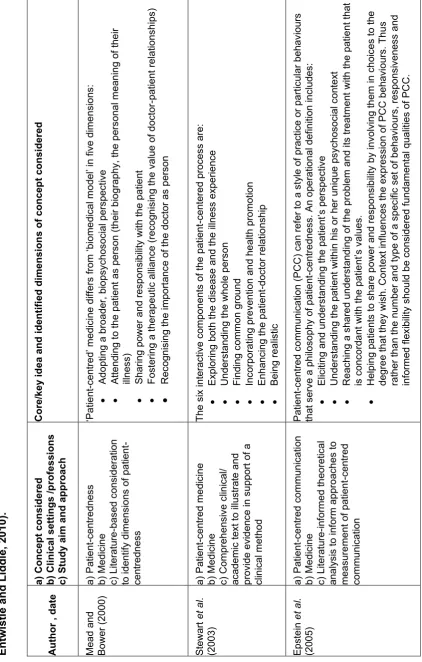
Early in its evolution the lack of a clear definition of patient-centredness hampered conceptual developments. A number of associated terms have appeared in the clinical and academic literature such as patient-centred care, person-centred care and client-centred care. Although distinctions can be made according to the context and issues to be emphasised there is sufficient similarity to treat them as variations on a theme. Table 1.1 outlines the core understandings of patient-centred care (including ideas about its main dimensions) from 9 papers covering different healthcare disciplines published over the past decade.
C h a p t e r O n e : I n t r o d u c t i o n a n d T h e s i s O v e r v i e w | 12 Ta ble 1. 1 D imens ion s o f pa ti en t (pe rson ) ce nt red ca re as ide nt if ied f rom ke y co nc ep tua l w ri ti ng s (ad ap ted f ro m D u nc an , E ntw ist le and Lidd le, 2 01 0). Co re/k ey id ea and iden tif ied d imen sion s of con ce p t con sider ed ‘P a tie nt -c en tr e d’ me d ic ine di ff ers fr om ‘bi om e di ca l m o de l’ i n f iv e d ime ns io ns : A do pti ng a b roa de r, bi o ps yc ho soc ial pe rs pe ct iv e A tte nd ing t o t h e p ati en t as pe rs on ( th ei r b io graphy , the pe rs on a l m ea n in g o f the ir ill ne ss ) S ha ri ng po w er an d res po ns ibi lity wi th t h e p a tie nt F os teri ng a the rap eu tic al lian ce (r ec og n is in g t he v a lue of d oc tor -pa tien t r el ati on sh ips ) Rec og n is in g t h e i mp ort an ce o f t he do ctor as p ers on T he s ix inte rac tiv e c om po n en ts of t he pa tien t-cen tere d proc es s are: E xpl or ing bo th t h e d is ea se an d t he il lne ss ex p erie nc e Unde rs ta nd ing t h e w ho le p ers on F ind ing c om m on groun d Inc orpor at ing prev en tio n a n d h e al th p ro mo tion E nh an ci ng t he p ati en t-d oc tor r el at io ns hi p B ei ng r e al is tic P at ien t-ce ntred c o mm un ic a tion ( P CC) c a
n refer t
o a s ty le o f prac tic e or part ic ul ar beh av iou rs tha t s erv e a ph ilos o ph y of p ati e nt -c en tr e dn es s. A n o pe rati on al de fin iti on inc lud es : E lic iti ng an d un de rs tan di n g th e pa tien t’s pe rs p ec tiv e Unde rs ta nd ing t he pa tien t wi th in hi s or he r un iq ue ps yc ho soc ial c on tex t Reac hi ng a s ha re d u n de rs tan d ing of the pr ob lem an d its treatm en t w ith th e pa tie n t th at is c on corda nt w ith the pa tie nt’ s v al ue s. Hel p in g p a tie nts to s h are p ower an d res po ns ib ili ty by inv ol vi n g t h em in c h oi ces t o th e de gre e t h at th ey wi sh. Con tex t i nf lu en ces th e e xpres si on of P CC be ha vi ou rs . Thu s rath er th an t he nu m be r a n d ty pe of a s pe ci fic s et of b e ha vi o urs , res po ns iv e ne ss a nd info rme d flex ibi lity s ho u ld b e c on si d ered fun da m en tal qu a lit ies of P C C. a) Co n ce p t con sid er ed b ) Clinical se tt ing s / p ro fe ss ion s c) Stu d y a im an d app ro ac h a) Pa tie nt -c en tr ed ne ss b) Med ic in e c) Li terat ure -ba sed c on si de rati on to ide nt ify d im en si o ns of pa tien t-cen tr ed n es s a) Pa tie nt -c en tr ed me di ci ne b) Med ic in e c) Com preh en si ve c lin ic al / ac ad em ic te xt t o i llus tr ate a nd prov ide ev id en ce in s u pp ort of a cl in ic al me tho d a) Pa tie nt -c en tr ed c om m un ic ati on b) Med ic in e c) Li terat ure -inf orme d t h eo reti ca l an a ly si s to info rm ap pro ac h es to me as ure me n t o f pa tien t-cen tr ed com mu ni cat ion Au th o
r , dat
[image:35.595.131.554.82.745.2]Co re/k ey id ea and iden tif ied d imen sion s o f con ce p t con sider ed T he pe rs o n -c en tr ed proc es ses that o pe rat io na liz e p ers on -c en tr ed nu rs ing inc lu de : W ork in g w ith the pa tien t’s b el iefs an d v al ue s S ha ri ng de ci si on ma ki ng E ng ag e me n t (c on n ec tin g w ith the pa tien t i n r el ati on shi p) Hav ing s ymp at he tic pres en ce (r ec og ni si ng an d r es po n di n g a p propr iate ly to t he un iqu e ne ss of t he ind iv id ua l) P rov id ing fo r p hy si cal ne e d s T he ide a of p ower c a n s erv e a s a ce ntral orga ni si ng fr am ew ork fo r th ink ing a bo u t c lie nt -c en tr ed prac tic e. Is sue s r e lat ing to po wer c a n be ad dres sed th rou gh t he ra pi sts : Li sten in
g (to c
lie nts ’ c on cer ns an d pe rs pe ct iv es ) an d c om m un ic a tin g A do pti ng pa rtne rs h ip (as c o ntras ted w ith au tho ri tari an ) way s of work ing E ns uri ng c lien ts ha ve c h oi ces Ma inta in ing c lie nts ’ ho p e T he c on cep t o f pe rs on -c en tr ed ne ss ha s be e n i ntrod uc ed into the fi e ld of re ha b ili ta tion from vario us s ou rc es . It is m ul tid ime ns io na l, h av ing fou r ma in m e an ing s: A dd res si ng t he p ers on ’s s p ec ifi c a nd ho lis tic pr op ert ie s A dd res si ng t he p ers on ’s di ffi cul ties in e very d ay li fe Rega rd in g th e p ers o n a s a n e xpe rt w ho s h ou ld p arti ci pa te ac tiv e ly in the ir r eh ab ili tat ion Res pe cti ng t he p ers on ‘be h ind ’ th e i mp ai rm en t or di se as e a) Co n ce p t con sid er ed b ) Clinical se tt ing s / p ro fe ss ion s c) Stu d y a im an d app ro ac h a) Pe rs on -c en tr ed nu rs in g b) Nur si ng c) Li terat ure -ba sed de ve lo p me nt of a f ram ework ( the ory ) c ov erin g: prer eq u is ites ; en vi ro nm en t; proc es ses ; a nd ou tc o me s o f pe rs on c en tr ed n urs ing a) Cli en t-cen tr ed prac tic e b) O cc up ati o na l th erapy c) Li terat ure r ev ie w ( the ma tic an a ly si s) to en ha nc e g e ne ral un de rs ta nd ing of key e le m en ts of cl ien t-cen tr ed prac tic e a) Pe rs on -c en tr ed n es s b) Reha bi litat ion c) Li terat ure r ev ie w: c on ce ptu a l an d hi stor ic al an a ly si s. Au th o
r , dat
C h a p t e r O n e : I n t r o d u c t i o n a n d T h e s i s O v e r v i e w | 14 Co re/k ey id ea and iden tif ied d imen sion s of con ce p t con sider ed S ix d im en si o ns of pa tien t-cen tr ed c ar e f rom th e pe rs p ec tiv e o f pa tie nts ex pe ri en ci ng c hro ni c low ba ck pa in we re i de nt ifi ed : Comm un ic ati on Ind iv idu al c are Dec is io n m ak ing Inf orm ati on T he ph ys io th erapi st O rga ni sat io n o f c are T he ‘c e ntral orga ni zi ng pe rs pe cti ve’ of p ati en t-cen tr ed c are i s al lev iat ing v u ln erab ili ties . V ul ne ra bi lit ies inc lu de bo th com prom is ed ph ys io log ic a l s tat es ( whi ch pa tie nts s ee k he lp fo r) an d threats to in di vi du al ide nti ty ( whi ch c are prov is ion c an aff ec t p os iti vel y or ne g ati ve ly ). T he nu rs e -r e late d ‘ co nd iti o ns ’ fo r a llev ia tin g v ul ne ra bi liti es ( for p ati en t-cen tr ed c ar e) ar e: A pp ro ac he s p ati en t as an e xpe rien ci ng in di vi du a l, a u n iqu e wh ol e pe rs on ; G en erates a c arin g p res e n ce throug h v ari ou s m an ifes tat ion s of av ai lab ili ty , tra ns pa ren cy , mu tu al ity , c om pa ss ion an d con cern. E xhi b its s ki lls , k no w le dg e a nd c om pe te nc ies , an d prof iles as [c ha rac teri st ic al ly ] benev o le nt, a da p tiv e, cr e ati ve, sel f-aw are, a nd a l ife -l o ng lea rn er. Has a rul e o ri en tati on t ha t en ab les a pp ro pria te d ete rm ina tio n o f whe n a n d h ow t h e pa rti cu lar p ati en t s itua tio n d ic tat es d ev iat io n f rom es tab lis he d n orms an d s tan da rd s. F iv e c ate g orie s of p ati en t’s pe rs pe cti ves o f p a tie nt -c en tr ed ph ys ioth era py were ge ne rate d f rom the d ata : Cl ea r c o mm un ic a tio n Conf ide nc e K no w le dg e , e xpe rt is e a nd profes si o na lis m A n u nd ers ta nd ing of p eo pl e an d an ab ili ty to r e lat e T ran spa ren cy of progr es s a nd o utc om e a) Co n ce p t con sid er ed b ) Clinical se tt ing s / p ro fe ss ion s c) Stu d y a im an d app ro ac h a) Pa tie nt -c en tr ed ne ss . b) Ph ys io the ra py c) Fr am ework an al ys is of s em i-str uc tured p a tie nt inte rv iew s a) Pa tie nt -c en tr ed c are b) Ac ute he al th c are n urs in g (US A ) c) Li terat ure r ev ie w ( di me n si on a l an a ly si s s tr uc tured t o id en tify pe rs pe cti ve, con tex t, c on d iti on s, proc es ses an d c o ns eq u en ces ) to cl arif y m ea n ing of pa tien t-cen tr ed
care a) Pa
tie nt -c en tr ed c are b) Ph ys io the ra py c) G rou nd ed the ory an a ly si s of pa tien t s e mi -s tr uc ture d i nte rv iews Au th o
r , dat
As can be seen from Table 1.1 patient-centred care has been analysed and conceptualised in various ways. For example Stewart et al. (2003) and Epstein et al. (2005) have considered it as a set of practices or clinical behaviours to support achievement of a vision of care. McCormack and McCance (2006) regard it as a theoretical framework that encompasses a way of working, care processes and outcomes. In contrast the Institute of Medicine (Committee on Quality of Health Care in America, 2001) regard it as a care concept to be aspired to as an example of healthcare quality.
The lack of clarity and agreement in the literature about what patient-centred care is, means that the key question for healthcare providers who aspire to deliver patient-centred care is – ‘what do they need to do to achieve it?’ From the literature two features of clinical level interactions stand out as being particularly important:
Caregivers must have an awareness of and respect for individual patient beliefs, recognising that each patient is a unique and important individual (Michie, Miles and Weiman, 2003).
Caregivers must surrender the need to control and decide for patients and in turn provide support for personal autonomy and people’s ability to make choices and decisions. To successfully achieve this, a sharing of power and responsibility between the caregiver and patient based on mutual trust and respect in an effort to understand one another’s perspectives, find common ground, reconcile differences between these perspectives, and reach agreement on the best course of action is required (Robinson et al., 2008).
C h a p t e r O n e : I n t r o d u c t i o n a n d T h e s i s O v e r v i e w | 16
1.3.2 The patient as a unique individual
When considering the values and attitudes or the ‘how’ of patient-centred care, the information of interest should go further than identifying the signs and symptoms required to formulate a diagnosis. The patient-centred practitioner should attend, listen, ask questions and encourage patients to share relevant information in order to develop an understanding of the patient as a person in terms of their unique individuality, needs and problems (Mead and Bower, 2000; Stewart et al., 2003; Epstein et al., 2005; Leplege et al., 2007; Cooper, Smith and Hancock, 2008; Hobbs, 2009).
Providing information and checking people’s views and understanding about their condition or proposed management plan can all be taken as respect for the patient as a person with feelings and values that are important and not necessarily the same as those of the clinician or other patients (Burkitt-Wright, Holscombe and Salmon, 2004). Where clinicians show a positive interest and willingness to engage and respond to individual patient cues by acknowledging them in conversation, this is likely to be regarded as signalling respect for the patient as a unique individual.
Despite the fact that patient-centred care is multiply named and variously defined the most widely used and accepted definition is taken from the Institute of Medicine report ‘Crossing the Quality Chasm’ (Committee on Quality of Health Care in America, 2001). They defined patient-centred care as:
“Care that is respectful of and responsive to individual preferences, needs and values, and ensures that patient values guide all clinical decisions” (Committee on Quality of Health Care in America, 2001 p.6).
2010). The clinicians’ role should be in helping patients to review their own preferences by checking their understanding of the situation and how competent their reasoning has been (Bekker, 2010).
As the above definition from the Institute of Medicine (Committee on Quality of Health Care in America, 2001) implies, arguably the most important attribute of patient-centred care is the active engagement of patients in health care decisions which will now be considered in more detail.
1.3.3 Sharing power and responsibility and engaging patients in decision making
The literature reveals themes that identify that patients are not given enough influence, power or control in relation to their own healthcare to influence the decision making processes (Gafni, Charles and Whelan, 1998). The difficulties associated with clinicians apparently acting in patients’ best interests and the emergence of the notion of independent choice (Entwistle et al., 2010) has led to support for the idea that patients should be enabled to contribute actively to decision making.
C h a p t e r O n e : I n t r o d u c t i o n a n d T h e s i s O v e r v i e w | 18
Figure 1.1 Spectrum of patient clinician interaction (Elwyn, Edwards and Kinnersley, 1999).
Traditionally the dominant approach to making decisions in the medical encounter has been one of paternalism (Parsons, 1951). In this model the patient seeks expert help and is expected to comply with the advice or treatment regime. It is a consulting style characterised by the clinician taking control and doing what is thought best for the patient, providing treatments based on a medical model without eliciting their preferences or views. The informed choice model is at the other end of the spectrum and describes a process whereby clinicians offer information to the patients about treatment choices which they are then left to make, with control over decision making vested entirely with the patient.
Sharing information and sharing decisions are not the same, they are separate goals within the consultation and require different skills. Shared decision making cannot occur unless preceded by the sharing of information. It also requires specific attention to be paid to how decisions are made in the consultation and the reaching of agreement over the treatment decision (Elwyn, Edwards and Kinnersley, 1999).
As with patient-centred care, the concept of shared decision making has been variably and loosely defined (Charles, Gafni and Whelan, 1997, 1999; Jansen, 2001; O'Connor, Llewellyn-Thomas and Barry, 2004; Makoul and Clayman, 2006; Coulter and Collins, 2011). O'Connor, Llewellyn-Thomas and Barry (2004) defined it as:
Paternalistic Shared Informed decision making choice
[image:41.595.109.535.135.217.2]“The process of interacting with patients who wish to be involved in arriving at an informed, values-based choice among two or more medically reasonable alternatives (which may include ‘watchful waiting’)” (O'Connor, Llewellyn-Thomas and Barry, 2004 p.66).
This definition highlights the voluntary nature of the process, the scientific basis (‘medically reasonable’), the emphasis on values clarification in addition to information provision, and the possibility of arriving at a decision not to undergo treatment. A more recent definition has been offered by Coulter and Collins (2011):
“Shared decision-making is a process in which clinicians and patients work together to clarify treatment, management or self-management support goals, sharing information about options and preferred outcomes with the aim of reaching mutual agreement on the best course of action” (Coulter and Collins, 2011 p.2).
Models of shared decision making vary in the way they consider the roles and responsibilities of the patient and clinician. For example Towle and Godolphin (1999) suggest competencies for patients and clinicians as equal partners, whereas the model proposed by Elwyn et al. (2000) places more responsibility on the clinician to respond to or elicit the patient’s views. Questions have also been raised relating to patients’ preferred role in decision making, some suggesting that for shared decision making to occur, patients must share equally in the decision making process (Charles, Gafni and Whelan, 1997, 1999) while others contend that patients should only be involved in the decision making process to the extent that they desire (Edwards and Elwyn, 2006). Debate also exists as to whether the term ‘shared decision making’ implies the resulting or final decision be equally shared (Charles, Gafni and Whelan, 1997) or refers to sharing of the process (Edwards and Elwyn, 2006; Makoul and Clayman, 2006).
C h a p t e r O n e : I n t r o d u c t i o n a n d T h e s i s O v e r v i e w | 20
Table 1.2 Essential elements, ideal elements and general qualities of shared decision making: emphasis in commonly cited models (adapted from Makoul and Clayman, 2006).
Charles, Gafni and Whelan (1997)
Coulter (1997)
Towle and Godolphin (1999)
Elwyn et
al. (2000)
Essential elements
Define/explain problem x x
Present options x x x x
Discuss pros/cons (benefits and risks)
x x x x
Patients values/preferences x x x x
Discuss patient ability/self-efficacy Doctor knowledge/
recommendations
x
Check/clarify understanding x x
Make or explicitly defer decision x x x x
Arrange follow up x x
Ideal elements
Unbiased information x x
Define desire for involvement x x x x
Present evidence x x x
Mutual agreement x x x x
General qualities
Deliberation/ negotiation x x
Flexibility/ individualised approach x x x
Information exchange x
Involves at least two people x x
Middle ground x
Mutual respect x
Partnership x x x
Patient education x x
Patient participation x x
C h a p t e r O n e : I n t r o d u c t i o n a n d T h e s i s O v e r v i e w | 22
[image:45.595.120.530.234.702.2]In the absence of a physiotherapy model, the above medical models have been compared, and the key elements considered necessary for a shared decision making process have been developed on the basis of my reading into a conceptual framework and summarised in Table 1.3.
Table 1.3 Key proposed elements of shared decision making related to physiotherapy.
Key elements Descriptor
Develop a
partnership with the patient
Shared decision making involves at least two participants – the clinician and the patient (mutual participation). The patients’ preferences for participation are acknowledged Definition of the
problem and the options available
Clinician provides patient with information regarding diagnosis, prognosis and management options
Review of options pros and cons
Information is given to the patient on the management options risks and benefits in an unbiased way. It is also helpful to explore what other strategies patients feel may be available and relevant
Elicitation of
patients values and preferences
Patients may be uncertain when asked to integrate their own preferences, because it may be novel to some and they may feel unfamiliar with biomedical information. The skilled professional will help patients express their views and guide them to explore their feelings and reactions to the relevant choices
Clinician
recommendations
The clinician may share his treatment recommendation with the patient and/or affirm the patients treatment preference
Review of patient’s ability to implement plan
The clinician provides opportunities for patients to develop a sense of control and enhance their self-efficacy to implement management plan
Check for clarity and understanding
The clinician ensures the patient understands the management options, and by asking questions ensures that the information underlying their treatment preferences is based on fact and not misconception
Make a decision or defer until later
The above table is not designed to provide a standardised checklist of specific behaviours to be followed but aims to identify certain fundamental elements of a shared decision making process which, on a clinical level, is likely to be best achieved by fostering a real partnership. Many advocates of shared decision making suggest it as being most relevant in situations of uncertainty, in which no specific option exists that is best for everyone, and two or more clinically reasonable alternatives or ‘equipoise’ exists (which also includes the option to do nothing) (Elwyn et al., 2000). It may also be relevant where the patient has indicated a desire to participate in the decision making process (Whitney, McGuire and McCullough, 2004). In situations of equipoise, patients’ values and preferences may therefore be determinant in choosing a particular course of action and warrant patients’ participation in decision making (Elwyn et al., 2000).
1.4 Philosophy of physiotherapy and clinical practice
The physiotherapy profession does not have a rational theoretical framework that adequately describes and explains practice (Bithell, 2005). This has both theoretical and clinical importance as practitioners need to clearly distinguish the differences between patients’ experiences of acute and chronic forms of pain and disability (Edwards and Richardson, 2008).