Effect of short moderate intensity
exercise bouts on cardiovascular
function and maximal oxygen
consumption in sedentary older adults
Karani Magutah ,1 Kihumbu Thairu,2 Nilesh Patel2
To cite: Magutah K, Thairu K, Patel N. Effect of short moderate intensity exercise bouts on cardiovascular function and maximal oxygen consumption in sedentary older adults. BMJ Open Sport & Exercise Medicine
2020;6:e000672. doi:10.1136/ bmjsem-2019-000672
Accepted 6 February 2020
1Medical Physiology, Moi
University School of Medicine, Eldoret, Kenya
2Medical Physiology, University
of Nairobi, Nairobi, Kenya
Correspondence to
Dr Karani Magutah; kmagutah@ yahoo. com © Author(s) (or their employer(s)) 2020. Re- use permitted under CC BY- NC. No commercial re- use. See rights and permissions. Published by BMJ.
AbsTrACT
Aim To investigate effect of <10 min moderate intensity
exercise on cardiovascular function and maximal oxygen
consumption ( V˙ O2max) among sedentary adults.
Methods We studied 53 sedentary urbanites aged ≥50
years, randomised into: (1) male (MS) and (2) female (FS)
undertaking three short- duration exercise (5–10 min) daily,
and (3) male (ML) and (4) female (FL) exercising 30–60 min
3–5 days weekly. Resting systolic blood pressure (SBP),
diastolic blood pressure (DBP), heart rate and V˙ O
2max
were measured at baseline and 8 weekly for 24 weeks. results At baseline, 50% MS, 61.5% ML, 53.8% FS and
53.8% FL had SBP ≥120 mm Hg, and 14.3% MS, 53.8% ML,
23.1% FS and 38.5% FL had DBP ≥80 mm Hg. At 24 weeks,
where SBP remained ≥120 mm Hg, values decreased
from 147±19.2 to 132.3±9.6 mm Hg (50% of MS),
from 144±12.3 to 128±7.0 mm Hg (23.1% of ML), from
143.1±9.6 to 128.0±7.0 mm Hg (53.8% of FS) and from
152.3±23.7 to 129±3.7 mm Hg (30.8% of FL). For DBP
≥80 mm Hg, MS and FS percentages maintained, but values
decreased from 101±15.6 to 84.5±0.7 mm Hg (MS) and
99.0±3.6 to 87.7±4.9 mm Hg (FS). In ML and FL, percentage
with DBP ≥80 mm Hg dropped to 15.4% (86.1±6.5 to
82.5±3.5 mm Hg) and (91.4±5.3 to 83.5±0.71 mm Hg). V˙
O2max increased from 26.1±4.4 to 32.0±6.2 for MS, from
25.8±5.1 to 28.8±5.4 for ML (group differences p=0.02),
from 20.2±1.8 to 22.7±2.0 for FS and from 21.2±1.9 to
24.2±2.7 for FL (groups differences p=0.38).
Conclusion Accumulated moderate intensity exercise bouts of <10 min confer similar- to- better cardiovascular
and V˙ O
2max improvements compared with current
recommendations among sedentary adults.
InTroduCTIon
Recent revision of blood pressure (BP) guide-lines has increased the percentage of people in the high BP and hypertension category.1 2
This comes at a time of rising shift in lifestyles where, for example, in Eldoret, Kenya, our study setting, 82% of the elderly persons do not participate in regular exercise or phys-ical activity (PA) that would result in energy expenditure ≥1.5 metabolic equivalent (MET) minutes, and are therefore sedentary.3 4 Those
in high BP categories also form most of those reported in the current rise in sedentary- related health problems in sub- Saharan Africa.5–8 At a time when health benefits of
exercise are being widely promoted,9 the
reason for decrease in PA, a modifiable risk factor and with it accompanying cardiovas-cular health problems, is not clear. It is known that high peak maximal oxygen consump-tion ( V˙ O
2max) from increased leisure time
PA is correlated with reduced cardiovascular morbidity and mortality.10 Thus, there is a
need to change how existing recommenda-tions are promoted, or to develop exercise options which yield similar cardiorespiratory fitness and encourage exercise involvement.
There are many approaches to improve adherence and compliance of PA that have been tested. One approach is the use of shorter exercise sessions,11 but its adoption is
hindered by lack of sufficient supporting data. Opinions differ on the benefits of short exer-cise bouts,11–17 and a different approach in
regime, population or setting that addresses the lack of PA/exercise could be useful. In a previous study involving the same popula-tion as in this study, we found that shorter exercise sessions are beneficial in improving cardiometabolic markers and body composi-tion.18 19 However, the few studies that have
tested the effect of supervised exercise bouts on cardiac performance among the elderly
What are the new findings?
► Performing three bouts of moderate intensity
ex-ercise each lasting 5–10 min daily yields similar-
to- better maximal oxygen consumption ( V˙ O2max)
in sedentary adults compared with current WHO recommendations.
► Accumulating moderate intensity exercise
regard-less of bout length improves cardiovascular func-tions of blood pressure and heart rate in both males and females.
copyright.
on May 7, 2020 by guest. Protected by
have shown conflicting results.20–22 Therefore, further
studies especially among the lesser studied older seden-tary black adults are needed as this group shows >90% likelihood of developing hypertension in their lifetimes even when their mid- life BP are normal,23 24 under the
previous BP categorisation that had a higher cut- off point for normal ranges. Thus, in this study, we investigated the effect of moderate intensity jogging bouts lasting <10 min on BP, pulse pressure (PP) and heart rate (HR) and V˙
O2max among sedentary black adults who had a weekly MET minutes <600 min.9 25 The study involved <10 min
bouts in cumulative weekly minutes that matched the current WHO exercise prescription9 of 3–5 weekly
sessions each lasting ≥30 min.
MATerIAls And MeThods
Following a local print advertisement and using the WHO Global Physical Activity Questionnaire (GPAQ),25
between September 2016 and May 2017, we recruited 53 (27 males; 26 females) healthy sedentary volunteers aged ≥50 years from Eldoret, Kenya into this randomised controlled field trial. Eligibility for inclusion based on absence of physical injuries, cardiovascular disease (BP screening done at recruitment) or any recent treatment for cardiovascular disease. Hypertensive volunteers were immediately referred for pharmacotherapy. Measure-ments of BP, HR and estimate V˙ O
2max were done at
the start and at 8 weekly intervals over the course of the study. The shuttle run test (SRT) was used for V˙ O
2max
estimation and for continuous cardiovascular assessment during exertion. SRT is a multistage test of cardiovascular fitness and V˙ O
2max estimation that incorporates the
exercise intensity. This provided the effectiveness of the two different exercise prescriptions. For reproducibility, the same researcher performed all the measurements using the same equipment, protocols, subject posture and time- of- day throughout the 24 weeks of study dura-tion.
Randomisation was done at individual level based on gender and exercise regime, placing participants into four groups: group 1 (male, MS) and group 2 (female, FS) short- duration exercise bouts, and group 3 (male, ML) and group 4 (female, FL) long- duration exercise bouts. The MS and FS undertook 5–10 min of moderate inten-sity jogging thrice daily. The ML and FL undertook the same intensity jogging for 30–60 min 3–5 days per week. All participants kept their own exercise log and wore Polar Wearlink Actitrainer Accelerometers (ActiGraph, Pensacola, Florida, USA) on selected days to assess their adherence to their respective exercise protocol. Exer-cise logs and accelerometer data were analysed weekly to check if participants had equivalent cumulative exercise durations and MET- minutes.
Data were collected at the start and at 8- week intervals over 24 weeks. For baseline data, participants’ biodemo-graphic characteristics, PA and exercise patterns were recorded. Pre- exertion BP was taken as the average of two measurements taken 2 min apart using an electronic
sphygmomanometer after 5 min of rest in a sitting position. PP was determined by getting the difference between the resultant systolic (SBP) and diastolic (DBP) pressures. HR was measured with a polar HR monitor at the start and continuously during the incremental change in speed of the 20 m SRT up to the point of completion of the test or discontinuation as per the test guidelines. Estimation of V˙ O
2max was done by application of the
Ramsbottom beep score calculator,26 based on the level
of the SRT achieved by the participants. Measurements of HR and BP were also taken after 5 min of recovery following completion of the SRT. Thereafter, and for a period of 8 weeks before the next data collection point, participants followed the exercise prescribed for their group by jogging that raised their HR to 50%–70% of their maximal expected HR computed as 220−age in years, one of the criteria for determining moderate intensity exercise. On days when they did not wear accel-erometers, this was ascertained by a jog where they could talk but not sing, the accepted alternative where objective monitoring lacks.27 Follow- up of participants was done
by reminders through phone calls and direct meeting every week. Analysis of completed GPAQs was done every week to check that participants adhered to their exercise prescriptions and that the cumulative exercise times were similar in both groups and for each of the 24 weeks of the protocol. Thus, none of the regimes had a greater improvement than the other and therefore all adhering participants per regime were retained in the study.
STATA V.13 was used for data analysis. Data were presented as mean and SD. Repeated measures analysis of variance was used for analysis of data between the exercise regime groups for each sex over the 24 weeks. A value of p<0.05 was considered as statistically significant.
resulTs
Mean age for males and females was 55.5±3.0 and 53.9±3.0 years, respectively. All participants had secondary school- level education and 88.4% of males and 71.4% of females had university/college education. Ninety- one percentage of participants were currently working in white collar jobs and 9% had retired from it.
Baseline data showed that 22.2% of males and 23.1% of females had pre- SRT BP ≥140/90 mm Hg. Those with SBP >140 mm Hg but DBP<90 mm Hg were 14.8% and 15.4% for males and females, respectively. Only one male and one female had DBP ≥90 mm Hg and SBP <140 mm Hg. After SRT at the start, the pre- exercise BP and 5 min postexercise BP were not different between the partic-ipants (SBP: p=0.12 and p=0.26 and DBP: p=0.83 and p=0.32 for males and females, respectively).
Using the lowest cut- offs as per the new BP guidelines for elevated and hypertensive BP,1 2 50% of M
S (SBP
147.0±19.2 mm Hg), 61.5% of ML (SBP 144.0±12.3 mm Hg), 53.8% of FS (SBP 143.1±9.6 mm Hg) and 53.8% of FL (SBP 152.3±23.7 mm Hg) had resting SBP ≥120 mm Hg at the start. Using the same guidelines, 14.3% of MS DBP (101.0±15.6 mm Hg), 53.8% of ML (DBP 86.1±6.5 mm
copyright.
on May 7, 2020 by guest. Protected by
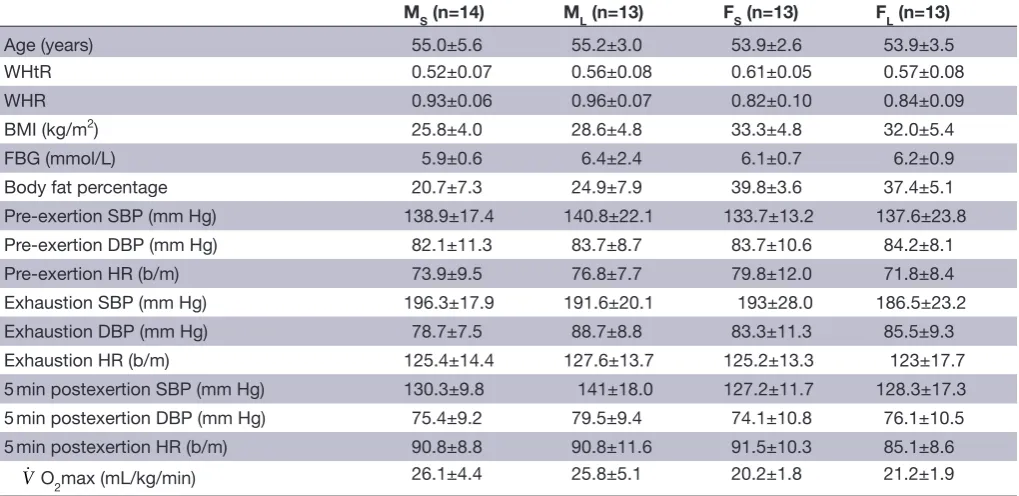
Table 1 Baseline demographic and clinical characteristics of the participants
MS (n=14) ML (n=13) FS (n=13) FL (n=13)
Age (years) 55.0±5.6 55.2±3.0 53.9±2.6 53.9±3.5
WHtR 0.52±0.07 0.56±0.08 0.61±0.05 0.57±0.08
WHR 0.93±0.06 0.96±0.07 0.82±0.10 0.84±0.09
BMI (kg/m2) 25.8±4.0 28.6±4.8 33.3±4.8 32.0±5.4
FBG (mmol/L) 5.9±0.6 6.4±2.4 6.1±0.7 6.2±0.9
Body fat percentage 20.7±7.3 24.9±7.9 39.8±3.6 37.4±5.1
Pre- exertion SBP (mm Hg) 138.9±17.4 140.8±22.1 133.7±13.2 137.6±23.8 Pre- exertion DBP (mm Hg) 82.1±11.3 83.7±8.7 83.7±10.6 84.2±8.1 Pre- exertion HR (b/m) 73.9±9.5 76.8±7.7 79.8±12.0 71.8±8.4 Exhaustion SBP (mm Hg) 196.3±17.9 191.6±20.1 193±28.0 186.5±23.2 Exhaustion DBP (mm Hg) 78.7±7.5 88.7±8.8 83.3±11.3 85.5±9.3 Exhaustion HR (b/m) 125.4±14.4 127.6±13.7 125.2±13.3 123±17.7 5 min postexertion SBP (mm Hg) 130.3±9.8 141±18.0 127.2±11.7 128.3±17.3 5 min postexertion DBP (mm Hg) 75.4±9.2 79.5±9.4 74.1±10.8 76.1±10.5 5 min postexertion HR (b/m) 90.8±8.8 90.8±11.6 91.5±10.3 85.1±8.6 V˙ O
2max (mL/kg/min) 26.1±4.4 25.8±5.1 20.2±1.8 21.2±1.9
Data presented as mean±SD.
b/m, beats per minute; DBP, diastolic blood pressure; FBG, fasting blood glucose; FL, long exercise bouts female; FS, short exercise bouts female; HR, heart rate; ML, long exercise bouts male; MS, short exercise bouts male; SBP, systolic blood pressure; WHR, waist- to- hip ratio; WHtR, waist- to- height ratio.
Hg), 23.1% of FS (DBP 99.0±3.6 mm Hg) and 38.5% of FL (DBP 91.4+5.3 mm Hg) had DBP ≥80 mm Hg. Similarly, all groups had V˙ O
2max lower than expected for their ages.
Based on existing categorisations for gender and age, MS, ML and FS groups had ‘very poor’ levels of V˙ O
2max with
the FL group in the ‘poor’ category.28 Accelerometry data
showed weekly cumulative exercise minutes to be similar for MS and ML (161.8±7.2 vs 162.6±6.1), and also for FS and FL (158.3±3.6 vs 156.1±2.7, respectively). Adherence over the 24 weeks regime was 100% for MS (n=14) and FS (n=13), and 61.5% and 76.9% for ML (n=14) and FL (n=13), respectively. These baseline demographic and clinical parameters are shown in table 1.
At the 24th week, although 50% of MS group had SBP ≥120 mm Hg, their mean SBP decreased from 147±19.2 mm Hg to 132.3±9.6 mm Hg. In the ML group, the percentage with SBP ≥120 mm Hg dropped from 61.5% to 23.1% (144±12.3 mm Hg to 128±7.0 mm Hg). Although the percentage with SBP ≥120 mm Hg in FS group did not change, the mean values decreased from 143.1±9.6 mm Hg to 128.0±7.0 mm Hg. In the FL group, the percentage with SBP ≥120 mm Hg dropped from 53.8% to 30.8% (152.3±23.7 mm Hg to 129±3.7 mm Hg). For those with DBP ≥80 mm Hg, there was no percentage change in either the MS or FS groups, but their mean values dropped from 101±15.6 mm Hg to 84.5±0.7 mm Hg and from 99.0±3.6 mm Hg to 87.7±4.9 mm Hg, respectively. For the ML group, the percentage with DBP
≥80 mm Hg dropped from 53.8% to 15.4% (86.1±6.5 mm Hg to 82.5±3.5 mm Hg), and from 38.5% to 15.4% in the
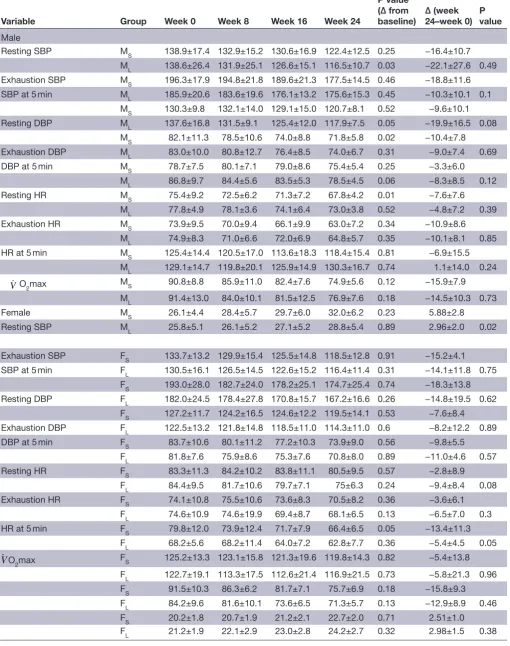
FL group (91.4±5.3 mm Hg to 83.5±0.71 mm Hg). Pooling data from all participants, we similarly observed a mixed decrease in BP and HR in the two exercise groups. Resting SBP in ML, resting DBP in MS as well as DBP at 5 min in MS all reduced significantly (p<0.05). These significant declines however showed no difference in the manner of the change between regimes (all p≥0.05) (table 2). Comparison of changes in different variables between study groups showed no significant gender differences. Associated PP changes over the study period are shown in table 3. Except for PP decay at exhaustion among males, there was no differences between the exercise groups. This was despite ML resting PP and FS exhaustion PP showing significant improvement over the 24 weeks compared with respective opposite regimes. For the two regimes, the pre- SRT and 5 min post- SRT BP differ-ences were the same (SBP: p=0.42 and p=0.24 and DBP: p=0.83 and p=0.32, for males and females, respectively).
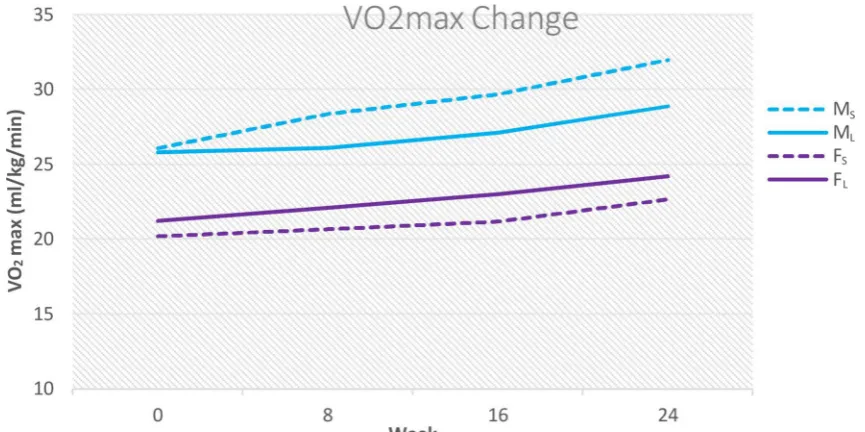
The V˙ O
2max across all groups rose from baseline to
the 24th week (figure 1), but there was no significant difference between the groups of the same sex at each of the four data collection points (p≥0.05) for the different exercise regimes. The mean change in V˙ O
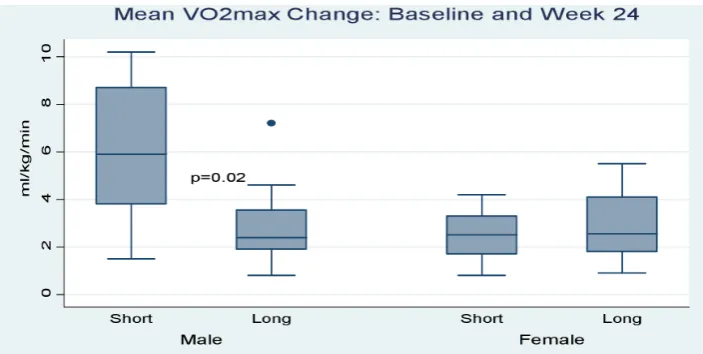
2max at the
start and 24th week were however different among males (p=0.02) but not females (figure 2).
dIsCussIon baseline results
At the start of the study, the participants’ mean pre- exertion SBP and DBP were in the stage 1 hypertension
copyright.
on May 7, 2020 by guest. Protected by
Table 2 Absolute blood pressure, heart rate and V· V˙ O
2max changes
Variable Group Week 0 Week 8 Week 16 Week 24
P value (Δ from
baseline) Δ (week 24–week 0) P value Male
Resting SBP MS 138.9±17.4 132.9±15.2 130.6±16.9 122.4±12.5 0.25 −16.4±10.7 ML 138.6±26.4 131.9±25.1 126.6±15.1 116.5±10.7 0.03 −22.1±27.6 0.49 Exhaustion SBP MS 196.3±17.9 194.8±21.8 189.6±21.3 177.5±14.5 0.46 −18.8±11.6 SBP at 5 min ML 185.9±20.6 183.6±19.6 176.1±13.2 175.6±15.3 0.45 −10.3±10.1 0.1 MS 130.3±9.8 132.1±14.0 129.1±15.0 120.7±8.1 0.52 −9.6±10.1 Resting DBP ML 137.6±16.8 131.5±9.1 125.4±12.0 117.9±7.5 0.05 −19.9±16.5 0.08 MS 82.1±11.3 78.5±10.6 74.0±8.8 71.8±5.8 0.02 −10.4±7.8 Exhaustion DBP ML 83.0±10.0 80.8±12.7 76.4±8.5 74.0±6.7 0.31 −9.0±7.4 0.69 DBP at 5 min MS 78.7±7.5 80.1±7.1 79.0±8.6 75.4±5.4 0.25 −3.3±6.0 ML 86.8±9.7 84.4±5.6 83.5±5.3 78.5±4.5 0.06 −8.3±8.5 0.12 Resting HR MS 75.4±9.2 72.5±6.2 71.3±7.2 67.8±4.2 0.01 −7.6±7.6 ML 77.8±4.9 78.1±3.6 74.1±6.4 73.0±3.8 0.52 −4.8±7.2 0.39 Exhaustion HR MS 73.9±9.5 70.0±9.4 66.1±9.9 63.0±7.2 0.34 −10.9±8.6 ML 74.9±8.3 71.0±6.6 72.0±6.9 64.8±5.7 0.35 −10.1±8.1 0.85 HR at 5 min MS 125.4±14.4 120.5±17.0 113.6±18.3 118.4±15.4 0.81 −6.9±15.5 ML 129.1±14.7 119.8±20.1 125.9±14.9 130.3±16.7 0.74 1.1±14.0 0.24 V˙ O2max MS 90.8±8.8 85.9±11.0 82.4±7.6 74.9±5.6 0.12 −15.9±7.9 ML 91.4±13.0 84.0±10.1 81.5±12.5 76.9±7.6 0.18 −14.5±10.3 0.73 Female MS 26.1±4.4 28.4±5.7 29.7±6.0 32.0±6.2 0.23 5.88±2.8 Resting SBP ML 25.8±5.1 26.1±5.2 27.1±5.2 28.8±5.4 0.89 2.96±2.0 0.02
Exhaustion SBP FS 133.7±13.2 129.9±15.4 125.5±14.8 118.5±12.8 0.91 −15.2±4.1 SBP at 5 min FL 130.5±16.1 126.5±14.5 122.6±15.2 116.4±11.4 0.31 −14.1±11.8 0.75 FS 193.0±28.0 182.7±24.0 178.2±25.1 174.7±25.4 0.74 −18.3±13.8 Resting DBP FL 182.0±24.5 178.4±27.8 170.8±15.7 167.2±16.6 0.26 −14.8±19.5 0.62 FS 127.2±11.7 124.2±16.5 124.6±12.2 119.5±14.1 0.53 −7.6±8.4 Exhaustion DBP FL 122.5±13.2 121.8±14.8 118.5±11.0 114.3±11.0 0.6 −8.2±12.2 0.89 DBP at 5 min FS 83.7±10.6 80.1±11.2 77.2±10.3 73.9±9.0 0.56 −9.8±5.5 FL 81.8±7.6 75.9±8.6 75.3±7.6 70.8±8.0 0.89 −11.0±4.6 0.57 Resting HR FS 83.3±11.3 84.2±10.2 83.8±11.1 80.5±9.5 0.57 −2.8±8.9
FL 84.4±9.5 81.7±10.6 79.7±7.1 75±6.3 0.24 −9.4±8.4 0.08
Exhaustion HR FS 74.1±10.8 75.5±10.6 73.6±8.3 70.5±8.2 0.36 −3.6±6.1 FL 74.6±10.9 74.6±19.9 69.4±8.7 68.1±6.5 0.13 −6.5±7.0 0.3 HR at 5 min FS 79.8±12.0 73.9±12.4 71.7±7.9 66.4±6.5 0.05 −13.4±11.3 FL 68.2±5.6 68.2±11.4 64.0±7.2 62.8±7.7 0.36 −5.4±4.5 0.05 ˙
V O2max FS 125.2±13.3 123.1±15.8 121.3±19.6 119.8±14.3 0.82 −5.4±13.8 FL 122.7±19.1 113.3±17.5 112.6±21.4 116.9±21.5 0.73 −5.8±21.3 0.96 FS 91.5±10.3 86.3±6.2 81.7±7.1 75.7±6.9 0.18 −15.8±9.3 FL 84.2±9.6 81.6±10.1 73.6±6.5 71.3±5.7 0.13 −12.9±8.9 0.46
FS 20.2±1.8 20.7±1.9 21.2±2.1 22.7±2.0 0.71 2.51±1.0
FL 21.2±1.9 22.1±2.9 23.0±2.8 24.2±2.7 0.32 2.98±1.5 0.38
DBP, diastolic blood pressure; FL, long exercise bouts female; FS, short exercise bouts female; HR, heart rate; ML, long exercise bouts male; MS, short exercise bouts male; SBP, systolic blood pressure.
copyright.
on May 7, 2020 by guest. Protected by
Table 3 Pulse pressure changes over 24 weeks of the study period
Variable Group Baseline Week 8 Week 16 Week 24
P value (Δ from baseline)
Mean Δ
P value (week 24–
week 0) Male
Resting PP MS 56.7±11.4 54.4±7.5 56.6±11.5 50.6±9.1 0.43 −6.1±10.8 ML 55.6±17.7 51.1±17.2 50.3±8.7 42.5±7.1 0.03 −13.1±22.2 0.32 Exhaustion PP MS 117.6±13.4 114.6±17.6 110.6±16.6 102.1±12.4 0.77 −15.5±9.6
ML 99.1±21.2 99.3±17.5 92.6±13.6 97.1±16.0 0.48 −2.0±13.0 0.01 5 min rest PP MS 54.9±9.7 59.6±12.0 57.8±11.2 53.0±7.3 0.32 −1.9±10.2 ML 60.0±17.1 53.4±6.6 51.3±7.0 44.9±8.1 0.07 −15.1±19.0 0.05 Female
Resting PP FS 50.0±7.1 49.8±8.4 48.3±6.4 44.5±7.7 0.77 −5.5±4.8
FL 48.7±14.1 50.6±13.8 47.3±12.1 45.6±9.0 0.2 −3.1±12.9 0.55 Exhaustion PP FS 109.7±22.7 98.5±17.7 94.3±17.5 94.2±17.9 0.43 −15.5±13.5 FL 97.6±26.1 96.7±22.1 91.2±12.0 92.2±12.2 0.03 −5.4±23.6 0.2 5 min rest PP FS 53.1±6.7 48.7±9.7 51.0±7.1 49.1±8.1 0.51 −4.0±7.4
FL 47.9±12.2 47.2±10.8 49.1±8.1 46.2±6.7 0.09 −1.7±11.4 0.56
Values are means±SD. P<0.05: significant difference in mean change between the two regimes.
FL, long exercise bouts female; FS, short exercise bouts female; ML, long exercise bouts male; MS, short exercise bouts male; PP, pulse pressure.
Figure 1 V˙ O
2max from week 1 to week 24. MS, short exercise bouts male; ML, long exercise bouts male; FS, short exercise bouts female; FL, long exercise bouts female.
category based on the current BP guidelines,1 2 that is,
between 130–139 SBP and 80–89 DBP mm Hg. Thus, a majority of participants had hypertensive tendency at recruitment. Their SBP rise and DBP decay at exhaus-tion from SRT, and return to pre- exerexhaus-tion values within 5 min of rest was within previously reported data.29 That
the 5 min post- SRT BP was similar to the BP before the run test demonstrated good normalisation. However, as nearly a quarter had pre- exertion BP ≥140/90, and, based on the WHO and the criterion by Alberti et al for
including SBP ≥130 mm Hg or DBP ≥85 mm Hg in meta-bolic syndrome diagnosis,30 31 and, further, given the new
published guidelines,1 2 a significant proportion of our
participants appeared at risk to developing metabolic syndrome at the start. Similarly, based on the published reference V˙ O
2max values,
28 the V˙ O
2max means for
males and females at the start were below that for their ages, demonstrating a reduced cardiorespiratory health probably related or due to their sedentary lifestyle. With advancing age and adoption of sedentary lifestyles, the
copyright.
on May 7, 2020 by guest. Protected by
[image:5.595.82.515.496.712.2]Figure 2 Mean change in V˙ O
2max between the 1st and 24th week. Short, short exercise bouts; long, long exercise bouts. P=0.02 denotes significant difference between short and long exercise bouts among males.
low V˙ O
2max and elevated BP pose higher risk for
cardio-vascular disease.1 2 22 32 33
Cardiovascular effects at end point
All the participants in the different exercise groups showed mixed decrease in BP and HR over the 24- week exercise period. The BP and HR levels before the SRT, at exhaustion from the SRT and at 5 min after SRT appeared to decline over the study period. Among ML, resting SBP, resting DBP and DBP at 5 min all showed significant drop at week 24 when compared with respective baseline values. What was novel is that the mean change differ-ence between week 24 and baseline was similar for the two regimes. While exercise has been shown to improve cardiovascular performance, thus reducing cardiovas-cular mortality and morbidity among the elderly through reduction of fatty deposits in small blood vessel walls that cause blockage and/or reduced elasticity thus raising BP,34–38 our findings show that short exercise bouts were
as effective in reducing BP and HR as the currently recom-mended longer exercise bouts,9 although the follow- up
period probably needed lengthening to demonstrate significant changes in more variables. Until recently, when Landram et al39 demonstrated that intermittent
bouts of <10 min had comparable BP outcomes as the recommended exercise regime,39 not much was known of
what effect <30 min exercise bouts would have on cardio-vascular parameters. In that study, unlike this study, the age range was broader, and the rest interval between the short exercise bouts was 10 min. Another study40 used
longer exercise bouts of 15 min, but we found a similar reduction in BP and HR using shorter bouts.
After each SRT, no difference was found in HR recovery to the pre- SRT levels in the different exercise groups over the 24- week study period. Furthermore, in all exercise groups, HR both before SRT and after the 5 min post- SRT rest period was lower at the end of 24th week compared with the start. Additionally, the HR recovery following SRT at 24th week was similar for the two regimes. The similarity in the HR recovery after SRT at the end of the
study underscores the similarity of effects of intermittent exercise regime tested in this study. This shows that the shorter bouts could be as effective in producing the bene-fits associated with faster and near complete HR recovery for better cardiovascular health,41 42 as is seen with the
traditional (longer bout) regimes.
PP is an accepted indicator of cardiovascular mortality and morbidity with lower values being protective.43–45
In our study, resting PP dropped over 24 weeks in both males and females for both exercise regimes, but, except in exhaustion PP where mean change was higher in MS compared with ML, there was no difference in the mean change between regimes. Start to end point data showed significant drops only in resting PP among ML and exhaustion PP among FL, but the study had primarily sought to test for differences in the mean change over the study period between the regimes, which was found to be largely similar. This mix of results suggest that none of the regimes is superior. Recent studies have shown workouts lasting >45 min for a period of 8 weeks dura-tion reduce PP,46 and our study shows that exercise bouts
lasting <10 min, performed regularly, are also effective in reducing the PP. However, the proposed threshold for improved PP, that is, <76 mm Hg,44 45 was not achieved in
this study, and probably a longer period of exercise may further improve PP.
The similarity of change in SBP, DBP, HR and PP in all the groups shows that in this population, short exer-cise bouts are as effective as the longer ones in improving these parameters. Based on this finding, the short exercise bouts could be used for individuals of similar demographics.
˙
V o2max effects at end point
In line with the reported increase in V˙ O
2max with
moderate intensity exercise,47–49 V˙ O
2max appeared to
increase in both males and females over the 24 weeks study period, and probably a longer follow- up may probably have yielded more significant changes. There however was a significant difference in the manner of V˙
copyright.
on May 7, 2020 by guest. Protected by
O2max change for males but not for the females. Males in the accumulated shorter exercise bouts showed higher
˙
V O2max compared with those on the longer exercise bouts. It has been demonstrated that short exercise bouts may be better in improving V˙ O
2max. 40
As the rate of increase of V˙ O
2max over the 24 weeks
showed either no difference between the short or long exercise bouts in the females, or, that indeed short bouts were better for males suggests that the effect of accumu-lated short bouts exercise on V˙ O
2max is at least similar
to, if not better than the currently recommended exer-cise bouts lasting ≥30 min. Similar results have been reported in a short 4- week study where individuals with cumulatively similar weekly exercise time with exercise regimes of 10 and 30 min per session, showed no differ-ence in V˙ O
2max change.
39 Our findings add to the
growing evidence that intermittent exercise programme performed so that the cumulative exercise time matches the current recommended exercise regime is at least as effective as the existing recommendation of 150 weekly minutes of moderate intensity exercise done in 3–5 weekly sessions of 30–60 min each,9 in increasing V˙
O2max among the elderly.
However, none of the exercise regimes used in this study helped participants achieve V˙ O
2max levels for their
age. While there was improvement for all groups, the V˙
O2max values remained below the proposed levels that correspond to better Cardiorespiratory fitness outcomes. In fact, across all our groups, the improvement over the 24- week period was marginal, rising from the very poor and poor categories to at the most fair category as compared with the Physical Fitness Certification Manual28
information. A longer exercise periods may yield better improvements for this age bracket whose bodies may take longer to adjust and who have higher loss in aerobic power,50 compared with the younger populations.
limitations
Participants self- selected themselves for this study in response to a local print advert. This could have affected the representativeness of results in that the recruitment criteria were biased towards those who saw the print advert only. Additionally, as it was impossible to include blinding in the study protocol, the investigators and the participants all knew who was on which exercise regime. This may have affected adherence from peer influences. Furthermore, dietary habits, use of stimulants like caffeine and participants’ renal status, all known confounders in cardiovascular and V˙ O
2max measurements were not
considered during the follow- up and the data analysis. That we used indirect methods for V˙ O
2max estimation
may also have affected our results. These confounders may affect the generalisability of our results.
strengths
Our study showed that in both elderly males and females, moderate intensity exercise bouts lasting <10 min three times a day for 24 weeks improved BP, HR and V˙ O
2max,
and improvement was comparable to exercise bouts of
≥30 min as currently administered in 3–5 days a week. As adherence to exercise is a major factor in regular exercise, our findings could be of benefit to older men and women who face challenge of finding time for long continuous exercise sessions yet seek to improve their maximal oxygen uptake and cardiovascular parameters, improving their health.
ConClusIons
For sedentary individuals aged ≥50 years, moderate inten-sity exercise done in three intermittent daily sessions of <10 min each is as effective in the regulation of BP and improvement of maximal oxygen consumption as the currently recommended regime of 3–5 weekly exercise sessions of similar intensity lasting ≥30 min each.
Twitter Karani Magutah @karaniMaguth
Contributors KM helped in designing protocol, data collection, analysis and writing of the manuscript. Both KT and NT helped with designing of protocol and writing the manuscript.
Funding This research was supported by the Consortium for Advanced Research Training in Africa (CARTA). CARTA is jointly led by the African Population and Health Research Center (APHRC) and the University of the Witwatersrand and funded by the Wellcome Trust (UK) (Grant No: 087547/Z/08/Z), the Department for International Development (DfID) under the Development Partnerships in Higher Education (DelPHE), the Carnegie Corporation of New York (Grant No: B 8606), the Ford Foundation (Grant No: 1100–0399), Google.Org (Grant No: 191994), Sida (Grant No: 54100029), MacArthur Foundation (Grant No: 10-95915-000- INP) and British Council.
Competing interests None declared.
Patient consent for publication Not required.
ethics approval Study approval was granted by Moi Teaching and Referral Hospital/Moi University institutional research board.
Provenance and peer review Not commissioned; externally peer reviewed.
data availability statement Data are available on reasonable request.
open access This is an open access article distributed in accordance with the Creative Commons Attribution Non Commercial (CC BY- NC 4.0) license, which permits others to distribute, remix, adapt, build upon this work non- commercially, and license their derivative works on different terms, provided the original work is properly cited, appropriate credit is given, any changes made indicated, and the use is non- commercial. See: http:// creativecommons. org/ licenses/ by- nc/ 4. 0/.
orCId id
Karani Magutah http:// orcid. org/ 0000- 0003- 3105- 2981
reFerenCes
1 Whelton PK, Carey RM, Aronow WS, et al. 2017 ACC/AHA/AAPA/ ABC/ACPM/AGS/APhA/ASH/ASPC/NMA/PCNA guideline for the prevention, detection, evaluation, and management of high blood pressure in adults: Executive summary: a report of the American College of Cardiology/American heart association Task force on clinical practice guidelines. Hypertension 2018;71:1269–324. 2 Whelton PK, Carey RM, Aronow WS, et al. 2017 ACC/AHA/AAPA/
ABC/ACPM/AGS/APhA/ASH/ASPC/NMA/PCNA guideline for the prevention, detection, evaluation, and management of high blood pressure in adults: a report of the American College of Cardiology/ American heart association Task force on clinical practice guidelines. J Am Coll
3 Nambaka JE, Kamau J, Amusa LO, et al. Factors influencing participation in physical exercise by the elderly in Eldoret West district, Kenya. African Journal for Physical, Health Education, Recreation and Dance 2011;17:462–72.
4 Sedentary Behaviour Research Network. Letter to the editor: standardized use of the terms "sedentary" and "sedentary behaviours". Appl Physiol Nutr Metab 2012;37:540–2.
copyright.
on May 7, 2020 by guest. Protected by
5 Kenya National Bureau of Statistics (KNBS), ICF Macro. Kenya Demoraphic and Health Survey 2008-09. Cavelton, Maryland: KNBS and ICF Micro, 2010.
6 Hendriks ME, Wit FWNM, Roos MTL, et al. Hypertension in sub- Saharan Africa: cross- sectional surveys in four rural and urban communities. PLoS One 2012;7:e32638.
7 BeLue R, Okoror TA, Iwelunmor J, et al. An overview of
cardiovascular risk factor burden in sub- Saharan African countries: a socio- cultural perspective. Global Health 2009;5:10.
8 Ikem I, Sumpio BE. Cardiovascular disease: the new epidemic in sub- Saharan Africa. Vascular 2011;19:301–7.
9 World Health Organization. Global recommendations on physical activity for health 2010.
10 Talbot LA, Morrell CH, Metter EJ, et al. Comparison of cardiorespiratory fitness versus leisure time physical activity as predictors of coronary events in men aged < or = 65 years and > 65 years. Am J Cardiol 2002;89:1187–92.
11 DeBusk RF, Stenestrand U, Sheehan M, et al. Training effects of long versus short bouts of exercise in healthy subjects. Am J Cardiol 1990;65:1010–3.
12 Macfarlane DJ, Taylor LH, Cuddihy TF. Very short intermittent vs continuous bouts of activity in sedentary adults. Prev Med 2006;43:332–6.
13 Blair SN, Kohl HW, Gordon NF, et al. How much physical activity is good for health? Annu Rev Public Health 1992;13:99–126. 14 Pate RR, Pratt M, Blair SN, et al. Physical activity and public
health. A recommendation from the centers for disease control and prevention and the American College of sports medicine. JAMA 1995;273:402–7.
15 LaFontaine T, Robbins L. Do multiple short bouts of exercise really produce the same benefits as single long bouts? Am J Cardiol 1991;67:325–6.
16 Murphy MH, Blair SN, Murtagh EM. Accumulated versus continuous exercise for health benefit: a review of empirical studies. Sports Med 2009;39:29–43.
17 Linke SE, Gallo LC, Norman GJ. Attrition and adherence rates of sustained vs. intermittent exercise interventions. Ann Behav Med 2011;42:197–209.
18 Magutah K, Meiring R, Patel NB, et al. Effect of short and long moderate- intensity exercises in modifying cardiometabolic markers in sedentary Kenyans aged 50 years and above. BMJ Open Sport Exerc Med 2018;4:e000316.
19 Magutah K, Patel NB, Thairu K. Effect of moderate- intensity exercise bouts lasting <10 minutes on body composition in sedentary Kenyan adults aged ≥50 years. BMJ Open Sport Exerc Med 2018;4:e000403.
20 Fujimoto N, Hastings JL, Carrick- Ranson G, et al. Cardiovascular effects of 1 year of alagebrium and endurance exercise training in healthy older individuals. Circ Heart Fail 2013;6:1155–64. 21 Fujimoto N, Prasad A, Hastings JL, et al. Cardiovascular effects of
1 year of progressive and vigorous exercise training in previously sedentary individuals older than 65 years of age. Circulation 2010;122:1797–805.
22 Jackson AS, Sui X, Hébert JR, et al. Role of lifestyle and aging on the longitudinal change in cardiorespiratory fitness. Arch Intern Med 2009;169:1781–7.
23 Carson AP, Howard G, Burke GL, et al. Ethnic differences in hypertension incidence among middle- aged and older adults. Hypertension 2011;57:1101–7.
24 Vasan RS, Beiser A, Seshadri S, et al. Residual lifetime risk for developing hypertension in middle- aged women and men: the Framingham heart study. JAMA 2002;287:1003–10.
25 Global physical activity questionnaire (GPAQ) analysis guide. Available: http://www. who. int/ chp/ steps/ resources/ GPAQ_ Analysis_ Guide. pdf [Accessed 01 May 2018].
26 Ramsbottom R, Brewer J, Williams C. A progressive shuttle run test to estimate maximal oxygen uptake. Br J Sports Med 1988;22:141–4.
27 CDC, 2015. Available: https://www. cdc. gov/ physicalactivity/ basics/ measuring/ heartrate. htm [Accessed 14 Sep 2018].
28 Heyward HV. The Physical Fitness Specialist Certification Manual, The Cooper Institute for Aerobics Research, Dallas TX, revised 1997
printed in Advance Fitness Assessment & Exercise Prescription. 3rd Ediition ed, 1998.
29 Nonogi H, Hess OM, Ritter M, et al. Diastolic properties of the normal left ventricle during supine exercise. Br Heart J 1988;60:30–8. 30 Alberti KGMM, Eckel RH, Grundy SM, et al. Harmonizing the
metabolic syndrome: a joint interim statement of the International diabetes Federation Task force on epidemiology and prevention; National heart, lung, and blood Institute; American heart association; world heart Federation; international atherosclerosis Society; and international association for the study of obesity. Circulation 2009;120:1640–5.
31 WHO. Waist circumference and waist- hip ratio: report of a who expert consultation. Geneva, 2008: 8–11.
32 Lakka TA, Laaksonen DE, Lakka H- M, et al. Sedentary lifestyle, poor cardiorespiratory fitness, and the metabolic syndrome. Med Sci Sports Exerc 2003;35:1279–86.
33 Njelekela MA, Mpembeni R, Muhihi A, et al. Gender- Related differences in the prevalence of cardiovascular disease risk factors and their correlates in urban Tanzania. BMC Cardiovasc Disord 2009;9:30.
34 Tsimploulis A, Doumas M, Pittaras A, et al. YIA 01-06
cardiorespiratory fitness and mortality risk in hypertensive men ≥70 years. J Hypertens 2016;34:e37–8.
35 Kokkinos P, Myers J, Kokkinos JP, et al. Exercise capacity and mortality in black and white men. Circulation 2008;117:614–22. 36 Kokkinos P, Puneet N, Apostolos T, et al. Os 04-09 cardiorespiratory
fitness and risk for developing heart failure in hypertensives. J Hypertens 2016;34:e57.
37 Juraschek SP, Blaha MJ, Whelton SP, et al. Physical fitness and hypertension in a population at risk for cardiovascular disease: the Henry Ford exercise testing (fit) project. J Am Heart Assoc 2014;3:e001268.
38 Al- Mallah MH, Juraschek SP, Whelton S, et al. Sex differences in cardiorespiratory fitness and all- cause mortality: the Henry Ford exercise testing (fit) project. Mayo Clin Proc 2016;91:755–62. 39 Landram MJ, Utter AC, Baldari C, et al. Differential effects of
continuous versus discontinuous aerobic training on blood pressure and hemodynamics. J Strength Cond Res 2018;32:97–104. 40 Quinn TJ, Klooster JR, Kenefick RW. Two short, daily activity bouts
vs. one long bout: are health and fitness improvements similar over twelve and twenty- four weeks? J Strength Cond Res 2006;20:130–5. 41 Peçanha T, Silva- Júnior ND, Forjaz CLdeM. Heart rate recovery:
autonomic determinants, methods of assessment and association with mortality and cardiovascular diseases. Clin Physiol Funct Imaging 2014;34:327–39.
42 Dhoble A, Lahr BD, Allison TG, et al. Cardiopulmonary fitness and heart rate recovery as predictors of mortality in a referral population. J Am Heart Assoc 2014;3:e000559.
43 Benetos A, Safar M, Rudnichi A, et al. Pulse pressure: a predictor of long- term cardiovascular mortality in a French male population. Hypertension 1997;30:1410–5.
44 Gu Y- M, Aparicio LS, Liu Y- P, et al. Risk associated with pulse pressure on Out- of- Office blood pressure measurement. Pulse 2014;2:42–51.
45 Aparicio LS, Thijs L, Asayama K, et al. Reference frame for home pulse pressure based on cardiovascular risk in 6470 subjects from 5 populations. Hypertens Res 2014;37:672–8.
46 Sikiru L, Okoye GC. Effect of interval training programme on pulse pressure in the management of hypertension: a randomized controlled trial. Afr Health Sci 2013;13:571–8.
47 Dalleck LC, Borresen EC, Wallenta JT, et al. A moderate- intensity exercise program fulfilling the American College of sports medicine net energy expenditure recommendation improves health outcomes in premenopausal women. J Strength Cond Res 2008;22:256–62. 48 Gormley SE, Swain DP, High R, et al. Effect of intensity of aerobic
training on VO2max. Med Sci Sports Exerc 2008;40:1336–43. 49 GladMohesh M, Sundaramurthy A. Effect of moderate exercise on
VO2 max and blood pressure in individuals with different body mass index. J Clin Exp Res 2015;3:177–9.
50 Shephard RJ. Aging and Exercise. In: Fahey TD, ed. Encyclopedia of sports medicine and science. Internet Society for Sport Science, 1998. http:// sportsci. org
copyright.
on May 7, 2020 by guest. Protected by