1
Birth experiences, trauma responses and self-concept in postpartum
psychotic-like experiences
Lyndsey Holt
a*
Pauline Slade
bWilliam Sellwood
caMersey Care NHS Foundation Trust, Park Lodge CMHT, Orphan Drive, Liverpool, L6 7UN, UK.
E-mail address: [email protected]. Telephone: +44 (0151) 330 8942. Fax: 0151 3308990
bInstitute of Psychology, Health & Society, Brownlow Hill, University of Liverpool, Liverpool LG9
3GB, UK. E-mail address: [email protected]
cDivision of Health Research, University of Lancaster, Bailrigg, LA1 4YW, UK. E-mail address:
2 Abstract
The frequency of psychotic-like experiences (PLEs) amongst new mothers is beginning to be explored but the mechanisms underlying such experiences are yet to be understood. First time mothers (N = 10,000) receiving maternity care via the UK National Health Service were contacted postnatally via Emma’s Diary, an online resource for mothers. Measures assessed birth experience, trauma appraisals, post-traumatic stress symptoms, adjustment to motherhood, self-concept clarity and PLEs (in the form of hallucinations and delusions). There was a 13.9% response rate (N = 1,393) and 1,303 participants reported experiencing at least one PLE (93.5%). Three competing nested path models were analysed.
A more negative birth experience directly predicted delusions, but not hallucinations. Trauma appraisals and poorer adjustment to motherhood indirectly predicted PLEs, via disturbed self-concept clarity. Post-traumatic stress symptoms directly predicted the occurrence of all PLEs.
PLEs in first time mothers may be more common than previously thought. A key new understanding is that where new mothers have experienced birth as traumatic and are struggling with adjustment to their new role, this can link to disturbances in a coherent sense of self (self-concept clarity) and be an important predictor of PLEs. Understanding the development of PLEs in new mothers may be helpful in postnatal care, as would public health interventions aimed at reducing the sense of abnormality or stigma surrounding such experiences.
3 1. Introduction
One to two women per thousand is diagnosed with postpartum psychosis (Valdimarsdóttir et al., 2009; VanderKruik et al., 2017), with onset in the first postnatal month (Sit et al., 2006). However, the occurrence of psychotic-like experiences (PLEs), non-clinical experiences of hallucinations or delusions similar to psychosis but in a diminished form (Cicero et al., 2013), are common (Mannion and Slade, 2014). The mechanisms underlying the development of such experiences are still unclear.
The continuity hypotheses (Johns and Van Os, 2001) postulates that psychosis exists on a spectrum within the population, from no psychotic experiences or symptoms through to clinical levels of psychosis. Postpartum psychosis is associated with distress, illness related behaviours, impairment of functioning and help-seeking behaviour (Van Os et al., 2009; The Diagnostic and Statistical Manual of Mental Disorders, DSM–5, American Psychiatric Association, 2013). However, PLEs are often not associated with distress or illness-related behaviour, and maybe fleeting in duration. Longitudinal studies indicate that people who experience PLEs are at increased risk of clinical psychosis (Poulton et al., 2000). Five percent of the population experience PLEs during their lifetime (Van Os et al., 2009). Attempts have been made to understand the development of PLEs and what may cause a transition to psychosis. Childhood traumas are associated with PLEs and psychosis in adulthood (Peters et al., 2016; Read et al., 2008; Varese et al., 2012b). Certain traumas are related to specific psychotic symptoms (Bentall et al., 2014) and these relationships are mediated by factors including dissociation (Varese et al., 2012a), and attachement (Sitko et al., 2014). A further potential mediator is self-concept clarity (SCC) i.e. the extent to which a person’s beliefs about themselves are well-defined, confidently held, internally coherent, stable and cognitively accessible (Campbell et al., 1996). SCC is reduced in schizophrenia (Cicero et al., 2015). SCC mediates the relationship between childhood traumas and psychosis (Evans et al., 2015). If PLEs and psychosis can be regarded as on the same continuum (Van Os et al., 2009), then difficult life events and low SCC may play key roles in the development of both.
4 (O’Donovan et al., 2014), and three to fifteen percent meet the criteria for post-traumatic stress disorder (PTSD) (Ayers et al., 2016; Czarnocka and Slade, 2000). Both fearful birth experiences (Mannion and Slade, 2014) and a traumatic birth (Barratt, 2012) are associated with increased risk of PLEs. Given that birth can be experienced as traumatic and lead to post-traumatic stress symptoms (PTSS) and becoming a mother entails substantial life adjustments, which in turn may threaten self-concept, the relevance of self-concept to the occurrence of PLEs warrants investigation in new mothers.
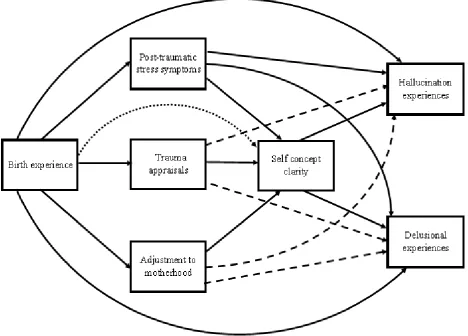
This study aimed to explore the relationships between birth experience and trauma, adjustment to motherhood, SCC and PLEs in new mothers. We aimed to test three competing hypotheses (Figure 1). Each model hypothesised that birth experience would directly predict the occurrence of PLEs, as has been found previously (Mannion and Slade, 2014). We hypothesised that birth experience would predict trauma appraisals, PTSS and adjustment to motherhood. Birth experiences have been found to predict PTSS (Edworthy et al., 2008) and trauma appraisals and PTSS are associated (Ehlers and Clark, 2000), whilst the relationship between birth experience and
5 2. Method
2.1 Participants
Women aged 16-50, proficient in English, who gave birth to their first child 2-6 months before recruitment, were included. This time frame was chosen for consistency, and to ensure all participants had passed the hypothesised risk period for PLEs. To ensure our estimates were conservative, and not confounded by participants with known mental health problems receiving treatment, participants with a history of psychosis or having had input from perinatal mental health teams (from self-report prior to questionnaire completion) were excluded.
2.2 Procedure
University of Liverpool ethics committee provided approval. Recruitment took place via Emma’s Diary (www.emmasdiary.co.uk), an online resource for mothers. Information about Emma’s
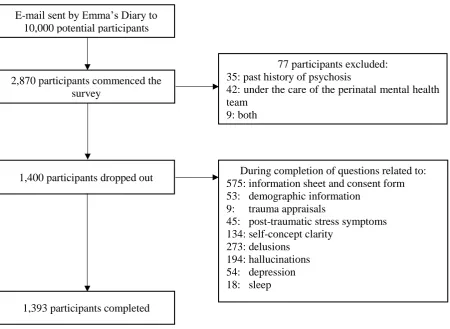
Diary is routinely supplied to pregnant women by their NHS general practitioner or midwife. An emailed invitation was sent to 10,000 website registrants meeting the inclusion criteria. Scales were administered via Qualtrics (www.qualtrics.com); 2,870 participants commenced the survey, 77 participants were excluded (35 past history of psychosis, 42 input from perinatal mental health teams, 9 both) and 1,400 did not complete the data set. 1,393 participants completed the survey (13.93% - Figure 2).
Participants retrospectively reported on the first two months postpartum (the theorised phase of risk), apart from depressive symptoms which participants reported concurrently to control for current levels of depressive symptoms in analyses.
2.3 Measures
Demographic and obstetric details were recorded.
2.3.1 Birth experience: The Wijma Delivery Experience Questionnaire B (Version B; Wijma et al., 1998).
6 2.3.2 Trauma appraisals
Questions were developed based upon the The Diagnostic and Statistical Manual of Mental Disorders (DSM-IV-TR; American Psychiatric Association 2000). Participants were asked if at any time during childbirth they (a) thought that their or their babies’ life was at risk or at risk of serious injury (a)(i) if so, was this for themselves, their baby or both of them (b) experienced intense fear, helplessness or horror. Responses were scored on a binary scale (0 = no, 1 = yes). The internal consistency was acceptable (𝛼 = .69).
2.3.3 Post-traumatic stress symptoms: The Impact of Event Scale - Revised (Weiss, 2007).
Three subscales cover arousal, intrusions and avoidance, and provide a total. The clinical cut off is ≥ 33 (Creamer et al., 2003). Cronbach’s alpha for the current sample was .93.
2.3.4 Adjustment to motherhood: The Being a Mother Scale (BaM-13; Matthey, 2011).
This measures social isolation, regret, coping and guilt, with higher scores indicating greater difficulty adjusting to motherhood. Good internal consistency (𝛼 = .87) was found in the present sample.
2.3.5 Self-concept clarity: The Self-Concept Clarity Scale (Campbell et al., 1996)
This measures the extent to which participants’ self-concepts are clear, confidently held, internally consistent, stable and cognitively accessible with higher scores indicating higher clarity. The scale showed excellent internal consistency in this sample, 𝛼 = .90.
2.3.6 Hallucination experiences: Launay Slade Hallucination Scale (LSHS; Launay and Slade, 1981). Measures hallucinations on 12 binary scale (0 = false, 1 = true) items, with higher scores indicating more hallucinations. There are 4 subscales; vivid thoughts, vivid day dreams, auditory hallucinations and visual hallucinations. Full scale internal consistency was acceptable (𝛼 = .66). 2.3.7 Delusional experiences: Peters Delusion Inventory (PDI-21; Peters et al., 2004)
7 2.3.8 Depressive symptoms: The Edinburgh Postnatal Depression Scale (EPDS; Cox et al., 1987).
Depression is assessed using 10 items. The clinical cut off is a score ≥ 13 (Matthey et al., 2006). The scale is widely used and showed good internal consistency, 𝛼 = .86.
2.3.9 Sleep: Pittsburgh Sleep Quality Index (PSQI; Buysse et al., 1989).
Participants answered 18 questions on 4-point Likert scales (0 = not at all, 3 = three or more times a week). The overall scale has a binary outcome (0 = poor sleep, 1 = good sleep) and showed good internal consistency, 𝛼 = .76.
2.4 Data analysis
Descriptive and correlational analyses were undertaken in SPSS v.21 (IBM Corporation., Armonk, NY, USA) and path analysis in AMOS v. 22 (IBM Corporation., Armonk, NY, USA). Path analysis allows for: (i) estimation of direct and indirect (mediation) effects, (ii) multiple endogenous (dependent) variables to be modelled simultaneously, (iii) interdependence of endogenous variables to be accounted for, and (iv) analysis of several hypothesised models. To test the three competing models, the regression weights on the paths not included in each model were constrained to zero. We controlled for variables potentially having significant relationships with relevant variables: age, ethnicity, marital status, employment, mode of birth, education, depression and sleep.
Data for both dependent variables (hallucinations and delusions) were positively skewed. Therefore bias-corrected bootstrapping (Hayes and Scharkow, 2013) and 10,000 resamples were used (Mallinckrodt et al., 2006). To assess model fit the Bollen and Stine (1992) bootstrap adjusted p value was used in relation to the Chi-square statistic, along with the CFI and RMSEA. After the model was fitted, separate indirect effects via a single mediator were obtained separately, by constraining both the correlation between the alternative mediators, and path from the predictor to alternative mediators, to 0 (MacKinnon, 2008).
2.4.1 Missing and incomplete data
8 sleep). Only unknown sleep and good sleep were included in the path models, allowing poor sleep to be the reference category.
3. Results 3.1 Descriptive statistics and correlations
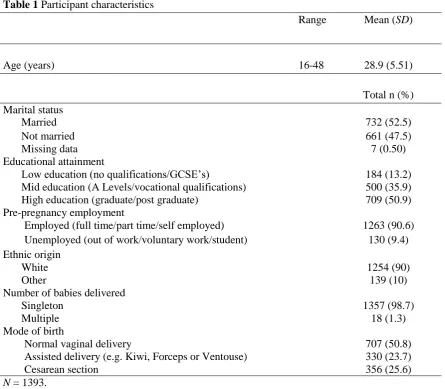
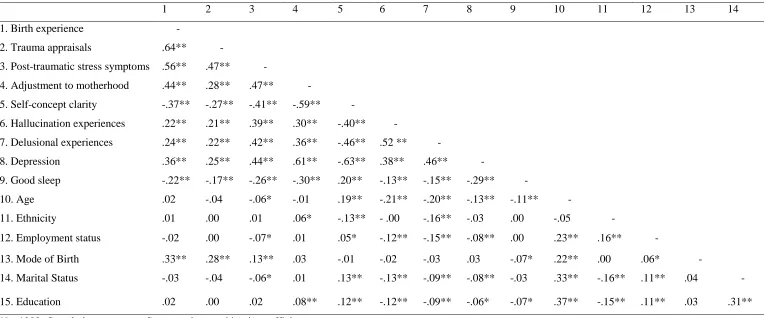
See Table 1 for demographic characteristics and mode of birth. 3.1.1 Prevalence of psychotic like experiences
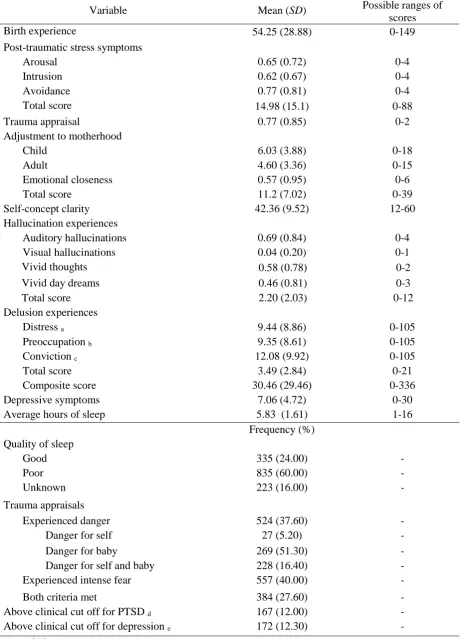
One thousand and eighty-five participants (77.9%) experienced at least one hallucination, whilst 1,217 participants experienced at least one delusion (87.4%). When considering both hallucinations and delusions, 999 participants experienced at least one hallucination and at least one delusion (71.7 %). To understand the distribution of PLEs as a whole, the scales were combined; a total of 1,303 participants experienced at least one PLE (93.58%). Table 4 presents the items of the LSHS and PDI-21 in order of frequency of endorsement. Descriptive data are presented in Table 2 and correlations between demographic details and symptom measures in Table 3.
3.2 Path models
We analysed three competing theoretical path models (Figure 1). In all hypothesised models, birth experiences were the exogenous predictor variable and there were two stages of mediation (i) trauma appraisals, PTSS and adjustment to motherhood (ii) SCC. Hallucination and delusional experiences were the outcome variables.
Table 5 outlines the goodness-of-fit statistics for the competing hypothesised models. 3.3 Best fitting model
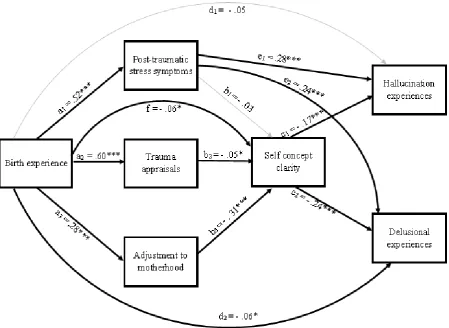
Model 2 (Figure 3), supporting hypotheses 2, was the best fit. It did not have a significantly worse fit in comparison to model 1, ∆𝜒2 (3) = 0.36, p = .95, and was a good fit for the data; χ2 (4) =
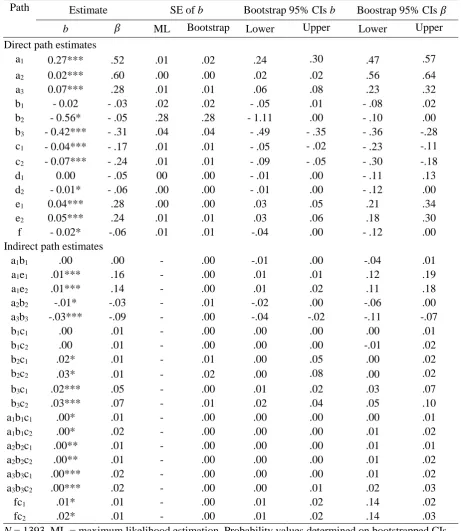
4.49, p = .34; CFI = 1.00, RMSEA = 0.01, 90% CI [0.00, 0.03] p = .98. Path and associated maximum likelihood and bootstrap SEs/CIs are presented in Table 6.
4. Discussion
9 86.07% of participants who did not complete the survey did not experience any PLEs, 13.03% of all the invited participants experienced at least one PLE over the short postnatal time frame specified. This is substantially higher than the five percent lifetime prevalence rate in the general population (Van Os et al., 2009). This emphasises that PLEs are not uncommon postnatally.
Our findings supported model 2. Birth experience predicted delusions, but not hallucinations. Trauma appraisals of the birth and struggling in adjustment to motherhood indirectly predicted PLEs, a relationship dependent on SCC. PTSS predicted PLEs.
The intra and inter-personal transitions for new mothers theoretically correspond to changes in self-concept (Markus and Wurf, 1987), and SCC has been shown to be in flux at this time (Smith, 1999). The finding that SCC predicted PLEs is consistent with studies in other populations (Cicero et al., 2013; Evans et al., 2015).
It was surprising that birth experience did not predict hallucinations, as Mannion and Slade (2014) found that fear during childbirth predicted both hallucinations and delusions. As expected, PTSS predicted all PLEs, which is comparable to general population research (Morrison et al., 2003).
The finding that trauma appraisals and adjustment to motherhood were mediating factors between birth experience and SCC, but PTSS were not, is noteworthy. This suggests that traumatic birth or difficulties with adjustment, rather than symptom experience, are important in disruption of SCC. As expected, PTSS mediated the relationship between birth experience and both hallucinations and delusions. However, given that this was full mediation for hallucinations and partial mediation for delusions, there may be other important factors in the birth experience and delusion relationship that we did not investigate. It also suggests that the mechanisms underlying these PLEs may differ.
10 status, we may have found higher prevalence rates if the sample were more representative, so our estimates may be conservative.
The significant two stage mediation pathways highlight the importance of indirect relationships between birth experience and PLEs. It was unexpected that PTSS did not predict SCC, and the relationship between fear during childbirth and SCC is a novel finding. This emphasises the importance of experience (e.g. fear, appraisals of trauma, difficulties with adjusting) over and above PTSS in the prediction of SCC. Clinically this is important as women whose birth does not go as planned are more likely to experience birth as traumatic (Soet et al., 2003) and 34% of first time mothers birth experiences are worse than expected (National Perinatal Epidemiology Unit, 2014). In line with self-concept theories (Markus and Wurf, 1987) we can infer that experiences, incongruent with expectations, can impact upon a women’s SCC, in terms of fundamental assumptions about themselves. For example, women who prior to birth believe themselves to be competent, organised and in control may have difficulties making sense of an experience where they feel out of control, inept and a failure. This is noteworthy as first time mothers are more likely to feel out of control than multiparous women (Green and Baston, 2003).
4.1 Limitations
Mediation models imply a sequence of time (Maxwell and Cole, 2007); however this was a cross-sectional study and therefore may not reflect true causal mediation pathways. We imposed theoretical models, which were found to be a good fit to the data. However, it could be possible that disrupted SCC is a precursor to a traumatic birth, rather than the consequence of birth trauma.
Duration from birth was not evaluated, thus we could not control for this. We cannot be certain that recall from participants two months postpartum did not differ from those six months postpartum. However, memory surrounding childbirth is unaffected during the first year postpartum (Waldenström, 2003).
4.2 Implications
11 suggests that PTSS predict the occurrence of PLEs, whilst SCC is critical for women who have appraised birth as traumatic and have difficulties adjusting to motherhood. Indeed, the process of incorporating intra and inter-personal changes into the self-concept postpartum may be much more important than previously thought. Therefore, SCC should, perhaps, be considered by health-care professionals. The same is true for trauma appraisals and maternal-adjustment. This is especially pertinent given that these factors are less overt than other difficulties (e.g. PTSS), and many distressed women may be overlooked.
4.3 Future research
Longitudinal studies, beginning antenatally, may be most helpful in understanding the development of PLEs in new mothers, especially given that Mannion and Slade (2014) found the occurrence of PLEs were higher during pregnancy than postpartum. Given that relationships were found between psycho-social factors and PLEs (Table 3.), and obstetric trauma has been found to increase the risk of postnatal psychosis (Nager et al., 2008), further investigation of these areas would be pertinent. Additionally, longitudinal studies investigating the transition from PLEs to psychosis are indicated.
4.4 Conclusion
12 References
American Psychiatric Association, 2000. Diagnostic and statistical manual of mental disorders DSM IV-TR. American Psychiatric Publishing, Washington.
American Psychiatric Association, 2013. Diagnostic and statistical manual of mental disorders DSM 5. American Psychiatric Publishing, Washington.
Alsawy, S., Wood, L., Taylor, P., Morrison, A., 2015. Psychotic experiences and PTSD: exploring associations in a population survey. Psychological Medicine 45(13), 2849-2859.
Ayers, S., Bond, R., Bertullies, S., Wijma, K., 2016. The aetiology of post-traumatic stress following childbirth: a meta-analysis and theoretical framework. Psychological medicine 46(06), 1121-1134. Barratt, S., 2012. Transient psychotic symptoms in new mothers: an unrecognized and potentially frequent problem. Dissertation, University of Liverpool.
Bentall, R.P., de Sousa, P., Varese, F., Wickham, S., Sitko, K., Haarmans, M., Read, J., 2014. From adversity to psychosis: pathways and mechanisms from specific adversities to specific symptoms. Social Psychiatry and Psychiatric Epidemiology 49(7), 1011-1022.
Bollen, K.A., Stine, R.A., 1992. Bootstrapping goodness-of-fit measures in structural equation models. Sociological Methods & Research 21(2), 205-229.
Buysse, D.J., Reynolds, C.F., Monk, T.H., Berman, S.R., Kupfer, D.J., 1989. The Pittsburgh Sleep Quality Index: a new instrument for psychiatric practice and research. Psychiatry Research 28(2), 193-213.
Campbell, J.D., Trapnell, P.D., Heine, S.J., Katz, I.M., Lavallee, L.F., Lehman, D.R., 1996. Self-concept clarity: Measurement, personality correlates, and cultural boundaries. Journal of Personality and Social Psychology 70(1), 141.
Cicero, D.C., Becker, T.M., Martin, E.A., Docherty, A.R., Kerns, J.G., 2013. The role of aberrant salience and self-concept clarity in psychotic-like experiences. Personality Disorders: Theory, Research, and Treatment 4(1), 33.
Cicero, D.C., Martin, E.A., Becker, T.M., Kerns, J.G., 2015. Decreased self-concept clarity in people with schizophrenia. The Journal of Nervous and Mental Disease. 204(2),142-147.
Cox, J.L., Holden, J.M., Sagovsky, R., 1987. Detection of postnatal depression. Development of the 10-item Edinburgh Postnatal Depression Scale. The British Journal of Psychiatry 150(6), 782 786.
Creamer, M., Bell, R., Failla, S., 2003. Psychometric properties of the impact of event scale - revised. Behaviour Research and Therapy 41:1489-1496
Czarnocka, J., Slade, P., 2000. Prevalence and predictors of post‐traumatic stress symptoms following childbirth. British Journal of Clinical Psychology 39(1), 35-51.
Edworthy, Z., Chasey, R., Williams, H., 2008. The role of schema and appraisals in the development of post‐traumatic stress symptoms following birth. Journal of Reproductive and Infant Psychology 26(2), 123-138.
Ehlers, A., Clark, D.M., 2000. A cognitive model of posttraumatic stress disorder. Behaviour Research and Therapy 38(4), 319-345.
Evans, G.J., Reid, G., Preston, P., Palmier-Claus, J., Sellwood, W., 2015. Trauma and psychosis: The mediating role of self-concept clarity and dissociation. Psychiatry Research 228(3), 626-632.
Green, J.M., Baston, H.A., 2003. Feeling in control during labor: concepts, correlates, and consequences. Birth 30(4), 235-247.
Hamner, M.B., Frueh, B.C., Ulmer, H.G., Arana, G.W., 1999. Psychotic features and illness severity in combat veterans with chronic posttraumatic stress disorder. Biological Psychiatry 45(7), 846-852. Hayes, A.F., Scharkow, M., 2013. The relative trustworthiness of inferential tests of the indirect effect in statistical mediation analysis does method really matter? Psychological Science, 0956797613480187.
Johns, L.C., Van Os, J., 2001. The continuity of psychotic experiences in the general population. Clinical Psychology Review 21(8), 1125-1141.
Launay, G., Slade, P., 1981. The measurement of hallucinatory predisposition in male and female prisoners. Personality and Individual Differences 2(3), 221-234.
13 Mallinckrodt, B., Abraham, W.T., Wei, M., Russell, D.W., 2006. Advances in testing the statistical significance of mediation effects. Journal of Counseling Psychology 53(3), 372.
Mannion, A., Slade, P., 2014. Psychotic-like experiences in pregnant and postpartum women without a history of psychosis. Schizophrenia Research 160(1), 118-123.
Markus, H., Wurf, E., 1987. The dynamic self-concept: A social psychological perspective. Annual Review of Psychology 38(1), 299-337.
Matthey, S., 2011. Assessing the experience of motherhood: the Being a Mother Scale (BaM-13). Journal of Affective Disorders 128(1), 142-152.
Maxwell, S.E., Cole, D.A., 2007. Bias in cross-sectional analyses of longitudinal mediation. Psychological Methods 12(1), 23.
Morrison, A.P., Frame, L., Larkin, W., 2003. Relationships between trauma and psychosis: A review and integration. British Journal of Clinical Psychology 42(4), 331-353.
Nager, A., Sundquist, K., Ramírez‐León, V. and Johansson, L.M., 2008. Obstetric complications and postpartum psychosis: a follow‐up study of 1.1 million first‐time mothers between 1975 and 2003 in Sweden. Acta Psychiatrica Scandinavica, 117(1), 12-19.
National Perinatal Epidemiology Unit, 2014. Safely delivered: A national survey of women’s experience of maternity care. National Perinatal Epidemiology Unit, Oxford
O’Donovan, A., Alcorn, K.L., Patrick, J.C., Creedy, D.K., Dawe, S., Devilly, G.J., 2014. Predicting posttraumatic stress disorder after childbirth. Midwifery 30(8), 935-941.
Peters, E., Joseph, S., Day, S., Garety, P., 2004. Measuring delusional ideation: the 21-item Peters et al. Delusions Inventory (PDI). Schizophrenia Bulletin 30(4), 1005.
Peters, E., Ward, T., Jackson, M., Morgan, C., Charalambides, M., McGuire, P., Woodruff, P., Jacobsen, P., Chadwick, P., Garety, P.A., 2016. Clinical, socio‐demographic and psychological characteristics in individuals with persistent psychotic experiences with and without a “need for care”. World Psychiatry 15(1), 41-52.
Poulton, R., Caspi, A., Moffitt, T.E., Cannon, M., Murray, R., Harrington, H., 2000. Children's self-reported psychotic symptoms and adult schizophreniform disorder: a 15-year longitudinal study. Archives of General Psychiatry 57(11), 1053-1058.
Read, J., Fink, P., Rudegeair, T., Felitti, V., Whitfield, C., 2008. Child maltreatment and psychosis: a return to a genuinely integrated bio-psycho-social model. Clinical Schizophrenia & Related Psychoses 2(3), 235-254.
Sit, D., Rothschild, A.J., Wisner, K.L., 2006. A review of postpartum psychosis. Journal of Women's Health 15(4), 352-368.
Sitko, K., Bentall, R.P., Shevlin, M., Sellwood, W., 2014. Associations between specific psychotic symptoms and specific childhood adversities are mediated by attachment styles: an analysis of the National Comorbidity Survey. Psychiatry Research 217(3), 202-209.
Slade, P., Morrell, C.J., Rigby, A., Ricci, K., Spittlehouse, J., Brugha, T.S., 2010. Postnatal women's experiences of management of depressive symptoms: a qualitative study. Br J Gen Pract 60(580), e440-e448.
Smith, J., 1999. Identity development during the transition to motherhood: An interpretative phenomenological analysis. Journal of Reproductive and Infant Psychology 17(3), 281-299.
Soet, J.E., Brack, G.A., DiIorio, C., 2003. Prevalence and predictors of women's experience of psychological trauma during childbirth. Birth 30(1), 36-46.
Valdimarsdóttir, U., Hultman, C.M., Harlow, B., Cnattingius, S., Sparén, P., 2009. Psychotic illness in first-time mothers with no previous psychiatric hospitalizations: a population-based study. PLoS Med 6(2), e1000013.
VanderKruik, R., Barreix, M., Chou, D., Allen, T., Say, L. and Cohen, L.S., 2017. The global prevalence of postpartum psychosis: a systematic review. BMC psychiatry, 17(1), p.272.
14 Varese, F., Smeets, F., Drukker, M., Lieverse, R., Lataster, T., Viechtbauer, W., Read, J., van Os, J., Bentall, R.P., 2012b. Childhood adversities increase the risk of psychosis: a meta-analysis of patient-control, prospective-and cross-sectional cohort studies. Schizophrenia Bulletin 38(4), 661-671.
Waldenström, U., 2003. Women's memory of childbirth at two months and one year after the birth. Birth 30(4), 248-254.
Weiss, D.S., 2007. The impact of event scale: revised, Cross-cultural assessment of psychological trauma and PTSD. Springer 219-238.
15 Figure 1 Three nested competing path models exploring the relationship between birth experience and psychotic like experiences (hallucination and delusional experiences) through two stages of mediating variables (i) trauma appraisals, post-traumatic stress symptoms and adjustment to motherhood (ii) self-concept clarity
Pathways included in Model 1 only Pathway included in Model 2 only
[image:15.595.83.552.112.448.2]16 Figure 2 Participant recruitment flowchart
E-mail sent by Emma’s Diary to 10,000 potential participants
2,870 participants commenced the survey
1,393 participants completed 1,400 participants dropped out
77 participants excluded: 35: past history of psychosis
42: under the care of the perinatal mental health team
9: both
During completion of questions related to: 575: information sheet and consent form 53: demographic information
9: trauma appraisals
45: post-traumatic stress symptoms 134: self-concept clarity
17 Table 1 Participant characteristics
Range Mean (SD)
Age (years) 16-48 28.9 (5.51)
Total n (%) Marital status
Marital status
Married 732 (52.5)
Not married 661 (47.5)
Missing data 7 (0.50)
7 (0.5) Educational attainment
Low education (no qualifications/GCSE’s) 184 (13.2)
Mid education (A Levels/vocational qualifications) 500 (35.9)
High education (graduate/post graduate) 709 (50.9)
Pre-pregnancy employment
Employed (full time/part time/self employed) 1263 (90.6)
Unemployed (out of work/voluntary work/student) 130 (9.4) Ethnic origin
White 1254 (90)
Other 139 (10)
Number of babies delivered
Singleton 1357 (98.7)
Multiple 18 (1.3)
Mode of birth
Normal vaginal delivery
Normal vaginal delivery 707
707 (50.8) 707 (50.8) Assisted delivery (e.g. Kiwi, Forceps or Ventouse) 330 (23.7)
Cesarean section 356 (25.6)
18 Table 2 Descriptive statistics
Variable Mean (SD) Possible ranges of
scores
Birth experience 54.25 (28.88) 0-149
Post-traumatic stress symptoms
Arousal 0.65 (0.72) 0-4
Intrusion 0.62 (0.67) 0-4
Avoidance 0.77 (0.81) 0-4
Total score 14.98 (15.1) 0-88
Trauma appraisal 0.77 (0.85) 0-2
Adjustment to motherhood
Child 6.03 (3.88) 0-18
Adult 4.60 (3.36) 0-15
Emotional closeness 0.57 (0.95) 0-6
Total score 11.2 (7.02) 0-39
Self-concept clarity 42.36 (9.52) 12-60
Hallucination experiences
Auditory hallucinations 0.69 (0.84) 0-4
Visual hallucinations 0.04 (0.20) 0-1
Vivid thoughts 0.58 (0.78) 0-2
Vivid day dreams 0.46 (0.81) 0-3
Total score 2.20 (2.03) 0-12
Delusion experiences
Distress a 9.44 (8.86) 0-105
Preoccupation b 9.35 (8.61) 0-105
Conviction c 12.08 (9.92) 0-105
Total score 3.49 (2.84) 0-21
Composite score 30.46 (29.46) 0-336
Depressive symptoms 7.06 (4.72) 0-30
Average hours of sleep 5.83 (1.61) 1-16
Frequency (%) Quality of sleep
Good 335 (24.00) -
Poor 835 (60.00) -
Unknown 223 (16.00) -
Trauma appraisals
Experienced danger 524 (37.60) -
Danger for self 27 (5.20) -
Danger for baby 269 (51.30) -
Danger for self and baby 228 (16.40) -
Experienced intense fear 557 (40.00) -
Both criteria met 384 (27.60) -
Above clinical cut off for PTSD d 167 (12.00) -
Above clinical cut off for depression e 172 (12.30) -
N = 1,393.
a, b, c n =1217, corresponding to number of participants reporting at least one delusion. d Score ≥ 33,
19 Table 3 Inter-correlations of study variables
1 2 3 4 5 6 7 8 9 10 11 12 13 14
1. Birth experience -
2. Trauma appraisals .64** -
3. Post-traumatic stress symptoms .56** .47** -
4. Adjustment to motherhood .44** .28** .47** -
5. Self-concept clarity -.37** -.27** -.41** -.59** -
6. Hallucination experiences .22** .21** .39** .30** -.40** -
7. Delusional experiences .24** .22** .42** .36** -.46** .52 ** -
8. Depression .36** .25** .44** .61** -.63** .38** .46** -
9. Good sleep -.22** -.17** -.26** -.30** .20** -.13** -.15** -.29** -
10. Age .02 -.04 -.06* -.01 .19** -.21** -.20** -.13** -.11** -
11. Ethnicity .01 .00 .01 .06* -.13** - .00 -.16** -.03 .00 -.05 -
12. Employment status -.02 .00 -.07* .01 .05* -.12** -.15** -.08** .00 .23** .16** -
13. Mode of Birth .33** .28** .13** .03 -.01 -.02 -.03 .03 -.07* .22** .00 .06* -
14. Marital Status -.03 -.04 -.06* .01 .13** -.13** -.09** -.08** -.03 .33** -.16** .11** .04 -
15. Education .02 .00 .02 .08** .12** -.12** -.09** -.06* -.07* .37** -.15** .11** .03 .31**
N = 1393. Correlations represent Spearman’s r or phi (r𝜙) coefficients. * p < .05; ** p < .01
20 Table 4 Endorsement of items on the Launay Slade Hallucination Scale and the 21-item Peters
Delusion Inventory
Scales, subscales and items Frequency (%)
Launay Slade Hallucination Scale
No matter how much I try to concentrate on my work unrelated thoughts always creep into my mind
594 (42.6) Sometimes a passing thought will seem so real that it frightens me 439 (31.5) I have never been troubled by hearing voices in my headr 379 (27.2) Sometimes my thoughts seem as real as actual events in my life 370 (26.6) The sounds I hear in my daydreams are generally clear and distinct 272 (19.5) In my daydreams I can hear the sound of a tune almost as clearly as if I were
actually listening to it
249 (17.9)
I have never heard the voice of the Devil r 215 (15.4)
In the past I have had the experience of hearing a person’s voice and then found that there was no-one there
159 (11.4)
I often hear a voice speaking my thoughts aloud 141 (10.1)
The people in my daydreams seem so true to life that I sometimes think they are 125 (9) In the past I have heard the voice of God speaking to me 63 (4.5) On occasions I have seen a person’s face in front of me when no-one was in fact
there
58 (4.2) 21-item Peters Delusion Inventory
Do you ever feel as if some people are not what they seem to be 941 (67.6) Do you ever feel as if people seem to drop hints about you or say things with a
double meaning?
553 (39.7) Are you often worried that your partner may be unfaithful? 413 (29.6) Do you ever feel that people look at you oddly because of your appearance? 317 (22.8) Do you ever feel as if electrical devices such as computers can influence the
way you think?
297 (21.3) Do you ever feel that you are a very special or unusual person? 276 (19.8) Do you ever feel as if things in magazines or on TV were written for you? 213 (15.3) Do you ever think people can communicate telepathically? 205 (14.7) Do you ever feel as if you are, or destined to be someone very important? 186 (13.4) Do you ever feel that you are especially close to God? 179 (12.8) Do you ever feel that you have sinned more than the average person? 167 (12.0) Do you ever feel as if you are being persecuted in some way? 163 (11.7) Do you believe in the power of witchcraft, voodoo or the occult? 163 (11.7) Do you ever feel as if you had no thoughts in your head at all? 160 (11.5) Do you ever feel as if you have been chosen by God in some way? 123 (8.8)
Do your thoughts ever feel alien to you in some way? 113 (8.1)
Do you ever feel as if your own thoughts were being echoed back to you? 83 (6.0)
Do you ever feel as if the world is about to end? 82 (5.9)
Have your thoughts ever been so vivid that you were worried other people would hear them?
76 (5.5) Do you ever feel as if there is a conspiracy against you? 76 (5.5) Do you ever feel as if you are a robot or zombie without a will of your own? 71 (5.1) N = 1,393
21 Table 5 Goodness-of-fit statistics for hypothesised models
Model Comparative model
𝝌2 df p value 𝝌2 CFI RMSEA ∆𝝌2 ∆df p value ∆𝝌2
Model 1 - 4.13 1 .042 .999 .047 - - -
Model 2 Model 1 4.49 4 .344 1.000 .009 0.36 3 .948
Model 3 Model 2 8.71 5 .121 .999 .023 4.22 1 .040
∆𝝌2 = difference in 𝝌2 values between models; ∆𝑑𝑓= difference in number of degrees of freedom
22 Figure 3 Model 2 exploring the relationship between birth experience and psychotic like experiences (hallucination and delusional experiences) through two stages of mediating variables (i) trauma appraisals, post-traumatic stress symptoms and adjustment to motherhood (ii) self-concept clarity. The regression coefficients for paths trauma appraisals*hallucinations, trauma appraisals*delusions, adjustment to motherhood*hallucinations and adjustment to motherhood*delusions were constrained to 0. For simplicity error terms and control variables have been omitted. Estimates on the endogenous variables were controlled for by age, birth method, education level, employment status, ethnicity, marital status, depression and sleep quality. Error terms were correlated as appropriate, with all stage one mediator error terms (trauma appraisals, post-traumatic stress symptoms and adjustment to motherhood) correlated with each other and outcome variable error terms (hallucination and delusional experiences) correlated with each other. Estimates shown are standardised betas (𝛽). Significance levels were established via bootstrapped CIs (10,000 resamples). A bootstrapped Chi square test indicated a good model fit, χ2 (4) = 4.49, p = .34; CFI =
1.00, RMSEA = 0.01, 90% CI [0.00, 0.03] p = .98.
[image:22.595.74.524.75.403.2]23 Table 6 Path estimates for model 2 (Figure 3)
Path Estimate SE of b Bootstrap 95% CIs b Boostrap 95% CIs 𝛽
b 𝛽 ML Bootstrap Lower Upper Lower Upper
Direct path estimates
a1 0.27*** .52 .01 .02 .24 .30 .47 .57
a2 0.02*** .60 .00 .00 .02 .02 .56 .64
a3 0.07*** .28 .01 .01 .06 .08 .23 .32
b1 - 0.02 - .03 .02 .02 - .05 .01 - .08 .02
b2 - 0.56* - .05 .28 .28 - 1.11 .00 - .10 .00
b3 - 0.42*** - .31 .04 .04 - .49 - .35 - .36 -.28
c1 - 0.04*** - .17 .01 .01 - .05 - .02 - .23 -.11
c2 - 0.07*** - .24 .01 .01 - .09 - .05 - .30 -.18
d1 0.00 - .05 00 .00 - .01 .00 - .11 .13
d2 - 0.01* - .06 .00 .00 - .01 .00 - .12 .00
e1 0.04*** .28 .00 .00 .03 .05 .21 .34
e2 0.05*** .24 .01 .01 .03 .06 .18 .30
f - 0.02* -.06 .01 .01 -.04 .00 - .12 .00
Indirect path estimates
a1b1 .00 .00 - .00 -.01 .00 -.04 .01
a1e1 .01*** .16 - .00 .01 .01 .12 .19
a1e2 .01*** .14 - .00 .01 .02 .11 .18
a2b2 -.01* -.03 - .01 -.02 .00 -.06 .00
a3b3 -.03*** -.09 - .00 -.04 -.02 -.11 -.07
b1c1 .00 .01 - .00 .00 .00 .00 .01
b1c2 .00 .01 - .00 .00 .00 -.01 .02
b2c1 .02* .01 - .01 .00 .05 .00 .02
b2c2 .03* .01 - .02 .00 .08 .00 .02
b3c1 .02*** .05 - .00 .01 .02 .03 .07
b3c2 .03*** .07 - .01 .02 .04 .05 .10
a1b1c1 .00* .01 - .00 .00 .00 .00 .01
a1b1c2 .00* .02 - .00 .00 .00 .01 .02
a2b2c1 .00** .01 - .00 .00 .00 .01 .01
a2b2c2 .00** .01 - .00 .00 .00 .01 .02
a3b3c1 .00*** .02 - .00 .00 .00 .01 .02
a3b3c2 .00*** .02 - .00 .00 .01 .02 .03
fc1 .01* .01 - .00 .01 .02 .14 .02
fc2 .02* .01 - .00 .01 .02 .14 .03
N = 1393. ML = maximum likelihood estimation. Probability values determined on bootstrapped CIs (10,000 resamples)