Document Classification by Inversion of
Distributed Language Representations
Matt Taddy
University of Chicago Booth School of Business
Abstract
There have been many recent advances in the structure and measurement of dis-tributedlanguage models: those that map from words to a vector-space that is rich in information about word choice and com-position. This vector-space is the dis-tributed language representation.
The goal of this note is to point out that any distributed representation can be turned into a classifier through inversion via Bayes rule. The approach is simple and modular, in that it will work with any language representation whose train-ing can be formulated as optimiztrain-ing a probability model. In our application to 2 million sentences from Yelp reviews, we also find that it performs as well as or bet-ter than complex purpose-built algorithms.
1 Introduction
Distributed, or vector-space, language representa-tions V consist of a location, or embedding, for every vocabularywordinRK, whereKis the
di-mension of the latent representation space. These locations are learned to optimize, perhaps approx-imately, an objective function defined on the origi-nal text such as a likelihood for word occurrences. A popular example is the Word2Vec machinery of Mikolov et al. (2013). This trains the distributed representation to be useful as an input layer for prediction of words from their neighbors in a Skip-gram likelihood. That is, to maximize
t+b
X
j6=t, j=t−b
log pV(wsj |wst) (1)
summed across all wordswst in all sentencesws,
wherebis the skip-gram window (truncated by the ends of the sentence) andpV(wsj|wst)is a neural
network classifier that takes vector representations forwstandwsjas input (see Section 2).
Distributed language representations have been studied since the early work on neural networks (Rumelhart et al., 1986) and have long been ap-plied in natural language processing (Morin and Bengio, 2005). The models are generating much recent interest due to the large performance gains from the newer systems, including Word2Vec and the Glove model of Pennington et al. (2014), ob-served in, e.g., word prediction, word analogy identification, and named entity recognition.
Given the success of these new models, re-searchers have begun searching for ways to adapt the representations for use in document classifica-tion tasks such as sentiment predicclassifica-tion or author identification. One naive approach is to use ag-gregated word vectors across a document (e.g., a document’s average word-vector location) as input to a standard classifier (e.g., logistic regression). However, a document is actually anorderedpath of locations throughRK, and simple averaging
de-stroys much of the available information.
More sophisticated aggregation is proposed in Socher et al. (2011; 2013), where recursive neu-ral networks are used to combine the word vectors through the estimated parse tree for each sentence. Alternatively, Le and Mikolov’s Doc2Vec (2014) adds document labels to the conditioning set in (1) and has them influence the skip-gram likelihood through a latent input vector location inV. In each case, the end product is a distributed representa-tion for every sentence (or document for Doc2Vec) that can be used as input to a generic classifier.
1.1 Bayesian Inversion
These approaches all add considerable model and estimation complexity to the original underlying distributed representation. We are proposing a simple alternative that turns fitted distributed lan-guage representations into document classifiers
without any additional modeling or estimation. Write the probability model that the represen-tation V has been trained to optimize (likeli-hood maximize) aspV(d), where document d =
{w1, ...wS}is a set of sentences – ordered vectors
of word identities. For example, in Word2Vec the skip-gram likelihood in (1) yields
log pV(d) =
X
s
X
t
t+b
X
j6=t, j=t−b
log pVy(wsj |wst).
(2) Even when such a likelihood is not explicit it will be implied by the objective function that is opti-mized during training.
Now suppose that your training documents are grouped by class label, y ∈ {1. . . C}. We can trainseparatedistributed language representations for each set of documents as partitioned by y; for example, fit Word2Vec independently on each sub-corpus Dc = {di : yi = c} and obtain the
labeled distributed representation mapVc. A new
documentdhas probabilitypVc(d)if we treat it as
a member of classc, and Bayes rule implies
p(y|d) = PpVy(d)πy
cpVc(d)πc
(3)
whereπcis our prior probability on class labelc.
Thus distributed language representations trained separately for each class label yield directly a document classification rule via (3). This approach has a number of attractive qualities.
Simplicity: The inversion strategy works for any model of language that can (or its training can) be interpreted as a probabilistic model. This makes for easy implementation in systems that are al-ready engineered to fit such language represen-tations, leading to faster deployment and lower development costs. The strategy is also inter-pretable: whatever intuition one has about the dis-tributed language model can be applied directly to the inversion-based classification rule. Inversion adds a plausible model for reader understanding on top of any given language representation.
Scalability: when working with massive corpora it is often useful to split the data into blocks as part of distributed computing strategies. Our model of classification via inversion provides a convenient top-level partitioning of the data. An efficient sys-tem could fit separate by-class language represen-tations, which will provide for document classi-fication as in this article as well as class-specific
answers for NLP tasks such as word prediction or analogy. When one wishes to treat a document as unlabeled, NLP tasks can be answered through en-semble aggregation of the class-specific answers.
Performance: We find that, in our examples, in-version of Word2Vec yields lower misclassifica-tion rates than both Doc2Vec-based classificamisclassifica-tion and the multinomial inverse regression (MNIR) of Taddy (2013b). We did not anticipate such out-right performance gain. Moreover, we expect that with calibration (i.e., through cross-validation) of the many various tuning parameters available when fitting both Word and Doc 2Vec the perfor-mance results will change. Indeed, we find that all methods are often outperformed by phrase-count logistic regression with rare-feature up-weighting and carefully chosen regularization. However, the out-of-the-box performance of Word2Vec inver-sion argues for its consideration as a simple default in document classification.
In the remainder, we outline classification through inversion of a specific Word2Vec model and illustrate the ideas in classification of Yelp reviews. The implementation requires only a small extension of the popular gensim python library (Rehurek and Sojka, 2010); the ex-tended library as well as code to reproduce all of the results in this paper are available on github. In addition, the yelp data is publicly available as part of the correspond-ing data mincorrespond-ing contest at kaggle.com. See
github.com/taddylab/deepirfor detail. 2 Implementation
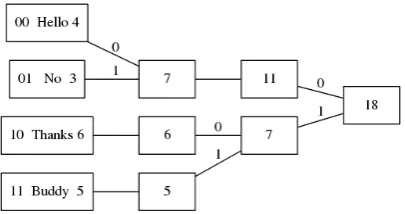
Word2Vec trains V to maximize the skip-gram likelihood based on (1). We work with the Huff-man softmax specification (Mikolov et al., 2013), which includes a pre-processing step to encode each vocabulary word in its representation via a binary Huffman tree (see Figure 1).
Each individual probability is then
pV(w|wt) = L(Yw)−1
j=1
σch [η(w, j+ 1)]u>
η(w,j)vwt
(4) whereη(w, i)is theith node in the Huffman tree
Figure 1: Binary Huffman encoding of a 4 word vocabulary, based upon 18 total utterances. At each step proceeding from left to right the two nodes with lowest count are combined into a par-ent node. Binary encodings are read back off of the splits moving from right to left.
only the input spaceV = [vw1· · ·vwp], for a p
-word vocabulary, is reported as the language rep-resentation – these vectors are used as input for NLP tasks. However, the full representationV in-cludes mapping from each word to bothVandU. We apply the gensimpython implementation of Word2Vec, which fits the model via stochastic gradient descent (SGD), under default specifica-tion. This includes a vector space of dimension
K = 100and a skip-gram window of sizeb= 5.
2.1 Word2Vec Inversion
Given Word2Vec trained on each of C class-specific corpora D1. . . DC, leading toC distinct
language representationsV1. . .VC, classification
for new documents is straightforward. Consider theS-sentence documentd: each sentencewsis
given a probability under each representation Vc
by applying the calculations in (1) and (4). This leads to theS×Cmatrix of sentence probabilities,
pVc(ws), and document probabilities are obtained
pVc(d) =
1
S X
s pVc(ws). (5)
Finally, class probabilities are calculated via Bayes rule as in (3). We use priorsπc = 1/C, so
that classification proceeds by assigning the class
ˆ
y= argmaxc pVc(d). (6)
3 Illustration
We consider a corpus of reviews provided by Yelp for a contest on kaggle.com. The text is tok-enized simply by converting to lowercase before splitting on punctuation and white-space. The
training data are 230,000 reviews containing more than 2 million sentences. Each review is marked by a number of stars, from 1 to 5, and we fit separate Word2Vec representations V1. . .V5 for
the documents at each star rating. The valida-tion data consist of 23,000 reviews, and we ap-ply the inversion technique of Section 2 to score each validation documentd with class probabili-tiesq= [q1· · ·q5], whereqc= p(c|d).
The probabilities will be used in three different classification tasks; for reviews as
a.negative at 1-2 stars, or positive at 3-5 stars;
b.negative 1-2, neutral 3, or positive 4-5 stars;
c.corresponding to each of 1 to 5 stars.
In each case, classification proceeds by sum-ming across the relevant sub-class probabilities. For example, in task a, p(positive) = q3 + q4 +q5. Note that the same five fitted Word2Vec representations are used for each task.
We consider a set of related comparator tech-niques. In each case, some document repre-sentation (e.g., phrase counts or Doc2Vec vec-tors) is used as input to logistic regression pre-diction of the associated review rating. The lo-gistic regressions are fit under L1 regularization
with the penalties weighted by feature standard deviation (which, e.g., up-weights rare phrases) and selected according to the corrected AICc cri-teria (Flynn et al., 2013) via thegamlr R pack-age of Taddy (2014). For multi-class tasks b-c, we use distributed Multinomial regression (DMR; Taddy 2015) via thedistromR package. DMR fits multinomial logistic regression in a factorized representation wherein one estimates independent Poisson linear models for each response category. Document representations and logistic regressions are always trained using only the training corpus.
● ● ● ● ● ● ● ● ● ● ● ● ● ● ● ● ● ● ● ● ● ● ● ● ● ● ● ● ● ● ● ● ● ● ● ● ● ● ● ● ● ● ● ● ● ● ● ● ● ● ● ● ● ● ● ● ● ● ● ● ● ● ● ● ● ● ● ● ● ● ● ● ● ● ● ● ● ● ● ● ● ● ● ● ● ● ● ● ● ● ● ● ● ● ● ● ● ● ● ● ● ● ● ● ● ● ● ● ● ● ● ● ● ● ● ● ● ● ● ● ● ● ● ● ● ● ● ● ● ● ● ● ● ● ● ● ● ● ● ● ● ● ● ● ● ● ● ● ● ● ● ● ● ● ● ● ● ● ● ● ● ● ● ● ● ● ● ● ● ● ● ● ● ● ● ● ● ● ● ● ● ● ● ● ● ● ● ● ● ● ● ● ● ● ● ● ● ● ● ● ● ● ● ● ● ● ● ● ● ● ● ● ● ● ● ● ● ● ● ● ● ● ● ● ● ● ● ● ● ● ● ● ● ● ● ● ● ● ● ● ● ● ● ● ● ● ● ● ● ● ● ● ● ● ● ● ● ● ● ● ● ● ● ● ● ● ● ● ● ● ● ● ● ● ● ● ● ● ● ● ● ● ● ● ● ● ● ● ● ● ● ● ● ● ● ● ● ● ● ● ● ● ● ● ● ● ● ● ● ● ● ● ● ● ● ● ● ● ● ● ● ● ● ● ● ● ● ● ● ● ● ● ● ● ● ● ● ● ● ● ● ● ● ● ● ● ● ● ● ● ● ● ● ● ● ● ● ● ● ● ● ● ● ● ● ● ● ● ● ● ● ● ● ● ● ● ● ● ● ● ● ● ● ● ● ● ● ● ● ● ● ● ● ● ● ● ● ● ● ● ● ● ● ● ● ● ● ● ● ● ● ● ● ● ● ● ● ● ● ● ● ● ● ● ● ● ● ● ● ● ● ● ● ● ● ● ● ● ● ● ● ● ● ● ● ● ● ● ● ● ● ● ● ● ● ● ● ● ● ● ● ● ● ● ● ● ● ● ● ● ● ● ● ● ● ● ● ● ● ● ● ● ● ● ● ● ● ● ● ● ● ● ● ● ● ● ● ● ● ● ● ● ● ● ● ● ● ● ● ● ● ● ● ● ● ● ● ● ● ● ●
1 2 3 4 5
0.0 0.2 0.4 0.6 0.8 1.0 word2vec inversion ● ● ● ● ● ● ● ● ● ● ● ● ● ● ● ● ● ● ● ● ● ● ● ● ● ● ● ● ● ● ● ● ● ● ● ● ● ● ● ● ● ● ● ● ● ● ● ● ● ● ● ● ● ● ● ● ● ● ● ● ● ● ● ● ● ● ● ● ● ● ● ● ● ● ● ● ● ● ● ● ● ● ● ● ● ● ● ● ● ● ● ● ● ● ● ● ● ● ● ● ● ● ● ● ● ● ● ● ● ● ● ● ● ● ● ● ● ● ● ● ● ● ● ● ● ● ● ● ● ● ● ● ● ● ● ● ● ● ● ● ● ● ● ● ● ● ● ● ● ● ● ● ● ● ● ● ● ● ● ● ● ● ● ● ● ● ● ● ● ● ● ● ● ● ● ● ● ● ● ● ● ● ● ● ● ● ● ● ● ● ● ● ● ● ● ● ● ● ● ● ● ● ● ● ● ● ● ● ● ● ● ● ● ● ● ● ● ● ● ● ● ● ● ● ● ● ● ● ● ● ● ● ● ● ● ● ● ● ● ● ● ● ● ● ● ● ● ● ● ● ● ● ● ● ● ● ● ● ● ● ● ● ● ● ● ● ● ● ● ● ● ● ● ● ● ● ● ● ● ● ● ● ● ● ● ● ● ● ● ● ● ● ● ● ● ● ● ● ● ● ● ● ● ● ● ● ● ● ● ● ● ● ● ● ● ● ● ● ● ● ● ● ● ● ● ● ● ● ● ● ● ● ● ● ● ● ● ● ● ● ● ● ● ● ● ● ● ● ● ● ● ● ● ● ● ● ● ● ● ● ● ● ● ● ● ● ● ● ● ● ● ● ● ● ● ● ● ● ● ● ● ● ● ● ● ● ● ● ● ● ● ● ● ● ● ● ● ● ● ● ● ● ● ● ● ● ● ● ● ● ● ● ● ● ● ● ● ● ● ● ● ● ● ● ● ● ● ● ● ● ● ● ● ● ● ● ● ● ● ● ● ● ● ● ● ● ● ● ● ● ● ● ● ● ● ● ● ● ● ● ● ● ● ● ● ● ● ● ● ● ● ● ● ● ● ● ● ● ● ● ● ● ● ● ● ● ● ● ● ● ● ● ● ● ● ● ● ● ● ● ● ● ● ● ● ● ● ● ● ● ● ● ● ● ● ● ● ● ● ● ● ● ● ● ● ● ● ● ● ● ● ● ● ● ● ● ● ● ● ● ● ● ● ● ● ● ● ● ● ● ● ● ● ● ● ● ● ● ● ● ● ● ● ● ● ● ● ● ● ● ● ● ● ● ● ● ● ● ● ● ● ● ● ● ● ● ● ● ● ● ● ● ● ● ● ● ● ● ● ● ● ● ● ● ● ● ● ● ● ● ● ● ● ● ● ● ● ● ● ● ● ● ● ● ● ● ● ● ● ● ● ● ● ● ● ● ● ● ● ● ● ● ● ● ● ● ● ● ● ● ● ● ● ● ● ● ● ● ● ● ● ● ● ● ● ● ● ● ● ● ● ● ● ● ● ● ● ● ● ● ● ● ● ● ● ● ● ● ● ● ● ● ● ● ● ● ● ● ● ● ● ● ● ● ● ● ● ● ● ● ● ● ● ● ● ● ● ● ● ● ● ● ● ● ● ● ● ● ● ● ● ● ● ● ● ● ● ● ● ● ● ● ● ● ● ● ● ● ● ● ● ● ● ● ● ● ● ● ● ● ● ● ● ● ● ● ● ● ● ● ● ● ● ● ● ● ● ● ● ● ● ● ● ● ● ● ● ● ● ● ● ● ● ● ● ● ● ● ● ● ● ● ● ● ● ● ● ● ● ● ● ● ● ● ● ● ● ● ● ● ● ● ● ● ● ● ● ● ● ● ● ● ● ● ● ● ● ● ● ● ● ● ● ● ● ● ● ● ● ● ● ● ● ● ● ● ● ● ● ● ● ● ● ● ● ● ● ● ● ● ● ● ● ● ● ● ● ● ● ● ● ● ● ● ● ● ● ● ● ● ● ● ● ● ● ● ● ● ● ● ● ● ● ● ● ● ● ● ● ● ● ● ● ● ● ● ● ● ● ● ● ● ● ● ● ● ● ● ● ● ● ● ● ● ● ● ● ● ● ● ● ● ● ● ● ● ● ● ● ● ● ● ● ● ● ● ● ● ● ● ● ● ● ● ● ● ● ● ● ● ● ● ● ● ● ● ● ● ● ● ● ● ● ● ● ● ● ● ● ● ● ● ● ● ● ● ● ● ● ● ● ● ● ● ● ● ● ● ● ● ● ● ● ● ● ● ● ● ● ● ● ● ● ● ● ● ● ● ● ● ● ● ● ● ● ● ● ● ● ● ● ● ● ● ● ● ● ● ● ● ● ● ● ● ● ● ● ● ● ● ● ● ● ● ● ● ● ● ● ● ● ● ● ● ● ● ● ● ● ● ● ● ● ● ● ● ● ● ● ● ● ● ● ● ● ● ● ● ● ● ● ● ● ● ● ● ● ● ● ● ● ● ● ● ● ● ● ● ● ● ● ● ● ● ● ● ● ● ● ● ● ● ● ● ● ● ● ● ● ● ● ● ● ● ● ● ● ● ● ● ● ● ● ● ● ● ● ● ● ● ● ● ● ● ● ● ● ● ● ● ● ● ● ● ● ● ● ● ● ● ● ● ● ● ● ● ● ● ● ● ● ● ● ● ● ● ● ● ● ● ● ● ● ● ● ● ● ● ● ● ● ● ● ● ● ● ● ● ● ● ● ● ● ● ● ● ● ● ● ● ● ● ● ● ● ● ● ● ● ● ● ● ● ● ● ● ● ● ● ● ● ● ● ● ● ● ● ● ● ● ● ● ● ● ● ● ● ● ● ● ● ● ● ● ● ● ● ● ● ● ● ● ● ● ● ● ● ● ● ● ● ● ● ● ● ● ● ● ● ● ● ● ● ● ● ● ● ● ● ● ● ● ● ● ● ● ● ● ● ● ● ● ● ● ● ● ● ● ● ● ● ● ● ● ● ● ● ● ● ● ● ● ● ● ● ● ● ● ● ● ● ● ● ● ● ● ● ● ● ● ● ● ● ● ● ● ● ● ● ● ● ● ● ● ● ● ● ● ● ● ● ● ● ● ● ● ● ● ● ● ● ● ● ● ● ● ● ● ● ● ● ● ● ● ● ● ● ● ● ● ● ● ● ● ● ● ● ● ● ● ● ● ● ● ● ● ● ● ● ● ● ● ● ● ● ● ● ● ● ● ● ● ● ● ● ● ● ● ● ● ● ● ● ● ● ● ● ● ● ● ● ● ● ● ● ● ● ● ● ● ● ● ● ● ● ● ● ● ● ● ● ● ● ● ● ● ● ● ● ● ● ● ● ● ● ● ● ● ● ● ● ● ● ● ● ● ● ● ● ● ● ● ● ● ● ● ● ● ● ● ● ● ● ● ● ● ● ● ● ● ● ● ● ● ● ● ● ● ● ● ● ● ● ● ● ● ● ● ● ● ● ● ● ● ● ● ● ● ● ● ● ● ● ● ● ● ● ● ● ● ● ● ●
1 2 3 4 5
0.0 0.2 0.4 0.6 0.8 1.0 phrase regression ● ● ● ● ● ● ● ● ● ● ● ● ● ● ● ● ● ● ● ● ● ● ● ● ● ● ● ● ● ● ● ● ● ● ● ● ● ● ● ● ● ● ● ● ● ● ● ● ● ● ● ● ● ● ● ● ● ● ● ● ● ● ● ● ● ● ● ● ● ● ● ● ● ● ● ● ● ● ● ● ● ● ● ● ● ● ● ● ● ● ● ● ● ● ● ● ● ● ● ● ● ● ● ● ● ● ● ● ● ● ● ● ● ● ● ● ● ● ● ● ● ● ● ● ● ● ● ● ● ● ● ● ● ● ● ● ● ● ● ● ● ● ● ● ● ● ● ● ● ● ● ● ● ● ● ● ● ● ● ● ● ● ● ● ● ● ● ● ● ● ● ● ● ● ● ● ● ● ● ● ● ● ● ● ● ● ● ● ● ● ● ● ● ● ● ● ● ● ● ● ● ● ● ● ● ● ● ● ● ● ● ● ● ● ● ● ● ● ● ● ● ● ● ● ● ● ● ● ● ● ● ● ● ● ● ● ● ● ● ● ● ● ● ● ● ● ● ● ● ● ● ● ● ● ● ● ● ● ● ● ● ● ● ● ● ● ● ● ● ● ● ● ● ● ● ● ● ● ● ● ● ● ● ● ● ● ● ● ● ● ● ● ● ● ● ● ● ● ● ● ● ● ● ● ● ● ● ● ● ● ● ● ● ● ● ● ● ● ● ● ● ● ● ● ● ● ● ● ● ● ● ● ● ● ● ● ● ● ● ● ● ● ● ● ● ● ● ● ● ● ● ● ● ● ● ● ● ● ● ● ● ● ● ● ● ● ● ● ● ● ● ● ● ● ● ● ● ● ● ● ● ● ● ● ● ● ● ● ● ● ● ● ● ● ● ● ● ● ● ● ● ● ● ● ● ● ● ● ● ● ● ● ● ● ● ● ● ● ● ● ● ● ● ● ● ● ● ● ● ● ● ● ● ● ● ● ● ● ● ● ● ● ● ● ● ● ● ● ● ● ● ● ● ● ● ● ● ● ● ● ● ● ● ● ● ● ● ● ● ● ● ● ● ● ● ● ● ● ● ● ● ● ● ● ● ● ● ● ● ● ● ● ● ● ● ● ● ● ● ● ● ● ● ● ● ● ● ● ● ● ● ● ● ● ● ● ● ● ● ● ● ● ● ● ● ● ● ● ● ● ● ● ● ● ● ● ● ● ● ● ● ● ● ● ● ● ● ● ● ● ● ● ● ● ● ● ● ● ● ● ● ● ● ● ● ● ● ● ● ● ● ● ● ● ● ● ● ● ● ● ● ● ● ● ● ● ● ● ● ● ● ● ● ● ● ● ● ● ● ● ● ● ● ● ● ● ● ● ● ● ● ● ● ● ● ● ● ● ● ● ● ● ● ● ● ● ● ● ● ● ● ● ● ● ● ● ● ● ● ● ● ● ● ● ● ● ● ● ● ● ● ● ● ● ● ● ● ● ● ● ● ● ● ● ● ● ● ● ● ● ● ● ● ● ● ● ● ● ● ● ● ● ● ● ● ● ● ● ● ● ● ● ● ● ● ● ● ● ● ● ● ● ● ● ● ● ● ● ● ● ● ● ● ● ● ● ● ● ● ● ● ● ● ● ● ● ● ● ● ● ● ● ● ● ● ● ● ● ● ● ● ● ● ● ● ● ● ● ● ● ● ● ● ● ● ● ● ● ● ● ● ● ● ● ● ● ● ● ● ● ● ● ● ● ● ● ● ● ● ● ● ● ● ● ● ● ● ● ● ● ● ● ● ● ● ● ● ● ● ● ● ● ● ● ● ● ● ● ● ● ● ● ● ● ● ● ● ● ● ● ● ● ● ● ● ● ● ● ● ● ● ● ● ● ● ● ● ● ● ● ● ● ● ● ● ● ● ● ● ● ● ● ● ● ● ● ● ● ● ● ● ● ● ● ● ● ● ● ● ● ● ● ● ● ● ● ● ● ● ● ● ● ● ● ● ● ● ● ● ● ● ● ● ● ● ● ● ● ● ● ● ● ● ● ● ● ● ● ● ● ● ● ● ● ● ● ● ● ● ● ● ● ● ● ● ● ● ● ● ● ● ● ● ● ● ● ● ● ● ● ● ● ● ● ● ● ● ● ● ● ● ● ● ● ● ● ● ● ● ● ● ● ● ● ● ● ● ● ● ● ● ● ● ● ● ● ● ● ● ● ● ● ● ● ● ● ● ● ● ● ● ● ● ● ● ● ● ● ● ● ● ● ● ● ● ● ● ● ● ● ● ● ● ● ● ● ● ● ● ● ● ● ● ● ● ● ● ● ● ● ● ● ● ● ● ● ● ● ● ● ● ● ● ● ● ● ● ● ● ● ● ● ● ● ● ● ● ● ● ● ● ● ● ● ● ● ● ● ● ● ● ● ● ● ● ● ● ● ● ● ● ● ● ● ● ● ● ● ● ● ● ● ● ● ● ● ● ● ● ● ● ● ● ● ● ● ● ● ● ● ● ● ● ● ● ● ● ● ● ● ● ● ● ● ● ● ● ● ● ● ● ● ● ● ● ● ● ● ● ● ● ● ● ● ● ● ● ● ● ● ● ● ● ● ● ● ● ● ● ● ● ● ● ● ● ● ● ● ● ● ● ● ● ● ● ● ● ● ● ● ● ● ● ● ● ● ● ● ● ● ● ● ● ● ● ● ● ● ● ● ● ● ● ● ● ● ● ● ● ● ● ● ● ● ● ● ● ● ● ● ● ● ● ● ● ● ● ●
1 2 3 4 5
0.0 0.2 0.4 0.6 0.8 1.0 doc2vec regression ● ● ● ● ● ● ● ● ● ● ● ● ● ● ● ● ● ● ● ● ● ● ● ● ● ● ● ● ● ● ● ● ● ● ● ● ● ● ● ● ● ● ● ● ● ● ● ● ● ● ● ● ● ● ● ● ● ● ● ● ● ● ● ● ● ● ● ● ● ● ● ● ● ● ● ● ● ● ● ● ● ● ●● ● ● ● ● ● ● ● ● ● ● ● ● ● ● ● ● ● ● ● ● ● ● ● ● ● ● ● ● ● ● ● ● ● ● ● ● ● ● ● ● ● ● ● ● ● ● ● ● ● ● ● ● ● ● ● ● ● ● ● ● ● ● ● ● ● ● ● ● ● ● ● ● ● ● ● ● ● ● ● ● ● ● ● ● ● ● ● ● ● ● ● ● ● ● ● ● ● ● ● ● ● ● ● ● ● ● ● ● ● ● ● ● ● ● ● ● ● ● ● ● ● ● ● ● ● ● ● ● ● ● ● ● ● ● ● ● ● ● ● ● ● ● ● ● ● ● ● ● ● ● ● ● ● ● ● ● ● ● ● ● ● ● ● ● ● ● ● ● ● ● ● ● ● ● ● ● ● ● ● ● ● ● ● ● ● ● ● ● ● ● ● ● ● ● ● ● ● ● ● ● ● ● ● ● ● ● ● ● ● ● ● ● ● ● ● ● ● ● ● ● ● ● ● ● ● ● ● ● ● ● ● ● ● ● ● ● ● ● ● ● ● ● ● ● ● ● ● ● ● ● ● ● ● ● ● ● ● ● ● ● ● ● ● ● ● ● ● ● ● ● ● ● ● ● ● ● ● ● ● ● ● ● ● ● ● ● ● ● ● ● ● ● ● ● ● ● ● ● ● ● ● ● ● ● ● ● ● ● ● ● ● ● ● ● ● ● ● ● ● ● ● ● ● ● ● ● ● ● ● ● ● ● ● ● ● ● ● ● ● ● ● ● ● ● ● ● ● ● ● ● ● ● ● ● ● ● ● ● ● ● ● ● ● ● ● ● ● ● ● ● ● ● ● ● ● ● ● ● ● ● ● ● ● ● ● ● ● ● ● ● ● ● ● ● ● ● ● ● ● ● ● ● ● ● ● ● ● ● ● ● ● ● ● ● ● ● ● ● ● ● ● ● ● ● ● ● ● ● ● ● ● ● ● ● ● ● ● ● ● ● ● ● ● ● ● ● ● ● ● ● ● ● ● ● ● ● ● ● ● ● ● ● ● ● ● ● ● ● ● ● ● ● ● ● ● ● ● ● ● ● ● ● ● ● ● ● ● ● ● ● ● ● ● ● ● ● ● ● ● ● ● ● ● ● ● ● ● ● ● ● ● ● ● ● ● ● ● ● ● ● ● ● ● ● ● ● ● ● ● ● ● ● ● ● ● ● ● ● ● ● ● ● ● ● ● ● ● ● ● ● ● ● ● ● ● ● ● ● ● ● ● ● ● ● ● ● ● ● ● ● ● ● ● ● ● ● ● ● ● ● ● ● ● ● ● ● ● ● ● ● ● ● ● ● ● ● ● ● ● ● ● ● ● ● ● ● ● ● ● ● ● ● ● ● ● ● ● ● ● ● ● ● ● ● ● ● ● ● ● ● ● ● ● ● ● ● ● ● ● ● ● ● ● ● ● ● ● ● ● ● ● ● ● ● ● ● ● ● ● ● ● ● ● ● ● ● ● ● ● ● ● ● ● ● ● ● ● ● ● ● ● ● ● ● ● ● ● ● ● ● ● ● ● ● ● ● ● ● ● ● ● ● ● ● ● ● ● ● ● ● ● ● ● ● ● ● ● ● ● ● ● ● ● ● ● ● ● ● ● ● ● ● ● ● ● ● ● ● ● ● ● ● ● ● ● ● ● ● ● ● ● ● ● ● ● ● ● ● ● ● ● ● ● ● ● ● ● ● ● ● ● ● ● ● ● ● ● ● ● ● ● ● ● ● ● ● ● ● ● ● ● ● ● ● ● ● ● ● ● ● ● ● ● ● ● ● ● ● ● ● ● ● ● ● ● ● ● ● ● ● ● ● ● ● ● ● ● ● ● ● ● ● ● ● ● ● ● ● ● ● ● ● ● ● ● ● ● ● ● ● ● ● ● ● ● ● ● ● ● ● ● ● ● ● ● ● ● ● ● ● ● ● ● ● ● ● ● ● ● ● ● ● ● ● ● ● ● ● ● ● ● ● ● ● ● ● ● ● ● ● ● ● ● ● ● ● ● ● ● ● ● ● ● ● ● ● ● ● ● ● ● ● ● ● ● ● ● ● ● ● ● ● ● ● ● ● ● ● ● ● ● ● ● ● ● ● ● ● ● ● ● ● ● ● ● ● ● ● ● ● ● ● ● ● ● ● ● ● ● ● ● ● ● ● ● ● ● ● ● ● ● ● ● ● ● ● ● ● ● ● ● ● ● ● ● ● ● ● ● ● ● ● ● ● ● ● ● ● ● ● ● ● ● ● ● ● ● ● ● ● ● ● ● ● ● ● ● ● ● ● ● ● ● ● ● ● ● ● ● ● ● ● ● ● ● ● ● ● ● ● ● ● ● ● ● ● ● ● ● ● ● ● ● ● ● ● ● ● ● ● ● ● ● ● ● ● ● ● ● ● ● ● ● ● ● ● ● ● ● ● ● ● ● ● ● ● ● ● ● ● ● ● ● ● ● ● ● ● ● ● ● ● ● ● ● ● ● ● ● ● ● ● ● ● ● ● ● ● ● ● ● ● ● ● ● ● ● ● ● ● ● ● ● ● ● ● ● ● ● ● ● ● ● ● ● ● ● ● ● ● ● ● ● ● ● ● ● ● ● ● ● ● ● ● ● ● ● ● ● ● ● ● ● ● ● ● ● ● ● ● ● ● ● ● ● ● ● ● ● ● ● ● ● ● ● ● ● ● ● ● ● ● ● ● ● ● ● ● ● ● ● ● ● ● ● ● ● ● ● ● ● ● ● ● ● ● ● ● ● ● ● ● ● ● ● ● ● ● ● ● ● ● ● ● ● ● ● ● ● ● ● ● ● ● ● ● ● ● ● ● ● ● ● ● ● ● ● ● ● ● ● ● ● ● ● ● ● ● ● ● ● ● ● ● ● ● ● ● ● ● ● ● ● ● ● ● ● ● ● ● ● ● ● ● ● ● ● ● ● ● ● ● ● ● ● ● ● ● ● ● ● ● ● ● ● ● ● ● ● ● ● ● ● ● ● ● ● ● ● ● ● ● ● ● ● ● ● ● ● ● ● ● ● ● ● ● ● ● ● ● ● ● ● ● ● ● ● ● ● ● ● ● ● ● ● ● ● ● ● ● ● ● ● ● ● ● ● ● ● ● ● ● ● ● ● ● ● ● ● ● ● ● ● ● ● ● ● ● ● ● ● ● ● ● ● ● ● ● ● ● ● ● ● ● ● ● ● ● ● ● ● ● ● ● ● ● ● ● ● ● ● ● ● ● ● ● ● ● ● ● ● ● ● ● ● ● ● ● ● ● ● ● ● ● ● ● ● ● ● ● ● ● ● ● ● ● ● ● ● ● ● ● ● ● ● ● ● ● ● ● ● ● ● ● ● ● ● ● ● ● ● ● ● ● ● ● ● ● ● ● ● ● ● ● ● ● ● ● ● ● ● ● ● ● ● ● ● ● ● ● ● ● ● ● ● ● ● ● ● ● ● ● ● ● ● ● ● ● ● ● ● ● ● ● ● ● ● ● ● ● ● ● ● ● ● ● ● ● ● ● ● ● ● ● ● ● ● ● ● ● ● ● ● ● ● ● ● ● ● ● ● ● ● ● ● ● ● ● ● ● ● ● ● ● ● ● ● ● ● ● ● ● ● ● ● ● ● ● ● ● ● ● ● ● ● ● ● ● ● ● ● ● ● ● ● ● ● ● ● ● ● ● ● ● ● ● ● ● ● ● ● ● ● ● ● ● ● ● ● ● ● ● ● ● ● ● ● ● ● ● ● ● ● ● ● ● ● ● ● ● ● ● ● ● ● ● ● ● ● ● ● ● ● ● ● ● ● ● ● ● ● ● ● ● ● ● ● ● ● ● ● ● ● ● ● ● ● ● ● ● ● ● ● ● ● ● ● ● ● ● ● ● ● ● ● ● ● ● ● ● ● ● ● ● ● ● ● ● ● ● ● ● ● ● ● ● ● ● ● ● ● ● ● ● ● ● ● ● ● ● ● ● ● ● ● ● ● ● ● ● ● ● ● ● ● ● ● ● ● ● ● ● ● ● ● ● ● ● ● ● ● ● ● ● ● ● ● ● ● ● ● ● ● ● ● ● ● ● ● ● ● ● ● ● ● ● ● ● ● ● ● ● ● ● ● ● ● ● ● ● ● ● ● ● ● ● ● ● ● ● ● ● ● ● ● ● ● ● ● ● ● ● ● ● ● ● ● ● ● ● ● ● ● ● ● ● ● ● ● ● ● ● ● ● ● ● ● ● ● ● ● ● ● ● ● ● ● ● ● ● ● ● ● ● ● ● ● ● ● ● ● ● ● ● ● ● ● ● ● ● ● ● ● ● ● ● ● ● ● ● ● ● ● ● ● ● ● ● ● ● ● ● ● ● ● ● ● ● ● ● ● ● ● ● ● ● ● ● ● ● ● ● ● ● ● ● ● ● ● ● ● ● ● ● ● ● ● ● ● ● ● ● ● ● ● ● ● ● ● ● ● ● ● ● ● ● ● ● ● ● ● ● ● ● ● ● ● ● ● ● ● ● ● ● ● ● ● ● ● ● ● ● ● ● ● ● ● ● ● ● ● ● ● ● ● ● ● ● ● ● ● ● ● ● ● ● ● ● ● ● ● ● ● ● ● ● ● ● ● ● ● ● ● ● ● ● ● ● ● ● ● ● ● ● ● ● ● ● ● ● ● ● ● ● ● ● ● ● ● ● ● ● ● ● ● ● ● ● ● ● ● ● ● ● ● ● ● ● ● ● ● ● ● ● ● ● ● ● ● ● ● ● ● ● ● ● ● ● ● ● ● ● ● ● ● ● ● ● ● ● ● ● ● ● ● ● ● ● ● ● ● ● ● ● ● ● ● ● ● ● ● ● ● ● ● ● ● ● ● ● ● ● ● ● ● ● ● ● ● ● ● ● ● ● ● ● ● ● ● ● ● ● ● ● ● ● ● ● ● ● ● ● ● ● ● ● ● ● ● ● ● ● ● ● ● ● ● ● ● ● ● ● ● ● ● ● ● ● ● ● ● ● ● ● ● ● ● ● ● ● ● ● ● ● ● ● ● ● ● ● ● ● ● ● ● ● ● ● ● ● ● ● ● ● ● ● ● ● ● ● ● ● ● ● ● ● ● ● ● ● ● ● ● ● ● ● ● ● ● ● ● ● ● ● ● ● ● ● ● ● ● ● ● ● ● ● ● ● ● ● ● ● ● ● ● ● ● ● ● ● ● ● ● ● ● ● ● ● ● ● ● ● ● ● ● ● ● ● ● ● ● ● ● ● ● ● ● ● ● ● ● ● ● ● ● ● ● ● ● ● ● ● ● ● ● ● ● ● ● ● ● ● ● ● ● ● ● ● ● ● ● ● ● ● ● ●
1 2 3 4 5
0.0 0.2 0.4 0.6 0.8 1.0 mnir stars probability positiv e
Figure 2: Out-of-Sample fitted probabilities of a review beingpositive(having greater than 2 stars) as a function of the true number of review stars. Box widths are proportional to number of observations in each class; roughly 10% of reviews have each of 1-3 stars, while 30% have 4 stars and 40% have 5 stars.
each, as well as the combined 200 dimensional DM+DBOW representation, to logistic regression.
Phrase regressionapplies logistic regression of re-sponse classes directly onto counts for short 1-2 word ‘phrases’. The phrases are obtained using
gensim’s phrase builder, which simply combines highly probable pairings; e.g., first dateand
chicken wingare two pairings in this corpus.
MNIR, the multinomial inverse regression of Taddy (2013a; 2013b; 2015) is applied as im-plemented in thetextirpackage for R. MNIR maps from text to the class-space of inter-est through a multinomial logistic regression of phrase counts onto variables relevant to the class-space. We apply MNIR to the same set of 1-2 word phrases used in phrase regression. Here, we regress phrase counts onto stars expressed numeri-cally and as a 5-dimensional indicator vector, lead-ing to a 6-feature multinomial logistic regression. The MNIR procedure then uses the6×pmatrix of feature-phrase regression coefficients to map from phrase-count to feature space, resulting in 6 di-mensional ‘sufficient reduction’ statistics for each document. These are input to logistic regression.
Word2Vec aggregation averages fitted word rep-resentations for a single Word2Vec trained on all sentences to obtain a fixed-length feature vector for each review (K = 100, as for inversion). This vector is then input to logistic regression.
3.1 Results
Misclassification rates for each task on the valida-tion set are reported in Table 1. Simple phrase-count regression is consistently the strongest per-former, bested only by Word2Vec inversion on taskb. This is partially due to the relative strengths of discriminative (e.g., logistic regression) vs
gen-a(NP) b(NNP) c(1-5)
W2V inversion .099 .189 .435
Phrase regression .084 .200 .410
D2V DBOW .144 .282 .496
D2V DM .179 .306 .549
D2V combined .148 . 284 .500
MNIR .095 .254 .480
W2V aggregation .118 .248 .461
Table 1: Out-of-sample misclassification rates.
erative (e.g., all others here) classifiers: given a large amount of training text, asymptotic effi-ciency of logistic regression will start to work in its favor over the finite sample advantages of a generative classifier (Ng and Jordan, 2002; Taddy, 2013c). However, the comparison is also unfair to Word2Vec and Doc2Vec: both phrase regres-sion and MNIR are optimized exactly under AICc selected penalty, while Word and Doc 2Vec have only been approximately optimized under a sin-gle specification. The distributed representations should improve with some careful engineering.
tuning of the SGD optimization routine.1
Looking at the fitted probabilities in detail we see that Word2Vec inversion provides a more use-ful document ranking than any comparator (in-cluding phrase regression). For example, Figure 2 shows the probabilities of a review being ‘pos-itive’ in task aas a function of the true star rat-ing for each validation review. Although phrase regression does slightly better in terms of misclas-sification rate, it does so at the cost of classifying many terrible (1 star) reviews as positive. This oc-curs because 1-2 star reviews are more rare than 3-5 star reviews and because words of emphasis (e.g.
very, completely, and !!!) are used both in very bad and in very good reviews. Word2Vec inversion is the onlymethod that yields positive-document probabilities that are clearly increasing in distribution with the true star rating. It is not dif-ficult to envision a misclassification cost structure that favors such nicely ordered probabilities.
4 Discussion
The goal of this note is to point out inversion as an option for turning distributed language representa-tions into classification rules. We are not arguing for the supremacy of Word2Vec inversion in par-ticular, and the approach should work well with al-ternative representations (e.g., Glove). Moreover, we are not even arguing that it will always outper-form purpose-built classification tools. However, it is a simple, scalable, interpretable, and effective option for classification whenever you are working with such distributed representations.
References
Cheryl Flynn, Clifford Hurvich, and Jefferey Simonoff. 2013. Efficiency for Regularization Parameter Se-lection in Penalized Likelihood Estimation of Mis-specified Models. Journal of the American Statisti-cal Association, 108:1031–1043.
Quoc V. Le and Tomas Mikolov. 2014. Distributed representations of sentences and documents. In
Pro-1Note also that the unsupervised document
representa-tions – Doc2Vec or the single Word2Vec used in Word2Vec aggregation – could be trained on larger unlabeled corpora. A similar option is available for Word2Vec inversion: one could take a single Word2Vec model trained on a large unlabeled corpora as a shared baseline (prior) and update separate mod-els with additional training on each labeled sub-corpora. The representations will all be shrunk towards a baseline language model, but will differ according to distinctions between the language in each labeled sub-corpora.
ceedings of the 31 st International Conference on
Machine Learning.
Tomas Mikolov, Ilya Sutskever, Kai Chen, Greg S. Cor-rado, and Jeff Dean. 2013. Distributed representa-tions of words and phrases and their compositional-ity. InAdvances in Neural Information Processing
Systems, pages 3111–3119.
Frederic Morin and Yoshua Bengio. 2005. Hierarchi-cal probabilistic neural network language model. In
Proceedings of the International Workshop on Arti-ficial Intelligence and Statistics, pages 246–252. Andrew Y. Ng and Michael I. Jordan. 2002. On
Dis-criminative vs Generative Classifiers: A Compar-ison of Logistic Regression and naive Bayes. In
Advances in Neural Information Processing Systems (NIPS).
Jeffrey Pennington, Richard Socher, and Christo-pher D. Manning. 2014. Glove: Global vectors for word representation. Proceedings of the Empiricial Methods in Natural Language Processing (EMNLP 2014), 12.
Radim Rehurek and Petr Sojka. 2010. Software Framework for Topic Modelling with Large Cor-pora. InProceedings of the LREC 2010 Workshop
on New Challenges for NLP Frameworks, pages 45–
50.
David Rumelhart, Geoffrey Hinton, and Ronald Williams. 1986. Learning representations by back-propagating errors.Nature, 323:533–536.
Richard Socher, Cliff C. Lin, Chris Manning, and An-drew Y. Ng. 2011. Parsing natural scenes and natu-ral language with recursive neunatu-ral networks. In Pro-ceedings of the 28th international conference on
ma-chine learning (ICML-11), pages 129–136.
Richard Socher, Alex Perelygin, Jean Y. Wu, Jason Chuang, Christopher D. Manning, Andrew Y. Ng, and Christopher Potts. 2013. Recursive deep mod-els for semantic compositionality over a sentiment treebank. In Proceedings of the conference on empirical methods in natural language processing
(EMNLP), volume 1631, page 1642.
Matt Taddy. 2013a. Measuring Political Sentiment on Twitter: Factor Optimal Design for Multinomial Inverse Regression. Technometrics, 55(4):415–425, November.
Matt Taddy. 2013b. Multinomial Inverse Regression for Text Analysis. Journal of the American Statisti-cal Association, 108:755–770.
Matt Taddy. 2013c. Rejoinder: Efficiency and struc-ture in MNIR. Journal of the American Statistical Association, 108:772–774.
Matt Taddy. 2014. One-step estimator paths for con-cave regularization. arXiv:1308.5623.