University of Warwick institutional repository: http://go.warwick.ac.uk/wrap
A Thesis Submitted for the Degree of PhD at the University of Warwick
http://go.warwick.ac.uk/wrap/2804
This thesis is made available online and is protected by original copyright. Please scroll down to view the document itself.
A Study of the Relationship Between the
Mathematical Beliefs and Teaching
Practices of Home-Educating Parents in
the Context of their Children’s
Perceptions and Knowledge of
Mathematics
By
Noraisha Farooq Yusof (MMATH, MSc)
A thesis submitted in partial fulfilment of the requirements for the degree
of Doctor of Philosophy
Institute of Education, University of Warwick
Contents
Index of Tables and Figures...3
Acknowledgements ...9
Abstract...10
Chapter 1: Introduction ...12
Chapter 2: Literature Review...21
Chapter 3: Methodology ...57
Chapter 4: Data Analysis for the Parents’ Questionnaires ...111
Chapter 5: Influence of the Parents’ Home-Educating Approach on
Their Children’s Mathematical Learning ...190
Chapter 6: Discussion of the Home-Education Approaches and Their
Effect on the Children’s Mathematical Development ...298
Chapter 7: Conclusion...315
References ...346
Appendix 1: Questionnaire for Parents...356
Appendix 2: Questionnaire for Children...366
Appendix 3: Email Sent to Parents ...373
Appendix 4: Exploratory Study Questions...375
Appendix 5: Marks on the Key Stage Pilot Study Questions ...377
Appendix 6: Group 1 Questions (Key Stage 1) ...379
Appendix 7: Group 2 Questions (Key Stage 2) ...388
Appendix 8: Group 3 Questions (Key Stage 3) ...397
Appendix 9: Questions for Child 4...407
Appendix 10: Responses to Case Study Questions ...410
Index of Tables and Figures
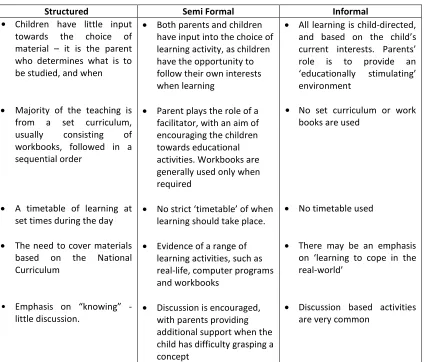
Table 2.1: Comparison of Different Approaches to Home Education
within the UK
...30
Figure 2.1: Example of Mathematics Problem from the PIPs Assessments
(Online)
...34
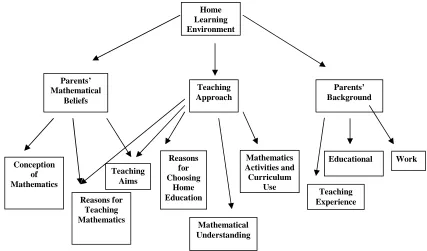
Figure 3.1: Issues Considered in the Investigation of Home-Educating
Parents Teaching of Mathematics.
...58
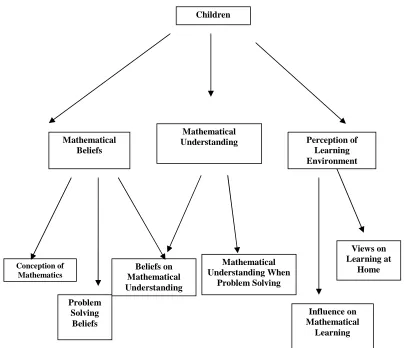
Figure 3.2: Issues Considered in the Investigation of Home-Educating
Children’s Learning of Mathematics
...59
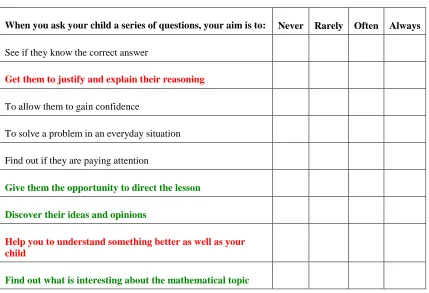
Table 3.1: Question 8, P.6, Likert Type Question in Questionnaire for
Parents
...70
Table 3.2: Summary of Questions used in the KS1 Pilot Study
...85
Figure 3.3: Child Z, Q.1, Trial of KS1 Questions
...86
Figure 3.4: Child D, Q.2, Trial of KS1 Questions
...87
Figure 3.5: Children D and Z, Q.2, Trial of KS1 Questions
...88
Table 3.3: Summary of Questions Used in KS2 Pilot Study
...89
Figure 3.6: Child S and Child K, Question 1, Trial of KS2 Questions
....90
Figure 3.7: Child Sb, Question 11, Trial of KS2 Questions
...91
Figure 3.8: Child Al, Question 2, Trial of KS2 Questions
...92
Figure 3.9: Child N, Question 4, Trial of KS2 Questions
...93
Table 3.4: Summary of Questions Used in KS3 Pilot Study
...94
Figure 3.12: Child Al, Question 5, Trial of KS3 Questions
...96
Figure 3.13: Child Sb, Question 10, Trial of KS3 Questions
...97
Table 4.1: Specific Beliefs Associated With Mathematics
...123
Table 4.2: Mathematical Beliefs of Parents
...125
Table 4.3: % of Parents Who Gave a Particular Ranking to Each Option,
and the Associated Mode and Median Ranking
...127
Figure 4.2: Beliefs Associated With the Logical Aspect of Mathematics
...134
Figure 4.3: Beliefs Associated With the Scientific Applications of
Mathematics
...135
Table 4.4: Parent’s Aims When Teaching Mathematics
...137
Table 4.5: % Breakdown of Parental Aims When Teaching
...138
Table 4.6: Comparison of Parental Beliefs on Understanding
...141
Figure 4.4: Beliefs on the Everyday Applications of Mathematics Affect
Teaching Approach
...145
Figure 4.5: Influence of Parental Beliefs on Curriculum Use on the
Teaching Approach
...146
Figure 4.6: The Influence of the ‘Child-led’ Approach on Mathematical
Learning
...152
Table 4.7: Books Used By Parents
...155
Table 4.8: Parental Aims When Asking Questions
...177
Figure 4.7: Frequency of Response for Parents’ Motivations For Asking
Their Child Mathematics Questions
...182
Table 5.1: Children’s Perspective on Choice of Activity When Learning
Mathematics
...204
Table 5.2 Percentage of Children’s Level of Agreement for Each
Statement
...207
Table 5.3: Similarities and Differences in the Mathematical Perceptions
of the Children from Family 17
...213
Table 5.4: Signs of Mathematical Understanding
...221
Table 5.5: Distribution of Responses for Signs of Understanding
...222
Figure 5.1: Q.5, G.3, Child 11b, Aged 15
...231
Figure 5.2: Q.9, G.3, Child 11b, Aged 15 and Child 11a, Aged 17
...232
Figure 5.3: Q.8, G.3, Child 11a, Aged 17 and Child 11b, Aged 15
...233
Figure 5.5: Q.2, G.1, Child 4, Aged 6
...237
Figure 5.6: Q.6, G.1, Child 4, Aged 6
...238
Figure 5.7: Q.7, G.1, Child 4, Aged 6
...239
Figure 5.8: Q.8, G.1, Child 4, Aged 6
...240
Figure 5.9: Q.5, G.1, Child 4, Aged 6
...241
Figure 5.10: Q.3, G.1, Child 4, Aged 6
...243
Table 5.6: Comparison of Children’s Solution Strategies From Family 7
...245
Figure 5.11: Q.2. G.1, Child 7a, Aged 7 & Figure 5.12: Q.2, G.1 Child
7b, Aged 6
...245
Figure 5.13: Q.7, G.1, Child 7b, Aged 6
...246
Figure 5.14: Q.8, G.1, Child 7a, Aged 7 and Child 7b, Aged 6
...247
Table 5.7: Summary of Child 16’s Solution Strategies
...251
Figure 5.15: Q.2, G.1, Child 16, Aged 8
...252
Figure 5.16: Q.3, G.1, Child 16, Aged 8
...252
Figure 5.17: Q.2, G.2, Child 16, Aged 8
...253
Figure 5.18: Q.7, G.2, Child 16, Aged 8
...254
Figure 5.19: Q.5, G.2, Child 16, Aged 8
...254
Figure 5.20: Q.7, G.3, Child 16, Aged 8
...256
Figure 5.21: Q.9, G.1, Child 16, Aged 8
...256
Figure 5.22: Q.8, G.3, Child 16, Aged 8
...257
Figure 5.23: Q.9, G.3, Child 16, Aged 8
...258
Table 5.8: Marks for the Group 1 Questions
...260
Table 5.9: Children’s Results for the Group 1 Questions, by Area of
Mathematics
...261
Figure 5.24: Q.1, G.1, Child 5, Aged 8
...262
Figure 5.25: Q.1 G.1, Child 22, Aged 5
...262
Figure 5.26: Q.1, G.1, Child 4, Aged 5
...263
Figure 5.28: Q.2, G.1, Child 16, Aged 8
...264
Figure 5.29: Q.4, G.1, Child 22, Aged 5
...264
Figure 5.30: Q.8, G.1, Child 5, Aged 8 and Child 16, Aged 8
...265
Figure 5.31: Range of Strategies Used to Answer Question 6, Group 1
266
Figure 5.32: Q.9, G.1, Child 26, Aged 9
...266
Figure 5.33: Q.3, G.1, Child 7a, Aged 7
...267
Figure 5.34: Q.3, G.1, Child 22, Aged 5
...268
Figure 5.35, Q.5, G.1
...269
Table 5.10: Method of Solution for Group 1 Questions
...270
Table 5.11: Marks for the Group 2 Questions
...272
Table 5.12: Children’s Results for the Group 2 Questions, by Area of
Mathematics
...273
Figure 5.36: Q.4, G.2, Child 16, Aged 8
Child 9a, Aged 11
...274
Figure 5.37: Q.4, G.2, Child 5, Aged 8
...274
Figure 5.38: Q.7, G.2, Child 26, Aged 9
...274
Figure 5.39: Q.7, G.2, Child 16, Aged 8
...275
Figure 5.40: Q.1, G.2, Child 9a, Aged 11
...276
Figure 5.41: , Q.1, G.2, Child 16, Aged 8
Child 26, Aged
9
...276
Figure 5.42: Q.5, G.2, Child 5, Aged 8
...277
Figure 5.43: Q.5, G.2, Child 26, Aged 9
Child 16, Aged 8
...277
Figure 5.44: Q.3, G.2, Child 9a, Aged 11
...278
Figure 5.45: Q.3, G.2, Child 5, Aged 8
...279
Figure 5.46: Q.6, G.3, Child 26, Aged 9
...279
Figure 5.47: Q.2, G.2, Child 9a, Aged 11
...280
Figure 5.48: Q.2, G.2, Child 26, Aged 9
...280
Figure 5.50: Q.9, G.2, Child 9a, Aged 11
...281
Figure 5.51: Q.8, G.2, Child 16, Aged 8
...282
Table 5.13: Method of Solution for Group 2 Questions
...283
Table 5.14: Marks for the Group 3 Questions
...285
Table 5.15: Children’s Results for the Group 3 Questions, by Area of
Mathematics
...285
Figure 5.52: Q.1, G3, Child 19, Aged 14
...286
Figure 5.53: Q.2, G.3, Child 9b, Aged 8
...286
Figure 5.54: Q.6, G.3, Child 9a, Aged 11
...287
Figure 5.55: Q.6, G.3, Child 16, Aged 8
...288
Figure 5.56: Q.3, G.3, Child 28, Aged 14
...288
Figure 5.57: Q.3, G.3, Child 11b, Aged 15
...289
Figure 5.58: Q.3, G.3, Child 16, Aged 8
...289
Figure 5.59: Q.5, G.3, Child 9b, Aged 8
...290
Figure 5.60: Q.5, G.3, Child 19, Aged 14
...291
Figure 5.61: Q.7, G.3, Child 9a, Aged 11
...292
Figure 5.62: Q.7, G.3, Child 28, Aged 14
...292
Figure 5.63: Q.9, G.3, Child 28, Aged 14
...293
Figure 5.64: Q.9, G.3, Child 16, Aged 8
...294
Figure 5.65: Q.8, G.3
...294
Figure 5.66: Q.8, G.3, Child 9a, Aged 11
...295
Figure 5.67: Q.8, G.3, Child 28, Aged 14
...295
Figure 5.68: Q.8, G.3, Child 11b, Aged 15
...296
Figure 6.1: Effects of the Structured Approach on the Children’s
Learning of Mathematics
...300
Figure 6.2: Effects of the Structured Approach on the Children’s
Mathematical Beliefs
...302
Figure 6.4: Effects of the Structured Approach on the Children’s
Mathematical Beliefs
...307
Figure 6.5: Effects of the Informal Approach on the Children’s Learning
of Mathematics
...311
Figure 6.6: Effects of the Informal Approach on the Children’s
Mathematical Beliefs
...312
Figure 7.1: Diagram to Illustrate Range of Home-Educating Approaches
Acknowledgements
I would first like to thank my supervisor Dr. Eddie Gray for his invaluable support, advice and guidance throughout the course of my postgraduate studies. He has always been there to read, critique and comment on my work, regardless of the length of the writing! I know that I can always rely on him to motivate the best in his students, and I hope that this work will live up to the high standards that have been set.
This research would have been impossible without the assistance of the site moderators from the home-education support groups – not only did they offer full access to the email list of the group members, they also provided valuable feedback which led to vital improvements in my data collection techniques. I would also like to give a special mention to the home-educating parents and children who participated in this research, and all those who took part in the pilot tests. As a mathematics educator, I found the responses to the questionnaires and their mathematical work to be fascinating - clearly all who took part spent much time and effort to enable the research data to be received in good time.
Abstract
Home-education, also known as home-schooling, is an educational choice made by
families to facilitate learning at home rather than in school. Research by Rothermel
(2002) and Rudner (1999) shows that, on average, home-educated children far
outperform school-educated children on standard mathematics tests. But at present,
no study has yet investigated the key reasons behind this phenomenon – indeed, no
research has taken an in-depth look into the ways in which parents facilitate the
learning of mathematics at home and the resultant effects on their children’s
mathematical development. Therefore, in this study, we will consider the nature of
mathematics education through the eyes of the home-educating parent and their
children.
Through questionnaires, this research examines the relationship between the
educational and mathematical beliefs of home-educating parents. Parental views are
compared with the children’s perceptions of the home learning environment, their
mathematical beliefs and their mathematical understanding. Furthermore, the
children’s mathematical understanding is addressed through consideration of their
responses to a series of mathematical questions set within the context of Key Stages
1-3 of the National Curriculum. To obtain the research sample, home-educating
families from across the United Kingdom were contacted via the Internet, and
information was collected through both email and postal response. From the parental
data, three categories of home-educator were highlighted: (1) Structured, (2)
Semi-Formal and (3) Informal (as described by Lowe and Thomas, 2002). The children’s
questionnaire responses were then analysed, using illustrative case studies to
different perceptions of mathematics and mathematical learning in the children. For
example, children learning via a ‘structured’ approach were less likely to be able to
measure their own level of mathematical ability than children from the other families;
they also mentioned limited resources and less independence when learning
mathematics.
When examining the children’s assessed work, selective case studies, together with
detailed analysis, revealed a strong link between the home-educating approach and
the problem-solving strategies of the children. Children from structured families were
often competent when solving more routine, ‘calculation-type’ problems, but less able
to adapt their knowledge to problems that required a ‘deeper’ understanding of the
concept. Children from families where the parent themselves had a mathematical
background (e.g. mathematician or mathematics teacher) typically used formal
mathematical reasoning in their work. On the other hand, children learning from
‘informal’ families (where emphasis was placed on ‘child-directed’ learning) seldom
used ‘standard procedural’ type approaches to solve problems, but instead displayed
a range of creative strategies.
The findings suggested that a home-educating parent’s conception of mathematics not
only influenced the way in which they attempt to teach mathematics but also their
children’s mathematical beliefs and learning style. Furthermore, there was evidence
to suggest that certain home-educating approaches encouraged a ‘type’ of
mathematical understanding that could be applied in a range of situations, whereas
other approaches, particularly where both the learning materials and interaction with
Chapter 1: Introduction
In the United Kingdom, state education is free and available to all children within the local educational area. Parents also have the option of sending their children to private schools - including boarding schools, religious schools, and those that promote particular teaching philosophies, such as the Montessori schools. Yet, there is a third choice available to parents, which is to educate their children at home. Up until the 1970’s, home education was virtually non-existent in the UK, however, it is now estimated that there are up to 100, 000 home-educating families in the UK (BBC, 2006). While a number of families remain ‘invisible’ to their local education department (as they prefer not to disclose their home-educating status) it is clear is that the number of families choosing to educate their children at home is increasing. Not surprisingly, the research community has tried to determine the effects of this somewhat ‘unorthodox’ educational approach on the home-educated children’s academic learning.
As a mathematics education researcher, I was particularly interested in the effects that home-education could have on the children’s mathematical thinking and development. Given that home-educating parents could come from a range of different educational and employment backgrounds, perhaps with no prior knowledge of teaching, was there any evidence that the parents’ previous experiences influenced the ways in which they taught mathematics? Furthermore, what types of mathematical understanding were developed when a child was no longer ‘formally’ educated within the school environment?
1.1. Construction of the Research Questions
This study aims to identify: (1) The different approaches to home-education, (2) How the selected approach affects the learning of mathematics and (3) The resultant influence on the children’s mathematical thinking.
To establish the ways in which a parent may approach the teaching of mathematics at home, initial consideration is given to why the parents chose to home-educate in the first place, i.e. “What made the parents feel that home was a better option than school?”Both American (Romanowski, 2001) and British (Rothermel, 2002) studies show that reasons for home-education can be varied, including an unhappiness with the schools’ methods of teaching, social factors and religious reasons. Whilst this study examines the parental reasons for choosing home-education, unlike other studies, it also seeks to measure the level of influence the children have on this educational decision. Thus we seek to answer the questions:
• Why do parents choose home education?
• Do the children have any influence on the parents’ decision to home educate?
‘through life experiences’. In order to understand what makes a parent choose a particular home-educating approach, we ask the question:
• How do the mathematical background and experiences of the parent affect their approach to home-education with regards to the learning of mathematics?
This leads us to a consideration of mathematical background, mathematical belief, andteaching practice. Mathematics education researchers (Thompson, 1984; Askew, Brown, Rhodes, Johnson and William, 1997) claim ateacher’smathematical beliefs, stemming from their personal schooling experiences, have an influence on their teaching practice. But the home-educating parent’s mathematical beliefs may not only come from their ‘school experiences’ of mathematics – for example they may have held previous employment that involved mathematical applications, which also contributes to their perceptions of the subject. So in order to better understand whya parent chooses a particular approach with regards to their children’s mathematical learning, we first have to understand what a parent believes about mathematics. Parental beliefs on mathematics could provide the basis behind their educational philosophies when teaching the subject, and hence guide their choice of curriculum, methods of imparting mathematical knowledge, and the ways in which they interact with their children. We therefore ask:
• What are the corebeliefsheld by the home-educating parents? • How might their beliefs influence theteaching of mathematics?
• What are thechildren’s feelings towards both their learning environment (i.e. learning mathematics at home) and mathematics, as a subject?
The responses identified from this question related to those clarifying parental belief may then give some insight into the question:
• Are the parental beliefs likely to influence their children’s views of home-education/mathematics?
The final aim of the study is to examine the effects of home-education on the children’s mathematical understanding. We examine the main theoretical arguments relating to mathematical understanding (including Skemp, 1976; Hiebert and Carpenter, 1992 and Sfard, 1991), with a view towards establishing a way of adequately classifying and/or measuring the understanding of the children. An important issue arising here are the responses to the question “When is a mathematical idea understood?” Since the study is considering both parents and children, there are two forms of question associated with this notion:
• When does the parent believe their child understands elements of mathematics?
• When does thechildbelieve s(he)understandsmathematics?
1.2 Overview of Research
In order to answer the main research questions, it was clear that I would require information from both home-educating parents and their children. To establish a suitable research methodology, I noted that the majority of the identified research questions were open, that is, as a researcher I sought to draw and infer relationships and meanings from the data, rather than establish a pre-conceived hypothesis. It thus seemed appropriate to follow a phenomenographical approach, where one would attempt to define the different ways in which the parents’ experience, interpret and perceived particular phenomena relating to mathematical learning at home, in line with the approach suggested by Marton (1981). Thus it was imperative that during the construction of the research instruments (Chapter 3), and also when conducting data analysis (Chapters 4, 5 and 6), I chose a method that would allow each participant to
give meaningto the topic in question.
The specific research questions indicated that I would require qualitative data, in order to investigate areas such as belief, and also quantitative data – for example, I needed a way of measuring the children’s mathematical abilities. A mixed methodology appeared to be the most suitable approach, and the process through which the research instruments were developed is described in Chapter 3. In particular, the study used
questionnaires for both parents and children, followed by three groups of mathematics questions that were to be attempted by the children, depending on their level of mathematical ability.
would not be restricted by travel constraints, and to enable a quick and efficient form of communication with the participants. It is also, however, understood that this approach can lead to some bias (Dillman, Tortora, and Bowker, 1998b), and so the advantages and disadvantages of the use of the Internet during data collection will be evaluated in Chapter 3 (Section 3.8). At the same time, writing ‘mathematical script’ can be particularly hard, and thus a postal approach was taken when obtaining the children’s answers to mathematics questions.
Once the responses were collated, the data analysis was conducted with two key aims in mind, namely to: (1) Establish the main ‘themes or phenomena’ related to the research questions, and (2) Use the identified themes from the questionnaire and mathematics questions to answer the specific research questions. Therefore the data analysis process was structured as follows:
1. Using the data from the parental questionnaires, Chapter 4 first identifies themes relating to the parents’ mathematical beliefs, their approaches to teaching mathematics, and their notions of understanding. Relationships between the various themes are established, where a number of beliefs relating to the importance of mathematics, and the reasons for adopting a particular approach will be highlighted.
2. Chapter 5 then focuses on the influence of the overall home-educating approachon the children’s mathematical beliefs and understanding. Three key
approaches impact on the children’s mathematical learning. The children’s assessed work from the three groups is also analysed, and consideration is given to the specific areas of mathematics that were covered (such as Arithmetic).
3. Once the main findings have been established in Chapters 5, Chapter 6 draws together the key results from Chapters 4 and 6, with the aim of answering the question:“How did each of the three main home-educating approaches affect the children’s perceptions and understanding of mathematics?”
Chapter 7 concludes the study, returning to answer the original research questions. It is found that the parent’s mathematical teaching beliefs can be influenced by a number of factors – namely their personal beliefs towards mathematics, their previous experiences of mathematics in everyday life and work, and their children’s previous academic experiences in school. The chosen home-educating approach is often a reflection of their mathematical and teaching beliefs, but it is also observed that the majority are open to changing the way in which they teach mathematics if their children lose interest or fail to understand a concept. The children’s mathematical beliefs, whilst sometimes reflective of the parental mathematical beliefs, are also strongly influenced by other factors, such as: (1) The mathematical problems that they engage in, (2) The different ways in which the mathematics is related to them, and finally (3) The beliefs and attitudes of the parents.
Chapter 2: Literature Review
This chapter aims to examine relevant literature to support further development of the research questions. Where appropriate, this chapter will also establish a number of sub-questions, associated with the main research aims that were identified in Section 1.1.
Since this study is focused on two specific areas; that is,home-education(Section 2.1) andmathematics education(Section 2.2), the literature review is divided accordingly.
2.1 Home-Education
We begin with a historical overview of home-education, followed by an in-depth look at the home-educating population in the UK (Section 2.1.2). Next, Section 2.1.3 focuses upon the main reasons for families to choose home-education, followed by consideration of the different approaches to home-education (Section 2.1.4). Finally, recent research concerning the mathematical ‘abilities’ of home-educated children will be summarised and analysed in Section 2.1.5, with the intention of highlighting a number of issues that have not yet been considered in previous research.
2.1.1 History of Home-Education in the United Kingdom
being educated at home by a governess, learning household duties and aesthetic skills, such as music and dancing, until the ages of seventeen or eighteen, when they would generally marry. Boys ceased being taught at home after the age of eight, in order to enter preparatory school. This educational approach stemmed from the Victorian belief that the education of boys was of vital importance — they would eventually become the maintainers of their own families. Girls were valued more for their personal fortunes, appearance and manners, as these qualities would affect their future prospects for marriage (Menzo and Whitaker, 2002).
In the early 20th Century, compulsory education laws, beginning with the 1870 Forster Education Act, along with the introduction of a basic network of mainstream schools, resulted in a shift from ‘home-learning’ to ‘school-learning’, with the vast majority of children attending either a state school or ‘private school’. At the same time, the education of children was no longer considered primarily the parents’ responsibility — the government desired that all children received an education of some form, regardless of their financial background. Consequently, until fairly recently, the majority of children who were educated at home were Travellers (e.g. Romany Gypsies) or from geographically isolated families (Lowe and Thomas, 2002). The decision to teach their children at home was generally a result of the ‘unorthodox’ lifestyles led by such families, where the option of sending the children to mainstream schools was either impossible or unacceptable. For example, Travelling Families often felt their children would lose their cultural identity in mainstream schools.
Education Otherwise first started in 1977, it consisted of a handful of members. These days, Arora (2003) notes that Home Education UK quotes a figure of 1% of the UK population being educated at home (around 85,000 children) rising to an estimate of around 140,000 (Furedi, 2002). Whatever the true figure, all the evidence indicates that the number of UK families choosing to educate their children at home is rising.
2.1.2 Home-Education in the United Kingdom
The UK home-educating community encompasses families from a diverse range of religious, philosophical and political backgrounds, and economic levels. Families vary in size, from single parent families teaching an only child, to parents educating several children at home. Meighan (1997) estimated that there were around 50,000 children ‘home-educated’ throughout the UK, whilst a more recent estimate (Lowe and Thomas, 2002) puts the figure somewhere between 10,000 and 150,000. Such uncertainty about the figures may be answered by the fact that these ‘invisible’ families include parents who have chosen to home-educate their children from birth, thus their children will never have been registered with their local education department. It is not compulsory for one to register as a home-educator or seek official permission (Arora, 2003) and indeed, Rothermel (2002) found in her study of 419 home-educating families that between 31 to 65% of home-educators were unknown to their local education department.
2.1.3 Reasons for Choosing Home-Education
Arora (2003) notes that there has been an increase in UK home-educating families, and suggests a number of factors, including a growing dissatisfaction with the education provided by schools, the introduction of National Testing (especially in primary schools), the widespread availability of educational materials (e.g. Internet resources), and strong support from other home-educating families. For example, Education Otherwise (EO) is a registered charity based in England for families whose children are being educated outside of school. Support is provided through online resources, by telephone and via newsletters.
In the US, Romanowski (2001) noted that there are two main categories of home-educators:ideologuesandpedagogues. Ideologues home-educate because ‘they object to what they believe is being taught in private and public schools and they seek to strengthen their relationship with their children’ (Van Galen and Pitman, 1991, p.66-67). Ideologues aim to pass their values, beliefs and skills onto their children, and claim that the home-environment is the best place to do so. Pedagogues take a different view of home-education, believing that schools are unable to provide a suitable level of teaching to cater for their children’s individual educational needs. Pedagogues may observe that schools have a negative effect on their children’s academic and emotional behaviour, and hence argue that: “breaking from the traditional formal mode of teaching will lead to improved understanding and learning in their children.” (Marchant and MacDonald, 1994, p.66).
“...in the US reasons given were; because parents considered it their responsibility to educate the children; to avoid negative peer influences (parents and children) and to control the instructional materials used. In the UK, the main motivations werefreedom and flexibility
so that children could learn in their own style and the family could maintain a close
relationshipwith time together.” (Rothermel 2002, p.345)
Arora (2003) notes that the introduction of National Testing, especially in primary schools, has led to an ‘instructive’ teaching approach through which teachers tend to be the ‘givers of all information’, rather than ‘encouragers’ who enable children to discover ideas for themselves. Indeed, in 2003, delegates at the annual conference of the Association of Teachers and Lecturers in Blackpool argued that young children were highly constrained and pressurised by target-setting and the requirements of the curriculum (BBC 2003, Accessed June 2, 2006). The speakers noted that there needed to be a greater recognition of fun and creativity in the teaching approaches and also indicated that, within primary and secondary schools, the ‘instructive’ approach led to an increase in health and behavioural problems. Perhaps not surprisingly then, a number of home-educators particularly dislike the emphasis on National Tests in mainstream schools, and the associated effects such tests have on the schools’ teaching philosophies and their children.
home, although she also noted thatbullying, religious/moral differences, and children with special needs were also factors that influenced their decision.
A sector of the UK home-educating community that is quite different from those described above are members of the Travelling and Gypsy community. A study conducted by Lancashire County Council (2005) involving over 50% of Local Authorities showed that within the Gypsy/Roma community, 26% elected to be educated at the point of transfer to secondary school. Clearly this sector of the home-education community is unique in a number of ways. For instance, since only 10-11% of the families were recorded to be living in housing, the children may have found it hard to attend school regularly if they did not have a fixed address. Additional factors that influenced Gypsy/Roma and Traveller families opting to take their children out of school included a fear of cultural erosion, a supposed lack of relevance within the school curriculum and the fear of racist bullying (Dyer, Anders and Dean, 2004/5).
alternative to school– where some form of learning takes place, rather than any child who is ‘not attending school’.
As can be seen from the various literature on home-education, there are a number of different reasons for parents to educate their children at home. However, whilst previous studies all focus on the parents’ reasons for choosing a home-education, there has been no consideration of the children’s level of influence on the decision to stay at home. This is something the current study attempts to correct by eliciting whether or not children contribute towards the final decision. Two interconnected questions thus formed part of a parental questionnaire (See Appendix 1):
What were the main reasons behind your decision to home-educate?
Was this decision based mainly on your own personal educational beliefs or
did your child express his/her feelings to be educated at home?
Once the reasons for home-educating have been established, the next step is to examine the various ways in which parents chose to provide an education for their children within the home-environment. This would allow the ‘reasons for choosing home-education’ to be analysed in the context of a parent’s home-educating style, perhaps indicating a relationship between the two.
2.1.4 Different Approaches to Home-Education within the UK
“...it should be borne in mind that the home educating community is a broad and diverse community of educational philosophies.” Mike Fortune-Wood (2005, p.9)
of influenceon their learning. Bearing these four variables in mind, Lowe and Thomas (2002) suggest there are three main approaches to home-education: a structured approach, an informal approach and a semi-formal approach.
2.1.4.1 A Structured/Formal Approach
Structured approaches to home education include the more formal methods of working to a strict timetable and adhering to a set curriculum (such as the National Curriculum or a commercial scheme). These parents may need reassurance that they are covering all compulsory subjects available at school:
“We (the Joubert family) have opted for a learning programmebased on workbooksat the moment for various reasons. Our two eldest are at an age where they need to start looking at
qualificationsi.e.GCSE'sor similar...
...I feel less concerned about things like "are they learning enough?"... Lastly, this method requires the least input from me and yet I feel confident that the children are learningrelevant
material.” (School at Home Website, Accessed 2006)
This approach is also frequently used in preparation for formal exams — a structured curriculum enables home-educated children to cover the required syllabus – however, Lowe and Thomas (2002) note that younger children often grow bored with a curriculum that is too predictable and rigid.
2.1.4.2 An Informal Approach
“M is always encouraged to take part in decisions regarding her education and her own future. She is also encouragedto use her own initiativeand to make her own judgements...we have found from our previous experience with our son that children are very good at learning all that they need to know if trusted to do so.
...We usually tend to look at topics in the form of a theme or project, usually taken from some
interest expressedby M.Discussionplays a great part in our approach.
One of our main aims is to fit M forlife in the real world.We encourage basic skills such as reading and writing, use of computer and calculator, house and garden maintenance, personal safety, self discipline, respect and care for others, for animals, for the immediate community and environment andfor the world as a whole.”
Home-Education.org [Online]
2.1.4.3 A Semi-Formal Approach
“Time limits –they’re up to you! Either my partner, depending on who’s at home that day, or myself wouldencourage the childrento get on with something. That something is pretty wellup to them, (telly watching not included here, but that’s our personal choice!) it could be writing a letter, playing, drawing, using a CD Rom, making something, reading, constructing with Lego, taking an old video to pieces, cooking, even cleaning out the bedroom.
...We findworkbooks valuable to cover any short fallwe feel there might be in their skills, but we find ourselves turning to them less and less. There are so many beautifully illustrated books and computer programmes that the children love to sit and use, or explore virtual worlds... Or how many metres such and such is, (from playing in the garden).”
Education Otherwise [Online]
2.1.4.4 Summary of Approaches
Structured Semi Formal Informal • Children have little input
towards the choice of material – it is the parent who determines what is to be studied, and when
Majority of the teaching is from a set curriculum, usually consisting of workbooks, followed in a sequential order
A timetable of learning at set times during the day
The need to cover materials based on the National Curriculum
• Emphasis on “knowing” -little discussion.
Both parents and children have input into the choice of learning activity, as children have the opportunity to follow their own interests when learning
Parent plays the role of a facilitator, with an aim of encouraging the children towards educational activities. Workbooks are generally used only when required
No strict ‘timetable’ of when learning should take place.
Evidence of a range of learning activities, such as real-life, computer programs and workbooks
Discussion is encouraged, with parents providing additional support when the child has difficulty grasping a concept
All learning is child-directed, and based on the child’s current interests. Parents’ role is to provide an ‘educationally stimulating’ environment
• No set curriculum or work books are used
No timetable used
There may be an emphasis on ‘learning to cope in the real-world’
[image:31.595.89.513.95.457.2] Discussion based activities are very common
Table 2.1: Comparison of Different Approaches to Home Education within the UK
structured and informal learning during the day, and 37% adopting the informal ‘child-directed’ approach. Considering each of these approaches in the context of teaching and learning mathematics, Yusof (2003) reported that of the 30 families in her study, 60% were ‘completely flexible’ as to when their children studied mathematics. Though home-educators averaged 1-2 hours of mathematical learning per day this varied greatly amongst families. Teaching was frequently one-to-one for 96% of the families, regardless of the number of children, and the choice of mathematical activities suggested four main priorities:
• The child’s interests
• The real-life application of the mathematical concept
• The child’s personal learning style, and whether it would help the child’s understanding,
• Personal preferences of the parents and available resources etc.
gave their children relative freedom as to ‘where and when’ they studied. Other home-educators tried to incorporate mathematical activities into their everyday lives whenever possible, which was consistent with their belief that ‘mathematics is essential for everyday life’. As mentioned earlier, one aim of this study is to gain a better understanding of how these various approaches to teaching mathematics can affect a child’s perceptions and understanding of mathematics. But before considering literature associated with the learning of mathematics, we first review previous research to gain an insight into the possible effects of home-education on mathematical achievement.
2.1.5 Home-Education and Mathematical Achievement
Although no previous study has considered the relationship between home-education and mathematical understanding in any depth, past research has measured home-educated children’s performance on standard mathematics tests. Two earlier studies, the first conducted in the US (Rudner, 1999) and the other in the UK (Rothermel, 2002) will be discussed.
2.1.5.1 Demographics of Rudner’s Home-Educating Families
2.1.5.2 Performance on Standard Tests
The home-educated children in Rudner’s study were given the Iowa Tests of Basic Skills (ITBS) or the Tests of Achievement and Proficiency (TAP) across a range of subjects, including mathematics. Relationships were found between student achievement, parental educational background and the resources used. It was found that 25% of home-educated students were working at one or more grades above their age-level peers in public and private schools, where the median scores were generally in the 70th to 80th percentile, and far exceeded those of public and private school students. Moreover, Rudner indicated that children who had been home-educated throughout their life achieved higher test scores than students who had also attended other education programs, but no significant differences in achievement were noticed with regards to gender, or formal teaching experiences.
2.1.5.3 Demographics of Rothermel’s Home-Educating Families
discussion and spontaneity within the learning. A feature that was common to all families was the ‘flexible approach’ to education and the high level of parental attention received by the children.
Rothermel (2002) found that around 50% of the home-educated children had been home-educated from birth and 50% had been withdrawn from school, where families tended to withdraw one child from school and then subsequent children would be home-educated from the beginning. Parents who were more confident generally avoided following the National Curriculum, whereas those who were less confident tended to base their teaching around the National Curriculum.
2.1.5.4. Performance on Assessed Work
The PIPS (Performance Indicators in Primary Schools) assessments were developed by the Centre for Evaluation and Monitoring (CEM) at Durham University to track a number of aspects of schooling as pupils moved through the primary sector in England and Wales (PIPS Assessments, Online reference). They are generally used by schools to gather data on a range of variables that are grouped into measures of academic attainment, developed ability and attitude, which are then used to calculate measures of relative progress. For example, in Year 2 the assessment is made up of three sections, each taking about half an hour to complete. The first two sections assess mathematics and reading, an example of a mathematics question (Figure 2.1) shown below:
Rothermel (2002) tested each home-educated child at three different stages:Start of Reception Mathematics(4-5 year olds),End of Reception Maths(6 year olds), and
Year 2 Maths(7 year olds) using the PIPS Baseline Assessments. This allowed her to measure the children’s performance at each stage of the assessment as well as their progress over the years.
The PIPS Baseline assessment data revealed that 64% of the home-educated children scored over 75% on the assessment, whereas, nationally, just 5.1% of children scored over 75%. Socio-economic class was not an indicator of achievement – in fact, the home-educated children from lower socio-economic groups performed better than those from the middle class. Furthermore, at least 14% of the home-educating parents were employed in manual and unskilled occupations. The children’s level of attainment was not limited in any way by their parent’s level of education, where approximately 38% of parents were educated at comprehensive schools, and 21% had no post-school qualifications. Although 47.5% of the home-educators in Rothermel’s study had attended university, at least 27.7% had not. Ray (1997) believes that because the majority of home-educating parents taught their children on a one-to-one basis, the parent’s educational background had less influence on their children’s academic performance.
2.1.5.6 Summary
Lubienski (2003) argues that while Rudner’s (1999) study showed that home-educated children outperformed school children on standardised tests, these findings do not prove that home-education is a more effective form of education than school. He believes that there are additional factors that may affect the results of such comparative studies – e.g. the higher income and educational levels of the home-educating parents compared to the parents of the schooled children, as was noted by Rudner (1999). The findings of Rothermel’s (2002) study, however, suggest that the income and educational levels of the parent are not indicators of achievement. In fact, it was the children from lower income groups who outperformed those from higher groups. Rothermel believes that the key factors in determining the children’s academic development and progress was the level of parental input, along with a flexible approach to education. However, Lubienski (2003) suggests that:
“Without knowing how many people are home educating, for what reasons, in what ways and to what effect, we cannot draw compelling conclusions about the degree to which the act of homeschooling boosts academic performance, especially relative to other forms of
education...” Lubienski (2003, p.172)
Although prior studies have measured and compared the children’s marks on standard mathematics tests, there is no consideration of the ways in which the parents teach their children mathematics, the particular ways in which home-education benefits mathematical learning, and the consequent effect on their children’s mathematical understanding.
“…whilst the academic assessments showed how well these children could perform, they gave no indication of the type and breadth or depth of education these children were engaged
Unlike previous studies, this research seeks to determine the range of understanding exhibited by home-educated children through their problem solving approaches rather than an evaluation of their scores on a standardised mathematics test.
But before turning our attention to the area of mathematical understanding, it is necessary to consider the relevant factors that can influence a child’s mathematical knowledge. We begin with review of the literature on mathematics teaching in mainstream schools, with a focus on ‘the main factors that could affect a teacher’s approach when teaching mathematics in a classroom’.
2.2 Mathematics Education
Earlier studies on home-education (Rothermel, 2002 and Lowe and Thomas, 2000) identify three main categories of home-educating approaches (i.e. structured, semi-formal and insemi-formal) but no attempt has been made to identify the relationship between parental reasons for home-educating and the chosen approach to mathematical learning. Consequently, in the context of mathematics learning and as an extension of the author’s previous study (Yusof, 2003) the current study addresses the following areas:
(1) Parent’s beliefs about mathematics and the effects that these beliefs may have on their home-educating approach.
(2) The effect of the parent’s mathematical/teaching background on their home-educating approach.
(4) The effects of the parents’ home-educating approach on their children’s perceptions of themselves as the learners of mathematics, and their mathematical understanding.
In an attempt to address these issues, we first review the literature on mathematics teaching in mainstream schools. This will begin with a consideration ofmathematical belief (Section 2.2.1) and then mathematical knowledge (2.2.3), with an aim of identifying the main factors that could influence the approach used when teaching mathematics.
2.2.1 Mathematical Beliefs
Beliefs underpin an individual’s personal thoughts and behaviour thus influencing their disposition to adopt certain practices but not others (Swan, 2006 and Schoenfeld, 1992). In other words, an examination of the home-educating parents’ beliefs could enable us to form a picture of the environment in which the mathematical learning takes place. Underhill (1988) summarises research on mathematical beliefs into the following four areas:
1. Beliefs about mathematics as a subject, in particular, the nature of mathematics. For example, one commonly held belief is that ‘mathematics is about following a set of rules to solve arithmetical problems’.
2. Beliefs about the learning of mathematics – e.g. “What is helpful/unhelpful when learning mathematics?”
4. Beliefs about the social context – “How are the students influenced by the behavioural norms of the learning environment?”
Ernest (1991a, 1991b) divides a mathematics teacher’s belief system into three components: (1) Their conception of mathematics as a subject for study, (2) The
nature of mathematics teaching and (3) The process of learning mathematics. Note that both Ernest and Underhill describe beliefs concerning the nature of mathematics as a subject, beliefs about teaching, and beliefs related to the process of learning mathematics. However, Underhill’s fourth point is also highly relevant to this study since a key difference between the ‘teachers’ of mathematics in this study (i.e. the parents) and school teachers is that the social context of the mathematical learning environment is at home rather than at school. For this reason, the current study will examine beliefs associated with the parents’:
(1) Conceptions of mathematics as a subject
(2) Beliefs associated with the teaching and learning of mathematics and
(3) Beliefs about the social context of the home-educating environment in relation to learning mathematics – “What behaviours and practices are encouraged in a home-educating environment?”
Additionally, thechildren’s beliefs regarding each of the above components will also be addressed since this will identify some degree of relationship or difference between the beliefs of the child and parent.
2.2.2 The Influence of Beliefs on Teaching Practice
It can be argued that beliefs are manifested through classroom practice associated with conceptions (Ernest, 1989a) and orientation (Askew, Brown, Rhodes, Johnson and William, 1997). In their study of effective teachers of Numeracy, Askew et al (1997) identified three types of teaching orientation that that could be associated with beliefs concerning the nature of mathematics:
Transmission– projecting a view that mathematics is a series ofrules and truths, which must be conveyed to the student through an instructional approach until fluency is attained.
Discovery – where mathematics is viewed as a human creation and students are encouraged to learn through individual exploration and reflection. Teachers are seen as facilitators.
Connectionist – mathematics is seen as network of ideas that the student and teacher construct through joint discussion. In addition, the teacher aims to challenge the students’ thinking.
2.2.3 The Influence of Subject Knowledge on Mathematics Teaching
The mathematical beliefs of a teacher are not the only influence on the teaching approach – themathematical knowledgeof the teacher can also play a major role (Ball (1991). Whilst the mathematical knowledge of parents who home-educate has received limited (if any) consideration, within this study it will be considered in the context of the parents’ actions in developing the mathematical understanding of their children. In contrast, a number of studies have considered the relationship between a school teacher’s knowledge and belief systems, and the influence of these elements on the teacher’s approach towards teaching mathematics. This knowledge will be considered through two main areas, namely: Section 2.2.4 - Subject matter knowledge and Section 2.2.5 - Pedagogical knowledge.
2.2.4 Subject Matter Knowledge
Shulman (1986, p.9) describes subject matter knowledge, as ‘the amount and organisation of knowledge per se in the mind of the teacher’. Ball (1991) writes that a teacher’s knowledge about mathematics includes their views on what it means to ‘do and know’ the subject, and their philosophical opinions on mathematical learning. He stresses thatteachers need to have strong subject-matter understanding to be effective teachers of mathematics.
home-education, which revealed that approximately half of the parents had received no further education after leaving school. Therefore, it is conjectured that there may be three main differences between the knowledge base of a home-educator and a mathematics teacher:
(1) The parent may not have had any formal teaching experience
(2) Their formal qualifications and knowledge will vary considerably – some may have been educated up to GSCE level, others could have reached postgraduate level
(3) The parents’ mathematical experiences could be derived from a number of varied situations – the workplace, their former schooling, or the home environment
Taking these points into consideration, the study will focus on the parents’:
Highest level of mathematical qualification – GCSE, A-level, degree/university level, etc.
Use of mathematics in current or former employment – either by the respondent, or other close family members (husband and so on)
Effect of parent’s prior mathematical experiences on their home-education approach – were they an advantage or disadvantage?
2.2.5 Pedagogical Knowledge
Although it is indicated that there is no simple relationship between a teacher’s formal qualifications, their understanding of mathematics and their teaching practice, this does not imply that these factors have little influence on their students’ understanding of mathematics. Rather, there may be other issues that could affect the teaching; for example, the content delivery style (e.g. rote learning) and the mathematical activities used to illustrate a concept, may both affect a student’s perception and knowledge of mathematics. These notions are associated with the idea of Pedagogical Knowledge which, according to Shulman (1986), consists of knowledge of the curriculum, teaching and management, students, and the evaluation of students’ progress. Key factors that influence the mathematics lessons in school
(Leinhardt, Putnam, Stein and Baxter, 1991) include knowledge of:
1. The mathematical goals to be accomplished, and the steps needed to attain those goals
2. A curriculum that consists of the concepts to be taught, activities used and any concept-related problems that could arise in the future. This contributes to the running of the class and is strongly influenced by the exam system, where teachers aim to cover the syllabus required for the forthcoming exams, such as SATs, GCSE’s and A-levels
4. Activities used during explanation of a concept, including workbooks, verbal discussion and pictorial images, which are used to promote understanding, and an awareness of the strengths and weaknesses of each approach
Accordingly, in this study, we ask:“What pedagogical knowledge do home-educating parents possess?”Although Rothermel’s (2002) UK sample showed that 29% of the parents were teacher-trained, there is no evidence that this sample is representative of all UK home-educators, as it is generally understood that families who choose to participate in home-education research tend to have a strong interest in educational issues (Arora, 2003) and it is not surprising that a large percentage would have a teaching background of some form. On other the hand, even if parents possess a level of teacher-training, this does not necessarily imply that they will home-educate their children according to methods derived from their teacher training experiences. A home-educating family in the UK is under no obligation to have any plan with regards to the mathematical content cover, as the legal requirements of the Education Act 1996 indicate that:
“The 1996 Act makes no attempt to define ‘suitable education’, and disputes over educational provision rarely come to court, so there is little case law to help with this. However, in the case ofHarrison & Harrison v Stevenson(appeal to Worcester Crown Court 1981), education was held to be ‘suitable’ if it was such as to prepare children for life in modern civilised society; and to allow them to achieve their full potential.
This definition is a very general one and can encompass a variety of educational styles and methods. Families are entitled to choose whatever they feel to be the most suitable approach to learning at home for their child.” Education Otherwise (Online)
Now that we have considered mathematics education literature in the context of the ‘teachers of mathematics’, the next section will examine the possible effects of different teaching approaches on the children’s mathematical understanding.
2.2.6 Children’s Mathematical Understanding
“One of the most widely accepted ideas within the mathematics education community is that students should understand mathematics. The goal of many research and implementation efforts in mathematics education has been to promote learning with understanding. But achieving this goal has been like searching for the Holy Grail. There is a persistent belief in the merits of the goal, but designing school learning environments that successfully promote school understanding has been difficult.”
Hiebert and Carpenter (1992, p.65)
The topic of mathematical understanding has been an area of much discussion and debate over the years, where the idea of ‘learning with understanding’ has been examined in areas far beyond the boundaries of mathematics education. For example, within the cognitive science sector, much emphasis has been placed on modelling internal representations with considerable precision (Gardner, 1985). Researchers from the anthropology and social science disciplines favoured theories based on situated knowledge and social influences in attempts to explain the understanding associated with learning in everyday situations and the lack of such understanding that resulted from formal school learning environments (Lave, 1988; Brown, Collins, and Duguid, 1989; Nunes, Schliemann and Caraher, 1993). Clearly understanding is a fundamental part of learning; hence it is also clear that many researchers believe a model of learning should include aspects of understanding - regardless of the importance given to social and environmental factors.
certainty (Hiebert and Carpenter, 1992). It is also the case that although the mathematical achievements of home-educated children have been measured through standard tests, there has been no consideration of the children’s mathematical understanding. Moreover, there is no data on home-educated children’s strategies used when solving mathematical problems, nor of their perceptions of what it means to ‘understand’ something in mathematics.
Hence, in this section, some of the key issues related to mathematical understanding will be addressed. Theories concerning the various types of understanding associated with mathematical thinking are considered together with the consequences of understanding (or not understanding) a mathematical concept. The first question to be addressed is“What do we mean by the term ‘understanding’?” In other words, when is it possible to say that someone has successfully understood an idea?
2.2.7 What Does It Mean To Understand Something in Mathematics?
The dictionary definition of ‘understand’ is “to grasp the meaning of… to have thorough technical acquaintance with… to be thoroughly familiar with the character and propensities of.” (Merriam-Webster’s Online Dictionary). It is easy to say “I understand” or “I do not understand” in specific situations. But when learning mathematics, one cannot simply rely on intuitive feelings to measure depth of understanding. Nickerson (1985, p.216) writes:
“Consider the relatively straightforward question of what it means to understand a word or term. One might take the position that one understands a word if and only if one can define it correctly. But this answer will not do. Clearly, it is possible to understand a word well enough to use it appropriately in specific contexts without being able to produce a definition that is unambiguous in all contexts”.
Nevertheless, although it may be impossible to say whether or not one fully understands something, Nickerson (1985) believes that if understanding is to form a primary part of education, then one is obliged to make an effort to understand, even though this is only a partly successful endeavour.
Some studies appear to associate understanding with the ability to ‘do’ or ‘have’ a set of skills - for example, Gagné and Driscoll (1988) focus on instructional methods of teaching. They classify intellectual skills into rules (which allow a student to do
something) andhigher order rules - a set of simple rules combined to form a more complex rule, stressing that, “The statement of a rule is merely the representation of it – the rule itself is a learned capacity of the learner” (Gagné and Driscoll, 1988, p.51). In other words, a learner has only learnt the rule when he can use it in a variety of situations. But one might ask whether knowing how to correctly apply a rule means that the learnerunderstandsthe rule.
2.2.8 Relational and Instrumental Understanding
According to Skemp (1976), there are two meanings of the word ‘understanding’, which are distinguished by the terms:
Relational Understanding‘knowing both what to do and why it is done’
Instrumental Understanding ‘applying rules to the problem without justification’
Skemp provides an example of a newcomer to a city when describing the differences between these types of understanding. A person may learn their way from their house to their place of work, and then learn the route from their house to a friend’s house. Theseisolated bitsof knowledge are compared to the knowledge gained by going out and exploring the city. Skemp suggests that a person who only knows some isolated facts is more likely to get lost than someone who builds a mental map. In the same way, a person who only has an instrumental understanding of a mathematical concept may have difficulty when facing a problem that does not ‘fit the rule’.
relationally while the teacher does not have the time, the resources or possibly even the subject and pedagogic knowledge to teach in this way.
2.2.9 Procedural and Conceptual Understanding
Hiebert and Carpenter (1992) distinguish two kinds of mathematical knowledge, namely procedural and conceptual knowledge; although interestingly they make no reference to Skemp’s notions of understanding. They identify procedural knowledge as the knowledge necessary to carry out a sequence of actions. Such knowledge is often manifested through the manipulation of symbols in a step-by-step process; for example, applying the quadratic formula to obtain the solutions to a quadratic equation, without fully comprehending the derivation of the formula.
In contrast, conceptual knowledge is seen to be knowledge that is rich in relationships and consequently it possesses two key features — it is part of a network and it is essential for expertise through its relationship with procedural knowledge. Their suggestion that a mathematical concept is understood if it is part of an internal network of representations implies that the more connections within the network to a particular mathematical idea, the more strongly the idea will be understood. An awareness of these mathematical structures and their appropriate connections is the essence of understanding (Duffin and Simpson, 2000), and thus a failure to understand derives from a limited perception of possible connections with the consequence that the learner tries to implement a set of procedures without knowing ‘why’ these procedures are being applied.
appropriate connections — such an individual does not need to remember all of the detail. In contrast, they suggest that the individual who does not fully understand a mathematical concept is merely reproducing the idea. There are many similarities between Hiebert et al. (1992) and Duffin and Simpson’s theoretical ideas, as both are based on a framework of internal connections, with the strength of understanding associated with the number of connections. Though they refer to understanding (Skemp, 1976) and knowledge (Hiebert and Lefevre, 1986), the similarities between the two ideas draw attention to different perceptions of mathematics and its application. From the perspective of definitions, both notions could lead to the perception that the different forms of understanding/ knowledge are at opposite ends of a spectrum. At one end, the understanding and knowledge of mathematics reflects strong networks and connections, whereas at the other end of the spectrum, the understanding and knowledge is isolated and reflects limited connections. On the other hand, perhaps an individual may view some areas of mathematics conceptually, but other areas are understood procedurally. Of interest within this study is the
‘perception of mathematics that is encouraged through the home educating parents’
teaching’ and the ‘result as perceived by the child and reflected through their learning’.
Furthermore, we ask,“What types of mathematical understanding are encouraged by the parents, and how is this reflected within the child’s articulation and application of
‘what it means to understand/not understand’ a mathematical concept?”
2.2.10 How Can a Student’s Level of Understanding Be Measured?