FORMULATION AND EVALUATION OF HERBAL WOUND
HEALING FORMULATION OF CENTELLA ASIATICA
Pawan Kudale, Padmanabh Deshpande*, Mangesh Bhalekar, Vishal Tayde, Sonali
Sangle
All India Shri Shivaji Memorial Society’s College of Pharmacy, Department of Quality
Assurance Techniques, Kennedy Road, Near RTO, Pune-411001.
ABSTRACT
Wounds are physical injuries that results in a gap or infringement of
the skin. Proper healing of wounds is very essential for the
re-establishment of disrupted anatomical continuity and disturbed
functional status of the skin. Wound healing is a complex but usually
systematic process. Sequential waves of specialized cell types first
clear the inciting injury and then progressively build the scaffolding to
fill in any resulting defect. Cream is defined as semisolid emulsions
which may be oil in-water (o/w) or water- in- oil (w/o) type and these
semisolid emulsions are meant for external applications. In this study,
we have formulated an herbal cream (O/W type) fulfilling almost all
the pharmaceutical parameters which showed better tissue regeneration
and healing power. The formulated herbal cream contains a mixture of
Centella asiatica extract, corn oil (used to reduce the surface tension),
cetyl alcohol (moisturizer), sodium lauryl sulphate (anionic detergent and surfactant),
glyceryl monosterate, propyl paraben (Preservative), Methyl paraben (anti-fungal agent) and
purified water (vehicle). The pH of the formulated cream was found to be 7.00 which is good
for skin. The creams also showed good Hardness (9.21 g.cm/sec) when measured using a
texture After application of the cream the type of smear formed on the skin was found to be
non-greasy and easily removed on washing with tap water. The viscosity of the creams was
found to be 2150 cps, with 25 rpm, which indicates that the prepared cream was easily
spreadable with small amount of shear.
KEYWORDS: Cream, O/W emulsion, TLC, Formulation.
Volume 6, Issue 6, 1335-1345. Research Article ISSN 2277– 7105
*Corresponding Author Padmanabh Deshpande
Assistant Professor,
Department of Quality
Assurance, AISSMS
College of Pharmacy
Kennedy Road, Near R.T.O.
Pune-411001, Maharashtra,
India.
Article Received on 12 April 2017,
Revised on 03 May 2017, Accepted on 24 May 2017
DOI: 10.20959/wjpr20176-8658
INTRODUCTION
Wound may be defined as a loss or infringement of cellular and anatomic or functional
continuity of living tissue. It is produced by physical, chemical, thermal, microbial, or
immunological damage to the tissue. Wound healing or wound repair is the body’s natural
process of regenerating dermal and epidermal tissue. Healing requires the mutual efforts of
various tissues and cell lineages. It involves aggregation of platelets, clotting of blood, fibrin
formation, and an inflammatory response to wound, alteration in the ground substances,
angiogenesis and re-epithelialization. Healing process is not complete until the disrupted
surfaces are firmly knit by collagen.[1,4] World Health Organization (WHO) is advocating the
use of traditional medicines because they are less expensive, easily available and
comprehensive, especially in developing countries.[3,5] It is also true that eight percent of the
world’s population relies on medicinal plants for their primary health care. Across the world
importance of traditional medicine is recognized has treatment strategies, guidelines and
standard for ethno medicine.[6,9] Hence after an in depth review regarding pathogenesis as
well as different traditional and alternative therapy for wound healing, we have identified
Centella Asiatica (CA) species which are reported to have good wound healing properties.
Leaves extract of Centella asiatica (CAE) contain, Asiaticoside, a constituent in CA, has been
reported to possess wound healing activity by increasing collagen formation and
angiogenesis.[4,5]
Centella has large amounts of pentacyclic triterpenoids including asiaticoside, brahmoside,
Asiatic acid, and brahmic acid (madecassic acid). Other constituents include centellose,
centelloside, and madecassoside.[1,2] A preclinical study on poly herbal cream containing
aqueous CAE applied to open wounds in rats (3 times daily for 24 days) resulted in increased
cellular proliferation and collagen synthesis at the wound site, as shown by an increase in
collagen content and tensile strength.[6,7] The present work is an attempt to develop cream
containing aqueous extract of CA using principles of formulation design and design of
experiment strategy to desired spreading and drug release properties.
MATERIALS AND METHODS
The sample of Centella asiatica extracts was acquired from Amsar Pvt. Ltd., (Indore, India).
Active marker Asiaticoside was obtained from Sigma Pvt. Ltd., (Pune, India). All other
Development and formulation of cream
Pre formulation studies
IR studies were carried out on the formulation excipients such as corn oil, cetyl alcohol, SLS
and GMS with aqueous extract of Centella Asiatica to check for any incompatibilities. These
samples were stored at 40 0Cfor 2 weeks and subjected to FTIR analysis using
spectrophotometer between 300 cm -1 to 3000 cm-1.
Determination of solubility of aqueous extract in oil
The solubility of aqueous extract in oils (corn oil, sesame oil, arachis oil and linseed oil) was
determined. The extract (1 g) was taken in 2 mL and kept overnight in orbital shaker (make:
CIS-24 BL), the oil was filtered and analyzed using HPTLC method.
Selection of cream formula
Cream formula was selected from literature.[9] The list of ingradients and quantity used to
prepare the wound healing cream is depicted in Table 1.
Table 1: Formula for wound healing cream.
Ingredients Formulation %w/w in grams
Centella asiatica extract (mg) 0.2
Corn oil 1.0
Cetyl alcohol 1.4
Sodium lauryl sulphate 0.6
Glyceryl monosterate 0.1
Propyl paraben: Methyl paraben (1:10) 0.33
Purified water 13.2
Design of experiments
A 32 factorial design was chosen to select a formula which will provide optimum viscosity,
hardness and drug release. The factor combination chosen with levels is as given in Table. 2.
Table 2: The factor combination and response chosen for factorial design.
Variables Levels
+1 0 -1
A Oil 5 3 1
B SLS 0.6 0.2 0.3
Responses Goal Acceptable Ranges
Y1 Hardness Maximize < 15
Y2 Particle size minimize < 700
Preparation of herbal wound healing cream
The creams were prepared by fusion method using formulae as per Table 1. The oil phase
ingredients (extract, corn oil, GMS and cetyl alcohol) were weighed and mixed with
continuous stirring using mechanical stirrer at 100 rpm at the temperature 80°C to form
uniform liquid. Similarly the water phase ingredients were weighed mixed with continuous
stirring using mechanical stirrer at 100 at 80°C. The phases were mixed with constant stirring
using mechanical stirrer at 100 rpm (Remi motor RQT-127 HP1/8) for 30 min till the uniform
distribution of the ingredients was achieved. All these batches were allowed to equilibrate for
24 h at room temperature.
Evaluation of herbal wound healing cream
a) Determination of pH
Accurately weighed quantity of cream was dispersed in water to prepare 1% w/v
concentration. Calibrated meter (Make: I, DELUXE-101) was used to determine the pH.
b) Hardness
Hardness of formulation was determined using a texture analyzer (Brookfield CT-3) cream
(20 gm) was filled in conical probe (up to plane surface of top) and Hardness was measured.
This apparatus shows Hardness into the comparison of spreadablity and adhesive force.
c) Determination of mean globule diameter[12]
The mean globule diameter was determined by using the method of optical microscopy using
1% dispersion of cream in water.
d) Viscosity
The viscosity of prepared creams was determined using viscometer (Brookfield digital
viscometer RVDV Pro) equipped with ULE adapter. The spindle (S06) was rotated at 0.5
rpm. Samples of the cream were allowed to settle over 30 min at the temperature (25±10C)
before the measurements were taken. Viscosity was reported in (cP).[10,11]
e) In-vitro drug release
The release of drug from the cream was determined using Franz diffusion cell apparatus for
6h.The receptor medium was phosphate buffer pH 6.8, maintained at 370C. The membrane
filter (cellulose acetate) pore size 0.45μ was soaked in phosphate buffer pH 6.8 for 1h and
compartment and both the compartments were clamped together. The phosphate buffer pH
6.8 in the receptor compartment (8 ml) was stirred using magnetic stirrer 60 rpm. The
samples (1ml) were withdrawn at different time intervals and replaced with an equal volume
of buffer. The samples were analyzed spectrophotometrically at 297 nm. The % cumulative
drug releases were calculated.[13]
TLC identification
TLC analysis was performed using as a stationary phase precoated silica gel 60 F254
aluminium plates, the mobile phase was ethyl acetate: methanol: water (10: 2.5: 1, v/v/v).
Anisaldehyde sulfuric reagent (heated at 100 ºC for 5–10 min) was employed as spot
detection. The sample solutions were freshly prepared before each analysis. The following
solutions were prepared in triplicate:
Sample solution:A solution of cream in methanol of 100 mg/ml was prepared employing an
ultrasonic bath (45°C, 10 minutes). This solution was cooled at room temperature and
filtered.
Solution of Centella asiatica extract:A solution of Centella asiatica dry extract raw material
in methanol of 1 mg/ml was prepared using an ultrasonic bath (45 °C, 10 minutes).
Asiaticoside reference solution: A solution of 1 mg/ml in methanol of asiaticoside was
prepared.
Excipients blank solution:It was prepared in the same manner as the sample solution.
The sample solution, the C. asiatica extract solution, the asiaticoside solution and the
excipient blank solution were applied as a 10 mm band on TLC plate using a capillary tube.
The development distance was 9.0 cm.
RESULTS AND DISCUSSION
Development and formulation of cream
Pre formulation studies
Asiaticoside promotes fibroblast proliferation and extracellular matrix formation in wound
healing. The use of synthetic and semi synthetic excipients in cosmetics causes long term side
effects besides causing pollution. The CAE has been traditionally used and well documented
sulphate (SLS) is fraught with the disadvantage that apart from sebum and dirt they can also
readily dissolve the skin’s natural oil. A solution of 2% SLS can increase skin thickness,
cause irritation, inflammation and increase other forms of immune activity in the skin. SLS
can also cause an increase in enzyme levels in the skin, leading to redness and swelling. The
objective of present work is to determine the utility of the dried aqueous CAE as emulsifier
for skin creams which will not only provide biocompatible skin friendly cosmetic
preparations but also reduce the environmental pollution because of its biodegradability.
Determination of solubility of aqueous extract in oil
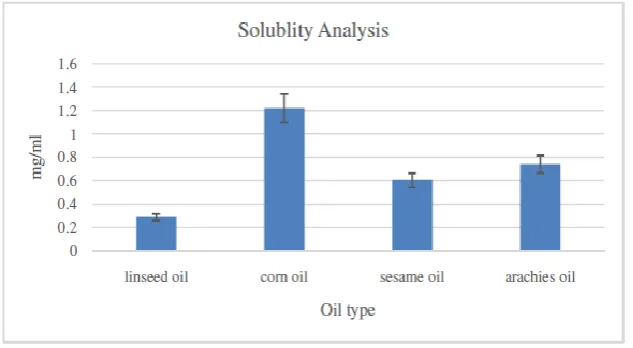
[image:6.595.140.457.286.460.2]Highest solubility of extract was seen in corn oil, the solubility’s are depicted in Fig. 1.
Fig. 1: Solubility of Centella Asiatica extract in different oils.
Design of Experiments
Optimization of the formula was done using 2 factor 3 level factorial design using Design
Expert 10.4 trial version. The responses such as spreadability, particle size and viscosity were
chosen for optimization which depended mainly on quantity of oil phase and the surfactant
hence these were selected as factors. The three levels give good idea about interaction
between factors if any.
Evaluation of herbal wound healing cream
All the developed formulations were found to be within the limits. The drug content of P8
formulation was found to be highest. P8 formulation complies with requirements of
pharmaceutical parameters. Cetyl alcohol and glyceryl monosterate was melted in liquid
paraffin at 60⁰C to form oil phase. Propyl paraben was added in the same phase. Aqueous
600C to form the aqueous phase. The oil phase was added to the aqueous phase with constant
stirring until an emulsion was formed.
Table 3: Design and evaluation of herbal cream.
Formulation code
Corn
Oil SLS pH
Viscosity (cP)
Hardness (g.cm/sec)
Particle Size
Drug content %
P1 5 0.4 6.67 3050 44.31 732.9 96.1
P2 1 0.4 6.65 1110 44.31 475 64.1
P3 1 0.6 6.45 1420 6.41 466.5 72.9
P4 1 0.2 6.97 1300 6.38 481 63.4
P5 3 0.4 6.00 2510 10.77 518.5 82.8
P6 3 0.2 6.25 1970 16.68 618.9 78.9
P7 5 0.6 6.95 3170 38.46 702 99.5
P8 3 0.6 7.00 2150 9.21 492.3 86.2
P9 5 0.2 6.87 3450 45.34 759.2 92.6
The pH of the formulation 7 which is acceptable for topical formulation. Since topical
[image:7.595.126.470.372.581.2]systems are directly applied on the skin, their pH should be compatible with the skin pH.
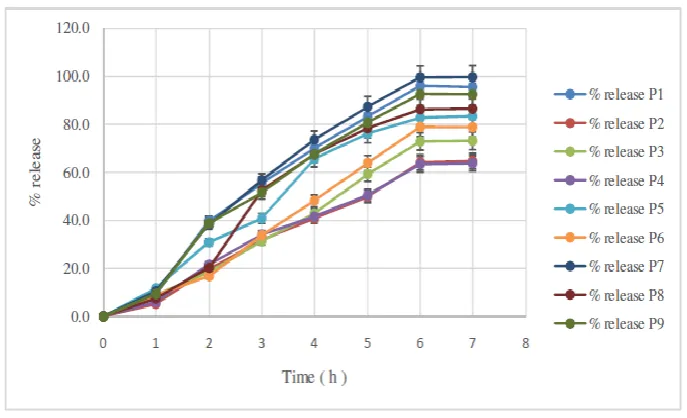
Fig 2: % in vitro drug release from optimization batches.
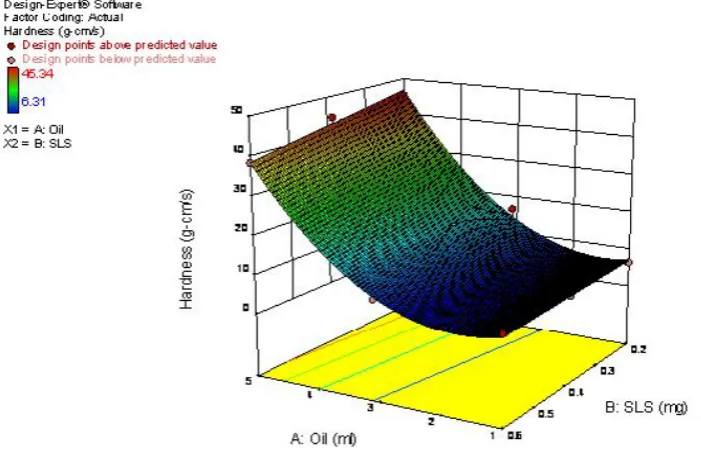
Fig. 3 gives the response surface curve for the hardness of the cream. It indicates that as the
concentration of oil goes on increasing the hardness also goes on increasing and the SLS has
no effect on the hardness of the cream. Eq. 1.
Fig. 3: Response surface depicting effect of oil and SLS on spreadability.
Fig. 4 shows the response surface curve for the particle size for the cream. Concentration of
oil has a significant positive impact on the particle size and because concentration of oil
direct affects the globule size. Also the concentration of SLS has a slight negative effect on
the particle size of the cream and reduces it. Eq 2
[image:8.595.119.473.469.707.2]PS = +582.92+128.60* A-33.04* B ---- (2)
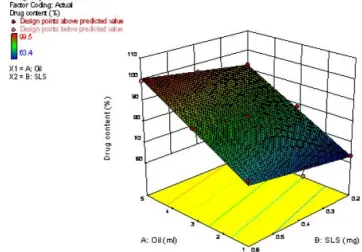
Fig. 5 represents the response surface curve for the drug content in the formulation. As per
the response surface curve, Oil has significant positive impact on the drug content and as the
concentration of oil goes on increasing there is increase in the drug content of the formulation
and thus proves that drug is readily soluble in oil. Concentration of SLS has no impact on
drug content. Eq. 3
[image:9.595.110.473.218.470.2]Drug content = +81.83+14.63* A+3.95 * B---- (3)
Fig. 5: Response surface depicting effect of oil and SLS on drug content.
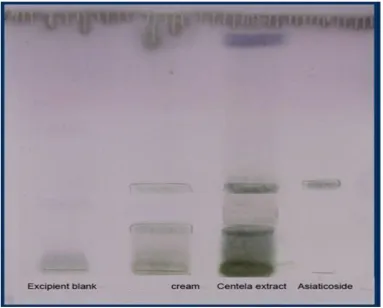
TLC Identification
After treatment with anisaldehyde sulfuric reagent, similar spots at Rf and colour with the
profile of C. asiatica extract solution were observed in the chromatographic profile of the
cosmetic cream. In the lower third of the chromatogram, a dark green spot (Rf: 0.48)
corresponding to asiaticoside (Figure 1) was observed. The extract of C. asiatica raw material
was analyzed by TLC using asiaticoside as a marker because of its greater commercial
availability and lower cost. In that way, asiaticoside, the major active principle in the raw
Fig. 6: TLC analysis. Excipients blank; cream; Centella extract; Asiaticoside.
CONCLUSIONS
P8 formulation or cream was found to be best and satisfactory compared to all other
formulations. It had light brown appearance, gave a cool and smooth feel on application. The
pH of the formulation was found to be 7.00 which is good for skin. The creams also showed
good Hardness (9.21 g.cm/sec) when measured using a texture analyzer, the apparatus consist
of two glass cone shaped probe. Fill one probe with 20 gm. of cream (up to plane surface of
top) and measure the Hardness. This apparatus shows Hardness into the comparison of
hardness and adhesive force was calculated. After application of the cream the type of smear
formed on the skin was found to be non-greasy and easily removed on washing with tap
water. The viscosity of the creams was found to be 2150 cps, with 25 rpm, which indicates
that the prepared cream was easily spreadable with small amount of shear.
ACKNOWLEDGEMENT
The authors express their gratitude to Amsar Pvt. Ltd., (Indore, India) and Sigma Pvt. Ltd.,
(Pune, India) for supply of sample of Centella asiatica extract and active marker Asiaticoside,
REFRENCES
1. Kokane DD, More RY, Kale MB, Nehete MN, Mehendale PC, Gadgoli CH. Evaluation
of wound healing activity of root of mimosa pudica. J Ethnopharmacol, 2009; 124:
311-15.
2. Reddy AKG, Saranya SC, Kumar ACK. Wound healing potential of indian medicinal
plants. Int J Pharm Rev Res, 2012; 2(2): 75-87.
3. Kumar B, Kumar VM, Govindarajan R, Pushpangadan P. Ethnopharmacological
approaches to wound healing-exploring medicinal plants of India. J Ethnopharmacol,
2007; 114: 103-13.
4. Rajsekhar S. Unseen aspects of wound healing: an overview. Int J Pharm Biol Sci, 2011;
2(4): 275-87.
5. Singh M, Sharma S, Khokra LS, Kumar SR. Preparation and evaluation of herbal
cosmetic cream. Pharmacologyonline, 2011; 5(2): 1258-64.
6. Das K, Dang R, Machale MU, Ugandar R, Lalitha B. Evaluation for safety assessment of
formulated vanishing cream containing aqueous stevia extract for topical application. Ind
J Novel Drug Deliver, 2012; 4(1): 43-51.
7. Pounikar J, Jain P, Khurana N, Omray K.L., Patil S, Gajbhiye A. Formulation and
characterization of Aloe Vera cosmetic herbal hydrogel. Int J Pharm Pharm Sci, 2012;
4(4): 85-86.
8. Wagner H, Bladt S, Zgainski E. Plant Drug Analysis. New York; Springer Verlag, 1996;
57.
9. Harry RG. Harry’s Cosmeticology-The Principles and Practice of Modern Cosmetics.
New, York; Leonard Hill, 1973; 57.
10.Upadhyay NK, Kumar R, Mandotra SK, Meena RN, Siddiqui MS, Sawhney RC, Gupta
A. Safety and healing efficacy of sea buckthorn (Hippophaerhamnoides L.) seed oil on
burn wounds in rats. Food Chem Toxicol, 2009; 3(47): 1146-53.
11.Vats A, Sharma P. Comparative study and analysis of release kinetics of coriander
formulations. Indo American Journal of Pharmaceutical Research, 2013; 3(1): 1334-48.
12.Mahalingam RC, Xiaoling L, Bhaskara RJ. Semisolid dosages: ointments, creams and
gels Pharmaceutical Manufacturing Handbook, 2006; 2(3): 267-74.
13.Khalid AS, Saringat HJ, Khan GM. Haruan (Channastriatus) incorporated palm-oil