EVALUATION OF THE EFFICACY OF HERBAL BASED
FORMULATION IN PATIENTS OF HEART FAILURE
Dr. Savitri Vasudev Baikampady*
Ayurved Consultant, D 1/6 H.D.F.C Colony, Chinchwad, Pune-411019
ABSTRACT
T AYU BKV is a new positive inotrope with a unique mechanism of
action. To assess its clinical utility we administered this tablet of
125mg twice a day along with meals (250mg/day) for 90 days to 100
patients with Left Ventricular Ejection fraction less than or equal to
50% and also who had substantial limitations in exercise performance
despite treatment with conventional Heart Failure Therapy (HFT).
Patients were evaluated by 2D Echocardiogram along with
measurements of distance walked during six minutes Hall walk testing.
Improvements were demonstrated in both, Left Ventricular Ejection
Fraction and distance walked successfully after 90 days of treatment
with T AYU BKV. Furthermore T AYU BKV significantly reduced
Left ventricular internal dimensions at systole as well as at diastole in HF patients. However,
dimensions of enlarged Left Atrium were compromised with a marginal decrease. Various
statistical data confirms improvements in NYHA functional class along with enhancement in
Quality of life (QOL). Results suggest that efficacy of this drug is warranted when used as an
add-on therapy along with the conventional.
KEYWORDS: Heart Failure Therapy, inotrope, Left Ventricular Ejection Fraction, Systole, Diastole, Left Atrium.
INTRODUCTION
Any abnormality of Left Ventricle whether from cardiac muscle characterized by its dilation
(ICD9 425.4), abnormality in myocardial contraction (ICD9 428.2) or inadequate output
despite an increase in distending pressure along with end-diastolic volume (ICD9 428.1), they
are classically reflected as one of the many clinical symptoms from NYHA functional class
Volume 4, Issue 4, 1297-1316. Research Article ISSN 2277– 7105
Article Received on 06 Feb 2015,
Revised on 27 Feb 2015, Accepted on 19 March 2015
*Correspondence for
Author
Dr. Savitri Vasudev
Baikampady
Ayurved Consultant, D
1/6 H.D.F.C Colony,
with intolerance to exercise [1] along with many other complaints, some of them related to gastro intestinal tract also.
There has been tremendous progress in the field of medical science especially in
pharmacology, where, it has succeeded in reducing the mortality rate of patients with
morbidities like Hypertension, Diabetes, Coronary Heart Disease, Peripheral Vascular
Disease (PVD), Chronic Obstructive Pulmonary Disease (COPD) and Arrhythmia. Despite
this advancement, there has not been a subsequent reduction in the number of patients with
heart failures.[2] Since every cardiac patient has a potential to develop Heart failure.
Once a patient manifests clinical evidence of heart failure and failure in circulatory
compensatory mechanisms, the prognosis is poor and it is likely that the prognosis can be
improved only if the cause of heart failure is eliminated or the depressed myocardial
contractility is restored to normal or improved.
It is important to determine whether a drug that exerts a beneficial hemodynamic effect does
so by; a) increasing myocardial contractility alone, b) by causing vasodilation alone or c) by a
combination of these actions. This may require direct measurement of some aspect of left
ventricular performance.
A number of drugs, particularly vasodilators, improve hemodynamics at rest, but not always
during maximal exertion.[3] Because most patients with heart failure become symptomatic only during exertion, the agent must improve cardiovascular hemodynamic along with
myocardial contractility not only at rest but also during exertion.
Several oral inotropes developed in the last 15 years, has shown to acutely improve cardiac
output, decrease filling pressures, and in some cases, enhance quality of life, but, are
associated with higher mortality rates when used chronically.[4,5]
There are some popular and widely used sympathomimetic amines; dopamine and
dobutamine, during acute failure conditions. Dobutamine has been shown to improve
cardiovascular hemodynamics and oxygen delivery to the peripheral circulation, both at rest
and during exertion, but it does not increase exercise capacity.[6] Thus, although it increases total cardiac output, it may cause an unfavorable redistribution of blood flow. More over they
are administered intravenously and their value in the treatment of chronic congestive heart
Herbal medicines, or phytomedicines, are closer to conventional drugs than other
complementary and alternative medicine approaches. They have been used continuously for
many decades’ even centuries, often in ways much different from those of modern medical
prescription. Evaluation of efficacy of herbal products and applying the principles of modern
medicine is a paramount issue.
Herbal medicines consist of many chemical constituents with complex pharmacological
effects on the body. Modern clinical trials insist on having data with hard endpoints that can
be monitored. Thus there is a need to develop the means to objectively assess the subjective
signs.
The chosen herbal formulation, T AYU BKV is an Evidence Based Medicine (EBM) which
has been developed and processed uniquely so that it reaches to the desired subjects in a
standard format.
The value of T AYU BKV in the treatment of heart failure will be measured by its ability to
improve not only abnormal hemodynamic along with myocardial contractility, but also their
QOL. T AYU BKV is such a formulation, which, when taken as a nutritional supplement
along with meals twice, it is observed to have been enhancing inotropic property. When
administered to patients with advanced conditions, this unique formulation as a positive
inotropic agent may improve their well-being and exercise capacity, but may not enhance
their survival because of the already advanced degree of cardiac damage present.
Reliable estimates of heart failure are lacking in India because of the absence of a
surveillance program to track incidence, prevalence, outcomes and key causes of heart
failure. A 2013 update from the American Heart Association (AHA) estimated that there
were 5.1 million people with HF in the United States in 2006.[7] There are an estimated 23 million people with HF worldwide.[8] The worldwide prevalence of HF seems to have been increasing over the past decades.[9]
METHODS
An interventional, observational study–control research trail performed at Lokmanya Medical
Research Centre (LMRC), Lokmanya Hospitals - Chinchwad & Nigdi, Pune, were devided in
two groups, a Control group with 100 subjects taking only HFT and Study or experimental
All patients above 18 yrs with left ventricular ejection fraction< or = to 50% who were
already under HFT with Dispnoea-On-Exertion (DOE) and Fatigue from NYHA functional
Class were selected. Patients of Heart failure with valvular heart disease requiring surgical
corrections, restrictive cardiomyopathy, Severe Left Ventricular out Flow Tract Obstruction
(LVOTO), Dementia, consuming psychiatric medicines or active participation in any other
research trial were excluded.
After obtaining ethical clearance from LMRC, patients were selected from 2 D Echo dept.,
followed by obtaining permissions from the cardiologists, they were informed about the
research motive and were enrolled in the research trial with a written consent thereafter. Their
baseline screening report of 2 D Echo was attached to the Case Report Format (CRF). This
was followed by six minutes hall walk test. Both the groups were asked to give a follow up
after a month for at least two consecutive months. Their clinical signs and symptoms were
noted accordingly. The study was declared over only after they repeated their 2D Echo
investigation along with Six minutes hall walk test.
All their clinical findings were analyzed for statistical evaluations. Significant values were
studied to reach to an unbiased conclusion. Statistical analysis was performed using SPSS
software, IBM version-17.0.
Lacunae observed during the tenure of clinical Research were noted for further implications.
OBSERVATION
There were 34, 32 and 34 cases from Mild, Moderate and Severe LVSD respectively from
study group and a similar pattern of 33, 41 and 27 subjects from control group during the
enrolment. Altogether 68% were male. 85% from both the groups were found to be from the
hypertensive in origin, followed by Post MI-76.6% , DM2- 57.2%, & DCMP-49%,
Arrythmia-24.9% , COPD-13.9% and PVD-8%.
Table 1: Age &Weight
Study Control
Mean St.Deviation Mean St.Deviation
AGE Male
Female 62.26 60.12 14.26 10.82 59.41 60.90 11.60 12.60 Weight in Kg Male Female 70.41 63.16 10.0 10.9 70.20 60.90 10.68 12.10
Discriptive statistics of Average mean Age / Average mean weight with St.Dev.of Males &
Evidently the average age of HF cases combined were approx. between 59 and 63 years.
Perhaps socio-economic burden or fear of insecurity may have lead them to stress followed
by the disease progression. There were 46% cases from Experimental group having BMI >25
along with waist hip ratio >0.8, where as 40.6% were from control. The values of weight in
Kg were found to be highly significant (p<.005) in both the groups.
Table 2: Follow up study
Baseline n-100 n-101
Heart Rate SBP DBP 83.9{+_12.37} 136.06{+_18.33} 86.62{+_11.59}* 84.52{+_13.21} 131.94{+_21.6} * 83.12{+_12.66}*
First Follow up n-96 n-88
Heart Rate SBP DBP 80.46{+_10.05} 135.68{+_15.20}* 84.84{+_8.85} 81.34{+_.76} 130.34{+_17.77}* 83.51{+_10.73}*
Second Follow up n-91 n-61
Heart Rate SBP DBP 78.15{+_6.60}* 133.67{+_14.17} 83.87{+_7.44} 81.21{+_10.07}* 129.34{+_16.00}* 84.75{+_11.04}*
Third Follow up n-71 n-36
HR SBP DBP 75.35{+_6.29}* 132.94{+_13.74} 83.29{+_6.96} 81.14{+_12.29}* 131.11{+_16.34} 84.29{+_10.37}* Discriptive statistics of follow up from Study and Control Group. (*: P <0.05)
In spite of antihypertensive drugs some of the cases were still hypertensive. Fluctuations were
seen after the second follow up of control where as in study grp even though a systolic
pressure could not recede the optimum level a marginal and steady decrease were noted in
diastolic pressure. Heart rate seems to be significantly receding to an optimum level in
experimental group as compared to the control.
Table 3: Follow up study of NYHA functional class
Group Study Control
Baseline n-100
Ist FU n-96
2ndFU n-90
Baseline n-101
Ist.FU n-88
2nd FU n-61 DOE
I 02% 54.2% 74.7% 0 19.3% 52%
II 39% 29.2% 20.9% 47.5% 43.2% 33.6%
III 48% 12.5% 3.3% 39.6% 30.7% 21.3%
IV 11% 04.2% 0 12.9% 6.8% 8.2%
Fatigue
I 05% 50.5% 76.9% 01% 19.3% 18%
III 40% 11.6% 5.5% 38.6% 25% 18%
IV 10% 03.2% 0 9.9% 5.7% 8.2%
Anorexia
1 03% 56.3% 76.9% 08% 29.5% 27.9%
2 20% 6.3% 9.9% 30% 3.4% 9.8%
3 02% 4.2% 2.2% 03% 4.5% 6.6%
4 02% 20.8% 9.9% 04% 33% 32.8%
5 32% 4.2% 0 17% 6.8% 4.9%
6 37% 7.3% 1.1% 35% 22.7% 16.4%
7 04% 01% 0 03% 0 1.6%
Pearson Chi-square test revealed all the symptoms were highly significant (p<.005)
The patients were selected and categorized according to their severity from New York Heart
Association i.e.
NYHA 1: Cardiac disease, but no symptoms of shortness of breath or fatigue and no
limitation in ordinary physical activity (i.e. walking, climbing stairs etc).
NYHA II: Mild symptoms of shortness of breath or fatigue and slight limitation during
ordinary activity.
NYHA III: Marked limitation in activity due to symptoms, even during less-
than-ordinary activity, e.g. walking short distances (20–100m). Comfortable only at rest.
NYHA IV: Severe limitations. Experiences the above symtoms even while at rest.
Mostly bed bound patients.
Anorexia was measured through seven point Likert scale i.e.
1: No symptoms
2: Mild symptom present very occasionaly (1-2/15days)
3: Minimal symptom present occasionaly once a week.
4: Moderate symptom present slight frquently (2-3 days/week)
5: Moderately severe symptom present frequently (3-5 days/week)
6: Severe symptom present (5-6 days/week)
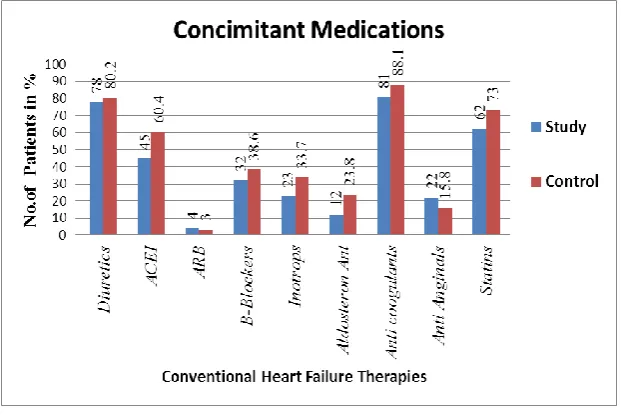
Figure 1: Concomitant Medications
As seen in the fig. 1 Preference was given to Anti coagulants (mainly ASA) prescription in
majority followed by diuretic. Most evidently as 3/4rth of the HF cases were from Ischemic
cardiomyopathy (i.e- post MI-76.6%), they were secured with statin dosages. Looking at the
side effects of Inotropic agents (Digoxin), its prescription was not popularly preferred in spite
in presence of contractile dysfunctions. ACEI followed by Betablockers were seen
prescribed more than the Aldosterone antagonist and ARB to HF cases.
Interventional Details
According to American Heart Association, HF cases are classified into three groups of Left
Ventricular Systolic Dysfunction (LVSD) i.e.
Mild LVSD - LVEF between 41% and 50%.
Moderate LVSD- LVEF between 31% and 40%.
Severe LVSD - LVEF below 30%.
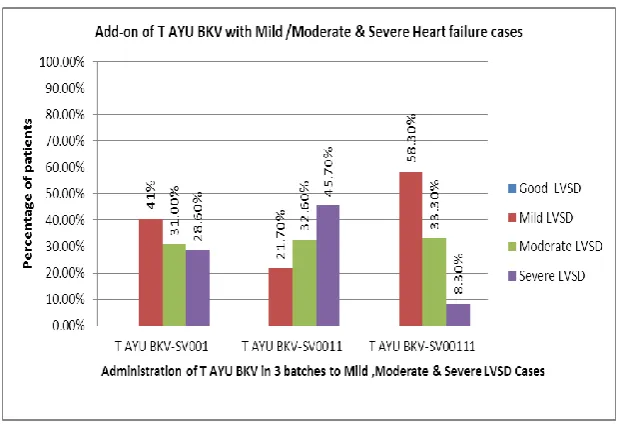
An effort was made to optimize the method of preparation by validating the formulation.
After several trials, a desired product was made in three batches to cater the subject’s need,
later sent for processing into a compressed tablet followed by its packing into standard
RESULTS
Fig 2: Administration Details
Table 4 (A) : Comparative review of NYHA Class
Krusal wallis test for four points NYHA Classification and Seven point Likert Scale in
Anorexia. Ranks given before and after in study & control group.*-P<0.005
Review of NYHA Functional Class: Krusal Wallis test was used to give ranks amongst study & control groups on non parametric variables and their ranks were compared to each
other. Higher the rank greater is the severity. They demonstrated significant decrease in their
[image:8.595.69.533.363.464.2]severity from the experimental group.
Table 4-B: Symptoms
Study Control
Wilcoxon Signed Ranks Test - after –before Z value P value Z value P value
Body pain -6.625 .000 -2.159 .031
Trembling -4.601 .000 -.607 NS
Cramps -5.494 .000 -.684 NS
Stiffness -5.785 .000 -.845 NS
Numbness -3.597 .000 -1.502 NS
Giddiness -3.783 .000 -564 NS
Anorexia -7.523 .000 -1.568 NS
Nausea -5.815 .000 -.416 NS
Final review - Study Control
Before (n-100)
After (n-91) Before (n-100)
After (n-91)
D0E 102.90 63.59* 99.12 119.21*
Fatigue 100.65 63.25* 101.35 119.58*
Heaviness -4.532 .000 -.540 NS
Tastelessness -4.696 .038 -.301 NS
Abnormal taste -2.070 .038 -.566 NS
Lack of knowledge of taste perception -4.340 .000 -2.048 .041
Sleep apnea -5.010 .000 -2.65 NS
Aggressiveness {anger} -.3.344 .001 -1.889 .059
Fearful -2.812 .005 -1.341 NS
Comparison of severity through Wilcoxon signed rank test. NS- Not significant
All the above symptoms were measured through four points Likert Scale in sleep apnea,
aggressiveness and fearfulness. Seven points Likert Scale were used for the remaining
symptoms. Wilcoxon signed rank test was used to compare their severity from baseline. The
Z values in negative ranking indicates reduction from the baseline values. Values from body
pain, lack of knowledge of taste perception and aggressiveness were the only significant
values from control group. Experimental group demonstrated marked reductions in cramps,
stiffness, nausea, sleep apnea, along with many other symptoms like bodypain, anorexia et.
Table 5-A: Six- Minutes’ walk test
6 min Walk test Study Control
Before n-100
After n-91
Before n-100
After n-91 Participated but Could not walk 34 3* 23 24*
Not participated 8 4* 32 3*
Walked successfuly 58 84* 46 34*
Leven’s test for equality of variances- *--p < 0.005
Table 5-B : Distance Walked in meters
Distance walked Study Control
Before n-100
After n-87
Before n-101
After n-58
Mean 184.52 289.25* 188.48 179.29*
St. Dev 101.14 86.40 101.79 117.93
Descriptive statistics in terms of mean, +_St.deviation and paired t test for variables in
distance walked in metres.(* -- p<.005)
All HF cases were asked to walk along the corridor of the hospital for six minutes. It was
ensured that at least two assistants were attending to them at the zero as well as end point,
with seating arrangement on their way. The record of completing their six minutes walking
target, reason to terminate and their total distance walked were noted in the CRF. Those who
Table 6: Differences in weight at the end of study
Group No. of patients Mean St.Dev.
Study 69 -1.9783* 2.19531
Control 47 1.3936* 5.94717
Paired t -test for examining the variables of differences in weight (*-p<.005)
There was a significant reduction in body weight of study group. This was because,
improvement in appetite , perfusion to skeletal muscle along with the respiratory muscle ,
reducing their NYHA functional class resulting into increase in their exercise capacity and
thereby consequently reducing their gross mass evidently seen as reduction in the total body
weight. There was no particular medication given to the control cases for weight. Although
Statins did show improvement in lipid levels but their total body weight evidently displayed a
rise in the body weight.
Table 9 : 2 D Echocardiogram (Dimensions observed in mm)
2DEcho STUDY CONTROL
Before After Before After
Mean SD Mean SD Mean SD Mean SD LVEF% 36.41 9.30 45.75* 12.5 37.44 8.45 37.05* 11.00 LVIDs 39.53 9.46 35.19* 8.33 41.66 9.85 44.05* 10.01 LVIDd 51.99 8.60 49.13* 7.81 52.87 10.64 56.07* 7.95 LA 35.88 6.54 34.70* 6.17 35.34 6.87 37.50* 6.58 Descriptive statistics in terms of mean, +_St.deviation and paired t test for variables of 2 D
Echo findings.(* -- p<.005)
Since 2D Echocardiogram is solely a subjective, observer dependant parameter, it was
ensured that the screenings were restricted to a single observer (before & after) to minimize
the errors.
T AYU BKV
It is an EBM comprising of fruits of Terminalia chebula, Terminalia belerica, Phyllanthus
emblica, Zingibar officinale, Piper nigrum, Piper longum, Semicarpus anacardium, salts of
Saindhava lavana (Rock salt), Bid lavana (official substitute of black salt), Souvarvarchala
lavana (black salt) in varied quantities.
All the fruits and salts were ordered in bulk from Manakarnika Aushadhalaya, Pune. They
were then subjected to different processes for purification from physical and chemical
desired formulation. Later they were processed in Rajan Pharmaceuticles for tabletting,
packaging and labeling followed by laboratory analysis in DALP & TUV Pune.
LCMS / MS profile of T AYU BKV
This sample was subjected through various frequencies to detect the Atomic Mass Number of
the compound as shown in Fig. : 3
The electron mass spectrum of the desired formulation was detected by the peaks seen in the
ESI Scan. Fragmentation was done with frequency 135 V. a blank was also run for
comparison.
Various peaks are seen in the above scan. The peak at 593 has the highest signal intensity.
This peak at 593 also called as signature peak in the spectrum indicates its atomic Mass
Number.
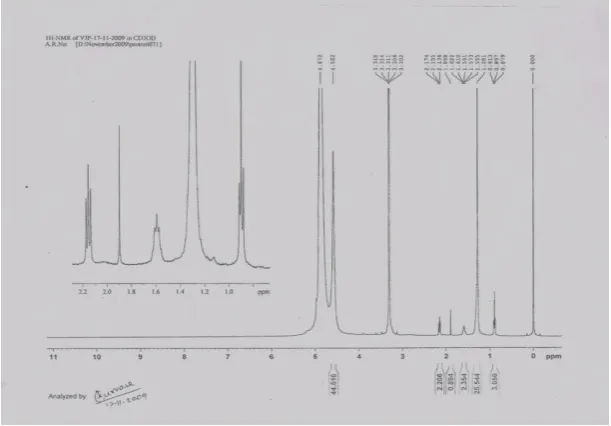
Summary of 1H NMR in T AYU BKV
The sample was prepared in CDCl3. The instrument used was Brukar 400 M HZ. 1HNMR spectrum (proton) of a mixture of T AYU BKV was plotted as signal intensity (vertical axis)
Figure 4
The CH shift at level 1 in the table indicates R- CH3 group, an SPO3 hybridized C-H group
with no functional group. The peak at level two i.e. between 1.2 and 1.4 has maximum signal
intensity with R-CH2-R group. Peak at 3.2 ppm indicates protons attached to Carbon attached
to a hetero atom. Multiplets at 2.2 ppm is a triplet indicating CH2-CH2 structure, Singlet at
1.8 ppm a Quaternary Methyl where as Multiplets at 1.6 and 0.6 indicates substituted
Carbons.
Summary of C13 NMR (Carbon NMR)
To confirm the existence of carbon atom along with the match between proton and carbon,
this test was done. The levels between 15 and 40 ppm belongs to aliphatic carbon compound.
Majority of peaks were found to be from the saturated carbon atoms. PPM level between 40
and 60 are that of hetero group of compounds. Eg- Na, K, Mg, I or OH. One peak at 50 ppm
could be due to Alkoxy – OCH3 or the Methyl attached to CO of pyruvate.The peaks found
between 76 and 77 ppm is that of CDCL3. Carbon peaks from 100 to 150 ppm indicates
presence of Unsaturated Carbons in the molecule. There were no aromatic compounds found
Figure 5:
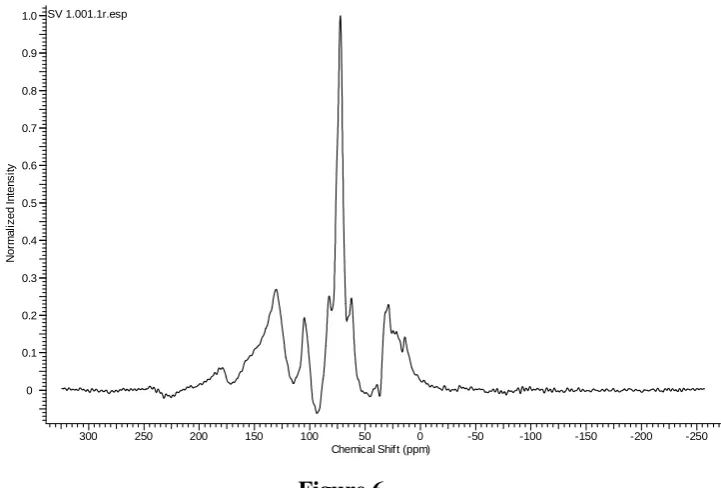
[image:13.595.142.452.72.293.2]NMR in Solid State: To confirm the presence of other probable compounds, another NMR with a different solvent was performed i.e... With CD3OD. This NMR, also called as a Solid State NMR, indicates presence of Poly-Sachaarride along with Aromatic carbons (Fig 6).
Figure 6
1H NMR and Solid State, both show presence of Fatty Acids and Lipids. This is possible due
to addition of binders in the form of Gum acasia and Corn starch (approx-2% each).
Presence of Pyruvates : A TLC Scan of the formulation, T AYU BKV was done to detect the presence of pyruvates in the composition. The tablet was subjected to derivatization and
SV 1.001.1r.esp
300 250 200 150 100 50 0 -50 -100 -150 -200 -250
Chemical Shift (ppm) 0
0.1 0.2 0.3 0.4 0.5 0.6 0.7 0.8 0.9 1.0
N
o
rm
a
li
z
e
d
I
n
te
n
s
it
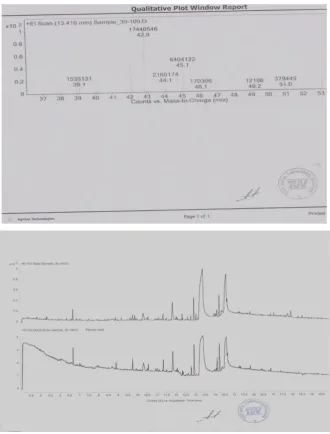
[image:13.595.127.488.395.639.2]Gas Chromatograph Mass Detector with electron ionization scan. The peak at 13.41
corresponds to pyruvates family.
Figure 6 & 7:
The molecular mass of Pyruvic acid is 86.
This Plot indicates presence of pyruvate from the peak at 42.9 which comes from CH3.CO
(12 + 3 + 12 + 16 = 43), the peak at 44.1 is due to COO (12 + 16x2) both from Pyruvate
[image:14.595.133.464.123.558.2]Table 10: Ash test & Elemental analysis of T AYU BKV
Batch Lab Code Ash content Av. Wt/tab Cu- ppm Ca -% Mg-% K- %
SV001 909110280 30% 130mg 145 2.6 % .38% 14.8%
SV0011 910060313 28.24 % 130mg 240 6.73% .96% 6.16%
SV00111 R-210287 /2010-11
30% 130mg 254 6.62 % .86% 7.16%
The tablets, each weighing around 130 mg, were found to be having elements as mentioned
above. Where 125mg, as the active ingredients and the rest with binders with excepients and
lubricants. The copper was found to be present and mentioned as parts per million (ppm). The
other elements were found to be having more than 1000 ppm, thus were denoted in
percentage. Chromium was found in all the three batches of the formulation but in a very low
quantity i.e. <0.06 µg/gm.
The analysis showed absence of heavy metals such as lead, cadmium, mercury arsenic
selenium and nickel.
Efficacy and safety analysis
We administered this formulation in tablet form of 125mg each along with meals twice a day
(250mg/day) for 12 weeks to 100 HF individuals. There were no adverse events noted during
the study period. Other than the 100 HF individuals with similar pattern of administration,
improvements remained unchanged even with daily dose of 60mg and 125mg (i.e 120mg and
250 mg per day). We tried to exceed the dosage to 250 mg twice i.e 500mg a day, we
observed some itchy, erythmatous patch over the exposed area of skin on 0.02% of HF case.
This was noticed after 24 hrs of administration. They were found to be reduced when dosages
were altered to 60 mg a day. Evidences confirm the possible intolerance to Semicarpus
anacardium.[10] Almost 60 individuals continued to voluntarily consume this formulation for more than 7 years without any casualties/hospitalization.
DISCUSSION
Inspite of patients consuming the conventional HFT it is important to explore T AYU
BKV’s cardio protective nature, by co relating the results from the laboratory analysis and with the patient’s outcome from the baseline.
Viewing the mode of drug delivery i.e. along with meals and the presence of essential
but also, as an important nutritional supplement to the patients of heart failure, already under
the conventional therapies.
Considerable peripheral changes occur in the skeletal muscle of patients with chronic heart
failure. There is also reduced blood flow to active skeletal muscle, which is related to
vasoconstriction.[11] All these abnormalities in skeletal muscles, including respiratory muscles, contribute to the symptoms of fatigue, lethargy, and exercise intolerance. There has
been substantial improvement in the ranks of NYHA functional class in DOE and fatigue
from the study group. Contributions from this particular supplement could have been
providing the support by increase in blood flow to active skeletal muscles along with the
respiratory ones either by opposing the action of vasoconstriction or by fulfilling the
nutritional supplement through elements.
T AYU BKV seems to be acting right from the mouth. Tastelessness, lack of sense of taste in
the mouth have been acknowledged and improved in the HF cases confirming its action on
salivary glands and taste buds.
Magnesium deficiency may result into symptoms like cramps, tremor, spasms, fatigue, loss of
appetite, confusion, insomnia, irritability.[12] Moderate to severe magnesium deficiency can cause tingling or numbness, heart changes, rapid heartbeat, continued muscle
contractions, nausea, vomiting, delirium, low calcium levels, low serum potassium levels,
retention of sodium, low circulating levels of parathyroid hormone (PTH), and potentially
death from heart failure.[13]
Evidence of reduction in symptoms like cramps, trembling, numbness, fatigue anorexia,
nausea, vomiting and aggressiveness of the HF patients suggests the role of Magnesium could
have been vital in the study group. Moreover of the 325 magnesium-dependent enzymes, the
most important enzyme reaction involves the creation of energy by activating adenosine
triphosphate (ATP), the fundamental energy storage molecule of the body [14] thus reducing the fatigue levels.
Most of the elements are absorbed in the small intestine, so the same pattern of absorption of
active elements from this formulation i.e. Calcium, Potassium and Copper was considered.
Calcium enters ECF from the gut by absorption and causes muscle contraction during action
Thus may contribute support to the contractile elements of the heart as evident in improving
its contractility (LVEF%).There was no evidence of cardiac arrhythmia (tachycardia) during
the study, may suggest that excess calcium ion pooling may have been prevented as the
desired medicine is taken as nutritional supplement, and only required amount of elements
may have been absorbed by inner mucosal layer of the small intestines. Similarly Potassium
prevents respiratory distress along with muscle weakness [16] which was evident through patients improving their NYHA functional class.
Copper deficiency has been linked to diseases such as cardiomyopathy.[17] The human body normally contains copper at a level of about 1.4 to 2.1 mg for each kg of body mass.[18] When copper is first absorbed in the gut it is transported to the liver bound to albumin. The RDA
for copper in normal healthy adults is 0.9 mg /day; however, professional research on the
subject recommends 3.0 mg/day.[19, 20] Copper deficiency is the only nutritional insult that elevates cholesterol, blood pressure, has adverse effects on electrocardiograms and arteries,
impairs glucose tolerance, and promotes thrombosis and oxidative damage.[21] More than 80 anatomical, chemical, and physiological similarities between animals deficient in copper and
people with ischaemic heart disease have been identified. Copper deficiency in animals can
induce cardiac enlargement, pleural effusion, and heart failure that are reversible with copper
supplementation.[22, 23]
Reduction in left ventricular internal dimensions during systole as well as during diastole
along with Left Atrial dimensions in the study group may be contributed by copper
supplement where as the control group could have manage to maintain them.
Functional status and cardiac reserve of patients with chronic heart failure can be objectively
characterized by determining exercise tolerance. Six minutes walk test is one of the most
common modalities for evaluating the functional capacity of HF patients and is used to
evaluate low level or sub maximal work which is more compatible with daily activities.
Even though the experimental group could not walk to an optimal distance as prescribed by
WHO (300mtrs) [24] there have been a substantial improvement not only in walking successfully for six minutes but also to a farther distance for the same given time as
compared to the control. Since regular exercising causes changes in central and peripheral
blood flow, brings improvement in endothelium with an objective improvement in ventilation
Pyruvates plays a major role in generation of ATP during Glycolysis. Its presence indicates
production of ATP followed by more energy production which was truly evident as
improvement in exercise capacity and NYHA functional class.
CONCLUSION
The comprehensive effect of T AYU BKV may have contributed successfully in enhancing
the left ventricular ejection fraction from the baseline proving its inotropic property without
any adverse events like respiratory distress.
When taken as a nutritional supplement, it enhances the desired multiple actions in
alimentary canal thereby getting absorbed wisely to enter into the blood stream to cause an
enhanced perfusion in exercising skeletal muscle from the central and peripheral skeletal
system bringing about a desired change in the myocardium by improving the contractility
demonstrating a superior recovery . This effect may prove to be beneficial in reverting the
disease progression and improve their quality of life.
IMPLICATIONS
There is a need to evaluate the efficacy in myofibrils with detailed study on rodents to
determine its pharmacokinetics.
ACKNOWLEDGMENT
I dedicate my research studies to my revered Sir Late Vaidya Chandrashekhar Ganesh Joshi. I
thank Ayurvedacharya Vaidya Dilip Gadgil and Cardiologist, Dr Rajesh Badani to help me in
their respective fields. It was due to Lokmanya Medical Research Centre, Chinchwad, I could
ethically succeed my clinical research.
REFERENCES
1. Clark AL. Origin of symptoms in chronic heart failure. Heart. 2006; 92(1):12–6. [PMC
free article] [PubMed]
2. Long-term trends in the incidence of and survival with heart failure. Levy D, Kenchaiah
S, Larson MG, Benjamin EJ, Kupka MJ, Ho KK, Murabito JM, Vasan RS N Engl J Med.
2002 Oct 31; 347(18):1397-402.
3. Franciosa JA. Cohn IN. Immediate effects of hydralazine-isosorbide dinitrate
combination on exercise capacity and exercise hemodynamics in patients with left
4. Packer M, Carver JR, Rodeheffer RJ, et al. Effect of oral milrinone on mortality in severe
chronic heart failure. The PROMISE Study Research Group. N Engl J Med. 1991;
325:1468–75. [PubMed]
5. Cohn JN, Goldstein SO, Greenberg BH, et al. A dose-dependent increase in mortality
with vesnarinone among patients with severe heart failure. N Engl J Med. 1998;
339:1810–6. [PubMed]
6. Maskin CS, Forman R, Sonnenblick EH. Frishman WH, LeJemtel TH. Failure of
dobutamine to increase exercise capacity despite hemodynamic improvement in severe
chronic heart failure. Am J Cardiol 1983; 51: 177-82.
7. McCullough PA, et al. Confirmation of a heart failure epidemic: findings from the
Resource Utilization Among Congestive Heart Failure (REACH) study. J Am Coll
Cardiol. 2002; 39:60–69. [PubMed]
8. McMurray JJ, Petrie MC, Murdoch DR, Davie AP. Clinical epidemiology of heart failure:
public and private health burden. Eur Heart J 1998; 19 Suppl P:P9.)
9. Kannel WB, Ho K, Thom T. Changing epidemiological features of cardiac failure. Br
Heart J. 1994; 72:S3–S9. [PMC free article] [PubMed]
10.Sharma Sadanand, Rastarangini, by P Krishnashastri, Commentary by Shri
Haidattashastri (Motilal Banarasidas Varanasi) 175-670.
11.Broquist M, Arnquist H, Dahlstrom U, et al. Nutritional assessment and muscle energy
metabolism in severe chronic heart failure-effects of long term dietary
supplementation. Eur Heart J. 1994; 15:1641–1650.
12.Significance of magnesium in congestive heart failure Douban S, Brodsky MA, Whang
DD, Whang R.Department of Medicine, University of California, Irvine Medical Center,
Orange 92668-3298, USA.
13.Douban S, Brodsky MA, Whang DD, Whang R.Department of Medicine, University of
California, Irvine Medical Center, Orange 92668-3298, USA
14."Magnesium" Centre for Cancer Education, University of Newcastle upon
Tyne.http://cancerweb.ncl.ac.uk/cgi-bin/omd?magnesium.
15.Klevay LM. Ischemic heart disease. In: Bogden JD, Klevay LM, eds. Clinical Nutrition of
the Essential Trace Elements and Minerals: The Guide for Health Professionals. Totowa,
NJ: Humana Press Inc.; 2000. P251–27.
16.Lockless, S. W.; Zhou, M.; MacKinnon, R. (2007). "Structural and thermodynamic
properties of selective ion binding in a K+ channel". PLoS Biol 5 (5): e121.
17.Linnebank M, Lutz H, Jarre E, Vielhaber S, Noelker C, Struys E, et al. Binding of copper
is a mechanism of homocysteine toxicity leading to COX deficiency and apoptosis in
primary neurons, PC12 and SHSY-5Y cells. Neurobiology of Disease. 2006; 23(3):725–
730. doi: 10.1016/j.nbd.2006.06.010. [PubMed]) .
18.Klevay LM. Ischemic heart disease. In: Bogden JD, Klevay LM, eds. Clinical Nutrition of
the Essential Trace Elements and Minerals: The Guide for Health Professionals. Totowa,
NJ: Humana Press Inc.; 2000. P251–271.
19.Klevay LM. Advances in cardiovascular-copper research. In: Schrauzer GN, ed. Trace
Elements in Nutrition, Health and Disease. Montreal, Canada, Salt Lake City: Institut
Rosell; 2002. P64–71.
20.McGuire, Michelle; Beerman, Kathy A. Nutritional Sciences: From Fundamentals to
Food. Cengage Learning: 2011, p. 546. ISBN 978-0-324-59864-3.
21.Dallman PR. Cytochrome oxidase repair during treatment of copper deficiency: relation
to mitochondrial turnover. J Clin Invest 1967; 46:1819–1827.
22.Viestenz KE, Klevay LM. A randomized trial of copper therapy in rats with
electrocardiographic abnormalities due to copper deficiency. Am J Clin Nutr 1982;
35:258–266.
23.Elsherif L, Ortines RV, Saari JT, Kang YJ. Congestive heart failure in copper-deficient
mice. Exp Biol Med 2003; 228:811–817 297 Thyroid harmone and the cardiovascular
system,DanziS.Klein.I .Minerva Endocrinol. 2004 Sept; 29(3):139-50.
24.I. Daullxhiu, E. Haliti, A. Poniku et al., “Predictors of exercise capacity in patients with
chronic heart failure,” Journal of Cardiovascular Medicine, 2011; 12(3)223–225. View at
Publisher · View at Google Scholar · View at Scopus.
25.Horning, B.,Maier,V.,&Drexler, H. Physical training improves endothelial functionsin