Perceptions of and Motivations for
Eco-Lighthouse Certification in Ringerike
Thesis for the degree ‘Master of Environmental and Energy Managemen t’
Author
Aleksander Elstad (Student no. 2196204)
Supervisors
Dr. ir. María-Laura Franco-García Dr. Victoria I. Daskalova LLM
University of Twente Academic Year 2018/2019
i
Abstract
Environmental certification (EC) is a means through which businesses and organizations can communicate their environmental commitment towards stakeholders. Since 1993, with the early beginnings of environmental management systems (EMSs) through the standard BS 7750, businesses across the world have adopted such management systems and become certified. Today, most EMSs are based on the standard ISO 14001, and the EU has devised its own framework based on this standard, the Eco-Management and Audit Scheme (EMAS). Among the businesses that have adopted some form of EMS and subsequently become certified, motivations vary greatly; while some appear to show genuine care for the environment, some are instead primarily focused on the economic benefits and the potential for competitive advantages. Norway is no exception, and certified businesses in the country show similar motivations as is seen in the international trend. What is different for Norway, however, is that they have developed their own EC scheme, the Eco-Lighthouse Certification (ELC) scheme (developed by the Eco-Lighthouse Foundation, ELF), which has recently (in 2017) been acknowledged by the EU as being a valid substitute for EMAS in public procurement processes. Notwithstanding, motivations for the ELC scheme are similar to those of EMSs in general. Furthermore, businesses (certified and uncertified) that have previously been consulted, agree that ELC is important if the business wishes to participate in public procurement processes, owing to the requirements imposed by the government (but also the EU). However, businesses are not flocking to become certified, and even though there exist studies that attempt to document the motivations for and effects of ELC, this is a topic that requires more research. This research project therefore strove to investigate perceptions and motivations for ELC among certified businesses, but also among businesses without ELC, as well as businesses who have previously been (but are not currently) certified. In addition to consulting with 21 different businesses in Ringerike, single interviews were also carried out with both ELF and the municipality of Ringerike (RK). Ultimately, it was discovered that businesses’ perceptions of the ELC scheme (e.g. with respect to workload, benefits, cost) vary significantly, depending on whether they are certified or not. Intuitively, certified businesses are more likely to view ELC as a positive contribution, but they also admitted that their pre-certification perceptions of the ELC scheme (e.g. of the perceived workload) had been wrong, indicating that there are, at present, misconceptions surrounding the ELC scheme among businesses. Thus, efforts to communicate and promote the scheme can be improved and the information clarified.
Furthermore, it is clear that the market demand for ELC varies, and it is in some cases (e.g. at consumer-level) non-existent. Because market demand is important for businesses, it is crucial that the market is educated on the importance of environmental performance. This could cause a shift towards an increasingly higher demand for businesses that are environmentally conscious, with ELC being an ideal tool that businesses can utilize to increase their environmental performance and to become regulatory compliant. Educating the market can also be facilitated by certified businesses viewing the ELC as a mark of honour, and to actively use it to promote themselves as
ii
Acknowledgements
This year at the University of Twente has been a journey. Coming from Norway to Leeuwarden with my degree in materials science, I have since been able to expand my horizon and gain insight into the field of environmental management through the MEEM programme. I am very grateful for having had the opportunity to participate in this programme, and to pursue a degree in this field. In fact, I believe I have finally figured out ‘what I want to be when I grow up’.
Firstly, I give my thanks to all the lecturers who have shared their knowledge of various topics, as well facilitating many very interesting discussions in their classes.
I would also like to thank my classmates (colleagues) for all the good times and discussions that have been had, both in class and in our spare time. Also, this has allowed me to expand my network with competent individuals from all over the world.
Thirdly, my family, even though they might not fully understand what I have been doing the last year, have been a continuous source of motivation and support. Especially my girlfriend Lina, who has been supportive throughout the year and consistently encouraged me to do my best.
And last (but definitely not least) I would like to express my gratitude towards my main supervisor Dr. María-Laura Franco-García and my co-supervisor Dr. Victoria I. Daskalova, for providing valuable guidance and support when I needed it. With their help, I have managed to device a research project and carry it out, and their input has been much appreciated during the process.
iii
Table of Contents
Abstract ... i
Acknowledgements ...ii
List of Tables ... v
List of Figures ... v
List of Abbreviations ... v
Chapter 1 – Introduction ... 1
1.1 – Background ... 1
1.2 – Problem Statement ... 2
1.3 – Research Objective ... 3
1.4 – Research Questions ... 3
1.5 – Systematically Answering the Research Question ... 4
1.6 – A Brief Outline of the Thesis ... 4
Chapter 2 – Literature Review ... 5
2.1 – Environmental Certification ... 5
2.2 – Motivations for EC ... 6
2.3 – Eco-Lighthouse Certification (ELC) ... 7
2.3.1 – The Certification Process ... 8
2.3.2 – Current Perceptions of ELC ... 9
2.4 – Motivational Drivers of Relevance for the Research Project ... 10
Chapter 3 – Methodology ... 12
3.1 – Research Framework ... 12
3.2 – Research Material and Accessing Method ... 12
3.2.1 – Selecting Relevant Businesses for Investigation... 13
3.3 – Data Analysis ... 14
3.3.1 – Method of Data Analysis ... 14
3.3.2 – Process for Gathering and Analysing Literature ... 15
3.3.3 – Research Strategy ... 15
3.3.4 – Analytical Framework ... 16
3.3.5 – Grounded Theory Method ... 17
3.3.6 – Tools for Data Processing ... 17
3.4 – Interview Guides and Interview Process ... 18
3.5 – A Note on Research Limitations ... 19
Chapter 4 – Findings ... 20
4.1 – Assessment Criteria of Motivations ... 20
iv
4.2.1 – Eco-Lighthouse Foundation (ELF) ... 20
4.2.2 – The Municipality of Ringerike (RK) ... 21
4.2.3 – Highlights of Interviews with ELF and RK ... 21
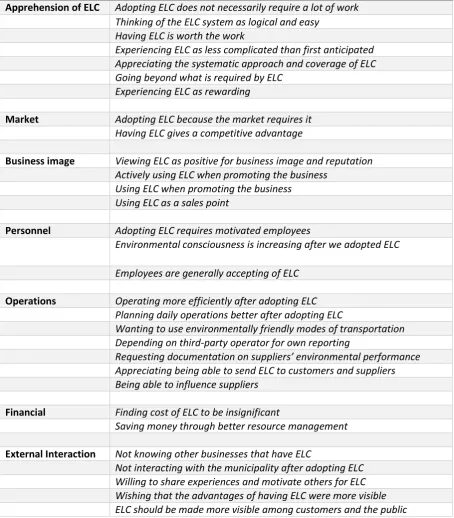
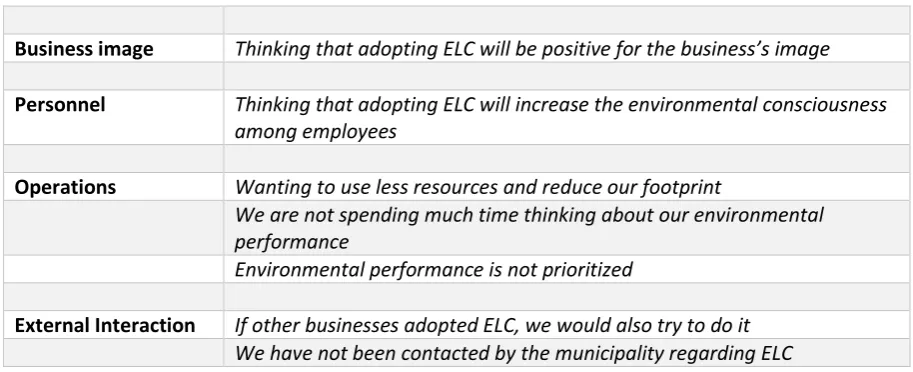
4.3 – Businesses in Ringerike with/without ELC ... 22
4.3.1 – Classification 1: Businesses with ELC ... 22
4.3.2 – Classification 2: Businesses without ELC ... 23
4.2.3 – Classification 3: Businesses that have previously had ELC ... 24
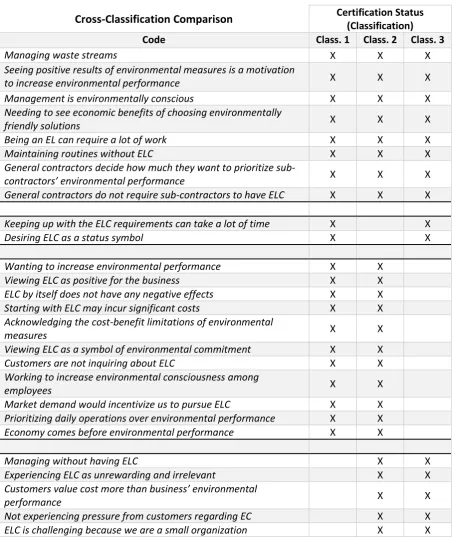
4.3.4 – Cross-Classification Comparison ... 24
4.4 – Alignment of Stakeholders’ Perceptions of the ELC Scheme ... 26
4.5 – ELC Adoption Opportunities in Ringerike ... 26
Chapter 5 – Conclusions ... 28
5.1 – Recommendations for Further Research ... 29
References ... 30
Appendices ... 32
Appendix A – Interview Guides (Businesses) ... 32
Appendix B – Interview Guide (Eco-Lighthouse Foundation) ... 35
Appendix C – Interview Guide (The Municipality of Ringerike) ... 36
v
List of Tables
Table 1: Description of research sub-questions and the methodologies used for data collection. ... 13 Table 2: Description of the method of analysis in accordance with the data required. ... 14 Table 3: The type of interview conducted with each business classification. ... 19 Table 4: Selection of codes that were deemed important for further study, for businesses with ELC (Classification 1). ... 38 Table 5: Selection of codes that were deemed important for further study, for businesses without ELC (Classification 2). ... 38 Table 6: Selection of codes that were deemed important for further study, for businesses that have previously had ELC (Classification 3). ... 39 Table 7: Selection of codes that were deemed important for further study, and how they apply to various businesses from a cross-classification perspective. ... 40
List of Figures
Figure 1: Research framework. ... 12 Figure 2: The research strategy. ... 15 Figure 3: The analytical framework. ... 17
List of Abbreviations
EC – Environmental Certification EL – Eco-Lighthouse
ELF – Eco-Lighthouse Foundation ELC – Eco-Lighthouse Certification
EMAS – Eco-Management and Audit Scheme EMS – Environmental Management System RK – The Municipality of Ringerike
1
Chapter 1
–
Introduction
This introductory chapter provides a brief history of how environmental aspects have become increasingly important when conducting business, and how environmental management systems have developed. Subsequently, it elaborates on the Eco-Lighthouse Certification scheme and its significance in Norway, as well as shortly describing earlier studies that have attempted to analyse it. Then, the following sections formulate the problem statement, the research objective and the research questions that established the foundation for this research project, followed by a short explanation of the methodologies utilized. Lastly, an outline of the thesis is provided.
1.1
–
Background
Since the 1960s, corporate environmental management has developed from being a reactive strategy, dealing with environmental issues as they occurred, towards, as is the case today, a
proactive system, aiming to reduce both the risk and extent of potential environmental issues (Berry & Rondinelli, 1998). In addition to reduced costs of operations (e.g. through energy-conservation and waste reduction), other driving forces include stronger regulatory frameworks, stakeholder forces (e.g. public demand for environmental protection), and competitive requirements (Berry &
Rondinelli, 1998). EMSs are systems that concentrate on managingthe impact on the environment (Sheldon & Yoxon, 1999), such as, for instance, waste management and handling of chemicals. EMS standards, such as ISO 14001 and the Eco-Management and Audit Scheme (EMAS), allow businesses to systematically (according to a PLAN-DO-CHECK-ACT cycle) develop and implement such systems. Subsequently, once a business has adopted an EMS, they can choose to become certified according to an environmental certification (EC) scheme, providing them with a proof of compliance that signals their environmental commitment externally. Such a certificate can then be presented upon inquiry, saving time that would otherwise have been spent probing the business’s operations for necessary documentation.
Within Norway, the most common EC scheme is that of the Eco-Lighthouse Foundation (ELF); the Eco-Lighthouse Certification (ELC) scheme, originating as a local project in 1996, but in 2004 funded by the Ministry of Environment and adopted at a national scale (Eco-Lighthouse Foundation, n.d.-a). There is no size-requirement to become certified, and it can be adopted by both Small and Medium-Sized Enterprises (SMEs), as well as by large corporations. In 2017, an EU Directive on public
procurement went into effect (European Parliament and the European Council, 2014), allowing local governments in the EU to require proof of EMAS certification from businesses participating in public procurement processes. The same year, the ELC scheme was acknowledged by the EU as a valid alternative to EMAS (Eco-Lighthouse Foundation, n.d.-c). Compared to the international ISO 14001 standard, the ELC scheme provides explicit guidelines for more than 80 industries, accounts for both internal (e.g. Health & Safety) and external environments, and specifies the requirement of annual reporting (Eco-Lighthouse Foundation, 2017). At present (2019), the ELC scheme is the most widely adopted environmental certification scheme in Norway (6070 certified businesses, Eco-Lighthouse 20191), although some businesses also become certified according to ISO 14001 (1319 certified businesses, ISO 20182) and EMAS (19 certified businesses, 20183).
Because the ELC scheme is widely adopted and integrated in Norway, this research project was focused on this specific scheme. Previously, there has been conducted some research on the effectiveness of the ELC scheme, as well as motivations for businesses to become certified. For
1 Value obtained from the Eco-Lighthouse register. 2 Value obtained from the ISO Survey.
2 instance, one study found that while the majority of certified businesses reported high satisfaction, there were outliers that reported “low flexibility” and a “lack of relevancy” when commenting on the ELC scheme (Westermann & Andreassen, 2012). This later was opposite to the findings from the work of (Solberg, 2013), who found that, when examining the city of Trondheim, the requirement for certification in public procurement was an important motivation for businesses to become certified. These studies indicate that the ELC scheme may be valuable to businesses that become certified. However, they did not conduct in-depth interviews with any of the businesses, and they did not further investigate businesses that refrained from becoming certified. In the case of Skorstad (2015), they went for a more qualitative approach and performed in-depth interviews with both certified businesses and businesses that, even without being certified, enforced internal
environmental requirements (Skorstad, 2015). Through those interviews, it was found that some businesses struggled with implementation, because they lacked knowledge and because they failed to mobilize the employees. Additionally, their respondents reported that the Eco-Lighthouse (EL) consultant came across as being more concerned with selling the ELC as a product, rather than instilling any meaningful, long-lasting awareness and acceptance of the ELC scheme. Therefore, some interviewees admit that they do not see the need for certification, unless the market demands it (Skorstad, 2015).
After compiling and analyzing studies that deal with the ELC scheme, the researcher could observe that they have something in common, i.e. there is a clear trend of assessing merely certified businesses, and to inquire about their motivations for becoming certified. In one study, Skorstad (2015) included some uncertified businesses in their in-depth investigation, although these were not entirely unfamiliar or adverse to the concept of EMSs in general (Skorstad, 2015) and, despite not having ELC, were conscious about their environmental performance. However, further studies may be carried out with the aim of uncovering why uncertified businesses decline to adopt ELC.
Additionally, as is highlighted in the Trondheim study (Solberg, 2013), it is not clear why businesses that do not participate in public procurement processes, should decide to become certified. In fact, as indicated by some preliminary phone calls that were conducted in the context of this research project, the researcher was informed that some businesses let their certification expire because their customers, e.g. households, never asked for it. This leads to another important consideration, one that is also raised by Westermann (2012), which is that virtually no studies have investigated how external parties relate to the ELC scheme (Westermann & Andreassen, 2012). For example, how do individual consumers perceive the certification scheme, and do they inquire about this when they purchase goods and services. Correspondence with a senior advisor from ELF through email confirms that their marketing department has not focused on targeting consumers, other than “sporadic adverts and articles”. Thus, there seem to be two areas that require further research. Firstly, why do uncertified businesses choose to not get certified, and why do some businesses let their certification expire? Secondly, how do external parties (i.e. consumers) perceive the businesses with ELC, and do they inquire about this when they purchase goods and services? Due to time constraints and the externalities surrounding this research project, only the first area was explored.
1.2
–
Problem Statement
3 the European Council, 2014). However, adopting EMSs and improving environmental practices will be beneficial even if the business is not actively participating in public works, as several studies have found; improved efficiencies in energy-use and utilization of materials in SMEs in Europe (Zorpas, 2009); significant improvements in operation and business performance of SMEs in Malaysia (Goh & Wahid, 2010); ELC gives rise to sustained competitive advantages for businesses in Norway (Djupdal & Westhead, 2013).
A logical deduction from earlier studies is that the lack of EMSs and positive environmental practices, in addition to being negative with respect to environmental performance, may negatively affect businesses’ performance. Therefore, an ideal world is one where all businesses strive to achieve exemplary environmental performance. In this case, Norway is no exception. The ELC scheme, being the most widely adopted in Norway (Eco-Lighthouse Foundation, n.d.-a), is a tool for businesses to increase their environmental performance, while at the same time providing other benefits (e.g. economic gains, employee wellbeing and health). Thus, it makes sense that Norwegian businesses would be eager to adopt such a scheme, but literature indicates that motivations for doing so vary, and some businesses find it difficult to implement the measures that ELC requires. To increase ELC rates among Norwegian businesses, it is important to assess the motivations that cause businesses to become (or not) certified in the first place. Furthermore, for businesses not participating in public procurement processes, the benefits of certification outside the public sphere must be uncovered and understood. Thus, these issues, in the context of the Ringerike region in Norway, form the foundation for this research project..
1.3
–
Research Objective
The research objective was to identify the motivations of businesses in the Ringerike region to adopt (or reject) Eco-Lighthouse Certification (ELC). To achieve this, an opinion analysis4 was carried out, in
which certified/uncertified/previously certified businesses were interviewed regarding their
decisions related to ELC. Furthermore, a background analysis5 was conducted, to clarify how the local
government and the certifying body attempts to promote ELC and increase certification rates.
1.4
–
Research Questions
The following research questions served as the foundation for this research project. Answering the research questions provided a diagnostic overview of the current situation and allowed businesses’ perceptions of the ELC scheme to be analysed. Ultimately, the included businesses’ motivations were identified, providing a foundation on which potential strategies for increasing awareness and
adoption rate of EL in Ringerike can be developed.
Main Research Question
How can businesses in Ringerike be motivated to obtain certification and to remain certified according to the Eco-Lighthouse Certification (ELC) scheme?
Sub-Questions
To provide an answer to the overarching research question, the following sub-questions were formulated.
1. What criteria are relevant for assessing motivations for ELC?
4 Opinion Analysis: Research and analysis to assess opinions and perceptions with regard to the problem being diagnosed, e.g. how businesses view the ELC scheme (Verschuren & Doorewaard, 2010).
4 2. What are the current practices and incentives for promoting ELC adoption amongst
businesses in Ringerike?
a. From the perspective of the Eco-Lighthouse Foundation? b. From the perspective of the municipality of Ringerike?
3. Why have ELC businesses in Ringerike chosen to become certified according to the ELC scheme?
4. Why have uncertified businesses in Ringerike chosen not to become certified according to the ELC scheme?
5. Why have some businesses in Ringerike let their ELC expire?
6. Are the stakeholders aligned with respect to their perceptions of the ELC scheme? 7. What can ELF and RK do to increase ELC adoption among businesses in the region?
1.5
–
Systematically Answering the Research Question
This research project is constituted as a practice-oriented, diagnostic research project (Verschuren & Doorewaard, 2010) with a qualitative approach. To ensure a certain validity with respect to the findings, a method of triangulation was utilized, and data was thus collected through multiple sources, such as a series of semi-structured interviews with selected businesses, as well as through consultation with literature. Due to the nature of the research question (and sub-questions), it was decided that a semi-structured interview was the optimal method of collecting data, as this provided some steering with respect to interview content and ensured that the interviews would stay on track. Subsequently, the data was analysed and assessed through an approach based on Grounded Theory (Charmaz, 2014), meaning thatthe interviews were transcribed verbatim and coded independently before codes and content were comparatively analysed. This allowed recurring ideas and topics of interest to be identified in an isolated (single-case) setting, before being cross-examined with other cases. Ultimately, this proved to be a valuable approach that allowed the research question to be answered.
When considering the businesses that were selected for investigation (also indicated by
sub-questions 3-5), it should be clarified that they were classified according to their ELC status, meaning that three different classifications were used:
• Classification 1: Businesses with ELC • Classification 2: Businesses without ELC
• Classification 3: Businesses that have previously had ELC
To prevent this section from becoming excessively long, the research methodology for this research project has been elaborated in Chapter 3. There, the methodology for collecting and processing the data (e.g. the Grounded Theory method) is presented, as well as the matter of selecting businesses that were to be interviewed.
1.6
–
A Brief Outline of the Thesis
5
Chapter 2
–
Literature Review
This chapter constitutes the literature review for the research project and seeks to review relevant literature on the important concepts. First, the concept of environmental certification (EC) is elaborated, providing a theoretical background on the purpose and characteristics of such certification. Then, a theoretical background on the motivations that drive businesses to seek certification, to unravel how these properties can be identified and assessed in the context of Ringerike. Subsequently, an in-depth look at the Lighthouse Foundation (ELF) and their Eco-Lighthouse Certification (ELC) scheme is provided, to explain why this certification scheme is important in the Norwegian (and especially Ringerike) context. Finally, a brief summary is provided, highlighting the key points raised in the preceding sections, as well as aggregating the theoretical concepts that were important for the research project.
2.1
–
Environmental Certification
In 1979, British Standard BS 5750 was introduced as the “world’s first national standard on quality management systems” (Sheldon & Yoxon, 1999). The aim of its development was to provide a set of technical standards that contained those activities and functions necessary for a successful system. BS 5750 later evolved into the international standard ISO 9000, and in 1993, the first such standard was introduced for environmental management systems (EMSs). The standard, namely BS 7750 (Smith, 2008), aimed to enable businesses to increase their environmental performance. EMSs concentrate on “managing an organization’s activities that give rise to impacts upon the
environment” (Sheldon & Yoxon, 1999). Once a corporation has installed an EMS, they can consult with an accredited certifying body to evaluate their EMS and, if validated, provide them with an EC. Obtaining such certification depends on a number of factors, such as selecting a set of standards against which they will be evaluated. Furthermore, it must also be decided whether the goal is to certify the entire business, or if certification is limited to products and services. In the latter case, a company’s products or service could be certified, e.g. through ecolabeling (European Commission, 2019).
With respect to EMSs, the most widely adopted standard has historically been the ISO 14001 (Melnyk, Sroufe & Calantone, 2003). This standard constitutes an internationally agreed upon standard that “helps organizations improve their environmental performance through more efficient use of resources and reduction of waste, gaining a competitive advantage and the trust of
stakeholders” (ISO, 2015). It is designed to be suitable for organizations of all types and sizes, and it requires that the organizations evaluate all ways in which their operations may adversely affect the environment (e.g. pollution, waste issues, etc.). The ISO 14001 is a set of standards that businesses can voluntarily choose to use if they wish to develop an EMS. However, ISO themselves do not issue certificates with regards to the system, and third-party certification bodies must be consulted if such certification is desired, allowing each user of ISO 14001 to meet the EMS requirements in their own way (Sheldon & Yoxon, 1999).
6 2014). Essentially, this makes EMAS a valuable component for businesses wishing to participate in public procurement processes within Europe.
However, it is important to acknowledge that installing an EMS does not necessitate that a standard is utilized, and that the ISO 14001 (and other standards), are merely guidelines for how such an EMS could be implemented. In fact, a complete adoption of the principles laid out in ISO 14001 followed by certification could end up requiring significant resources (Darnall & Edwards, 2006), sometimes beyond the capabilities of smaller enterprises. Darnall and Kim (2012) say that, “at the most basic level, an EMS can help facilities ensure that their management practices conform to environmental regulations”, and that an EMS can, in some cases, be considered a necessity to operate (e.g. EMAS for public procurement). Furthermore, they find, through a comparison of environmental
performance among ISO 14001-certified EMSs, complete (noncertified) EMSs and incomplete EMSs, in seven countries, that EMSs “are associated with greater reported environmental performance improvements than non-EMS adopters” (Darnall & Kim, 2012). This finding indicates that EMSs are beneficial for businesses seeking to, for whatever reason, increase their environmental performance, and that an incomplete EMS is better than having none.
Ultimately, the actual implementation of an EMS differs depending on the enterprise, and, if such is desired by the enterprise, the subsequent certification (be it according to ISO 14001 or EMAS) requires consultation with a third-party certifying body. Following certification, the certified business can signal internally and externally that it is committed to improving its environmental performance.
2.2
–
Motivations for EC
The motivations that cause businesses to implement EMSs and become certified is sure to vary, as hinted on by the motivations for ELC differing between commercial actors, who seek competitive advantages (Skorstad, 2015), and non-commercial actors, such as publicly owned kindergartens who are to a higher degree driven by internal motivations (Gaustad, 2011). However, making an
environmental commitment is highly dependent on the involvement of the managerial segment of a business, and motivating employees requires managers to “embrace environmental issues as opportunities” (Sharma, 2000). In fact, Solevåg et al. (2010) found that businesses agreed that “motivated management” was the most crucial success factor if they were to succeed with their environmental commitment. A study from Murillo-Luna et al. (2008) found that within a sample of firms (small, family-owned firms; firms with highly concentrated ownership), managers were mostly influenced by their bosses and shareholders/owners, and the external regulatory framework (e.g. environmental legislation), suggesting that economic motivations may be important. Interestingly, a study by Gjørv (2016) found that the supply industry in the petroleum sector in Norway had simple motivations for adopting EMSs; the most important customers (in this case the rig operator Statoil) demanded it, and there were no indications that EMSs would have been adopted if this was not the case.
7 implement an EMS and become certified. Collectively, there are internal benefits (e.g. positive shift in employee attitudes towards the environment, and interactions between staff and management) and external benefits (e.g. commercial, environmental, communication) of adopting EMSs and becoming certified. However, the degree of importance assigned to each of these will vary depending on the business (Zorpas, 2009).
Among other literature, EMS implementation in Malaysia has been found to have a “positive and significant relationship with SMEs’ performance”, especially with respect to operations and business performance, and that this is an important motivation (Goh & Wahid, 2010). An analysis of Indian industries found, for one, that larger firms were more likely to adopt comprehensive EMSs than SMEs, owing to availability of resources and internal capabilities for change (Singh, Jain & Sharma, 2015). Furthermore, it found that relational motivations are significant drivers, and that EMSs are often adopted for “better compliance, prevention of environmental incidents and to portray the image of an environmentally responsible firm”. Remaining competitive by following the same standards as their peers was also found to be an important motivation. Interestingly, it was found that the possibility of innovation and operational improvement were not considered important motivations here.
A study from New Zealand (Cassells, Lewis & Findlater, 2011) found that the degree of importance assigned to the various benefits that could be obtained from an EMS varied depending on the size of the firm. For example, whereas “improved environmental performance” was the main benefit for SMEs, large firms identified “compliance with legislation” as being the most important. Although the exact motivations were not uncovered, they can be generalized to be either economic (e.g.
competitive advantage, cost-saving), or because of genuine care for the environment (Cassels, et al., 2011). Furthermore, SMEs, lacking the same resources and capabilities of larger firms, identified that an important barrier for EMS implementation was that the voluntary standards were “too complex and insufficiently tailored to the SME context.”, and the study raises an important question of whether EMSs are, in fact, the best method of engaging SMEs with environmental management (Cassels, et al., 2011).
A study of Catalonian hotels found that operational performance and competitiveness showed greater improvement when environmental practices were implemented voluntarily, as opposed to being forced due to pressure (either governmental, consumer, supplier, and other stakeholders) or legislative requirements (Femenias, Celma & Patau, 2016). It was found that environmental practices generally had a positive effect on the business, with workers performing more efficiently, and a better utilization of resources leading to cost savings. They stress that the findings indicate that it is in the self-interest of the businesses to adopt environmental practices, because the increasing environmental awareness in society will undoubtably cause external stakeholders to value
businesses that show environmental responsibility. They therefore argue that the government must, in addition to regulate, also promote awareness of the purpose and benefits of adopting
environmental practices (Femenias, et al., 2016). Based on this, for the purpose of this research project, it was decided that an initial assessment of the local government’s activities (through an interview) in this area was required.
2.3
–
Eco-Lighthouse Certification (ELC)
8 personnel training, and the scheme is at present “Norway’s most widely used environmental
management system” (Eco-Lighthouse Foundation, n.d.-a). It is considered to be complementary to the ISO 14001 and EMAS systems, and provides pre-defined industry-specific criteria tailored for Norwegian enterprises. In 2017, ELF became recognized by the EU “as an environmental certification system on a par with the EUs certification system EMAS.” (Asgard, 2018). Its recognition can be attributed to the fact that it complies with and fulfils the main requirements for an EC scheme as defined by EMAS, and effectively allows Norwegian businesses to present ELC documentation instead of EMAS when participating in public procurement processes (Eco-Lighthouse Foundation, n.d.-b). ELC supplies pre-defined specific criteria for more than 80 industries, whereas EMAS requires the application of generic criteria for each business to develop the ad hoc policy and plan. ELC is also (more than EMAS) directed towards small and medium-sized enterprises (European Commission, 2017). With regards to size, one study found that small businesses benefitted from the ELC scheme, in that they reported higher levels (albeit a weak effect) of both effectiveness and profitability, and that the certification enables them to address the liabilities of newness and smallness (Djupdal & Westhead, 2013). It should also be noted that the Norwegian government, as of 2017, requires public procurers to consider environmental aspects in their purchases, and the focus on businesses’
environmental performance (visualized through EMSs and ECs) is increasing (Eco-Lighthouse Foundation, n.d.-e)
2.3.1
–
The Certification Process
Note that ELF itself does not issue certifications. Rather, the foundation is responsible for developing and managing the certification scheme, providing the digital system and tools through which
businesses can implement their EMS. However, they also provide lectures and seminars aimed to increase understanding of EMSs and on how to efficiently implement ELC. The actual certification process involves various actors, such as the consultant, a professional who is trained and monitored, but not employed, by ELF and provides the business with counselling to help establish and
implement the procedures and measures required for the certification (Eco-Lighthouse Foundation, n.d.-f). The consultant must have completed an ELF course on EL consulting. The local municipality (or the provincial government) in which the business is located is assigned the role as certifying body, possessing a license from ELF (Eco-Lighthouse Foundation, n.d.-g). Their role is to carry out the initial certification of businesses in the region, but also to follow up on them once certified. Once the business is ready to become certified, the certifying body will assign a third-party certifier (who can be either a municipal employee or a private certifier) to go through the certification process (Eco-Lighthouse Foundation, n.d.-g). Objectively speaking, the ELC process requires interaction with varied personnel and systems, potentially acting as a barrier for some businesses. When the business is finally certified, it is expected that the business strives for continuous improvement of its environmental performance, and that they document their progress through an annual report. Furthermore, they are required to go through a recertification process every three years. There is also an initial fee (€380 if less than 10 employees, capped at €2280 if more than 1000 employees) and an annual fee (€170 if less than 10 employees, capped at €1762 if more than 1000 employees) that is paid to ELF, depending on the size of the business6.
The following summarized steps are required for businesses that want to become certified according to the ELC scheme (Eco-Lighthouse Foundation, n.d.-h):
1. Initiate contact with ELF consultant – The business is required to enter an agreement with a licensed ELF consultant, either through seminars or through direct consultation.
9 2. Implement measures and procedures to meet requirements – Following the agreement with
the consultant, the next step is to inspect the business and identify the measures that must be implemented for the business to meet the ELC criteria.
3. Become certified – When the requirements have been met, an independent third-party certifier from the municipality in which the business is located will validate the ELC and issue a certificate.
4. Continuous improvement – EL requires environmental reports on an annual basis, and businesses should strive for continuous improvement, even after they have become certified. To accommodate this, ELF organizes both physical and online courses that allow businesses to learn more about environmental management.
Furthermore, once certified, the business must apply for recertification after three years.
2.3.2
–
Current Perceptions of ELC
Despite ELF actively trying to promote their certification scheme as being a positive addition for businesses that choose to adopt it, businesses’ perception of the ELC scheme varies. Furthermore, even though some studies have attempted to document these perceptions, the attitude of private citizens (i.e. consumers) towards the certification scheme has hardly been documented at all7. According to findings by Skorstad (2015), the main motivation for getting certified according to ELC is because of the competitive advantage it gives, and Granly and Welo (2014) found that “market benefits and cost reduction” were important drivers for ELC, as compared to the consumer pull of ISO 14001. In fact, ELF themselves advertise their certification as being economically beneficial, and highlight the competitive advantage it gives (Eco-Lighthouse Foundation, n.d.-d).
Skorstad (2015) revealed some effects of ELC which can be considered benefits for the business, i.e. increased environmental awareness among employees, and that the measures that increase firms’ environmental performance can also have health-benefits for the employees (e.g. focus on cycling instead of driving). However, not all businesses report the same attitude towards the scheme. One uncertified (with their own environmental procedures) business views the certificate as being a way to “show off” for businesses, although they value the fact that certification can be useful for
businesses that have no prior experience with EMSs (Skorstad, 2015). Another uncertified business reports that the certification scheme is not relevant for them, because they provide services, not products, and the ELF consultant seemed more eager to sell the certification rather than instilling lasting change within the business. They admit that they do not, at present, feel coerced by the market to become certified, but will look into it if the situation changes. On the other hand, certified businesses report great success with the certification, and state that the certification is a “trump card” when participating in public procurement processes, but also useful for the business to present themselves as environmentally conscious and socially responsible (Skorstad, 2015). To add to this, Solevåg (2010) uncovered, through a survey of businesses that were certified, that ELC commonly resulted in the businesses experiencing a decreased rate of absence due to illness, as well as an improvement in their external reputation. The certified businesses also reported that they had successfully reduced their expenses when purchasing, but that they at the same time experienced increased costs due to recycling and waste management (Solevåg, et al., 2010).
10 motivation for adopting an EMS, because public procurement is a valuable segment of their business. The businesses also report that they are setting environmental requirements for their suppliers, suggesting that a “domino effect” is taking place. Interestingly, although businesses report that their initial motivations for becoming certified is linear8 (e.g. only for the competitive advantage), the actual implementation phase of the EMS causes a shift towards a circular motivation9, as all employees become more environmentally conscious as its effects are made visible (Solberg, 2013). Furthermore, Westermann (2012) found, in their survey of businesses with ELC, that businesses often struggle with the actual implementation of the EMS, which may discourage them and result in them not getting certified. However, one general conclusion of the study is that the advantages of ELC seem to outweigh the potential disadvantages. Ytterås (2015) on the other hand reports that ELC is an important contribution to the sustainable development of society but argues that the
certification scheme in itself is not enough. They state that businesses must increasingly view themselves as being part of a larger entity, and that they have a responsibility to become more socially and environmentally conscious (Ytterås, 2015).
In contrast to the economic motivation reported by some businesses, Gaustad (2011) rather looks towards some public services, more specifically kindergartens in the capital, Oslo. As a result of the city’s decision in 2003 to become a “Green Municipality” (Municipality of Oslo, n.d.), they adopted ELC as a tool for public institutions to implement EMSs into their operations. Interestingly, the study found, through interviews with employees from various kindergartens, that the main motivation for them to increase their environmental performance was internal, rather than the competitive advantage sought after by commercial actors. The employees reported that their environmental consciousness extended beyond the working place, and that they especially felt responsible for inspiring the children in their care. These findings give insight into how motivations for ELC are not necessarily economic in nature.
In summary, despite the efforts of ELF to portray the ELC scheme as a positive contribution for businesses that choose to adopt it, businesses’ perceptions of the scheme vary. There does not seem to be any consensus on whether ELC is viewed as positive or negative, and, depending on which business is consulted, both perspectives can be identified. Both Solevåg (2010) and Westermann (2012), who both conducted surveys of businesses with ELC, concluded that ELC gives an overall positive effect. On the other hand, Skorstad (2015) found businesses that were more critical of the scheme. Such contradictory findings indicate that more research is required to be carried out on the subject.
2.4
–
Motivational Drivers of Relevance for the Research Project
As is apparent from the literature that has been introduced in the previous sections, there are several motivational drivers that induce businesses to adopt EMSs and become certified. Commercial actors value the potential for a competitive advantage in the market, and the consulted studies collectively raise this to be an important motivation. An important aspect of this competitive advantage is the requirement of EC for participation in public procurement processes. Furthermore, several cases highlight the economic benefits that can arise, such as cost-savings due to resource and energy-efficiency, but also that better environmental management results in fewer (costly)
environmental incidents. In contrast to commercial actors, public institutions (e.g. kindergartens) highlight internal motivation as being the most important factor. Interestingly, larger firms assign a 8 Linear motivations: Internal/external factors induce motivations that lead to environmental measures that give results.
11 higher importance to regulatory compliance, whereas smaller firms rather value “improved
environmental performance”, although the exact motivations have not been uncovered. It is also uncovered that smaller firms, lacking resources and/or capabilities, tend to be more concerned about the complex and insufficiently tailored standards, as well as a challenging implementation phase. Furthermore, the size of the firm and the sector in which it operates, also affects the importance of customer demand. For instance, the supply industry for oilrig operators were obliged by their customers (e.g. Statoil) to increase their environmental performance, and public procurement projects in Trondheim caused a “domino effect” regarding EC among contractors and actors in their supply-chains. On the other hand, some businesses (some providing services or digital products do not feel coerced by the market to become certified, and a firm performing electrical installations entirely in the private sector was never inquired about certification by their customers10 and therefore let their certification expire. It should be noted that ELF is more focused on marketing the ELC to commercial actors and the governmental sector, and they have not investigated the
perceptions of consumers towards the certification scheme. Lastly, several studies uncovered that businesses tend to take pride in having an EC through which they can present themselves as being environmentally conscious and socially responsible.
Effectively, this provided several aspects that were important for the development of the conceptual model for this research project, as well as the content of the interviews that were conducted. Thus, the following are the aspects that were considered to assess the motivations for businesses in Ringerike to become certified according to the ELC scheme.
• Regulatory compliance – To what extent is ELC required for regulatory compliance? • Competitive advantage – Does ELC provide a competitive advantage?
• Internal motivation – Is internal motivation among employees enough for pursuing ELC? • Economic benefits – What are the economic benefits of obtaining ELC?
• Business image – How does ELC affect the external image of a business? • Perceived difficulty of implementation – Is the ELC process too challenging? • Customer demand – Do customers require ELC (e.g. public vs private) • Results of ELC – Is there a reinforcing feedback effect of having ELC?
These aspects were used to develop an analytical framework (Section 3.3.4), which laid the foundation for the interview guides (Section 3.4) that were utilized for gathering data, as well as guiding the subsequent data analysis process. Ultimately, the findings of this research project were viewed in the light of these aspects.
12
Chapter 3
–
Methodology
This chapter contains a description of the research strategy and the methodologies used during the research project. It starts with a presentation of the initial research framework, followed by an elaboration on the research material, as well as an explanation of how data was collected (e.g. through interviews) and subsequently processed. Lastly, a brief summarization of the research limitations and boundaries is provided.
3.1
–
Research Framework
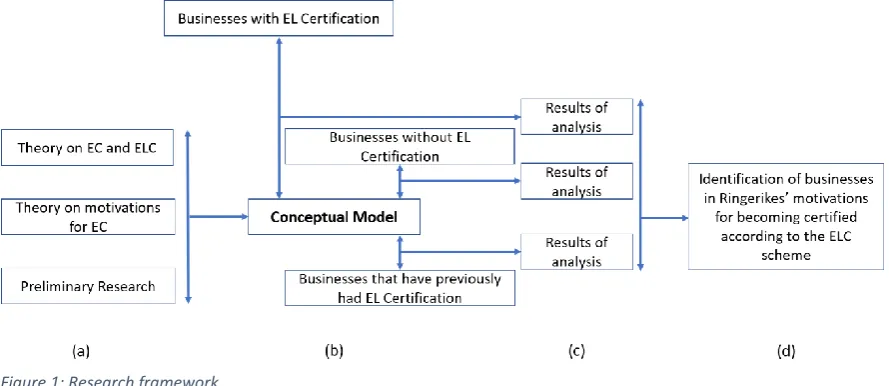
In order to steer the research project in a systematic manner and to obtain answers to the research questions presented earlier, the research framework presented in Figure 1 was developed and utilized. It can be formulated as follows:
(a) A conceptual model was developed through an initial study of literature regarding environmental certifications (EC) and the Eco-Lighthouse Certification (ELC), in addition to theories on motivations for EC, as well as preliminary interviews with the Eco-Lighthouse Foundation (ELF) and the
municipality of Ringerike (RK). (b) The model was subsequently utilized to investigate perceptions among businesses in Ringerike towards the ELC scheme, (c) leading to a subsequent confrontation of the results of the individual analyses, (d) concluding with an identification of the motivations for businesses in Ringerike to become certified according to the ELC scheme.
[image:18.595.76.521.402.595.2]Note that the segment “Preliminary Research” includes the preliminary interviews that were carried out with staff members of ELF and RK, and that these were used to fine-tune the interview guides used when interviewing businesses. This was further elaborated in Section 3.4.
Figure 1: Research framework.
3.2
–
Research Material and Accessing Method
To provide an adequate answer to the research question, a variety of methods were used to collect data and information, such as desktop research (e.g. consulting research literature, documents and websites), as well as in-depth interviews (the main method used during the research project) with representatives from various businesses, RK, and ELF.
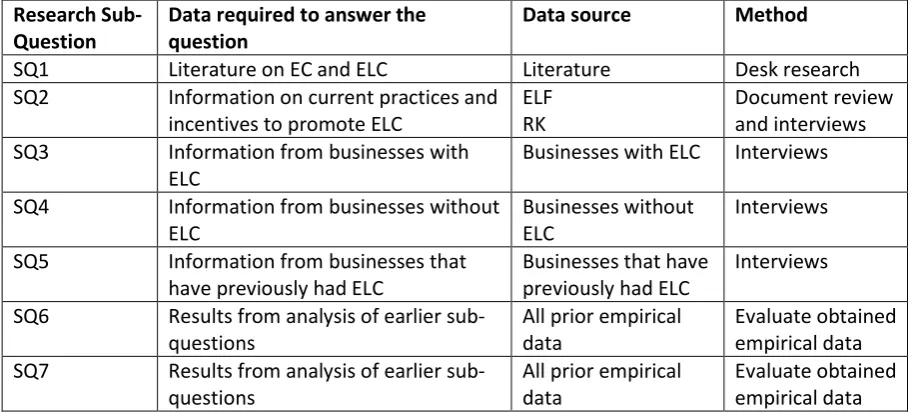
13
Table 1: Description of research sub-questions and the methodologies used for data collection.
Research Sub-Question
Data required to answer the question
Data source Method
SQ1 Literature on EC and ELC Literature Desk research
SQ2 Information on current practices and incentives to promote ELC
ELF RK
Document review and interviews SQ3 Information from businesses with
ELC
Businesses with ELC Interviews SQ4 Information from businesses without
ELC
Businesses without ELC
Interviews SQ5 Information from businesses that
have previously had ELC
Businesses that have previously had ELC
Interviews SQ6 Results from analysis of earlier
sub-questions
All prior empirical data
Evaluate obtained empirical data SQ7 Results from analysis of earlier
sub-questions
All prior empirical data
Evaluate obtained empirical data
3.2.1
–
Selecting Relevant Businesses for Investigation
The selection of businesses to be included in the research project was not subject to any significant constraints. Therefore, the businesses included vary in both size (e.g. number of employees, revenue) and in which sectors they operate. However, it should be noted that all businesses that were ultimately included were located within a certain proximity of the city Hønefoss, because of transport issues, and that this acted as a selection criterion. Furthermore, businesses that had a low or non-existing autonomy when it came to matters of ELC (e.g. a central headquarters make their decisions for them), were also excluded from the research project.
The following elaborates on how the three business classifications were populated: • Classification 1: Businesses with ELC
o This category was populated by consulting the online database provided by ELF on their website. At the time when this research project was carried out, there were 29 certified businesses in the region, of which 13 were ultimately included in the research. The remaining businesses were excluded for a variety of reasons, such as busy schedules, lack of autonomy, being located outside the set proximity, or other externalities. The sizes of the businesses vary, with some having fewer than 10 employees, and one more than 400 employees.
• Classification 2: Businesses without ELC
o Populating this category turned out to be a challenging process, and businesses without ELC appeared to be less willing to agree to interviews, citing a variety of reasons. Therefore, 2 businesses without ELC were ultimately included in the research, and both businesses had fewer than 20 employees.
• Classification 3: Businesses that have previously had ELC
14 See Table 3 (Section 3.4) for an overview over the types of interviews conducted with the various businesses.
3.3
–
Data Analysis
3.3.1
–
Method of Data Analysis
Following the data collection methods presented in Table 1, the following table lists how the
[image:20.595.64.527.243.745.2]collected data was subsequently processed and analysed. Background Analysis refers to investigating the background and forming an overview of the reasons for the perceived current problem, typically by reading existing literature and conducting preliminary interviews. Opinion Analysis puts more focus on the opinions and perceptions of the stakeholders involved, because, in some cases, these might be essential for diagnosing the reality of the current situation.
Table 2: Description of the method of analysis in accordance with the data required.
Data required (Table 1) Method of analysis
Literature on EC and ELC
Background Analysis
Qualitative: Literature was consulted, on the topics of EC and ELC, as well as documented motivations for becoming certified.
Information on current practices and incentives to promote ELC
Background Analysis Opinion Analysis
Grounded-Theory Approach
Qualitative: Interviews with ELF and the local government gave insight into the current practices and incentives that are used to promote ELC adoption.
Information from businesses with ELC
Opinion Analysis
Grounded-Theory Approach
Qualitative: An analysis was conducted with regards to the motivations for why these businesses chose to become certified.
Information from businesses without ELC
Opinion Analysis
Grounded-Theory Approach
Qualitative: An analysis was conducted with regards to the motivations for why these businesses chose not to become certified.
Information from businesses that have previously had ELC
Opinion Analysis
Grounded-Theory Approach
Qualitative: An analysis was conducted with regards to the motivations for why these businesses chose to let their certification expire.
Results from analysis of earlier sub-questions (valid for both SQ6 and SQ7)
Grounded-Theory Approach
Qualitative: The previously obtained data was evaluated in a comparative manner.
All obtained data thus far
Grounded-Theory Approach
15
3.3.2
–
Process for Gathering and Analysing Literature
To gather relevant literature for the initial step of the research project, a variety of databases were consulted, the most important ones being Scopus (a database provided by Elsevier) and Oria (a database provided by the University of Oslo). The focus of the literature search11 was to locate studies discussing topics such as “Eco-Lighthouse”, as well as “Environmental Management Systems” and “Environmental Certification” in general, and what “motivations” businesses had to pursue such initiatives. However, because “Eco-Lighthouse” yielded relatively few results in the main databases consulted, Google Scholar and even Google were used to locate additional studies, providing some earlier master’s and PhD theses on the subject. Furthermore, the websites of ELF and RK were used as sources of information, and even the interviewed certified businesses’ websites were inspected for matters relating to ELC.
3.3.3
–
Research Strategy
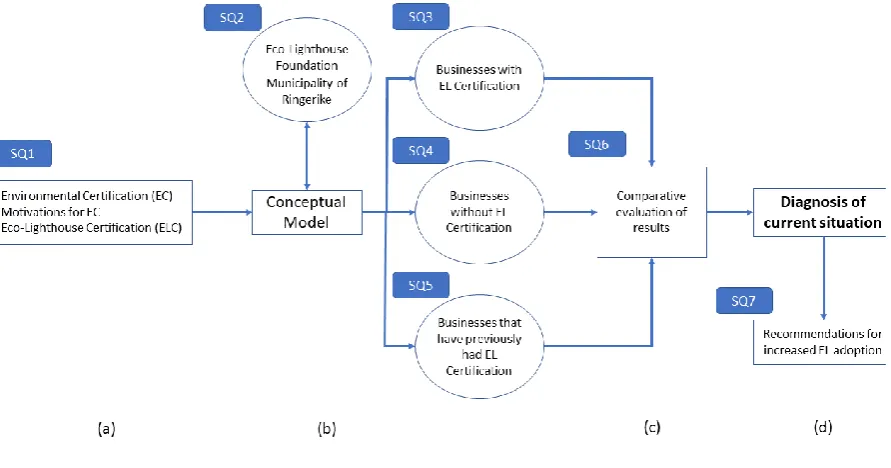
[image:21.595.81.527.314.548.2]Following the information presented in tables 1 and 2, Figure 2 visualizes the systematic approach taken during the analytical process.
Figure 2: The research strategy.
A description of the step-by-step approach in the research strategy above is as follows:
a) The initial step (SQ1) required a qualitative literature search into the concept of EC, as well as an in-depth look at and explanation of the ELC. Furthermore, as the core concept in the research project, the documented motivations for adopting EC and ELC, as presented in earlier literature, had to be studied and described.
b) This step is divided into two segments.
i. The first segment deals with the Eco-Lighthouse Foundation (ELF) and the
municipality of Ringerike (RK). Interviews were carried out with these stakeholders as part of the preliminary research process (SQ2), and the findings obtained from these
16 interviews were utilized to fine-tune the conceptual model and the interview guide that was utilized when interviewing the various businesses.
ii. The second segment consists of three parallel paths, dealing with the in-depth interviews that were carried out with the various businesses, with each path corresponding to one research sub-question (SQ3-5), and one classification (see Section 1.5). Here, the conceptual model was utilized to create semi-structured interview guides.
c) Subsequently, the findings from the previous step were combined and evaluated, based on the conceptual model, to identify the distinct characteristics of the various business
classifications, and to determine potential similarities or isolated occurrences with respect to motivations for ELC (SQ6).
d) Following the previous step, the current situation could be diagnosed, and potential strategies for increasing EL adoption among businesses could be assessed (SQ7), thus providing an answer to the main research question.
Furthermore, the concepts constituting step (a) in Figure 2 are defined as follows:
− Environmental Certification (EC): A certification that businesses can obtain to signal their environmental commitment externally and internally. Certification requires that the business makes a strategic management decision to improve their environmental performance, generally by installing some degree of Environmental Management System (EMS). − Motivations for EC: The motivations that cause businesses to adopt EC. This is the core
concept of the research project. Different businesses provide different reasoning for why they choose to become certified, and such reasons include, but are not limited to,
competitive advantage, economic gain, stakeholder pressure, etc. Through an investigation into literature on the matter, several motivational aspects were identified (Section 2.4). − Eco-Lighthouse Certification (ELC): The most widely adopted environmental certification
scheme in Norway, based on ISO 14001, and recognized by the EU as a valid substitute for EMAS in public procurement processes.
3.3.4
–
Analytical Framework
17
Figure 3: The analytical framework.
3.3.5
–
Grounded Theory Method
Charmaz (2014) describes Grounded Theory as methods consisting of “systematic, yet flexible guidelines for collecting and analysing qualitative data to construct theories from the data
themselves”, and such an approach was utilized to process the qualitative data that was collected during this research project. To summarize, this meant that the conducted interviews were
transcribed verbatim, and the transcripts were subsequently processed and coded (line-by-line and segment-by-segment) to initiate the analytical process.
In accordance with the Grounded Theory method, the coding process made extensive use of coding for actions (by using gerunds12), by either directly using the content within a segment, or by assigning a meaning through interpreting the content. This, as stated by Charmaz (2014) allows the researcher to interact with the data and study each fragment closely. Meanwhile, there was a continuous process of comparative analysis between data and codes, both within individual cases, but also between separate cases within and across the various case classifications. Effectively, this meant that consecutive interviews were improved as a result of the increasing analytical understanding of the already collected data. Following the initial coding process, a focused review process took place, and certain codes were found to be recurring among the various cases, culminating in the selection of several codes that were used for further analysis.
Note that the method was not used to fully develop a theory, but rather to provide a foundation for a comparative analysis of the collected data with theories and findings from earlier studies.
Ultimately, the developed codes proved useful for this purpose.
3.3.6
–
Tools for Data Processing
To maintain a structured overview of the relatively large number of businesses consulted, as well as process the non-numeric, qualitative data, computer software was found to be helpful.
18 • A comprehensive spreadsheet was used to keep track of the businesses and their
classifications, contact and interview status, and whether their respective interviews had been transcribed and otherwise processed.
• To simplify the process of organizing, coding and analysing the large quantities of non-numeric, qualitative data obtained from the interviews, the software package NVivo 12 was used. This was very helpful as it provided a great overview when creating codes, as well as allowing for quick and advantageous cross-examinations of codes, cases, categories, etcetera.
3.4
–
Interview Guides and Interview Process
To obtain in-depth relevant data, and to steer the interviews and keep them on topic, it was decided that the interviews would be semi-structured. Thus, pre-structured (Verschuren & Doorewaard, 2010) interview guides were created, to ensure that each interview would cover the same (or similar) questions, although it allowed for improvised follow-up questions whenever it was appropriate and convenient to do so. The interview guides that were used with the various businesses can be found in Appendix A. It should be noted that the questions within are not directly adapted from literature, other than that they are inspired by earlier theses and studies presented in the literature review, with emphasis on ELC. However, considerable thought went into developing the questions to ensure they would produce useful data, without becoming too encumbered with details nor leading. The motivational aspects identified in Section 2.4 were not directly operationalized with separate questions, although the questions were overall developed to provide insight into all of them. Therefore, whereas some of the questions are clearer on which aspects they address (e.g. Q2A.2, about the certification process, addresses the “Perceived difficulty of implementation”), most of the questions were intended to probe into several of the aspects.
Essentially, the interview guides have three sections, one for introductory remarks and one for closing, with a middle section in which EL was the topic in focus:
• Section 1 – Introduction
o The purpose of this section was to get a general overview of the business, such as their customer base, their current activities with respect to environmental performance, and whether they experienced pressure from customers on the matter. The other purpose was to create a relaxed setting for a fruitful conversation. • Section 2 – About Eco-Lighthouse
o This section aimed to assess the interviewee’s (and by extension the business’s) knowledge and perception of the ELC scheme. Broadly, the questions within this section could be divided into several categories; such as knowledge and perceptions of the ELC scheme; motivations for whether they became certified or not; their activities with respect to environmental performance; the outcome associated with ELC; as well as their future plans regarding the certification.
• Section 3 – Closing Remarks
19 For all interviews, it was critical that the correct personnel were interviewed. Therefore, when contacting the businesses, the first thing to do was to get in touch with the person in charge of environmental performance (and ELC) for the business, thus ensuring that the interview would be carried out with those with authority on the matter. In all cases, the interviewee was requested to sign a consent form regarding how the obtained information could be utilized.
Ultimately, the interviews that were conducted over the course of the research project can be divided into three types:
• Short interview: Some businesses agreed to very brief (e.g. 5 minutes) phone-interviews. In these, the prepared interview guides were too elaborate, and the interview content was improvised based on the guides.
• Short in-person interviews: Some businesses agreed to very brief (e.g. 5 minutes) conversations during the working day. In these, the prepared interview guides were too elaborate, and the interview content was improvised based on the guides.
• Long in-person interviews: Some businesses agreed to in-depth interviews (e.g. 45 minutes). In these cases, the interview guides were used to steer the conversations.
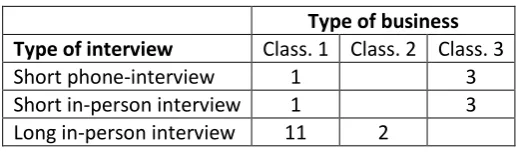
[image:25.595.168.429.369.445.2]Among the businesses that were interviewed, an overview of the type of interview conducted is provided in the following table.
Table 3: The type of interview conducted with each business classification.
Type of business Type of interview Class. 1 Class. 2 Class. 3
Short phone-interview 1 3
Short in-person interview 1 3
Long in-person interview 11 2
Following the interviews, verbatim transcripts where composed and subsequently coded.
Note that separate (long) interview guides were used for the preliminary interviews with ELF and RK. These can be found, respectively, in Appendix B for ELF and Appendix C for RK.
3.5
–
A Note on Research Limitations
20
Chapter 4
–
Findings
In this chapter, the subquestions (SQs) from Section 1.4 are systematically answered in separate -sections, and the data collected over the course of the research period is presented. The findings are discussed in the context of the current SQ, as well as building upon the content of the preceding SQs.
4.1
–
Assessment Criteria of Motivations
The first research sub-question (SQ1) was answered through an extensive literature search on the topic of ELC and motivations for EC in general, and the results of this culminated in the motivational aspects presented Section2.4, and the analytical framework that was drawn up is illustrated in Figure 3 (Section 3.3.4). These bear repeating at this point in the thesis, and the motivational aspects are as follows:
• Regulatory compliance – To what extent is ELC required for regulatory compliance? • Competitive advantage – Does ELC provide a competitive advantage?
• Internal motivation – Is internal motivation among employees enough for pursuing ELC? • Economic benefits – What are the economic benefits of obtaining ELC?
• Business image – How does ELC affect the external image of a business? • Perceived difficulty of implementation – Is the ELC process too challenging? • Customer demand – Do customers require ELC (e.g. public vs private) • Results of ELC – Is there a reinforcing feedback effect of having ELC?
The motivational aspects listed above were ultimately used for the purpose of this research as criteria when assessing the motivations.
4.2
–
ELC Practices and Incentives in Ringerike
To answer SQ2 regarding the current practices and incentives for ELC in Ringerike, interviews were carried out with ELF and RK. In addition to providing valuable data for answering the SQ, they also helped shape the semi-structured interview guides (Appendix A) that were to be used in the following interviews with the various businesses.
All sections in Chapter 4.2 stem from single interviews, in Section 4.2.1 with a senior advisor from ELF, and in Section 4.2.2 with a senior official in charge of climate and environment in the
department of strategy and development from RK.
4.2.1
–
Eco-Lighthouse Foundation (ELF)
Initially, ELF had to restrict themselves when marketing the ELC scheme, mainly due to budget constraints, although they state that their budget today allows for more focus in this area. At present, ELF is promoting the ELC scheme through advertisements on online platforms, and by providing seminars. Ideally, they wish that certified businesses promoted the certification of their own volition, and that this would be beneficial for both the businesses themselves, both through increased consumer awareness of the certification (and that they should frequent certified businesses), and by advertising themselves as environmentally conscious.
21 certification, such as insurance providers, because increased environmental performance lowers the risk of unforeseen episodes, and sustainable tourism, because the tourism industry depends on a healthy environment that is appealing to tourists if they wish to provide their services. Despite these initiatives, however, there are no national programs in place to promote and incentivize the ELC scheme, except for the potential of demanding a certain environmental performance of actors through public procurement processes.
4.2.2
–
The Municipality of Ringerike (RK)
RK is, as they call it, an “Eco-Lighthouse municipality”, meaning that they have an agreement with ELF and are obliged to carry out their role as the certifying body. However, although it was quickly made clear that ELC had been a topic of discussion internally in the municipality for a long while, it had not been prioritized when it came to implementation. Furthermore, they indicated that they will be putting more focus on it going forward, and that they aim to certify their own institutions in the coming years. They hope that this will inspire other businesses to seek certification themselves, and they want to facilitate and make this process easier.
They also say that they wish to increasingly demand better environmental performance of participants in public procurement processes, potentially incentivizing ELC adoption among
businesses. However, they point out that there are, currently, no legal requirements for businesses regarding environmental management, so they are limited in the extent to which they can require them to have ELC. Despite this, they further explain that the regional waste company, performing a public service on behalf of local governments, stipulates certain requirements for businesses regarding waste, so ELC might, in fact, be a way for businesses to ensure that they are regulatory compliant.
At present, they are not making any significant efforts to promote ELC towards businesses, and they admit that, so far, businesses that have been interested in the certification have reached out to the municipality to inquire about it, and not vise-versa. Even so, they make sure to involve themselves by organizing a diploma ceremony for businesses that become certified, and they plan to be more active in this regard in the future.
Generally, RK aims at expanding their activities to promote the ELC scheme towards businesses in the region, and they want to encourage businesses and help them become certified.
4.2.3
–
Highlights of Interviews with ELF and RK
It is apparent that there are no national-scale programs or practices that aim to promote the ELC scheme among businesses in Norway. Despite this, there are some commercial organizations that try to incentivize their members to adopt ELC (for various reasons). Furthermore, as is emphasized by the interview with ELF, the local governments themselves are crucial when it comes to promoting the certification, and that the extent of these activities vary significantly depending on the region. In fact, the interview with RK makes clear that ELC, up to this point in time, has not been a priority for them, and it has therefore not been actively promoted or otherwise communicated in the region. However, they indicate that this will change going forward, and that they want to increase their promotional activities, as well as actively work to certify their own institutions. It should be noted that they are limited in the extent in which they can demand ELC from businesses, as there are no legal
requirements in this respect, and they, as a local government, cannot be “favoring” certain