Face Recognition using Artificial Neural Networks
Amar Tej Godavarthi1, Jillellamudi Subramanyeswari2, Jhansi Lakshmi Mekala3, Santhi Sree Kurakula4, Mounika Kuchipudi5
1
Asst. Prof., Dept. of ECE, VVIT, Guntur, Andhra Pradesh, India.
2, 3, 4, 5
Student of ECE, VVIT, Guntur, Andhra Pradesh, India.
Abstract: In today’s networked world, there is need to maintain the security of information or physical property . From time to time we hear about the crimes of credit card fraud, computer breaking’s by hackers, or security breaches . This security can be achieved by using passcode , thumb recognition etc . The above techniques are weak in providing security . So we are going for face recognition. In present era of computation face detection is useful in performing face recognition for security purpose . Human Brain can easily analyses vast array of faces from the images formed on the eyes, at the same time it is very difficult for a computer to locate the faces in a digital image . Face detection is one of the basic fundamental pillars of face recognition system, which is very fast growing and challenging in real world applications such as security systems .
In this project we are proposing a Face Recognition system using Artificial Neural Networks , where we use Principal Component Analysis for dimensionality reduction of the image and can be represented as the Eigen faces coordinate space , i.e., face image can be divided into a number of pixels and plot them according to eigenvector coordinates. Then the extracted law dimensional feature vectors are considered as the input patterns in Back Propagation Neural Networks to classify the extracted features into one of the possible classes. This project is done in Matlab Face recognition using artificial neural network. In this paper we are designing a Face Recognition system using Artificial Neural Networks.
Keywords: Artificial neural networks, Back propagation neural networks (BPNN), Principal component analysis (PCA), Viola Jones method.
I.INTRODUCTION
The face is the primary focus of attention and plays a major role in identification and establishing the uniqueness of a particular person from the rest of the human society. In spite of so many faces in the human society, there is remarkable ability of a human eye to recognized one face from another. A human can recognize thousands of faces learned throughout the lifetime and identify familiar faces at a glance even after years apart. This ability of human eye is quite effective, even though there are changes in the visual stimulus due to aging of a person, expression and change of looks due to glasses, beards or in hair style. There are many approaches such as security purpose, credit card verification, criminal identification etc. where the identification of a face plays an important role. A slight recognition of a particular person will be much better, in these kind of fields, than not even recognizing at all. Although it is clear that people are good at face recognition, but it’s not obvious that a human brain can encoded or decoded for every face. Human face recognition has been studied for more than twenty years. Developing a suitable program which can be used digitally in recognizing a face is a quite challenging task, because human faces are complex and are different from each other in every aspect. So, developing such a kind of program is a difficult task in this digital world, which may involve earlier techniques, which was used for recognition of faces, to make it reliable. For face identification the starting step involves extraction of the relevant features from facial images. A big challenge is how to quantize facial features so that a computer should be able to identify a face. The study carried out by many researchers over the past several years indicates that certain facial characteristics are used by human beings to identify faces.
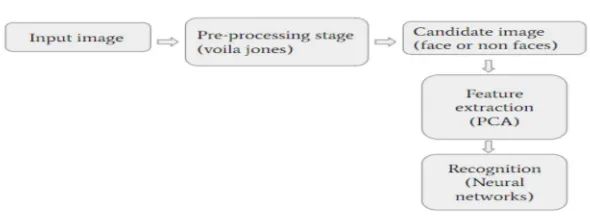
[image:1.612.152.447.599.707.2]II.BLOCK DIAGRAM
The proposed algorithm for this project can be described below:
1) Step 1: Read the image.
2) Step 2: Give a class number for it.
3) Step 3: Find Eigenvectors and from Eigenfaces weight are calculated.
4) Step 4: Weight and bias are initialized randomly for training of each part separately using neural network tool through MATLAB.
5) Step 5: Calculate the output of each part from the previous step and apply it as an input to the next step.Step 6: The above steps are applied to the initial image.
6) Step 7: Results obtained from step 4 and 5 are compared to check the accuracy of this approach.
7) Step 8: The procedure below can adjust the weight in the network
a) Using sigmoid activation function compare hidden layer and output layer neuron.
b) Calculate the errors of output layer and hidden layer and then calculate the total error of the network.
c) Repeat the steps of adjusting weights until minimizing the squared mean error.
Adjust Weight is given by the equation: ΔWij (n) = µδ j(n) . yi(n)
IV.PRINICIPAL COMPONENT ANALYSIS
Principle component analysis (PCA) is a typical tool prominently used for dimensionality reduction and feature extraction in most of the pattern recognition application. PCA from a statistical background, is a method for
A. Transforming correlated variables into uncorrelated variables .
B. Finding linear combinations of the original variables with relatively large or small variability .
C. Reducing data.
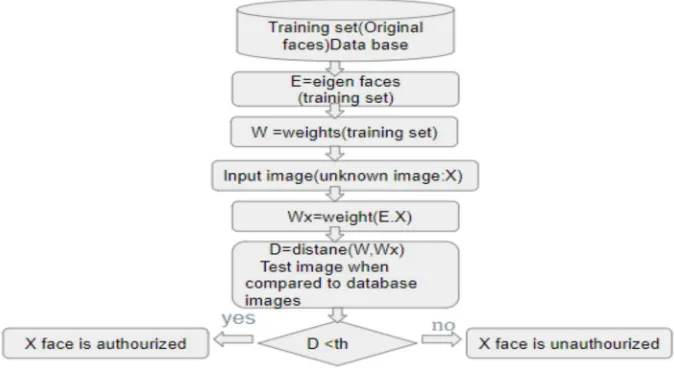
Principal component analysis (PCA) is a statistical procedure that uses an orthogonal transformation. The PCA approach is used to reduce the dimension of the data by means of data compression basics and reveals the most effective low dimensional structure of facial patterns. This reduction in dimensions removes information that is not useful and precisely decomposes the face structure which involves transformation of number of possible correlated variables into a smaller number of orthogonal (uncorrelated) components known as Principal Components.
[image:2.612.143.480.519.706.2]Each face image may be represented as a weighted sum (feature vector) of the eigen faces, which are stored in a 1D array. The test image can be constructed using these weighted sums of eigen faces. When a test image is given, the weights are computed by projecting the image upon eigen face vectors. The distance between the weighted vectors of the test image and that of the data base images are then compared. Thus one can reconstruct original image with the help of eigen faces so that it matches the desired image flow diagram of pca method is shown in fig 3.2
V.ARTIFICIAL NEURAL
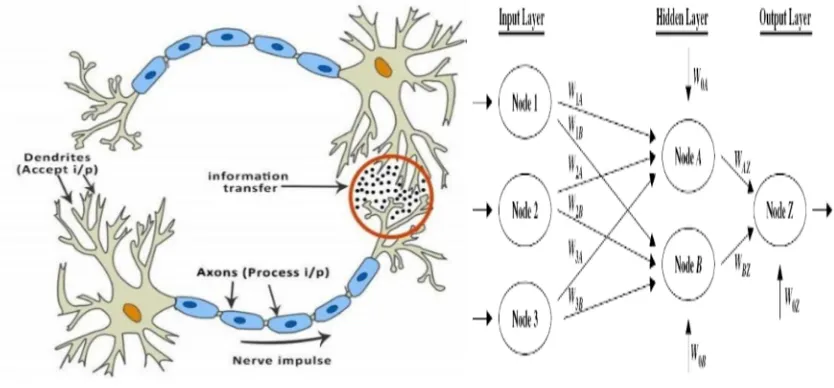
[image:3.612.98.515.136.330.2]An artificial neural network is an interconnected group of nodes, akin to the vast network of neurons in a brain. Here, each circular node represents an artificial neuronand an arrow represents a connection from the output of one artificial neuron to the input of another they are show in fig 3.
Fig : Neural Networks
A. Basic Structures of ANN
The idea of ANNs is based on the belief that working of human brain by making the right connections, can be imitated using silicon and wires as living neurons and dendrites. The human brain is composed of 86 billion nerve cells called neurons. They are connected to other thousand cells by Axons. Stimuli from external environment or inputs from sensory organs are accepted by dendrites. These inputs create electric impulses, which quickly travel through the neural network. A neuron can then send the message to other neuron to handle the issue or does not send it forward. ANNs are composed of multiple nodes, which imitate biological neurons of human brain. The neurons are connected by links and they interact with each other. The nodes can take input data and perform simple operations on the data. The result of these operations is passed to other neurons. The output at each node is called its activation or node value. Each link is associated with weight. ANNs are capable of learning, which takes place by altering weight values
VI.ARTIFICIAL NEURAL NETWORKS FOR FACE RECOGNISATION
In the recent years, different architectures and models of ANN were used for face detection and recognition. ANN can be used in face detection and recognition because these models can simulate the way neurons work in the human brain. This is the main reason for its role in face recognition. This research includes the researches related to face detection based on ANN.Artificial neural networks (ANN) were used largely in the recent years in the fields of image processing (compression, recognition and encryption) and pattern recognition. Many literature researches used different ANN architecture and models for face detection and recognition to achieve better compression performance according to: compression ratio (CR); reconstructed image quality such as Peak Signal to Noise Ratio (PSNR); and mean square error (MSE).
VII.FACE RECOGNITION
A. Viola Jones Algorithm
image based on the value of a simple feature. Some Haar Features represent the rectangular region of the image and add up all the pixels in the area. A classification method that was used multiple levels of selection. At each level performs the selection using the AdaBoost algorithm that has been trained by using the Haar Feature. The selection was useful for separating between sub-windows containing positive objects (images that are detected to have the desired object) with negative objects (the detected images do not have the desired object). The Viola-Jones method combined four general keys: Haar Like Feature, Integral Image, Adaboost learning and Cascade classifier.
Haar like Features:
Viola Jones classified the image of the value of simple features and uses three types of features, which were square features, three-square features, and a four-square feature. Haar like Feature was the difference of the number of pixels from the area inside the rectangle. The value of these features was the difference between black and white regions. In each sub-window image.
F(Haar)=F(white)-F(black) Integral Image:
Integral image was a technique for calculating the feature value quickly by changing the value of each pixel into a new image representation
Adaboost:
The total number of Feature Haar was very large. To ensure that classification could be done quickly , the learning process should eliminate the majority of features available, and focus on a small set of necessary features. AdaBoost aimed to form face templates. Cascade Classifier:
A classification method that was used multiple levels of selection. At each level performs the selection using the AdaBoost algorithm that has be entrained by using the Haar Feature. The selection was useful for separating between sub-windows containing positive objects (images that are detected to have the desired object) with negative objects (the detected images do not have the desired object) cascade classifiers)
B. Viola Jones Output
The figure below shows the image before applying Voila Jones algorithm and after applying Voila Jones algorithm :
VIII.BACK PROGRATION ALGORITHM
Forward sweep defines the network from the input layer to the output layer, in which it propagates the input vectors through the network to provide outputs at the output layer in the end. During the forward sweep, the weights of the networks are all fixed. The backward sweep hence defines network from the output layer to the input layer, where it is similar to forward sweep except that the error values are propagated back through the network. This is done in order to determine how the weights are to be changed during the training, in which the weights are all adjusted in accordance of an error correction rule where the actual response of the network is subtracted from the target response to produce an error signal.
Training Parameters:
A. Initial Input Weights: For getting an efficient output, the initial input weights are set to fractions in between -1 and +1.
B. Number of Hidden Units: With n-input and m-output the required hidden units will be 2n+1, under the condition that the
activation function can vary with the function. With increasing the hidden layer the value of errors are increased repeatedly and by summing the errors in the previous layer that is feed to the current layer.
C. Training a Net: In back propagation the weight adjustment is based on training patterns and the purpose of applying this method
is to achieve a balance between memorization & generalization. It is not often important for achieving a minimum value of the error for continuation of the training patterns. With decreasing the error for the validation, the training continues and for increasing the error, the training patterns are memorized by the net and hence the training is terminated.
D. Learning Rate: In back propagation neural network, a small learning rate is used to avoid major disruption of the direction of
[image:5.612.166.452.319.415.2]learning and the weight change depends on the combination of current gradient and the previous gradient.
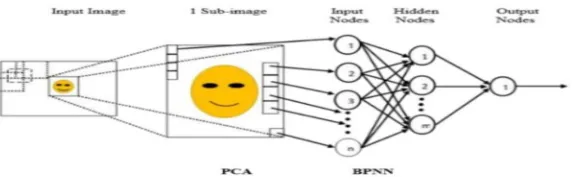
Fig : PCA and NN on image
IX. APPLICATIONS AND FUTURE SCOPE
A. Access and Security
As well as verifying a payment, facial biometrics can be integrated with physical devices and objects. Instead of using pass codes, mobile phones and other consumer electronics will be accessed via owners’ facial features. Apple, Samsung and Xiaomi Corp. have all installed FaceTech in their phones.
B. Criminal Identification
If FaceTech can be used to keep unauthorised people out of facilities, surely it can be used to help put them firmly inside them. This is exactly what the US Federal Bureau of Investigation is attempting to do by using a machine learning algorithm to identify suspects from their driver’s licences.
C. Healthcare
Instead of recognising an individual via FaceTech, medical professionals could identify illnesses by looking at a patient’s features. This would alleviate the ongoing strain on medical centres by slashing waiting lists and streamlining the appointment process
D. Payments
REFERENCES
[1] An application of Viola Jones method for face recognition for absence process efficiency. Rudolfo Rizki Damanik et al 2018 J. Phys.: Conf. Ser. 1007 012013 Journal of Physics: Conference Series
[2] Face Recognition Using Principal Component Analysis. Ningthoujam Sunita Devi et al, / (IJCSIT) International Journal of Computer Science and Information Technologies, Vol. 5 (5) , 2014, 6491-6496