371
©IJRASET: All Rights are ReservedMilk Adulteration Detection System
Prathiksha1, Raksha Chandrashekar2, Rakshitha K3, Veekshitha Shetty4, Ashwin Kumar5
1, 2, 3, 4
UG Students, 5Assistant Professor, Department of Electronics and Communication, Sahyadri College of Engineering & Management, Adyar, Mangaluru- 575007
Abstract: Milk is nutrient-rich white liquid that is essential for every mammal. People use not just cow’s milk but various other animals such as milk of goat, sheep, deer, camel, mares. As agriculture, milk is used as diary milk which is used for consumption in daily basis. Milk is also used for the commercial purpose such production of curd, cheese, chocolates and other dairy products. Composition of cow’s milk contains 87.7% of water, 4.9% of lactose, 3.4% of fat, 3.3% of protein and 0.7% of minerals. Adulteration is major problem existing in the food industry at present. Milk is one of the highly adulterated products. Up to 68.2% of India’s milk is adulterated. The traditional methods of testing the adulterant are time consuming, less accurate and causes wastage. This paper proposes an innovative idea of detecting adulterants by using a system based on Image processing. This method has advantage of time efficiency, high accuracy and sample is unaltered by the system.
Keywords: Adulterants, Image processing and MATLAB
I.INTRODUCTION
Milk is nutrient-rich white liquid that is essential for every mammal. People use not just cow’s milk but various other animals such as milk of goat, sheep, deer, camel, mares. As agriculture, milk is used as diary milk which is used for consumption in daily basis. Milk is also used for the commercial purpose such production of curd, cheese, chocolates and other dairy products. Composition of cow’s milk contains 87.7% of water, 4.9% of lactose, 3.4% of fat, 3.3% of protein and 0.7% of minerals. Milk adulteration is a very common food fraud and is posing a big social problem in today’s world. A national survey in India has revealed almost 70% of the milk sold and consumed in India is adulterated. The practice of adulteration is being carried out since a long time. Being made up of 87% of water, milk is prone to adulteration by unscrupulous middlemen and unfaithful farm workers. Adulteration has serious health effects which if ignored can lead to irreparable damage of health. Commonly used adulterants are micro- organism, table sugar, starch, acids, soap, formalin, ammonium sulphate. So, for preventing these, determination of milk adulteration is very important. Most of the times, the adulteration is intentional to make greater profit, but sometimes it may be due to the lack of proper detecting technology and confusion regarding appropriate drug administration practices among the dairy farm workers. Most commonly natural milk is adulterated with low value ingredient like water, whey etc. and is known as ‘economic adulteration’. It is a very common practice by the milk supplier to add water or ‘liquid-whey’ to milk to increase the volume of milk. Diluted milk reduces its nutritional value, and contaminated water causes serious health problems. Addition of water changes specific gravity of the milk and its natural color gets destroyed. Earlier traditional method was used to detect the adulterants but it has a disadvantage that it cannot be implemented to detect the adulterant in a short period of time. With the evolution in technology various methods have been proposed to detect the adulterants present in the milk.
II. LITERATURE SURVEY
372
©IJRASET: All Rights are Reserved
milk; Semi skimmed 2milk, Skimmed milk. Electromagnetic wave cavity as a microwave sensor to detect the quality of the milk by looking up to the properties noted down looking beforehand is used. Graphs are plotted from relevant practical measurement which involves the detection and analysis of spectral signature for s11 and s21 parameter. Along with the quality of the milk it is possible to note down the fat content in each type of milk. Use of wideband cavity can be used instead to get optimum results. The same method can also be used as a potential platform for contamination detection, i.e. presence of pesticides or detergents using of EM wave sensor [3].Paper presents an embedded system design and tests carried out in order to measure the adulteration of water in milk. It uses two parameters, the attenuation co-efficient and time of flight to analyze the fat content and the amount of water adulteration present in raw milk samples. A keypad and LCD is been interfaced with microcontroller along with the sensor. This provides the necessary user interface for the system. The system shows an accuracy of about 95% with a deviation of 1% either side. The accuracy obtained in the system is 2 times more than traditional methods like spectroscopy which is widely in use [4]. A hand held micro- electrode sensor based on impedance spectroscopy is fabricated for the detection of adulteration in milk. The results showed remarkable impedance change for different concentrations of starch and detergent in the milk sample in the frequency range of 0.05-5.0 kHz. It was found that the change in the concentration of starch and detergent in milk samples changes the overall impedance of the sensor. The measured impedance values were inversely proportional to the concentration of detergent and directly proportional to the concentration of starch in the milk. It was observed that device requires only 0.2 mL of the sample and gives response within 10 seconds [5]. Whey is the liquid remaining after milk has been curdled and strained is used as an adulterant in the milk industry.
The Constant phase element (CPE) sensor is used for detecting cow-milk blended with whey. Addition of whey in milk increases its volume and makes it acidic but the percentage of lactose content remains the same. As a result of this, the neutralizers such as NaOH are added to balance the pH value of the adulterated milk as well as to increase the shelf life. Muriatic acid is added to the milk to prepare whey. Both muriatic acid and NaOH can be hazardous. The CPE sensor detects the cow-milk containing muriatic acid and NaOH.
The performance of the sensor are observed in pure milk (pH- 6.74), as well as the adulterated (pH value of whey is 6.02). NaOH is added to get back the pH value to 6.74. At every stages of adulteration the CPE sensor is used and which can successfully detect them. Finally, Complex non-linear least square (CNLS) method to facilitate the design of suitable signal conditioning circuit.[6]. Detergent is one of the adulterant that is commonly used .Synthetic milk is prepared by adding detergent to emulsify and dissolve oil in water to give frothy solution, the characteristic white color of milk is followed by addition of caustic soda to neutralize acidity which prevents it from turning sour during transportation. This study analyses the possibility of on-chip detection and quantification of soap as an adulterant into cow milk by employing Electrical Impedance Spectroscopy (EIS). This technique provides a simple, rapid, precise and cost effective platform for milk quality monitoring. Variation of electrical parameters including the impedance, capacitance, conductance and current for 0.1%, 0.3%, 0.5%, 0.7% and 0.9% (w/w) of soap adulteration in milk are analyzed.
The capacitance, conductance and current are observed to increase whereas impedance has been found to decrease with increasing soap content in the milk. Finally, the coefficient of sensitivity is extracted for the soap-adulterated milk samples and explained in terms of the measured conductance values. [7].Paper is the upgrade for the drawbacks found in cryoscopy method which led to the formation of the prototype of digital photometer which is used to detect the water adulterated in milk. The IR radiations are transmitted through milk samples to detect the water content in the milk.
373
©IJRASET: All Rights are Reserved
III. METHODOLOGY
[image:3.612.146.412.129.212.2]The process used to convert an image into digital format and perform certain operation on an image in order to obtain useful information or enhance features is called image processing.
Fig.1: Block diagram of system
A.Image Pre-Processing
Preprocessing is a stage that needs to be performed on an image in order to facilitate smooth functioning and accurate results in further processing stages. Resizing of an image is needed to increase or decrease the number of pixels. Zooming is a process in which number of pixels is increased whereas shrinking is a process where rows and columns are eliminated.
B.RGB Model
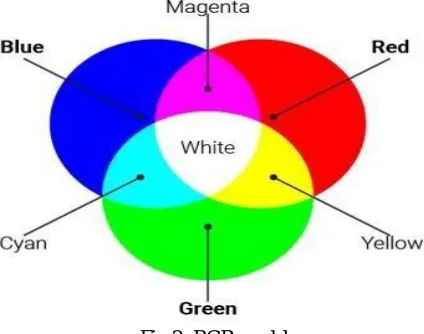
The RGB color model is an additive color model where colors such as red, green and blue light are added together in different ways to reproduce a broad array of colors. The name of the model comes from the initials of the three additive primary colors, red, green, and blue. Purpose of RGB model is sensing, representing and displaying of images. Primary colors are red, green, and blue .Adding two primary colors of same intensity will result in secondary color. Addition of red and green sums up to yellow, blue and green gives cyan and red and blue results in magenta. Superimposition of three light beams leads to the formation of RGB model. Zero intensity of each color gives black color and highest intensity gives white color. Nature of the primary colors determines the quality of white color.
Fig 2: RGB model
C.Histogram
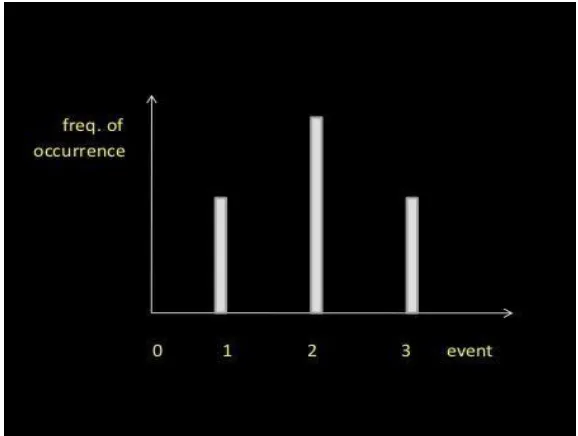
An image histogram is a type of histogram that acts as a graphical representation of the tonal distribution in a digital image. It plots the number of pixels for each tonal value. By looking at the histogram for a specific image a viewer will be able to judge the entire tonal distribution at a glance. Color histogram represents the distribution of color in an image. Since histogram cannot be plotted for the entire color channel at a time, RGB splitting is done in order to split the RGB to red green and blue channel respectively. In the histogram plot, the horizontal represents tonal variation and vertical axis represents the number of pixels in particular tone. The left side of horizontal axis is black and dark areas, middle region are medium grey and right-hand side light and pure white areas.
Milk Digital Camera Image acquisition
[image:3.612.199.411.426.593.2]374
[image:4.612.161.450.79.297.2]©IJRASET: All Rights are Reserved
Fig 3: Histogram Plot
D.Algorithm
Fig 4: Algorithm steps
The algorithm starts by collecting the images of different samples. Once the sample is collected, the image is resized. The image is in RGB format and hence spitted into red, green and blue channels respectively. The histogram value is calculated for each channel and plotted. This algorithm is applied for various conditions.
Start
Input image
Split into RGB channel
Get histogram value of each channel
[image:4.612.229.366.349.634.2]375
©IJRASET: All Rights are Reserved
IV. RESULTS AND DISCUSSION
[image:5.612.192.422.122.489.2]The image captured will be the input which is processed in MATLAB using the algorithm. Based on the value of the histogram plot the milk will be differentiated. Same procedure is applied for all the milk samples.
Fig 5: Pure milk sample
Fig 6: Histogram plot for pure milk sample
[image:5.612.204.420.542.711.2]From fig. 6 it is evident that the threshold intensity value for the pure milk with yellowish content is approximately 168.
376
[image:6.612.195.425.76.259.2]©IJRASET: All Rights are Reserved
Fig 8: Histogram plot for pure Day1 milk sample
From fig. 8 it is evident that the threshold intensity value for day1 milk with yellowish content is approximately 185.
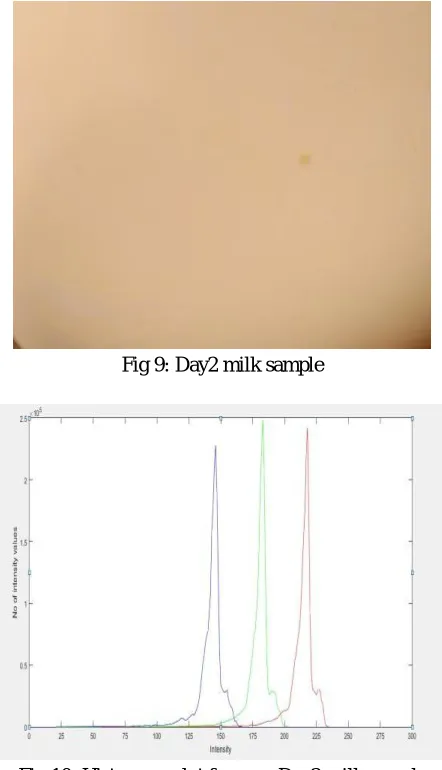
[image:6.612.200.421.293.678.2]Fig 9: Day2 milk sample
Fig 10: Histogram plot for pure Day2 milk sample
377
©IJRASET: All Rights are Reserved
IV. CONCLUSION
Milk is one of the highly consumed food product and also the product that is adulterated easily. Up to 68.2% of India’s milk is adulterated. Milk is adulterated by various means and it is hazardous to human health. The traditional methods of testing the adulterant are time consuming, less accurate and causes wastage. This paper proposes an innovative idea of detecting adulterants by using a system based on Image processing. This method has advantage of being non-intrusive and hence the wastage of milk sample is reduced leading this system to be accurate and efficient.
REFERENCES
[1] Moupali Chakraborty, Student Member, IEEE and Karabi Biswas, Member, IEEE.” Limit of detection for five common adulterants in milk: A study with different fat percent “1558-1748 (c) 2017 IEEE.
[2] Moupali Chakraborty, Dina Anna John and Karabi Biswas, Member, IEEE Electrical Engineering Department Indian Institute of Technology, Kharagpur, West Bengal, India.” A Statistical Study of Detergent and Shampoo Adulterated Milk Detection System –” 978-1- 5090-3646-2/16/$31.00 ©2016 IEEE.
[3] K H Joshi, A Mason, A Shaw, O Korostynska, J D Cullen, A Al-Shamma’a Built Environment and Sustainable Technologies (BEST) Research Institute, School of Built Environment, Liverpool John Moores University, Liverpool, L3 3AF, UK. “Online Monitoring of Milk Quality using Electromagnetic Wave Sensors A microwave sensor application for classification of milk and detecting adulteration” 978-1-4799-6314-0/15$31.00©2015 IEEE.
[4] Aditya Dave Dishant Banwari, Sumit Mansinghani Satyam Srivastava Shashikant Sadistap, Birla Institute o/Technology and Science (BITS) Goa Campus “Ultrasonic Sensing System for detecting water adulteration 978-1-5090-2597-8/16/$31.00 ©2016 IEEE.
[5] Rathin Gupta, Shikha Wadhwa, Ashish Mathur, and Ashwani Kumar Dubey “Designing of a Microelectrode Sensor based Label Free Milk Adulteration Testing System (MATS)” 1558-1748 (c) 2017 IEEE.
[6] Siuli Das, Mulinti Sivaramakrishna, Manideepa Dey, Bhaswati Goswami, and Karabi Biswas Department of Instrumentation and Electronics Engineering, JU, Kolkata, India Department of Electrical Engineering, IIT Kharagpur, India “Performance of a Constant Phase Element (CPE) sensor to detect adulteration in cow-milk with whey “978-1-4244-5335-1/09/$26.00 ©2009 IEEE.
[7] Chirantan Das, Subhadip Chakraborty, Anupam Karmakar, Sanatan Chattopadhyay Department of Electronic Science University of Calcutta Kolkata- 700009, India.” On-chip Detection and Quantification of Soap as an Adulterant in Milk Employing Electrical Impedance Spectroscopy”IEEE 2017.
[8] Maur´ıcio Moreira, Jose´ Alexandre de Franc¸a, Dari de O. Toginho Filho, Vanerli Beloti, Alberto K. Yamada, Maria Bernadete de M. Franc¸a, Lucas de Souza
Ribeiro “A Low Cost NIR Digital Photometer Based on InGaAs Sensors for the Detection of Milk Adulterations with Water” 1530437X (c) 2015 IEEE.
[9] C.S.Satish,Girija B.M,Zumair.K,Arun kumar.S, K.B. Ramesh,Vishnumurthy K A “.Design of portable electronic instrument for detection of urea in milk by fabrication of urea sensor using ZnO nanoparticles” 978- 1-5090-0774-5/16/$31.00 © 2016 IEEE.