Survey of Various Advanced Video Compression
and Encryption Techniques
C. Dhanalakshmi1, Dr. K. Mahesh2
1
Mphil Research Scholar, Department of Computer Science, Alagappa University, Karaikudi, Tamilnadu, India 2
Professor, Department of Computer Applications, Alagappa University, Karaikudi, Tamilnadu, India
Abstract: In recent decades, video compression has become the primary focus of intensive studies. Besides there is a great development in video compression technique in these days; and this technique is used in large number of applications. Video compression techniques is used to reduce and remove the less important video data and so the digital video data will be sent effectively and received over a network and stored on computer disks. In this paper, the research is set out with an idea about various techniques available for video compression. Nowadays, numerous video compression techniques were introduced. Those are with significant compression techniques, a vita land the reduced file will be gained without any loss in effect in the visual quality. H.265/HEVC exhibits higher improvement in coding performance over its predecessors. These are both VCEG and MPEG articulating the next generation norms. The overview of the advancement of these next-generation video coding initiatives and current upcoming video coding techniques was provided in this research work. Several papers and research materials were published related to these subject and some of these are taken for this research study. This survey is conducted to define the different fundamental methods available for video compression; video compression techniques application strategies ; different generations; the upcoming video compression techniques and trends; various issues parallel with the emerging technologies.
Keywords: H.265/AVC, Video Codec, KTA, MPEG, VCEG, Video Compression, High Efficiency Video Coding (HEVC)
I. INTRODUCTION
motivations. First is that, when applications are launched that will utilize the emerging new standards, transcoder ought to be ready to promote interoperability for the legacy video encoded in H.264/AVC format. Second is to control of the higher rate distortion performances of the HEVC, at the time of straight migration of video format due to abundant existence of video content encoded in the H.264/AVC format.
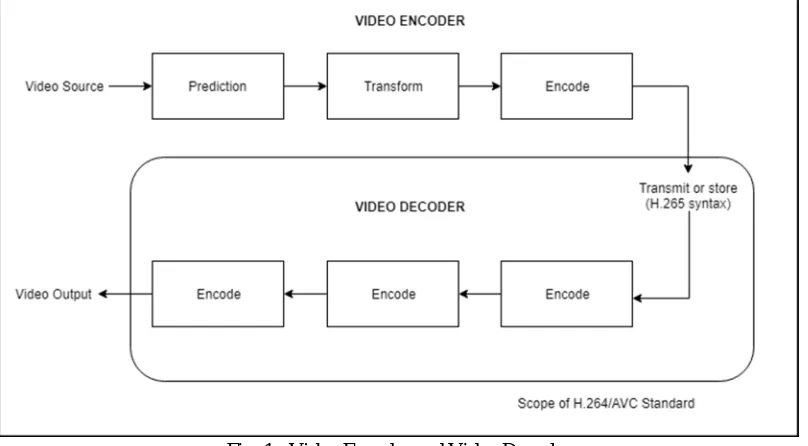
Fig. 1 : Video Encoder and Video Decoder
This whole process is described in fig.1. The fact is,encoding is more complex than decoding. Because of these reasons research works and further efforts of implementation are highly focused on encoding.
Transcoder is used to convert from one compressed bit stream to another compressed bit stream. At the time of transcoding several properties may change: the video format, the bitrate of the video, the frame rate, the spatial resolution, coding tools used and even the insertion of new information on the video, such as watermarking, hidden data or a layer for error resilience. There is a possibility to make use of the trivial transcoder approach, which consists of whole decoding the primary bitstream with completely re-encoding in the final targeted bitstream. If any information found in the source bitstream does not used, then this approach will be inefficient from the complexity point of view.
The discussion view of this survey is explained below: Section II, where survey of literature is mention. Sections III, which contains various methods used for compressing video and transcoding from H.264 to HEVC are described. In section V conclusion is discussed.
II. LITERATURESURVEY
In literature survey, this research work have spread light on various authors [1-4] published various results of different transcoding techniques for HEVC. Transcoding, which is done on the basis of mode mapping [1] is implemented to get more stable results over wide range of sequences. As there are very large numbers of modes in HEVC, mode mapping is a significant technique of transcoding. Higher speed for transcoding will be achieved through machine learning technique [2]. For complexity reduction, the new codec based on complexity scalable technique is introduced [3]. Reduction in transcoding time is done by coding unit classification technique with background modeling [4].
Lili Hsieh et al. [6] have projected two efficient fast motion estimation algorithms with a two-stage predictive search on the basis of joint patio temporal correlations are proposed to shorten the confusion in searching. In the first stage, a plain form of research is undertaken from motion vectors related with six spatial and temporal blocks, further attempts to find the origin of required search range and is highly connected with the global optimum. Then second stage, searches are done with theblock-based gradient and with predictive partial search algorithms were used to do search vividly the required range from the point of starting for the best motion vector. Results of simulation have shown that the algorithms have vehemently reduced the number of checked points to 1.55% and 0.78% as like the complete search method and provides a great improvement in performance in terms of computational complexity, PSNR and bit rates as like full search and some authorized search methods.
N.Geetha and K.Mahesh [18] In this research work the author proposes Rijndael Reflector State algorithm. In this algorithm the author increases steps in the former rijndael algorithm. In rijndael algorithm there are four transformations in each round. In each round the author add fifth step in four transformations. In the fifth transformation the author interchanges the diagonal element of the state array. But it cannot be applicable for large size files.
III. VARIOUSVIDEOCOMPRESSINGMETHODS
A. Basic Techniques
Video coding standards are mainly based on the motion prediction and discrete cosine transform produce block artifacts at low data rate. To decrease the blocking artifacts a lot of work with the usage of post processing techniques has been done . Valid number of works are undertaken to investigate the purpose of wavelets in video coding. To reduce blocking artifacts mainly two directions are there: 1 In the first one we have to code the prediction error of the hybrid scheme using the DWT. 2 The second one is there to fill 3-D wavelet decomposition.
With these approaches we have reported improvements of coding efficiency in regards with the hybrid schemes. These schemes are available there to execute further functionalities like scalability and progressive transmission. It is also included in one of the approaches which projects major improvements with the hybrid approach. The approach is the combination of affine motion compensation. Data rate ranging between 20 and 50% are squirrel with the help of model, H.263+. This corresponding gains in PSNR are ranging from 3 to 0.8 dB.
B. Video Compression Standards
Video Compression, explains a form of decreasing the data applicable to encode digital video content. The reduction in data translates provide various benefits like reduced storage requirements and little transmission bandwidth requirements, for a video clip content.
Video compression technique indulges in redundant of information, which is not considered to be important to the video content, and an effective video compression codec (format) is one which provides the beneficiary things mentioned former: without any loss in the degradation of visual experience of that video content, post compression, and without requiring significant hardware overhead to achieve the compression.
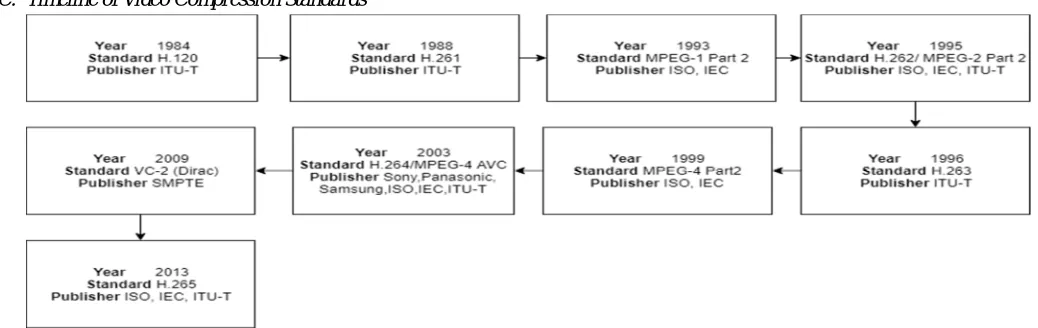
[image:3.612.42.561.551.715.2]D. Video Codec
A video codec, an electronic circuit or software, which is used to reduce or increase the size of digital video. It transfers raw (uncompressed) digital video into a compressed form or vice versa.
In the term of video compression, “codec” represents concatenation of “encoder” as well as “decoder”—a device that is used for the purpose to only reduce or decrease is typically called an encoder, and one that only decompresses is a decoder.
The compressed or reduced data format, conforms to a best form of video compression specification. This form of compression is little loss, which means that the compressed video lacks some information in the original video.
MPEG (Motion Picture Experts Group) is one of the most reputed thing in the families in video codec, and it is the most widely used video format. The MPG, MPE, MPA, M15, M1V, MP2 etc. are all branches of this family. MPEG format, includes MPEG video, MPEG audio and MPEG (video, audio synchronization) of three parts, MP3 (MPEG-3) audio files is a typical application of the MPEG audio, video include MPEG-1, MPEG-2 and MPEG4.
[image:4.612.60.550.323.724.2]1) MPEG-1 2) MPEG-2 3) MPEG-4 4) DivX 5) XviD 6) X264
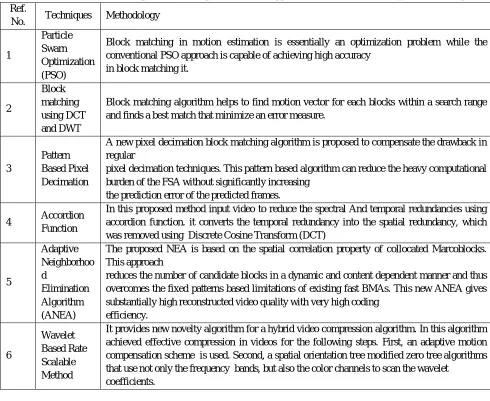
Table 1. Summary the ideo compression techniques, its areas of application and the, methodology of the techniques. Ref.
No. Techniques Methodology
1
Particle Swarn Optimization (PSO)
Block matching in motion estimation is essentially an optimization problem while the conventional PSO approach is capable of achieving high accuracy
in block matching it.
2
Block matching using DCT and DWT
Block matching algorithm helps to find motion vector for each blocks within a search range and finds a best match that minimize an error measure.
3
Pattern Based Pixel Decimation
A new pixel decimation block matching algorithm is proposed to compensate the drawback in regular
pixel decimation techniques. This pattern based algorithm can reduce the heavy computational burden of the FSA without significantly increasing
the prediction error of the predicted frames.
4 Accordion
Function
In this proposed method input video to reduce the spectral And temporal redundancies using accordion function. it converts the temporal redundancy into the spatial redundancy, which was removed using Discrete Cosine Transform (DCT)
5 Adaptive Neighborhoo d Elimination Algorithm (ANEA)
The proposed NEA is based on the spatial correlation property of collocated Marcoblocks. This approach
reduces the number of candidate blocks in a dynamic and content dependent manner and thus overcomes the fixed patterns based limitations of existing fast BMAs. This new ANEA gives substantially high reconstructed video quality with very high coding
efficiency. 6 Wavelet Based Rate Scalable Method
It provides new novelty algorithm for a hybrid video compression algorithm. In this algorithm achieved effective compression in videos for the following steps. First, an adaptive motion compensation scheme is used. Second, a spatial orientation tree modified zero tree algorithms that use not only the frequency bands, but also the color channels to scan the wavelet
IV. CONCLUSION
Although various algorithms proposed for video compressions, numerous challenges remain unanswered. In this paper, survey has been taken in various methods for the purpose of video compression that have seen, that all the schemes discussed above Huffman , Runlength, PSO, Block matching using DCT and DWT, Active mesh based Motion Compensation Algorithm, PCA based method, Pattern Based Pixel Decimation, Accord Function, ANEA, Wavelet based Rate Scalable method and so on. Also we have extended our research to analyze the different video compression techniques and latest technique (H.265/HEVC) are there for compression of videos is also included. It is seen here that H.265/ HEVC has developed by these two ISO/IEC (MPEG) and ITU-T (VCEG) organizations. At present, many new schemes are proposed in this area of video compression. This survey paper will extend its hand for finding the best methods in video compression of current trends and next level of problem identification technique in order to overcome by reducing the shortcoming in the existing method.
REFERENCES
[1] E. Peixoto, B. Macchiavello, E. M. Hung, A. Zaghetto, T. Shanableh, E. Izquierdo, “An H.264/AVC to HEVC video transcoder based on mode mapping,” in Proc. IEEE Int. Conf. Image Process. (ICIP), pp. 1972–1976, 2013.
[2] E. Peixoto, B. Macchiavello, E. M. Hung, “Fast H.264/AVC to HEVC transcoding based on machine learning,” in Proc. International Telecommunications Symposium (ITS), pp. 1-4, 2014.
[3] E. Peixoto and E. Izquierdo, “A complexity scalable transcoder from H.264/AVC to the new HEVC codec,” in Proc. IEEE Int. Conf. Image Process. (ICIP), pp. 737–740, Sep. 2012.
[4] P. Xinga, Y. Tian, X. Zhang, Y. Wang, T. Huang, “A coding unit classification based AVC to HEVC transcoding with background modeling for surveillance videos,” in Proc. IEEE Int. Conf. Visual Communications and Image Processing (VCIP), pp. 1-6, 2013.
[5] Avishek Sahaa, Jayanta Mukherjee and Shamik Sural, “A neighbourhood elimination approach for block matching in motion estimation”, Signal Processing: Image Communication, Vol. 26, No. 8, pp. 438–454, 2011.
[6] Lili Hsieh, Wen Shiung Chenb and Chuan Hsi Liub, “Motion estimation using two-stage predictive search algorithms based on joint spatio-temporal correlation information”, Journal on Expert Systems with Applications, Vol. 38, No. 9, pp. 11608– 11623,2011
[7] P. Pirsch et al., VLSI architectures for video compression––a survey, Proceedings of the IEEE 83 (2) (1995) 1055– 1070. [8] Bhojani, D.R. “4.1 Video Compression” (PDF). Hypothesis.Retrieved 6 March 2013.
[9] Ismail Avcibas, Nasir Memon, Bulent Sankur, Khalid Sayood,“ A Progressive Lossless / Near Lossless Image Compression Algorithm,”IEEE Signal Processing Letters, vol. 9, No. 10,pp 312-314, October 2002.
[10] Rafeal C. Gonzalez, Richard E. Woods DIGITAL IMAGE PROCESSING 3rd edition.
[11] Jian-Jiun Ding and Jiun-De Huang, “Image Compression by Segmentation and Boundary Description”, Master‟s Thesis,National Taiwan University, Taipei,
2007.
[12] Diffuse (2002). Guide to image compression, Retrieved October 23, 2003, from http:/www.diffuse.org/compress.Html
[13] Rajeshwar Dass , Lalit Singh, Sandeep Kaushik , Video Compression Technique INTERNATIONAL JOURNAL OF SCIENTIFIC & TECHNOLOGY RESEARCH VOLUME 1, ISSUE 10, NOVEMBER 2012.
[14] Aman Gupta, Dinesh Goyal, Naveen Hemrajani, Performance Analysis of Various Video Compression Techniques International Journal of Science and Research (IJSR), India Online ISSN: 2319-7064.
[15] S. Immanuel Alex Pandian,Dr.G. Josemin Bala,Becky Alma George, A Study on Block Matching Algorithms for Motion Estimation,International Journal on Computer Science and Engineering (IJCSE)
[16] Lai-Man Po and Wing-Chung Ma, A Novel Four-Step Search Algorithm for Fast Block Motion Estimation IEEE Trans. CIRCUITS AND SYSTEMS FOR VIDEO TECHNOLOGY, VOL. 6, NO. 3,JUNE 1996.R. E. Sorace, V. S. Reinhardt, and S. A. Vaughn, “Highspeed digital-to-RF converter,” U.S. Patent 5 668 842, Sept. 16, 1997.
[17] Yih-Chuan Lin and Shen-Chuan Tai, Fast Full-Search Block-Matching Algorithm for Motion-Compensated Video Compression IEEE Trans.COMMUNICATIONS, VOL. 45, NO. 5, MAY 1997.