2008
Internet user preferences in relation to cognitive
and affective styles
Georg Meyer
Iowa State University
Follow this and additional works at:https://lib.dr.iastate.edu/rtd
Part of theBusiness Administration, Management, and Operations Commons,Library and Information Science Commons, and thePersonality and Social Contexts Commons
This Thesis is brought to you for free and open access by the Iowa State University Capstones, Theses and Dissertations at Iowa State University Digital Repository. It has been accepted for inclusion in Retrospective Theses and Dissertations by an authorized administrator of Iowa State University Digital Repository. For more information, please [email protected].
Recommended Citation
Meyer, Georg, "Internet user preferences in relation to cognitive and affective styles" (2008).Retrospective Theses and Dissertations. 15368.
by
Georg Meyer
A thesis submitted to the graduate faculty
in partial fulfillment of the requirements for the degree of
MASTER OF SCIENCE
Co-majors: Information Systems, Information Assurance
Program of Study Committee: Anthony M. Townsend, Major Professor
Brian Mennecke Laura Smarandescu
Iowa State University
Ames, Iowa
2008
1453906
TABLE OF CONTENTS
LIST OF TABLES . . . . v
LIST OF FIGURES . . . . vi
CHAPTER 1. OVERVIEW . . . . 1
1.1 Introduction . . . 1
1.2 Purpose of research . . . 2
1.3 Research methodology . . . 2
1.4 Scope and limitations . . . 3
1.5 Plan of presentation . . . 3
CHAPTER 2. REVIEW OF LITERATURE . . . . 5
2.1 Introduction . . . 5
2.2 Research framework . . . 6
2.3 Usability . . . 7
2.4 Persuasion and usability . . . 10
2.5 Logos: cognitive style . . . 10
2.5.1 Need for cognition . . . 11
2.5.2 Myers-Briggs type indicator . . . 14
2.6 Pathos: affective style . . . 15
2.7 Ethos: privacy and security . . . 18
CHAPTER 3. METHODS AND PROCEDURES . . . . 21
3.1 Participants . . . 21
3.2 Materials . . . 21
3.2.1 Survey instruments . . . 21
3.2.2 Experiment web sites . . . 24
3.3 Procedures . . . 27
3.3.1 Phase I . . . 27
3.3.2 Phase II . . . 28
3.4 Analysis . . . 29
3.4.1 Definitions . . . 29
3.4.2 Pooling . . . 29
3.4.3 Hypothesis 1 . . . 30
3.4.4 Hypothesis 2 . . . 31
3.4.5 Hypothesis 3 . . . 31
3.4.6 Hypothesis 4 . . . 32
3.4.7 Hypothesis 5 . . . 32
3.4.8 Hypothesis 6 . . . 33
3.4.9 Hypotheses 7 and 8 . . . 33
CHAPTER 4. RESULTS . . . . 35
4.1 Validation of measures . . . 35
4.1.1 Cronbach’sα . . . 35
4.1.2 Correlation between need for cognition and need for affect . . . 36
4.1.3 Correlation between need for cognition and Myers-Briggs T/F type . . . 36
4.1.5 Differences of independent measures between treatment
condi-tions . . . 36
4.1.6 Difference of means between system usability scores for sites 1 and 2 . . . 37
4.2 Findings . . . 37
4.2.1 Hypothesis 1 . . . 37
4.2.2 Hypothesis 2 . . . 38
4.2.3 Hypothesis 3 . . . 38
4.2.4 Hypothesis 4 . . . 39
4.2.5 Hypothesis 5 . . . 39
4.2.6 Hypothesis 6 . . . 40
4.2.7 Hypotheses 7 and 8 . . . 40
CHAPTER 5. SUMMARY AND DISCUSSION . . . . 42
5.1 Summary . . . 42
5.2 Discussion . . . 43
5.3 Future Research . . . 45
5.3.1 Short-term: improvements and repetition . . . 45
5.3.2 Long-term: click-stream research, adaptive web sites and a mea-sure of information preference . . . 46
5.3.3 Future work relating to information assurance . . . 46
APPENDIX SURVEY INSTRUMENTS . . . . 48
LIST OF TABLES
Table 3.1 Frequencies for Quality of User Password Practices Measure . 24
Table 4.1 Observed Cronbach’sαfor survey instruments . . . 35
Table 4.2 Need for affect andA¯1 . . . 37
Table 4.3 Need for cognition andC¯1 . . . 38
Table 4.4 Myers-Briggs thinking/feeling andA¯1 . . . 38
Table 4.5 Myers-Briggs thinking/feeling andC¯1 . . . 39
Table 4.6 A¯1andC¯1for Myers-Briggs feeling types . . . 39
Table 4.7 A¯1andC¯1for Myers-Briggs thinking types . . . 40
Table 4.8 Need for cognition, privacy concerns and quality of user pass-word practices . . . 41
Table A.1 Need for Cognition Scale (short form) . . . 49
Table A.2 Need for Affect Scale . . . 50
Table A.3 Concern for Information Privacy Instrument . . . 52
Table A.4 Password Survey . . . 53
LIST OF FIGURES
Figure 2.1 Research framework . . . 8
Figure 2.2 Nielsen’s framework . . . 9
Figure 3.1 Web site - cognitive version . . . 25
CHAPTER 1. OVERVIEW
1.1
Introduction
$175 billion was transacted in retail e-commerce in the United States alone in 2007
and this number is set to almost double by 2012. However, in spite of this growth, there
are challenges facing business online, chiefly the challenge of being more appealing to
consumers [Mulpuru, 2008].
In the past decade, a lot of research has been done on what users find appealing
and how web sites can be designed to meet users’ needs better. This is evidenced by
the sheer amount of literature that is now available about usability (both academic and
professional) and the fact that usability engineering has become a career. However,
for the most part, users’ needs are still regarded as homogeneous. In spite of usability
having a large subjective component, the differences in user personalities have not
been given a lot of consideration. Given that two people can view the exact same web
site, designed according to the latest best practices, and have completely opposite
reactions, this is an area deserving of attention.
The primary goal of this study is to shed light on how individual differences
matter and whether they can be used to create web sites and applications with greater
perceived usability for different groups of people.
In addition, as a contribution to information assurance, personality aspects relevant
to privacy concerns and security behaviors - in particular individual password
be taken into account when developing information assurance policy and education.
1.2
Purpose of research
The goal of this study is to provide a foundation for future research into how
catering to different personality styles is possible and can improve the user experience,
persuasiveness and security behavior, leading to a more efficient and safer use of
information systems.
In order to accomplish this goal, this study explores whether differences in
cogni-tive and affeccogni-tive styles account for users’ preferences for one web site over another
from a usability perspective. Specifically, web sites created for individuals with
prefer-ences for cognitive respectively affective messages are investigated.
For information assurance, this study measures individuals’ concerns for privacy
and surveys their individual password practices in order to conclude whether there is
a significant difference in password practices based on cognitive style and concern for
information privacy.
1.3
Research methodology
Existing research into usability, persuasion and relevant dispositional personality
factors is surveyed and reviewed in order to establish a framework and variables
of interest for this study. Based on this framework, the research hypotheses will be
formulated.
Experiments are then designed to apply the developed research hypotheses. This
includes the selection of applicable survey instruments and the development of web
sites that expose subjects to the factors of interest and measure their responses. Also,
Next, the experiment is conducted and the research hypotheses are tested as
described in the design. Validation of the results is performed by calculating reliability
measures and comparing correlations among instruments to other studies. Then, the
results are reported for each specific hypothesis, interpretations are offered and finally
the findings are discussed in a broader context.
1.4
Scope and limitations
The scope of this study is to examine whether web sites with cognitive or
affec-tive appeal result in different perceptions of usability for different personality styles.
The study examines further whether there is a relationship between cognitive style,
individual concerns for information privacy and security behavior.
This research is limited by its choice of survey instruments. Many cognitive style
measures are available, for this research only two popular and easy to administer
ones were selected, the need for cognition and the Myers-Briggs type indicator. An
additional limitation is that no solid survey instrument was available for individual
password practices, therefore an existing academically developed survey was adapted
and the results are regarded with proper caution.
1.5
Plan of presentation
This paper follows a traditional experimental thesis format. Chapter 2 will present
the relevant literature to provide the background for this research. Chapter 3 will lay
out the specifics of the experiment design and research methods, including the choice
of survey instruments, the web design methods, information security considerations
and the statistical methods for hypothesis testing. Chapter 4 will describe validations
5 will summarize this research, discuss the findings in context of each other and
CHAPTER 2. REVIEW OF LITERATURE
2.1
Introduction
Since the dawn of e-commerce, the central research question has been how to
persuade people in an online environment [Shaw et al., 1997]. In 1997, while
out-lining the general research directions for e-commerce, Shaw et al. pointed out that
a critical success factor for e-commerce is an effective interface with the customer.
This requirement has since been subsumed by the broader concept of usability, as is
evident from definitions such as the one found in ISO 9241-11 (describing usability as
the ”effectiveness, efficiency and satisfaction with which a specified set of users can
achieve a specified set of tasks in a particular environment”) [ISO 9241, 1998].
In the past decade, a considerable amount of research has been done on the topics
of how to design web sites and applications for usability in order to achieve persuasion
[Chak, 2002] [Winn and Beck, 2002]. Most of this research has been focused on the
design elements used to create web sites and applications. Borrowing a term from
software architecture, these elements can be referred to as the server-side aspects
[Berson, 1992]. The appeal to investigate these aspects is that they are directly under
the control of developers and content providers and remain the same for every user.
While our understanding is constantly improving on how to provide a better user
experience using server-side means, there is very little research on the client-side
aspects - the differences among users’ personalities with regards to what they perceive
differences are relevant to persuasion, and usability is necessary for persuasion in
e-commerce [Shaw et al., 1997], the investigation of these differences and their impact
on perceived usability are the focus of this thesis.
2.2
Research framework
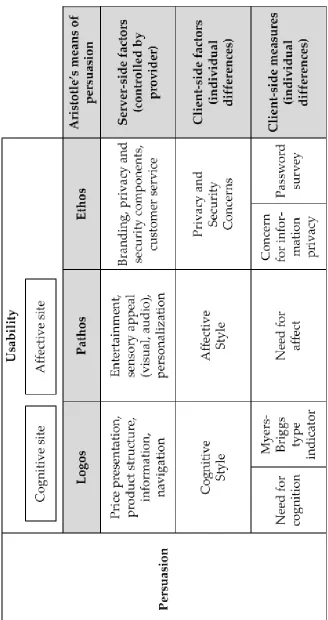
A good starting point for framing this study is the work by Winn and Beck in which
they researched the relationship between usability and persuasiveness for the design
elements that make up a web site [Winn and Beck, 2002]. They made the argument
that e-commerce sites and the contained design elements serve a rhetorical function as
means of persuading customers to explore and interact with a site, with the intention of
generating a purchase. Thus, Winn and Beck developed a research taxonomy founded
on classical rhetoric by categorizing the design elements according to three means
of persuasion described in Aristotle’sRhethoric[Aristotle and Kennedy, 2006]. These
three means are logos, the appeal to logic; pathos, the appeal to emotion; and ethos,
the appeal to credibility.
As mentioned before, Winn and Beck focused on the server-side aspects,
disre-garding the differences among users. For logos, they were concerned with factors
such as price presentation, product structure and information and site navigation.
For pathos, they investigated the impact of entertainment value, sensory appeal and
personalization. For ethos, their elements of interest were branding, privacy and
security components and customer service channels [Winn and Beck, 2002].
This research complements their framework by adding the client-side
perspec-tive. To address the appeal to logic, cognitive style is considered since it describes
the aspects of personality relating to thought processes, perception and problem
solving. Cognitive style will be measured using the need for cognition instrument
appeal to emotion, an individual’s affective style - the personality factors relating to
emotion - is investigated, using the need for affect instrument [Maio and Esses, 2001].
For appeal to credibility, personal concerns about privacy are observed and measured
using the concerns for information privacy (CFIP) survey [Smith et al., 1996] and the
password survey [Martinson, 2005].
The resulting research framework is shown in Figure 2.1. Its contents are elaborated
in greater detail in the following sections, starting with a discussion of usability to
clarify its meaning for the purposes of this study. Next, the relationship between
usability and persuasion will be highlighted. Then, the existing research relating to
the three means of persuasion (logos, pathos and ethos) will be reviewed and related
to the framework. Finally, the research hypotheses are derived.
2.3
Usability
Since usability is the dependent variable for most of the research presented here, a
clarification of the term for use in this paper is in order.
At first glance, a clearly defined concept of usability appears elusive; there are many
different definitions and even more opinions. For example, the International Standards
Organization (ISO) defines usability as ”effectiveness, efficiency and satisfaction with
which a specified set of users can achieve a specified set of tasks in a particular
environment.” [ISO 9241, 1998] Bevan et al. explain it as the ”user’s view of software
quality” or ”quality of use” that can be achieved by adding or changing design
elements [Bevan et al., 1991].
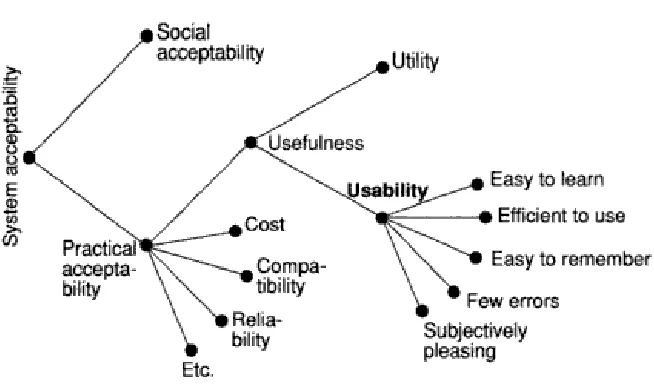
Nielsen’s framework (Figure 2.2) relates to the ISO definition and provides a more
specific context [Nielsen, 1994]: usability is an aspect of a system’s usefulness and
complements the system’s utility (the system’s ability to do a certain task). It captures
Figur
e
2.1
Resear
ch
[image:16.612.154.482.89.709.2]Figure 2.2 Nielsen’s framework
of errors and last but not least if the system is subjectively pleasing (satisfaction).
In summary, usability consists of all the relevant factors for the user to be able to
accomplish a task with the system.
Since this research is interested in individual differences, it focuses on the subjective
perception of usability rather than objective measures. Attempting to use objective
measures would introduce a limitation to this study, because objective measures of
usability are very context- and domain-specific, for instance counting the number of
letters written using a word processor [Brooke, 1996].
To summarize, for the purposes of this study usability (and the adjective ’usable’)
refers to users’ subjective perception of whether a web site is easy to use and enables
them to accomplish their goals related to the site. As described in more detail in the
following section, a negative perception in this regard takes away from the persuasive
2.4
Persuasion and usability
The relationship between persuasion and usability can be described using
Herzberg’s hygiene-motivational two-factor theory [Herzberg et al., 1959]. Herzberg
describes two types of factors: hygiene and motivational factors. Hygiene factors
cause dissatisfaction when they are absent (for example low salary in the workplace).
In mathematical terms, these factors are necessary but not sufficient. Motivational
factors, on the other hand, bring satisfaction (such as recognition in the workplace).
While developed for assessments in the workplace, there is precedent for adapting
Herzberg’s two-factor theory to web design and usability [Zhang et al., 2000].
Usabil-ity can be seen as playing a role as a hygiene factor. Its absence can diminish a user’s
desire (at least to proceed on a site) or in worst case prevent them from performing
their action (for example through errors), counteracting persuasion.
Sutcliffe argues that the effectiveness of a web site needs to be determined by more
than its operational ease of use, it should also consider its attractiveness. Therefore,
according to Sutcliffe, usability also needs to be a motivational factor encouraging
users to explore a site and make purchases [Sutcliffe, 2002], i.e. persuading them.
For such persuasion to be effective, the three means of persuasion need to be
considered (referring back to the research framework, see Figure 2.1). This has been
demonstrated on the server side by Winn and Beck [Winn and Beck, 2002] and in
this study is extended by the individual difference aspects, especially cognitive and
affective styles, a detailed discussion of which follows.
2.5
Logos: cognitive style
The greek word ”logos” provides the root for the English word ”logic” and the
Aris-totle used the term ”logos” to describe the appeal to logic when employing
per-suasion, i.e. using reason and approaching persuasion through cognitive means
[Aristotle and Kennedy, 2006]. Therefore, in the research framework, logos is
con-nected to cognitive style - the aspects of personality that determine how people think,
make decisions and solve problems. Cognitive style is a broad concept and for this
research, two particular aspects of it will be evaluated: need for cognition and the
Myers-Briggs thinking/feeling type.
2.5.1 Need for cognition
The need for cognition the tendency of a person to engage in and enjoy thinking
-is an aspect of cognitive style of particular relevance to th-is study. The reason for
this relevance is that the need for cognition closely corresponds to differences in how
people can be persuaded effectively. High need for cognition individuals are more
likely to be persuaded by using facts and logical, relevant arguments because they
have more intrinsic motivation to think and therefore are likely to make a greater effort
to process information they receive than their low need for cognition counterparts
[Cacioppo and Petty, 1982] [Cohen, 1957]. Aristotle referred to the approach of using
facts and logical argument as the appeal to logic, Cacioppo termed it the central route
to persuasion. In this study, this central route approach is used to design a web site
with cognitive appeal, i.e. it is hypothesized that such a site will be found more usable
by individuals with a high need for cognition.
Opposed to the central route to persuasion is the peripheral route, which offers
cues alongside the arguments, such as celebrity endorsements or attractive people
advertising a product or service. This route is more likely to succeed with individuals
who possess a low need for cognition since it doesn’t require the cognitive effort of
be used in conjunction with affective elements like imagery to develop an affective
site for this study.
The discovery of the need for cognition and its relationship to persuasion has
triggered a lot of related research in different areas. For instance, research in marketing
has indicated that need for cognition plays an important role in whether pricing
information is processed accurately and therefore influences purchasing decisions.
Individuals with low need for cognition individuals are less likely to buy products
with relative discounts and more likely to buy products with relative surcharges than
their high need for cognition counterparts [Hyeong and Kramer, 2006]. Therefore,
when catering to a low need for cognition audience, it may make sense to present
relative surcharges separately, but not discounts. This serves as an example for the
importance of considering cognitive style when designing web sites, as suggested in
the logos column of the research framework (Figure 2.1).
In management, the need for cognition has been shown to correlate positively
and significantly with effectiveness in complex problem solving. 36 managers were
assigned to work on a complex problem scenario using an elaborate top-management
computer simulation and it was found that the managers with higher need for
cog-nition obtained more information and made decisions resulting in more favorable
outcomes (as measured by simulated cash balance and sales). Furthermore, their
decisions resulted in less crises (resulting from taking insufficient or excessive actions)
during the simulated 12 month period compared to their lower need for cognition
counterparts [Nair and Ramnarayan, 2000]. This experiment provides further
evi-dence that catering to cognitive style in relation to usability is sensible, for example by
ensuring sufficient information availability for high need for cognition individuals.
In the area of human computer interaction, Crystal and Kalyanaraman created an
experiment with four versions of a simple information-retrieval website along two
labeling and slow response time were taken as examples of experiences in real Internet
usage that require increased cognitive effort, making such sites less appealing for
low need for cognition individuals. It was found that indeed the need for cognition
correlated positively with attitude toward the sites as well as perceived speed and ease
of information location [Crystal and Kalyanaraman, 2005], showing that cognitive
style does affect the perception of usability. However, the effects described in Crystal
and Kalyanaraman’s study relate only to very specific aspects of usability and need to
be confirmed using a measure of general perceived usability.
Going in a similar direction, Amichai-Hamburger et al. researched the hypotheses
whether high need for cognition individuals are likely to use more hyperlinks, stay
longer on a given site or are less affected by a website’s aesthetic appearance. Only the
last hypothesis was confirmed, as expected the aesthetic component is more peripheral
and only impacted low need for cognition individuals’ perception of the site. They
also found that individuals with low need for cognition preferred an interactive site
over a flat site with no hyperlinks, even when both presented them same information
[Amichai-Hamburger et al., 2007]. This is again confirmation that need for cognition
impacts the perception of usability. Moreover, it shows that aesthetic aspects and
navigation design that are traditionally considered part of making web site usable
appear to affect only a subset of the user population.
Faiola and Matei confirmed that users can perform information-seeking tasks faster
using web content created by a designer from their own culture than by another. They
used an American and a Chinese web designer to create a business training web site
that was typical for people of their national origin. Then, each site was translated into
the other language. As test groups, they chose a group of Chinese and a group of
American students. Both groups were split in half. One half was exposed to the web
site created by their native web designer (for example Chinese students saw the site
by the foreign web designer (for example Americans saw the web site created by
the Chinese web designer but translated into English). The groups were then asked
to retrieve information from the web site to answer questions. Both groups were
significantly faster in accomplishing the tasks using the version designed by their
native designer rather than the foreign one, giving an indication that web sites geared
toward a user’s cognitive style are experienced as more usable [Faiola and Matei, 2005].
The Faiola and Matei study relied solely on the user’s origin as a measure of cultural
cognitive style and did not include the use of any other cognitive style instruments.
This study will extend their findings by investigating whether they also apply to web
sites designed for users with a cognitive or affective preference. Their study also makes
a case for using cognitive style measures going beyond the need for cognition, in their
case a cultural variable was used, in this research the Myers-Briggs type indicator is
included as another measure of cognitive style.
2.5.2 Myers-Briggs type indicator
The Myers-Briggs type indicator is a very widely used cognitive style instrument.
It determines an individual’s preferences for one side of each of these four
dimen-sions: extroverted/introverted (E/I), sensing/intuitive (S/N), thinking/feeling (T/F),
judging/perceiving (J/P). The four preferences combined determine a person’s
Myers-Briggs type, for example ESTJ. The preference of particular interest to this study is the
one between thinking and feeling - Myers-Briggs thinkers take a rational approach to
decisions and rely on logic and therefore would be hypothesized to prefer a cognitively
appealing site, whereas feelers take an empathic approach and would therefore be
expected to show a preference for affective sites [Myers, 1980]. The question whether
the Myers-Briggs type discriminates between cognitive and affective preferences with
While there has been some research connecting cognitive style to aspects of
usabil-ity (such as [Amichai-Hamburger et al., 2007] and [Crystal and Kalyanaraman, 2005]),
the investigation of affective style in the same context appears to be a novel approach.
In the following section, it will be shown how affective style is not only relevant but
virtually necessary to obtain a comprehensive picture of individual differences relating
to usability.
2.6
Pathos: affective style
In modern use, the term pathos describes how powerfully a work of art or an
expe-rience invokes emotions (especially of pity and compassion) [Merriam-Webster, 2008].
Similarly, Aristotle used the term ”pathos” in rhetoric to describe all the aspects that
emotionally moved people to act or change their opinion [Aristotle and Kennedy, 2006].
Both meanings are applicable to web sites since such sites offer users an experience.
Positive examples are humorous web sites such as the ones showing pictures of cats
with funny captions that Internet users frequently share as jokes, while a negative
example could be a site with such poor usability that causes a user frustration or even
anger.
Similar to cognitive style that accounts for a person’s behavior in relation to
per-ception, thought processes and problem solving, there are aspects of personality that
describe a person’s behavior in relation to emotions. These aspects are described as
af-fective style. In particular, analogous to the individual differences in the tendency to
en-gage in and enjoy thinking [Cacioppo and Petty, 1982], there are such differences when
it comes to the desire to experience or avoid emotions. Maio and Esses investigated
this latter tendency and gave it the name ”need for affect” [Maio and Esses, 2001].
They found that individuals with a high need for affect find the experience of emotion
by choosing emotional movies or by taking more extreme attitudes when it comes
to different issues. This aspect of a user’s personality might also motivate them to
seek out more affective web sites and to prefer them over others, making a case for
investigating affective aspects of usability and persuasion.
The importance of considering affective style (pathos) is further underlined by
cognitive-experiential self-theory, which proposes that in addition to the cognitive
information processing system, people also possess an experiential system. While the
cognitive system is based on rationality, the experiential system takes a more holistic
view and is emotionally driven. Cognitive-experiential self-theory further asserts
that the two information-processing systems run in parallel but have interactions
[Epstein, 1998]. These interactions have important implications regarding attitude
formation and change, as shown by Edwards.
Edwards conducted experiments instilling either affect or cognition-based attitudes
in her subjects. Affect-based attitudes were obtained by first exposing the subjects to a
subliminal affective image. After attitudes were formed, the subjects were exposed
to counterattitudinal communication, again using either cognitive or affective means.
The study found that affect-based attitudes are more prone to change when confronted
through affective means, whereas cognition-based attitudes can be changed equally
through affective or cognitive means [Edwards, 1990]. Regarding the subjective
per-ception of usability as an attitude, Edwards’ research demonstrates the need for both
cognitive and affective sites in order to change perceived usability significantly.
Furthermore, the interactions between cognitive and affective information
pro-cessing described by cognitive-experiential self-theory reveal themselves through
individual preferences for a message type, as findings by Haddock et al. indicate.
They had subjects complete the need for cognition and need for affect instruments and
focused on two groups: those with high need for cognition and low need for affect and
preference, while the second group was regarded as preferring affective information.
In one of the experiments, the two groups were presented with cognitive and affective
messages regarding a fictional animal. The affective message was presented as a
transcript of an encounter with the animal, using descriptives such as likening the
animal’s sound to a kitten’s purr. The cognitive message was presented as an
ency-clopedia entry presenting positive factual information, for example describing the
animal as highly adaptable and very social. It was shown that a message matching the
individual’s information preference resulted in a significantly more favorable attitude
than a mismatched message [Haddock et al., 2008]. This supports the investigation of
the research question whether cognitive or affective preferences have an impact on the
usability perception for cognitive resp. affective sites.
Additional evidence that cognitive and affective styles both need to be considered
is provided by Lin et al. Using film clips, they manipulated the mood of their study
participants to either a happy or sad state and then asked them to indicate whether
they would make a risky or safe choice in different consumer choice scenarios. The
study found a significant difference in risk-averseness between the happy and sad state
for low need for cognition subjects, but a much smaller difference for the high need
for cognition participants. This lead Lin et al. to the conclusion that need for cognition
mediates the effects of emotion on risk-taking behavior relating to consumer choices
[Lin et al., 2006]. This conclusion implies that when designing affective websites, the
mediating function of need for cognition should be taken into account.
Finally, in addition to cognitive and affective styles, the research framework
2.7
Ethos: privacy and security
Aristotle uses the term ”ethos” to refer to the appeal to credibility, a meaning
derived from the original meaning of ”moral” or ”showing moral character”, similar
to the English word ethics which has the same root. The meaning was then extended
to include knowledge and expertise. The basic idea is that the persuasive power of
ethos comes from the audience trusting the source [Kies, 2008].
In the research framework, it can be seen that Winn and Beck included elements
like brand as well as privacy and security components in the server-side aspects for
usability relating to ethos. Similarly, this study explores the client-side aspects - the
individual differences - by investigating privacy concerns and security practices.
How-ever, while these aspects are relevant for persuasion, they have a different relationship
with usability than cognitive and affective style. The means to protect privacy and
provide security are usually in conflict with usability.
As Tjora et al. showed by the example of a secure e-mail system for message
exchange between physicians and patients, while users consider security necessary, it
decreases the usefulness of the system due to the added effort required on the users’
side [Tjora et al., 2005]. This additional effort seems to be primarily of a cognitive
nature (for instance remembering a password), so it is plausible to theorize that
individuals with a higher need for cognition will be more likely to invest the extra
effort since it comes more naturally. This will be subject to investigation in this study
to establish whether individual differences ought to be considered in information
assurance as well.
It needs to be noted the relationship between the concern for information privacy
and usability has not been tested in this study but will be recommended for future
2.8
Research hypotheses
The question this study seeks to answer is if it is possible to design sites that are
found to be more usable by individuals with a certain cognitive or affective style. For
this, two versions of a web site will be designed, one with cognitive appeal and one
with affective appeal, similar to the study researching whether people with a certain
information preference (cognitive or affective) form more favorable attitudes based on
a cognitive or affective messages [Haddock et al., 2008]. In line with that study, this
study employs the need for cognition and need for affect as measures for cognitive
respectively affective style. The outcome this study is interested in is the subjective
perception of usability in general, not a specific usability measure like perceived speed
of the site as was investigated in [Crystal and Kalyanaraman, 2005].
Thus, the research hypothesis are as follows:
Hypothesis 1. Individuals with a high need for affect will find an affective web site
more usable than individuals with a low need for affect.
Hypothesis 2. Individuals with a high need for cognition will find a cognitive web
site more usable than individuals with a low need for cognition.
Based on the descriptions of the Thinking and Feeling types for the Myers-Briggs
type indicator, thinkers look for facts and logic and are able to analyze objectively and
critically, which is similar to high need for cognition. Feelers on the other hand are
subjective and let personal feelings and popular opinions enter into decision making
and are therefore expected to find the affective site more appealing [Myers, 1980].
Hypothesis 3. Individuals with a Myers-Briggs feeling preference will find an
affec-tive web site more usable than individuals with a Myers-Briggs thinking preference.
Hypothesis 4.Individuals with Myers-Briggs thinking preference will find a
cogni-tive web site more usable than individuals with a Myers-Briggs feeling preference.
discriminates between the favorable view of usability for an affective over a cognitive
web site. Haddock et al. tried to achieve a similar discrimination by separating
individ-uals into low need for cognition/high need for affect and high need for cognition/low
need for affect groups. However, their approach necessarily excludes a large part of
the population (the low/low and high/high groups), while everybody has either a
thinking or feeling preference in their Myers-Briggs type.
Hypothesis 5. Individuals with a Myers-Briggs feeling preference will find an
affective web site more usable than a cognitive web site.
Hypothesis 6.Individuals with Myers-Briggs thinking preference will find a
cogni-tive web site more usable than an affeccogni-tive web site.
For information assurance purposes, it is investigated whether need for cognition
has a relationship with password practices as described in [Martinson, 2005]. The
assumption is that individuals with high need for cognition will be more likely to use
good practices, since they will not mind the extra cognitive effort as much. Confirming
this hypothesis would suggest that individual differences should be taken into account
in the information security domain.
Hypothesis 7. Individuals with higher need for cognition employ better password
practices.
Finally, it appears reasonable to assume that individuals with a greater concern
for information privacy employ better password practices in an effort to protect their
privacy. This is going be verified and if found to be true would also substantiate taking
individual differences into account for information assurance.
Hypothesis 8. Individuals with a high score for privacy concerns employ better
CHAPTER 3. METHODS AND PROCEDURES
3.1
Participants
94 undergraduate students (34 females, 60 males, age: M = 22.13, SD = 3.07) from
Iowa State University enrolled in marketing or management information systems
classes participated in this study. Participation was voluntary and compensated with
partial course credit that could also be earned by participating in other studies.
3.2
Materials
3.2.1 Survey instruments
3.2.1.1 Need for cognition scale (short form)
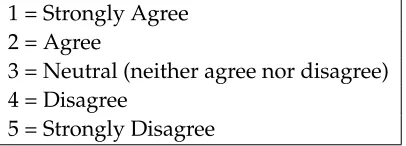
The short form need for cognition scale instrument consists of 18 items such as ”I
would prefer complex to simple problems” or ”I only think as hard as I have to” with
half of them being reverse scored to avoid response bias. A Likert-type scale from 1 to
5 was employed, with 1 being ”extremely uncharacteristic of you (not at all like you)”
and 5 being ”extremely characteristic of you (very much like you)”.
This instrument is a trimmed version of Cacioppo and Petty’s original 34-item
need for cognition scale instrument [Cacioppo and Petty, 1982] published in 1982.
Cacioppo, Petty and Kao showed that the short version consisting of 18 items retained
analysis indicated that the shorter scale appears to be more efficient. Sadowski and
Gulgoz independently confirmed the internal consistency and test-retest reliability
for the short form [Sadowski and Gulgoz, 1992] and it has since been widely used in
related research, for example in [Lin et al., 2006], [Nair and Ramnarayan, 2000] and
[Crystal and Kalyanaraman, 2005].
3.2.1.2 Need for affect scale
The need for affect scale is made up of 26 items, for example ”Displays
of emotions are embarrassing” and ”Strong emotions are generally beneficial”
[Maio and Esses, 2001]. Again, half of the items were reverse-scored to avoid response
bias and the same scale was used as for the need for cognition short form. Maio and
Esses reported very high test-retest reliability [Maio and Esses, 2001].
3.2.1.3 Myers-Briggs Type Indicator
The Myers-Briggs type indicator is a widely used instrument for the
determina-tion of an individual’s cognitive style, consisting of 93 items with two answers each
[Myers, 1980]. 46 items are asking the respondents to describe how they usually act
or feel, for example ”When you have a special job to do, do you like to (A) organize
it carefully before you start, or (B) find out what is necessary as you go along?” The
other 47 questions ask which one of two words the respondent finds more appealing
based on their meaning, for example ”hearty or quiet” or ”convincing or touching”.
The responses are scored according to a provided template, resulting in a score for
four scales: Extroversion/Introversion, Thinking/Feeling, Sensation/Intuition,
Per-ceiving/Judging. The final result indicates the strength of an individual’s preference
3.2.1.4 Concern for information privacy survey
Smith, Milberg and Burke developed a survey instrument to measure individuals’
concerns for information privacy [Smith et al., 1996]. The instrument consists of 15
items such as ”it usually bothers me when companies ask me for personal information”
and ”companies should have better procedures to correct errors in personal
infor-mation” that respondents rank on a Likert scale from ”strongly agree” to ”strongly
disagree”.
Four subscales are calculated by averaging select items from the 15 answers:
collec-tion (4 items), errors (4 items), unauthorized secondary use (4 items) and improper
access (3 items). There is no overlap between items used in the different subscales.
Finally, the total score is calculated by averaging the subscale scores.
3.2.1.5 Password practices
This survey was based on the questions developed by Martinson [Martinson, 2005].
Iw was used merely as an exploratory tool to investigate whether this is a viable future
research direction, since Martinson’s survey has not been validated or used in other
published research to date.
Using the replies to questions 3, 4, 5, 8 and 9, a simple ”quality of user password
practices” (QUPP) measure was calculated by adding one point for each answer
reflecting that the subject uses proper practice, or assigning zero for other answers.
The distribution for QUPP is close to normal, see frequencies in Table 3.1.
3.2.1.6 System usability scale
Brooke developed the System Usability Survey (SUS) at Digital Equipment
Corpora-tion as a low-cost, easy to administer instrument for assessing usability [Brooke, 1996].
Table 3.1 Frequencies for Quality of User Password Practices Measure
QUPP Frequency Percent Cumulative Percent
0 10 10.6 % 10.6 %
1 21 22.3 % 33.0 %
2 30 31.9 % 64.9 %
3 17 18.1 % 83.0 %
4 12 12.8 % 95.7 %
5 4 4.3 % 100.0 %
Total 94 100.0 % 100.0 %
domain or context of the system, making it a very versatile instrument. The SUS is
a ten-item Likert scale, with five reverse-scored items to minimize response bias. A
study by Tullis and Stetson [Tullis and Stetson, 2004] showed that this survey
instru-ment is superior to a number of comparable other (more complex) instruinstru-ments, and
has therefore been chosen for this research.
Finstad pointed out that many non-native English speakers have trouble with
the use of the word ”cumbersome” in one of the questions [Finstad, 2006]. Based
on this findings, he suggested the use of ”cumbersome/awkward” instead. This
suggestion has been incorporated in the version of the system usability scale used in
this experiment.
3.2.2 Experiment web sites
3.2.2.1 Topics and design considerations
The topics presented on the web sites were childhood vaccinations and diet
supple-ments containing orlistat. These were specifically chosen as topics that undergraduate
students were not likely to have had a lot of prior exposure to. Therefore, it would
also be unlikely that they would have formed strong opinions about either topic.
For each topic, two sites were prepared. One site was a version built to appeal to
Figure 3.1 Web site - cognitive version
[image:33.612.200.426.433.652.2]version presented a lot of facts and did not contain any purposely planted peripheral
or affective cues that were not also present in the affective version (for example the
layout itself could serve as a peripheral cue). The cognitive version was focused on
product structure and information as well as intuitive navigation, based on Winn
and Beck’s logos-related design elements described in the research framework (see
Figure 2.1) [Winn and Beck, 2002].
The second site was a highly affective version labeled ’A’ that was supplemented
with affective imagery, highlighted statements and emotionally appealing verbiage
(such as ”protect your children” for childhood vaccinations), shown in Figure 3.2.
Based on Winn and Beck’s server-side design elements described in the research
framework, relevant affective elements include sensory appeal through visual means
(implemented through affective imagery) and entertainment potential (implemented
through easy and more light-hearted language) [Winn and Beck, 2002].
The sites were reviewed by a member of the marketing faculty for cognitive and
affective effectiveness respectively.
3.2.2.2 Web Development
The web sites were designed using Microsoft Expression Web templates. The
general design followed the design for similar web sites about medical topics found
highly relevant through a Google search. PHP 4 code was added to capture and
hash e-mail information and to log the navigation, specifically the time stamp when a
new page was loaded (including the opening and exit page). A PHP 4 page was also
designed to act as a dispatcher to randomly assign subjects to the affective or cognitive
versions of the first web site they were viewing, and then to the opposite version
for the second topic. An exit page was created to forward the users to a Feedback
site identifier to Feedback Server® for storage with the survey data.
3.2.2.3 Information Security Considerations
The online survey requested a user’s university e-mail address and hashed it using
the SHA-256 algorithm and a secret key [NIST, 2002]. The resulting hash was used as
the user identifier to match up the phase I and II survey data.
The 256-bit secret key used in the keyed hashing function was randomly generated
using /dev/random on a Ubuntu 7.10 Linux workstation. After the completion of
the data collection phase, the secret key was destroyed, permanently eliminating the
possibility to recalculate the identifier hash from a plain text e-mail address.
To credit students for participation, every participants e-mail was stored in
alpha-betic order in a plain text file (with no other information and therefore no link to
any survey data) and provided to the course instructors. The alphabetic sorting was
employed to insure that no conclusions could be drawn from the order of storage to
the order of the data in the survey data file.
3.3
Procedures
3.3.1 Phase I
For phase I, an online survey (see Appendix A) was provided through Feedback
Server® 2007 by Data Illusion. Participants were free to complete this survey online
(using an Internet browser) from a location and at a time of their choosing (before a
certain deadline).
This survey was used to collect need for cognition, need for affect, attitudes toward
privacy and password practices as well as demographic information. All information
university e-mail address. This hash was used to match the data from this stage to the
data collected in phase 2.
3.3.2 Phase II
Within a week of the online survey, the students participated in an exercise in
a university computer lab. They were informed that they would view a web site
educating them about a topic. They could view and navigate the site as long as they
liked, and when they were done, click on a link to a short survey. This survey consisted
of the system usability scale and open-ended questions about what they liked and
disliked about the web site and whether it had an impact on their decision making
about the presented topic.
Subjects were randomly assigned to either receive the version ’C’ or ’A’ for the
childhood vaccination topic and then the opposite version of the diet supplement
3.4
Analysis
3.4.1 Definitions
A1, A2 Usability score for affective version of site 1 and 2 respectively
C1, C2 Usability score for cognitive version of site 1 and 2 respectively
U1, U2 Usability score for site 1 resp. 2 (regardless of version)
(U1, U2) =
(A1, C2) if subject was assigned to the affective version of site 1
(C1, A2) if subject was assigned to the cognitive version of site 1
NA(s) Need for affect for a given subject s
NC(s) Need for cognition for a given subject s
T F(s) Thinking or Feeling preference for a given subject s
P C(s) Privacy concerns score for a given subject s
QU P P(s) Quality of user password practices score for a given subject s
3.4.2 Pooling
t-tests will be used to see if there are significant differences in the means for need for
cognition, need for affect and the Myers-Briggs thinking/feeling dimension between
individuals that were assigned to the affective version first (U1 =A1) vs. the subjects
that were assigned to the cognitive version (U1 = C1). If no such differences exist,
t-tests will be employed to determine if there are any differences betweenA¯1andA¯2
as well as C¯1 and C¯2. If there are significant differences, this is an indication of an
unobserved factor having an impact on the usability perception of the second site
pooled. Otherwise, the results can be pooled for greater power as follows.
Keeping in mind that by design, if a subject views site 1 and sees the cognitive
version, they will see the affective version of site 2 or vice versa. So for each subject:
(UA, UC) =
(A1, C2) if site 1 is the affective site for this subject
(A2, C1) if site 2 is the affective site for this subject
If pooling can be statistically supported, every hypothesis will be tested on both
sites (U1andU2) and the pooled values (UAandUC). If there is a significant difference,
only data from the first site (U1) will be used (to avoid any issues with order effects
and priming) and implications of this finding will be discussed in the conclusions.
3.4.3 Hypothesis 1
Subjects with a high need for affect will find the affective web site more usable than subjects
with a low need for affect.
˜
NA Median need for affect
¯
x1 = Mean ofA1 for all subjects s whereNA(s)>N˜A
¯
x2 = Mean ofA1 for all subjects s whereNA(s)≤N˜A
H0 : x¯1 = ¯x2
HA: x¯1 6= ¯x2
The subjects will be divided in high and low need for affect groups by a median
split. An independent sample t-test will be used to verify if there is a significant
3.4.4 Hypothesis 2
Subjects with a high need for cognition will find the cognitive site more usable than subjects
with a low need for cognition.
˜
NC Median need for cognition
¯
x1 = Mean ofC1for all subjects s whereNC(s)>N˜C
¯
x2 = Mean ofC1for all subjects s whereNC(s)≤N˜C
H0 : x¯1 = ¯x2
HA: x¯1 6= ¯x2
The subjects will be divided in high and low need for cognition groups by a median
split. An independent sample t-test will be used to verify if there is a significant
difference of means for usability between the two groups for the cognitive site.
3.4.5 Hypothesis 3
Subjects with a Myers-Briggs feeling preference will find the affective site more usable than
subjects with a Myers-Briggs thinking preference.
¯
x1 = Mean ofA1 for all subjects s whereT F(s) = ’F’
¯
x2 = Mean ofA1 for all subjects s whereT F(s) = ’T’
H0 : x¯1 = ¯x2
HA : x¯1 6= ¯x2
The subjects will be divided in a thinking (T) and feeling (F) group according to
their Myers-Briggs type. An independent sample t-test will be used to verify if there is
a significant difference of means for usability between the two groups for the affective
3.4.6 Hypothesis 4
Subjects with a Myers-Briggs thinking preference will find the cognitive site more usable
than subjects with a Myers-Briggs feeling preference.
¯
x1 = Mean ofC1for all subjects s whereT F(s) =’T’
¯
x2 = Mean ofC1for all subjects s whereT F(s) =’F’
H0 : x¯1 = ¯x2
HA: x¯1 6= ¯x2
The subjects will be divided in a thinking (T) and feeling (F) group according to
their Myers-Briggs type. An independent sample t-test will be used to verify if there is
a significant difference of means for usability between the two groups for the cognitive
site.
3.4.7 Hypothesis 5
Subjects with a Myers-Briggs feeling preference will find the affective web site more usable
the cognitive web site.
¯
x1 = Mean ofA1 for all subjects s whereT F(s) =’F’
¯
x2 = Mean ofC1for all subjects s whereT F(s) = ’F’
H0 : x¯1 = ¯x2
HA: x¯1 6= ¯x2
Only subjects with a Myers-Briggs feeling preference will be selected. An
indepen-dent sample t-test will be used to verify if there is a significant difference of means
for usability between the group viewing the affective site and the group viewing the
3.4.8 Hypothesis 6
Subjects with a Myers-Briggs thinking preference will find the cognitive web site more
usable the affective web site.
¯
x1 = Mean ofC1 for all subjects s whereT F(s) =’T’
¯
x2 = Mean ofA1 for all subjects s whereT F(s) = ’T’
H0 : x¯1 = ¯x2
HA : x¯1 6= ¯x2
Only subjects with a Myers-Briggs thinking preference will be selected. An
inde-pendent sample t-test will be used to verify if there is a significant difference of means
for usability between the group viewing the affective site and the group viewing the
cognitive site.
3.4.9 Hypotheses 7 and 8
Individuals with higher need for cognition will employ better password practices than
individuals with a low need for cognition.
˜
NC Median need for cognition
¯
x1 = Mean ofQU P P(s)for all subjects s whereNC(s)>N˜C
¯
x2 = Mean ofQU P P(s)for all subjects s whereNC(s)≤N˜C
H0 : x¯1 = ¯x2
HA: x¯1 6= ¯x2
than individuals with a low score for privacy concerns.
˜
P Median privacy concerns score
¯
x1 = Mean ofQU P P(s)for all subjects s whereP C(s)>P˜
¯
x2 = Mean ofQU P P(s)for all subjects s whereP C(s)≤P˜
H0 : x¯1 = ¯x2
HA: x¯1 6= ¯x2
The subjects will be divided in a high and low need for cognition by a median split.
The subjects will also be divided into a low and high concern for privacy group by a
median split based on their score on the privacy concerns survey.
A 2 x 2 factorial (low vs. high privacy concerns) x (low vs. high need for cognition)
analysis of variance (ANOVA) will be performed to investigate whether password
practices as measured by the quality of user password practices (QUPP) described
above are different between the two groups and if there is an interaction effect between
CHAPTER 4. RESULTS
4.1
Validation of measures
[image:43.612.174.458.337.549.2]4.1.1 Cronbach’sα
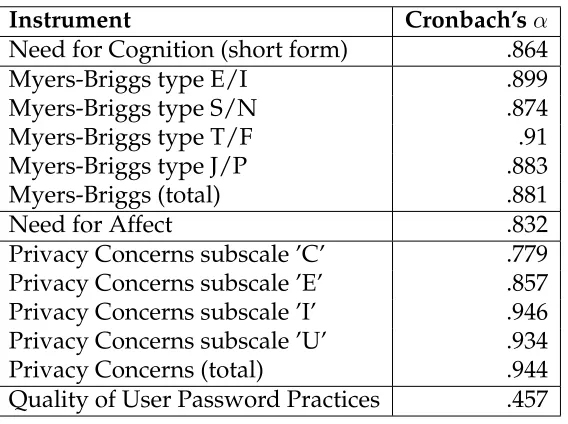
Table 4.1 Observed Cronbach’sαfor survey instruments
Instrument Cronbach’sα
Need for Cognition (short form) .864
Myers-Briggs type E/I .899
Myers-Briggs type S/N .874
Myers-Briggs type T/F .91
Myers-Briggs type J/P .883
Myers-Briggs (total) .881
Need for Affect .832
Privacy Concerns subscale ’C’ .779
Privacy Concerns subscale ’E’ .857
Privacy Concerns subscale ’I’ .946
Privacy Concerns subscale ’U’ .934
Privacy Concerns (total) .944
Quality of User Password Practices .457
Cronbach’sαshows low inter-item reliability for the user password pratices
mea-sure, as would be expected since the measure was created as a formative (rather than
reflective) scale. However, no independent reliability testing of this scale was done
outside of this study, therefore, if any findings are interesting, future research will be
suggested to include the development of a robust survey instrument for user password
4.1.2 Correlation between need for cognition and need for affect
This study’s findings showed a similar positive correlationr =.181between need
for cognition and need for affect as shown in [Maio and Esses, 2001] (N = 87−98, r=
.21, p < .05) and [Haddock et al., 2008] (r = .13), giving confidence in the correct
measurement of both personality aspects for this study. However, the correlation was
not significant (p=.08) in this sample. This can be explained by the sample size; to
show Maio and Esses’ correlation with a power of merely .6 and significance atp < .05
a sample size of 110 would be required.
4.1.3 Correlation between need for cognition and Myers-Briggs T/F type
There is a positive correlation r = .248, p < .05 between the Thinking/Feeling
scale and the need for cognition, indicating - as expected - that people with a higher
need for cognition have a stronger preference for thinking according to MBTI
[Bolton and Capella, 1995].
4.1.4 Correlation between need for affect and Myers-Briggs T/F type
There is a highly significant negative correlation r =−.37, p < .001between the
Thinking/Feeling scale and the need for affect, indicating - as expected - that people
with a higher need for affect have a stronger preference for feeling according to MBTI
[Bolton and Capella, 1995].
4.1.5 Differences of independent measures between treatment conditions
Using t-tests, no significant difference of means was found for need for cognition,
need for affect and the Myers-Briggs thinking/feeling dimension between the group of
version of site 2) and the group that was assigned to the affective version of site 1 (and
therefore the cognitive version of site 2).
4.1.6 Difference of means between system usability scores for sites 1 and 2
A t-test shows significant differencesp < .05between the means for system
usabil-ity scores for the affective and cognitive versions of sites 1 (childhood vaccination)
and 2 (orlistat). This implies either an order effect or another factor causing the sites
to be ranked differently (for example the topic). For this reason, the data for the two
cognitive and two affective sites cannot be pooled.
4.2
Findings
4.2.1 Hypothesis 1
Subjects with a high need for affect will find the affective web site more usable than subjects
with a low need for affect.
An independent sample t-test reveals no significant difference of meanst =−1.214
between the low and high need for affect group, therefore the null hypothesis cannot
[image:45.612.197.433.555.602.2]be rejected. (See Table 4.2.)
Table 4.2 Need for affect andA¯1
Need for affect N Mean SD
Low NFA NA≤88 24 72.19 17.50 High NFA NA>88 23 77.72 13.36
Since the null hypothesis cannot be rejected, the probability of a type II error
(failing to reject a false null hypothesis) - usually defined asβ - must be considered.
correctly rejecting a false null hypothesis1−β =.231) for this test is low. Therefore,
this experiment should be redone with an appropriate sample size.
4.2.2 Hypothesis 2
Subjects with a high need for cognition will find the cognitive site more usable than subjects
with a low need for cognition.
A t-test reveals a significant differencep < .05of means between the high and low
need for cognition group, supporting the research hypothesis. (See Table 4.3.)
Table 4.3 Need for cognition andC¯1
Need for cognition N Mean SD
Low NFC NC ≤63.5 22 52.73 21.93 High NFC NC >63.5 25 67.20 22.49
4.2.3 Hypothesis 3
Subjects with a Myers-Briggs feeling preference will find the affective site more usable than
subjects with a Myers-Briggs thinking preference.
An independent samples t-test found no significant differencet=.655in the means
of the system usability scores for the two groups. Therefore, the null hypothesis cannot
be rejected. (See Table 4.4.)
Table 4.4 Myers-Briggs thinking/feeling andA¯1
Myers-Briggs preference N Mean SD
Feeling 26 76.2500 17.32
Thinking 21 73.2143 13.63
Since this statistical power for this finding is very low (β =.897), this experiment
4.2.4 Hypothesis 4
Subjects with a Myers-Briggs thinking preference will find the cognitive site more usable
than subjects with a Myers-Briggs feeling preference.
An independent samples t-test found no significant differencet=.718in the means
of the system usability scores for the two groups. Therefore, the null hypothesis cannot
be rejected. (See Table 4.5.)
Table 4.5 Myers-Briggs thinking/feeling andC¯1
Myers-Briggs preference N Mean SD
Feeling 24 62.8125 24.01
Thinking 23 57.9348 22.52
Since this statistical power for this finding is very low (β =.889), this experiment
should be redone with an appropriate sample size.
4.2.5 Hypothesis 5
Subjects with a Myers-Briggs feeling preference will find the affective web site more usable
the cognitive web site.
An independent samples t-test found significantly different means of system
us-ability scores for the affective vs. cognitive web sitest=−2.254, p < .05, even when
equal variances were not assumed as a result of Levene’s test failing to reject the null
hypothesis of equal variances. Therefore, the null hypothesis has been rejected and
this finding supports the research hypothesis. (Table 4.6.)
Table 4.6 A¯1 andC¯1 for Myers-Briggs feeling types
Site version N Mean SD
4.2.6 Hypothesis 6
Subjects with a Myers-Briggs thinking preference will find the cognitive web site more
usable the affective web site.
An independent samples t-test found significantly different means of system
us-ability scores for the affective vs. cognitive web sitest=−2.759, p < .01, even when
equal variances were not assumed as a result of Levene’s test failing to reject the
null hypothesis of equal variances. Therefore, the null hypothesis has been rejected.
However, the observed significant effect is in the opposite direction of the research
hypothesis, requiring further explanation. (Table 4.7.)
Table 4.7 A¯1 andC¯1 for Myers-Briggs thinking types
Site version N Mean SD
Affective 21 73.21 13.63 Cognitive 23 57.93 22.52
4.2.7 Hypotheses 7 and 8
Individuals with higher need for cognition will employ better password practices than
individuals with a low need for cognition.
Individuals with a high score for privacy concerns will employ better password practices
than individuals with a low score for privacy concerns.
2x2 factorial ANOVA (low vs high privacy concerns) x (low vs high need for
cognition) showed main effects for need for cognition p < .05 as well as privacy
Table 4.8 Need for cognition, privacy concerns and quality of user pass-word practices
NFC Privacy concerns Mean SD N
Low NFC Low Privacy Concerns 1.5385 1.17 26 High Privacy Concerns 2.1429 1.28 21
Total 1.8085 1.24 47
High NFC Low Privacy Concerns 2.0000 1.34 21 High Privacy Concerns 2.8077 1.20 26
Total 2.4468 1.32 47
Total Low Privacy Concerns 1.7447 1.26 47 High Privacy Concerns 2.5106 1.27 47
CHAPTER 5. SUMMARY AND DISCUSSION
5.1
Summary
This study set out to explore two main questions. First, can subjective usability
perception be influenced by catering to the user’s cognitive or affective style? And
second, do cognitive style and concern for information privacy matter for information
assurance practices, specifically the use of passwords?
In order to answer these questions, existing research on usability and persuasion
in e-commerce was presented and it was highlighted how most of this research
fo-cused on the server-side aspects, e.g. the design elements of websites, but did not
consider client-side aspects, i.e. individual differences between users. A detailed list
of server-side factors was put in the framework of Aristotle’s rhetoric by Winn and
Beck [Winn and Beck, 2002] [Aristotle and Kennedy, 2006], and complemented with
client-side aspects for this study (see Figure 2.1).
In the context of this extended framework, research about individual differences
such as cognitive and affective styles was discussed and related to Aristotle’s three
means of persuasion (logos, pathos and ethos - appeal to logic, emotion and credibility).
The reviewed research provided the foundation for the hypotheses investigated in this
study.
A detailed description of the study design was given, including the survey
instru-ments and experimental web sites along with the statistical methods used to draw
docu-mented. Validations were performed when possible by comparing the results from
instruments used in this study to the outcomes in other studies that have used the
same instruments together. The statistical methods were applied to test each of the
hypotheses and the outcomes were described.
Finally, it follows a discussion of the findings and recommendations for future
work.
5.2
Discussion
The findings of this study substantiate the need for future research in the area of
individual differences in relation to usability and Internet-based persuasion. Prior
research was validated, showing that taking need for cognition into account, it is
possible to design more usable sites for the high need for cognition population. The
same could not be statistically confirmed for need for affect in this study, however
this should be reevaluated through an experiment with greater statistical power (for
this study, the power for this finding was merely .231). Assuming a type II error
did not occur, the possibility was considered that the high need for affect alone is
not sufficient but also a low need for cognition (the experimental condition used in
[Haddock et al., 2008]) needs to exist for this effect to be visible, but a post-hoc 2x2
factorial analyis of variance (low vs high need for cognition) x (low vs high need for
affect) showed no significant main or interaction affects attesting to this. Another
explanation offered is that it is possible that the discriminating factors between the
two sites were not sufficient and need to be improved.
As a further step into uncovering the relationships between cognitive style and
perceived usability, they were explored using the Myers-Briggs feeling and thinking
type. Differences between thinkers and feelers do not appear to account for different