70
Introduction method for argumentative dialogue using paired
question-answering interchange about personality
Kazuki Sakai1, Ryuichiro Higashinaka2, Yuichiro Yoshikawa1, Hiroshi Ishiguro1, and Junji Tomita2
1Osaka University / JST ERATO
2NTT Media Intelligence Laboratories, NTT Corporation
1{sakai.kazuki,yoshikawa,ishiguro}@irl.sys.es.osaka-u.ac.jp
2{higashinaka.ryuichiro,tomita.junji}@lab.ntt.co.jp
Abstract
To provide a better discussion experience in current argumentative dialogue sys-tems, it is necessary for the user to feel motivated to participate, even if the sys-tem already responds appropriately. In this paper, we propose a method that can smoothly introduce argumentative di-alogue by inserting an initial discourse, consisting of question-answer pairs con-cerning personality. The system can in-duce interest of the users prior to agree-ment or disagreeagree-ment during the main dis-course. By disclosing their interests, the users will feel familiarity and motivation to further engage in the argumentative di-alogue and understand the system’s intent. To verify the effectiveness of a question-answer dialogue inserted before the argu-ment, a subjective experiment was con-ducted using a text chat interface. The results suggest that inserting the question-answer dialogue enhances familiarity and naturalness. Notably, the results suggest that women more than men regard the di-alogue as more natural and the argument as deepened, following an exchange con-cerning personality.
1 Introduction
Argumentation is a process of reaching consensus through premises and rebuttals, and it is an im-portant skill required in daily life (Scheuer et al., 2010). Through argumentation, we can not only reach decisions, but also learn what others think. Such decision-making and the interchange of views are one of the most important and advanced parts of human activities. If an artificial dialogue system can argue on certain topics with us, this can both help us to work efficiently and establish a close relationship with the system.
Recently, there have been some studies con-cerning argumentative dialogue systems. Hi-gashinaka et al. developed an argumentative dialogue system that can discuss certain top-ics by using large-scale argumentation struc-tures (Higashinaka et al., 2017). However, this system could not provide all users with a satisfac-tory discussion experience, even though it could appropriately respond to their opinions. One pos-sible reason for this is that some users are not nec-essarily motivated to argue on the topics suggested by the system.
We aim to improve an argumentative dia-logue system by adding a function to motivate a user to participate in an argumentative dia-logue. To increase the user’s motivation to par-ticipate in the argumentative dialogue, we focus on small talk. Small talk can help participants build certain relationships before they enter the main dialogue (Zhao et al., 2014). In negotia-tion and counseling, a close relanegotia-tionship between two humans can improve the performance of cer-tain tasks (Drolet and Morris, 2000; Kang et al., 2012). Relationships between a user and system are important for reaching a consensus though dia-logue (Katagiri et al.,2013) Thus, it is considered to be possible for a user to be naturally guided into an argumentative dialogue by performing small talk.
by using the PDB. From the answers of the user and the system, users are expected to gain an idea of what is common and different between them, a requirement which has been suggested to be im-portant for humans to be motivated to understand one another (Uchida et al.,2016).
In this research, we extend the argumentative dialogue system described in (Higashinaka et al., 2017) to add a function that can smoothly in-troduce argumentative dialogue by inserting a question-answering dialogue using the PDB (here-inafter referred to as PDB-QA dialogue). It is con-sidered that users of the proposed system can be expected to be motivated to partake in the argu-mentative dialogue, and that they can then partake in a deep discussion with the system. To verify the effectiveness of this system, we conducted a subjective experiment using a text chat interface.
The remainder of this paper is organized as fol-lows. In Section2, we describe related work. In Section 3, we describe our proposed method, in-cluding how to develop the question-answering di-alogue and how to integrate this into an existing argumentative dialogue system. In Section 4, we describe an experiment we conducted, in which human subjects expressed their impressions of the dialogue through a text chat interface. We summa-rize the paper and discuss future work in Section5.
2 Related work
Although there is little work on an auto-mated system that can perform discussion with users, recently, there has been a great deal of work aimed at automatically extracting premises and conclusions from text; argumentation min-ing has been applied to various data, includ-ing legal text (Moens et al., 2007), newswire text (Bal and Saint-Dizier,2010), opinions in dis-cussion forums (Rosenthal and McKeown,2012), and varied online text (Yanai et al.,2016).
There has been some research concerning the introduction of a dialogue. Rogers et al. showed that it became easier for two people to talk during the first meeting by using an applica-tion that can share their opinions on a dis-play (Rogers and Brignull, 2002). Patricia et al. reported that small talk in an initial dis-course improved the interaction in a business sit-uation (Pullin, 2010). Inaguma et al. analyzed the prosodic features of shared laughter as an ice-breaker in initial dialogues (Inaguma et al.,2016).
However, it is unclear how to develop an initial di-alogue for smoothly introducing a discussion.
It is known that people interact with artifi-cial constructions such as dialogue systems, vir-tual agents, and robots in the same manner as they interact with other humans (Reeves and Nass, 1996). Schegloff et al. showed that human conver-sation usually interleaves the contents of a task-oriented dialogue with social contents (Schegloff, 1968). Jiang et al. showed that 30% of all ut-terances of Microsoft Cortana, a well-known task-oriented dialogue system, consist of social con-tents (Jiang et al.,2015). It is considered that per-forming small talk can be natural in argumentative dialogue systems.
There have been many studies on dialogue systems that include small talk. Bechberger et al. developed a dialogue system that conveys news text and performs small talk related to the news (Bechberger et al., 2016). Kobori et al. showed that inserting small talk improved the im-pressions of an interview system (Kobori et al., 2016). Bickmore et al. showed that the task suc-cess rate was improved by constructing a trust re-lationship using small talk (Bickmore and Cassell, 2005). Tina et al. developed a dialogue sys-tem that included the function of interacting using small talk (Kl¨uwer, 2015). We consider that ar-gumentative dialogues may be performed deeply since small talk can improve the trust relationship.
Figure 1: Flow of PDB-QA dialogue. Each part contains two system utterances and two user utter-ances. We used questions in an order based on the similarity between the dialogue topic and question text.
3 Proposed method
We propose a method for introducing an argu-mentative dialogue using the PDB-QA dialogue, which is a question-answering dialogue concern-ing personality. We then describe some existconcern-ing argumentative dialogue systems. Next, we explain how to develop an extended argumentative dia-logue system using the PDB-QA diadia-logue.
3.1 PDB-QA dialogue by using question-answering pair about personality
The PDB consists of personal questions and exam-ple answers and is used to ask the interlocutor for detailed information (Tidwell and Walther,2002). Such questions may be asked even when the in-terlocutor is a dialogue system (Nisimura et al., 2011). In this study, we used the PDB described
in (Sugiyama et al., 2014). This PDB is a
large-scale database of pairs of questions and answers related to personal information. Questions in-cluded in the PDB involved various personal ques-tions, question categories, answer examples, and topics attached to each question. Based on the degree of overlap of questions, question-answer pairs frequently encountered during conversation are extracted. The PDB includes personal ques-tions such as “what dishes do you like?” and “which places have you visited?”
We explain the procedure for generating a PDB-QA dialogue using this PDB. As shown in Fig-ure 1, the PDB-QA dialogue consists of several parts. Each part consists of four utterances: the system’s question using the PDB, the user’s sponse, the system’s answer, and the user’s re-sponse to this. To determine the order in which
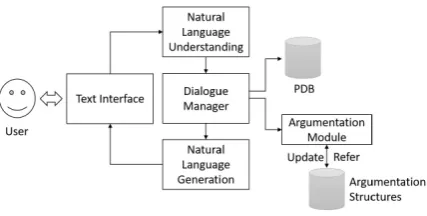
Figure 2: Architecture of developed dialogue sys-tem.
to ask multiple questions, we used the similar-ity between the topic of argument and the ques-tion text, calculated by Word2vec (Mikolov et al., 2013). From parts 1 to N, we used questions in an order starting from the highest similarity, i.e., part 1 uses a question with the N-th highest simi-larity and part N uses another question that has the highest similarity. This is because it is considered that approaching the topic gradually is natural as a dialogue structure. Through this process, we can perform N parts of the PDB-QA dialogue.
3.2 Argumentative dialogue system
We used the argumentative dialogue system de-scribed in (Higashinaka et al., 2017). This sys-tem can generate appropriate argumentative dia-logue text based on large-scale knowledge struc-tures, called argumentation strucstruc-tures, which are constructed manually. An argumentation structure is represented by a graph structure, composed of nodes that represent premises and edges represent-ing support or nonsupport relationships, based on an extended version of Walton’s model (Walton,
2013).
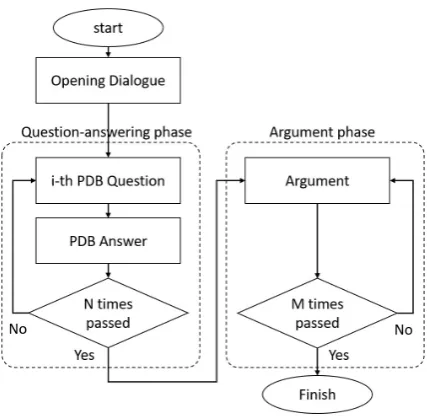
[image:3.595.87.277.68.169.2]Figure 3: Flow in the dialogue manager.
the user’s utterance.
3.3 Integration of argumentation dialogue system and PDB-QA dialogue
Figure 2 illustrates the architecture of our argu-mentative dialogue system. The user interacts with the system through the text chat interface on the browser. The natural language understand-ing module has two modules related by the argu-mentative dialogue system. Note that this mod-ule is only used in the argument phase described as follows. The dialogue manager manages two dialogue states. One is the question-answering phase, and the other is the argument phase. Fig-ure3illustrates the flow of dialogue managed by the dialogue manager. First, the dialogue manager initiates the opening dialogue, such as by asking the user her name. Then, it begins the question-answering phase. In this phase, the PDB-QA di-alogue is performed, as described in Section3.1. The PDB-QA dialogue is a predefined question-answering dialogue, regardless of user utterances. The answer of the system for a PDB question is prepared by the experimenter in advance. The natural language generation module changes the system response such as adding conjunctions and changing the end of the sentences using a dialogue act. Later, the dialogue manager begins the argu-ment phase. In the arguargu-ment phase, the utterances of the system are premises that can be used for support or rebuttal, and they consist of the results of the argumentative dialogue system.
Line Speaker Utterance 1 S Do you like trips? 2 U Yes, I do.
3 S I see. I like them too.
I want to go on a trip during the weekend. 4 U I also want to go during the weekend. 5 S Where do you want to go for a trip? 6 U I want to go abroad.
7 S Me too.
I want to go to France if I have the time. 8 U French dishes seem great.
9 S Which is the better place to travel in Japan, Hokkaido or Okinawa? 10 U I want to go to Okinawa.
11 S You can enjoy unique dishes in Okinawa. 12 U I think goya-champuru (a traditional
Okinawa dish) is delicious.
13 S But Hokkaido also has delicious dishes, such as Genghis Khan.
14 U I see. Hokkaido has more delicious food.
Figure 4: An example of the dialogue. The topic is that of which place the better to travel to in Japan: Hokkaido or Okinawa. Lines 1∼8 are part of the PDB question dialogue, and lines 9 ∼ 14 are part of the argumentative dialogue. Speaker S and U represent the system and user, respectively.
Figure4shows an example of the dialogue we performed. The topic is as follows: which is the better place to travel to in Japan: Hokkaido or Ok-inawa? Lines 1∼8 are a part of the PDB question dialogue, and lines 9 ∼ 14 are a part of the argu-mentative dialogue. Speakers S and U represent the system and the user, respectively.
4 Experiment
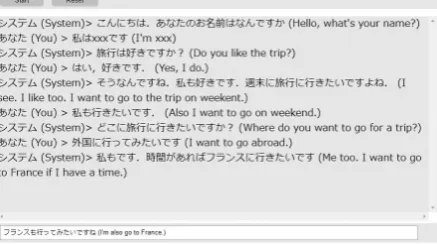
[image:4.595.311.529.64.284.2] [image:4.595.78.292.66.275.2]Figure 5: Screenshot of the text chat interface.
user builds a relationship with the system, the user expresses own ideas with fewer words.
4.1 Method
4.1.1 Subjects
Thirty-two Japanese adults (16 males and 16 fe-males, with an average age of 20.3 years) partici-pated as subjects. Half of the subjects participartici-pated with the PDB condition, and the other half without it. The ratio of males to females in each condition was the same. One male with the PDB condition and two males without were excluded because of system failures, and the utterances of the remain-ing 29 people were analyzed.
4.1.2 Apparatus
The experiment was conducted in a space sepa-rated by curtains. A laptop PC was placed on the table, and the PC displayed a web browser to show the text chat interface, as shown in Figure5. Note that the dialogue in the experiment was performed in Japanese. The dialogue text of the interaction between the system and the subject was displayed in the middle part of the browser, and a text box for the subject to input his/her own utterances was dis-played at the lower part of the browser. Note that we call the sentence displayed in the interface an “utterance.” In other words, sentences produced by the system and input by the user with a key-board are called the system’s and user’s utterances, respectively.
4.1.3 Stimuli
In this experiment, we compared two conditions: with and without the PDB. The condition with PDB included two phases of dialogue: a question-answering phase and an argument phase. The con-dition without PDB included one phase of dia-logue: the argument phase. In this experiment, the
subject and the system alternately provided utter-ances. Each pair of such utterances is referred to as one turn. Both conditions included two turns of opening dialogue, such as asking the subject’s name and a greeting. The question-answering phase consisted of three parts, each of which in-cluded two turns of dialogue. In total, six turns of dialogue were performed. The argument phase contained six turns of dialogue. We prepared five discussion topics and assigned any of these to the subject at random: (1) the pros and cons of driving automobiles, (2) benefits of living in the country-side vs. living in the city, (3) which is the better place to travel to in Japan between Hokkaido and Okinawa, (4) which is the better breakfast between bread and rice, and (5) which is the better theme park betweenTokyo Disney Resort and Universal Studios Japan.
4.1.4 Procedure
This experiment was conducted according to the following procedure. First, the experimenter gave a subject the instructions for the experiment. The contents of the instructions were that the subject interacts with the system through the text chat in-terface on the browser, interacts only once, and an-swers the questionnaire after the dialogue. Next, the experimenter asked the subject to read the questionnaire in advance. After that, interaction was started. After completing the dialogue, the experimenter asked the subject to answer the ques-tionnaire.
4.1.5 Measurement
The items of the questionnaire regarding impres-sions were the same for both conditions, and there were eleven items in total. These included ques-tions related to the overall impression of the dia-logue system, the argumentative diadia-logue, and the user’s motivation for conversing with the dialogue system. The items concerning the impression of the dialogue consisted of the following five:
Q1 The utterances of the system are correct in Japanese,
Q2 The dialogue with the system is easy to under-stand,
Q3 The dialogue with the system is familiar,
Q4 The dialogue with the system has a lot of con-tent, and
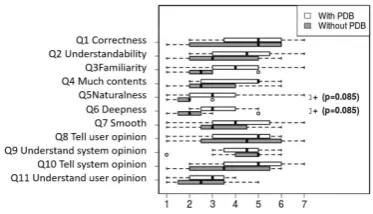
Figure 6: Box plots of the results of the questionnaire.
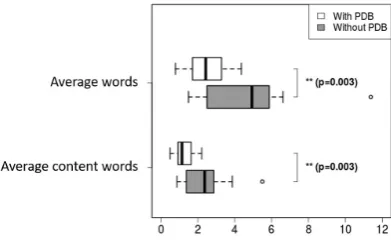
Figure 7: Box plots of results for the average num-bers of words and content words (nouns, verbs, ad-jectives, conjunctions, and interjections) per utter-ance in the argument phase. We used MeCab to tokenize Japanese words.
The items concerning the impression of the argu-ment dialogue were the following two:
Q6 You can deeply discuss the topic of X, and
Q7 You can smoothly enter the argumentative di-alogue about X,
where X is the actual topic (e.g., which is the better place to travel to in Japan between Hokkaido and Okinawa). The items related to motivation for the dialogue were the following four:
Q8 You want to convey your opinions,
Q9 You want to understand the system’s opinions,
Q10 You feel that the system wants to convey its opinions, and
Q11 You feel that the system wants to understand your opinions.
A Likert scale was used to elicit the sub-jects’ impressions. We used a seven-point scale
that ranged from a value of 1, corresponding to “strongly disagree,” to 7, corresponding to “strongly agree.” The midpoint value of 4 corre-sponded to “undecided.”
We also counted the average number of words per user utterance and the average number of con-tent words (nouns, verbs, adjectives, conjunctions, and interjections) in the argument phase. We used MeCab to tokenize the words and label the Japanese parts of speech.
4.2 Result
Figure6presents the box plots of the answers to the questionnaire. A Mann-Whitney U test was used to compare the scores on the Likert scale. For Q3, namely “the dialogue with the system is famil-iar,” the median score for the condition with PDB was found to be marginally significantly higher than that for the condition without PDB (W =143,
p < 0.1). For Q5, namely “the dialogue with the system is natural,” the median score for the condition with PDB was found to be significantly higher than that for the condition without PDB (W = 149.5, p < 0.05). For other questions, no significant differences between the two conditions were detected.
[image:6.595.98.294.287.409.2]rela-Figure 8: Box plots of results of the questionnaire for male users.
[image:7.595.340.527.65.172.2]Figure 9: Box plots of female results of the ques-tionnaire for female users.
[image:7.595.341.540.228.299.2]Figure 10: Box plots of results for male users for the average number of words and content words per utterance in the argumentation phase.
Figure 11: Box plots of results for female users for the average number of words and content words per utterance in the argumentation phase.
tionship is built between the user and the system. Thus, it is considered that inserting the PDB-QA dialogue improves the naturalness of the dialogue and relationships.
Figure 7 presents the box plots of the average numbers of words and content words per user ut-terance. For the average number of words, the me-dian score for the condition with PDB was found to be significantly less than that for the condition without PDB (W = 40, p < 0.01). Concerning the average number of content words, the median score for the condition with PDB was also found to be significantly less than that for the condition without PDB (W =40, p<0.01).
As shown in Figure7, it was found that the av-erage numbers of words and content words in the condition with PDB were significantly less than those in the condition without PDB. These re-sults suggest that when the relationship between the user and the system is not close, the users may express their opinions using a larger number of words, to correctly convey their own message; on the other hand, when the relationship is close, the users may express their opinions using fewer words.
In general, it is known that there are some dif-ferences in purposes of conversation owing to gen-der differences (Tannen,2001). In this study, we
suppose that the different purposes of conversation resulting from gender differences may affect our results. Therefore, we analyzed the effects of gen-der. We divided the data by gender, and then plot-ted each result. In the result for male users, shown in Figure8, no significant differences between the two conditions were detected. On the other hand, in the result for female users, shown in Figure9, we observe some significant differences between the two conditions. According to this figure, for Q5, namely “the dialogue with the system is natu-ral,” the median score for the condition with PDB was found to be marginally significantly higher than that for the condition without PDB (W= 49,
[image:7.595.103.302.228.299.2]may lead to the result that females feel the argu-mentative dialogue is deepened more. Thus, it is suggested that inserting the PDB-QA dialogue in our proposed method may be more effective for females.
In addition, Figures10and11show the results for male and female users for words and content words, respectively. As shown in Figure 10, for male users, the average number of content words for the condition with PDB was found to be sig-nificantly less than that without PDB (W = 7,
p < 0.05). This result may be because of their degree of motivation, but the actual reason is un-known. On the other hand, as shown in Figure11, for female users, the average numbers of words and content words with PDB were found to be marginally significantly less than those without PDB (W =14, p< 0.1,W =15, p <0.1, respec-tively). These results suggest that females may use fewer words when they feel familiarity with the in-terlocutor.
5 Summary and future work
We proposed a PDB-QA dialogue method to smoothly introduce an argumentative dialogue. We conducted an evaluation experiment to ver-ify the effectiveness of inserting the PDB-QA di-alogue. The results suggest that the impressions of the dialogue, such as familiarity and natural-ness, may be improved by inserting the PDB-QA dialogue. Specifically, we found that females may perceive a PDB-QA dialogue inserted before an argumentative dialogue as more natural, and this may lead to the result that the argumentative dia-logue can be deepened. We also found that when the relationship between the user and the system is not close, the users may express their opinions using a larger number of words, whereas when the relationship is close, the users may express their opinions with fewer words.
We can improve the performance of the dia-logue system by adjusting several parameters of PDB dialogue, which were fixed in the experiment for the sake of control. For example, we can adjust how questions are chosen (the degree of similarity of questions to be selected), the order of questions, the number of questions, and the amount of infor-mation to be presented in an answer to a question. It may be possible to improve the performance if we select better parameters depending on a user’s preferences or the context of a conversation.
For further improvement, we can consider ani-macy, which is another element that may be im-portant. Animacy describes the characteristic of being like a living being, in other words, the char-acteristic of whether a human can relate to mind and will in an object. We suppose that in a dia-logue, it is important for the user to feel animacy toward the interlocutor, because it is important for the user to recognize the dialogue system as a spe-cial target with which they can form a certain re-lationship. As a preliminary experiment, we mea-sured the psychological indicators for mind per-ception (Gray et al., 2011). This scale can mea-sure how much agency (capacity for self-control, planning, and memory) and experience (capacity for pleasure, fear, and hunger) the subject feels the target has. Analyzing how impressions of agency and experience might affect the answers to the questionnaire or the behavior of users will be an important aspect of future work.
In this paper, we compared the conditions with and without PDB. Comparing the two conditions, we surmise that at least three factors exist that af-fect the results: whether utterances are in the form of a question, whether they contain personal con-tent, and whether they are related to the topic of the argumentative dialogue. For the first factor, we suppose that a question form can explicitly re-veal common and differing sentiments in the an-swer to the question. It is considered that this makes it easy for the user to become interested. For the second aspect, we suppose that asking a question concerning personality can make it possi-ble to construct a certain relationship more easily. As regards the final point, we feel this prevents a sudden change of topic. We suppose that this makes it possible for the user to enter the argu-mentative dialogue more smoothly. Investigating the kinds of factors that affect a natural introduc-tion into the argumentative dialogue will be a topic of future work.
Acknowledgments
This work was supported by JST ERATO Grant Number JPMJER1401, Japan.
References
B. K. Bal and P. Saint-Dizier. 2010. Towards building annotated resources for analyzing opinions and ar-gumentation in news editorials. InProceedings of the language resources and evaluation conference.
L. Bechberger, M. Schmidt, A. Waibel, and M. Fed-erico. 2016. Personalized news event retrieval for small talk in social dialog systems. InProceedings of Speech Communication; 12. ITG Symposium.
T. Bickmore and J. Cassell. 2005. Social Dialongue with Embodied Conversational Agents. Advances in Natural Multimodal Dialogue Systems.
A. L. Drolet and M. W. Morris. 2000. Rapport in conflict resolution: Accounting for how face-to-face contact fosters mutual cooperation in mixed-motive conflicts. Journal of Experimental Social Psychol-ogy, 36(1):26–50.
K Gray, AC Jenkins, AS Heberlein, and DM Weg-ner. 2011. Distortions of mind perception in psy-chopathology. In Proceedings of the National Academy of Sciences of the United States of Amer-ica, pages 477–479.
R. Higashinaka, K. Sakai, H. Sugiyama, H. Narimatsu, T. Arimoto, T. Fukutomi, K. Matsui, Y. Ijima, H. Ito, S. Araki, Y. Yoshikawa, H. Ishiguro, and Y. Matsuo. 2017. Argumentative dialogue system based on ar-gumentation structures. InProceedings of the 21st Workshop on the Semantics and Pragmatics of Dia-logue, pages 154–155.
H. Inaguma, K. Inoue, S. Nakamura, K. Takanashi, and T. Kawahara. 2016. Prediction of ice-breaking be-tween participants using prosodic features in the first meeting dialogue. InProceedings of the 2Nd Work-shop on Advancements in Social Signal Processing for Multimodal Interaction, pages 11–15.
J. Jiang, A. H. Awadallah, R. Jones, U. Ozertem, I. Zi-touni, R. G. Kulkarni, and O. Z. Khan. 2015. Auto-matic online evaluation of intelligent assistants. In
Proceedings of the 24th International Conference on World Wide Web, pages 506–516.
S. Kang, J. Gratch, C. Sidner, R. Artstein, L. Huang, and L. Morency. 2012. Towards building a virtual counselor: Modeling nonverbal behavior during in-timate self-disclosure. In Proceedings of 11th In-ternational Conference on Autonomous Agents and Multiagent Systems.
Y. Katagiri, K. Takanashi, M. Ishizaki, Y. Den, and M. Enomoto. 2013. Concern alignment and trust in consensus-building dialogues. InProceedings of the 9th International Conference on Cognitive Science, pages 422–428.
T. Kl¨uwer. 2015. Social talk capabilities for dialogue systems. universaar.
T. Kobori, M. Nakano, and T. Nakamura. 2016. Small talk improves user impressions of interview dialogue systems. InProceedings of the 17th Annual Meeting
of the Special Interest Group on Discourse and Dia-logue, pages 370–380.
T. Mikolov, I. Sutskever, K. Chen, G. Corrado, and J. Dean. 2013. Distributed representations of words and phrases and their compositionality. In Ad-vances in Neural Information Processing System, pages 3111–3119.
M. Moens, E. Boiy, R. M. Palau, and C. Reed. 2007. Automatic detection of arguments in legal texts. In
Proceedings of the 11th international conference on Artificial intelligence and law, pages 225–230.
R. Nisimura, Y. Nishihara, R. Tsurumi, A. Lee, H. Saruwatari, and K. Shikano. 2011. Takemaru-kun: Speech-oriented information system for real world research platform. InProceedings of the 2011 Conference on Empirical Methods in Natural Lan-guage Processing, pages 583–593.
I. Papaioannou and O. Lemon. 2017. Combining chat and task-based multimodal dialogue for more engaging hri: A scalable method using reinforce-ment learning. In Proceedings of the Companion of the 2017 ACM/IEEE International Conference on Human-Robot Interaction, pages 365–366.
P. Pullin. 2010. Small talk, rapport, and interna-tional communicative competence: Lessons to learn from belf.The Journal of Business Communication, 47(4):455–476.
B. Reeves and C. Nass. 1996. How people treat com-puters, television, and new media like real people and places. CSLI Publications and Cambridge uni-versity press.
Y. Rogers and H. Brignull. 2002. Subtle ice-breaking: encouraging socializing and interaction around a large public display. In In Workshop on Public, Community. and Situated Displays.
S. Rosenthal and K. McKeown. 2012. Detecting opin-ionated claims in online discussions. InProceedings of the 6th IEEE International Conference on Seman-tic Computing, pages 30–37.
E. A Schegloff. 1968. Sequencing in conversational openings. American anthropologist, 70(6):1075– 1095.
O. Scheuer, F. Loll, N. Pinkwart, and B. M. McLaren. 2010. Computer–supported argumentation: A re-view of the state of the art. International Jour-nal of Computer-Supported Collaborative Learning, 5(1):43–102.
H. Sugiyama, T. Meguro, and R. Higashinaka. 2014. Large-scale collection and analsis of personal question-answer pairs for conversational agents. In
Proceedings of Intelligent Virtual Agents, pages 420–433.
L. C Tidwell and J. B. Walther. 2002. Computer-mediated communication effects on disclosure, im-pressions, and interpersonal evaluations. Human Communication Research, 28(3):317–348.
T. Uchida, T. Minato, and H. Ishiguro. 2016. Does a conversational robot need to have its own values? a study of dialogue strategy to enhance people’s moti-vation to use autonomous conversational robots. In
Proceedings of the 4th annual International Confer-ence on Human-Agent Interaction, pages 187–192.
D. Walton. 2013. Methods of argumentation. Cam-bridge University Press.
K. Yanai, Y. Kobayashi, M. Sato, T. Yanase, Miyoshi T, Y. Niwa, and H. Ikeda. 2016. Debating artificial intelligence. Hitachi Review, 65(6):151.
Z. Yu, A. W. Black, and A. I. Rudnicky. 2017. Learning conversational systems that interleave task and non-task content. InProceedings of International Joint Conference on Artificial Intelligence.