So do aU oPJIr
G~e!7(1)lrocessi tfQri'~ S!7s~ems
Talk to us,
Signaling a new era
in data entry communications, CMC's TeleBatch™ option does it al/- remote data entry. remote job entry, and remote printing- all concurrent· with a full complement of active keystations,
The KeyProcesslng Family
offer~ the widest range of data entry systems available today. With features afld options that will serve you tomorrow too. Like TeleBatch, and the industry's most comprehensive array of manage .. ment control reports.
TeleBatch
provides decentralized ,data aOtry with-out sacrificing centralized control over . quality and procedures. TeleBatch
is
fast, with speeds up to·19.200 bps,'And it's simpte to operate -with I,jnique Communications Control aatcnesauto..: matically performing cdloperat()r~nd
remote batch terminal functions.
Our
customers.ay " ... '.' ... .
tnat CMC's.Managen1~mCC)rtrC)l Reports are outstanding.The 'TeleBat6h ' .. Log, for example.improvestheeffec-tivene.ss of communications
by.
provid-lngan audit traUof importantcom~munica.tions statistics.
you'll be pleased you did. Call or write today for more information.
KeyProcessing and TeleBatch are trademarks of
2500 Walnut Avenue, Marina del Rey, P.O. Box 92300 Los Angeles, CA 90009 Telephone: (213) 390-8411
2
Itel has the cure
for absent-minded computers.
Monolithic Main Memory.
Not only does it remember more than IBM's
design can, but it remembers more for less. On the
360/22 up through most 370 models.
On the 370/158, for example, Itel Monolithic
Memory can increase your main memory capacity a
fuIl100%-from four megabytes to eight megabytes.
Looking for other ways to improve your
com-puter's memory? Then look into lIel's 7330 Disk Drive
Subsystem for 360/50, 360/65 and all 370 systems.
It's a compact, waist-high unit that handles massive
data bases up to 3,200,000,000 bytes. With an
aver-age access time of just 27 milliseconds.
At Itel, we couldn't have acquired over a billion
dollars in IBM computer leasing experience without
solving at least a few of your problems.
:IT 14::1,
Your financial alternative.
~
One Embarcadero Center. San Francisco. California 94111. Phone (415) 983-0000
( 76
j
~,,,"~,,,,,,,.,,,,",,",,,,,,,=,,,,".,,,,,,,,,,,,,,,,."'"
VOLUME 22 NUMBER 2 This issue 122,000 copies FEBRUARY 1976
FEATURES Dp Spending for 1976
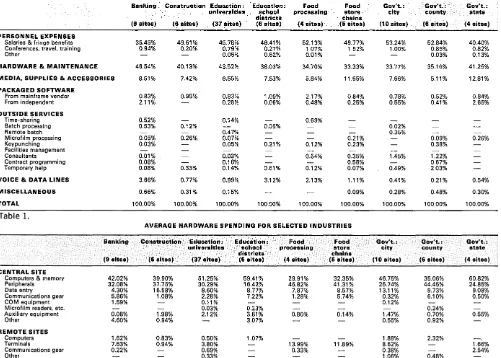
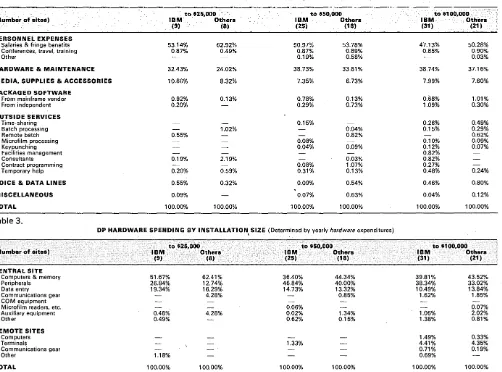
Data processing managers have man-aged to wrest 10% increases in fund-ing for their computer operations in 1976. Thanks to a slight dip in the rate of inflation, this may give them just a little bit of breathing room this year. The money will be spent carefully. Since it's late in the product cycle of most mainframe lines, increases there will be slight. But even shops so strapped for funds that they regularly use both sides of printed forms are
finding ways to shake loose some money for teleprocessing applications, which, as last year, is the big growth area.
52 1976 DP BUDGET
Richard A. McLaughlin. Salaries, terminals, and commu-nications hardware will see increases. And does it really cost more to be in the IBM camp?
NEWS IN PERSPECTIVE 108 COMPANIES
Singer pullout: A bit of deja vu. CUC: alive, well and still in software. Fun and games in Phoen1x.
110 SOFTWARE
File processing jobs zip through the 470.
110 ANTITRUST
Downed by IBM in the market and in court. 111 COMMUNICATIONS
IBM & AT&T in a battle for the data communications market.
Novel satellite net could be up by '79. Bell's rate increase: a repeat of last year? AT&T charges called too high.
Datacom technology to be tested. 120 CONTRACTS
Drive for change coming from users. 122 LITIGATION
Honeywell in court; maybe IBM too? 122 DATA ENTRY
OCR: visible but is this the year? DEPARTMENTS
7 LETTERS
Dp interns, Baby speaks, professional programmers, structured programming's dark side, and more.
13 PEOPLE
John Maguire: a Mustang was his office; Charles R. Wil-liams: 42% growth; Paul Armer: an effect after all. 17 LOOK AHEAD
22 CALENDAR
Dp conferences appeal to many special interests. 27 SOURCE DATA
Information Systems Handbook, other books reviewed; also reports, references, vendor lit, courses, and periodicals.
February, 1976
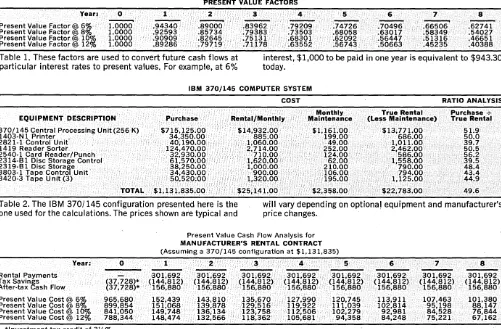
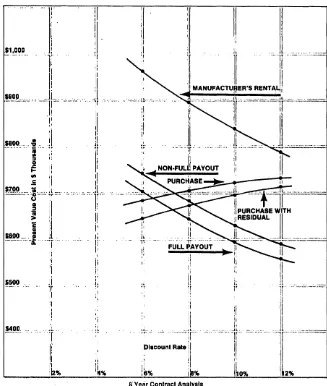
59 RENT, LEASE, OR BUY?
Ted Szatrowski. All the savings a shop can muster over the course of a year can be washed away if this question is answered incorrectly.
71 MICROCOMPUTERS IN SYSTEM DESIGN Edward K. Yasaki. Today's product designs and systems architectures are based on the economics of 15 to 20 years ago. Expect some rapid changes.
86 THE NEXT STEPS IN URBAN TRANSIT Harry Carroll. It's up to the dp professional, not the traffic commissioner or legislator.
103 STAFFING THE ALBATROSS PROJECT Donald Kenney. Here are the requisitions which must be filled for that understaffed, underfunded, fixed-price contract.
168 THE FORUM
Charles Mossmann. Even Shakespeare has problems with privacy through the centuries. .
124 HOSPITALS
System given clean bill of health care. 126 CONFERENCES
Communications data for the uninitiated. 127 STANDARDS
NBS proposes new ASCII rules. 128 INTERNATIONAL
The French government will dish out nearly $1.5 billion in the CII/Honeywell Bull merger.
Overseas service rule may be taken to court. U.S.-Canada service planned.
133 INTERCONNECTION
AT&T asks the FCC to delay a program. 135 HARDWARE
Penril's new dial-up modem. 136 BENCHMARKS
Spending outlook; IBM-Justice suit anniversary; Gag rule ended; IBM announces; Gets it after all; No sale; Debt offering; Cambridge settles suit and reports loss; Shipping milestones.
51 EDITOR'S READOUT
The battle of the budgets: another saga of the dp depart-ment and the users.
142 HARDWARE
Burroughs announces the most exciting medium scale system since IBM launched the 370/145.
152 SOFTWARE & SERVICES
Performance evaluation, mini operating systems, "no frills" Fortran, retail sales.
164 ADVERTISERS' INDEX About The Cover
Out of the gloom of last year - a wistful ray of hope for the dp money managers; color it pale but at least posi-tive. Our design is by Barbara Benson.
If your system fails,
restore it
in seconds witlt
•
....
..
...----_.-Reroute or transfer dozens ... even hundreds ...
of data lines individually or simultaneously
in seconds. Push a button or flip a switch on
any T-Bar SYSTEM RESTORAL switch, and you're
back on-line in seconds. It's that easy.
Use T -Bar SYSTEM RESTORAL
Data Communication Switches individually or
in packaged combinations.
iii ••
T-Bar Fallback
Switches provide
BACK-UP control for RS232 data lines, 4-wire
Telco, 303 type wide band or video terminals
with the flip of a toggle or the push of an
illuminated button.
ii
i • • •
T-Bar Spare Modem
. . .
Switches replace a
suspect modem with a spare for SYSTEM
RESTORAL or test.
T -Bar Bypass
lili •
Switches provide
RECONFIGURATION capability by rerouting
one of a group of RS232 data lines or 4-wire
Telco lines.
ALL T-Bar SYSTEM RESTORAL
4
Data Communications SWitChes,
II
are available with local, on-siterem<?te, on-site computer and ...
ilF'NCORPORATED
off-site remote controls. C a n , . . ®you restore as simply as this? If not, write or phone today for
more information. DATA COMMUNICATIONS SWITCHING EQUIPMENT
141 Danbury Road, Wilton, CT 06897 • Phone: 2031762-8351 • TWX: 710/479-3216
CIRCLE 78 ON READER CARD
CRTRMRTICN.
EDITORIAL STAFFEditor Articles Editor International Editor European Editor Communications Editor Industry Editor Products Editor Source Data Editor Calendar Editor Reprints Editor News Editor Bureau Managers
San Francisco Los Angeles Washington, D.C. New York New England Correspondents Minneapolis Southwest Australia Editorial Advisor Technical Advisor Contributing Editors
EDITORIAL OFFICES
John L. Kirkley Richard A. Mclaughlin Angeline Pantages Nancy Fay Phil Hirsch W. David Gardner Michael Cashman Daniel P. Schlosky Gloria Tidstrand laura R. Ochinero Tom McCusker Edward K. Vasaki Edith D. Myers Phil Hirsch Pamela Evans Angeline Pantages W. David Gardner James K. Johnson Robert F. Alexa'nder Ken McGregor Robert L. Patrick lowell Amdahl Paul Armer, Howard Bromberg, Philip H. Darn, louis B. Marienthal, Ray W. Sanders, Milton R. Wessel, F. G. Withington Headquarters: 1801 S. La Cienega Blvd., los An-geles, CA 90035. Phone (213) 559-5111. Eastern: 35 Mason St., Greenwich, CT 06830, (203) 661-5400. 134 Mt. Auburn St., Cambridge, Mass. 02138, (617) 354-2125; 9805 Singleton Dr., Bethesda, MD 20034, (301) 530-7271. Southwestern: 2711 Cedar Springs, Dallas, TX 75201. (214) 744-0161. West-ern: 2680 Bayshore Frontage Rd., Suite 401, Moun-tain View, CA 94043, (415) 965-8222. Foreign: a Pellerin Rd., london N. 16; (01) 249-1177; 74 Staf-ford Road, Artarmon, Sydney, NSW 2064, Australia, 41-5748.
GRAPHIC DESIGN & PRODUCTION Art & Production
Director Advertising Production Manager Production Assistant CIRCULATION
Cleve Marie Boutell Marilee Pitman Alberta R. Martin 35 Mason Street, Greenwich, CT 06830 Circulation Manager Suzanne A. Ryan Marketing Research
Manager Publisher Assistant Publisher Circulation audited by Business Publications Audit
Deborah Dwelley James M. Morris F. Douglas De Carlo
-American Member A Business
NABP
Press, Inc.DATAMATION is
pub-1-1 __ 1 lished monthly on or
IIF'
about the first day of every month by Tech-nical Publishing Company, 1301 South Grove Ave., Barrington, Illinois 60010; Arthur L. Rice, Jr., Chairman of the Board; James B. Tafel, President; Gardner F. landon, Executive Vice President. Executive, Circulation and Advertising offices, 35 Mason Street, GreenWiCh, CT 06830, (203) 661-5400. Editorial offices, 1801 S. la Cienega Blvd., los Angeles, CA 90035. Published at Chicago, Ii/. DATAMATION is circulated without charge by name and title to certain qualified individuals who are employed by companies involved with automatic information handling equipment. Avail-able to others by subscription at the rate of $24; $40 Air Mail annually in the U.S. and Canada. Re-duced rate for qualified students, $14. Foreign subscriptions are available for £16.80 or for the equivalent of $40 U.S. in most West European cur-rencies. Sole agent for all subscriptions outside the U.S.A. and Canada is J. B. Tratsart, Ltd. 154 A Greenford Road, Harrow, Middlesex HA13QT, En-gland. No subscription agency is authorized by us to solicit or take orders for subscriptions. Con-trolled circulations paid at Columbus, OH and Form 3579 to be sent to Technical Publishing Com-pany, P.O. Box 2000. Greenwich, CT 06830. (!)Copyright 1976 Technical Publishing Company. ® "Datamation" registered trademark of Technical Publishing Company. Microfilm copies of DATA-MATION may be obtained from University Micro-films, A Xerox Company, 300 No. Zeeb Road, Ann Arbor, Michigan 48106. Printed by Beslow Associ-ates, Inc.
Different jobs, different display requirements.
The
corrpsteK
200 handles them all.
Our terminals are running at financial, industrial, government, and institutional sites throughout the United States
and Europe; handling data entry, text editing, and message processing applications (to name a few). How can
our standard product line be so flexible? Simple. We give you processing power, right in the terminal, to meet
your exact needs. We configure our equipment to your environment-standalone or clusters, with internal
memory (up to 16K bytes), mass storage and hardcopy peripherals, even programmable function keys. And,
best of all, we give you the software tools you need to program the Computek 200 for your application: operating
system, assembler, editor, debugger, I/O utilities, communication routines, emulators, data entry packages and
many more.
All of this plus such extras as our exclusive, easy-to-read screen with 20 x 14 dot matrix characters, all for an
amazingly low price.
Sound interesting? Why not talk over your information display requirements with one of our marketing
repre-sentatives. He will show you how the Computek 200 system can meet the needs of your operation. Give us a
call at (617) 864-5140, or fill in the handy coupon and mail it today. You'll be glad you did.
c.orfnI
rtCI(®
Ii~R~RATED
143 ALBANY STREET
CAMBRIDGE, MASS. 02139
TEL. (617) 864-5140 TELEX 92-1464
r
-I
I
I
I
I
I
I
I need economy, tell me more.
o
send literature
o
have a marketing representative call me
NAME ______________________________ _
TITLE ______________________________ _
COMPANY __________________________ __
AooRESS~---CITY ISTATE/ZIP _______________________ _
TELEPHONE ________________________ _
APPLICATIONS NEEoS ____________________ _
Clip out and mail to: Computek, Inc.
OM 276
Marketing Department
143 Albany Street
Cambridge, Mass. 02139
What's new In printers! AskCentronlcs.
just because you need
a faster printer doesn't
mean you have to leave
thefamil~
OUI speeds are way up. But our prices aren't.
And when you select products from the Centronics family, you get the extra advantages of proven reliability, printer compatibility, and
commonality of parts.
OUI new Model 104 printer delivers 200 lines per minute. Which is more full132-column lines per minute for the money than any other printer in our family.
The low price includes a quiet, fully-enclosed design. Clean, consistent high quality printing. A choice of over 20 foreign language character sets. Special character sets. Boldface characters on com-mand. Automatic on-off motor control. Exclusive off-line self-test switch. LSI electronics. Optional upper/lower case printing. And much, much more. All this - plus the best warranty in the business.
For reliability proven in tens of thousands of instal-lations, and for optimum price/performance, look to Centronics. You'll find the biggest selection of printers anywhere. With a broad range of computer interfaces and communications adapters. Plus features and options available nowhere else.
High-volume production assures prompt delivery. Service and parts always available through a net-work of field service offices. Call our nearest office for full information. Centronics Data Computer Corp., Hudson, New Hampshire 0305l.
I:EnTROnII:S®
PRinTERS
---,
Centronics - Marketing Services Dept. 104Hudson, N.H. 03051
o
Send catalog and specification sheets.o
Have a sales representative call.o
I am particularly interested in a printer for:(describe application)
Name _________________________________________ I I Position - - -
:
Company ___________________________________ : I Company Address _____________________________ I I ____________________________________ - - - - I
L ________________ • _______________________ ~
Centronics Data Computer Corp., Hudson, N.H. 03051, Tel. (603) 883-0111, Twx. 710-228-6505, Tlx. 94-3404; Eastern Region: (617) 272-8545 (MA); Central Region:
6
(513) 294-0070, Twx. 810-459-1784 (OH); Western Region: (714) 979-6650, Twx. 910-595-1925 (CA); Centronics Data Computer (Canada) Ltd., Ontario, Tel. (603) 883-0111, Twx.
710-228-6505; Centronics Data Computer (UK) Ltd., Cheam, Surrey, England, Tel. 643 0821-4, Tlx. 851945756; Centronics Data Computer, GmbH, 6 Frankfurt/Main., West Germany, Tel. 678041, Tlx. 841413224; Centronics of Puerto Rico,Dorado, Puerto Rico, Tel. (809) 796-1881, Tlx. 3859349
letters
Interns vs. civil warYour editorial on "Civil War in the Corporation" (Nov. '75, p. 45) high-lights an important problem in all or-ganizations that find themselves heavy users of dp services. The techniques of how to bridge the communication gap between the dp and operating depart-ments takes the form of many different solutions, probably none of which are unique.
At Liberty Mutual, among the tech-niques we have adopted to minimize the problem (you never solve it com-pletely), is to offer an "internship pro-gram" in the dp organization for those operating departments willing to re-lease qualified and knowledgeable per-sonnel for a one to two year sojourn in the dp organization.
We put such individuals through our regular programmer training course, locate them in an applications area working on systems relating to their own department's operations, move them into an analyst position to give them a feel for design considerations, and return them to their own depart-ment at the end of the agreed to time.
If we have done a good job, we then have in most cases an understanding individual in the operating department that we can direct interdepartmental communications through. In at least three of our large operating depart-ments such an individual has assumed the title of Director-EDP Systems, and our relations with both individual and department are smoother due to the "internship program."
PAUL E. KEATING
Assistant V ice President Liberty Mutual Boston, Massachusetts
A message from Baby
It amazes me that you would print the forum "You've Come a Long Way, Baby" by Robert L. Patrick (Dec. '75, p. 193). He needs to see his shrink, and the sooner the better.
To begin with, he seems to be hung up on "seasoning" for people. Does he mean salt, pepper, and monosodium glutamate, or does he mean prepared for the urn?
Mter 35 years in the business world, I have concluded that almost no man-agers are any good. When Patrick writes about "thousands of hours tin-kering with cars, motorcycles, ... and the like," and then implies that the
February, 1976
tinkerers have "experience in group dynamics," I can see why. Please tell that boob Patrick that you can get more experience in group dynamics by raising a couple of kids than by tinker-ing with cars ....
I can tell Patrick that adolescence in men does not necessarily end between ages 25 and 30. I am acquainted with some grownup men of 20 and some adolescents of 50 (and some of those adolescents are managers!)
Finally, Bella Abzug is to be com-mended for her remarle "Let's get all those unqualified women into office with all those unqualified men."
SALLY F. DENNIS
Montrose, New York
Mr. Patrick replies: Seasoning means "prepared for the earn."
Programmer professionalization
I enjoyed reading the October 1975 Forum article by Philip Kraft and Gerald M. Weinberg (p. 169). In gen-eral I am in agreement with what they had to say about professionalization of programming.
I disagree however that a "program survey" leads to the conclusion that the condition of programming expertise today is extremely poor. My opinion is that it has been programmers who have managed to keep systems going on the computer in spite of some heavy odds against them. These odds are: (a) the expectation of users and manage-ment in general that systems can be programmed in half the time needed for a thorough job; and (b) a lack of appreciation of the complexities of programming, e.g., the multiplicity of options in coding that can lead to nu-merous logic loopholes if program-mers' work units (so many lines of coding per day, for example) are not small enough to concentrate sufficient-lyon them. If the Business Specs leave loopholes, the effect can only be geometrically worse on programming as far as program loopholes are concerned.
Steps taken to insist on structured programming have helped cut down the complexity of coding and testing. But a more important step will occur when reasonable time factors are ap-plied to reasonable programming work efforts to ensure a thorough and accu-rate job.
Perhaps if coding mistakes were more frequently disastrous than they are now, the second step towards rea-sonable 'work units would occur much faster! Programmers are often on call 24 hours a day to correct situations that occur because of rush jobs done on 'Business Specifications, Systems Specifications, or Programming and Testing. Their Willingness to be flexible
in their hours has saved many a system from breaking down completely. On the other hand these night hours don't contribute to well-thought-out solu-tions, so a vicious cycle of errors can occur. The programmer working in the above environment often becomes frustrated and overworked, and this again could lead to more errors. . . .
I do not wish to imply that there are no mediocre programmers in the busi-ness, but that this problem pales before the often unreasonable work demands. In fact the very work demands them-selves makes it difficult to spot medio-cre programmers-bad ones are easy to spot-and to concentrate on im-proving them. We often hand them built-in excuses for not meeting the objective of implementing a stable er-ror-free system.
ERNIE KAMMERER
Chief, Commercial Systems Development Canfarm Data System Canadian Department of Agriculture Guelph,On!ario Canada
I have been thinking about writing my thoughts about "Professionalization of Programming" but it could not have been expressed more correctly nor more clearly than it was by Philip Kraft and Gerald Weinberg ....
DAVID E. FERGUSON
Publisher System/ 3 World Canoga Park, California
Possible danger
Edsger Dijkstra's review of On the
Feasibility of Software Certification is
very evenhanded. But I think that he overlooks a serious problem when he suggests that the system user (as a practical matter, the application pro-grammer) "totally disregard the com-piler and the bit patterns it generates as irrelevant aspects of the implementa-tion." This leaves a system program-mer bent on fraud an open door to program control.
BELDEN MEt'TKUS
Editor, Computer Security Computer Security Institute Northboro, Massachusetts
Inmatedp
I saw your November issue for the first time, and was impressed with the depth of your articles ....
I am presently incarcerated at the Wisconsin State Reformatory where I was first introduced to data processing about three years ago. Since then I have mastered Basic, RPG, FORTRAN, COBOL, and BAL.
letters
worked with a number of people from Northeast Wisconsin Technical Inst. and the state government to start a dp shop at the institution. This was a revo-lutionary idea to the people involved in the penal system-that an inmate could do something that complicated and sophisticated. But they were will-ing, reluctantly, to give it a try. Since there was no corrections official even remotely qualified to manage the new "Computer Services Department," I was put in charge. I have two other people working with me, also inmates here.
The department, and the fact that it is completely inmate-run, are both firsts for the Wisconsin penal system. After the customary red tape, we were given an office (another first), com-puter time on an IBM 360/40 and a 370/145, and also a time-sharing ter-minal (PDP-ll/E). Every two or three weeks, representatives from the state government come to the institution with their problems for us to apply our , dp expertise to. We now have a
num-ber of systems up and running in Mad-ison, the state capital.
JEFF C. LARKIN
Wisconsin State Reformatory Green Bay, Wisconsin
Women's flag unfurled
Congratulations to the Yaker twins on their success in rising into IBM'S man-agement structure (People, Nov. '75, p.l1).
That you chose to use the Yaker twins as a vehicle to air your prejudices about women and the women's move-ment is abominable. When are people going to stop thinking that a woman's identity and effectiveness are. defined by "being blonde, attractive and look-ing even younger than her ... years."
Also, of what significance is it that they have achieved their professional status "without waving the :flag" of women's lib to any great degree"? Your implication is that support of women's liberation is a black mark against anyone who believes in it. For your information, the objective of women's liberation is raising people's awareness of women's talents and ca-pabilities which are largely unused. If you consider this something to be ashamed of, then you should be ashamed of yourself.
ANNE PETROKUBI
Senior Software Engineer 3M Company Newton, Massachusetts
The People item on the Yaker twins was written by one woman and edited by another.
8
Don't Tread on Structured Programming
Thomas Gildersleeve's contribution to the Forum in the November '75 issue, "The Dark Side of Structured Programming" (p. 78), loosed an avalanche of response from struc-tured programming proponents. Mr. Gildersleeve argued that struc-tured programming is not equally well suited to all applications, and used a file update program as an example. The example and the ar-gument have been attacked by readers froin Peoria to West Ger-many. There is no possible way to show the many flowcharts and solu-tions supplied, but the following ex-cerpts give some flavor of the responses.
Maybe "The Dark Side of Struc-tured Programming" isn't dark after all. Mr. Gildersleeve concluded that "the merging of additions into a master file" was "the nemesis of structured programming" because "to express this logic in structured form requires the introduction of a flag ... " I am also concerned about the overuse of flags, but I don't agree that flags are required. In fact, this logic can be quite lucid and succinct when expressed in "flag-less" structured programming. WILLIAM H. ELRICK
Central Illinois Light Company Peoria, Illinois
Selecting a specific case in order to demonstrate the general superiority of one technique (decision tables) over another (structured program-ming)is not a persuasive method of proof. . . . The flag introduced by Mr. Gildersleeve in the structured logic of his Figure 3 is superficial-one of ~any alternative solutions is attached ....
R. KRIKORIAN
Dillingersville, Pennsylvania
The November '75 Forum gives a
good example of the fact that no amount of structuring rules, will by themselves result in a well-struc-tured program. Let's analyze the problem and the solution presented GEORG WINTER
Kurhaus West Germany
The author misunderstood the in-tent of the methods of IBM'S Inde-pendent Study Program on Struc-tured Programming. It should be taken as an informal proof that transforms exist to map unstruc-tured flow charts into strucunstruc-tured ones. This was originally presented by Bohm and J acopini to prove that
any proper flow chart can be repre-sented with only three basic con-structs (WHILE DO, IF THEN ELSE, AND BEGIN END). This transforma-tion should not, in general, be used as a method of programming. The PASCAL program below ...
S. C. SCHWARM C. E. BRIDGE
Engineering Physics Laboratory E. I. Du Pont De Nemours & Co. Wilmington, Delaware
Mr. Gildersleeve contrasted "old" and structured flowcharts for merg-ing additions into a master file. His old flowchart used 9 boxes, while the structured flowchart used 16 and was more complicated. He con-cluded that structured program-ming led to a poorer solution to the problem.
The structured flowchart be-low ....
EDLATO
Washington, D. C.
Although I am an advocate of structured programming, I do ap-preciate the position taken by Mr. Gildersleeve in his article. I do not object to using decision tables in certain situations. However, I feel that his example should not be used to compare struc~ured program-ming with decision tabling. I per-sonally feel that, in most instances, a SAM file structure is not efficient for the file maintenance process. In many cases, an ISAM file struc-ture ...
DOHN P. ADDLEMAN
Systems Analyst Commonwealth of Pennsylvania Department of Education Harrisburg, Pennsylvania
The letter writers generally viewed structured design and programming methods in a more favorable light, saying:
As for me, structured programming illuminates a path to clear, readable, and eminently satisfying programs which ease my workload and brighten my outlook (Elrick). I believe decision tables are most useful as a means of communicat-ing decision logic from designer to programmer and as an aid to the programmer in determining the log-ical requirements of his program. However, I feel the function of log-ical structure is best illustrated by flowcharts (Krikorian).
Structured programming is indeed a powerful aid to good programming when properly applied (Winter). =it:
The new Dataproducts Model 2290 printer offers
superior printing quality at 900 LPM with a
full 64-character ASCII set.
For about half the cost of current
high-speed line printers.
Couple that with extraordinary low
operating costs and the 2290 is like
money in the bank, twice over.
So why pay twice as much (and
more)
if
900 LPM is all you need?
PERFORMANCE PLUS ECONOMY
The 2290 was designed (from the
proven technology of our 2200
series) to meet the requiremen ts
of the new high-performance,
minicomputer-based systems.
So you can count on maximum
operating economy in medium and
large business data processing systems,
distributed processing, and remote
terminals at 9600 baud and up.
What's more, the 136-column 2290 is
interface compatible with our 2230
(300 LPM) and 2260 (600 LPM) ,
and over 70% of its parts are
interchangeable with these
•
.
field-proven models.
A little extra economy you
can bank on wi th
Dataproducts.
FEATURES YOU CAN
BANK ON
The 2290, like all 2200 series
printers, offers two unique
systems:
The patented friction-free
Mark IV print-hammer syste
for consistent high-quality
print-ingand unmatched reliability.
And a patented system for
automatic detection of lack of
paper movement.
Plus, a 90°
swing-open gate
for fast ribbon
and paper loading.
An adjustable
paper stacker for
uniform stacking .
of forms.
An optional direct-access
vertical format unit that
eliminates paper tape to allow
printing of new formats direct
from the CPU.
An acoustical cabinet for quiet
operation in office atmospheres.
Little wonder that, with these
outstanding features (and many
more) , Da taproducts is the
•
world's leading independent
manufacturer of line printers.
For all the facts and figures
II
our brochure.
on the 900-LPM 2290, write for
Better yet, call us collect
and bank the unnecessary cost
of a stamp.
Dataproducts
The Line Printer Company6219 De Soto Avenue/Woodland Hills, CA 91365 (213) 887-8451; Telex: 67-4734
THE NEW 900·LPM 2290
The best 01 the
big
systam.
Powerful, reliable multi-stream
Remote diagnostic capability.
batch.
Process-structured architecture.
Concurrent general-purpose time-
Integrated file/address space.
sharing with up to 64 on-line,
A powerful, flexible command
interactive terminals.
language.
Complete higher-level languages
A large microprogammed ins
truc-with interactive
debuggers~tion setand true virtual memory
FORTRAN, COBOL, APL, BASIC,
demand paging tq accommodate
and ALGOL.
big programs.
A
comprehensive Business
True large-scale capacity-up to
Instruction Set.
800 million bytes of high-speed,
A large-scale Data Base
on-line disc storage and up to
Management System.
1.2 million bytes of main memory.
•
February, 1976
Low price - total system cost of
under $10,000 per month.
Ease of operation.
Low operating costs-no operating
staff.
Ease of installation.
Small physical size.
It's all in the DECSYSTEM-20. The
first computer that bridges the gap
, between large and small systems.
By giving you the best features
of both.
And it's available for delivery
right now.
To find out more about how the
DECSYSTEM -20 can help your
operation, call or write: Digital
Equipment Corporation, Large
Computer Group, Marlborough,
MA.01752,617-481-9511,ext.6885.
In Canada: Digital Equipment of
Canada, Ltd. In Europe: 81 route
de l' Aire, 1211 Geneva 26. '
Tel: 42 79 50.
Prices apply to USA only.r~~:~~~~:~:::::----~-·-D-m-D-D--m-D----'
DECSYSTEM-20, The Bridge Computer.
o
Please have a salesman contact me.LARGE COMPUTER GROUP
Name_--:-_ _ _ _ _ _ _ _ _ _ Title _ _ _ _ _ _ _ _ _ _ _ _ Company _ _ _ _ _ _ _ _ _ _ _ _ _ _ _ _ _ _ _ _ _ _ _ _ __ Address _ _ _ _ _ _ _ _ _ _ _ _ _ _ _ _ _ _ _ _ _ _ _ _ _ City _ _ _ _ _ _ _ _ _ _ _ _ State _ _ _ _ _ _ _ _ Zip· _ _ _ _ Telephone _ _ _ _ _ _ _ _ _ _ _ _ _ _ _ _ _ _ _ _ _ _ _ _ _ Send to: Digital Equipment Corporation, Large Computer Group, 200 Forest St., Marlborough, MA. 01752.
~---~
• • • • •
•
•
•
•
•
•
~ Ill ... .,
""*...
. .. · ·
~J l'.
'.
--;:-;"...
,~- • • • • • •. ... .
, .~~'''...
.
....
~ ~ ~~ .,- • • • • • • • !" . ' '
:t .... ~ . . " ,
UNIVERSAL
Making data move is the name of the game in today's switched
or dedicated line networks. If you're moving it at any speed up
MODEMS
to 2400 BPS, Universal Data Systems has the proper modem for
reliability, economy and efficiency in your system.
SEE US AT
obooom
6
UDS has more than 20,000 modems in active field service, and
that total is growing by more than 1000 units per month. Our
product line includes CMOS 201s, plus 103s, 202s and the
mul-tiple-modem RM-16 which contains up to 16 units in any
configu-ration mix you desire.
In addition to our products, we're extremely proud of our
customer service. Check us out: Call us on the telephone. You'll
like what you hear.
III
univupsal daba sHsbunri
4900 Bradford Drive. Huntsville, Alabama 35805 • Telephone (205) 837-8100 • TWX 810-726-2100people
From a
Mustang to
a Mercedes
Four years ago, when John Ma-guire was operating out of a 1968 Mustang he called his office, the ambitious president of software ag of North America said he would feel he'd "made it" when he'd bought a Mercedes and moved the company into a real building. He's had his Mercedes 450SLC almost two years now and his company. is
JOHN MAGUIRE
"failure is not part of my psychology"
operating out of real offices in Res-ton, Va., a suburb of WashingRes-ton, D.C.
"Failure is not part of my psy-chology," said Maguire. "My doc-tor once asked me how many hours a week I wasn't thinking of succeed-ing and I answered, none."
Maguire has been president of software ag, which markets a data base management system called ADABAS in this country, since Feb-ruary 1972. ADABAS was developed by software ag of Darmstadt, West Germany.
. In 1971, when he had been sell-ing software products for 10 years, Maguire was in Europe with a "suitcase full" of packages pro-duced by Consolidated Analysis Centers, Inc., a company he worked for for six years. In '71 he was a senior vice president and director of technical operations for CACI'S na-tionwide operations.
"No one had been able to solve the data base management system problem then," he recalled. "Then I bumped into ADABAS and it was clear to me that it was head and shoulders over anything I had
February, 1976
seen."
He convinced software ag that he was the one to do their marketing in the U.S. Getting started, he said, proved to be a time-consuming pro-cedure. "I had to get the material translated for openers, so I hired a translator who worked at night, part-time. I also had to develop all the marketing brochures and advertising myself."
Maguire said he quickly drew up slides for his marketing presenta-tion. "I went downtown and bought colored paper stickem letters-A.D.A.B.A.S.-and colored tapes. Then I cut 35 mm slides and went to prospects with my slide projector and put on a show."
"In the early days 1 would get discouraged," Maguire said. One large chemical company spent some $80,000 on a study that indicated ADABAS was best for its DBMS needs only to shelve the report and go with IBM'S IMS. "We didn't have a user base then so ADABAS was con-sidered risky," he recalled. He added that the chemical firm switched from IMS to ADABAS three years later.
Maguire said business began to pick up after 15 months of intensive marketing. Now there are 130
ADABAS installations and user groups have been formed.
The software ag North America president believes the recession helped his company. "I could point to about 15 sales that I'm pretty confident would have gone IMS ex-cept for the recession." Program-ming managers who might have gone with IMS, he explained,
real-ized it would take more people and hardware. ADABAS, "although its price ($120,000) is high, doesn't require many people and is easy to use."
Maguire attributes part of his success to his diversified marketing strategy. "You can sell a software package to an insurance company and then to 10 more insurance companies and that's the easy way." He chose instead to go after large and leading organizations in a vari-ety of categories. "I knew that when we got some leaders in a category it would look like dominoes rippling right through the category."
He prefers traveling to staying in the office. "I'm not a very good administrator. I get itchy at the desk. He said he averages some 3,000 miles a week. "Wherever there's an IBM computer, there's a good ADABAS prospect."
*
42% Compounded Annually
Charles R. (Chuck) Williams had five majors in 1960 when he was working for a Ph.D. at UCLA. They were insurance and economic theo-ry; management; statistical analysis; finance; and math.
He .didn't get his Ph.D. He went to work instead, for RCA Computer Systems. He was acquired with the division by Sperry Univac. He's held a lot of jobs both with RCA and Univac that have used a lot of what he learned in all of his majors. He's learned what he likes best-general management. And that's what he's been doing since April 1, 1973 as vice president o( Western Opera-tions for Sperry Univac.
Apparently he's been doing it well. Since he took over the post, Sperry Univac's Western Opera-tions has experienced a 42 %, com-pounded annually, growth rate. What does he like about the job? "The overall perspective." He is re-sponsible for all marketing, systems, customer engineering, financial and personnel activities in 11 western states. This includes 15 marketing and customer engineering branches and six associated local offices and 1,000 people. And, says Williams,
"we're in a major recruitment mode."
Williams obtained a B.S. degree in Business Administration from UCLA in 1957 and an M.B.A. in Finance in 1958. In the course, he had some training in computer science. In 1958 he joined the Air Force. He was placed in charge of data processing for the Military Air Transport Service (MATS) in Eu-rope. "That's where it all began." He served in this capacity for two years. "We went from a 602A to a
(Continued on page 14)
CHARLES R. WILLIAMS
A Los Angeles native who still lives there
42% ...
(Continued from page 13)
605 . . . handling things like per-sonnel and inventory."
When he left the Air Force he went back to UCLA to work on his Ph.D. and to teach a course in in-surance and economic theory. He
was recruited away by RCA where he
progressed from systems analyst, through salesman, sales manager for a branch, district manager, to marketing operations manager for the western region, the post he held when "acquired" by Sperry Univac. Williams is one of those rarities, a native of Los Angeles who has spent
An Effect After All?
Paul Armer once was head of a team asked by the government to come up with a hypothetical elec-tronic system that would, in effect, be a "big-brother-is-watching-you" system. The team's recommenda-tion ... an electronic funds transfer system.
Armer was recommended by the American Federation of Informa-tion Processing Societies (AFIPS) as a candidate for membership on the recently appointed National Com-mission on Electronic Funds Trans-fer (Nov. '75, p. 135). He didn't make it. But maybe he'll have an effect on the commission. He's been named chairman of a Special Com-mittee on Electronic Funds Trans-fer Systems by AFIPS.
AFIPS president, Dr. Anthony
Ralston, said the committee "marks a major commitment by the Federa-tion to assure that pertinent tech-nological information is made available to the federal government and to other groups concerned with the increasing use of automated transactions. The committee, in co-operation with the AFIPS Washing-ton office, will provide a reservoir of expert testimony and counsel on the
In New Posts
PAUL ARMER
"a major commitment"
use of computers and related com-munications techniques in all areas involving EFTS."
Armer is a fellow and program coordinator on science, technology and society for the Center for Ad-vanced Study in ~he Behavioral Sci-ences, Stanford, Calif. He also is a lecturer in computer science at Stanford Univ.
Prior to joining the center in 1972, he was a research associate in the Program on Technology" and
most of his life (41 years) in Los Angeles. The only exception is the two years he spent in Europe while in the Air Force. He lives in the beach community of Malibu which makes him "water oriented." Los Angeles' proximity to top ski resorts facilitates his other extra-curricular
love, skiing.
*
Science at Harvard Univ. and a lec-turer in the Harvard School of Business. Previously, Armer was Director of the Stanford Computa-tion Center and for 10 years served as head of the Computer Sciences Dept. at the Rand Corp. where he also was a member of the Corporate Management Committee.
A prolific author (he's a DATA-MATION contributing editor) and a
member of a variety of professional groups, Armer has appeared as a wit.ness before a number of govern-mental bodies. Most recently, last June 23, he testified on "Computer Technology and Surveillance" at hearings held jointly by the sub-committee on Constitutional Rights of the U.S. Senate Judiciary Com-mittee, and the subcommittee on Science and Technology of the Senate Committee on Commerce. He also has served as a consultant to the Presidential Commission on Technology, Automation and Eco-nomic Progress, and to the Warren Commission.
Armer is a member of the Board of Directors of the Institute for the Certification of Computer Person-nel and a past president of AFIPS.
*
Amdahl· Corp. named two new vice presidents. KEN-NETH W. SIMONDS, formerly director of market op-erations, was named vice president of marketing, western and Canadian operations, and JAMES K. DUTTON, formerly with Storage Technology Corp., was appointed vice president of marketing, eastern operations . . . ALLEN J. KROWE was elected a vice president of IBM.
He continues as assistant group executive, plans and controls, Data Processing Group . . . PERRY M. KANTNER was named president and chief executive officer of Omnitext, Inc., manufacturer and distributor of computer-based video display terminal systems . . . MICHAEL PFAFF was appointed director of data pro-cessing for Federal Express Corp . . . . CARL F. GRIS-WOLD, senior vice president of Southeast Banking Corp., Miami, was named chairman -of the Payments System Policy Coordinating Group of the American Bankers Assn. . . . Advanced Memory Systems, Inc., Sunnyvale, Calif., promoted DR. JAMES A.
CUN-NINGHAM to senior vice president . . . MARVIN HOFFMAN was promoted to director of research and
development of Computer Machinery Corp., Marina Del Rey, Calif .... JAMES H. CHAMBERS was appointed president of Computeristics, Inc., a wholly owned sub-sidiary of Uniroyal, Inc., Middlebury, Conn., which provides on-line computer services to Uniroyal and other industrial customers . . . LISTON M. RICE, JR. was promoted to vice president and director of corporate marketing for Texas Instruments, Inc .... VIRGINIA C. BURTNETT was named regional systems manager for
GTE Data Services' midwest regional data center in Fort
Wayne, Ind . . . . R. C. PHILLIPS was named vice president, systems division, in Sperry Univac's World-wide Development and Manufacturing organization in Blue Bell, Pa . . . . The Richard A. Viguerie Co., Inc., Falls Church, Va. firm specializing in direct mail fund raising for political candidates and organizations and non-profit organizations in the religious" health and welfare, and educational fields, named RICHARD S. BARI as director of data processing . . . ALAN G. BROWN was named general manager of A.
o.
Smith Corp.'s data systems division. :#:THIS IS THE
GENERAL LEDGER SYSTEM
YOUANDYOURACCOUNT~G
DEPARTMENT HAVE BEEN
DREAM~GOF.
*CALL 1.(800} 527·3250
AND
F~D
OUT WHY.
*
Here's exactly what will happen when you call. One of our staff will take your name and address and immediately send you a brochure explaining exactly what the UCC General Ledger/Financial Control System is all about. (In Texas, call 214-638-5880 collect.)When you've seen how UCC-FCS meets your financial reporting requirements, call this number again. We'll arrange a presentation at your convenience.
Here are some reasons why UCC-FCS has made the Accounting and Data Processing Departments happy in over 150 installations:
• QUick and efficient implementation.
• Easy-to-use report writer requiring virtually no EDP assistance.
• Full general ledger accounting,
plus
budgeting, costing, profit center reporting. And much more.• Optionally generates
over
100 standard reports.ucc
We're going to
be the IBM of
software
companies.
University Computing Company. P.O. Box 47911 • Dallas. Texas 75247 • A Wyly Company
The inventors
ofrnagnetic tape
just made
a
better
~~Winchester.~~
Back in 1932,BASFin forerunner of such modern data 3348 "Winchester" Data Module. Now
has made significant improvements on the Winchester. While still completely compatible with existing 3340 drives, our new Data Modules feature an exclusive oriented oxide coating and polishing technique which offers 30-35% better resolution properties than competi-tive Winchester-type packs.
Our new finish allows the read/write heads to fly uniformly and four times smoother than independent competitive module heads ... resulting in greatly reduced possibilities of error generation. In addition, BASF has de-veloped a special disk-surface lubricant, which eliminates disk coating wear and consequent contamination and
er-, for the first timeer-, any to the disk surface while the
Modules are available in three configura-tions: the 1335 Module, with 35 million-byte capacity; the 1370, with 70 million-byte capacity; and the 1375, with fixed head and quicker access. Because our error testing is twice as critical as drive manufacturer's specifications, we warranty our Data Module to be free from manufacturing defects for as long as you use it.
For complete details on the BASF "Winchester" Data Module, write: BASF Systems, Crosby Drive, Bedford, MA 01730, or call our nearestregional office: in Los Angeles, (213)451-8781; in Chicago, (312) 343-6618; and in Clif-ton, N], (201) 473-8424.
BASF
The
Original.
Computer Tapes
Disk Packs Flexydisks Word Processing Supplies
~LOOKA
AD
ANOTHER LOST (LOSS?) LEADER
An insider at Singer Business Machines, listing possible mistakes
the corporation might cite as causes of the division's need to go,
mentioned its having "dragged its feet" in getting into the
super-market point-of-sale arena.
"We allowed NCR and IBM to get in and
grab off a decent chunk of that market before we got moving."
A move Singer almost made but didn't was to buy, in late 1972,
the then acknowledged leader in supermarket point-of-sale, the
Electronic Store Information Systems division (ESIS) of Nuclear
Data Corp., which then had more than 500 POS terminals installed
in stores of six supermarket chains. Maybe, if the acquisition
had gone through, Singer could have become the leader in
super-markets as it already was in general retail stores.
But it didn't
go through and what its consummation might have meant to both Singer
and ESIS is an interesting point of conjecture.
A few short weeks after Singer announced it was abandoning its
Business Machines Division (p. 108), the company that picked up ESIS
when Singer bowed out, Bunker Ramo, said it was going to discontinue
development and production of the POS product line for supermarkets.
Bunker Ramo said it would ttcontinue
ltdiscussions with prospective
buyers for all or part of the line but it's highly unlikely the
pro-spects included
Singe~FOR SINGER USERS
Like other users seemingly abandoned by their suppliers, Singer
Business Machines users were quick to act following announcement
by Singer Corp. it was abandoning SBM.
The division's user group,
Forum, took two quick steps.
It changed the location of its March
15-17 meeting from New Orleans to Chicago "to enable more users to
attend" and it named professional association executive Donn W.
Sanford, formerly executive director of DPMA, to take command.
Sanford said he has formulated a number of questions for Singer
Corp. to which he had received "no firm answers" at this writing.
He also said he had received numerous inquiries from Singer users
who were not members of Forum and felt confident that many of them
would join before the March meeting, and he was in the process in
mid-January of compiling a user directory which would include a
master list of all installations and an equipment exchange column.
He was hopeful that a contingent of Singer executives, "at least
middle echelon," would attend the March meeting.
FORGING AHEAD -- SINGULARLY AND PLURALLY
Telefile Computer Products, Inc., Irvine, Calif., said in September
it was going after the Xerox user base on its own, after having been
thwarted in attempts to talk about purchase of the base from Xerox.
It then had signed up one user and, in mid-January, still had one
but was "close" with three more and president Sam Edens felt the
firm was "doing very well, thank you.
ftHe said a personal trip
around the world had convinced him that the big concern of Xerox
users was CP-V (an operating systems) development and his company
was going to get into this "aggressively" and was going to "forge
ahead" with new product development for Xerox users.
Toward this
LOOKAI-EAD
WHERE ARE THEY NOW DEPARTMENT
When we last left Royden C. Sanders Jr. he was bitterly fighting his
ouster as president of Sanders Associates.
On his way out the door
at the firm, the feisty Sanders demanded that his name be removed
from the name of the company while company officers complained of
their former president's "playboy airs.
IfWell, Royden Sanders now heads a firm called R. C. Sanders
Technological Systems, Inc., in southern New Hampshire.
He is as
elusive as ever, but the word is that he is getting ready to
intro-duce a computer-related product; that he is in the process of hiring
25 operations people; and that he has lined up a 12,000 sq. ft. plant
in Newington, N.H.
Ever in a hurry, he acquired the SYS Computer
Corp. of Hackensack, N.J., which makes intelligent terminals.
The
betting now is that R.C. Sanders Technological Systems, Inc. will
enter the systems and intelligent terminals markets and that one of
its competitors will be none other than Sanders Associates.
HONEYWELL:
LIBERATING IBM'S MOD 10
If you see a System 3 model 10 being wheeled out of an installation,
there is a good chance that it's being replaced by a Honeywell
Liberator 3, model 62/40.
Although the HIS machine was introduced
less than a year ago, it is known that already several hundred of
the machines have been installed.
Further, the majority are
first-time Honeywell users and nearly three quarters of those are
replac-ing IBM equipment, primarily the model 10.
One reason you won't hear much trumpeting from Honeywell on the
subject is because the Liberator 3 is manufactured in Italy. The
sensitive French Honeywell Bull operation might be offended.
IN TRUE PERSPECTIVE
Vector General, Canoga Park, Calif., producer of interactive graphic
terminals, has something new in the offing -- a new line of terminals
it will introduce April 1.
The company hints at a "departure in
architecture" that "finally" offers "true perspective" to users of
three dimensional displays.
Older three dimensional displays
haven't been quite "true" when it comes to perspective, the firm
says.
The new architecture also is supposed to "dramatically
in-crease the amount of data a user can display on a screen, and will
be modularly constructed making it "more easily adaptable to a range
of applications." The series will be numbered 3400.
REUNION BEFORE THE SENATE
It was a reunion recently of IBM's attorneys when its legal counsel,
former U.S. Atty. Gen. Nicholas deB. Katzenbach testified before
Sen. Frank Church's Senate Select Committee on Intelligence.
Accom-panying Mr. Katzenbach was IBM's lead attorney on the government
antitrust case, Thomas D. Barr of the New York law firm of Cravath,
Swaine
&
Moore.
The Senate committee's majority legal counsel is
none other than Frederick A. O. Schwarz Jr. who worked with Barr at
Cravath, Swaine on various IBM antitrust cases.
Katzenbach was questioned about electronic bugs that were employed
to monitor the Rev. Dr. Martin Luther King Jr. during his tenure as
attorney general.
The IBM attorney said he couldn't remember memos
that dealt with the subject.
Later, Katzenbach suggested to the
Senate Government Operations Committee that the u.S. place a
mora-torium on all covert intelligence operations.
Diablo announces
the 40 megabyte drive
for a 10 megabyte price
in a 5 megabyte box.
The New SERIES 400 Family of Disk Drives .
• Two Independent Head Positioners
• Identical Dimensions
M410F, 13.3
megabytes 1 removable 2315-type cartridge ,M410T, 13.3
megabytes removable 5440-type cartridge• Power Interrupt Protection
• 100% Common Spares
• Requires No C.E. Pack
• Internal Diagnostics
• Interface Compatibility
M411 F, 26.6
megabytes 1 removable 2315-type . cartridge1 fixed disk
M411T, '28.8
megabyte. 1 removable 5440-type cartridgeThe New Series 400. Eight
top-and front-loading drives from 13.3
to 53.3 megabytes. Each drive
totally compatible in technology,
media, interface, transfer rate and
dimensions. And each Series 400
drive with
99%
common parts.
This complete compatibility
increases your ability to respond
quickly and profitably to changing
customer capacity requirements,
and reduces your inventory
investments in drives, controllers,
cabinets and spares. You can even
upgrade installed systems without
impacting existing data bases,
software investments, field support
or system operations.
Several design innovations in
the Series 400 helped make it all
M412F, 40 megabytes 1 removable 2315-type cartridge
2 fixed disks
M412T, 40 megabytes 1 removable 5440-type cartridge
2 fixed disks
,.'"., •. " . , ",1",1 ,e'O
possible. Foremost among them:
a unique dual head positioning
mechanism-based on an inertial
actuator-providing the capability
for independently moving
two
head positioners per drive. A
highly efficient, low-cost
motor-generator internal power supply
results in low power
consump-tion, cooler operation and
protection from line transients,
voltage spikes and power
"brown-outs". A unique servo
track following technique-with
pre-recorded servo data imbedded
in the sector overhead
area-means each head operates ina
closed loop servo on the track it is
seeking. The result-higher
positioning accuracy, greater
utilization of disk surfaces and
pack interchangeability
(com-pletely eliminating the need for CE
packs). And a microprocessor
performs internal diagnostics,
provides interface flexi bi lity and
improves reliability by eliminating
many electronic components.
For complete documentation,
write Diablo Systems, Inc., 24500
Industrial Boulevard, Hayward,
California 94545. (415) 783-3910.
In Europe, Diablo Systems,
S.A., Avenue de Fre, 263,
1180 Brussels, Belgium.
~
Diablo
I
Diablo Systems. Incorporated
A Xerox Company
XeroxlBl is a trademark of Xerox Corporation Diablo is a trademark