! ! ! ! !
ABSTRACT
CAMPBELL, MATTHEW PAUL. Mathematics Teachers and Professional Learning Communities: Understanding Professional Development in Collaborative Settings. (Under the direction of Dr. Hollylynne Stohl Lee.)
As a result of the recent increased emphasis on mathematics professional
development (MPD), studies have attempted to identify a set of features that are commonly part of successful MPD programs (e.g., Yoon et al., 2007; Garet et al., 2001). While recommendations that professional development should be collaborative, sustained, and practice-based are common across all subjects, MPD is often highlighted by activities that address the specific needs of mathematics teachers (e.g., Loucks-Horsley et al., 1998). Professional learning communities (PLC) are also considered valuable for the growth of teachers. However, PLCs only provide a general guideline for how teachers can make meaningful changes to instruction, regardless of subject. In order for PLCs to be used as a form of MPD, more work needs to be done to identify the extent to which mathematics teachers in PLCs engage in the activities that improve their content and pedagogical knowledge and, ultimately, improve student achievement. Based on literature on teacher collaboration, PLCs, and MPD initiatives, a conceptual framework was developed to describe the collaborative work of mathematics teachers. This framework was used to guide the design of this study and the analysis of data.
! ! ! ! !
observed during their set meeting time and individual teachers took part in interviews and surveys to further explicate the team dynamic as well as individual’s dispositions and values. The teams provided two distinct cases of the collaborative work of mathematics teachers. One team had strong collaborative norms yet did not engage in the activities commonly found in effective MPD programs while the other team struggled with implementing the principles of PLCs but were able to focus more on mathematical content and pedagogy. Based on the findings, the role of PLCs as the sole source of professional development for mathematics teachers is questioned. Additionally, other factors that could be attributed to a group of teachers’ inclination to engage in high-level, content focused activities are
highlighted. These factors contributed to a refinement of the conceptual framework that classifies the growth of mathematics teachers in collaborative settings. From this,
Mathematics Teachers and Professional Learning Communities: Understanding Professional Development in Collaborative Settings
by
Matthew Paul Campbell
A thesis submitted to the Graduate Faculty of North Carolina State University
in partial fulfillment of the requirements for the Degree of
Master of Science
Mathematics Education
Raleigh, North Carolina 2009
APPROVED BY:
______________________________ Dr. Hollylynne Stohl Lee Chair of Advisory Committee
______________________________ Dr. Paola Sztajn
______________________________ Dr. Allison W. McCulloch
! ! !
! ii
! ! !
DEDICATION
! ! !
! iii
! ! !
BIOGRAPHY
Matthew Paul Campbell was born on September 12, 1983 in Mineola, New York. Matthew spent most of his childhood on Long Island, graduating from Patchogue-Medford High School in Medford, NY in 2001. He then enrolled at North Carolina State University, receiving the Park Scholarship, a full, four-year scholarship based on scholarship, leadership, service, and character. He graduated magna cum laude in May 2005 with Bachelor of
Science degrees in mathematics education and mathematics.
Upon graduation, Matthew went on to teach at Deer Park High School in Deer Park, NY where he taught Pre-Calculus and an SAT preparation course. He also served as co-founder and co-advisor for the boys’ volleyball club. After one year in Deer Park, Matthew returned to Raleigh, NC to take a job for one year at Athens Drive High School where he taught Algebra I and Honors Algebra II and was co-advisor for the freshman class of 2010.
Matthew then returned to NC State full-time to pursue a master’s degree in mathematics education. He worked as a graduate research assistant on the “Nurturing Mathematics Dreamkeepers” project during his first year in the program. He then worked as a graduate research and teaching assistant with Dr. Paola Sztajn in the elementary education program and as a graduate research assistant with Dr. Allison McCulloch in the mathematics education program. From this work, Matthew co-authored proposals submitted to national and international conferences and publications submitted to journals.
! ! !
! iv
! ! !
ACKNOWLEDGEMENTS
First, I would like to thank my mother, Jeanine Campbell, for all of her support as I
have embarked on this process. For 13 years, she has worked tirelessly to raise my brother,
my sister, and me on her own and has encouraged me during every step of my journey
through high school, college, teaching, a master’s degree, and soon a doctoral degree. I
would also like to thank my brother, my sister, and the rest of my extended family. I am
fortunate to have the support of a large and loving family.
I would like to thank my fiancée, Heidi. Without her support, I would not have been
able to commit myself to my graduate studies and pursue my goals. Now, as we prepare to
move across the country, her love and support is more meaningful than ever. I would also
like to thank Heidi’s parents, Jim and Robin Hecht, and her sisters, Penny and Emily, for
their continued support. It has been nice to have a family away from home.
None of this would be possible without the help of Dr. Hollylynne Lee. Dr. Lee has
driven me to do the best work I am capable of ever since we first met during my freshman
year of college. She worked with me on my wild and ambitious ideas for my thesis, an
experience from which I believe we have both grown. I would also like to thank Dr. Paola
Sztajn and Dr. Allison McCulloch. Having the opportunity to work with Dr. Sztajn and Dr.
McCulloch during my two years in the master’s program has propelled me forward
professionally and has had an impact far beyond just this thesis. I would also like to thank
Dr. Jeff Thompson for his commitment to teaching and for his help in my study of statistics.
! ! !
! v
! ! !
I would like to thank everyone who has helped me before I ever stepped foot onto NC State’s campus, including Mrs. Sandra Liguori, Mrs. Nancy Cleary, Mrs. Susan Segelski, Mr. William Fosdick, Mr. Robert Black, Mrs. Patricia Hoffman, Mr. Charles Hamm, Mr. Marc Soldano, Mr. Michael Scholz, Mr. William Carpluk, Mr. Joseph Daniello, Ms. Catherine Pentola, Mrs. Barbara Cabrera, Mr. Henry Pesce, Coach Frank Oliva, Mrs. Wendy Michnoff, Dr. Ben Baglio, Mr. Michael Ventura, and Dr. Veronica McDermott. I would also like to thank the staff of the Park Scholarships at NC State, Dr. Laura Gail Lunsford, Mr. Chaffee Viets, Mrs. Eva Holcomb, and Mrs. Rosalyn Eagleton, for their support and continued friendship.
I would like to thank all of my colleagues, classmates, and friends who I have worked alongside for the past two years. Thank you to Cyndi Edgington, Marrielle Myers, Kenny Nguyen, Gemma Mojica, Holt Wilson, Ryan Smith, Sherry Booth, Breanna Harrill, Lindsay Holland, Morgan Loughridge, and everyone else I’ve met along the way. I have learned so much from all of you and hope to continue to work with you all in the future.
! ! !
! vi
! ! !
TABLE OF CONTENTS
LIST OF TABLES ...x
LIST OF FIGURES ...xi
CHAPTER 1 – INTRODUCTION ...1
Importance of Collaborative Opportunities for Teachers’ Growth ...3
Statement of Problem ...5
Organization of Paper ...5
CHAPTER 2 – REVIEW OF LITERATURE ...7
The Need for Professional Development ...8
Effective Professional Development ...12
Teachers’ Engagement in Professional Development ...13
Focus on Students’ Thinking ...15
Importance of Collaboration ...15
Sustained Efforts in Professional Development ...16
Summary of Characteristics ...17
Teacher Collaboration ...18
Professional Communities ...19
Professional Learning Communities ...20
Collaborative Mathematics Professional Development ...26
Framework ...30
! ! !
! vii
! ! !
CHAPTER 3 – METHODOLOGY ...37
Justification for Methodology ...37
Context of the Study ...38
Participants ...39
Brantley High School ...40
Elmwood High School ...41
Sources of Data ...42
Methods and Analysis of Data ...44
Analysis of Team Meeting Audio Recordings ...44
Analysis of Individual Teacher Interviews ...47
Analysis of Individual Teacher Surveys ...48
Overall Analysis of the Data ...48
CHAPTER 4 – RESULTS ...50
Results from Brantley High School ...50
Stage 1: Collaboration ...51
1.1. Beliefs on collaboration ...51
1.2. Shared values and goals ...54
1.3. Shared role ...55
Stage 2: Teacher Learning ...56
2.1. Collective inquiry ...56
2.2. Results orientation ...57
! ! !
! viii
! ! !
Stage 3: Specialized Growth ...59
3.1. Content focus ...60
3.2. Use of artifacts of practice ...60
3.3. Implementation of reform-inspired instructional practices ...61
Summary of Brantley High School ...62
Results from Elmwood High School ...62
Stage 1: Collaboration ...63
1.1. Beliefs on collaboration ...63
1.2. Shared values and goals ...66
1.3. Shared role ...66
Stage 2: Teacher Learning ...67
2.1. Collective inquiry ...67
2.2. Results orientation ...69
2.3. Focus on student learning ...69
Stage 3: Specialized Growth ...70
3.1. Content focus ...70
3.2. Use of artifacts of practice ...72
3.3. Implementation of reform-inspired instructional practices ...72
Summary of Elmwood High School ...73
CHAPTER 5 – DISCUSSION ...75
Summary ...76
! ! !
! ix
! ! !
Brantley High School ...78
Elmwood High School ...79
Research Question 2 ...80
Research Question 3 ...82
Brantley High School ...82
Elmwood High School ...83
Research Question 4 ...83
Limitations ...86
Implications ...86
Recommendations ...92
Conclusion ...94
REFERENCES ...95
APPENDICES ...104
Appendix A – First Individual Teacher Survey...105
Appendix B – Second Individual Teacher Survey ...109
Appendix C – First Individual Teacher Interview Protocol ...112
Appendix D – Second Individual Teacher Interview Protocol ...115
Appendix E – List of Codes for Team Meeting Analysis ...124
Appendix F – List of Codes for Individual Teacher Interview Analysis ...126
Appendix G – Brantley Team Meeting Coding Sheet ...128
Appendix H – Elmwood Team Meeting Coding Sheet ...131
! ! !
! x
! ! !
LIST OF TABLES
Table 1. Conceptual Framework: Stages, elements, and descriptors of mathematics teachers’
collaborative work ...34
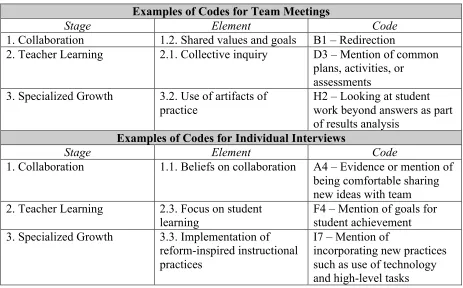
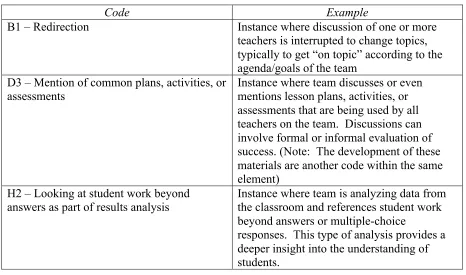
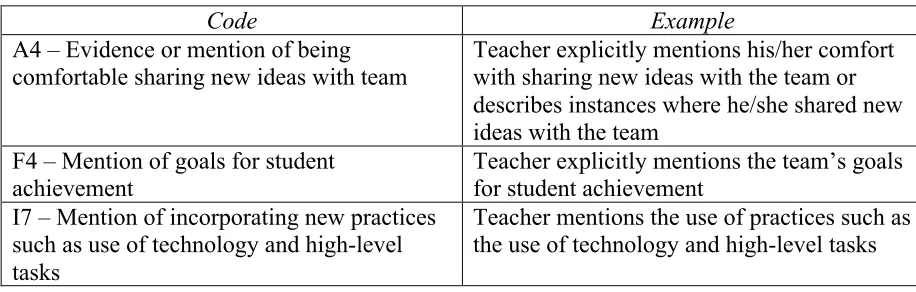
Table 2. Examples of codes used in analysis of team meetings and individual Interviews ...45
Table 3. Examples of coded instances during team meetings ...46
Table 4. Examples of coded instances during individual interviews ...48
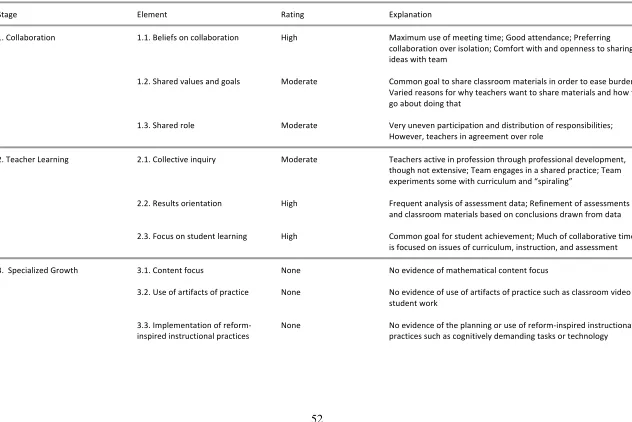
Table 5. Summary of Ratings for Brantley High School with Explanations ...52
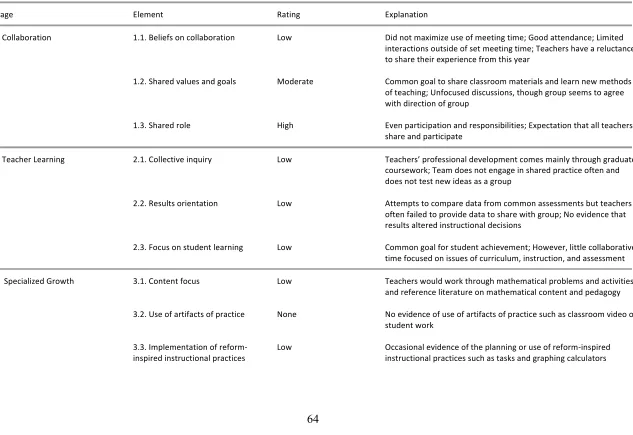
Table 6. Summary of Ratings for Elmwood High School with Explanations ...64
! ! !
! xi
! ! !
LIST OF FIGURES
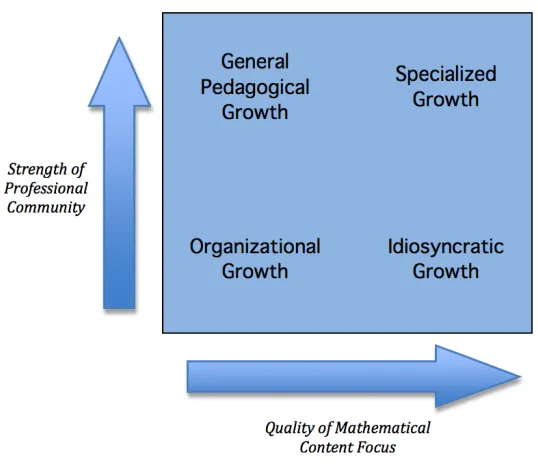
Figure 1. Conceptual Framework: Stages of collaborative work of mathematics teacher teams ...31 Figure 2. Diagram of Doug’s “unstacking” method of solving equations ...71 Figure 3. Conceptual Framework: The role of collaborative norms and content focus on
! ! !
! 1
CHAPTER 1 INTRODUCTION
There is an increased demand for new strategies for teaching and learning due to an
increasingly diverse student population and increased standards (McLaughlin & Talbert, 2006; Darling-Hammond, 1998). Specifically, in mathematics, today’s students need to have
the ability to solve problems through a flexible and adaptable use of their knowledge and understanding (Hiebert et al., 1997). However, developing these abilities in students cannot come merely through new curricula or testing procedures (Ball & Cohen, 1999; Wilson &
Berne, 1999). The classroom teacher is a key ingredient.
In this climate of changing how students develop deep understandings of subject
matter and creating an environment in which students learn in meaningful contexts and engage in rich discourse, little attention has been paid to the teachers’ role in these changes and how they learn these new ways of teaching (Putnam & Borko, 2000). Teachers’
mathematical knowledge (Hill, Rowan & Ball, 2005), pedagogical content knowledge
(Shulman, 1987), and their attention to student reasoning (Carpenter, Fennema, Franke, Levi,
& Empson, 1999) have been linked to increases in student achievement. On the other hand, much of the difficulty in reforming practice is due to the fact that teachers are required to teach in ways that many of them have never taught or learned (Darling-Hammond &
McLaughlin, 1995). These findings assert a need for the professional development of practicing teachers.
The rapid increase in the volume of literature on mathematics professional
! ! !
! 2
able to improve their own instructional practices (Sowder, 2007). However, professional development, regardless of intent, is often not designed in ways that foster changes in teachers’ practice. Most of the resources for professional development in the U.S. are
allocated for one-time, fragmented experiences (Ball & Cohen, 1999). These experiences, often led by an external expert, are often not considered professionally rewarding by teachers
(Wilson & Berne, 1999; Putnam & Borko, 2000; Stein, Silver, & Smith, 1998; Hawley & Valli, 1999).
As a result, recent studies have attempted to identify effective MPD initiatives with
the goal of establishing a set of features that are commonly part of programs that are valued by teachers and have an impact on teacher practice and student achievement (e.g., Yoon,
Duncan, Lee, Scarloss, & Shapley, 2007; Garet, Porter, Desimone, Birman, & Yoon, 2001). This search has led to findings that professional development experiences that are sustained (Garet et al., 2001), practice-based (Ball & Cohen, 1999), and allow for teacher involvement
in the decision making process (Yoon et al., 2007) are successful. Additionally, studies have shown that the opportunity for collaboration is both valued by teachers (Garet et al., 2001;
Arbaugh, 2003) and plays a role in supporting teachers’ inquiry and problem solving (Loucks-Horsley, Hewson, Love, & Stiles, 1998). Given the recent focus on professional development, especially in collaborative settings, it is important to define the work of
! ! !
! 3
Importance of Collaborative Opportunities for Teachers’ Growth
Professional learning communities (PLC) provide both an organizational framework and a set of requisite dispositions and activities for teacher learning. As defined in
practice-based literature, PLCs are sustained collaborative opportunities where teachers focus on student learning and critically reflect on their shared practice (e.g., McLaughlin & Talbert,
2006; DuFour & Eaker, 1998). In such communities, teachers are empowered to make changes to their practice by inquiring into the best methods of instruction and developing and testing new hypotheses (Louis, Marks, & Kruse, 1996). Additionally, the decisions to make
changes are based on data from the classroom to determine new and appropriate teaching strategies (DuFour & Eaker, 1998). This definition of PLCs is commonly used in widespread
interventions where teachers are encouraged to collaborate and assume more responsibility for student learning. Studies have shown positive changes in the practice of teachers (i.e., student-centered instruction, high expectations for student learning) whom are engaged in
PLCs (Vescio, Ross, & Adams, 2008; Little, 2002; McLaughlin & Talbert, 2001; Louis & Marks, 1998; Hord, 2004). For the purposes of this paper, the term “PLC” refers to a group
of teachers that embodies these characteristics, meaning there are not “good PLCs” or “bad PLCs”. Other terminology will be used throughout the paper to describe groups that are not classified as PLCs.
Not all collaborative groups of teachers engage in the type of examination of practice found with PLCs. Research studies have shown communities of teachers that avoid the
! ! !
! 4
traditional methods that are prevalent in schools (McLaughlin & Talbert, 2001). While structural changes such as the availability of meeting time for teachers are important for the work of a collaborative team (Louis et al., 1996), such changes are relatively easy and are
less effective in impacting instructional practices. On the other hand, teachers in PLCs make the more meaningful shifts in their beliefs and values, which can have a positive impact on
their instructional practices.
Many MPD interventions claim to rely on collaboration, specifically the shared values and norms for critical reflection that are part of PLCs (e.g., Borko, Jacobs, Eiteljorg,
& Pittman, 2008; Lachance & Confrey, 2003; Arbaugh, 2003; Kazemi & Franke, 2004). However, a team’s inclination to engage in critical reflection is not the only component of
most collaborative MPD interventions. Many programs aim to promote the use of
instructional practices such as cognitively demanding tasks (e.g., Stein, Smith, Henningsen, & Silver, 2000; Borko et al., 2008; Arbaugh, 2003), mathematical technology (e.g., Lachance
& Confrey, 2003; Kynigos & Argyris, 2004), and Standards-based curricula (e.g., Ross & Bruce, 2007; Borasi, Fonzi, Smith, & Rose, 1999; Loucks-Horsley et al., 1998). As a result,
certain features are commonly incorporated into collaborative MPD such as video study, task analysis, student work analysis, and engaging with mathematical content and technology. These activities are important, as Kennedy (1998) found that a strong content focus in
professional development programs had a positive impact on student learning. Ultimately, mathematics teachers are faced with unique challenges that must be addressed with specific
! ! !
! 5
Statement of the Problem
PLCs only provide a general guideline for the organization, activities, and individual and group dispositions necessary to make meaningful change to instruction, regardless of
subject. Additionally, there is little documentation of the nature of work that teachers do while working in PLCs (Vescio et al., 2008). In order for PLCs to serve as an effective form
of MPD, more work needs to be done to identify the extent to which mathematics teachers in PLCs engage in the activities that improve their content and pedagogical knowledge and, ultimately, improve student achievement.
The study described here investigates two teams of high school mathematics teachers attempting to implement principles of PLCs as part of a district-wide intervention. The goal
of this study is to identify both teams’ success in implementing these principles, and to what extent features that are commonly found in effective MPD are evident in their work. From those findings, the author questions the role of PLCs in the professional development of
mathematics teachers and highlights other factors that could be attributed to a group of teachers’ inclination to engage in high-level, content focused activities. As a result, the
author offers suggestions for future research on collaborative MPD and how findings from such research could be used to inform the design and replication of MPD. The specific research questions investigated in this study, as well as the framework with which teachers’
work is analyzed, are stated at the end of Chapter 2. Organization of Paper
! ! !
! 6
constitutes effective professional development, and define various types of teacher
collaboration as seen in research. This review will provide a case for the need for the study reported in this thesis and serve as the basis for the conceptual framework considered by the
author.
Chapter 3 will describe the methodology used for this study, including the context,
the participants, the sources of data, and how that data was analyzed in order to answer the research questions. Chapter 4 will present the results of the investigation and Chapter 5 will use those results to answer the research questions. The author will also state the implications
! ! !
! 7
CHAPTER 2
REVIEW OF LITERATURE
As indicated in Chapter 1, teachers are central to the success of reform in schools and
the classroom. As a result, teachers need to engage in effective professional development, which has been defined in research as learner-centered, collaborative opportunities set in the
context of teachers’ own classrooms and students. Professional learning communities serve as one model of this view of professional development that can be implemented across grades, subjects, and schools.
However, research on collaborative mathematics professional development provides more useful examples of activities in which teachers should engage in order to more
effectively plan and implement practices such as cognitively demanding mathematical tasks and the use of technology, which are traditionally difficult for teachers to incorporate into their practices. It is clear that worthwhile professional development, when implemented and
sustained, is attributed to substantial changes in teachers’ practices and, in turn, increases in student achievement in mathematics. In this chapter, literature related to these ideas will be
examined.
The literature review begins by establishing the need for the professional
development of practicing mathematics teachers by highlighting some recommendations for
mathematics instruction and the difficulties that teachers face in attempts to implement such practices. Next, the review will explore the body of work and suggestions of research on
! ! !
! 8
development of a conceptual framework regarding teachers’ collaborative work, which was designed for and used in this study. The specific research questions that were investigated in the present study will be stated at the end of this chapter.
The Need for Professional Development
Today’s schools face an increased demand for new strategies for teaching and
learning due to an increasingly diverse student population, both academically and culturally (McLaughlin & Talbert, 2006; Darling-Hammond, 1998; McLaughlin & Talbert, 2001). Specific to mathematics, societal demands require today’s students to have the ability to
solve problems through flexibility with or ability to adapt existing knowledge and understanding (Hiebert et al., 1997). The mathematics classroom is the perfect forum to
allow students to develop such skills.
However, research has shown that much of the work done by students in mathematics classrooms merely has students state memorized facts or reproduce previously seen
procedures (Doyle, 1988; Stein et al., 2000). This is due, in part, to the instilled belief that mathematics is a static subject that needs to be absorbed by students (Burton, 1984). As a
result, students work toward proficiency and efficiency and are unable to utilize their classroom experience with mathematics in new settings (Clayden, Desforges, Mills, & Rawson, 1994). While understanding procedures is key to mathematical proficiency,
mathematics is learned through authentic opportunities where students actually “do”
mathematics (Stein, Grover, & Henningsen, 1996; Clayden et al., 1994; Burton, 1984). This
! ! !
! 9
The National Council of Teachers of Mathematics (NCTM) supports this view in their Principles and Standards for School Mathematics (NCTM, 2000), stating that “students must learn mathematics with understanding, actively building new knowledge from
experience and prior knowledge” (p. 20). Understanding in mathematics allows for students to make flexible use of knowledge and skills in order to build connections toward new ideas
(Hiebert et al., 1997). Across research, there is much agreement that in order to build such understanding, students must engage in authentic, cognitively demanding activities and tasks (Stein & Lane, 1996; Newmann, Marks, & Gamoran, 1996). Hiebert et al. (1997) even
partially based their characterization of a classroom’s support of students’ mathematical understanding by analyzing the nature of the tasks used throughout the class. By engaging in
authentic and cognitively demanding tasks students become intrigued about doing
mathematics and are invited to explore and investigate (NCTM, 2000; Stein & Lane, 1996). Electronic technologies such as calculators and computers also enhance student learning
through better understanding thanks to efficiency and accuracy and the fostering of conjecture and investigation (Ben-Zvi, 2000; Heid, 1997; NCTM, 2000). Engaging in
conjecturing and investigations can develop students’ understanding of what mathematics work entails (Doyle, 1983; NCTM, 1991).
Hiebert et al. (1997) also utilize the role of the teacher as a variable in characterizing
a classroom’s support of students’ understanding. Ultimately, teachers are expected to make difficult shifts in practice toward reform-based, student-centered instruction and the use of
Darling-! ! !
! 10
Hammond & McLaughlin, 1995). As a result, teachers are unfamiliar with the changed climate and pace of a class using technology or authentic tasks and often succumb to forces that lead to decreasing cognitive demand or abandoning certain practices altogether
(Henningsen & Stein, 1997; Stein et al., 1996; Herbst, 2003; Doyle, 1988; Stein & Smith, 1998; Ertmer, 2005; Norton, McRobbie, & Cooper, 2000) and, in doing so, taking away any
meaningful investigation of the mathematics (Henningsen & Stein, 1997; Stein & Smith, 1998).
In order to confront these conflicts, teachers must take on the role of a facilitator, a
role that is far different than the traditional view of the teacher as the source of knowledge and correctness (Hiebert et al., 1997). This role leaves teachers to walk the fine line between
offering too much input that routinizes a problem and being too “hands off” and allowing the possibility that students will conduct their investigations in ways that are not meaningful. Hiebert et al. (1997) have recommended that teachers can share relevant information
regarding formal terminology or alternative methods that students should not be expected to discover on their own. However, if too much input is given, teachers run the risk of creating
an environment where students will abandon their own strategies and methods to follow the teacher’s offerings, regardless of any lack of understanding or connections to meaning.
Effective teaching also involves the appropriate selection of tasks and technological
tools for use in the classroom (NCTM, 1991, 2000; Hiebert et al., 1997). In order to make those appropriate decisions, teachers must understand the big ideas of mathematics and also
! ! !
! 11
classroom tasks and incorporate technological tools, requiring knowledge and a point of view that many teachers have not developed (Doyle & Carter, 1984).
Not only must teachers select tasks and tools that help with students’ development of
problem-solving and connection-building skills but those tools must also provide teachers with a window into their students’ understanding (NCTM, 1991). This knowledge of the
value of rich tasks aids in the development of appropriate plans in the future and emphasizes the importance of classroom discourse and the diverse format of settings and assessments used in the classroom. Stein and Smith (1998) have stated that while teachers will reflect on
their classroom experiences informally, the habit of mind to focus and reflect on students’ learning must be developed.
So, how are these skills developed in teachers? If teachers do not experience learning in a mathematics classroom where cognitively-demanding tasks and instructional
technologies are commonplace, and they do not fully develop a grasp of the requisite skills in
preservice teacher education programs, how will teachers develop the skills to implement the type of practice that is proposed by NCTM (1991, 2000) and other research? Teachers must
continue to engage in professional development beyond their teacher education program. Furthermore, such professional development must be effective in terms of the value that teachers place on the experience, the changes the experience foster in a teachers’
instructional practices, and, in turn, the experience’s impact on student learning and
achievement. The next section will highlight research on professional development and the
! ! !
! 12
Effective Professional Development
Underlying the efforts of reform is the need for a shift in practice (Ball & Cohen, 1999; Darling-Hammond & McLaughlin, 1995; Loucks-Horsley et al., 1998; McLaughlin &
Talbert, 2006). Changes to practice are difficult since they are more fundamental and affect the culture of a school (Fullan, 1991; McLaughlin & Talbert, 2006). Essential to these
changes are the professionals, namely the teachers, in the school (DuFour & Eaker, 1998). In this climate of changing how students develop deep understandings of subject matter, and creating an environment in which students learn in meaningful contexts and engage in rich
discourse, little attention has been paid to the teachers’ role in these changes and how they learn these new ways of teaching (Putnam & Borko, 2000).
Ball and Cohen (1999) found that while a great deal of financial support for staff development exists in the United States, most of the resources are put toward fragmented experiences. Typically, one-time workshops and sessions where teachers receive new ideas
from an expert from outside of the school are not considered to be professionally rewarding by teachers (Wilson & Berne, 1999; Putnam & Borko, 2000; Stein et al., 1998; Hawley &
Valli, 1999). Through such experiences, teachers are merely updated on issues of curriculum and learning, receiving handouts that are often soon discarded for the newest wave of ideas. McLaughlin and Talbert (2006) found that externally developed workshops rarely address
the needs of teachers and are often short lived, likening the addition of current and fashionable reforms in a school to decorating a Christmas tree.
! ! !
! 13
the students in their classroom must be provided. Research on the professional development of practicing teachers is a booming, yet relatively new, body of literature (Sowder, 2007). Attempts have been made to identify and characterize effective professional development
(e.g., Yoon et al., 2007; Garet et al., 2001). This section will summarize those characteristics in contrast with the characteristics of more traditional professional development.
Teachers’ Engagement in Professional Development
Teachers should be provided with the opportunity to enhance their expertise in content and teaching strategies as well as current research on teaching and learning (Hawley
& Valli, 1999; DuFour & Eaker, 1998). Often in traditional sessions and workshops, teachers passively receive new information. Despite this approach, one of the difficulties of
change is that teachers cannot simply be told how to change their instruction or be expected to use methods that they have not used before, as a teacher or a learner. Darling-Hammond and McLaughlin (1995) posit that, in order to remedy teachers’ lack of experience in certain
learning environments, effective professional development has teachers in the role of both teacher and learner. More specifically, Ball and Cohen (1999) assert that professional
learning must be situated in the same type of environment that reformers encourage for the classroom. For example, in a professional development experience presented by Wilson and Berne (1999), teachers became learners in the environment that their students will learn
though the content was appropriate for their own learning and did not simply include the content that students will learn.
! ! !
! 14
given a degree of ownership and control in an open-ended experience. As a result, many effective professional development experiences are participant-driven, giving ownership to teachers to address their specific needs (DuFour & Eaker, 1998; Darling-Hammond &
McLaughlin, 1995). In this setting, teachers can engage in meaningful analysis of teaching and learning (Garet et al., 2001). This approach is in contrast to the widespread, top-down
approach that comes with the solutions provided at externally developed professional development, which often lead to negative reaction from teachers (Wilson & Berne, 1999; Putnam & Borko, 2000; Stein et al., 1998).
To ensure the meaning and authenticity of teacher learning, Ball and Cohen (1999) promote a practice-based curriculum, allowing teachers’ own practice, learning, and students
to become the source of professional development experiences. There is a growing consensus that values opportunities for teachers to reflect on and improve their practice within the context of their everyday teaching (Wilson & Berne, 1999; Putnam & Borko, 2000; Hawley
& Valli, 1999). In addition, professional development efforts should be connected to other aspects of school change, sometimes dubbed “coherence” (Garet et al., 2001). Coherence
involves not only aligning experiences to teachers’ goals but also to state standards,
assessments, and other interventions at the school or district level. Along with an experience being practice-based, coherence makes an experience relevant to teachers
(Darling-Hammond & McLaughlin, 1995). Hawley and Valli (1999) suggest that change as a result of professional development should be a gradual process and part of a continuous commitment
! ! !
! 15
Focus on Students’ Thinking
Using concrete results, such as student work, videotapes of classroom lessons, and curriculum materials, teachers can investigate what students are doing and thinking and how
to change their practice to improve students’ learning (Ball & Cohen, 1999; Darling-Hammond, 1998; Loucks-Horsley et al., 1998). This requires a shift toward a focus on
student understanding, which proves to be difficult for teachers. Researchers have observed instances of professional development where teachers drift away from a focus on students’ thinking (Cwikla, 2002) and instead concern themselves with issues of student discipline and
parental involvement (DuFour & Eaker, 1998). These concerns lead to arguments that the roadblocks to student learning are outside of teachers’ control.
To ensure the meaningful use of concrete results with a sustained focus on student learning, teachers must take on what is sometimes called a “researcher’s lens” (Fernandez, Cannon, & Chokshi, 2003), by conducting empirical examinations around question-asking
and designing classroom experiments (Fernandez et al., 2003; Ball & Cohen, 1999; Darling-Hammond & McLaughlin, 1995). According to Ball and Cohen (1999), in order for teachers
to teach in the ways in which reformers think they should, teachers need to ask the following questions: “What is working? What is not working? For whom are certain things working or not working?” (p. 10). As teachers work with artifacts of practice, they can answer those
questions, focus on teaching and learning, and develop new ideas based on evidence. Importance of Collaboration
! ! !
! 16
such work alone (Darling-Hammond & McLaughlin, 1995). As such, opportunities to work collaboratively with colleagues are valued by teachers (Stein et al., 1998; Garet et al., 2001; Arbaugh, 2003). In line with the idea of practice-based professional development, these
collaborative teams should be formed among teachers from the same school or district since they will have similar issues and concerns to address as well as the same curricular and
assessment requirements (Garet et al., 2001). The use of collaborative teams can allow teachers to address issues in their own classrooms using the process of inquiry and problem solving (Loucks-Horsley et al., 1998; Hawley & Valli, 1999; Arbaugh, 2003).
Sustained Efforts in Professional Development
In addition to problems with workshops and sessions being perceived as out of
context and not allowing for collaboration, traditional professional development programs are often short-lived, fragmented experiences for teachers. When considering the duration of a professional development activity, one must consider both the number of contact hours (in
one session and overall) and the span of time over which an activity takes place (Garet et al., 2001). Research on effective professional development mainly offers suggestions on the
latter consideration of duration. Sustained professional development allows for ongoing support, continuous growth, and the ability to set, and meet, both short- and long-term goals (Darling-Hammond & McLaughlin, 1995). In this case, long-term refers to years, not
months or weeks. This requires major changes in how schools are structured and how
professional development is delivered (Hawley & Valli, 1999). Reform-inspired professional
! ! !
! 17
positively impact the amount of content incorporated into a professional development experience (Garet et al., 2001), which can lead to increases in student achievement (Kennedy, 1998). As a result, sufficient time must be provided in order for teachers to
engage in effective professional development. Summary of Characteristics
In sum, research proposes that effective professional development provides the same learning environment for teachers that they are expected to construct in their own classrooms. Teacher learning experiences should be practice-based, allowing participants to examine
issues relating to their own learning, classrooms, and students. As a result, teachers must adopt a “researcher’s lens” – defining a need, formulating questions and methods, collecting
data, analyzing results, and proposing new practices. This process is best completed in collaborative settings amongst colleagues with shared norms and values. Teachers must have the time and support to engage in effective professional development, working over the
course of years to meet goals. Ultimately, a professional development experience should be aligned with the goals of the teachers as well as the mission of the school in order for the
experience to be perceived as relevant.
In line with these suggestions, Darling-Hammond and McLaughlin (1995) offer questions that could be asked to determine is a professional development policy corresponds
to teachers’ learning and change (p. 603):
• “Does the policy reduce the isolation of teachers, or does it perpetuate the experience of working alone?”
! ! !
! 18
• “Does the policy provide a rich, diverse menu of opportunities for teacher to learn, or does it focus primarily on episodic, narrow “training” activities?”
• “Does the policy link professional development opportunities to meaningful content and change efforts, or does it construct generic inservice occasions?”
• “Does the policy establish an environment of professional trust and encourage problem solving, or does it exacerbate the risks involved in serious reflection and change and thus encourage problem hiding?”
• “Does the policy make possible the restructuring of time, space, and scale within schools, or does it expect new forms of teaching and learning to emerge within conventional structures?”
• “Does the policy focus on learner-centered outcomes that give priority to learning how and why, or does it emphasize the memorization of facts and the acquisition of rote skills?”
These questions address the various characteristics of effective professional
development outlined above. Given the context of the study reported on in this paper, the next section will take a closer look at one of those characteristics (collaboration) in order to
better illustrate the benefits and possible roadblocks when teachers work together. Teacher Collaboration
Professional developers value the support that is offered through collaboration as it is
often incorporated into interventions that have been shown to be effective (Elmore, 2002; Hawley & Valli, 1999; Garet et al., 2001; Yoon et al., 2007). The opportunity for
collaboration is both valued by teachers (Garet et al., 2001; Arbaugh, 2003) and plays a role in supporting inquiry and problem solving (Loucks-Horsley et al., 1998; Hawley & Valli, 1999; Arbaugh, 2003). This section describes three types of collaborative work and their
! ! !
! 19
Professional Communities
Collaboration allows teachers to question, investigate, and change their practice (Ball & Cohen, 1999). However, not all collaborative groups of teachers engage in the type of
examination of practice that allows for such growth. McLaughlin and Talbert (2001) have defined communities of practice that possess a culture where teachers share values and set
expectations for their work with students but have still been found to perpetuate teacher-centered, traditional methods.
The agreement among teachers in this type of community comes on issues such as
behavior and course placement. Often teachers’ practice remains unchanged even in collaborative settings to avoid the conflicts that can arise during a critical reflection on
practice (Visscher & Witziers, 2004; Wells & Feun, 2007). These groups are often found to function more as efficient units, dealing with day-to-day, logistical issues but avoiding issues of beliefs and practice (Visscher & Witziers, 2004). Further, Ball and Cohen (1999) assert
that collaboration could also perpetuate the conservative practices of a culture setup by teachers, administrators, and parents.
Regardless of the type of instructional practice that is promoted within a professional community, in order to build the relationships, support, and shared values that make a professional community, teachers must feel that working in collaborative groups is more
beneficial than working independently (Louis et al., 1996). Additionally, certain structural changes must be made such as the availability of meeting time for teachers (Louis et al.,
! ! !
! 20
to the fundamental beliefs of individuals around the school make professional communities easier to develop but less effective in impacting instructional practices.
Professional Learning Communities
Another type of teacher collaboration is professional learning communities. Work in PLCs has been found to have more of an impact on teachers’ beliefs and instructional
practices than the type of collaboration highlighted in the previous section (e.g., Vescio et al., 2008; Little, 2002). Both an organizational framework and a set of requisite dispositions and activities for teacher learning have been provided in literature on PLCs (e.g., DuFour &
Eaker, 1998; McLaughlin & Talbert, 2006; Hord, 2004; Louis et al., 1996). These sources are being highlighted in this review as they are commonly drawn from in the widespread
implementation of the concept of PLCs, including the teams of teachers involved in the study reported in this paper.
While the idea of PLCs or communities of practice spans many fields, in the field of
education and teacher professional development PLCs are defined as sustained collaborative opportunities where teachers decide on the context and content of their work (McLaughlin &
Talbert, 2006). In doing so, teachers in PLCs focus on student learning and critically reflect on their shared practice (McLaughlin & Talbert, 2006; DuFour & Eaker, 1998; Hord, 2004). This often requires teachers to focus, and later reflect, on what students are doing throughout
a lesson to ensure that their experiences are meaningful and authentic. According to DuFour, Eaker, and DuFour (2005), teachers in communities with a focus on student learning ask the
! ! !
! 21
• “What is it we want all students to learn?”
• “How will we know when each student has mastered the essential learning?”
• “How will we respond when a student experiences initial difficulty in learning?”
• “How will we deepen the learning for students who have already mastered essential knowledge and skills?” (p. 15)
DuFour (2004) adds that teachers in PLCs should not ask questions or develop goals concerning issues of behavior, attendance, or other factors outside of classroom instruction
and not relevant to student learning. By asking questions like the ones stated above, schools break from the traditional assumptions that, if the teacher input is properly executed, student learning will occur. Instead, teachers in a PLC work collaboratively to take responsibility for
student learning using information from research to address the issues within the context of their own classrooms.
In PLCs, teachers make changes to their practice by inquiring into the best methods of instruction and developing and testing new hypotheses (Louis et al., 1996; DuFour & Eaker, 1998; Hord, 2004). Teachers in PLCs question and challenge existing teaching
methods and their own assumptions and beliefs in order to reinvent their practice based on the needs of and their goals for their students (McLaughlin & Talbert, 2006; DuFour &
Eaker, 1998). Not only are teachers expected to come up with new methods but are also encouraged to test those methods and reflect on their results (DuFour & Eaker, 1998). This intolerance for inaction leads to a culture of continuous improvement within a PLC where
! ! !
! 22
Meeting the needs of all students and making changes in response to high
expectations requires questioning the status quo. As part of a teacher learning community, teachers can stay current in their discipline and remain professionally active (DuFour &
Eaker, 1998; McLaughlin & Talbert, 2006). In order to effectively implement research-based strategies in the classroom, teachers must work together to gather, synthesize, and reflect on
new information.
Finally, in assessing the impact of developed curriculum, tasks, and assessments, teachers in PLCs must have a results orientation (DuFour & Eaker, 1998). Teachers with a
results orientation do not allow their goals and intentions to serve as evidence of success and instead use data to determine their successes and failures. From these conclusions, teachers
should then determine new and appropriate strategies for their classroom and their students. Teachers need to be open with their results within their PLC team in order to identify areas for concern and formulate possible solutions. This again requires norms for critique and
reflection within collaborative groups.
DuFour (2004) warns that the term professional learning communities, “has been
used so ubiquitously that it is in danger of losing all meaning” (p. 6). The term PLC has become more and more popular and has been used to describe grade-level teams,
committees, high school departments, and entire school districts. However, DuFour et al.
(2005) have found many schools claiming to be PLCs without evidence of the implementation of the core principles of a PLC.
! ! !
! 23
successful implementation of a PLC has occurred, certain structural and environmental factors are apparent. One factor is the availability of scheduled planning time (Louis et al., 1996; McLaughlin & Talbert, 2001). With the need for shared values and norms,
opportunities for collaboration, and supportive conditions comes the need for the availability of meeting time for teachers in a PLC. An example of this need can be found in the
description of a professional development experiences from Borko et al. (2008). In their description of a professional development experience, a summer institute and early
workshops were devoted to the establishment of a professional learning community. With
this focus, participants and facilitators were “comfortable engaging in critical dialogue and reflection” (p. 423). On the other hand, McLaughlin and Talbert (2006) attribute difficulties
in implementing PLCs to a lack of meeting time.
While structural changes are often easier to make than more fundamental changes to a school’s culture, setting aside time for teachers in a PLC to meet has been found to be
difficult itself. In a study of a high school implementing PLC principles, Wells and Feun (2007) found that time built into the school day faced opposition from a teachers’ union.
This forced enthusiastic staff members to independently meet in small groups. Teachers were also found to take issue with organized meeting time claiming that it takes away from their planning time during the school day. Issues such as these make clear the assertion that,
while scheduled time is a valuable asset to the development of a PLC, it alone will not guarantee successful implementation.
! ! !
! 24
Talbert (2001) also identified positive changes in communities where teachers were supported to investigate classroom-based challenges and develop responses to those
challenges. This idea is followed up in their definition of learning communities, stating that
teachers should have influence over the content and context of their investigations (McLaughlin & Talbert, 2006).
The affordance of such authority to teachers requires changes in both the culture of a school and the habits of teachers (Vescio et al., 2008). However, teachers who are not granted the ability to have an input into school-based decisions will begin to question the
purpose of PLCs, as Wells and Feun (2007) observed in their analysis of the top-down implementation of PLC principles at the high school level. Teachers may also feel
constrained by the nature of the content they teach. Louis et al. (1996) found that
professional communities are more difficult to implement in high schools because of both the diversity of goals from department to department and the perceived lack of empowerment on
behalf of the teachers due to subject objectives and testing requirements. As a result,
teachers were less inclined to test innovative methods. It is not clear though if these teachers
were granted the power to make curricular decisions or if there is an inherent roadblock in the later grades.
Teachers are often found to be participating in PLCs that are being implemented
school-wide (DuFour & Eaker, 1998; Louis et al., 1996; Bezzina, 2006; Wells & Feun, 2007). Across research, PLCs are implemented as a way to make fundamental changes
! ! !
! 25
PLCs and, in turn, their students’ achievement (Vescio et al., 2008; Little, 2002; McLaughlin & Talbert, 2001; Louis & Marks, 1998; Hord, 2004).
Louis et al. (1996) found that involvement in PLCs results in increased responsibility
for student learning on behalf of teacher, administration, and staff. In a case study of a professional community within a mathematics department, McLaughlin and Talbert (2001)
described how the department organized around a strong commitment to the belief that all students could succeed. As a result, teachers retooled their practice to accommodate students, all without watering down the material. In reviewing research on PLCs to
determine their impact on student learning, Vescio et al. (2008) found that, in many cases, the practices of teachers participating in PLCs became more student-centered over time.
Teachers have also been found to be more willing to incorporate authentic pedagogy and more cognitively demanding work (Louis & Marks, 1998; Hord, 2004). In all, due to teacher collaboration and a focus on meeting the needs of all students, student achievement has been
reported to improve (Vescio et al., 2008).
Despite these findings, work that empirically looks at the benefits of PLCs
specifically on teachers’ practices and, thus, student learning is not abundant (Vescio et al., 2008). Furthermore, while DuFour and Eaker (1998) propose that implementing the team concept based on grade level or subject will provide teachers with shared objectives and
problems, little work has been done to evaluate subsets of a school (departments or small groups) and their implementation of the principles of PLCs (e.g., McLaughlin & Talbert,
! ! !
! 26
Overall, PLCs serve as a way for teachers to critically reflect on their practice and make improvements to meet the rapidly changing demands from students and standards. However, as the idea of PLCs is not discipline-specific, the responsibility is put on the
teacher to incorporate a content focus. Other professional development programs rely on collaboration but are rooted in the content area on which teachers aim to focus.
Collaborative Mathematics Professional Development
Many examples of MPD experiences have teachers working collaboratively. This appears as PLCs (Borko et al., 2008; Stein et al., 1998), lesson study groups (Fernandez et
al., 2003; Stigler & Hiebert, 1999), and other study groups (Arbaugh, 2003; Kazemi & Franke, 2004; Loucks-Horsley et al., 1998). Many MPD interventions claim to rely on the
shared values and norms for critical reflection that are part of PLCs. However, a team’s inclination to critical reflection is not the only component of most MPD interventions.
Based on observations from the Third International Mathematics and Science Study,
Stigler and Hiebert (1999) found that mathematics teachers need ways to learn about teaching and, most importantly, student learning using the recommendations of reform. As
such, the success of an MPD program is determined by changes in teachers’ practice toward the development of student-centered instruction, the use of authentic mathematical tasks, and the appropriate use of classroom technology in order to positively impact student
achievement. Incorporating rich activities and materials that focus on mathematical content and pedagogy into the collaborative experience fosters these changes.
! ! !
! 27
Stein et al., 1998). Many professional development experiences reported in research have incorporated elements that address both of these needs. This occurs when teachers work through tasks that will be used in the classroom, work with appropriately challenging
mathematics, or stay current with research on mathematics content and pedagogy.
Stein et al. (2000) described situations when teachers would collaborative reflect on
accounts of classroom instruction, commonly referred to as case study (Stein et al., 2000; Loucks-Horsley et al., 1998). When working with cases, Stein et al. (2000) urge that teachers should work through the tasks that were used in the classroom to develop a richer
understanding of the mathematics being discussed. Similarly, Borko et al. (2008) highlighted a Problem-Solving Cycle, which started with teachers working through tasks that they
planned to teach in class. Activities such as these allow teachers to focus on the content knowledge necessary to plan a given task.
Other professional development experiences have teachers working with challenging
mathematics in environments similar to that which they are encouraged to set up in their own classrooms. During their summer algebra institute, teachers involved with the “Supporting
the Transition from Arithmetic to Algebraic Reasoning” (STAAR) Project worked through mathematical problems in a reform-oriented setting (Borko et al., 2005). Teachers involved in a professional development course, highlighted by Lachance and Confrey (2003), worked
in small groups with multimedia pre-calculus materials on authentic problems to help teachers become acquainted with learning and teaching from a constructivist perspective.
! ! !
! 28
solving activities to support their development of content knowledge and address pedagogical issues associated with reformed practice.
Teachers have also developed pedagogical understanding through studying,
analyzing, and evaluating current literature on theory and practice. In describing a process called “lesson study”, Stigler and Hiebert (1999) stated that, when planning lessons, Japanese
teachers would search for books and articles on problems and topics similar to the ones that they are addressing. One of the major activities during the STAAR summer institute (Borko et al., 2005) was to read and discuss current literature. Teachers involved in a study group
facilitated by Arbaugh (2003) read literature on the Mathematical Tasks Framework (Stein et al., 2000) and had a discussion as part of their first meeting.
Another important part of many effective professional development experiences for mathematics teachers involves how teachers assess student learning. While DuFour and Eaker (1998) urge that teachers in PLCs should have a results orientation, much of the
emphasis in their description of results refers to assessments, specifically data yielded from multiple-choice assessments. However, there are other sources of results that can be
obtained from the classroom. Two of the professional development strategies highlighted by Loucks-Horsley et al. (1998) involved examining student work and student thinking and case discussions.
Many of the professional development experiences already highlighted in this review incorporated artifacts from the classroom in various forms. Some artifacts simply provide a
! ! !
! 29
al., 2003; Stigler & Hiebert, 1999; Arbaugh, 2003). While video and written case materials exist commercially, the work of students in classrooms is most meaningful if it is from participants’ own classrooms. This requires the norms for inquiry and reflection that let
teachers feel comfortable when opening up their classroom to a group of peers.
Each form of classroom record provides its own benefits. According to Lewis et al.
(2006), live lessons allow observers to make note of relevant conditions that may not be noticed on video or by the classroom teacher. Live lessons also afford observers the opportunity to circulate throughout the room to observe the work that students are doing
more closely (Stigler & Hiebert, 1999). Video recorded and written accounts of classroom events provide teachers with the opportunity to take a closer look at the lesson and the
learners’ experiences (Lewis et al., 2006). These methods also allow teachers to revisit a lesson several times with the intent to focus on specific aspects of a lesson (Borko et al., 2008; Stigler & Hiebert, 1999). Overall, Borko et al. (2008) found that teachers value the
experience of video study as it allowed them to investigate their own students’ capacity for reasoning.
The students themselves produce other useful artifacts that can be used during the analysis of a lesson. While live observations provide the freedom to observe what students are doing as they work, samples of student work or written accounts of their verbal
discussions have also been used as part of professional development experiences for
mathematics teachers. In the workgroups described by Kazemi and Franke (2004), teachers
! ! !
! 30
understandings (or misconceptions) that their student have. Teachers involved in the MPD program described by Borko et al. (2008) devoted entire workshops to a focus on students’ thinking and solution methods. Of course, to be able to obtain this rich information, teachers
must reconsider the work they do in the classroom. In order to obtain meaningful work from students, teachers must engage their students in discussions about their thinking instead of
simply collecting work that was done at home (Kazemi & Franke, 2004). Teachers must also select tasks that elicit verbal and written responses from students to provide teachers with a lens into their understanding (Lewis et al., 2006).
While these activities are important in strengthening the content focus of MPD programs, what is less clear about these interventions (and their eventual success) is the
significance of the role of PLC-type collaborative norms versus other potential factors. As part of these MPD interventions, teachers work with facilitators, have varying levels of input into the design of an intervention, take part in other forms of professional development or
graduate coursework, and are motivated by factors such as the implementation of a reform curriculum. Often, teachers themselves do not implement the aforementioned activities and
materials. Given that there is little documentation of the nature of the work that teachers to while working in PLCs, it is unknown if teachers, if given the chance, would implement these practices themselves.
Framework
When comparing the literature on professional communities, PLCs, and collaborative
! ! !
! 31
collaborative settings rely on many of the characteristics of another type. For instance, PLCs rely on a focus on student learning, experimentation, and inquiry but also rely on the shared values that comprise more traditional collaborative groups. Collaborative MPD interventions
often consist of specific activities that focus teachers’ attention to students’ mathematical thinking. However, the productive use of these types of classroom artifacts relies on the
shared practice, results orientation, and comfort with critical reflection, traits which are attributed to PLCs.
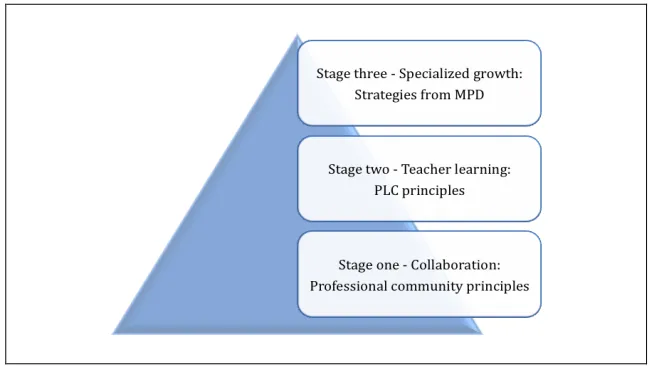
To help coordinate the strengths of PLCs and MPD, a conceptual framework has been
developed to illustrate both the hierarchy and the links among different types of collaborative work (see Figure 1). The framework refers to three stages: Collaboration, Teacher Learning,
and Specialized Growth. By using the term stages, it is implied that the features of each type of collaborative setting serve as a necessary foundation for subsequent types of work.
! ! !
! 32
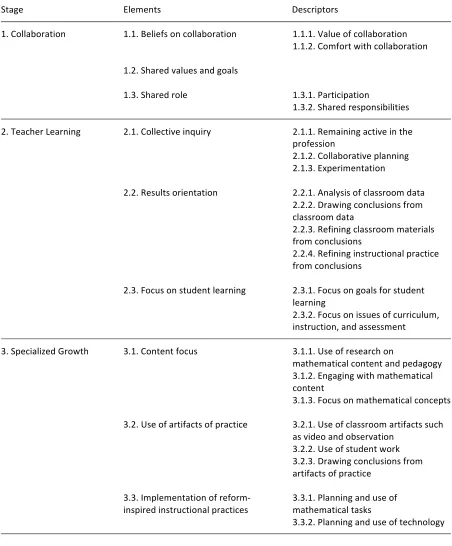
To better describe the attributes and features of these three stages, elements have been identified for each. The Collaboration stage consists of three elements that are attributes of teacher collaboration. First are a teacher’s beliefs on collaboration. This consists of the
value that a teacher places on the benefits of collaboration as well as their comfort with collaborating with other teachers. Next, shared values and goals, no matter how traditional,
are important when teachers collaborate (Louis et al., 1996; McLaughlin & Talbert, 2001). Finally, teachers who collaborative have a shared role both in their verbal participation and their responsibilities with group work.
The Teacher Learning stage consists of three elements in addition to those in the previous stage. These elements come from literature that has defined the work of PLCs.
First, teachers at this stage engage in collective inquiry by utilizing and testing a shared practice derived from recommendations from current literature (Hord, 2004; McLaughlin & Talbert, 2006; Louis et al., 1996). Teachers at this stage also have results orientation,
described earlier as an inclination toward using data as evidence for success and making changes to practice based on those conclusions (DuFour & Eaker, 1998). Finally, the work
of teachers should focus on student learning by developing goals for student achievement and focusing on issues of curriculum, instruction, and assessment (DuFour & Eaker, 1998;
McLaughlin & Talbert, 2006; Hord, 2004).
Finally, the Specialized Growth stage has three elements derived from research on effective MPD programs. Teachers working at this stage focus on mathematical content,
! ! !
! 33
reflecting on instruction and student learning (Ball & Cohen, 1999). Finally, teachers must also show evidence of planning and implementing reform-inspired instructional practices, as this is often a goal of MPD initiatives (Ross & Bruce, 2007; Borasi et al., 1999;
Loucks-Horsley et al., 1998). Table 1 summarizes each of the three stages and their respective elements. Additionally, the explanation of each element found above is summed up with
what are called “descriptors”.
Each stage also refers to the type of growth that teachers experience at each stage. At the Collaboration stage, teachers worry about logistical and other non-instructional issues,
resulting in unchanged practice. However, by working collaboratively and setting goals for their work with each other and their students, teachers at this stage experience organizational
growth. Teachers at the Teacher Learning stage function as a PLC and, in turn, focus on issues of curriculum, instruction, and assessment resulting in a general pedagogical growth. At the Specialized Growth stage, teachers are focused not only on teaching but are also
focused on content, fostering specialized growth in both mathematics content and pedagogy. Previous work has documented the factors attributed to fostering a group of teachers’
movement toward becoming a PLC (stage one to stage two). While structural features such as the availability of meeting time are beneficial toward the growth of a group, other factors such as the empowerment of teachers to be involved in the decision-making process (Louis et
al., 1996), a focus on issues of curriculum and instruction instead of issues of behavior and policy (McLaughlin & Talbert, 2006), and the use of classroom data to drive
34
Table 1. Conceptual framework: Stages, elements, and descriptors of mathematics teachers’ collaborative work
!"#$%& '(%)%*"+& ,%+-./0"1.+&
! ! !
! 35
The transition of a PLC consisting of mathematics teachers to a group engaging in the type of activities found in effective MPD (stage two to stage three) is not as clear. While many MPD interventions claim to value and rely on collaboration and the traits of PLCs,
researchers or facilitators drive many of the decisions for activities and content. In order for PLCs to serve as a source of professional development for mathematics teachers, the role that
they play in the specialized growth of teachers must be better defined. Research Questions
In order for PLCs to serve as an effective form of MPD, more work needs to be done
to identify the extent to which mathematics teachers in PLCs engage in the activities that improve their content and pedagogical knowledge and, ultimately, improve student
achievement. To evaluate PLCs as an effective form of MPD, the study described here investigated two teams of teachers attempting to implement principles of PLCs as part of a district-wide intervention. The goal of this study is to identify both teams’ success in
implementing these principles and to what extent the presence of features that are commonly found in effective MPD is evident in their work.
The specific research questions are as follows:
1) Considering the model that their school district is promoting, how well are these two teams of teachers operating as a PLC (stage one and two)?
2) What factors are associated with each team being able to exist (or not) as a PLC? 3) To what extent are the teachers in each team collaboratively engaged in the type
! ! !
! 36
4) What factors are associated with each team’s success or struggle to make a
transition from stages one and two to stage three and engage in high-level, content focused activities?
By answering these questions, the author will highlight the role of PLCs in the professional development of mathematics teachers, as well as other factors that could be
attributed to a group of teachers’ inclination to engage in high-level, content focused activities. As a result, the author will offer suggestions for future research on collaborative MPD and how findings from such research could be used to inform the design and