Computational Linguistics and Chinese Language Processing
Vol. 19, No. 1, March 2014, pp. 11-32 11 The Association for Computational Linguistics and Chinese Language Processing
Joint Learning of Entity Linking Constraints
Using a Markov-Logic Network
Hong-Jie Dai
, Richard Tzong-Han Tsai
, and Wen-Lian Hsu
Abstract
Entity linking (EL) is the task of linking a textual named entity mention to a knowledge base entry. Traditional approaches have addressed the problem by dividing the task into separate stages: entity recognition/classification, entity filtering, and entity mapping, in which different constraints are used to improve the system’s performance. Nevertheless, these constraints are executed separately and cannot be used interactively. In this paper, we propose an integrated solution to the task based on a Markov logic network (MLN). We show how the stage decision can be formulated and combined in an MLN. We conducted experiments on the biomedical EL task, gene mention linking (GML), and compared our model’s performance with those of two other GML approaches. Our experimental results provide the first comprehensive GML evaluations from three different perspectives: article-wide precision/recall/F-measure (PRF), instance-based PRF, and question answering accuracy. This paper also provides formal definitions of all of the above EL tasks. Experimental results show that our method outperforms the baseline and state-of-the-art systems under all three evaluation schemes.
Keywords: Entity Linking, Entity Disambiguation, Markov Logic Network, Gene Normalization
1.
Introduction
Developing a system that can identify entities, such as personal names and gene or disease mentions, and that can classify the relations between them is useful for several applications in natural language processing and knowledge acquisition. There are several possible uses for
Graduate Institute of BioMedical Informatics, Taipei Medical University E-mail: [email protected]
Dep. of Computer Science & Information Engineering, National Central University E-mail: [email protected]
12 Hong-Jie Dai et al.
such a system in different fields, e.g., improving document retrieval for specific entities, relation extraction, and attribute assignment (e.g., gene ontology annotations). In these applications, recognized entities must be linked to unique database entries. McNamee and Dang (2009b) named the task of matching a textual entity mention to a knowledge base (KB) entry Entity Linking (EL). In Figure 1, we provide a biomedical abstract to illustrate this task. The abstract discusses the relationship of the gene “CD59” to other lymphocyte antigens.
TITLE: Structure of the CD59-encoding gene: further evidence of a relationship to murine lymphocyte antigen Ly-6 protein
ABSTRACT: The gene for CD59 [membrane inhibitor of reactive lysis (MIRL), protectin], a phosphatidylinositol-linked surface glycoprotein that regulates the formation of the polymeric C9 complex of complement and that is deficient on the abnormal hematopoietic cells of patients with paroxysmal nocturnal hemoglobinuria, consists of four exons spanning 20 kilobases. … PMID [1381503]
Figure 1. An example of entity linking.
After EL, the gene mention “CD59” in the first sentence must be linked to ID 966 in the Entrez Gene database of PubMed. In the first sentence, the authors also listed other designations of the gene, including “membrane inhibitor of reactive lysis” and “protectin,” and they defined “MIRL” as the abbreviation for “membrane inhibitor of reactive lysis.” Linking these instances to the same entry is a problem related to the name variations issue. Furthermore, the gene “CD59” may exist in multiple species. For example, it appeared in the title of the abstract as a murine gene, but turns out to be referring to a human (patient) gene in the first sentence. Therefore, each gene must be linked to its own unique database entry. Since these instances are polysemous, they are considered entity ambiguity issues. Finally, the “C9 complex” in the first sentence is a protein complex, but the Entrez Gene database does not contain this type of entity. When an entity cannot be associated with any entries, it is called an absence issue (McNamee & Dang, 2009b), and those entities are referred to as “Nils”.
Of all of the aforementioned issues, entity ambiguity is the most crucial problem (Dredze et al., 2010). Take the name “TP53” as an example. In the Entrez Gene database, there are over 300 proteins within over 20 species possessing the same name. Several disambiguation approaches have been proposed to address the problem. For example, Dredze et al. (2010) formulated the disambiguation task as a ranking problem and developed features to link entities to Wikipedia entries. Zhang et al. (2010) used an automatically generated corpus to train a binary classifier to reduce ambiguities. Dai et al. (2010) collected external knowledge for each entity and calculated likelihoods stating the similarity of the current text with the knowledge to improve the disambiguation performance.
Joint Learning of Entity Linking Constraints Using a Markov-Logic Network 13
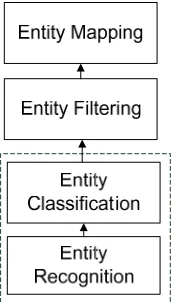
Figure 2. Stages in the bottom-up EL approach: Some works combine the entity recognition and the entity classification into one step.
Usually, a real-world EL system is constructed in a bottom-up manner, so it is necessary to make several decisions in different stages during the EL process. Figure 2 depicts the bottom-up process (Krauthammer et al., 2004). Entity recognition marks single words (or several adjacent words) that indicate the presence of entities. As entity recognition does not determine the specific meaning of a concept, it is often combined with Entity Classification, which assigns entities to different classes, such as persons, genes, or diseases. After removing Nils (Entity Filtering), Entity Mapping maps entities to controlled database entries by calculating the similarities between the recognized entities and lexicon resources. This stage may resolve the entity ambiguity issue by a disambiguation process that uses contextual information to link entities to KB entries.
As shown in Figure 2, the traditional method for dealing with Nils has been to employ an additional step to filter out entities that have no corresponding entry in a KB. For example, Bunescu et al. (2006) filtered out mentions whose confidence scores are less than a fixed threshold. J Hakenberg et al. (2008) and Li et al. (2009) trained separate binary classifiers to validate linked mentions. Dredze et al. (2010) treated Nils as another KB entry candidate to train their EL ranking model.
14 Hong-Jie Dai et al.
With a joint inference process, we can carry out both tasks simultaneously to avoid this type of error propagation (Poon et al., 2007).
Joint inference has become popular recently, because it allows features and constraints to be shared among different tasks. For example, J. R. Finkel et al. (2009) integrated parsing and named entity recognition into a joint model, whereas Dai et al. (2011) created a joint model for co-reference resolution and gene normalization and Liu et al. (2012) conducted entity recognition and normalization jointly for tweets. In this paper, we use the Markov Logic Network (MLN) (Richardson et al., 2006), a joint model that combines first order logic and Markov networks, to capture the bottom-up decisions derived from the process illustrated in Figure 2. This model captures the contextual information of the recognized entities for entity disambiguation, as well as the constraints used when linking an entity mention to a database entry. For example, an entity mention can only be linked to a database entry when the mention has not been recognized as a Nil.
Existing EL evaluation metrics assess a system’s performance in terms of the effectiveness of database curation (Morgan et al., 2008) or question answering (QA) accuracy (McNamee, Dang, et al., 2009). In addition, we evaluate our system at a fine-grained entity by entity level. Such evaluation is more relevant to information extraction tasks, such as the bio-molecular event extraction task (Kim et al., 2009).
When considering EL tasks from the entity level, one challenge is the lack of contextual information for disambiguating each individual entity. The major scheme of traditional entity disambiguation approaches relies on domain knowledge derived from entities’ profiles and contextual features extracted within a predefined content window. Rule-based (Dai et al., 2010; Jörg Hakenberg et al., 2008), vector space models (Cucerzan, 2007), and machine learning approaches (Crim et al., 2005; Mihalcea et al., 2007; Milne et al., 2008) have been proposed to disambiguate entity mentions individually. Nevertheless, the context is unclear under certain circumstances. Take the sentence “The synthetic replicate of urocortin can bind with high affinity to Type 1 and Type 2 CRF receptors” as an example. The sentence itself does not explicitly provide any clues to help computer programs determine the identity of the gene mention “urocortin”, which has at least eight ambiguous Entrez Gene IDs. One approach is to expand the context window used for disambiguation to the paragraph level. Nevertheless, a paragraph described in a biomedical article usually incorporates several pieces of information in its description, which may not be related directly to a target entity instance and leads to the failure of traditional EL approaches.
Joint Learning of Entity Linking Constraints Using a Markov-Logic Network 15
considering the relational information hidden among entities. In the following sections, we first give formal definitions of the EL tasks mentioned above, followed by an introduction of MLN and a description of the main ideas of the proposed EL method with the formulation of the collective EL approach.
2.
Entity Linking Problem Definition
This section gives formal definitions of all related EL tasks.
Definition 1: Instance-based Entity Linking Problem
Let M = (m1, m2, …) denote a sequence of entities mentioned in an article A. The surface name
of mi is denoted by Name(mi). The named entity type of mi is EntityType(mi). The surrounding
context of mi can be extracted by Context(mi). Given a KB containing a set of entries ID = {id1,
id2, …}, each of which organizes knowledge related to an entity, the instance-based EL
problem is defined as finding a mapping function LinkTo(mi) that maps each mi in M to a
unique entry idi in ID and satisfies the constraint LinkTo m( i) :miM M .
In instance-based gene mention linking (GML), only entities whose EntityType(mi)
belong to “gene” are considered for evaluation. Both the gene normalization task in BioCreAtIvE (Morgan et al., 2008) and the EL task in the KB population (McNamee & Dang, 2009a) can be subsumed into Definition 1. In BioCreAtIvE gene normalization, the developed system should satisfy the equation LinkTo m( i) :miM M . We refer to this task as the article-wide EL problem.
Definition 2: Article-wide Entity Linking Problem
Let M = {m1, m2, …} denote a set of entities mentioned in A. Given the entries ID = {id1,
id2, …} in a KB and the mapping function LinkTo(mi), the article-wide EL problem satisfies
the constraint LinkTo m( i) :miM M .
On the other hand, the KB population EL task only considers one certain entity mi
mentioned in A. We refer to this task as the article-wide “salient entity” linking problem, in accordance with the Wikipedia style manual, in which only the salient entity and its related entities should be linked in wikification. Excessive links would obstruct the readers in following the article by drawing attention away from important links (Mihalcea & Csomai, 2007).
Definition 3: Article-wide Salient Entity Linking Problem
Let M = mi denote the salient entity mentioned in A. Note that, in encyclopedia-style articles, 1
M because the same surface name described in such articles should refer to the same instance. Given the entry set ID = {id1, id2, …} of a KB, the purpose of the article-wide salient
16 Hong-Jie Dai et al.
Note that, in the KB population EL subtask (pertained to the article-wide salient EL problem), the salient entity is given. Nevertheless, in the instance-based GML or the BioCreAtIvE gene normalization (pertaining to the article-wide EL problem) tasks, the systems must also deal with the entity recognition/classification problem.
3.
First-order Logic and Markov Logic Networks
Markov logic is a statistical relational learning language based on first-order logic (FOL) and Markov networks. In this section, we consider FOL and Markov networks in terms of the GML task.
In FOL, the formulae are constructed using four types of symbols: constants, variables, functions, and predicates. For GML, a constant symbol may represent a gene mention (e.g. “CD59”) or its unique database entry (e.g. the Entrez Gene ID “966”). If variables and constants are type-specific, their range can only cover objects of the corresponding type. To give an example, the variable y’s range covers all Entrez Gene database IDs. Predicate symbols are used to represent the relations between terms; for example, we can define the predicate, LinkTo(x, y), to indicate that a gene mention (the variable x) should be linked to an entry (the variable y). Formulae are constructed recursively from predicates applied to a tuple of terms by through use of logical connectives and quantifiers. Then, we can model the EL task by introducing a set of logical predicates. For instance, we can define the predicate Candidate(i, j) to indicate that the gene mention i can be mapped to an entry j. The predicate captures information about gene mentions and their corresponding candidate database entries. Through this predicate, we can infer whether a gene mention is unambiguous. Then, we can use the following formula
Formula 1: x id Candidate x id! . ( , )LinkTo x id( , )
to model the concept that, when a gene mention is mapped to only one entry, it should be linked to that entry. Note that we use the symbol, !, to refer to a uniqueness quantification.
A first-order KB is a set of hard constraints on the set of ground atoms of predicates (or so-called possible worlds). If a world violates any formula, it has zero probability. In most domains, however, it is very difficult to derive non-trivial formulae that are always true. Markov logic softens these constraints to handle uncertainty by associating each formula with a weight that reflects the strength of a constraint. Ideally, if we could define a formula with a proper weight for its distribution, a world in which the formula is satisfied would have a higher probability than a world in which it is not. In Markov logic, a set of weighted formulae is called a MLN.
Definition 4: Markov Logic Network
18 Hong-Jie Dai et al.
Ideally, we should be able to treat all recognized gene mentions as candidates, and proceed directly to the entity mapping task. Nevertheless, the employed recognizer may generate false positive gene mentions. Such mentions can be classified into two types: those that do not belong to any entity class and those that belong to classes that are not the curation target (Nils). In GML, Nils appear when the gene mentions are DNA polymerases, or in a specific organism that is not considered. To capture the concept, we define the predicate isSuitableForLinking(x), which indicates that the gene mention x of the article is suitable for linking to an entry. For entity mapping, we use the predicate LinkTo(x, id) to represent that the gene mention x must be linked to the database entry id. As the objective of the entity mapping task is to determine a unique KB entry for each entity, we must define a formula to ensure that the constraint is satisfied. Regarding GML, we use the following formula to prevent a gene mention from associating with more than two identifiers.
Formula 2: Entity Mapping Constraint
( , i) i j ( , j)
LinkTo x id id id LinkTo x id
4.1
Formulation of the Instance-based GML
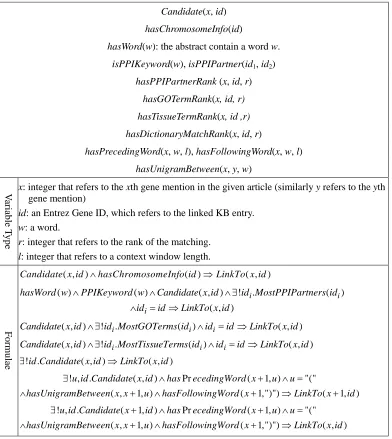
Within the machine learning community, classification is typically done on each object independently without taking into account any underlying relation that connects the objects. In most of the individual EL formulations, an individual classifier is employed to assign a probability to the linked ID of an individual instance independently of the linked IDs of other instances. For example, the following formula expresses that, if the chromosome location information of the entity mention x, which has the KB entry id as its candidate ID, can be found in the surrounding text, x should be linked to id.
Formula 3: hasChromosomeInfo id( )Candidate x id( , )LinkTo x id( , )
Other useful biographical information for locally disambiguating gene mentions includes tissues, gene ontology, and PPI. Some researchers (Hakenberg et al., 2007; Lai et al., 2009) have used this information for individual GML. Table 1 shows the observed predicates and formulae defined for this individual approach. We take hasPPIPartnerRank as another example. For the individual GML process, we define the following formula.
Formula 4: Individual PPI
! .id hasPPIPartnerRank x id( , ,1) w hasWord w. ( ) isPPIKeyword w( ) LinkTo x id( , )
20 Hong-Jie Dai et al.
Collective classification refers to the task of inferring labels for a set of objects using not just their attributes, but also the relations among them (Sen et al., 2008).
Definition 5: Collective Classification
Given a network N, a node n in N, and the label set L, there are three distinct feature types that can be utilized to determine the label l of n, where lL.
1. The observed features of n.
2. The observed features (including observed labels if they are known) of nodes in the neighborhood (related nodes) of n.
3. The unobserved labels of nodes in the neighborhood (related nodes) of n.
In our formulation for EL, for a given article, the candidate database entries of all recognized entities form the network N. A mention’s candidate entry and order form the node n = (id, order) in N, and an edge exists between two nodes if they have dependencies. In this work, the dependencies are constructed based on two main ideas: the discourse salience property in centering theory (Grosz et al., 1995) and the protein-protein interaction (PPI) association.
4.1.1 Discourse Salience
Discourse salience is a phenomenon where, in a given discourse, there is precisely one entity that is the center of attention. This entity is mentioned over and over again, which makes it more salient than others. We utilize this phenomenon to improve the instance-based EL confidence. Suppose that id is a candidate database entry for several entities in a discourse, we then can assume that id is more salient than other database entries. If the EL system can link one of these mentions to id with high confidence, then the system is more likely to be able to link all of the other mentions to id as well.
4.1.2 Protein-protein Interaction
Similarly, the idea of employing the PPI association allows us to express the concept that a gene mention y should be linked to idj if another gene mention x has been linked to idi and idi
forms an interaction with idj.
In order to capture the concepts above, the order of all individual instances described in an abstract are leveraged to build dependencies in our formulation. The lack of local contextual information then can be resolved by the constructed dependencies. In our work, the salience collective is written as follows in Markov logic.
Formula 5: Salience collective
( , ) ( , ) ( , ) ( , )
Joint Learning of Entity Linking Constraints Using a Markov-Logic Network 21
If the database entry id is linked to an entity x that precedes the current mention y and id is a candidate entry of y, then the current entity y should also be linked to id. This formula is similar to the transition feature of the linear-chain conditional random fields (Lafferty et al., 2001), which can be implemented in Markov logic as follows.
Transition feature: Pr e cede x y( , )Label x( ,L)Label y( ,L)
Note that the symbol “+” in the above formula directs the MLN learning algorithm to associate the formula with a different weight depending on variables containing the “+” notation.
We define the predicate PPIPartner(idi, idj), whose value is true if idi and idj form a PPI
pair. We then use the following formula to capture the PPI association concept.
Formula 6: PPI
( , i) ( , j) ( i, j) ( , j)
LinkTo x id Candidate y id PPIPartner id id LinkTo y id
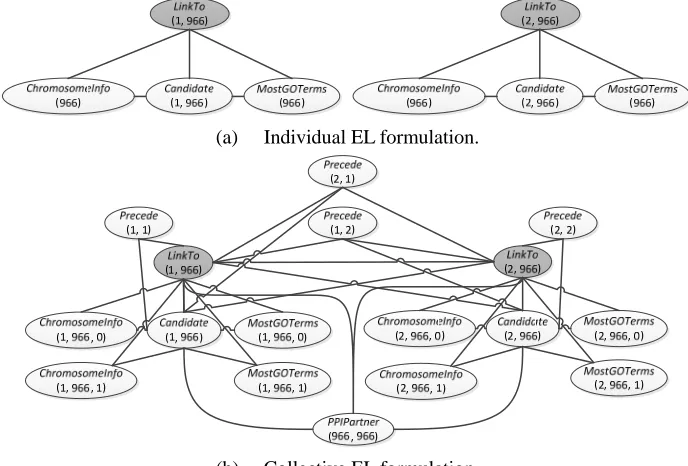
Based on these two collective formulae, Figure 4 compares the ground Markov network (b) of our collective formulation with the traditional individual approach (a). In Figure 4 (a), the individual approach considers the likelihoods stating the similarity of the current context with the domain knowledge of the recognized entity, including chromosome location (ChromosomeInfo) and gene ontology (MostGOTerm). Comparing Figure 4 (b) with (a), our collective formulation captures the dependencies among entities, allowing the information to be employed in the GML decision.
(a) Individual EL formulation.
(b) Collective EL formulation.
22 Hong-Jie Dai et al.
4.2
Formulae for Entity Recognition/Classification and Filtering
The hidden predicate isSuitableForLinking captures the decisions made after the entity recognition/classification stage. When the gene mention x is linked to an identifier id, we employ the following formula to ensure that it is an entity suitable for linking.
Formula 7: LinkTo x id( , )isSuitableForLinking x( )
Note that the formula models the bottom-up decision, as shown in Figure 2. The identifier id does not have to be linked to the gene mention x proposed by the entity recognition/classification stage. Nevertheless, the id cannot be assigned to the gene mention x that has not been proposed as a potential entity.
Our first formula for isSuitableForLinking treats all gene mentions as potential entities:
( , ) ( )
hasName x n isSuitableForLinking x
.
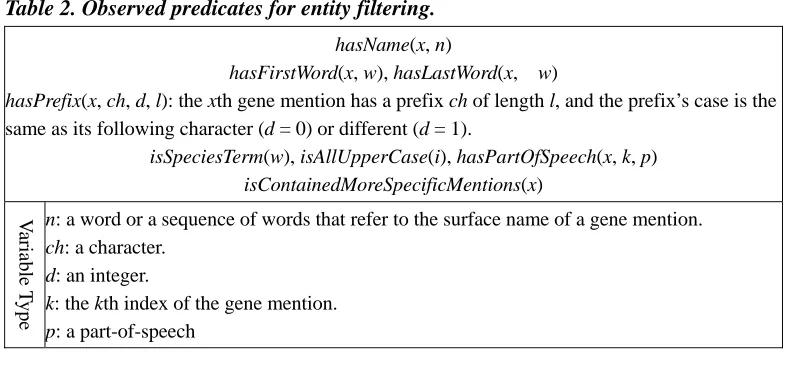
The other formulae are constructed using the observed predicates defined in Tables 1 and 2 to check the contextual information. For example,
hasFirstWord x( ,w)isSpeciesTerm(w)isSuitableForLinking x( )
implies that the suitability of a certain gene mention for linking depends on whether or not the first word is a keyword for a certain species.
Table 2. Observed predicates for entity filtering.
hasName(x, n)
hasFirstWord(x, w), hasLastWord(x, w)
hasPrefix(x, ch, d, l): the xth gene mention has a prefix ch of length l, and the prefix’s case is the same as its following character (d = 0) or different (d = 1).
isSpeciesTerm(w), isAllUpperCase(i), hasPartOfSpeech(x, k, p) isContainedMoreSpecificMentions(x)
V
ari
abl
e T
ype
n: a word or a sequence of words that refer to the surface name of a gene mention. ch: a character.
d: an integer.
k: the kth index of the gene mention. p: a part-of-speech
5.
Experimental Results and Discussion
5.1
Experimental Setup
5.1.1 Evaluation Metrics
Joint Learning of Entity Linking Constraints Using a Markov-Logic Network 23
two resolutions (article and instance).
Article-wide evaluation used the standard used in the BioCreAtIvE challenge (Hirschman et al., 2005), which is designed to determine an GML system’s performance as an aid for the curation of biological databases. The GML system outputs a list of IDs for a given article, and this list is compared to the gold standard ID list. The PRF scores are calculated based on the sums of true/false positives/negatives (TP, TN, FP, FN).
Instance-based evaluation measures the GML performance at a fine-grained resolution (Dai et al., 2011). In contrast to the first metric, the PRF scores are calculated based on the sums of TP, TN, FP, and FN for all instances in the test dataset. Therefore, under this criterion, an FP can link a true gene mention to the wrong KB entry or link a false gene mention to any entry, while an FN can link a true gene mention to the wrong entry or fail to recognize a true gene mention. For TP/FP/FN, we need to determine when the predicted boundary matches that of the gold standard. Most pure entity recognition tasks use “exact-matching” as the primary criterion. Under this criterion, a candidate gene mention can only be counted as a TP if both its left and right boundaries fully coincide with the gold answer. In a real case, however, a gene mention can be tagged in several ways (e.g., “serum <entity>LH</entity>“ and “<entity>serum
LH</entity>“ are both correct), which are intrinsic to the annotation of any gene mention corpus,
whether developed by humans or machines (Tsai et al., 2006), and may depend on the annotator’s perspective (Franzén et al., 2002). Furthermore, for the GML task, the correctness of the linked entry is more important than its boundary. Therefore, we used the approximate-match to determine the boundary criterion. For example, a TP is counted when a machine-linked gene mention is a substring of the gold standard-linked gene mention or vice versa and the linked entry is equal to the gold entry.
The third metric, the mean accuracy across all queries, considers the QA perspective. EL is important in QA systems because the systems rely on data from multiple sources, so name ambiguity will lead to wrong answers and poor results. We adopt the evaluation metrics used in text analysis conference KB population (KBP) track 2009 (McNamee & Dang, 2009a) to report Accuracymicro and analyze the results from the QA perspective 1.
5.1.2 Datasets
In the experiments, we used the training and test sets (281 and 262 abstracts, respectively) released by the BioCreAtIvE gene normalization task (Morgan et al., 2008) for article-wide evaluation. The corpus contains annotations for human genes that are linked to IDs in the Entrez Gene database. Although the gold answers contain each ID’s surface name, they do not give the exact location of the corresponding gene mention in the abstract. To obtain
1
24 Hong-Jie Dai et al.
fine-grained evaluation results, our in-lab biologists compiled an instance-based GML corpus by annotating the exact location and the boundary of the IDs’ gene mentions (Dai et al., 2012). After compiling the corpus, we performed three-fold cross validation (CV) on the training dataset to optimize the weights and formulae and to evaluate its performance on the test set.
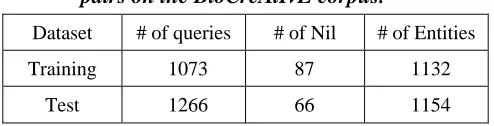
In QA evaluation, as defined in KBP, the associated document is used to provide contextual information that might be useful for linking. We paired the surface names with their corresponding documents as the input query. For each query, the corresponding gold answer could be 1) an Entrez Gene ID or 2) a Nil in cases where our biologists annotated the entity as a mention without associating it with any IDs. Table 3 shows the generated query/answer pairs based on the BioCreAtIvE Corpus.
Table 3. The statistics of the generated query/answer pairs on the BioCreAtIvE corpus.
Dataset # of queries # of Nil # of Entities
Training 1073 87 1132
Test 1266 66 1154
5.1.3 Model Configurations
To assess the performance of our models and determine the possible gains that can be achieved by considering a collective model and a joint model of the bottom-up stages, we designed two configurations. The first configuration was the collective model, which used all of the disambiguation formulae defined in Section 4.1 (denoted as CM). The constructed Markov network resembles Figure 4 (b) with additional grounding for the predicates and individual formulae defined in Table 1. The second configuration further included the formulae defined in Section 4.2 on CM to build a joint model (denoted as JCM). This work used the 1-best Margin Infused Relax online learning Algorithm (MIRA) (McDonald et al., 2005) for learning weights and employed cutting plane inference (Riedel, 2008) with integer linear programming as its base solver for inference at test time as well as during the MIRA online learning process.
In addition, we compared the first configuration (CM) with two GML approaches: Lai et al. (2009)’s rule-based approach and Crim et al. (2005)’s maximum entropy (ME) approach, which handled the GML task as an individual classification problem. The ME approach was adopted with the individual features described in Section 4.1.
Joint Learning of Entity Linking Constraints Using a Markov-Logic Network 25
Rule-basedstage, and MEstage, respectively.
For the above configurations, we employed Lai et al.’s system2
to recognize all gene mentions and generate mapped candidate IDs for each mention. All configurations were based on the same candidate ID sets.
In the next sub-section, we first discuss the fine-grained resolution results. Then, we derive BioCreAtIvE’s evaluation results by simply merging the linked identifiers in all indices and removing duplicated identifiers. Finally, the results are displayed from the QA perspective.
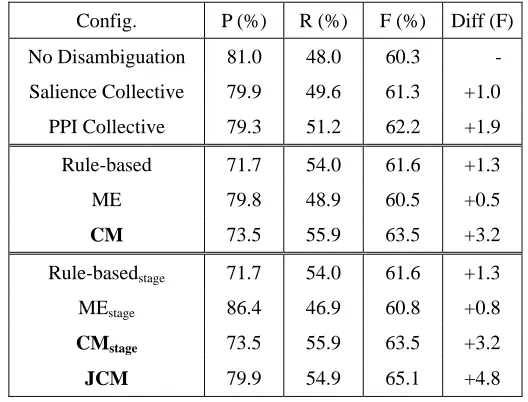
Table 4. The three-fold CV results on the training set using instance-based criterion. Our models are highlighted in bold.
Config. P (%) R (%) F (%) Diff (F)
No Disambiguation 81.0 48.0 60.3 - Salience Collective 79.9 49.6 61.3 +1.0 PPI Collective 79.3 51.2 62.2 +1.9
Rule-based 71.7 54.0 61.6 +1.3
ME 79.8 48.9 60.5 +0.5
CM 73.5 55.9 63.5 +3.2
Rule-basedstage 71.7 54.0 61.6 +1.3
MEstage 86.4 46.9 60.8 +0.8
CMstage 73.5 55.9 63.5 +3.2
JCM 79.9 54.9 65.1 +4.8
5.2
Experiment Results
Table 4 shows the fine-grained results derived on the training set. The employed system’s linking performance without applying any disambiguation approaches is shown in the first row (No Disambiguation.) Our model can simulate the same PRF scores when only Formula 1 is applied. The last column shows the improvement of F-score over the baseline after implementing different GML disambiguation methods.
It can be observed that, by adding the salience collective (Formula 5) without any disambiguation formulae and domain knowledge, the recall rate is improved by 1.6%, which results in an improved F-score. This demonstrates that a scientific article often contains repetitive information, such as key genes, which can be captured by the formula. Furthermore,
2
26 Hong-Jie Dai et al.
the PPI collective combining the domain knowledge achieves a higher PRF-score, even outperforming the Rule-based and ME.
Table 5. Results derived on the test set.
Metrics Fine-grained Resolution (%) Aids for Curation (%)
Config. P R F Diff P R F Diff
No Disambiguation 80.7 56.3 66.3 0 77.3 71.5 74.3 0
Salience Collective 79.5 59.0 67.7 +1.4 77.2 71.3 74.1 -0.2
Rule-based 72.9 63.9 68.1 +1.8 82.6 83.4 83.0 +8.7
ME 79.2 58.2 67.1 +0.8 88.8 79.0 83.6 +9.3
CM 73.8 64.3 68.7 +2.4 86.1 83.0 84.5 +10.2
Rule-basedstage 73.7 64.2 68.7 +2.4 84.1 83.7 83.9 +9.6
MEstage 80.2 58.4 67.6 +1.3 90.2 79.0 84.3 +10
CMstage 74.3 64.3 69.0 +2.7 87.9 83.2 85.5 +11.2
JCM 77.5 63.7 69.9 +3.6 87.7 83.8 85.7 +11.4
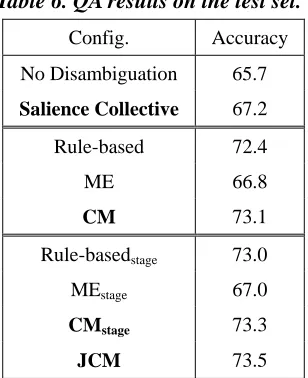
The results derived on the test set by fine-grained resolution and aided for curation and QA are shown in Tables 5 and 6, respectively. In summary, we observe that the collective GML method consistently outperforms the compared methods under the three criteria. Moreover, the comparison of our joint model (JCM) and the stage models shows that the joint model performs better under all evaluation metrics.
Table 6. QA results on the test set.
Config. Accuracy
No Disambiguation 65.7
Salience Collective 67.2
Rule-based 72.4 ME 66.8
CM 73.1
Rule-basedstage 73.0
MEstage 67.0
CMstage 73.3
JCM 73.5
Joint Learning of Entity Linking Constraints Using a Markov-Logic Network 27
the fine-grained evaluation. In contrast, for database curation, the collective tends to improve the overall precision. Nevertheless, it reduces the recall. By removing the salience collective from CM, the P improved by 0.8% but the R reduced by 0.7% in the test set. This phenomenon is reasonable because adding the dependency causes the model to link mentions with previous linked IDs.
Finally, the results also reveal the performance gap (approximately 15.8%) when we want to employ the GML system, which is evaluated in terms of the database curation criterion with 80+% F-score on advanced IE tasks, such as relation or event extraction.
5.3
Discussion
Evaluating EL from the fine-grained perspective allows us to analyze the task in detail. In this section, we describe our findings and propose potential research directions.
One advantage of employing MLN in our EL modeling is that it is easy to model arbitrary longer range dependencies, as expressed by Formula 5 and Formula 6. It is difficult to model such dependencies using ME. As shown in Tables 4 and 5, adding the collectives improves the fine-grained EL performance.
Another advantage of our GML approach is that it is flexible and can be applied quickly in real-world applications. The EL task usually is defined as linking a mention to a unique entry. Nonetheless, in the biomedical field, there are some mention descriptions that cannot be linked to unique IDs. The following are some examples extracted from our corpus:
1. ABCB9 protein appears to be most highly expressed in the Sertoli cells of the seminiferous tubules in mouse and rat testes.
2. cDNA cloning and chromosomal localization of the human and mouse isoforms of Ksp-cadherin.
3. p63 was detected in a variety of human and mouse tissues.
The GML system cannot link each of the gene mentions in the above sentences to just one ID. Our model can deal with these cases by modifying the constraint of Formula 2 with a larger cardinality or introducing additional formulae to determine the cardinal constraint dynamically.
Joint Learning of Entity Linking Constraints Using a Markov-Logic Network 29
package as the first step to generate candidate noun phrases, and we may consider combining more results from different chunkers through a voting strategy to further improve the chunking performance.
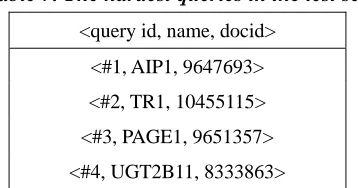
Table 7. The hardest queries in the test set.
<query id, name, docid>
<#1, AIP1, 9647693> <#2, TR1, 10455115>
<#3, PAGE1, 9651357> <#4, UGT2B11, 8333863>
Finally, we report our observations on the hardest queries under QA evaluation. Table 7 lists the queries that could not be answered correctly by any of the employed methods. After checking each error event carefully, we found that our model outputs Nil for Query #1 due to the absence of gene biographical information in the context. The gene mention of Query #2 is an abbreviation, and the query is affected by a problem similar to the ambiguous acronym problem discussed in the KBP 2009 track (McNamee, Dang, et al., 2009). Our model fails to output correct IDs for #3 and #4 because no distinction is made between matches of official symbols and synonyms when searching for candidate IDs. In our current work, the matches of official symbols and those of synonyms share the same predicate. We believe that appending more predicates and formulae corresponding to these two types of matches will improve our system’s accuracy.
6.
Conclusions
30 Hong-Jie Dai et al.
Acknowledgement
This research was supported in part by the National Core Facility Program for Biotechnology (Taiwan Bioinformatics Consortium of Taiwan) grant NSC-100-2319-B-010-002, the National Science Council of Taiwan grant NSC-102-2218-E-038-001, as well as the research grant TMU101-AE1-B55 of Taipei Medical University.
Reference
Bunescu, R., & Pasca, M. (2006). Using encyclopedic knowledge for named entity disambiguation. In Proceedings of the 11th Conference of the European Chapter of the Association for Computational Linguistics, Trento, Italy.
Crim, J., McDonald, R., & Pereira, F. (2005). Automatically Annotating Documents with Normalized Gene Lists. BMC Bioinformatics, 6(Suppl 1), S13.
Cucerzan, S. (2007). Large-scale named entity disambiguation based on Wikipedia data. In Proceedings of the 2007 Joint Conference on Empirical Methods in Natural Language Processing and Computational Natural Language Learning, Prague, Czech Republic. Dai, H.-J., Chang, Y.-C., Tsai, R. T.-H., & Hsu, W.-L. (2011). Integration of gene
normalization stages and co-reference resolution using a Markov logic network. Bioinformatics, 27(18), 2586-2594.
Dai, H.-J., Lai, P.-T., & Tsai, R. T.-H. (2010). Multistage Gene Normalization and SVM-Based Ranking for Protein Interactor Extraction in Full-Text Articles. IEEE/ACM TRANSACTIONS ON COMPUTATIONAL BIOLOGY AND BIOINFORMATICS, 7(3), 412-420.
Dai, H.-J., Wu, C.-Y., Tsai, R. T.-H., & Hsu, W.-L. (2012). From Entity Recognition to Entity Linking: A Survey of Advanced Entity Linking Techniques. In Proceedings of the 26th Annual Conference of the Japanese Society for Artificial Intelligence, Yamaguchi, Japan.
Dredze, M., McNamee, P., Rao, D., Gerber, A., & Finin, T. (2010). Entity Disambiguation for Knowledge Base Population. In Proceedings of the 23rd International Conference on Computational Linguistics (COLING 2010), Beijing.
Finkel, J., Dingare, S., Manning, C., Nissim, M., Alex, B., & Grover, C. (2005). Exploring the boundaries: gene and protein identification in biomedical text. BMC Bioinformatics, 6(Suppl 1), S5.
Finkel, J. R., & Manning, C. D. (2009, June). Joint parsing and named entity recognition. In Proceedings of NAACL 2009.
Franzén, K., Eriksson, G., Olsson, F., Asker, L., Lidén, P., & Cöster, J. (2002). Protein names and how to find them. International Journal of Medical Informatics, 67(1-3), 49-61. doi: Doi: 10.1016/s1386-5056(02)00052-7
Joint Learning of Entity Linking Constraints Using a Markov-Logic Network 31
Hakenberg, J., Plake, C., Leaman, R., Schroeder, M., & Gonzalez, G. (2008). Inter-species normalization of gene mentions with GNAT. Bioinformatics, 24(16), 126-132. doi: 10.1093/bioinformatics/btn299
Hakenberg, J., Plake, C., Leaman, R., Schroeder, M., & Gonzalez, G. (2008). Inter-species normalization of gene mentions with GNAT. Bioinformatics, 24, i126 - 132.
Hakenberg, J. o., Royer, L., Plake, C., Strobelt, H., & Schroeder, M. (2007). Me and my friends: gene mention normalization with background knowledge. In Proceedings of Second BioCreAtIvE Challenge Evaluation Workshop.
Hirschman, L., Yeh, A., Blaschke, C., & Valencia, A. (2005). Overview of BioCreAtIvE: critical assessment of information extraction for biology. BMC Bioinformatics, 6(1). Kang, N., van Mulligen, E. M., & Kors, J. A. (2011). Comparing and combining chunkers of
biomedical text. J Biomed Inform, 44(2), 354-360. doi: 10.1016/j.jbi.2010.10.005 Kim, J.-D., Ohta, T., Pyysalo, S., Kano, Y., & Tsujii, J. i. (2009). Overview of BioNLP'09
Shared Task on Event Extraction. In Proceedings of the Workshop on Current Trends in Biomedical Natural Language Processing: Shared Task, Boulder, Colorado.
Krauthammer, M., & Nenadic, G. (2004). Term identification in the biomedical literature. Journal of Biomedical Informatics, 37(6), 512-526.
Lafferty, J., McCallum, A., & Pereira, F. (2001). Conditional random fields: Probabilistic models for segmenting and labeling sequence data. In Proceedings of the 18th International Conference on Machine Learning (ICML).
Lai, P.-T., Bow, Y.-Y., Huang, C.-H., Dai, H.-J., Tsai, R. T.-H., & Hsu, W.-L. (2009). Using Contextual Information to Clarify Gene Normalization Ambiguity. In Proceedings of the IEEE International Conference on Information Reuse and Integration (IEEE IRI 2009), Las Vegas, USA.
Li, Y., Lin, H., & Yang, Z. (2009). Incorporating rich background knowledge for gene named entity classification and recognition. BMC Bioinformatics, 10(1), 223.
Liu, X., Zhou, M., Wei, F., Fu, Z., & Zhou, X. (2012). Joint Inference of Named Entity Recognition and Normalization for Tweets. In Proceedings of the 50th Annual Meeting of the Association for Computational Linguistics, Jeju, Republic of Korea.
McDonald, R., Crammer, K., & Pereira, F. (2005). Online Large-Margin Training of Dependency Parsers. In Proceedings of the 43rd Annual Meeting on Association for Computational Linguistics, Ann Arbor, Michigan.
McNamee, P., & Dang, H. T. (2009a). Overview of the TAC 2009 Knowledge Base Population Track. In Proceedings of the Second Text Analysis Conference (TAC 2009), Gaithersburg, Maryland USA.
32 Hong-Jie Dai et al.
McNamee, P., Dang, H. T., Simpson, H., Schone, P., & Strassel, S. M. (2009). An Evaluation of Technologies for Knowledge Base Population. In Proceedings of Test Analysis Conference 2009 (TAC 09), Gaithersburg, Maryland USA.
Mihalcea, R., & Csomai, A. (2007). Wikify!: linking documents to encyclopedic knowledge. In Proceedings of the sixteenth ACM conference on Conference on information and knowledge management, Lisbon, Portugal.
Milne, D., & Witten, I. H. (2008). Learning to link with wikipedia. In Proceedings of the 17th ACM conference on Information and knowledge management, Napa Valley, California, USA.
Morgan, A. A., Lu, Z., Wang, X., Cohen, A. M., Fluck, J., Ruch, P., . . . Hirschman, L. (2008). Overview of BioCreative II gene normalization. Genome Biology, 9(Suppl 2), S3. Poon, H., & Domingos, P. (2007). Joint inference in information extraction.
Richardson, M., & Domingos, P. (2006). Markov logic networks. Machine Learning, 62(Special Issue: Multi-Relational Data Mining and Statistical Relational Learning), 107-136.
Riedel, S. (2008). Improving the Accuracy and Efficiency of MAP Inference for Markov Logic. In Proceedings of the 24th Conference on Uncertainty in Artificial Intelligence (UAI 2008), Helsinki, Finland.
Sen, P., Namata, G., Bilgic, M., Getoor, L., Galligher, B., & Eliassi-Rad, T. (2008). Collective classification in network data. AI Magazine, 29(3), 93.
Tsai, R. T.-H., Wu, S.-H., Chou, W.-C., Lin, C., He, D., Hsiang, J., . . . Hsu, W.-L. (2006). Various criteria in the evaluation of biomedical named entity recognition. BMC Bioinformatics, 7(92), 14.