The Virtual Classroom Is an Interactive
Environment for Creating and Conducting
Simulated Experiments
Maindarkar P. S.1, Pawar P. T.2, Pathak M. M.3, Bharadiya R. J.4U.G. Students, Department of Computer Engineering, JSPMS B.I.T Engineering College, Barshi, India1, 2, 3, 4
ABSTRACT: To achieve an integrated environment for measurement and instrumentation, we designed and implemented a server user environment and developed a virtual lab system for hardware and software experiments along with the study materials. The Virtual Labs project addresses the issue of lack of good lab facilities, as well as trained teachers, by making remote experimentation possible. Our virtual lab is designed to enhance the efficiency of both the learners and the educators. The learners will be able to achieve high learning standard and the educators save time and labor. Virtual Experiment Session to provide interactive multimedia contents about the syllabus of off-line lab class, Assessment Session. Engineering colleges where there is connection between faculty, student and courses. In Institution, sometimes there may be loose connection between faculty student and courses for some reason such as missing lectures, doing part time job along with study for that purpose this paper help them in an efficient way. Virtual Class Room also provide tremendous cost advantage. Virtual laboratories have become complementary and in some cases alternative to physical laboratories. They are used in “anytime, anyplace, on-line learning” worlds of engineering.
KEYWORDS: Virtual Laboratory, network security education, restricted web access, virtual machines, Interactive learning.
I. INTRODUCTION
The virtual classroom is an interactive environment for creating and conducting simulated experiments. With the expanding utilization of system PCs, the Internet and advances in media transmission innovation, e-Learning has been broadly perceived as a significant device for learning and preparing. The conventional method for advanced education has stayed overwhelming in schools in some creating nations. With the huge development of e-learning, instructors and understudies typically investigate better approaches for building information. For example, there is issue of lacking number of human and material assets to cook for the training of the expansive populace. The number of inhabitants in school age subject in many spots has developed enormously to the degree that exclusive a little rate can be offered affirmation. Another learning environment should be made which will give self-governance and adaptability, build up contacts and simple correspondence between focuses of culture and information, and encourage simple access for all nationals of a learning based society.
VIRTUAL LABORATORY IN INDIA
Participating Institutes are as –
IIT Delhi
IIT Guwahati
IIIT Hyderabad
AMRITA University
DAYALBAGH University
NIT Karnataka
COE Pune
IIT Bombay
IIT Kanpur
IIT Kharagpur
IIT Madras
IIT Roorkee
The Virtual Labs project is an Open Educational Resource (OER) that addresses this issue of lack of good lab facilities, as well as trained teachers, by making remote experimentation possible. With the present day internet and computer technologies, these limitations no longer hamper students and researchers in enhancing their skills and knowledge.Yet another objective is to arouse the curiosity of the students and permit them to learn at their own pace. This facilitates the absorption of basic and advanced concepts through remote experimentation. Internet based experimentation further permits use of resources – knowledge, software, and data available on the web, apart from encouraging skilful experiments being simultaneously performed at points separated in space. In the Virtual Labs project, web-enabled experiments have been designed for remote operation and viewing.
Traditional physical laboratories require purchasing high cost equipment’s such as routers, switches, firewalls, host computers, etc. Reconfiguration and maintenance of these physical laboratories are very difficult and time consuming. For networks security education we require highly flexible, scalable and reconfigurable and isolated laboratories.
Therefore our traditional physical laboratories are not suitable for doing such experiments. The design of V-Lab is based with the following improved features:
A contained network security experimental environment providing dedicated virtual machines (VMs) and virtual networks to students;
A reconfigurable networking environment with the flexibility to mimic various real-world computer networks;
A collaborative laboratory environment with resource sharing and access control;
A Web portal for user-centric resource management with knowledge sharing [3].
V-Lab enables a three-stage academic model that is depicted in [4]:
Phase I: learn fundamental information;
Phase II: secure and hone aptitudes and capacities;
Phase III: team up and share learning.
This model is reached out with six components (Motivation, Knowledge, Creativity, Collaboration, Demonstration, and Feedback) to build up a progression of dynamic trials to accomplish the accompanying academic accomplishments:
A dynamic educational modules that constructs a private system framework, from basic to cutting edge levels;
A community model that energizes information advancement and commitment through a Web-based social stages and virtualized asset sharing methodologies.
II. LITERATURE SURVEY
The present framework is the manual one. Subsequently all the data about the Student, courses and staff subtle elements kept up in the document. For Faculty, they have diverse distinctive records for various reason, like separate document for understudy subtle elements, participation and separate record for report and so on. For Student, they have diverse distinctive journals for various subjects; in some cases they overlook something amid address. This Virtual Classroom System is accessible at whatever time with no limitation that implies we can get to 24 hours a day. Despite the fact that lab application in understudies' learning has a critical place in science training. It has a few points of confinement and issues, particularly in creating nations. India is additionally one of the creating nations so India likewise confronts a similar issue. A portion of the primary issues confronted can be condensed as takes after: In completing tests and masterminding with hardware, the research centre exercises are costly .For arranging and application, it is much tedious Checking understudies' execution amid the exercises can be troublesome in stuffed classes. Absence of lab or gear, or deficient lab conditions which restrains the educator to play out a straightforward lab movement. In addition they likewise beat the conceivable risks that can be found in the genuine lab conditions. This section categorizes a few existing virtual laboratories for hands-on experiments.
Virtual Application Laboratories: This type of laboratory uses in desktop virtualization, in which the simulation and problem solving are restricted by predefined algorithms of the underlying software. Additionally, hands-on laboratories do not usually allow students to keep application data on remote servers, and as a result, this may require students to finish an experiment in a single session.
Single-VM Laboratories: These laboratories provide predefined VMs for students. A VM can be requested by the students, or students can establish their own VMs. The single-VM approaches usually do not have a management portal which creates virtual resources customized for each user. Moreover, VMs are usually running on common desktops or laptops, and they cannot support complicated multi-VM networking environments.
Multi-VM Laboratories: These laboratories provide multiple VMs that can either run in the cloud or on a student’s PC. The multi-VM environment allows students to construct complex system configurations for experiments. However, these laboratories may not provide flexible networking, sufficient isolation, or reconfiguration capacities. Usually, these features are needed to perform network security experiments. Moreover, these systems often do not support isolated interserver communication, and thus require all VMs to reside within one physical server.
III. DISADVANTAGES OF EXISTING SYSTEM
Not user friendly: The current framework is not easy to use on the grounds that the recovery of is moderate and information is not looked after effectively. Client in term overseer, staff and understudy.
Not useful for E-learning student: those understudy who need to proceed with their review after graduation alongside occupation can't get any advantage since they need to go to the class routinely.
Difficulty in report generating: We require more computations to produce the report so it is created toward the finish of the session. Furthermore, the understudy not get a solitary opportunity to enhance their participation
Manual control: All estimations to produce report are done physically so there is more prominent shot of blunders.
Time consuming: Every work is done manually so time is consumed.
IV. CHARACTERISTICS OF PROPOSED SYSTEM
Following characteristics can be summarized:
User friendly: - The proposed framework is easy to use on the grounds that the recovery and putting away of information is quick and information is looked after effectively. In addition the graphical UI is given in the proposed framework, which furnishes client to manage the framework effectively.
Very Useful for E learning Student: those understudy who are extremely poor in monetary or the individuals who work in daytime can take in their course through web from anyplace. There is no compelling reason to show physically that is the reason name of the paper is virtual classroom framework and there is no confinement (NR).
Reports are easily generated: Reports can be effortlessly created in the proposed framework so client can produce the report according to the necessity (month to month) or amidst the session. Client can give the notice to the understudies so he/she get to be distinctly consistent.
Very less paper work: The proposed framework requires less printed material. Every one of the information is feted into the PC quickly and reports can be created through PCs. Also work turns out to be simple in light of the fact that there is no compelling reason to keep information on papers.
Computer operator control: There is no possibility of mistakes. Besides putting away and recovering of data is simple [3].
V.SYSTEM ARCHITECTURE
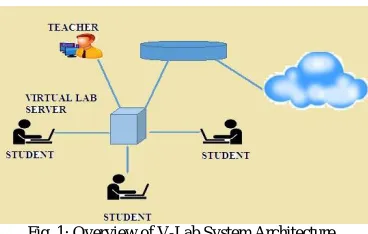
Fig. 1: Overview of V-Lab System Architecture
Above figure shows that the Virtual Laboratory System. Where students and teachers are connected to virtual Machine to the server.
Here students can login with its Username and Password. After authentication process student will successfully login, afterwards student can access the experimental work. Student can perform activities & save it’s work etc. all these type of operation can performed. Teachers have authority to check student experimental work, upload the video, pdf and text files. All data will be securely stored on cloud via server.
VI. ADVANTAGES OF PROPOSED SYSTEM
1 This project can be highly beneficial for students for students who want to continue their study from e learning programmers.
2 Student can check their own experimental work.
4 Time saving process.
5 Reduces the work load of the user related to the software installation.
6 Single administrator is enough to carry out all the tasks. 7 Data is secured.
VI. IMPACT OF VIRTUAL LABS
In light of the criticism from the client group, we can highlight the genuine effect of the Virtual Labs extend as takes after:
1. It gives remote access to quality labs.
2. It gives a total learning administration framework at one place.
3. It permits the understudies to learn at their own pace, at a place and time of their decision.
VII. CONCLUSION
Virtual lab have been displayed an inventive answer for creating and upgrading lab practice and access for separation learners, and as a methods for giving preparing and experience to educating Lab. Virtual lab Reduces work and time. It gives User amicable screens to enter the information. Virtual lab is web empowered versatile and adaptable for further enhancement. This venture can be exceptionally useful for understudies who need to proceed with their review from e-learning programs. Virtual lab gives the fundamental information to the understudy who doesn't have any thought regarding the analysis. Virtual Lab embraces advances from an extensive variety of fields.
REFERENCES
[1] Rajnish Kumar, Swati Shahi ”Virtual Classroom System” International Journal of Engineering Trends and Technology (IJETT) - Volume4 Issue4- April 2013.
[2] Dimitrios S. Alexiadis ,Nikolaos Mitianoudis “MASTERS: A Virtual Lab on Multimedia Systems for Telecommunications, Medical, and Remote Sensing Applications “IEEE Transactions On Education, Vol. 56, No. 2, May 2013.
[3] J. H.McClellan, R. W. Schafer, andM. A. Yoder, “A changing role for DSP education,” IEEE Signal Process. Mag., vol. 15, no. 3, pp. 16–18,May 1998.
[4] L. DeLooze, P.McKean, J. Mostow, andC. Graig, “Incorporating simulation into the computer security classroom,” in Proc. 34th Annu. Frontiers Educ. Conf., Oct. 2004, vol. 3, pp. S1F/13–S1F/18.
[5] M.Wannous and H. Nakano, “NVLab, a networking virtualWeb-based laboratory that implements virtualization and virtual network computing technologies,” IEEE Trans. Learning Technol., vol. 3, no. 2, pp. 129–138, Jun. 2010.