University of Windsor University of Windsor
Scholarship at UWindsor
Scholarship at UWindsor
Electronic Theses and Dissertations Theses, Dissertations, and Major Papers
2017
Investigation on the Performance of a Long Breathing Lean NOx
Investigation on the Performance of a Long Breathing Lean NOx
Trap Using n-Butanol
Trap Using n-Butanol
Christopher Aversa University of Windsor
Follow this and additional works at: https://scholar.uwindsor.ca/etd
Recommended Citation Recommended Citation
Aversa, Christopher, "Investigation on the Performance of a Long Breathing Lean NOx Trap Using n-Butanol" (2017). Electronic Theses and Dissertations. 5965.
https://scholar.uwindsor.ca/etd/5965
This online database contains the full-text of PhD dissertations and Masters’ theses of University of Windsor students from 1954 forward. These documents are made available for personal study and research purposes only, in accordance with the Canadian Copyright Act and the Creative Commons license—CC BY-NC-ND (Attribution, Non-Commercial, No Derivative Works). Under this license, works must always be attributed to the copyright holder (original author), cannot be used for any commercial purposes, and may not be altered. Any other use would require the permission of the copyright holder. Students may inquire about withdrawing their dissertation and/or thesis from this database. For additional inquiries, please contact the repository administrator via email
Investigation on the Performance of a Long Breathing Lean NOx Trap Using n-Butanol
by
Christopher Aversa
A Thesis
Submitted to the Faculty of Graduate Studies
through Mechanical, Automotive, and Materials Engineering in Partial Fulfillment of the Requirements for
the Degree of Master of Applied Science at the University of Windsor
Windsor, Ontario, Canada
Investigation on the Performance of a Long Breathing Lean NOx Trap Using n-Butanol
by
Christopher Aversa
APPROVED BY:
_____________________________________________
X. Xu
Department of Civil and Environmental Engineering
_____________________________________________
J. Tjong
Department of Mechanical, Automotive, and Materials Engineering
_____________________________________________
M. Zheng, Advisor
Department of Mechanical, Automotive, and Materials Engineering
_____________________________________________
G. Reader, Advisor
Department of Mechanical, Automotive, and Materials Engineering
iii
AUTHOR’S DECLARATION OF ORIGINALITY
I hereby certify that I am the sole author of this thesis and that no part of this thesis has
been published or submitted for publication.
I certify that, to the best of my knowledge, my thesis does not infringe upon anyone’s
copyright nor violate any proprietary rights and that any ideas, techniques, quotations, or
any other material from the work of other people included in my thesis, published or
otherwise, are fully acknowledged in accordance with the standard referencing practices.
Furthermore, to the extent that I have included copyrighted material that surpasses the
bounds of fair dealing within the meaning of the Canada Copyright Act, I certify that I
have obtained a written permission from the copyright owner(s) to include such
material(s) in my thesis and have included copies of such copyright clearances to my
appendix.
I declare that this is a true copy of my thesis, including any final revisions, as approved
by my thesis committee and the Graduate Studies office, and that this thesis has not been
iv
ABSTRACT
As regulations for nitrogen oxide (NOx) emissions continue to be tightened, the
need for both alternative fuels and intensive exhaust after-treatment will increase.
n-Butanol as an alternative fuel has demonstrated the potential to reduce both NOx and
particulate matter (PM) emissions, simultaneously. The use of n-butanol in a compression
ignition (CI) engine was studied on an engine test bench, at low and medium load.
Engine-out NOx emissions were reduced with the application of exhaust gas recirculation
(EGR), although, they were not low enough to meet emission regulations, indicating that
further NOx reduction in the exhaust would be required. Lean NOx trap (LNT)
experiments were conducted on an after-treatment flow bench using simulated exhaust
conditions. n-Butanol proved to be a more effective reductant than diesel for regeneration
at 3% exhaust oxygen concentration, due to a higher hydrogen production, although at
0% exhaust oxygen concentration, diesel was slightly more effective than n-butanol. The
long breathing n-butanol LNT strategy of this work proved to be capable of reducing the
fuel penalty associated with an LNT by nearly 90% compared to the conventional LNT
v
DEDICATION
This thesis is dedicated to my parents, Domenic and Kirsty Aversa.
Dad, thank you for your continued encouragement and constant emphasis on the
importance of education.
Mom, thank you for your loving support and useful advice in everything that I do.
I couldn’t be where I am today without you both.
Love,
Your son,
vi
ACKNOWLEDGEMENTS
Firstly, I would like to thank my advisors, Dr. Ming Zheng and Dr. Graham Reader, for
giving me the opportunity to perform research within this laboratory and for providing
me with continuous guidance and support in my studies and research. I would also like
to acknowledge Dr. Jimi Tjong for his support and encouragement, and for allowing me
to learn from him and the other members of the Ford Powertrain Engineering Research
and Development Centre at the Ford Motor Company Essex Engine Plant in Windsor,
Ontario. I would also like to acknowledge my other committee member Dr. Iris Xu for
her advice and perspective on my research.
I would also like to extend my appreciation to my colleagues in the Clean Combustion
Engine Laboratory. Countless conversations and encouraging advice from Dr. Meiping
Wang, Dr. Shui Yu, Dr. Xiao Yu, Dr. Xiaoye Han, Dr. Tadanori Yanai, Dr. Marko Jeftic,
Dr. Prasad Divekar, Tongyang Gao, Shouvik Dev, Kelvin Xie, Qingyuan Tan, Zhenyi
Yang, Geraint Bryden, Mark Ives, Zhu Hua, Divyanshu Purohit, Navjot Sandhu, and
Akshay Ravi have given me a unique perspective on different areas of research as well as
various experimental procedures. It has been a pleasure working with you all.
I would like to thank Mr. Bruce Durfy, who greatly assisted me with the fabrication of
many laboratory components both for my research and for use in other areas of the lab.
A special thanks is also extended to the following organizations for their funding support:
the University of Windsor, the Canada Research Chairs Program, the Ford Motor
Company, the Natural Sciences and Engineering Research Council of Canada,
BioFuelNet Canada, the Canada Foundation for Innovation, and Ontario Innovation
vii
TABLE OF CONTENTS
AUTHOR’S DECLARATION OF ORIGINALITY ... iii
ABSTRACT ... iv
DEDICATION ... v
ACKNOWLEDGEMENTS ... vi
LIST OF TABLES ... x
LIST OF FIGURES ... xi
LIST OF NOMENCLATURE ... xiv
CHAPTER 1: INTRODUCTION ... 1
1.1 Motivation ... 1
1.2 In-Cylinder Emission Reduction ... 3
1.3 Exhaust After-treatment ... 8
1.3.1 Diesel Particulate Filter ... 8
1.3.2 Diesel Oxidation Catalyst ... 9
1.3.3 Selective Catalytic Reduction Catalyst ... 10
1.3.4 Lean NOx Trap Catalyst ... 11
1.4 Long Breathing Lean NOx Trap Strategy ... 14
1.5 Objectives of this Research ... 15
1.6 Structure of the Thesis... 17
CHAPTER 2: LEAN NOX TRAP CATALYSTS ... 18
2.1 Lean NOx Adsorption ... 18
viii
2.3 On-Board Hydrogen Generation ... 24
CHAPTER 3: EXPERIMENTAL SETUP ... 28
3.1 Engine Test Setup... 28
3.2 After-treatment Flow Bench Setup ... 31
CHAPTER 4: ENGINE TEST AND ADSORPTION FLOW BENCH RESULTS ... 37
4.1 Low Load Engine Tests... 38
4.2 Medium Load Engine Tests ... 40
4.3 Summary of Engine Test Results ... 43
4.4 After-treatment Flow Bench Storage Tests ... 45
CHAPTER 5: HYDROGEN REFORMING EXPERIMENTAL RESULTS ... 52
5.1 Hydrogen Generation with 3% Exhaust Oxygen ... 53
5.2 Hydrogen Generation with 0% Exhaust Oxygen ... 57
5.3 Summary of Hydrogen Generation Test Results... 60
CHAPTER 6: LNT REGENERATION EXPERIMENTAL RESULTS ... 64
6.1 LNT Regeneration with 3% Exhaust Oxygen ... 65
6.1.1 Release of NOx ... 66
6.1.2 Reduction of NOx ... 73
6.2 LNT Regeneration with 0% Exhaust Oxygen ... 78
6.2.1 Release of NOx ... 79
6.2.2 Reduction of NOx ... 83
ix
6.4 Fuel Penalty Analysis ... 88
6.4.1 Conventional Strategy ... 89
6.4.2 Diesel LNT with Moderate EGR ... 89
6.4.3 n-Butanol Long Breathing LNT ... 90
CHAPTER 7: CONCLUDING REMARKS ... 91
7.1 Summary of Results ... 91
7.2 Recommended Future Work ... 94
REFERENCES ... 95
APPENDIX A: GAS MIXER OPERATION ... 104
LIST OF PUBLICATIONS ... 112
x
LIST OF TABLES
Table 1.1 – Various Fuel Properties of Diesel and n-Butanol ... 7
Table 3.1 – Test Engine Specifications... 29
Table 4.1 – Engine Test Conditions ... 37
Table 4.2 – Overall Engine Test Results Summary ... 45
Table 4.3 – Adsorption Flow Bench Test Conditions... 47
Table 5.1 – Hydrogen Reforming Test Outline ... 52
Table 5.2 – Hydrogen Reforming Results at 3% Exhaust O2 ... 61
Table 5.3 – Hydrogen Reforming Results at 0% Exhaust O2 ... 61
Table 6.1 – LNT Regeneration Test Conditions ... 64
Table 6.2 – Fuel Penalty Analysis of Various LNT Strategies ... 90
xi
LIST OF FIGURES
Figure 1.1 – EPA Heavy-Duty Diesel Emission Standards [2] ... 2
Figure 1.2 – NOx and Smoke Emissions vs Intake O2 ... 4
Figure 1.3 – Volumetric Energy Density of Various Energy Sources [26] ... 6
Figure 1.4 – DPF Front Face and Cut-out View Schematic ... 9
Figure 1.5 – Photograph of a Portion of a Diesel Oxidation Catalyst ... 9
Figure 1.6 – LNT Adsorption Process. Adapted from [31] ... 12
Figure 1.7 – LNT Regeneration Process. Adapted from [31] ... 13
Figure 1.8 – Conventional LNT vs. Long Breathing LNT ... 14
Figure 1.9 – Proposed Strategy for Reduced PM, NOx, and Fuel Penalty ... 16
Figure 2.1 – Conceptual Diagram of LNT Periodic Operation – Adapted from [30] ... 20
Figure 2.2 – NOx Reduction Pathways in an LNT – Adapted from [46]... 21
Figure 3.1 – Schematic of Engine Test Setup ... 29
Figure 3.2 – California Analytical Instruments Dual Bank Analyzers ... 30
Figure 3.3 – Scanning Electron Microscope Image of LNT Catalyst ... 31
Figure 3.4 – Schematic of the After-treatment Flow Bench ... 32
Figure 3.5 – After-treatment Flow Bench Photograph ... 33
Figure 3.6 – After-treatment Control LabVIEW Front Panel ... 34
Figure 3.7 – PWM Signal Representation ... 35
Figure 3.8 – MKS Fourier Transform Infrared Spectrometer ... 36
Figure 3.9 – V&F H-Sense Hydrogen Analyzer ... 36
Figure 4.1 – Low Load Diesel EGR Sweep NOx and PM Emissions... 38
xii
Figure 4.3 – Diesel EGR Sweep NOx and PM emissions ... 41
Figure 4.4 – n-Butanol EGR Sweep NOx and PM Emissions ... 42
Figure 4.5 – Long Breathing LNT Region for Overall Engine Test Results ... 44
Figure 4.6 – Adsorption Time vs. NOx Inlet Concentration ... 47
Figure 4.7 – LNT Adsorption with 100 ppm NOx Inlet Concentration ... 49
Figure 4.8 – LNT Adsorption with 1000 ppm NOx Inlet Concentration ... 49
Figure 4.9 – Cumulative Mass of NOx Slip vs. NOx Inlet Concentration ... 51
Figure 5.1 – LNT Thermocouple Layout ... 53
Figure 5.2 – Mass of H2 Yield (3% Exhaust O2) ... 55
Figure 5.3 – H2 Yield per kJ of Diesel (3% Exhaust O2) ... 56
Figure 5.4 – H2 Yield per kJ of n-Butanol (3% Exhaust O2) ... 57
Figure 5.5 – Peak H2 Yield (0% Exhaust O2) ... 59
Figure 5.6 – Mass of H2 Yield (0% Exhaust O2) ... 59
Figure 5.7 – H2 Yield per kJ of Diesel and n-Butanol (0% Exhaust O2) ... 60
Figure 5.8 – Summary of Mass of H2 Yielded for Tests 6-9 ... 62
Figure 5.9 – Summary of Mass of H2 Yielded per kJ of Reductant for Tests 6-9 ... 63
Figure 6.1 – Peak NOx Slip During LNT Regeneration (3% Exhaust O2) ... 68
Figure 6.2 – NOx Slip per Mass of NOx Stored LNT Regeneration (3% Exhaust O2) ... 69
Figure 6.3 – NOx During Adsorption, Diesel Regeneration, and Purge ... 70
Figure 6.4 – NOx During Adsorption, n-Butanol Regeneration, and Purge ... 70
Figure 6.5 – Mass of NOx During Adsorption, Diesel Regeneration, and Purge ... 71
Figure 6.6 –Mass of NOx During Adsorption, n-Butanol Regeneration, and Purge ... 71
xiii
Figure 6.8 – NOx, N2O, and NH3 Emissions During Regeneration with Diesel ... 74
Figure 6.9 – Peak N2O During LNT Regeneration (3% Exhaust O2) ... 75
Figure 6.10 – Peak NH3 During LNT Regeneration (3% Exhaust O2) ... 76
Figure 6.11 – Selectivity to N2 (3% Exhaust O2)... 77
Figure 6.12 – Peak NOx Slip During LNT Regeneration (0% Exhaust O2) ... 80
Figure 6.13 – NOx Slip per Mass of NOx Stored LNT Regeneration (0% Exhaust O2) ... 81
Figure 6.14 – NOx Slip Per Mass of NOx Stored LNT Purge (0% Exhaust O2) ... 82
Figure 6.15 – Regeneration Effectiveness (0% Exhaust O2) ... 83
Figure 6.16 – Peak N2O During LNT Regeneration (0% Exhaust O2) ... 84
Figure 6.17 – Peak NH3 During LNT Regeneration (0% Exhaust O2) ... 84
Figure 6.18 – Selectivity to N2 (0% Exhaust O2)... 85
Figure 6.19 – Regeneration Effectiveness at 0% and 3% Exhaust O2 ... 86
Figure 6.20 – Selectivity to N2O at 0% and 3% Exhaust O2 ... 87
Figure 6.21 – Selectivity to NH3 at 0% and 3% Exhaust O2 ... 88
Figure A.1 – Port 1 Calibration Curve ... 104
Figure A.2 – Photograph of the Gas Mixer ... 105
Figure A.3 – Front Panel of the Gas Mixer ... 105
Figure A.4 – Tera Term Connection Settings ... 106
Figure A.5 – Gas Mixer Main Menu ... 107
Figure A.6 – Gas Mixer Port Maintenance ... 108
Figure A.7 – Gas Mixer Gas Selection ... 109
Figure A.8 – Gas Mixer Compute K-Factor ... 110
xiv
LIST OF NOMENCLATURE
Abbreviations
ATR Autothermal Reforming [-]
CA Crank Angle [°]
CA50 Crank Angle of 50% Cumulative Heat Release [°CA]
CAI California Analytical Instruments [-]
CAFE Corporate Average Fuel Economy [mpg]
CARB California Air Resources Board [-]
CCEL Clean Combustion Engine Laboratory [-]
CI Compression Ignition [-]
CLD Chemiluminescence Detector [-]
CNG Compressed Natural Gas [-]
DEF Diesel Exhaust Fluid [-]
DI Direct Injection [-]
DME Dimethyl Ether [-]
DOC Diesel Oxidation Catalyst [-]
DPF Diesel Particulate Filter [-]
DR Dry Reforming [-]
EGR Exhaust Gas Recirculation [-]
EPA Environmental Protection Agency [-]
FPGA Field Programmable Gate Array [-]
FTIR Fourier Transform Infrared Spectrometer [-]
xv
GHG Greenhouse Gas [-]
HCCI Homogenous Charge Compression Ignition [-]
HDD Heavy-Duty Diesel [-]
HFID Heated Flame Ionization Detector [-]
HSV Hourly Space Velocity [hr-1]
ICE Internal Combustion Engine [-]
IMEP Indicated Mean Effective Pressure [bar]
LNG Liquid Natural Gas [-]
LNT Lean NOx Trap [-]
LPG Liquefied Petroleum Gas [-]
LTC Low Temperature Combustion [-]
MAF Mass Air Flow [g/s]
NDIR Nondispersive Infrared [-]
NI National Instruments [-]
NSR NOx Storage/Reduction [-]
PC Personal Computer [-]
pinj Injection Pressure [bar]
PM Particulate Matter [-]
POx Partial Oxidation [-]
ppm Parts per Million [ppm]
PWM Pulse Width Modulation [-]
SCR Selective Catalytic Reduction [-]
xvi
SR Steam Reforming [-]
TWC Three-Way Catalyst [-]
UHC Unburned Hydrocarbon [-]
WGS Water Gas Shift [-]
λ Excess Air Ratio [-]
Chemical Formulae
Al2O3 Aluminum Oxide
BaCO3 Barium Carbonate
Ba(NO2)2 Barium Nitrite
Ba(NO3)2 Barium Nitrate
BaO Barium Oxide
C1H1.8 Equivalent Diesel Chemical Formula
C3H6 Propene
C4H10O Butanol
CeO2 Ceria
CH4 Methane
CO(NH2)2 Urea
CO Carbon Monoxide
CO2 Carbon Dioxide
H2 Hydrogen
H2O Water
N2 Nitrogen
xvii
NH3 Ammonia
NO Nitrogen Monoxide
NO2 Nitrogen Dioxide
NOx Oxides of Nitrogen
O2 Oxygen
Pt Platinum
Rh Rhodium
CH 1: INTRODUCTION
1
CHAPTER 1: INTRODUCTION
1.1 Motivation
Each year, global automotive consumers’ demands consistently challenge
automotive engineers and suppliers to devote extensive time on the research of an
efficient, cost effective, and environmentally friendly means of transportation. Currently,
the most common fuels used in modern on-road vehicles are liquid carbon based fossil
fuels such as diesel and gasoline. Compression ignition (CI) diesel engines are typically
highly fuel efficient compared to spark ignition (SI) gasoline engines, due to their high
compression ratios and lean air fuel operation [1]. Internal combustion engines (ICEs),
however, produce harmful exhaust pollutants that can be damaging to both the
environment and human health. These exhaust pollutants include: carbon dioxide (CO2),
oxides of nitrogen (NOx), particulate matter (PM), carbon monoxide (CO), and unburned
hydrocarbons (UHC).
In order to minimize the overall quantity of harmful pollutants emitted from ICE
vehicles, government bodies such as the United States Environmental Protection Agency
(EPA) and the California Air Resources Board (CARB) have implemented exhaust
emission regulations for gasoline and diesel engines for various automotive applications.
Over the past several decades, exhaust emission limits have drastically reduced, in
particular NOx and PM tailpipe emissions in heavy-duty diesel (HDD) vehicles. The
trend of the reduction of NOx and PM allowed in heavy-duty diesel vehicles from 1988 to
2017 is displayed in Figure 1.1. NOx emissions allowed in heavy-duty diesel exhaust has
reduced from 14.3 g/kW·hr in 1988 to 0.268 g/kW·hr in 2007 [2]; a 98.1% total reduction
CH 1: INTRODUCTION
2
Figure 1.1 – EPA Heavy-Duty Diesel Emission Standards [2]
Regulated NOx emissions include both nitrogen dioxide (NO2), and nitrogen
monoxide (NO), which can readily oxidize into NO2 in the atmosphere [3]. The pollutant
NO2 can react with various compounds in the air to produce acid rain, which can damage
forests and cause lakes and streams to become acidic, and smog, which can lead to lung
damage and reduction in lung function in humans [4].
In conventional direct injection (DI) diesel engine operation, diffusion
combustion typically dominates for the heterogeneous in-cylinder charge, which can lead
to high temperature locally stoichiometric and fuel rich zones that contribute to NOx and
PM formation. Lean operations of DI diesel engines, however, provide abundant oxygen
within the cylinder, which assists in oxidizing a portion of the PM formed. The formation
of NOx is accelerated at high temperatures (i.e. ~2000°C and above), which may occur
when the flame site is not adequately lean or diluted. Abundant oxygen in the exhaust
also makes it difficult to reduce NOx back into inert N2 gas. Because of the conventional
operation of diesel engines, NOx emission reduction can be quite challenging, and
CH 1: INTRODUCTION
3
after-treatment NOx reductions. With CARB’s implementation of the “Mobile Source
Strategy” in the state of California, NOx emission standards can potentially reduce by up
to another 80% within the next 15 years, indicating that more intensive NOx reduction
from gasoline and diesel vehicles will be required in the future [5, 6].
Aside from NOx emissions, the EPA also plans to enforce regulations on
greenhouse gas (GHG) emissions for heavy-duty diesel vehicles, beginning in the year
2021 [7]. These GHG emissions include carbon dioxide (CO2), methane (CH4), and
nitrous oxide (N2O). Since CO2 is inherently formed during hydrocarbon fuel
combustion, the amount of CO2 produced will be proportional to the amount of fuel
burned. Therefore, CO2 emissions are governed via a vehicle’s fuel economy, and thus
regulated by corporate average fuel economy (CAFE) standards.
In order to meet current and future emission regulations, automotive
manufacturers are required to implement numerous emission reduction strategies. The
emission reduction strategies most commonly used in modern vehicles can be divided
into two categories: in-cylinder, and exhaust after-treatment. The focus of this research is
on the reduction of NOx emissions, so the strategies relating to NOx reduction will be
specifically emphasized in the following sections.
1.2 In-Cylinder Emission Reduction
During combustion, the formation of regulated pollutants is inevitable. If,
however, the combustion strategy or in-cylinder mixture is altered, the concentration of
various emissions can be affected. The in-cylinder emission reduction strategies include:
exhaust gas recirculation (EGR), advanced injection strategies, and the use of alternative
CH 1: INTRODUCTION
4
The application of EGR can reduce the intake oxygen concentration as well as
increase the specific heat capacity of the in-cylinder charge by recirculating a portion of
the exhaust gas back into the cylinder. This, in turn, can lower the peak in-cylinder
temperature, thus reducing the formation of NOx [8]. This however, reduces the
concentration of oxygen available for PM oxidation. The impact of EGR on NOx and PM
emissions is displayed in Figure 1.2. The trade-off between NOx and PM is
well-documented and is often referred to as “slope 1”. As the amount of EGR increases
further, the ignition delay generally increases due to a lack of oxygen, which can result in
more premixed combustion thereby suppressing the formation of PM; this is referred to
as “slope 2”. This region of simultaneously low NOx and PM is referred to as low
temperature combustion (LTC), which may eventually lower the flame temperature to
~1500°C.
Figure 1.2 – NOx and Smoke Emissions vs Intake O2
Although various researchers have reported the LTC phenomenon at extensive
load and operating conditions [9-11], its implementation in commercial vehicles has been
0 100 200 300 400 500 0 1 2 3 4 5
8 10 12 14 16 18 20
NO x (p pm) S mok e (F S N )
Intake O2(vol%)
0
50
100
150
200
250
300
0
1
2
3
4
5
8
10
12
14
16
18
NO
x[pp
m]
Smoke
[FSN
]
Intake O
2[%]
Increased EGR ratio
Increasing EGR Ratio
CH 1: INTRODUCTION
5
limited due to high intake pressure requirements (in order to compensate for the EGR
incurred oxygen shortfall), controllability difficulties, as well as an increase in CO and
UHC emissions, indicating a reduction in combustion efficiency [12].
Advanced injection strategies may also be used to reduce exhaust emissions [13].
The main objective of advanced injection strategies, such as the addition of pilot
injections, is to enhance the in-cylinder mixing. An early pilot injection can increase the
quantity of premixed combustion, thereby reducing PM emissions. In addition,
homogenous charge compression ignition (HCCI) combustion can be achieved through
the use of multiple injections, during the compression stroke, resulting in simultaneously
low NOx and soot emissions. HCCI combustion however can reduce the engine’s
operating range and result in a reduced combustion efficiency [14].
Another way to alter the in-cylinder combustion is to use alternative fuels. The
volumetric energy density of various fuels used in ICEs is given in Figure 1.3.
Compressed gases such as H2 and compressed natural gas (CNG) have proven to allow
low NOx combustion through operation in slightly modified ICEs [15, 16]. However,
they have a low volumetric energy density, and the fuel storage is a significant challenge.
Dimethyl-ether (DME), liquid natural gas (LNG), and liquefied petroleum gas (LPG) also
require complex fuel storage systems as they are not naturally liquids at standard
temperature and pressure. Additionally, a number of different fuels have been produced
from biomass sources for use in ICEs. Ethanol has been successfully used in SI engines
since the mid-19th century [17]. Due to recent regulations and mandates by the EPA, over
90% of all gasoline sold in the US is blended with a minimum of 10% ethanol [18].
CH 1: INTRODUCTION
6
for high pressure injections and therefore not traditionally used in CI diesel engines.
Biodiesel and normal-butanol (n-butanol), however, have a higher potential for use in CI
engines. Biodiesel is commercially available in many oil-seed producing states as B20
(20:80 biodiesel:diesel fuel blend). n-Butanol is not currently commercially available for
use as a fuel for on-road vehicles, although its use in CI engines has been extensively
investigated [19-22]. n-Butanol is a four carbon straight chain alcohol fuel that can be
produced from biomass sources such as sugar cane, corn, or algae [23]. Compared to
diesel, n-butanol has a lower volumetric energy density (30 MJ/L compared to ~43 MJ/L
for diesel). Due to the relatively high kinematic viscosity of n-butanol compared to other
alcohol fuels, it can be directly introduced into a diesel engine with minimal alteration
(i.e. the addition of a lubricity improver). An added benefit involved with the use of
biomass derived n-butanol is that it could potentially have near zero net CO2 emissions
since the biomass sources have previously absorbed CO2 throughout their life cycle [24,
25].
CH 1: INTRODUCTION
7
A comparison of some chemical and physical properties of n-butanol and diesel is
given in Table 1.1. The main chemical properties of n-butanol that directly affect the
products of combustion are: the heat of vaporization, the cetane number, and the oxygen
content. n-Butanol has a higher heat of vaporization than diesel. This means that more
energy must be absorbed from the in-cylinder charge in order to evaporate the fuel. This
may result in a lower combustion temperature, which can help to reduce the formation of
NOx. The cetane number of a fuel is inversely proportional to ignition delay. Since
n-butanol has a lower cetane number than diesel fuel, it will therefore produce a longer
ignition delay. This can result in better in-cylinder mixing and thus reduce PM emissions.
The oxygen content of n-butanol can also help to supress the PM formation.
Table 1.1 – Various Fuel Properties of Diesel and n-Butanol
Diesel n-Butanol Remarks
Formula CnH1.8n C4H10O -
Density (kg/m3) 858 810 -
Oxygen Mass (%) 0 21.6 Benefit PM oxidation
Cetane Number 43 17 - 25 Inversely proportional to ignition delay
LHV (MJ/L) 36.2 29 Lower energy output compared to diesel
Qevaporation (kJ/kg) 316.6 595 Reduce combustion temperature
Boiling Point (°C) 246 - 388 117.5 Enhance Mixing
Currently, DI in-cylinder combustion strategies alone are not enough to reduce
emissions below EPA standards at all engine operating conditions. For this reason,
exhaust after-treatment is required on on-road vehicles to further reduce emissions.
Exhaust after-treatment is also expected to be required even with the use of alternative
CH 1: INTRODUCTION
8
1.3 Exhaust After-treatment
Although in-cylinder emission reduction strategies, such as EGR, are often used
in conventional vehicles, reducing engine-out emissions below EPA regulations for a
wide range of conditions can be especially challenging. Therefore, further treatment of
the exhaust gas is required before it can be released from the vehicle’s tailpipe. This is
often achieved with the use of exhaust filters and/or catalysts. Conventional SI engines,
for example, use a three-way catalyst (TWC) to alternately oxidize CO, and UHC into
CO2 and H2O, and reduce NOx into N2 [27]. Due to the inherent lean operation of diesel
engines, the concentration of oxygen in diesel engine exhaust is much higher than in
conventional SI engines, and therefore, a TWC cannot be employed as an effective
emission reduction catalyst in diesel vehicles. Instead, the reduction of various emissions
is required through multiple filters and catalytic converters rather than just one catalyst.
These after-treatment devices include: diesel particulate filter (DPF), diesel oxidation
catalyst (DOC), selective catalytic reduction (SCR) catalyst, and lean NOx trap (LNT)
catalyst.
1.3.1 Diesel Particulate Filter
A diesel particulate filter (DPF) is an exhaust after-treatment device that is used to
trap and oxidize PM. The most common type of DPF that is employed in modern diesel
engines is made from wall-flow ceramic cordierite. Figure 1.4 shows a photograph of the
front face of a DPF and a schematic of the cut-out view of a DPF. For these filters,
alternate channels are blocked so that the exhaust gas must flow through the porous
walls, where the larger PM particles are trapped. Eventually the back pressure will
CH 1: INTRODUCTION
9
regeneration, a reductant, typically a hydrocarbon fuel such as diesel is introduced into
the exhaust stream in order to burn the PM that is stored on the DPF. For this active
regeneration, a supplemental fuel injection is required, and can therefore result in a fuel
penalty.
Figure 1.4 – DPF Front Face and Cut-out View Schematic
1.3.2 Diesel Oxidation Catalyst
A diesel oxidation catalyst (DOC) is a flow through catalyst that actively oxidizes
CO and UHC into CO2 and H2O. Modern DOCs typically feature a ceramic honeycomb
monolith, as shown in Figure 1.5, coated with a precious metal substrate that acts as a
catalyst during oxidation reactions. Due to the generally high exhaust oxygen
concentrations of conventional diesel engines, there is usually sufficient oxygen for the
oxidation reactions to occur within the DOC catalyst.
Figure 1.5 – Photograph of a Portion of a Diesel Oxidation Catalyst Exhaust
Gas
Soot Free
CH 1: INTRODUCTION
10
1.3.3 Selective Catalytic Reduction Catalyst
A selective catalytic reduction (SCR) catalyst is a NOx reduction catalyst
commonly found in present heavy-duty diesel engines. For these devices, a ceramic
honeycomb monolith is coated in a base metal oxide catalyst such as vanadium,
molybdenum, or tungsten. In principle, the stoichiometric chemical reaction for the
reduction of NO2 over the SCR catalyst is given in Equation 1.1.
2NO2 4NH3 O2
→ 3N2 6H2O (Equation 1.1)
Since ammonia (NH3) is generally the active reductant for selective NOx
reduction, a constant supply of ammonia, in accordance with the concentration of NOx in
the exhaust, is required. In an on-vehicle application, ammonia storage is challenging. In
practice, a water-urea (67.5% deionized water, 32.5% (NH2)2CO) mixture is introduced
into the exhaust stream prior to the catalyst. This water-urea mixture, referred to in the
industry as diesel exhaust fluid (DEF), is then converted into ammonia and CO2
(Equation 1.2). The ammonia then reduces the NOx emissions over the SCR catalyst into
N2 and H2O, through a number of chemical reaction schemes.
NH2
2CO H2O
→ 2NH3 CO2 (Equation 1.2)
There are a number of challenges involved with the use of an SCR catalyst. Some
types of zeolite based catalysts demonstrate deactivation in the presence of steam, which
can be found in diesel exhaust [28]. Silver aluminum oxide (Ag-Al2O3) SCR catalysts can
utilize HCs as a reductant, thereby eliminating the need for an external reductant such as
urea; however, they are more sensitive to temperature than zeolite or vanadium SCR
catalysts [29]. Classic SCR catalytic systems have certain issues such as the storage of
CH 1: INTRODUCTION
11
mixture within a vehicle becomes difficult under low environment temperatures as this
mixture has a freezing point of -11°C. In order to eliminate this challenge, a heater is
often installed in the urea storage tank. Since transient engine operation can result in
rapid fluctuations of engine-out NOx concentrations, the concentration of ammonia
supplied can potentially be insufficient or in excess. Excess ammonia can readily be
converted into NOx, so an ammonia slip catalyst is often required downstream of the SCR
catalyst. This creates an issue with the packaging of an SCR after-treatment system
especially in light-duty diesel vehicles.
1.3.4 Lean NOx Trap Catalyst
The lean NOx trap (LNT) catalyst is another device used for NOx reduction in
diesel and lean burn gasoline vehicles. Other widely used names for an LNT are: NOx
adsorber catalyst, deNOx trap, NOx storage catalyst, or NOx storage/reduction (NSR)
catalyst. The main function of an LNT catalyst is to store and subsequently reduce NOx
into N2 gas by periodically cycling between lean and rich exhaust conditions. An LNT is
typically a monolithic ceramic substrate coated in a high surface area refractory oxide
washcoat, such as aluminum oxide (Al2O3), with an alkali- or alkaline-earth metal oxide
adsorber, and precious metal catalysts that may facilitate the redox reactions required for
operation of the LNT. One of the most common formulations of an LNT features
platinum (Pt), with barium oxide (BaO) supported on Al2O3. This type of LNT is often
referred to as a Pt/Ba/Al2O3 LNT. The LNT catalyst is similar in external appearance to
the DOC shown in Figure 1.5.
During typical exhaust conditions, the bulk exhaust gas flows through the
CH 1: INTRODUCTION
12
react in the presence of the catalysts on the washcoat. The LNT catalyst reduces NOx
through periodic cycling of two modes of operation: lean adsorption and rich
regeneration.
The lean adsorption takes place during lean exhaust conditions. This is also
referred to as the storage period. During the storage period, NO molecules are oxidized
over a platinum catalyst (Equation 1.3), and stored on the barium oxide adsorbent as
barium nitrate (Ba(NO3)2) as shown in Equation 1.4 [30]. The storage process is shown in
Figure 1.6.
NO + 1
2O2
→ NO2 (Equation 1.3)
3NO + BaO → Ba NO3 2 + NO (Equation 1.4)
Figure 1.6 – LNT Adsorption Process. Adapted from [31]
The NOx storage capacity of an LNT is limited, and reduces as the number of
BaO sites available for NOx storage reduces. After a specified saturation of the LNT
catalyst is achieved, the rich regeneration period must begin.
Usually, the regeneration of an LNT requires a fuel rich and oxygen deficient
environment. The reductant for LNT regeneration is typically introduced on conventional
vehicles through an injection of fuel into the exhaust, or a post combustion in-cylinder
injection. The regeneration triggers the release of NOx and consequently reduces the NOx
NOx
O2
CO2
H2O
NOx
O2
CO2
H2O Pt Ba
Al2O3 NO + ½O2
CH 1: INTRODUCTION
13
into N2 through various chemical mechanisms that can be summarized by Equation 1.5 –
Equation 1.8. The regeneration process is shown in Figure 1.7.
5C1H1.8 + 2.9Ba NO3 2
→ 4.5H2O+ 5CO2+2.9BaO +2.9N2 (Equation 1.5)
8H2 + Ba NO3 2
→ 2NH3+ BaO + 5H2O (Equation 1.6)
8CO+ Ba NO3 2 3H2O
→ 2NH3+ BaO + 8CO2 (Equation 1.7)
1 NH3+3Ba NO3 2
Pt
→ 8N2+ 3BaO +15H2O (Equation 1.8)
Figure 1.7 – LNT Regeneration Process. Adapted from [31]
Conventional LNT operates by continuously cycling between lean adsorption and
rich regeneration. Since a supplementary fuel, or equivalent, is required for the
regeneration, a fuel penalty is associated with the LNT. For this reason, the use of an
LNT in conventional diesel vehicles is limited. A more detailed study of LNT catalyst
operation is provided in Chapter 2.
An additional advantage of an LNT catalyst is its H2 reforming characteristics.
Since a precious metal catalyst is often coated on the LNT washcoat, H2 can be produced
through various chemical reactions [30]. These H2 reforming reactions will be elaborated
on in Chapter 2.
NOx
CO2 CO H2O HC
NOx N2 CO2 N2O NH3
Ba Pt
Al2O3 HC, H2, CO, NH3
NO3
CH 1: INTRODUCTION
14
1.4 Long Breathing Lean NOx Trap Strategy
In typical on-vehicle LNT operation, the adsorption period could be about one
minute long and the regeneration period could be around 5-10 seconds [30]. A long
breathing LNT features a long adsorption period, basing on a conventional LNT flow
bed. Diesel engine-out NOx emissions can be as high as 1000 ppm, under conventional
high temperature combustion [1], and can quickly saturate an LNT, requiring frequent
regenerations. However, if the engine-out NOx emissions can be reduced to 100 ppm or
lower, by lowering the in-cylinder flame temperature, the adsorption period can be
significantly longer, while still maintaining a low concentration of outlet NOx throughout
the adsorption phase [32]. A concentration of 100 ppm engine-out NOx is an achievable
target for various engine load levels, and would still meet current emission standards at
high load even if the storage efficiency of the LNT was low (i.e. below 70%). The
advantage of a long breathing LNT strategy is, since the adsorption phase is longer, the
time between regenerations will therefore be longer. Assuming that a low pressure
injection of the same quantity of fuel is used for each regeneration period, this will
therefore reduce the fuel penalty associated with a long breathing LNT, compared to a
conventional LNT. The latter would require a regeneration every minute or so, depending
on the engine load and speed. A conceptual diagram of the long breathing lean NOx trap
concept compared to the conventional operation of an LNT is shown in Figure 1.8.
Figure 1.8 – Conventional LNT vs. Long Breathing LNT
Adsorption
Regeneration
Time Conventional LNT
CH 1: INTRODUCTION
15
In order to achieve low engine-out NOx emissions, an in-cylinder strategy, such as
EGR, must be applied. If however, EGR is the in-cylinder strategy used to reduce NOx,
the PM emissions may increase because of the NOx-soot trade-off. Due to the operation
of the DPF, high PM emissions can possibly result in a fuel penalty due to an increase in
the exhaust back pressure and necessity for frequent DPF regenerations [33]. For this
reason, an indicated engine-out PM limit of 0.036 g/kW∙hr was used for this research, in
order to minimize the required DPF filtration efficiency to meet current and proposed
future regulations. Although the filtration efficiency of a conventional DPF can be as
high as 98%, the DPF tolerance limit selected for this study would still satisfy the current
regulations with a much lower DPF filtration efficiency (i.e. below 70%). Thus,
engine-out emissions may be classified within the long breathing region if NOx emissions are at
or below 100 ppm and PM emissions are at or below 0.036 g/kW∙hr.
1.5 Objectives of this Research
Previously, LNT after-treatment systems had been studied extensively both on an
independent flow bench, as well as coupled to an engine exhaust system [34-56],
however have only been used sparingly in on-vehicle applications due to their associated
fuel penalty and sometimes inconsistent conversion efficiency. As NOx emission
regulations in CI engines continue to tighten, the use of biofuels in CI engines may be
identified as a viable option for NOx reduction. Many different adsorption and
regeneration strategies for LNT NOx reduction have been extensively reported in
literature [34-56]; whereas the use of an alternative fuel such as n-butanol to regenerate
an LNT catalyst for potential application in CI engine systems has not been extensively
CH 1: INTRODUCTION
16
incorporating an LNT device in the exhaust [34]; however, the actual regeneration of the
LNT using n-butanol has not been reported. Park et al [35] investigated the use of DME
in an after-treatment system featuring an LNT and a H2 reforming catalyst; although,
according to the author’s search, no other literature was found featuring a reductant other
than propene (C3H6), CO, H2, or diesel as a reductant for LNT regeneration. Thus, the
main objective of this study is to investigate the use of n-butanol as a reductant in an
LNT after-treatment catalyst, mainly the release and conversion of NOx, as well as the H2
reforming characteristics. The secondary objective of this study is to reduce the fuel
penalty associated with an LNT by applying a long breathing strategy through the
combination of EGR and n-butanol DI combustion. The strategy that is proposed in this
research is summarized in Figure 1.9.
Figure 1.9 – Proposed Strategy for Reduced PM, NOx, and Fuel Penalty
This study is divided into three parts. The first part of the study focuses on engine
tests conducted in order to achieve long breathing LNT exhaust conditions; and
subsequently, flow bench tests focusing on the schemes of the LNT for these engine-out
NOx conditions. Engine tests involved the application of EGR in a DI n-butanol CI
engine at various engine loads. The second part of the study is to observe the hydrogen
generation with n-butanol or diesel on the after-treatment flow bench. The final portion
focuses on the regeneration of the LNT. Regeneration was carried out with both diesel
• Low PM emissions • Low net CO2emissions
n-Butanol Combustion + Exhaust Gas Recirculation + Lean NOxTrap
• Lower engine-out NOxemissions
• Long adsorption period
• Infrequent regeneration
CH 1: INTRODUCTION
17
and n-butanol fuel. The flow-bench tests were conducted in different phases to study the
storage characteristics of the LNT, the H2 reforming capability of the LNT, as well as the
regeneration of the LNT, individually.
1.6 Structure of the Thesis
The structure of the thesis is as follows:
Chapter 1 is an introduction to CI diesel engine emissions and the current and future
emission control strategies.
Chapter 2 is a detailed description of the current state of LNT research and an
introduction to H2 reforming to aid LNT regeneration.
Chapter 3 is a description of the experimental setup at the Clean Combustion Engine
Laboratory (CCEL). A detailed breakdown of the engine dynamometer setup and the
after-treatment flow bench setup is provided in this chapter.
Chapter 4 elaborates on the engine test results with n-butanol and diesel fuel in the single
cylinder research engine at the CCEL. The engine test conditions were recreated on the
after-treatment flow bench in order to validate the adsorption concept of the LNT.
Chapter 5 discusses the H2 generation within the after-treatment flow bench setup using
diesel and n-butanol injections into the exhaust stream.
Chapter 6 explains the results from the after-treatment flow bench tests focusing on the
regeneration of an LNT catalyst with different gas compositions, and a comparison of
diesel and n-butanol as a reductant.
Chapter 7 summarizes the main conclusions of this thesis and provides recommendations
CH 2: LEAN NOX TRAP CATALYSTS
18
CHAPTER 2: LEAN NOX TRAP CATALYSTS
The LNT catalyst has proven to be an effective NOx reduction after-treatment
device in lean burn diesel engines; however, due to strict CAFE standards, has only been
used sparingly in automotive diesel vehicles. It has been relatively phased out due to the
increasing popularity of the SCR catalyst, and the wide availability of DEF. The LNT has
two main modes of operation: lean NOx adsorption, and regeneration. This chapter
provides a review on the status of LNT research, along with some qualitative analyses.
2.1 Lean NOx Adsorption
The removal of NOx emissions from the exhaust during lean exhaust conditions is
one of the most attractive operational advantages of the LNT catalyst. The chemical
mechanisms involved with NOx storage are well established in literature. Throughout the
storage period, the adsorption sites will eventually become occupied, and the NOx
concentration downstream of the LNT (NOx slip) will gradually increase, eventually
triggering the need for regeneration. The efficiency of the lean NOx storage is greatly
affected by the exhaust temperature, exhaust gas composition, storage duration, and the
LNT catalyst material [36-40].
Mazhoul et al [36] investigated the NOx storage characteristics of multiple
Pt/BaO/Al2O3 catalysts, with various formulations, under different gas concentrations on
an after-treatment flow bench. The storage capacity of each LNT was increased as the
oxygen concentration in the feed gas increased from 0% to 3%. There was no noticeable
effect as the oxygen concentration increased above 3%. The maximum storage capacity
was achieved for each catalyst at 350°C. High Ba and Pt density LNT formulations also
CH 2: LEAN NOX TRAP CATALYSTS
19
Svedberg et al [37] compared the NOx storage at low temperatures in different
types of LNT catalysts. Results showed that effective NOx storage was achieved at
temperatures as low as 100°C in a Pt/BaO/Al2O3 LNT, while the removal of BaO, and the
addition of ceria (CeO2) reduced the storage capacity. It was also found that H2O did not
significantly affect the NOx storage performance.
Lindholm et al [38] investigated the effect of H2O and CO2 on the NOx storage in
a Pt based LNT. Three different LNT catalysts were tested: Pt/BaO/Al2O3,Pt/Al2O3, and
Pt/Silicon (Si), in a flow reactor. The Pt/BaO/Al2O3 catalyst exhibited the greatest storage
capacity of the LNTs tested. H2O and CO2 had a negative effect on the storage of NOx in
all the catalysts tested at temperatures of 200°C and 400°C, and a minimal reduction in
storage capacity at temperatures of around 300°C. CO2 had a greater effect than H2O on
the Pt/BaO/Al2O3 LNT tested.
Various adsorption phase durations have also been reported in literature. Jeftić et
al [39] experimented with various NOx feed rates into an LNT catalyst on an
after-treatment flow bench. A NOx feed rate of 110 ppm took 11.3 minutes until a NOx
concentration of 20 ppm downstream of the LNT was observed, while a NOx feed rate of
50 ppm took over 50 minutes to reach the same slip downstream. This strategy
effectively reduced the LNT fuel penalty below 1%. Abdulhamid et al [40] experimented
with a 40 minute adsorption period with 500 ppm NOx and used a 5 minute regeneration
with H2, CO, or C3H6; thereby after only 4 minutes of adsorption, the NOx concentration
downstream exceeded 400 ppm, indicating a low storage efficiency.
In classical LNT operations, the adsorption period is followed by a transition into
CH 2: LEAN NOX TRAP CATALYSTS
20
2.2 LNT Regeneration
In conventional LNT systems, a fuel rich regeneration period is produced through
the addition of hydrocarbons in the exhaust. These fuel rich conditions are typically
produced by (1) an in-cylinder post injection or (2) a low pressure fuel injection into the
exhaust stream. Depending on driving conditions, the rich regeneration period is on
average 5-10 seconds. The purpose of the regeneration is to release the NOx that was
stored on the LNT during the adsorption period, and subsequently reduce it to N2. Since
the release and reduction of NOx occur simultaneously, they are difficult to decouple, and
thus a portion of NOx slip is usually observed at the onset of the regeneration period, as
shown conceptually in Figure 2.1. By reducing the total NOx slip, the conversion of NOx
into N2 may potentially be improved.
Figure 2.1 – Conceptual Diagram of LNT Periodic Operation – Adapted from [30]
The chemical reaction route by which NOx is released and reduced during LNT
regeneration is less understood than the NOx storage mechanisms that take place during
adsorption. The release of NOx has generally been attributed to: an increase in
temperature due to reductant oxidation, which causes a reduction in stability of surface
nitrates [41, 42]; a shift in equilibrium due to a lack of oxygen [43]; and the presence of
NO
x
C
on
ce
nt
rati
on
Time Lean NOx
Storage Rich NOx
Release
CH 2: LEAN NOX TRAP CATALYSTS
21
CO2, which can form barium carbonate (Ba(CO3)2) species in place of surface nitrates
[44]. The reaction route of the conversion of NOx into N2 is typically summarized by
Equation 1.5 – Equation 1.8. The general process of NOx reduction during LNT
regeneration is shown conceptually in Figure 2.2, and can be summarized by the main
pathways initially proposed by Clayton et al [45]:
1. Reductant releases NOx and directly reduces it to nitrous oxide (N2O) and N2
2. Reductant reacts with released and stored NOx to form NH3 which reacts in the
following ways:
a. NH3 reacts with released and stored NOx to form N2 and N2O
b. NH3 is oxidized to produce N2, N2O, and NO
c. NH3 decomposes to N2 and H2, or is released downstream of the catalyst
Figure 2.2 – NOx Reduction Pathways in an LNT – Adapted from [46]
NO
xO
2N
2,
N
2O
N
2,
N
2O,
NO
N
2,
H
2 Stored NO3NH
3N
2, N
2O, NO
xCH 2: LEAN NOX TRAP CATALYSTS
22
This reaction pathway indicates the existence of a regeneration front that
propagates along the LNT flow bed during regeneration. Since NH3 is utilized for NOx
reduction, it is usually observed downstream of the catalyst after the initial peak in NO
and N2O, simultaneously with reductant breakthrough. More detail into the chemical
reactions can be found in literature [47-49].
Many factors, such as gas composition, reductant type, and regeneration duration
can affect the conversion and selectivity of LNT regeneration. Jozsa et al [50] compared
the effectiveness of regeneration using different reductants such as CO, C3H6, and H2.
The amount of NOx released during the regeneration was compared using 0.18% C3H6,
1.6% CO, or 1.6% H2, with 5% CO2 and balance N2. The mass of NOx stored remained
constant for each test, and the storage was conducted at three temperatures of 60, 80 and
100°C. The regeneration using H2 as the reductant proved to have the lowest quantity of
NOx released, and also provided the greatest reduction to N2, especially at low
temperatures.
Poulston et al [51] investigated the use of H2 or CO as a NOx reduction agent in
an LNT in combination with C3H6. The storage phase was maintained constant, and the
storage efficiency was compared following each regeneration. The H2 regeneration was
much more effective at regenerating the LNT, evidenced by a high storage efficiency
following regeneration. It was also demonstrated that a high concentration of H2 with N2
balance was not completely effective at regenerating the catalyst, and only when a more
representative engine-out exhaust mixture was used, including CO2, was the regeneration
CH 2: LEAN NOX TRAP CATALYSTS
23
Wang et al [46] investigated the effect of regeneration conditions on the
conversion of NOx into N2, NH3, and N2O during regeneration of a Pt-Rh/BaO/Al2O3
LNT. Results showed that with CO and H2 as the reductant, selectivity to NH3 increased
with increasing regeneration duration, reductant quantity, and space velocity. With C3H6
as a reductant the selectivity to NH3 increased with increasing temperature. This
relationship was assumed to be due to the steam reforming reaction, as the NH3 increased
with increasing H2 generation.
Kong et al [52] used a dual LNT exhaust system on a heavy-duty diesel engine
test setup. The after-treatment system featured a diesel reformer upstream of the dual
LNT system which would produce an H2 rich gas for regeneration. The dual LNT system
featured a switch valve allowing for one LNT to regenerate while the other LNT would
continue with the adsorption of NOx. The H2 regeneration results were compared with
regeneration using a low pressure diesel injection into the exhaust. H2 regeneration
proved to out-perform diesel regeneration resulting in a higher conversion efficiency as
well as a reduced associated fuel penalty.
Park et al [35] utilized a combined H2 reformer and LNT catalyst system to study
the NOx reduction capabilities of DME. A 5 second rich period of 0.7% DME, 5% H2O,
and 5% CO was able to produce significant H2, which increased with increasing
temperature, and resulted in NOx conversion of 80% through a copper Al2O3 LNT. When
the reformer was removed the conversion of NOx was less than 60%.
Although the rich regeneration is conventionally around 5 seconds, a number of
researchers have experimented with both short regeneration periods [54], and long
CH 2: LEAN NOX TRAP CATALYSTS
24
lean/rich durations on the conversion of NOx in an LNT. Results demonstrated that at
temperatures between 250-400°C, there was a strong relationship between the NOx
conversion and the balance of lean/rich timing. Longer adsorption times resulted in a
reduced NOx conversion unless the rich time was also increased. The results were
repeated with CO and H2, where the same trend was observed, although the CO reductant
regeneration achieved the best performance.
2.3 On-Board Hydrogen Generation
Although H2 can benefit LNT regeneration, it may be difficult to supply H2 to an
on-vehicle after-treatment application. H2 can be stored on a vehicle as a compressed gas
in a gas cylinder, or as a liquid in a cryogenic storage tank. H2 can also be found in small
concentrations in the engine-out exhaust gas. Engine conditions that result in H2
emissions can also result in high UHC emissions, which may also benefit LNT
regeneration; however, these conditions generally result in a reduced combustion
efficiency [57]. Another attractive way to supply H2 to an on-board after-treatment
system is through H2 reforming within the exhaust.
Generation of hydrogen is a well-established industrial process and has the
potential to occur over precious metal catalysts [30]. Hydrogen can be produced through
various chemical reactions such as: partial oxidation (POx), steam reforming (SR),
autothermal reforming (ATR), dry reforming (DR), and the water gas shift (WGS)
reaction.
Partial oxidation of diesel fuel yields carbon monoxide and hydrogen gas as
CH 2: LEAN NOX TRAP CATALYSTS
25
above 1200°C, although this temperature can be reduced to around 800 - 900°C when a
catalyst is used.
C1H1.8 + .5O2
→ CO + .9H2 (Equation 2.1)
Partial oxidation of an oxygenated hydrocarbon will also result in CO and H2, as
shown with n-butanol in Equation 2.2. Although POx of n-butanol is still exothermic, it is
slightly less exothermic than diesel [58, 59]. The partial oxidation of diesel fuel or
n-butanol is not considered to be efficient because it is an exothermic process, and the
resulting H2 produced has a lower volumetric energy density than the fuel used for partial
oxidation [60].
C4H1 O+1.5O2 → 4CO+5H2 (Equation 2.2)
The steam reforming reaction has been extensively studied and used in industrial
practice. SR results in H2 and CO being produced when a hydrocarbon fuel reacts with
high temperature steam. This chemical reaction is shown with diesel in Equation 2.3. The
potential H2 yield is greater for steam reforming than partial oxidation.
C1H1.8+ H2O
→ CO+1.9H2 (Equation 2.3)
The efficiency of the SR reaction can potentially be favourable if abundant
oxygen is present in the exhaust. The oxidation of hydrocarbons is inherently exothermic,
and thus the heat of combustion may be used to promote the SR reaction. Although the
process is still endothermic, steam reforming of oxygenated hydrocarbons can occur at
much lower temperatures compared to diesel fuel. SR of n-butanol, for instance, can
occur at temperatures as low as 200°C, compared to for diesel at 500°C [61]. The SR
CH 2: LEAN NOX TRAP CATALYSTS
26
C O + 3H2O → 4CO+ 8H2 (Equation 2.4)
Autothermal reforming is a combination of partial oxidation and steam reforming.
The exothermic partial oxidation reaction produces the energy required for steam
reforming resulting in a net overall exothermic reaction. Since this reaction is a
combination of POx and SR, a hydrocarbon, such as diesel fuel, reacts with both oxygen
and high temperature steam to produce CO and H2, as shown in Equation 2.5. If oxygen
is unavailable, this reaction will become the steam reforming reaction, and if high
temperature steam is not available, this reaction will become partial oxidation. Ideally,
the products CO and H2 should be prevented from burning.
C1H1.8+ H2O+ O2 → CO+ H2 (Equation 2.5)
Limited research is available on the ATR of n-butanol (Equation 2.6); however,
the reaction has been utilized at temperatures as low as 500°C over a rhodium (Rh)
catalyst [62], while diesel is less effective at temperatures below 700°C on an Rh catalyst
[63].
C4H1 O+H2O+O2
→ CO+ H2 (Equation 2.6)
Another H2 generating chemical reaction involving a hydrocarbon fuel is the dry
reforming reaction. This reaction yields CO and H2 from a hydrocarbon and CO2
(Equation 2.7). This reaction is endothermic and thus requires an input of energy. The
DR reaction of n-butanol is given in Equation 2.8.
C H +CO2
→ 2CO+ H2 (Equation 2.7)
CH 2: LEAN NOX TRAP CATALYSTS
27
The final hydrogen generation reaction that will be discussed in this thesis is the
water gas shift reaction. This reaction does not involve a HC fuel. Instead, CO and high
temperature steam react to form H2 and CO2. This reaction is shown in Equation 2.9.
CO+H2O → CO2+H2 (Equation 2.9)
It may be noticed that for each of the H2 reforming reactions, n-butanol produces
a slightly higher yield of H2 per mole of carbon. This is because n-butanol has a higher
gravimetric content of H2 (13.5 wt%) compared to diesel (13.35 wt%). It has also been
shown that the activation energy required to break the carbon-carbon (C-C) bond in
oxygenated hydrocarbons is lower than that required for alkanes [64]. Thus it appears that
n-butanol may have better qualities for H2 generation in a precious metal catalyst.
In summary, the LNT has proven to be an effective catalyst for NOx reduction in
CI engine vehicles. The materials of the LNT as well as the operating temperature both
have a major effect on the storage, release and reduction of NOx. The gas composition
and the type of reductant used also play a major role on the conversion of NOx. H2 has
proven to be one of the most effective reductants for LNT regeneration; however it has
also shown to increase the selectivity to undesired products of regeneration such as N2O,
and NH3. Thus, the H2 reforming characteristics of an LNT can improve the performance
of an LNT, but can also reduce the conversion efficiency. This study therefore intends to
investigate the effect of n-butanol as a reductant on H2 reforming and LNT regeneration,
as well as attempts to improve the reduced storage efficiency associated with long
adsorption periods.
CH 3: EXPERIMENTAL SETUP
28
CHAPTER 3: EXPERIMENTAL SETUP
This chapter will describe the setups for the experiments conducted for this
research. Engine tests and after-treatment flow bench tests were conducted separately on
independent test setups. The main purpose of the engine tests was to identify exhaust gas
compositions at various engine operating conditions. These exhaust gas compositions
were then simulated on the after-treatment flow bench.
3.1 Engine Test Setup
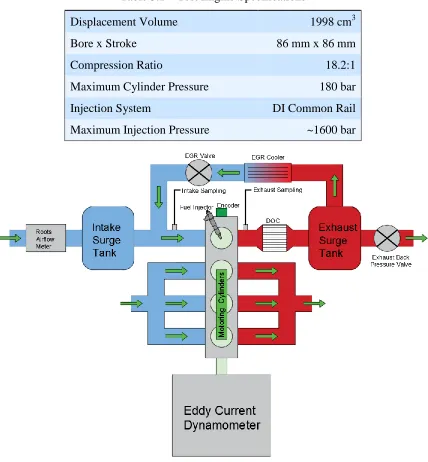
Engine tests were conducted on a 4-cylinder, 4-stroke Ford Duratorq diesel engine
converted into a single cylinder engine with the three remaining cylinders used for
motoring. The engine is connected to an eddy current dynamometer. The specifications
for this engine are listed in Table 3.1 and a schematic of the engine test bench is shown in
Figure 3.1. The intake pressure was supplied via an external air compressor. An optical
high precision encoder is mounted on the engine crank and is used to determine the crank
position and angular velocity. The encoder resolution is 0.1°CA. The research engine is
equipped with a high pressure common rail fuel injection system using a solenoid injector
mounted in the cylinder head. The common rail pressure, injection timing, and injection
duration of the fuel were controlled by an independent real-time controller with
embedded field-programmable gate arrays (FPGA). This injection system is capable of
using either diesel or n-butanol with an added lubricity improver. In-house built
algorithms operating on a LabVIEW 2010 software interface were used to control
injection events. Four EFS IPoD solenoid injector drivers were used to drive the DI
injectors of the engine. The exhaust gas from the research cylinder is routed through a
CH 3: EXPERIMENTAL SETUP
29
valve along with an EGR valve were used to control the flow of EGR which is cooled
and introduced into the intake, downstream of the intake surge tank.
Table 3.1 – Test Engine Specifications
Displacement Volume 1998 cm3
Bore x Stroke 86 mm x 86 mm
Compression Ratio 18.2:1
Maximum Cylinder Pressure 180 bar
Injection System DI Common Rail
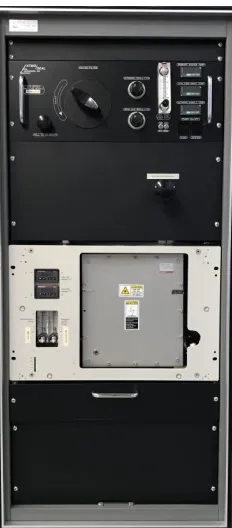
Maximum Injection Pressure ~1600 bar
Figure 3.1 – Schematic of Engine Test Setup
Gas sampling is implemented on the engine immediately before the intake
manifold and immediately after the exhaust manifold. A heated pump draws the intake
CH 3: EXPERIMENTAL SETUP
30
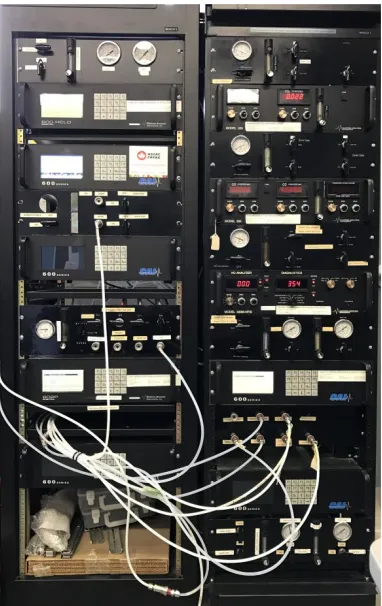
and chiller unit in order to remove any PM or water particles from the gas. The sample
gas is then fed to a dual-bank emission analyzer system, which was instrumented for this
engine and is displayed in Figure 3.2. One bank is for the exhaust emissions (NOx, UHC,
CO, CO2, O2), and the other bank is used to measure the intake gas concentration (NOx,
CO2, O2). The O2 is measured with a paramagnetic oxygen detector; CO and CO2 are
measured with nondispersive infrared (NDIR) detectors; NOx is measured with a
chemiluminescence detector (CLD); UHC concentration is measured with a heated flame
ionization detector (HFID); and the smoke concentration is measured with an AVL 415S
smoke meter which indicates the smoke emissions by filter smoke number (FSN). Further
details of the engine test setup are provided in [65].
![Figure 1.1 – EPA Heavy-Duty Diesel Emission Standards [2]](https://thumb-us.123doks.com/thumbv2/123dok_us/1367519.1169508/20.612.152.495.76.279/figure-epa-heavy-duty-diesel-emission-standards.webp)
![Figure 1.2 – NOxIntake O and Smoke Emissions vs Intake O2 [%]2](https://thumb-us.123doks.com/thumbv2/123dok_us/1367519.1169508/22.612.145.498.400.607/figure-noxintake-o-and-smoke-emissions-vs-intake.webp)

![Figure 2.2 – NOx Reduction Pathways in an LNT – Adapted from [46]](https://thumb-us.123doks.com/thumbv2/123dok_us/1367519.1169508/39.612.217.440.382.639/figure-nox-reduction-pathways-lnt-adapted.webp)