ABSTRACT
FREDERICK, STACEY ELIZABETH. Development and Application of a Value Chain Research Approach to Understand and Evaluate Internal and External Factors and Relationships Affecting Economic Competitiveness in the Textile Value Chain. (Under the direction of Nancy Cassill).
Textile firms’ compete in a global, rapidly changing economy. In this environment, stakeholders cannot be complacent; they must continually upgrade their skills and seek more sophisticated advantages. To develop a sustainable strategy requires a holistic understanding of past and present dynamics affecting the entire value chain on a local to global scale. Yet due to changes in industry-specific and economy-wide business dynamics, the textile complex lacks a holistic, standardized model that represents all sectors and stakeholders.
The purpose of this research was to fill this gap by developing a conceptual framework and research process that provides a comprehensive view of the forces driving change in the organization, geography and relationships among stakeholders throughout the value chain. This framework underscores areas that are increasing in importance in the textile complex including pre- and post- production activities and network relationships. The research approach is built on a visual representation of the value chain structure that allows information to be easily analyzed, visualized or compared to other industries. Together, the visual and
conceptual models can be used to show how different parts of the chain are connected to each other. Firms and economic developers can use this approach to predict future competitive dynamics and to develop sustainable upgrading strategies.
Development and Application of a Value Chain Research Approach to Understand and Evaluate Internal and External Factors and Relationships Affecting Economic Competitiveness in the Textile Value Chain
by
Stacey Elizabeth Frederick
A dissertation submitted to the Graduate Faculty of North Carolina State University
in partial fulfillment of the requirements for the Degree of
Doctor of Philosophy
Textile Technology and Management
Raleigh, North Carolina 2010
APPROVED BY:
_____________________________ _____________________________ Blanton Godfrey Trevor Little
_____________________________ _____________________________ Timothy Clapp Nancy Cassill
BIOGRAPHY 1 2
Stacey Elizabeth Frederick grew up in Swannanoa, North Carolina with her best friends, greatest 3
supporters, and parents, Don and Beth Frederick. After high school, she attended North Carolina State 4
University and graduated in May of 2006 with a Bachelor of Science in Textile Management. After graduating, 5
she entered the Textile Technology Management doctoral program in the College of Textiles at NC State. 6
Stacey self describes herself as “organized randomness”. She loves being involved with as many 7
different things as she can and is always trying to find a way combine and connect her interests. Stacey’s 8
personality is a great reflection of her eight years at NC State. As an undergraduate, she was very fortunate to be 9
the recipient of both the Park scholarship and the Centennial scholarship, which provided her with the support 10
to pursue her diverse interests. During her first four years, she fell in love with traveling and international 11
business. She traveled around the world with Semester at Sea, an international study abroad program and 12
interned at the North Carolina Department of Commerce in the International Trade Department. She also tested 13
her hand at research and project management by working with several different applied research projects 14
including the Nonwoven Fashion project at NC State and Duke University’s North Carolina in the Global 15
Economy and Nanotechnology in Society projects. 16
Upon graduation, Stacey wanted to use what she had learned from her diverse experiences to help the 17
domestic textile industry. Her goal was to combine her academic background in textile science and management 18
with her interests in economic development, organization and visualization. Over the last three years, Stacey has 19
been the lead researcher on four projects with the NC Department of Commerce and three from the SC Council 20
on Competitiveness designed to increase the global competitiveness of each state’s textile complex. Stacey also 21
developed and is the project manager of the Textile Connect websites: NC Textile Connect and SC Textile 22
Connect. Her research has centered on developing and applying frameworks, resources and visual tools to help 23
others see the “little picture within the big picture” and how they are connected. 24
After graduation, Stacey hopes to continue to help the textile complex and other industries by 25
presenting new ways of thinking about competitiveness and strategy development and the factors that affect it. 26
She plans to stay in North Carolina with Jeremy Wiggins, her fiancé and favorite companion, motivator, and 27
source of random distraction. 28
TABLE OF CONTENTS 29 30
LIST OF TABLES... viii 31
LIST OF FIGURES ...xi 32
Chapter 1: Introduction ...1 33
Purpose of Research ...3 34
Research Objectives...4 35
Significance of Study ...5 36
Limitations of Study...6 37
Definitions of Key Terms ...7 38
Chapter 2: Review of the Literature...21 39
Value Chain Approach for Economic Development...21 40
Conceptual Framework: Value Chain Framework...21 41
Value Chain Framework: Structure ...22 42
Value Chain Framework: Dynamics...24 43
Research Process: Project Cycle...24 44
Levels of Analysis ...25 45
Review of Literature: Disciplines: Industrial Organization...26 46
Industrial Organization Research and Chain-Based Organizational Structures...26 47
Common Elements: Competitiveness and Industrial Upgrading...27 48
Industrial Organization: Disciplines and Fields ...28 49
Strategic Management Approach ...32 50
Strategic Management Theoretical Frameworks and Models ...33 51
Research Process: Strategic Management Process Model ...37 52
Economic Sociology Approach...37 53
Division Between Economists and Sociologists...38 54
Economic Sociology: Theoretical Frameworks and Models...38 55
Chapter 3: Methodology...47 56
Purpose of Research ...47 57
Research Objectives ...47 58
Research Design...48 59
Strategy: Mixed Methods...48 60
Transformative Concurrent (nested)...48 61
Phases: Deductive and Inductive...48 62
Strategy of Inquiry...50 63
RO1 and RO2: Phases I and II: Deductive: Secondary Data Collection ...50 64
RO3: Phase III: Inductive...56 65
RO3: Phase IIIA: Secondary Data Collection and Analysis ...56 66
Phase IIIA: Secondary: Identify Important Lead Firms...59 67
RO3: Phase IIIB: Primary Data Collection...61 68
RO3: Phase IIIB: Sample Selection ...61 69
Sample Demographics...63 70
RO3: Phase IIIB: Instrument Development...64 71
RO3: Phase III: Data Analysis...64 72
Chapter 4: Results ...66 73
Research Objective One (RO1)...66 74
RO1: Key Findings ...70 75
Research Objective Two (RO2)...71 76
Operationalize Structure: Organizational Structure and Visual Model ...75 77
Value-Adding Activities and Functions...76 79
Value-Adding Activities: Operational Definitions ...76 80
Supply Chain ...77 81
Types of Lead Firms (Sources of Internal Governance) ...79 82
First Tier Suppliers and Sourcing Strategies ...80 83
Supplier Types and Sources of Power...82 84
Supporting Business Environment...83 85
Operationalize Dynamics ...84 86
External Power and Relationships: Location and Industry ...85 87
The Diamond Framework: Location and Industry, Power and Relationships...85 88
Governance ...86 89
Importance of Governance: Implications for Suppliers ...90 90
Differences in the Concept of Governance and Use of the Term in this Approach...91 91
Types of Lead Firms: Power and Rules...92 92
Buyer Power and Supplier Power ...93 93
Types of Rules Set by Lead Firms ...94 94
Internal Relationships ...95 95
Internal Relationships: Network Models ...97 96
Institutions...99 97
Institution Setters, Types of Rules, and Enforcement ...99 98
Shifting Level of Analysis: National to Global Institutions ...101 99
Industry Dynamics: Changes Over Time ...101 100
Operationalize Outcomes: Upgrading and Competitiveness Strategies ...104 101
Strategies, Tactics, and Operations ...106 102
Industrial Upgrading Strategies and Relationship to Visual Model ...108 103
Functional Upgrading: Relationship to Types of Jobs, and Value-Adding Activities...113 104
Business Models of Final Product Manufacturers: Functional Upgrading Trajectory ...114 105
Develop the Research and Analysis Process...116 106
Applied Research Process ...118 107
Using the Visual Model to Identify Structure and Tactics ...119 108
RO2: Key Findings ...121 109
Research Objective Three (RO3)...122 110
Step #1: Structural Analysis: Present: Secondary ...122 111
Internal: Textiles: Structure, Linkages, and Competition ...125 112
Structure: Textile Definitions: Distribution Channels and Sectors...125 113
Structure: Technical Textiles ...126 114
Structure and Competition: U.S. Textile Statistics and Leading Textile Firms...130 115
Linkages: Fiber: Production, Trade Statistics and Leading Suppliers ...132 116
Linkages: Inputs: Chemicals...133 117
Linkages: Buyers: Geographic and End-Use Market...133 118
Competition: Countries...135 119
Internal: Apparel: Structure, Linkages, and Competition ...137 120
Structure, Linkages, and Competition: U.S. Apparel Production and Leading Manufacturers...137 121
Linkages: Suppliers and Buyers (End Markets)...140 122
Competition and Linkages: Buyers: Geographic ...141 123
Internal: Home Furnishings: Structure, Linkages and Competition ...144 124
Structure and Competition: U.S. Home Furnishings Statistics and Leading Manufacturers ...144 125
Linkages: Suppliers and Buyers: End Markets ...146 126
Competition and Linkages: Geographic ...147 127
Internal: North Carolina: Structure, Linkages and Competition...147 128
North Carolina Firm Statistics: Present: 1990-2008 ...149 130
North Carolina Firm Entry, Exist and Expansion of Textile-Related Firms ...151 131
North Carolina Textile Firms by Value Chain Position: Present Analysis ...152 132
North Carolina Linkages...154 133
North Carolina Compared to Other States: Competition...155 134
External: Supporting Environment: Present ...157 135
Apparel and Home Furnishings-Specific Supporting Environment ...159 136
North Carolina-Specific Supporting Environment...159 137
Location-Industry Analysis: NC Strengths and Weaknesses: Secondary ...161 138
Step #2: Strategic Analysis: Phase IIIA: Secondary Results ...162 139
Industry: Industrial Organization and Upgrading: Past...162 140
Structure Changes: Shifts in Geography and Production Network Configurations...163 141
Dynamic Changes: Value Chain Governance...168 142
Power and Governance Shifts within the Chain ...169 143
Industry Upgrading Dynamics: Restructuring: Causes and Responses ...176 144
Capabilities: Increase: Growth and Change in Global Capabilities...177 145
Changes in Sourcing Capabilities/Strategies: Industry Functional Upgrading: ...179 146
Capabilities: Changes in Comparative Advantage: Factor Conditions ...179 147
Multiple Capabilities: Channel Upgrading ...179 148
Complexity: Increase in Processes and Products ...180 149
Codify: Information Technology: Increase...183 150
Outcomes: Upgrading Strategies and Tactics: Textile Suppliers’ Responses ...186 151
Location: Dynamics: Past: NC Textile History: Qualitative...187 152
North Carolina: Dynamics: External Institutions Impact on North Carolina Development ...187 153
North Carolina: Dynamics: External Power (Factor Conditions) Impact on Development...187 154
North Carolina: Dynamics: Textile Industry’s Impact on NC Development and Organization...189 155
North Carolina: Dynamics: Historic Limitations to Development ...191 156
Industry: Analysis: Present...192 157
Industry: Dynamics: Industry and Supplier Leaders...192 158
Industry: Dynamics: Lead Firms...194 159
Industry: Dynamics: External Governance: Institutions: Trade ...195 160
Industry: Dynamics: External Governance: Institutions: Trade: Specific Regimes ...197 161
Industry: Dynamics: External Governance: Institutions: National Legislation...198 162
Industry: Dynamics: External Governance: Institutions: Standards ...200 163
Industry: Dynamics: Product and Market Trends ...202 164
Industry: Dynamics: Needs...204 165
Governance: Internal: Identify Lead Firms ...205 166
Apparel: Identification of Types of Lead Firms ...205 167
Apparel: Identification of Leading Lead Firms ...208 168
Home Furnishings: Identification of Types of Lead Firms ...210 169
Home Furnishings: Identification of Leading Lead Firms ...210 170
Governance: Analysis: Present ...211 171
Firm Governance (Internal): Present ...211 172
External Governance: Institutions: Present...213 173
Industry: Important External Economy Factors: Present ...214 174
Industry-Macro: Apparel Market Dynamics and Trends ...214 175
Present: Trends in Firm Governance (Meso) Affected by Macro Factor...216 176
Industry-Meso: Effects of Institutions on Firm Governance ...217 177
Apparel Market Dynamics and Trends: Industry-Micro ...218 178
Home Furnishings: Dynamics: Market Trends...221 179
Step #2: Strategic Analysis: Phase IIIB: Primary Results ...226 181
Firm Value-Adding Activities ...226 182
Buyers and Markets...227 183
Firm and Inter-Firm Upgrading ...228 184
Analysis: Internal Power and Governance Results ...229 185
Analysis: External Power and Governance Results...232 186
External Relationships...233 187
Step #2: Evaluate the Findings: Combine Secondary and Primary ...235 188
Industry Dynamics at the Local-National Level...235 189
Step #3: Develop Plan to Increase Competitiveness ...238 190
Recommendations for Existing North Carolina Firms: Firm Upgrading...238 191
Additional Support and Firms Needed...242 192
Business, Information and Technology Services: Needs ...242 193
Trade and Professional Associations: Needs ...243 194
NGOs and Standards (National-International): Needs ...243 195
Government Services (Local-National): Needs ...244 196
Infrastructure and Finance: Needs...244 197
Education, Testing, and Training: Needs ...245 198
Filling Missing Links: Needed Supply Chain Linkages ...246 199
Recruiting Firms: Filling Missing Links in the Chain: Lead Firms...246 200
Recruiting Firms: Filling Missing Links in the Chain: Platform Leaders...246 201
Recommendations for Supporting Environment: Develop Strategic Plan...247 202
RO3: Key Findings ...251 203
Chapter 5: Conclusions and Recommendations for Future Research...253 204
Conclusions...254 205
Implications ...256 206
Recommendations for Future Research...258 207
REFERENCES ...259 208
APPENDICES ...291 209
Appendix: Survey Components ...292 210
Appendix: Survey Contact Form ...292 211
Appendix: Survey Introduction...293 212
Appendix: Supporting Environment Survey ...294 213
Appendix: Suppliers’ Survey: Inputs, Textile Components, and Final Products ...296 214
Appendix: Buyers Survey...299 215
Appendix: Structure: NAICS Codes and Descriptions by Sector...301 216
Appendix: Technical Textile Applications, Products, Markets, and Main Areas ...306 217
Appendix: Textile Definitions ...312 218
Appendix: U.S. Textile Production and Exports...315 219
Appendix: U.S. Fiber Production and Exports ...316 220
Appendix: U.S. Apparel Production and Exports ...317 221
Appendix: Leading U.S. Textile Companies ...318 222
Appendix: Competition: Textiles: U.S. Imports and Global Exports ...319 223
Appendix: U.S. Institutional Trade Statistics ...320 224
Appendix: U.S. Apparel Retail Distribution Channels ...322 225
Appendix: U.S. Home Furnishings Retail Distribution Channels ...323 226
Appendix: U.S. Apparel Imports ...324 227
Appendix: North Carolina Textile Complex Statistics...325 228
Appendix: North Carolina Headquarters and Single Locations ...327 229
Appendix: Examples of Firm Upgrading ...330 230
Textile Components: Synthetic Yarn and Finishing: Unifi...332 232
Textile Components: Woven Fabric: Glen Raven...334 233
Final Textile Products: Apparel: Hanesbrands...335 234
Final Textile Products: Bed and Bath Products: Springs Global ...337 235
Appendix: Apparel and Home Furnishings Buyers ...344 236
Appendix: Home Furnishings Buyers ...349 237
Appendix: Additional Primary Results ...351 238
LIST OF TABLES 240 241
Table 1: Global Economy: Levels of Analysis...30 242
Table 2: Timeline of Strategic Management Models...36 243
Table 3: Strategic Management Process Model for Strategy DevelopmentEvaluation...37 244
Table 4: Timeline of Economic Sociology Frameworks ...44 245
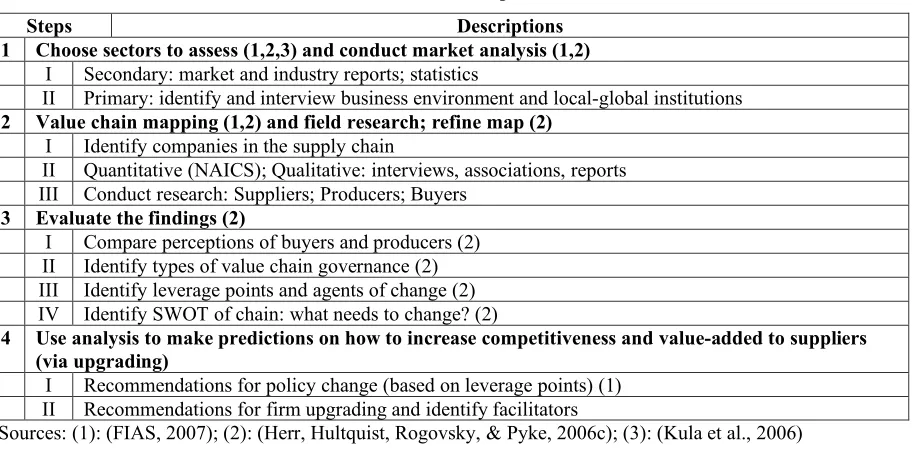
Table 5: Research Process: Value Chain: Economic Development ...46 246
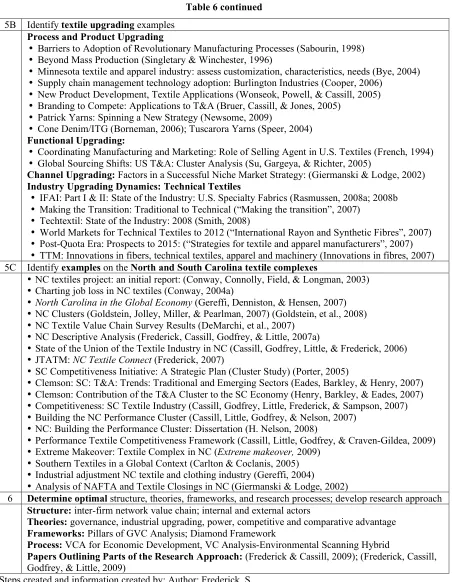
Table 6: RO1 and RO2: Phases I and II: Steps and Secondary Data Sources ...50 247
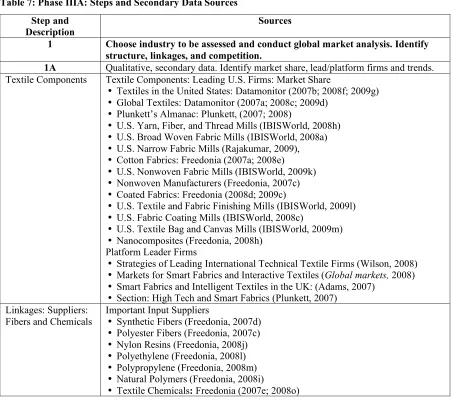
Table 7: Phase IIIA: Steps and Secondary Data Sources...56 248
Table 8: Levels of Firm Interviews with NAICS Codes...62 249
Table 9: Interviews by Category (N=73) ...63 250
Table 10: Interviews: North Carolina Locations and Functions...63 251
Table 11: Supporting Environment Interviews (N=17) ...63 252
Table 12: Firm Interview Results: Supply Chain Sector and Product Category (N=56)...63 253
Table 13: Theoretical Underpinnings of GVC Firm Governance Framework...66 254
Table 14: Discipline Overview: Strategy Management and Economic Sociology ...67 255
Table 15: Compare and Combine: Strategy Management and Economic Sociology...68 256
Table 16: Application of Existing Concepts into the New Research Approach ...74 257
Table 17: Categories of Internal-External and Local-Global Governance ...88 258
Table 18: Examples of Value Chain Governace Combinations ...89 259
Table 19: Combinations of Rule-Setting and Monitoring and Enforcement ...89 260
Table 20: Upgrading: Improvements at the Firm and Inter-Firm Levels...104 261
Table 21: Comparison of Traditional and New Strategy Development...107 262
Table 22: Functional Upgrading Trajectories, Governance, and Types of Upgrading...116 263
Table 23: Techtextil Application Areas and Textile Value Chain Markets...124 264
Table 24: Technical Textile Fiber Types, Fibers, and World End-Use Consumption: Year 2000 ...127 265
Table 25: Technical Textiles: Fiber Form and World End-Use Consumption: Year 2000 ...128 266
Table 26: World-End Use Consumption by Broad Final Product: Year 2000...129 267
Table 27: IBIS: Leading U.S. Manufacturers and Market Share by Industry...131 268
Table 28: Synthetic Fiber Top Producing Countries Percent Share of Global Production and Capacity...132 269
Table 29: U.S. Synthetic Fiber, Polyester Fiber and Nylon Resin Producers...132 270
Table 30: Freedonia: Textile Chemicals Top and Significant Suppliers: 2006 and 2007 ...133 271
Table 31: Leading Textile Importing Countries and Regions: 2008 (WTO)...135 272
Table 32: World Textile Exports: Economies: 1990, 2000, 2006, 2007, 2008 (WTO)...136 273
Table 33: U.S. Production and Quantity of Shipments: Apparel: 2003-2008 (CIR)...137 274
Table 34: U.S. Imports and Apparent Consumption: Selected Apparel Items: 2008 (CIR)...138 275
Table 35: IBIS: U.S. Apparel Manufacturing Firms by Industry...139 276
Table 36: DRA: Technical Apparel Products (9 products) ...140 277
Table 37: U.S. Clothing Sales by Distribution Format: 2001-2008 ...140 278
Table 38: Global Apparel Retail Industry Value: 2004-2008 ...141 279
Table 39: U.S., EU-27 and Japan: Clothing Imports (Value: $US Millions) by Region: 2008...142 280
Table 40: U.S., Japan, and EU-27: Clothing Imports by Economy: 2008...142 281
Table 41: Shifts in Top 15 Apparel Exporters: 1995, 2000, 2005, 2007, and 2008...143 282
Table 42: Home Furnishings Product and Sector Composition ...144 283
Table 43: U.S. Imports, Exports and Consumption of Sheets, Pillowcases, and Towels: 2008 ...144 284
Table 44: Freedonia: Leading U.S. Bed and Bath and Wall Coverings Firms ...145 285
Table 45: Home Textiles Today (HTT): Top 15 Supplier Giants: 2008 and 2007 ...145 286
Table 46: DRA: Technical Home Furnishings Products (22 Products)...146 287
Table 48: U.S. Imports for Consumption: Home Textiles: 31412: Curtains and Linens: 2007, 2008 ...147 289
Table 49: North Carolina Textile Industry Development Timeline: 1810-2000...148 290
Table 50: North Carolina Textile Plants (Excludes Apparel): Firm Entry and Exit, 1975-2005...151 291
Table 51: United States Textile Plant Closings by State: 1997-2009...152 292
Table 52: North Carolina New Textile Investments: 2003-2009 (August)...152 293
Table 53: North Carolina Sectors, Employment, Sales, and Location Types: 2008 ...152 294
Table 54: South Carolina Textile Cluster: Diamond Framework...156 295
Table 55: Scope of the Supporting Business Environment...157 296
Table 56: NC: Strengths and Weaknesses: Internal, Industry, and External Factors ...161 297
Table 57: Evolution of Apparel Production Network Configurations and Locations ...163 298
Table 58: Historical Process Upgrading: Increases in Capital Intensity and Mechanization ...180 299
Table 59: Important Suppliers: Textile Inputs and Components...193 300
Table 60: Trade-Related Institutions: Safeguards, Customs, Trade and Border Protection ...199 301
Table 61: Product and Process Safety, Quality, Social and Environmental Standards and Requirements...200 302
Table 62: World End-Use Consumption (Volume (‘000)): Final Textile Product by Application: 2000...203 303
Table 63: World End-Use Consumption of Technical Textiles by Application Area...203 304
Table 64: S&P Major U.S. Apparel Companies (Ranked by Sales, Values in $US Billions) ...206 305
Table 65: IBIS: U.S. Men, Women, and Family Clothing Stores Apparel Market Shares: 2008...206 306
Table 66: World Clothing Company Shares (by Global Brand Owner): 2005 and 2008...207 307
Table 67: Freedonia: Significant U.S. Retailers of Men’s and Women’s Apparel: 2007...208 308
Table 68: Important Apparel Brand Marketers and Specialty Apparel Retailers...209 309
Table 69: Mass Merchandise Apparel and Home Retailers (Private-Label) (6) ...209 310
Table 70: Important Home Furnishings Manufacturers and Specialty Retailers ...210 311
Table 71: Functional Capacities and Performance Requirements for Final Product Suppliers ...212 312
Table 72: CQFS Model by Product Type...213 313
Table 73: Timeline of Textile-Apparel Trade-Related Institutions and External Power...213 314
Table 74: Effects of the Economic Recession ...216 315
Table 75: S&P: U.S. Apparel Manufacturers’ Retail Operations: 2008...221 316
Table 76: R&D: Proactive and Reactive by Supply Chain and Location...226 317
Table 77: Value-Adding Activities: Textile Firms: Design and Marketing...227 318
Table 78: Geographic Market Channels: NC Locations’ Foreign Involvement (N=39) ...227 319
Table 79: End-Use and Distribution Market Channels: Past and Present: NC Locations (N=39)...227 320
Table 80: Supplier Process and Product Upgrading: by Sector and Location ...228 321
Table 81: Supplier Channel Upgrading: End-Use and Distribution Channels: Sector and Location...228 322
Table 82: Supplier Chain Upgrading (All Forms) and Functional Upgrading: Sector and Location...229 323
Table 83: Supplier Chain Upgrading: Sector and Form: NC Locations (N=39)...229 324
Table 84: Common Supplier Strategies: Success of Firm...230 325
Table 85: Retailers and Final Product Manufacturers: Identify Lead Firms...230 326
Table 86: Firm Results: Internal: Forms of Supplier Power: Sector and Location ...231 327
Table 87: Important Sources of External Power (Present): All Locations...232 328
Table 88: Domestic Location Market Share due to Lack of Competition ...232 329
Table 89: Important Sources of External Governance (Present): All Locations...233 330
Table 90: Domestic Location Partial Dependence on External Trade or National Policy Governance ...233 331
Table 91: Industry-Location: North Carolina-United States: SWOT Analysis: Primary Data...235 332
Table 92: North Carolina: Primary and Secondary Results: Strengths and Weaknesses ...237 333
Table 93: Textile Mills: NAICS Descriptions and Primary SIC Codes ...301 334
Table 94: Textile Fiber Classifications, Products, and NAICS and SIC Codes...302 335
Table 95: Textile Home Furnishings Mills: NAICS Descriptions and Primary SIC Codes ...303 336
Table 96: Apparel Manufacturing: NAICS Descriptions and Primary SIC Codes ...303 337
Table 97: Apparel Buyers: Retailers: NAICS Codes and Descriptions...305 338
Table 99: Un-spun Fiber Product Applications (18)...307 340
Table 100: Broadwoven (68) and Narrow Fabric (12) Products ...308 341
Table 101: Warp-Knit (13) and Weft-Knit (11) Products...311 342
Table 102: Textile, Apparel, and Furnishings Workers Occupations...312 343
Table 103: Compilation of Textile Definitions: Technical, Industrial, and Traditional Terms ...313 344
Table 104: Spindles in Place, Spindle Hours, and Consumption: State and Type: 2007, 2008...315 345
Table 105: U.S. Yarn Production (in Thousands of Pounds) by Fiber: 2008 (CIR) ...315 346
Table 106: CIR: Supply, Distribution and Imports of Cotton: 2007/08 Crop Year ...316 347
Table 107: U.S. Exports Cotton, Linters, and Manmade Fiber Staple and Tow: 2008 (CIR) ...316 348
Table 108: CIR: U.S. Shipments and Exports of Selected Apparel Items: 2008 ...317 349
Table 109: Principal U.S. Woven and Knit, Nonwoven and Coated Fabric Firms...318 350
Table 110: Datamonitor: Leading U.S. Textile Companies...318 351
Table 111: WTO: U.S. Textile Imports: Regions and Top Economies by Origin: 2007...319 352
Table 112: Textile Export Destinations (Value $US Bil.): Asia, Europe, North America: 2000, 2008...319 353
Table 113: U.S. “9802 Imports” of Selected Apparel Items: 2008 (CIR) ...320 354
Table 114: Imports from U.S. Trade Preference Programs and Free Trade Agreements and Exports ...321 355
Table 115: Freedonia: U.S. Apparel Retail Sales by Outlet: 2008...322 356
Table 116: S&P: U.S. Market: Apparel and Accessories Retail Channels: 2009 ...322 357
Table 117: IBIS: U.S. Department Store Sales: Shares by Product Segmentation ...322 358
Table 118: Bed and Bath Retail Sales by Channel of Distribution (2007) ...323 359
Table 119: Channels of Distribution (2007): Home Furnishings Sector (Sales $US Mil) ...323 360
Table 120: Market Share: U.S. Textile and Apparel Imports: 1989-2008: Units (OTEXA)...324 361
Table 121: U.S. Apparel Imports: Fiber Type: Value and Volume: 1990-2008...324 362
Table 122: NC Textile Mills Employment, Locations and Wages: 1990-2008 ...325 363
Table 123: NC Textile Product Mills: Employment, Location and Wages: 1990-2008...325 364
Table 124: NC Apparel Manufacturing Employment, Locations and Wages: 1990-2008...326 365
Table 125: Textile and Apparel (T&A) Percentage of Total NC Employment: 1990-2008...326 366
Table 126: Apparel and Home-Furnishings-Specific Supporting Environment ...329 367
Table 127: Textile Markets Entered through Channel Upgrading ...333 368
Table 128: Leading International Technical Textile Companies: 2008...339 369
Table 129: Smart Fabric and Intelligent Textile (SFIT) Companies ...340 370
Table 130: U.S. Free Trade Agreements, Special Access, and Trade Preference Programs ...341 371
Table 131: National Policies: Government Procurement, U.S. Subsidies, and Clean Energy...343 372
Table 132: Freedonia and DM: Apparel Market: Leading Manufacturers: 2007-2008...344 373
Table 133: IBIS: U.S. Women, Children and Infant and Men and Boys’ Apparel Wholesale: 2008 ...344 374
Table 134: Freedonia: U.S. Market Leading Suppliers of Athletic Apparel: 2007...344 375
Table 135: Apparel Magazine: Leading Public Apparel Companies: 2005-2008 Rankings ...345 376
Table 136: U.S. Clothing Company Shares by Retail Value: 2004-2006 (EM) ...347 377
Table 137: U.S. Clothing Brand Shares by % Retail Value based on Retail Selling Price: 2004-06...348 378
Table 138: U.S. Home Furnishings and Furniture Manufacturers and Retailers ...349 379
Table 139: Top U.S. Mass Merchandisers (Revenue) and U.S. Market Share ...350 380
Table 140: Geographic Market Channels: All Locations: Foreign Involvement: (N=51)...351 381
Table 141: End-Use and Market Distribution Channels: Past and Present: All Locations (N=51) ...351 382
Table 142: Supplier ChainUpgrading: Sector and Form: All Locations (N=51) ...351 383
LIST OF FIGURES 385 386
Figure 1: Conceptual Model: Value Chain Conceptual Model ...22 387
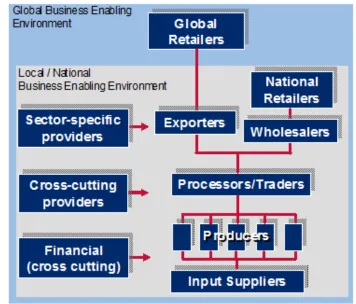
Figure 2: Value Chain Framework: Structure ...23 388
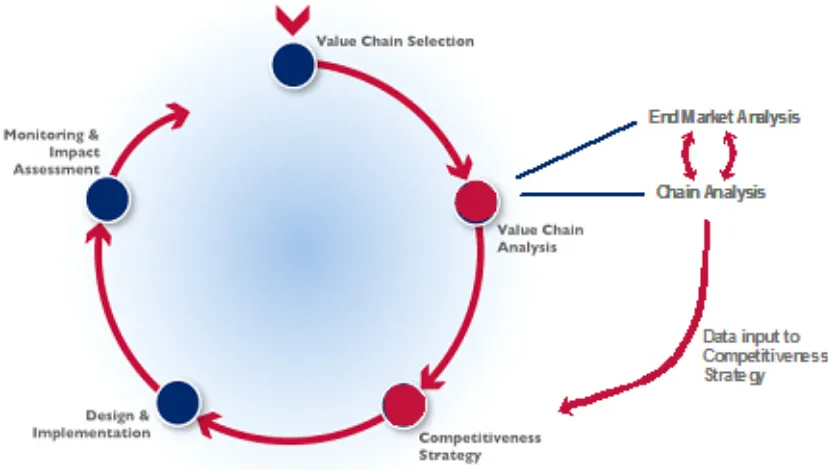
Figure 3: Value Chain Project Cycle with Value Chain Analysis Image ...25 389
Figure 4: Economic and Industrial Organization Disciplines and Levels of Analysis ...28 390
Figure 5: Chain-based Industrial Organization Research Disciplines ...29 391
Figure 6: Evolution of Strategic Management Disciplines and Models ...36 392
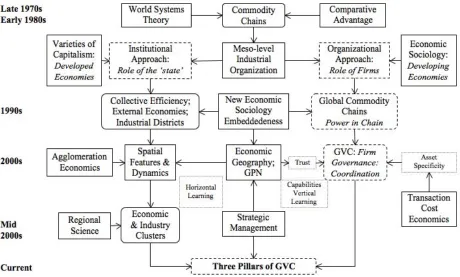
Figure 7: Evolution of Governance from Economic Sociology...44 393
Figure 8: Evolution of Meso-Level Economics Disciplines and Models ...45 394
Figure 9: Deductive Model of Research ...49 395
Figure 10: Inductive Model of Research...49 396
Figure 11: Outline of Relationships in Value Chain Conceptual Framework ...71 397
Figure 12: Conceptual Framework: Relationships Among Internal and External Variables and Actors...72 398
Figure 13: Internal and External Stakeholders in the Value Chain Model ...75 399
Figure 14: Parts of the Supply Chain...78 400
Figure 15: Types of Lead Firms: Generic ...80 401
Figure 16: Types of First Tier Suppliers: Supply Chain Coordinators...82 402
Figure 17: Value-Adding Capabilities in Consumer and Industrial Market Channels...94 403
Figure 18: Value-Adding Activities (Tactics to Upgrade) and Facilitators ...105 404
Figure 19: Adding Economic Value: Value Chain Functions...108 405
Figure 20: Process Upgrading ...109 406
Figure 21: Inter-Firm Process Upgrading ...109 407
Figure 22: Product Upgrading ...110 408
Figure 23: Inter-Firm Product Upgrading ...110 409
Figure 24: Channel Upgrading ...111 410
Figure 25: Chain Upgrading...112 411
Figure 26: Functional Upgrading...113 412
Figure 27: Functional Upgrading: Job Types and Functions ...115 413
Figure 28: Research Process: Method of Approach ...119 414
Figure 29: Textile Value Chain Visual Reference Model...125 415
Figure 30: Textile Sector and Market Distribution Channel Definitions...126 416
Figure 31: Technical Textile Classifications and Volume Consumption (2000) ...129 417
Figure 32: North Carolina Textile and Apparel Locations: 1990-2008...150 418
Figure 33: North Carolina Textile and Apparel Average Wage per Employee: 1990-2008...150 419
Figure 34: North Carolina Textile and Apparel Employment: 1990-2008 ...151 420
Figure 35: NC Population of Establishments by Supply Chain: 2008...153 421
Figure 36: North Carolina Locations and Ranking by Technical Textile Markets: 2008...154 422
Figure 37: NC’s U.S. State Ranking by Supply Chain Position: Value of Shipments: 2002 ...155 423
Figure 38: International Textile and Apparel Organizations (NGOs) ...158 424
Figure 39: U.S. (National) Government Textile and Apparel Organizations ...159 425
Figure 40: Forces Causing Shift in Market Power from Producers to Buyers...172 426
Figure 41: NC Textile and Apparel Headquarters Locations by Supply Chain: 2008 ...327 427
Figure 42: NC Textile and Apparel Single Locations by Supply Chain: 2008...328 428
Figure 43: Interpretation of the North Carolina Textile Value Chain ...352 429
Chapter 1: Introduction
The textile complex lacks a comprehensive, widely accepted, standardized model that represents all sectors and participants of the industry. This can be attributed to several factors from within the textile industry and the broader business environment. Within textiles, the diversity of raw materials and processes that can be used to make textile products combined with a growing number of new markets exploring the advantages of fiber-based inputs over traditional materials has expanded the generally accepted notion of what is considered to be part of the textile industry. In the business environment, the corporate structure of firms has changed. Not long ago, large, vertically integrated firms were the standard; yet now, the average firm is much smaller, more specialized, and geographically dispersed. This has created the need for firms to work together through a variety of network relationships that vary from arms length transactions to complex licensing agreements. These factors combined with the recent advances in communication and transportation technologies, have resulted in a fragmented, and commonly misunderstood textile complex.
The traditional strategy formulation process focuses on the micro-level of competition, in which the firm is used as the main unit of analysis (David, 2008; Wheelen & Hunger, 2008). Currently, there are only two layers of analysis in the strategy formulation process. These are internal factors that are directly controlled by the firm, within the firm (micro-level), and external factors that are controlled by market characteristics and the business environment (macro) with little control by the firm.
A new way of thinking about industrial organization is needed for both firm strategy development and location-based economic development. In addition to the micro and macro levels, a meso-level of factors is needed to fully evaluate global textile dynamics. Furthermore, analysis should include the relationships between each of the three levels, and how each has changed over time. In order to conduct a comprehensive analysis, each of the following dynamics should be examined:
• Internal and external sources of power
• Internal sources of control and relationships within inter-firm networks • External impacts of local to global social, economic and political institutions.
This research combines concepts from economics, sociology, geography, and management to develop a value chain (VC) research approach. A value chain approach is useful because it allows the focus of analysis to be shifted from the physically limited organization to the steps or nodes in the production process that are not necessarily organized at a single location or within the confines of a single contractual relationship. The value chain approach allows attention to be shifted to the entire production chain and to each of the activities of which it is composed (Huws, 2008).
To accomplish this, two main streams of industrial organization research used to evaluate competitiveness are compared and combined. The first field, strategic management, comes from
Michael Porter and other American scholars within the Harvard Business School. The second stream, economic sociology, comes primarily from the sociology and geography sciences. Current research within this field is part of the Global Value Chains (GVC) Initiative, research from a cross-national collection of scholars in the United States (U.S.) and Europe.
In the past, little dialogue has existed between these two camps. They have been combined by some practitioners, but not in the academic literature. Each approach stems from different disciplines with different research purposes, yet structurally, they are similar in several ways. Each approach seeks to explain industrial organization, where and how firms locate and the activities they engage in, using the concept of a chain (or network) as the organizational structure of activities or business functions. Each analyzes factors related to firms, industries, and the external environment, but do so to assist different target audiences using different strategies of inquiry.
Economic sociologies examine the impact of sociological variables on economic phenomena. This requires a longitudinal perspective, significant primary data collection, and case-specific analyses. However, this stream of research lacks a consistent, widely accepted conceptual model to evaluate value chain dynamics. The concept of governance is widely used, but each practitioner interprets it in a slightly different way. Within the literature, the term governance has been used to represent driveness, degree of explicit coordination, and sources of power. Governance primarily represents dynamics resultantly from sources internal to the chain, but it also takes account for influences from forces external to the chain.
Current strategic management models gravitate towards quantitative metrics that lead to concrete approaches to firm and cluster strategy development. Due to the ambiguity of sociological concepts, researchers outside of sociology tend to avoid empirically centered research. Resultantly, they miss important qualitative concepts such as inter-firm linkages and relationships among variables. Combining the complementary insights from these two streams of literature will lead to a more comprehensive framework to evaluate the strategy development process and industrial organization dynamics of global value chains.
The new process will evaluate: what firms currently do (internal to the firm), what inter-firm networks do (internal to the chain), what the industry does (external, industry-specific), what the outside business
environment is doing (external, economy-wide) and where the firm or location fits into the big picture. The new process spans the micro-meso-macro divide, includes firms, inter-firm networks, industries, and the
environment, and analyzes changes within and between these levels of analysis in the past and present. This can be used by:
• Firms: to determine competitive strategies, tactics, and actions
• Supporting business environment: to determine the best strategies to facilitate economic development • Academics: to understand and analyze the roles of industry structure, stakeholders and their
Purpose of Research
The purpose of this research was to develop and apply a research approach that provides a comprehensive view of the past and the present forces driving change in the organization and relationships among stakeholders in textile value chains that can be used to predict future competitive dynamics and develop sustainable competitive upgrading strategies. This included:
a. Reviewing and comparing industrial organization disciplines (PI; RO1)
Research Objectives
Phase I: Review of Literature: research on industrial organization using secondary sources
RO1: Identify differences and complementarities in the structural and dynamic factors that comprise value chain-based approaches, frameworks, models, and research processes used in industrial organization research.
Phase II: Develop research approach: conceptual model and research process
RO2: Develop a research approach to analyze industry-specific and economy-wide business dynamics by combining and operationalizing existing approaches including:
Conceptual and Visual Models of the Structure Conceptual Model of Dynamics
o Sources of Internal and External Power o Upgrading: firm, chain, and industry
o Value Chain Governance and Inter-firm Relationships - Internal Governance: Firms
- External Governance: Institutions Research Process
Phase III: Apply the research approach to the North Carolina textile complex
Significance of Study
This study is significant for four reasons:
Recognizes Need for a New Research Approach in the Textile Complex
Global to local changes in economy-wide and industry-specific textile dynamics have created the need for firms and economic developers to reevaluate the way they develop competitive strategies and economic development initiatives. In today’s flat and global world, there is a need for new skills and a new mindset. Firms need to change their shape of thinking, strategies and organizational models (Fung, Fung, & Wind, 2008). Combines Complementary Approaches (RO1)
Value chain-based approaches are used in all fields that analyze industrial organization, including economics, sociology, geography, and management. Whereas each field seeks to focus on certain elements, this study shows how the core principles in each discipline are in fact, quite similar and complementary.
Develops a Comprehensive Research Approach (RO2)
This study develops a comprehensive value chain-based research approach that describes the complete set of dynamics that cause shifts in industrial organization patterns. Currently such a model does not exist. The current strategy formulation process only focuses on the micro- and macro-levels of analysis. Yet continuous and rapid restructuring has resulted in increasing fluidity of corporate structures leading many to question whether the individual enterprise or ‘firm’ (located in economic statistics within a ‘sector’) is the best unit of analysis to evaluate competitiveness. An exclusive focus on the firm runs the risk of missing the most important changes, which take place at the periphery of one’s field of vision, in the spaces between companies (Huws, 2008). Inter-firm relationships, how firms are linked in networks, are currently not included. The model developed in this research includes the nature of relationships among stakeholders and their importance to the outcomes and competitiveness of the network. Stakeholders can use the approach to understand the multiple facets of the textile complex, and recognize how they fit into a larger network.
Fulfills Need to Facilitate Upgrading of the North Carolina (NC) Textile Complex (RO3)
This study is significant because NC and United States (U.S.) textile firms do not fully understand their opportunities in the market and are not competing as networks but as individual nodes in a chain (Frederick, Cassill, Godfrey, & Little, 2007a; Nowell, 2005). Recommendations from recent studies on the NC textile complex have expressed the need to apply a more comprehensive research approach. One suggests investigating strategies for firms belonging to different stages of the value chain in terms of the form and impact of
internationalization, innovation strategies, paths of upgrading, attitudes toward technology, and identifying governance (DeMarchi, DiMaria, & Frederick, 2007). Another has suggested conducting research on
Limitations of Study
There are three limitations to this study.
1. Industrial organization fields: this paper only reviews research approaches applied in the fields of strategic management and economic sociology. Other disciplines that analyze industrial organization factors may have developed similar frameworks and models that are not covered in the scope of this study.
2. The research approach and models: the approach developed in this study is industry-neutral. In order to apply the approach to other industries, sector-specific structural and dynamic factors must be determined and fit into the models.
Definitions of Key Terms
Elements of the Research Approach
• Analytical Model: an explicit specification of a set of variables and their interrelationships designed to represent, in whole or in part, some real system or process. A reference model is a conceptual
representation of a system or process (Malhotra, 2004).
• Graphical Models: analytical models that provide a visual picture of the relationships between variables (Malhotra, 2004).
• Objective evidence: (evidence that is unbiased and supported by empirical findings) is gathered by compiling relevant findings from secondary sources. Research should be based on objective evidence and supported by theory (Malhotra, 2004).
• Theory: a conceptual scheme based on foundational statements called axioms, which are assumed to be true. Research should be based on objective evidence and supported by theory (Malhotra, 2004). • Theoretical framework: a theory may not specify adequately how its abstract constructs (variables)
can be embodied in real-world phenomenon. Moreover, theories are incomplete—hence researchers must also identify and examine other, non-theoretical variables. Review of the literature can revel criteria and guidelines to operationalize the variables. The theoretical framework serves as a foundation for developing an appropriate analytical model (Malhotra, 2004).
• Conceptual framework: used in research to outline possible courses of action, to present a preferred approach to an idea or thought, or to provide a foundation for a study. It is a less well-developed structure than a theoretical framework; concepts are related in a logical manner by the researcher (Malhotra, 2004).
• Research Process: a systematic procedure to examine the relationships among variables (Kula, Downing, & Field, 2006).
• Economic Environment: consists of income, prices, savings, credit, and general economic conditions (Malhotra, 2004).
• Legal Environment: regulatory policies and norms within with organizations must operate including public policies, laws, governments agencies, and pressure groups that influence and regulate various organizations and individuals in society. Important areas of law include patents, trademarks, royalties, trade agreements, taxes, and tariffs (Malhotra, 2004).
Key Economics Definitions
• Comparative Advantage: (from economics) a central concept in international trade theory which holds that a country or a region should specialize in the production and export of those goods and services that it can produce relatively more efficiently than other goods and services which it has a comparative disadvantage. David Ricardo first introduced the theory in 1817 as a basis for increasing the economic welfare of a population through international trade (Hinkelman, 2000).
• Economics: how society uses its scarce resources (Bishop, 2004).
• Evolutionary Economics: a Darwinian approach to economics, sometimes called institutional economics. Following the tradition of Schumpeter, it views the economy as an evolving system and places a strong emphasis on dynamics, changing structures (including technologies, institutions, beliefs and behavior) and disequilibrium processes (such as innovation, selection and imitation) (Bishop, 2004).
• Factoring: the discounting of an account receivable in order to receive immediate payment. In international trade, factoring is the discounting of a foreign account receivable that does not involve a draft. The export transfers title to its foreign accounts receivable to a factoring house for cash at a discount from the face value. Factoring is often done without recourse to the exporter. Factoring of foreign accounts receivable is less common than with domestic receivables (Hinkelman, 2000). • Factoring houses: companies which purchase domestic or foreign accounts receivables (e.g., as the
yet unpaid invoices to domestic or foreign buyers) at a discounted price, usually about two to four percent less than their face value (Hinkelman, 2000).
• Market forces: the pressures from buyers and sellers in a market rather than those coming from a government or from regulation (Bishop, 2004).
• Market power: when one buyer or seller in a market has the ability to exert significant influence over the quantity of goods and services traded or the price at which they are sold. It does not exist when there is perfect competition, but exists when there is a monopoly or oligopoly (Bishop, 2004).
• Macroeconomics: the big picture; analyzing economy-wide phenomena such as growth, inflation, and unemployment. Although economists generally separate themselves into distinct macro or micro camps, macroeconomic phenomena are the product of all the microeconomic activity in an economy. The precise relationship between macro and micro is not particularly well understood, which has often made it difficult for a government to deliver well-run macroeconomic policy (Bishop, 2004).
Strategic Management Definitions
• Business Model: a company’s method for making money in the current business environment. It includes the key structural and operational characteristics of a firm related to how it earns revenue and makes a profit. It is composed of five elements: (a) who it serves, (b) what it provides, (c) how it makes money, (d) how it differentiates and sustains competitive advantage, and (e) how it provides its product/service (Wheelen & Hunger, 2008).
• Competitive Advantage: how a firm competes compared to rival firms. The industrial organization (IO) and resource-based view (RBV) theories of organization present different perspectives on how best to capture and keep competitive advantage (David, 2008).
• Core competency: a collection of corporate capabilities that cross divisional borders and are wide spread within a corporation, and is something that a corporation can do exceedingly well (Wheelen & Hunger, 2008).
• Demands: human wants that are backed by buying power (Kotler & Armstrong, 2004).
• Environmental scanning: monitoring, evaluating, and disseminating of information from the external and internal environments to key people within the corporation. Its purpose is to identify strategic factors. The simplest way to conduct is through a SWOT analysis (Wheelen & Hunger, 2008). • Explicit knowledge: knowledge that can be easily articulated and communicated (Wheelen &
Hunger, 2008).
• External opportunities and external threats: economic, social, cultural, demographic,
environmental, political, legal, governmental, technological, and competitive trends and events that could significantly benefit or harm an organization in the future. Opportunities and threats are largely beyond the control of a single organization—thus the word external. A basic tenet of strategic management is that firms need to formulate strategies to take advantage of external opportunities and to avoid or reduce the impact of external threats. For this reason, identifying, monitoring, and evaluating external opportunities and threats are essential for success. The process of conducting research and gathering and assimilating external information is sometimes called environmental scanning or industry analysis. Lobbying is one activity that some organizations utilize to influence external opportunities and threats (David, 2008).
• External strategic factors: environmental trend with both high probability of occurrence and high probability of impact on the corporation (Wheelen & Hunger, 2008).
substitute products or services, bargaining power of buyers, bargaining power of suppliers, and relative power of other stakeholders (added in this textbook only—includes government and other groups). • Internal strategic factors: strengths (core competencies) and weaknesses that are likely to determine
whether a firm will be able to take advantage of opportunities while avoiding threats (Wheelen & Hunger, 2008).
• Internal strengths and internal weaknesses: an organization’s controllable activities performed especially well or poorly. They arise in management, marketing, finance/accounting,
production/operations, research and development, and management information activities of a
business. Identifying and evaluating organizational strengths and weaknesses in the functional areas of a business is an essential strategic-management activity (David, 2008).
• Marketing concept: the marketing management philosophy that holds that achieving organizational goals depends on determining the needs and wants of target markets and delivering the desired satisfactions more effectively and efficiently than competitors do (Kotler & Armstrong, 2004).
• Objectives: specific results that an organization seeks to achieve in pursuing its basic mission in which long-term indicates more than one year (David, 2008).
• Organizational analysis: internal scanning concerned with identifying an organization’s strengths and weakness (Wheelen & Hunger, 2008).
• Organizational structure: the formal setup of a business corporation’s value chain components in terms of work flow, communication channels, and hierarchy (Wheelen & Hunger, 2008).
• Organizational learning theory (strategic management): an organization adjusts defensively to a changing environment and uses knowledge offensively to improve the fit between itself and the environment (Wheelen & Hunger, 2008).
• Pull marketing: when an input, component, or final product supplier take new product and design ideas presented to them by their immediate downstream buyers or final customers; adapted from (Nowell, 2005).
• Push strategy: a marketing strategy in which a large amount of money is spent on trade promotion in order to gain or hold shelf space in retail outlets (Wheelen & Hunger, 2008). When an input,
component, or final product supplier develop and/or design a new product and present it to their downstream buyers and customers; adapted from (Nowell, 2005).
• Resources: a company’s physical, human, and organizational assets that serve as the building blocks of a corporation (Wheelen & Hunger, 2008).
• Strategy: the means by which long-term objectives will be achieved. Business strategies may include geographic expansion, diversification, acquisition, product development, market penetration,
• Strategic factor: external and internal factors that determine the future of a corporation (Wheelen & Hunger, 2008).
• Strategic management: the art and science of formulating, implementing, and evaluating cross-functional decisions that enable an organization to achieve its objectives. As this definition implies, strategic management focuses on integrating management, marketing, finance/accounting,
production/operations, research and development, and computer information systems to achieve organizational success. SM is about gaining and maintaining competitive advantage. The term strategic management in this text is used synonymously with the term strategic planning. Strategic planning is more often used in the business world, and strategic management is used in academia. Sometimes strategic management is used to refer to strategy formulation, implementation, and evaluation, with strategic planning referring only to strategy formulation. The purpose of strategic management is to exploit and create new and different opportunities for tomorrow; long-range planning, in contrast, tries to optimize for tomorrow the trends of today (David, 2008).
• Strategic management: the set of managerial decisions and actions that determines the long-run performance of a corporation. It includes environmental scanning (both external and internal), strategy formulation (strategic or long-range planning), strategy implementation, and evaluation and control. The study of strategic management emphasizes the monitoring and evaluating of external opportunities and threats in light of a corporation’s strengths and weakness. Originally called business policy, strategic management includes such topics as strategic planning, environmental scanning, and industry analysis (Wheelen & Hunger, 2008).
• Strategic Management Model: has four basic elements: environmental scanning, strategy formulation, strategy implementation, and evaluation and control (Wheelen & Hunger, 2008). • Strategic-Management Process Model: strategy formulation (includes external and internal audit),
strategy implementation, and strategy evaluation (David, 2008).
• Tacit knowledge: knowledge that is not easily communicated because it is deeply rooted in employee experience or in a corporation’s culture (Wheelen & Hunger, 2008).
• Tactic: a specific operating plan that details how a strategy is to be implemented in terms of when and where it is to be put into action. They can be viewed as a link between the formulation and
implementation of strategy. Tactics are narrower in scope and shorter in time horizon than strategies (Wheelen & Hunger, 2008).
Economic Sociology and Organization Theory Definitions:
• Commodity chains: ‘sets of inter-organizational networks that reveal the social embeddedness of economic organization’ and permit an analysis of the ‘macro-micro links between processes that are generally assumed to be discretely contained within global, national, and local units of analysis’ (Gereffi & Korzeniewicz, 1994).
• Governance structure (GCC): the ‘authority and power relationships that determine how financial, material, and human resources are allocated and flow within a chain’ (Gereffi, 1994).
• Institutions: the rules that govern society, either bureaucratically, as codified in legal cannons and regulatory systems, or existing amorphously, through perhaps no less powerfully, in the realm of societal norms and voluntary standards. The rules set by institutions are derived, to a greater or lesser degree, by the beliefs, values, meanings, and priorities embedded in the societies that create them, fund them, and staff them. As a result, limits are placed on actions, and firms or managers that surpass those limits run the risk of sanction, creating pressure for firms to operate according to the norms and expectations of the societies in which they operate. Firms and industries clearly adapt in response to institutional pressures (Sturgeon, 2009). By setting the rules that firms must operate within institutions shape the creation and functions of units in market and the relations between them (Stinchcombe, 1997).
• Organizations (organization theories) are a central concern and are portrayed as social systems responding to contextual factors in pursuit of collective ends (Greenwood, 2007).
Strategy and Power Definitions and Concepts in Value Chain Competitiveness Studies
• Competitiveness: the ability of a firm or value chain to achieve or maintain an edge over market rivals. This edge can be based on price, efficiency, quality, quantity, asymmetric access to information, uniqueness, branding, advertising, good service, and/or other environmentally or socially valued standards (e.g., social marketing, fair trade practices) (Dunn, 2005).
o Critical success factors: firm or value chain characteristics that underlie competitiveness. Examples of these characteristics include price, quality, uniqueness, delivery reliability, and the presence of inter-firm cooperation (Dunn, 2005).
• Competitive strategy: an approach for improving or maintaining firm and/or value chain competitiveness over the long run (Dunn, 2005).
• External economies: a type of externality in which some of the benefits generated by a firm’s actions accrue to outside firms and individuals. In this situation, the marginal social cost of an activity is less than its marginal social benefit (Dunn, 2005).
o Economic rent (i.e., rents): the difference between what an enterprise (firm) is paid and how much it would need to be paid to remain in its current use. The existence of economic rents indicates market power, since there are no persistent rents in perfect competition (rent also has a second definition: payments to land as a factor of production) (Dunn, 2005).
• Learning: the ongoing acquisition of information, skills, and capabilities by firms and value chains in order to improve or maintain competitiveness (Dunn, 2005).
• Market power: when one firm in a market has the ability to exert significant influence over the quantity of goods and services traded or the price at which they are sold (Dunn, 2005).
• Social capital: the level of trust and/or obligation generated by operating within the norms and networks that govern market and non-market interactions between people. Examples include the trust generated by consistently meeting delivery and quality requirements, the trust and obligation between members of a family or ethnic group, and the trust group members place in their leaders (Dunn, 2005). • Value added: the value of the firm’s output minus the value of all its inputs purchased from other
firms. It is therefore a measure of the profit earned by a particular firm plus the wages it has paid (Dunn, 2005).
Firm Industrial Organization Structures
• Cluster (Geographic): a group of geographically linked firms generating external economies. Clusters include firms in one or more core value chains, along with the firms providing services to them. Clusters also include organizations such as trade associations, universities and vocational schools, financial institutions, and local and national government agencies (Dunn, 2005).
• Commodity chain: a network of labor and production processes whose end result is a finished commodity (Hopkins & Wallerstein, 1986).
• Enterprise: an enterprise is a business organization consisting of one or more domestic establishments that were specified under common ownership or control. The enterprise and the establishment are the same for single-establishment firms. Each multi-establishment company forms one enterprise and the enterprise employment and annual payroll are summed from the associated establishments (U.S. Census Bureau, 2010).
• Establishment: a single physical location where business is conducted or where services or industrial operations are performed. The reporting unit for the General Census form is the establishment (U.S. Census Bureau, 2007; U.S. Census Bureau, 2010).
industry within a state will be counted as one firm and the firm employment and annual payroll are summed from the associated establishments (U.S. Census Bureau, 2010).
• Host country: country where that business is conducted (David, 2008).
• Multinational corporation: a corporation having subsidiaries in more than one country (Hinkelman, 2000)
• Multinational corporations or international firms: organizations that conduct business operations across national borders (David, 2008).
• Parent company: firm investing in international operations (David, 2008).
• Subsidiary: any organization more than 50% of whose voting stock is owned by another firm (Hinkelman, 2000).
• Supply Chain: a generic label for the input-output structure of value-adding activities, beginning with raw materials and ending with a finished product (Gereffi, Humphrey, Kaplinsky, & Sturgeon, 2001; Gereffi, 2005).
• Value chain (economic sociology): the full range of activities that firms and workers do to bring a product from its conception to its end use and beyond. This includes activities such as design, production, marketing, distribution and support to the final consumer. The activities that comprise a value chain can be contained within a single firm or divided among different firms. Value chain activities can produce goods or services, and can be contained within a single geographical location or spread over wider areas (CGGC, 2009; Dunn, 2005).
• Value chain: the productive activities that lead to and support the end use of a set of related products or services, including lead firms. Value chains exist within a complex matrix of institutions and supporting industries. Value chains are sustained by a variety of critical inputs including, but not limited to human resource inputs (schools, colleges, universities), service inputs (accounting,
consulting, leasing, transportation, construction), infrastructure (roads, energy, water, communications) and capital equipment (computers, real estate, production equipment) (Sturgeon, 2001).
• Value chain (strategic management): a linked set of value-creating activities that begin with basic raw materials coming from suppliers, move on to a series of value-added activities involved in producing and marketing a product or service, and end with distributors getting the final goods into the hands of the ultimate consumer (Wheelen & Hunger, 2008).
• Value thread: the productive (value-added) activities that lead to and support the end-use of a particular product or service (Sturgeon, 2001).
• Brand: a name, term, sign, symbol, or design, or a combination of these, intended to identify the goods or services of one seller or group of sellers and to differentiate them from those of competitors (Kotler & Armstrong, 2004).
• Co-branding: the practice of using the established brand names of two different companies on the same product (Kotler & Armstrong, 2004).
• Component Supplier: provides component parts and services (Sturgeon, 2001).
• Consumer Products: products bought by final consumers for personal consumption (Kotler & Armstrong, 2004).
• Consumer Market: markets for various consumer products and services (Madura, 2001).
• Design (and Style): the appearance, performance, and usefulness of the product (Kotler & Armstrong, 2004).
• Industrial Products: products purchased for further processing or for use in conducting a business (Kotler & Armstrong, 2004).
• Industrial Market: markets for products that are purchased by firms that are used to run or operate a business (Madura, 2001).
• Logistics: the process of planning, implementing and controlling the flow of personnel, materials, and information from the point of origin to the point of destination at the required time and in the desired condition. Related to shipping: the process of planning and controlling the flow of raw materials, work in progress or finished products from the point of origin to the point of destination (either to a factory for further processing, to a warehouse for storage or to the marketplace for sale) at the required time and in the desired condition (Hinkelman, 2000).
• Marketing: a social and managerial process whereby individuals and groups obtain what they need and want through creating and exchanging products and value with others (Kotler & Armstrong, 2004). • Markets: the set of all actual and potential buyers of a product or service (Kotler & Armstrong, 2004). • National (Manufacturer’s) Brand: a manufacturer that sells their output under their own
manufacturer’s brand names (Kotler & Armstrong, 2004).
• Private brand (store brand): a brand created and owned by a reseller of a product or service (Kotler & Armstrong, 2004).
• Production/Manufacturing: activity involves the mechanical, physical, or chemical transformation of materials, substances, or components into new products. The assembling of component parts of manufactured products is considered manufacturing, unless the activity is classified as Construction in Sector 23 (U.S. Census Bureau, 2007).
• Services: any activity or benefit that one party can offer to another that is essentially intangible and does not result in the ownership of anything (Kotler & Armstrong, 2004).
• Specialty Product: consumer product with unique characteristics or brand identification for which a significant group of buyers is willing to make a special purchase effort (Kotler & Armstrong, 2004). • Supply Chain: a term commonly used internationally to encompass every effort involved in producing
and delivering a final product or service, from the supplier’s supplier to the customer’s customer. As the name implies, the primary focus in supply chains is on the costs and efficiencies of supply, and the flow of materials from their various sources to their final destinations (Feller, Shunk, & Callarman, 2006).
Types of Domestic and International Buyer-Supplier Production Arrangements: Generic
• Domestic sourcing (in-sourcing): production within the enterprise group to which the enterprise belongs and within the country (Nielsen, 2008).
• Domestic sourcing (outsourcing): production outside the enterprise or group by non-affiliated enterprises within the country (Nielsen, 2008).
• Foreign Investments (United States): the flow of foreign capital into U.S. business enterprises in which foreign residents have significant control. Foreign direct investment (FDI) in the United States is the ownership or control, directly or indirectly, by a single foreign individual, group, company, or government of 10% or more of the voting securities on an incorporated U.S. business enterprise or an equivalent interest in an unincorporated U.S. business enterprise, including real property. Such a business is referred to as a U.S. affiliate of a foreign direct investor (Hinkelman, 2000).
• Offshoring: the fragmentation of production at the international level that involves moving the supply of goods and services from domestic to overseas locations (Formentini & Lelio lapadre, 2008; Gereffi, 2006).
• International sourcing (outsourcing): production outside the enterprise or group and outside the country by non-affiliated enterprises. This includes foreign subcontracting (Nielsen, 2008).
• International sourcing (in-sourcing): production within the group to which the enterprise belongs but abroad by affiliated enterprises (Nielsen, 2008). Also known as offshoring or FDI.
• Export Processing Zone (EPZ): industrial parks designated by a government to provide tax and other incentives to export firms (Hinkelman, 2000).