Real Time Face Recognition System for Time
and Attendance Application
R.Jagadish
1R.Divya
2C.Rengalakshmi
3K.Vidhysree
4T.Ponmeena
5Department of Electronics and Communication Engineering, Sasurie Academy of Engineering, Coimbatore, India
ABSTRACT: This paper presents an automated system for human face recognition in a real time background for aorganisation to mark the attendance of their employee. So Smart Attendance using Real Time Face Recognition is a real world solution which comes with day to day activities of handling employee. The task is very difficult as the real time background subtraction in an image is still a challenge. To detect real time human face, Principal Component Analysis (PCA) is used to recognize the faces detected with a high accuracy rate. The matched face is then used to mark attendance of the employee once recognition is done, automatically attendance will be updated in an Excel Sheet along with his name, date and time. This project gives much more solutions with accurate results in user interactive manner rather than existing attendance and leave management systems. In addition to that we provide ideal solution to the problem of power wastage is appliance available in the cabin is controlled through face recognition. The ease of deployment is due to wireless mode of communication. A prototype of the controller is implemented, and the experiment results show that the controller can easily
and flexibly control the appliance.
I. INTRODUCTION .
Many biometric systems are available but the key authentications are same is all the technologies. Every biometric system consists of enrolment process in which unique features of a person is stored in the database for the process of identification and verification.Biometric prototypes are many types like fingerprints, eye, iris, face, hand geometry, signature, gait and voice.
Our system uses the face recognition approach for the automatic attendance of employees in the corporate concerns environment without employee’s mediation.
Face recognition technology can be divided into two types appearance based which use geometric features like mouth,nose,eye,brows, cheeks and relation between them. Geometric tools such a linear discriminant analysis (LDA), principle component analysis (PCA), kernel methods and neural networks, Eigen-faces have been used for structure of face prototypes.
Clarification invariant algorithm is utilized for removing the lighting effect inside the corporate concerns. The goal of this work can be divided into three main steps.
1. “Interest points” are selected at distinctive location in the picture, such as corner, blobs and T-junctions.
2. The neighborhood of every interest point in the point is represented by a feature vectors. This descriptor has to be distinctive and, at the same.
3. The descriptor vectors are matched between different images. The matching often based on the distance between the vectors.
II.FACIAL COMPONENTS IN THE SCRAMBLED DOMAIN
A. FACE SRAMBLING
database. Additionally, scrambling frequently has much lower calculation cost than encryption.Among various image scrambling methods, the Arnold scrambling algorithm has the feature of simplicity and periodicity.
Arnold in the research of ergodic theory; it is also called cat-mapping before it is applied to digital images. It has been widely used in visual surveillance systems where it is favored as a simple and efficient scrambling method which nevertheless retains some spatial coherence. In this paper, we use this scrambling method to set up the test environment of our algorithm in the scrambled face domain.
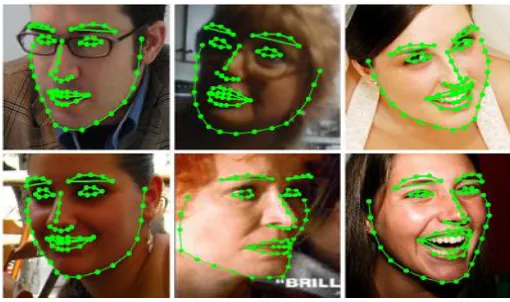
Fig 1: Structural salience mapping of semantic features
B. Semantic facial components
Facial components can easily be identified by the human eye. After climbing, the images become chaotic signals, and it is hard to figure out eyes and noses. Since semantic facial components are considered important cues for face recognition, we need to find a way to incorporate semantic approaches into the scrambled domain to attain higher matching accuracy.
In the Arnold transform, a pixel at point (x, y) is shifted to another point (x', y') by: x' 1 1x
mod N,(1) y' 1 2y
Which is called two-dimensional Arnold scrambling? Here, x and y are the coordinates of the original pixel; N is the height orwidth of the square image processed; x' and y' are the synchronizes of the scrambled pixel. The Arnold transform can be applied iteratively as follows:
Pxyk
1 AP xyk, Pxyk x, yT (2)
Here, the input is the creative image after the k-th Arnold transform, and Pxyk+1 on the left is the output of the k+1th
Arnold transform. kcharacterizes the number of iterations, where k = 0, 1, 2 and so on.
Though semantic approaches have attained great success in facial analysis, they need a robust scheme to map a 2D image into its semantic feature galaxy or 3D deformable model. This computation is not trivial and usually cannot be afforded by many real-world applications such as mobile computing platforms.
C. Sematic Salience Mapping Of Facial Images
Since semantic constituents are important cues to find a specific face, we need to find a way to present these features in statistic face exhibiting. In this paper, we propose to use salience learning for semantic facial mapping, and combine the educated semantic map into a random forest method for face recognition.
Facial components are usually salient structures in a facial copy. In this paper, we employ the DeepSalience model for sematic feature mapping.
III. SYSTEM ALGORITHM
A Image Acquisition:
In the first step image is captured from the camera. There are illumination effects in the captured image because of different lighting condition and some noise which is to be removed before going to the next steps.
B Histogram Normalization:
Histogram normalization is used for contrast enhancement in the spatial domain. In this method the histogram of the original image s transformed by using its normalized cumulative sum. Then the intensity values of the original image are mapped to new intensity to give a uniform histogram of intensity values.
C Noise Removal:
Median filter is a non-linear digital filtering technique often used to remove the noise. Its very widely used in digital image processing because its preserves edges while remove the noise
The median filter does a better job of removing random pixels being set to block or white noise with less blurring of edges.
D Face detection and recognition:
E Attendance creation
Every biometric system consists of enrolment process in which unique features of a person is stored in the database and then there are processes of identification and verification.These two processes compare the biometric feature of a person with previously stored template captured at the time of enrollment.Our system uses the face recognition approach for the automatic attendance of employees in the office room environment without employee’s intervention. Face recognition consists of two steps, in first step faces are detected in the image and then these detected faces are compared with the
IV.SYSTEM ANALYSIS
a) Linear Discriminant Analysis:
A method used in statistics, pattern recognition and machine learning to find a linear combination of feature that characterizes or separate two or more commonly, for dimensionality reduction before later classification
In computerized face recognition, each face is representing by a large number of pixel values. Linear discriminator analysis primarily used here to reduce the number of features to a more manageable number before classification. Each of the new dimensions is a linear combination of pixel value. Which form a template? The linear combination obtained using fisher linear discriminant are called fisher’s faces, while those obtained using the related principle component analysis are called Eigen faces.
b) Kernel analysis:
Kernel methods owe their name to the use of kernel function, which enable them to operate in a high dimension, implicit feature space without use computing the coordinates of the data in space, but rather by simply computing the inner product between the images of all pairs of data in the features space.
c) Principle component analysis:
PCA is statistical procedure that uses an orthogonal transformation to convert a set of observation of possibly correlate variables into a set of value of linearly uncorrelated variables called principal components.
The number of principle components is less than or equal to the smaller of(number of original variables or number of observations).
This transformation is define in such a way that the first principal component has the largest possible variance for as much of the variability in the data, and each succeeding component in turn has the highest variance possible under the constraint that it is orthogonal to the preceding components. The resulting vectors are an uncorrelated orthogonal basis set.
PCA is sensitive to the relative scaling of the original variables V POWER SUPPLY
The power supply circuit consists of rectifiers, filters and voltage regulators. A steady state pulsating dc voltage is obtained by rectifying the input ac voltage. The pure d.c voltage is obtained by filtering the pulsated d.c voltage with the help of capacitor. The ac voltage, typically 220V rms, is connected to a transformer, which steps that ac voltage down to the level of the desired dc output. A diode rectifier then provides a full-wave rectified voltage that is initially filtered by a simple capacitor filter to produce a dc voltage. This resulting dc voltage usually has some ripple or ac voltage variation
Fig.4: Block diagram for power supply
VI GLOBAL SYSTEM FOR MOBILE COMMUNICATION
GSM is used to send the information to the controller about the location of the train and it also sends the error report in the form of SMS. Global System for Mobile Communication is a standard set developed by the European telecommunication standards institute to describe technologies for second generation digital cellular networks.
Fig.5:GSM MODEM
A) BLOCK DIAGRAM OF GSM MODULE
B) GSM CARRIER FREQUENCIES
GSM networks operate in a number of different carrier frequency ranges. The frequency ids divided its timeslots for individual phones of the user. This allows eight full rate speech channels per radio frequency. The normally used frequency range in GSM is mentioned below:
The frequency band used for the first generation GSM is about 400 to 450 MHz
The second generation GSM Networks operating at the frequency range of 900 MHZ or 1800 MHz bands. VII LITERATURE SURVEY
An automated system for human face recognition in a real time background for an institution / corporate to mark the attendance of their students or employees. So Smart Attendance using Real Time Face Recognition is a real world solution which comes with day to day activities of handling individuals. The task is very difficult as the real time background subtraction in an image is still a challenge. To detect real time human face, Principal Component Analysis (PCA) is used to recognize the faces detected with a high accuracy rate. Once recognition is done with the matched face, then attendance will be marked and updated in the database. This project gives much more solutions with accurate results in user interactive manner rather than existing attendance and leave management systems. In addition to that we provide ideal solution to the problem of power wastage is appliance available in the class room is controlled through face recognition. The ease of deployment is due to wireless mode of communication. A prototype of the controller is implemented, and shows how the controller can easily and flexibly control the appliances.
VIII DESIGN AND IMPLEMENTATION
A)EXISTING SYSTEM
Radio Frequency Identification (RFID) technology can be used to improve the localization of mobile robots . Remote monitoring system or manual control systemcan be implemented used to control the device.
C) PROBLEM STATEMENT
Localization measured manually.
Functions of this system based RFID. It is easy to miss use. Manual control of appliance is difficult to monitor.
C) PROPOSED SYSTEM
The proposed attendance system mainly consists of Four phases; Image acquisition, Face Detection, Feature Extraction, Face Recognition. The working of the system is depicted as follows:
Image Acquisition:The system consists of a camera that captures the images of the classroom and sends it to the image pre-processing. Then that image is sends for face detection.
Face Detection: This process separates the facial area from the rest of the background image. The faces which are stored in the database.
Feature Extraction: Feature extraction is done for distinguishing faces of different student.In this system,eyes, nose and mouth are extracted.Feature extraction is helpful in face detection and recognition.
Attendance System:This constitutes the second phase of our project module. The recognition of each individual student takes place by extracting the common features of each individual by using image integral method.
Then the face image is matched with the image stored in the database and the attendance is marked for the candidate only if the facial feature of the newly captured image matches with the already stored image.
Automatically devices are controlled by microcontroller. Through sending sms can get the employee working status. Exit: It takes the control out of the module.
D)IMAGE PROCESSING
Images are captured using a module that is a digital camera whose link is integrated to the application that is developed using the proposed idea. After an image is captured, using web services transfers the image on server for processing. Together with the image, the web service accepts the course code. Using this course code, the LMS is aware of which students are enrolled in the organization and do face matching only for those employee. The camera continuously takes pictures on a given interval (by default each five minutes), until all faces detected are successfully identified or until the system is told to stop. This means that in some cases, e.g., when a face cannot be successfully identified, the camera keeps taking pictures until the finishes.
IX CONCLUSION
This face recognition based attendance management system provides accurate attendance information of the employees in easy way and upload the attendance into server using Ethernet cable. This system is convenient to user, easy to use and gives better security. It also develops outputs with 88% of accuracy. When number of employee faces increases the accuracy will decreases slightly. Immediately after the attendances have been updated,the electronic things in the particular cabin will be automatically switched ON;also every salary and other details of the employee can be viewed using an APP in the ANDROID phone.This project is mainly used for the sake of power consumption and security.
A) FUTURE SCOPE
The following suggestions are presented for further research and it would be beneficial to concentrate on the following issues in future work.
The proposed system can be applied to rotate faces and also to detect and recognize faces in videos and the analysis could be done.
The proposed system can be extended to analyse the facial expressions.
The proposed system can be extended for Very Large ScaleIntegration(VLSI)implementation of face recognition.
REFERENCES
[1] Richard jiang, somaya A1-maadeed, Ahmed Bouridance, Danny crookes. “Fece recognition in the scrambled domain via salience-aware
ensemble of many kernels”IEEE M.Emre celebi-2016
[2] Singh, A.; Karanam, S. ; Kumar, D. "Constructive Learning for Human-Robot Interaction", IEEE Potentials, Vol 32, Issue 4, 2013.
[3] Jayatilake, D. ; Isezaki, T. ; Teramoto, Y. ; Eguchi, K. ; Suzuki, K. "Robot Assisted Physiotherapy to Support Rehabilitation of Facial Paralysis", IEEE Trans Neural Systems and Rehabilitation Engineering, Vol. 22 , Issue 3, 2014, Page(s): 644 - 653
[6] Melle, J.-L. Dugelay, “Scrambling faces for privacy protection using background self-similarities,” Proc. 2014 IEEE International Conference on Image Processing (ICIP), 2014, pp.6046-6050.
[7]Z. Erkin, M. Franz, J. Guajardo, S. Katzenbeisser, I.Lagendijk, T. Toft, “Privacy-Preserving Face Recognition,” Proc. Ninth Int’l Symp. Privacy Enhancing Technologies (PETS ’09), 2009, pp.235-253.
[8]T. Honda, Y. Murakami, Y. Yanagihara, T. Kumaki, T.Fujino, “Hierarchical image-scrambling method with scramble-level controllability for privacy protection,”Proc. IEEE 56th International Midwest Symposium on Circuits and Systems (MWSCAS), 2013, pp.1371-1374.
[9] A. Erdlyi, T. Bart, P. Valet, T. Winkler, B. Rinner,“Adaptive Cartooning for Privacy Protection in Camera Networks”. Proc. International Conference on Advanced Video and Signal Based Surveillance, 2014, pp.6.
[10]F. Dufaux, T. Ebrahimi, “Scrambling for Video Surveillance with Privacy,” Proc. 2006 Conference on Computer Vision and Pattern Recognition Workshop, Washington, DC, USA, 2006, pp.106-110.
[11]F. Dufaux, “Video scrambling for privacy protection in video surveillance: recent results and validation framework,” Proceedings of SPIE, Vol. 8063, 2011, pp.14.
[12]T. Winkler, B. Rinner, “Security and Privacy Protection in Visual Sensor Networks: A Survey,” ACM Computing Surveys, Vol.47, Issue 42, 2014, pp.1.
[13]A. Erdlyi, T. Bart, P. Valet, T. Winkler, B. Rinner, “Adaptive Cartooning for Privacy Protection in Camera Networks”. Proc. International Conference on Advanced Video and Signal Based Surveillance, 2014, pp.6.
[14]Y. Wang, T. Li, “Study on Image Encryption Algorithm Based on Arnold Transformation and Chaotic System,” Proc. 2010 International Conference on Intelligent System Design & Engineering Application, 2010, pp.449-451.
[15]Z. Tang, X. Zhang, “Secure Image Encryption without Size Limitation Using Arnold Transform and Random Strategies,” Journal of Multimedia, Vol. 6, No. 2, April 2011, pp.202-206.
[16]Y. Rahulamathavan, R. C.-W. Phan, J. A. Chambers, D. J. Parish, “Facial Expression Recognition in the Encrypted Domain Based on Local Fisher Discriminant Analysis”,IEEE Tran. Affective Computing, Vols. 4, Issue 1, 2013, 83-92.
[17] C. Shan, S. Gong, and P. McOwan. Facial expression recognition based on Local Binary Patterns: A comprehensive study. J. IVC, 27(6):803–816, 2009.
[18] Ping Liu, Shizhong Han, Zibo Meng, Yan Tong, "Facial Expression Recognition via a Boosted Deep Belief Network", CVPR 2014.
[19] Dong Chen, Xudong Cao, Fang Wen, Jian Sun. Blessing of Dimensionality: High-dimensional Feature and Its Efficient Compression for Face Verification. Computer Vision and Pattern Recognition (CVPR), 2013.