Scholarship@Western
Scholarship@Western
Electronic Thesis and Dissertation Repository
6-8-2015 12:00 AM
Understanding Nurses' Knowledge Work
Understanding Nurses' Knowledge Work
Heidi M. Siu
The University of Western Ontario Supervisor
Dr. Heather Laschinger
The University of Western Ontario
Graduate Program in Nursing
A thesis submitted in partial fulfillment of the requirements for the degree in Doctor of Philosophy
© Heidi M. Siu 2015
Follow this and additional works at: https://ir.lib.uwo.ca/etd Part of the Nursing Administration Commons
Recommended Citation Recommended Citation
Siu, Heidi M., "Understanding Nurses' Knowledge Work" (2015). Electronic Thesis and Dissertation Repository. 3222.
https://ir.lib.uwo.ca/etd/3222
This Dissertation/Thesis is brought to you for free and open access by Scholarship@Western. It has been accepted for inclusion in Electronic Thesis and Dissertation Repository by an authorized administrator of
UNDERSTANDING NURSES’ KNOWLEDGE WORK
(Thesis format: Monograph)
by
Heidi M. Siu
Graduate Program in Nursing
A thesis submitted in partial fulfillment of the requirements for the degree of
Doctor of Philosophy
The School of Graduate and Postdoctoral Studies The University of Western Ontario
London, Ontario, Canada
ii ABSTRACT
Hospitals are increasingly investing in technologies and electronic knowledge
management systems to improve patient care outcomes. Yet, effective implementation of
these initiatives has been difficult with questionable return on investment outcomes
(Ontario Hospital Association [OHA], 2007, 2008). Paton (2009) argues that
understanding how employees put their knowledge into action at work is essential to
successful knowledge management for organizations. Thus, strategies that target nurses’
knowledge work may be more effective for hospitals; particularly in times of mounting
fiscal deficits and demands for health services.
This study examined the behaviors, influences, and outcomes of nurses’
knowledge work. The hypothesized model was based on Kelloway & Barling’s (2000)
knowledge work theory; explaining the impact of empowering leadership on nurses’
accountability, role-breadth self-efficacy, and control over practice to influence their
knowledge work behaviours and ultimately, patient care delivery outcomes.
The model was tested on a random sample of 318 registered nurses in Ontario, and
initially demonstrated poor fit with the observed data; with further refinement to improve
the overall model fit [χ2(df) = 512.66 (199), p < .001, SRMR = .064, CFI = .91, RMSEA
= .071].
Final model results suggest that empowering leadership practices increase nurses’
knowledge work behaviors, which subsequently enhances their care coordination
activities and patient care quality. Empowering leadership specifically increases nurses’
knowledge work by positively influencing their accountability and role-breadth
iii
behaviors by which nurses’ demonstrate their knowledge work, and the process by which
empowering leadership influences such work behaviors to improve patient care quality.
Keywords: nurses’ knowledge work, knowledge work behaviors, empowering leadership,
accountability, role-breadth self-efficacy, control over practice, care coordination, quality
iv
ACKNOWLEDGEMENT
Doctoral education has been one of the most challenging yet stimulating
experiences I have ever pursued. I feel very fortunate to be guided by such an insightful
supervisor, Dr. Heather Laschinger, who provided continuous support from beginning to
end. While I am grateful for her persistence in keeping me focused, I especially
appreciated the discussions we had over the years about nursing research, leadership and
practice. I would also like to thank my supervisory committee, Dr. Mickey Kerr, Dr. Joan
Finegan and Dr. Catherine Connelly, for providing thought-provoking insights and
direction.
I am particularly thankful to Allison Patrick, Sara Lankshear, and Nancy Purdy for
gently pulling me over the wall. Our meeting discussions, shared experiences, and visions
for nursing have kept me inspired throughout this process, and will continue to do so for
years to come.
Finally, I would like to thank my family and friends for keeping me sane with
their constant support through all the ups and downs. I am awed by the many ways they
have encouraged me during this challenging journey, including helping with stamping
envelops, editing thesis drafts, cooking meals, or offering reassuring prayers. I dedicate
v
TABLE OF CONTENTS
ABSTRACT ... ii
ACKNOWLEDGEMENT ... iv
TABLE OF CONTENTS ... v
LIST OF TABLES ... viii
LIST OF FIGURES ... ix
LIST OF APPENDICES ... x
CHAPTER I: INTRODUCTION & STUDY OBJECTIVES ... 1
Background and Significance ... 1
Study Objectives ... 4
CHAPTER II: LITERATURE REVIEW AND THEORETICAL FRAMEWORK ... 8
Definition and Perspectives of Knowledge ... 8
Perspectives of Knowledge Work ... 9
Nurses’ Knowledge Work ... 12
Kelloway and Barling’s Theory of Knowledge Work in Organizations ... 18
Knowledge Work Behaviours... 19
Predictors and Outcomes of Knowledge Work ... 25
Related Research ... 27
Empowering Leadership: An Organizational Predictor of Nurses’ Knowledge Work .... 32
Individual Predictors of Nurses’ Knowledge Work ... 38
Accountability ... 38
Role-breadth Self-efficacy ... 40
Control Over Nursing Practice ... 43
Outcomes of Nurses’ Knowledge Work ... 45
Nursing Care Coordination ... 45
Quality of Patient Care ... 50
Summary of Literature Review ... 53
Research Purpose, Objectives, and Hypotheses ... 55
CHAPTER III: RESEARCH METHODS ... 58
vi
Setting ... 58
Sample Description ... 58
Inclusion & Exclusion Criteria ... 59
Sample Size & Response ... 60
Data Collection Procedures ... 62
Study Survey ... 64
Concept Measures ... 64
Leader Empowerment Behaviours Scale ... 64
Specht & Ramler Accountability Index ... 68
Role-Breadth Self-Efficacy Scale ... 69
Control Over Nursing Practice Scale ... 71
Knowledge Work Behaviours Scale ... 72
Nurse Care Coordination Inventory Scale ... 76
Quality of Patient Care Measure ... 77
Data Management Procedures ... 79
Case Screening... 80
Variable Item Screening ... 81
Missing Values & Expectation Maximization Likelihood Imputation ... 82
Data Analysis Procedures ... 83
Structural Equation Modeling ... 84
Ethical Considerations ... 88
Risks & Benefits ... 89
CHAPTER IV: RESEARCH RESULTS ... 90
Demographic Results ... 90
Sample Characteristics ... 90
Demographic Comparisons ... 91
Descriptive & Psychometric Measurement Results ... 94
Leader Empowerment Behaviours ... 98
Specht & Ramler Accountability Index ... 99
Role-Breadth Self-Efficacy... 102
vii
Knowledge Work Behaviours ... 108
Nurse Care Coordination Inventory ... 112
Hypothesis Testing Results ... 115
CHAPTER V: DISCUSSION & IMPLICATIONS ... 126
Key Research Findings ... 126
Outcomes of Nurses’ Knowledge Work Behaviours ... 126
Impact of Empowering Leadership on Nurses’ Knowledge Work Outcomes ... 128
Mediating Roles of Accountability & Role-breadth Self-efficacy ... 129
Study Limitations ... 131
Opportunities for Further Research ... 133
Implications for Nursing Leadership, Education, & Practice ... 135
Conclusion ... 137
REFERENCES ... 139
viii
LIST OF TABLES
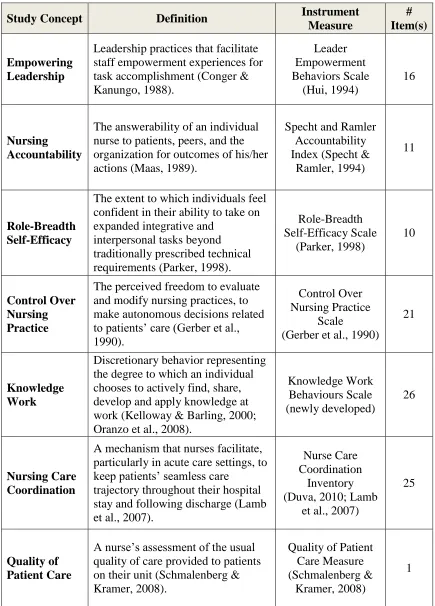
Table 1. Concept Measures ... 65
Table 2. Sample Demographics ... 92
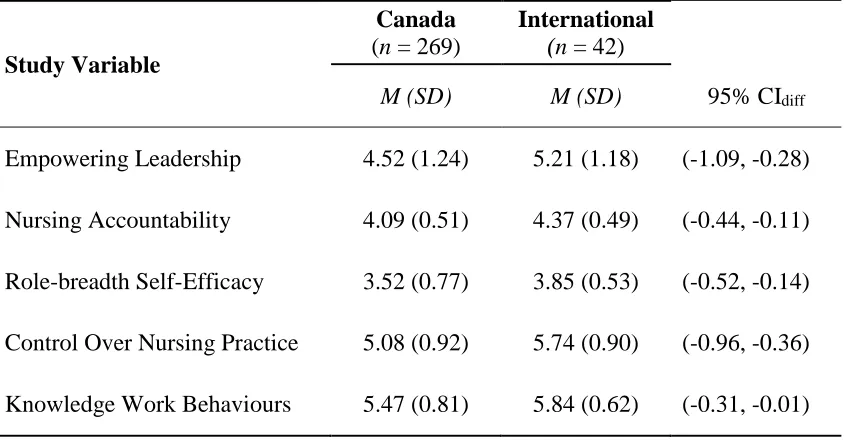
Table 3. Mean Differences by Origin of Initial Nursing Education ... 93
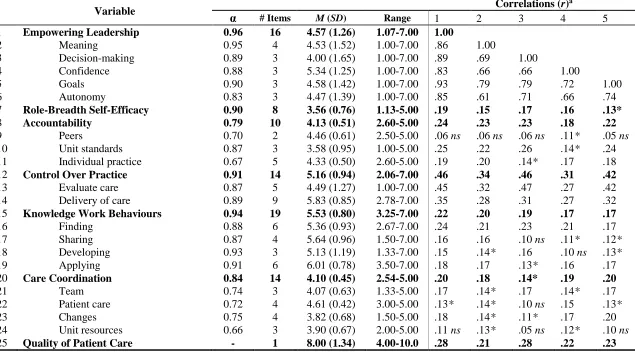
Table 4. Descriptive Variable Results ... 95
Table 5. Final LEB Scale Item Definitions ... 101
Table 6. Final SRAI Scale Item Definitions ... 104
Table 7. Final RBSE Scale Item Definitions ... 106
Table 8. Final CONP Scale Item Definitions ... 110
Table 9. Final KWB Scale Item Definitions ... 114
Table 10. Final NCCI Scale Item Definitions ... 117
ix
LIST OF FIGURES
Figure 1. Kelloway & Barling’s (2000) Theory of Employee Knowledge Work ... 5
Figure 2. Theoretical Model of Nurses' Knowledge Work ... 7
Figure 3. Hypothesis Research Model ... 56
Figure 4. Structural Hypothesis Model ... 61
Figure 5. Final CFA Model for the Leader Empowering Behaviors (LEB) Scale ... 100
Figure 6. Final CFA Model for the Specht & Ramler Accountability Index (SRAI) ... 103
Figure 7. Final CFA Model for the Role Breadth Self-Efficacy (RBSE) Scale ... 105
Figure 8. Final CFA Model for the Control Over Nursing Practice (CONP) Scale ... 109
Figure 9. Final CFA Model for the Knowledge Work Behaviours (KWB) Scale ... 113
Figure 10. Final CFA Model for the Nurse Care Coordination Inventory (NCCI) ... 116
Figure 11. Structural Model of Theoretical Model ... 118
Figure 12. Initial Structural Model Results... 119
x
LIST OF APPENDICES
Appendix A. Initial Introduction Letterof Study & Offer to Participate ... 163
Appendix B. Reminder Letter of Study & Offer to Participate ... 165
Appendix C. Final Letter of Study & Offer to Participate ... 166
Appendix D. Study Survey ... 1668
CHAPTER I: INTRODUCTION & STUDY OBJECTIVES
Background and Significance
According to Drucker (1991), knowledge is the key resource to any organization’s
competitive advantage in today’s economy, thus it needs to be considered, managed and
maximized for improved productivity. The stakes are higher for health care organizations
to successfully manage and maximize use of knowledge given additional responsibilities
for improving patient care and safety. Generating organizational strategies to optimize
knowledge use is imperative when further viewed in context of large health care deficits,
growing demands for health services, and an increasing patient population with multiple
chronic illnesses (Health Council of Canada, 2009). Yet, developing these strategies
requires an understanding of what type of knowledge is effective, the circumstances
under which it is most effective, and the impact it has on patients’ health. Indeed, this is
no simple task.
Increasingly, health care organizations are turning towards knowledge
management strategies to achieve organizational goals. Knowledge management centers
on developing an organization’s ability to acquire, organize, and disseminate knowledge
throughout the organization for the purposes of improving effectiveness, efficiency, and
competitiveness (Alavi & Leidner, 2001; Davenport & Glaser, 2002; Orzano, McInerney,
Scharf, Tallia, & Crabree, 2008a). While knowledge management may encompass ways
of improving knowledge use, decision-making, and/or employee commitment within an
organization (Becerra-Fernandez & Sabherwal, 2005), many health organizations heavily
investing in tools, protocols, and technologies in the form of electronic knowledge
management systems (Alavi & Leidner, 2001; Bose, 2003; Canadian Nurses Association
Corcoran-Perry & Narayan, 2001). However, the benefits of these knowledge management
initiatives have been questionable. On average, Ontario acute care hospitals report
mediocre use of clinical information technology (58.7%), data for decision-making
(59.0%), and standardized protocols to assist with care delivery (38.1%) (OHA, 2007).
The high costs associated with these initiatives have also called into question their return
on investment value for organizational outcomes, particularly for hospitals with mounting
pressures to increase productivity and decrease cost (OHA, 2009). These limitations may
be due to a focus on knowledge management initiatives targeted at improving storage,
organization, access, or delivery systems of technical knowledge for wide distribution
throughout hospitals (Nicolini, Powell, Conville, & Martinez-Solano, 2007), rather than
initiatives concentrated on directly influencing the behaviours of human resources, such
as nurses, to actively use their knowledge in practice.
Theorists have emphasized the role individuals play in the success of knowledge
management. They note that while some knowledge may be readily translated into
documents, manuals, or process maps, other types of knowledge such as tacit or
embodied knowledge may not be as easily extracted for incorporation within an
organization’s knowledge management system (Blacklar, 1995; Davenport, 2005;
Nonaka, 1994; Senge, 1990). This is certainly true in hospitals where the knowledge of
health professionals, such as nurses, provide the foundation for daily decision-making in
pursuit of quality patient care outcomes. Thus, strategies focused on influencing nurses
who embody the knowledge to actively use it may be a more valuable knowledge
management approach for health organizations (Paton, 2009).
There is opportunity for hospitals to leverage nurses’ knowledge as a knowledge
hospitals have one of the highest cost intensive labor operations as they employ nearly
46% of all health care workers (Canadian Institute for Health Information [CIHI], 2005,
2010a), of which nurses account for 50% (CIHI, 2010a, 2010b; Institute of Medicine
[IOM], 2010). Additionally, the increased use of health care services by a progressively
complex patient population, and the increased use of advanced technology to deliver care
has necessitated the employment of more sophisticated and knowledgeable nurses. Given
that nurses account for the majority of the health care industry’s labor force and are key
providers who mobilize health services at the point of care, understanding how nurses put
their knowledge into action is essential to quality patient care outcomes (IOM, 2010).
More importantly, it is the potential key to creating effective knowledge management
strategies.
According to Kelloway and Barling (2000), knowledge work is discretionary
behavior in that individuals choose, or choose not to find, share, develop or apply
knowledge in their work role for the purposes of achieving work goals. Whether an
individual decides to engage in knowledge work depends on one’s ability, motivation,
and opportunity to do so. Thus, organizations may only optimize their employees’
knowledge work by creating structures, practices, or climates aimed at influencing
employees’ ability, motivation, and opportunity for knowledge work within the work
setting. Estabrooks, Scott-Findley, & Winther (2004) also call for a research shift towards
understanding the individual, social and organizational factors that contribute to nurses’
knowledge utilization within health organizations. They argue that the predominant focus
on demographic data such as age or years of work experience as determining proxies of
nurses’ knowledge utilization is insufficient, as most nurses work within complex
linkages between organizational predictors, individual determinants, and outcomes of
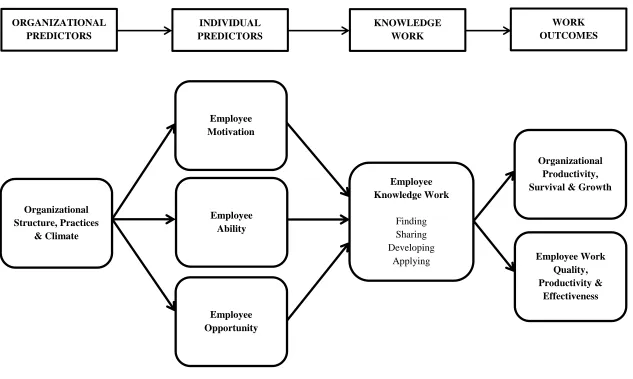
knowledge work behaviors, Kelloway and Barling’s (2000) theory offers a useful
framework for guiding research aimed at understanding nurses’ knowledge work (Figure
1).
Understanding how nurses’ knowledge work contributes to positive outcomes
within their work context is critical to identifying strategies for nursing resource
optimization. If healthcare organizations can better understand the factors facilitating
nurses’ knowledge work, they will be able to more easily promote nurses’ willingness to
engage in knowledge work. Similarly, if health care organizations can identify factors
that hinder nurses’ knowledge work, they may be able to address these issues as well.
Despite this proposition, research on the factors that influence nurses’ knowledge work
remains limited, still in its early stages with regards to identifying the determinants and
outcomes of effective knowledge work in organizations. In order to address this research
gap and evaluate the practical implications mentioned above, the aim of this study was to
examine the organizational and individual predictors of staff nurses’ knowledge work,
and the effects of nurses’ knowledge work on quality care outcomes in acute care
hospitals.
Study Objectives
In order to facilitate health care knowledge management strategies that optimize
the knowledge of nurses to effect quality patient care delivery and outcomes, we need to
first understand how nurses’ use their knowledge in practice by means of identifying
factors that influence or drive nurses’ knowledge work behaviors. The aim of this study
Figure 1. Kelloway & Barling’s (2000) Theory of Employee Knowledge Work in Organizations
Organizational Structure, Practices
& Climate
Employee Ability Employee Motivation
Employee Opportunity
Employee Knowledge Work
Finding Sharing Developing
Applying
ORGANIZATIONAL PREDICTORS
INDIVIDUAL PREDICTORS
KNOWLEDGE WORK
WORK OUTCOMES
Organizational Productivity, Survival & Growth
Employee Work Quality, Productivity &
settings, and examine the relevant predictors and outcomes of their knowledge work. As
such, the following research questions guided this study:
1. What are the behaviours that represent staff nurses’ knowledge work in acute care
settings?
2. What are the organizational and individual predictors of staff nurses’ knowledge
work in acute care settings?
3. What is the impact of staff nurses’ knowledge work on patient care delivery
outcomes?
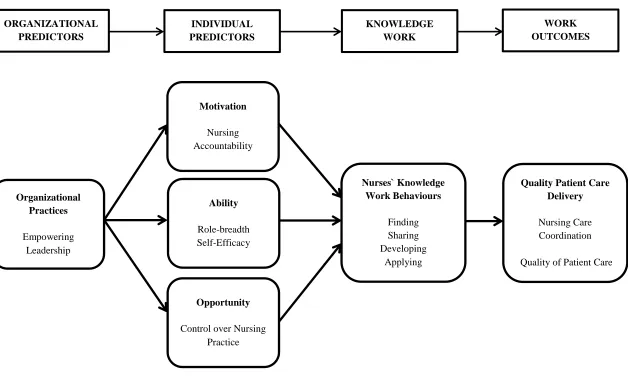
To achieve the aims of this study, an explanatory model predicting individual differences
in nurses’ knowledge work was developed and tested (Figure 2). Specifically, based on
Kelloway and Barling’s (2000) theory of knowledge work, it is proposed in the model
that organizational practices (empowering leadership) influences nurses’ knowledge work
behaviours (knowledge finding, seeking, development, and application) by means of
facilitating nurses’ motivation (nurse accountability), ability (role-breadth self-efficacy),
and opportunity (control over nursing practice) to engage in knowledge work. In addition,
this study tested a model in which nurses’ discretion for engaging in knowledge work
positively predicts patient care delivery outcomes including nursing care coordination
Figure 2. Theoretical Model of Nurses' Knowledge Work
Organizational Practices
Empowering Leadership
Ability
Role-breadth Self-Efficacy
Motivation
Nursing Accountability
Opportunity
Control over Nursing Practice
Nurses` Knowledge Work Behaviours
Finding Sharing Developing
Applying
Quality Patient Care Delivery
Nursing Care Coordination Quality of Patient Care
ORGANIZATIONAL PREDICTORS
INDIVIDUAL PREDICTORS
KNOWLEDGE WORK
CHAPTER II: LITERATURE REVIEW AND THEORETICAL FRAMEWORK
Definition and Perspectives of Knowledge
Knowledge is central to the work of nurses and their professional practice
(College of Nurses of Ontario [CNO], 2002). However, clear understanding of the term is
required for suitable examination of how nurses use their knowledge in practice, as well
as the strategies for maximizing its use as a critical resource in health care. Thus, it is
important to first define and distinguish knowledge from commonly associated terms
such as information and evidence.
Information is an accumulation of data and facts that become knowledge only
when it has relevance, is placed in context, and is analyzed by people for a particular
purpose. Thus, knowledge is considered a higher structure of information that is ready to
be used for decisions or actions when and if individuals choose to do so (Newell,
Robertson, Scarborough, & Swan, 2009). Conversely, evidence is often referred to
scientific evidence resulting from research, although Higgs and Jones (2000) have more
broadly defined evidence as multiple types of knowledge that have been empirically
tested and found credible.
Knowledge has been widely discussed in the literature as existing in two main
forms: explicit and tacit (Nonaka, 1994; Polanyi, 1962; Spender 1996). Though a
complete discussion of explicit and tacit knowledge is beyond the scope of this study, it is
useful to briefly define these two knowledge forms so as to better understand how nurses’
choose to use their knowledge in practice. Explicit knowledge is expressed, categorized,
and communicated in some symbolic form or language. Tacit knowledge refers to an
individual’s cognitive mental mappings that are developed through their experience and
communicated across various contexts, whereas tacit knowledge may not (Newell et al.,
2009). Within the context of health care, explicit knowledge is often accessed through
information in textbooks, journals, or clinical practice guidelines, written policies, and
procedures. Tacit knowledge, on the other hand, resides in the cognitions of health
professionals and is often gained by reflections on clinical experiences and facts (Benner,
1984; Benner, Tanner & Chesla, 1996; Chinn & Kramer, 2011; Mansingh, Osei-Bryson
& Reichgelt, 2009).
In this study, knowledge was conceptualized to include both explicit and tacit
forms which nurses draw upon to inform their practice. It is important to note that it was
not in the interest of this study to identify what nurses know and the types of knowledge
they use in practice; particularly since different knowledge forms are selected for use by
nurses at highly varying times, depending on the issue at hand, and the personal
experiences of the nurse. Rather, this study aimed to understand nurses’ knowledge work
by examining the differential behaviours that nurses’ demonstrate to use their knowledge
for providing quality patient care.
Perspectives of Knowledge Work
Despite growing interest in employee knowledge work for the purposes of
achieving organizational success (Davenport, Thomas & Cantrell, 2002; Drucker, 2009;
Kerfoot, 2002), the concept remains poorly defined within the literature. Lack of
conceptual clarity for knowledge work is mainly due to its interchangeable use with the
term knowledge worker, and inconsistent frames of reference for identifying related
attributes. In their review of the literature, Kelloway and Barling (2000) noted that
personal characteristic, or work activity. Each of these conceptual perspectives are
discussed as follows.
Since Drucker (1969) first introduced the concept of knowledge-worker
productivity where organizational success is dependent on optimizing the unique work
contributions of employees, knowledge work has since been popularly defined as
occupational categories differentiated by service versus manual work (Kelloway &
Barling, 2000; Nomikos, 1989; Paton, 2009). This perspective assumes that knowledge
work is associated with service work that emphasizes mental processing and customer
interactions, as opposed to manual work that is viewed as monotonous with limited
knowledge application (Frenkel, Korzynski, Donoghue, & Shire, 1995). As a result, this
has led to further knowledge worker classifications based on professional group
associations such as “scientists, engineers, professors, attorneys, physicians, and
accountants” (Nomikos, 1989, p. 165). This conceptual perspective is problematic
especially when organizational success requires active involvement of all employees
within an organization. Defining knowledge work as an occupational characteristic places
emphasis on occupational qualifications such as levels of education, expertise or job
positions (Davenport, 2005; Janz, Colquitt & Noe, 1997), as opposed to how employees
contribute to organizational goals. This perspective exclusively favors the knowledge
work of a select few, and limits the opportunity and expectation that all employees
contribute to organizational goals (Kelloway & Barling, 2000).
Knowledge work has also been defined as an individual trait such as being
intelligent, creative, or innovative (Augier, Shariz & Vendelo, 2001). This perspective is
rooted in the belief that knowledge work is a function of knowledge possession, in that
greater education, creation or innovation. Although this perspective moves away from
occupational membership towards focusing on an individual’s contribution to
organizational goals, the emphasis on what individuals know is also limiting. Paton
(2009) argues that the possession of knowledge is not in itself the defining feature of
knowledge work, nor would it advantage organizations when unused. This suggests that
individual traits or possession of specialized knowledge are insufficient for defining
individual contributions of knowledge work. More importantly, when viewed within
work contexts that are often hierarchically designed, it is unclear as to whether
individuals’ knowledge work contributions are a function of what they know as opposed
to the opportunity they are afforded to use their knowledge for organizational goals
(Kelloway & Barling, 2000).
Lastly, knowledge work has been defined as a workplace activity associated with
individuals who utilize their thought processing to analyze information, solve problems,
or make decisions that benefit organizational goals (Wolf et al., 2006). In this case,
knowledge work is exemplified by employees who utilize their body of knowledge in a
specified way (Garrick & Clegg, 2000). This perspective emphasizes employee work
performance based on the use of knowledge in the workplace rather than what individuals
know (Blackler, 1995). Although this perspective has potential for understanding
individual contributions of knowledge work, it also runs the risk of describing knowledge
work as task categories associated with occupational membership, work roles, or work
process pathways. This limits the opportunity for identifying behavioural elements that
are unique to knowledge work and provide competitive advantage to organizations
(Paton, 2009). As such, Kelloway and Barling (2000) extend this perspective to define
work goals. This definition takes several things into account. First, despite the amount or
type of knowledge that employees possess, whether they choose to use such knowledge
within the workplace is the emphasis; and so knowledge work is expressed as an
individual behavior rather than what one knows. Second, this perspective suggests that
there are individual behaviors specific to the use of knowledge within the workplace,
regardless of the work activities associated with employees’ work role, responsibilities,
or occupational membership. These behaviors determine how employees’ choose to use
their knowledge to meet work goals. Hence, the extent, nature, and subsequent effects of
employees’ knowledge work in an organization may vary considerably (Kelloway &
Barling, 2000).
Nurses’ Knowledge Work
There have been many conceptual papers found within the nursing literature
noting the importance of nurses’ knowledge work, particularly in the provision of safe
patient care and the interception of medical errors (Benner, 1984; Davenport & Prusak,
1998; Estabrooks et al., 2002; Hall, 2003; IOM, 2004; 2010; McCormack, Kitson,
Harvey, Rycroft-Malone, Titchen, & Seers, 2002; Moody, 2004; Snyder-Halpern,
Corcoran-Perry & Narayan, 2001; Sorrells-Jones & Weaver, 1999). However, empirical
research to support conceptual clarity for nurses’ knowledge work and an understanding
of its outcomes is scarce. In fact, only two relevant nursing studies were identified (Ayers
LaFave, 2008; Quinlan, 2009).
Ayers LaFave (2008) sought to describe nurses’ knowledge work within the
clinical microsystem by identifying the essential components of systems-based
knowledge and information exchange from the perspective of 18 practicing nurses in
discovered that participants’ knowledge of their clinical microsystem included
knowledge about the organizational goals and expectations, the coordinating operations,
and the social relations among staff and patients within the microsystem. Ayers LaFave
further noted that interpersonal communication served as the primary mechanism by
which systems-based knowledge was exchanged among nurses. More specifically, the
study participants exchanged their knowledge about practice-based patterns, staffing roles
and patterns, tips and tricks about nursing related techniques, and general unit-based
operations within the acute intensive care unit setting.
In order to investigate how primary health care teams collectively engaged in
knowledge work, Quinlan (2009) conducted an institutional ethnographic study with
three new graduate nurse practitioners and shadowed their coordination of clinical duties
and interactions with colleagues across urban, rural, and remote health care settings.
Quinlan viewed knowledge work as the exchange of knowledge claims in the context of
clinical decision-making among members of the primary health care team. In analyzing
the dialogue exchanges, text references, and the context in which collective clinical
decision-making was achieved, two main study findings were revealed. First, Quinlan
noted that the knowledge work of primary health care teams is organized around team
members’ shared tasks involving documentary forms of knowledge such as written work
policies and regulations. Such organization of work roles and responsibilities offered
opportunities for team members to exchange tacit knowledge that was practice-based,
which the researcher concluded as being a crucial component to the teams’ creation of
new knowledge. Second, Quinlan found that collective decision-making involved
further concluded that the knowledge work of the primary health care teams’ is best
understood by considering the social organization of power within the teams.
In addition to these empirical investigations, other related areas of research
associated with knowledge work are worthy of discussion; namely evidence-based
practice, knowledge exchange, knowledge utilization, and knowledge translation.
Evidence-based practice emphasizes the integration of individual clinical expertise
gained through clinical experience and practice, with the best available clinical evidence
from systematic research (Sackett, Rosenberg, Gray, Haynes, & Richardson, 1996). Early
proponents of evidence-based practice tended to rest on preferences of scientific evidence
attained from applied health care research to guide best clinical practice (Haynes, 2004).
However, critics have argued that this perspective is too narrow and linear in assuming
that practitioners who base their decisions on scientific evidence will thus provide quality
patient care (Tonelli, 2006). As such, in nursing, evidence-based practice has since been
viewed as an approach to clinical problem solving that incorporates various forms of
evidence such as patient values, experiential learning, and pathophysiologic knowledge
(Melnyk & Fineout-Overholt, 2005). Additionally, Cochrane et al. (2007) identified in
their literature review numerous factors that contribute to quality clinical practice beyond
the type of evidence used. These include individual factors such as cognitive, behavioral,
attitudinal, or personal characteristics, and health care system or clinical context factors
including support, resources, and system processes.
To address the linear assumptions of evidence-based practice, the Promoting
Action on Research Implementation in Health Services (PARIHS) framework was
proposed specifically for health care environments by Kitson, Harvey & McCormack
model that is dependent on three interdependent factors for success. These factors include
the type of evidence that is to be implemented, the context in which the evidence is to be
implemented, and how the evidence-based practice implementation is facilitated. Each
factor is positioned on a continuum from high to low, with high end scores representing
the most successful implementation of evidence in practice (Rycroft-Malone, 2004). In
this model, evidence is a broad concept that includes research, clinical experience, and
local data or patient information; each requiring critical appraisal. Context represents the
environment or setting where health care is delivered, and considers social, cultural,
psychosocial, and political influences. Finally, facilitation refers to an individual who
helps others implement evidence into their practice (Kitson, Harvey & McCormack,
1998; Rycroft-Malone, 2004). While the PARIHS model offers a systematic
evidence-based practice approach for evaluating how well evidence is implemented into clinical
practice, it assumes individuals’ critical appraisal of all evidence prior to implementation
in practice for success (Rycroft-Malone, 2004). Thus, despite the type of evidence
selected for implementation, individuals continue to play an influential role in the success
of evidence-based practice outcomes, by critically evaluating the evidence to be applied
in practice.
Moving away from a focus on the type of evidence needed for decision-making
towards an understanding of how knowledge is used for decision-making is the concept
of knowledge utilization. In health care, knowledge utilization is often described as an
activity process involving the use of research results for a particular purpose, such as
policy making or clinical decision making (Denis, Lehoux & Champagne, 2004;
Estabrooks, Scott-Findley & Winther, 2004). Again, the emphasis is on the use of
conceptual use, or symbolic use. Instrumental use refers to the direct application of
evidence into materials or tools such as guidelines or clinical decision-making pathways
for use in practice (Estabrooks, 1999). Conceptual use involves the use of research results
for general enlightenment, whereas symbolic use represents the use of research results to
support or legitimize a decision or position (Estabrooks, 1999). While the concept of
knowledge utilization is helpful in clarifying the various purposes for why health care
providers use research or knowledge, a gap remains in understanding how individual
nurses demonstrate their knowledge use in practice. Such an understanding may lead to a
clearer conceptual definition of knowledge work in nursing.
A relatively new yet related concept is knowledge exchange. Within the broader
management and information science literature, knowledge exchange is synonymous with
the concept of knowledge sharing. Knowledge exchange is understood to be the driver to
successful decision making as the knowledge needed to solve problems or complete work
tasks is often shared among a number of individuals (Mitton, Adair, McKenzie, Patten, &
Perry, 2007). This is also demonstrated in Quinlan’s (2009) study discussed above. In
health care, knowledge exchange focuses primarily on the sharing of research knowledge
between researchers and knowledge users such as clinicians and policy makers for
collaborative decision-making (Mitton et al., 2007). Given this perspective, knowledge
exchange is tightly connected with the research process. However, the research process
represents only a portion of knowledge exchange activities in health care settings,
considering that exchange between health professionals account for the majority of the
information flow in practice settings (Parker & Coiera, 2000). Thus, understanding the
knowledge exchange practices of nurses with their practice-based colleagues is one
make clinical decisions that impact patient care independently suggests that knowledge
work goes beyond knowledge sharing.
Knowledge translation is another related concept that incorporates knowledge
exchange and utilization. Knowledge translation is defined according to the Canadian
Institutes of Health Research as “a dynamic iterative process that includes synthesis,
dissemination, exchange, and ethically sound application of knowledge to improve the
health of Canadians, provide more effective health services and products and strengthen
the health care system” (Straus, Tetroe & Graham, 2009, p.165). Within this broad-based
view of knowledge translation, research is considered a subset of knowledge, and the
focus is on changing health outcomes while using critically appraised clinical knowledge
(Davis et al., 2003; Graham & Tetroe, 2007; Straus, Tetroe & Graham, 2011). Though
the broad perspective of knowledge translation is beyond the scope of this study,
understanding the elements of synthesizing, exchanging, and applying knowledge to
improve patient care is important to understanding how knowledge work may be enacted
by individual nurses within the clinical setting.
While the literature reviewed above provides some insight to nurses’ knowledge
work, the conceptual definition of knowledge work remains elusive and unclear. This
may be due to nurses’ knowledge work being primarily referenced as an individual’s
possession of a specialized knowledge base (Ayers LaFave, 2008), or coordination of
work activities including shared tasks with health care team members (Quinlan, 2009).
Nevertheless, the identified literature gaps reviewed thus far offer some new direction for
examining nurses’ knowledge work. First, a focus on work behaviors specific to
knowledge work rather than nurses’ specialized knowledge possession, individual traits,
confounding concepts that was previously discussed. Examples of such behaviors
specific to knowledge work include sharing, synthesizing and applying knowledge.
Second, considering the individual influences of nurses when examining the concept of
knowledge work may not only help specify how nurses’ knowledge work contribute to
organizational goals, but may also provide a foundation for future understandings of
knowledge work such as that of health care teams. Finally, evaluating nurses’ knowledge
work within the context of the clinical work setting is necessary for identifying key
factors that influence or inhibit such behaviors, given that the ultimate aim is to
understand how nurses’ knowledge work impact patient care delivery and outcomes. As a
model that takes into account the considerations highlighted above, Kelloway and
Barling’s Theory of Knowledge Work in Organizations (2000) (Figure 1) was selected as
the framework that guided the examination of nurses’ knowledge work in this study.
Kelloway and Barling’s Theory of Knowledge Work in Organizations
According to Kelloway and Barling (2000), knowledge work is defined as
“discretionary behavior focused on the use of knowledge” (p. 292). Central to this
definition is the premise that employees have choice over when and how much
knowledge they use within the organizations they work for. Employees may choose not
to use their knowledge to achieve work goals as well. In this perspective, knowledge
work is not represented as one’s occupation, inherent traits, or specific work tasks.
Rather, knowledge work is conceptualized as a dimension of work focused on how
employees choose to behave when using knowledge in the workplace. The emphasis is on
what employees are currently doing as opposed to what they know or have done in the
knowledge base or past work experiences, but the degree to which a person chooses to
actively use knowledge effectively at work.
Unlike other knowledge work perspectives (Frenkel et al., 1995, Janz et al.,
1997), Kelloway and Barling propose that employees and their knowledge are not
tangible assets owned or controlled by their employing organizations. Instead, they
suggest that employees are like investors who decide the extent with which to invest their
knowledge in a given organization, so as to aid organizational goals and outcomes
(Kelloway & Barling, 2000; Davenport, 1999). Thus, simply employing individuals does
not guarantee that they will decide to actively use their knowledge. Rather, the decision
to “invest” is highly dependent on employees’ perceived payoff for investing their
knowledge use in the workplace. The greater the perceived payoff, the more likely
employees’ will choose to invest. With this in mind, nurses’ knowledge work cannot be
demanded. However, nurses’ knowledge work behaviors may be stimulated by
organizational practices aimed at creating appropriate conditions where nurses are more
amiable to use their knowledge at work (see Figure 1).
Knowledge Work Behaviours
Kelloway and Barling (2000) describe four forms of knowledge work based on
existing research of employee knowledge use in organizations (Davenport, Jarvenpaa, &
Beers, 1996; Ruggles, 1999). These four forms include acquiring existing knowledge
through research and learning, creating or innovating new knowledge, packaging
knowledge for teaching and dissemination, and applying existing knowledge to current
problems at work. However, these identified behaviors may not necessarily be applicable
firms that hold different performance expectations and objectives when compared to
health care organizations.
Similarly, Wright (2005) conducted a descriptive case study of workplace
learning activities with experienced software developers employed in a small Canadian
software firm. Based on the study results, Wright suggested that individuals manage their
personal knowledge use to enhance work effectiveness by employing a combination of
competencies related to cognitive processing, information seeking, facilitation of work
relationships with colleagues, and continuous learning development. This
competency-based approach offers some insight to how individuals process their knowledge within
the workplace.
In their study of organizational knowledge management practices of high
performing family care health centers, Oranzo, McInerney, Scharf, Tallia, and Crabree
(2008a, 2008b) identified knowledge finding, sharing, and development processes as
critical to making decisions that impact patient care. While these processes were
examined at the organizational level, they highlighted the need for active engagement of
individual employees in the facilitation of organizational knowledge finding, sharing, and
development. By integrating the work of these researchers with Kelloway and Barling’s
(2000) perspectives of employee knowledge work, knowledge work behaviors may be
expressed in at least one of the following dimensions: knowledge finding, knowledge
sharing, knowledge development, and knowledge application. Accordingly, nurses’
knowledge work was redefined in this study as discretionary behavior representing the
degree to which an individual chooses to actively find, share, develop, and apply
Knowledge finding reflects a complex cognitive process that involves being
aware of one’s knowledge base needs, choosing means of addressing one’s knowledge
gaps by accessing assistive resources, and assessing the quality of acquired information
to meet identified knowledge gaps (Case, 2007, Fourie, 2009). Based on the belief that
individuals’ knowledge finding behaviors are driven by the need to make sense of a
situation, Dervin and Nilan (1986) suggest that individuals engage in finding knowledge
so as to search for meaning and understanding. As for nurses who aim to provide
therapeutic care to patients, finding knowledge not only reflects making sense of a
clinical situation (Oranzo et al, 2008a, 2008b), but help with identifying knowledge that
facilitates learning or problem-solving through the clinical situation (Dewey, 1997;
Fourie, 2009; Squires, Estabrooks, Gustavsson, & Wallin, 2011). Thus, knowledge
finding encompasses behaviors of both seeking and selective use. As such, knowledge
finding behavior was defined in this study as the degree to which an individual finds
knowledge in order to use it at work.
According to Oranzo et al. (2008a), knowledge sharing entails the willingness and
ability of employees to share what they know to help others expand their own learning.
Thus, knowledge sharing is a social process where individuals mutually exchange their
knowledge and jointly create new knowledge (Rycroft-Malone, 2004). Van den Hooff &
de Ridder (2004) further describe knowledge sharing as a process where one actively
communicates to others what they know or actively consults with others to learn what
they know. Within the context of health care, knowledge sharing between care providers
accounts for the majority of information flow, especially when the knowledge needed to
effectively deliver patient care is often distributed across a group of individuals (Curran,
interactions with other nurses, care providers and patients to be primary sources from
which they draw their knowledge for practice (Estabrooks et al., 2005). This highlights
the importance of knowledge sharing to the work of nurses. In this study, knowledge
sharing behavior was accordingly defined as the degree to which individuals share what
they know at work.
Drawing on cognitive learning theory, Flavell (1979) describes knowledge
development as the process by which individuals select, evaluate, and review or abandon
work tasks, goals and strategies. As part of the knowledge development process,
individuals also consider how the work tasks, goals and strategies relate to each other;
their abilities, and their work interests in a given context (Flavell, 1979). This suggests
that nurses’ knowledge development behaviors are closely tied to evaluating the need for
new knowledge given the clinical context, setting learning goals for meeting identified
learning needs, and creating strategies to actively address the learning need. In the case of
knowledge work, the goal of knowledge development is to generate new knowledge for
use and application to practice (Kelloway & Barling, 2000). Thus, in this study,
knowledge development behavior was defined as the degree to which individuals develop
knowledge that is new to them for use at work.
Perhaps the foundation of knowledge work is to apply the knowledge gained to
solve clinical problems, change practice, or make decisions for patient care delivery.
Based on interview data with employees working in a health care organization,
Daigle-LeBlanc (2001) concluded that knowledge application precedes work performance, in
that individuals who choose not to apply knowledge do so because they either do not
possess the necessary knowledge, or they willingly withhold the knowledge that is
use formal and informal strategies to assemble and analyze information which is then
evaluated relative to its significance and contribution to patient care (Simmons, Lanuza,
Fonteyn, Hicks, & Holm, 2003), knowledge application involves an individual’s
purposeful action to make use of the knowledge they have, while evaluating the impact
and outcomes of such use. Given this, knowledge application behaviors reflect the degree
to which individuals use their knowledge for action at work.
With the exception of Daigle-Le Blanc’s (2001) study of individual knowledge
work in organizations, there has not been any existing research to date evaluating nurses’
knowledge finding, sharing, development, or application behaviors as a collective
concept. Likewise, there is no research evaluating nurses’ knowledge work from a
behavior-based perspective that reflects discretionary use of knowledge in practice.
Kelloway and Barling (2000) are the first to describe knowledge work as a multi-factorial
structure of discretionary work behaviors. However, they did not specify the details of
those behaviors and despite existing conceptual discussions about knowledge work
within the literature (Blackler, 1994; Alvesson, 2001; Pyoria, 2005), there has been
limited empirical research to evaluate its purported composition. To address this gap,
Daigle-LeBlanc (2001) conducted a two-phased study that first explored the experience
of individuals’ use of knowledge in the workplace. These findings were subsequently
used to derive a measure of knowledge work, as grounded in Kelloway & Barling’s
(2000) definition of the concept.
In phase 1 of her study, Daigle-LeBlanc (2001) conducted semi-structured
interviews with full-time employees (N = 25) of varying occupational groups and
organizational levels that worked in a major tertiary care hospital. Study participants
non-professional and non-management positions (24%). Using both theory and data-driven
approaches to analyze the interview data, Daigle-LeBlanc found initial support for
Kelloway & Barling’s (2000) hypothesis that employee knowledge work is expressed by
at least one of the following behaviours: acquiring knowledge, creating knowledge,
consolidating knowledge, and applying knowledge.
In phase 2 of the study, Daigle-LeBlanc (2001) developed a measure of
knowledge work based on the qualitative results from phase 1, which was subsequently
tested among a sample of 208 individuals employed in varying industries including
television networking, health care, education, sales, and administration. Daigle-LeBlanc
conducted separate principal component analyses on each of the four knowledge work
behaviour subscales, primarily to maintain adequate ‘subjects-to-variables’ ratio for the
analyses. As a result, Daigle-LeBlanc found more discrete forms of knowledge work and
reported that a ten-factor model with a 29.09% proportion of explained variance was
more internally consistent (Cronbach’s α = .83) than the four-factor model proposed by
Kelloway and Barling (2000). However, these findings should be taken with caution.
Since Daigle-LeBlanc conducted separate principal component analyses by knowledge
work behavior groups with no comparison between first and second-order factor analyses
of the measure as a whole, the dimensionality of knowledge work remains questionable.
Additional psychometric testing of the measure is needed to confirm whether knowledge
work may possibly be represented as a higher order factor structure. Furthermore, after
conducting a second-order factor analysis using the ten scales measuring knowledge
work, Daigle-LeBlanc found that there were a number of items that overlapped across the
ten scales. This raises the question as to whether the forms of knowledge work as
that there are more discrete forms of knowledge work beyond Kelloway and Barling’s
propositions. Nevertheless, Daigle-LeBlanc’s (2001) study offers initial support for
Kelloway and Barling’s (2000) notion of individual knowledge work as comprising
varying groups of distinct discretionary behaviors of knowledge work. In light of these
considerations, this study sought to build on Daigle-LeBlanc’s research to better
understand the construct of knowledge work and its corresponding dimensions as it
relates to nursing practice.
Predictors and Outcomes of Knowledge Work
Kelloway and Barling’s model for knowledge work is primarily aimed at
uncovering organizational factors that influence employees’ knowledge work behaviors.
In particular, they suggest that changes in organizational practices, structures or climates
are likely to directly or indirectly affect an employee’s knowledge work to the extent that
they enhance the employee’s ability, motivation, and opportunity to engage in knowledge
work behaviors (see Figure 1). Hence, individual ability, motivation and opportunity are
the three central requirements for employee knowledge work in organizations. It is
important to note that Kelloway and Barling’s (2000) argue that an employee’s ability,
motivation, and opportunity for knowledge work are non-compensatory in that none of
these three requirements may be replaced by each other, and that all three need to be
present in order for employees to engage in knowledge work. The importance of these
requirements is further discussed as follows.
Organizations often offer educational training opportunities as strategies to
increase their employees’ knowledge within the workplace (Calarco, 2011). However,
these strategies do not necessarily ensure that individuals will have the ability to apply
workplace requires organizational strategies that extend beyond providing employees’
educational training opportunities to enhancing employees’ ability to use such knowledge
(Kelloway & Barling, 2000) (see Figure 1). This ability includes judging what one may
do with the skills and knowledge they have, otherwise known as self-efficacy (Bandura,
1989). More specifically, Kelloway and Barling (2000) suggest that employees who are
self-efficacious with their interpersonal and problem-solving skills by being proactive
and taking initiative are likely to choose to engage in knowledge work, and thus will
more likely demonstrate knowledge work behaviors.
While necessary, employee ability is insufficient for knowledge work. Employees
also need to be willing to use their knowledge, which highlights motivation as the second
central requirement for employees’ choice to engage in knowledge work (see Figure 1).
Based on the notion that employees choose to invest their knowledge use in
organizations, Kelloway and Barling (2000) suggest that employee motivation is a
function of both their trust in their employing organization and their commitment to
meeting their organization’s goals. In other words, when employees trust their employer
to be adequately skilled to lead them, to have good intentions for their work potential,
and to not deliberately harm their work efforts, they are more likely to be motivated to
actively use their knowledge for meeting work goals. Thus, motivated by their desire to
contribute by means of effective work performance, employees who are committed to the
success of their employing organization are more likely to engage in knowledge work
(Kelloway & Barling, 2000).
Finally, even if employees are able and want to use their knowledge within their
organizations, they need to be given the opportunity do so at work (see Figure 1). This
resources, and latitude to express their knowledge use within the workplace. In this sense,
employees who perceive their employing organizations as giving them opportunities to
use their knowledge are more likely to engage in knowledge work for meeting work goals
(Kelloway & Barling, 2000).
Kelloway and Barling (2000) imply that employees’ active engagement in
knowledge work contributes to positive outcomes at the individual and organizational
levels; namely individual work productivity, growth and organizational survival (see
Figure 1). However, the outcome of this relationship is dependent on the amount of
knowledge work employees decide to engage in. Thus, identifying the determinants that
drive employees’ decisions to engage in knowledge work is fundamental to optimizing
their beneficial effects.
Related Research
With the exception of research conducted by Daigle-LeBlanc (2001) and Lin
(2007a), earlier empirical investigations using Kelloway and Barling’s (2000) framework
have focused on identifying organizational predictors of individual employees’
knowledge work, namely individuals’ knowledge sharing behaviours (Connelly &
Kelloway, 2003; Lin, 2007b). Connelly & Kelloway (2003) surveyed 126 graduate
business students across four Canadian universities in order to evaluate the effects of
organizational and demographic factors on employees’ perceptions of a knowledge
sharing culture within their workplace. Their study results revealed that management
support were significant positive predictors of respondents’ perceived knowledge sharing
culture (β = .47 and β = .33, respectively) within their workplace. The only significant
demographic variable was gender, which significantly moderated the effect of social
32.4% of the criterion variance. In other words, while both men and women who
perceived a positive social interaction culture in their workplace also perceived positive
knowledge sharing cultures, the effect was more pronounced for female participants.
Connelly & Kelloway suggested that this difference may be linked to women recognizing
and taking greater advantage of the opportunity for sharing knowledge amidst a positive
social interaction culture when they are typically in less advantaged positions within the
organization. While this proposition requires further testing for validation, the study
results provide initial insight to how organizational culture and practices may condition
employees’ attitudes to engage in knowledge work.
Similar insights were revealed in Lin’s (2007b) survey study with 172 employees
from 50 large organizations in Taiwan. Lin evaluated the effect of individual and
organizational factors on employees’ knowledge sharing behaviours and the
organization’s capability for innovation. The results demonstrated that employees’
perceived pleasure and self-efficacy for knowledge sharing significantly predicted their
knowledge sharing behaviors. Top management support and use of information
technology were also significant predictors of employees’ knowledge sharing. Together,
these factors increased employees’ knowledge sharing behaviors, which ultimately
predicted their organization’s increased propensity to adopt innovation. Although Lin’s
study compliments Connelly and Kelloway’s (2003) research findings to lend support for
Kelloway and Barling’s (2000) model of knowledge work, it is the first to link
knowledge sharing behaviors to an organizational outcome.
Using data from the same respondents, Lin (2007a) also sought to better
understand the effects of intrinsic and extrinsic motivation on employees’ knowledge
knowledge self-efficacy and enjoyment in helping others predicted employees’ attitudes
toward (β = .27 and β = .21, p < .05; respectively) and intentions for (β = .42 and β = .24,
p < .01; respectively) knowledge sharing. However, these intrinsic motivators
demonstrated a stronger direct effect on employees’ knowledge sharing intentions, rather
than through the mediation of employees’ positive attitudes for knowledge sharing. As
for the extrinsic motivators of expected monetary organizational rewards and reciprocal
benefits from other colleagues, only reciprocal benefits significantly predicted
employees’ knowledge sharing intentions (β =.25, p < .001). This effect was stronger
when mediated by employees’ attitudes for knowledge sharing (β =.35, p < .05).
Interestingly, expectation for organizational rewards was not a significant motivator for
employees to share knowledge, considering contrary findings within the management
literature (Bartol & Srivastava, 2002; Cabrera, Collins & Salgado, 2006; Wang & Noe,
2010). Lin suggested that one possible reason for this unexpected finding is that many of
the respondents were executives who may be extrinsically motivated by other
non-monetary rewards. Regardless, these study findings validate Kelloway and Barling’s
(2000) theory that employee intent to engage in knowledge work is a direct function of
their motivation to do so.
As related literature from information management sciences indicates, predictors
of individual knowledge work behaviors may have psychosocial influences (Bock, Zmud,
Kim, & Lee, 2005; Kuo & Young, 2008; Ryu, Ho & Han, 2003). Kuo and Young (2008)
examined the motivational drivers of Taiwanese teachers’ knowledge sharing behaviors
across two separate research studies [Study 1 (N = 200) and Study 2 (N = 260)]. Results
of both studies indicate that individual’s intent to share knowledge with colleagues is
norms for (β = .14, p < .05), perceived control over (β = .18, p < .05), and perceived
self-efficacy (β = .13, p < .05) for knowledge sharing practices. Collectively, these predictors
explained 49% of the variance found in individuals’ reported knowledge sharing
intensions. Of all the variables studied, perceived self-efficacy was the only variable to
directly predict knowledge sharing behavior (β = .19, p < .05). The influence of
self-efficacy on knowledge sharing behavior is even more pronounced based on Kuo and
Yong’s finding that self-efficacy still predicted knowledge sharing behaviors (β = .21, p <
.05, ΔR2 = .03) even when respondents viewed their work environment for sharing
knowledge was unfavorable as opposed to favorable. Ryu, Ho and Han’s (2003) study
results corroborate the variable linkages tested by Kuo and Yong (2008). Ryu et al.
(2003) specifically examined the knowledge sharing intentions of 334 physicians
working in tertiary hospitals in Korea, and found that physicians’ perceived positive
subjective norms for knowledge sharing had the strongest effect on their knowledge
sharing intentions (R2= .48).
In addition to self-efficacy and work norms, knowledge sharing has also been
linked to work performance behaviours, attitudes, and outcomes. De Vries, van den
Hooff and de Ridder (2006) surveyed 424 employees from various organizational sectors
and work positions to examine the impact of team communication styles, job satisfaction
and perceived performance beliefs on employees’ knowledge sharing behaviors,. Results
of their survey indicated that constructive communication styles, job satisfaction and
self-rated performance had direct and significant positive effects on individuals’ knowledge
sharing attitudes while respectively explaining 23% and 27% of the variance in
Knowledge sharing behaviors have also been demonstrated to effect positive work
outcomes among staff nurses. In their study of 919 Taiwanese nurses employed in a
major medical center, Chang, Huang, Chiang, Hsu, and Chang (2012) found that those
who trusted their colleagues and shared a vision for nursing practice were more likely to
engage in knowledge sharing behaviors (β = .22, p < .01 and β = .18, p < .05;
respectively). In turn, nurses’ knowledge sharing behaviors significantly predicted the
extent with which predetermined patient safety goals were achieved in their workplace (β
= .19, p < .05). These findings are important as they are among the first to show the
process-outcome link between nurses’ knowledge sharing behavior to a work outcome
such as patient safety.
In summary, the research discussed thus far suggest that individuals’
self-confidence in their abilities to meet job-related goals, attitudes for work efficiency, and
control over work practices are critical in predicting their enactment of knowledge
contribution behaviors. However, these behaviors are further facilitated within an
environment of positive norms for knowledge work. As such, these studies provide a
good start to understanding how organizational practices, climates, and individual
attitudes or capabilities influence employees’ knowledge work, as well as their work
outcomes. However, there remain opportunities for further research and knowledge
development in this field, to which this study aimed to expand by examining nurses’
knowledge work in clinical care settings. In particular, the present study sought to
understand the linkages by which organizational practices may influence nurses’
knowledge work behaviours to achieve positive patient care outcomes.
Guided by the Kelloway and Barling’s (2000) framework and evidence from the
The specific variables of interest were selected according to their relevance to current
nursing practice, as well as their purported influences on nurses’ knowledge work and
work outcomes. In applying Kelloway and Barling’s (2000) theory, nurses’ decisions to
engage in knowledge work behaviors are dependent on their motivation, ability and
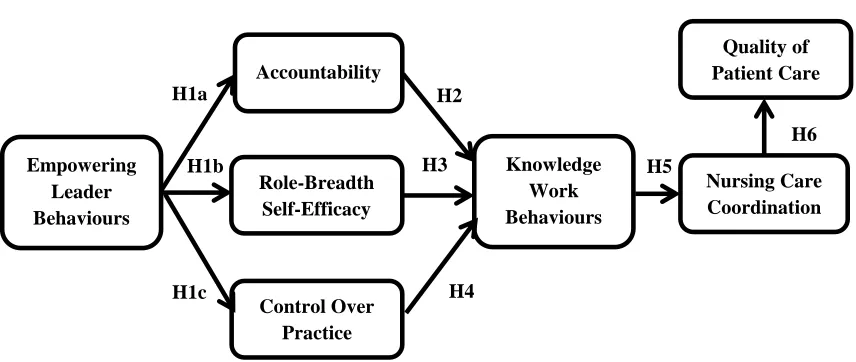
opportunity to do so. Specifically, nurses’ accountability, role-breadth self-efficacy, and
control over nursing practice were hypothesized to have a direct effect on their
knowledge work behaviors. Working within an empowering environment was also
purported to have an effect on nurses’ knowledge work. Such an environment may be
facilitated by nurse managers’ use of empowering leadership practices that are targeted at
nurses’ motivation, ability, and opportunity for engaging in knowledge work within the
clinical setting. Ultimately, nurses’ knowledge work efforts should encourage nurses’
ability to effectively coordinate and deliver quality patient care. The following sections
outline in greater detail the literature and hypothesized relationships between the
variables researched in this study.
Empowering Leadership: An Organizational Predictor of Nurses’ Knowledge Work
Kelloway and Barling (2000) specify several organizational practices that may
promote individual knowledge work within the workplace such as the influential
practices of transformational leaders (Bass, 1990), the creation of autonomous job design
features (Kulick, Oldham & Hackman, 1987), the opportunity for employees to interact
with affinity groups for the purposes of knowledge sharing and development (Van Aken,
Monetta, & Sink, 1994), and the establishment of an organizational climate that
compensates employee knowledge work (Despres & Hiltrop, 1996). While the list of
potential strategies is not limited to those previously outlined, Kelloway and Barling
knowledge work so long as they are aimed at developing opportunities where employees
may master their work abilities, giving employees control over their work practices, and
creating a fair work environment where employees are committed to and are recognized
for fulfilling work goals through their knowledge use. As such, empowering leadership is
one approach to establishing these work conditions for nurses.
The literature on leadership and its related outcomes is vast and spans a variety of
fields including psychology, education, business, and health care. In a systematic review
of research examining the relationship between leadership and nurses’ work performance,
Germain & Cummings (2010) found 6,289 independent titles and abstracts from their
initial search. In this vast field of research, Cummings et al. (2010) note four common
elements in the definitions of leadership. In particular, leadership is a process that entails
influence, occurs within a group setting or context, establishing a common vision for
work goals, and the use of behaviours to influence employees’ goal achievements.
Germain & Cummings (2010) concluded that leadership behaviors focused on displaying
confidence in employees’ abilities, building trusting and supportive staff work
relationships, and facilitating employee access to resources directly impact employees’
motivation to effectively perform at work. These behaviors reflect what Conger and
Kanungo (1988) describe as leader empowering behaviors.
Leaders can play an essential role in the empowerment process, particularly as it
relates to employee work behaviours. Conger and Kanungo (1988) argue that
empowering leadership involves the process of implementing conditions that heighten
“motivation for task accomplishment through the development of a strong sense of
personal-efficacy” (p.474), or removing conditions that foster a sense of powerlessness