Scholarship@Western
Scholarship@Western
Electronic Thesis and Dissertation Repository
8-28-2012 12:00 AM
The Role of the Resiliency Process in Skilled Immigrants' Job
The Role of the Resiliency Process in Skilled Immigrants' Job
Search
Search
Kelly Kisinger
The University of Western Ontario
Supervisor
Dr. Mitch Rothstein
The University of Western Ontario Graduate Program in Psychology
A thesis submitted in partial fulfillment of the requirements for the degree in Master of Science © Kelly Kisinger 2012
Follow this and additional works at: https://ir.lib.uwo.ca/etd
Part of the Industrial and Organizational Psychology Commons, and the Other Psychology Commons
Recommended Citation Recommended Citation
Kisinger, Kelly, "The Role of the Resiliency Process in Skilled Immigrants' Job Search" (2012). Electronic Thesis and Dissertation Repository. 810.
https://ir.lib.uwo.ca/etd/810
This Dissertation/Thesis is brought to you for free and open access by Scholarship@Western. It has been accepted for inclusion in Electronic Thesis and Dissertation Repository by an authorized administrator of
(Spine title: Resiliency and Skilled Immigrant Job Search)
(Thesis format: Monograph)
by
Kelly L. Kisinger
Graduate Program in Psychology
A thesis submitted in partial fulfillment of the requirements for the degree of
Master of Science
The School of Graduate and Postdoctoral Studies The University of Western Ontario
London, Ontario, Canada
ii
THE UNIVERSITY OF WESTERN ONTARIO School of Graduate and Postdoctoral Studies
CERTIFICATE OF EXAMINATION
The thesis by
Kelly Lynne Kisinger
entitled:
The Role of the Resiliency Process in Skilled Immigrants’ Search for Employment
is accepted in partial fulfillment of the requirements for the degree of
Master of Science
_____________________ _______________________________ Date Chair of the Thesis Examination Board Supervisor
______________________________ Dr. Mitchell Rothstein
Supervisory Committee
______________________________ Dr. Richard Goffin
Examiners
______________________________ Dr. Richard Goffin
______________________________ Dr. Victoria Esses
iii
ABSTRACT
For many skilled immigrants settling in Canada, the obtainment of employment is a
difficult and lengthy process. The current study seeks to examine how skilled immigrants
deal with the adversity of the job search by applying a process model of resiliency (King
& Rothstein, 2010) to the job search of skilled immigrants. The study examined the
interplay between individuals’ psychological characteristics, knowledge, and
environment and their self-regulatory processes, and how those processes influenced the
job search individuals performed and subsequent job search outcomes. Using a cross
sectional design, 94 immigrants throughout Canada completed an online survey. The
findings showed individuals’ knowledge and environment moderated how those
individuals responded and regulated their thoughts. As well, individuals’ self-regulatory
processes were related to the job search they performed. The study provided supportive
evidence for the process model of resiliency and its application to the job search of
skilled immigrants.
Keywords: Resilience, Skilled immigrants, Job search, Employment, Job search
iv
ACKNOWLEDGEMENTS
First off, I would like to thank my advisor, Mitch Rothstein for his mentorship
and guidance throughout the production and completion of my thesis. I would also like
to thank Richard Goffin and Victoria Esses for their contributions and feedback as
members of my supervisory committee. Your comments and recommendations were all
greatly appreciated. And lastly, I would like to thank my family. I would like to thank
my parents for their support and encouragement during these last two years, and my son
v
TABLE OF CONTENTS
CERTIFICATION OF EXAMINATION…….………... ii
Abstract……….……….……….. iii iii
Acknowledgments……… iv iv
Table of Contents………. v v
List of Tables………... vii vii
List of Figures………. viii viii
List of Appendices……….. ix ix
Introduction……….. 1 1
Resiliency and Positive Psychology……… 11 11
Issues in Resiliency Research……….. 18 18
The Process Model of Resiliency……… 22 22
Literature Search: Job Search and Resiliency………..……… 24 24
The Current Study……….……….……….. 28 28
Method………. 39 39
Participants and Procedure………... 40 40
Materials………..……… 46 46
Pilot Study……… 50 50
Method of Analysis………. 51 51
Results………. 53 53
Psychometric Properties and Scales……… 53 53
Group Differences……… 54 54
vi
Regression Analyses……… 65 65
Path Analysis of Theorized Model……….. 85 85
Discussion……… 89 89
Examination of Job Search Intensity………... 95 95
Support for the Theoretical Model? ……… 98 98
Implications……….. 100 100
Limitations and Future Research………. 102 102
Conclusions……….. 103 103
References……… 105 105
Appendices………... 116 116
vii
LIST OF TABLES
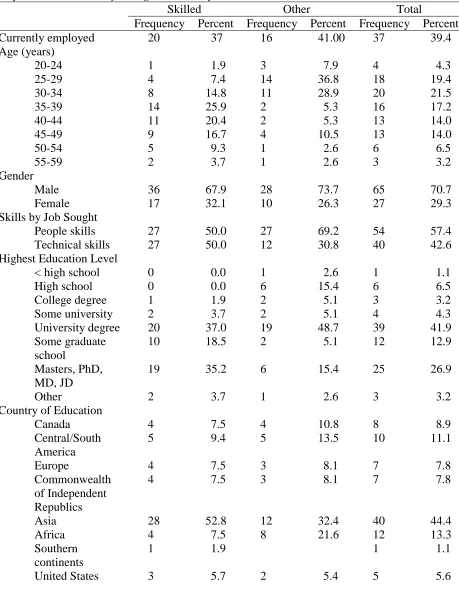
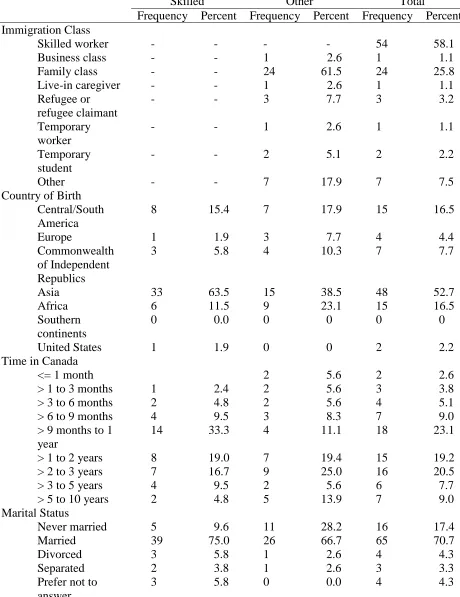
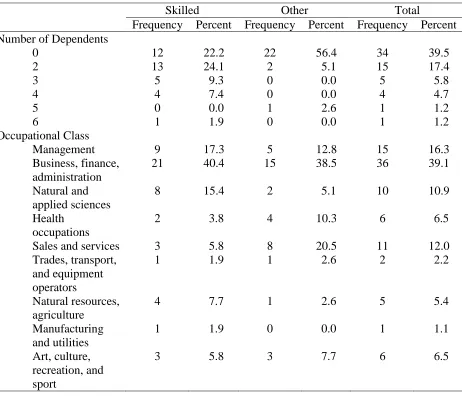
Table 1: Sample characteristics by immigrant classification………..… 43 43
Table 2: Clarification statements added to the Workplace Resilience Inventory..…. 52 52
Table 3: Correlation matrix of study variables………..…. … 56
Table 4: Summary of findings regarding hypothesized relationships……….… 66
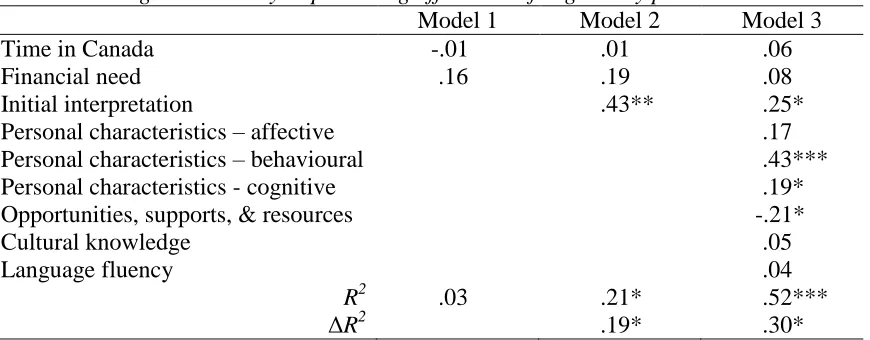
Table 5: Regression analysis predicting affective self-regulatory processes…….… 71 71
Table 6: Regression analysis predicting behavioural self-regulatory processes….… 72 72
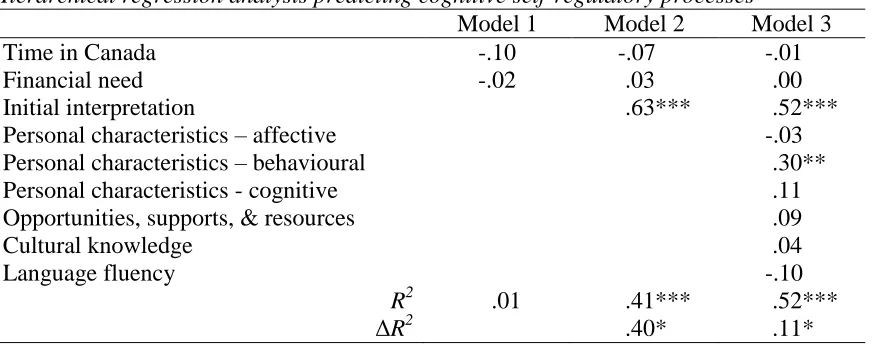
Table 7: Regression analysis predicting cognitive self-regulatory processes…….… 73 73
Table 8: Regression analysis predicting job search self-efficacy………….……….. 76 76
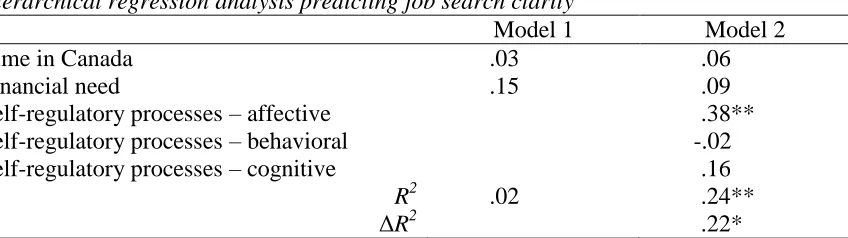
Table 9: Regression analysis predicting job search clarity……….……… 78 78
Table 10: Regression analysis predicting job search satisfaction………... 79 79
Table 11: Regression analysis predicting job search intensity……… 80 80
Table 12: Regression analysis predicting number of job interviews……….. 82 82
Table 13: Regression analysis predicting number of job offers………. 83 83
Table 14: Regression analysis predicting number of employment status…………... 84 84
viii
LIST OF FIGURES
Figure 1: Immigrant job search model……….. 18 9
Figure 2: Resiliency process model……….. 22 13
Figure 3: Integrated resiliency/job search model……….. 39 30
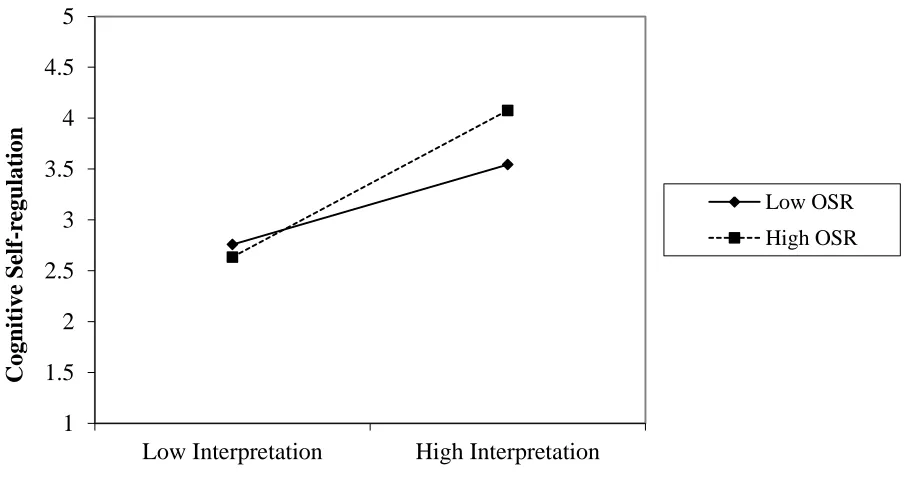
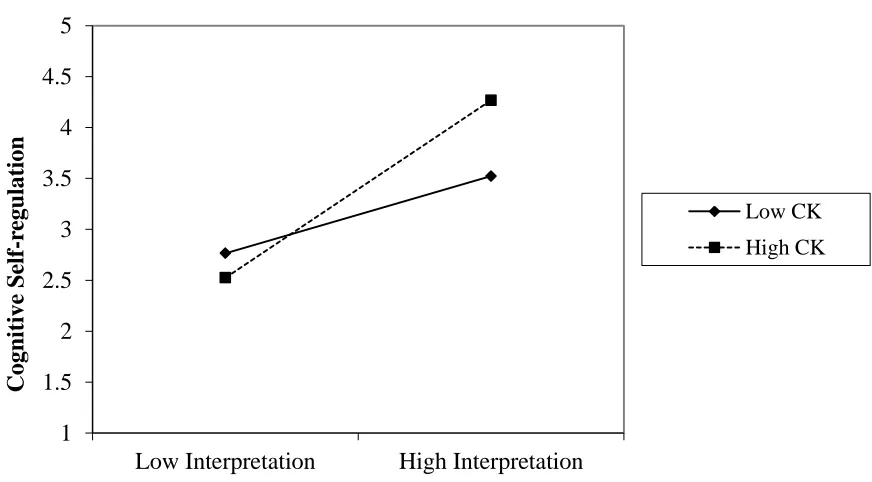
Figure 4: Moderation of the relationship between interpretations of the job search and cognitive self-regulatory processes by opportunities, supports, and
resources……….
60
Figure 5: Moderation of the relationship between interpretations of the job search and cognitive self-regulatory processes by language fluency………..…….
61
Figure 6: Moderation of the relationship between interpretations of the job search and cognitive self-regulatory processes by cultural knowledge………
ix
LIST OF APPENDICES
Appendix A: Ethics Approval Form……… 116
Appendix B: Ethics Approval Form………. 117
Appendix C: Priming Exercise………. 118
Appendix D: Workplace Resilience Inventory………. 119
Appendix E: Language Fluency……… 123
Appendix F: Cultural Knowledge……….. 124
Appendix G: Job Search Self-efficacy……….. 126
Appendix H: Job Search Clarity………. 127
Appendix I: Job Search Satisfaction………..……… 128
Appendix J: Job Search Intensity………..………. 129
Appendix K: Job Search Outcomes……… 130
Appendix L: Current Job Search………. 131
Appendix M: Demographics………... 133
The Role of the Resiliency Process in Skilled Immigrants’ Search for
Employment
At some point during their lives, individuals may experience an event with the
potential to cause significant disruption in their daily functioning. While some people are
able to persevere through such events and ultimately reach or exceed previous levels of
functioning, others fall to the wayside, unable to restore their previous abilities.
Resilience refers to the achievement of a positive outcome despite serious threats to one's
well-being or development (Masten, 2001). The personal and environmental
characteristics, as well as the self-regulatory processes which contribute to a successful
outcome, are of particular interest to resilience research (King & Rothstein, 2010). One
area in which resilience research can be applied is the job search process of skilled
immigrants. Because skilled immigrants face a variety of barriers to employment they
often take long periods of time to obtain employment (Chan, 2001, as cited by Mace,
Atkins, Fletcher, & Carr, 2005), are underemployed (Reitz, 1998), and as a result, are at a
higher risk of developing poor mental healththan native born job seekers (i.e., Dooley,
Catalano, & Wilson, 1994). Previous job search literature has identified job search
behaviours related to positive employment outcomes (Guerrero & Rothstein, 2011), but
to this author's knowledge, no research has examined the role of resilience in individual
differences in job search outcomes of immigrants.This poses the question, to what
degree is resilience associated with the job search outcomes of skilled immigrants. The
proposed research seeks to link resilience research to the job search of skilled immigrants
as a means to identifying and understanding the personal and environmental
Despite possessing the required education and credentials, many skilled
immigrant workers have difficulty finding work and their employment outcomes are less
positive than those of Canadian born workers, (Reitz, 1998). Desjardins and Cornelson
(2011) reported that 40% of immigrants who enter Canada possess (at minimum) a
Bachelor's degree compared to the 17% of Canadian born individuals, thereby exceeding
the education level of Canadian born workers. As well, in 2010, unemployment among
Canadian born citizens holding a university degree was 3.5% while landed immigrants
with a university degree residing in Canada for five years or less, had an unemployment
rate of 14.4% (Canada Immigrant Job Issues, 2011).
For skilled immigrants who do obtain employment, differences in income exist
between themselves and native born workers. Using census data from Statistics Canada
(2006), Desjardins and Cornelson (2011) demonstrated that immigrants on average
earned $45 000 annually, which is approximately 2% below the average income of
Canadian born workers. Further, for persons who immigrated within the last five years,
their average income was $28 700 per year, far below the average income of Canadian
born workers. Such differences are due in part to the underutilization of immigrants'
skills and abilities, a situation that has been termed underemployment (Reitz, 1998), and
wage gaps between native born workers and skilled immigrants holding equivalent
employment positions (Desjardins & Cornelson, 2011).
But despite the grim employment outlook for many immigrants, foreign skilled
workers continue to immigrate to Canada as many immigrants are unaware of the
negatively trending employment outcomes prior to their arrival (Desjardins & Cornelson,
often be persuasive factors in individuals' decisions to immigrate to a new host country
(Negy, Schwartz, & Reig-Ferrer, 2009). One contributor to skilled immigrants’
expectations of prosperous employment is the application process they must complete
prior to entering Canada as a skilled worker or professional. As defined by Citizen and
Immigration Canada, skilled workers are “people who are selected as permanent residents
based on their ability to become economically established in Canada” (2012). To be
eligible to apply for skilled immigrant status, individuals must have a valid offer of
employment, or be enrolled in or graduated within the last 12 months from a PhD
program in Canada. After meeting the criteria to apply, applicants are evaluated based on
their education, language abilities, work experience, age, whether they have arranged
employment in Canada, and their adaptability. But as the expectations of positive
employment outcomes fail to materialize, negative consequences for individual job
seekers, organizations, and the host country result.
For individuals seeking work, unemployment and underemployment have been
linked to detrimental effects on mental and physical well-being (Dooley & Catalano,
1980; Dooley, Prause, & Ham-Rowbottom, 2000; Kasl & Cobb, 1970; Vinokur &
Caplan, 1987), as well as long term career success (Reitman & Schneer, 2005). In a
meta-analysis by McKee-Ryan, Song, Wanberg, and Kinicki (2005), findings
demonstrated that persons who transitioned from being employed to unemployed
demonstrated declines in their overall psychological and physical well-being.
Specifically, individuals reported lower life satisfaction and subjective physical
well-being, and scored lower on measures of mental health. For skilled immigrants who have
experience they obtained outside the host country, the lack of acknowledgment of their
accomplishments may be even more disheartening and they may experience a loss of
identity (Lee & Westwood, 1996).
The relationship between mental health and employment status also appeared to
be moderated by the length of time an individual partook in the job search process
(McKee-Ryan et al., 2005). As the length of time spent searching for employment
increases, so does job seekers' exposure to rejection (Kursmark, 2007, as cited by
Fleig-Palmer, Luthans, & Mandernach, 2009). The types of rejection job seekers are exposed
to include a lack of employer interest in a job seeker's resume or job application, as well
as the absence of a job offer following an interview. Financial strain also increases in
accordance to the length of time a person is without work, thereby increasing stress
which is linked to negative effects on mental and physical well-being (Wanberg,
Kammeyer-Mueller, & Shi, 2002). Because the focus of resilience research is to increase
our understanding of the mechanisms that promote individuals’ success in overcoming
events threatening their well-being, examining resilience to determine how individuals
overcome the accumulating negative experiences that threaten individual well-being
during job search would be beneficial.
Outside the realm of mental health risks, individuals migrating to a new country
experience disruption in their careers which can detrimentally affect career earnings long
term (Reitman & Schneer, 2005). In the longitudinal study by Reitman & Schneer,
individuals who experienced interruptions in their careers earned less than persons whose
careers were continuous, and the gap in earnings existed for many years following the
employment opportunities can have long term effects on the career earnings of
immigrants following relocation.
Because the immigration of skilled workers brings diverse and desired skills into
organizations and Canadian industries, the underutilization of their skills due to
underemployment and unemployment is detrimental to both organizations and the
Canadian economy (RBC Financial Group, 2005). By hiring skilled immigrants,
organizations are able to fully utilize the untapped potential available in the workforce,
gain a diverse set of skills in their workforce, fill vacant job positions, and thereby
contribute to the economic growth of the company. Accordingly, host countries try to
attract skilled workers to supplement labour shortages, particularly with the large number
of workers expected to retire in upcoming years and birth rates of native workers being
low. A highly skilled workforce strengthens Canada's economy (Boyd & Thomas, 2002),
but when skilled immigrants remain unemployed for long periods of time, their skills
remain unused and they are unable to contribute to the country's economic growth or tax
revenues. On the contrary, they end up relying on social assistance programs until
employment is obtained and financial stability is achieved (Faelli & Carless, 1999).
Because of the numerous barriers to employment skilled immigrants must
overcome, they are at even greater risk of poor employment outcomes than unemployed
native Canadians. Prior research has identified a variety of factors contributing to poor
employment outcomes among skilled immigrants. Some of the major obstacles skilled
immigrants face include poor language fluency in official languages, a lack of Canadian
work experience, and unrecognized academic credentials (Aycan & Berry, 1996).
born skilled workers due to improved education of Canadian born workers (Reitz, 2001).
In an examination of the effect of institutional structures on employment in Canada, Reitz
proposed that the value employers place on immigrant skills has depreciated. In the
context of a “knowledge economy” (p. 580), a term referring to the increased expansion
and importance of education in today's industries, the increase in native born skilled
workers has contributed to the economic disparity between Canadian born and non-native
born workers.
When competing with native born applicants with similar educational
backgrounds, immigrant job applicants are at a disadvantage due to discriminatory hiring
practices (Boyd & Thomas, 2002; Hakak, Holzinger, & Zikic, 2010; Reitz, 2001). In
Hakak et al.'s (2010) study, Latin American immigrants who graduated from a MBA
program in Canada were interviewed in regard to their job search experiences and the
barriers they faced while searching for employment. Despite receiving their education
from a Canadian university, interviewees reported experiencing forms of discrimination
such as not being hired because they lacked Canadian work experience or because they
spoke with a non-Canadian accent. As mentioned by Hakak et al., job performance for
certain jobs requires Canadian work experience, but this is not the case for all
employment positions (Esses, Dietz, & Bhardwaj, 2006).
According to Guerrero and Rothstein (2011), skilled immigrants can improve on
certain factors to enhance their job search skills and contribute to more positive
employment outcomes. Often, the activities required to obtain employment in the host
country differ from those in the country of origin. When competing with persons with
common to the host country are more likely to obtain employment (Hakak et al., 2010).
In the study by Hakak et al., Latin American job seekers expressed concern regarding
their lack of social networks and inexperience with the task of social networking, both
being important behaviours of the job search process in Canada and uncommon in their
native homeland.
Within the job search literature, the behaviours job seekers engage in have
consistently been identified as important predictors of employment outcomes (Kanfer,
Wanberg, & Kantrowitz, 2001). In a meta-analysis by Kanfer et al., the researchers
developed a job search model based on a “motivational, self-regulatory conceptualization
of job search” (p. 837). Their model conceptualizes job search as a carefully considered
plan of action carried through with purposeful, dynamic, and self-regulated patterns of
behaviour with the intent to achieve a previously identified employment goal.
In their meta-analysis, Kanfer et al. (2001) viewed job search behaviour as a
function of job search intensity, or the amount of activity directed toward the job search a
person partakes in, and job search effort, measured as the amount of effort a person feels
they are expending in the job search process. The antecedent variables examined for
their influence on job search behaviour and employment outcome included personal
characteristics of the job seeker such as personality (eg. Big Five personality factors),
generalized expectations of the outcome (eg. locus of control, optimism), and
self-evaluation (eg. self-esteem, job search self-efficacy). A person's motivation to find
employment was examined by looking at job seeker's financial need and commitment to
employment. As well, social support and demographics were included for their
What Kanfer et al. (2001) found was that a variety of antecedent variables do
influence a person's job search behaviours. All of the antecedent variables included in
the study except optimism, had a significant relationship with job search behaviour.
However, specific antecedent variables showed distinctly larger relationships with job
search behaviours than others. As well, job search behaviours mediated the relationship
between antecedents and employment outcomes, as signified by smaller relationships
found between personality, motivation, and demographic antecedents and employment
outcomes. These findings also suggest a tendency for employers to hire workers high in
certain desirable characteristics such as conscientiousness compared to those high in less
desirable traits such as neuroticism. The results of Kanfer et al.'s meta-analysis also
provided support for the predictive capabilities of job seeking behaviours on employment
outcomes, as job seekers who engaged in greater job search behaviours were more likely
to obtain employment.
The importance of an effective job search, within the context of a host country
was further supported by Guerrero and Rothstein (2011). Adapting the job search model
developed by Kanfer et al. (2001), Guerrero and Rothstein examined the antecedents and
job search process specific to skilled immigrants. The purpose of Guerrero and
Rothstein's study was to identify factors immigrants could improve upon in order to
improve employment outcomes. As shown in Figure 1, the modifiable factors Guerrero
and Rothstein examined were language fluency, cultural knowledge, and social support.
Cultural knowledge and language fluency were both related to both job seekers' clarity of
their job search goals and confidence in their ability to perform job seeking tasks
relationship may be due to an improved understanding of the job market as well as
feelings of mastery through enriched social interactions. However, contrary to the
findings of Hakak et al. (2010), social support was not a key variable in job seekers’
employment outcomes. One explanation Guerrero and Rothstein provided for the
discrepancy was that social resources of immigrants are more likely to provide emotional
support rather than provide information that would assist in the job search.
As shown in Figure 1, the job search model developed by Guerrero and Rothstein
(2011) is an unfolding model in which the antecedents influenced job search clarity and
job search self-efficacy, which in turn influenced job search intensity. Job search clarity
is the degree to which one knows the type of employment they would like to obtain and
the steps required to obtain that employment goal (Wanberg, Hough, & Song, 2002). Job
search self-efficacy refers to a job seeker's confidence in his or her ability to perform a
variety of job search activities (Saks, 2006). Job search intensity showed a positive
relationship with the number of job interviews, which led to increased job offers,
followed by employment or underemployment. Guerrero and Rothstein's findings
provided support for the job search model put forth by Kanfer et al. (2001) and provided
insight into factors immigrants can develop through training and education to assist them
in obtaining employment.
Empirical research examining how skilled immigrants deal with the failures and
frustration of the job search has yet to be conducted. The proposed research seeks to
address the gap in empirical research using the model of resiliency developed by King
and Rothstein (2010), which takes into account the factors and processes that may
Resiliency and Positive Psychology
Despite the negative trend in employment outcomes, some skilled immigrants do
secure gainful employment. In attempt to explain these individual differences in
employment outcomes, the domain of positive psychology is considered. Prior to World
War II the purpose of psychology was not only to treat persons with mental illness, but to
identify and nurture people's strengths by finding activities they could excel at, thereby
assisting them in living more productive and fulfilling lives (Seligman &
Csikszentmihalyi, 2000). However, following the Second World War, psychological
research and clinical practice began to predominately focus on the treatment of mental
illness or the treatment of what was wrong with people, which resulted in a much more
negative focus for the discipline (Luthans, 2002). With the work of positive
psychologists, individuals’ strengths, invulnerability, and the achievement of a fulfilling
and prosperous life again reigned important in psychological practice and research.
According to Seligman, Steen, Park and Peterson (2005), research based on
positive psychology “enhance[s] our understanding of how, why, and under what
conditions positive emotions, positive character, and the institutions that enable them
flourish” (p. 410). Such a definition renders its concepts applicable to a number of
contexts in which the goal is to identify the factors that lead to a positive outcome.
Applying positive psychology to an organizational context, Luthans and
colleagues identified employee behaviours thought to improve organizational
effectiveness and the likelihood of an organization’s survival during difficult economic
times (Luthans & Youssef, 2004). According to Luthans (2002), positive organizational
managed” (p. 698) to improve performance in the workplace. These behaviours include
self-efficacy, hope, optimism, and resilience which are encompassed by the higher-order
construct, psychological capital (PsyCap). Under the umbrella of the PsyCap construct,
the synergistic interplay of the four facets result in a greater effect on performance and
attitudes than any of the facets individually (Avey, Avolio, & Luthans, 2011) thereby
increasing organizational effectiveness. Shortcomings of the PsyCap model will be
revisited when measurement and conceptualization issues of resilience are discussed.
Stemming from the domain of positive psychology, the “superordinate construct”
of resiliency (King & Rothstein, 2010, p. 369) seeks to understand the personal and
environmental factors that contribute to a positive outcome despite an adverse situation
(Rutter, 1990). Masten, Best, and Garmezy (1990) defined resilience as “the process of,
capacity for, or outcome of successful adaptation despite challenging or threatening
circumstances” (p. 426). In essence, the term resiliency refers to an overall process that
occurs over time as a person moves from a state of disequilibrium, which is triggered by
an adverse event, to a state of acceptance and personal well-being (King & Rothstein,
2010). A theoretical model of the resiliency process developed by King and Rothstein is
illustrated in Figure 2. Affecting the process are the personal characteristics of the
individual such as his or her tendency to view things in a positive or negative light, and
environmental factors such as being surrounded by a strong support network. As
individuals proceed through the process they self-regulate their emotions, thoughts, and
behaviours. Again, a person’s ability to self-regulate is influenced by that individuals’
factors interact with self-regulatory processes in a synergistic and dynamic manner,
evolving to a state in which the person has accepted and grown from the situation and is
able to continue to develop to his or her full potential. The emphasis on resilience as a
process that develops over time led King and Rothstein (2010) to suggest that in fact the
more appropriate term for this construct is resiliency.
During earlier work on resiliency, researchers placed a special emphasis on
identifying protective characteristics of individuals and their environments that shield
them against threats to their well-being. Protective factors are the personal and
environmental characteristics that ameliorate or modify an individual's response to an
event (Rutter, 1985). In the absence of a stressor, protective factors may have no effect
on an individual's functioning; however, in the face of a threatening event, these
attributes interact to moderate the relationship between the event and an individual's
response.
One of the major areas of research on resiliency that has gained theoretical and
empirical value is the investigation of adaptive outcomes of children whose mothers were
diagnosed with schizophrenia (Masten et al., 1990). Children of mothers with the illness
had an increased risk of developmental problems due to genetic predispositions for
mental illness and poor living conditions consequential of the illness (Masten, 2001). In
accordance with the principles of positive psychology, research in this area sought to
identify the protective factors and mechanisms associated with the positive adaptation of
children living in undesirable situations, and to differentiate those children from the ones
Since this earlier research on resiliency, a myriad of protective factors have been
identified. In Garmezy's (1991) article examining the outcomes of children raised in
impoverished living conditions, he identified cognitive skills, activity level, sociability,
and reflectiveness in new situations as personal characteristics that modified children's
responses to stressors. Coutu (2002) purported that the three characteristics resilient
people possess are an exceptional ability to improvise, a deep belief and strongly held
value that life is meaningful, and a steadfast acceptance of reality. Other named
protective factors include intellectual ability (Masten, Hubbard, Gest, Tellegen, Garmezy,
& Ramirez, 1999), attribution style, ability to appeal to others, ability to internalize social
supports (Hauser, 1999), self-efficacy, self-esteem (Hauser, 1999; Rutter, 1985), above
average problem solving skills (Rutter, 1985), optimism (Coutu, 2002), and hardiness
(Bonano, 2004).
In addition to naming protective characteristics of the person, protective
environmental factors have also been of interest to researchers. One factor that has
received considerable empirical support is the formation of strong, supportive
relationships with others. In the literature examining the developmental outcomes of at
risk children, social support has proven to be a valuable factor in buffering against
unfavourable life trajectories (Rutter, 1990). Children who had strong, secure
relationships with their parents had higher levels of self-esteem and self-efficacy which
protected them from later environmental risks. In Masten et al.'s (1999) study, parenting
resources were related to higher academic achievement, good conduct, and greater social
adult or presence of an institution that fosters positive relationships within the community
(e.g., church) have demonstrated buffering effects against risks (Garmezy, 1991).
A more recent approach to resiliency research has been to examine the
psychological processes that influence positive adaptation (Luthar et al., 2000;
Richardson, 2002). These protective processes highlight the integral passage of time that
occurs between an individual’s initial reaction to an event and the positive outcome that
ensues (Richardson, 2002). Research on psychological processes regards the interplay
between an individual’s personal characteristics and elements of the environment, and
how the interplay unfolds over time as the individual’s increased understanding of the
situation brings about new life trajectories away from threats to his or her well-being
(Rutter, 1990). How people interpret an event can vary depending on their personal
characteristics and environmental factors, and the meaning they assign an event or how
they understand a situation influences how they react.
The view of individuals as active participants in their environment corresponds
with the resurgence of positive psychology. Individuals’ cognitive and affective
responses to experiences play integral roles in resilient outcomes (Rutter, 2000). For
example, a person who has a tendency to remain calm in highly stressful situations may
assign different meaning to an event than a person who becomes very anxious in the
same situation. Therefore the meaning a person assigns to a situation and the process
they undergo to understand the significance of the event may vary greatly between the
two individuals. According to Rutter, effects caused by stress inducing events are in fact
fact, individuals are capable of altering the meaning they assign a situation as a means of
reducing caused stress (Brandstadter & Renner, 1990).
Often times, an individual’s acquirement of meaning stems from a turning point.
Turning points are “emotionally compelling experiences, events, and realizations” (King
et al., 2003, p. 196) to which a person acquires the meaning of a situation and
understanding of his or herself, and the environment. These experiences can take many
forms (i.e., single event versus accumulation of events, gradual gain in understanding
versus a sudden understanding, be controllable versus uncontrollable, personal inner
experience versus an external event), but the key component is the increased
understanding a person gains from the experience.
Following a turning point, the protective processes that ensue to promote a
person’s understanding and lead to new life trajectories are of interest to researchers. In
King et al.’s (2003) qualitative study on the protective processes occurring within
individuals with chronic disabilities, the protective processes that assisted individuals in
altering their life paths were ceasing negative events, developing desirable qualities (i.e.,
perseverance) and developing self-confidence and self-efficacy, and a new understanding
of their situation.
Brandtstadter and Renner (1990) suggested that personal development in the face
of a crisis involves the activation and interplay of two separate strategies: assimilation
and accommodation. Assimilation involves the active adaption of behaviours and
lifestyle to decrease discrepancies between actual and preferred situations.
Accommodation, on the other hand, is the removal of discrepancies through the alteration
and Renner found when people's efforts to assimilate their actual and preferred situations
failed, they would change their preferences and goals to be within the constraints of the
situation.
In Richardson's (2002) metatheory of resilience, resilience is discussed as a
process of personal growth that occurs through adverse situations. At the onset,
disruptions in well-being can lead to feelings of loss, disillusionment, and confusion.
During the resilience process, people are motivated to identify and develop resilient
qualities through self-reflection which are then reintegrated by the individual. As people
proceed through the situation, reintegration of their resilient qualities leads to personal
growth and further development of protective qualities beneficial to them for dealing with
future disruptions.
Issues in ResiliencyResearch
Despite the general consensus that resilience involves an individual's tendency to
function well despite adversity, how resilience is conceptualized, measured, and
interpreted varies across studies (Glantz & Sloboda, 1999; Luthar et al., 2000). As stated
by Masten et al. (1999), in order to study resilience, investigators must specify “the threat
to development, the criteria by which adaptation is judged to be successful, and the
features of the individual and the environment that may help to explain resilient
outcomes” (p. 144).
Following Masten et al.'s (1999) recommendations, the clear presence of a risk
must be indicated. If a threat to an individual's development does not exist, it is difficult
to assert that they are resilient. Such a judgment is usually based on whether a condition
However, effects of adversity can be altered depending on the vulnerability and
protective factors influencing a person's response (Luthar et al., 2000; Rutter, 1990).
Vulnerability factors are the mechanisms that may exacerbate a person's reaction to a
traumatic event, while protective factors are those that ameliorate a person's reaction. A
person's response to threatening circumstances is dependent on the interaction between
the risk factor and protective and vulnerability mechanisms (Rutter, 1990). At the other
end of the process, the criteria by which an outcome is judged as resilient must be defined
(Masten, 2001). Of course, how one defines an adaptive outcome will depend on the
context to which resilience is being applied.
How resilience is conceptualized is a major issue in resilience research. In most
research, resilience is conceptualized as either a trait, state, process, or outcome (Luthar
et al., 2000) and much disagreement exists on which of these is most appropriate. In the
proposed research, the model that is employed conceptualizes resilience as a dynamic
process and therefore the construct is more appropriately called “resiliency”. This takes
into account characteristics of the person and environment, and the self-regulatory
processes exercised by the individual (King & Rothstein, 2010). Shortcomings of other
conceptualizations of resilience are discussed in the following paragraphs.
The view of resilience as a trait depicts the construct as a relatively stable
personal characteristic that endures across situations, such as the big five personality
traits, creativity, and bravery (Luthans, Youssef, & Avolio, 2007). But concluding that
someone overcame a traumatic event because they were resilient is not a useful
conclusion and such a conclusion has numerous shortcomings (Glantz & Sloboda, 1999).
individuals thrive when faced with adversity and the factors that are involved. Viewing
resilience as a trait suggests one’s environment and other personal characteristics would
have little role in overcoming adversities. A second shortcoming is the
multidimensionality of resilience (Luthar et al., 2000). A person entrenched in an
adverse situation may be exhibiting competence in some domains but struggling in
others. Conceptualizing resilience as a single trait does not account for the factors
present or absent that improve proficiency in one area but not others.
As previously discussed, the resilience construct originates in the domain of
positive psychology. One of the fundamental focuses of this branch of psychology is to
identify and build on individuals’ strengths in order to assist them in living highly
productive and satisfying lives. By conceptualizing resilience as a trait, one asserts that
resilience is a relatively stable, unchangeable characteristic across situations, which is a
direct contradiction to the principles from which it stems. Similarly, with one of the
benefits of studying resilience being the identification of protective mechanisms that can
nurture an individual facing difficult challenges, conceptualizing the construct as a trait
does little for the advancement of prevention and intervention strategies (Masten et al.,
1990; Rutter, 1990).
Conceptualizing resilience as a state or state-like variable suggests that, relative to
a trait, it is more fluid across situations and open to development (Luthanset al., 2007).
Similarly to trait-like conceptualizations, resilience as a state limits the information
available regarding how people proceed through adverse circumstances. Contributing
factors such as the personal qualities of the individual, the surrounding environment, and
Although it is seen as being malleable across different situations, information regarding
the factors present in those situations is not gained, limiting the utility of the research in
developing preventative or remedial programs.
In one of the first initiatives to apply resilience to an organizational context,
Luthans and colleagues applied a state-like conceptualization of resilience (Luthans,
2002; Luthans, Vogelgesang, & Lester, 2006; Luthans et al., 2007; Peterson, Luthans,
Avolio, Walumbwa, & Zhang, 2011; Youssef & Luthans, 2007). According to their
model, employee behaviour can be predicted by the synergistic interplay of the “positive
state-like capacities” self-efficacy, hope, optimism and resilience, which make up the
overlying construct of PsyCap. As an early stage of resilience research in an
organizational context, numerous conceptual and measurement problems exist with
Luthans and colleagues' model (McLarnon & Rothstein, in press).
Luthans and colleagues defined resilience as “the capacity to rebound or bounce
back from adversity, conflict, failure, or even positive events, progress, and increased
responsibility” (Peterson et al., 2011, p.430). As discussed by McLarnon and Rothstein
(in press), this definition of resilience has numerous problems. The first issue raised is
the implied unidimensional nature of the construct is not adequate to measure the
contributions of the construct. As discussed with trait conceptualizations, resilient
outcomes are often multidimensional with persons exceling in some areas and struggling
in others. And considering the substantial amount of research identifying and examining
protective factors and processes of resilience, a unidimensional construct is not adequate
A second problem with viewing resilience as a person’s “capacity to rebound or
bounce back from adversity” is the lack of information given about the processes
(affective, behavioural, or cognitive) the individual progresses through in order to
respond to the event. As well, “bouncing back” gives no indication of the timeline
required for an individual to adjust and overcome adversity. Such a term indicates a
reflexive reaction to outside pressures with no effortful coping processes required of the
individual. Bringing to light the work of Bonano (2004) and Neenan (2009), McLarnon
and Rothstein (in press) suggests resilience is not just a “passive reaction or mechanism
of adapting to a stressor” (p. 15), but an active and dynamic process individuals must
progress through to achieve normal functioning. A more integrative view of resilience is
to conceptualize it as a process. When resilience is viewed as a process, resiliency,
multiple perspectives are integrated to establish its predictive value (King & Rothstein,
2010).
A Process Model of Resiliency
One model that adopts the process viewpoint of resiliency is that developed by
King and Rothstein (2010). Designed to investigate resiliency to adverse experiences in
the workplace (e.g., being fired), the model conceptualizes resiliency as an overlying
construct, composed of protective factors and self-regulatory protective processes. In an
elicited response to a highly emotional experience, the various components of the model
function in a successive and repetitive process. As shown in Figure 2, the model
articulates the interplay between personal resiliency-related characteristics of the
individual, resources available in the environment, and protective self-regulatory
influence one's resilient outcome. As individuals proceed through the process they assign
meaning to their experiences and decrease their feelings of unrest, which eventually leads
to previous or superior levels of performance.
King and Rothstein's (2010) model builds on the assumption that a persons' ability
to monitor and control his or her own thoughts, emotions, and behaviours contributes to a
successful outcome. Therefore, personal characteristics associated with a person's normal
tendency to function affectively, behaviourally, and cognitively are examined in the
model. These personal characteristics involve such habits and tendencies as practicing
goal-setting and one's work habits. The other component of the model theorized to
contribute to a person's ability to maintain equilibrium when faced with adverse
situations is the supportive relationships the individual has around them.
Also built into the model is the regulation of protective processes individuals
engage in during difficult time. More specifically, the model examines the means
through which a person regulates his or her emotions, thoughts, and behaviours following
an adverse event. Because the model accounts for the time and effortful processing an
individual must go through, if measured over multiple occasions, these behaviours may
change, becoming more regulated overtime. The model also takes into account the
various combinations of protective factors and processes possessed and utilized by an
individual, accounting for the multidimensionality of the construct.
In the study by McLarnon and Rothstein (in press), empirical evidence provided
support for King and Rothstein's (2010) model of resiliency. The purpose of the study
was to develop and validate the Workplace Resilience Inventory (WRI), a measure of
significant relationships between measures of individuals' initial reactions, personal
characteristics (affective, behavioural, cognitive), opportunities, supports, and resources,
and self-regulatory processes (affective, behavioural, cognitive), and outcomes. The
outcome variables were composed of measures of individual well-being.
These results suggest that a person's personal characteristics and their ability to
moderate their thoughts, behaviours, and emotions played an important role in that
person's ability to recover from traumatizing workplace events. Adding to the support of
the model was the diversity of facets that contributed to the predicted outcomes, and the
empirical support of the relationships found between facets and the outcomes (McLarnon
& Rothstein, in press). In addition to providing support for the King and Rothstein
(2010) model, McLarnon and Rothstein's findings suggest that the WRI facets provide
incremental predictive validity above that of Luthans, et al.’s (2007) PsyCap
questionnaire.
Literature Search: Job Search and Resiliency
Among the plethora of research pertaining to resiliency, few studies apply
resiliency to job search. To this author’s knowledge, no studies have directly applied
resilience to the job search among immigrants. And, of the studies that have applied
resilience to the job search, none have applied a process viewpoint of the construct.
In the theoretical article by Fleig-Palmer, Luthans, and Mandernach (2009), the
researchers outlined an adapted version of Kanfer et al.’s (2001) job search model.
Within the described theoretical model, resilience and job search skills are viewed as risk
activated protective factors that influence unemployed individuals’ search for
unidimensional variable that integrates the influences of a job seeker’s environment as
well as their internal state. Being a state-like variable, resilience was depicted as a
relatively fluid construct that could be developed through training (Luthans, 2002).
In Fleig-Palmer et al.'s (2009) theoretical article, resilience was hypothesized to
influence the job search process in that job seekers high in resilience could engage in
more job search behaviours thereby improving their job search outcomes (e.g. increase
the number of interviews and offers) and likelihood of reemployment. Job search skills
and the interaction of resilience and job search skills were also hypothesized to influence
the job search process and outcomes. Job search skills included skills in networking,
developing a resume, interviewing, and completing application forms. Persons who have
more effective job search skills were expected to perform better during the job search
process, therefore receiving more job offers. As for the interaction between resilience
and job search skills, Fleig-Palmer et al. hypothesized that the interaction would predict
behaviours and outcomes better than either resilience or job search skills alone.
However, despite their efforts to create a job search model that applies individual
differences in resilience in relation to job search outcomes, Fleig-Palmer et al.’s (2009)
model has some limitations. Referring to Masten’s (2001) guidelines for resilience
research, certain requirements, as discussed by the authors, should be met. These
requirements include the specification of the risk individuals face, factors that protect the
individual from threats, the protective processes individuals progress through, and the
desired positive outcome. Of these requirements, Fleig-Palmer et al.’s model
accomplishes the specification of the risk and the outcome. What the model does not
employment outcome. From the model, no knowledge is gained in regards to the
protective factors and mechanisms that promote job search behaviours, outcomes, and
reemployment. When resilience is conceptualized as a state-like or trait-like variable, the
dynamic and effortful adaptation processes that occur in response to difficult situations,
are not considered (McLarnon & Rothstein, in press).
Further, some skeptics of resilience research express doubt over the use of
resilience as a construct, stating concerns that resilience has more value when used to
explain a phenomenon rather than predict an outcome (Glantz & Sloboda, 1999). The
attribution of positive job search outcomes to an individual's personal resiliency
characteristics provides more of an explanation of why they succeeded in the job search.
However, a more integrative view of resilience is to conceptualize it as a process. When
resiliency is viewed as a process, multiple perspectives are integrated to establish
resiliency's predictive value rather than explanatory capacities (King & Rothstein, 2010).
Moorhouse and Caltabiano (2007) examined resilience in the context of
unemployment. Specifically, they were interested in the influence of a person's resilient
qualities and the length of time a person had been seeking employment on depression and
assertiveness in the job search. In the study, resilient qualities were viewed as protective
agents against the risks associated with job search, particularly depression. The
Resilience scale (Wagnild & Young, 1993), made up of 25-items assessing resilient
qualities was used. Increased time in the job search was positively related to depression
for persons low in resilient qualities, but for those high in resilience, length of time did
not increase the risk for depression. As well, the people who scored higher on the
Referring back to Rutter's (1985) definition of protective factors as influences
“that modify, ameliorate, or alter a person's response to some environmental hazard that
predisposes to a maladaptive outcome” (p. 600), Moorhouse and Caltabiano (2007)
viewed resilience as a protective factor that alleviates the risk of depression for persons
searching for employment. Again, the use of resilience as a personal trait inadequately
captures the complexity of the construct. To understand the degree of risk to individuals,
information must be known about the influential factors that support positive outcomes,
indicating both personal characteristics and environmental resources (Glantz & Sloboda,
1999). Glantz and Sloboda suggest the investigation of resilience should involve the
interaction of positive and negative factors, adaptive behaviours, and protective
mechanisms. Moorhouse and Caltabiano's study fails to further the reader's
understanding of the factors and mechanisms that promote positive employment
outcomes.
In an investigation of the relationship between social support and job search
behaviour, Slebarska, Moser, & Gunnesch-Luca (2009) examined the underlying
processes that influenced the relationship. Among these processes was resilience. The
researchers used the measurement scale developed by Schumacher, Leppert,
Gunzelmann, Strauß & Brähler, 2004, as cited bySlebarska, Moser, & Gunnesch-Luca,
2009) to assess participants' resilience. The researchers found resilience to be a partial
mediator of the relationship. However, more relevant to the current discussion is the
view of resilience used in the study. Again resilience was shown as a personal trait of the
contribution the study makes is the identification of social support as a protective factor
in the promotion of job search behaviour.
Despite the utility of resilience as an organizing construct, a review of the
research reinforces the standpoint that it is not a unidimensional construct that lends itself
to a succinct and determinate summary (Rutter, 1990; 2000). Further, resiliency is not a
characteristic or trait of an individual that facilitates the overcoming of difficult events.
Rather, consideration of the function personal and environmental mechanisms play in
response to difficult events provides a more complete account of how individuals
overcome barriers (Rutter, 1990). A person's response to an adverse event reflects the
dynamic interaction of vulnerability and protective mechanism operating over time
(Rutter, 2000). Such interactions provide a catalytic effect which may elicit further risk
or protective mechanisms.
The Current Study
The current study seeks to further the progress of resiliency research in the
context of immigrant job search. Upon arrival in Canada, immigrants face numerous
barriers to employment making them vulnerable in regards to threats to their personal
well-being and future career success. Repeated exposure to barriers during the job
search can lead to experiences of anxiety and mental upset which can be detrimental to
future job search efforts (Vinokur & Schul, 2002). Individual differences in job search
outcomes lead one to suspect that diversity in how individuals understand and respond to
difficult experiences may contribute to the variation in outcomes. Factors such as the
personal characteristics of the individual and the presence of a support network can
this study seeks to examine the personal and environmental factors and psychological
processes that buffer against threats specific to skilled immigrant job search.
In this study, a multidimensional process viewpoint of resiliency was adopted to
account for the interplaying risk and protective mechanisms immigrants encounter when
searching for employment. An adapted version of Guerrero and Rothstein's (2011) model
of the skilled immigrant job search was integrated with an adapted model of resiliency
developed by King and Rothstein (2010). Due to the dynamic and unfolding nature of
both resiliency (e.g. King & Rothstein, 2010; Rutter 1990; 2000) and job search (Kanfer
et al., 2001; Wanberg, Glomb, Song, & Sorenson, 2005), integrating the two models
resulted in a complementary model accounting for individual differences in immigrant
job search. An illustration of the integrated model used for the current study is shown in
Figure 3. In this section, the relationships between factors in the resiliency process with
those factors involved in job search process are discussed.
As shown in Figure 3, integrating King and Rothstein's (2010) model of resiliency
with the immigrant job search model (Guerrero & Rothstein, 2011) incorporates the eight
domains from the resiliency model for which McLarnon and Rothstein (in press) found
empirical support. The domains involve an individual’s response to the struggles
associated with the job search process, the behavioural, affective, and cognitive
characteristics of the individual, opportunities, resources, and supports, and the
behavioural, affective and cognitive self-regulatory processes the individual employs.
The eight facets of resiliency interact to influence the job search variables. In the
proposed study, the facets of resiliency will be examined to identify their possible
search clarity, job search satisfaction, and job search intensity. In turn, the influence of
the job search variables on job search outcomes will be investigated.
Interpretation of the Job Search Experience
Because the study occurred in the context of immigrant job search where the
individual experiences an accumulation of difficult events compared to an organizational
setting, as undertaken by McLarnon and Rothstein (in press), in which the adverse event
was viewed as more acute, the initial response domain of the model was modified.
Rather than investigating the skilled immigrants’ initial reactions, the buildup of events
over time was considered by measuring individuals’ interpretations of the job search
experience.
As shown in Figure 3, the interpretation of the job search process refers to how
individuals understand and react to the barriers and difficulties met during their search for
employment. Included in this domain are individuals' understandings of the mental upset
that occurred as a result of their job search experience. As discussed by Rutter (2000), an
individual's interpretation of a threatening experience is more indicative of the
individual's cognitive and affective processing of the experience than of the experience
itself. How an individual interprets an event may be indicative of a resilient outcome. In
addition, highly emotional reactions to a situation are indicative of a greater amount of
anxiety and mental upset. Highly affective responses and negative interpretations of
events require the utilization of greater self-regulatory processes to restore a person’s
well-being.
Individuals’ engagement in the regulation of their thoughts, emotions, and
behaviours is an integral component of the resiliency process (King & Rothstein, 2010).
Self-regulation allows individuals to restrain negative thoughts and emotions, as well as
behaviours that may be maladaptive to a successful outcome. The measures of
self-regulatory processes developed by McLarnon and Rothstein (in press) were utilized in the
current study. Affective self-regulatory processes refer to the mechanisms individuals use
to regulate negative emotions. These processes are related to a person's awareness and
regulation of emotions, as well as emotion-based decision making. Behavioural
self-regulatory processesrefer to the mechanisms associated with regulating negative and
ineffective behaviours. The processes included in the domain are associated with
planfulness, self-discipline, and impulse control. Cognitive self-regulatory processes
refer to the mechanisms associated with understanding and regulating negative,
self-defeating thoughts. The processes included in the domain include the control of intrusive
negative thoughts, self-reflection, cognitive flexibility, resourcefulness, and the tendency
to view experiences positively.
Hypothesis 1. Individuals' interpretation of the job search experience will be
positively correlated with their (a) affective (b) behavioural and (c) cognitive
self-regulatory processes. More specifically, individuals who experience a greater
amount of disequilibrium in response to the barriers encountered during their job
search will engage in more self-regulatory processes to control their thoughts,
emotions, and behaviours.
Both personal and environmental protective factors were considered for their role
in psychological and job search outcomes. Obtained from King and Rothstein's (2010)
resiliency model, the personal protective factors are affective, behavioural, and cognitive
characteristics of the individual, while opportunities, supports and resources were
incorporated as environmental protective factors. Affective personal characteristics are
the traits of an individual that promote a sense of emotional well-being (McLarnon &
Rothstein, in press). Included are an individual’s awareness of his or her own emotional
state and the person’s ability to maintain a steady emotional state. Behavioural personal
characteristics are the traits of an individual that provide a sense of personal control over
his or her behaviours. The characteristics included are self-efficacy, self-discipline,
competence, and persistence to attain challenging goals. Cognitive personal
characteristics refer to the traits of an individual that provide a sense of coherence and
meaning. Characteristics included are an individual’s tendency to be open-minded and
attentive, actively ascribe meaning to situations, and seek out new learning experiences.
These personal characteristics play a role in how an individual responds and interprets an
adverse situation and the protective processes utilized (i.e., Bonanno, 2004; Coutu, 2002;
Garmezy, 1991; Hauser, 1999; Rutter, 1985).
Hypothesis 2a. Individuals’ personal characteristics will moderate the relationship
between individuals’ interpretations of the job search experience and
self-regulatory processes. For persons possessing personal characteristics related to
one's ability to control his or her thoughts, behaviours, and emotions, the
relationship between individuals' interpretation of the job search experience and
The social supports and resources available to individuals in the environment also
influence their responses to adverse situations. Opportunities, supports, and resources
refer to the close, trusting relationships a person has with family members, significant
others, or members of the community (McLarnon & Rothstein, in press). In McLarnon
and Rothstein's study, a significant positive relationship was shown between
opportunities, supports and resources and cognitive and affective self-regulatory
processes, as well as with individuals’ initial reactions to the adverse circumstances. His
results suggest persons with strong, supportive social networks are better able to control
their negative emotions and self-defeating thoughts. In the literature on the resilience of
children at risk for poor development, the presence of warm family relationships, or a
supportive and caring adult, were found to buffer against risk in stressful life situations
(e.g., Garmezy, 1991; Masten, et al., 1999).
Hypothesis 2b. The opportunities, supports and resources available to individuals
are expected to moderate the relationship between individuals' interpretations of
the job search experience and self-regulatory processes. For persons with more
opportunities, supports, and resources available to them in the environment, the
relationship between individuals' interpretation of the job search experience and
self-regulatory processes will be stronger.
Language Fluency
From Guerrero and Rothstein's (2011) immigrant job search model, language
fluency and cultural knowledge were included as personal protective mechanisms.
Language fluency and cultural knowledge are characteristics specific to skilled
Language fluency refers to a person's ability to communicate both verbally and in writing
in the official language of the country. In regards to resiliency, Coutu (2002) states that
individuals who are better able to form attachments to others increase their likelihood of a
positive outcome. Greater language fluency may improve persons' interactions with
others, thereby assisting them in forging relationships with others in the community,
thereby increasing access to resources. Language fluency has also been found to be an
important contributor to employment outcomes in the job search of skilled immigrants.
Guerrero and Rothstein found immigrants who had a greater ability to express and
understand language were better able to acquire information regarding their job search
and the types of opportunities available.
Hypothesis 2c. Language fluency will moderate the relationship between
individuals' interpretations of the job search experience and self-regulatory
processes. For persons who have greater language fluency, the relationship
between individuals' interpretation of the job search experience and
self-regulatory processes will be stronger.
Cultural Knowledge
An additional factor that may protect against the stressors of the immigrant job
search process is cultural knowledge. Cultural knowledge refers to a person’s knowledge
regarding the differences that exist between cultures and the processes through which
cultural differences influence behavioural differences (Thomas, 2006). Cultural
knowledge may act as a protective factor against job search stressors for two reasons.
First, cultural knowledge may improve a person's understanding of his or her own, as
increased competence and effectiveness during social interactions, and improved
accuracy of the attributions they assign to others. Consequently, a strong knowledge of
the culture one lives in can assist in acquiring knowledge about the job market and job
search, as well as increase self-confidence during social interactions essential to the job
search (Guerrero & Rothstein, 2011). As Guerrero and Rothstein have shown, cultural
knowledge is an asset for immigrants seeking employment.
The second reason that cultural knowledge might act as a protective factor during
the immigrant job search is its association with improved adjustment in individuals
residing in foreign cultural environments (Morris & Robie, 2001). The meta-analysis by
Morris and Robie examining the effects of cross-cultural training on expatriate
adjustment showed a significant positive relationship between expatriate cultural
knowledge and adjustment. Improved adjustment due to cultural knowledge may act as a
protective factor against stressors associated with the job search, as persons with lower
amounts of stress are better able to regulate their thoughts, feelings, and behaviours.
Hypothesis 2d. An individual's cultural knowledge will moderate the relationship
between an individual’s interpretation of the job search experience and
self-regulatory processes. For persons with greater cultural knowledge, the
relationship between individuals' interpretation of the job search experience and
self-regulatory processes will be stronger.
Job Search Variables
Self-regulatory processes are integral to the conception of job search behaviour
(Kanfer et al., 2001). As stated by Kanfer et al., job search behaviours “as part of a