IJISET - International Journal of Innovative Science, Engineering & Technology, Vol. 2 Issue 5, May 2015.
www.ijiset.com
ISSN 2348 – 7968
648
Cloud Models and Splitting Merging Techniques of
Various File Types
Shivam Raj, Puneet Gupta, SanjnaSinha, Priyansh Bendre
Computer Engineering Department MIT College of Engineering, Pune, India
Abstract
Cloud computing holds the potential of eliminating the requirement of setting up high-cost and complex IT infrastructure for solutions and services. It provides flexible and scalable resources [1] for easy access and development through lightweight portable devices. In cloud computing the entire data resides on the networked resources, which can be shared over the internet.[2]
The goal of this paper is twofold.First in this paper we trying to compare various PaaS and IaaSproviders.Secondly this paper further gives details about algorithms which will be used to split and merge different types of files i.e text files, image files and PDF files.
Keywords
Cloud Computing; SaaS; PaaS; IaaS; Microsoft Azure; Rackspace; Amazon Web Services; Bluemix; Google App Engine;
1. Introduction
Cloud in itself is not a very new concept but an evolution. Its been there in the form of internet, with all its standards and protocols providing a set of services to us. The many benefits of cloud includes resource pooling and sharing, scalability, platform independent access to resources. Resource pooling and elasticity is what actually distinguishes cloud.
Based on the method of deploying the cloud , it has been categorized into public , private and hybrid clouds. As the names suggest public cloud infrastructure is available for public use, services of private cloud is developed exclusively for an organisation or personal usage and hybrid cloud (where the world is headed today) combines multiple clouds(private or public) each retaining their unique identities.[3]
Another categorization of cloud computing is based on the different services associated with them. The service types have been classified as Infrastructure as a Service(IaaS), Platform as a Service(PaaS) and Software as a Service(SaaS).
IaaS service providers provision for the resources (virtual machines , virtual storage etc) required by the client while the client is responsible for other aspects of deployment.[4] SaaS service providers provision for a complete operating environment for the clients and the customer’s responsibilities begins and ends with entering and managing data. PaaS provides the clients with operating system, applications, development framework , transaction and control structure in addition to the infrastructural resources(virtual machines etc) whereas the customer is concerned only with deploying and managing its application over the cloud.
Public cloud provides an enormous opportunity in terms of cost to the millions due to pooling of resources, however it suffers on account of security[5]. Private cloud on the other hand contradicts the very concept of cloud that is minimum resources maximum gain. Hybrid clouds are therefore gaining a higher importance. Our idea here is to use hybrid cloud to minimise the security threat of the public cloud. The product hence developed is a hybrid cloud providing services to its customers as PaaS and which is the goal of this paper.
2. PaaS
649
If we take the example of a non PaaS userapplication developer then the developer needs to divide his focus to all the key details starting from buying the hardware equipments to installing them, installing an application appropriate operating system, required middlewares(database, web servers etc) and lastly maintaining them. PaaS reduces this burden by providing all or most of the underlying necessities and allowing the user to work solely on their application. All the user needs to do is log in with the PaaS provider and start using the platform.[6]
IT giants like Google , IBM and Microsoft , building on their experience of software production requirements and to facilitate easier, better and innovative software development process have started providing PaaS platforms. Google’s PaaS service is named App Engine[7], Microsoft provides Azure[8] and IBM’s Blue Mix[9] project is one of the new entrants in the field.[10]
2.1. BENEFITS/ KEY FEATURES OF PaaS[11]
Apart form the basic idea of PaaS which in itself provides a huge advantage to the user, the following points also reflect some of the major advantages of using PaaS:
Since its a cloud model it allows its users to pay as they use[12] eliminating the need of buying software, hardware, middleware etc or buying a license to any product.It also reduces TCO (total cost of ownership) making the project economically very viable.
It provides complete support
throughout the lifecycle of building and deploying web applications and services on the internet.
PaaSIDE(Integrated Development
Environment) can be used to develop , deploy , host and maintaining the application. It also allows and supports concurrent use of the IDE by multiple users.
PaaS proves to be a boon for agile model of software development wherein both iterative and incremental models of software
development are applied at various stages of software development.
PaaS helps a lot in continually changing and upgrading the operating system features as the requirement arises. Additionally it allows multiple development teams spread across the globe to work at the same time.
2.2. ISSUES THAT LIMITS THE GROWTH OF PaaS[13]
Even though PaaS provides a very robust approach to software development ; it suffers from certain issues which has hampered its growth. According to Mike Kavis (VP Cloud Technology Partners) following are the major roadblocks in the development of PaaS:
NO STANDARD DEFINITION OF
PaaS: Each PaaSprovider take their own approach of offering the services, hence creating a huge diversity in the field but no standardization. Thus bringing in confusion and chaos. Moreover there has been an ever blurring line between IaaS and PaaS.
OPERATIONAL FEATURES: PaaS
was developed to offload a developers work keeping public cloud in mind.However with the companies getting reluctant to share their workloads over a public domain the need for hybrid and private cloud was generated. zThus building a PaaS platform over a private cloud environment is a covert way of using IaaS.
LANGUAGE BIASED PLATFORM:
Almost every enterprise works on a Java and .NET platform and even though PaaS promises to support multiple languages, none of them are good in supporting both the languages at the same time. Thus confusing the users in choosing a better PaaS provider suitable to their needs .
2.3. PAAS Comparison
2.3.1. BluemixBluemix as discussed above is
IJISET - International Journal of Innovative Science, Engineering & Technology, Vol. 2 Issue 5, May 2015.
www.ijiset.com
ISSN 2348 – 7968
650
Bluemix offers a range of features andthird-party app integration. Available runtimes on bluemix range from java, node, go, ruby, python, php and many more. Some of the big names using Bluemix are Telerex, Power Ni and Illinois Department Of Human Services.
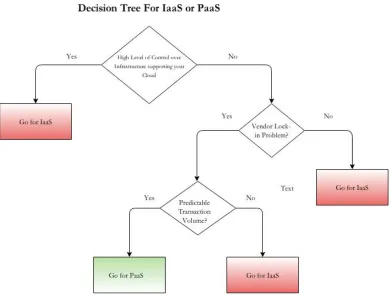
Figure 1. Selection of PaaS
2.3.2. AzureMicrosoft Azure is a strong
contender and a big competitor for Amazon
AWS. It has been extensively adopted in banking sector, government sector, health sector etc. Notable names being Icertis,
Webzen, Telenor, Toyota, Milliman, Bmw Latin America. Azure gives ease and control over the developer by providing many platforms which the developer can work on as per his/her convenience like web app, command line etc. Azure also provides a lot of features like block storage, scaling, Database as Service, Load Balancing, Messaging Service, VPN Access, Disaster Recovery. It also supports a number of runtimes namely java, node, php, python, ruby, & .NET. It supports some native databases Microsoft database, MongoDB, MySQL, and Oracle DB.
According to the DaCapo Benchmark, Azure scores around 834 seconds, which is a tad slower than google app engine and Amazon AWS.
2.3.3. Google App EngineGoogle App engine
is the offering of google in the PaaS sector. It is slowly making a mark on the industrial sector but still has to make a big dent to
dominate any particular sector. It has made available abundant documentation on its official site for the developer’s help, but it lags
behind many cloud service providers in terms of features. It supports java, go, php and python runtimes and is easy to configure in django framework. The biggest advantage of Google App Engine is its complete and thorough documentation (including instructional videos) for collaborating almost all of its services to the developed app thorough API’s.
Private synchr the clo all the compa abund pricing service compa simpli The hi for th Dropb simpli service Figure usage Interne
3. IA
While develo SAAS functio custom install IAAS and st for thee cloud storage ronize their loc oud. They have e levels of comp
anies started pr dant storage spa g. Companies es to reach out anies are in an icity,
igh public inte he service prov box, Box, One ify and meet t
es are data-inte
e 2. Graph show depend
already produc et traffic.
AAS
PAAS deals opment of a S deals w onalities to t mer doesn’t h ation or man everything ( h orage)is hosted e user.
e services allow cal folders with e gained popul puter users afte roviding easy a ace on affordab are trying to s t to a greater au
unending race
erest is also a d viders like Go e Drive etc. the rising dem ensive and thei
s the cost per ho ding on the size
ces a significan
with the depl software on a with providin the customer have to worry naging the so
hardware , sof d by a third pa
ws people to h server in
larity among er the access and ble implify the udience. The towards driving force oogle Drive, to innovate, mands. These ir continuous
our of the VM
nt amount of
loyment and a platform , ng certain
where the y about the oftware , in ftware,server arty provider The ba just has u-go) a the hard Some Infrastr Amazo Azure, Racksp It was Azure added added t of the the faci Linux Azure.[ Some o
sic concept beh s to pay for the and the cloud p dware and the
of the gr ructure as a on Web Serv
Google C pace Cloud.
s Microsoft i as platform-as infrastructure-to increase the apps. Further ility to take the
apps on th [15]
of the Benefits
It helps a development infrastructur the other compete.[16 Many user infrastructur infrastructur organization any location
hind IAAS is t e amount he u provider is resp
virtualization. reatest leader Service are vice (AWS), Compute En initially which s-a-service(Paa as-a-service(Ia e capability and
IaaS provided eir Windows S
he VMs pr
of IAAS are
:-an org:-anizatio t of the re to keep with r organizati 6]
rs can you re at the same re that is being n can be acc n and any devic
651
that the userses( pay-as-ponsible for [14]
rs in the giants like
Windows ngine and
h launched aS), later it aaS). It was d the appeal d users with erver and
rovided by
-
on in the required h the pace of
ions and
the same e time. The
IJISET - International Journal of Innovative Science, Engineering & Technology, Vol. 2 Issue 5, May 2015.
www.ijiset.com
ISSN 2348 – 7968
652
There is no hardware investment ormaintenance required as it is handled by the cloud provider.
3.1 Comparison
COST :- When we are estimating the cost that would be spent on the cloud we have many factors which need to considered like what would be the size of the VM that would be used, what are the number of VM’s we require or what is the cost per hour.
From the graph we can conclude that the size of the VM directly affects the cost per hour. Increasing the size of the VM increases the cost per hour. Initially a small sized VM almosts cost the same for each provider. As the Size of the VM increases the cost per hour increases depending on the service provider.[18]
3.1.1. MICROSOFT AZUREA cloud
platform provided by Microsoft, has been ranked by Gartner as a leading industry in Infrastructure as a Service. Azure supports any kind of language, tool or operating system. A special characteristic of Azure is that it provides you with the best of the datacenter and public cloud. Some of the other great features because of which one could consider using Azure are its scalability feature to match the demand, its very economical and its always up. It offers a 99.95% availability SLA and 24x7 tech support. Having all these characteristics makes Azure very reliable and 57% of the Fortune companies are relying on it. Windows Azure provides a free 30 day trial with a maximum limit of $200 for all its new users. [19] [20]
3.1.2. RACKSPACEThey provide a Fanatical
support meaning the customer need not be alone and he would be guided during every step. [21]. With a strong focus on the customer service, Rackspace provides a variety of features from which the user can choose his operating system which includes both Linux and Windows. It provides a $100 credit on your first month bill.[22]
Rackspace has stopped its services as a IAAS provider and instead started a new service called “ managed cloud “ in which the company ( Rackspace ) would help customers to build and manage their cloud services. [23]
3.1.3. AMAZON CLOUD SERVICES
Amazon AWS or Amazon Web services contains a variety of services which it provides. Some of them are Cluster GPU instances which bring high performance and GPU for the public cloud users and Amazon Elastic Map Reduce (EMR) which is a hosted version of the Hadoop platform.[24]
The history of innovation and the decreased cost prices are very important features. These 2 factors makes it different from the other providers.New users are provided witg 750 hours or 30GB storage space on the cloud.
3.1.4. GOOGLE COMPUTE ENGINE
Google which launched its first IAAS in 2012, is the largest data centre running company which are distributed all around the globe. If your application requires data warehousing, high performance capability or other analytics then this could easily be provided by Google. When it comes to load Balancing or Scaling then GCE has limited scope and still lags behind other providers. [25]
Google charges a minute after a free 10 min of free usage.
4. ALGORITHM
Various types can be split and merged.Some of the files types are Image, PDF and Text. The algorithms to perform these operations are as follows :
IMAGE FILE:
SPLIT
:-1. Enter name of the file to be split.
2. Enter number of rows and columns and calculate number of chunks=row*col.
3. Get image width and height and store in chunk width and chunk height.
4. For all rows. 5. For all columns
Draw image using graphics function and specifying dimensions.
6.Write and print new files(mini images).
MERGE:-1. Enter the files that need to be merged. 2. Set offset to 5.
3. Calculate height and width of the image. 4. Add offset to both (height and width). 5. Using graphics class create graphics. 6. Use getcolor command to paint. 7. Fill rectangle with specified dimensions. 8. Draw image using dimensions.
653
PDF FILE :
SPLIT:-1. Enter file name and split size.
2. Read the input file and calculate the total number of pages.
3. From 1 to total pages do. Read the contents as a substring. Write document usingpdf Copywriter.
For offset 0 to split size add offset to each page.
4. Close the file and writer. 5. Print files with page numbers.
MERGE:-1. Create an array list of all the files that need to be merged and name of the final file. 2. In merge function.Create a new document and open it.Call writer function.
3. For i=1 to number of pages.Import source pdf and add the page to the destination 4. Repeat from step 2 till all files in the list have been covered.
5. Close document and output stream.
TEXT:
SPLIT:-1. Enter the number of parts to be split in (numsplit) and
2. Calculate bytes per split (bytesPerSplit = 3. Calculate remaining bytes (remainingBytes = sourceSize
4. Set maximum buffer size(maxbufsize). 5. Open buffered output stream bw. 6. Run a loop from 1 to numsplit. If bytespersplit>maxbuffsize pdf.
file name.
sourceSize/numSplits) % numSplits) Calculate:-
numReads = bytesPerSplit/maxReadBufferSize;
numRemainingRead = bytesPerSplit % maxReadBufferSize.
For 0 to numreads write from maxbuffsize For remaining write from numRemaining read. Else write from bytespersplit.
Close buffer.
7.Check for any remaining bytes and if present them
write them in output buffer. 8.Close original(main) file.
MERGE:-1. Create an arraylist of string type.
2. Enter the name of the files in bufferedreader(assuming 2).
3. Initialise two strings to null(s1 & s2) 4. Using s1 add contents of first file in list. 5. Using s2 add contents of second file in list. 6. Create a bufferedwriter specifying the name of the final file.
7. Get a word from the list.
8. Using write function write it to the writer buffer and hence the final file.
9. Repeat steps 7 and 8 till list size is complete.
10. Close writer.
Using these algorithms we have constructed codes so as to split the various types of files and store them in cloud and whenever required retrieve the files for the user. These logics seemed most apt for our usage and easy to code. Using these algorithms we have proceeded with our idea.
5. Conclusion
The importance and scope of cloud has increased tremendously in the past few years. It is being used for many new field of application, which were not even considered in the spectrum of cloud computing in the past. Platform as a service (PaaS) is a category of cloud computing services that provides a platform allowing customers to develop, run and manage Web applications without the complexity of building and maintaining the infrastructure typically associated with developing and launching an app. Infrastructure as a Service(IaaS) is a category of cloud computing in which the cloud provider hosts the cloud for the user.
Thus both the type of cloud services have their pros and cons. They can be used according to the user and their requirements. The algorithms mentioned are simple logic based and work according to the file type mentioned by the user.
6. Acknowledgements
The authors are extremely thankful to Mr. Shiv Sutar and MIT College of Engineering, Pune for their invaluable time and suggestions towards the market survey for improvement of this paper.
IJISET - International Journal of Innovative Science, Engineering & Technology, Vol. 2 Issue 5, May 2015.
www.ijiset.com
ISSN 2348 – 7968
654
[1] “Efficient Autoscaling in the Cloud usingPredictive Models for Workload Forecasting”, Nilabja Roy, AbhishekDubey, AniruddhaGokhale, April 2011.
[2] “Introduction to Cloud Computing”, Dialogic, 2010.
[3] http://www.ijarcsse.com/docs/papers/janua ry2012/V2I1073.pdf
[4]http://www.irdindia.co.in/journal/journal_ij acte/pdf/vol3_iss6/3.pdf[iaas
[5] Peter Mell, and Tim Grance, ―The NIST Definition of Cloud Computing,ǁVersion 15, 10- 7-09, http:// www.wheresmyserver.co.nz /storage/media/faq-files/cloud-def-v15.pdf
[6]http://searchcloudcomputing.techtarget.com /definition/Platform-as-a-Service-PaaS
[7] https://cloud.google.com/appengine/docs
[8] http://azure.microsoft.com/en-in/
[9] http://www-01.ibm.com/software/bluemix/
[10]http://blog.pivotal.io/pivotal/p-o-v/10-key-paas-statistics-you-need-to-know
[11]http://www.theresearchpedia.com/research -articles/top-10-benefits-of-paas
[12] http://cloudtweaks.com/2013/06/cloud-costs-savings-model/
[13]http://www.forbes.com/sites/mikekavis/20 14/09/15/top-8-reasons-why-enterprises-are-passing-on-paas/2/
[14] http://www.businessnewsdaily.com/4862-what-is-iaas.html
[15]http://www.zdnet.com/article/microsofts- azure-cloud-team-moves-toward-blurring-the-iaaspaas-lines/
[16]http://www.statetechmagazine.com/article/ 2014/03/5-important-benefits-infrastructure-service
[17]http://www.theresearchpedia.com/research -articles/top-benefits-of-iaas
[18] http://connect.cloudspectator.com/cloud-vendor-benchmark-2015-pdf-download
[19] http://azure.microsoft.com/en-us/overview/what-is-azure/
[20]http://www.tomsitpro.com/articles/-sla-
paas-iaas-high_availability-cloud_computing,2-469.html
[21] http://www.rackspace.com/
[22] http://www.tomsitpro.com/articles/iaas-providers,1-1560.html
[23]http://www.networkworld.com/article/246 1361/iaas/rackspace-bows-out-of-iaas-market.html
[24]http://www.tomsitpro.com/articles/ec2-
elastic_map_reduce-iaas- amazon_machine_images-amazon_s3,2-448-3.html