University of South Carolina
Scholar Commons
Theses and Dissertations
5-8-2015
Spatial Analysis and Correlates of Waterpipe
Tobacco Smoking among College Students in the
United States
Frederick Richard Kates
University of South Carolina - Columbia
Follow this and additional works at:https://scholarcommons.sc.edu/etd Part of theHealth Services Administration Commons
This Open Access Dissertation is brought to you by Scholar Commons. It has been accepted for inclusion in Theses and Dissertations by an authorized administrator of Scholar Commons. For more information, please [email protected].
Recommended Citation
S
PATIALA
NALYSIS ANDC
ORRELATES OFW
ATERPIPET
OBACCOS
MOKING AMONGC
OLLEGES
TUDENTS IN THEU
NITEDS
TATESby
Frederick Richard Kates
Bachelor of Science in Business Administration College of Charleston, 1989
Masters in Business Administration Fayetteville State University, 1999
Submitted in Partial Fulfillment of the Requirements
For the Degree of Doctor of Philosophy in
Health Services Policy and Management
The Norman J. Arnold School of Public Health
University of South Carolina
2015
Accepted by:
Ramzi Salloum, Major Professor
Michael Byrd, Committee Member
Hrishikesh Chakraborty, Committee Member
Guang Zhao, Committee Member
D
EDICATIONI dedicate this dissertation to my family, especially my wife Auman for her
patience and understanding and my parents for instilling the importance of hard work and
A
CKNOWLEDGEMENTSI am truly grateful for the support and encouragement from some outstanding
individuals. Dr. Ramzi Salloum and Dr. Michael Byrd have been valuable mentors. Both
these individuals provided continuous guidance from the moment I met them in the
Health Services Policy and Management Department and throughout the dissertation
process. I would like to thank the two other members of dissertation committee, Dr.
Hrishikesh Chakraborty and Dr. Guang Zhao. They had confidence in me to meet
compressed timeline dates. During the data collection and analysis, colleagues Farah
Islam and Rifat Haider, were a tremendous help. I would like to recognize my
sister-in-law Meredith Avins for proofreading and listening to me talk about my research. Finally,
I would like to recognize two friends, Tom Jenkins and David Mandell, whom took it
upon themselves to be my support network. These two gentlemen periodically would
A
BSTRACTIntroduction: In the United States, young adults have the highest prevalence of
waterpipe tobacco smoking (WTS) according to National Adult Tobacco Surveys
(NATS) published by the Center for Disease Control (CDC). Experimentation of
different tobacco products is highest among 18-24 year olds. Most recently, WTS has
surged in popularity among this demographic group. The rapid diffusion of WTS among
this population has been accelerated by marketing efforts on the Internet. There are
misperceptions that WTS is less harmful than smoking cigarettes and there is a
proliferation of WTS establishments due to tobacco retail exemptions. Presently, WTS
establishments are almost completely unregulated and limited information exists about
the actual number and locations of these businesses in the U.S.
Objectives: To survey WTS establishments in the U.S. and assess their proximity
to this vulnerable population as well as evaluate socio-demographic variables and
specific characteristics related to young adult tobacco users.
Methods: Information about WTS establishments was captured from phone
directories, business, and commercial databases. Business addresses were geocoded in
ArcGIS 10.2. Geographic spatial analyses were run to assess density and proximity of
WTS businesses in relation to colleges. Next, bivariate analyses and logistic regressions
were run on the NATS data to understand the usage characteristic for different tobacco
Results: The first study found 1,690 WTS establishments, which is significantly
higher than any other published study. Of the 1,454 colleges analyzed, 38.1% were
within 3 miles of a WTS establishment. Proximity of WTS establishments to colleges
was associated with full-time student enrollment and higher among private colleges and
those without a smoke-free campus policy. The second study found 18-21 year olds, the
level of education, and the region where the respondents live were associated with
different use patterns for waterpipe and different tobacco products.
Conclusions: These studies could influence health policy initiatives that are
aimed at reducing tobacco retail exemptions, which make it possible for many of these
WTS establishments to open. Different intervention strategies are needed for specific
characteristics and patterns within the 18-24 year old population for varying waterpipe
P
REFACET
ABLE OFC
ONTENTSDEDICATION ... iii
ACKNOWLEDGEMENTS ... iv
ABSTRACT ...v
PREFACE ... vii
LIST OF TABLES ...x
LIST OF FIGURES ... xi
LIST OF SYMBOLS ... xii
LIST OF ABBREVIATIONS ... xiii
CHAPTER 1:SPATIAL ANALYSIS AND CORRELATES OF WATERPIPE TOBACCO SMOKING AMONG COLLEGE STUDENTS IN THE UNITED STATES ...1
CHAPTER 2LITERATURE REVIEW ...8
2.1DESCRIPTION OF WATERPIPE TOBACCO COMPONENTS...8
2.2PROCESS AND HISTORY OF WATERPIPE TOBACCO SMOKING ...11
2.3GLOBAL AND UNITED STATES TREND OF WATERPIPE TOBACCO SMOKING...12
2.4TOXICANTS AND HEALTH EFFECTS OF WATERPIPE TOBACCO SMOKING ...14
2.5PERCEPTIONS AND UPTAKE OF WATERPIPE TOBACCO SMOKING...19
2.6TOBACCO CONTROL POLICIES ...20
2.7WATERPIPE TOBACCO SMOKING PRODUCTS AND WARNING LABELS ...21
2.9THEORETICAL FRAMEWORKS ...24
2.10RESEARCH OBJECTIVES AND CORRESPONDING HYPOTHESES ...27
CHAPTER 3METHODS ...28
3.1FIRST STUDY ...28
3.2SECOND STUDY ...37
CHAPTER 4FIRST STUDY ...43
4.1GEOGRAPHICAL PROXIMITY OF WATERPIPE TOBACCO SMOKING ESTABLISHMENTS TO COLLEGE AND UNIVERSITIES IN THE UNITED STATES ...43
CHAPTER 5SECOND STUDY ...59
5.1DETERMINANTS AND DISTRIBUTION OF YOUNG ADULT WATERPIPE TOBACCO USERS IN THE U.S.:FINDINGS FROM THE NATIONAL ADULT TOBACCO SURVEY ...59
CHAPTER 6CONCLUSION ...73
REFERENCES ...79
APPENDIX A–FIRST STUDY SUPPLEMENTAL INFORMATION ...105
L
IST OFT
ABLESTable 2.1 EPA Air Quality Index ...16
Table 2.2 Predicted Steady-State Blood Carboxyhemoglobin (COHb) Levels ...17
Table 3.1 Exclusion Summary by Database ...29
Table 3.2 Distance from Colleges to the Nearest WTS Establishment ...31
Table 3.3 Distance from the WTS Establishments to Nearest College ...32
Table 3.4 Walking Distance from College to the Nearest WTS Establishment ...33
Table 3.5 Multiple Ring Buffer Analysis ...34
Table 4.1 Distance from Colleges to the Nearest WTS Establishment, by FTE ...52
Table 4.2 Multinomial Logistic Model: Colleges to the Nearest WTS Establishment ...54
Table 5.1 Nationally Weighted Characteristics for 18-24 Year Old Waterpipe Only ...67
Table 5.2 Survey Weighted Logistic Regression Results for Current Waterpipe ...69
L
IST OFF
IGURESFigure 1.1 Frieden’s Health Impact Pyramid ...2
Figure 2.1 Waterpipe Components ...9
Figure 2.2 A Graphical Representation of Porter’s Five Forces Model ...25
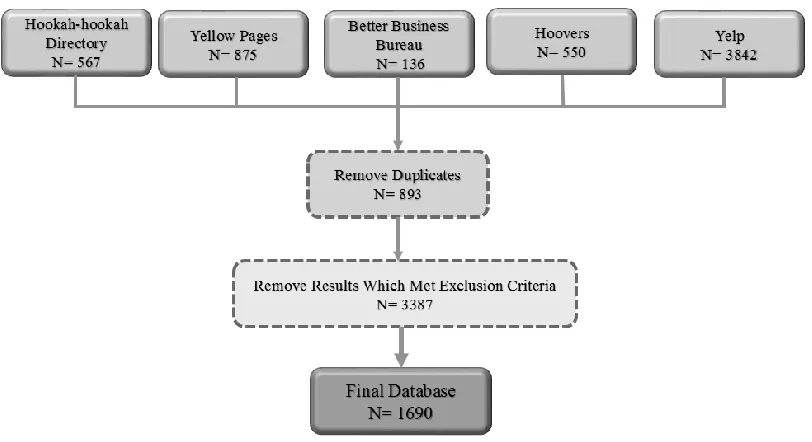
Figure 3.1 WTS Establishment Final Database ...30
Figure 3.2 Overlay Analysis Results ...32
Figure 3.3 Application of Porter’s 5-Forces Model ...42
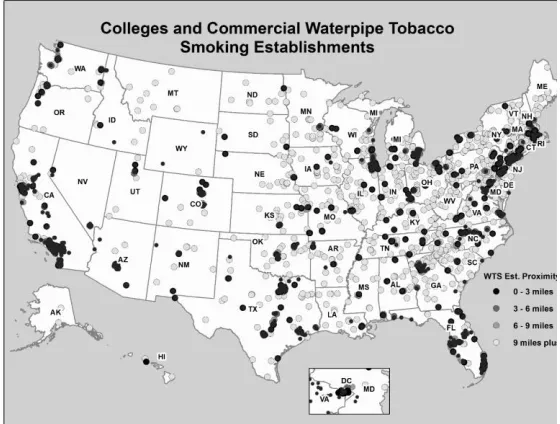
Figure 4.1 Commercial Waterpipe Tobacco Smoking Establishments in the U.S. ...51
Figure 4.2 Distance from Colleges/Universities to the Nearest WTS Establishment, by Full-time Enrollment: (a) All; (b) Enrollment 2,500-4,999; (c) Enrollment ≥ 20,000 ...53
Figure A.1 Proximity Analysis Dorm Capacity Greater Than 250 ...105
Figure A.2 Proximity Analysis Dorm Capacity Greater Than 500 ...106
Figure A.3 Proximity Analysis Dorm Capacity Greater Than 1000 ...106
Figure A.4 Proximity Analysis Dorm Capacity Greater Than 2000 ...107
Figure A.5 Proximity Analysis Dorm Capacity Greater Than 4000 ...107
L
IST OFS
YMBOLSPM2.5 Particle Matter: size is below 2.5 μm
PM10 Particle Matter: is below 10 μm
μm One millionth of a meter.
L
IST OFA
BBREVIATIONSCDC ... Centers for Disease Control and Prevention
CI... Confidence Interval
EMSS ... Exhaled Main-Stream Smoke
EPA ... Environmental Protection Agency
ETS ... Environmental Tobacco Smoke
FTE ... Full-time Enrollment
GED ... Graduate Education Development Certification
GIS ... Geographic Information System
MSS ... Main-Stream Smoke
NATS ... National Adult Tobacco Survey
OR ... Odds Ratio
PAH ... Polycyclic Aromatic Hydrocarbons
SHS ... Second Hand Smoke
SSS ... Side-Stream Smoke
UFP ... Ultra-Fine Particles
WHO ... World Health Organization
C
HAPTER1
I
NTRODUCTIONIn the past decade, waterpipe tobacco smoking has become a popular social
activity for young adults. The use of tobacco is particularly common among college and
university students (Clarkin, Tisch, & Glicksman, 2008; Sutfin et al., 2012). With the
new social context of college life come changes in smoking behaviors with an increase of
weekend smoking among 18-19 year old freshman (Colder et al., 2006). This is referred
to as “social smoking” (Berg et al., 2010). The transition from high school to college is a
period of initiation associated with increased substance use such as alcohol, drugs and
tobacco products (Arnett, 2005; Schane, Glantz, & Ling, 2009).
The emerging WTS trend in the United States runs in stark contrast to attitudes
about cigarette smoking. Since the 1964 Surgeon General's report Smoking and Health,
cigarette smoking rates have been cut in half over the past five decades (CDC, 2007a) and yet
other forms of tobacco smoking, like WTS, are increasing. Today in the United States and in the
world, tobacco remains the greatest preventable cause of death, nearly half the people that use
tobacco will die from a tobacco-related illness. This year nearly five million people worldwide will
die from tobacco use (WHO, 2008). An example of an actual number of deaths in the United
States directly related to tobacco is 435,000 deaths or 18.1% of the population in 2000. These are
preventable deaths caused by behaviors and unnecessary exposures both of which need continuous
high priority interventions in the public health and health care systems (Mokdad, Marks, Stroup,
To be effective these interventions need to have the maximum impact on the
socio-economics determinates of health and less on individuals efforts. Frieden’s health impact pyramid
illustrates that for inventions to have the greatest impact, the focus needs to be on socioeconomic
factors and making health decisions the default behavior. See figure 1.1 Frieden’s Health
Impact Pyramid below.
Figure 1.1 Frieden’s Health Impact Pyramid (Frieden, 2010)
The “default choice” needs to be the healthy option. Examples include fluoridated water
automatically in the public water supply which improves health by reducing tooth decay or the
elimination of lead or asbestos exposures by regulating the sale of products containing these
toxicants thus improving the overall health of the population (Frieden, 2010). This same
theoretical construct can be applied to waterpipe tobacco smoking. Regulations that restrict hours of
campuses can change behaviors. To illustrate, if college students routine behavior is to smoke
waterpipe tobacco at WTS establishments after drinking at bars near the campus and regulations are
put into place restricting WTS establishment hours of operation or locating near a campus then the
default behavior begins to change. These context-changing interventions which reduce the cues to
use tobacco can have some of the greatest potential public health benefits. The mortality estimates
are staggering. By the year 2030, tobacco will kill more than eight million people per year and by
the end of this century, a billion people will have died from tobacco use. The project estimate for
2015 is that globally tobacco will be responsible for 10% of all deaths (Mathers & Loncar,
2006).
Even though tobacco control efforts in the United States have been successful in changing
the perception of cigarette smoking from an acceptable pastime to a serious threat to public health
(DHHS, 2014), somehow WTS has not been affected by the same negative social stigmas
(Eissenberg, Ward, Smith-Simone, & Maziak, 2008; Smith-Simone, Curbow, & Stillman,
2008). Experimentation of waterpipe tobacco smoking starts at a young age. Prevalence
has been identified within middle and high school students (Barnett, Curbow, Weitz,
Johnson, & Smith-Simone, 2009; Martinasek, McDermott, & Martini, 2011; Primack et
al., 2013; Smith-Simone, Maziak, Ward, & Eissenberg, 2008). The smoking of
waterpipe tobacco by adolescents may continue as these students enter college. The
prevalence of WTS is particularly high among college and university students and is
expected to increase (Cobb, Khader, Nasim, & Eissenberg, 2012; Grekin & Ayna, 2012;
Noonan, Kulbok, & Yan, 2011; Primack et al., 2013; Sutfin et al., 2011).
Waterpipe smoking, like cigarettes, delivers nicotine, 82 different toxicants from
charcoal to heat the tobacco (Cavus, Rehber, Ozeke, & Ilkay, 2010; Clarke et al., 2012;
Monzer, Sepetdjian, Saliba, & Shihadeh, 2008; Shihadeh & Saleh, 2005; Ward, 2015).
Epidemiologic studies have identified associations between waterpipe smoking and
increased risks of cancer and other chronic diseases (Akl et al., 2010; Hakim et al., 2011;
Jacob et al., 2013; Maziak et al., 2014; Raad et al., 2011; Shihadeh & Eissenberg, 2011).
Because smoke is filtered through water, many college students believe waterpipe
smoking is less harmful, less addictive, and delivers less nicotine than cigarettes
(Eissenberg et al., 2008; Maziak, 2011; Primack et al., 2013; Smith-Simone, Maziak, et
al., 2008). The large selection of flavors, the social aspect and the excitement of
waterpipe smoking in a bar-like atmosphere at a WTS establishment are also contributing
to the popularity of WTS among young adults.
The first study attempts describes the landscape of the waterpipe establishment
industry and examines the extent to which businesses are locating near college and
universities. Therefore, applying an economist's view of market outcomes that take into
consideration variables such as supply, demand, location and the nature of competition
might be an appropriate approach. The research suggests that WTS establishments are
multiplying in the United States at an alarming rate (Grekin & Ayna, 2008; Lyon, 2008;
Salloum, Osman, Maziak, & Thrasher, 2014; Smith, Edland, et al., 2011). The demand
for WTS is being driven by young adults (Amrock, Gordon, Zelikoff, & Weitzman, 2014;
Heinz et al., 2013). As these young adults create a demand for a social environment to
smoke waterpipe tobacco market forces suggest businesses will open to meet this
demand. Location continues to be fundamental to competition, but business today is far
industry are retail tobacco exemptions and the FDA’s oversight of not including
waterpipe tobacco included in the statutory definition for tobacco products. This has
created an environment with little or no regulations for WTS establishments and
waterpipe tobacco. This ease of entry makes it easier and less expensive for entrepreneurs
to open a WTS establishments near colleges and universities. Some of WTS
establishment owners are opening multiple locations and in some cases, franchising the
business structure. There are scale economics that come into play for multiple locations.
For example, buying product in bulk and the benefits of large scale marketing reduces
costs which can be passed on to the consumer in the form of lower per unit costs These
economies of scale are being promoted by businesses trying to sell waterpipe franchises.
For example, 40 Thieves, a large waterpipe franchiser, promotes the benefits of buying in
bulk directly from the waterpipe manufacturers to reduce product cost and because of
their size offers more marketing avenues (Thieves, 2012). In general the rule of scale
economics in providing supra-normal profits is generally short-term and diminishes as
the number of businesses in an industry increases (Nahata & Olson, 1989). The
theoretical concept of “entry barriers” will be expanded upon further in the first study.
The economic concept of entry barriers may help to explain the growth of WTS
establishments as well as provide health policymakers ways to stem this growth.
The second study addresses the young adults 18-24 who are patronizing these
WTS establishments. This age group also has the highest prevalence of tobacco use in
the United States. (Jarrett, Blosnich, Tworek, & Horn, 2012; Ling, Neilands, & Glantz,
2009; Salloum, Thrasher, Kates, & Maziak, 2015). The prevalence of WTS among 18-24
Adult Tobacco Survey (NATS) showed current WTS use was 7.8%. The most recent
unreleased to the general public 2012-2013 NATS shows current WTS use at 18.2% in
preliminary reports from the CDC (Agaku et al., 2014; King, Dube, & Tynan, 2012).
The second study will break down the demographic characteristics of 18-24 year
olds in greater detail for different tobacco products from a weighted national survey. This
type of detailed information is needed by policymakers, health care providers, and
regulators because different intervention strategies are needed for different tobacco
products and different individuals within the 18-24 year old population. For example,
successful anti-marketing campaigns used for cigarettes focusing on brands and large
tobacco companies may not be as effective for controlling waterpipe usage. In a WTS
establishment, the patron usually does not see the label on the tobacco container. All the
patron knows is they ordered a strawberry and lime hookah which is then brought out to
the table ready to smoke.
More information is needed about this age group because these young adults are
in a critical time in their lives as they are transitioning out of the high school environment
into new social environments with different roles and responsibilities (Newcomb &
Bentler, 1987). This transitional period is associated with greater freedom and less social
control resulting in more experimentation of different substances (Arnett, 2005). This
finding was not limited to college and university students. Young adults not going to
college transitioning to living arrangements with friends and roommate also had an
increase in substance use (Bachman, Wadsworth, O’Malley, Johnston, & Schulenberg,
2013; Bingham, Shope, & Tang, 2005). The second study goes beyond typical college
non-college young adults. The theoretical concept that best describes the transition period
for young adults is called the Emerging Adulthood Theory. This theory is defined as the
stage of life from 18-25 years old that begins following high school and ends with the
adoption of adult roles such as marriage, parenthood or the start of a career (Arnett,
2000).
The manuscript style option has been chosen for this dissertation, which will
include two agreed-upon manuscripts. The first three chapters will follow the traditional
dissertation monograph. Chapter one provides an introduction explaining the importance
of the subject matter being examined. Chapter two is a literature review pertinent to the
topic with the stated hypotheses at the end of the chapter. Chapter three outlines the
methods, study design, and data sources. This chapter will explain in detail all methods,
and all data used in carrying out the studies. The results, discussions, and conclusions
will be addressed in the manuscript chapters. Chapter four will include the first
manuscript with related tables and figures. Since the final decision on journal submission
has not been decided, optional tables and figures will be included. Chapter five will
include the second manuscript with related tables and figures. Once a decision is made on
which journal to submit to, tables and figures will be reduced to meet the journal’s
requirements. Chapter six is a conclusion which synthesizes the findings and implications
C
HAPTER2
L
ITERATURER
EVIEW2.1DESCRIPTION OF WATERPIPE TOBACCO COMPONENTS
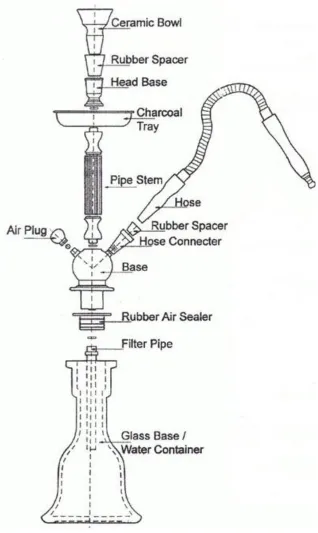
The waterpipe, colloquially referred to as a hookah in the US, is the centerpiece of
waterpipe tobacco smoke (WTS). The waterpipe is made up of four fundamental
components; the bowl, the base, the body and the hose (Maziak, et al., 2004). The bowl,
also referred to as the head, is where the tobacco is loaded. The bowl is generally made
of clay, marble or glass. The body is usually made of metal and has a tube running
through the middle connecting the bowl to the base. The body also has a hose socket to
connect the hose, a coal tray to catch ashes, and a release value to remove stale smoke.
The base or smoke chamber is usually made of colorful glass and is partially filled with
water. The hose, not seen in the figure below, is usually brightly covered and fitted with a
pipe hose socket on one end and a mouthpiece on the other end.
Other accoutrements include charcoal, tongs, grommets, screens or aluminum
foil, wind covers, disposable mouth pieces, steam stones, herbal shisha, and actual
waterpipe tobacco. Charcoal specifically designed for waterpipe smoking is made to burn
cleaner with less smell and taste. The grommets or plastic seals are used to ensure a
better seal at various connection points on the waterpipe. Metal screens or perforated
aluminum is placed on top of the tobacco between the charcoals to protect the tobacco
bowl to prevent the wind from accelerating the burn rate of the charcoal and to prevent
ash and embers from being blown on smokers (Figure 2.1).
A variety of products can be smoked in a waterpipe ranging from some of the new
products entering the WTS market to traditional tobacco. Steam stones are a new product
that absorb liquids and release them in the form of steam when heat is applied. Herbal
shisha is a tobacco-free alternative without the nicotine. It still has substantial quantities
of toxicants associated with waterpipe smoking (Shihadeh et al., 2012). Waterpipe
tobacco comes in wide variety of modern flavors and mixtures. Introduced in the 1990s
by Egyptians, waterpipe tobacco includes a mixture of fruit flavors along with a sweet
aroma when smoked. Many believe it contributed to the spread of WTS globally
(Maziak, et al., 2004; Rastam, Ward, Eissenberg, & Maziak, 2004). This favored tobacco
is usually packaged in 50 grams (1.76 ounces) and 250g (8.82 ounces) cardboard boxes
and in the U.S., jars and tin canisters are popular. Some of the more traditional favors are
“Maassel” which is a mixture of tobacco and molasses and “Ajami,” the traditional form
of unflavored tobacco (Nakkash & Khalil, 2010). The mixture of tobacco and a sweetener
is generally called “shisha” in the United States. The U.S. market is flooded with a
variety of flavors such as apple, cherry, chocolate, coconut, grape, kiwi, mango, orange,
peach, pineapple strawberry, vanilla, and watermelon to name just a few. The larger
manufactures of shisha in the Middle East are Al Fakher, Al Waha, Fumari, and Nakhla
all of which import to the U.S. Some of the manufacturers including Sahara Smoke and
Hookak-Hookah (ALA, 2007). Flavors and the names of flavors are such an important
component of the shisha market in the U.S. that companies are going to court to protect
their interest. A U.S. company receiving attention for recent law suits regarding branding
and trademark infringements is Starbuzz. The Starbuzz company is involved in a lawsuit
2014) and Fusion Tobacco for using the names “Blue Mist”, “White Peach”, and “Sweet
Melon” (Phillips, 2010).
2.2PROCESS AND HISTORY OF WATERPIPE TOBACCO SMOKING
The waterpipe uses water filtration and indirect heat during the smoking process.
The tobacco is placed in the bowl at the top of the waterpipe which is connected to a pipe
which leads to the water filled base. The bowl is then covered by a screen or perforated
aluminum foil. Burning charcoal is placed on top of the metal cover. During the
inhalation process, smoke from the charcoal is pulled through the tobacco into the
water-filled base. The smoke-water-filled air is pulled into the water and bubbles in the base of the
waterpipe. Then, the smoke which has been cooled by the water, is drawn through the
hose and inhaled(Gatrad, Gatrad, & Sheikh, 2007). The inhalation from the smoker at the
end of the hose produces a vacuum which creates bubbles and a rhythmic sound
commonly referred to as “hubble bubble” among waterpipe smokers (Maziak, et al.,
2004). Different cultures use various names to describe a waterpipe. The colloquial term
most often used in the United States is hookah (Salloum et al., 2014) In eastern countries,
the terminology used often depends on a particular region. For example, the term
“shisha” is associated with Egypt and Saudi Arabia. The spelling of it can vary.
Examples include “narghile,” “nargile,” or “arghile” which are used in Israel, Jordan,
Lebanon and Syria to describe waterpipe smoking. Africa and India users tend to use the
terms “hookah,” or “hubble bubble”(Maziak, et al., 2004). Early literature from the 1600s
suggests the Persians probably invented the waterpipe and the Muslims were responsible
2.3GLOBAL AND UNITED STATES TREND OF WATERPIPE TOBACCO SMOKING
The History and Prevalence in Eastern Countries
Waterpipe tobacco smoking is an ancient traditional method of smoking tobacco
products dating back over four centuries and globally there are an estimated 100 million
daily waterpipe tobacco smokers (Wolfram, Chehne, Oguogho, & Sinzinger, 2003). The
tradition is particularly prevalent in the Middle East, Northern Africa and Southeast
Asia.(Shihadeh, Azar, Antonios, & Haddad, 2004). In many parts of the world such as
Turkey, India, Bangladesh, Pakistan, and area of China waterpipe smoking is more
prevalent than cigarette smoking (Koul et al., 2011) In 1980s the Middle East actually
saw a decline in WTS, but in the 1990s a resurgence of popularity happened globally
(Rastam et al., 2004). This is also the time that the U.S. experienced a growth in
popularity which experts believe came with the introduction of “Maassel” is a mixture of
tobacco and molasses which appealed to younger users (Maziak, Ward, et al., 2004).
The minimal information exists about how and when WTS arrived in the U.S. Experts do
agree that in the last two decades the use of waterpipe tobacco has steadily increased in
the U.S. (Jordan & Delnevo, 2010; E. Nuzzo et al., 2013; Palamar, Zhou, Sherman, &
Weitzman, 2014; Primack et al., 2008; Smith, Edland, et al., 2011).
The History of WTS in the United States
Waterpipes or hookahs first started making a presence in the United States
in 1960s at a time when the country was going through tremendous social and cultural
changes. Some historians refer to this as the counter-culture (Bindas & Heineman, 1994;
Sherkat, 1998). Examples can be observed in the media in both television and in movies.
Television was moving away from the 1950s established concept of the American family
depicted as a heterosexual, patriarchal, and churchgoing entity. America’s thinking and
family depictions were changing rapidly in 1960s (Merritt, 2013). In 1964 ABC
introduced a television series The Addams Family. This show challenged the culture
norms of the 1950s and is a satirical inversion of the American family. The show had a
waterpipe prominently displayed in the living room and also subtly hinted of drug use
(Morowitz, 2007). Another prominently displayed hookah can be seen in Lewis Carroll's
1865 book Alice’s Adventure in Wonderland. The Walt Disney Company made a movie
from the book in 1951 which included the hookah scene. In the movie scene, Alice comes
upon a large mushroom with a blue caterpillar sitting on it smoking a hookah. The
caterpillar tells Alice that one side of the mushroom will make her taller and the other
side will make her shorter. Alice breaks off and eats two pieces of the mushroom. One
side makes her shrink smaller than ever, and the other causes her neck to grow high into
the trees. Many media historians have made reference to this scene as depicting the drug
culture; the hookah for smoking illegal drugs such as marijuana and the mushroom as a
psilocybin mushroom (Bonner & Jacobs, 2011; Hibler, 2011; Imholz & Imholz, 2008).
Psilocybin mushrooms which grow naturally in fields and cow pastures in the U.S. and
induce hallucinations when ingested (Schwartz & Smith, 1988). From 1960s to early
1990s, it seems the waterpipe was associated more often with marijuana and hashish than
with tobacco. Today, tobacco is used in waterpipes with greater frequency than
marijuana or hashish (Braun, Glassman, Wohlwend, Whewell, & Reindl, 2012; Sterling
& Mermelstein, 2011). Waterpipe smoking of tobacco in the U.S. started to increase in
the 1990s and into the 2000s with the introduction of flavored tobacco which appeals to
have a long history of WTS, the same toxicants exist as with cigarettes. In addition, WTS
is associated with greater carbon monoxide (CO) and increased smoke exposure
(Eissenberg & Shihadeh, 2009).
2.4TOXICANTS AND HEALTH EFFECTS OF WATERPIPE TOBACCO SMOKING
Understanding the toxicant exposure of tobacco waterpipe smoking is not only
important for educating the waterpipe tobacco smoker, but also the non-smoker who is
exposed to their second-hand smoke. Although there are not a significant number of
large-scale epidemiological studies on waterpipe tobacco smoking, there is significant
evidence suggesting waterpipe tobacco smoking is associated with many of the same
tobacco caused diseases as cigarette smoking. Commonly cited associations include;
chronic lung disease, lung cancer, cardiovascular illness, esophageal cancer, bladder
cancer, low birth weight, periodontal disease, diabetes, stroke, and nicotine dependence
(Akl et al., 2010; Chaouachi, 2009; Eissenberg & Shihadeh, 2009; Hammond, Fong,
Mcneill, Borland, & Cummings, 2006; Knishkowy & Amitai, 2005).
The CDC in conjunction with other prevention organization have included other
disorders that include abdominal aortic aneurysm, acute myeloid leukemia, cataract,
cervical cancer, kidney cancer, pancreatic cancer, pneumonia, and stomach cancer (HHS
& others, 2004). Reiterating another study, WTS, like cigarettes exposes the user to
ultrafine particles absorbed in the lungs such as; carcinogenic polyaromatic hydrocarbons
(PAH), volatile aldehydes, and carbon monoxide (CO) which are associated with a
Charcoal Toxicants and Secondhand Waterpipe Smoke
What differentiates waterpipe tobacco smoking from other types of tobacco
products is the use of charcoal in the smoking process. Charcoal is used to heat the moist
tobacco during a waterpipe smoking process. The charcoal introduces new toxicants as
well as higher levels of toxicants that are normally associated with tobacco consumption
(Eissenberg & Shihadeh, 2009).
The CO emitted from the charcoal creates secondhand waterpipe smoke that can
be a risk for both employees and patrons of WTS establishments(Kumar, Davies,
Weitzman, & Sherman, 2014). WTS establishments are usually stand-alone locations that
have a tobacco exemption or restaurants with an open air patio where patrons can smoke
from a waterpipe. Relatively few studies have been conducted on secondhand waterpipe
smoke in these type of venues. The measurement criteria used in air quality studies of
waterpipe tobacco smoking establishments typically includes fine particle matter (PM2.5)
and carbon monoxide (CO). Other more comprehensive studies evaluate black carbon
(BC), element carbon (EC), organic carbon (OC), and airborne nicotine (Fiala, Morris, &
Pawlak, 2012; Hammond, 2011; Zhou et al., 2014)
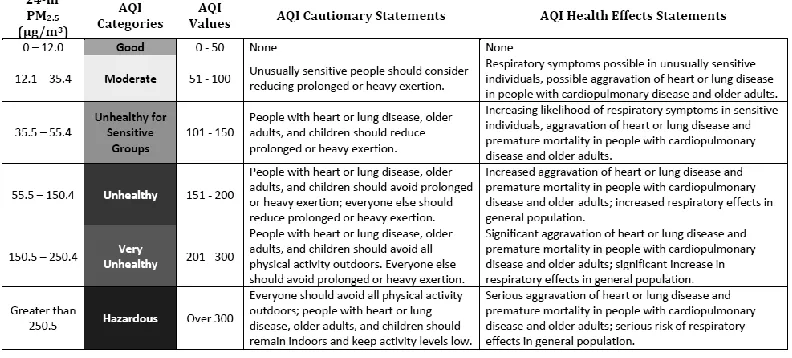
The United States Environmental Protection Agency (EPA) sets the standard for
acceptable levels of fine particle matter PM25. In 2012, the EPA revised the guidelines
for PM2.5 concentrations lowering the upper end of good to 12.0μg/m3 and retaining the
24-hour fine particle standard of 35 μg/m3 noting exposure to particle pollution can cause
premature death and cardiovascular health risks (EPA, 2012) The EPA has established
an air quality index with categories based on PM2.5 levels with cautionary and health
Table 2.1 EPA Air Quality Index
(EPA, 2014)
The studies that collected air samples from waterpipe establishments all found
WTS establishments that exceeded the EPA’s “hazardous” range for fine particulate
matter PM2.5 (Fiala et al., 2012; Torrey et al., 2014; Zhou et al., 2014).
One study in Virginia found PM2.5 concentrations at one particular waterpipe
establishment reaching levels approximately seven times higher than the US EPA-defined
“hazardous” level (>250 μg/m3 daily exposure) which not only exposes the smoker to
extreme PM2.5 risks, but also the employees and nonsmoking patrons (Cobb et al., 2013)
The next toxicant that is routinely monitored during an air quality study is carbon
monoxide (CO). The regulation for CO falls under the United States Department of Labor
in the Occupational Safety and Health Administration (OSHA). Exposure to carbon
monoxide decreases the ability of blood to carry needed oxygen to tissues in the body.
The OSHA standard for carbon monoxide is 50 ppm during an eight hour shift and
When measuring air quality, the measurement is parts per million but when
measuring a smoker in a clinical experiment, the standard measurement is
carboxyhemoglobin (COHb). Carboxyhemoglobin (COHb) is hemoglobin combined with
carbon monoxide. A normal COHb level for non-smokers is <1.5%. For smokers the
range for COHb levels between 3-15% (Pearce & Jones, 1984). The median COHb for
someone who smokes a pack of cigarettes a day is approximately 5.9%. This
concentration is significant enough to cause health cardiovascular issues(Goldsmith &
Landaw, 1968). Carbon monoxide is responsible for a large percentage of the accidental
poisonings each year with many complications. Frequently after a CO poisoning,
individuals may experience immediate death from myocardial impairment, hypotension,
arrhythmias and pulmonary edema (Raub, Mathieu-Nolf, Hampson, & Thom, 2000)
Two of the studies identified WTS establishments with CO readings in the upper 40s for
PPM to over 50 PPM (Torrey et al., 2014; Zhou et al., 2014). Both these readings would
put the COHb well over 6.1 exposing the waterpipe tobacco smokers, employees, or any
nonsmoking patron to high health risks (Table 2.2).
Table 2.2 Predicted Steady-State Blood Carboxyhemoglobin (COHb) Levels
Workers at commercial WTS establishments are beginning to experience the imminent
health hazard that carbon monoxide can present. For example, a worker at a commercial
WTS establishments got severe carbon monoxide poisoning from lighting coals for
customer’s waterpipes. The patient arrived at hospital unconscious and had
electrocardiogram (ECG) consistent with a cardiac ischemia. His COHb level was 33.8%,
is a level that can cause death (Misek & Patte, 2014).
Besides air quality studies, researchers have started doing clinical experimental
studies to investigate biomarkers of nicotine intake and carcinogenic exposure from a
waterpipe tobacco smoking. The term biomarker refers to a medical signs that are
objective indications of the medical state of the observed patient which can be measured
accurately and are reproducible (Strimbu & Tavel, 2010). The World Health
Organization in a joint venture with the international program on chemical safety and the
United Nations environmental program which has defined and established criteria for
biomarkers. The WHO notes biomarkers may be used to assess the exposure, the
absorption amount and effects of chemicals on smokers. Furthermore, biomarkers may be
used to interpret cause- effect relationships in health risk assessments and for monitoring
purposes(WHO, 1993). In another report, the WHO defined the validity of biomarkers in
environmental risk assessments.
Biomarkers are measured in blood, saliva, or urine. The most specific and
sensitive biomarker to quantify exposure to environmental tobacco smoke appears to be
cotinine, the major proximate metabolite of nicotine (Benowitz, 1999). Cotinine is
specific to tobacco whereas carbon monoxide is nonspecific. Though present in tobacco
questioned because the ratio of nicotine to other ETS components can vary in different
spaces due to surfaces, ventilation, sample duration and their distribution patterns (Idle,
1990). The different space variations may have contributed to the high PM2.5
concentrations as in the Virginia air quality WTS establishment study (Cobb et al., 2013)
or the high CO concentrations in the other two studies (Torrey et al., 2014; Zhou et al.,
2014). Because cotinine is so specific in tobacco that even with possible elevated results
from space variation and not from direct individual intake, the biomarker will still capture
nicotine absorption. For this reason, some researchers prefer measuring cotinine
concentrations because they correlate better to the biologic effects of smoking than
self-reporting (Kandel et al., 2006; Perezstable, Benowitz, & Marin, 1995).
Besides evaluating cotinine, the major proximate metabolite of nicotine, the
clinical studies analyzed exposure to benzene, low and high molecular weight polycyclic
aromatic hydrocarbon (PAH), tobacco-specific nitrosamines, 1,3-butadiene, acrolein,
acrylonitrile, propylene oxide, ethylene oxide, and mercapturic acid metabolites of
volatile organic compounds (VOC). Review of the first two studies showed substantial
nicotine concentrations and absorption of significant carcinogens (Helen et al., 2014;
Jacob et al., 2011). The other two studies found similar results along with an uptake of
benzene (Jacob et al., 2013; Kassem et al., 2014). Volatile organic compounds (VOC)
such as Benzene from tobacco smoke are associated with cancer such as leukemia and
cardiovascular, and respiratory illnesses (North et al., 2014; St.Helen et al., 2014).
2.5PERCEPTIONS AND UPTAKE OF WATERPIPE TOBACCO SMOKING
There is a misconception among college students who are current waterpipe
Ababneh, & Al-Delaimy, 2009; Smith-Simone, Maziak, et al., 2008). The perception
that since the smoke is filter through water it is less harmful. The misconception dates
back to the 16th century during the reign of Emperor Akbar in India. Akbar allowed
tobacco smoking, but one of high ranking physicians Abul Fath at that time was not in
agreement. The physician’s solution was to have the smoke pass through water claiming
it would minimize the risks (Chattopadhyay, 1999). However studies have found that the
air passing through the water does not change the contents so the same carcinogens and
other particles in the tobacco smoke pass through the water into the users’ lungs (Kiter,
Uçan, Ceylan, & Kilinç, 2000).
The volume of smoke inhaled by waterpipe tobacco smokers is significantly
higher than cigarettes some studies suggesting up to 10 times higher (Maziak et al., 2009;
Shihadeh, 2003; Shihadeh & Saleh, 2005). The level of nicotine which is the addictive
component of tobacco is still as high as cigarettes even when the smoke is filtered
through water (Eissenberg & Shihadeh, 2009; Neergaard, Singh, Job, & Montgomery,
2007). The influence of nicotine on young adults is a concern because waterpipe tobacco
smokers are more likely to become regular cigarette smokers (Martinasek et al., 2011).
Another study that a 6-month follow-up of waterpipe tobacco smokers found an increase
in the number of cigarettes smoked (Doran, Godfrey, & Myers, 2015).
2.6TOBACCO CONTROL POLICIES
To protect their constituents, city and state legislators are moving forward on the
war on tobacco where one tobacco method is banned and another method takes its place.
States such as California, Connecticut, and New York have introduced bills that would ban
indoor-smoking laws.(Quenqua, 2011) Ending or changing the retail tobacco exemptions can be
an effective way to discourage the proliferation of WTS establishments. For example, the
Oregon Health Authority now has greater authority to regulate WTS establishments due to
a change to the definition of a “smoke shop” in their indoor Clean-air Act. The legislation
cuts into the profits of businesses that were not entirely a stand-alone WTS establishment.
The Oregon Indoor Clean Air Act now reads that “smoke shops” or businesses where
customers can sample tobacco can no longer serve food, drink, or sell lottery tickets. Also,
no one under the age of 18 can enter and the seating capacity is limited to four
patrons(Waldroupe, 2011). This type of information, about best practices to slow the stem
of WTS establishments located near colleges and universities needs to be shared with
legislators, health advocates, and college administrators in other cities and states.
2.7WATERPIPE TOBACCO SMOKING PRODUCTS AND WARNING LABELS
For 50 years, the Surgeon General Office has been warning the US public about
the consequences of smoking but there is still a gap in smokers’ understanding. One
study found less than three-quarters of smokers were aware smoking can cause
strokes(Hammond, Fong, McDonald, Cameron, & Brown, 2003), In another study, the
majority of the participants were unaware smoking could cause impotence.(O’Hegarty,
Pederson, Nelson, Wortley, & Yenokyan, 2007) Warnings are the most common way of
communicating the health risks of smoking to the users and others exposed to their
smoke.(Hammond et al., 2006; O’Hegarty et al., 2006) During a typical WTS smoking
session, the exposure to secondhand smoke compared to a cigarette can amount to
ambient toxicants and carcinogens several times higher.(Eissenberg & Shihadeh, 2009)
Article 11 and 12 which address warning labels, communication, and education about the
hazards of smoking tobacco. In short, Article 11 recommends large pictorial health
warnings and encourages more effective forms of disseminating product ingredients and
emissions.(WHO, 2008) Article 12 provides guidelines to identify key measures needed
to successfully educate, communicate and train people on the health, social, economic,
and environmental consequences of tobacco consumption and exposure to tobacco smoke
(WHO, 2010).
In fact, many of the countries that implemented the Article 11 recommendation
for pictorial warnings on cigarette packages have noticed a greater frequency of smokers
reading the warnings as well as an increased motivation to quit (Hammond, 2011).
Another benefit of using graphical images is it can be used to convey the consequence of
smoking, which is an effective educational strategy for population segments that are
either illiterate or unlikely to comprehend the text-based warnings (Thrasher et al., 2007).
The WTS market is expanding rapidly and the Internet is ideal channel to sell this
novel product. Amazon was rated number nine in 2014 year for the highest retail sales
and was the only e-retailer in the top 10 US retailers (Schulz, 2014). Amazon shows a
significant presence in the WTS market. A search current search as of April 11, 2015
using the term hookah in all the departments shows a strong involvement in the WTS
market with 13,719 products meeting that criteria (Amazon, 2015). With Amazon having
such a large market, do they have an obligation to warn their customers about the
potential hazards of smoking tobacco? In fairness to Amazon, they do not sell any
tobacco products but they do sell products that are used to consume tobacco products
envelope on the legitimacy of their products. For example, a product called Ice Drops
which is a hookah smoking gel sold by Beamer Hookah Products requires a legal
disclaimer. For this particular product, Amazon requires a legal disclaimer to be placed in
the description; “must be 18 years and over to purchase in USA” (Amazon, 2015). A
review of Beamer’s website show, Beamer Ice Drops are small pieces of gel that have
been injected with glycerin and other flavor fluids that when heated with hookah
charcoal, produce steam instead of smoke (Beamer, 2015). Glycerin is one of the
ingredients in e-cigarettes and is causing concerns about its consumption and should
contain a warning label so consumers have a better idea what they are smoking. This
same about concern about knowing what consumers is also being discuss in term of
actual waterpipe tobacco or shisha. Waterpipe tobacco and other accessories such as the
charcoal is presently not regulated by the US Food and Drug Administration so the
content and packaging are not standardization. In most cases patrons of WTS
establishments never see the packaging and if they did there is no regulations in place
to require warning labels (Bower, 2011; Dugas, Tremblay, Low, Cournoyer, &
O’Loughlin, 2010; Nakkash & Khalil, 2010).
SMOKING 2.8 WATERPIPE TOBACCO ESTABLISHMENTS
The terminology often used to describe a business dedicated to providing
waterpipe tobacco smoking is hookah bar, hookah lounge, or hookah café. Limited
information exists about the actual number and the density of these businesses in U.S.
The estimate often cited from the American Lung Association in 2007, reported there was
an estimated 200 to 300 WTS establishments across the U.S. tabulated from Hoovers,
study which in 2010 also merged large WTS community websites, including
hookah-hookah.com, hookahculture.com, hookah-bars.com, and smoking-hookah.com found 724
WTS establishments in the U.S. (Griffiths, Harmon, & Gilly, 2011). Also coming up with
over 700 locations was a study that searched google.com, yahoo.com, and bing.com for
WTS establishments. This study also found 19 hookah bar directories which they added
for a total of 771 WTS establishments (Primack et al., 2012). A state-level study using
Hoovers, Better Business Bureau and an online search using “hookah” and “California”
identified 175 WTS establishments in California, with the majority of them being in Los
Angeles (Rezk-Hanna, Macabasco-OʼConnell, & Woo, 2014). The previous collection
procedures from the four mentioned studies are mixed and missed potential sources to
identified additional locations. Also there is not a recent national count of WTS
establishments to gage the recent growth of the WTS industry. Correcting these
discrepancies is part of the focus of the first study.
2.9 THEORETICAL FRAMEWORKS
The first study analyzed some of the business structures of waterpipe tobacco
smoking establishments such as location selection in relation to their patrons. The entry
barriers are minimal in many locations for this type of business throughout the United
States. Many of these business operate under the exceptions to the state's indoor smoking
ban for cigar bars and tobacco shops or as a private club. A review of the literature shows
the concept of “entry barriers” for starting a business in a particular industry initial was
discussed in industrial organizational publications in the mid-50s. The originator of the
theory, identified three possible barriers which could be the source of supra-competitive
economies (Bain, 1956). Not agreeing with Bain’s concept of scale of economies, George
Stigler’s (1968) alternative definition was that the cost of producing must be borne by the
business entering the industry not the business already in the business (Stigler, 1968).
Continuing in chronological order, in the 1970s economist James Franklin Fisher added
to the definition of entry barriers. He noted that profit plays a significant role in entry, if
firms are earning profits in the short run other firms enter the market thus expanding
supply and bidding down price. The rewards follow the innovator or the first to market
(Fisher, 1979). When discussing barriers to entry, government interventions need to be
considered. Interventions can place limitations on incumbents resulting in regulating of
their behavior or effect the allocation of resources to their competitors (von Weizsacker,
1980). The “ease of entry” or the ability of a new entrant in the market to earn a profit
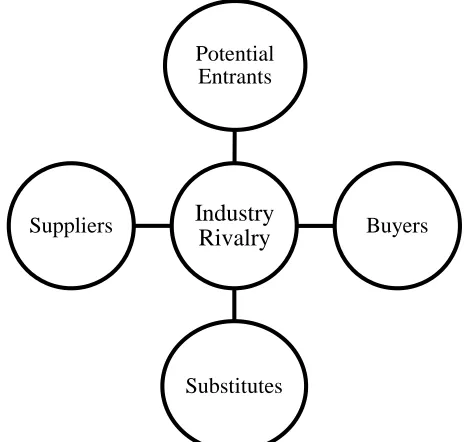
quickly is a disadvantage to current businesses (Porter, 1980). Porter developed a
framework to analysis the level of competition as well as barriers of entry referred to as
the Five Forces model (Figure 2.2).
Figure 2.2 A Graphical Representation of Porter’s Five Forces Model (Porter, 1980) Industry
Rivalry
Potential Entrants
Buyers
The time required to enter the market can be another barrier to entry. Anything
preventing an entrepreneur from instantly entering a market should be considered a
barrier (Carlton & Perloff, 1990)
The second study analyzed the demographic characteristics of 18-24 year olds in
greater detail for different tobacco products from a weighted national survey. Therefore it
is important to understand some of the theoretical constructs associated with the
transition from adolescence to adulthood. Previous research has shown the process of
maturity is complex, incorporating physical, social, emotional and behavioral
components (Galambos, Kolaric, Sears, & Maggs, 1999; Tilton-Weaver, Vitunski, &
Galambos, 2001). The 18-24 year old segment of the population includes 6 years, an 18
year old can be very different than 24 year old and change can happen quickly.
Psychologists and sociologists often refer to these changes of maturity towards adulthood
as social demographic transitions (Hogan & Astone, 1986). Data from a 1,500 participant
longitudinal study revealed significant demographic transitions from age 19 to 21 where
the subjects showed a greater propensity to take on individual responsibilities. This same
study showed positive changes toward adulthood with labor market position (Benson &
Furstenberg, 2003). This type of information influences the variable selection in the
study, for example employment status was included in the model. This transitional period
is associated also more freedom and less social control which can result greater
experimentation and higher rates of substances use (Arnett, 2005). The transition to
adulthood in industrialized countries is longer than in developing countries. Young
Americans, even minority cultures with traditional ethnic backgrounds, experience this
Latinos, and Asian Americans. The ethnic minority groups tend to have a greater
obligation toward others described as a bicultural conception derived from the values of
their ethnic culture which hastens the transition (Arnett, 2003). The overarching theory
that describe this stage of life for 18-25 years old that usually ends with the adoption of
adult roles such as marriage, parenthood or the start of a career is the Emerging Adult
Theory (Arnett, 2000)
2.10 RESEARCH OBJECTIVES AND CORRESPONDING HYPOTHESES
Aim1: The first study attempts to describe the landscape of the waterpipe establishment
industry and to examine the extent to which businesses are locating near college and
universities.
H1: WTS establishments are locating near large colleges and universities.
Aim 2: The second study will analyze the demographic characteristics of 18-24 year olds
in greater detail for different tobacco products from a national weighted survey.
H2: College students have a greater prevalence of waterpipe tobacco usage than
non-college respondents.
H3: For the 18-24 year old segment of the population, age and the level of education are
C
HAPTER3
M
ETHODS3.1FIRST STUDY METHODS
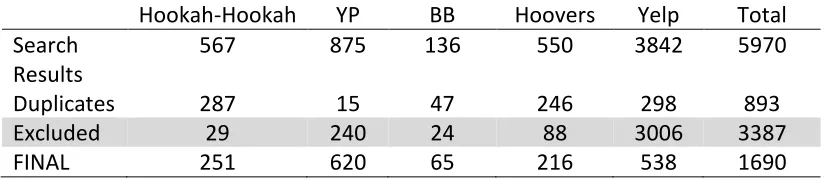
A database of U.S.-based waterpipe establishments and their street addresses was
compiled during August/September 2014 using the following Internet directories: Yelp
(N=3,842; www.yelp.com), Yellow Pages (N=875; www.yellowpages.com),
Hookah-Hookah (N=567; www.hookahhookah.com), Hoovers (N=550; www.hoovers.com), and
Better Business Bureau(N=136; www.bbb.org). Yelp, Hoovers, and BBB directories were
searched using the keyword“hookah". The term “hookah bar” was used to search the
Yellow Pages. This study builds on previous studies using Hoovers, BBB, and
Hookah-Hookah directories (ALA, 2007; Griffiths et al., 2011) by including additional sources:
Yellow Pages and Yelp. Data from Yelp provided additional locations serving waterpipe
beyond the businesses using the term “hookah” in their business description Yelp's search
algorithm captured all references of the word hookah from a variety of businesses; many
with images of the facility post from the customer reviews. The Yelp reviews revealed
bars, restaurants, coffee shops and other retail facilities were offering waterpipe smoking
as a segmentof their business, but are not using the terms, hookah, hookah bar or hookah
lounge in the description of their business, therefore, were not captured in the other
For establishments that did not have the terms “hookah lounge”, “hookah bar” or
“hookah café” in the name, we called to verify whether waterpipe smoking was allowed
on premises. If there was a designated area either inside or an outdoor patio area to
facilitate the smoking of waterpipe tobacco at the business the business was then
categorized as a WTS establishment.
The majority of the businesses excluded from the original list were “vape shops."
Vape shops are specialty shops that exclusively sell electronic nicotine delivery systems
(ENDS). A recent study on the expanding ENDS product market estimated as of 2014
there were over 3,500 ENDS specialty shops in the USA (Lee & Kim, 2014). These
findings are consistent with the breakdown from the businesses were excluded from the
final list, 3,387 total (Table 3.1).
Table 3.1 Exclusion Summary by Database
Hookah-Hookah YP BB Hoovers Yelp Total
Search Results
567 875 136 550 3842 5970
Duplicates 287 15 47 246 298 893
Excluded 29 240 24 88 3006 3387
FINAL 251 620 65 216 538 1690
The other businesses that were excluded were retailers that sold waterpipe
tobacco products or an ENDS product called an e-hookah and did not have a smoking
area. The e-hookah is usually much larger than an e-cigarette and has a larger battery and
refillable cartridge. There are concerns about the e-hookah because it can be easily
modified for different content delivery (Grana, Benowitz, & Glantz, 2013). Many
convenience stores and gas stations were selling e-hookahs and were removed from the
used for the consumption of cannabis, (Pillay & Kelly, 2010) were examined. The Yelp
algorithm captured locations that used the term hookah in the description of their
products. After calling to verify if these businesses offered waterpipe tobacco smoking,
several of these businesses were found to have a location on site to try different waterpipe
tobacco and to test different waterpipes. The Hookah-Hookah directory was limited to
waterpipe lounges and further refining was not required. Duplicates and those locations
not serving hookah on premises were removed leaving a total of 1690 WTS
establishments (Figure 3.1).
Figure 3.1 WTS Establishment Final Database
Our list of educational institutions included all accredited colleges and
universities obtained from the Integrated Postsecondary Education Data System (U.S.
Department of the Interior), which combines information on every institution that
participates in federal student financial aid programs (n=2,847) (USGS, 2010).
Institutions with dormitory capacity of less than 250 beds were excluded (n=1,393) to
proximity of residential college/university students to waterpipe smoking establishments.
By reducing the number of schools without a consistent student population living in
campus dormitories many of the online satellite campuses, seminary, chiropractic,
culinary, and artinstitutes were removed from the database. For each educational
institution, city population density per square mile was linked using the zip code
(ZipAtlas, 2014).We also linked smoke-free campusstatus for each college/university
from the Americans for Nonsmokers’ Rights web site, in order to determine if
tobacco-free policies are associated with proximity of waterpipe establishments (ANR, 2015).
ArcGIS (version 10.2, ESRI, Redland, CA) was used to geocode the street
addresses of waterpipe establishments and colleges/universities (mapping rate = 99.9%).
We calculated the point straight-line (Euclidean) distance from each college/university to
the nearest waterpipe establishment. A thematic map with gradient color was created to
display the colleges and universities coded in 3-mileincrements (0.1-3.0 miles, 3.1-6.0
miles, 6.1-9.0 miles and ≥ 9.1miles) based on the distance to the nearest waterpipe
establishment.
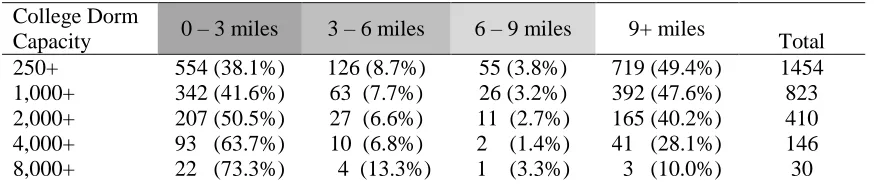
The initial proximity analysis was calculated on college dorm capacity of greater
than 250+. 1000+, 2000+. 4000+, and 8000+. Preliminary findings suggested a possible
association to dorm capacity to the nearest distance (0-3) with increment percentage
increases (Table 3.2). Proximity analyses were ran on each capacity see Appendix A.
Table 3.2 Distance from Colleges to the Nearest WTS Establishment
College Dorm
Within 3 miles of a college/university the results consistently indicate that as the dorm
capacity increases, the percentage of schools with a commercial WTS establishment
within 3 miles increases 250+ = 554 (38.1%), 1000+ = 342 (41.6%), 2000+ = 207
(50.5%), 4000+ = 93 (63.7%), and 8000+ =22 (73.3%). An inverse relationship is seen
when the distance to a commercial WTS establishment is 9 miles or greater. The distance
from the WTS establishments to the nearest college was tabulated and the average
distance was calculated (Table 3.3).
Table 3.3 Distance from WTS Establishments to Nearest College
WTS
Establishments. 0 – 3 miles 3 – 6 miles 6 – 9 miles 9+ miles Total All locations 973 (57.6%) 366 (21.7%) 157 (9.3%) 194 (11.5%) 1690
In the initial investigation an overlay analysis was done on the GIS waterpipe
establishment map overlaid on the GIS college map to visually verify that the closer
colleges (darker gradient) were covered by the WTS establishments (red) (Figure 3.2).
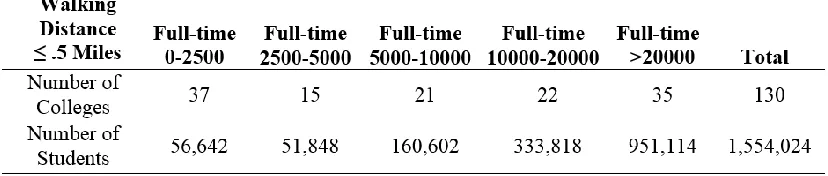
A walkability analysis was also completed determine to walking access from
college campuses to commercial WTS establishments (Table 3.4).The definition “within
walking distance” or less than .5 mile was used, which is consistent with criteria used by
state and local transit agencies in their transit-oriented development plans (Colabianchi et
al., 2007; Fairfax & others, 2011; Greenwald & Boarnet, 2001).
Table 3.4 Colleges within Walking Distance to a WTS Establishment based on FTE
Another consideration came up during the initial analyses. The concern was how
to justify using the closest proximity over the total number of WTS establishments
surrounding each college/university as the unit of measure. Therefore, the three distance
increments compared to the number of WTS establishments needed to be evaluated to see
if there was any imbalances due to overlapping. To address this concern ArcGIS 10.2 was
used to convert the geocoded sample points of the colleges/universities in the study to
Thiessen polygons. The Thiessen polygon defines an area of influence around the sample
point. Then the spatial join tool was used to join the WTS establishment point shapefile
with the new college/university polygon shapefile. The multiple ring buffer tool was used
to analyze the overlap of WTS establishments that can serve more than one
college/university within radii of 3, 6, and 9 miles. This analysis tool creates multiple
buffers or concentric circles at these specific distances around the college/university
the three buffers. This spatial analysis also provided an overall count of the number of
WTS establishments within the established mile increments. In this spatial analysis the
dissolve option was not used. As a result, all buffer areas were maintained regardless of
any overlap. Each buffer covers its input features (i.e. the waterpipe establishments) plus
any smaller buffer segments. The results were exported from GIS and uploaded into SAS
9.4 to create a frequency table for further analysis (Table 3.5).
Table 3.5 Multiple Ring Buffer Analysis
WTS Establishment
Count
Distance
0 – 3 Miles 3 - 6 Miles 6- 9 Miles Total
N ( % ) N ( % ) N ( % ) N ( % )
0 905 (20.75) 775 (17.77) 719 (16.48) 2399 (55.00)
1 208 (4.77) 177 (4.06) 177 (4.06) 562 (12.88)
2 94 (2.15) 100 (2.29) 70 (1.60) 264 (6.05)
3 57 (1.31) 74 (1.70) 72 (1.65) 203 (4.65)
4 49 (1.12) 56 (1.28) 54 (1.24) 159 (3.65)
5 23 (0.53) 29 (0.66) 32 (0.73) 84 (1.93)
6 24 (0.55) 27 (0.62) 25 (0.57) 76 (1.74)
7 25 (0.57) 44 (1.01) 50 (1.15) 119 (2.73)
8 8 (0.18) 17 (0.39) 17 (0.39) 42 (0.96)
9 8 (0.18) 10 (0.23) 25 (0.57) 43 (0.99)
10 5 (0.11) 19 (0.44) 10 (0.23) 34 (0.78)
Greater Than
10 48 (1.11) 126 (2.88) 203 (4.66) 377 (8.64)
The table has relatively consistent percentages across each column for each
incremental increase of a WTS establishment for each of the three distance categories.
For example, when there is only one WTS establishment within each of the three distance
increments in relation to colleges/universities the frequency percentages are 4.77%,
4.06% and 4.06% respectively. This trend is relatively consistent moving down the table
from zero to ten WTS establishments without any major unbalance between increments.
There were some outliers with multiple overlapping buffers in areas with high population
density, which makes a visual analysis difficult to project on a GIS map. For example,
New York City which is 469 square miles had several areas within the city limits were
the 9 mile overlapping buffers exceeded over 100 WTS establishments. Therefore, since
the percentages were relatively consistent per distance increment to WTS establishment
count for over 91.36% of the data the closest proximity of a college/university to a WTS
establishment was used in the final model. Using the closest proximity removes the high
concentration of overlapping buffer rings and improves the visual analysis because a
thematic map could be used to display the colleges/universities by size and color. The
thematic map used in the study displays the colleges/universities using graduated color
indicating the distance increment to the nearest WTS establishment. For example, as the
symbol representing the college/university gets darker the closer the school is to a WTS
establishment. When this type of geographical data is displayed on a GIS map of the U.S.
in this format, spatial patterns emerge and concentrations of colleges/universities can be
After careful consideration dormitory capacity was replace with full-time student
enrollment because it was more representative of the student population. A thematic map
with gradient color was decided on as the best way to display the colleges/universities
coded in 3-mileincrements (0.1-3.0 miles, 3.1-6.0 miles, 6.1-9.0 miles and ≥ 9.1miles)
based on the distance to the nearest waterpipe establishment. Supporting tables and
figures will be include in the results section of the first study. To determine the
distributionof waterpipe establishments for various sized colleges and universities,
thematic map data were stratified by full-time student enrollment, as follows: <2,500,
2,500-4,999, 5,000-9,999, 10,000-19,999, and ≥ 20,000 full-time students.To evaluate
the impact of full-time student enrollment, population density, and smoke-freecampus
policies on the distance from colleges/universities to the nearest waterpipeestablishment,
a multinomial logistic regression model was estimated. The dependent variableincluded
the four distance categories with the reference category being > 9.1 miles or distances not
close enough for students to patronize the WTS establishment. SASstatistical software
version 9.4 was used for all analyses which were conducted during February. A p-value
3.2SECOND STUDY METHODS
Data Source
Data were obtained from the Office on Smoking and Health (OSH) a division of
the Centers for Disease Control and Prevention (CDC). The 2009-2010 National Adult
Tobacco Survey is the first adult tobacco survey designed within the framework provided
by the key outcome indicator (KOI) report. The background and the weighting of the
NATS are summarized in the CDC methodology report. The primary purpose of the
2009-2010 NATS is to estimate tobacco use behaviors as a function of demographic
characteristics as well as tobacco prevention and control outcome indicators (CDC,
2011), The NATS weighted design is a stratified, national, landline, and cell phone
survey of noninstitutionalized adults aged 18 years and older representative at both
national and state levels. The states were segmented in three strata - a listed landline
stratum, a not-listed landline stratum, and a cell phone stratum. The target numbers for
completes per state was 1863 landlines, cell phones varied in proportion to each state’s
population. States had the option to increase their number of cell phone completes. Four
states added to their samples, Louisiana, New Jersey, North Dakota, and Oklahoma. The
respondent selection and final disposition code varied by phone type. For landlines one
adult ≥ 18 years odd was randomly selected from the household and after 15 call
attempts the number was assigned a final survey disposition code. For cell phone
numbers for adults ≥ 18 years odd the inclusion criteria was the cell phone was the only
way to reach the home by telephone and used only by the person who answered. After
6 attempts the cell phone number was assigned a final survey disposition code. The