by Ed McCarthy
Certified Wine Educator
and
Mary Ewing-Mulligan
Master of Wine
Wine
FOR
DUMmIES
‰4
TH EDITION
Wine For Dummies®, 4th Edition
Published by
Wiley Publishing, Inc.
111 River St.
Hoboken, NJ 07030-5774
www.wiley.com
Copyright © 2006 by Wiley Publishing, Inc., Indianapolis, Indiana Published by Wiley Publishing, Inc., Indianapolis, Indiana Published simultaneously in Canada
No part of this publication may be reproduced, stored in a retrieval system, or transmitted in any form or by any means, electronic, mechanical, photocopying, recording, scanning, or otherwise, except as per-mitted under Sections 107 or 108 of the 1976 United States Copyright Act, without either the prior written permission of the Publisher, or authorization through payment of the appropriate per-copy fee to the Copyright Clearance Center, 222 Rosewood Drive, Danvers, MA 01923, 978-750-8400, fax 978-646-8600. Requests to the Publisher for permission should be addressed to the Legal Department, Wiley Publishing, Inc., 10475 Crosspoint Blvd., Indianapolis, IN 46256, 317-572-3447, fax 317-572-4355, or online at
http://www.wiley.com/go/permissions.
Trademarks:Wiley, the Wiley Publishing logo, For Dummies, the Dummies Man logo, A Reference for the Rest of Us!, The Dummies Way, Dummies Daily, The Fun and Easy Way, Dummies.com and related trade dress are trademarks or registered trademarks of John Wiley & Sons, Inc. and/or its affiliates in the United States and other countries, and may not be used without written permission. All other trademarks are the property of their respective owners. Wiley Publishing, Inc., is not associated with any product or vendor mentioned in this book.
LIMIT OF LIABILITY/DISCLAIMER OF WARRANTY: THE PUBLISHER AND THE AUTHOR MAKE NO REP-RESENTATIONS OR WARRANTIES WITH RESPECT TO THE ACCURACY OR COMPLETENESS OF THE CONTENTS OF THIS WORK AND SPECIFICALLY DISCLAIM ALL WARRANTIES, INCLUDING WITHOUT LIMITATION WARRANTIES OF FITNESS FOR A PARTICULAR PURPOSE. NO WARRANTY MAY BE CREATED OR EXTENDED BY SALES OR PROMOTIONAL MATERIALS. THE ADVICE AND STRATEGIES CONTAINED HEREIN MAY NOT BE SUITABLE FOR EVERY SITUATION. THIS WORK IS SOLD WITH THE UNDER-STANDING THAT THE PUBLISHER IS NOT ENGAGED IN RENDERING LEGAL, ACCOUNTING, OR OTHER PROFESSIONAL SERVICES. IF PROFESSIONAL ASSISTANCE IS REQUIRED, THE SERVICES OF A COM-PETENT PROFESSIONAL PERSON SHOULD BE SOUGHT. NEITHER THE PUBLISHER NOR THE AUTHOR SHALL BE LIABLE FOR DAMAGES ARISING HEREFROM. THE FACT THAT AN ORGANIZATION OR WEBSITE IS REFERRED TO IN THIS WORK AS A CITATION AND/OR A POTENTIAL SOURCE OF FURTHER INFORMATION DOES NOT MEAN THAT THE AUTHOR OR THE PUBLISHER ENDORSES THE INFORMA-TION THE ORGANIZAINFORMA-TION OR WEBSITE MAY PROVIDE OR RECOMMENDAINFORMA-TIONS IT MAY MAKE. FURTHER, READERS SHOULD BE AWARE THAT INTERNET WEBSITES LISTED IN THIS WORK MAY HAVE CHANGED OR DISAPPEARED BETWEEN WHEN THIS WORK WAS WRITTEN AND WHEN IT IS READ.
For general information on our other products and services, please contact our Customer Care Department within the U.S. at 800-762-2974, outside the U.S. at 317-572-3993, or fax 317-572-4002. For technical support, please visit www.wiley.com/techsupport.
Wiley also publishes its books in a variety of electronic formats. Some content that appears in print may not be available in electronic books.
Library of Congress Control Number: 2006927773 ISBN-13: 978-0-470-04579-4
ISBN-10: 0-470-04579-5
Manufactured in the United States of America 10 9 8 7 6 5 4 3 2 1
4O/QY/QZ/QW/IN
About the Authors
Ed McCarthyand Mary Ewing-Mulliganare two wine lovers who met at an Italian wine tasting in New York City’s Chinatown and subsequently merged their wine cellars and wine libraries when they married. They have since
co-authored six wine books in the Wine For Dummiesseries (including two of
their favorites, French Wine For Dummiesand Italian Wine For Dummies) as
well as their latest book, Wine Style(Wiley); taught hundreds of wine classes
together; visited nearly every wine region in the world; run five marathons; and raised eleven cats. Along the way, they have amassed more than half a century of professional wine experience between them.
Mary is president of International Wine Center, a New York City wine school that offers credentialed wine education for wine professionals and serious
wine lovers. As U.S. director of the Wine & Spirit Education Trust ( WSET®),
the world’s leading wine educational organization, she works to make the courses she offers in New York available in more and more parts of the
United States. She is also the long-standing wine columnist of the NY Daily
News.Mary’s most impressive credential is that she’s the first female Master of Wine (MW) in the United States, and one of only 22 MW’s in North America (with 251 worldwide).
Ed, a New Yorker, graduated from City University of NY with a master’s degree in psychology. He taught high school English in another life, while working part-time in wine shops to satisfy his passion for wine and to subsidize his growing wine cellar. That cellar is especially heavy in his favorite wines — Bordeaux, Barolo, and Champagne. Besides co-authoring six wine books in the For Dummiesseries with Mary, Ed went solo as author of Champagne For Dummies,a topic on which he’s especially expert.
Ed and Mary also share wine columns in Nation’s Restaurant Newsand in
Beverage Media,a trade publication. They are each columnists for the online
wine magazine, WineReviewOnline.com. Ed and Mary are both accredited as
Certified Wine Educators (CWE).
When they aren’t writing, teaching, or visiting wine regions, Mary and Ed main-tain a busy schedule of speaking, judging at professional wine competitions, and tasting as many new wines as possible. They admit to leading thoroughly unbalanced lives in which their only non-wine pursuits are hiking in the Berkshires and the Italian Alps. At home, they wind down to the tunes of U2, K.D. Lang, Bob Dylan, and Neil Young in the company of their feline roommates Dolcetto, Black & Whitey, Ponzi, and Pinot.
Authors’ Acknowledgments
The wine world is dynamic — it’s constantly changing. Because three years
have passed since the third edition of Wine For Dummies,we decided to
revise and update the book. We especially felt an obligation to write this fourth edition because of all the readers who have personally told us how
valuable Wine For Dummieshas been to them. We are grateful that we’ve
been able to contribute to your knowledge about this wonderful beverage.
But this book would not have been possible without the team at Wiley. We sincerely thank Publisher Diane Steele, who engaged us to write the fourth
edition of Wine For Dummies,along with Acquisitions Editor Stacy Kennedy.
Really special thanks go to our Project Editor, Traci Cumbay, who made excel-lent suggestions to improve the text.
We thank our technical reviewer, colleague Igor Ryjenkov, MW, for his expertise. It’s a better, more accurate book because of you.
Special thanks to Steve Ettlinger, our agent and friend, who brought us to the
For Dummies series in the first place, and who is always there for us.
We thank all our friends in the wine business for your information and kind suggestions for our book; the book reviewers, whose criticism has been so generous; and our readers, who have encouraged us with your enthusiasm for our previous books in this series.
Mary offers special thanks to Linda Lawry and everyone else at International Wine Center, who enabled her to have the time and the peace of mind to work on this book. Thanks also to Elise McCarthy, E.J. McCarthy, Cindy McCarthy Tomarchio and her husband, David, for their encouragement and support.
Publisher’s Acknowledgments
We’re proud of this book; please send us your comments through our Dummies online registration form located at www.dummies.com/register/.
Some of the people who helped bring this book to market include the following:
Acquisitions, Editorial, and Media Development
Project Editor: Traci Cumbay
(Previous Edition: Joan Friedman)
Acquisitions Editor: Stacy Kennedy
Editorial Program Coordinator: Erin Calligan
Technical Editor: Igor Ryjenkov, MW
Editorial Manager: Michelle Hacker
Editorial Supervisor and Reprint Editor:
Carmen Krikorian
Editorial Assistant: David Lutton
Cover Photos: ©S.T. Yiap/Age Fotostock
Cartoons: Rich Tennant (www.the5thwave.com)
Composition
Project Coordinator:Tera Knapp
Layout and Graphics:Lauren Goddard, Denny Hager, Stephanie D. Jumper, Heather Ryan, Alicia South
Special Art: Akira Chiwaki
Proofreaders:Leeann Harney, Techbooks
Indexer: Techbooks
Publishing and Editorial for Consumer Dummies
Diane Graves Steele, Vice President and Publisher, Consumer Dummies
Joyce Pepple, Acquisitions Director, Consumer Dummies
Kristin A. Cocks, Product Development Director, Consumer Dummies
Michael Spring, Vice President and Publisher, Travel
Kelly Regan,Editorial Director, Travel
Publishing for Technology Dummies
Andy Cummings,Vice President and Publisher, Dummies Technology/General User
Composition Services
Gerry Fahey,Vice President of Production Services
Debbie Stailey,Director of Composition Services
Contents at a Glance
Introduction ...1
Part I: Getting to Know Wine...7
Chapter 1: Wine 101 ...9
Chapter 2: These Taste Buds Are for You...21
Chapter 3: Pinot Envy and Other Secrets about Grape Varieties ...35
Chapter 4: Wine Names and Label Lingo...49
Chapter 5: Behind the Scenes of Winemaking ...67
Part II: Wine and You: Up Close and Personal...75
Chapter 6: Navigating a Wine Shop ...77
Chapter 7: Confronting a Restaurant Wine List ...89
Chapter 8: The Insider’s Track to Serving and Using Wine...105
Part III: The “Old World” of Wine ...125
Chapter 9: Doing France ...127
Chapter 10: Italy, the Heartland of Vino ...167
Chapter 11: Spain, Portugal, Germany, and Beyond ...187
Part IV: Discovering the New World of Wine ...211
Chapter 12: The Southern Hemisphere Arises ...213
Chapter 13: America, America ...231
Part V: Wine’s Exotic Face...263
Chapter 14: Champagne and Other Sparklers ...265
Chapter 15: Wine Roads Less Traveled: Fortified and Dessert Wines...287
Part VI: When You’ve Caught the Bug ...307
Chapter 16: Buying and Collecting Wine ...309
Chapter 17: Continuing Education for Wine Lovers...327
Chapter 18: Describing and Rating Wine...341
Chapter 19: Marrying Wine with Food...349
Part VII: The Part of Tens ...355
Chapter 20: Answers to Ten Common Questions about Wine...357
Chapter 21: Ten Wine Myths Demystified ...363
Part VIII: Appendixes...369
Appendix A: Pronunciation Guide to Wine Terms ...371
Appendix B: Glossary of Wine Terms ...377
Appendix C: Vintage Wine Chart: 1985–2004 ...385
Index ...389
Table of Contents
Introduction...1
About This Book...1
Conventions Used in This Book ...2
Foolish Assumptions ...2
How This Book Is Organized...3
Part I: Getting to Know Wine...3
Part II: Wine and You: Up Close and Personal ...3
Part III: The “Old World” of Wine...3
Part IV: Discovering the New World of Wine...4
Part V: Wine’s Exotic Face ...4
Part VI: When You’ve Caught the Bug...4
Part VII: The Part of Tens ...4
Part VIII: Appendixes ...4
Icons Used in This Book...5
Part I: Getting to Know Wine ...7
Chapter 1: Wine 101 . . . .9
How Wine Happens ...9
What could be more natural? ...10
Modern wrinkles in winemaking...10
The main ingredient ...10
Local flavor...11
What Color Is Your Appetite? ...11
(Not exactly) white wine ...11
Is white always right?...12
Red, red wine ...14
A rose is a rose, but a rosé is “white” ...15
Which type when? ...16
Other Ways of Categorizing Wine...16
Table wine ...17
Dessert wine...18
Sparkling wine (and a highly personal spelling lesson) ...19
Chapter 2: These Taste Buds Are for You . . . .21
The Special Technique for Tasting Wine...21
Savoring wine’s good looks ...22
The nose knows ...23
The mouth action ...25
Parlez-Vous Winespeak? ...27
The sequential palate ...28
The flavor dimension ...29
The Quality Issue ...30
What’s a good wine?...31
What’s a bad wine?...33
The Final Analysis: Do You Like It? ...34
Chapter 3: Pinot Envy and Other Secrets about Grape Varieties . . . .35
Why Grapes Matter ...35
Of genus and species ...36
A variety of varieties ...36
How grapes vary...37
Grape royalty and commoners ...39
A Primer on White Grape Varieties ...40
Chardonnay...40
Riesling ...41
Sauvignon Blanc ...42
Pinot Gris/Pinot Grigio...43
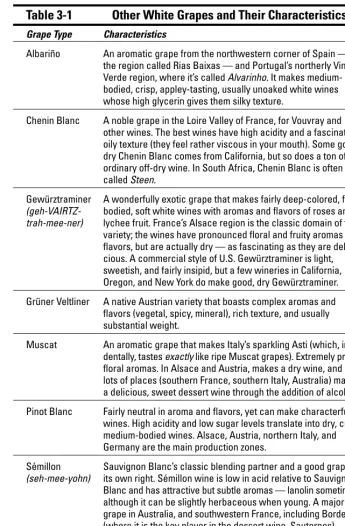
Other white grapes...43
A Primer on Red Grape Varieties...45
Cabernet Sauvignon ...45
Merlot...45
Pinot Noir ...46
Syrah/Shiraz ...46
Zinfandel ...47
Nebbiolo ...47
Sangiovese...47
Tempranillo ...48
Other red grapes ...48
Chapter 4: Wine Names and Label Lingo . . . .49
The Wine Name Game ...49
Is it a grape? Is it a place?...50
Hello, my name is Chardonnay ...50
Hello, my name is Bordeaux...51
Wines named in other ways ...55
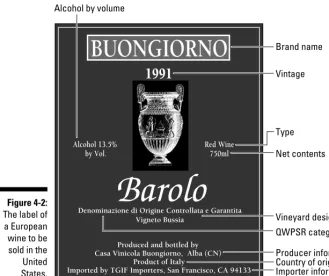
Wine Labels, Forward and Backward ...57
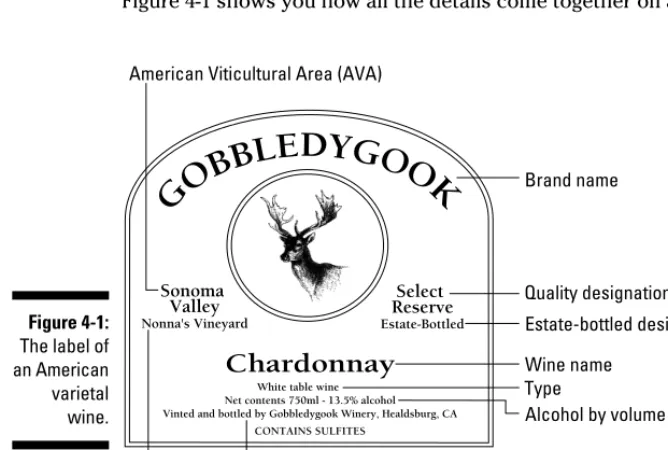
The mandatory sentence ...58
Some optional label lingo ...62
Chapter 5: Behind the Scenes of Winemaking . . . .67
Grapegrowing, Winemaking, and the Jargon that Surrounds Them...67
Viti-vini...68
Vine-growing variations ...69
Winemaking wonders...70
Even More Winemaking Terms ...72
Wine For Dummies, 4th Edition
x
Part II: Wine and You: Up Close and Personal ...75
Chapter 6: Navigating a Wine Shop . . . .77
Buying Wine Can Intimidate Anyone ...77
Wine Retailers, Large and Small ...78
Supermarkets, superstores, and so on ...79
Wine specialty shops ...80
Choosing the Right Wine Merchant ...82
Putting price in perspective...82
Evaluating selection and expertise ...82
Expecting service with a smile ...83
Judging wine storage conditions...83
Strategies for Wine Shopping ...84
See a chance, take it...85
Explain what you want...85
Name your price ...87
Chapter 7: Confronting a Restaurant Wine List . . . .89
The Restaurant Wine Experience...89
How Wine Is Sold in Restaurants ...90
The choice of the house ...90
Premium pours ...91
Special, or reserve, wine lists ...92
The (anything but) standard wine list ...93
How to Read a Wine List ...94
Sizing up the organization of the list ...94
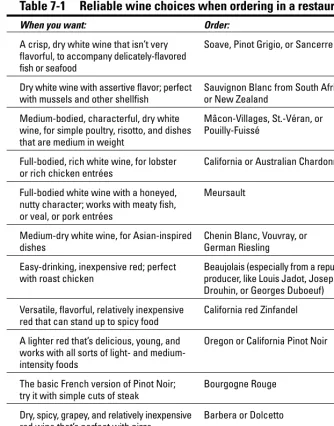
Getting a handle on the pricing ...96
What the wine list should tell you...96
Assessing the list’s style...97
Digital browsing...97
Ordering Your Wine ...98
Handling the Wine Presentation Ritual ...100
Restaurant Wine Tips ...102
Chapter 8: The Insider’s Track to Serving and Using Wine . . . .105
Getting the Cork Out...105
The corkscrew not to use...106
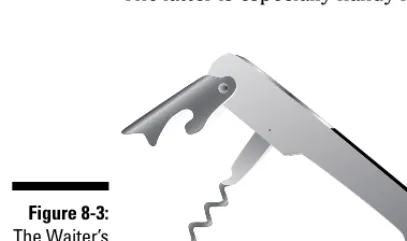
The corkscrew to buy ...107
Other corkscrews worth owning...108
Waiter, there’s cork in my wine!...110
A special case: Opening Champagne and sparkling wine ...111
Does Wine Really Breathe? ...113
How to aerate your wine ...113
Which wines need aerating? ...113
xi
Table of Contents
Does the Glass Really Matter? ...115
The right color: none ...116
Thin but not tiny...116
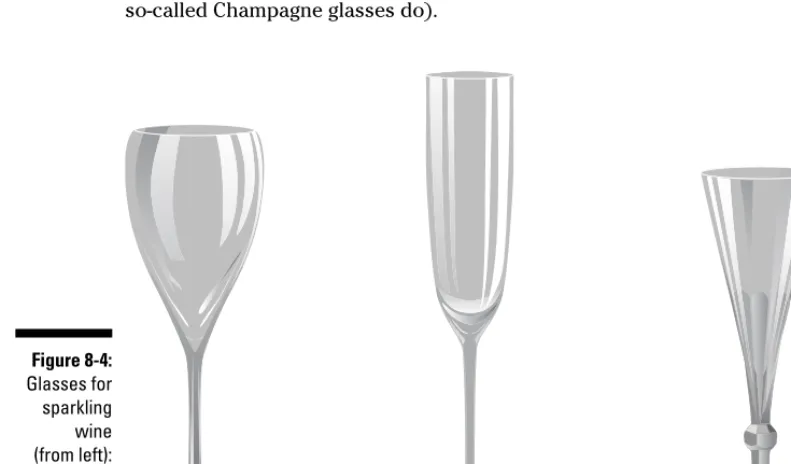
Tulips, flutes, trumpets, and other picturesque wine-glass names ...117
How many glasses do I need, anyway? ...119
Washing your wine glasses ...119
Not Too Warm, Not Too Cold...119
Keeping Leftover Wine ...121
Entertaining with Wine ...122
First things first ...123
How much is enough...123
Part III: The “Old World” of Wine ...125
Chapter 9: Doing France . . . .127
The French Model ...127
Understanding French wine law ...128
Fine distinctions in the ranks ...129
France’s Wine Regions...130
Bordeaux: The Incomparable ...131
The subregions of red Bordeaux ...133
The Médoc mosaic ...134
Classified information...135
Bordeaux to try when you’re feeling flush ...137
The value end of the Bordeaux spectrum ...138
Practical advice on drinking red Bordeaux...140
Bordeaux also comes in white ...141
Burgundy: The Other Great French Wine...142
Chardonnay, Pinot Noir, Gamay...143
Districts, districts everywhere ...143
From the regional to the sublime ...144
The Côte d’Or: The heart of Burgundy ...146
Côte Chalonnaise: Bargain Burgundies ...152
Chablis: Unique white wines ...153
Mâcon: Affordable whites...154
Beaujolais: As delightful as it is affordable ...155
The Hearty Rhônes of the Valley...158
Generous wines of the south ...158
Noble wines of the north ...159
The Loire Valley: White Wine Heaven...160
Alsace Wines: French, Not German...162
Wine For Dummies, 4th Edition
xii
The South and Southwest ...163
The Midi: France’s bargain basement ...164
Timeless Provence ...164
Southwest France ...165
Other French Wine Regions ...166
Chapter 10: Italy, the Heartland of Vino . . . .167
The Vineyard of Europe...167
The ordinary and the elite ...169
Categories of Italian wine, legally speaking ...170
Italy’s wine regions...170
Reds Reign in Piedmont ...172
Weekday reds ...173
Whites in a supporting role...175
Tuscany the Beautiful ...175
Chianti: Italy’s great, underrated red ...175
Monumental Brunello di Montalcino ...177
Vino Nobile, Carmignano, and Vernaccia ...179
Two more reds and a white...179
Super-Tuscans ...180
Tre Venezie...182
Three gentle wines from Verona...182
The Austrian-Italian alliance ...183
The far side: Friuli-Venezia Giulia ...184
Snapshots from the Rest of Italy ...185
Chapter 11: Spain, Portugal, Germany, and Beyond . . . .187
Intriguing Wines from Old Spain ...188
Rioja rules the roost...189
Ribera del Duero challenges ...191
Priorato: Emerging from the past ...191
Five other Spanish regions to watch...192
Portugal: More Than Just Port ...194
Portugal’s “green” white ...195
Noteworthy Portuguese red wines ...195
Germany: Europe’s Individualist ...197
Riesling and its cohorts ...197
Germany’s wine laws and wine styles...198
Germany’s wine regions...200
Switzerland’s Stay-at-Home Wines ...203
Austria’s Exciting Whites (and Reds) ...204
The Re-emergence of Hungary ...205
The Glory That Is Greece ...207
xiii
Table of Contents
Part IV: Discovering the New World of Wine...211
Chapter 12: The Southern Hemisphere Arises . . . .213
Australian Wine Power ...215
Winemaking, grapes, and terroir ...215
Australia’s wine regions...216
The Rise of New Zealand ...219
Chile Discovers Itself ...221
Chile’s wine regions ...222
The face and taste of the wines ...223
Argentina, a Major League Player ...225
Regions and grapes ...225
Names to know ...226
South African Wine Safari...227
South Africa’s principal wine regions ...227
Steen, Pinotage, and company...228
Chapter 13: America, America . . . .231
The New World of American Wine ...231
Homegrown ways ...232
Playing by their own rules ...232
California, USA...233
Where California wines grow ...234
When the wines are good ...236
Napa Valley: As Tiny as It Is Famous...236
The grapes of Napa ...237
Who’s who in Napa (and for what) ...237
Down-to-Earth in Sonoma ...241
Sonoma’s AVAs ...241
Sonoma producers and wines ...242
Mendocino and Lake Counties ...244
San Francisco Bay Area ...245
Santa Cruz Mountains...246
What’s New in Old Monterey ...246
Thar’s Wine in Them There Foothills ...248
Contrasts in San Luis Obispo ...249
Santa Barbara, Californian Paradise ...250
Elsewhere in California...251
Oregon, A Tale of Two Pinots ...252
Oregon’s other Pinot ...252
Who’s who in Willamette Valley...253
Two other Oregon wine regions ...254
Wine on the Desert: Washington State ...255
Washington’s wine regions...256
Who’s who in Washington ...257
Wine For Dummies, 4th Edition
xiv
The Empire State ...259
Upstate, downstate ...259
Who’s who in New York ...260
Oh, Canada...261
Ontario...261
British Columbia...262
Part V: Wine’s Exotic Face ...263
Chapter 14: Champagne and Other Sparklers . . . .265
All That Glitters Is Not Champagne ...266
Sparkling Wine Styles ...267
How sweet is it? ...267
How good is it? ...268
How Sparkling Wine Happens...269
Tank fermentation: Economy of scale...269
Bottle fermentation: Small is beautiful ...270
Taste: The proof of the pudding ...271
Champagne and Its Magic Wines ...272
What makes Champagne special ...273
Non-vintage Champagne...273
Vintage Champagne ...274
Blanc de blancs and blanc de noirs ...276
Rosé Champagne ...276
Sweetness categories...277
Recommended Champagne producers ...277
Other Sparkling Wines...279
French sparkling wine...280
American sparkling wine ...280
Italian spumante: Sweet or dry...282
Spanish sparkling wines (Cava)...283
Southern stars ...284
Buying and Serving Bubbly...284
Chapter 15: Wine Roads Less Traveled:
Fortified and Dessert Wines . . . .287
Timing Is Everything...287
Sherry: A Misunderstood Wine ...288
The Jerez triangle ...288
The phenomenon of flor ...289
Communal aging ...289
Two makes twelve ...290
Serving and storing Sherry ...292
Recommended Sherries...293
Montilla: A Sherry look-alike...294
xv
Table of Contents
Marsala, Vin Santo, and the Gang ...294
Port: The Glory of Portugal ...295
Home, home on the Douro ...295
Many Ports in a storm ...296
Storing and serving Port...298
Recommended Port producers ...299
Long Live Madeira...300
Timeless, indestructible, and tasty...300
Endless finish ...301
Sauternes and the Nobly Rotten Wines...303
Sauternes: Liquid gold ...303
Mining the gold ...304
Recommended Sauternes...304
Letting baby grow...306
Sauternes look-alikes ...306
Part VI: When You’ve Caught the Bug ...307
Chapter 16: Buying and Collecting Wine . . . .309
Wines That Play Hard to Get...309
Playing Hardball ...310
Buying wines at auctions...310
Buying wine by catalog or Internet ...312
Some U.S. wine stores worth knowing...313
Wine online...315
The Urge to Own: Wine Collecting ...316
Balancing your inventory ...317
Organization is peace of mind ...320
A Healthy Environment for Your Wines ...321
The passive wine cellar ...321
If you can’t be passive, be bullish ...322
Wine caves for apartment dwellers ...325
Chapter 17: Continuing Education for Wine Lovers . . . .327
Back to the Classroom...327
One wine school in action ...328
Wine tastings of all shapes and sizes...329
When in Rome . . ...330
Dinner with the winemaker ...332
Visiting the wineries...333
Armchair Travel ...334
Recommended books ...334
Wine magazines and newsletters ...337
Internet newsletters and interesting sites ...338
Wine For Dummies, 4th Edition
xvi
Chapter 18: Describing and Rating Wine . . . .341
Words Cannot Describe . . ...341
When It’s Your Turn to Speak ...343
Organizing your thoughts...343
Writing tasting notes...344
Describing wine: Purism versus poetry ...346
Rating Wine Quality ...347
Chapter 19: Marrying Wine with Food . . . .349
The Dynamics of Food and Wine...349
Tannic wines ...351
Sweet wines...351
Acidic wines ...351
High-alcohol wines ...352
Birds of a Feather, or Opposites Attract?...352
The Wisdom of the Ages ...354
Part VII: The Part of Tens...355
Chapter 20: Answers to Ten Common Questions about Wine . . . .357
What’s the best wine?...357
When should I drink this wine? ...358
Is wine fattening?...358
What grape variety made this wine? ...359
Which vintage should I buy?...359
Are there any wines without sulfites? ...360
What are organic wines? ...360
What is a wine expert? ...361
How do I know when to drink the special older wines I’ve been keeping? ...361
Do old wines require special handling? ...362
Chapter 21: Ten Wine Myths Demystified . . . .363
The best wines are varietal wines...363
Wine has to be expensive to be good...363
Dark-colored reds are the best red wines ...364
White wine with fish, red with meat ...364
Numbers don’t lie...365
Vintages always matter/vintages don’t matter ...365
Wine authorities are experts ...366
Old wines are good wines ...367
Great wines are supposed to taste bad when they’re young ...367
Champagnes don’t age ...368
xvii
Table of Contents
Part VIII: Appendixes ...369
Appendix A: Pronunciation Guide to Wine Terms . . . .371
Appendix B: Glossary of Wine Terms . . . .377
Appendix C: Vintage Wine Chart: 1985–2004 . . . .385
Index...389
Wine For Dummies, 4th Edition
xviii
Introduction
W
e love wine. We love the way it tastes, we love the fascinating varietyof wines in the world, and we love the way wine brings people together at the dinner table. We believe that you and everyone else should be able to enjoy wine — regardless of your experience or your budget.
But we’ll be the first to admit that wine people, such as many wine profes-sionals and really serious connoisseurs, don’t make it easy for regular people to enjoy wine. You have to know strange names of grape varieties and foreign wine regions. You have to figure out whether to buy a $20 wine or an $8 wine that seem to be pretty much the same thing. You even need a special tool to open the bottle once you get it home!
All this complication surrounding wine will never go away, because wine is a very rich and complex field. But you don’t have to let the complication stand in your way. With the right attitude and a little understanding of what wine is, you can begin to buy and enjoy wine. And if, like us, you decide that wine is fascinating, you can find out more and turn it into a wonderful hobby.
Because we hate to think that wine, which has brought so much pleasure into our lives, could be the source of anxiety for anyone, we want to help you feel more comfortable around wine. Some knowledge of wine, gleaned from the pages of this book and from our shared experiences, will go a long way toward increasing your comfort level.
Ironically, what will reallymake you feel comfortable about wine is accepting
the fact that you’ll never know it all — and that you’ve got plenty of company.
You see, after you really get a handle on wine, you discover that no oneknows
everything there is to know about wine. There’s just too much information, and it’s always changing. And when you know that, you can just relax and enjoy the stuff.
About This Book
If you already have a previous edition of Wine For Dummies,you may be
wondering whether you need this book. We believe that you do. We wrote
Wine For Dummiesin 1995, and the world of wine has changed a lot since then. It has even changed since our third edition in 2003:
Dozens of wineries have opened, a few have gone out of business, many
have improved, and a few have slipped. Web sites on wine have come and gone. The wine auction scene bears almost no resemblance to what it was. Our recommendations reflect all these changes.
Remember those prices that we listed for your favorite wines in our
ear-lier editions? Well, big surprise: Just about all those prices have increased. But we point out some bargains, especially in Parts III, IV, and V.
Several new vintages have occurred; we give you the lowdown on them
throughout the book, and especially in our vintage chart in Appendix C.
Great wine regions of yesterday, such as Spain, Hungary and Greece,
have revitalized themselves, and we tell you about them. Also in this edition, we’ve updated the wine regions of Italy, California, Washington, Chile, and Argentina, among others.
We wrote this book to be an easy-to-use reference. You don’t have to read it from cover to cover for it to make sense and be useful to you. Simply turn to the section that interests you and dig in.
Conventions Used in This Book
To help you navigate this book, we’ve established the following conventions:
Italicis used for emphasis and to highlight new words or terms that are defined.
Monofontis used for Web addresses.
Sidebars, which are shaded boxes of text, consist of information that’s
interesting but not necessarily critical to your understanding of the topic.
Foolish Assumptions
We assume that you picked up this book for one of several reasons:
You know very little about wine, but have a strong desire to learn more.
You do know something about wine, more than most people, but you
want to understand it better, from the ground up.
2
Wine For Dummies, 4th Edition
You’re already very knowledgeable but realize that you can always discover more or want to see whether we’ve made any mistakes so that you can brag to your friends that you caught us in a flagrant error. (Maybe you think that a particular vintage in Bordeaux wasn’t nearly as good as we said, for example.)
We also assume that you don’t have a lot of ego invested in wine — or maybe you do, and you’re buying this book “for your sister-in-law.” And we assume that you are someone who doesn’t appreciate a lot of mumbo-jumbo and jargonistic language about wine, and that you’re someone who wants straight talk instead.
How This Book Is Organized
This book is a wine textbook of sorts, a user’s manual, and a reference book, all in one. We’ve included very basic information about wine for readers who know nothing (or next to nothing) about wine — but we have also included tips, sug-gestions, and more sophisticated information for seasoned wine drinkers who want to take their hobby to a more advanced level. Depending on where you fall on the wine-knowledge gradient, different chapters will be relevant to you.
Part I: Getting to Know Wine
The five chapters in Part I get you up and sipping even if you’ve never tasted wine in your life. We tell you the basic types of wine, how to taste it, which grapes make wine, why winemaking matters, and how wines are named.
Part II: Wine and You: Up Close
and Personal
This part deals with practical wine matters — in the wine shop, in the restau-rant, and in your home. Find out how to handle snooty wine clerks, restaurant wine lists, and those stubborn corks. In addition, we show you how to decipher cryptic wine labels.
Part III: The “Old World” of Wine
Visit this part for a tour of the major wine regions of Europe: France, Italy, Spain, Portugal, Germany, Switzerland, Austria, Hungary, and Greece.
3
Introduction
Part IV: Discovering the
New World of Wine
Here we adventure to Australia, New Zealand, Chile, Argentina, and South Africa, and then take a look at the major wine areas in the United States — California, Oregon, Washington, and New York — and end with a quick look at Canada’s wines.
Part V: Wine’s Exotic Face
Some of the most exciting and fascinating wines are in this part, including Champagne, Sherry, Port, Sauternes, and other exotic dessert wines.
Part VI: When You’ve Caught the Bug
You find a wealth of practical advice in this part, including recommendations on where and how you can buy wine beyond your local wine shops. We tell you how to describe and rate wines you taste, and how to pair food and wine. We also tell you how to store wine properly, and how to pursue your love and knowledge of wine beyond this book.
Part VII: The Part of Tens
What For Dummies book would be complete without this part? It’s a synopsis
of interesting tips and recommendations about wine to reinforce our sugges-tions earlier in the book. We’re particularly happy to debunk ten prevalent myths about wine so that you can become a savvier consumer and a more satisfied wine drinker.
Part VIII: Appendixes
In Part VIII, we show you how to pronounce foreign wine words, and you can look up unfamiliar wine terms in our glossary. You can also consult our vin-tage chart to check out the quality and drinkability of your wine.
4
Wine For Dummies, 4th Edition
Icons Used in This Book
This odd little guy is a bit like the two-year-old who constantly insists on knowing “Why, Mommy, why?” But he knows that you may not have the same level of curiosity that he has. Where you see him, feel free to skip over the technical information that follows. Wine will still taste just as delicious.
Advice and information that will make you a wiser wine drinker or buyer is marked by this bull’s-eye so that you won’t miss it.
There’s very little you can do in the course of moderate wine consumption that can land you in jail — but you could spoil an expensive bottle and sink into a deep depression over your loss. This symbol warns you about common pitfalls.
Some issues in wine are so fundamental that they bear repeating. Just so you don’t think that we repeated ourselves without realizing it, we mark the repe-titions with this symbol.
Wine snobs practice all sorts of affectations designed to make other wine drinkers feel inferior. But you won’t be intimidated by their snobbery if you see it for what it is. (And you can learn how to impersonate a wine snob!)
A bargain’s not a bargain unless you really like the outfit, as they say. To our tastes, the wines we mark with this icon are bargains because we like them, we believe them to be of good quality, and their price is low compared to other wines of similar type, style, or quality. You can also interpret this logo as a badge of genuineness, as in “This Chablis is the real deal.”
Unfortunately, some of the finest, most intriguing, most delicious wines are made in very small quantities. Usually, those wines cost more than wines made in large quantities — but that’s not the only problem; the real frustra-tion is that those wines have very limited distribufrustra-tion, and you can’t always get your hands on a bottle even if you’re willing to pay the price. We mark such wines with this icon, and hope that your search proves fruitful.
5
Introduction
6
Wine For Dummies, 4th Edition
Part I
Getting to Know
Wine
In this part . . .
T
o grasp the material in this part of the book, you needsome preliminary knowledge: what a grape is, and where your tongue and nose are located.
If you have those bases covered, you’re ready to begin understanding and enjoying wine — even if you’ve never tasted wine before in your life. We start slowly so that you can enjoy the scenery along the way.
Chapter 1
Wine 101
In This Chapter
What wine is
Million-dollar words like fermentationand sulfites
What red wine has that white wine doesn’t
Why color matters
Differences between table wine, sparkling wine, and fortified wine
W
e know plenty of people who enjoy drinking wine but don’t know muchabout it. (Been there, done that ourselves.) Knowing a lot of information about wine definitely isn’t a prerequisite to enjoying it. But familiarity with certain aspects of wine can make choosing wines a lot easier, enhance your enjoyment of wine, and increase your comfort level. You can learn as much or as little as you like. The journey begins here.
How Wine Happens
Wine is, essentially, nothing but liquid, fermented fruit. The recipe for turning fruit into wine goes something like this:
1. Pick a large quantity of ripe grapes from grapevines.
You could substitute raspberries or any other fruit, but 99.9 percent of all the wine in the world is made from grapes, because they make the best wines.
2. Put the grapes into a clean container that doesn’t leak. 3. Crush the grapes somehow to release their juice.
Once upon a time, feet performed this step.
4. Wait.
In its most basic form, winemaking is that simple. After the grapes are crushed,
yeasts(tiny one-celled organisms that exist naturally in the vineyard and, therefore, on the grapes) come into contact with the sugar in the grapes’ juice and gradually convert that sugar into alcohol. Yeasts also produce
carbon dioxide, which evaporates into the air. When the yeasts are done working, your grape juice is wine. The sugar that was in the juice is no longer there — alcohol is present instead. (The riper and sweeter the grapes, the
more alcohol the wine will have.) This process is called fermentation.
What could be more natural?
Fermentation is a totally natural process that doesn’t require man’s participa-tion at all, except to put the grapes into a container and release the juice from the grapes. Fermentation occurs in fresh apple cider left too long in your refrigerator, without any help from you. In fact we read that milk, which contains a different sort of sugar than grapes do, develops a small amount of alcohol if left on the kitchen table all day long.
Speaking of milk, Louis Pasteur is the man credited with discovering fermenta-tion in the nineteenth century. That’s discovering, not inventing. Some of those apples in the Garden of Eden probably fermented long before Pasteur came along. (Well, we don’t think it could have been much of an Eden without wine!)
Modern wrinkles in winemaking
Now if every winemaker actually made wine in as crude a manner as we just described, we’d be drinking some pretty rough stuff that would hardly inspire us to write a wine book.
But today’s winemakers have a bag of tricks as big as a sumo wrestler’s appetite. That’s one reason why no two wines ever taste exactly the same.
The men and women who make wine can control the type of container they use for the fermentation process (stainless steel and oak are the two main materi-als), as well as the size of the container and the temperature of the juice during fermentation — and every one of these choices can make a big difference in the taste of the wine. After fermentation, they can choose how long to let the wine
mature(a stage when the wine sort of gets its act together) and in what kind of container. Fermentation can last three days or three months, and the wine can then mature for a couple of weeks or a couple of years or anything in between. If you have trouble making decisions, don’t ever become a winemaker.
The main ingredient
Obviously, one of the biggest factors in making one wine different from the next is the nature of the raw material, the grape juice. Besides the fact that
riper, sweeter grapes make a more alcoholic wine, different varietiesof grapes
(Chardonnay, Cabernet Sauvignon, or Merlot, for example) make different
10
Part I: Getting to Know Wine
wines. Grapes are the main ingredient in wine, and everything the winemaker does, he does to the particular grape juice he has. Chapter 3 covers specific grapes and the kinds of wine they make.
Local flavor
Grapes, the raw material of wine, don’t grow in a void. Where they grow — the soil and climate of each wine region, as well as the traditions and goals of the people who grow the grapes and make the wine — affects the nature of the ripe grapes, and the taste of the wine made from those grapes. That’s why so much of the information there is to learn about wine revolves around the countries and the regions where wine is made. In the five chapters that comprise Parts III and IV of this book, we cover all the world’s major wine regions and their wines.
What Color Is Your Appetite?
Your inner child will be happy to know that when it comes to wine, it’s okay to like some colors more than others. You can’t get away with saying “I don’t like green food!” much beyond your sixth birthday, but you can express a general preference for white, red, or pink wine for all your adult years.
(Not exactly) white wine
Whoever coined the term “white wine” must have been colorblind. All you have to do is look at it to see that it’s not white, it’s yellow. But we’ve all
gotten used to the expression by now, and so white wineit is.
White wineis wine without any red color (or pink color, which is in the red
family). This means that White Zinfandel,a popular pink wine, isn’t white
wine. But yellow wines, golden wines, and wines that are as pale as water are all white wines.
Wine becomes white wine in one of two ways. First, white wine can be made from white grapes — which, by the way, aren’t white. (Did you see that one
coming?) Whitegrapes are greenish, greenish yellow, golden yellow, or
some-times even pinkish yellow. Basically, white grapes include all the grape types that are not dark red or dark bluish. If you make a wine from white grapes, it’s a white wine.
The second way a wine can become white is a little more complicated. The
process involves using red grapes — but only the juiceof red grapes, not the
grape skins. The juice of most red grapes has no red pigmentation — only the skins do — and so a wine made with only the juice of red grapes can be a
11
Chapter 1: Wine 101
white wine. In practice, though, very few white wines come from red grapes. (Champagne is one exception; Chapter 14 addresses the use of red grapes to make Champagne.)
In case you’re wondering, the skins are removed from the grapes by either
pressinglarge quantities of grapes so that the juice flows out and the skins stay behind — sort of like squeezing the pulp out of grapes, the way kids do
in the cafeteria — or by crushingthe grapes in a machine that has rollers to
break the skins so that the juice can drain away.
Is white always right?
You can drink white wine anytime you like — which for most people means as a drink without food or with lighter foods. Chapter 19 covers the dynamics of pairing wines with food.
12
Part I: Getting to Know Wine
The skinny on sulfites
Sulfur dioxide, a compound formed from sulfurand oxygen, occurs naturally during fermenta-tion in very small quantities. Winemakers add it, too. Sulfur dioxide is to wine what aspirin and vitamin E are to humans — a wonder drug that cures all sorts of afflictions and prevents others. Sulfur dioxide is an antibacterial, preventing the wine from turning to vinegar. It inhibits yeasts, preventing sweet wines from refermenting in the bottle. It’s an antioxidant, keeping the wine fresh and untainted by the demon oxygen. Despite these magical properties, winemakers try to use as little sulfur dioxide as possible because many of them share a belief that the less you add to wine, the better (just as many people prefer to ingest as little medication as possible).
Now here’s a bit of irony for you:
Today — when winemaking is so advanced that winemakers need to rely on sulfur dioxide’s help less than ever before — most wine labels in America state “Contains Sulfites” (meaning sulfur dioxide). That’s because Congress passed a law in 1988 requiring that phrase on the label. So
now many wine drinkers understandably think that there’s more sulfur in the wine than there used to be; but, in reality, sulfur dioxide use is probably at an all-time low.
Approximately 5 percent of asthmatics are extremely sensitive to sulfites. To protect them, Congress mandated that any wine containing more than 10 parts per million of sulfites carry the “Contains Sulfites” phrase on its label. Considering that about 10 to 20 parts per million occur naturally in wine, that covers just about every wine. (The exception is organic wines, which are intentionally made without the addition of sulfites; some of them are low enough in sulfites that they don’t have to use the mandated phrase.)
Actual sulfite levels in wine range from about 30 to 150 parts per million (about the same as in dried apricots); the legal max in the United States is 350. White dessert wines have the most sulfur — followed by medium-sweet white wines and blush wines — because those types of wine need the most protection. Dry white wines gen-erally have less, and dry reds have the least.
White wines are often considered apéritifwines, meaning wines consumed before dinner, in place of cocktails, or at parties. (If you ask the officials who busy themselves defining such things, an apéritif wine is a wine that has flavors added to it, as vermouth does. But unless you’re in the business of writing wine labels for a living, don’t worry about that. In common parlance, an apéritif wine is just what we said.)
A lot of people like to drink white wines when the weather is hot because they’re more refreshing than red wines, and they’re usually drunk chilled (the wines, not the people).
We serve white wines cool, but not ice-cold. Sometimes restaurants serve white wines too cold, and we actually have to wait a while for the wine to warm up before we drink it. If you like your wine cold, fine; but try drinking your favorite white wine a little less cold sometime, and we bet you’ll discover it has more flavor that way. In Chapter 8, we recommend specific serving tem-peratures for various types of wine.
13
Chapter 1: Wine 101
White wine styles: There’s no such thing
as plain white wine
White wines fall into four general taste cate-gories, not counting sparkling wine or the really sweet white wine that you drink with dessert (see Chapter 15 for more on those). If the words we use to describe these taste categories sound weird, take heart — they’re all explained in Chapter 2. We also explain the styles in plen-tiful detail in our book, Wine Style (Wiley). Here are the four broad categories:
Some white wines are fresh, unoaked whites — crisp and light, with no sweetness and no oaky character. (Turn to Chapter 3 for the lowdown on oak.) Most Italian white wines, like Soave and Pinot Grigio, and some French whites, like Sancerre and some Chablis wines, fall into this category.
Some white wines are earthy whites — dry, fuller-bodied, unoaked or lightly oaked, with
a lot of earthy character. Some French wines, such as Mâcon or whites from the Côtes du Rhône region (covered in Chapter 9) have this taste profile.
Some white wines are aromatic whites, characterized by intense aromas and fla-vors that come from their particular grape variety, whether they’re off-dry (that is, not bone-dry) or dry. Examples include a lot of German wines, and wines from flavorful grape varieties such as Riesling or Viognier.
Finally, some white wines are rich, oaky whites — dry or fairly dry, and full-bodied with pronounced oaky character. Most Chardonnays and many French wines — like many of those from the Burgundy region of France — fall into this group.
For suggestions of foods to eat with white wine, turn to Chapter 19; for really detailed information about white wine and food (and white wine itself, for
that matter), refer to our bookWhite Wine For Dummies(Wiley).
Red, red wine
In this case, the name is correct. Red wines really are red. They can be purple red, ruby red, or garnet, but they’re red.
Red wines are made from grapes that are red or bluish in color. So guess what wine people call these grapes? Black grapes! We suppose that’s because black is the opposite of white.
The most obvious difference between red wine and white wine is color. The red color occurs when the colorless juice of red grapes stays in contact with the dark grape skins during fermentation and absorbs the skins’ color. Along with
color, the grape skins give the wine tannin,a substance that’s an important
part of the way a red wine tastes. (See Chapter 2 for more about tannin.) The presence of tannin in red wines is actually the most important taste difference between red wines and white wines.
Red wines vary quite a lot in style. This is partly because winemakers have so many ways of adjusting their red-winemaking to achieve the kind of wine they want. For example, if winemakers leave the juice in contact with the
skins for a long time, the wine becomes more tannic(firmer in the mouth, like
strong tea; tannic wines can make you pucker). If winemakers drain the juice off the skins sooner, the wine is softer and less tannic.
14
Part I: Getting to Know Wine
Red wine styles: There’s no such thing
as just plain red wine, either
Here are four red wine styles:
Soft, fruity reds are relatively light-bodied, with a lot of fruitiness and little tannin (like Beaujolais Nouveau wine from France, some Valpolicellas from Italy, and many under-$10 U.S. wines).
Mild-mannered reds are medium-bodied with subtle, un-fruity flavors (like less expensive wines from Bordeaux, in France, and some inexpensive Italian reds).
Spicy reds are flavorful, fruity wines with spicy accents and some tannin (such as some Malbecs from France or Argentina, and Dolcettos from Italy).
Powerful reds are full-bodied and tannic (such as the most expensive California Cabernets; Barolo, from Italy; the most expensive Australian reds; and lots of other expensive reds).
Red wine tends to be consumed more often as part of a meal than as a drink on its own.
Thanks to the wide range of red wine styles, you can find red wines to go with just about every type of food and every occasion when you want to drink wine (except the times when you want to drink a wine with bubbles, because most bubbly wines are white or pink). In Chapter 19, we give you some tips on matching red wine with food. You can also consult our book about red
wine, Red Wine For Dummies(Wiley).
One sure way to spoil the fun in drinking most red wines is to drink them too cold. Those tannins can taste really bitter when the wine is cold — just as in a cold glass of very strong tea. On the other hand, many restaurants serve red wines too warm. (Where do they store them? Next to the boiler?) If the bottle feels cool to your hand, that’s a good temperature. For more about serving wine at the right temperature, see Chapter 8.
A rose is a rose, but a rosé is “white”
Rosé wines are pink wines. Rosé wines are made from red grapes, but they don’t end up red because the grape juice stays in contact with the red skins for a very short time — only a few hours, compared to days or weeks for red
wines. Because this skin contact(the period when the juice and the skins
intermingle) is brief, rosé wines absorb very little tannin from the skins. Therefore, you can chill rosé wines and drink them as you would white wines.
Of course, not all rosé wines are called rosés. (That would be too simple.)
Many rosé wines today are called blushwines — a term invented by wine
marketers to avoid the word rosé,because back in the ’80s, pink wines
weren’t very popular. Lest someone figures out that blushis a synonym for
rosé,the labels call these wines white.But even a child can see that White Zinfandel is really pink.
15
Chapter 1: Wine 101
Red wine sensitivities
Some people complain that they can’t drink redwines without getting a headache or feeling ill. Usually, they blame the sulfites in the wine. We’re not doctors or scientists, but we can tell you that red wines contain far less sulfur than white wines. That’s because the tannin in red
wines acts as a preservative, making sulfur dioxide less necessary. Red wines do contain histamine-like compounds and other substances derived from the grape skins that could be the culprits. Whatever the source of the discomfort, it’s probably not sulfites.
The blush wines that call themselves whiteare fairly sweet. Wines labeled
rosécan be sweetish, too, but some wonderful rosés from Europe (and a few
from America, too) are dry(not sweet). Some hard-core wine lovers hardly
ever drink rosé wine, but many wine drinkers are discovering what a pleasure a good rosé wine can be, especially in warm weather.
Which type when?
Your choice of a white wine, red wine, or rosé wine will vary with the season, the occasion, and the type of food that you’re eating (not to mention your personal taste!). Choosing a color usually is the starting point for selecting a specific wine in a wine shop or in a restaurant. As we explain in Chapters 6 and 7, most stores and most restaurant wine lists arrange wines by color before making other distinctions, such as grape varieties, wine regions, or taste categories.
Although certain foods can straddle the line between white wine and red wine compatibility — grilled salmon, for example, can be delicious with a rich white wine or a fruity red — your preference for red, white, or pink wine will often be your first consideration in pairing wine with food, too.
Pairing food and wine is one of the most fun aspects of wine, because the possible combinations are almost limitless. (We get you started with the pair-ing principles and a few specific suggestions in Chapter 19.) Best of all, your personal taste rules!
Other Ways of Categorizing Wine
We sometimes play a game with our friends: “Which wine,” we ask them, “would you want to have with you if you were stranded on a desert island?” In other words, which wine could you drink for the rest of your life without
getting tired of it? Our own answer is always Champagne, with a capital C
(more on the capitalization later in this section).
In a way, it’s an odd choice because, as much as we love Champagne, we don’t
drink it every dayunder normal circumstances. We welcome guests with it,
we celebrate with it after our team wins a Sunday football game, and we toast our cats with it on their birthdays. We don’t need much of an excuse to drink Champagne, but it’s not the type of wine we drink every night.
What we drink every night is regular wine — red, white, or pink — without bubbles. There are various names for these wines. In America, they’re called
tablewines, and in Europe they’re called lightwines. Sometimes we refer to
them as stillwines, because they don’t have bubbles moving around in them.
16
Part I: Getting to Know Wine
In the following sections, we explain the differences between three categories of wines: table wines, dessert wines, and sparkling wines.
Table wine
Table wine,or light wine, is fermented grape juice whose alcohol content falls within a certain range. Furthermore, table wine is not bubbly. (Some table wines have a very slight carbonation, but not enough to disqualify them as table wines.) According to U.S. standards of identification, table wines may have an alcohol content no higher than 14 percent; in Europe, light wine must contain from 8.5 percent to 14 percent alcohol by volume (with a few excep-tions). So unless a wine has more than 14 percent alcohol or has bubbles, it’s a table wine or a light wine in the eyes of the law.
The regulations-makers didn’t get the number 14 by drawing it from a hat. Historically, most wines contained less than 14 percent alcohol — either because there wasn’t enough sugar in the juice to attain a higher alcohol level, or because the yeasts died off when the alcohol reached 14 percent, halting the fermentation. That number, therefore, became the legal border-line between wines that have no alcohol added to them (table wines) and wines that may have alcohol added to them (see “Dessert wine,” in the next section).
Today, however, the issue isn’t as clear-cut as it was when the laws were writ-ten. Many grapes are now grown in warm climates where they become so ripe, and have so much natural sugar, that their juice attains more than 14 percent alcohol when it’s fermented. The use of gonzo yeast strains that con-tinue working even when the alcohol exceeds 14 percent is another factor. Many red Zinfandels, Cabernets, and Chardonnays from California now have
17
Chapter 1: Wine 101
Ten occasions to drink rosé (and defy the snobs)
1. When she’s having fish and he’s havingmeat (or vice versa)
2. When a red wine just seems too heavy
3. With lunch — hamburgers, grilled cheese sandwiches, and so on
4. On picnics on warm, sunny days
5. To wean your son/daughter, mate, friend (yourself?) off cola
6. On warm evenings
7. To celebrate the arrival of spring or summer
8. With ham (hot or cold) or other pork dishes
9. When you feel like putting ice cubes in your wine
10. On Valentine’s Day (or any other pink occasion)
14.5 or even 15.5 percent alcohol. Wine drinkers still consider them table wines, but legally they don’t qualify. (Technically, they’re dessert wines, and are taxed at a higher rate.) Which is just to say that laws and reality don’t always keep pace.
Here’s our own, real-world definition of table wines: They are the normal, non-bubbly wines that most people drink most of the time.
Dessert wine
Many wines have more than 14 percent alcohol because the winemaker added alcohol during or after the fermentation. That’s an unusual way of making wine, but some parts of the world, like the Sherry region in Spain and the Port region in Portugal, have made quite a specialty of it. We discuss those wines in Chapter 15.
Dessert wineis the legal U.S. terminology for these wines, probably because they’re usually sweet and often enjoyed after dinner. We find that term
mislead-ing, because dessert wines are not alwayssweet and not alwaysconsumed
after dinner. (Dry Sherry is categorized as a dessert wine, for example, but it’s dry, and we drink it before dinner.)
In Europe, this category of wines is called liqueur wines,which carries the
same connotation of sweetness. We prefer the term fortified,which suggests
that the wine has been strengthened with additional alcohol. But until we get
elected to run things, the term will have to be dessert wine orliqueur wine.
18
Part I: Getting to Know Wine
How to (sort of) learn the alcohol content of a wine
Regulations require wineries to state a wine’salcohol percentage on the label (again, with some minor exceptions). It can be expressed in degrees, like 12.5 degrees, or as a percentage, like 12.5 percent. If a wine carries the words “Table Wine” on its label in the United States, but not the alcohol percentage, it should have less than 14 percent alcohol by law.
For wines sold within the United States — whether the wine is American or imported — there’s a big catch, however. The labels are
allowed to lie. U.S. regulations give wineries a 1.5 percent leeway in the accuracy of the alco-hol level. If the label states 12.5 percent, the actual alcohol level can be as high as 14 per-cent or as low as 11 perper-cent. The leeway does not entitle the wineries to exceed the 14 percent maximum, however.
If the alcohol percentage is stated as a number that’s neither a full number nor a half-number — 12.8 or 13.2, for example, instead of 12.5 or 13 — odds are it’s precise.
Sparkling wine (and a highly
personal spelling lesson)
Sparkling wines are wines that contain carbon dioxide bubbles. Carbon diox-ide gas is a natural byproduct of fermentation, and winemakers sometimes decide to trap it in the wine. Just about every country that makes wine also makes sparkling wine. In Chapter 14, we discuss how sparkling wine is made and describe the major sparkling wines of the world.
In the United States, Canada, and Europe, sparkling wineis the official name
for the category of wines with bubbles. Isn’t it nice when everyone agrees?
Champagne (with a capital C) is the most famous sparkling wine — and
prob-ably the most famous wine,for that matter. Champagne is a specific type of
sparkling wine (made from certain grape varieties and produced in a certain way) that comes from a region in France called Champagne. It is the undis-puted Grand Champion of Bubblies.
Unfortunately for the people of Champagne, France, their wine is so famous
that the name champagne has been borrowed again and again by producers
elsewhere, until the word has become synonymous with practically the whole category of sparkling wines. For example, until a recent agreement between the United States and the European Union, U.S. winemakers could
legally call any sparkling wine champagne— even with a capital C, if they
wanted — as long as the carbonation was not added artificially. Even now, those American wineries that were already using that name may continue to
do so. (They do have to add a qualifying geographic term such as American
or Californianbefore the word Champagne, however.)
19
Chapter 1: Wine 101
Popular white wines
These types of white wine are available almosteverywhere in the United States. We describe these wines in Parts III and IV of this book.
Chardonnay: Can come from California, Australia, France, or almost any other place
Sauvignon Blanc:Can come from California, France, New Zealand, South Africa, and other places
Riesling: Can come from Germany, California, New York, Washington, France, Austria, Australia, and other places
Pinot Grigioor Pinot Gris:Can come from Italy, France, Oregon, California, and other places
Soave:Comes from Italy
For the French, limiting the use of the name champagneto the wines of the
Champagne region is a cause célèbre.European Union regulations not only
prevent any other member country from calling its sparkling wines champagne
but also prohibit the use of terms that even suggestthe word champagne,
such as fine print on the label saying that a wine was made by using the “champagne method.” What’s more, bottles of sparkling wine from countries outside the European Union that use the word champagne on the label are banned from sale in Europe. The French are that serious.
To us, this seems perfectly fair. You’ll never catch us using the word champagne
as a generic term for wine with bubbles. We have too much respect for the people and the traditions of Champagne, France, where the best sparkling wines in the world are made. That’s why we stress the capital “C” when we
say Champagne. Thoseare the wines we want on our desert island, not just
any sparkling wine from anywhere that calls itself champagne.
When someone tries to impress you by serving a “Champagne” that’s not French, don’t rush to be impressed. Most respectable sparkling wine companies in America won’t call their wines champagne out of respect for their French counterparts. (Of course, many of California’s top sparkling wine companies are
actually owned by the French — so it’s no surprise that theywon’t call their
wines champagne — but many other companies won’t use the term, either.)
20
Part I: Getting to Know Wine
Popular red wines
You find descriptions and explanations of thesepopular and widely available red wines all through this book.
Cabernet Sauvignon: Can come from California, Australia, France, and other places
Merlot:Can come from California, France, Washington, New York, Chile, and other places
Pinot Noir:Can come from California, France, Oregon, New Zealand, and other places
Beaujolais:Comes from France
Lambrusco:Usually comes from Italy
Chianti:Comes from Italy
Zinfandel:Usually comes from California
Côtes du Rhône:Comes from France
Bordeaux:Comes from France
Chapter 2
These Taste Buds Are for You
In This Chapter
How to slurp and gurgle
Aromas you can smell in wine
Aromas you shouldn’t smell in wine
The effect of acidity, tannin, and alcohol
Five mysterious concepts of wine quality
W
e know they’re out there — the cynics who are saying, right aboutnow, “Hey, I already know how to taste. I do it every day, three to five times a day. All that wine-tasting humbug is just another way of making wine complicated.”
And you know, in a way, those cynics are right. Anyone who can taste coffee or a hamburger can taste wine. All you need are a nose, taste buds, and a brain. Unless you’re like our friend who lost his sense of smell from the chemicals he used every day as a cosmetology teacher, you, too, have all that it takes to taste wine properly.
You also have all that it takes to speak Mandarin. Having the ability to do some-thing is different from knowing how to do it and applying that know-how in everyday life, however.
The Special Technique for Tasting Wine
You drink beverages every day, tasting them as they pass through your mouth. In the case of wine, however, drinking and tasting are not synonymous. Wine is much more complex than other beverages: There’s more going on in a mouthful of wine. For example, most wines have a lot of different (and subtle) flavors, all at the same time, and they give you multiple sensations when they’re in your mouth, such as softness and sharpness together.
If you just drink wine, gulping it down the way you do soda, you miss a lot
of what you paid for. But if you tastewine, you can discover its nuances.
In fact, the more slowly and attentively you taste wine, the more interesting it tastes.
And with that, we have the two fundamental rules of wine tasting:
1. Slow down. 2. Pay attention.
The process of tasting a wine — of systematically experiencing all the wine’s attributes — has three steps. The first two steps don’t actually involve your mouth at all. First you look at the wine, and then you smell it.
Savoring wine’s good looks
We enjoy looking at the wine in our glass, noticing how brilliant it is and the way it reflects the light, trying to decide precisely which shade of red it is and whether it will stain the tablecloth permanently if we tilt the glass too far.
22
Part I: Getting to Know Wine
Tips for smelling wine
Be bold. Stick your nose right into theair-space of the glass where the aromas are captured.
Don’t wear a strong scent; it will compete with the smell of the wine.
Don’t knock yourself out smelling a wine when there are strong food aromas around. The tomatoes you smell in the wine could really be the tomato in someone’s pasta sauce.
Become a smeller. Smell every ingredient when you cook, everything you eat, the fresh fruits and vegetables you buy at the supermarket, even the smells of your
environment — like leather, wet earth, fresh road tar, grass, flowers, your wet dog, shoe polish, and your medicine cabinet. Stuff your mental database with smells so that you’ll have aroma memories at your dis-posal when you need to draw on them.
Try different techniques of sniffing. Some people like to take short, quick sniffs, while others like to inhale a deep whiff of the wine’s smell. Keeping your mouth open a bit while you inhale can help you perceive aromas. (Some people even hold one nos-tril closed and smell with the other, but we think that’s a bit kinky.)
To observe a wine’s appearance, tilt a (half-full) glass away from you and look at the color of the wine against a white background, such as the tablecloth or a piece of paper (a colored background distorts the color of the wine). Notice how dark or how pale the wine is, what color it is, and whether the color fades from the center of the wine out toward the edge, where it touches the glass. Also notice whether the wine is cloudy, clear, or brilliant. (Most wines
are clear. Some wines that are unfiltered — Chapter 5 explains filtering — can
be less than brilliant but shouldn’t be cloudy.) Eventually, you’ll begin to notice patterns, such as deeper color in younger red wines.
If you have time to kill, at this point you can also swirl the wine around in your glass (see the following section, “The nose knows”) and observe the
way the wine runs back down the inside of the glass. Some wines form legsor
tearsthat flow slowly down. Once upon a time, these legs were interpreted as the sure sign of a rich, high-quality wine. Today, we know that a wine’s legs are a complicated phenomenon having to do with the surface tension of the wine and the evaporation rate of the wine’s alcohol. If you’re a physicist, this is a good time to show off your expertise and enlighten your fellow tasters — but otherwise, don’t bother drawing conclusions from the legs.
The nose knows
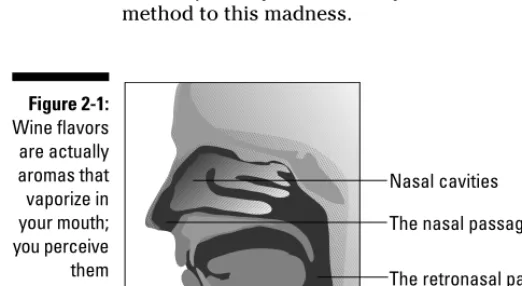
Now we get to the really fun part of tasting wine: swirling and sniffing. This is when you can let your imagination run wild, and no one will ever dare to con-tradict you. If you say that a wine smells like wild strawberries to you, how can anyone prove that it doesn’t?
Before we explain the smelling ritual, and the tasting technique that goes along with it (described in the next section), we want to assure you that: a) you don’t have to apply this procedure to e