International Journal of Advanced Research in Computer Science
RESEARCH PAPER
Available Online at www.ijarcs.info
WiMAX for e-Janraj
Ridhima Jain*
Research Scholar, Bhagwant University, Ajmer, IndiaManish Tiwari
Ph.d FET, Dept. of Computer Science & Engg. MITS (Deemed University) Sikar, India
Partha Pratim Bhattacharya
Tarun Shrimali
Professor, Dept. of Electronics & Comm. PrincipalMITS (Deemed University) Carrier Point Technical University Sikar, India Rajsamand, India
Abstract:With the advent of ICT even in a developing country here lots of plausible efforts have been made to change the way the government
governs. Electronic, mobile and internet technology are working for linkage of the citizen and government. In the initial part of the 21st century,
government changed manual to electronic medium gradually through cable and at the mid of the century the working of government will be converted into the wireless communication. E-governance policies changed centralized to decentralize for better control. Traditional functionality of municipalities could not fulfill the demand and challenges of people. This is where e-janraj has become more rampant than before. This paper attempts to analyze how e- Janraj as a tool to municipality can increase its reach among the citizens through WiMAX. It discusses about WiMAX and in the final segment exhibits how the implementations could proceed.
Keywords:WiMAX, e- Janraj, OFDMA, IEEE, MAN, State WAN, ASN, CSN, MS, JnNURM, ULB
I. INTRODUCTION
There is a need to transform the way how the services are delivered. Despite lots of efforts being put by all ends the citizens are yet to avail the benefits that are proposed through various e-Governance initiatives. Before we proceed further we need to analyze the concept of e- governance first. e- Governance has numerous definitions all pointing to one direction. E-Governance is the public sector’s use of information and communication technologies with the aim of improving information and service delivery, encouraging citizen participation in the decision-making process and making government more accountable, transparent and effective. It involves new styles of leadership, new ways of debating and deciding policy and investment, new ways of accessing education, new ways of listening to citizens and new ways of organizing and delivering information and services. E-governance may be understood as the performance of this governance via the electronic medium in order to facilitate an efficient, speedy and transparent process of disseminating information to the public, and other agencies, and for performing government administration activities.
"Municipality" means an institution of self-governance constituted under the Article 243Q of the Seventy-Fourth Amendment Act of 1992, of the Constitution. Municipality is an organ of self government system that functions in the townships and urban areas. The Municipal area refers to the territorial domain of a Municipality as ascertained by the Governor of a state. There are more than 5000 urban local bodies (ULBs) across India. Municipal or local urban e-Governance is a closely tied to the urban governance reforms that have been shaped by the various events, acts, policies and frameworks during the course of last 2 decades.
Functions enumerated by the 74th Amendment are yet to be
transferred in the majority of the ULBs’
Jawaharlal Nehru National Urban Renewal Mission (JnNURM) is a city-modernisation scheme launched by the Government of India under Ministry of Urban Development. Inaugurated in 2005, JnNURM aims at creating ‘economically productive, efficient, equitable and responsive Cities’ by a adopting a strategy of upgrading the social and economic infrastructure in cities, provision of Basic Services to Urban Poor (BSUP) and wide-ranging urban sector reforms to strengthen municipal governance in accordance with the 74th Constitutional Amendment Act, 1992. Presently e- Governance in Urban local Bodies under JNNURM is being implemented in 7 mega cities with 4 million plus population and 28 cities with 1 million plus population.
However its reach is yet limited and lot of municipality are yet to incorporate the 74th Amendment. e- Janraj adheres
IEEE 802.16 is used for wireless metropolitan area network. It is called wireless MAN. Its broadband access radius is at miles/kilometers like cellular system but it has no need to tower like cellular system but it need the base station that may be on a rooftop of tall building or other high height structure. WiMAX works at high speed with low cost, easy to deploy and is scalable. It is supported by the industry Intel, dell, reliance Infocom etc. The license of WiMAX band ranges upto 10 to 66 GHz frequency range. These range is suitable for deliver of data, voice and video services to fixed sites. Best advantage of WiMAX is that when used by one base station it can be accessed by more than 60 users.
II. PROBLEM STATEMENT
Putting an ‘e’ before the service or department doesn’t essentially mean that we have done our homework and the efficiency of delivery has been increased.
Consider the case of Udaipur city. As per provisional reports of Census India, population of Udaipur in 2011 is 451,735; of which male and female are 234,681 and 217,054 respectively. Although Udaipur city has population of 451,735; its urban / metropolitan population is 475,150 of which 246,856 are males and 228,294 are females. In education section, total literates in Udaipur city are 366,598 of which 200,051 are males while 166,547 are females. Average literacy rate of Udaipur city is 90.66 percent of which male and female literacy was 95.56 and 85.39 percent. Despite such a high literacy rate the e- Governance initiatives have not been able to widen its reach because of:
1. Lack of Awareness
2. Lack of strong network thereby limiting the availability of service.
3.
Silo ApproachWhat we require is a strong network framework that will sort the problem and will enable an easy access to the services provided.
A. National mission mode project for municipalities
The National Mission Mode Project (NMMP) for Municipalities is one of the Mission Mode Projects that has significant citizen interaction, since municipalities provide a large number of basic services for millions of citizen living in India's urban centre. It is envisaged that MMP for municipalities would provide a major fillip to the Government of India's Ministry of Urban Development's urban reform agenda. The vision for the National Mission Mode Project for e-Governance in Municipalities is to leverage the ICT opportunities for sustained improvement in efficiency and effectiveness of delivery of municipal service to citizens. The Key Objectives of the MMP include.
Provide Single Window services to citizens on anytime , anywhere basis.
Increase the efficiency and productivity of ULBS Develop a single and integrated view of ULB
information system across all ULBs in the state. Provide timely & reliable management information
relating to municipal administration for effective decision making. covering all ULBs in class 1 cities ( 423 in total) during the period 2006-07 to 2010-11.
In order to achieve its vision and objectives, NMMP envisages implementation of various application modules covering the following services/ management functions within ULBs:
Registration and issue of birth and death certificate Payment of property tax, Utility Bills and
Management of Utilities that come under ULBs o Property Tax
o Water Supply and other Utilities Grievances and suggestions
Building plan approvals
Procurement and monitoring of projects o E-procurement
Grievances handling, including implementation of the elements of the Right To Information Act, Acknowledgement, Resolution monitoring.
B. MOBILE WIMAX
Mobile WiMAX is a wireless technology. It has mobile and fixed broadband networks through a common wide area broadband radio access technology. It uses Orthogonal Frequency Division Multiple Access (OFDMA) for multipath performance improvement Scalable OFDMA support channel bandwidth from 1.25 to 20 MHz. This helps in enhancing government services, accurate and effective delivery of services, reducing time and cost, improving the capacity for planning management, increasing government staff productivity and so on. Wireless communication reduced cost of the cable and communicating party can communication if they are movable. WiMAX is the best solution of wireless system, it covers whole area of city. Government/municipality is improving the wireless medium it uses. Two types of wireless communications are used: one is unlicensed wireless category Wi-Fi, wireless networks comes in that and second is licensed wireless network as WiMAX comes under that category. We recommend mobile WiMAX for e-Janraj for the following reasons:
C. Technical Ramifications:
1) Coverage and Range: WiMAX range is dependent
upon the frequency and topology, it’s range is 3 to 5 miles from antenna. Most of the areas are covered by it and many customer get benefits of it, even though rural areas at low density population, it serve as profitable of that area. Its infrastructure investment is low compare to other technology. WiMAX is designed to serve entire communities, a Metropolitan Area Network (MAN).
2) Non-Line-of-Sight (NLOS) Service: line of site is
NLOS capabilities of the radio. This allows the operator to area or populous area for increasing speed need to decreases cell size of network by giving multiple access points.
4) Interoperability Advantage: WiMAX devices that are
manufactured by different manufacturer are worked proper in same network. In deploying broadband networks increase the feasibility and risk is reduced.
5) Improved Quality of Service (QoS): The improved
Quality of Service built into the WiMAX technology platform will enable carriers to offer features designed for use by commercial enterprises. WiMAX will also be a pipeline for media-rich applications for personal use, such as gaming or multicast video (once IPv6 is introduced).
6) Lower Consumer Premises Equipment (CPE) Cost:
The cost of WiMAX modems and compliant devices will fall as multiple equipment vendors compete with one another in introducing their products. A proprietary system, such as LTE, does not take advantage of economies of scale, as much as an open standards technology platforms.
7) Scalable: - Allocation of spectrum of broadband
worldwide is still unequal regardless of increasing globalization of economy. WiMAX has scalable physical layer architecture that allows for the data rate to scale easily with available channel bandwidth. It varies upto 1,024 bit FFT(Fast forier transforms) based on the channel bandwidth upto 10 MHz.. This is done if the user in roaming it support to different channel allocation dynamically in different network.
8) Security: Support for a diverse set of user credentials
exists including; Smart Cards, Digital Certificates, and Username/Password schemes.
9) Mobility. Mobile WiMAX, in real time service
handover with within 50 milliseconds such as VoIP performs without service degradation. Security is assured during handover with help of Flexible key management schemes.
D. Business Ramifications
1) Reduced Installation Costs and Simplified
Installation:Wireless installed by operator is not that much
hard. The person who don’t know much can easly use modem it is just work on “plug and play” basis. Technical installation require such as in television connection in WiMAX also require thousand of rupees as monthly installment. In WiMAX for laptop and any mobile electronic devices such as PDA use smart antenna system facilitates it is user friendly. Its charges may high and low according it access for business or depend on economical recession.
2) Market Timing: Now WiMAX is installed and
complete successful development testing and adaption for last two years. By using it market trading and communication is developed and selling and purchasing is being easy. Municipal also communicate to the society and citizen can easy communicate to the municipal for their problem.
3) Applications: WimMAX throughput, range and
business quality is improved of consumer. It improves the quality of data, VoIP, and streams of video.
4) Profitability:The prominent features of WiMAX, its
Quality of Service, increased bandwidth capacity, greater coverage area, reduced costs of installation and operation, and less expensive CPE prices for users, position it for higher profitability. As revenues expand, the build out process can be accelerated.
5) Community Benefits: It shall definitely beneficial
Indian government, municipal and Indian community or society. It will improve education performance, medical, business, and making municipal more responsive to community. It is more than that it is easily deployed, less expensive in service and it cover at end point also rural areas
III. ARCHITECTURE OF WIMAX: WIMAX
IV. REFERENCE NETWORK MODEL
The forum’s Network Working Group (NWG) is responsible for the data delivery at the end point and develops architecture of framework. It guarantees that the interoperability among various equipment and operators. The overall network may be logically divided into three parts:
1. Mobile Stations (MS) used by the end user to access the network.
2. The access service network (ASN), which comprises one or more base stations and one or more ASN gateways that form the radio access network at the edge.
3. Connectivity service network (CSN), which provides IP connectivity and all the IP core network functions. The network reference model developed by the WiMAX Forum NWG defines a number of functional entities and interfaces between those entities. Fig1 below shows some of the more important functional entities.
Base station (BS): BS is connected to the MS
through air interface. Another functions of BS are that it mange mobility, handoff policy, data traffic management of any area, DHCP proxy, session, key and multicast group management are done by BS.
Access service network gateway (ASN-GW): The
ASN gateway work as layer 2. Another functions are it manage admission control, maintain log of subscriber, key Encryption is done for security purpose communicate to the BS through mobility tunnel, work as a foreign agent for mobile IP. Quos and routing to the selected CSN.
Connectivity service network (CSN): The CSN
Figure 1: IP based WIMAX Network Architecture V. CHALLENGES
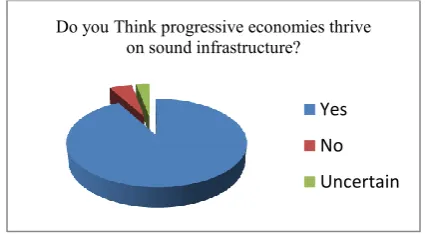
High quality infrastructure is one of the most important pre-requisites for fostering the growth of the e- Janraj as each aspect of infrastructure has a significant impact on the progress of the establishment. The technological aspect of e- Janraj is mainly determined by the infrastructure support in terms of technology, connectivity, kind of network used, topology, bandwidth availability, telephone charges, power supply, real estate, etc. Progressive economies thrive on sound infrastructure, and India realizing the fact that a robust infrastructure acts as an essential catalyst to propel the economy, is opening up to private sector partnerships on a large scale.
The existence of an IT infrastructure is related to the ability of municipal governments to implement innovative IT. In addition, availability and compatibility of software, systems and applications are important factors to consider. Adequate network capacity or bandwidth is the foundation for integrating information systems across public organizations.
Figure 2: Study results showing the relevance of sound infrastructure
In this modern era, the availability of technologies supporting information and communication, and service oriented architecture is in plenty. However, there is a big relative gap in the supporting network and infrastructure. The entire system is a collaboration and orchestration of independent departmental processes, need of the people, support for financial transaction and integration with third party service providers and businesses.
Less bandwidth is the primary technical barrier dogging the IT enabled services industry today. In order to provide a real time access to citizens for the information a very high bandwidth is required. Forms/ Application processing involves a lot of documentation. Current bandwidth does not support easy transfer of scanned documents. Many systems
used in the country are not compatible to the advanced systems of other countries.
The technological infrastructure problems of the country mainly refer to unavailability of uninterrupted power supply, internet and connectivity, lack of efficient public transport system, lack of commercial spaces for business establishment, etc. Telecommunications and connectivity issues like bandwidth per company; telephone call charges, Internet access, etc. need to be addressed for growth and development of the services sector.
However, even after e- Janraj is implemented using mobile WiMAX, the bigger challenge is going to be that of maintenance and management of a remote network – especially in harsh power, heat and dust conditions. Whilst, more robust PC hardware solutions are entering the market, SCAs would need to tie-in with reliable manufacturers and System Integrators for the establishment and maintenance of the e- Janraj. To achieve ease of operations, would also need a focus on the OS, applications software etc, especially from a language interface perspective. Whilst there are some available solutions, with agencies such as CDAC, most of them are still prototypes. These now need to be “taken to the market”.
VI. CONCLUSION
Information and communication technologies have a valuable yet untapped potential to help Indian central and state governments deliver good governance to their constituents. Yet that potential remains largely untapped to date and there are various gaps hindering effective implementation of e-Governance in India. WiMAX is low cost and high performance wireless broadband networks. The mindset of ‘old is gold’ needs to change and efforts must be made to facilitate efficient delivery of services. If we implement e-Janraj using WiMAX, it will surely help towards a strong network framework and will also help e- Municipalities’ to have a wide reach to its citizens even where physical network layout is not feasible.
VII. REFERENCES
[1] Sanida Omerovic, Faculty of Electrical Engineering, University of Ljubljana, SloveniaWiMax Overview. [2] Andrews J. G., Ghosh A., Rias M., (2007),
Fundamentals of WiMAX-Understanding Broadband wireless Networking, Pearson Education, Inc.
[3] Charles Chittaranjan Patra, Md. Zahangir Alam, M Abdus Sobhan” WiMAX Network Deployment for ICT Based E-learning in Bangladesh: Challenges and Recommendation” International Journal of Information Systems and Telecommunication Engineering (Vol.1-2010/Iss.1) Patra et al. / WiMAX Network Deployment for ICT Based E-learning in Bangladesh … / pp. 39-46 [4] Mohammad Isaac Shahnavazi E-Municipality; New
Step in Providing Electronic Services in Iran International Journal of Business and Social Science Vol. 3 No. 15; August 2012
[5] Abdollahi, A. Fasanghary, M .Azadnia, M., 2009. A Foresight based Framework for E-government Strategic Planning, Journal of Software Vol .4, No. 6, pp 544-46.
Do you Think progressive economies thrive on sound infrastructure?
Yes
No
[6] "The Bandwidth Demand Surge: Drivers & Solutions for Network Operatorspublisher = XO Communications". February 2007.