Analysis of

-1,3-Glucan Assembly in
Saccharomyces cerevisiae
Using a Synthetic
Interaction Network and Altered Sensitivity to Caspofungin
Guillaume Lesage, Anne-Marie Sdicu, Patrice Me´nard, Jesse Shapiro, Shamiza Hussein
and Howard Bussey
1Department of Biology, McGill University, Montreal, Que´bec H3A 1B1, Canada
Manuscript received October 28, 2003 Accepted for publication January 14, 2004
ABSTRACT
Large-scale screening of genetic and chemical-genetic interactions was used to examine the assembly and regulation of -1,3-glucan in Saccharomyces cerevisiae. Using the set of deletion mutants inⵑ4600 nonessential genes, we scored synthetic interactions with genes encoding subunits of the-1,3-glucan synthase (FKS1, FKS2), the glucan synthesis regulator (SMI1/KNR4), and a-1,3-glucanosyltransferase (GAS1). In the resulting network, FKS1, FKS2, GAS1, and SMI1 are connected to 135 genes in 195 interactions, with 26 of these genes also interacting withCHS3encoding chitin synthase III. A network core of 51 genes is multiply connected with 112 interactions. Thirty-two of these core genes are known to be involved in cell wall assembly and polarized growth, and 8 genes of unknown function are candidates for involvement in these processes. In parallel, we screened the yeast deletion mutant collection for altered sensitivity to the glucan synthase inhibitor, caspofungin. Deletions in 52 genes led to caspofungin hypersensitivity and those in 39 genes to resistance. Integration of the glucan interaction network with the caspofungin data indicates an overlapping set of genes involved inFKS2regulation, compensatory chitin synthesis, protein mannosylation, and thePKC1-dependent cell integrity pathway.
T
HE cell wall is a major organelle that surrounds al.2002). In addition to the Rho1p regulatory subunit, other proteins are required for normal levels of -1,3-cells, is responsible for cell shape and osmoticstabil-ity, and acts as a filter for large molecules. The cell wall glucan. The SMI1/KNR4 gene was cloned by comple-mentation of aHansenula mrakiiK9 killer toxin (a glucan is composed mainly of-1,3 and-1,6-glucans,
manno-proteins, and chitin, with the relative proportions of synthase inhibitor) resistant mutant (Honget al.1994). Thesmi1⌬mutant has a highly permeable cell wall and these constituents varying with growth conditions and
shows both decreased glucan synthase activity and cell the cellular developmental program.-1,3-Glucan is the
wall-1,3-glucan content (Honget al.1994;Martinet
principal cell wall component, to which the other
com-al. 1999). Genetic and biochemical evidence suggests ponents are crosslinked (Smits et al.1999; Klis et al.
that Smi1p acts in the PKC1-SLT2signaling cascade by 2002). Synthesis of -1,3-glucan occurs at the plasma
modulating the kinase activity of Slt2p (Martin-Yken
membrane. Glucan synthase is thought to contain a
et al.2002, 2003). catalytic subunit, encoded by the two homologous genes
Cell wall composition changes during growth,
bud-FKS1andFKS2/GSC2(Mazuret al.1995), and a
regula-ding, mating, and sporulation, and these dynamic pro-tory subunit, the small GTPase Rho1p (Drgonova et
cesses require remodeling of the crosslinking of 
-1,3-al. 1996; Mazur and Baginsky 1996; Qadota et al.
and -1,6-glucans to themselves and to other cell wall 1996).FKS1andFKS2encode a pair of integral membrane
components. Gas1p, a GPI-anchored protein localized proteins with 16 predicted transmembrane domains that
to the extracellular face of the plasma membrane, has share 88% identity. Deletion ofFKS1leads to a decrease
-1,3-glucanosyltransferase activity and is involved in in-glucan and an increase in chitin and mannoprotein
this remodeling (Mouynaet al.2000). A nullgas1 mu-levels in the cell wall. The deletion ofFKS2causes no
tant releases -glucosylated proteins into the medium obvious cell wall defect, but afks1⌬fks2⌬double mutant
and shows increased chitin and mannoprotein levels is inviable (Mazuret al.1995). The yeast genome
con-(Ramet al.1998). Such increased levels of cell wall com-tains a third gene,FKS3, whose product is 72% identical
ponents can compensate for a defect in a specific poly-to Fks1p and Fks2p. The role ofFKS3remains unknown,
mer: for instance, a decrease in-1,3-glucan is buffered but afks3⌬mutant has no apparent cell wall defects or
by an increase in chitin made by chitin synthase III genetic interactions with FKS1 or FKS2 (Dijkgraaf et
(Valdiviesoet al.2000;Garcia-Rodriguezet al.2000b;
Carottiet al.2002).CHS3encodes chitin synthase III, and Chs3p is responsible for synthesis of the chitin in 1Corresponding author:Department of Biology, McGill University,
a ring at the bud neck, in the lateral wall, and in response Stewart Bldg., 1205 Dr. Penfield Ave., Montreal, Que´bec H3A 1B1,
Canada. E-mail: [email protected] to external stress (Roncero2002).
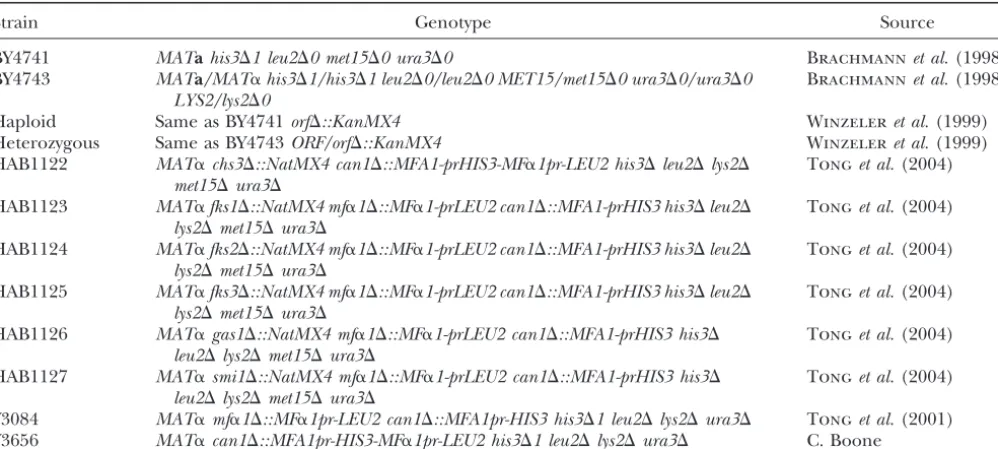
TABLE 1
Yeast strains used
Strain Genotype Source
BY4741 MATahis3⌬1 leu2⌬0 met15⌬0 ura3⌬0 Brachmannet al.(1998) BY4743 MATa/MAT␣his3⌬1/his3⌬1 leu2⌬0/leu2⌬0 MET15/met15⌬0 ura3⌬0/ura3⌬0 Brachmannet al.(1998)
LYS2/lys2⌬0
Haploid Same as BY4741orf⌬::KanMX4 Winzeleret al.(1999) Heterozygous Same as BY4743ORF/orf⌬::KanMX4 Winzeleret al.(1999) HAB1122 MAT␣chs3⌬::NatMX4 can1⌬::MFA1-prHIS3-MF␣1pr-LEU2 his3⌬leu2⌬lys2⌬ Tonget al.(2004)
met15⌬ura3⌬
HAB1123 MAT␣fks1⌬::NatMX4 mf␣1⌬::MF␣1-prLEU2 can1⌬::MFA1-prHIS3 his3⌬leu2⌬ Tonget al.(2004)
lys2⌬met15⌬ura3⌬
HAB1124 MAT␣fks2⌬::NatMX4 mf␣1⌬::MF␣1-prLEU2 can1⌬::MFA1-prHIS3 his3⌬leu2⌬ Tonget al.(2004)
lys2⌬met15⌬ura3⌬
HAB1125 MAT␣fks3⌬::NatMX4 mf␣1⌬::MF␣1-prLEU2 can1⌬::MFA1-prHIS3 his3⌬leu2⌬ Tonget al.(2004)
lys2⌬met15⌬ura3⌬
HAB1126 MAT␣gas1⌬::NatMX4 mf␣1⌬::MF␣1-prLEU2 can1⌬::MFA1-prHIS3 his3⌬ Tonget al.(2004)
leu2⌬lys2⌬met15⌬ura3⌬
HAB1127 MAT␣smi1⌬::NatMX4 mf␣1⌬::MF␣1-prLEU2 can1⌬::MFA1-prHIS3 his3⌬ Tonget al.(2004)
leu2⌬lys2⌬met15⌬ura3⌬
Y3084 MAT␣mf␣1⌬::MF␣1pr-LEU2 can1⌬::MFA1pr-HIS3 his3⌬1 leu2⌬lys2⌬ura3⌬ Tonget al.(2001) Y3656 MAT␣can1⌬::MFA1pr-HIS3-MF␣1pr-LEU2 his3⌬1 leu2⌬lys2⌬ura3⌬ C. Boone
with 200g/ml G-418 (Invitrogen, Carlsbad, CA). Caspofun-To uncover the network of genes involved in 
-1,3-gin acetate (Cancidas; Merck, Whitehouse Station, NJ) was a glucan biology, we made two studies, using the
collec-gift from Elitra Canada (Montreal). Nourseothricin (clon-tion of yeast mutants singly disrupted in each gene. As NAT) was purchased from Werner Bioagent ( Jena, Germany). part of a larger study of the yeast genetic network (Tong SGA analysis: The synthetic genetic array (SGA) analysis
et al.2004), we looked for mutations leading to a growth procedure is fully described elsewhere (Tonget al.2001, 2004) and is briefly summarized below.
defect when combined with a FKS1,FKS2, GAS1, or a
Construction of query strains: Query strains HAB1122,
SMI1 deletion. We found that deletion of 135 genes
HAB1123, HAB1124, HAB1125, HAB1126, and HAB1127 (Ta-impaired growth offks1⌬,fks2⌬,gas1⌬, orsmi1⌬mutants
ble 1) were obtained in four steps. First, theKanMX4from and we analyze these interactions here. As a complemen- BY4741-derived strains (Table 1) was switched toNatMX4by tary approach, we looked for single deletions leading PCR-based transformation. Second, the nourseothricin-resis-tant transformants derived fromchs3or other mutants were to an altered sensitivity to the-1,3-glucan synthase
in-mated to Y3656 or Y3084 (Table 1), respectively, and the hibitor, caspofungin. Caspofungin is an
echinocandin-MATa/␣ diploids were transferred to sporulation medium. like antifungal lipopeptide that inhibits -1,3-glucan
MAT␣meiotic progeny were then selected on synthetic me-synthesisin vitro by affecting the FKS1andFKS2 gene dium lacking leucine and arginine but containing canavanine. products inSaccharomyces cerevisiae(for a review seeDere- The mating type was confirmed by PCR, according toHuxley sinski and Stevens 2003; Letscher-Bru and Her- et al.(1990). Third, cells were replica plated onto medium containing clonNAT to select for the deletion mutants. Fourth,
brecht 2003). Mutant alleles in FKS1 and FKS2 that
cells were replica plated onto medium lacking lysine to identify lead to echinocandin resistance inS. cerevisiaehave been
lys2⌬derivatives. identified (Douglaset al.1994;Mazuret al.1995). We
SGA screens:A given query strain was pinned onto a fresh globally tested for altered sensitivity of ⵑ4600 haploid YEPD plate at a density of 768/plate, and then the deletion deletion mutants and theⵑ1100 heterozygous diploids mutant array was pinned on top of the query cells. The re-in essential genes and found 91 genes with such a pheno- sulting diploids were selected on medium containing G418 and clonNAT. Arrays were then pinned onto sporulation me-type.
dium. After a 5-day incubation at 22⬚spores were pinned onto haploid selection medium to select for growth ofMATaspore progeny. This step was performed twice. Then, meiotic prog-MATERIALS AND METHODS
eny carrying the deletion mutation derived from the deletion mutant array parental strain were selected on medium con-Strains, media, and drugs:All strains used (Table 1) are
taining G418. Finally, double mutants were selected on hap-available from the deletion project consortium (Winzeleret
loid-selection medium containing G418 and clonNAT for 2
al.1999). Haploid deletion mutants were previously arrayed
days. Colony size was then scored by visual plate inspection. on 16 768-format plates using a colony picker (Tong et al.
Each screen was done in triplicate, and putative interactions 2001). Three plates with 1058 diploid strains heterozygous for
scored multiple times (ⵑ1800 interactions for the six SGA essential genes were also arrayed. Arrays were propagated at
screens) were subjected to confirmation tests. 30⬚ on standard YEPD (10 g/liter yeast extract, 20 g/liter
for 2 days at 30⬚ in liquid haploid selection medium. The tions tested (i.e., the number of strains in the array), andP(N,
M)⫽N!/(M!(N⫺M)!).
MATaprogeny were diluted in sterile water and plated out on medium that selects for the query-gene mutation [clon-NAT], the deletion mutant array mutation [G418], or both the
query-gene and deletion mutant array mutations [clonNAT/ RESULTS G418], and then incubated at 30⬚forⵑ2 days. Colony growth
under the three conditions was compared and the double Synthetic interactions with mutants in-1,3-glucan mutants were scored as synthetic sick (SS), synthetic lethal
assembly
(SL), or no interaction (No). Tetrad analysis was used to test
synthetic interactions in 42 cases. In all, 248 interactions were To identify genes buffering defects in -1,3-glucan positive.
synthesis, we searched for genes required for viability Accuracy of the procedure:Since screens were done in triplicate
or optimal growth infks1⌬,fks2⌬,fks3⌬,gas1⌬, orsmi1⌬
followed by a confirmation procedure, we expect our data set
backgrounds. Haploid deletion mutants in 4598 genes to be largely devoid of false positives. However, some
interac-tions may have been missed (false negatives). A search in the were arrayed and crossed with strains individually de-literature and databases indicated that 10, 1, 1, 11, 5, and 8 leted forFKS1,FKS2,FKS3,GAS1, orSMI1. The resulting synthetic-lethal interactions were reported for FKS1, FKS2, diploids were selected, sporulated, and haploid double
FKS3,GAS1,SMI1, andCHS3, respectively. Of these 36
interac-mutants scored for growth. Double interac-mutants showing a tions, 6 engaged essential genes and thus were not seen with
growth defect were scored as candidate interactants. our procedure. Of the 30 remaining “observable” interactions,
22 were also found in our screen. On the basis of this, we Random spore analysis was used to confirm a synthetic estimate the rate of false negatives to be ⵑ30%, which is interaction. In all, 76, 71, 48, and 1 genes were found consistent with an estimate made on a larger SGA data set to interact with FKS1, SMI1, GAS1, and FKS2, respec-(Tong et al.2004). Some true interactions would be missed
tively. No synthetic interactions were found with thefks3
if they involve one of theⵑ500 genes whose deletion led to a
null strain. We found 77 synthetic lethal interactions systematic defect in our assay and were excluded from analysis
(Tong et al.2001). For example, 25 of the 45 nonessential and 118 double mutant combinations leading to growth genes whose deletion leads to caspofungin hypersensitivity fall defects. The 135 genes involved in these interactions are into this group. grouped in eight categories according to their cellular
Caspofungin sensitivity/resistance screening procedures:
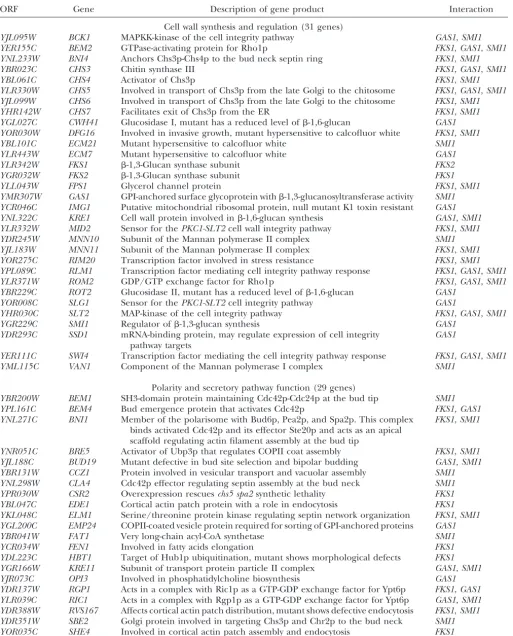
function (Table 2) and are displayed as a network of Robotic procedures:Mutants were pinned onto YEPD plates with
195 interactions depicted as edges linking two nodes or without caspofungin. Final caspofungin concentrations
were 500 ng/ml (from a 1-mg/ml stock in 1% DMSO) for (Figure 1).
sensitivity testing and 5g/ml (from a 10-mg/ml stock in Synthesis and regulation of the cell wall:In addition 1% DMSO) for resistance screening. Growth was scored after toFKS1,FKS2,GAS1, andSMI1, 27 genes group here. overnight incubation at 25⬚. Strains showing significant growth
Some are involved in the synthesis of cell wall compo-defects on a 0.5-g/ml caspofungin plate (mutants in 157
nents such as chitin (BNI4,CHS3,CHS4,CHS5,CHS6, nonessential genes and 103 essential genes) or growing on a
5-g/ml caspofungin plate (mutants in 116 nonessential andCHS7),-1,6-glucan (KRE1), or protein glycosyla-genes) were individually confirmed by the spotting assay de- tion (CWH41,MNN10,MNN11,ROT2, andVAN1). This scribed below. indicates that when-1,3-glucan synthesis is impaired,
Confirmation and scoring procedure:Due to high cell density
correct synthesis of other cell wall constituents is re-(768 colonies/plate) and the pinning geometry of the plate
quired for normal cell growth or viability. during the robotic screening, the caspofungin concentrations
used during the screening were higher than those used in the Components of thePKC1-SLT2cell integrity pathway, confirmation test. Cells were grown in liquid YEPD to log- such as sensors (MID2 and SLG1/WCS1), regulators phase, diluted to OD6000.5, serial diluted 10-fold four times, (BEM2andROM2), kinases (BCK1andSLT2), and
tran-and 2.5l was spotted onto YEPD⫾caspofungin. Since
hap-scription factors (RLM1,SSD1, andSWI4), occur in the loids are less sensitive to the drug than diploids, confirmation
interaction network. This mitogen-activated protein of the hypersensitivity phenotype was performed at 100 and
200 ng/ml caspofungin for the former and at 150 ng/ml (MAP) kinase cascade orchestrates morphological change caspofungin for the latter. Phenotypes were scored after over- by regulating cell wall assembly in response to stress night incubation at 25⬚, by checking growth of mutants in the and low osmolarity (Heinischet al. 1999). Moreover, presence or absence of the drug and comparison to growth
the ability to respond to low osmolarity with the glycerol of the wild-type strain. Sensitive haploid mutants that failed
channel Fps1p is essential in thefks1andsmi1mutants. to grow at 100 ng/ml, or at 200 ng/ml, or grew very slowly
at 200 ng/ml were scored as - - -, - -, or -, respectively. Sensitive Thus, appropriate osmosensing and a functional cell diploid strains were scored - - - if they did not grow in the integrity pathway buffer mutants defective in -1,3-glu-presence of drug and - - when they grew poorly. Confirmation can synthesis.
of the resistance phenotype was performed at 400 ng/ml.
Finally, five poorly characterized genes (DFG16/ECM41, Probability of overlap between networks:The probability
ECM7, ECM21, IMG1, and RIM20) are candidates for PthatNhitgenes are found in two data sets composed of N1
involvement in cell wall assembly, with their mutants andN2interacting genes was estimated using the formula
having altered sensitivity to environmental stresses or P⫽P(N1,Nhit)
P(N,Nhit)
P(N2,Nhit) P(N,Nhit)
cell surface perturbing agents.
Polarity and secretory pathway function: Since cell
interac-TABLE 2
Genes showing synthetic interaction withFKS1,FKS2,GAS1, orSMI1
ORF Gene Description of gene product Interaction
Cell wall synthesis and regulation (31 genes)
YJL095W BCK1 MAPKK-kinase of the cell integrity pathway GAS1,SMI1
YER155C BEM2 GTPase-activating protein for Rho1p FKS1,GAS1,SMI1
YNL233W BNI4 Anchors Chs3p-Chs4p to the bud neck septin ring FKS1,SMI1
YBR023C CHS3 Chitin synthase III FKS1,GAS1,SMI1
YBL061C CHS4 Activator of Chs3p FKS1,SMI1
YLR330W CHS5 Involved in transport of Chs3p from the late Golgi to the chitosome FKS1,GAS1,SMI1
YJL099W CHS6 Involved in transport of Chs3p from the late Golgi to the chitosome FKS1,SMI1
YHR142W CHS7 Facilitates exit of Chs3p from the ER FKS1,SMI1
YGL027C CWH41 Glucosidase I, mutant has a reduced level of-1,6-glucan GAS1
YOR030W DFG16 Involved in invasive growth, mutant hypersensitive to calcofluor white FKS1,SMI1
YBL101C ECM21 Mutant hypersensitive to calcofluor white SMI1
YLR443W ECM7 Mutant hypersensitive to calcofluor white GAS1
YLR342W FKS1 -1,3-Glucan synthase subunit FKS2
YGR032W FKS2 -1,3-Glucan synthase subunit FKS1
YLL043W FPS1 Glycerol channel protein FKS1,SMI1
YMR307W GAS1 GPI-anchored surface glycoprotein with-1,3-glucanosyltransferase activity SMI1
YCR046C IMG1 Putative mitochondrial ribosomal protein, null mutant K1 toxin resistant GAS1
YNL322C KRE1 Cell wall protein involved in-1,6-glucan synthesis GAS1,SMI1
YLR332W MID2 Sensor for thePKC1-SLT2cell wall integrity pathway FKS1,SMI1
YDR245W MNN10 Subunit of the Mannan polymerase II complex SMI1
YJL183W MNN11 Subunit of the Mannan polymerase II complex FKS1,SMI1
YOR275C RIM20 Transcription factor involved in stress resistance FKS1, SMI1
YPL089C RLM1 Transcription factor mediating cell integrity pathway response FKS1,GAS1,SMI1
YLR371W ROM2 GDP/GTP exchange factor for Rho1p FKS1,GAS1,SMI1
YBR229C ROT2 Glucosidase II, mutant has a reduced level of-1,6-glucan GAS1
YOR008C SLG1 Sensor for thePKC1-SLT2cell integrity pathway GAS1
YHR030C SLT2 MAP-kinase of the cell integrity pathway FKS1,GAS1,SMI1
YGR229C SMI1 Regulator of-1,3-glucan synthesis GAS1
YDR293C SSD1 mRNA-binding protein, may regulate expression of cell integrity GAS1
pathway targets
YER111C SWI4 Transcription factor mediating the cell integrity pathway response FKS1,GAS1,SMI1
YML115C VAN1 Component of the Mannan polymerase I complex SMI1
Polarity and secretory pathway function (29 genes)
YBR200W BEM1 SH3-domain protein maintaining Cdc42p-Cdc24p at the bud tip SMI1
YPL161C BEM4 Bud emergence protein that activates Cdc42p FKS1, GAS1
YNL271C BNI1 Member of the polarisome with Bud6p, Pea2p, and Spa2p. This complex FKS1,SMI1
binds activated Cdc42p and its effector Ste20p and acts as an apical scaffold regulating actin filament assembly at the bud tip
YNR051C BRE5 Activator of Ubp3p that regulates COPII coat assembly FKS1,SMI1
YJL188C BUD19 Mutant defective in bud site selection and bipolar budding GAS1,SMI1
YBR131W CCZ1 Protein involved in vesicular transport and vacuolar assembly SMI1
YNL298W CLA4 Cdc42p effector regulating septin assembly at the bud neck SMI1
YPR030W CSR2 Overexpression rescueschs5 spa2synthetic lethality FKS1
YBL047C EDE1 Cortical actin patch protein with a role in endocytosis FKS1
YKL048C ELM1 Serine/threonine protein kinase regulating septin network organization FKS1,SMI1
YGL200C EMP24 COPII-coated vesicle protein required for sorting of GPI-anchored proteins GAS1
YBR041W FAT1 Very long-chain acyl-CoA synthetase SMI1
YCR034W FEN1 Involved in fatty acids elongation FKS1
YDL223C HBT1 Target of Hub1p ubiquitination, mutant shows morphological defects FKS1
YGR166W KRE11 Subunit of transport protein particle II complex GAS1,SMI1
YJR073C OPI3 Involved in phosphatidylcholine biosynthesis GAS1
YDR137W RGP1 Acts in a complex with Ric1p as a GTP-GDP exchange factor for Ypt6p FKS1,GAS1
YLR039C RIC1 Acts in a complex with Rgp1p as a GTP-GDP exchange factor for Ypt6p GAS1,SMI1
YDR388W RVS167 Affects cortical actin patch distribution, mutant shows defective endocytosis FKS1,SMI1
YDR351W SBE2 Golgi protein involved in targeting Chs3p and Chr2p to the bud neck SMI1
YOR035C SHE4 Involved in cortical actin patch assembly and endocytosis FKS1
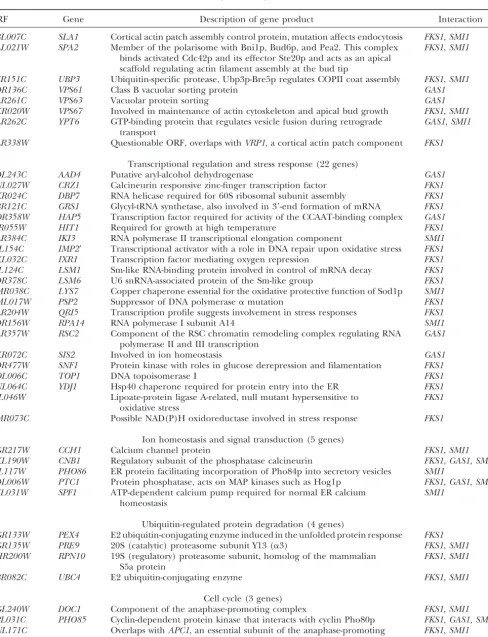
TABLE 2
(Continued)
ORF Gene Description of gene product Interaction
YBL007C SLA1 Cortical actin patch assembly control protein, mutation affects endocytosis FKS1,SMI1
YLL021W SPA2 Member of the polarisome with Bni1p, Bud6p, and Pea2. This complex FKS1,SMI1
binds activated Cdc42p and its effector Ste20p and acts as an apical scaffold regulating actin filament assembly at the bud tip
YER151C UBP3 Ubiquitin-specific protease, Ubp3p-Bre5p regulates COPII coat assembly FKS1,SMI1
YDR136C VPS61 Class B vacuolar sorting protein GAS1
YLR261C VPS63 Vacuolar protein sorting GAS1
YKR020W VPS67 Involved in maintenance of actin cytoskeleton and apical bud growth FKS1,SMI1
YLR262C YPT6 GTP-binding protein that regulates vesicle fusion during retrograde GAS1,SMI1
transport
YLR338W Questionable ORF, overlaps withVRP1, a cortical actin patch component FKS1
Transcriptional regulation and stress response (22 genes)
YDL243C AAD4 Putative aryl-alcohol dehydrogenase GAS1
YNL027W CRZ1 Calcineurin responsive zinc-finger transcription factor FKS1
YKR024C DBP7 RNA helicase required for 60S ribosomal subunit assembly FKS1
YBR121C GRS1 Glycyl-tRNA synthetase, also involved in 3⬘-end formation of mRNA FKS1
YOR358W HAP5 Transcription factor required for activity of the CCAAT-binding complex GAS1
YJR055W HIT1 Required for growth at high temperature FKS1
YLR384C IKI3 RNA polymerase II transcriptional elongation component SMI1
YIL154C IMP2⬘ Transcriptional activator with a role in DNA repair upon oxidative stress FKS1
YKL032C IXR1 Transcription factor mediating oxygen repression FKS1
YJL124C LSM1 Sm-like RNA-binding protein involved in control of mRNA decay FKS1
YDR378C LSM6 U6 snRNA-associated protein of the Sm-like group FKS1
YMR038C LYS7 Copper chaperone essential for the oxidative protective function of Sod1p SMI1
YML017W PSP2 Suppressor of DNA polymerase␣mutation FKS1
YLR204W QRI5 Transcription profile suggests involvement in stress responses FKS1
YDR156W RPA14 RNA polymerase I subunit A14 SMI1
YLR357W RSC2 Component of the RSC chromatin remodeling complex regulating RNA GAS1
polymerase II and III transcription
YKR072C SIS2 Involved in ion homeostasis GAS1
YDR477W SNF1 Protein kinase with roles in glucose derepression and filamentation FKS1
YOL006C TOP1 DNA topoisomerase I FKS1
YNL064C YDJ1 Hsp40 chaperone required for protein entry into the ER FKS1
YJL046W Lipoate-protein ligase A-related, null mutant hypersensitive to FKS1
oxidative stress
YMR073C Possible NAD(P)H oxidoreductase involved in stress response FKS1
Ion homeostasis and signal transduction (5 genes)
YGR217W CCH1 Calcium channel protein FKS1,SMI1
YKL190W CNB1 Regulatory subunit of the phosphatase calcineurin FKS1,GAS1,SMI1
YJL117W PHO86 ER protein facilitating incorporation of Pho84p into secretory vesicles SMI1
YDL006W PTC1 Protein phosphatase, acts on MAP kinases such as Hog1p FKS1,GAS1,SMI1
YEL031W SPF1 ATP-dependent calcium pump required for normal ER calcium SMI1
homeostasis
Ubiquitin-regulated protein degradation (4 genes)
YGR133W PEX4 E2 ubiquitin-conjugating enzyme induced in the unfolded protein response FKS1
YGR135W PRE9 20S (catalytic) proteasome subunit Y13 (␣3) FKS1,SMI1
YHR200W RPN10 19S (regulatory) proteasome subunit, homolog of the mammalian FKS1,SMI1
S5a protein
YBR082C UBC4 E2 ubiquitin-conjugating enzyme FKS1,SMI1
Cell cycle (3 genes)
YGL240W DOC1 Component of the anaphase-promoting complex FKS1,SMI1
YPL031C PHO85 Cyclin-dependent protein kinase that interacts with cyclin Pho80p FKS1,GAS1, SMI1
YNL171C Overlaps withAPC1, an essential subunit of the anaphase-promoting FKS1,SMI1
complex
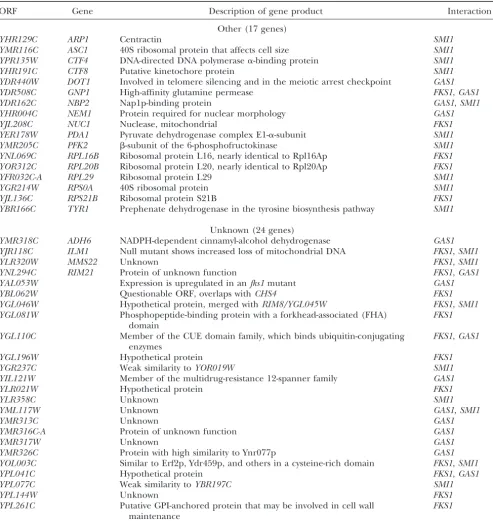
TABLE 2
(Continued)
ORF Gene Description of gene product Interaction
Other (17 genes)
YHR129C ARP1 Centractin SMI1
YMR116C ASC1 40S ribosomal protein that affects cell size SMI1
YPR135W CTF4 DNA-directed DNA polymerase␣-binding protein SMI1
YHR191C CTF8 Putative kinetochore protein SMI1
YDR440W DOT1 Involved in telomere silencing and in the meiotic arrest checkpoint GAS1
YDR508C GNP1 High-affinity glutamine permease FKS1,GAS1
YDR162C NBP2 Nap1p-binding protein GAS1,SMI1
YHR004C NEM1 Protein required for nuclear morphology GAS1
YJL208C NUC1 Nuclease, mitochondrial FKS1
YER178W PDA1 Pyruvate dehydrogenase complex E1-␣-subunit SMI1
YMR205C PFK2 -subunit of the 6-phosphofructokinase SMI1
YNL069C RPL16B Ribosomal protein L16, nearly identical to Rpl16Ap FKS1
YOR312C RPL20B Ribosomal protein L20, nearly identical to Rpl20Ap FKS1
YFR032C-A RPL29 Ribosomal protein L29 SMI1
YGR214W RPS0A 40S ribosomal protein SMI1
YJL136C RPS21B Ribosomal protein S21B FKS1
YBR166C TYR1 Prephenate dehydrogenase in the tyrosine biosynthesis pathway SMI1
Unknown (24 genes)
YMR318C ADH6 NADPH-dependent cinnamyl-alcohol dehydrogenase GAS1
YJR118C ILM1 Null mutant shows increased loss of mitochondrial DNA FKS1,SMI1
YLR320W MMS22 Unknown FKS1,SMI1
YNL294C RIM21 Protein of unknown function FKS1,GAS1
YAL053W Expression is upregulated in anfks1mutant GAS1
YBL062W Questionable ORF, overlaps withCHS4 FKS1
YGL046W Hypothetical protein, merged withRIM8/YGL045W FKS1,SMI1
YGL081W Phosphopeptide-binding protein with a forkhead-associated (FHA) FKS1
domain
YGL110C Member of the CUE domain family, which binds ubiquitin-conjugating FKS1,GAS1
enzymes
YGL196W Hypothetical protein FKS1
YGR237C Weak similarity toYOR019W SMI1
YIL121W Member of the multidrug-resistance 12-spanner family GAS1
YLR021W Hypothetical protein FKS1
YLR358C Unknown SMI1
YML117W Unknown GAS1,SMI1
YMR313C Unknown GAS1
YMR316C-A Protein of unknown function GAS1
YMR317W Unknown GAS1
YMR326C Protein with high similarity to Ynr077p GAS1
YOL003C Similar to Erf2p, Ydr459p, and others in a cysteine-rich domain FKS1,SMI1
YPL041C Hypothetical protein FKS1,GAS1
YPL077C Weak similarity toYBR197C SMI1
YPL144W Unknown FKS1
YPL261C Putative GPI-anchored protein that may be involved in cell wall FKS1
maintenance
ORF, open reading frame; ER, endoplasmic reticulum.
brane biogenesis are needed for coordinating cell wall polymerization from the bud tip (BNI1,SPA2), regula-tors of septin assembly at the bud neck (CLA4,ELM1), assembly during yeast growth (PruyneandBretscher
2000a,b), the 29 genes involved in these cellular func- and factors with a role in cell morphology and budding (BUD19,HBT1). Stages of secretion found among inter-tions are grouped in a single category. Genes involved
in cell polarity and showing interaction in the network acting genes involved in vesicular transport are ER to Golgi (BRE5,EMP24, andUBP3), intra-Golgi (KRE11), encode regulators of the Cdc42p GTPase (BEM1,BEM4),
assem-Figure1.—Network of synthetic interactions withCHS3, FKS1, GSC2/FKS2,GAS1, andSMI1. Genes engaged in interactions are represented as nodes. Nodes are colored according to functional categories, assigned on the basis of information from the literature.
bly (CCZ1,VPS61,VPS63, andVPS67). Genes required (AAD4,HIT1,IMP2⬘/YIL154C,LYS2,QRI5,SIS2,YDJ1,
YJR046W, andYMR073C). The regulated expression of for correct endocytosis are found in the glucan network,
encoding regulators of cortical actin patch assembly genes compensating for defects in-1,3-glucan synthesis may depend upon these gene products.
(EDE1,RVS167,SHE4,SLA1, andYLR338W) or
regula-tors of vesicle trafficking from endosomes to the Golgi Ion homeostasis and signal transduction: Excluded here are genes involved in the cell integrity pathway (RIC1, RGP1, and YPT6). A further three genes are
involved in membrane biogenesis (FAT1,FEN1/ELO2/ discussed above. The five remaining genes are involved in the downregulation of the high-osmolarity glycerol
GNS1, andOPI3).
Transport of cell wall assembly components to sites response (HOG) pathway (PTC1), calcium signaling (CCH1,CNB1, andSPF1/COD1), and phosphate trans-of cell wall expansion requires cell polarity control,
for-ward transport through the secretory pathway, and en- port (PHO86). Ion homeostasis, by acting through sig-naling cascades, may contribute to the onset of processes docytosis-mediated recycling. In mutants defective in
-1,3-glucan synthesis, such polarized transport is essen- essential for viability of -1,3-glucan mutants.
Ubiquitin-regulated protein degradation:
Constit-tial to bring compensatory components to the cell wall.
Transcription regulation and stress response:Genes uents of the 26S proteasome (PRE9 andRPN10) and
ubiquitin-conjugating enzymes (PEX4andUBC4) were encoding transcription factors (CRZ1,HAP1, andIXR1),
transcription factor regulators (RSC2andSNF1), a sub- found. Ubiquitination regulates a number of processes required in -1,3-glucan mutants, such as endocytosis unit of RNA polymerase I (RPA14), and RNA processing
factors (DBP7, GRS1, LSM1, LSM6, PSP2, and TOP1) or cell cycle progression.
Cell cycle:Regulation of cell cycle progression by cyclin
were found. An additional set of nine genes putatively
Figure 2.—Assay for altered sensitivity to caspofungin. Dilu-tions of exponentially growing wild-type haploid or diploid (WT or WT/WT, respectively) and mu-tant strains were spotted onto YEPD plates containing the indi-cated caspofungin concentration.
crucial in coordinating cell wall synthesis and cell resistant mutants a drug concentration that inhibited growth of the wild type was used (Figure 2). Strains growth and buffers-1,3-glucan mutant defects.
Other genes and poorly characterized genes:Of the were first grown on YEPD and then replicated onto
YEPD with or without caspofungin. The hits were then other genes interacting withFKS1,GAS1, orSMI1(Table
2), 17 have a known function not discussed above, and confirmed by a spotting assay (see materials and methodsand Figure 2). We found 45 haploid deletion 24 are poorly characterized or of unknown function.
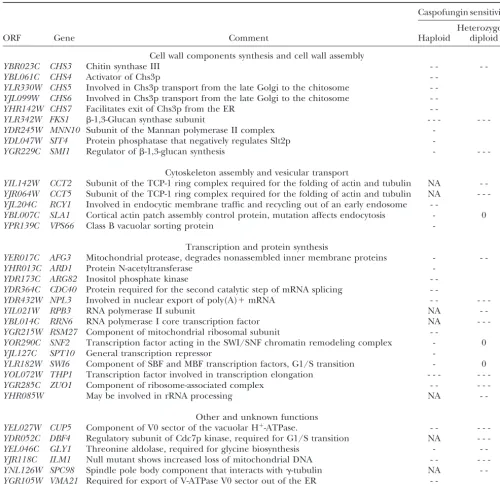
mutants to be hypersensitive to caspofungin. Of these, 23 were also tested for haplo-insufficiency, with 16
Screen for genetic interactions withCHS3
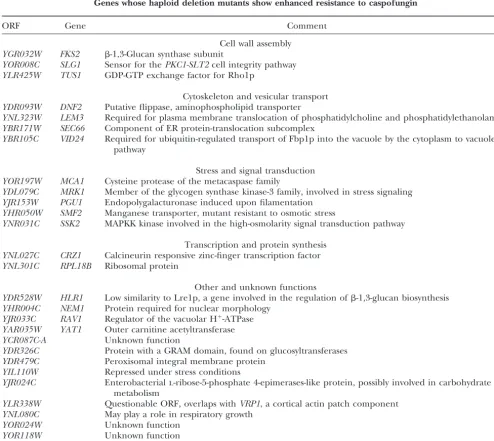
(69%) showing a haplo-insufficient sensitivity pheno-As chitin synthesis can compensate for mutational type as heterozygous diploids (Table 3 and supplemen-defects in-1,3-glucan synthesis,CHS3and other genes tary Table 1 at http://www.genetics.org/supplemental/). required for Chs3p function show genetic interactions In addition, among the ⵑ1100 heterozygous null mu-withFKS1,SMI1, andGAS1. To further investigate this tants in essential genes, 7 were caspofungin hypersensi-compensation process, we reasoned that genes involved tive (Table 3). Finally, a screen for haploid deletion in balancing chitin and -1,3-glucan synthesis should mutants able to grow at high caspofungin concentration be required for the normal growth of mutants with gave mutants in 39 genes with caspofungin resistance defects in chitin synthase or-1,3-glucan synthase. Thus, (Table 4 and supplementary Table 2 at http://www. we searched among the genes required in the absence genetics.org/supplemental/).
ofCHS3for those that are also required in the absence Genes involved in multidrug sensitivity: Recently, a ofFKS1,SMI1, orGAS1. An SGA analysis was performed set of yeast mutants that are hypersensitive to a range with thechs3null strain, and 53 gene deletions affected of inhibitory compounds has been identified (Parsons
growth, with 26 of these also found in the glucan net- et al.2004). A number of these mutants also show hyper-work (Figure 1). The remaining genes are listed inTong sensitivity to caspofungin (supplementary Table 1).
et al. (2004). These 26 overlapping genes fall mainly These genes are involved in a wide range of cellular into two categories: secretory pathway polarization (12 functions: assembly of the vacuolar H⫹-ATPase (PPA1/
genes) and synthesis and cell wall regulation (8 genes). VMA16, TFP3/VMA11, VMA2, VMA4, VMA5, VMA7, Thus, the proper localization of cell wall synthesis com- VMA10, VMA13, VMA22, and VPH2), late endosomal ponents buffers both glucan and Chs3p-dependent chi- trafficking (SNF7andSTP22), ergosterol synthesis (ERG6), tin synthesis. transcription (CCR4 and SPT20), nuclear migration (SPC72), glycogen turnover (GPH1), and signal trans-duction (SLT2).
Screens for altered sensitivity to caspofungin
Although no global compendium of multidrug-resis-To broaden our view of -1,3-glucan biology, we tant yeast mutants is currently available, a literature searched for genes whose deletion led to altered sensitiv- search revealed that mutations in 12 additional genes ity to caspofungin, a glucan synthase inhibitor. As cas- confer resistance to a number of drugs as well as cas-pofungin is thought to inhibit both Fks1p and Fks2p, pofungin (supplementary Table 2). These genes are such an analysis should give insights distinct from our involved in lipid biosynthesis (CSG2,FEN1,MCT1,SUR1, interaction approach that examines the buffering ef- andSUR4), ER-to-Golgi trafficking (ERV14), and signal fects of genes on mutants individually deleted for the transduction (CKA2 and CWH43) or are of unknown
FKS1or FKS2target genes. A screen for growth in the function. As mutants in the genes in supplementary presence of caspofungin was made with 4598 haploid Tables 1 and 2 show altered sensitivity to a diverse set strains deleted for nonessential genes and 1058 strains of bioactive compounds, their altered sensitivity to cas-heterozygous for essential genes. As the wild-type dip- pofungin is likely nonspecific.
loid had a higher sensitivity to caspofungin than the Genes specifically involved in caspofungin toxicity:
wild-type haploid (Figure 2), screens were performed These are grouped in five categories (Tables 3 and 4). at concentrations specific for these two cell types. The Synthesis and regulation of the cell wall:Deletion ofFKS1
TABLE 3
Genes whose deletion confers hypersensitivity to caspofungin
Caspofungin sensitivitya
Heterozygous
ORF Gene Comment Haploid diploid
Cell wall components synthesis and cell wall assembly
YBR023C CHS3 Chitin synthase III - -
-YBL061C CHS4 Activator of Chs3p
-YLR330W CHS5 Involved in Chs3p transport from the late Golgi to the chitosome
-YJL099W CHS6 Involved in Chs3p transport from the late Golgi to the chitosome
-YHR142W CHS7 Facilitates exit of Chs3p from the ER
-YLR342W FKS1 -1,3-Glucan synthase subunit - - -
-YDR245W MNN10 Subunit of the Mannan polymerase II complex
-YDL047W SIT4 Protein phosphatase that negatively regulates Slt2p
-YGR229C SMI1 Regulator of-1,3-glucan synthesis -
-Cytoskeleton assembly and vesicular transport
YIL142W CCT2 Subunit of the TCP-1 ring complex required for the folding of actin and tubulin NA
-YJR064W CCT5 Subunit of the TCP-1 ring complex required for the folding of actin and tubulin NA
-YJL204C RCY1 Involved in endocytic membrane traffic and recycling out of an early endosome
-YBL007C SLA1 Cortical actin patch assembly control protein, mutation affects endocytosis - 0
YPR139C VPS66 Class B vacuolar sorting protein
-Transcription and protein synthesis
YER017C AFG3 Mitochondrial protease, degrades nonassembled inner membrane proteins -
-YHR013C ARD1 Protein N-acetyltransferase
-YDR173C ARG82 Inositol phosphate kinase
-YDR364C CDC40 Protein required for the second catalytic step of mRNA splicing
-YDR432W NPL3 Involved in nuclear export of poly(A)⫹mRNA - -
-YIL021W RPB3 RNA polymerase II subunit NA
-YBL014C RRN6 RNA polymerase I core transcription factor NA
-YGR215W RSM27 Component of mitochondrial ribosomal subunit
-YOR290C SNF2 Transcription factor acting in the SWI/SNF chromatin remodeling complex - 0
YJL127C SPT10 General transcription repressor
-YLR182W SWI6 Component of SBF and MBF transcription factors, G1/S transition - 0
YOL072W THP1 Transcription factor involved in transcription elongation - - -
-YGR285C ZUO1 Component of ribosome-associated complex - -
-YHR085W May be involved in rRNA processing NA
-Other and unknown functions
YEL027W CUP5 Component of V0 sector of the vacuolar H⫹-ATPase. - -
-YDR052C DBF4 Regulatory subunit of Cdc7p kinase, required for G1/S transition NA
-YEL046C GLY1 Threonine aldolase, required for glycine biosynthesis -
-YJR118C ILM1 Null mutant shows increased loss of mitochondrial DNA - -
-YNL126W SPC98 Spindle pole body component that interacts with␥-tubulin NA
-YGR105W VMA21 Required for export of V-ATPase V0 sector out of the ER
-aScores for caspofungin sensitivity are as follows: - - -, no growth of haploid on 100 ng/ml, no growth of heterozygous diploid
on 150 ng/ml; - -, slow growth of haploid on 100 ng/ml and no growth on 200 ng/ml, slow growth of heterozygous diploid on 150 ng/ml; -, slow growth of haploid on 200 ng/ml; 0, wild-type growth; NA, nonapplicable (essential gene).
deleted for genes required for chitin synthase III-depen- (CCT2andCCT5) have heterozygous diploids that are hypersensitive. In addition, the deletion ofSLA1,RCY1, dent chitin deposition (CHS3–7) and protein
mannosy-lation (MNN10) are also hypersensitive to the drug. components of the endocytic pathway, or the vacuolar protein-sorting geneVPS66leads to a moderate increase Deletion ofSLG1orTUS1, two genes acting upstream
of the cell integrity pathway, confers caspofungin resis- in caspofungin sensitivity. Among genes whose deletion decreases susceptibility to caspofungin are DNF2 and tance. In contrast, deletion of genes acting in the
down-stream part of the pathway such asSMI1orSIT4leads LEM3, both involved in membrane trafficking, and
SEC66andVID24, both involved in protein trafficking. to caspofungin hypersensitivity.
TABLE 4
Genes whose haploid deletion mutants show enhanced resistance to caspofungin
ORF Gene Comment
Cell wall assembly
YGR032W FKS2 -1,3-Glucan synthase subunit
YOR008C SLG1 Sensor for thePKC1-SLT2cell integrity pathway
YLR425W TUS1 GDP-GTP exchange factor for Rho1p
Cytoskeleton and vesicular transport
YDR093W DNF2 Putative flippase, aminophospholipid transporter
YNL323W LEM3 Required for plasma membrane translocation of phosphatidylcholine and phosphatidylethanolamine
YBR171W SEC66 Component of ER protein-translocation subcomplex
YBR105C VID24 Required for ubiquitin-regulated transport of Fbp1p into the vacuole by the cytoplasm to vacuole pathway
Stress and signal transduction
YOR197W MCA1 Cysteine protease of the metacaspase family
YDL079C MRK1 Member of the glycogen synthase kinase-3 family, involved in stress signaling
YJR153W PGU1 Endopolygalacturonase induced upon filamentation
YHR050W SMF2 Manganese transporter, mutant resistant to osmotic stress
YNR031C SSK2 MAPKK kinase involved in the high-osmolarity signal transduction pathway
Transcription and protein synthesis
YNL027C CRZ1 Calcineurin responsive zinc-finger transcription factor
YNL301C RPL18B Ribosomal protein
Other and unknown functions
YDR528W HLR1 Low similarity to Lre1p, a gene involved in the regulation of-1,3-glucan biosynthesis
YHR004C NEM1 Protein required for nuclear morphology
YJR033C RAV1 Regulator of the vacuolar H⫹-ATPase
YAR035W YAT1 Outer carnitine acetyltransferase
YCR087C-A Unknown function
YDR326C Protein with a GRAM domain, found on glucosyltransferases
YDR479C Peroxisomal integral membrane protein
YIL110W Repressed under stress conditions
YJR024C Enterobacteriall-ribose-5-phosphate 4-epimerases-like protein, possibly involved in carbohydrate metabolism
YLR338W Questionable ORF, overlaps withVRP1, a cortical actin patch component
YNL080C May play a role in respiratory growth
YOR024W Unknown function
YOR118W Unknown function
five genes in this group increases caspofungin resis- Genes of other and unknown function:Deletion in 6 and 13 other genes was found to confer hypersensitivity and tance. These genes encode components of signaling
cascades (MRK1 and SSK2) or factors activated by or resistance, respectively (Tables 3 and 4). mediating sensitivity to various stresses (MCA1, PGU1,
andSMF2).
DISCUSSION
Transcription and protein synthesis:A set of 11
nonessen-tial and 3 essennonessen-tial genes in this group shows increased A network of genetic interactions withFKS1, FKS2, caspofungin sensitivity when deleted. They are involved GAS1, and SMI1
in all stages from transcription to translation: histone
By compiling the synthetic genetic interactions of a acetylation (SPT10), chromatin remodeling (ARG82
set of mutants with defects in-1,3-glucan synthesis, we andSNF2), transcription regulation (SWI6),
RNA-poly-have generated a network of 135 genes involved in 195 merase I and II transcription (RPB3,RRN6, andTHP1),
interactions. RNA processing and transport (CDC40, NPL3, and
A set of genes compensates for defects in glucan
YHR085W), and regulation of translation (ARD1,RSM27,
synthesis:Many (51/135, 37%) of the genes in the
glu-and ZUO1). The absence of the Crz1p transcription
can network are connected to more than one query factor or the ribosomal protein L18B leads to increased
(57%) interactions and 10 genes interact with FKS1, Zhaoet al. 1998). In this category are genes required for or induced during stress responses (IMP2⬘/YIL154C,
GAS1, and SMI1. FKS1shares 43/76 interactions with
GAS1orSMI1,GAS1shares 24/48 interactions withFKS1 IXR1, HIT1, QRI5, YDJ1, YJR046W, and YMR073C). Many of these genes are important for the oxidative orSMI1, whileSMI1shares 45/71 interactions withFKS1
or GAS1. The majority of multiply connected genes stress response, a process known to involve calcium sig-naling through calcineurin (Serranoet al.2002), and (62%) occupy two categories: synthesis and regulation
of the cell wall (18 genes) and polarization and secretory thus, could influenceFKS2expression.FKS1also inter-acts with genes involved in transcription, RNA pro-pathway function (14 genes). This reflects the
underly-ing coordination of polarized growth and cell wall as- cessing, and translation, again suggesting that their buff-ering of Fks1p loss is through an altered Fks2p level. sembly in the mitotic cell cycle. The regulation and
orchestration of these processes depend on the integrity Finally, genes involved in endocytosis (EDE1andSHE4) and cell polarity (CSR2 and HBT1) that interact with of the actin cytoskeleton, the cell polarity machinery,
and a functionalPKC1-SLT2pathway. Other categories FKS1may be required for cellular targeting of Fks2p. The SMI1 deletion is buffered by genes acting in represented are ion homeostasis and signal
transduc-tion, cell cycle, and ubiquitin-related protein degrada- different areas of cell wall assembly, such as crosslinking glucan fibrils (GAS1), efficient -1,6-glucan synthesis tion. Importantly our glucan network core identifies
genes of unknown function that appear central to the (KRE1), or crosslinks between-1,3-glucan and Van1p-and Mnn10p-dependent protein mannosylation. In ad-buffering of glucan defects and that are likely new
com-ponents of the pathways discussed above. These include dition,SMI1shows interactions with genes required for chromosome segregation (ARP1,CTF4, andCTF8) and
ILM1,MMS22,RIM21,YGL046W,YGL110C,YML117W,
YOL003C, andYPL041C. polarity establishment (CLA4andBEM1), two processes requiring bud neck integrity. This suggests that aSMI1 Cell integrity pathway:Eight of the 10 genes interacting
withFKS1, SMI1, andGAS1are involved in regulation deletion results in defective bud neck assembly or func-tion.
of cell wall assembly through the cell integrity pathway.
These genes encode components (BEM2, ROM2, and Survival of agas1null mutant appears to require the correct synthesis and assembly of cell wall-1,6-glucan.
SLT2) or downstream targets (RLM1andSWI4) of the
PKC1-SLT2pathway. In addition,CNB1andPHO85act We found a set of gas1-interacting mutants in genes affecting this process or resistance to K1 killer toxin, in concert with this pathway under stress conditions
(Zhao et al. 1998; Huang et al. 2002). Furthermore, which requires -1,6-glucan as a receptor (BUD19,
CWH41, IMG1, KRE1, KRE11, NBP2, PHO85, RGP1, overactivation of the HOG signaling pathway by deletion
of the protein phosphatasePTC1, as well as deletion of RIC1,ROT2,RSC2,SMI1,VPS61,VPS63, andYPT6; see
Pageet al.2003). A number of potential cell wall regulat-the glycerol channelFPS1, is deleterious tofks1andsmi1
mutants. These findings support the view that the HOG ing genes also interact with GAS1 and are candidates for involvement in-1,6-glucan biology. These include andPKC1-SLT2pathways play opposing roles in
regulat-ing cell wall synthesis (Reynoldset al.1998). ECM7 (Lussier et al. 1997; Giaever et al. 2002),
YAL053W(Lagorceet al.2003), andSSD1, a regulator
Chitin compensation: CHS3andCHS5both interact
syn-thetically withFKS1,SMI1, and GAS1, as Chs3p-depen- of cell wall composition (Kaeberleinand Guarente
2002). dent chitin synthesis compensates for stress generated
by defects in glucan synthesis (Garcia-Rodriguezet al. Genetic interactions withFKS2andFKS3:In contrast with the many interactions found forFKS1,FKS2 inter-2000b;Valdiviesoet al.2000;Carottiet al.2002). This
chitin stress response is regulated, at least in part, by acted only with FKS1, and no interactions were found with FKS3.Differential expression of these genes likely components of thePKC1-SLT2pathway (Mazzoniet al.
1993;Igualet al.1996;ValdiviaandSchekman2003). underlies their interaction patterns.FKS1 is expressed during vegetative growth on glucose, a growth condition In addition, a group of genes (BNI1, ELM1, RVS167,
SLA1,SPA2, andVPS67) required for normal polarized where theFKS2transcript is largely undetectable.FKS2
is, however, induced under specific conditions such as growth and morphogenesis interact with bothFKS1and
SMI1, suggesting that compensatory chitin synthesis at starvation, stress, and in stationary phase (Mazuret al.
1995). Little is known about FKS3function; its expres-the bud neck is essential in bothfks1andsmi1mutants.
These gene products may also participate in the tar- sion is regulated by Ste12p upon pheromone exposure (Zeitlingeret al.2003), and thefks3null mutant shows geting of other cell wall synthesis components.
Gene-specific interactions:FKS1interacts specifically a slight sporulation defect (Deutschbaueret al.2002).
Functional links between glucan and chitin synthesis:
withFKS2and the double mutant is synthetically lethal.
Since deletion ofFKS1 triggers expression of FKS2, a Defective -1,3-glucan assembly is compensated for by an increased synthesis of chitin. In our synthetic analysis fraction of FKS1-specific interactions involve genes
re-quired forFKS2expression or for Fks2p function. For of Chs3p-dependent chitin synthesis, we found that, as with glucan mutants, this is largely buffered by genes example, Crz1p and Snf1p are both positively involved
secretory pathway polarization. Indeed almost half of the genes interacting withCHS3are found in the glucan network, highlighting their common function in buff-ering the cell wall from adversity. A significant overlap of CHS3 interactants with FKS1 (16 genes, P ⫽ 5 ⫻ 10⫺62) andSMI1(17 genes,P⫽1⫻10⫺66) interactants
was found, with 11 genes interacting withFKS1,SMI1, and CHS3 (BNI1, BRE5, DOC1, ILM1, PRE9, RVS167,
SLA1,SLT2,SWI4,VPS67, andYNL171C), 5 genes inter-acting with CHS3 and FKS1 (EDE1, HBT1, RPL20B,
SHE4, and YLR338W), and 6 genes interacting with
CHS3andSMI1(ASC1,BCK1,CLA4,GAS1,MNN10, and
VAN1). This further indicates that proper localization of cell wall building components, through polarization of the secretory apparatus, is essential in achieving a balance of chitin and glucan levels.
Genes involved in caspofungin sensitivity
A synthetic-lethal analysis reveals pairwise interactions among genes. Application of this approach to the FKS gene family is complicated by the need to compare more complex combinations of mutants. In this situation, a drug inhibiting a protein family offers a powerful alter-native “chemogenomics” strategy. As caspofungin differ-entially inhibits both Fks1p and Fks2p, targets that are singly dispensable but together are essential, the basis
Figure3.—Overlap of theFKS1/FKS2/SMI1genetic inter-for phenotypes of deletion mutants with altered
sensitiv-action network and the caspofungin chemical-genetic net-ity to this drug is likely to be complex. In general,
dele-work. (A) Venn diagram summarizing the number of genes tion of genes required to maintain Fks1p and Fks2p leading to altered caspofungin sensitivity when deleted and/ activity would lead to lower glucan synthase activity levels or showing synthetic interaction withFKS1, FKS2, or SMI1. and hypersensitivity to caspofungin. In addition, the The numbers of genes not classified as multidrug sensitive are indicated in small font. (B) Network of chemical genetic absence of genes whose products buffer cells from loss
interactions with caspofungin and the genetic interactions of glucan synthesis would be more vulnerable to such
withFKS1,FKS2, andSMI1. loss, and thus caspofungin hypersensitive. In this case,
the mutant-caspofungin interaction can be viewed as
being “synthetic” (Parsonset al.2004). As the complete wsc1 mutant defective in Rho1p-dependent activation loss of the Fks1p and Fks2p targets is lethal, resistance of Fks1p/Fks2p (Mazur andBaginsky 1996; Sekiya -of this kind cannot occur, but is possible with mutant Kawasaki et al. 2002) is caspofungin resistant, as is a alleles (Douglaset al. 1994; Mazur et al. 1995) or if tus1mutant that is also implicated in Rho1p signaling. targets are overproduced (Rine et al. 1983). Altered In contrast, the ability to activate the Rho1p-dependent sensitivity to caspofungin can also arise through detoxi- PKC1-SLT2 pathway buffers cells against caspofungin, fication by vacuole enzymes or mutant defects that affect as slt2 and smi1mutants are hypersensitive. However, membrane permeability and hence accessibility of the deletion ofSSK2, leading to defective activation of the drug to its targets. HOG pathway, as well as that of HLR1, a multicopy
Caspofungin toxicity and regulation of glucan synthe- suppressor of osmosensitivity of a ste11ssk2ssk22 triple
sis:The two FKS targets show different levels of sensitiv- mutant (Alonso-Mongeet al.2001), confers resistance ity to this drug class, with Fks2p being more sensitive to caspofungin. These findings, together with results on to echinocandin and aerothricin than Fks1p (Mazuret calcofluor white sensitivity (Garcia-Rodriguez et al. al.1995; Kondoh et al.2002). Our work accords with 2000a) highlight the crosstalk between the cell integrity these findings, with fks1 and fks2 mutants being cas- and the HOG pathways and the importance of coordi-pofungin hypersensitive and resistant, respectively. Con- nating these opposing signaling pathways for cell wall sistent with this, thecrz1mutant, known to be defective assembly.
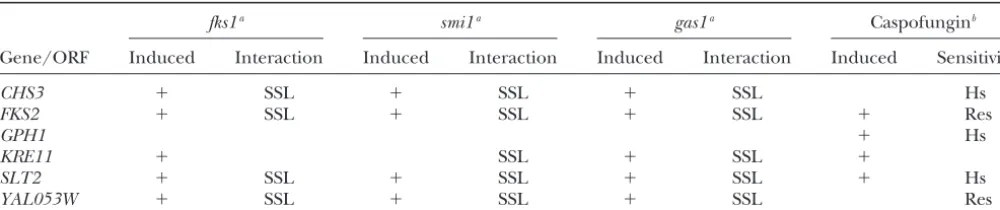
TABLE 5
Genes whose transcription is increased and whose deletion mutant shows altered growth in afks1,smi1, orgas1null background or upon caspofungin exposure
fks1a smi1a gas1a Caspofunginb
Gene/ORF Induced Interaction Induced Interaction Induced Interaction Induced Sensitivity
CHS3 ⫹ SSL ⫹ SSL ⫹ SSL Hs
FKS2 ⫹ SSL ⫹ SSL ⫹ SSL ⫹ Res
GPH1 ⫹ Hs
KRE11 ⫹ SSL ⫹ SSL ⫹
SLT2 ⫹ SSL ⫹ SSL ⫹ SSL ⫹ Hs
YAL053W ⫹ SSL ⫹ SSL ⫹ SSL Res
aGenes whose mRNA level is increased in thefks1,smi1, orgas1null mutants are scored “⫹” (Lagorceet al.2003). Genetic
interaction is indicated. SSL, synthetic sick or lethal.
bGenes whose mRNA level is increased by caspofungin treatment are scored “⫹” (Agarwalet al.2003). Caspofungin sensitivity
is indicated. Hs, hypersensitive; Res, resistant.
tion data, deletion ofCHS3or the ancillary genes (CHS4–7) viable synthetic double mutants should show enhanced caspofungin sensitivity when compared to the single leads to caspofungin hypersensitivity. Deletion of
com-ponents of the endocytic pathway (RCY1orSLA1) also mutants. Finally, a set of 77 genes whose deletion alters caspofungin sensitivity is absent from the glucan net-leads to a moderate increase in caspofungin sensitivity.
Thus, transport of cell surface components likely buffers work (Figure 3A). Mutation in a fraction of these could affect growth of anfks1 fks2double mutant but not that perturbed cell wall synthesis in caspofungin-treated
cells, with defects in the proper recycling of these com- of the singly deleted mutants. In addition, some of these genes may actually show synthetic interactions, and be ponents resulting in increased drug sensitivity. For
in-stance, cortical actin patches are important for dynamic false negatives (see materials and methods), while others may buffer against off target side effects of cas-Fks1p localization, with cell wall remodeling andSLA1
deletion resulting in mislocalization of Fks1p (Liet al. pofungin. 2002;Utsugiet al.2002). In this context, the dynamics
of Fks1p and/or Chs3p localization in anrcy1null mu- Genetic interactions, fitness under stress condition, and
tant merit examination. transcription
We have compared our data on synthetic interactions
Comparison of the synthetic and chemical-genetic
and altered caspofungin sensitivity with the relevant
networks
transcriptional profiling data (Table 5). Three genes found in our functional core (Figure 3B),CHS3,FKS2, Both the synthetic interaction and the caspofungin
phenotype data sets should identify genes involved in andSLT2, show altered transcriptional profiles. These three core genes capture much of glucan buffering, buffering cells against defective-1,3-glucan synthesis.
However, each set has limitations, such as gene family namely the need for compensatory chitin, an alternative glucan synthase component, Fks2p, and a cell integrity issues with the synthetic interactions and the multidrug
sensitivities and possible “off target” side effects of cas- signal transduction pathway. Other genes found in the functional network that are transcriptionally regulated pofungin. Integration of the 189 genes in the two
net-works (Figure 3A) shows a central overlapping core of areKRE11,YAL053W, andGPH1.
It is striking that most genes that genetically buffer 14 genes. Of these 14 genes with altered caspofungin
sensitivity, 11 show synthetic interactions withFKS1and fks1,smi1, andgas1mutants or lead to altered caspofun-gin sensitivity show no changes in transcriptional levels. 9 withSMI1(Figure 3B). The overlap of these two sets
is highly significant (P ⫽ 1⫻ 10⫺39and 9⫻ 10⫺33for Thus, it appears that most genes functionally involved
in responding to glucan defects do so in ways that are
FKS1andSMI1, respectively) and is consistent with
cas-pofungin acting at the level of Fks1p and Fks2p in inhib- transcription independent. Presumably, the existing cel-lular location and activity of these gene products cou-iting-1,3-glucan synthesis.
Deletion mutants in 98 genes of the glucan network pled with their normal levels of synthesis are sufficient to achieve an effective buffering.
have wild-type sensitivity to caspofungin (Figure 3A),
indicating that caspofungin treatment does not pheno- Our work also emphasizes that many transcriptionally regulated genes have no apparent effect on fitness dur-copy cell wall mutations. This may be because at the
subMIC concentration used here, caspofungin does not ing perturbation of -1,3-glucan synthesis, a situation seen previously for a range of conditions (Giaeveret