ISSN(Online): 2320-9801 ISSN (Print) : 2320-9798
I
nternational
J
ournal of
I
nnovative
R
esearch in
C
omputer
and
C
ommunication
E
ngineering
(An ISO 3297: 2007 Certified Organization)
Vol. 4, Issue 2, February 2016
Protection Confront in Cloud Computing
Environment
Priya V1, Dr.C.Nelson Kennady Babu 2
Asst. Professor, Department of B.Tech. K.S.Rangasamy College of Technology, Namakkal, India1
Professor, Department of CSE, Dhanalakshmi Srinivasan College of Engineering, Coimbatore, India2
ABSTRACT: The distributed computing is done on many systems to solve a large scale problem. The growing of high-speed broadband networks in developed and developing countries, the continual increase in computing power, and the rapid growth of the Internet have changed the way. Distributed computing holds great assurance for using computer systems effectively. As a result, supercomputer sites and data centres have changed from providing high performance floating point computing capabilities to concurrently service huge number of requests from billions of users. The distributed computing system uses multiple computers to solve large-scale problems over the Internet. It becomes data-intensive and network-centric. The applications of distributed computing have become increasingly widespread. In distributed computing, the main stress is on the large scale resource sharing and always goes for the best performance. Cloud computing is really changing the way of computation. Many computer resources such as hardware and software are collected into the resource pool which can be taxed by the users via the internet through web browsers or lightweight desktops or mobile devices. Cloud computing is a model for enabling ubiquitous, convenient, on-demand network access to a shared pool of configurable computing resources (e.g., networks, servers, storage, applications and services) that can be rapidly provisioned and released with minimal management effort.
Cloud computing is a new technology of computer network, providing the web services at lower cost comparing to normal technique. It contributes to improve the services in other related technologies such as Grid computing, cluster and utility computing. Presently, the security in clouds is less than the model in grid environment. Here we have mainly discussed about the recent trends in the very new concept Cloud Computing including its computing style and architecture. But there is another very important concept which should be taken care of, i.e. Security aspect of cloud computing. It is quite a difficult situation to handle as the resources are geographically distributed and because of virtualization. Cloud computing environment no matter if it is a private Cloud connected via a fast local area network or several remote Cloud computing sites connected via the Internet.
KEYWORDS: Distributing Computing, Concurrently, Widespread, Mobile devices
I.INTRODUCTION
Thelarge computers be reserved following the glass walls and only the professional are authorized to operate them discussed by the author [1]. Afterwards, came the thought of grid computing, which allowing the users to include computing, on require according to oblige addressed by the author [2]. Behind that, they acquire such computing, which makes resource provisioning easier and to require of user discussed by the author [3]. Then, finally the concept of cloud computing, which concentrate on the provisioning and be provisioning of computation, storage, data services to and from the user without the user being not responsive of the information that from where success those assets considered by the author [4]. With the large scale use of internet all over the sphere, the whole thing can be delivered greater than the internet with the concept of cloud computing as a benefit like gas, steam, and electrical energy discussed by the author [5].
ISSN(Online): 2320-9801 ISSN (Print) : 2320-9798
I
nternational
J
ournal of
I
nnovative
R
esearch in
C
omputer
and
C
ommunication
E
ngineering
(An ISO 3297: 2007 Certified Organization)
Vol. 4, Issue 2, February 2016
the partial development of the Internet to allow the public management of information and culture. Mostly public network site was implemented scheduled the concept of huge distributed computing systems.
There are operations into centrally inhibited statistics counters. But, the trend in this particularly scalable system is toward the use of peer-to-peer, utility, and jungle computing, cluster and sub cluster. The utility computing is essentially the grid computing and the cloud computing, which the current issue is to investigate, through the rising heterogeneity of the essential hardware, the efficient mapping of computational trouble on the ’bare metal’ has occurred in particularly additional complex. There are several challenges of distributed computing as follows:
Fig 1. Cloud Computing
In the above fig 1., depicts that the cloud environment having three important component which are application at the top layer of clod computing. The second layer consists of platform and it deals with various important components. The third layer and bottom layer of cloud computing have the infrastructure phase. In the first layer Application have the control of monitoring, content, collaboration, communication, and finance. The second phase deals with middle component of cloud computing services which are object storage, identity, runtime, queue along with database. The Third component has the process of computation, Block storage and controls the network activities.
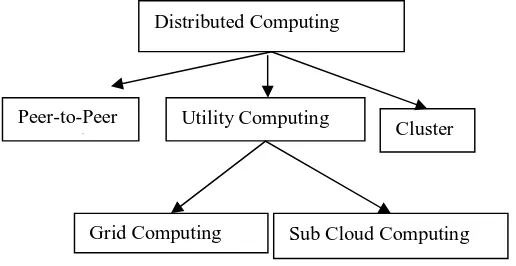
Fig 2. Classification of Distributed Computing
Transparency means to secrete sharing beginning the user on higher levels and to secrete the division from the programs on the small level. Readily available are additional forms of transparency as place, movement, duplication, Concurrency, and Parallelism. Flexibility must be simple to expand had stated by the authors [7] and [8]. Reliability encompasses several factors similar to no data loss, secure system, and fault tolerant systems. Performanceshould be high. Scalabilityshould level for an indefinite period. Cloud providers typically use a "pay as you go" model. This can lead to capriciously high charges if administrators do not become accustomed to the cloud pricing model addressed by the author [16].
The present accessibility of high-capacity networks, low-cost computers and storage space devices as well as the extensive espousal of hardware virtualization, service-oriented architecture, and autonomic and efficacy computing have led to a intensification in cloud computing considered by the authors [17], [18] and [19]. Companies can degree
Distributed Computing
Peer-to-Peer
omputing
Utility Computing
Cluster
Comp
ISSN(Online): 2320-9801 ISSN (Print) : 2320-9798
I
nternational
J
ournal of
I
nnovative
R
esearch in
C
omputer
and
C
ommunication
E
ngineering
(An ISO 3297: 2007 Certified Organization)
Vol. 4, Issue 2, February 2016
up as computing desires augment and then scale down again as demands decrease. In fig 2. depicts that various classification of distributed computing which consists of peer – to peer computing , utility computing , cluster computing . In which the utility computing broadly divided into two sub important component which are grid computing and sub cloud computing. Each component performs up to their maximum level and reliable to permit the user’s accessibility as well. Cloud computing has become a exceedingly demanded service or efficacy due to the advantages of high computing power, cheap cost of services, high performance, scalability and accessibility. Some cloud vendors are experiencing intensification rates of 50% per annum declared by the author [20]. But due to being in a phase of infancy, it still has pitfalls that necessitate proper consideration to make cloud computing services more reliable and user friendly specified by the authors [21] and [22].
II. LITERATUREREVIEW
A. Peer-to-Peer Computing
Peer-to-peer (P2P) networking have been efficient mainly on the scalability issue intrinsic in distributing assets more a large quantity of networked process. In a P2P system, every node acts as both a client and a server, providing part of the system resources. Peer machines are simply client computers connected to the Internet. All client machines act autonomously to join or leave the system freely. This implies that no master-slave relationship exists among the peers. No central coordination or no central database is needed. In other words, no peer machine has a global view of the entire P2P system addressed by author [7].
B. Utility Computing
Utility computing is envisioned to be the next generation of Information Technology evolution that depicts how computing needs of users can be fulfilled in the future IT industry. Its analogy is derived from the real world where service providers maintain and supply utility services, such as electrical power, gas, and water to consumers. Consumers, in turn, pay service providers based on their usage. Therefore, the underlying design of utility computing is based on a service provisioning model, where users (consumers) pay providers for using computing power only when they need to. Utility computing focuses on a business model, by which customers receive computing resources from a paid service provider. All grid/cloud platforms are regarded as utility service providers. However, cloud computing offers a broader concept than utility computing.
(i) Grid Computing
As an electric-utility power grid, a computing grid offers an infrastructure that couples computers, software/middleware, special instruments, and people and sensors together. The grid is often constructed across LAN, WAN, or Internet backbone networks at regional, national, or global scales. Enterprises or organizations present grids as integrated computing resources. They can be viewed also as virtual platforms to support virtual organizations. The computers used in a grid are primarily workstations, servers, clusters, and supercomputers. Personal computers, laptops and PDAs can be used as access devices to a grid system. The grids can be of many types as; Knowledge, Data, Computational, Application Service Provisioning, Interaction or Utility. These have many pros and cons. Pros are like; these are capable to solve larger, more complex problems in a shorter time, these are easier to collaborate with other organizations, and thus make better use of existing hardware. Cons are like; Grid software and standards are still evolving, learning curve to get started, and non-interactive job submission discussed in detail by the authors [8] and [9].
(ii) Cloud Computing
ISSN(Online): 2320-9801 ISSN (Print) : 2320-9798
I
nternational
J
ournal of
I
nnovative
R
esearch in
C
omputer
and
C
ommunication
E
ngineering
(An ISO 3297: 2007 Certified Organization)
Vol. 4, Issue 2, February 2016
(iii) IaaS (Infrastructure as a Service)
It is a way of delivering cloud computing infrastructure- servers, storage, network and operating system, as an on demand service. Rather than purchasing servers, software, data center space or network equipment, clients can instead buy those resources as a fully outsourced service on demand. The service provider owns the equipment and is responsible for housing, running and maintaining it.
(iv) SaaS (Software as a Service)
SaaS is a software distribution model in which application is hosted by a vendor or service provider and made available to customers over a network, typically the internet.
(v) PaaS (Platform as a Service)
It is the way to rent hardware, operating system, network capacity over the internet. The service delivery model allows the customer to rent virtualized servers and associated services for running existing application or developing and testing new ones. PaaS builds on IaaS providing a pre-defined operating system, storage and development tools to allow a customer to develop new application to run on the provider’s infrastructure.
Infra Structure
Platform
Application
Fig 1.1 Service Models of Cloud Computing
(vi) Public clouds
In this deployment the cloud infrastructure is accessible to the general public and shared in a pay as you go model of payment. The cloud resources are accessible via the internet and the provider is responsible for ensuring the economies of scale and the management of the shared infrastructure. In this model clients can choose security level they need, and negotiate for service levels. Amazon Web Services EC2 is a public cloud. It is accessible to the general public.
(vii) Private clouds
Private clouds are another deployment model for cloud services. In this model the cloud resources are not shared with unknown third parties. The cloud resources in this model may be located within the client organization premises or off-site.
In this model the client security and compliance requirements are not affected, though this offering does not bring the benefits associated with reduced capital expenditure in IT infrastructure investments. In this type of cloud the general public does not have access to the private cloud neither does the organization use the public cloud.
Fig 2: Classification of Cloud Computing
Cloud
client
PaaS
SaaS
IaaS
Public Clouds
Hybrid Clouds
Community Clouds Private Clouds
ISSN(Online): 2320-9801 ISSN (Print) : 2320-9798
I
nternational
J
ournal of
I
nnovative
R
esearch in
C
omputer
and
C
ommunication
E
ngineering
(An ISO 3297: 2007 Certified Organization)
Vol. 4, Issue 2, February 2016
(viii) Hybrid clouds
As its name implies, is a model of deployment, which combines different clouds, for example the private and public clouds. In this model the combined clouds retains their identities, but are bound together by standardized technology. In this type of cloud the general public does not have access to the cloud, but the organization uses infrastructure in both the public and private cloud.
(xi) Community clouds
Community clouds are the fourth deployment model that can be used to deliver cloud computing services. In this model the cloud infrastructure is shared by multiple organizations or institutions that have a shared concern or interest such as compliance considerations, security requirements. This type of cloud may be managed by the organization or by a third party and may be located on-premises or off-premises. In this type of cloud both the public and the organizations forming the community cloud have access to the cloud services offered by the community cloud.
III. CONCEPTS OF CLUSTER COMPUTING
A. Cluster Computing
A cluster computing comprises a set of independent or stand-alone computers and a network interconnecting them. It works cooperatively together as a single integrated computing resource. A cluster is local in that all of its component subsystems are supervised within a single administrative domain, usually residing in a single room and managed as a single computer system. The components of a cluster are connected to each other through fast local area networks. To handle heavy workload with large datasets, clustered computer systems have demonstrated impressive results in the past addressed by the authors [10] and [12].
B. Components of Cluster Computing
There are so many components of the cluster computing as follows: i. High Performance Computers like PCs, Workstations etc. ii. Micro- kernel based operating systems.
iii. High speed networks or switches like Gigabit Ethernets. iv. NICs (Network Interface Cards)
v. Fast Communication Protocols and Services
vi. Cluster Middleware which is hardware, Operating system kernels, applications and subsystems. vii. Parallel Programming Environment Tools like compilers, parallel virtual machines etc.
viii. Sequential and Parallel applications
C. Advantages of Cluster Computing
(i) Manageability: It takes a lot of effort, cost and money to manage a large number of components. But, with cluster, large numbers of components are combined to work as a single entity. So, management becomes easy.
(ii) Single System Image: Again, with cluster, the user just gets the feel that he is working with a single system, but actually he is working with a large number of components. He need not worry about that component; he only needs to manage a single system image.
(iii) High Availability: As all the components are replicas of each other, so if one component goes down because of ay technical reason, then some other component can take its place, and users can continue to work with the system [9].
D. Disadvantages of Cluster Computing
(i) Programmability Issues: This might be the case if the components are different in terms of software from each other, and then there may be issues when combining all of them together as a single entity.
(ii) Problem in Finding Fault: Because we are dealing with a single entity, so problems may arise when finding out fault that which of the component has some problem associated with it.
ISSN(Online): 2320-9801 ISSN (Print) : 2320-9798
I
nternational
J
ournal of
I
nnovative
R
esearch in
C
omputer
and
C
ommunication
E
ngineering
(An ISO 3297: 2007 Certified Organization)
Vol. 4, Issue 2, February 2016
E. Comparison Between Cluster and Cloud Computing
S.no Cluster Computing Cloud Computing
1 Characteristics of Cluster Computing 1:Tightly coupled systems
2: Single system image
3: Centralized Job Management & scheduling System
Characteristic of cloud computing 1: Dynamic computing infrastructure 2: Self-service based usage model 3: Minimally or self-managed platform 4: Consumption-based billing
2 The cluster computers all have the same hardware and OS
The memory, storage device and Network communications are managed by the operating system of the basic physical cloud units. 3 The whole system (all nodes) behaves like
a single system view and resources are managed by centralized supply managers.
Every node acts as an independent entity
4 The computers in the cluster are normally contained in a single location or complex.
Clouds are mainly distributed over MAN
5 Commodity computers High-end servers and network attached storage 6 Size or scalability is 100s Size or scalability is 100s to 1000s
7 Single Ownership Single Ownership 8 Dedicated, high-end with low latency and
high bandwidth Interconnection Network
Dedicated, high-end with low latency and high bandwidth Interconnection Network
9 Membership service discovery Membership service discovery 10 Restricted service negotiation SLA based service negotiation
IV. CHALLENGES FOR P2P CLOUD ENVIRONMENT
The extreme scale that a P2P cloud could reach both in the number of components and in terms of geographic distribution, and will mean that failures will be common place. To aggravate the situation further, individuals who operate the devices out of their homes could decide to turn on/off or plug/unplug them at will. The resulting dynamic, whereby components are constantly joining and leaving the system, is referred to as churnin the P2P literature. This requires keeping track of all functioning and online devices, dynamically partitioning them among customers and reclaiming them when finished. And all ofthis has to be done in a completely decentralized manner with no master or controller and despite churn.
As it turns out, these challenges have been encountered in other P2P systems and efficient gossip-basedprotocols have been developed to solve them. Gossiping is a very simple interaction paradigm where peers in large, unstructured network, exchange information with a small number of their neighbours,possibly updating their internal state based on the outcome of such interactions. Gossip-based protocolshave been extensively studied and have been used to model a diverse set of functions including thespreading of malware in a computer network, diffusion of information in a social network and synchronization of light pulses in a swarm of fireflies. Gossip-based protocols are appealing for P2P clouds because they are extremely simple to describe and implement, yet they can realize complex globalcomputations out of simple local interactions efficiently and quickly despite the possibility of churn.In a prototype P2P cloud system built at the University of Bologna, we have used completely decentralized gossip-based protocols extensively for implementing different functionality necessary for P2P clouds, including membership (figuring out who is up and connected), counting (useful for cloud monitoring), slicing (partitioning a cloud into multiple sub-clouds), slice merging (useful for elastic resource allocation) and for supporting complex queries over the set of peers addressed by the authors [12] and [13].
A. Security and Trust
ISSN(Online): 2320-9801 ISSN (Print) : 2320-9798
I
nternational
J
ournal of
I
nnovative
R
esearch in
C
omputer
and
C
ommunication
E
ngineering
(An ISO 3297: 2007 Certified Organization)
Vol. 4, Issue 2, February 2016
hand, for public clouds, where customers outsource their data and computations, they have to trust the cloud service provider not to corrupt, leak or misuse data and carry out computations correctly. The problem is greatly aggravated for P2P clouds under scenario B; now the customer has to trust a large number of unknown third parties.
Likewise, individuals providing resources have to trust a large number of unknown customers, hoping that they will use resources responsibly. The situation is slightly better for P2P clouds under scenario, but as long as the devices are located physically in other people’s homes, they could be subject to tampering and abuse. These are formidable challenges that so far do not have simple and general solutions. In case of specific applications, for example storage services, a clever combination of fragmentation, encryption and replication have allowed the development of distributed anonymous and censor-resistant solutions. Unfortunately, no similar solutions exist to render computations running on untrusted hardware tamper proof.
B. Heterogeneity
The API presented to a customer in an IaaS cloud is at the level of a host operating system over a virtualized machine. A P2P cloud under scenario B is likely to contain a diverse collection of devices ranging from broadband modems to game consoles to desktop PCs. It is highly unlikely that certain resource-constrained devices in such a collection be capable of running a virtualization layer suitable for supporting host operating systems. Yet, they may be capable of running a JVM (Java Virtual Machine) layer.
C. Incentives
As with all other P2P systems, this is the “elephant in the room” also for P2P clouds, especially under scenario B. In P2P systems, incentives are necessary to achieve sufficient levels of cooperation and discourage free riding so that the system does not degenerate completely. In a P2P cloud, what would convince an individual to open up her personal resources to complete strangers, even though she has nothing to gain other than goodwill? Clearly, some sort of incentive mechanism has to be put in place to encourage individuals to contribute their resources. The situation is a bit simpler for P2P clouds under scenario A where device owners may even have monetary incentives and can impose their will on individuals. The situation is rather different (and even simpler) for VC systems that typically have laudable objectives for scientific progress in fields such as radio astronomy, genomics or cancer research.
V. VIRTUAL MACHINE IMAGE DISTRIBUTION METHODS
A. Concept of Network File System
The traditional way to distribute a number of VM images in a Cloud site would be to use the Network File System (NFS). NFS is well established and provides a simple way, both for the administrator as well as the user, to make files available remotely. The central NFS server stores the VM images and the worker nodes retrieve copies on demand. This leads to multiple point-to-point transfers. Furthermore, when Multi-gigabyte files are accessed by a large number of nodes simultaneously, NFS shows erratic behaviour. This leads to a number of crashes during our tests. To avoid this behaviour, the workers would need to synchronize their transfers, so as not to interfere with each other. Further common, NFS problems like stale NFS file handles (which can, for instance, be caused by a re-export of the NFS exports) can lead to stalling VMs or even Xen Domain 0 nodes. Finally, NFS is not well suited for use in a Cross Cloud Computing scenario. Exporting NFS outside a local network is not trivial and is difficult to secure. For these reasons, a simple unicast deployment algorithm was developed to serve as a benchmark instead of NFS.
B. Unicast Distribution
A straightforward method to distribute VM images is sequentially copying them to the destination nodes. The benefits of this method are that it is fairly simple to understand and to implement and works in Cross Cloud scenarios, but its drawbacks are long transfer times and network congestion.
C. Binary Tree Distribution
ISSN(Online): 2320-9801 ISSN (Print) : 2320-9798
I
nternational
J
ournal of
I
nnovative
R
esearch in
C
omputer
and
C
ommunication
E
ngineering
(An ISO 3297: 2007 Certified Organization)
Vol. 4, Issue 2, February 2016
for Cross-Cloud computing, if either all compute nodes are located inside the same subnet (e.g., If two remote sites are connected with a Virtual Private Network (VPN) or if the compute nodes have public IP addresses) disussed by the authors [15] and [1].
Fibonacci Tree: Our binary tree is in fact a Fibonacci tree. A special feature of the Fibonacci tree is that it is well-balanced after insertions or deletions using rotations. Thus, if the distribution of a VM image is interrupted due to a node failure, the tree needs to be rebalanced to guarantee seamless transfer. Besides rebalancing, there is any further action involved to resume the transfer to all nodes that are now well-balanced. It could be possible that a node has a different parent after rebalancing so the transmission for that node must be restarted. The child nodes of that node stall automatically until it has sufficient data to continue the transmission.
D. Peer-to-Peer Distribution
Another method is to use peer-to-peer (P2P) technologies for VM image transfer. We have chosen the BitTorrent protocol discussed by the author [4] that is briefly described below.
(i). BitTorrent Protocol: BitTorrent was designed as a protocol for fast, efficient and decentralized distribution of files over a network. Every recipient downloading a file supplies this file (or at least parts of it) to newer recipients also downloading the file. This reduces the overall costs in terms of network traffic, hardware costs and the overall time needed to download the whole file. The node hosting the source file starts a tracker that coordinates the distribution of the file. Furthermore, a file (a so called torrent file) containing meta-data about the source file (URL of the tracker) is generated and must be distributed to all clients (either active with a push mechanism or passive with all clients downloading the torrent file from a web server). Clients, also called peers, connect to the tracker that tells them from which other peers pieces of the file are available for download.
A peer that shares parts or the complete file is called a seeder. Using this technique, sharing files between multiple peers benefits from high speed downloads and reduced transmission times compared to other techniques. Due to its distributed nature, BitTorrent perfectly fulfills the needs of Cross-Cloud computing. It can be used to distribute VM images between two dedicated VM image pool nodes on remote sites if the networks where the actual compute nodes reside are private or not connected in a VPN. The distribution of the pool node to the compute nodes can also be accomplished by BitTorrent or another suitable protocol.
(ii). VM Image Distribution: To distribute a VM image to the compute nodes, a torrent file containing the URL of the tracker needs to be generated. The tracker in this case is the source node hosting the VM images. Furthermore, a seeded for the VM image needs to be started on the source node. To begin with the actual distribution process, BitTorrent clients are started remotely on all compute nodes. They connect to the tracker, load and seed the VM image immediately. After the process is finished, all nodes carry the complete and correct VM image.
E. Encrypted vs. Unencrypted Transfer
If private data (whether it is sensitive data or not) are transferred over an insecure link or over network boundaries, it should be encrypted. However, encryption involves additional costs: The cryptographic computations produce CPU load on both the sender and receiver, and the average transfer rate is reduced. Unencrypted transfers are favorable if the data itself is public and nobody cares if it is stolen. Furthermore, if the network is isolated from the outside world (which is common in high performance computing setups today), the increased transfer rate is a benefit compared to encrypted transfer.
(iii) Avoiding Retransmission Overhead
To avoid the retransmission of a VM image that is already present and to avoid the need for huge amounts of disk space at the destination nodes, an approach based on copy-on-write (COW) layers is proposed. A layered file system is a virtual file system built from more than one individual file system (layer) using a COW solution like UnionFS. A VM image is realized by a COW virtual disk consisting of three or more layers. At first, only a base layer is present. This layer contains a complete installation of a Linux operating system. On top of the base layer, a site layer is placed. It contains all modifications needed to run this VM image on a particular site, such as a local or a remote one or e.g. Amazon’s EC2 service. Special configuration information depending on the infrastructure, e.g. LDAP settings, name servers, NFS server, are stored in the site layer addressed by the author [14]. The third layer is the user layer that contains all modifications made by the user. The size of this layer ranges from small (only a basic software stack with special libraries and e.g. MPI programs are installed) to very large (a complex, proprietary application with a license server is installed).
(iv) Multicast comunication
ISSN(Online): 2320-9801 ISSN (Print) : 2320-9798
I
nternational
J
ournal of
I
nnovative
R
esearch in
C
omputer
and
C
ommunication
E
ngineering
(An ISO 3297: 2007 Certified Organization)
Vol. 4, Issue 2, February 2016
reliability in this case is delegated to both the sender and the receivers. The former can handle data reliability by tuning either the number of redundant packets (increasing the CPU load) or by tuning the stripe size, i.e., the number of packets sent in a block (this could decrease the CPU load but increase the data loss). IP based multicast can also be used to transfer the data. It is supported by most networking hardware out of the box. Modern hardware is able to handle multicast transfers even well, i.e. it is possible to distribute the multicast packets only over selected links according to their multicast group membership. This is accomplished if the switches support, IGMP Snooping or the Cisco Group Management Protocol (CGMP). The switches can inspect the Internet Group Management Protocol (IGMP) packets and adjust their switching tables accordingly. This transfer method is likely to be scalable to large-scale installations, e.g. the ones used by modern Cloud computing infrastructure providers, since the used hardware is capable of scaling to thousands of hosts and multicast groups.
VI. SIMULATION AND RESULTS
This survey review paper enlightens the new paradigms of distributing computing. It will be beneficial for the students and the researchers as well. We have deliberated in detail about the performance of various dimensions and methods encrypted and unencrypted data transfer: unicast distribution, binary tree distribution, peer-to peer distribution based on BitTorrent and finally multicast were addressed. Detail surveys were examined in which the assessment showed that multicast offers the best performance. Nevertheless, when transferring VM images between remote sites, BitTorrent is the method to choose. It is even possible to combine two methods to overcome limitations caused by the transfer over network boundaries. To avoid the retransmission of a VM image that is already present at, a destination node and to make Cross-Cloud computing work, an approach based on copy-on-write layers has been presented.
VII. CONCLUSION
The evaluation of the layered file system showed that it saves a considerable amount of traffic, up to 90%. There are several areas for future work. For example, integration of strong encryption and decryption directly into the BitTorrent client would significantly increase the performance and security of encrypted Bit Torrent image deployment. Furthermore, the scalability of the presented solutions should be investigated in a test environment with machines in a wide area network environment. Cloud computing is a new computing paradigm which has evolved from the advancement of virtualization technology in recent times. The current popularity being attracted by cloud computing from divergent audience can be attributed to its architectural design, development models and services specifically modelled as a target towards utility based consumption and technology. We have discussed the motivation for distributing computing. It will continue to flourish. There are so many topics which are going very hot in the research and development topics in both the academic and industry for many years to come. In above all the cloud computing is the recent topic which is under development by so many industrial giants like Google, EMC, Microsoft, Yahoo, Amazon, IBM, etc.
REFERENCES
1. B. Amedro, F. Baude, D. Caromel, C. Delbe, I. Filali, F. Huet, E. Mathias, and O. Smirnov, “Cloud Computing: Principles, Systems and
Applications”, series Computer Communications and Networks, Springer, pp. 163-178, 2010.
2. Chee Shin Yeo, Rajkumar Buyya, Marcos Dias de Assunção, Jia Yu, Anthony Sulistio, Srikumar Venugopal, and Martin Placek, “Utility
Computing on Global Grids”, Chapter 143, Hossein Bidgoli (ed.), The Handbook of Computer Networks, ISBN: 978-0-471-78461-6, John Wiley & Sons, New York, USA, 2007.
3. Cloud Security Alliance (CSA), “Security Guidance for Critical Areas of Focus in Cloud Computing V2.1”, 2009.
4. Douglas Eadline, “High Performance Computing For Dummies, Sun and AMD Special Edition”, Wiley Publishing, Inc., Indianapolis, Indiana,
2009.
5. F. J. Seinstra, J. Maassen et al., “Jungle Computing: Distributed Supercomputing beyond Clusters, Grids, and Clouds”, Department of
Computer Science, Vrije Universiteit, De Boelelaan 1081A, 1081 HV Amsterdam, The Netherlands, pp. 1-31, 2010.
6. Frank J. Seinstra, Jason Maassen, Rob V. van Nieuwpoort, Niels Drost, Timo van Kessel, Ben van Werkhoven, Jacopo Urbani, Ceriel Jacobs,
Thilo Kielmann, and Henri E. Bal, “Jungle Computing: Distributed Supercomputing beyond Clusters, Grids, and Clouds”, In M. Cafaro and G. Aloisio, editors, Grids, Clouds and Virtualization, Springer-Verlag '10, pp. 1-31. 2010.
7. H. E. Bal, J. Maassen, R. V. van Nieuwpoort, N. Drost, R. Kemp, N. Palmer, T. Kielmann, F. Seinstra, and C. Jacobs, “Real-world distributed
computing with Ibis”, Computer, Vol. 43, No. 8, pp. 54-62, 2010.
ISSN(Online): 2320-9801 ISSN (Print) : 2320-9798
I
nternational
J
ournal of
I
nnovative
R
esearch in
C
omputer
and
C
ommunication
E
ngineering
(An ISO 3297: 2007 Certified Organization)
Vol. 4, Issue 2, February 2016
9. Ian Foster, Carl Kesselman, and Steven Tuecke, “The Anatomy of the Grid: Enabling Scalable Virtual Organizations,” The International
Journal of High Performance Computing Applications, vol. 15, no. 3, Fall 2001, pp. 200-222.
10. M. Baker, A. Apon, R. Buyya, and H. Jin, “Cluster computing and applications. In A. Kent & J. Williams (Eds.), Encyclopedia of Computer
Science and Technology, pp. 87-125, 2002.
11. Michael A. Rappa, “The Utility Business Model and the Future of Computing Services,” IBM Systems Journal, vol. 43, no. 1, pp. 32-42, 2004.
12. Microsoft Corporation, “Load-Balanced Cluster”, http://msdn.microsoft.com/en-us/library/ff648960.aspx [download date: 10 April 2012].
13. R. BUYYA, C. S. YEO et al., “Market-oriented Cloud Computing: Vision, Hype, and Reality for Delivering IT Services as Computing
Utilities”, in the proceedings of 10th IEEE Conference on High Performance Computing and Communications, 2008.
14. R. BUYYA, C. S. YEO et al., “Cloud computing and emerging IT platforms: Vision, Hype, and reality for delivering computing as the 5th
utility”, Future Generation Computer Systems, Vol. 25, pp.599-616, 2009.