ABSTRACT
JONES, MARY H. How the Tiered Fidelity Inventory Instrument (TFI) Impacted Positive Behavior Interventions and Supports (PBIS) Team Implementation in Two Rural Middle Schools: A Comparative Case Study. (Under the direction of Dr. Timothy Drake and Dr. Lance D. Fusarelli).
How the Tiered Fidelity Inventory Instrument (TFI) Impacted Positive Behavior Interventions and Supports (PBIS) Team Implementation in Two Rural Middle Schools:
A Comparative Case Study
by Mary H. Jones
A dissertation or thesis submitted to the Graduate Faculty of North Carolina State University
in partial fulfillment of the requirements for the degree of
Doctor of Education
Educational Administration and Supervision
Raleigh, North Carolina 2018
APPROVED BY:
__________________________________ __________________________________
Dr. Timothy Drake Dr. Lance Fusarelli
Committee Co-Chair Committee Co-Chair
__________________________________ __________________________________
DEDICATION
I dedicate this dissertation to the children of North Carolina who have benefited from having PBIS in their schools. Thank you to our Lord, Jesus Christ. My faith has instilled my longing to serve in public education and make a difference for our students.
A special thank you to my husband, Steve, for your encouragement every step of the way, and to my children, Mackenzie and Michael, for your sacrifices. Your support provided
encouragement to complete this work. My gratitude goes to Dr. Drake for your unwavering guidance and to Dr. Fusarelli for your insights during the journey. Dr. Sugai, thank you for your dedication to PBIS.
Thank you to my Mother (Kathleen) and Grandmother (Eula). I wish you could be here to celebrate this accomplishment, as your perseverance and determination lives on in your children and grandchildren. Mom, although the dream to become a teacher was never realized, your unwavering passion for education lives on. The opportunity to serve students as a school
BIOGRAPHY
Mary H. Jones began her educational career as a lateral entry science teacher at Red Oak Middle School located in Red Oak, North Carolina. After completing the NC Teach program at East Carolina University, she enrolled at East Carolina to pursue a Master of Arts in Teaching, completing the degree in 2004. In 2005, she began work on National Board Certification in early adolescent science, which she earned in 2007. In 2008, she enrolled in an administration add-on cohort at East Carolina University to meet requirements for administrative licensure. In 2010, she completed the administrative internship at the middle school and became an assistant principal at her high school Alma Mata, Northern Nash High School, located in Rocky Mount, North Carolina. After serving four years at the high school level, she became the principal of Bailey Elementary School, where she currently serves. In 2013, she was accepted in the Educational Administration and Supervision doctoral program at North Carolina State
TABLE OF CONTENTS
LIST OF TABLES ... vii
CHAPTER 1: INTRODUCTION ... 1
Chapter Introduction ... 1
Background on the Problem ... 1
Research Questions ... 7
Focus of the Study ... 8
Significance of the Study ... 9
Overview of the Study ... 9
Chapter Summary... 10
CHAPTER 2: LITERATURE REVIEW ... 11
Addressing Student Behavior in U.S. Schools ... 11
Middle School Challenges ... 15
Positive Behavioral Interventions and Supports, a Proactive Approach... 15
PBIS Framework ... 17
School-Wide Positive Behavioral Interventions and Supports ... 18
Expansion to SWPBIS ... 18
Variation in SWPBIS Implementation ... 19
Implementation Challenges ... 20
Tiered Fidelity Inventory Instrument ... 21
Fidelity Measure Concerns ... 23
North Carolina, PBIS, and the Tiered Fidelity Inventory ... 24
PBIS Implementation in North Carolina ... 24
PBIS Implementation in Rural School Settings ... 25
Chapter Summary... 26
CHAPTER 3: METHODOLOGY ... 28
Chapter Introduction ... 28
Research Questions ... 28
Ethical Issues ... 28
Qualitative Research Design ... 29
Social Construction ... 30
Data Collection... 33
Validity ... 38
Data Analysis ... 38
Limitations of the Study ... 39
CHAPTER 4: FINDINGS ... 41
Chapter Introduction ... 41
School Descriptions ... 42
School Team Member Backgrounds ... 43
Pleasant Middle School ... 43
Sunny Middle School ... 44
Emergent Themes... 45
Major Themes ... 45
Theme 1: Self-Reported PBIS System Across Three TFI Tiers ... 45
Theme 2: Office Discipline Referrals Varied by School ... 55
Theme 3: PBIS Teams Completed TFI for Compliance not Development ... 56
Theme 4: PBIS Team Leader’s Views of the TFI Varied ... 58
Theme 5: Both Teams Perceive PBIS as More Effective for Sixth-Grade Students ... 60
Summary of Major Findings ... 61
CHAPTER 5: DISCUSSION, IMPLICATIONS, AND CONCLUSION ... 65
Chapter Introduction ... 65
Discussion of Emergent Themes ... 66
TFI Results Did Not Vary ... 66
Team Attitudes Varied ... 69
Teams Viewed PBIS as Effective in Middle Schools ... 70
Implications of the Study ... 72
Implications for Future Research ... 72
Implications for Practice ... 73
Use of TFI to change practice ... 74
Inclusion of ODR data ... 74
Limitations of team member influence ... 74
Time to complete the tool ... 75
District coach support ... 76
REFERENCES ... 80
APPENDICES ... 99
Appendix A: Focus Group Interview Questions ... 100
Appendix B: Study Schools’ ODR Totals, 2015-2016 & 2016-2017 ... 101
Appendix C: TFI—Tier I Universal SWPBIS Features ... 102
Appendix D: TFI—Tier II Targeted SWPBIS Features ... 103
Appendix E: TFI—Tier III Targeted SWPBIS Features... 104
Appendix F: PBIS Team Member Backgrounds ... 105
Appendix G: North Carolina PBIS State Recognition Criteria, 2016-2017 ... 106
Appendix H: North Carolina PBIS State Recognition Criteria, 2017-2018 ... 108
Appendix I: Participant Letter ... 110
Appendix J: Informed Consent Form ... 111
LIST OF TABLES
Table 1: The Three Tiers of the PBIS TFI ... 22
Table 2: Conceptual Framework/Structure ... 37
Table 3: TFI Results by School and School Year ... 46
Table 4: 2016-2017 NC PBIS State Recognition Criteria ... 48
Table 5: TFI Tier I Universal SWPBIS Features ... 52
Table 6: TFI Tier II Targeted SWPBIS Features ... 53
Table 7: TFI TIER III Intensive SWPBIS Features ... 54
CHAPTER 1:INTRODUCTION Chapter Introduction
Negative student behavior disrupts the school environment, results in loss of instructional time, and presents school administrators, teachers, and other school-level support staff with real challenges. Developing workable strategies to aptly address negative student behavior has been a focus for school districts across the nation, particularly with the reported accounts of school incidents in the media (Gallup, 2000; Wolf, Kalinich, & DeJarnett, 2016). Student learning and engagement are affected by negative behaviors and disruptions to the academic environment (Martinez, McMahon, Coker, & Keys, 2016).
To address this, several behavioral programs have been used in an effort to minimize interruptions. Onebehavioral support system called Positive Behavior Interventions and
Supports (PBIS) has been viewed as effective in reducing discipline referrals when implemented according to its guidelines; for this reason, it is recommended by the North Carolina Department of Public Instruction (NCDPI). To measure their PBIS implementation fidelity and change practices within the school setting, PBIS teams use a self-rated, three-tiered tool called the Tiered Fidelity Inventory (TFI). The goal of this multi-case study was to capture PBIS team experiences with the TFI to determine if the TFI results differed between an exemplar and non-exemplar school, and to gain insights into team members’ perceptions of PBIS as an effective behavioral system for middle schools.
Background on the Problem
student problem behaviors (Rose & Gallup, 2000; Wolf et al., 2016). Disciplinary actions such as in-school and out-of-school suspensions result in students falling behind their peers academically (DeRidder, 1991; Raffaele Mendez, 2003; Wolf et al., 2016). For instance, one national
longitudinal study found that students with behavioral issues are more likely to be suspended from school, resulting in absenteeism and negative impacts on achievement outcomes (Weebly & Kern, 2014). Similarly, students with behavioral problems impact not only themselves but also the overall school climate, sometimes resulting in student absences (Martinez et al., 2016). A study by Steinberg and Lacoe (2017) indicated discipline reform policies have yielded unintended results. Steinberg and Lacoe found out-of-school suspensions (OSS) in several Philadelphia schools did not decrease after discipline reform was implemented; however,
attendance improved with no associated increase in academic achievement. The study concluded that peer effects negatively impact students with no discipline issues prior to implementation.
Importantly, as schools respond to disruptive student behaviors, administrators and teachers work to implement systems to counteract discipline issues. School leaders have
considered many plans of action to effectively address student behaviors, such as increased “wait time,” uniform dress codes, counseling, verbal praise, and even punitive strategies.
For instance, Rowe (1986) described an instructional strategy popular among educators in the late 1980s which integrated strategic wait time. This strategy increased the amount of time students were given to respond to teacher-initiated questions, resulting in more student-teacher dialogue and greater overall student engagement. Rowe (1986) concluded that increased discourse had a positive impact on comprehension and student attitudes. Another use of wait time included students receiving more wait time before teachers asked further questions,
wait time minimized competition, especially for students with disabilities, and lessened
discipline issues within classroom settings. Additionally, uniform dress codes have been used as a method to reduce discipline issues and improve school safety (Black, 1998; Bowsher, 2001; Wilson, 1999). A recent comparative case study, however, did not find uniform dress codes reduce student discipline incidents (Dulin, 2016). Other work described indirect preventative strategies such as school-level counseling and teaching acceptable strategies used by educators to counter negative behaviors (Walker & Horner, 1996). Some research indicates punitive
measures, such as verbal reprimands, school setting detentions, in-school-suspensions, out-of-school suspensions, and expulsions are included in the vast approaches used to limit or counteract inappropriate student behaviors (Mayer & Sulzer-Azaroff, 1990).
Despite the focus on addressing negative student behaviors, the consistent use of verbal praise as a preventative measure utilized by classroom teachers has shown results that minimize disruptive student behaviors (Lewis, Hudson, Richter, & Johnson, 2004). Researchers reported decreases in undesirable target behaviors after implementing the use of a simple behavior
management system comprised of teaching desired student behaviors to students, training staff to recognize disruptive behaviors, and employing verbal praise as reinforcement (Wheatley et al., 2009).
One system of positive interventions and supports is the Positive Behavior Interventions and Supports (PBIS) system. Researchers regard PBIS as a proactive system founded on
2002). For example, one of the student behaviors utilized by school-level PBIS teams includes “be respectful, be responsible, be ready” (McCurdy, Mannella, & Eldridge, 2003, p. 161). The school-wide behavior system includes behavior supports at the school, classroom, and individual level, proactively enacting a positive learning environment (Sugai & Horner, 2009a, 2010). PBIS matrices, collaboratively designed by on-site teams, designate behavior expectations for areas, based on needs inventories to support social outcomes throughout the school setting (Sugai & Horner, 2007; Sugai & Simonsen, 2012). Irwin and Algozzine (2008) reported North Carolina PBIS implementation originated in 2000 in response to increased student discipline issues and because of No Child Left Behind (NCLB) federal legislation requirements.
The North Carolina Department of Public Instruction (NCDPI) received direction to identify “persistently dangerous schools” based on NCLB (Irwin & Algozzine, 2008, p. 1). Further, Irwin and Algozzine (2008) explained NCDPI followed the State Board of Education (SBE) expectations to identify schools based on discipline data and develop “safe school” plans in 1997 (p. 2). In 2000, Bob Algozzine, Co-director of the Behavior and Reading Improvement Center at UNC Charlotte, was regarded as “North Carolina’s center-affiliated partner and collaborator” to work with the NCDPI Behavior Support Services Division, implementing “Whole School Positive Behavioral Support Programs” in North Carolina (Irwin & Algozzine, 2008, p. 5). Positive Behavior Support originated as a part of the North Carolina State
Improvement Program, funded by IDEA. One Durham elementary school was chosen as the first North Carolina positive behavior center in 2001 (Irwin & Algozzine, 2008).
school climate (Pas & Bradshaw, 2012). Overall, researchers agree that teaching social
competencies such as behavioral expectations in school settings have positive impacts on student outcomes compared with more punitive approaches (Sugai & Horner, 2002). PBIS is also used to counter gang violence, with outcomes including less anger and positive attitudes toward police (Howell, 2013). Despite current scholarly PBIS research that focuses on its relationship to student outcomes, PBIS implementation can vary dramatically from school to school, creating a need for more robust implementation studies (Reinke et al., 2013). Prior to 2014, several tools that measured PBIS implementation were available, such as the School-Wide Evaluation Tool (SET) (Sugai, Lewis-Palmer, Todd, & Horner, 2001) and the School-Wide Benchmarks of Quality (BoQ) (Kincaid, Childs, & George, 2005); however, none of these tools were robust enough to capture full PBIS implementation.
Algozzine et al. (2014) introduced the Tiered Fidelity Inventory (TFI) as a
comprehensive tool for school teams to measure beginning implementation progress, serve as a planning guide, and assess support needs across universal (Tier I), targeted (Tier II), and
The TFI, utilized by school-level PBIS team members to determine the implementation fidelity level, provides insights for adjusting strategies and practices to improve student
outcomes, and can identify deficits in the school-based framework. Algozzine et al. (2014) introduced the TFI as a PBIS fidelity measure and in 2015, the NCDPI adopted the inventory platform. Prior to adopting the TFI, a preventative tool to assess operative behavior strategies, the SET, was utilized. Horner, Todd, Lewis-Palmer, Irvin, Sugai, and Boland (2004) described the SET tool, an instrument comprised of seven key features for determining school-wide positive behavior support and preventative measures, was used by PBIS school teams. To increase fidelity measures, the TFI addresses more complex levels including preventative strategies, team dynamics, and determinants of staff, parent, and community involvement (Algozzine et al., 2014).
The purpose of this dissertation is to compare PBIS implementation in two rural North Carolina middle schools by gathering information from team member focus-groups, two school years Office Discipline Referral (ODR) data, and TFI results from the 2015 and 2016 academic school years. North Carolina is an ideal state to study rural PBIS implementation using the TFI because the NCDPI adopted the TFI in 2015 across North Carolina public schools (Horner, Sugai, & Fixsen, 2017). In addition, PBIS implementation studies almost exclusively focus on urban schools; however, Fusarelli and Militello (2012) argue many rural schools have high-poverty, low academic outcomes, and have trouble recruiting effective leaders. McIntosh,
Koth, Thornton, and Leaf (2009) suggest there are limited qualitative PBIS studies on middle school implementation.
Middle school climates are unique considering early adolescent behavior issues. Pas, Cash, O'Brennan, Debnam, and Bradshaw (2015) report that school-level administrators and teachers face daily disruptions in middle school settings. Teachers often spend classroom time addressing disruptive behaviors, resulting in loss of instructional time, and administrators spend considerable efforts focusing on discipline issues (Public Agenda, 2004). Brackenreed and Barnett (2006) found teacher candidates in one study were minimally confident in addressing secondary school-level disruptive behaviors and classroom management in comparison to elementary candidates. “Attention seeking behaviors” and “hyperactivity” were among some of the classroom disruptions observed in secondary settings (Brackenreed & Barnett, 2008, p. 166). However, PBIS has shown to be an effective approach for middle school settings. Lassen, Steele, and Sailor (2006) conducted a three-year longitudinal middle school data analysis and found a reduction in office discipline referrals and a decrease in student suspensions after implementation of PBIS.
Research Questions
In this study, I used a comparative case qualitative approach to compare two rural middle schools that have been designated as exemplar and non-exemplar by NCDPI to examine how these schools may differ with respect to TFI results and use. My research questions are:
1. How do PBIS teams in two rural North Carolina schools designated as exemplar and non-exemplar schools vary in their use of the Tiered Fidelity Inventory tool?
3. Do team members perceive PBIS as an effective middle school behavioral support system?
This comparative case study adds to the limited extant research on PBIS implementation. Given that North Carolina is a state with a strong focus on PBIS as a behavior support system, this study used the TFI rubric elements as an implementation guide. The NCDPI provides regional PBIS coaches throughout the state and recommends the framework for all schools. Studying PBIS implementation in a rural context is important because rural schools face many obstacles not experienced in urban school settings, including poverty often associated with limited resources and teacher recruitment barriers (Fusarelli & Militello, 2012). The staffing difficulties faced by high-poverty rural schools are just one facet of the complex issues
challenging today’ school leaders. Meeting student needs in these settings can present challenges and opportunities for effective leaders. Klar and Brewer (2013) describe the positive impact of effective leaders, especially in rural school settings. The current study provides school and district leaders with insights and increase understanding about factors impacting PBIS implementation and sustainability in two rural middle school settings.
Focus of the Study
addresses the expansion from PBIS to SWPBIS and the creation and integration of the TFI tool for measuring implementation and sustainability within two rural school settings.
Significance of the Study
This study adds to the current literature and helps to build our understanding of how PBIS team implementation is carried out with fidelity by considering TFI criteria to meet exemplar or non-exemplar status while impacting student behaviors and ultimately influencing student achievement in two rural middle school settings. The deeper understanding of team perceptions gained adds to depth to this qualitative study. The goal of this comparative case study was to gain understanding of how PBIS teams support, influence, and work with other team members to meet TFI expectations, as well as to monitor the middle school-level behavior system. Another aspect of the study examined how the school teams collaborate and perceive PBIS impact in a middle school setting, especially considering the overarching difficulties of working in rural school settings that have limited resources and support low socioeconomic student populations. Since there is limited literature on rural middle school PBIS team perspectives or team experiences with TFI implementation, this study provides school-level PBIS teams and administrators with real insights and deeper understanding. Notably, the current study’s findings may not be applicable to all PBIS teams given that every school setting is different.
Overview of the Study
maintained by assigning pseudonyms to any identifying data. Each team member was asked background information including demographics, PBIS experiences, TFI usage, team member perspective, and changes over time with the TFI during the focus group sessions.
Data transcription from the focus group data was completed using an online voice translator and stored on a secure drive. TFI results were kept on a secure password-protected computer, and an analysis was conducted using NVivo. Memo notes were maintained on a secure drive. No data were sent over unsecured email or stored on any public platform.
Following the data collection, participants from each focus group, including administrators were provided with a copy of the field notes for review, a method suggested by Creswell (2007) as a form of member checking.
After the transcriptions of the focus group sessions, collected data, and memo notes were thoroughly reviewed, the data were analyzed using NVivo for initial coding, followed by a second coding cycle of clustering for patterns and themes. Additionally, data analysis included a replication strategy of seeking patterns pertinent to both cases. Throughout the study, expertise and guidance from the doctoral advisory committee was sought for the purpose of validity and professional insights, and the study results were also provided to the committee for their input.
Chapter Summary
Chapter 1 introduces the study, including its purpose and significance. Chapter 2 follows with a review of literature related to PBIS, student behavior, and TFI, among other topics
CHAPTER 2:LITERATURE REVIEW Addressing Student Behavior in U.S. Schools
In the 1980s, student behavior was among the most time-consuming issues facing school leaders (Rowe, 1986). Rowe (1986) reports that school leaders used several measures to address disruptive student behaviors, including suspensions and other punitive approaches. However, in 1998, school settings changed drastically as school violence took center stage nationally. School leaders, community representatives, and concerned parents faced a new challenge as a series of school shootings occurred. In response, Richard Riley, then U. S. Secretary of Education, sent the document entitled Early Warning, Timely Response: A Guide to Safe Schools to school leaders nationwide with the recommendation that they focus their efforts on disruptive student behaviors and school violence (Dwyer, Osher, & Warger, 1998). During this tumultuous time, Sugai and colleagues responded by compiling a detailed document with recommendations to address school violence, including a multi-tiered approach for addressing school-wide discipline reform (Sugai, Sprague, Horner, & Walker, 2000). The occurrence of school violence incidents also leads to an abundance of recommendations providing school leaders with numerous suggestions for how to confront student behavior (Murray & Myers, 1998; Sprague, Sugai, & Walker, 1998; Walker, Colvin, & Ramsey, 1995; Walker, Irvin, & Sprague, 1997). More recently, researchers concluded that policy reforms alone can have unexpected outcomes. Steinberg and Lacoe (2017) contended that changing policy had an adverse impact on students without discipline issues because of “peer effects” in certain Philadelphia schools following reform (p. 27). Overall, the study did not find academic improvement, but suggested
Historically, school administrators have exhausted various strategies to thwart or divert disruptive student behaviors in school settings. One instructional strategy used in the late 1980s was strategic wait time (Rowe, 1986). Rowe found student engagement increased as teacher wait time increased, thus impacting student disciplinary actions. During the investigation, increased wait time provided students with more time to respond to teacher-initiated questions before follow-up questions were presented. This approach was integrated to minimize student competition and allow more time to respond for students who had anxiety. However, Rowe (1986) concluded that the approach decreased competition for students with disabilities and resulted in positive behavior outcomes. Other measures such as verbal reprimands and punitive approaches were implemented in the late 1980s to counteract negative student behaviors (Mayer & Sulzer-Azaroff, 1990). In-school detentions, out-of-school suspensions, and expulsions were some of the many approaches used by school leaders to reduce less than desirable behaviors (Mayer & Sulzer-Azaroff, 1990).
Additional approaches used by school leaders and teams include the implementation of uniform dress codes, enacted as a deterrent to minimize discipline issues and improve school safety (Black, 1998; Bowsher, 2001; Wilson, 1999). Uniform dress codes were utilized to reduce peer competition and teasing, among the many reason for implementation, according to
Holloman, LaPoint, Alleyne, Palmer, and Sanders-Phillips (1996); however, Dulin (2016) concluded that uniform dress codes did not have a significant impact on student discipline incidents. Indirect preventative strategies, including school-level counseling, have been viewed as acceptable approaches to counter disruptive student behaviors.
school approaches. Small group interventions provided by related service personnel include those from special educators, school counselors, and psychologists (Sugai et al., 2000). However, in 2012, only 128,940 school counselors were employed in elementary and secondary schools nationwide, according to the United States Bureau of Labor Statistics. The National Center for Education Statistics (NCES) reported approximately 129,000 elementary and secondary schools, both private and public in 2012. Considering many high schools have more than one guidance counselor on site, elementary or middle schools may not have support personnel on site. Similarly, in 2009, there were only 32,000 school psychologists employed across the United States (NCES, 2010). According to the American Psychological Association (2012), one psychologist should be assigned to every 500-700 students. Given the need for small group behavioral interventions, related services may not be available for all students across school settings. Sugai et al. (2000) suggest that the most at-risk students require additional support, such as adult supervision, altered schedules, or increased rewards, to create environments conducive to student success.
praise for BSP reduced time-off-task behaviors and increased student engagement (Fullerton, Conroy, & Correa, 2009; Sutherland & Wehby, 2001).
Tokens or token reward systems have been utilized in many school settings as a behavior motivator. Researchers have concluded that token systems are impactful when preceded by taught rules in non-classroom settings (Lewis & Garrison-Harrell, 1999; Lewis, Sugai, & Colvin, 1998). Similarly, Haydon and Musti-Rao (2011) describe how teacher praise coupled with tokens or personal notes to students can increase desirable student behaviors in classroom settings.
Other positive student motivation strategies include rewards such as electronic device time, free time, and teacher affirmation. The use of computer-assisted instruction (CAI) to increase time on task behaviors has shown positive outcomes (Flower, 2014). Flower (2014) noted that in-class iPad usage was reported as positive by teachers and students in a study, but the researcher did acknowledge the small sample size. Wheatley et al. (2009) suggest that simple behavior management systems have shown desirable results. Behavior reinforcement in class settings can be a simple reward such as free time where students choose to work on assignments or on another task. Research found simple rewards like free-time coupled with teaching desired behaviors, and staff training on the importance of verbal praise, as a reinforcement, reduced target behaviors (Hawkins, Haydon, Denune, Larkin, & Fite, 2015). However, Bradshaw, Reinke, Brown, Bevins, and Leaf (2008) maintained that teacher praise has the greatest impact when verbal affirmation is BSP.
students gain intrinsic motivation, their influence extends to peer students and can lead to autonomy (Froiland et al., 2012; Radei, Sarrazin, Legrain, & Wild, 2010). Teacher influence is maximized when students understand the importance of the subject to the educator (Froiland et al., 2012). Significantly, behavior reinforcement is necessary for creating a positive classroom climate and a major component of PBIS, especially for vulnerable student populations like early adolescents.
Middle School Challenges
Educators in middle school settings face challenges unique to early adolescent school situations. Hecker et al. studied teacher perceptions of middle school student behavior and found students with behavior problems have difficulty with peer and teacher relationships (Hecker, Young, & Calderella, 2014). Further, the study found teacher experiences include middle school students display difficulty following teacher directions (Hecker et al., 2014). Ruiz, Ruiz, and Sherman (2012) conducted a three-year longitudinal study on a rural district of middle school students and found student behavioral challenges including “classroom offenses, hallway offenses, and communication offenses” occurred frequently (p. 2). Further, Brackenreed and Barnett (2006) surveyed school teacher candidates and found they reported limited confidence levels after spending time in secondary school settings in comparison to pre-service elementary counterparts. Teacher candidates identified disruptive behaviors in the secondary setting resulted in preconceived lack of developing effective classroom management strategies (Brackenreed & Barnett, 2006). However, PBIS has been utilized in middle school settings as a proactive approach to counter early adolescent behaviors.
Kameenui, 1994; Lewis & Sugai, 1999). Lewis and Sugai (1999) presented a plan for teachers to address students with emotional and behavioral disorders (EBD). The plan, created to address EBD students with low academic achievement, was intended to target exceptional children (EC) (Lewis & Sugai, 1999). In the developmental stages, the plan focused on students with extreme emotional behavioral issues, especially those exhibited by students identified as EC. However, Lewis and Sugai (1999) found teaching social competencies within school settings resulted in fewer discipline referrals, thus improving overall academic outcomes. Eventually, the EBD plan advanced into a whole school approach, referred to as Effective Behavior Support (EBS) (Lewis & Sugai, 1999). Ultimately, a comprehensive system for school-wide use emerged at the
University of Oregon, designed by George Sugai, Rob Horner, and other associates (Colvin, Sugai, & Kameenui, 1994).
Among the several behavioral approaches utilized in school settings, PBIS has shown positive outcomes. Regarded as a proactive approach, PBIS includes a multi-tiered approach encompassing teaching expected behaviors, reinforcing positive behaviors, and monitoring behaviors utilizing data (Lewis & Sugai, 1999). The tiers are comprised of three levels of support. Sugai and Horner (2006) describe the foundational level as Tier I with behavior interventions for all students and staff. Tier II is designed for small group interventions (Crone, Horner, & Hawken, 2004) and Tier III is developed in response to individual intense student needs (Freeman et al., 2016).
PBIS Framework
The framework (Table 1) entails tiers including primary, secondary, and tertiary preventions to support positive student behaviors. Table 1 delineates criteria to address behavioral support at each level. The tiers include support for all students, minimally at-risk students, and high-risk students needing individualized support. Tier I (green) is designed to provide support for the student population majority. Tier II addresses limited at-risk student support while Tier III provides individualized support for high-risk students. School-level teams decide collectively what behaviors should be taught and addressed and create visuals to support school-wide expectations. The PBIS framework has been utilized across elementary, middle, and high school settings. Horner and Sugai (2015) reported that more than 21,000 schools across America were in the “implementation stages.”
Freeman et al. found the PBIS framework had a positive impact on attendance and decreased office referrals in high school settings (Freeman et al., 2016). Some research indicates PBIS has a positive impact on staff and organizational health and overall school climate
and some have chosen to leave the field of education altogether. In a 54-item teacher survey completed in elementary schools in Oregon, teacher responses indicated a strong relationship between Schoolwide Positive Behavior Interventions and Supports (SWPBIS) and teacher efficacy, described as the teacher’s ability to impact student outcomes (Ross et al., 2012). In this study, the authors found that teachers in lower socioeconomic schools reported higher benefits from having PBIS in their school (Ross et al., 2012). Overall, this study suggests that teacher well-being is associated with higher levels of PBIS implementation.
School-Wide Positive Behavioral Interventions and Supports Expansion to SWPBIS
The three Tier framework of SWPBIS (Sugai & Horner, 2009b) expanded across
American school systems to address student behavior issues. Horner (2014) reported over 21,000 systems had implemented SWPBIS. One important feature of SWPBIS implementation with fidelity is positive student academic outcomes, impacted by fewer reported ODRs, according to research (Bradshaw, Mitchell, & Leaf, 2010; Horner et al., 2004; Ross et al., 2012). Moreover, Flannery, Fenning, Kato, and McIntosh (2014) assert that SWPBIS schools with higher
implementation fidelity experienced fewer behavior issues in high school settings. Fidelity of implementation is defined as the extent to which a program, intervention, framework, or practice, “as conceptualized in a theoretical model or manual, is implemented as intended” (Schulte, Easton, & Parker, 2009, p. 460).
The results indicated higher SWPBIS implementation scores were associated with decreases in student discipline outcomes (Childs et al., 2016). An additional study utilized a large PBIS database and concluded “real world” systems implementation is often adjusted given time constraints and the lack of resources in school settings (Malloy, Moore, Trail, Van Epps, & Hopfer, 2013).
Variation in SWPBIS Implementation
Schools seem to vary in their implementation of PBIS. Part of this variation is
attributable to school-level differences. Originally, PBIS implementation was found mostly in elementary and middle schools, though it has expanded to high school settings (Freeman et al., 2013). High schools make up only 13% of schools with SWPBIS implementation, at least partially due to difficulty in implementation (Flannery, Frank, Doren, Kato, & Fenning, 2013). Several reasons contribute to this difficulty. For instance, high school students may respond to peer influence rather than adult suggestions (Murphy, Beck, Crawford, Hodges, & McGaughy, 2001). Additionally, Freeman et al. (2016) explain larger high schools find implementation more difficult based on larger student populations, time required to monitor data collection, and peer influence at the high school level.
In comparison, many elementary schools utilize the PBIS behavior system at higher rates. One study of 33 elementary classrooms where the schools implemented PBIS with fidelity found when teachers explicitly taught behavior expectations to students in the classroom setting, they experienced fewer negative discipline issues and class disruptions (Reinke et al., 2013). Horner, Sugai, and Anderson (2010) suggest that most research has been conducted on elementary
and classroom procedures. The instrument can be utilized to target specific preventative areas needing attention, limiting the amount of time spent on target identification.
Implementation Challenges
Currently, PBIS school-level teams face demanding challenges with implementing positive behavior student systems. SWPBIS implementation is more complex than merely a system with methods to integrate behavioral expectations. One extensive study focused on psychometric criteria spanned the state of Minnesota and drew random samples from over 180 schools (Filter, Sytsma, & McIntosh, 2016). The findings suggest staff buy-in as a critical component of schools with higher-fidelity implementation, although Filter et al. (2016) acknowledge more research is needed to understand buy-in in lower fidelity settings.
Adelman and Taylor (2003) describe implementation challenges, noting school-based initiatives can vary across school settings, sometimes resulting in abandonment. Abandonment of newly-implemented behavior expectations can have negative impacts on student outcomes, diminish staff commitment, and cause financial implications (McIntosh, Mercer, et al., 2016). However, research indicates PBIS fidelity measurements followed by using data to inform decision making can positively influence sustainability, thus reducing the likelihood of abandonment (McIntosh, Kim, Mercer, Strickland-Cohen, & Horner, 2015).
Other research indicates a lack of attention paid to implementation quality in current studies may limit sustainability at the onset. Malloy et al. (2013) conducted a study focused on implementation quality spanning seven states and including data from over three years and 27,000 students ,which used a longitudinal dataset including surveys and school-wide
sanctions surfaced as essential elements; however, the study concluded management was a problem associated with negative student behaviors, an unexpected finding (Malloy et al., 2013). Tiered Fidelity Inventory Instrument
Currently, the SWPBIS system implemented in most schools includes the Tiered Fidelity Inventory (TFI), which entails scoring criteria for school-level teams as measures to determine implementation fidelity. Data influences SWPBIS decisions to provide student support, serve as a basis for action planning, and measure implementation fidelity by school-level teams
Table 1: The Three Tiers of the PBIS TFI Tier I Universal SWPBIS Features
1.1 Team Composition 1.2 Team Operating System 1.3 Behavioral Expectations 1.4 Teaching Expectations 1.5 Problem Behavior Definitions 1.6 Discipline Policies
1.7 Professional Development 1.8 Classroom Procedures
1.9 Feedback and Acknowledgment 1.10 Faculty Involvement
1.11 Student/Family/Community Involvement 1.12 Discipline Data
1.13 Data-based Decision Making 1.14 Fidelity Data
1.15 Annual Evaluation
Tier II Targeted SWPBIS Features
2.1 Team Composition
2.2 Team Operating Procedures 2.3 Screening
2.4 Request for Assistance
2.5 Options for Tier II Interventions 2.6 Tier II Critical Features
2.7 Practices Matched to Student Need 2.8 Access to Tier I Supports
2.9 Professional Development 2.10 Level of Use
2.11 Student Performance Data 2.12 Fidelity Data
2.13 Annual Evaluation
Tier III Intensive SWPBIS Features
3.1 Team Composition
3.2 Team Operating Procedures 3.3 Screening
3.4 Student Support Team 3.5 Staffing
3.6 Student/Family/Community Involvement 3.7 Professional Development
3.8 Quality of Life Indicators
3.9 Academic, Social, Physical Indicators 3.10 Hypothesis Statement
3.11 Comprehensive Support 3.12 Formal and Natural Supports
Table 1 (Continued)
Tier III Intensive SWPBIS Features
3.15 Data-based Decision Making 3.16 Level of Use
3.17 Annual Evaluation
3.13 Access to Tier I and Tier II Supports 3.14 Data System
3.15 Data-based Decision Making 3.16 Level of Use
3.17 Annual Evaluation
3.13 Access to Tier I and Tier II Supports
SWPBIS Tiered Inventory version 2.1 (September 2014)
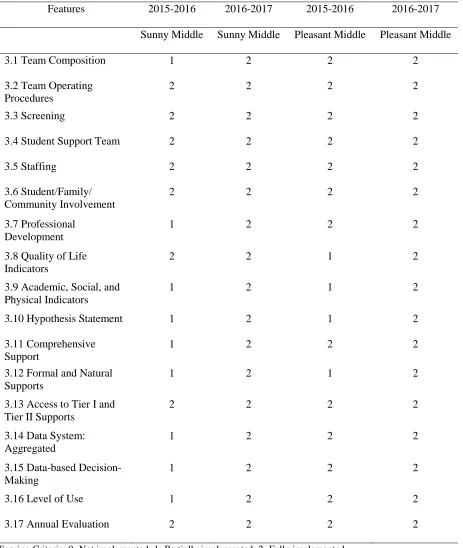
Scoring criteria is based on a Likert-type scale and teams utilize the TFI rubric to assess level of impact. 0=not implemented, 1=partially implemented, and 2=fully implemented as regarded by McIntosh et al. (2017) as they describe the TFI criteria choice responses as not implemented, partially implemented, or fully implemented. Moreover, PBIS teams rank their implementation progress within each component based on data. Tier I contains criteria to determine school-wide support; whereas Tier II focuses on targeted interventions (McIntosh et al., 2017). McIntosh et al. (2017) present Tier III as individual focused which entails more intensive features for teams, resources, plans, and evaluations.
Fidelity Measure Concerns
Further analysis conducted by Horner et al. (2017) suggests that the PBIS “blueprint” encompasses evaluation by the school-level team as a necessary component to guide the implementation process. The analysis considers “evidence-based” implementations across different industries, including education, as an “implementation science.” Horner et al. (2017) emphasize that necessary components such as detailed descriptions require in-depth
consideration prior to enactment to sustain the system. Further, the “breadth of systems
variables” need precise consideration prior to implementation (Horner et al., 2017, p. 26). Horner et al. (2017) present many practices that are used in educational settings; yet, determining which are effective is more difficult. Herein lies the importance of the TFI as a fidelity measure within school settings. Fidelity measures are more complex than a single assessment in time. Horner et al. (2017) argue these measures serve as “influencers” of implementation.
North Carolina, PBIS, and the Tiered Fidelity Inventory
McIntosh et al. (2017) present the TFI as a compilation, originated from components and measures used across states including North Carolina. The TFI is intended as an assessment framework, either utilized alone or in combination with other measures. TFI sub measures assist school-level teams to determine the level of SWPBIS usage or implementation (McIntosh et al., 2017). McIntosh et al. (2017) find Tier I, Tier II, and Tier III practices are assessed within the TFI-embedded criteria. Ultimately, the TFI tool assessment provides an implementation fidelity measure based on data which can be utilized as progress monitoring (McIntosh et al., 2017). PBIS Implementation in North Carolina
adoptions of the framework. In 2008, 691 North Carolina schools were implementing PBIS (Provasnik et al., 2007). The 691 schools were comprised of 426 elementary, 175 middle, 59 high, and 29 alternative schools out of the 2,513 regular and charter schools in 2008 (NCPBIS, 2013). In the 2013-2014 school year, 536 North Carolina schools were recognized by NCDPI, which reflected an increase from 476 in the 2012-2013 school year, as reported by NCDPI evaluation report (McCamish, 2015). The NCES evaluation report found 1,210 schools participated in PBIS in the 2013-2014 school year, which represented 45% of the 2,685 total North Carolina schools (NCES, 2014). In 2015, NCDPI implemented TFI usage for PBIS teams and external coaches to measure implementation fidelity within school settings (Horner, Sugai, & Fixsen, 2017). External coaches, sometimes referred to as PBIS behavior support coaches, are trained individuals who provide district, school, and teacher support, serving as “a linkage between the districts and schools” (Barrett, Bradshaw, & Lewis-Palmer, 2008, p. 107).
Typically, the external coaches are district employees and provide training, recommendations, and strategies for school-based teams. According to the NCDPI PBIS Overview (2017), 95 of the 100 counties in North Carolina had at least one PBIS school implementing the behavioral
system.
PBIS Implementation in Rural School Settings
intervention activities to provide student support (Gottfredson & Gottfredson, 2001). However, PBIS has been an effective system of support in high-poverty schools, especially rural school settings. One study conducted by Fitzgerald, Geraci, and Swanson (2014) found that PBIS was an effective system when implemented in rural school settings. Considering changes in family dynamics and increased poverty, rural schools often have higher student populations with mental health needs (Fitzgerald et al., 2014). Student support services needed to address mental health in school settings can be limited due to a lack of funding and resources. A large study across urban, suburban, and rural districts found that “real-world” PBIS implementation in rural settings may vary from the original implementation plans because of limited resources (Malloy et al., 2013). For example, school-level professionals (such as counselors, psychologists, and consultants) face dual roles in rural settings, limiting time devoted to initiatives like PBIS (Feinberg, Nuijens, & Canter, 2005). Steed, Pomerleau, and Muscott (2013) contend that student support professionals are often limited in rural settings; thus, the availability of personnel needed for school-level behavior initiatives may be minimized.
Chapter Summary
PBIS has been found to be an effective system of addressing student and school-wide emotional and behavioral issues. The literature suggests that there may be some limitations to the implementation of PBIS in rural school settings, due to challenges including increased poverty, reduced resources, and limited funding. Yet there has been evidence of the successful
CHAPTER 3: METHODOLOGY Chapter Introduction
This study explored the similarities and differences between Positive Behavior Interventions and Supports (PBIS) implementation in an exemplar and non-exemplar school, capturing experiences with the Tiered Fidelity Inventory (TFI) tool and its impact on
implementation. Perceptions from middle school educators were sought to determine whether PBIS is a favorable behavioral system for early adolescent students. To answer the research questions, background information on the qualitative research design was gathered before
conducting the study, integrating information on case study design. The following chapter details the data collection and analysis strategies used in the current study, including the use of a
contextual framework to inform the case study and organize the data, and outlines this study’s limitations and ethical considerations.
Research Questions
The current study was guided by the following research questions used to investigate the topic:
1. How do PBIS teams in two rural North Carolina schools designated as exemplar and non-exemplar schools vary in their use of the Tiered Fidelity Inventory tool?
2. How do exemplar and non-exemplar schools differ in terms of their Tiered Fidelity Inventory results?
3. Do team members perceive PBIS as an effective middle school behavioral support system?
Ethical Issues
obligations: “do no harm” and “respect” person(s) involved in the study (Hamilton & Corbett-Whittier, 2012, p. 65). To mitigate any ethical concerns, permission from all participants was gained prior to the group focus interviews, and the researcher also sought guidance from the North Carolina State University Internal Review Board (IRB). In the interest of maintaining transparency in the study, I shared my previous position as a PBIS school-level administrator with participants in the study. Additionally, I sought input from the university dissertation committee to help ensure “no harm” to the participants or the integrity of the study itself.
Qualitative Research Design
The current study employed a qualitative approach, which sought to explore and
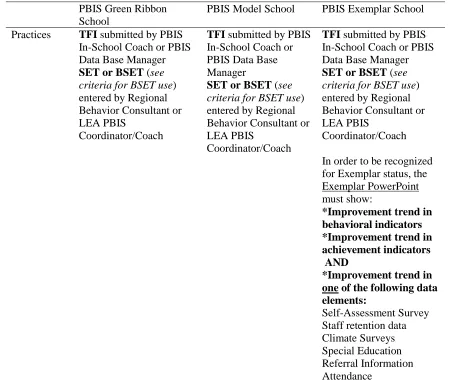
understand "the meaning individuals or groups ascribe to a social or human problem” (Creswell, 2014, p. 4). The focus of this comparative case study was to examine how PBIS teams in two rural middle schools utilize the TFI by capturing their perceptions of the tool. The study included comparing data from each educator focus group from two schools that had implemented PBIS: one exemplar school and one non-exemplar school. The 2016-2018 North Carolina Department of Instruction (NCDPI) recognizes schools implementing PBIS as either green ribbon, model, or exemplar schools based on scores from academic and/or discipline data, including three
Social Construction
A constructivist approach was used in this qualitative study to explore in depth PBIS team member experiences with PBIS and the TFI in separate rural school settings. Creswell (2014) asserts that the constructivist approach guides the research process as participants
construct meaning through interactions with others. The approach was chosen based on how the TFI instrument was utilized by participants and the way these PBIS team members assigned meaning or interpreted the criteria. The constructivist view stresses that meaning is derived as participants engage in conversations; therefore, using open-ended questions allowed participants the opportunity to share their experiences while listening to others in the setting (Creswell, 2014). The focus groups were guided by open-ended questions that allowed free discussions to reveal various team member perspectives. This qualitative method encouraged participants to recount their experiences with TFI implementation over the previous two school years. By interviewing members of PBIS teams in their own school, the researcher was able to apply an inductive approach, capture collective perspectives, and compare accounts within each setting (Creswell, 2014).
for the participants. Patterns of meaning were gleaned from the data collected in the natural setting.
The TFI implemented in North Carolina since 2015 may have member’ perspectives and experiences with the tool which vary across school settings. Qualitative research provides a framework to capture experiences and the varying perspectives of individuals. For example, school-level teams may have unique experiences with additional responsibilities or varied time commitment associated with TFI usage. High school PBIS team members and district leaders could benefit from different insights in comparison to school-level teams, given the limited studies currently available. The demands accompanying TFI tool implementation may have created varying work levels for NCDPI regional coaches. In this study, I included only those perspectives and experiences of school-level team members.
The researcher utilized a case study design based on two PBIS team accounts. According to Creswell (2014), the researcher is instrumental to develop an in-depth analysis of the “case.” Cases are furthermore developed through participant experiences and captured by various data collection approaches (Stake, 1995; Yin, 2009, 2014). Multiple data sources including focus groups, document analysis, and a literature review were used for the study. This comparative case analysis included participants from two PBIS schools, one recognized as exemplar and the other recognized as non-exemplar by the NCDPI.
replication strategy, which strengthens the findings or makes the case more robust (Miles et al., 2014). Using small samples of people in their setting and choosing participants based on criteria to gain a purposive sample follows the qualitative sampling guide (Miles et al., 2014). The samples in this study, two PBIS teams in rural school settings, were chosen based on time
constraints and accessibility, as well as for their experiences with the TFI and similar grade-level spans.
The two school teams in the current study were chosen with assistance from the PBIS district-level coach to provide input and suggestions for two comparable schools (elementary, middle, or high) based on the PBIS determination of the schools’ exemplar, model, or green ribbon status. The selection of the schools for this study was determined by the most recent state-level PBIS recognition based on the state scoring guides and team submissions. District coach confidentiality was considered during the selection process.
The school settings were selected with consideration to reduce researcher bias, including choosing those from middle school settings in a school district not associated with the
researcher’s current position to reduce bias. PBIS TFI results were accessed after confidentiality statements were provided to team members currently operating in one of two rural schools. These TFI results encompassed the current and previous school year data, and two consecutive school year results were chosen to follow recommendations that case study design should be bound in time (Creswell, 2014; Stake, 1995; Yin, 2009). Analysis of PBIS implementation, as measured by the TFI PBIS sustainability data, included the TFI results and Office Discipline Referral (ODR) data over two years.
Role of the Researcher
instrument, conducting focus groups, transcribing the data, and analyzing the data within two weeks following participant interviews. Prior to conducting the focus groups, TFI results and ODR data were reviewed from each respective school, utilizing scholarly literature for reference. Additionally, I sought guidance from the dissertation committee Chair throughout the study. Tufford and Newman (2010) point out the importance of “bracketing” to enable the investigator to acknowledge preconceptions during the research process, and they suggest that the researcher confer with colleagues throughout the study. Therefore, the researcher remained self-aware by writing memos during the data collection and analysis phases of the study, and preserved objectivity by seeking guidance from the dissertation committee.
Data Collection
This study involved collecting data from focus groups (two school PBIS teams) as well as TFI and ODR data from two school-years. The focus groups, TFI data, and ODR data from two school years, and researcher observation memos provided various data points for the overall approach (Creswell, 2014). Permission was granted from District Superintendent, Dr. Cooper, of Napoli County Schools in the eastern region of the state. Two schools were chosen based on PBIS recognition from NCDPI for the 2016-2017 school year as either exemplar or non-exemplar middle schools. To maintain confidentiality, the two schools were identified with the pseudonyms of Pleasant Middle School and Sunny Middle School. Face-to-face interviews were conducted with six PBIS team member participants at the exemplar school site and four
participants at the non-exemplar school site. The varied number of participants was because Sunny Middle School had only four members in attendance on the focus group date due to an unexpected situation.
throughout the process. Focus groups allowed participants to share their experiences with PBIS in their respective school, while also listening to other team members. The intent of this
approach was to gain rich insights on the experiences of TFI usage in rural middle school settings. Both focus groups lasted about an hour and all members willingly participated, sharing their backgrounds in education, thoughts on PBIS, and experiences with the TFI. Although generalizations cannot be made from the findings, capturing member experiences could provide other school leaders with a deeper understanding of PBIS implementation. During the focus group, researcher notes about each participant as they responded to the semi-structured interview questions notated if they had any reluctance to respond or requested input from another
participant. For future reference, memo notes were documented to record where each participant was seated during the focus groups.
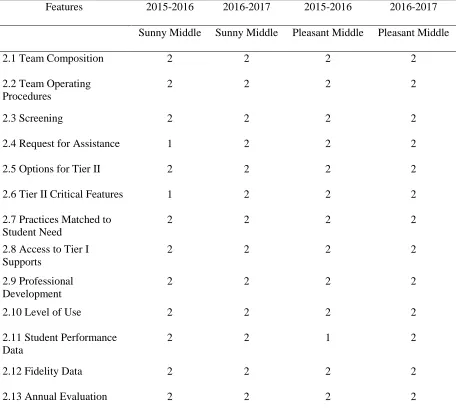
Prior to the focus groups, the researcher examined and compared TFI results from the 2015-2016 and 2016-2017 school years, noting similarities and differences between the data. The TFI analysis provided some comparable results while also revealing unique differences related to the schools’ recognition as either exemplar or non-exemplar by the NCDPI. The Tier I analysis included team composition; team operating procedures; behavioral, teaching, and problem behavior expectations; discipline policies; professional development; classroom procedures, feedback, and acknowledgement; faculty involvement and student/family/community
involvement; discipline data; data-based decision making, fidelity data, and annual evaluation; and schoolwide PBIS features relevant to this study. Tier II analysis involved team composition; team operating procedures; screening; request for assistance; options for Tier II; Tier II critical features; practices matched to student needs; access to Tier I support; professional development; level of use; student performance data, fidelity data, and annual evaluation; and targeted
To determine similarities and differences between the two schools, the researcher reviewed each school’s discipline ODR data from the two consecutive school years prior to the focus group. The data provided insights on levels of discipline aligned with the TFI levels I, II, and III. Reviewing the ODR data presented information on the referral types and incident locations, which was useful data in allowing for comparisons of an exemplar and non-exemplar PBIS middle school.
Researcher observation memos were utilized to capture any nuances not obtained on the auditory recording. Memos such as reluctance to respond or seeking approval from other participants provide rich descriptions to increase validity of the findings (Creswell, 2014). The memos in the current study noted any subtleties observed during the focus group and captured details and descriptions and provided an in-depth account of member interactions.
The face-to-face focus interview took place during the traditional school year, beginning in 2017 (following IRB approval) and ended in the spring of 2018. I recorded the sessions using an audio recording device. After acquiring written approval by the participants, I maintained confidentiality by assigning numbers to members at the beginning of each session. Participants were asked to share their background information during the focus group after being assigned a participant number to ensure confidentiality. This approach provided pertinent information for the final analysis. During the interview, I asked members to identify themselves by their assigned number and I wrote the number on the participation agreement document to maintain
confidentiality. I used the following questions to guide discussions:
● How do PBIS team members’ perceptions of PBIS implementation vary based on exemplar and non-exemplar status?
● How is the TFI utilized by your team?
● Has the team focus changed since using the TFI criteria? How? What is different? Are there any limitations your team has experienced?
● Are there any factors that hinder your team’s ability to implement PBIS with fidelity?
During the focus group, I made notes, capturing team member interactions by notating emotions expressed as members responded for future reference. The session was audio taped and then transcribed before analyzing the responses. The data was transcribed within a two-week period following the focus groups to maintain familiarity.
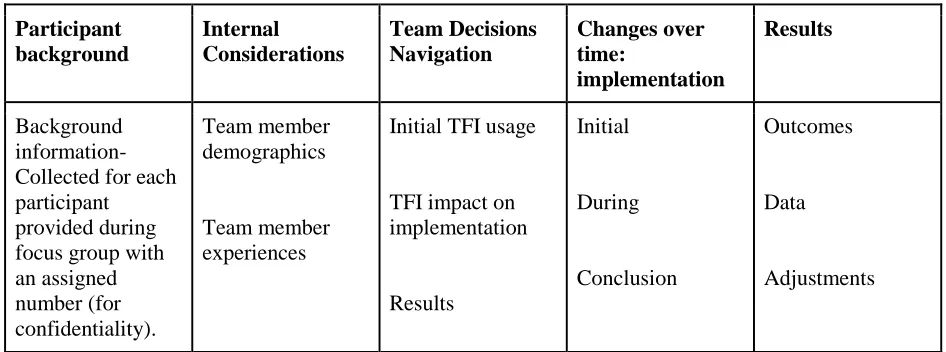
Table 2: Conceptual Framework/Structure
Participant background Internal Considerations Team Decisions Navigation Changes over time: implementation Results Background information- Collected for each participant provided during focus group with an assigned number (for confidentiality). Team member demographics Team member experiences
Initial TFI usage
TFI impact on implementation Results Initial During Conclusion Outcomes Data Adjustments
Validity
During data collection, I triangulated data sources as I reviewed TFI data results, ODR data, focus-group interview responses, and memo participant interactions. I purposefully sought insight from the dissertation committee to ensure validity and to gain different perspectives that needed consideration during data analysis. To ensure the accuracy of the data, I provided a copy of the transcribed responses to the participants as a way of “member checking” (Creswell, 2007). Participants were asked to review the notes and provide responses to ensure accuracy of the data. After team members submitted their feedback, necessary adjustments were made to the data. This process was used to increase data accuracy and served as a method to address researcher bias. During coding, committee member reviews served to address researcher bias.
Finally, I took a respite from the data in order to gain a new perspective. Data outliers were included in the findings for transparency. Miles, Huberman, and Saldana (2014) describe how outliers should be considered to strengthen the findings. I considered any outliers to limit self-selecting bias.
Data Analysis
Data were transcribed data following each interview by listening to the audio recordings and reviewing the hand-written memo notes. The transcriptions were coded using NVivo for initial coding (first cycle) while looking for similar descriptors. Descriptive coding followed the first cycle (Saldana, 2013). Next, a second coding cycle that included clustering was conducted to look for patterns and themes. After the first round of second coding, the researcher created categories (clusters) as the data were analyzed (Saldana, 2013). The final clustering enabled the identification of themes aligned with this study’s research questions. After the first and second cycle coding process, data analysis in the current study included using a replication strategy, which gives the researcher patterns that are pertinent to both cases (Yin, 2009).
By limiting the focus group to one school year, the researcher had an opportunity to capture the nuances of both exemplar and non-exemplar PBIS teams and gain deeper understandings for the complex demands and experiences of team members in rural school settings.
Limitations of the Study
There are limitations to this study including human perspectives, researcher bias, and generalizability. First, participants likely had preconceived notions about the importance of PBIS. Their response to questions may bias the findings. Participant perceptions from two PBIS teams may not reflect opinions like those on other PBIS teams. Further, researcher influence could have had an impact on participant responses. To minimize researcher impact, oral responses to answers were limited.
CHAPTER 4:FINDINGS Chapter Introduction
This dissertation was a comparative case study of two rural middle school Positive Behavioral Interventions and Supports (PBIS) teams from eastern North Carolina. The purpose of the study was to capture team members’ experiences with the PBIS system in middle school settings, obtain collective views of the Tiered Fidelity Inventory (TFI) tool usage, and gain an understanding of the perceived implementation impact. Focus groups were held at each school with PBIS team members. Six team members were present at Pleasant Middle School, including both Co-Chairs, three regular education teachers, and one special education teacher. Pleasant Middle School was an exemplar PBIS Middle School, recognized by the North Carolina Department of Public Instruction (NCDPI) for the 2016-1017 school year. Four team members (one administrator and three teachers) were present at the Sunny Middle School focus group, but notably, the administrator had not served on the team during the prior school year. One member was not able to attend because of a personal emergency. A follow-up interview was conducted with two prior administrators from each school, both serving on the PBIS team in 2015-2016. Sunny Middle School was recognized by the NCDPI as a non-exemplar school for the 2016-2017 school year. The Chair had served two consecutive years in the role.
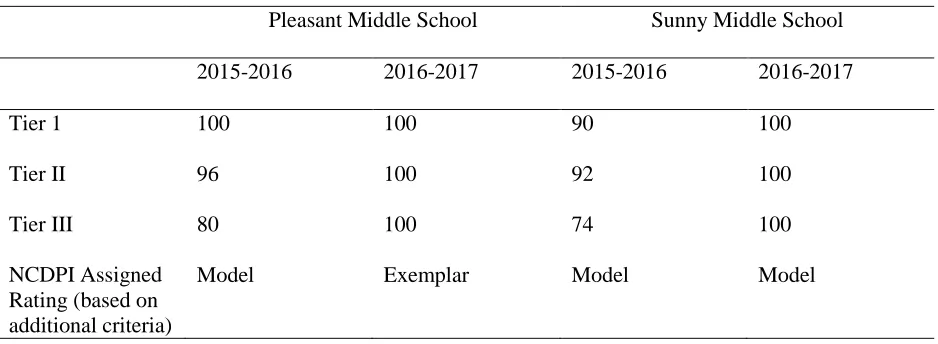
I also collected two consecutive years of Office Discipline Referral (ODR) data (see Appendix B) for each school, and two consecutive years of TFI results (see Appendix C). School demographics were compiled from the NCDPI state website. I audio-recorded each focus group session and personally transcribed all responses after the sessions. Memo notes were taken throughout the focus groups as participants responded to questions. As a form of member
responses. Sunny Middle School administrator, Mr. Teal, responded and agreed with the response in addition to the Chair (Co-Chair) and one other teacher.
Chapter 4 is arranged by: (1) a description of each school including demographic
information from NCDPI, district principal monthly report data, and school website information; (2) a description of team member backgrounds; and (3) themes that emerged from the focus group interviews and data analyses. Pseudonyms were utilized to maintain participant confidentiality. The overarching questions that guided this dissertation were:
1. How do PBIS teams in two rural North Carolina schools designated as exemplar and non-exemplar schools vary in their use of the Tiered Fidelity Inventory tool?
2. How do exemplar and non-exemplar schools differ in terms of their Tiered Fidelity Inventory results?
3. Do team members perceive PBIS is an effective middle school behavioral support system?
School Descriptions
Pleasant Middle School is a rural school located about 30 minutes from a major city in eastern North Carolina. In the 2016-2017 school year, it had a population of 763 students and 45 teachers, with one national board-certified educator and one holding an advanced degree.
Pleasant Middle was considered a safe school indicated by the “no criminal reports per 100 students.” The student population in 2016-2017 included White (50%), Black (30%), and Hispanic (17%) students. More than 50% of students at Pleasant Middle receive free or reduced-price lunch, similar to many rural North Carolina schools in the area.
of two or more races (3.6%). Fifty-nine percent of the students at Sunny Middle participate in the free or reduced-price lunch program, comparable to the state average, as reported by the National Center for Education Statistics (NCES, 2010). Overall, the school was regarded as a “safe
school” with no school related arrests during the 2016-2017 school year (NCES, 2010). Pleasant Middle School and Sunny Middle School are both rural schools with similar student population sizes; however, their ethnic distributions have unique diversity makeups. Pleasant Middle (17%) had more Hispanic students than Sunny Middle (6%), but Pleasant Middle also had more White students (50%) than Sunny Middle (43%). In comparison, Sunny Middle (44.9%) had a higher percentage of Black students than Pleasant Middle (30%).
School Team Member Backgrounds Pleasant Middle School
In March 2018, I visited Pleasant Middle School to hold a focus group with six PBIS team members. We met in the conference room located down the hallway from the
administrative offices in the school, and each team member shared their background information (see Appendix F). When we met, the team had two Co-Chair PBIS leaders, Mr. Pope and Miss White. Mr. Pope had served as Co-Chair for two consecutive years prior to the group meeting and four years on the PBIS team. Miss White was a relatively new first-year PBIS Co-Chair, having only been on the team for two years . Mr. Pope, a lateral entry teacher with a Biology background, described how he longed to work with students prior to becoming an educator. Similarly, Miss White entered the field as a lateral entry teacher; however, she had a business background and had worked in the banking industry prior to entering the education field. Both leaders shared they had a “calling” to teach, but Miss White recounted her desire to teach
members shared their pathway to education after being asked, “How did you arrive in the education field?”
Team member Ms. Poe said she “knew at an early age” that she wanted to be a teacher after the local librarian suggested a career path in library science. Ms. Poe pursued an
undergraduate and graduate degree in elementary education, only to realize during her student teaching experience that she was “not cut out” for elementary school. At the time of the focus group, Ms. Poe had served for two years on the PBIS team. Similarly, Ms. Joy, who had two years of PBIS team experience, recalled how she had wanted to teach since childhood and took the traditional pathway into education, entering college in pursuit of an elementary education degree. However, Ms. Joy quickly discovered that middle school was a better fit and received a Bachelor’s degree in middle school math.
Comparable to Mr. Pope and Miss White, Ms. Berman took an untraditional pathway into education. Ms. Berman had a previous career as a school administrator prior to her mother’s death. She realized the desire to teach and pursued a Bachelor’s degree in elementary education, beginning middle school as a sixth-grade teacher. Similar to Ms. Poe, she followed a friend’s lead into middle school teaching and had served on the PBIS team for two years. Ms. Pink joined the focus group about 15 minutes into the discussion. Although she did not share her background information, she had served on the PBIS team for about two years. The team members appeared to be a close, congenial group eager to share their experiences in working on the PBIS team. Sunny Middle School