ABSTRACT
GUO, JIYAO. Effect of Chocolate Candy Feed on Growth Performance of Newly Weaned Pigs in a Commercial Farm. (Under the direction of Sung Woo Kim.)
The objective of this research was to determine the effectiveness of Chocolate Candy Feed
(CCF, International Ingredient Corp., St. Louis, MO), as an alternative carbohydrate source
to lactose for nursery pigs. Weaned pigs (21 d of age, 7.1 ± 0.3 kg, n = 1,408) were fed 4
diets (16 pens/treatment and 22 pigs/pen) in phase 1 and 2. Each pig was budgeted to
consume 1.8 kg of the experimental diets during phase 1 (approximately 11 d) and 6.8 kg of
the experimental diets during phase 2 (approximately 17 d). During phase 3, all pigs were fed
a common diet until 49 d postweaning. Treatment diets included PC (20 and 8% lactose in
phase 1 and 2, respectively; 0% replacement of lactose with CCF), 15CCF (15% lactose
replacement), 30CCF (30% lactose replacement), and 45CCF (45% lactose replacement).
Whey permeate was used as the source of lactose. Replacement of lactose by CCF was based
on equal amounts of total sugars. Treatment diets were balanced for equal amounts of
essential amino acids and energy. Fecal scores were recorded on d 1, 3, and 5. Blood samples
were taken at the end of phase 2. Duration of phase 1 tended to linearly decrease (P = 0.06) with increasing levels of CCF in diets. During phase 1, ADFI linearly increased (P < 0.05) as CCF increased in the diets with no differences in ADG or G:F (gain to feed ratio). Duration
CCF. In phase 3, ADFI was linearly reduced (P < 0.05) in pigs fed increasing levels of CCF during the previous treatment phases, but no differences (P < 0.05) were detected for ADG or G:F. During the overall trial period, ADG, ADFI, and G:F were not different (P < 0.05) among treatments indicating no adverse effects of CCF replacing lactose on growth
performance or feed conversion of nursery pigs. Serum urea nitrogen was not different
among treatments at the end of phase 1 but tended to linearly increase (P = 0.088) with increasing CCF at the end of phase 2. During phase 1, there was no difference (P < 0.05) in fecal scores among treatments. Mortality rate of pigs was not different among treatments
whereas morbidity of pigs tended to linearly decrease (P = 0.08) as CCF increased indicating no adverse effects of CCF replacing lactose on health status of nursery pigs. In conclusion,
the results showed Chocolate Candy Feed can be used to replace up to 45% of the lactose in
nursery diets without negative effects on growth performance, feed conversion or health
Effect of Chocolate Candy Feed as an Alternative Carbohydrate Source to the Use of Lactose on Growth Performance of Newly Weaned Pigs in a Commercial Farm Condition
by Jiyao Guo
A thesis submitted to the Graduate Faculty of North Carolina State University
in partial fulfillment of the requirements for the degree of
Master of Science
Animal Science
Raleigh, North Carolina
2013
APPROVED BY:
_______________________________ ______________________________ Dr. Mark Knauer Dr. Chad H Stahl
BIOGRAPHY
Jiyao Guo was born in Shanxi Province, China in 1987. Jiyao attended middle school and
high school in ShanXi Province until graduation in 2006. Jiyao moved to Beijing to study at
the China Agricultural University for his Bachelor of Science in Animal Science. During his
4 years study at China Agricultural University, Jiyao did internships in beef cattle, poultry,
and swine experimental units. With a desire to further his education in animal science, Jiyao
continued his Master of Science degree in Animal Science at North Carolina State University
under the direction of Dr. Sung Woo Kim. After completing his Master’s Degree, Jiyao plans
to continue his education at North Carolina State University in order to obtain his Doctor of
ACKNOWLEDGEMENTS
First of all, I would like to say thank you to my parents for all their support. Like all
other traditional Chinese parents, they devoted themselves in loving me. They always support
me, trust me and are proud of me. I thank them for so many amazing opportunities they have
provided for me. I would like also thank my girlfriend, Tingting Ju, for her support,
understanding and love.
I would also like to thank my advisor, Dr. Sung Woo Kim, for his enormous support
in study and care in life during my Master’s program. He has provided me many
opportunities to allow me practice and improve myself. I would like to thank my committee
members, Dr. Mark Knauer and Dr. Chad H. Stahl, for their support for my research and
education. To my colleagues, Adsos Adami Dos Passos, Alexandra Chaytor, Gwendoline
Voilque, Inkyung Park, Yanbin Shen, and Yawang Sun, I would like to express gratitude for
their continuous help. I also thank all the professors who have inspired me by their broad
knowledge and deep interest in their area. Thanks also should be given to Dr. Terry Coffey,
Dr. Christina Phillips, Daniel Sykes, Yan Zhao, Tony Rosenberg and Calvin Herring at
Murphy-Brown LLC, for their support in my research. Because of all of them, my research
TABLE OF CONTENTS
LIST OF TABLES ... v
LIST OF FIGURES ... vi
CHAPTER 1: LITERATURE REVIEW ... 1
Introduction ... 2
Weaning Process in Pigs ... 4
Energy Requirement of Nursery Pigs ... 7
Carbohydrates for Nursery Pigs ... 8
Classification of Carbohydrates ... 8
Digestion of Carbohydrates ... 9
Glucose ... 10
Lactose ... 11
Sucrose ... 13
Starch ... 15
Sources of Lactose ... 17
Dried Whey and Dried Whey Permeate ... 17
Dried Skim Milk ... 19
Replacement of Lactose ... 20
Summary ... 22
Literature Cited ... 23
CHAPTER 2: EFFECT OF CHOCOLATE CANDY FEED AS AN ALTERNATIVE CARBOHYDRATE SOURCE TO THE USE OF LACTOSE ON GROWTH PERFORMANCE OF NEWLY WEANED PIGS IN A COMMERCIAL FARM CONDITION ... 36
Abstract ... 37
Introduction ... 39
Materials and Methods ... 41
Animals and Design ... 41
Housing and Sampling ... 42
Statistical Analysis ... 43
Results ... 43
Mortality and Morbidity ... 43
Duration of Each Phase ... 44
Feed Intake ... 44
Weight Gain and Feed Efficiency ... 44
Fecal Score and Serum Urea Nitrogen ... 45
Discussion ... 45
LIST OF TABLES
CHAPTER 1
Table.1. Dietary nutrient requirement of starter pigs allowed feed ad libitum ... 32
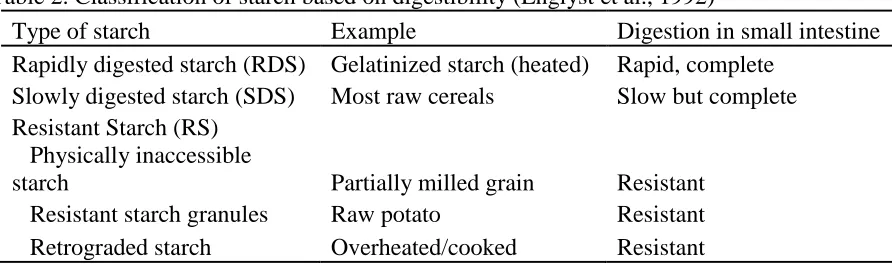
Table 2. Classification of starch based on digestibility ... 33
CHAPTER 2 Table 1. Nutrient composition (%) in Chocolate Candy Feed and DairyLac80 ... 55
Table 2. Composition of experimental diets in phase 1 ... 56
Table 3. Composition of experimental diets in phase 2 ... 58
Table 4. Effects of lactose replacement on growth performance of nursery pigs ... 60
LIST OF FIGURES
CHAPTER 1
CHAPTER 1
Introduction
Newly weaned pigs confront many stressors including changes in the source of
nutrients (from milk to solid feed), physical separation from mother, interaction with new
pen mates, etc. which can challenge pig growth (Pluske et al,. 1997) and nutrient intake
(Smith and Lucas, 1956; Leibbrandt and Ewan, 1972; Owsley et al., 1986a). Highly palatable
and digestible ingredients help pigs to cope with these stressors upon weaning. Milk-based
feedstuffs are more palatable and digestible for nursery pigs compared with cereal-based
feedstuffs. As the main carbohydrate source in milk, lactose is the most common energy
source in nursery diets. Lactose has been reported to significantly improve weight gain and
feed efficiency of nursery pigs (Mahan, 1984; Owsley et al., 1986; Cera et al., 1988; Tokach
et al., 1989).
Feed cost makes up to 70% of total cost in swine production. In diets of newly
weaned pigs, lactose has been the most important carbohydrate source (Krider et al., 1949).
Mahan (2004) reported that supplements of 15 to 20% lactose in pig diets throughout d 7 to
21 postweaning and 10 to 15% lactose throughout d 21 to 35 postweaning maximized growth
performance. Therefore swine production has a large need for lactose. Lactose sources
mainly come from dairy by-products including dried whey, dried whey permeate and lactose
crystal. However, the price of lactose from the year of 2004 to 2007 increased by 3.5 fold
from US $0.44/kg to a high of US $2.0/kg (Affertsholt-Allen, 2007) but has recently decline
increase in lactose price. The market of milk by-products has been increased in recent years.
Standardization of milk is a procedure on adjustment of fat and non fat solid of milk to the
desired level to meet the legal standards. Standardization of milk powder for protein resulted
in a huge demand of lactose, which also caused a worldwide shortage of lactose (Paterson,
2009). Except for the lower production, the dramatic increase in lactose price was also due to
the elimination of EU and US stocks of whey products (Affertsholt-Allen, 2007). The
increased demand of whey products and increased use of standardization of milk powders
may continue increased lactose prices. Therefore pork producers should evaluate replacement
ingredients for lactose that may enter into least cost feed formulation.
With the significant increase in the price of whey products, people start to look for the
alternative sources to lactose. Single sugars (includes glucose, sucrose and etc.) have been
reported as replacement for lactose. Sucrose is as effective as lactose when they are added to
nursery diets (Mavromichalis et al., 2001). Adding 45% glucose in initial 14 d nursery diets
improved growth performance (Newton and Mahan, 1990). The prices of sucrose and
glucose are 52 and 3% cheaper than dried whey permeate, respectively. By-products from
food candy industries can also be alternative sources to lactose. Yang et al. (1997) and
Naranjo et al. (2010) suggested that partially replacing dried whey with milk chocolate
product (MCP, 60% of total sugars, International Ingredient Corp., St. Louis, MO) in diets
would not impair the growth performance of nursery pigs. Chocolate Candy Feed
(International Ingredient Corp., St. Louis, MO) is also a product from food candy industries
68% of dried whey permeate price (International Ingredient Cooperation; USDA). Chocolate
Candy Feed can be considered as a new alternative carbohydrate source to lactose for
economic reasons in nursery pigs.
Weaning Process in Pigs
Natural weaning is a slow process usually happening at 8 to 17 wk of age (Brooks
and Tsourgiannis, 2003). In such a long time, piglets have enough time to make the changes
from milk to solid diet, to allow for enzyme and immune system adapting to the new
substrates and to imitate the feed behavior from their mother. However, in commercial farms,
weaning of piglets takes place at 18 to 25 d of age in the US. In the EU, weaning before 28 d
of age is prohibited (ECCD, 2001). Generally the wean age is increased up to 28 to 35 d of
age in the EU.
Weaning pigs at early age enhances economy efficiency of swine production. The
benefits include improving the productivity of the sow (pigs/sow/year), decreasing the
disease transmission between sow and piglet, and accelerating the flow of both pigs and sows
in farms. (Ten Napel et al., 1995). Main et al. (2004) suggested that weaning at 21.5 d of age
would improve wean-to-finish growth performance and decrease the mortality rate compared
with the growth performance of pigs weaned at anytime between 21 to 35 d of age. The
weaning weight of pigs and feeding program also greatly influence the nursery performance
it’s indispensible to focus on the how to improve the growth potential of nursery pigs and
how to reach maximize profit in swine production.
Difference in nutrient content of feed is one of the important stressors for piglets.
Milk from mature sows at d 17 of lactation contains approximately 5.8% protein, 7.1% fat
and 19.7% total solids (Mateo et al., 2008). A typical nursery diet contains 90% DW and
24% CP (NRC, table 1). Facing differences in dry matter, ingredient type and nutrient
compositions of diet, pigs consume little feed during the initial nursery period. Besides, the
external stress factors are associated with notable changes in histology and biochemistry of
small intestine. It has been reported that there was a reduction in villous height (villous
atrophy) and an increase in crypt depth (crypt hyperplasia) after weaning (Homich et al.,
1973). Pluske et al. (1997) also found that villous atrophy and crypt hyperplasia decreased
digestive and absorptive capacity and resulted in a poor growth performance. The intestinal
morphological changes lead to a decline of intestinal functions, reflecting reduced
brush-border enzyme activity and absorption ability (Kenworthy and Allen, 1966).
Except for the structural changes, the enzyme change may also be an important factor
influencing the absorptive function (Miller et al., 1986). The enzyme activities in gut vary
from the birth until pigs are approximate 8 wk of age. Activities of lipase, amylase, trypsin,
and chymotrypsin increase steady from birth to 3rd wk of age and increase faster from the
4th to 8th wk of age (Corring et al., 1978). Lactase, an enzyme produced in digestive system
of infants, can break down lactose into galactose and glucose. The lactase activity is low at
age (Ekstrom et al., 1975b). There is a small amount of amylase existing in saliva. Amylase
is mainly secreted into the intestinal lumen in the pancreatic juice (Dahlqvist, 1960). Protease
is related to hydrolysis of peptide bond. Amylase and protease activities are quite low in
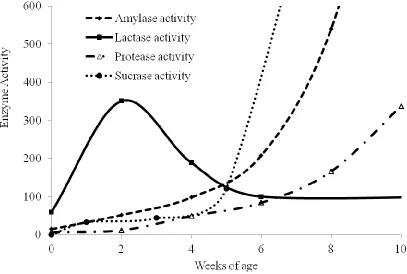
activity at birth and then increase with age (Figure 1). The weaning age doesn’t influence the
pattern of how enzyme activities change (Hartman et al., 1961).
Growth performance and feed intake are quite low during the 1st wk postweaning
(Smith and Lucas, 1956; Meade et al., 1965; Owsley et al., 1986). Smith and Lucas (1956)
defined the first 10 d postweaning as ‘check period’. During the initial ‘check period’, pigs
consume little feed, grow slowly and sometimes scour. After the ‘check period’ there is a
sudden increase in growth performance and feed intake, which is called ‘growing period’.
Besides, diarrhea also occurs at early weaning. Nabuurs (1998) indicated that nursery pigs at
3 to 5 wk of age changed the flora, the morphology, and the function of the intestine. These
changes together may result in diarrhea.
Because the biological and behavioral changes usually result in a post weaning lag
phase, a palatable and digestible nutritious diet is needed. Also increase or decrease in feed
intake is a good sign to show the health status of pig. Kelly et al. (1990) suggested that
nutrients intake in the weaned pigs affected the anatomy, morphology and function of the gut.
Shields et al. (1980) also reported the similar result that total activities of protease and
amylase increased with enhanced feed consumption of nursery pigs. Here are the nutrient
Energy Requirement of Nursery Pigs
Nutrient requirements should be expressed in relation to the energy concentration of
the diet (ARC, 1981). Unlike energy requirement of grower-finisher pigs, the goal of energy
requirement for nursery pigs is to maximize growth performance instead of carcass
composition (Dividich and Sève, 2001). Encouraging body fat content and gut development
would help nursery pigs to go through the stressful nursery period. Also, it’s important to
ensure the high growth rate during nursery period and carryover the positive effects to
grower-finisher period (Mahan and Lepine, 1991; Mahan, 1993).
Metabolizable energy (ME) requirement includes the requirement for base
metabolism, physical activity, and thermoregulation. The average ME requirement for
nursery pigs is 470 kJ ME kg -1 BW0.75 per day, in which 15 to 30% of ME is used for
activity (Halter et al., 1980). When pigs are raised indoor, we can ignore the
thermoregulation effect on ME. At the same time, maintaining the best ambient temperature
could avoid the extra loss of BW in nursery pigs. The energy system of nursery pigs depends
on the capacity of digestion, health condition of the gut and feed consumption. Brooks (1999)
indicated that most pigs started to eat solid feed within 5 h after weaning but it may take 54 h
before the first solid meal for some pigs. Therefore, the ME intake of pig varied. Generally
the ME intake increases with age after weaning. Even though, the ME requirement is not met
because the value of ME in 1st wk postweaning just reaches 60 to 70% of pre-weaning ME
The ME intake is also affected by environment and nutrition. Fat and fiber should be
limited in nursery diets. The addition of fat in nursery diets results in a decrease in total
energy intake (Tokach et al., 1995; McConnell et al., 1982). Same result is also found in
nursery pigs fed fiber (McConnell et al., 1982). However, piglets in pre-weaning can utilize
high-fat milk to improve growth performance (Jone et al., 1999). The depressive effect of fat
and fiber on growth performance is mostly due to the low appetite and low feed intake of
nursery pigs. Except for fat and fiber, daily protein intake depends on the energy
concentration of the diet. A lysine to energy ratio of 4.1 to 4.2 g apparent digestible
lysine/Mcal ME is recommended (Owen et al., 1995; Williams et al., 1997). As age increases,
this value may decrease to 3.3 g for 22 kg pig (Smith et al., 1999). In conclusion, insufficient
feed intake is the most limiting factor in energy intake, which may impair growth potential.
Increase in feed (energy) intake could provide proper nutrient to energy ratios. In this way,
highly palatable, digestible ingredients with high net energy concentration are needed to
maximize energy intake.
Carbohydrates for Nursery Pigs
Classification of Carbohydrates
Carbohydrates can be classified by the number of sugars into 4 groups:
- Monosaccharides (glucose, fructose, mannose, galactose, etc.)
- Oligosaccharides (raffinose, stachyose, verbascose, etc.)
- Polysaccharides (starch, cellulose, hemicelluloses, pectin, etc.)
(Drochner, 1991)
Carbohydrates are the main energy sources for animals. Glucose is absorbed directly
into blood during digestion. It also plays an essential role in cell biology as an energy source
and a metabolic intermediate. Polysaccharides, as for starch and glycogen, are the storage of
energy for animals. Ribose is an important component of coenzymes (e.g., ATP, FAD, and
NAD). The deoxyribose is a component of DNA. Carbohydrates and their derivatives play
key roles in gene expression, energy metabolism, immune system and etc.
Digestion of Carbohydrates
Considering carbohydrate digestion, simple carbohydrates and starch are mainly
digested by intestinal enzyme, but polysaccharides like cellulose, hemicelluloses and pectin
are digested by fermentation. Different types of digestion decide the sites of reaction in the
gut. A limited breakdown capability of sugars in the stomach has been observed. The
digestion in the stomach basically is mainly due to fermentation. The degradation products
are volatile fatty acids and lactic acid. The fermentation capacity of stomach flora is
depended on the pH level. Simple carbohydrate digestion mainly occurs in the small intestine.
Monosaccharides like glucose can be directly absorbed by the small intestine mucosa. At the
end of the ileum, the concentration of glucose is extremely low in digesta (Drochner, 1991).
For disaccharides digestion, corresponding enzymes are needed to split them into
level of lactase is very high at 1 wk of age, then the activity of lactase decreases with age
because of lacking substrates. Ekstrom et al. (1975) reported that lactase levels of 21 day old
piglets were not affected by lactase-containing diet but by breed differences. Maltases can be
divided into isomaltase, sucrase, glucoamylase I and glucoamylase II (Dahlquist, 1960).
Sucrase breaks down sucrose into fructose and glucose. Except for the age effect, the
concentrations of these enzymes depend on the gut-dilatation and feed content, especially
starch and sugar content (Kidder and Manners, 1978). The amylase from pancreatic secretion
would break down starch. The breakdown-product of starch was maltose, maltotriose and
some dextrins (Drochner, 1991).
Glucose
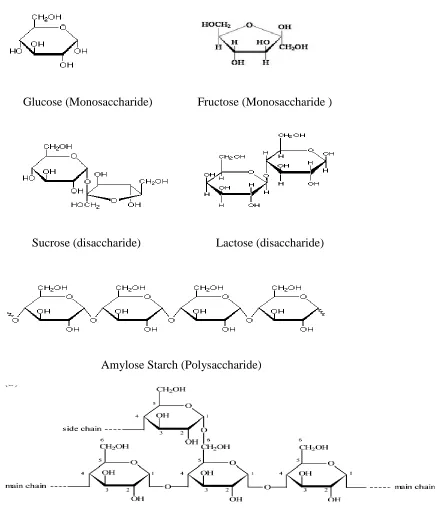
Glucose is also known as dextrose, as a monosaccharide (Figure 2), which is
absorbed very quickly in small intestine and then directly, goes into the blood stream.
Glucose is rapidly absorbed by intestine mucosa of young pigs, which makes it a very good
energy source for young animals (Drochner, 1991). Mahan and Newton (1993) reported that
45% of glucose or lactose added diet increased the weight gain and feed consumption of pigs
at 0 to 14 d postweaning compared to a diet with added cornstarch. Glucose can partially
replace lactose. Kidder and Manners (1978) and Sambrook (1979) suggested that glucose
was as efficient as lactose being a sugar source for pigs less than 7 d old. At d 14 to 28
postweaning, replacing part of lactose in a diet with glucose increases the weight gain
Lactose
Lactose enhances growth performance and feed intake. Lactose is a useful
carbohydrate source for starter diets (Giesing and Easter, 1985). High level of lactose has
been formulated in starter diets as a main carbohydrate for several decades. Tokach et al.
(1994) and Kim and Allee (2001) suggested that newly weaned pigs should be able to digest
lactose more easily than starch carbohydrates. Turlington et al. (1989) also claimed that
lactose helped improve nutrient digestibility by slowing digesta flow rate compared with
glucose. Adding corresponding levels of lactose in diets could result in maximum
performance of nursery pigs (Mahan et al., 2004). Similarly, Cromwell et al. (2008) indicated
the addition of 7.5% lactose in diets of 3 to 4 wk nursery pigs resulted in significant increases
in feed intake and growth rate.
Lactose can be converted to lactic acid by lactobacilli bacteria in stomach. Lactic acid
is an organic acid maintaining sufficiently low gastric pH, which provides a beneficial
environment for intestinal microflora population and causes the optimal enzyme activities.
As an organic acid, lactic acid forms in a large proportion in the stomach and small intestine
through 9 wk of pig life (Kidder and Manners, 1978). Early weaned pigs may not have
enough secretion of hydrochloric acid in stomach (Kidder and Manners., 1978; Manners,
1970). However, the barrier-function of stomach is due to the low pH, which is maintained
by lactic acid fermentation in early weaned pigs. Low pH is gradually maintained by
increased hydrochloric acid in stomach later. An inverse relation between secretion of
of gastric juice only approaches that found in adult pigs (Ph 2.0-3.5) at the age of 3 to 4 wk
postweaning. Since lactic acid plays such an important role, study had observed that lactic
acid was used to as prophylaxis of post-weaning scours (White et al., 1969).
Lactic acid dissociates in water resulting in ion lactate. Lactate is also a product of
glycogen digestion from muscle cell when oxygen supply is inadequate to support pyruvate
oxidation and ATP production. Lactate can be carried to the liver where it is oxidized to
pyruvate. Pyruvate can then be oxidized via the citric acid cycle (Stryer, 1988; Partanen and
Mroz, 1999).
Lactose could increase the absorption and utilization of calcium and phosphorus.
Calcium and phosphorus are the minerals required in the greatest amounts in a diet. Calcium
and phosphorus are necessary for skeleton development. Research showed that lactose
enhanced the absorption of calcium and phosphorus in animals (Robinson et al., 1931;
French and Cowgill, 1937; Lengemann et al., 1959; Moser et al., 1980). The site of
beneficial action of lactose is in the intestine instead of within the body. The experiment from
French and Cowgill (1937) conducted on dogs confirmed that the ‘degree of immaturity’
played a role in determining the effect of lactose on the utilization of calcium. This result
suggested that lactose may have an influence on calcium utilization of nursery pigs. A linear
increase in alkaline phosphatase was observed in the rat but no significant difference was
observed in serum calcium and phosphorus by Moser et al. (1980). Pig trials showed that
alkaline phosphatase was increased when pigs were fed lactose in comparison with those not
age (Moser, 1980). Except for calcium and phosphorus, the positive effect of lactose can also
expand to the absorption of magnesium, strontium, barium and radium (Lengemann, 1959).
Lactose increases protein digestibility. Sewell and West (1965) reported that lactose
increased the apparent protein digestibility of soybean meal in nursery pigs. Increasing
lactose allows more soybean meal to be used as a replacement for plasma protein (Nessmith
et al., 1997). Lactic acid is one product from lactose fermentation. Function of lactic acid not
only occurs in reduction of gastric pH, but also appears in stimulatory of energy and
utilization of amino acid. Thaela et al. (1998) indicated that lactic acid stimulated pancreatic
secretion in piglets after weaning. Pancreatic insufficiency in secretion rates and enzyme
concentration has been implicated as a poor digestibility of protein at early age of animals
because certain enzymes (protease, trypsin, chymotrypsin, amylase and etc.) exist in
pancreatic juice. Thus lactic acid could indirectly increase the proteolytic activity by
enhancing the pancreatic secretion.
Sucrose
Both sucrose and lactose are disaccharides (Figure 2). The corresponding enzymes
are important to divide the disaccharides into monosaccharides, which can be absorbed
directly by mucosa. Sucrase is the enzyme which can catalyze sucrose into fructose and
glucose. Pigs fed diets with sucrose showed very poor performance in the first few days after
birth (Becker et al., 1954). Piglets fed sucrose at less than 7 d of age cause serious diarrhea,
weight loss and high mortality because of deficiency in sucrase (Becker and Terrill, 1954;
(NRC, 1998). The mucosa sucrase activity is able to digest sucrose 7 to 10 d after birth.
Therefore, by 2 wk of age pigs produce sufficient sucrase (Bailey et al., 1956; Dahlqvist,
1961; Walker, 1959).
Except for the age effect, sucrase activity is also impacted by the substrate
concentration. Manners and Stevens (1972) proved that adding sucrose in baby pig diets
increased the specific sucrase (Sucrose-α-glucosidase) activity in mucosa. Similar adaptive
mechanisms of intestinal and pancreatic enzyme activities have been investigated in humans
and rats (Macarthy et al., 1980). Flores et al. (1986) noticed that for 4 wk nursery pigs, high
carbohydrates/low fat diet would result in the increase in activities of sucrase, maltase, and
amylase compared with a low carbohydrate/ high fat diet for 7 to 30 d. However, Kelly et al
(1990) stated that for specific enzyme activity measurement, the feeding level didn’t affect
the activity of lactase and sucrase, instead the high intake attributed to an apparent reduction
in enzyme activity. Smith et al. (1985) believed that changes in enzyme activity of the villi
were due to the reduced distance along the villus and the less mature enterocytes during post
weaning period. Furthermore, the activity of sucrase was also affected by the gut-dilatation
and diet content of sections of the intestinal tract (Manners and Stevens, 1972).
In post weaning period, pigs can utilize sucrose as effective as lactose and glucose.
Jin et al. (1998) reported that when 20% level of corn starch, lactose, glucose, sucrose or
dried whey were added in diet, pigs fed sucrose, lactose and dried whey had similar growth
performance, gross energy digestibility and DW extraction. Similar result was reported by
from 7 to 35 d of age. Collectively these results suggest that sucrose can be effective used in
post weaning diets to replace lactose without sacrificing the growth performance of pigs (Jin
et al., 1998).
Starch
Starch is generally presented as a mixture of amylose an amylopectin (Figure 3).
Amylose is a linear or slightly branched polymer of glucose linked by α-D-(1-4)-glycosidic
bond. Amylopectin is also a polymer with a branch of glucopyranoses linked by a chain of
amylose units at C-6 position of a glucose residue through an α-D-(1-6)-glycosidic bond
(Wiseman et al., 2001).
The series of enzymes which digest starch to D-glucose varies with age and substrate.
One enzyme is α-amylase secreted by salivary glands and by the pancreas. The α-amylase
from salivary glands is generally considered inactive when it goes through the acidic
environment of the stomach. The amylase activity is low at birth and increases with age.
Hartma et al. (1961) observed a significant linear regression of amylase level on age.
Amylolytic activity linearly increased with age in pigs weaned at 5 wk of age (Hartma et al.,
1961). A continuous nutrient supply has been shown to increase the maltase and
glucoamylase activities during the first 5 d postweaning (Kelly et al., 1991). McCracken
(1984) concluded that amylase activity was related to the previous feeding history
(McCracken, 1984; Miller et al., 1986).
According to the digestibility, Total starch (TS) can be divided into degradable starch
Englyst et al., 1992). Most starch can be rapidly digested and absorbed as glucose by
intestinal mucosa. However, resistant Starch (RS) resists digestion in the small intestine and
passes through to the large intestine. Then RS is used by the cecum and colonic microflora,
which may influence the microbial groups in the large intestine. Mntagne et al. (2003)
observed that adding resistant starch in nursery diets decreased the villous height and crypt
depth, which means that the RS decreased the digestive capacity of small intestine. However,
RS like potato starch stimulates the formation of short chain fatty acid especial butyrate in
large intestine of nursery pigs (Hedemann and Knudsen, 2007). Butyrate is good for the
health of large intestine (Sakata, 1987). Collectively, RS has beneficial effects on influencing
the microbial fermentation of large intestine but decreasing the digestibility of the small
intestine in nursery pigs.
The efficiency of starch utilization varies with grain samples within the same species
and grain species. Starch digestibility is affected by amylase/amylopecin ratio, starch
granular structure, cell wall components and dietary soluble non-starch polysaccharide (NSP)
content (Lee et al., 2010). External factors like methods of process in industry and enzyme
activities would further influence the digestibility. With so many various factors, pancreatic
enzymes digested starch in different rate, which would result in different speed of glucose
release. Many studies have been conducted to assess the degree of change in starch structure.
Processing attributed to a large part of the starch degradation (Sauter et al., 1990). The
mechanical damage would increase the starch digestibility. Besides, the ratio of starch:
In conclusion, compared with lactose, glucose and sucrose, starch is more complex in
structure. Besides, the environment effects bring in a lot of varies in change of starch
structure. The digestion experiment has showed that digesting starch is a simple process in
vivo. However, the starch which is an unfamiliar food source for newly weaned pigs may
bring in stresses. Pigs at the first few days of weaning reduced the feed consumption (Bayley
and Carlson, 1970). The lack of enough feed consumptions may inhibit the release of
pancreatic enzymes like amylase (Wiseman et al, 2001). The digestive disorder in intestine
and poor palatability of starch would limit the use of cereal starch in nursery diets.
Sources of Lactose
Dried Whey and Dried Whey Permeate
Whey is the most important by-product from cheese and casein manufacture. Whey is
also a major lactose source with abundant amount of Ca and other minerals (K, Na, P, Zn,
Mg, Fe, etc.). Liquid whey is separated from cheese curd in the cheese manufacture process
and then is condensed by either evaporation or evaporation and reverse osmosis (Zadow,
1992; Nessmith et al., 1997). Whey protein concentrate and deproteinized whey (whey
permeate) are abstained by process called ultrafiltration. Then whey is generally dried by
spray drying or roller drying. Lactose can be removed from crystallized whey and produces
the delactosed whey. Dried whey (97.2% DM) contains 72.9% lactose, 11.55% crude protein,
2012). Dried whey permeate (98.0% DM) contains 80% lactose, 3.5% crude protein and
0.2% ether extract with 3,153 kcal/ kg of ME (NRC, 2012).
It has been well accepted that the addition of dried whey improved the growth
performance of nursery pigs at 3 to 4 wk of age. Cera et al. (1988) conducted a study to
compare the performance of nursery pigs at the dietary inclusion of dried whey (0 vs 25%).
The result showed that high dried whey in diet resulted in greater weight gain, feed intake
and gain to feed ratio during each week of the post-weaning period, the largest relative
improvement occurring during wk 1 postweaning. Owsley et al. (1986) also found the similar
result. Mahan (1984) further indicated that dried whey improved ADG of nursery pigs by
15%. Some studies reported that the benefits of dried whey were attributed to their high
quality of protein (Tokach et al., 1989; Mahan, 1992). The proteins contained β-lactoglobulin,
α-lactoalbumin, BSA and immunoglobulin, lactoferrin, lactoperoxidase, lysozyme, casein
glycomacropeptide, phosphopeptides, and fat globule membrane proteins (Harper, 2000).
Tokach et al (1989) indicated that lactalbumin and lactose, the major component of dried
whey, were both responsible for the enhancement of weaned pig growth performance.
However, Mahan (1992) suggested that the beneficial response to dried whey may be mainly
due to its carbohydrate component which was lactose. In the same concept, the beneficial
effects of dried whey permeate are due to the abundant amount of lactose which takes up
80% of dried whey permeate. A number of studies have proved that increasing level of
lactose would enhance the growth performance and feed intake (Mahan et al., 2004;
was outstanding at early days postweaning (Cera et al., 1988; Mahan et al., 2004). From d 0
to 14 post weaning, weight gain increased (P < 0.05) as lactose increased to 30% (Mahan et al., 2001). In experiment of Cromwell et al. (2008), dried whey permeate was used as a
source of lactose, the result showed that the weight gain and feed consumption increased
with increasing levels of lactose during wk 3 and 4 postweaning. The additional BW gain
was maintained after 5 to 6 wk postweaning. The positive response of lactose was maintained
after the level of lactose started to decrease after 4 wk postweaning. Also in total nursery
period, ADG of pigs fed dried whey permeate diet increased compared with ADG of pigs fed
negative control diet (Naranjo et al., 2010).
Dried Skim Milk
Skim milk is made by removing all the milk fat from the whole milk. Skim milk
(94.6% DW) contains 47.8% lactose, 36.8% protein, 1.27% calcium and 1.06% phosphorus
with ME at 3730 kcal/kg (NRC, 2012). The main use of dried skim milk is as a palatable
protein source in starter diets. The improvement in growth performance is due to both lactose
and protein components of dried skim milk. However, as a carbohydrate source (lactose) of
nursery pigs, dried skim milk is generally too expensive compared with lactose, whey and
whey permeate. It’s reported that some processed soybean protein sources could replace
dried skim milk as a protein source with similar growth performance for pigs at 3 to 5 wk of
Replacement of Lactose
Some experiments have been conducted on evaluating less expensive lactose sources
to replace dried whey. It has been proved that crystalline L-lactose, deproteinized whey
(whey permeate) can effectively replace dried whey only if the diet contains other balanced
and palatable protein sources like spray drying plasmas. Mahan (1992) reported that the
positive response of dried whey was mainly due to the lactose fraction. From d 0 to 14
postweaning, total replacement of dried whey (18% of lactose in diet) with deproteinized
whey or crystalline lactose not only didn’t impair the weight gain and feed consumption, but
also enhanced the feed efficiency (Nessmith et al., 1997).
Besides dried whey permeate and crystalline lactose, some products from candy food
industries have been used to replace dried whey. Milk chocolate product (MCP) contains
20% of lactose and 60% of sugars. Milk chocolate product could effectively replace 25% of
total dried whey (Yang et al., 1997). Yang et al. (1997) reported that the performance of pigs
fed diet with 5% of milk chocolate product and diet containing 15% of dried whey had no
difference with performance of pigs fed diet with 20% dried whey (14% lactose in diet in
total) in 5 wk post weaning period. Naranjo et al. (2010) stated that 100% of replacement of
dried whey (20% in diets) in wk 1 postweaning didn’t impair the growth performance and
feed intake. On the other hand, it seems like milk chocolate product has better palatability
than dried whey because pig prefer MCP over dried whey. Yang et al. (1997) reported that
pig consumed 65% to 77% of total feed intake came from MCP-containing diet when pigs
In the previous chapter of glucose and sucrose, it has been shown the positive
responses of simple sugars on replacing lactose in nursery diets. Richert et al. (1996) reported
that partially replacing dietary lactose with glucose increased ADG (P < 0.1) at wk 2 and 3 postweaning. Sucrose could effectively replace lactose in nursery diets (Mavromichalis et al.,
2001). Jin et al. (1998) also reported that during overall nursery period, pig fed sucrose,
lactose or dried whey showed similar growth performance. Except for the growth
performance, the gross energy digestibility, nitrogen digestibility and DW excretion also
showed the similar results when pigs fed the same treatment diets (Jin et al., 1998).
Carbohydrate product, which is the mixture of simple sugars like sucrose, lactose, glucose
and oligosaccharides and starch, had been reported to replace lactose. Kim and Allen (2001)
stated that carbohydrate by-product (90% total sugars) could replace at least 50% of lactose
in phase 1 and 2 starter diets. Naranjo et al. (2010) reported the positive effect of
carbohydrate product (40% lactose, 30% sucrose, and 10% glucose) by showing the result
that both carbohydrate product and dried whey permeate diets increased ADG and ADFI
compared with control diet. In this study, 40% of lactose was replaced by 30% of sucrose and
10% glucose together in diets, no reduction in growth performance was detected (Naranjo et
al., 2010).
Some plants contain inulin, which is used as carbohydrate sources in west Europe
since the year of 1605. Inulin may improve the growth performance of nursery pigs in the
absence of antibiotic in diets. Inulin contains fructo-oligosaccharides, which is possible to
replacement for antimicrobial growth promoters and the low level of lactose with addition of
inulin had the same benefits (Pierce et al., 2005). In this study, it shows that inulin has the
potential to replace lactose partially, especially in EU.
Summary
Palatable and digestible ingredients, especially carbohydrate sources, are really
indispensible for nursery pigs. Lactose takes up a large portion in nursery diets. However, the
prices of lactose and other milk by products are dramatically high. Previous studies have
showed that lactose can be partially and effectively replaced by simple sugars like glucose,
sucrose and etc. in nursery diets. In aspect of commercial lactose containing products,
previous studies have also showed carbohydrate products and milk chocolate product can
replace dried whey or dried whey permeate without impairing growth performance of nursery
pigs. Less expensive carbohydrate sources need to be tested in order to reduce the feed cost
Literature Cited
Adeola, O., and D. E. King. 2006. Developmental changes in morphometry of the small intestine and jejunal sucrase activity during the first nine weeks of postnatal growth in pigs. J. Anim. Sci. 84:112-118.
Affertsholt-Allen, T. 2007. Market developments and industry challenges for lactose and lactose derivatives. IDF Symposium ‘‘Lactose and its Derivatives’’. Alisa Ltd. Stavropol, Russia.
Agricultural Research Council, 1981. The nutrient requirements of pigs. Common wealth Agricultural Bureau, Slough.
Argenzio, R. A., and M. Southworth. 1974. Sites of organic acid production and absorption in gastrointestinal tract of the pig. Am. J. Physiol. 228:454-460.
Bailey, C. B., W. D. Kitts, and A. J. Wood. 1956. The development of the digestive enzyme system of the pig during its pre-weaning phase of growth. B. Intestinal lactase, sucrase and maltase. Can. J. Agr. Sci. 36:51-58.
Bayley, H. S., and W. E. Carlson. 1970. Comparisons of simple and complex diets for baby pigs: Effect of form of feed and glucose addition. J. Anim. Sci. 30:394-401.
Becker, D. E., and D. E. Terrill. 1954. Various carbohydrates in a semipurified diet for the growing pig. Arch. Biochem. Biophys. 50:399-403.
Becker, D. E., D. E. Ullrey, and S. W. Terrill. 1954a. A comparison of carbohydrates in a synthetic milk diet for the baby pig. Arch. Biochem. Biophys. 48:178-183.
Brian, W. G. 2013. Monthly lactose price. Agricultural and Applied Economics, UW Madison.
Brooks, C. C. 1972. Molasses, sugar (sucrose), corn, tallow, soybean oil and mixed fats as sources of energy for growing swine. J. Anim. Sci. 34:217–224.
Brooks, P. H., and C. A. Tsourgiannis. 2003. Factors affecting the voluntary feed intake of the weaned pig. In: Pluske, J. R., J. Le Dividich, and M. W. A. Verstegen. (eds). Weaning the pig. Concepts and consequences. Wageningen Academic Publishers, Wageningen, the Netherlands, pp. 81-116.
Brown, W. H. 1999. Introduction to organic chemistry. 4th Edition, Brooks/Cole Publishing Company, 1988.
Corring, T., A. Aumaite, and G. Durand. 1978. Development of digestive enzymes in the piglet from birth to 8 weeks. I. Pancreas and pancreatic enzymes. Nutr. Metab. 22:231–243.
Cranwell, P. D., D. E. Noakes, and K. J. Hill. 1976. Gastric secretion and fermentation in the suckling pig. Br. J. Nutr. 36:71-86.
Cromwell, G. L., G. L. Allee, and D. C. Mahan. 2008. Assessment of lactose level in the mid- to late-nursery phase on performance of weanling pigs. J. Anim. Sci. 86:127– 133.
Dahlqvist, A. 1961. Intestine carbohydrases of a newborn pig. Nature 190:31-32.
Dahlqvist, A. 1960. Characterization of three different hog intestinal maltases. Acta Chimica Scandinavica 13:1659-1667.
Diaz, F., V. C. Speer, G. C. Ashton, C. H. Liu, and D. V. Catron. 1956. Comparison of refined cane sugar, invert cane molasses and unrefined cane sugar in starter rations for early weaned pigs. J. Anim. Sci. 15:315-319.
Drochner, W. 1991. Digestion of carbohydrates in pigs. Digestive Physiology in Pigs. (Editors: Verstegen M W A , Huisman J and den Hartog L A) Proceedings of the 5th International Symposium on Digestive Physiology in Pigs, Wageningen, The
Netherlands. EAAP Publication. No. 54. 1991.
ECCD. 2001. European Community Commission Directive 2001/93/ EC of 9 November 2001 amending Directive 91/630/EEC laying down minimum standards for the protection of pigs. Off. J. 16:0036–0038.
Englyst, H. N., S. M. Kingman, and J. H.Cummings. 1992. Classification and measurement of nutritionally important starch fractions. Eur. J. Clin. Nutr. 46:S33–S50.
Flores, C. A., J. Bezerra, T. Goda. et al. Effect of a high dextrose diet on sucrase and lactase activity in jejunum of obese mice. 1986. J. Am. Coll. Nutr. 5:565-575.
French, R. B., and G. R. Cowgill. 1937. Immaturity of the organism as a factor in determining the favorable influence of lactose in the utilization of calcium and phosphorus. J. Nutr. 14:383-399.
Geurin, H. B., G. A. Kesel, W. T. Black, T. B. Hatfield, and C. N. Daniels. 1988. Effect of isolated soy protein and whey on replacing dried skim milk in a prestarter for weaned baby pigs. J. Anim. Sci. 66:320 (Abstr.).
Giesting, D. W., and R. A. Easter. 1985. Response of starter pigs to supplementation of corn soybean meal diets with organic acids. J. Anim. Sci. 60:1288-1294
Hartman, P. A., V. W. Hays, R. O. Baker, L. H. Neagle, and D. V. Catron. 1961. Digestive enzyme development in the young pig. J. Anim. Sci. 20:114-123.
Hedemann, M. S., and K. E. Bach Knudsen. 2010a. A diet containing dried chicory root does not protect against post-weaning diarrhoea in an E. coli challenge model using piglets weaned at 7 weeks of age. Livest. Sci. 133:232–235.
Homich, M., E. Salajka, L. Ulmann, Z. Sarmanova, and M. Sedlacek. 1973. Enteric Escherichia coli infections. Morphological findings in the intestinal mucosa of healthy and diseased piglets. Vet. Pathol. 10:484-500.
Jin, C. F., J. H. Kim, H. K. Moon, W. T. Cho, Y. K. Han, and I. K. Han. 1998. Effects of various carbohydrate sources on the growth performance and nutrient utilization in pigs weaned at 21 days of age. Asian-Aust. J. Anim. Sci. 11:285–292.
Jones, G., S. A. Edwards, S. Traver, S. Jagger, and S. Hoste. 1999. Body composition changes in piglets at weaning in response to nutritional modification of sow milk composition and effects on post-weaning performance. In: 50th Annual Meeting of the European Association for Animal Production, Zurich.
Kelly, D., J. A. Smyth, and K. J. McCracken. 1991. Digestive development of the early-weaned pig. 1. Effect of continuous nutrient supply on the development of the
digestive tract and on changes in digestive enzyme activity during the first week post-weaning. Bri. J. Nutr. 65:169-180.
Keijzers, G. B., B. E. De Galan, C. J. Tack, and P. Smits. 2002. Caffeine can decrease insulin sensitivity in humans. Diab. Care 25:364–369.
Kenworthy, R., and W. D. Allen. 1966. Influence of diet and bacteria on small intestine morphology, with special reference to early weaning and Escherichia coli. J. Comp. Patho. 76:291-298.
Kidder, D. E., and M. J. Manners. 1978. Digestion of carbohydrates. Digestion in the Pig. Bath, England: Kington Press. pp. 96-149.
Kim, I. B., and G. L. Allee. 2001. Effect of carbohydrate sources in phase I and phase II pig starter diets. Asian-Aust. J. Anim. Sci. 14:1419–1424.
Krider, J. L., D. E. Becker, L. V. Curtin, and R. F. Van Poucke. 1949. Dried whey products in drylot rations for weanling pigs. J. Anim. Sci. 8:112–120.
Klaver, J., G. J. M. van Kempen, P. G. B. de Lango, M. W. A. Verstegen, and H. Boer. 1981. Milk composition and daily yield of different milk components as affected by sow condition and lactation/feeding regimen. J. Anim. Sci. 52:1091-1097.
Lee, S. H., J. S. Han, S. J. Heo, J. Y. Hwang, and Y. J. Jeon. 2010. Protective effects of dieckol isolated from Ecklonia cava against high glucose-induced oxidative stress in human umbilical vein endothelial cells. Toxicol. In Vitro 24:375–381.
Le Dividich, J., and B. Sève. 2001. Energy requirements of the young pig. The weaner pig: nutrition and management. M. A. Varley and J. Wiseman, eds. CAB International, United Kingdom. pp. 17-44.
Leibbrandt, V. C., and R. C. Ewan. 1972. Effect of weaning and age at weaning on performance by baby pigs. J. Anim. Sci. 35:1107 (Abstr.).
Main, R. G., S. S. Dritz, M. D. Tokach, R. D. Goodband, and J. L. Nelssen. 2004. Increasing weaning age improves pig performance in a multisite production system. J. Anim. Sci. 82:1499–1507.
Mahan, D. C. 1984. Dried whey is not always dried whey. Ohio Swine Research and Industry Report. Animal Science Series 1:30–33.
Mahan, D. C., and A. J. Lepine. 1991. The effect of pig weaning weight and associated nursery feeding programme on subsequent performance to 105kg. J. Anim. Sci. 69:1370–1378.
Mahan, D. C. 1992. Efficacy of dried whey and its lactalbumin and lactose components at two dietary lysine levels on postweaning pig performance and nitrogen balance. J. Anim. Sci. 70:2182–2187.
Mahan, D. C. 1993. Evaluating two sources of dried whey and the effects of replacing the corn and dried whey component by corn gluten meal and lactose in the diets of weanling swine. J. Anim. Sci. 71:2860–2866.
Mahan, D. C., and E. A. Newton. 1993. Evaluation of feed grains with dried skim milk and added carbohydrate sources on weanling pig performance. J. Anim. Sci. 71:3376-3382.
Mahan, D. C., N. D. Fastinger, and J. C. Peters. 2004. Effects of diet complexity and dietary lactose levels during three starter phases on postweaning pig performance. J. Anim. Sci. 82:2790–2797.
Manners, M. J., and J. A. Stevens. 1972. Changes from birth to maturity in the patten of distribution of lactase and sucrase activity in the mucosa of small intestine in pigs. Br. J. Nutr. 28:113-127.
Mateo, J. P., and T. L. Veum. 1980. Utilization of glucose, sucrose or corn starch with isolated soybean protein by 15 day old baby pigs reared artificially. Nutr. Rep. Inter. 22:419-430.
Mateo, R. D, J. A. Caroll, Y. Hyun, S. Smith, and S. W. Kim. 2008. Effect of dietary supplementation of n-3 fatty acids and elevated concentrations of dietary protein on the performance of sows. J. Anim. Sci. 87:948-959.
Meade, R. J., J. T. Typpo, M. E. Tumbleson, J. H. Goihl, and H. yon der Mehden. 1965. Effects of protein source and level, and lysine and methionine supplementation on rate and efficiency of gain of pigs weaned at an early age. J. Anim. Sci. 24:626-632.
McCarthy, D. M., J. A. Nicholson, and J. S. Kim. 1980. Intestinal enzyme adaptation to normal diet of different composition. Am. J. Physiol. 239:6445-6451.
McConnell, J. C., M. W. Stuck, R. C. Waldorf, W. P. Byrd, and L. W. Grimes. 1982 Caloric requirements of early-weaned pigs fed corn–soybean meal-based diets. J. Anim. Sci. 55:841–847.
McCracken, K. J. 1984. Effect of diet and post-weaning food intake on digestive development of early-weaned pigs. Proc. Nutr. Soc. 43:109 (Abstr.).
Miller, B. G., P. S. James, M. W. Smith, and F. J. Bourne. 1986. Effect of weaning on the capacity of pig intestinal villi to digest and absorb nutrients. J. Agri. Sci. 107:579-589.
Montagne, L., J. R. Pluske, and D. J. Hampson, 2003. A review of interactions between dietary fibre and the intestinal mucosa, and their consequences on digestive health in young non-ruminant animals. Anim. Feed Sci. Technol. 108:95-117.
Moser, R. L., E. R. Peo, Jr., T. D. Crenshaw, B. D. Moser, P. J. Cunningham, and G. Kennedy. 1980. Effect of dietary lactose on gain, feed conversion, blood, bone and intestinal parameters in post-weaning rats and swine. J. Anim. Sci. 51:89-99.
Nabuurs, M. J. A. 1998. Weaning piglets as a model for studying pathophysiology of diarrhea. Vet. Q. 20:42-45.
Naranjo, V. D., T. D. Bidner, and L. L. Souther. 2010. Comparison of dried whey permeate and a carbohydrate product in diets for nursery pigs. J. Anim. Sci. 88:1868-1879.
Naranjo, V. D., T. D. Bidner, and L. L. Souther. 2010. Effect of milk chocolate product on week-1 feed intake and growth performance of weanling pigs. J. Anim. Sci.
88:27779-2788.
Nessmith, W. B., Jr., J. L. Nelssen, M. D. Tokach, R. D. Goodband, and J. R. Bergstrom. 1997a. Effects of substituting deproteinized whey and (or) crystalline lactose for dried whey on weanling pig performance. J. Anim. Sci. 75:3222–3228.
and protein sources in diets for segregated early-weaned pigs. J. Anim. Sci. 75:3214– 3221.
Newton, E. A., and D. C. Mahan. 1990. Efficacy of carbohydrate addition to early weaning pig diets containing dried skim milk or casein. J. Anim. Sci. 68:106 (Abstr.).
NRC. 1998. Nutrient Requirements of Swine. 10th ed. Natl. Acad. Press, Washington, DC, USA.
NRC. 2012. Nutrient Requirements of Swine. 11th ed. Natl. Acad. Press, Washington, DC, USA.
Owen, K. Q. 1996. Amino acid nutrition and fat utilization of segregated early-weaned pigs through finishing. Ph.D. dissertation. Kansas State University, Manhattan.
Owsley, W. F., D. E. Orr, Jr., and L. F. Tribble. 1986a. Effects of nitrogen and energy source on nutrient digestibility in the young pig. J. Anim. Sci. 63:492-496.
Partanen, K. H., and Z. Morz. 1999. Organic acids for performance enhancement in pig diets. Nutr. Res. Rev. 12:117-145.
Paterson, A. H. J. 2009. Production and Uses of Lactose. Advanced Dairy Chemistry. McSweeney, P. L. H., and P. F. Fox. 2009. Lactose, Water, Salts and Minor Constituents. 3:105-120.
Pierce K. M., J. J. Callan, P. McCarthy, and J. V. O’Doherty. 2005. Performance of weanling pigs offered low or high lactose diets supplemented with avilamycin or inulin. J. Anim. Sci. 80:313–318.
Pluske, J. R., D. J. Hampson, and I. H. Williams. 1997: Factors influencing the structure and function of the small intestine in the weaned pig: a review. Livest. Prod. Sci. 51:215– 236.
Robinson, C. S., and C. W. Duncan. 1931. The effect of lactose and the acid base value of the diet on the hydrogene ion concentration of the intestinal contents of the rat and their possible influence on the calcium absorption. J. Biol. Chem. 92:435-447.
Pluske, J. R., D. J. Hampson, and I. H. Williams. 1997. Factors influencing the structure and function of the small intestine in the weaned pig: a review. Livest. Prod. Sci. 51:215-236.
Schuier, M., H. Sies, B. Illek, and H. Fischer 2005. Cocoa-related flavonoids inhibit CFTR- mediated chloride transport across T84 human colon epithelia. J. Nutr. 135:2320– 2325.
Sewell, R. F., and J. P. West. 1965. Some effects of lactose on protein utilization in the baby pig. J. Anim. Sci. 24:239-241.
Shields, R. G., Jr. K. E. Eksuom, and D. C. Mahan. 1980. Effect of weaning age on digestive enzyme development in swine from birth to ten weeks. J. Anim. Sci. 50:257-265.
Smith, J. W. II, M. D. Tokach, J. L. Nelssen, and R. D. Goodband. 1999. Effects of
lysine:calorie ratio on growth performance of 10- to 25-kilogram pigs. J. Anim. Sci. 77:3000–3006.
Smith, M. W., and B. G. Miller, P. S. James, and F. J. Bourne. 1985. Effect of weaning on the structure and function of piglet small intestine. Proceedings of 3rd International Seminar on Digestive Physiology in the Pig, Copenhagen, pp. 75-78.
Smith, H. M., and I. A. M. Lucas. 1956. The early weaning of pigs. I. The effect upon growth of variations in the protein, fat, sucrose, antibiotic, vitamin and mineral contents of diets for pigs of 8-25 lb. weight and a comparison of wet and dry feeding. J. Agr. Sci. 48:220-224.
Sohn, K. S., C. V. Maxwell, D. D. Buchanan, and L. L. Southern. 1994. Improved soybean protein sources for early-weaned pigs: I. Effects on performance and total tract amino acid digestibility. J. Anim. Sci. 72:622-630.
Stryer, L. 1988. Biochemistry, 3rd edition. New York; WH Freeman and Company.
Svihus, B., A. K. Uhlen, and O. M. Harstad. 2005. Effect of starch granule structure, associated components and processing on nutritive value of cereal starch: A review. Anim. Feed Sci. Technol. 122:303-320.
Thaela, M. J., M. S. Jensen, S. G. Pierzynowski, S. Jakob, and B. B. Jensen. 1998. Effect of lactic acid supplementation on pancreatic secretion in pigs after weaning. J. Anim. Feed Sci. 7:181-183.
Tokach, M. D., R. D. Goodband, and J. L. Nelssen. 1994. Recent developments in nutrition for the early-weaned pig. Compend. Contin. Educ. Pract. Vet. 16:407−432.
Tokach, M. D., J. L. Nelssen, and G. L. Allee. 1989. Effect of protein and (or) carbohydrate fractions of dried whey on performance and nutrient digestibility of early weaned pigs. J. Anim. Sci. 67:1307–1312.
Tokach, M. D., J. E. Pettigrew, L. J. Johnston, M. Overland, M. J. W. Rust, and S. G. Cornelius, 1995. Effect of adding fat and (or) milk products to the weanling diet on performance in the nursery and subsequent grow-finishing stages. J. Anim. Sci. 73:3358–3368.
Turlington, W. H., G. L. Allee, and J. L. Nelssen, 1989. Effects of protein and carbohydrate sources on digestibility and digesta flow rate in weaned pigs fed a high-fat, dry diet. J. Anim. Sci. 67:2333-2340.
Walker, D. M. 1959. The development of the digestive system of the young animal. II. Carbohydrate enzyme development in the young pig. J. Agr. Sci. 52:357-363.
White, R., G. Wenhen, G. A. M. Sharman, A. S. Jones, E. A. S. Rattray, and I. McDonald. 1969. Stomach function in relation to a scour syndrome in the piglet. Brit. J. Nutr. 23:847-858.
Williams, N. H., T. S. Stahly, and D. R. Zimmerman. 1997. Effect of level of chronic immune system activation on the growth and dietary lysine needs of pigs fed from 6 to 112 kg. J. Anim. Sci. 75:2481–2496.
Yang, H., J. A. Kerber, J. E. Pettigrew, L. J. Johnston, and R. D. Walker. 1997. Evaluation of milk chocolate product as a substitute for whey in pig starter diets. J. Anim. Sci. 75:423–429.
Table.1. Dietary nutrient requirement of starter pigs allowed feed ad libitum (90% dry matter)
a
% of amino acid was base on true ileal digestibility b
amount/kg added in diet
`
Body weight, kg 3 to 5 5 to 10 10 to 20
ME content of diet, Mcal/kg 3.3 3.3 3.3
Crude protein, % 26.0 23.7 20.9
Lysine, %a 1.3 1.2 1.0
Methionine, %a 0.4 0.3 0.3
Threonine, %a 0.8 0.7 0.6
Calcium, % 0.9 0.8 0.7
Total phosphorus, % 0.7 0.7 0.6
Copper, mgb 6.0 6.0 6.0
Table 2. Classification of starch based on digestibility (Englyst et al., 1992)
Type of starch Example Digestion in small intestine
Rapidly digested starch (RDS) Gelatinized starch (heated) Rapid, complete Slowly digested starch (SDS) Most raw cereals Slow but complete Resistant Starch (RS)
Physically inaccessible
starch Partially milled grain Resistant
Figure 1. Development of enzyme activity in the young pigs from birth (adapted from Ekstrom et al., 1975; Shields et al., 1980; Adeola and King, 2006). The amylase activity is calculated by grams starch hydrolyzed per minute. The protease activity is calculated by milligram tyrosine equivalents produced per minute. The lactase activity is presented as grams of lactose hydrolyzed per day. Sucrase activity in jejunum is presented as total sucrase/area, nmol/(min.cm2).
Glucose (Monosaccharide) Fructose (Monosaccharide )
Sucrose (disaccharide) Lactose (disaccharide)
Amylose Starch (Polysaccharide)
Amylopectin Starch (Polysaccharide)
CHAPTER 2
EFFECT OF CHOCOLATE CANDY FEED AS AN ALTERNATIVE CARBOHYDRATE SOURCE TO THE USE OF LACTOSE ON GROWTH PERFORMANCE OF NEWLY WEANED PIGS IN A COMMERCIAL FARM
Effect of Chocolate Candy Feed as an Alternative Carbohydrate Source to the Use of Lactose on Growth Performance of Newly Weaned Pigs in a Commercial Farm
Condition
J. Guo1, C. Phillips2, M. T. Coffey2, and S. W. Kim1 1
North Carolina State University, Raleigh, NC 27695; 2
Murphy Brown LLC, Rose Hill, NC 28458;
Abstract
The objectives of this research was to determine the effect of Chocolate Candy Feed, (CCF,
International Ingredient Corp., St. Louis, MO), as an alternative carbohydrate source to
lactose for nursery pigs. Weaned pigs (21 d of age, 7.1 ± 0.3 kg, n = 1,408) were fed 4 diets
(16 pens/treatment and 22 pigs/pen) in phase 1 and 2. Each pen of pig was provided 1.8 kg of
experimental diets during phase 1 (around 11 d), 6.8 kg of experimental diets during phase 2
(around 17 d). During phase 3, all pigs were fed a common diet until d 49 postweaning .
Treatment diets included PC (20 and 8% lactose in phase 1 and 2, respectively; 0%
replacement of lactose with CCF), 15CCF (15% lactose replacement), 30CCF (30% lactose
replacement) and 45CCF (45% lactose replacement). Whey permeate was used as a source of
lactose. Replacements of lactose by CCF were based on equal amounts of total sugars.
Treatment diets contained equal amounts of essential amino acids and energy. Fecal scores
were recorded on d 1, 3, and 5. Blood samples were taken at the end of phase 2. Duration of
differences in ADG or gain:feed. Duration of phase 2 was not different among treatments.
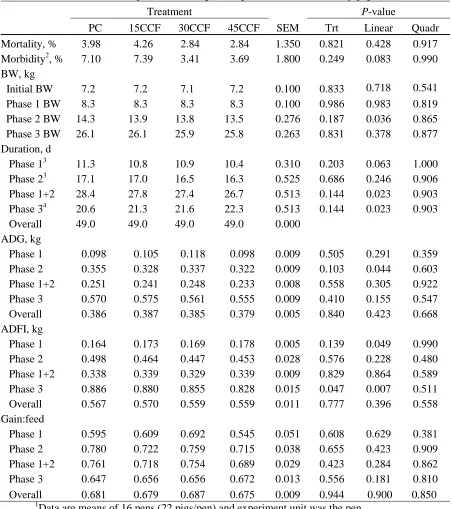
During phase 2, ADG linearly decreased (P < 0.05) as CCF increased in the diets whereas ADFI and gain: feed were not affected. No differences were observed in growth performance
during the combined phase 1 and 2 period when treatment diets were fed. Whereas the
duration of phase 1 and 2 together linearly decreased (P < 0.05) as pig were fed diets with increasing levels of CCF. In phase 3, ADFI was linearly reduced (P < 0.05) in pigs fed increasing levels of CCF during the previous treatment phases, but no differences were
detected for ADG or gain: feed. During the overall trial period, ADG, ADFI, and G:F were
not different among treatments indicating no adverse effects of CCF replacing lactose on
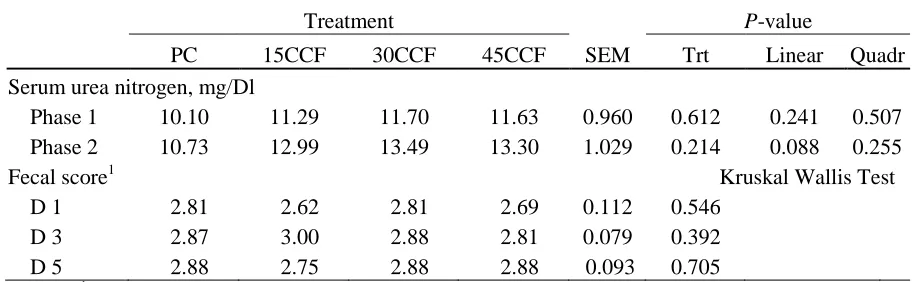
growth performance of nursery pigs. Serum urea nitrogen was not different among treatments
at the end of phase 1 but tended to linearly increase (P = 0.088) with increasing CCF at the end of phase 2. During phase 1, there was no difference in fecal scores among treatments.
Mortality rate of pigs was not different among treatments whereas morbidity of pigs tended
to linearly decrease (P = 0.083) as CCF increased indicating no adverse effects of CCF replacing lactose on health status of nursery pigs. In conclusion, Chocolate Candy Feed can
be used to replace up to 45% of the lactose in nursery diets without negative effects on
growth performance or health status.
Introduction
Energy is essential for nursery pigs to maximize growth performance. Carbohydrate is the
main energy source for newly weaned pigs. Available carbohydrate sources for newly
weaned pigs are limited because the intestinal structures of newly weaned pigs are not mature
and there are no enough activities of appropriate carbohydrate enzymes. Lactose is the
carbohydrate source of milk, which is high digestible and palatable for nursery pigs. Lactose
not only serves as an energy source for nursery pigs but also helps to stimulate the appetite
and maintain a healthy gut environment in pigs (Wolter et al., 2003; Cromwell et al., 2008).
There was a linear increasein feed efficiency and daily gain as dietary lactose level increased
from 12 to 17% during the 1st wk postweaning (Mahan et al., 2004). Up to 7.5% of dietary
lactose during 14 to 28 d postweaning resulted in an increase in feed intake and growth
performance (Cromwell et al., 2008).
However, because the cost of lactose increased dramatically by 360% from $0.40/kg in 2002
to $1.86/kg in 2012 (Gould, 2013), alternative carbohydrate sources have been investigated.
Simple carbohydrates, including glucose and sucrose, may partially replace lactose in starter
diets. Glucose is a monosaccharide which can be directly absorbed by intestinal mucosa.
Kidder and Manners (1978) and Sambrook (1979) suggested that glucose was as efficient as
lactose being a sugar source for pigs less than 7 d old. At d 14 to 28 postweaning, replacing
part of lactose in a diet with glucose increases the weight gain (Richert et al., 1996). Both
diarrhea, weight loss and high mortality because of deficiency in sucrase (Becker and Terrill,
1954; Aherne et al., 1969). Whereas, pigs can use sucrose effectively after reaching 7 to 10 d
of age (NRC, 1998). Jin et al. (1998) reported that when 20% level of lactose, sucrose and
dried whey were added in diet, pigs had similar growth performance. Kim and Allee (2001)
suggested that simple carbohydrates could replace at least 50% of dietary lactose during 0 to
27 d postweaning (14 ± 2 d) in starter diets. Naranjo et al. (2010) also demonstrated that
ADG, ADFI and G:F were not different during d 0 to 28 postweaning when dietary lactose
was partially replaced by sucrose and glucose. During 10 to 30 postweaning, molasses
contains multiple monosaccharides and disaccharides such as glucose, fructose, sucrose, can
also substitute lactose without adverse effects on growth performance or nutrient digestibility
of pigs, which was weaned at d 19 of age (Mavromichalis et al., 2001).
Chocolate Candy Feed (CCF; International Ingredient Corporation, St. Louis, MO, USA) is a
by-product from the food and candy industries containing 50% of sugars including sucrose,
glucose, fructose, lactose, etc. The price of CCF would be about 45% of the whey price and
68% of the permeate market. The CCF could be an economic replacement to the use of
lactose. Milk chocolate product (MCP) is a by-product similar to CCF containing 20%
lactose and 60% of sugars, which have be proved to be an available carbohydrate source for
nursery pigs. Sullivan et al. (1992) and Naranjo et al. (2010) demonstrated that milk
chocolate can partially or entirely replace the use of DW without adverse effects on growth
performance of nursery pigs during d 0 to 35 postweaning. Yang et al. (1997) indicated that
efficiency of using CCF to replace the use of lactose in nursery diets. If CCF can successfully
replace the use of lactose without impairing growth performance and caloric efficiency,
overall cost of swine production can be reduced. Therefore, the objective of this study was to
evaluate the effect of CCF as an alternative carbohydrate source for lactose on growth
performance of newly weaned pigs.
Materials and Methods
Animals and Design
The experiment was conducted in a research farm at Murphy Brown LLC (Rose Hill.
NC). A total of 1,408 cross-bred pigs (Smithfield Premium Genetics, Rose Hill, NC) were
weaned at 20 ± 1 d of age with 7.1 ± 0.3 kg BW. Immediately after weaning, pigs were
randomly allotted to 4 treatments with 16 replicates (16 pens) per treatment using their initial
BW as a block. Each phase was planned based in the amount of feed a pig consumes. There
were 22 pigs in each pen. Each pig in pens was supposed to consume 1.8 kg of experimental
diets during phase 1 (around 11 d), consume 6.8 kg of experimental diets during phase 2
(around 17 d) and fed a common diet during phase 3 (around 21 d). Experiment lasted 49 d
for all pigs. Calculated concentrations of SID (standardized ileal digestible) Lys were 1.34,
1.19, and 1.09% for phase 1, 2, and 3, respectively. Concentrations of lactose were 20, 8, and
Dried whey permeate (DairyLac80, International Ingredient Corporation, St. Louis,
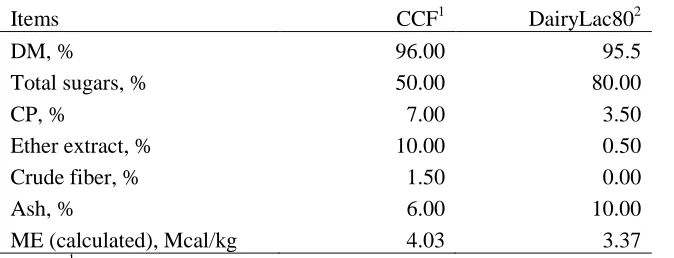
MO) containing 80% of lactose, was used as a source of lactose. For the treatment diets, parts
of lactose were replaced by total sugars in CCF during phase 1 and 2. Total sugars (including
lactose, sucrose, glucose, fructose, and etc.) content in CCF was 50% (Table 1). Chocolate
Candy Feed also contained 96% DM, 10% ether extract, 7% CP, 0.28% Lys, 1.5% crude
fiber, 6% ash, 2% Ca, and 0.34% P. Dietary treatments were (1) PC: 0% replacement of
lactose with CCF (positive control); (2) 15CCF: 15% replacement of lactose with CCF; (3)
30CCF: 30% replacement of lactose with CCF; and (4) 45CCF: 45% replacement of lactose
with CCF. Pigs were fed 4 treatment diets during phase 1 and 2 followed by a common diet
during phase 3. Dried whey permeate was replaced by CCF based on the equal amount ratio
between lactose in wheat permeate and total sugar in CCF. All diets were formulated to meet
or exceed the NRC (2012) nutrient requirements. Feed was mixed and pelleted at the North
Carolina State University Feed Mill (Raleigh, NC). Nutrient composition of treatment diets is
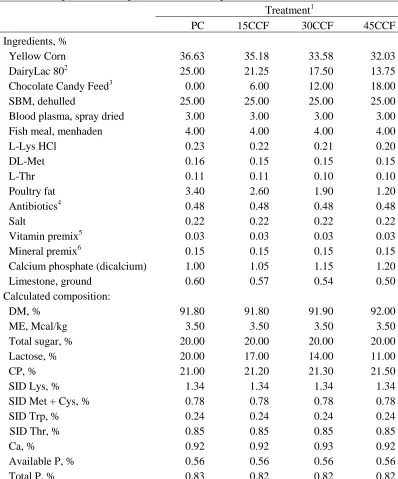
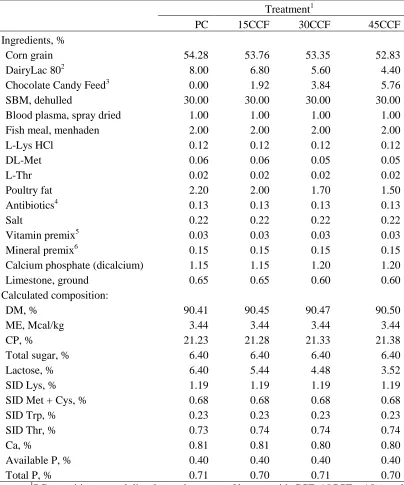
presented in Table 2 and 3.
Housing and Sampling
All pigs were housed in temperature-controlled nursery rooms. Space allowance was
0.76m2/pig. All pigs were allowed ad libitum access to feed and water. Each pen was equipped with 2 nipple drinkers.
Experimental diets were delivered to each feeder provided by the Howema feeding
system (Big Dutchman Inc., MI, USA) once a day (0800 h) during phase 1, twice a day