ABSTRACT
WEISS, STACY LYNN. Early Elementary School Predictors of a Learning Disability in Reading. (Under the direction of Cathy Crossland and Barbara Fox).
The purpose of this study was to determine if four kindergarten factors were predictive of the identification of a learning disability with Individual Education Program goals in reading (LDR) at third and fifth grades. Much of the research related to predicting reading difficulty has focused on early elementary school outcomes and included predictors from only one domain, such as reading-related skills (Scarborough, 1998). This study extends the research by combining four factors reading-related to LDR identification into a single study: student age on the first day of kindergarten, social-academic behaviors in the classroom, reading skills, and reading instruction in the sound-symbol relationship. Data from the Early Childhood Longitudinal Study-Kindergarten cohort (ECLS-K) were analyzed using logit analyses. Odds, confidence intervals, and probabilities of LDR identification are presented to aid in the interpretation of the results.
Student age on the first day of kindergarten, social-academic behaviors, and reading scores were significant predictors of LDR. Being significantly older in kindergarten (two standard deviations above the mean), having significantly lower teacher ratings of social-academic behaviors (two
The frequency of kindergarten instruction in the sound-symbol relationship was not a significant predictor of LDR at third or fifth grades. Kindergarten teachers reported similar and frequent instruction related to matching letters to sounds, working on phonics, and identifying letters of the alphabet. Additional research is needed to determine if other instruction-related factors such as intensity or method of instruction are significant predictors of LDR. Study limitations and areas for additional research based on these findings are discussed.
Early Elementary School Predictors of a Learning Disability in Reading
by
Stacy Lynn Weiss
A dissertation submitted to the Graduate Faculty of
North Carolina State University
In partial fulfillment of the
Requirements for the degree of
Doctor of Philosophy
Curriculum and Instruction
Raleigh, North Carolina
2008
APPROVED BY:
_______________________________
______________________________
Cathy L. Crossland, Ed.D.
Barbara J. Fox, Ph.D.
Committee Co-chair
Committee Co-chair
________________________________
________________________________
BIOGRAPHY
Stacy Weiss (née Hegedus) was born in Pennsylvania and moved to North Carolina in elementary school. She earned a Bachelor of Arts degree in Psychology, with Honors, in 1998 from the University of North Carolina at Chapel Hill. In 2002, she received the Master of Education degree in Special Education from North Carolina State University. She will receive the Ph.D. degree in Curriculum and Instruction. Stacy started her teaching career in a self-contained classroom for students with autism and has worked with students with disabilities and students with reading difficulties in a variety of settings. During the years of her doctoral program, Stacy served as a staff member in the Diagnostic Teaching Clinic at North Carolina State University, as the editorial
ACKNOWLEDGEMENTS
I have had the great fortune of working with a superb committee: Dr. Cathy Crossland, Dr. Barbara Fox, Dr. Edward Sabornie, and Dr. Lynne Baker-Ward. I would like to thank them for their time, encouragement, guidance, and inspiration. A special thanks to Cathy Crossland for her
immeasurable assistance, and her time and commitment in helping me meet my goals throughout graduate school. I would especially like to thank Barbara Fox for all of her encouragement with my research and her advice when considering the big picture. I wish to thank Ed Sabornie for the
valuable opportunities I have had in graduate school and for sharing his perspective and insight. I am grateful to Lynne Baker-Ward for challenging my thinking and for always setting high expectations. I cannot begin to express how grateful I am to my husband, Joe, for his patience and support during all these years in graduate school. I have appreciated all of our discussions about education, dissertation, and life on our late-night walks. I would also like to thank my family for inspiring me, teaching me to be persistent, and supporting me along the way.
I also want to thank Scott Lennon, Matt Ronning, and Joe Rabiega at North Carolina State University for their assistance with securing the restricted release data license and navigating the Institutional Review Board. Thanks also go to the helpful staff associated with the ECLS-K data set at the National Center for Education Statistics and American Institute for Research.
TABLE OF CONTENTS
LIST OF TABLES ... vi!
LIST OF FIGURES...viii!
CHAPTER 1 - INTRODUCTION ... 1!
Statement of Problem ... 3!
Purpose ... 4!
Hypotheses ... 4!
Operational Definition of Key Terms ... 5!
Overview of the Dissertation... 7!
CHAPTER 2 – LITERATURE REVIEW ... 9!
Age at the Start of Kindergarten... 10!
Reading Achievement... 13!
Learning Disability Identification... 17!
Summary ... 19!
Social-academic Behaviors ... 20!
Reading Achievement... 21!
Reading Interventions ... 24!
Learning Disability Identification... 29!
Summary ... 32!
Reading Skills... 33!
Reading Achievement... 34!
Reading Difficulty ... 38!
Summary ... 42!
Reading Instruction ... 43!
The National Reading Panel’s Report ... 44!
Reading Difficulty ... 46!
Summary ... 50!
Conclusion... 50!
Predictors of a Learning Disability in Reading... 50!
ECLS-K Studies... 51!
CHAPTER 3 - METHODOLOGY ... 53!
Sample Selection ... 54!
Data Collection Procedures ... 55!
Kindergarten School Year... 55!
Third and Fifth Grade School Years... 60!
Research Variables ... 60!
Independent Variables ... 60!
Age at the start of kindergarten... 62!
Reading.... 62!
Social-academic behavior.... 63!
Reading instruction... 64!
Dependent Variables... 68!
Early intervention.... 69!
Gender.... 69!
Race/ethnicity.... 69!
Socioeconomic status... 69!
Location.... 70!
Region.... 70!
Time in general education.... 70!
Statistical Analysis ... 72!
Weights... 72!
Analysis ... 73!
Summary ... 74!
CHAPTER 4 - RESULTS... 76!
Third Grade ... 76!
All Students ... 76!
Students Who Were First-time Kindergartners... 84!
Summary of Hypotheses ... 91!
Fifth Grade ... 92!
All Students ... 92!
Students Who Were First-time Kindergartners... 99!
Summary of Hypotheses ... 105!
Comparison of Third and Fifth Grades ... 106!
Phonics Instruction ... 107!
Summary ... 107!
CHAPTER 5 - DISCUSSION... 109!
Predictors of a Learning Disability in Reading ... 110!
Age ... 110!
Social-academic Behavior ... 112!
Reading ... 113!
Reading Instruction... 114!
Implications for Early Intervention ... 114!
Implications for Learning Disability Identification... 116!
Future Research... 117!
Limitations of Study... 119!
Conclusion... 121!
LIST OF TABLES
Table 1 Age Regulations for Beginning Kindergarten for Each State and the
District of Columbia (DC) ………...………... 12 Table 2 Kindergarten Teacher Questionnaire: How Often do Children in this Class
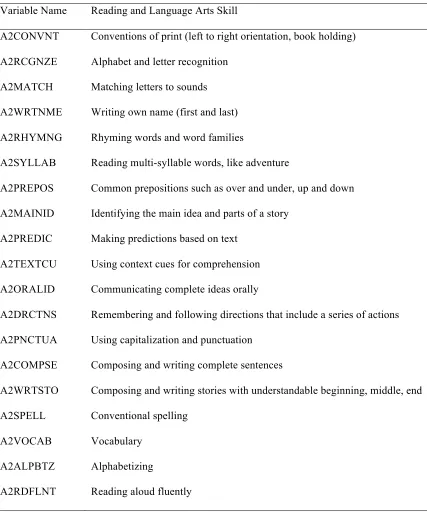
do Each of the Following Reading and Language Arts Activities?... 57 Table 3 Kindergarten Teacher Original Questionnaire: For this School Year as a
Whole, Please Indicate How Often Each of the Following Reading and
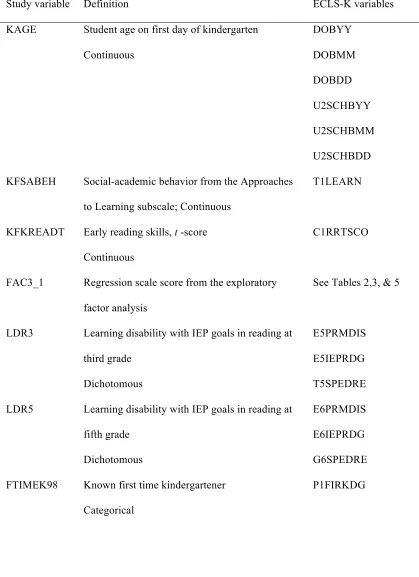
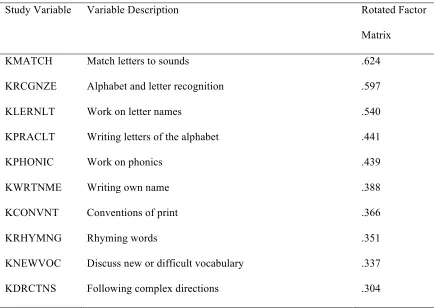
Language Arts Skills is Taught in Your Class……….……… 59 Table 4 Study Variables, Definitions, and Corresponding ECLS-K Variables…… 61 Table 5 Variables with Loadings Greater than Absolute Value of .3 on Factor 3 in
the Factor Analysis……….. 68
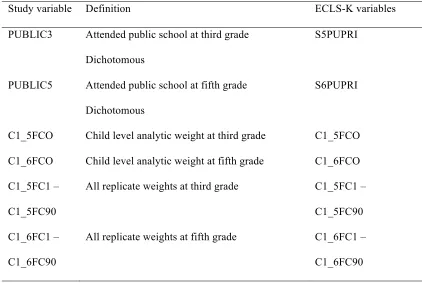
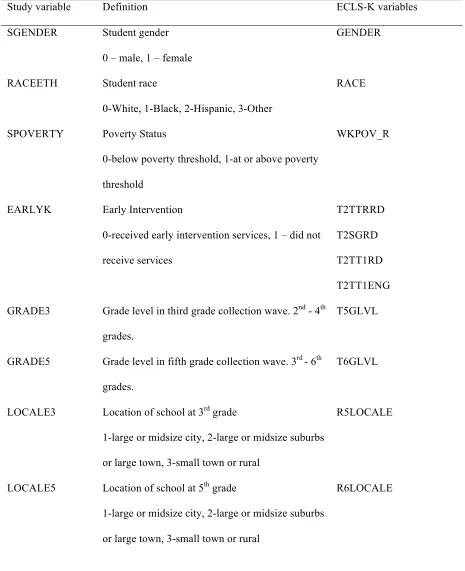
Table 6 Demographic Variables, Definitions, and Corresponding ECLS-K
Variables……… ………. 71
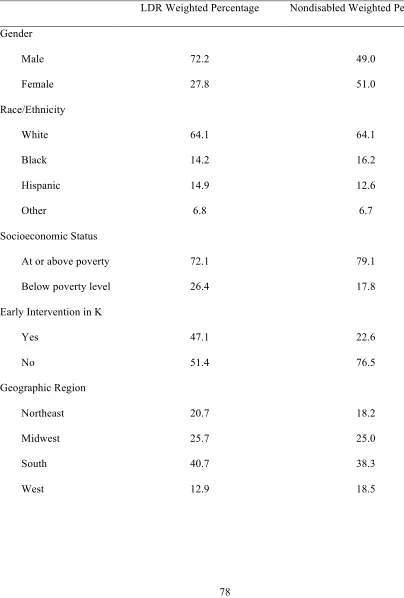
Table 7 Demographic Information at Third Grade for All Students ………..……. 78 Table 8 Weighted Means and Standard Deviations of Independent Variables at
Third Grade for All Students…....……… ………...… 80 Table 9 Univariable Models for LDR at Third Grade for All Students……… 80 Table 10 Multivariable Model for LDR at Third Grade for All Students .…… ….. 81 Table 11 Probabilities of LDR Identification at Third Grade with Specific Values of
the Independent Variables for All Students ………...………….…… 83 Table 12 Demographic Information at Third Grade for Students Who Were
First-time Kindergarteners ………..…...…………. 85
Table 13 Weighted Means and Standard Deviations of Independent Variables at
Third Grade for Students Who Were First-time Kindergarteners….….…. 87 Table 14 Univariable Models for LDR at Third Grade for Students Who Were
First-time Kindergarteners. ……….……..…….………….…… 88 Table 15 Multivariable Model for LDR at Third Grade for Students Who Were
First-time Kindergarteners…………..………...………... 88 Table 16 Probabilities of LDR Identification at Third Grade with Specific Values of
the Independent Variables for Students Who Were First-time
Kindergarteners ……...………..………..……… 90
Table 17 Demographic Information at Fifth Grade For All Students..………... 93 Table 18 Weighted Means and Standard Deviations of Independent Variables at
Fifth Grade for All Students….………..…… 95 Table 19 Univariable Models for LDR at Fifth Grade for All Students………….… 96 Table 20 Multivariable Model for LDR at Fifth Grade for All Students .…… ….. 96 Table 21 Probabilities of LDR Identification at Fifth Grade with Specific Values of
the Independent Variables for All Students ………....………….…… 98 Table 22 Demographic Information at Fifth Grade for Students Who Were
First-time Kindergarteners ………..…...…………. 100
Table 23 Weighted Means and Standard Deviations of Independent Variables at
Table 24 Univariable Models for LDR at Fifth Grade for Students Who Were
First-time Kindergarteners. ……….……..…….……….…… 103
Table 25 Multivariable Model for LDR at Fifth Grade for Students Who Were
First-time Kindergarteners…………..………...………... 103 Table 26 Reading Model at Fifth Grade for Students Who Were First-time
Kindergarteners….……….. 103
Table 27 Probabilities of LDR Identification at Fifth Grade based on Specific
Reading Scores for Students Who Were First-time Kindergarteners …….. 104 Table 28 Social-academic Behavior Model at Fifth Grade for Students Who Were
First-time Kindergarteners….……….……… 105
Table 29 Probabilities of LDR Identification at Fifth Grade based on Specific Social-academic Behavior Scores for Students Who Were First-time
LIST OF FIGURES
CHAPTER 1 – INTRODUCTION
Students with school-identified learning disabilities (LD) comprise approximately six percent of the pre-kindergarten to twelfth grade public school population in the United States (US Department of Education [USDE], 2006). Students with learning disabilities are often not identified until mid- to late elementary school and frequently experience a period of failure with learning to read before receiving specific and individualized services (Horowitz, Kaloi, & Petroff, 2007; McCardle,
Scarborough, & Catts, 2001). The current guidelines of No Child Left Behind (NCLB) require that by the 2013-2014 school year all third grade students, including those with disabilities, be proficient readers (2001). Unless there is dramatic improvement in the process of identifying and serving young children at risk for reading difficulties, there will continue to be a significant number of students unable to meet this goal.
Early identification processes and early intervention programs are critical because positive outcomes are more difficult and more costly as students get older (Fuchs & Fuchs, 2006; Heckman, 2000). The effects of early reading difficulties are evident throughout an individual’s lifespan. Many adults with LD continue to experience difficulty with completing daily living activities, maintaining social relationships, and living independently (Butler, 2004).
later LD identification may be related to the challenges and controversy of operationally defining LD (Fletcher, Lyon, Fuchs, & Barnes, 2007; Gaskins, 1982; Kavale & Forness, 2000; Speece & Shekikta, 2002).
By focusing on public schools’ application of the federal guidelines of the Individuals with Disabilities Education Act (IDEA; 1997),1 it is possible to identify students whose schools and parents have agreed that the students’ reading needs cannot be met by the standard general education curriculum alone. The provision of services through an Individual Education Program (IEP) for a learning disability with goals in reading (LDR) leads to the assumption that these students share a common and significant difficulty in learning to read. State variations in LD classification procedures (Reschly & Hosp, 2004) and possible co-morbid conditions or other areas of LD identification (Fletcher et al., 2007) add to the heterogeneity found in the LDR population, which may influence the understanding of predictors of LDR. However, prevalence rates of LD have remained stable over time and compared to other disability classifications, the LD category has the least variability in
prevalence rates among states (Hallahan et al., 2007).
Reading-related skills, such as the ability to name the letters of the alphabet, identify print concepts, isolate individual sounds within words, and rapidly name objects, letters or numbers are predictive of later reading achievement (Scarborough, 1998; Snow et al., 1998); however, these early literacy skills alone are not enough to accurately predict which students will have significant
difficulty learning to read in later elementary school. Focusing solely on academic factors ignores other essential aspects of a child’s development (Southern Regional Educational Board, 1994) that may influence the identification of LD. Therefore, it is necessary to expand the investigation of
1
This study conducted an analysis of data from the Early Childhood Longitudinal
factors that play a role in predicting student outcomes and in particular school identification of a learning disability.
Statement of Problem
In order to understand a child’s development and learning, it is important to consider the bi-directional influence that a child’s immediate environment (microsystem) and individual
characteristics have on each other (Bronfenbrenner, 1979). Special education studies often focus on LD as a deficit in intrinsic factors (e.g. verbal skills) or external factors (e.g. poor teaching) (Kavale & Forness, 1986). Instead, Kavale and Forness argue that LD should to be conceptualized in terms of an interaction between the internal and external factors as they relate to academic learning time. Students with LD may be in classroom situations in which there is a mismatch between the amount of time they need to learn (internal factors) and the amount of time they actually receive instruction (external factors). As a result, there is a lack of goodness-of-fit between the child and his/her environment. Two children in the same setting may have different outcomes as a result of the interaction of the environment with each child’s characteristics (Lerner, 2002).
Much of the research related to predicting reading achievement or reading difficulty has typically (a) included only a one-dimensional reading outcome, such as word identification, (b) examined reading achievement in general, rather than reading underachievement specifically, (c) predicted short-term outcomes that seldom extend beyond the second grade, or (d) considered factors from a single domain (i.e. reading, behavior, or socio-demographic factors) to predict student
outcomes (Scarborough, 1998). In identifying possible predictors of LDR, it is important to consider the influence of the students’ characteristics and the students’ environment exert on the reading process.
are more likely to identified with a learning disability (Martin, Foels, Clanton, & Moon, 2004). Empirical research has demonstrated relationships between early social-academic behaviors and overall reading achievement (Duncan et al., 2007), and between student behavior in the classroom and persistent reading difficulties even after intensive intervention (Nelson, Benner, & Gonzalez, 2003). Research on early reading instruction suggests that reading growth is dependent on an interaction between the type of reading instruction students receive and the students’ characteristics (Al Otaiba et al., 2008; Felton, 1992; Scanlon & Vellutino, 1996; Xue & Meisels, 2004).
Purpose
The purpose of this study is to understand which factors can be used to aid in the prediction of the students who will be identified with a learning disability and have an Individual Education Program (IEP) with goals in reading (LDR) at two points in elementary school: third grade and fifth grade. Four early elementary school factors that can be readily addressed in school settings were examined: (1) student age at the start of kindergarten, (2) early social-academic behavior, (3) early reading skills, and (4) reading instruction in the sound-symbol relationship.
Hypotheses
In order to examine the role of the four early elementary school factors, an analysis of the Early Childhood Longitudinal Study – Kindergarten Cohort (ECLS-K) data was conducted. The ECLS-K data set allows for the unique opportunity to analyze a nationally representative sample including both child and school-related variables for a single cohort of students from kindergarten through fifth grade.
The hypotheses that were tested in this study are:
H2: Students who received lower teacher ratings on a measure of social-academic behaviors were significantly more likely to be identified as Learning Disabled in Reading at both the third grade and fifth grades.
H3: Students who earned lower scores on a measure of early reading skills were significantly more likely to be identified as Learning Disabled in Reading at both the third grade and fifth grades.
H4: Students who reportedly received less instruction in sound-symbol relationship in reading were significantly more likely to be identified Learning Disabled in Reading at both the third grade and fifth grades.
H5: The kindergarten factors of (a) age at the start of kindergarten, (b) social-academic behaviors, (c) reading skills, and (d) reading instruction in the sound-symbol relationship were significantly more likely to predict which students would be identified as Learning Disabled in Reading at the third grade compared to the students identified as Learning Disabled in Reading at fifth grade.
Operational Definition of Key Terms
In this research, the following terms are defined with respect to the ECLS-K data set. Age at the start of kindergarten: Student age in months was calculated from each student’s birth date to the first day the school during the 1998-1999 school year. September 1, 1998 was used as the school’s start date if the first day of school information was missing.
Early kindergarten: This time period is the first three months of the kindergarten school year (1998-1999) when the ECLS-K study team collected data related to students’ early reading skills and social-academic behaviors.
the time of the study specifies thatstudents with disabilities in public, federally funded schools must have an IEP developed, reviewed, and revised in annual meetings. As noted in IDEA, the IEP must include:
(a) a statement of the child’s present levels of educational performance, including (i) how the child’s disability affects the child’s involvement and progress in the general curriculum…;
(b) a statement of measurable annual goals, including benchmarks or short-term objectives, related to (i) meeting the child’s needs that result from the child’s disability to enable the child to be involved in and progress in the general curriculum; and (ii) meeting each of the child’s other educational needs that result from the child’s disability;
(c) a statement of the special education and related services and supplementary aids and services to be provided to the child, or on behalf of the child, and a statement of the program modifications or supports for school personnel. (IDEA, 1997, sec. 614(d)) Learning Disability: A student with a school-identified learning disability has an IEP and receives special education services. Each state must adopt criteria for determining whether a child has a specific learning disability consistent with the definition used in the federal Act. The federal Act defines a specific learning disability as:
retardation, of emotional disturbance, or of environmental, cultural, or economic disadvantage. (IDEA, 1997, sec 602(26))
Learning Disability in Reading (LDR): The student received services for a learning disability and had an IEP with a reading goal.
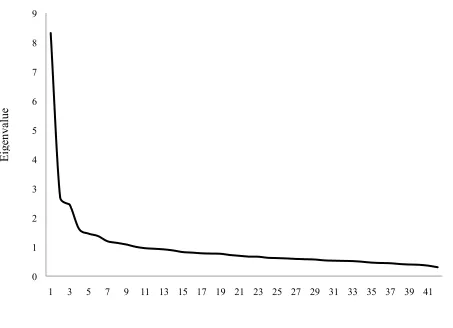
Reading instruction in the sound-symbol relationship: Kindergarten classroom teachers self-reported how frequently the class engaged in reading and language arts activities and specific skills were taught. The original survey was developed by ECLS-K staff and included 42 items. Instruction in the sound-symbol relationship relates to the survey items highly related to letters and phonics.
Reading skills: Student reading performance in early kindergarten was assessed as part of the standardized, norm-referenced direct cognitive measure developed and administered by ECLS-K staff. Reading skills covered in the assessment include: (1) identifying letters of the alphabet, (2) associating letters with beginning sounds, (3) associating letters with ending sounds, (4) recognizing common sight words, and (5) reading words in context.
Social-academic behaviors: Classroom teachers’ perceptions of students’ social-academic skills were assessed in early kindergarten. Teachers used a four-point Likert-type scale to rate each student on: (1) attentiveness, (2) task persistence, (3) eagerness to learn, (4) learning independence, (5) flexibility, and (6) organization.
Overview of the Dissertation
Chapter 3, Methodology, describes the ECLS-K data set, including how participants were identified, the variables and assessments, and the study procedures from the six-year longitudinal study. The specific independent and dependent variables are identified and discussed. Details regarding the analysis used to investigate the hypotheses are provided.
Chapter 4, Results, presents the outcomes of the analysis outlined in Chapter 3. The results of the logistic regressions to predict identification of LDR at third and fifth grades are presented
separately and then compared. Tables are used to display results.
CHAPTER 2 – LITERATURE REVIEW
Considerable research has investigated early childhood predictors of reading achievement, reading difficulty, and learning disability in reading. The majority of these studies focused on students in early elementary school and short-term student outcomes (see Scarborough, 1998 for a review). Longitudinal studies predicting later academic achievement, and specifically reading deficits, have been beset with the problem of correctly identifying the students who will later have the most reading difficulty (Scarborough; Snow et al., 1998; Torgesen, 1999). Several studies’ analyses yield high false positive rates (classifying students as at-risk when they do not need to be) and false negative rates (classifying students as not at-risk when they should be). In their reviews of the literature on reading difficulty, Scarborough and Snow et al. noted that often the individual factors that predict later reading difficulty and reading achievement were not studied in combination. They suggested examining variables that individually predict later reading difficulty in the same study.
been defined as a limited response to intervention (Fuchs, & Fuchs, 2006). As a result, examining a wide array of populations will help identify potential predictors of LDR.
This literature review will discuss the factors that are related to reading achievement, reading difficulty, and learning disability. Longitudinal studies provide insight into the relationship among early childhood predictors and short- or long-term outcomes. Cross-sectional studies describing the characteristics of students with LD or reading difficulty provide other factors that might be useful indicators of LDR. The review is divided into four sections: age at the start of kindergarten, social-academic behaviors, early reading skills, and early reading instruction. Relevant studies using the ECLS-K data are included.
Age at the Start of Kindergarten
The age of students entering kindergarten varies considerably. In addition to the expected variability in age, some students may have started kindergarten before the standard guidelines, been retained, or been “red-shirted” (intentionally delayed kindergarten entry) (Graue & DiPerna, 2000). Chronological age is an important consideration because it may be an indicator of student maturity and readiness to learn. Readiness can be conceptualized in several different ways. Popular definitions of readiness include a change in maturation that occurs over time or a group of skills that can be taught (Hair, Halle, Terry-Humen, Lavelle, & Calkins, 2006). Readiness is more appropriately described as an interaction between the child and his/her environment (Meisels, 1998) and includes social/emotional, language, and cognitive development (Hair et al.).
academic skills and have more difficulty working independently in the classroom, especially compared to their same grade but older peers. Classroom teachers often initiate special education referrals (Gerber & Semmel, 1984). If teachers perceive younger students as having more academic and behavioral difficulties compared to others in their grade, younger students may be more likely to be referred for or identified as having a learning disability.
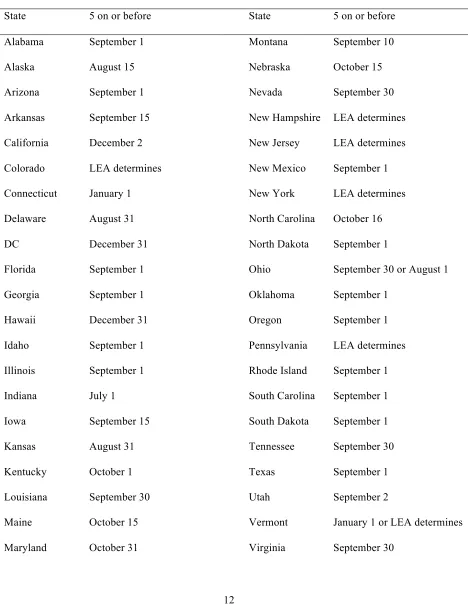
The age requirement for beginning kindergarten varies considerably by state (see Table 1). Cut-off dates range from the first of July to the first of January (Education Commission of the States, 2005). September first is the most frequent cut-off date for kindergarten. Six states do not provide specific guidelines. Regardless of the particular cut-off date, there will always relatively older and relatively younger students (Shepard & Smith, 1986).
The pertinent literature related to student age at the time of school entry and reading
Table 1
Age Regulations for Beginning Kindergarten for Each State and the District of Columbia (DC)
State 5 on or before State 5 on or before
Alabama September 1 Montana September 10
Alaska August 15 Nebraska October 15
Arizona September 1 Nevada September 30
Arkansas September 15 New Hampshire LEA determines
California December 2 New Jersey LEA determines
Colorado LEA determines New Mexico September 1
Connecticut January 1 New York LEA determines
Delaware August 31 North Carolina October 16
DC December 31 North Dakota September 1
Florida September 1 Ohio September 30 or August 1
Georgia September 1 Oklahoma September 1
Hawaii December 31 Oregon September 1
Idaho September 1 Pennsylvania LEA determines
Illinois September 1 Rhode Island September 1
Indiana July 1 South Carolina September 1
Iowa September 15 South Dakota September 1
Kansas August 31 Tennessee September 30
Kentucky October 1 Texas September 1
Louisiana September 30 Utah September 2
Maine October 15 Vermont January 1 or LEA determines
Table 1 continued
Notes. *LEA of a large metropolitan district can choose between August 1 and October 1 LEA – Local Education Agency
From “Access to kindergarten: Age issues in state statutes,” by the Education Commission of the States, 2005, Retrieved July 31, 2008, from http://www.ecs.org/clearinghouse/58/27/5827.doc Copyright 2005 by the Education Commission of the States. Adapted with permission of the author.
Reading Achievement
This section will discuss the conclusions of two literature reviews that summarized findings of studies published through the late 1980s and 1990s. Three recent longitudinal studies that
investigated the relationship between age at the time of school entry and achievement are specifically reviewed. The findings of one study and two doctoral dissertations that used the ECLS-K data set will also be considered.
Shepard and Smith (1986) summarized the literature through the mid-1980s on age and achievement. They concluded that for overall achievement, the differences between younger and older students in each grade may be statistically significant, but these numerical differences do not translate into a practical significance in the classroom and in students’ lives. They did note that one study found that younger students with lower levels of reading ability may be at the greatest
disadvantage, but there is limited evidence to support the interaction between age and reading skills leading to lower levels of reading achievement. In general, Shepard and Smith concluded that any
State 5 on or before State 5 on or before
Massachusetts LEA determines Washington August 31
Michigan December 1 West Virginia September 1
Minnesota September 1 Wisconsin September 1
Mississippi September 1 Wyoming September 15
differences between younger and older students in the same grade were not maintained past third grade.
Scarborough’s (1998) review of the literature over a decade later summarized the results of longitudinal studies that examined the relationship between chronological age and reading
achievement. Based on this review, Scarborough concluded there was sufficient evidence that the youngest students in a classroom had lower levels of reading achievement; however, age was “not an important risk factor” (p. 78).
One longitudinal study from Scarborough’s (1998) review will be highlighted here. Morrison, Griffith, and Alberts (1997) examined the reading achievement differences among three groups of students at specific time points and reading growth over time. In their analysis, the researchers controlled for the students’ IQ, parental and maternal occupational status and education, and history of day-care attendance. Group membership was determined by student birth date and grade
placement. Students with birth dates within two months of the district cut-off date (March 1st) were considered “young first graders.” Students who missed the cut-off date by two months were “old kindergarteners” and those who were a year older than the “old kindergartners” were classified as “old first graders.” The analysis of the initial reading assessment indicated small but significant differences among the three groups of students. Older first graders had the highest reading scores and the oldest kindergartners had the lowest reading scores. At the end of the school year, the first grade students made similar progress in reading. Initial differences in achievement persisted. The young first graders scored significantly higher on reading measures than the old kindergarten students, demonstrating that they benefited from the first grade instruction. The authors concluded that instruction, not age, influenced student academic growth in reading.
social emotional functioning. The birth through third grade longitudinal study included over 900 children and investigated a variety of educational and developmental questions. The study used standardized measures of student achievement and teacher ratings of perceived student achievement. No significant relationship was found between age at time of kindergarten entry and social
competence, internalizing behavior problems, or externalizing behavior problems. Over time, older students made more progress on academic measures; however, effect sizes were small. Other child factors such as home environment and childcare history had a greater relationship with school achievement than age at time of kindergarten entry. However, in contrast to the findings of the scores of the standardized reading assessment (letter and word identification), kindergarten teachers rated younger students lower in reading skills than older students.
Martin et al.’s (2004) study examined several student outcomes as they related to age at time of school entry. The portion of the article that pertains to the relationship between student age and learning disability identification will be discussed in a later section. The researchers analyzed the performance students on a group-administered standardized test. The year was divided into four sections with students born in June-August the youngest in the grade. Younger students scored significantly lower than other groups of students on the reading measure. When students who had been retained were excluded from the analysis, the reported effect size was small (d = .13). The effect sizes increased (d = .26) when retained students were included in the analysis.
student SES had a larger impact on students’ initial reading scores and reading growth over the summer.
Two studies (doctoral dissertations) also used the data from the ECLS-K to examine the relationship between student age at time of school entry and reading and math achievement
(Fleischman, 2007; Yesil-Dagli, 2006). Although both examined age in kindergarten with the same data set, the studies reached different conclusions. The two studies differed in terms of data analysis, data collection wave, method used to group students by birth date, and types of reading scores.
Using Hierarchical Linear Modeling (HLM), Yesil-Dagli (2006) compared the reading achievement of five groups of students from kindergarten through third grade. Students were grouped into categories based on their age in months as of September 1, 1998. Students were classified as early entrant kindergarteners (59 months or younger), younger-ontime entrants (60-63 months), medial-ontime entrants (64 to 67 months), older-ontime entrants (68-71 months), and delayed entrants (72 months or older). The author concluded that, in general, age at time of kindergarten entry was a significant factor in reading achievement in kindergarten and first grade, but not in third grade. Younger-ontime entrants had lower Item Response Theory (IRT) reading scores than medial-ontime entrants, who in turn had lower IRT reading scores than older-ontime entrants. Students who had delayed kindergarten entry had higher reading scores than medial-ontime students in each school year. Although there were early significant differences between groups, the majority of these differences in reading were not sustained by third grade. The author concluded that age at time of kindergarten entry was not a relevant indicator of later reading achievement.
students and other students remained significant through fifth grade. In fifth grade, when controlling for differences in race/ethnicity, SES, gender, pre-kindergarten participation, Head Start, and disability status, summer-born students scored significantly lower on a measure of reading
achievement (estimated marginal mean t-score=49.30) compared to students born during the other months of the year (estimated marginal mean t-score = 51.03). The educational relevance of the significant difference was not discussed.
Research has yielded statistical differences in achievement between younger and older students in the same grade; however, the educational and practical relevance of this difference in terms of reading achievement is in doubt (Morrison et al., 1997; Scarborough, 1998; Shepard & Smith, 1986). Younger and older students appear to make similar progress in reading over time and any initial differences generally dissipate by mid-elementary school (Shepard & Smith; Yesil-Dagli, 2006). There is some evidence that teachers perceive younger students as having fewer reading skills than older students and than formal reading measures indicate (NICHD, 2007). However, there is not sufficient evidence to make definitive conclusions about the differences between standardized achievement tests and teacher ratings.
Learning Disability Identification
Student age at the time of school entry and students born in the summer months, in particular, appear to be related to identification of a learning disability. Four studies that examined the
relationship between age at the time of school entry and identification of a learning disability will be reviewed here. Researchers in three studies examined LD identification rates to determine if younger students were more likely to be identified LD than would be expected due to chance. Two of the studies surveyed students from a single state and one study examined a sample of students from one metropolitan area. In the fourth study, student records were analyzed to compare referral for
Shortly after the passage of P.L. 94-142, Maddux (1980) compared the expected proportion of LD identification based on Census records to the actual proportion of LD identification in a midwestern city. Students born in May through August were more likely than would have been expected due to chance to be identified LD. Younger students in first through fourth grades and fifth through eighth grades were identified with LD at a higher rate. There were no differences in the high school sample between groups of students born at different times of the year.
Diamond (1983) examined age at time of school entry in single month units as related to LD identification. In this analysis of more than 74,000 students ages five to twenty, students born in December were the youngest in their respective grade. The month of birth was significantly correlated with identification of LD. Specifically, younger students who were born in December were one and a half times more likely to be identified as LD compared to those born in January.
More recently, Martin et al. (2004) examined the school records of 6,292 fifth though ninth grade students identified with LD from 28 school districts in one state. Only students of European decent were included in the analyses. Four groups of students were compared: those born in
September through November, December through February, March through May, and June through August. Students born in June through August (summer months) were the youngest students in the grade. The younger students were 12.5% more likely to be identified LD than would be expected due to chance. Students born March through May were slightly more likely than would be expected to be identified LD and older students were less likely to be identified LD than would be expected.
Younger students had lower scores in reading and vocabulary on a group-administered standardized test. The initial analysis did not include students who were retained. For students who were retained, almost twice as many were the youngest in their grade (born in June through August).
Younger elementary and middle school students in their respective grades were more likely to be identified with a learning disability, especially if the younger student had also been retained (Diamond, 1983; Maddox, 1980; Martin et al., 2004). These three studies compared the prevalence to what would be expected due to chance to the observed prevalence rates of students with LD and concluded that younger students were over-identified LD. These results differ from the results of the study by Tarnowski et al. (1990) who compared the prevalence of LD in groups of students organized by birth month and concluded that there was not a difference in LD identification rates.
Summary
considered educationally relevant (McCoach et al., 2006; NICHD, 2007; Scarborough, 1998; Shepard & Smith, 1986). Many early differences disappeared in late elementary school. Some research shows that teachers perceived younger students as less proficient in reading as their older classmates
(NICHD) and referred younger students for special education evaluations were made more frequently (Tarnowski et al., 1990). When comparing the rate of LD identification to what would be expected if LD identification was randomly distributed across student age, younger students were more likely to be identified LD than would be expected (Diamond, 1983; Maddux, 1980; Martin et al., 2004). However, higher identification rates were not found when analyzes investigated high school samples (Maddox). When comparing groups of students to each other on the rate of LD identification, there were no differences in group identification rates (Tarnowski et al.). Age at time of kindergarten entry has a small, but not educationally relevant relationship with academic achievement overall, but there is evidence suggesting that age at time of school entry is related to identification of a learning disability.
Social-academic Behaviors
There are various terms and constructs used to describe student behavior and social skills. Social-academic behaviors refer to the skills and conduct necessary for the completion of academic tasks, such as attention, task persistence, working independently, and organization. The relationship between classroom behavior and overall reading achievement will be considered, followed by a discussion of the emerging understanding of the role of student behavior in the efficacy of reading interventions. The literature related to elementary school students with learning disabilities and social-academic behavior will also be reviewed.
Reading Achievement
In a meta-analysis of longitudinal studies published between 1985 and 1998 examining preschool and kindergarten predictors of later achievement and behavior, La Paro and Pinanta (2000) stated that there were notably few longitudinal studies investigating early behavior as a predictor of achievement. Since the publication of the meta-analysis, several longitudinal studies have examined the relationship between early school behavior and academic achievement. Although academic-related behaviors do not have as strong a relationship with reading achievement as early reading skills, a consistent association has been found between student classroom behavior and reading achievement. Five longitudinal studies will be discussed, including two studies that utilized data from the ECLS-K.
similar; the reading achievement gap did not widen between the students with initially higher and lower behavior ratings.
An early elementary school longitudinal study by Chard et al. (2008) examined the students’ (including students with disabilities) behavior and achievement from first grade through third grade. The researchers assessed students’ word identification, decoding, oral reading fluency, reading vocabulary and reading comprehension skills. Teachers rated student behavior using the Social Skills Rating Scale (SSRS). The SSRS has three rating scales assessing students’ positive social skills, inappropriate behaviors, and general academic performance (Gresham & Elliot, 1990). Teacher ratings of students’ academic competence significantly predicted third grade oral reading fluency (Chard et al.). However, this scale provides little information on students’ classroom behaviors because it is a measure of academic skills, such as how a student’s reading skills compares to other students (Gresham & Elliott). First grade students’ social skills, including cooperation, responsibility, and self-control, were significantly correlated with third grade measures of reading skills (.19 with vocabulary and .36 with reading comprehension). Problem behaviors were significantly and negatively correlated with reading outcomes (-.17 and -.30), indicating that students who displayed inappropriate behavior in the classroom had lower levels of reading achievement. Students’ home language and first grade special education status were not related to later reading skills.
Duncan et al.’s (2007) analysis of six longitudinal data sets examined kindergarten cognitive, attention, and socioemotional skills and later reading achievement. The researchers analyzed each study individually and then summarized the findings of the six studies in a meta-analysis. They concluded that measures of students’ math skills, reading skills, and attention in the early school years were the best predictors of later achievement. In the meta-analysis, internalizing behavior,
externalizing behavior, and interpersonal social skills were not strongly associated with later academic outcomes. Results of the regression analysis with the kindergarten through third grade ECLS-K data set indicated that kindergarten teacher ratings on the Approaches to Learning subscale had small, but significant correlations with standardized reading achievement scores and teacher ratings of student reading ability (r = .32 and r = .35 respectively). Measures of interpersonal skills, externalizing problem behavior, internalizing problem behavior, and self-control had correlations of .22 or less with third grade reading measures.
Another study used the kindergarten through fifth grade data from the ECLS-K to examine the relationship between behavior and reading achievement for students with learning difficulties (Mills, 2007). Students who were reading at or below the 30th percentile on the standardized reading measure or were rated by their teacher as below average in reading were identified as having reading difficulties. Students with reading difficulties in third and/or fifth grades had significantly lower teacher ratings on the Approaches to Learning subscale than students who did not experience difficulty learning in school. Students with both math and reading difficulties were rated as having fewer appropriate social-academic behaviors than students with only reading difficulties.
unobtrusive measure of student classroom behavior (McKinney, McClure, & Feagans, 1982). Furthermore, studies using direct measures of student behavior have been consistent with the results of studies using teacher ratings of behavior. McClellund et al. (2007) used a direct measure of student behavioral regulation to assess preschool students' attention, memory, and inhibition. Preschool students who were initially better able to regulate their behavior and who continued to show improvement in behavior regulation also made significant gains in reading.
The results of these longitudinal studies consistently demonstrate a significant relationship between social academic behaviors and later reading achievement (Chard et al., 2008; Duncan et al., 2007; McClelland et al., 2006; Mills, 2007). Teacher ratings of student behavior and direct measures of student behavior explain a significant amount of the variance in reading achievement measures through elementary school.
Reading Interventions
A number of studies have investigated the role of student behavior or attention as it relates to the effectiveness of reading interventions. The effectiveness of a reading intervention may be
be briefly discussed. The individual studies varied considerably in the student samples and in the conceptualization and definition of behavior.
In their review of the intervention research, Al Otaiba and Fuchs (2002) located seven studies that included a statement about or an investigation of attention or behavior in students nine years old and younger who were not responsive to reading interventions. Students exhibiting behavioral difficulties often made less progress in reading interventions. Al Otaiba and Fuchs noted that there was variation in the individual studies’ (a) definitions of unresponsiveness, (b) labels and
characteristics of study participants, (c) methods of interventions, and (d) information on treatment fidelity.
Nelson et al. (2003) investigated intervention studies and characteristics of students who demonstrate resistance to reading interventions. The results of the meta-analysis indicate that rapid naming, phonological awareness, problem behavior, alphabetic principle, memory and IQ were more predictive of treatment effectiveness than disability identification, history of retention, ethnicity, or grade level. The total effect size for problem behavior (weighted mean Zr = .46) was similar to the effect size for rapid naming (weighted mean Zr = .51) and phonological awareness (weighted mean Zr = .42). The studies included in the analysis used teacher ratings of student behavior. The meta-analysis results suggest that classroom behavior is related to reading intervention effectiveness.
however, the differences were not statistically significant. A non-standardized, researcher-made behavior rating was used in this study.
Three studies that were classified as providing support for students resistant to instructional intervention due to attention problems (Al Otaiba & Fuchs, 2002) were not included in the Nelson et al. (2003) meta-analysis for behavior. Nelson et al. did use data from the three studies in analyses of other areas of analysis (i.e. phonemic awareness). O'Shaughnessy and Swanson (2000) used the SSRS in their 6-week intervention study with 45 students. There were no intervention group differences on the three subscales of the SSRS, but limited information on students’ SSRS scores is provided in the article. The Academic Competence subscale was a significant predictor the correct number of words read per minute on a measure of fluency. The Academic Competence subscale assesses limited information about a student’s behavior and is more of a measure of academic skills (Gresham & Elliot, 1990). Two published articles from one longitudinal study reported few significant results to support a relationship between student performance on executive functioning tasks and reading intervention effectiveness (Vellutino et al., 1996; Vellutino, Scanlon, & Lyon, 2000). Nelson et al. (2003) noted that these studies were excluded in their meta-analysis since the studies included a measure of executive functioning rather than observed classroom behavior.
growth from kindergarten through second grade. Other significant predictors included kindergarten measures of phonemic awareness, short-term memory, cognitive ability, RAN and parents’ education and occupation.
Foorman, Francis, Fletcher, Mehta, and Schatchneider (1998) conducted an intervention study with 285 first and second graders attending schools that received Title I assistance. Students participated in one of four types of general classroom reading instructional programs during the school year: direct code instruction, embedded code instruction, research-based implicit code instruction, or the district standard implicit code instruction. Teacher ratings of student behavior and attention had smaller average correlations with student reading outcomes (.29) than the Torgesen et al. (1999) study (Nelson et al., 2003), even though both studies used the same behavior measure.
students experienced reading problems through third grade, including retention for reading difficulty and receiving special education services.
Three intervention studies by Lane and colleagues (Lane, 1999; Lane, O'Shaughnessy, Lambros, Gresham, & Beebe-Frankenberger, 2001; Lane et al., 2002) included first grade students experiencing reading difficulties and substantial behavioral difficulties. Classroom teachers rated student behavior using the SSRS and other behavioral measures throughout the interventions. Nelson et al. (2003) found average correlations ranging from .40 to .66 between teacher ratings of student social skills and problem behavior and scores on reading measures used to assess the effectiveness of the interventions. These results suggest an interaction between student behavior and positive
outcomes of intensive behavioral and reading interventions. It is important to note that the samples in these studies included students with both reading and significant behavior problems in the classroom. The behavior difficulties experienced by the students in these studies may not be representative of the characteristics of students who are later identified with a learning disability. Compared to students with emotional and/or behavioral disorders (EBD), students with LD demonstrate fewer behavioral problems, but students with LD and EBD may have some similar patterns of social interactions (Sabornie, Cullinan, Osborne, & Brock, 2005; Sabornie, Evans, & Cullinan, 2006). Not knowing the disability identification outcomes of the students in the studies by Lane and colleagues limits the comparison of their results to a study including only students with LD.
teachers as demonstrating behavioral difficulties or inattention may not respond as positively to intensive reading interventions (Al Otaiba, 2001; Al Otaiba & Fuchs, 2006; Torgesen, 1999). Learning Disability Identification
This section will examine the social-academic behaviors of elementary school students who have already been identified as having a learning disability. Relevant behavior constructs included in the review address attention, task persistence, motivation, independence, and learned helplessness. Two longitudinal studies, two meta-analyses, a literature review, and several cross-sectional studies addressing the social-academic behavior of students with learning disabilities are discussed.
There is evidence to suggest that students with LD demonstrate considerably less task persistence or attention to task than students without LD. Bender and Smith (1990) conducted a meta-analysis of 25 studies on students with LD published from 1969 to 1987 that investigated on-task behavior, conduct problems, distractibility, and withdrawn behavior. The analysis included studies that used teacher ratings of student behavior and/or direct observations of student behavior in the classroom. Students recently identified as LD were more likely than students without disabilities to be distractible, have conduct problems, or appear withdrawn and less likely to be on-task. Teacher ratings of student off-task behavior tended to be higher than the direct observations of student
behavior. The authors concluded that teacher ratings of student behavior should be included in the LD identification process since “behavioral problems represent a major impairment among students with LD” (Bender & Smith, p. 304).
introverted, less creative and less curious than the matched pairs without disabilities (McKinney et al., 1982). Not all of the students with LD demonstrated difficulty with attention, withdrawal, or behavior problems. However, those students rated as having more attention and problem behaviors scored lower on measures of reading, decoding, and reading comprehension (McKinney & Speece, 1986). Direct classroom observations revealed that students with LD were more likely to interact with the teacher and less likely to initiate self-directed learning. This pattern indicates that students with LD were less likely to work independently in the elementary school classroom. The results of a follow-up study indicated that students who initially demonstrated difficulty with attention and conduct had lower levels of academic achievement at age eleven than students who did not demonstrate classroom behavior difficulty or students who were withdrawn (McKinney & Speece). The students who no longer received special education services had significantly more favorable teacher ratings of academic competence during the first year of the study than the students who remained in special education (Osborne, Schulte, & McKinney, 1991). The results from these longitudinal studies suggest that students identified with LD demonstrated more behaviors that interfered with learning. The students with early social-academic behavioral deficits were more likely to experience long-term reading difficulties and to continue special education program participation.
in more off-task behaviors when classroom instruction exceeds their abilities to acquire additional information.
There has been considerable debate whether the learning problems experienced by students with a history of learning difficulty preceded or were a result of motivational difficulties and learned helplessness (Licht, 1983). Measures of motivation provided a better than chance classification of students experiencing academic difficulties (Siderdis, Morgan, Botsas, Padeliadu, & Fuchs, 2006). In one study, Siderdis et al. used receiver operating characteristic curves and linear discriminant function analysis to determine the accuracy of a reading motivation measure to classify first grade students at-risk for reading disabilities. Measures of intrinsic motivation and reading self-concept effectively classified young students with reading difficulty.
In their analysis of motivation and attribution comparing students with LD and without LD, Pintrich, Anderman, and Klobucar (1994) noted that although there were differences in the two groups on measures of motivation, these differences appeared to vary more between individual participants rather than a clear pattern of motivation differences between the two groups. In their summary of 15 studies examining the relationship between reading and student motivation, Morgan and Fuchs (2007) concluded that the research supports a bi-directional relationship between reading and motivation. The previous research provided evidence for both reading skills predicting motivation levels and reading skills predicting levels of motivation.
reading and 38 students who were below average in reading but did not have a discrepancy) found no significant differences in kindergarten scores on measures of motor skills, language, perception, and memory. Classroom behavior as rated by teachers did not distinguish between the groups or predict which students had discrepancies between their IQ and achievement and those who do not; the two groups were very similar over time. Shaywitz et al. did not compare students receiving special education services and those who did not receive services. The two comparison groups in the subsample did not differ on levels of special education services received for reading. Early student behavior, as determined by this small subgroup of students in a single state, may not adequately predict achievement-ability discrepancies often used to identify students with LD. However, social-academic behaviors may predict which students are more likely to receive special education services for LD.
Students with learning disabilities often demonstrate distinctively different classroom social-academic behaviors than students without learning disabilities. Students with LD demonstrate deficits in on-task behavior and attention (Bender & Smith, 1990; Burns & Dean, 2005; McKinney & Speece, 1986) and motivation (Siderdis et al., 2006). Evidence of a reciprocal relationship between motivation and reading difficulty (Morgan & Fuchs, 2007) and considerable individual variability in motivation (Pintrich et al., 1994) indicates a complex relationship between motivation and LD identification. School identification of LD may be more indicative of social-academic difficulties than the presence or absence of a numerical difference on measures of ability and achievement (Shaywitz et al., 1996). Summary
Social-academic behaviors, as rated by teachers, such as attending, persisting with tasks, completing assignments and following directions consistently have a small, yet significant
resistant to early reading interventions or identified LD (Al Otaiba & Fuchs, 2006; Nelson et al., 2003; Torgesen et al., 1999). These early social-academic behavior deficits may also be characteristic of other disabilities (Sabornie et al., 2006), vary on an individual basis (Pintrich et al., 1994), or be demonstrated by students without school identified learning disabilities (Shaywitz et al., 1996). However, deficits in early classroom behaviors are indicators of LD and learning difficulties (McKinney et al., 1982; McKinney & Speece, 1986; Nelson et al., 2003; Siderdis et al., 2006).
Reading Skills
This section will focus on the reading and reading-related skills indicative of reading achievement and reading difficulty. In general, early reading skills predict later reading skills. However, early reading skills do not account for all of the variability in later reading achievement, and do not adequately identify the students who will experience the most reading difficulty (Scarborough, 1998; Snow et al., 1998). Letter identification is consistently the strongest single predictor of later reading achievement (Scanlon & Vellutino, 1996; Scarborough). Other reading related skills such as phonemic awareness, rapid automatic naming (RAN), concepts of print (COP), memory, and spelling have been investigated as predictors of later reading ability and reading difficulty. The use of the similar terms phonological awareness and phonemic awareness varies among the studies reviewed. Phonemic awareness refers to the ability to identify and consciously manipulate the phonemes in words (Adams, 1990; National Reading Panel [NRP], 2000).
Phonological awareness is a more general term that includes rhyme and syllable detection as well as phonemic awareness (Torgesen, 1998). In this review, the terminology used by the authors will be maintained unless it is possible to determine from the description of the measures that the more specific term of phonemic awareness is appropriate.
skills such as decoding, word reading, fluency, or comprehension. Predictors of learning disability in reading or significant reading difficulty will be discussed in the second subsection.
Reading Achievement
Numerous studies have examined the relationship between early reading skills and later reading achievement. This section will highlight the results of eight longitudinal studies, literature reviews, or meta-analyses that analyzed the relationship between specific reading skills and later reading achievement. Early elementary factors such as phonemic awareness, rapid automatic naming (RAN), COP, phonological processing, and memory are discussed. Finally, research addressing the timing of early reading skills assessment related to later reading achievement is considered.
The majority of the early reading measures used in the Duncan et al. (2007) analysis used broad measures of reading achievement in kindergarten. Identifying specific reading skills that are predictive of later reading achievement may provide better guidance for reading intervention and instruction. In a review of the literature on students who had not received formal reading instruction, Adams (1990) concluded letter knowledge and phonemic awareness skills were the most important predictors of later reading achievement. Although letter identification knowledge was an early indicator of later reading achievement, instruction focused on only improving letter knowledge did not result in subsequent improvement in reading achievement. Instead, early knowledge of the letters indicated a familiarity with print or the ability to learn without explicit instruction. Phonemic
awareness (the ability to hear, identify, and manipulate sounds in words) is an important indicator of reading achievement because it signifies a student’s awareness of the sounds within words and the ability to attend to those differences. Similar to letter naming, Adams concluded that instruction in phonemic awareness by itself does not ensure that a student will be a successful reader.
Many studies have examined the relationship between early reading skills and reading achievement in early elementary school, but it is also important to determine if this early relationship persists into late elementary school. Within the context of a school-wide research-based reading intervention program, Chard et al. (2008) examined a battery of student characteristics and skills as predictors of later oral reading fluency and high-stakes reading comprehension scores. The study sample consisted of students classified as at risk for later reading difficulties. Predictors included student demographic information, phonemic awareness, letter naming ability, alphabetic principle knowledge, and social skills (using the SSRS). Growth in oral reading fluency from kindergarten or first grade through third grade was significantly predicted by students’ alphabetic principle
and classroom behavior. Significant predictors of third grade reading and vocabulary composite scores included: gender, ethnicity, first grade problem behavior (negative association), fall phonemic segmentation fluency, spring phonemic segmentation fluency, spring passage comprehension, spring teacher ratings of academic competence, and oral reading fluency growth.
Scarborough's (1998) meta-analysis revealed that measures of reading readiness, letter identification, and concepts of print related to predictors of overall reading achievement (mean correlations ranged from .46 to .57). Other factors, such as the ability to recall the name an object, recall stories and sentences, language skills, and phonological awareness were also moderately correlated (r = .45 to .46) with overall reading achievement. IQ also had an average correlation of .41 with reading achievement. However, the research suggests that phonological awareness effectively predicts the good readers rather than the readers who will struggle. Studies that combined several reading-related factors that were individually predictive of reading difficulty were, on average, able to correctly classify 78% of at-risk students as later having reading difficulties. Three of the seven studies examined kindergarten predictors of first grade outcomes and three studies used kindergarten predictors to examine third grade outcomes.
Hammill's (2004) review of three analyses (including the Scarborough [1998] meta-analysis) provides support for the use of reading and writing skills as predictors of later reading achievement, rather than measures of memory or RAN. Hammill combined previously studied predictors of reading into ten categories or "Superordinate Ability Clusters” (Hammill, p. 454). The clusters with very large or large correlations with reading included previous reading, writing conventions, and letter knowledge. These three clusters were composed of a range of skills such as silent or oral reading, word recognition, nonsense word reading, reading comprehension, spelling, knowledge of capitalization and punctuation, conventions of print, letter naming, and making sound-symbol correspondences. In short, these early skills were all highly related to reading text. Hammill suggested that reading instruction focus on these skills. Other skills that had only moderate
correlations with reading were written language, RAN, phonological awareness, intelligence and memory. Hammill concluded that reading screenings should focus on early concepts of print, letter knowledge, and writing skills rather than factors such as phonological awareness, rapid naming, and memory.
A follow up of the students in fourth grade revealed that letter identification, phonemic awareness, and RAN continued to be consistent and effective predictors of later oral reading fluency skills (Bishop & League, 2006). These kindergarten reading measures were not as effective at predicting later reading comprehension skills. From the winter screening, measures of picture RAN and color RAN were the most accurate predictors of which students had later reading difficulties (low levels of reading fluency), while the fall measures of phonemic awareness (phoneme elision,
blending, and beginning and ending sound matching) were most accurate in predicting later reading difficulties with oral reading fluency. Overall, the fall screening yielded fewer false negatives of later reading difficulty than the winter screening. Bishop and League concluded that fall kindergarten assessments were comparable in predictive ability to winter kindergarten assessments. It is not necessary to wait to identify at-risk students.
In summary, early reading and reading related skills adequately predict later reading achievement (Savage & Fredrickson, 2006; Scarborough, 1998). A few studies have followed students beyond the third grade (Chard et al., 2008). While underlying processes such as phonemic awareness, RAN, and memory may be useful in predicting reading achievement, specific reading and writing skills are suggested to be the best predictors because they are more relevant to instruction (Hammill, 2004). There is some evidence that first grade reading assessments are more accurate than kindergarten assessments in predicting later reading achievement (Adams, 1990). Within the
kindergarten school year, there appears to be modest differences between beginning and mid-year assessments (Bishop, 2003; Bishop & League, 2006). The disadvantage of waiting until first grade is the loss of educational time for early intervention.
Reading Difficulty