ABSTRACT
DEAL, HOLLY DARE. Evaluation of Sodium Phosphate and Meat Protein Isolate as Enhancement Methods to Improve Pork Quality. (Under the direction of Dana J. Hanson).
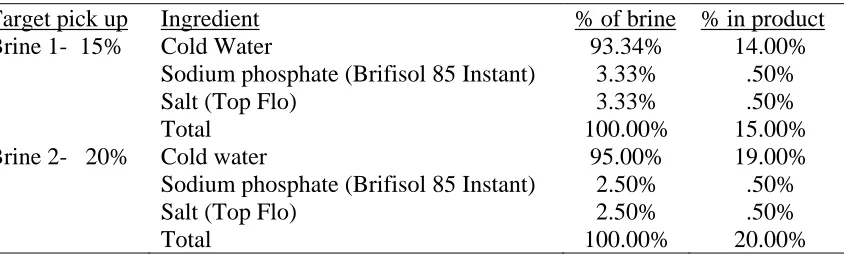
Enhancement is a common processing method used in the pork industry in order to improve sensorial characteristics such as juiciness and tenderness. Initial meat quality can have a large impact on the eating satisfaction of pork and can also impact the effectiveness of an enhancement method. In study 1, the objective was to determine the impact of pH and intramuscular fat has on the flavor characteristics of pork. The results of study 1 were utilized to determine a selection criterion for study 2, which evaluated sodium phosphate and salt (P) as well as meat protein isolate (I) as enhancement methods compared to a control (C). Study 3 evaluated both (P) and (I) for cooking yield and Warner Braztler Shear Force values (WBS).
In study 1, pork chops were assigned to treatment groups above (≥) and below (≤) pH
5.6 , crude fat 4%, National Pork Producers Council color score 2.5, and Iodine Values (IV) 65 (n=16) to determine how a trained panel would perceive flavor attributes of each
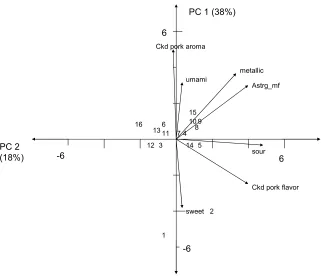
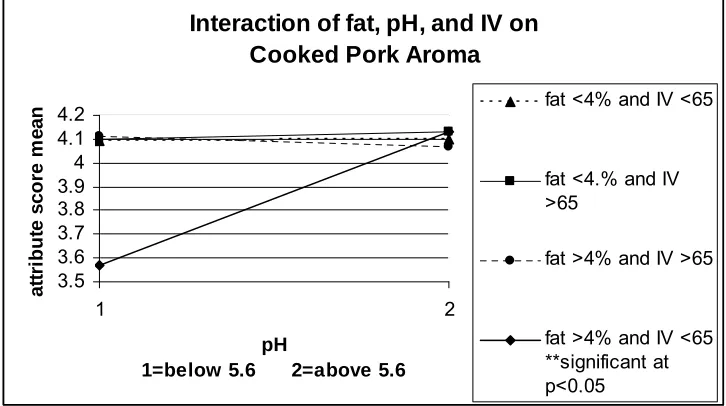
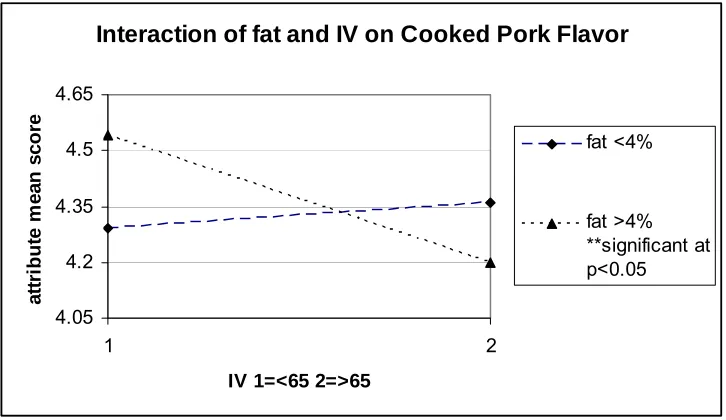
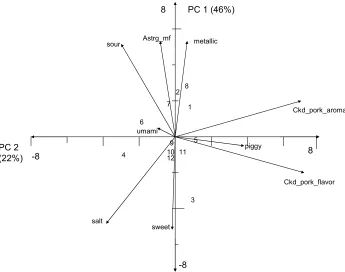
treatment with an established pork flavor lexicon. Principal component analysis (PCA) biplots were constructed to visualize the impact of treatments on flavor properties. Cooked pork flavor, cooked pork aroma, and sweet were significantly different (P<0.05) among treatments, and were characterized by significant three way interactions between variables. Crude fat % and IV value do not play a significant role when determining the flavor of pork.
In study 2, pork loins were classified as above (≥) pH 5.5 or below (≤) 5.5 pH, and
further assigned a treatment of P or I enhancement at 0%, 15%, or 20% pump rate to
an established pork flavor lexicon. Principal component analysis (PCA) biplots were
constructed to visualize the impact of treatments on flavor properties. In flavor study, I may negate astringent mouthfeel and metallic flavors in control C with reported higher sweet flavor scores. In the texture study, loins with P and I enhancement were associated with higher intensities of moisture and juiciness compared to control.
Evaluation of Sodium Phosphate and Meat Protein Isolate as Enhancement Methods to Improve Pork Quality
by Holly D. Deal
A thesis submitted to the Graduate Faculty of North Carolina State University
In partial fulfillment of the Requirements for the degree of
Master of Science
Food Science
Raleigh, North Carolina 2008
APPROVED BY:
_______________________________ ______________________________ Dr. Maryanne Drake Dr. Tyre Lanier
________________________________ Dr. Dana J. Hanson
ii
DEDICATION
iii BIOGRAPHY
iv
ACKNOWLEDGMENTS
I accredit much of my growth as a person and as a scientist in the past two years to my advisor, Dr. Dana Hanson. He has exemplified what it means to be passionate about life and life’s work. His love of meat science is evident, and I appreciate him sharing his
knowledge with me about his area of expertise. I now know more about processed meats, cleaning and sanitizing processing equipment, and pork quality then what I thought could ever be possible! I will hold dear the experiences that I have had by working in the NCSU meat laboratory, attending association meetings, and traveling to Germany to experience the world of the meat industry. Beyond his ability to enthuse the masses about meat, I sincerely appreciate his patience with me over the past 2 years as I have learned what it means to ask questions, design experiments, analyze data, and solve problems. Thank you for being an excellent teacher and friend!
Also serving on my committee, Dr. Maryanne Drake and Dr. Tyre Lanier, were both essential to this work. Dr. Drake’s knowledge of sensory statistics helped set me straight on my data analysis, and without Dr. Lanier, the concept of meat protein isolate enhancement would not exist. Your time is greatly appreciated.
v
vi
TABLE OF CONTENTS
LIST OF TABLES...xii
LIST OF FIGURES ...xiv
CHAPTER 1 REVIEW OF LITERATURE ...1
1.1 Condition of Pale, Soft, and Exudative...2
1.1.1 History of PSE ...2
1.1.2 Implications of PSE ...2
1.1.3 Environmental Factors ...4
1.1.4 Genetic Factors ...5
1.1.5 Postmortem Glycolysis ...6
1.1.6 Color ...7
1.1.7 Water Holding Capacity ...8
1.1.8 Muscle pH...9
1.1.9 Protein Functionality...10
1.2 Traditional Methods to Improve Meat Quality...12
1.2.1 Enhancement...12
1.2.2 Water...13
1.2.3 Sodium Salt...14
1.2.4 Calcium ...15
1.2.5 Phosphate Mode of Action...16
vii
1.2.7 Phosphate Level ...20
1.2.8 Phosphate Effect on Texture...21
1.2.9 Phosphate Effect on Color ...22
1.3 Meat Protein Isolate Enhancement ...23
1.3.1 Protein Source...23
1.3.2 Surimi Processing ...23
1.3.3 Acid and Alkali Aided Processing for Protein Recovery ...26
1.3.4 Differences from Surimi Processing...27
1.3.5 Differences Between Acid and Alkaline Aided Processing ...28
1.3.6 Advantages of Acid and Alkaline Aided Processing ...30
1.3.7 Implications to Meat Enhancement ...31
1.4 Sensorial Quality of Enhanced Fresh Meats...32
1.4.1 Tenderness ...32
1.4.2 Juiciness ...33
1.4.3 Meat Flavor...34
1.4.4 Muscle pH...35
1.4.5 Marbling...36
1.4.6 Final Internal Temperature During Cooking ...37
1.4.7 Pump Rate of Brine...38
1.4.8 Consumer Purchase Intent Towards Enhanced Meats...40
viii CHAPTER 2
IMPACT OF PH, FAT PERCENT, IODINE VALUE, AND COLOR ON FLAVOR
PROFILE OF COOKED PORK CHOPS ...53
2.1 Abstract ...54
2.2 Introduction...56
2.3 Materials and Methods...57
2.3.1 Selection of Pork for Study...57
2.3.2 Iodine Value Analysis...58
2.3.3 Proximate Analysis ...59
2.3.4 Preparation of Chops...60
2.3.5 Trained Descriptive Panel...60
2.3.6 Analysis of Descriptive Sensory Panel Data ...62
2.4 Results and Discussion ...62
2.5 Summary ...73
2.6 References...74
CHAPTER 3 EVALUATION OF SODIUM PHOSPHATE AND MEAT PROTEIN ISOLATE ENHANCEMENT ON THE SENSORY QUALITY OF BONELESS PORK LOIN ...76
3.1 Abstract ...77
3.2 Introduction...79
3.3 Materials and Methods...82
ix
3.3.1.1 Slurry pH...83
3.3.1.2 Experimental Design...83
3.3.2 Preparation and Delivery of Brines...83
3.3.2.1 Sodium Phosphate Brine...83
3.3.2.2 Meat Protein Isolate Preparation...84
3.3.2.3 Meat Protein Isolate Brine Preparation...85
3.3.2.4 Enhancement With Brines for Descriptive Flavor Study ...87
3.3.2.5 Enhancement With Brines for Descriptive Texture Study ...88
3.3.2.6 Salt Analysis ...89
3.3.3 Sample Processing ...90
3.3.3.1 Weight Changes During Processing ...91
3.3.4 Descriptive Flavor and Texture Panels ...91
3.3.4.1 Sample Preparation ...91
3.3.4.2 Trained Descriptive Panel...92
3.3.4.3 Analysis of Descriptive Sensory Panel Data ...94
3.3.4.4 Centrifugal Moisture Holding...95
3.3.4.5 Warner Braztler Shear Force of Descriptive Panel Chops...96
3.3.4.6 Proximate Analysis of Descriptive Panel Chops ...96
3.4 Results and Discussion ...95
3.4.1 Descriptive Sensory Studies ...97
3.4.1.1 Flavor ...97
x
3.5 Summary ...129
3.6 References...131
CHAPTER 4 EVALUATION OF SODIUM PHOSPHATE AND MEAT PROTEIN ISOLATE ENHANCEMENT ON THE COOKING QUALITY OF BONELESS PORK LOIN...135
4.1 Abstract ...136
4.2 Introduction...137
4.3 Materials and Methods...138
4.3.1 Muscle Selection...138
4.3.2 Preparation and Delivery of Brines...139
4.3.2.1 Sodium Phosphate Brine Preparation ...139
4.3.2.2 Meat Protein Isolate Preparation...140
4.3.2.3 Meat Protein Isolate Brine Preparation...141
4.3.2.4 Enhancement With Brines ...142
4.3.2.5 Weight Changes During Processing and Cooking...144
4.3.3 Analytical Procedures ...145
4.3.3.1 Salt Analysis ...145
4.3.3.2 Warner Braztler Shear Analysis...145
4.3.3.3 Proximate Analysis ...146
4.3.4 Statistical Methods...146
4.3.4.1 Analysis of Cook Yield Data ...146
xi
4.4 Results and Discussion ...147
4.5 Summary ...160
4.6 References...160
CHAPTER 5 FINAL SUMMARY ...163
5.1 Conclusions...164
5.2 Implications...166
5.3 Future Work/Recommendations ...170
5.4 References...170
APPENDICES ...172
Appendix 6.1. Map of Longissimus Dorsi used for quality and sensory analysis ...173
Appendix 6.2. Map of Longissimus Dorsi used for cook yield analysis ...174
Appendix 6.3. Temperature of oven at varying locations over time ...175
Appendix 6.4. Comparison of cook rates for injected vs. non injected loins ...176
xii
LIST OF TABLES
Impact of pH, Fat Percent, Iodine Value, and Color on Flavor Profile of Cooked Pork Chops
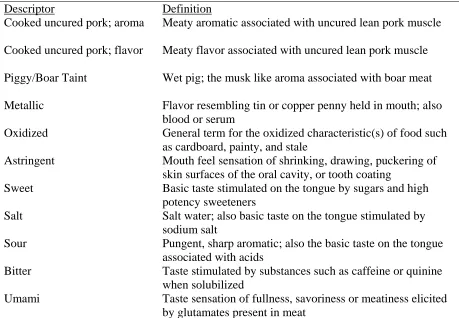
Table 2.1. Definitions used by trained sensory panelists to describe the aroma and flavor of pork loins...61 Table 2.2. Treatments based on pH, fat %, color score, and IV of pork chops ...65 Table 2.3. Effect of pH, fat %, color, and IV on descriptive flavor attributes of pork chops...66 Table 2.4. Pearson correlation coefficient of flavor attributes...67
Evaluation of Sodium Phosphate and Meat Protein Isolate Enhancement on the Sensory Quality of Boneless Pork Loins
xiii
Table 3.10. Proximate analysis of cooked loins used in descriptive flavor analysis .113 Table 3.11. Warner Braztler Shear (kg) and proximate analysis of raw loins used in descriptive texture analysis ...114 Table 3.12. Proximate analysis of cooked loins used in descriptive texture analysis ...115 Table 3.13. Properties of brines used in descriptive sensory panels and
cook yield trial ...116 Table 3.14. Person correlation coefficient of texture attributes and Warner Braztler Shear (WBS) value ...119 Table 3.15. Simple effect of pump across all enhancement types on texture and flavor attributes of loins below pH 5.5...128 Table 3.16. Simple effect of enhancement across all pump rates on texture attributes of loins below pH 5.5...129
Evaluation of Sodium Phosphate and Meat Protein Isolate Enhancement on the Cooking Quality of Boneless Pork Loins
Table 4.1. Formulation of sodium phosphate and meat protein isolate brines ...142 Table 4.2. Properties of pork loins prior to enhancement...148 Table 4.3. Enhancement levels achieved and drip losses from loins injected with control, Sodium phosphate, or meat protein isolate...149 Table 4.4. Final product yield (%) at 1.5h and 24h, cook loss (%) and cooler shrink (%) for loins injected with control, sodium phosphate, or meat protein isolate ...153 Table 4.5. Partial correlation coefficient of select variables of initial meat quality and cook yield determinants ...156 Table 4.6. Warner Braztler Shear (kgf) and proximate analysis of loins injected with control, sodium phosphate/salt, and meat protein isolate ...159
Final Summary
xiv
LIST OF FIGURES
Impact of pH, Fat Percent, Saturated Fat, and Color on Flavor Profile of Cooked Pork Chops
Figure 2.1. Principal component biplot of descriptive sensory flavor analysis of pork loins. Numbers represent treatments (Table 2.2) PC1= principal component 1;
PC2= principal component 2 ...64
Figure 2.2. Interaction of fat, pH, and IV on sweet attribute ...70
Figure 2.3. Interaction of fat, pH, and IV on cooked pork aroma attribute ...70
Figure 2.4. Interaction of fat and IV on cooked pork flavor attribute ...71
Evaluation of Sodium Phosphate/Salt and Meat Protein Isolate Enhancement on the Quality of Boneless Pork Loins Figure 3.1. Principal component biplot of descriptive sensory flavor analysis of pork loins. Numbers represent treatments (Table 3.5 and 3.6) PC1= principal component 1; PC2= principal component 2 ...99
Figure 3.2. Interaction of enhancement type and pump rate on astringent mouthfeel in loins above pH 5.5 ...102
Figure 3.3. Interaction of enhancement type and pump rate on salt in loins below pH 5.5...105
Figure 3.4. Interaction of enhancement type and pump rate on sour in loins below pH 5.5...107
Figure 3.5. Principal component biplot of descriptive sensory texture analysis of pork loins. Numbers represent treatments (Table 3.5 and 3.6) PC1= principal component 1; PC2= principal component 2 ...118
Figure 3.6. Interaction of enhancement type and pump rate on moisture in loins above pH 5.5...122
1 CHAPTER 1
REVIEW OF LITERATURE
Holly D. Deal
2 1.1 Condition of Pale, Soft, and Exudative
1.1.1 History of PSE
Pale, Soft, and Exudative is a meat quality problem most often associated with hogs because this species normally has higher rates of post mortem glycolysis than other meat animals (Offer, 1991). Typically, PSE is a result of a rapid fall in pH while the body temperature is still high (Pearson and Young, 1989). Typically, the muscle temperature is above 38°C and ultimate pH of below 6 (Offer, 1991). The physical characteristics of PSE meat include a pale color, soft structure, and poor water holding abilities (Pearson and Young, 1989) resulting from the denaturation of proteins (Warner et al., 1997). Avian muscle has been found to have similar PSE like characteristics (McKee and Sams, 1998).
In the consumer’s desire for lean meats, the meat industry has responded by focusing on genetics which produce heavily muscled animals that are more susceptible to stress (Gerrard, 1997), therefore impacting post mortem metabolism and the stimulation of this condition. The impact of PSE on consumer’s eating satisfaction includes lack of tenderness (McKee and Sams, 1998) and a loss of product yield and quality upon the processor (Woelfel et al. 2002). As research on PSE has continued in both the pork and poultry industry, pre and most mortem practices have been identified to reduce the occurrence of this condition.
1.1.2 Implications of PSE
3
watery characteristics was found to be 3.34% (National Pork Board, 2006). A general estimate of the range of occurrence of PSE pork is 10-40% (Marriott and Schilling, 1998). This reduction in PSE can be attributed to greater awareness of PSE in plants and an industry effort to alter influences pre and post mortem which contribute to PSE development.
As the turkey industry moves away from whole bird product into further processed products, the impact on PSE in turkeys greatly impacts the quality of these processed
products. In one particular study, the incidence of PSE in a poultry plant was approximately 47% of the test product which exhibited poor water holding capabilities (Woelfel et al., 2002). This percentage could correspond to a $2-4 million per year loss due to lost yields (Southern Association of Agricultural Experiment Stations Directors, 2006). These losses are associated with increased purge in cook in bags, resulting in decreased cook yields, an unacceptable dry product with poor texture, and overall a poor eating experience.
4
1.1.3 Environmental Factors
Events leading up to animal slaughter have an impact on end meat quality. Under normal circumstances, a gradual decline in pH occurs until rigor mortis onset occurs 6 to 8 hours after slaughter (D’Souza et al., 1998). However, short term stress results in the
acceleration of glycolysis due to a higher consumption of glycogen energy stores in the body when the body temperature is still high (Pearson and Young, 1989). The breakdown of glycogen results in the production of lactic acid while the body temperature is still high, therefore impacting the rate of pH loss in the body. Stress and struggle increase the body temperature and speeds up the rate of glycolysis (Pearson and Young, 1989) and
environmental stresses such as transportation, extreme fluctuations in ambient temperature, feed withdrawl, and human handling can impact gylcolysis (D’Souza, 1998, McKee and Sams, 1998, Owens and Sams, 2000, Leheska et al., 2002).
D’Souza et al., (1998) found that using an electric goad on pigs prior to slaughter had lower muscle glyocgoen concentrations therefore exhibiting higher incidence of PSE
5
lower initial and ultimate pH with higher rates of postmortem pH decline when compared to non-heat stressed group (McKee and Sams, 1998). As a result of increased glycogen
breakdown and higher muscle temperatures, negative handling and stress induced situations influence metabolism and ultimately meat quality.
1.1.4 Genetic Factors
Genetic factors determine if an animal is susceptible to stress and how that animal will adapts to those stressors, and both hogs and turkeys have been identified to have genetic factors which promote PSE like meat (Strasburg and Chiang, 2003). To meet the consumer demand for lean hogs, genetic improvements to increase muscle and reduce fat has occurred, and inadvertently increased the frequency of PSE cases, since more time is needed
postmortem to reduce internal body temperature on heavier muscled animals (Doumit et al., 2003).
6
from the sarcoplasmic reticulum through the ryanodine receptor, a calcium release channel protein (Wang et al., 1999). Calcium concentration is responsible for the initiation, time course, and force of contraction; through the excitation-contraction coupling of chemical and electrical signals from calcium release (Stratsburg and Chiang, 2003). Calcium release in excess through defective ryanodine receptors increases the rate of anaerobic glycolysis (Doumit et al., 2003). Altered calcium channel regulation may be associated with the incidence of PSE meat from turkeys selected for high growth (Wang et al., 1999).
1.1.5 Postmortem Glycolysis
7
disappeared, since ATP provides the energy for muscle contraction (Bendall, 1963). With this normal occurrence of glycolysis, the loss of extensibility occurs and remains tough until an enzymatic meat aging process proceeds in the resolution of rigor mortis.
Rapid glycolysis particularly at high body temperatures, results in water and salt soluble protein denaturation, thus resulting in PSE characteristics (Fernandez et al., 1994). High post mortem temperature accelerates glycolysis, and low temperatures retard the rate thus lessen the number of hours needed to achieve ultimate pH 5.8 (Pearson and Young, 1989). Delaying post mortem chilling of carcasses keeps the carcass hot while lactic acid continues to build, further stimulating PSE characteristics. An increase in temperature of 10°C (in the region of 30°C) increased protein denaturation 20 fold in poultry meat (Dransfield and Sosnicki, 1999). Thus, the temperature greatly impacts the rate of pH decline and ultimately protein denaturation.
1.1.6 Color
8
visual perception of pork color is influenced by the degree of lightness (L*) and by the balance between red and yellow, with the intensity of red (a*) also being important (Zhu and Brewer, 1998). Visual redness of pork is inversely correlated with L* value (Zhu and Brewer, 1998).
As light enters meat, most of it is scattered, but some of the scattered light reflects back, and is seen with the human eye. If a high degree of scattering shortens the light path, selective absorbance is decreased and the meat appears less pink than normal (Swatland, 1995). Potentially the increased separation of myofibrils in PSE meat increases the chances of light scattering on the surface of myofibrils (Swatland, 1995).
Several researchers have determined that there is a negative correlation between pH and color lightness (Allen et al., 1998, Fletcher et al., 2000, Fletcher, 1999, Bendall and Swatland, 1988). Subjective and objective color measurements account for up to 43 and 75% of variations found in ultimate pH values (Jeremiah et al., 1991) when used as a method to segregate beef carcasses for tenderness. Light colored breast meat which has low pH have higher percentages of drip loss and cook loss, thus water binding properties of meat are comprised, ultimately impacting cooked meat tenderness (Allen et al., 1998).
1.1.7 Water Holding Capacity
9
of the volume of muscle fibers and they hold most of the immobilized water between the thick and thin filaments of the myofibillar lattice (Tarrant, 1995). Most of the water in muscle tissue is immobilized, and is held in the lattice spacing between myofibrils (Zayas, 1997). Water holding capacity (WHC) is defined as the ability of food to hold its own and added water during application of forces, pressing, centrifugation, or heating (Zayas, 1997). Gains or losses of water are due to the shrinking and swelling of the myofibrils caused by expansion or shrinkage of the filament lattice (Offer and Trinick, 1983). Longitudinal muscle contraction together with lateral myofibrillar shrinkage drives water out from the myofibrillar space (Bertram, 2004). Also during rigor, the pH has declined which decreases solubility of proteins from their denaturation, thus impacting water binding (Zayas, 1997). In PSE meat, denaturation of the myosin head may cause additional shrinkage and more fluid to be lost from the lattice, thus increasing the amount of drip formation (Offer, 1991). Water retention is at a minimum at the isoelectric point of actomyosin, pH 5-5.4, and rises on either side, where the net negative charge of proteins increases, thereby increasing protein-water interaction and improving WHC (Thompson and Zeuthen, 1988). Low WHC and low pH results in high cooking losses in pork (Aaslyng et al.,2003) while increasing WHC above the isoelectric point of meat positively influences cooked beef tenderness (Gault, 1985).
1.1.8 Muscle pH
10
meat properties including color, texture, WHC, and tenderness.
The pH is a primary factor which determines the severity of the PSE condition (Swatland, 1995). The time taken to reach an ultimate pH of 5.5 in pork will be dependent on the carcass temperature (Bendall, 1963). Muscle with low pH and high temperature at the onset of rigor mortis has a reduction of sarcoplasmic protein solubility by 55% and
myofibrillar proteins by 75% (Sayre and Briskey, 1963). This reduction of solubility greatly impacts a proteins ability to function in fresh and processed meats and decreases overall quality.
A relationship has been determined between cooked meat tenderness and its ultimate pH (Purchas and Aungsupakorn, 1993); as ultimate pH increase from 5.5 to 6.0 tenderness decreases, but when ultimate pH increases above 6.0, tenderness increases. Two reasons for this curvilinear relationship have been suggested. First, there is less proteolytic activity at intermediate pH (5.8-6.3) because it lies outside of the pH optima for two separate enzyme systems (Yu and Lee, 1986). Increasing tenderness from 6 to 7 is attributed to greater calpain activity, while increasing tenderness below 6 is attributed to greater acidic protease activity (Yu and Lee, 1986). Secondly, non-enzymatic reasons have been suggested,
including the lengthening of sarcomeres as ultimate pH decreases below 6.2 (Purchas, 1990). Sacromere length was highly correlated to shear force (Yu and Lee, 1986) and thus could be used as a tenderness indicator, but only for muscles with the same ultimate pH.
1.1.9 Protein Functionality
11
including sacroplasmic, myofibrillar, and stromal (Pearson and Young, 1989). These proteins are located in the myofibril and extend the length of the myofibril, surrounded by sacroplasm (Peason and Young, 1989). Myofibrillar proteins (salt soluble) make up 50-60% of the extractable muscle proteins, with myosin making up 50% and actin 20% of the
myofibrillar structure (Pearson and Young, 1989). Actin and myosin are contractile proteins responsible for muscle contraction, other myofibrillar proteins fulfill the role of regulation of contraction, and some myofibrillar proteins provide the structure of the myofibril (Pearson and Young, 1989).
The stiffening of muscle during rigor mortis occurs from permanent cross bridges formed between actin and myosin, resulting in an actomyosin complex (Pearson and Young, 1989). The denaturation of myosin impacts the soft texture and elevated purge loss from PSE meat (Offer, 1991). As actin and myosin join, the myosin head shrinks, and this added shrinkage occurs when the body temperature remains high, creating a higher degree of protein denaturation (Offer, 1991). The thick and thin filaments are joined closer together in PSE meat, and more water is released than from normal condition filament spacing (Honikel et al., 1968). Camou and Sebranek (1991) found that the impact of myofibrillar denaturation impacts protein functionality, including 13% water loss, and 11% loss in protein solubility. Reduced solubility of myofibrillar proteins is caused by the decreased extractability of the myosin heavy chain (Warner et al., 1997).
12
solubility and that sacroplasmic protein denaturation may also effect WHC to a small degree. Sacroplasmic solubility increased with increasing ultimate pH (Joo et al., 1999), further supporting the relationship of pH and muscle protein denaturation. At low pH and high temperature, phosphorylase was specifically found to be one sacroplasmic protein which experienced decreased solubility and reduced activity from its denaturation (Fischer et al., 1979).
1.2 Traditional Enhancement Methods to Improve Meat Quality
1.2.1 Enhancement
Solution enhancement technology has been utilized for decades to provide consumers more tender and juicy meat products (Sheard et al., 1999). Enhancement involves the use of a non-meat ingredient to interact with meat proteins, impacting properties including protein extraction, solubilization, and water retention (Zayas, 1997). Protein solubility is dependent upon the physicochemical state of the protein molecule, and is the determining factor of the effectiveness of protein extraction from raw materials (Zayas, 1997). Protein solubility is measured by the concentration of protein in aqueous solution (Zayas, 1997). Mechanical treatments including mixing, tumbling, massaging, and mechanical tenderization all
13
will ultimately impact water binding (Zayas, 1997). Enhancement methods manipulate the processing environment to alter these conditions which impact protein functionality. By controlling the physiochemical environment of the protein, a positive impact can be made upon flavor, palatability, and color (Baublits et al., 2006b).
1.2.2 Water
14
1.2.3 Sodium Salt
Salts function in enhanced meats to develop flavor, increase moisture retention, increase ionic strength, and solublize myofibrillar proteins, thus enhancing protein binding (Alberle et al., 2001). Boles and Swan (1997) reported that a NaCl solution increased cooking yields, decreased post mortem pH decline, and increased water binding. Salt solublizes myofibrillar proteins by increasing the electrostatic repulsion between the filaments, thus alleviating some of the structural constraints and improving binding (Babdji et al., 1982). Sodium chloride functions to open the protein matrix, allowing for an increase in the number of side chains available to bind to water, thus increasing WHC (Killefer et al., 2004). The exposure of the protein matrix occurs with increasing pH and ionic strength to retain water (Alvarado and Sams, 2004). More water can be retained by proteins if chloride ions are bound to proteins at pH’s above the isoelectric point causing an increase in negative charge (Zayas, 1997). Offer and Trinick (1983) reported that salts and phosphates have a synergistic effect in increasing water holding from the disassociation of actomyosin to expose more water binding sites. They found that the presence of 10mM tetrasodium pyrophosphate halved the concentration of NaCl needed to elicit swelling and water uptake in isolated myofibrils. Detienne and Wicker (1999) found a salt-phosphate interaction for weight gain, purge, cook loss, and expressible moisture. Offer and Trinick (1983) found that .08-1.0 M, 4.6-5.8% salt is needed to achieve maximum water holding, but good
15
1.2.4 Calcium
The addition of exogenous calcium to early postmortem muscle improves tenderness (Lawrence et al., 2003). The calcium activated calpain enzyme system that degrades Z disk proteins provides the degradation necessary to promote tenderization (Koohmaraie, 1994). Most calcium enhancement research has utilized calcium chloride as its tenderization source. Wheeler et al., (1993) found that the optimum injection rate of calcium chloride was 200mM at 5% into 24h postmortem beef. However, there have been problems associated with the use of calcium chloride. Adverse discoloration occurs (Milligan et al., 1997), and is likely due to calcium chloride’s oxidative action as a salt (Lawrence et al., 2004). Additionally, off flavors which are metallic and bitter (Wheeler et al., 1996) and increased purge (Pringle et al., 1999) are all associated with calcium chloride use. Therefore, other calcium salts have been studied. Lawrence et al., (2003) compared the use of calcium ascorbate, calcium
16
better initial color and color stability throughout retail display (Lawrence et al., 2004).
1.2.5 Phosphate Mode of Action
In the past 20 years, an awareness of the negative health effects of high sodium products as occurred and the meat industry as reacted by replacing sodium salts with
phosphates (Trout and Schmidt, 1983). Phosphates can be added to an enhancement solution at a maximum of .5% by USDA law in the final product to increase sensory attributes of the product (Killefer et al., 2004). Phosphates work similarly to salts, and as previously
mentioned, work synergistically with phosphates. Optimizing the combination of phosphate type, phosphate concentration, and salt concentration in an enhancement system will
maximize the impact to fresh meat sensorial quality. Phosphates were shown not to increase functional properties when the sodium chloride was greater than 2.0% and between 1.25-1.5% (Trout and Schmidt, 1984). Phosphates do not increase functionality at intermediate and high sodium chloride levels because sodium chloride’s high pH and ionic strength increases protein functionality to a maximum (Trout and Schmidt, 1984). Trout and Schmidt (1983) cited (Hamm, 1960, 1970) to summarize the effects of phosphates for their ability to increase pH, increase ionic strength, bind proteins, and dissociate actomyosin.
Increasing the pH of meat from 4.0 to 7.0 results in a progressive increase in water binding capacity (Hamm, 1970). The small pH increase produced specifically by
17
increasing water binding (Trout and Schmidt, 1983). Water binding is lowest at the
isoelectric point, 5.4, and increases as muscle pH increases (Zheng et al., 2000). Increasing the pH of meat increases its functional properties that are associated with water binding, including moisture, tenderness, and texture (Torley et al., 2000).
18 certain point of a cross sectional area.
The binding of phosphate anions to proteins has been theorized as a method of increasing water binding (Trout and Schmidt, 1983). Phosphate binding results in an
increase in the net negative charge of a protein, causing greater repulsion among the proteins, and therefore an increase in water binding (Hamm, 1970). The extent of non-site specific binding may determine the degree to which the water binding is increased (Trout and Schmidt, 1983).
According to Trout and Schmidt (1983) Bendall (1954) first hypothesized that increased water binding capacity was due to an increase in solubility of muscle as a result of the pyrophosphate induced dissociation of actomyosin. Phosphates other than
pyrophosphate have been shown to be effective in increasing water binding as well; however, Trout and Schmidt (1983) found no differences in effectiveness of pyrophosphate,
tripolyphosphate, tetrapolyphosphate, and hexametaphopshate, when both ionic strength and pH were taken into consideration.
19
(Trout and Schmidt, 1983). Other measurements of binding quality, including cook yield and tensile strength increase linearly with increasing ionic strength and pH until a plateau is reached. Approximately 80% of the increase in binding is due to the combined efforts of an increase in ionic strength and pH (Trout and Schmidt, 1986b). However, at higher ionic strengths, the general effect of pH is not as apparent on the rate of increasing cook yield and tensile strength (Trout and Schmidt, 1986b).
1.2.6 Phosphate Type
20
poultry breast had the highest final product yield when compared with GLASS and STPP and had similar effects on purge, net weight increase, and moisture retention as STPP. GLASS injected breast had the lowest retention and moisture content (Zheng et al., 2000). TSPP and STPP have been found to increase pH about .2 units (Zayas, 1997).
1.2.7 Phosphate Level
21
1.2.8 Phosphate Effect on Texture
The presence of phosphate in a brine solution results in more tender beef roasts, with less energy to break the sample and lower peak shear force values, than calcium chloride, salt, sodium lactate, or water alone (Boles and Swan, 1997). Young et al., (1987) found that Texture Profile Analysis measurements including cohesiveness, springiness, and chewiness were increased at the highest concentration of phosphate (.5%) in the absence of NaCl but in the presence of NaCl, the phosphate tended to increase cohesiveness and chewiness at lower phosphate levels. The ability of phosphates to alter textural properties is greater at a pH value near the pKa of the phosphate (Young et al., 1992).
Texture measurements including shear stress at fracture, and cook loss are also impacted by phosphate use. As ionic strength increases there is an increase in gel strength and a decrease in cook loss (Torley et al., 2000). Cook loss can be defined as a percentage of “green weight” or as cooked weight divided by uninjected weight times 100 (Boles and Swan, 1997). Young et al., (1987) reported a cook loss reduction by 22% in chicken patties containing .5% STPP and 1.5% NaCl but by only 6% in patties containing .5% STPP with no salt. Lamkey et al., (1986) found that salt and phosphate (.2% each) decreased cooking loss and increased bind equal to phosphate (.5%) alone. These results show the importance of using salt and phosphate combined for maximum protein functionality. Cook loss is
22
(Park et al., 1993). Therefore, the lower un-denatured protein concentration in PSE meats results in a weaker gel. Salts reduce cook losses by altering the charge and solubilizing un-denatured proteins, allowing the tissue to bind more water (Offer and Trinick, 1983). Phosphates also reduce cook loss by solublizing protein and increasing muscle pH, to increase water binding capacity (Hamm, 1960).
1.2.9 Phosphate Effect on Color
23 1.3 Meat Protein Isolate Enhancement
1.3.1 Protein Source
There is a growing interest in the use of muscle proteins as ingredients because of their functional and nutritional properties (Hultin and Kelleher, 2001). Protein sources which are not currently used in human foods because of their instability due to lipid oxidation and poor sensorial qualities including dark color, strong flavor, and poor texture can be processed to produce a stable protein concentrate for human consumption. Sources of protein include fish fillet waste, deheaded and gutted fish, krill, chicken, and pork (Hultin and Kelleher, 2001). Particularly, a large amount of deboned chicken meat is produced from the skeletons of birds after removal of retail muscle cuts, and there is very little usage of this debonded chicken; a process involving acid and or alkaline extraction could produce protein rich product from this waste material (Hultin and Kelleher, 2001).
1.3.2 Surimi Processing
“Surimi is a refined fish protein product prepared by washing mechanically deboned fish to remove blood, lipids, enzymes, and sarcoplasmic proteins” (Kataoka et al., 1998). The Japanese found that mechanically deboned, or minced fish, could be transformed into a highly functional protein by water leaching and stabilizing with sugars to endure harsh frozen storage (Lanier, 1985). Pieces of surimi protein can be bound together to simulate the
24
simulated crabmeat from Japan than was actually produced in real king crab meat (Lanier, 1985). Besides being the main component of imitation meats, surimi’s heat gelling
properties can be useful as a binding ingredient in processed meats (Lanier, 1985). Muscle protein flavor can be blander than soy protein, and is superior in nutritional quality over vegetable proteins (Lanier, 1985).
The bond between meat pieces in processed meats is affected by the heat induced gelation of soluble myofibrillar protein (Foegeding et al., 1996). Myofibrillar proteins become concentrated in surimi manufacturing, and form a strong gel network when solubilized with salt and heat (Kataoka et al., 1998). A gel network formed primarily by denatured myosin entraps other non meat ingredients and contributes to the structure and texture of gelled meat products (Foegeding et al., 1996). The heat induced gelation of soluble myofibrillar protein is dependent on the swelling and dissolution of proteins to provide sites for protein-protein interactions (Foegeding et al., 1996).
Surimi processing takes minced fish and adds from 3 to 5 parts fresh water to every one part meat. The water should be less than 10°C, and a pH of 6.8-7.0 since high pH may result in partial denaturation of proteins and a loss in gelling properties, while low pH can result in loss of desirable proteins (Lanier, 1985). The water pH can be adjusted with sodium bicarbonate, or food grade hydrochloric acid or sodium hypochlorite. The fish meat is commonly washed three times, each time at the same meat and water ratio. 20-30% of the fish muscle is solubilized when the ground muscle is washed with water; these soluble
25
a food. Between washes, the meat is allowed to settle and then decanted to separate the water from the meat. After the final washing step, a high speed centrifuge removes any final water. A high speed centrifuge allows for higher protein contents (thus lower water contents) to be attained, to yield a concentrated surimi which is approximately 24% protein (Lanier, 1985). Cryoprotective substances are then added, and then the meat is shaped into blocks by extrusion and frozen.
Cryoprotectants prevent the denaturation of a protein during freezing, frozen storage, and thawing (Hultin and Kelleher, 2001). An indicator of cryoprotective action of an
ingredient against protein denaturation is the maintenance of the extractability of salt soluble proteins during frozen storage (Park et al., 1988). Common cryoprotective substances are 8-9% of a 50:50 sucrose and sorbitol mix (Lanier, 1985). The stress at failure measurements, which relates the strength of a surimi gel, is similar from the use of polydextrose as the more commonly used sucrose and sorbitol mix (Park et al., 1988), therefore, there is positive results from the use of polydextrose as a cryoprotectant that would contribute no sweetness to the surimi and would contain only ¼ the calories of sugar and sorbitol (Lanier and Akahane, 1986). The use of polydextrose may also stabilize proteins from mechanically deboned chicken, beef, and pork, which are all potential starting materials for isolate manufacture (Lanier and Akahane, 1986).
26 material is lost and not recovered for human use.
1.3.3 Acid and Alkali Aided Processing for Protein Recovery
Acid or alkaline extraction to create muscle protein isolate is based on the concept that muscle protein can be diluted with water and treated at either high or low pH to achieve a low viscosity and then centrifuged to yield a protein free of membranes and lipids (Hutlin and Kelleher, 2000). This particular process was developed to produce protein isolates from fish sources of low value, which helps alleviate some of the problems associated with surimi processing (Kristinsson et al., 2005). This process relies on the pH dependent solubility properties of fish protein for their separation and recovery from other muscle components which are not desirable in a protein isolate product (Kristinsson et al, 2005).
27
1.3.4 Differences from Surimi Processing
Acid and alkaline processes produce greater protein recoveries in comparison to surimi processing (Kristinsson et al., 2005). Similarly, Choi and Park (2002) obtained 20% higher protein recovery when using an acid aided process over 3 wash surimi processing. Surimi processing, which involves multiple washing steps, loses water soluble sacroplasmic proteins in the wash water, and therefore, recovery/yields are low (Kristinsson et al., 2005, Kim et al., 2003). The varying levels of connective tissue in the starting material could have an impact on protein recovery, such that if connective tissue is excluded from yield
calculations, a higher recovery is obtained (Mireles Dewitt et al., 2002). The presence of connective tissue is undesirable for land animal muscle protein because it adversely effects gel formation and strength (Mireles Dwitt et al., 2002). However, the acid and alkaline aided processes have been shown to be very effective in removing the majority of connective tissue (collagen) found in cattle (Mireles Dewitt et al., 2002). Highly soluble proteins will produce greater processing yields (Kim et al., 2003).
Acid and alkaline processes have greater lipid reduction capabilities in comparison to surimi processing (Kristinsson, 2004). These processes are more effective since at high and low pH, solubilized proteins are separated from storage lipids and membrane phospholipids, and are easily separated by centrifugation on the basis of density and solubility differences (Kristinsson et al., 2005). Lipid removal aids in the stabilization of the isolate (Undeland et al., 2003).
28
(Kristinsson and Hutlin, 2003b). Myosin, with the rod portion of the molecule having high charge, is sensitive to changes in pH, and pH changes will impact the solubility properties of the protein (Kristinsson and Hultin, 2003c). Myosin changes including the unfolding of the myosin rod, enhancing gel strength and emulsification (Kristinsson and Hultin, 2003b). Myosin takes on different molecular composition based on its exposure to acid or alkaline, such that at low pH, myosin light chains are completely dissociated, and at high pH, only half of the light chains are dissociated, therefore, manipulation of the processing parameter can control the functionality of the protein (Kristinsson and Hultin, 2003c).
1.3.5 Differences Between Acid and Alkaline Aided Processing
Acid processed isolate have poorer gel forming ability than alkali processed isolate (Theodore et al., 2003, Kim et al., 2003, Kristinsson, 2004, Perez-Mateos et al., 2004). Gelometer stress values are higher for alkali than acid produced gels, which have been proposed to be from the retention of more myosin heavy chains in alkaline processing (Undeland et al., 2002). Gel strength was also found to be stronger in alkali isolates over acid isolates in a study performed by Davenport et al. (2004), and was dependent on the separation of insoluble components, such that insolubles like membranes and connective tissues increases the protein-protein interaction during the cooling phase of gelation at high and low pH. Similarly, Yongsawatdigul et al., (2001) obtained stronger and more elastic gels with alkali produced isolates. Specifically, disulfide linkages appeared to be most
predominant in alkaline treated gels, which correspond to high punch force test data
29
impacts preference scores of texture over acid isolates in sensory analysis of the two processes (Ramsoey et al., 2005).
Strong gel formation is attributed to the increase in electrostatic repulsion between muscle proteins, which opens up the gel matrix structure and allows water to enter
(Kristinsson and Hultin, 2003b). Therfore, as pH increases away from the isoelectric point in either direction, an increase in a gel’s ability to hold water also increases (Feng and Hutlin, 2001). The ability to increase water uptake and capacity by protein gels will enhance the physical properties of an enhanced meat system.
Studies have been performed to find the optimum conditions for solubilization and precipitation. Undeland et al., (2002), found that 92% of herring light muscle protein was solubilized at pH 2.7 with 96% recovery during precipitation at 5.5, while only 89% of proteins were solubilized at 10.8 with 94% recovery. The theoretical maximal protein recovery in these procedures is determined by the difference between the total amount of proteins that become solubilized at acid or alkali pH and the amount of proteins that remain in solution during precipitation (Undeland et al., 2002). This aggregation of proteins during pH adjustment it thought to be induced by hydrophobic forces (Undeland et al., 2003).
Catfish proteins were found to have the highest solubility at pH 2.5 and 11 (Kristinsson et al., 2005). The differences between maximum solubility at different pH values could be
30
positive (Acid aided) or net negative (alkaline aided) changes. These charges create electrostatic repulsion that forces the molecules apart and allows more binding sites for water, which increases surface hydration, and thus solubility (Undeland et al., 2002).
Acid protein isolate is more susceptible to lipid oxidation than alkali, due to more retention of denatured heme proteins (Kristinsson, 2004). The low pH required in the acid process can lead to oxidation of the hemoglobin, thus muscle tissue exposed to low pH should be kept to a minimum exposure time in the process (Hultin et al., 2005). The alkali process is more successful in lipid reduction compared to the acid process (Kristinsson et al., 2005), however, one study comparing the two processes resulted in the acid isolates having less rancid odor and tastes (Ramsoey et al., 2005).
1.3.6 Advantages of Acid and Alkaline Aided Processing
As outlined in U.S. patent 6,451,975, the acid and alkaline aided processing improves upon traditional surimi processing in several ways. First, aged or frozen muscle can be utilized, which allows for a wider array of starting material to be used. This new process provides for increased yield of protein. Greater than 90% of total muscle protein is typically obtained from light muscle sources; whereas surimi processing provides less than 60% protein recovery. The improved yield of protein means that there is less protein to
31
removal and separation of bone or skin fragments from the desirable protein fraction. The removal of nearly all of the lipids stabilizes the product against oxidation, which makes this process especially useful for fatty muscle tissue, typically of lower cost than lean protein, as a starting protein source.
1.3.7 Implications to Meat Enhancement
The addition of protein ingredients in meats is regulated under Title 9 of the United States Code of Federal Regulations. Proteins are utilized as ingredients in a growing number of foods (Swaisgood, 1996). All biologically produced proteins can be used as food protein ingredients, but cost and ability to function in food applications must be considered for choosing the correct protein to be incorporated into a product (Damodaran, 1996). Proteins of animal origin, including those from muscle, milk, and egg are used often in fabricated foods for their capability to perform multifunctionally (Damodaran, 1996).
Protein functions such as gelation, water absorption, and solubility are related to the hydration property of a protein molecule, which impacts the water protein interactions in the product (Swaisgood, 1996). The hydration capacity of a protein is related to the amino acid composition, such that the greater the number of charged groups on the protein, the greater the protein’s hydration capacity (Damodaran, 1996). This hydration property is particularly important for high water systems such as meats, which need to maintain and utilize its natural water for the overall sensorial acceptance of the product. Textural and succulence
32
promise. As the use of proteins have gained mainstream acceptance in the food industry as functional ingredients, the use of a muscle protein isolate can also find favorable acceptance when this technology proves to provide function and efficiency over currently accepted methods of enhancing meat.
1.4 Sensorial Quality of Enhanced Fresh Meat
1.4.1 Tenderness
Tenderness or toughness is a function of the solid or water insoluble structures of muscle and is directly related to the protein structures of muscle and their denaturation (Deatherage, 1963). The sensation of tenderness is complicated since chewing not only involves cutting and grinding, but also shearing and tearing, which involve vertical and lateral movements of the jaw (Pearson, 1963). Both sensory evaluation as well as
mechanical methods such as Warner Bratzler Shear can be used to estimate meat tenderness. In a study conducted by Boleman et al., (1997), consumers were able to tell the difference between three shear force categories of tenderness, and the tenderest steaks had the higher juiciness and flavor ratings, along with greater overall satisfaction. There is an interaction between end point temperature and categories such that Warner Braztler Shear force increases due to increased end point temperature in less tender steaks than in more tender steaks, thus, temperature abused meats which are inherently less tender will suffer more from poor eating quality (Wheeler et al., 1999).
33
than non-enhanced fresh cooked pork roasts. Improvements in tenderness scores from precooked, reheated pork chops with enhancement technology has also been observed over freshly cooked controls (Prestat et al., 2002a). However, others have reported no impact on tenderness, specifically shear force values, from phosphate based injection (Baublits et al., 2006b, Lawrence et al., 2003). These conflicting results could be due to the different muscle used as well as the cookery method. In general, tenderness of polyphosphate treated meat samples can be attributed to a weakened muscle structure and a higher water content of the cooked sample (Sheard et al., 1999). Tenderness can be improved in pork chops with the addition of .25 -.5 g of polyphosphate per 100 g of meat (Sheard et al., 1999).
1.4.2 Juiciness
34
temperatures (Bejerholm and Aaslyng, 2003) is theorized to be from the change in pore size confining the myofibrillar water together (Bertram et al., 2005), therefore these alterations to the myofibrillar structure organization is the mechanism for the sensorial perception of juiciness. Several studies have shown that tenderness and juiciness are significantly increased in enhanced meats (Hayes et al., 2006, Vote et al., 2000, Robbins et al., 2002, Wright et al., 2005). However, injection with tripolyphosphate alone does not improve tenderness or juiciness, and tends to impart off flavors characterized by trained panelist as soapy and sour (Vote et al., 2000).
1.4.3 Meat Flavor
35
Flavor can be impacted by end point temperature. Prestat et al., (2002b) found that pork flavor increases as endpoint temperature is increased from 70 to 80°C for enhanced samples, but remained constant for unenhanced samples (Prestat et al., 2002b). It has been suggested that as pork flavor intensity increases from higher endpoint temperature, abnormal flavors are masked (Wood et al., 1995). This is supported by the work of Sheard et al., (1999) who showed that as internal temperature increased, pork flavor increased while tenderness, juiciness, and abnormal flavor intensity decreased. A core temperature of 65°C is preferred if the focus is on flavor components, while 75°C is recommended if overall sensory property discrimination is the focus of sensory analysis (Berjerholm and Aaslyng, 2004).
Cookery method also effects meat flavor. Off flavors are lower when chops are fried rather than grilled (Prestat et al., 2002b). Additionally, pork flavor is more intense in fried than in grilled chops from pumped loins, and in pumped chops cooked by either frying or grilling compared to unpumped chops (Prestat et al., 2002b). Prestat et al., (2002b) suggests that frying generates unique flavor compounds which mask potential off flavors, and to observe a significant change in off flavors, a threshold phosphate concentration must be reached. When comparing cookery methods, it was found that odor and flavor are the most effected sensorial traits, and that pan frying provides the best observations on appearance, flavor, and texture over low temperature oven cooking (Bejerholm and Aaslyng, 2004).
1.4.4 Muscle pH
36
juiciness (Cannon et al., 1993). In addition to the improved sensory scores, high pH also improves objective Warner Braztler Shear measurements such that the mechanism of water holding capacity above and below the isoelectic point affects the ultimate tenderness
(Cannon et al., 1993). The influence of increased pH on the water holding capacity of meat away from the isoelectric point of the myofibrillar proteins, increases WHC, and therefore cooked meat tenderness (Gault, 1985).
The pump rate has been found to have an effect on pork loin pH. Baublits et al., (2006a) found that loins had a higher pH at a 12% pump rate compared to untreated loins, but that there was no difference in pH between a 6% pump rate and untreated loins. Similarly, Sheard et al., (1999) reported higher pH in pork loins injected at a 10% pump rate compared to untreated, but no difference in pH between untreated and treated loins at 5% pump rate. These reports suggest that at low pump, pH is not affected, but at higher levels of pump, pH is impacted, and therefore, other intrinsic quality measures such as previously discussed are also affected.
1.4.5 Marbling
37
likelihood of consumer acceptance of beef steaks increases approximately 10% for each full marbling score increase between Slight to Slightly Abundant (Platter et al., 2003).
Fernandez et al., (1999b) reported that pork texture and taste are enhanced at intramuscular fat levels up to 3.25%. They also found a trend towards a positive effect of high intramuscular fat on flavor, tenderness, and juiciness in pork; however, intramuscular fat levels had to reach a value above 2% before any noticeable effect on sensory quality could be detected (Fernandez et al., 1999a). An increase in intramuscular fat levels is associated with an increase in the visual perception of fat, and therefore a corresponding decrease in the willingness to purchase and eat the meat (Fernandez et al., 1999b, Brewer et al., 2001). The acceptability of pork may be improved by increasing intramuscular fat but the effect decreases at levels greater than 3.5% which is associated with a high risk of meat rejection due to visible fat, and the positive effect of intramuscular fat also holds true as long as there is not a additional increase in the level in intermuscular fat (Fernandez et al., 1999b).
1.4.6 Final Internal Temperature During Cooking
38
intensity at higher temperatures, as well as a general preference for pork that is cooked to “medium well” or “well done” (Baublits et al., 2006a).
Cooking to a higher final internal temperature reduces juiciness and tenderness of meat (Vote et al., 2000), therby increasing Warner Braztler Shear force values (Wheeler et al., 1999). When beef steaks are cooked to a higher end point temperature, there is a more pronounced effect on tenderness and juiciness than if the steak had been cooked at a lower temperature (Vote et al., 2000). In pork, there is a decrease in juiciness as temperature is increased from 71 to 82°C (Baublits et al., 2006a). Raising the center temperature of pork from 72.5 to 80°C increases cooking loss, reduces tenderness, juiciness, and abnormal flavors (Sheard et al., 1999). However, pork containing 5% polyphosphate and cooked to 80°C were more tender and juicy than pork without polyphosphate cooked to at 72.5°C (Sheard et al., 1999). Therefore, phosphates preserve water within muscle even when meat has been temperature abused.
Additionally, pH, ionic strength, and ion type affect the optimum end point temperature since these variables influence the denaturation of meat proteins (Trout and Schmidt, 1987). Increasing these variables increases the temperature that cooking loss first occurs and decreases the temperature required for maximum tensile strength measured by Warner Braztler shear (Trout and Schmidt, 1987). Cooking to an internal temperature of 66°C was found to maximize cook yield and tensile strength (Trout and Schmidt, 1987).
1.4.7 Pump Rate of Brine
39
polyphosphate concentration on improving sensorial properties of tenderness, juiciness, and flavor (Sheard et al., 1999). Several studies show the trend of increased tenderness with increased pump rate (Baublits et al., 2005a, Baublits et al., 2006b). However, when comparing pump rates of 6% and 12%, Baublits et al., (2006a) found that both descriptive sensory panels and consumer acceptance panels found no difference in the juiciness category regardless of the endpoint cook temperature. Conflicting reports regarding improvements in sensorial characteristics can be attributed to differences in variable meat source, such as amount of connective tissue found in the sample, or injection difference, such as phosphate concentration.
40
1.4.8 Consumer Purchase Intent Towards Enhanced Meats
Small changes in consumer sensory ratings of tenderness, juiciness, and flavor have dramatic effects on the probability of acceptance of beef steaks, where acceptance decreases linearly as ratings on the above attributes decreases from 3 to 5 on a 1 to 9 hedonic scale (Platter et al., 2003). A beef quality questionnaire revealed that tenderness, flavor, and juiciness were most important to eating satisfaction, while color, price, and visible fat were the most important factors underlying actual purchase of meat (Robbins et al., 2003). Therefore, technology which can improve eating satisfaction will not assure first time purchase, but can increase the chances of repeat buying situations.
Brewer et al., (2002) found that the overall eating quality of pork was improved by needle injection of brine containing STPP and salt. Hayes et al., (2006) found that 62% of consumers preferred an enhanced pork chop over a control, and that 60% would buy the product. However, purchase intent has been observed to decrease as pump level of
enhancement solution increases (Brewer et al., 2002). In pork, Brewer et al., (1999) found that a wet/dry appearance and color contributed to purchase intent, and that in general, purchase intent paralleled overall acceptability of fresh pork.
1.5 References
Aaslyng, M.D., Bejerholm, C., Ertbjerg, P., Bertram, H.C., Anderson, H.J. 2003. Cooking loss and juiciness of pork in relation to raw meat quality and cooking procedure. Food Quality and Preference, 14, 277-288
41
Allen, C.D., Fletcher D.L., Northcutt, J.K., Russell, S.M. 1998. The relationship of broiler breast color to meat quality and shelf life. Poultry Science, 77, 361-366
Alvarado C.Z., Sams, A.R. 2003. Injection marination strategies for remediation of pale, exudative broiler breast meat. Poultry Science, 82, 1332-1336
Alvarado C.Z., Sams, A.R. 2004. Early postmortem injection and tumble marination effects on broiler breast meat tenderness. Poultry Science, 83, 1035-1038.
Babdji, A.S., Froning, G.W., Ngoka, D.A. 1982. The effect of short term tumbling and slating on the quality of turkey breast muscle. Poultry Science, 61, 300-303
Baublits, R.T., Pohlman, F.W., Brown Jr. A.H., Johnson, Z.B. 2005a. Effect of enhancement with varying phosphate types and concentrations, at two different pump rates on beef biceps femoris instrumental color characteristics. Meat Science, 71, 264-276
Baublits, R.T., Pohlman, F.W., Brown, Jr. A.H., Johnson, Z.B. 2005b. Effects of sodium chloride, phosphate type and concentration, and pump rate on beef biceps femoris quality and sensory characteristics. Meat Science, 70, 205-214
Baublits, R.T., Meullent, J.F., Sawyer, J.T., Mehaffey, J.M., Saha, A. 2006a. Pump rate and cooked temperature effects on pork loin instrumental, sensory descriptive and consumer-rated characteristics. Meat Science, 72, 741-750
Baublits, R.T., Pohlman, F.W., Brown, Jr. A.H., Johnson, Z.B. 2006b. Enhancement with varying phosphate types, concentrations, and pump rates, without sodium chloride on beef biceps femoris quality and sensory characteristics. Meat Science, 72, 404-414
Baublits, R.T., Pohlman, F.W., Brown Jr. A.H., Yancey, E.J., Johnson, Z.B. 2006c. Impact of muscle type and sodium chloride concentration on the quality, sensory, and instrumental color characteristics of solution enhanced whole muscle beef. Meat Science, 72, 704-712 Baublits, R.T., Pohlman, F.W., Brown Jr. A.H., Yancey, E.J., Johnson, Z.B., Dias-Morese, P. 2006d. Solution enhancement and post enhancement storage effects on the quality, sensory, and retail display characteristics of beef triceps brachii muscle. Journal of Food Science, 71, S91-S96
Bejerholm C., Asslyng M.D. 2004. The influence of cooking technique and core temperature on results of a sensory analysis of pork- depending on the raw meat quality. Food Quality and Preference, 15, 19-30
42
Bendall, J.R. 1963. Physiology and Chemistry of Muscle. In: Proceedings Meat Tenderness Symposium. Campbell Soup Company. January 1963. Camden, NJ.
Bendall, J.R., Restall, D.J. 1983. The cooking of single myofibres, small myofibre bundles and muscle strips from beef M. psoas and M. sternomandibularis muscles at varying heating rates and temperatures. Meat Science, 8, 93-117
Bendall, J.R., Swatland, H.J. 1988. A Review of the relationships pf pH with physical aspects of pork quality. Meat Science, 24, 85-126
Bernthal, P.H., Booren A.M., Gray, J.I. 1991. Effect of reduced sodium chloride
concentration and tetrasodium pyrophosphate on pH, water-holding capacity and extractable protein of prerigor and postrigor ground beef. Meat Science, 29, 69-82
Bertram, H.C., Schafer, A., Rosenvolda, K., Andreson, H.J. 2004. Physical changes of significance for early post mortem water distribution in porcine M. longissimus. Meat Science, 66, 915-924
Bertram, H.C., Aaslyng, M.D., Andernson, H.J. 2005. Elucidation of the relationship between cooking temperature, water distribution and sensory attributes of pork- a combined NMR and sensory study. Meat Science, 70, 75-81
Boleman, S.J., Boleman, S.L., Miller, R.K., Taylor, J.F., Cross, H.R., Wheeler, T.L., Koohmaraie, M., Shackelford, S.D., Miller, M.F., West, R.L., Johnson, D.D., Savell, J.W. 1997. Consumer evaluation of beef of known tenderness categories. Journal of Animal Science, 75, 1521-1524
Boles, J.A., Swan J.E. 1997. Effects of brine ingredients and temperature on cook yields and tenderness of pre-rigor processed roast beef. Meat Science, 45, 87-97
Borisova, M.A., Oreshkin, E.F. 1992. On the water condition in pork meat. Meat Science, 31, 257-265
Boulianne, M., King, J.K. 1998. Meat color and biochemical characteristics of unacceptable dark-colored broiler chicken carcasses. Journal of Food Science, 63(5), 759-762
Brashear, G., Brewer, M.S., Meisinger, D., McKeith, F.K. 2000. Raw material pH, pump level, and pump composition on quality characteristics of pork. Journal of Muscle Foods, 13, 189-204
43
Brewer, M.S., Zhu, L.G., McKeith, F.K. 2001. Marbling effects on quality characteristics of pork loin chops: consumer purchase intent, visual, and sensory characteristics. Meat Science, 59, 153-163
Brewer, M.S., Jensen, J. Prestat, C., Zhu, L.G., McKeith, F.K. 2002. Visual acceptability and consumer purchase intent of enhanced pork loin roasts. Journal of Muscle Foods, 13, 53-68 Camou J.P., Sebranek, J.G. 1991. Gelatin characteristics of muscle proteins from pale, soft, exudative (PSE) Pork. Meat Science, 30, 207-220
Campo, M.M., Nute, G.R., Hughes, S.I., Enser, M., Wood, J.D., Richardson, R.I. 2006. Flavour perception of oxidation in beef. Meat Science, 72, 303-311
Cannon, J.E., McKeith, F.K., Martin, S.E., Novakofski, J., Carr, T.R. 1993. Acceptability and shelf life of marinated fresh and precooked pork. Journal of Food Science, 58, 1249-1253
Damodaran, S. 1996. Amino Acids, Peptides, and Proteins. In: Fennema O.R., editor. Food Chemistry. 3rd ed. New York: Marcel Dekker. P. 879-942
Davenport, M., Theodore, A.E., Kristinsson, H.G. 2004. Influence of insoluble muscle components on the gelation properties of catfish isolates made with acid and alkali-aided processing. [abstract] In: IFT Annual Meeting Book of Abstracts; 2004, July 12-16, Las Vegas, NV.: Institute of Food Technologists. Abstr.nr 83A-21
Deatherage, F.E. 1963. The effects of water and inorganic salts on tenderness. In: Proceedings Meat Tenderness Symposium. Campbell Soup Company. January 1963. Camden, NJ.
Detienne, N.A., Wicker, L. 1999. Sodium chloride and tripolyphosphate effects on physical and quality characteristics of injected pork loins. Journal of Food Science, 64, 1042-1047 Doumit, M.E., Allison, C.P., Helman, E.E., Berry, N.L, Ritter M.J. 2003. Biological basis for pale, soft and exudative pork. In: Proc. 56th Reciprocal Meat Conference. University of Missouri. June 15-18, Columbia, Missouri.
Dransfield, E., Sosnicki, A.A. 1999. Relationship between muscle growth and poultry meat quality. Poultry Science, 78, 743-746
44
Fernandez X., Forslid, A., Tornburg Eva. 1994. The effect of high post-mortem temperature on the development of pale, soft, and exudative Pork: Interaction with ultimate pH. Meat Science, 37, 133-147
Fernandez, X., Monin, G., Talmont, A., Mourot, J., Lebret, B. 1999a. Influence of
intramuscular fat content on the quality of pig meat-1. Composition of the lipid fraction and sensory characteristics of m. longissimus lumborum. Meat Science, 53, 59-65
Fernandez, X., Monin, G., Talmont, A., Mourot, J., Lebret, B. 1999b. Influence of intramuscular fat content on the quality of pig meat -2. Consumer acceptability of m. longissimus lumborum. Meat Science, 53, 67-72
Fischer, C., Hamm, R., Honikel, K.O. 1979. Changes in solubility and enzymatic activity of muscle glycogen phosphorylase in PSE muscles. Meat Science, 3(1),11-19
Fjelkner-Modig, S. Tornberg, E. 1986. Water distribution in procine m. longissimus dorsi in relation to sensory properties. Meat Science, 17, 213-231
Fletcher, D.L. 1999. Broiler breast meat color variation, pH, and texture. Poultry Science, 78, 1323-1327
Fletcher, D.L., Quio M., Smith D.P. 2000. The relationship of raw broiler breast meat color and pH to cooked meat color and pH. Poultry Science, 79, 784-788
Foegeding, E.A., Lanier, T.C., Hultin, H.O. 1996. Characteristics of Edible Muscle Tissue. In: Fennema O.R., editor. Food Chemistry. 3rd ed. New York: Marcel Dekker. P. 879-942. Gault, N.F.S. 1985. The relationship between water holding capacity and cooked meat tenderness in some beef muscles as influenced by acidic conditions below the ultimate pH. Meat Science, 25, 15-30
Geers R., Bleus E., Van Schie T., Ville H., Gerard H., Janssens S., Nackaerts G., Decuypere E., Jourquin J. 1994. Transport of pigs different with respect to the halothane gene: stress assessment. Journal of Animal Science 72:2552-2558
Gerrard, D.E. 1997. Pork Quality: Beyond the Stress Gene. In: Record of Proceedings 22. National Sine Improvement Federation, West Des Moines, IA.
Hamm, R. 1960. Biochemistry of meat hydration. Advanc. Food. Res., 10, 35