University of Windsor University of Windsor
Scholarship at UWindsor
Scholarship at UWindsor
Electronic Theses and Dissertations Theses, Dissertations, and Major Papers
2013
Developing an understanding of the role of gender in the
Developing an understanding of the role of gender in the
consumption of mixed martial arts
consumption of mixed martial arts
Michael Lance Naraine University of Windsor
Follow this and additional works at: https://scholar.uwindsor.ca/etd
Recommended Citation Recommended Citation
Naraine, Michael Lance, "Developing an understanding of the role of gender in the consumption of mixed martial arts" (2013). Electronic Theses and Dissertations. 4723.
https://scholar.uwindsor.ca/etd/4723
Developing an understanding of the role of gender in the consumption of mixed martial arts
by
Michael Lance Naraine
A Thesis
Submitted to the Faculty of Graduate Studies through the Department of Kinesiology in Partial Fulfillment of the Requirements for the Degree of Master of Human Kinetics at the
University of Windsor
Windsor, Ontario, Canada
978-0-494-84858-6 Your file Votre référence
Library and Archives Canada
Bibliothèque et Archives Canada Published Heritage
Branch
395 Wellington Street Ottawa ON K1A 0N4 Canada
Direction du
Patrimoine de l'édition 395, rue Wellington Ottawa ON K1A 0N4 Canada
NOTICE:
ISBN:
Our file Notre référence 978-0-494-84858-6 ISBN:
The author has granted a
non-exclusive license allowing Library and Archives Canada to reproduce, publish, archive, preserve, conserve, communicate to the public by
telecommunication or on the Internet, loan, distrbute and sell theses
worldwide, for commercial or non-commercial purposes, in microform, paper, electronic and/or any other formats.
The author retains copyright ownership and moral rights in this thesis. Neither the thesis nor substantial extracts from it may be printed or otherwise reproduced without the author's permission.
In compliance with the Canadian Privacy Act some supporting forms may have been removed from this thesis.
While these forms may be included in the document page count, their removal does not represent any loss of content from the thesis.
AVIS:
L'auteur a accordé une licence non exclusive permettant à la Bibliothèque et Archives Canada de reproduire, publier, archiver, sauvegarder, conserver, transmettre au public par télécommunication ou par l'Internet, prêter, distribuer et vendre des thèses partout dans le monde, à des fins commerciales ou autres, sur support microforme, papier, électronique et/ou autres formats.
L'auteur conserve la propriété du droit d'auteur et des droits moraux qui protege cette thèse. Ni la thèse ni des extraits substantiels de celle-ci ne doivent être imprimés ou autrement
reproduits sans son autorisation.
Conformément à la loi canadienne sur la protection de la vie privée, quelques formulaires secondaires ont été enlevés de cette thèse.
Developing an understanding of the role of gender in the consumption of mixed martial arts
By
Michael Lance Naraine
APPROVED BY:
______________________________________________ Dr. Andrew Templer
Odette School of Business
______________________________________________ Dr. Jess C. Dixon
Faculty of Human Kinetics
______________________________________________ Dr. Margery J. Holman, Advisor
Faculty of Human Kinetics
______________________________________________ Dr. Ryan Snelgrove, Chair of Defense
Faculty of Human Kinetics
AUTHOR’S DECLARATION OF ORIGINALITY
I hereby certify that I am the sole author of this thesis and that no part of this
thesis has been published or submitted for publication.
I certify that, to the best of my knowledge, my thesis does not infringe upon
anyone’s copyright nor violate any proprietary rights and that any ideas, techniques,
quotations, or any other material from the work of other people included in my thesis,
published or otherwise, are fully acknowledged in accordance with the standard
referencing practices. Furthermore, to the extent that I have included copyrighted
material that surpasses the bounds of fair dealing within the meaning of the Canada
Copyright Act, I certify that I have obtained a written permission from the copyright
owner(s) to include such material(s) in my thesis and have included copies of such
copyright clearances to my appendix.
I declare that this is a true copy of my thesis, including any final revisions, as
approved by my thesis committee and the Graduate Studies office, and that this thesis has
ABSTRACT
The popularity of Mixed Martial Arts (MMA) has increased rapidly on a global
scale (Kim, Andrew, & Greenwell, 2009). This study examined the consumption
behaviours of men and women in order to contribute to a better understanding of gender
as a factor in MMA’s popularity. A mixed methods approach was utilized with a 43-item
survey (n = 151) and five focus groups (n = 4; 5; 6; 6; 6) consisting of different stages of
fandom. A MANOVA test revealed males consume more MMA overall than females,
while both sexes consume MMA primarily through passive forms (e.g., television and
reading news articles). Results of the focus groups indicate that males consume MMA to
(re)confirm their masculinity (Hanke, 1990; Theberge, 2000), while females will
DEDICATION
ACKNOWLEDGEMENTS
I would first like to acknowledge my thesis committee team and their tireless
efforts in helping me complete this thesis. To my advisor, Dr. Marge Holman, you’ve
kept me on pace and continually challenged me along the way and I am forever grateful
to have learned and worked alongside one of the great trailblazers in academia. To my
internal committee member, Dr. Jess Dixon, I cannot thank you enough for the
encouragement and support you have given me over the past few years. You have been a
great resource and I hope to continue to work with you again in the near future. I would
also like to extend my gratitude to Dr. Andrew Templer, my external reader from the
Odette School of Business. Dr. Templer’s enthusiasm and insight have been incredibly
valuable and I could not have produced this document without his thought provoking
feedback.
I owe a big thank you to many other great people in the Faculty of Human
Kinetics as well. Cathy, Diane, Pat, and Professor Martindale have all been instrumental
in helping me reach this point. To Dr. Laura Wood and Dr. Ryan Snelgrove, thank you
for letting me vent and for continuing to believe in me. And, of course, I want to thank
the many graduate students I have had the pleasure of meeting. From Lake Placid,
NASSM, NASSS, and everything in between, you guys and gals have made this an
unreal experience.
I must also thank the many people I have had the privilege and honour to have
worked with in residence services and the campus recreation department. To Sandra
and I cannot thank the both of you enough. To my fellow RLS, thank you for the laughs
and the good times. To my intramural team, keep on winning those CIRA banners.
Lastly, I must acknowledge the love and support of my family. My mom and dad
have been incredibly supportive throughout this process and I thank them for that (read:
thanks for the home-cooked meals, Mama!). To my brother Zeshawn, I am proud to be
your big brother. And to my grandmother, to whom I dedicate this document to, thank
TABLE OF CONTENTS
AUTHOR'S DECLARATION OF ORIGINALITY ... ii
ABSTRACT ... iv
DEDICATION ...v
ACKNOWLEDGEMENTS ... vi
LIST OF TABLES ... xi
LIST OF FIGURES ... xii
CHAPTER I. INTRODUCTION Background ...1
Purpose of the Study ...2
Significance of the Study ...2
Operational Definitions of Key Terms ...3
II. REVIEW OF LITERATURE Overview ...5
Mixed Martial Arts ...5
Origins ...5
Packaging MMA ...9
Sport Consumption ...13
Newspaper Spectatorship ...14
Venue Spectatorship...17
Television Spectatorship ...20
World Wide Web (WWW) Spectatorship...21
Social Media...22
Sport-Themed Video Games ...24
Licensed Apparel ...27
Cyclical Outcomes of Sport Consumption ...28
Gender ...30
Hegemonic Masculinity ...30
Fraternal Masculinity ...34
Hegemonic Femininity ...39
Women and (Combative) Sport Consumption ...41
Research Questions and Propositions ...43
III. DESIGN AND METHODOLOGY Philosophical Worldview ...45
Research Design ...47
Research Participants ...49
Recruitment ...51
Compensation ...54
Data Collection ...55
Instrumentation ...55
Proposed Focus Groups ...57
Revised Focus Groups ...59
Procedures ...60
Survey Administration ...60
Focus Group Administration ...62
Data Analysis ...62
Ethical Procedures ...64
Delimitations ...65
Limitations ...66
Summary of Method ...67
IV. RESULTS AND DISCUSSION Quantitative Phase ...68
Exploratory Factor Analysis (EFA) ...69
Reliability and Descriptive Statistics ...71
MANOVA ...73
Research Questions and Propositions ...74
Qualitative Phase ...77
No MMA Fandom ...77
Vested MMA Fans ...82
Social MMA Fans ...87
Masculinity ...96
"Meatheads" ...98
Femininity ...103
V. CONCLUSIONS AND RECOMMENDATIONS
Implications of Findings ...107
Recommendations for Future Research ...108
REFERENCES ...110
APPENDICES Appendix A: Letter of Invitation for Online Survey ...131
Appendix B: Letter of Invitation for Focus Groups ...132
Appendix C: MMA Consumption Survey ...133
Appendix D: Fink et al. (2002) Sport Consumption Items ...137
Appendix E: Focus Group Question Schedule (No MMA Fandom) ...138
Appendix F: Focus Group Question Schedule (Vested Fans) ...140
Appendix G: Focus Group Question Schedule (Social Fans) ...142
Appendix H: Letter of Information and Consent for Online Survey Participation ..144
Appendix I: Letter of Information and Consent for Focus Group Participation ...146
Appendix J: Initial Analysis Chart (IAC) ...148
TABLES ...149
FIGURES ...167
LIST OF TABLES
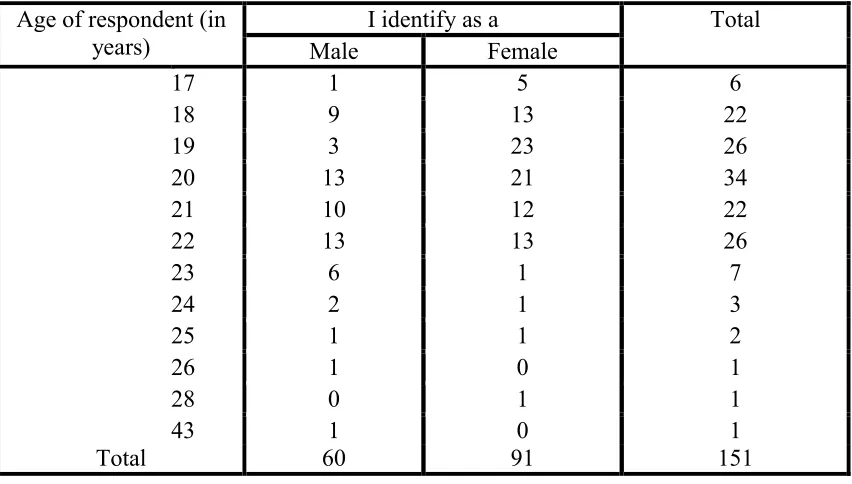
Table 1: Age and Sex of Participants ...149
Table 2: Year of Study of Participants ...149
Table 3: Six Component EFA Matrix ...150
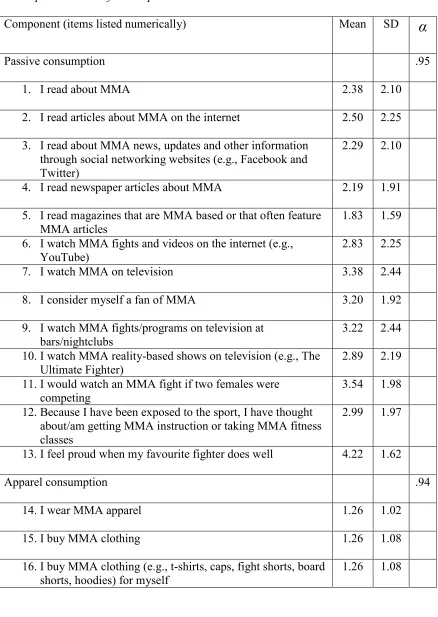
Table 4: Descriptive Statistics for Components and Items ...154
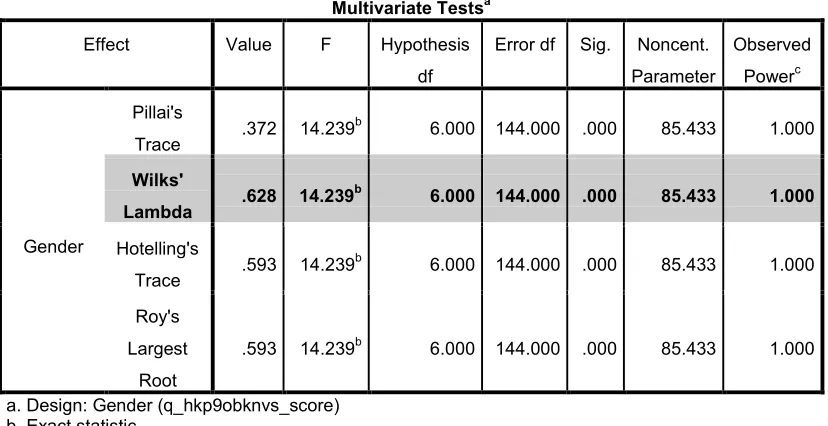
Table 5: MANOVA for MMA Consumption Habits Based on Gender ...157
Table 6: Follow-up ANOVA for MMA Consumption Based on Gender ...157
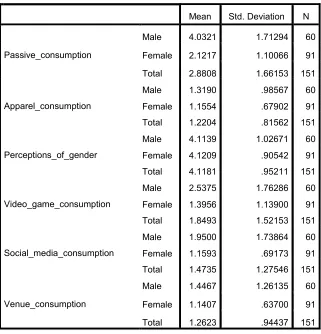
Table 7: Descriptive Statistics for the MANOVA ...158
Table 8: IAC for No MMA Fandom ...159
Table 9: IAC for Vested MMA Fans ...160
Table 10: IAC for All-Male Social MMA Fans...162
Table 11: IAC for All-Female Social MMA Fans ...164
Table 12: IAC for Split-Sex Social MMA Fans ...165
LIST OF FIGURES
CHAPTER I
INTRODUCTION
Background
The sport of mixed martial arts (MMA) from the viewpoint of some researchers,
has been identified as one of the rapidly growing participatory and spectator activities in
Canada and around the world (Kim, Andrew, & Greenwell, 2009; Kim, Greenwell,
Andrew, Lee & Mahony, 2008). With a rich and storied history whose origins date back
to Ancient Greek society (Buse, 2006; Rainey, 2009; Young, 2004), MMA has emerged
as an alternative to traditional sports such as baseball, basketball and hockey (Kim et al.,
2009). As a result, more MMA instructional classes are being offered to individuals –
some as young as three years of age – who may want to learn the technical skills and
strategy associated with the sport (Shimo, 2008). Moreover, with the rise to prominence
of MMA in contemporary North American society, the sport has paralleled the
developmental trajectory of other sports and has experienced what Giulianotti (2002)
refers to as “hyper commodification.” In addition to monthly pay-per-view (PPV)
programs, fans of MMA are exposed to the sport through attending live fights, reality
television shows, fan expositions, newspaper articles, merchandise sales, video game
sales and the aforementioned instructional classes offered by fitness centres and fighting
dojos. With female models and social media adding value to the overall entertainment
package for consumers, MMA has emerged as a popular sport that is being consumed by
Purpose of the Study
The purpose of this study was to examine differences and similarities in the
consumption behaviours of men and women in order contribute to a better understanding
of gender as a factor in the rapid growth and popularity of MMA. To investigate this
purpose, a survey was administered to research participants to reveal consumption habits
and behaviours. An analysis of the survey was followed by focus group sessions that
explored the role gender plays in mixed martial arts consumption and the meanings
behind these consumption behaviours. With this purpose, the intent of the study was to:
(a) elaborate on the ways in which sport consumption occurs in MMA; and (b) compare
male and female MMA consumption.
Significance of the Study
This study was designed to build upon previous research on consumer behaviour
in MMA. Over the past decade, researchers have begun to uncover various aspects of the
sport, including spectator motives. Andrew, Kim, O’Neal, Greenwell and James (2009),
in particular, have examined the issue of MMA consumption by investigating spectator
motives. However, Andrew et al. (2009) offer a limited definition of consumption and
focus on spectator motivation. The intent of this thesis was to extend sport consumption
in MMA beyond spectatorship to newer forms of media such as social media and video
games, while also highlighting the similarities and differences between male and female
consumption. The study results will serve as a useful resource to sport marketers looking
to understand gendered behaviour in combative sport. Moreover, this research looks to
Operational Definitions of Key Terms
To ensure consistency and clarity throughout this research, it is necessary to
provide operational definitions for key terms.
The terms “consumers,” “spectators,” and “fans” are used interchangeably
depending on the context in which they are presented or used in the literature, but serve
to represent users and buyers of sporting goods and services. While a “fan” can maintain
his or her status without being a spectator or consumer of goods and services, for the
purposes of this research, an individual’s fandom is associated with sport consumption.
This research also focused on differences of “gender,” not differences based on
“sex.” As West and Zimmerman (1987) suggest, gender is performed and expressed
through activity and ritual, while sex represents a biological designation. Some parts of
this paper refer to sex, but do so insofar as to make the eventual linkage to one’s
gendered behaviour.
This research was also concerned with present-day or current consumption habits.
In some circumstances, the term “society” has been used contextually to refer to a
specific place or time (i.e., Ancient Greek society). In other cases, the terms
“contemporary setting,” “society,” “contemporary society,” “contemporary North
American society,” “North American society,” “mainstream society,” “North America,”
and “modern society” refer to the present-day circumstance in Canada and the United
States.
Given that this research was predicated on the sport of mixed martial arts, it is
imperative to define what mixed martial arts actually are. In its present-day form, MMA
combines boxing, wrestling, judo, Muay Thai and other martial arts disciplines. It is
CHAPTER II
REVIEW OF LITERATURE
Overview
In the academic literature that is relevant to this study, there are three primary
aspects that contribute to an understanding of the issue and the research questions: the
sport of MMA, sport consumption and gender. In the first part of the literature review, an
overview of MMA will be conducted. This is important to note as it aids in the
understanding of the ways in which MMA is being packaged and marketed for
consumption. This leads into the second part of the literature review: sport consumption.
There are a variety of means by which individuals can consume sport in contemporary
North American society. Thus, it is imperative to define sport consumption for the
purposes of this study and explore how it has developed over time. Lastly, literature
describing masculinity and femininity will be identified to provide a better understanding
of how both genders behave in a contemporary setting within a sport consumer context.
The extensive base of literature of all three sections provided the context for this study
and was used to draw links with the results generated through the data collection phase.
Mixed Martial Arts
Origins
The sport of MMA, despite its newness in mainstream society, has a storied
history that can be traced back to ancient Greek civilization. Known to the ancient Greeks
as pankration (Greek for “every power”), the sport emerged out of the hand-to-hand
combat techniques that soldiers would employ in the battlefield (Buse, 2006). Initially
two fighting disciplines that were familiar to the Greeks. Once pankration was introduced
to the populous, it was not well received; fights were seen as dangerous and undisciplined
(Gardiner, 1906). In fact, the objective of pankration was to maim one’s opponent to the
point where he would give up and withdraw. Combatants were prohibited from biting and
eye-gouging, but used a variety of holds, grapples and throws (Young, 2004) to force
their opponents into submission. Even with the poor reception by the Greek populous,
pankration gained in popularity and became an event at the 33rd Greek Olympiad in 648
B.C. (Buse, 2006; Rainey, 2009). While the origins of MMA do lie in ancient Greece, the
emergence of the sport in the Western hemisphere, specifically the Americas, provide the
contextual basis for MMA as a popular sport in the 21st century.
In the early part of the 20th century, the pankration style of combat fighting
emerged in the South American country of Brazil. Known as vale tudo (Portuguese for
“anything goes”), combatants learned strategies and techniques from Japanese martial
artists who migrated east during the World War era (Downey, 2007; Maeyama, 1979)
and fused them with their domestic fighting capabilities. Vale tudo was more than just the
ability to blend fighting styles together; rather, it was about demonstrating which fight
style was more superior. One of those superior styles was Brazilian Ju-Jitsu (BJJ),
developed by the Gracie brothers, Helio and Carlos (Peligro, 2003). Together, the
brothers focused on countering opponent’s strikes and grappling with combatants on the
ground (Downey, 2007). Fighters and observers of vale tudo were enamoured with this
new fight style for its chaotic and unpredictable style to the point where fighters flocked
grew, the Gracie men believed they had a superior fighting style that could be exported to
North America and the rest of the world.
By the 1980s, BJJ made its way to North America via California. The son of
Helio, Rorion, developed his own martial arts fighting academy in the state of California,
attempting to popularize his family’s brand of combat. The popularity of BJJ continued to
grow as Rorion began advising Hollywood actors in their fight scenes and was featured in
an interview with Playboy magazine (Van Bottenburg & Heilbron, 2006). Stemming
from that publicity, American investors Art Davie and Robert Meyrowitz worked with
Rorion to develop a fighting tournament to display BJJ and pit it against other popular
martial arts and combat disciplines. The tournament, named “the Ultimate Fighting
Championship” (UFC), was held in Denver, Colorado in the late autumn of 1993 (Van
Bottenburg & Heilbron, 2006). Royce Gracie, Rorion’s brother and master of the BJJ
style, dominated wrestlers, boxers and other martial artists to win the tournament,
generating more interest in the fighting discipline (Maher, 2010). For Meyrowitz and
Davie, a tournament which pitted men from various disciplines could draw North
American consumers away from wrestling and boxing and was perceived to be a
marketable asset. By the end of 1993, BJJ, although still on the periphery for the average
sport consumer, was present in the United States.
The UFC developed very slowly in the United States, boasting a small cult-like
following that offered consumers a unique combat sport experience. Unlike rival
organizations that were established in Japan, the UFC model was premised on offering a
“no-holds-barred” experience with minimal rules, regulations and a fighting space that
octagon, comprised of an eight sided chain link fence, which differed from the
conventional squared ring and ropes design. The idea was to entice consumers by
providing an experience that had high entertainment value (O’Hara, 2008) and that
simulated a real fight (with the chain link fence representative of enclosures in urban
areas). With a unique marketing model, the dilemma for this start-up was the response it
received from U.S. state legislators. Many athletic commissions in the U.S. were
reluctant to sanction UFC events in the absence of universal rules for fights of this nature
because they differed so drastically from the boxing events that had previously been
sanctioned (Reel, 2001). The UFC would stage competitions in any American jurisdiction
that would host them. Despite the resistance from state athletic commissions, the UFC
continued to gain in popularity and revenue, mostly generated from PPV, following a
business model similar to that of other North American combat sport promotions (e.g.,
boxing and professional wrestling) (Reynolds & Baer, 2003).
By 1996, key political figures such as the Republican senator from Arizona, John
McCain, voiced their opposition to the UFC. For McCain and many others, these fights
represented a “human cockfight” (Bledsoe, Hsu, Grabowski, Brill & Li, 2006; Cheever,
2009; Walton & Potvin, 2009) that celebrated violence and offered little safety for the
combatants. Extensive opposition for the sport led to 40 states banning the UFC from
hosting events within their jurisdictions (Garcia & Malcolm, 2010) and a ban from cable
television. Despite the gradual growth of the organization, the UFC failed to achieve
legitimacy amongst the general populous. Amidst the bad publicity and political outcry,
the UFC and the fighters who competed for the organization eventually received positive
universal code for mixed martial arts contests. The unified rules followed similar
guidelines to boxing events (State Athletic Control Board, 2002), but incorporated some
of the unique dynamics of MMA. Medical clearances, insurance provisions, weight
classifications and a host of additional criteria were required in order for a match to be
sanctioned by state officials. In 2001, the State of Nevada followed the precedent set by
New Jersey and began to sanction professional MMA events as well. Following the
sanctioning in both states, attendance numbers rose for the UFC. The organization’s 33rd
event in Las Vegas had a paid attendance of 7,000; a number that would double a year
later. Now that MMA had gained some legal recognition, the UFC asserted itself as the
premier MMA organization within North America. After a change in ownership resulted
in more capital for the organization, the UFC continued its expansion across North
America.
While the UFC has been the primary promotional firm for MMA, there have been
competing firms that have contributed to the sport’s development in Canada and the
United States. Other promotions such as Bellator and Strikeforce have more recently
joined the UFC in promoting the sport. While the contribution of these firms may not be
as great as that of the UFC, per se, they have had some influence on the sport’s
development.
Packaging MMA
In contemporary society, fans of MMA in North America have multiple ways by
which to consume the sport. While other promotional firms have tried to compete for fan
support, the UFC has developed partnerships and sponsorships with large multinational
Crow, 2011). By 2005, the UFC had developed new cable television programs with the
U.S.-based Spike TV network to supplement its monthly PPV content (Kim et al., 2009;
Walton & Potvin, 2009), which delivered more programming to consumers more often.
UFC Unleashed, UFC Fight Night and The Ultimate Fighter provided the opportunity for
fans to view the UFC brand on cable television with a behind-the-scenes look. The
Ultimate Fighter, in particular, has been able to captivate audiences and keep fans tuning
in week after week, which has been essential to building MMA fandom (Lim, Martin, &
Kwak, 2010).
The Ultimate Fighter is a reality-television based program that features fighters
competing for a chance to obtain a UFC contract. Veteran UFC fighters are tasked to
train and mentor a group of these fighters and viewers are able to see fighters’ training
regimens, their eating habits, and their personalities. From research conducted by Rose
and Wood (2005), reality-television based programs offer viewers a degree of
authenticity such that the value of entertainment is derived from comparing and
contrasting with their own lives. In line with this sentiment, The Ultimate Fighter
presents viewers with an opportunity to see the behaviour of fighters beyond the octagon
and/or fitness dojo and relate to fighter’s personas, like that of Forrest Griffin. Selected
for the premier season of The Ultimate Fighter, Griffin epitomized the qualities of hard
work and dedication. Dana White, the current President of the UFC, has noted that
Griffin’s fans idolize him because he represents the “American dream” and is relatable to
the average viewer (Iole, 2008). While it would be possible for fans and consumers to
provided a platform for viewers to follow fighters on a weekly basis (as opposed to a
monthly one) (Maher, 2010).
Though the sport has developed in North America primarily through television
programming and live events, it has been exported to the masses through a variety of
means. While promotional firms like the UFC continue to forge new partnerships with
U.S. network television stations (Ourand, 2011), the sale of MMA-apparel has proved to
be a unique marketing tool that has allowed fans to share their affinity for the sport
without having to watch or attend a fight.
Fans of popular North American sports publicly display their associations with
teams and athletes by purchasing apparel (End, Dietz-Uhler, Harrick & Jacquemotte,
2006). Fans of MMA have exhibited similar practices. However, unlike most other sports
where athletes don a team jersey or uniform, there is no similar apparel that identifies a
fan’s association with MMA, per se. As a result, athletes and (athletic) apparel brands
have free reign to develop products that enable MMA fans to demonstrate their affinity
for the sport or a particular fighter. This has led to the construction of tight, form-fitting
apparel, glorifying the muscular, masculine body. This glorification attempts to attract
fans of the sport that associate with the athletic prowess and power that MMA fighters
are believed to exude (Flaherty, 2010). Brands such as TapouT, Affliction and Warrior
International reinforce this glorification by using dark colours, tribal and religious
imagery (e.g., crucifixes, skulls, fleur-de-lis, and Viking helmets). Pardun and McKee
(1995) have noted that religious, tribal and sacred symbols have been increasingly
utilized in popular culture to establish meanings of strength, dominance and heroism. In
declaring support for the sport and/or brand; it underscores fans wanting to exude the
perceived physical dominance and power that MMA athletes personify.
In addition to the consumption of MMA apparel and increased spectatorship, the
UFC has utilized video games to extend fan involvement. Research has suggested that the
18-34 year old male demographic, which MMA promoters target, is more prone to video
game consumption than television consumption (Glass, 2007). Thus, the UFC and other
MMA promotional firms in North America have developed video games attempting to
attract this cohort by recreating the live experience. Glass’ (2007) study of boxing video
games (which are comparable in feel and gameplay to MMA video games) reveals that
video gaming provides consumers an opportunity to be a character/fighter and experience
the fighting atmosphere (complete with advertisements, sponsors and spectators). After
developing its first video game in 2009, the UFC has produced annual instalments of the
franchise, known as UFC Undisputed.
The organization has also taken to Twitter and other social media sites (e.g.,
Facebook) to grow its brand and keep consumers engaged. The UFC and one of its
subsidiary MMA promotions, Strikeforce, instituted a policy whereby contracted fighters
would receive financial incentives for creative “Tweeting” and having a large Twitter
following (Hendricks, 2011). With this established incentive, fans have felt inclined to
follow fighters to see creative “Tweets” and help their favourite fighters achieve the
financial bonuses set by Strikeforce (or the UFC as the case may be). It has also led to an
influx of fighters joining Twitter to achieve these financial bonuses and generate more
exposure, such as Cris “Cyborg” Santos, one of the world’s top female MMA fighters,
continues to grow in North America as promotional firms like the UFC have found new
and innovative ways to establish and maintain fan interaction with the sport and athletes
alike.
The continual growth of MMA in North America is partly attributable to
promotional firms like the UFC offering a variety of consumption opportunities for fans
and sport consumers. Whether in the form of television programming, video gaming or
utilizing social media, consumers have multiple avenues by which to access MMA
content. In the subsequent section, literature on sport consumption will be identified for
the purpose of understanding the benefits to traditional and non-traditional (e.g., social
media) forms of sport consumption.
Sport Consumption
While there are multiple modes of sport consumption, spectatorship has been
identified as a dominant form (Fink, Trail & Anderson, 2002; James & Ridinger, 2002;
Trail & James, 2001). Yet, spectatorship itself is a broad term that encompasses multiple
methods of consumption. Duncan and Brummett (1989) suggested that spectatorship can
be categorized into three forms: newspaper spectatorship, stadium spectatorship, and
television spectatorship. For the purposes of this research, stadium spectatorship was
modified to include multiple venues and spaces that host sporting events and thus will be
referred to as venue spectatorship. In each of these three contexts, the individual
experiences sport differently. Thus, information has been researched on each
circumstance. In essence, the individual can be connected to sport by different means, but
could experience the pleasure of spectatorship differently depending on the medium
identified using the three-pronged definition described above by Duncan and Brummett
(1989) while incorporating additional consumption methods such as social media
activity, video gaming and the purchasing and donning of sport apparel.
Newspaper Spectatorship
Newspaper spectatorship (and print media spectatorship more broadly) in sport
can be traced back to the eighteenth century. According to Boyle and Haynes (2009),
accounts of village cricket matches in England were first documented in the 1720s-1730s.
These accounts culminated in the 1790s with the establishment of a sporting magazine in
Great Britain (McChesney, 1989). With the establishment of the magazine, sports
coverage in print media expanded to meet the interests of horseracing and boxing
enthusiasts (Boyle & Haynes, 2009). Print media coverage of sport soon emerged in the
United States, leading to a boom in sports coverage in the nineteenth century. Horse race
schedules, results, and baseball box scores were included in print media, exposing more
Americans to sport (McChesney, 1989). The boom was not relegated simply to the
United States however, as Canadian print media began to cover more sport content.
Urban newspaper dailies began to shift their coverage towards a focus on culture and
community life that, by extension, included local sport coverage of lacrosse, American
football and baseball (Lorenz, 2003). From a business perspective, print media outlets
viewed sport coverage as an effective means of attracting more wage-earning men to
their publications and generating advertising revenue (Lorenz, 2003). The expansion of
print media coverage of sport in the eighteenth and nineteenth centuries gave credence to
feelings and emotional ties, and generate commonality with others in their community
(Lorenz, 2003).
In the early twentieth century, the consumption of sport content in print media
amassed to a point where sport was a part of the dominant discourse. By 1940, sport
coverage in national press publications was rampant and content was inclusive of sports
that were once perceived as ill-mannered. In particular, boxing and prizefighting were
able to shed their sleazy reputations in North America through increased print coverage
of champions and match results (Gorn, 1986; Lorenz, 2003; Sammons, 1988). As
McChesney (1989) noted however, most of this coverage could be attributed to bribes
and payoffs which involved the “close [and corrupt] interaction between sports promoters
and sportswriters” (p. 58). The symbiotic relationship between sports promoters and
sportswriters increased consumer access to boxing and prizefighting content and could
follow storylines and the progress of their favourite fighters in mass-circulated
publications. The growth of sports coverage in national print media outlets reduced the
fragmented number of sports print publications (Boyle & Haynes, 2009). With
mass-circulation newspapers covering sport, individuals and families could get all of the
information they wanted to obtain from one source. Mass circulation would also increase
the popularity and credibility of sports like boxing beyond urban centres to other more
remote or rural areas within North America.
In the modern setting, “print media remains an important source” (Boyle &
Haynes, 2009, p. 164) for sport consumers. In spite of technological advancement
comprehensive package of sports information that newsprint offers (Farhi, 2005). This
concept of print media offering extensive coverage of sport is identified by Rowe (1992).
Rowe (1992) suggested that print media coverage of sport consists of four
typologies: hard news, soft news, orthodox rhetoric, and reflexive analysis. Hard news
reflects information pertaining to scores and results, while soft news focuses on gossip,
rumours and speculation about individual athletes or sport administrators. Rowe (1992)
described orthodox rhetoric as columns and articles with authors celebrated for their
opinions and (often-abrasive) assessments of athlete and team behaviours (in sport and
non-sport contexts). Lastly, reflexive analysis refers to articles and information provided
regarding critical reflection of sport (e.g., injuries in contact sport). Each of these four
typologies serves to entice readers depending on their level of sports interest. Some
readers may be more inclined to read about match results or might be curious to read
about the rumours about their favourite athlete (or perhaps both). Indeed, Rowe’s (1992)
typologies indicate that print media coverage of sport is comprehensive, offering multiple
features that are designed to increase readership.
Newspaper spectatorship of sport continues to be a popular mode of sport
consumption. With newsprint media outlets boasting large human and financial resources
(Farhi, 2005), coverage of sports in print media has broadened. Moreover, as Rowe
(1992) indicated, print media offers content for different degrees of sport consumers (e.g.,
casual or heavily vested fans) which has kept newspaper spectatorship as a prominent
Venue Spectatorship
The second form of spectatorship is venue spectatorship, a term that is modified
from Duncan and Brummett’s (1989) notion of stadium spectatorship. This form of
spectatorship refers to consumers physically being present at a sporting event,
experiencing all the sights, sounds, and even tastes. This type of spectatorship and sport
consumption is not new by any means. Venue spectatorship is often linked back to
ancient Greece and the Olympic contests (Guttmann, 1981). The following suggests that
sport consumers are choosing venue spectatorship as their mode of sport consumption
because it provides them with a direct, face-to-face experience with the sport product.
Scholarship on sport event attendance has primarily focused on providing sport
marketers with vital information (Sloan, 1989; Trail, Fink & Anderson, 2003) in order “to
provide products and services that continually meet the needs and wants of sport
consumers” (Dwyer & Kim, 2011, p. 70). In order to provide sport managers with said
information, researchers like Sloan (1989) have examined (in-game) spectator motivation
from psychosocial viewpoints. Many scholars have extended Sloan’s work and devised
instrumentation designed to measure attendance motives (Trail, Anderson & Fink, 2000;
Trail et al., 2003; Trail & James, 2001; Wann, 1995). Through the multiple studies that
have explored this issue, several common motivations for venue spectating have been
established, which have aided sport marketers in the process of increasing attendance and
revenue for sport organizations.
Live spectating has been found to provide consumers with entertainment value
(Gantz & Wenner, 1991), escape from stress and additional social benefits (Melnick,
person, especially considering that these spectators know that the outcome has yet to be
decided (Vosgerau, Wertenbroch, & Carmon, 2006) and because viewing the game live
reaffirms their identities as fans (Snelgrove, Taks, Chalip & Green, 2008). The concept of
indeterminacy entices individuals to attend a sporting event in person so that the
individual can experience the results of said event in real time. In their review of the sport
consumption literature, Farrell, Fink and Fields (2011) indicated that fans also attend
sporting events for the “vicarious achievement” (p. 191). This vicariousness enables
spectators to live out their dreams and identify with the sport team or athlete and their
successes (Wenner & Gantz, 1998). This sentiment was also expressed by Funk, Mahony
and Ridinger (2002), who noted that a key driver for in-game spectatorship was enabling
consumers to see the athletes themselves. Research conducted by Dietz-Uhler, Harrick,
End and Jacquemotte (2000) revealed that a primary motive to attend a sporting event
was family based (i.e., they went because their family went or were participants in the
event). These motives to attend sports venues reveal the complexity of venue
spectatorship. Given the range in motives to attend a sports venue, it is prudent to identify
research on fandom and the degrees to which an individual connects with a sport, team or
athlete. In doing so, the notion of individuals choosing venue spectatorship as their
primary form of sport consumption becomes more evident.
In the literature on in-game spectatorship, scholars have made a distinction
between casual attendees and heavily devoted consumers of sporting events. Sloan (1989)
referred to the venue spectators as “avid fans” (p. 229), a notion that is supported by
Trail, Robinson, Dick and Gillentine (2003). Wann and Branscombe (1990) classified
sense, fair-weather attendees of sporting events support the team or athlete when
successful, but leave when the team or athlete starts losing or has a bad reputation.
Die-hard fans keep attending the sporting event irrespective of the success or reputation of the
team or athlete. Another way of categorizing individuals who attend sporting events is by
using the three level approach put forth by Sutton, McDonald, Milne and Cimperman
(1997).
The three levels of fandom conceived by Sutton et al. (1997) refer to social,
focused and vested fans. Social fans are those individuals who enjoy the socialization and
experience of attending, but care little about the outcome of the event. At the second
level, there are focused fans. Focused fans have more interest in the event and are more
knowledgeable than social fans. At the third level, there are the vested fans. Vested fans
have strong emotional connections to the team and/or athlete(s) participating and, as
Robinson and Trail (2005) noted, are very knowledgeable about the event and
participants. Vested fans willingly invest into the sport and attend the sporting events
despite the major financial and time commitments required.
In the research on venue spectatorship, there are similarities amongst the
classification of casual and dedicated attendees. Functionally, the distinction of a casual
and dedicated venue spectator reveals that individuals who consume sporting events by
attending in person are diverse in nature; motives for sport event attendance vary from
person to person. This is important to note as, although “attendance is becoming less
central to an organization’s profitability” (Pritchard & Funk, 2006, p. 316), many
individuals will continue to repeat their attendance at sporting events (Hill & Green,
Television Spectatorship
Television spectatorship, unlike venue spectatorship, allows consumers to view
the event without physically attending the game. As such, consumers can spectate from
multiple locations: their homes, a sports bar or even while working out at a fitness centre.
Despite the fact that television spectators could be viewing a taped game and already
know the potential outcome of the event (Vosgerau et al., 2006), television spectatorship,
unlike venue spectatorship, is generally not affected by weather and ticket costs (Dwyer,
2011), which makes it a more viable option for consumers looking to spectate sport.
In essence, individuals choose television as their mode of spectatorship because it
is a different experience than what they consume when attending the event in person or
because they do not have the means (e.g., financial, transportation, accommodation) to
attend the live event. Sports broadcasts on television are not only championed for their
“accessibility to fans” (Kang, Lee & Lee, 2010, p. 356), but also for the graphics,
commentary and expert analysis that is packaged with the program. Parker and Fink
(2008) stated that, “viewers watching the game on television are exposed to close-ups,
replays, and graphics chosen by the producers as well as the insights and viewpoints of
the sport commentators” (p. 117). The insights and viewpoints to which Parker and Fink
(2007) refer differ from what a spectator would experience in newsprint media or through
attending the venue. In her research on Yao Ming and basketball commentary, Lavelle
(2011) identified that commentary in televised sport was “spontaneous” (p. 52) and
synchronized with the actions occurring in the game. Moreover, sport broadcast
commentary can convey a message or story to the spectator over the course of a season,
with former elite athletes commenting on strategy or recognizable on-air personalities
talking about human-interest stories, embellishing the event and generating suspense for
the audience simultaneously (Comisky, Bryant & Zillman, 1977). This production
captivates audiences in a manner that the actual event potentially could not. In practice,
sports commentary adds to how sport is packaged for television spectators; given that
stadiums and arenas have a maximum capacity of spectators, television enables a
seemingly unlimited audience and offers a unique alternative to going to the event
altogether.
Each of the three forms of spectatorship described by Duncan and Brummett
(1989) can be viewed as traditional or conventional in nature. Even with the advent of
television and the technological advancements that provide on-screen graphics to
spectators, television spectatorship is a practice that dates back to the mid-1900s when
British cricket matches first aired (Haynes, 2009). That is not to suggest that television
spectatorship or the other forms described by Duncan and Brummett (1989) are out-dated
per se, but rather that sport consumers have sought additional means to spectate that
complement one another. In the past decade, spectators have become “increasingly
comfortable watching video online” (Mellis, 2008, p. 259) and have flocked to the World
Wide Web to view sport content.
World Wide Web Spectatorship
World Wide Web (WWW) spectatorship of sport content has increased in the past
decade due in large part to accessibility and convenience for the consumer. The
development and availability of broadband Internet access (Prieger, 2003) and wireless
Where spectating via television would require the spectator to be in a setting with a
television and either cable or satellite accessibility, WWW spectating has created the
opportunity for sport consumers to spectate in locations that do not bear the requirements
of spectating via television. Moreover, programs viewed on the WWW are not subject to
television programming schedules either and spectators can consume live sport content or
taped content (with the latter on demand).
With the increased availability of sport content on the WWW, piracy and illegal
viewing of live sportscasts have taken place. Mellis’ (2008) research on illegal
spectatorship found that the “piracy of live sports telecasts is a growing problem” (p.
283). Large-scale sporting events that are offered to consumers via pay-per-view (PPV)
services are being accessed illegally on the WWW. While this practice detracts from the
revenue a sport organization can generate, it has led to an increase in spectatorship
through the WWW.
Spectatorship, as means of sport consumption, enables individuals to connect to
sporting events and sport related content. Whether through print media, attending the
event, television or the WWW, audiences are able to consume sport in more ways than
ever before. Although traditional spectatorship continues to be a prominent form of
consumption, there are additional manners by which individuals can connect with sport.
Social Media
Alongside the development of WWW spectatorship is the consumption of sport
through social media. Social media and social-networking websites have established
online communities where individuals share multimedia and interact with others from
organizations, athletes and journalists have begun to embrace social media in recent
years. Social media provides fans and sport consumers unique access behind the scenes
(Pegoraro, 2010). That is to say, sport consumers gain access to content outside of the
event or match (e.g., meetings, locker room discussion, and personal opinion). As the
subsequent discussion indicates, social media has indeed established a new form by
which to consume sport.
The social media juggernaut, Twitter, has become extremely popular in the sport
consumption discourse. Twitter’s website enables users to follow a message stream of
communications in addition to posting their own messages (i.e., “Tweets”) of 140
characters or less for others to follow (Sheffer & Schultz, 2010). The Twitter
phenomenon, originally thought to be a tool for friends and relatives to connect with each
other, has morphed into a tool for celebrities and athletes to express themselves. In fact,
athletes and key sports figures have attracted “devoted followings on Twitter” (Sheffer &
Schultz, 2010, p. 227). Part of the appeal of Twitter for athletes is the ability to “avoid the
mainstream media and present their message unfiltered” (Schultz & Sheffer, 2010, p.
475). Athletes traditionally connect to fans and sports consumers through media, but are
subjected to what and how the media chooses to report its information. With social
media, and Twitter in particular, athletes have direct communication with the public and
are able to express their feelings pertaining to sport or everyday life. Prominent athletes
such as Shaquille O’Neal, Serena Williams, and Paul Pierce are just a sample of the elite
athletes using Twitter, all of whom boast a following of over 1.5 million users (Pegoraro,
Sport organizations have even encouraged the increasing use of Twitter as a
means of generating interest from fans. The National Lacrosse League (NLL), for
example, has used Twitter to keep followers updated with roster moves and even
promotional campaigns (Hambrick, Simmons, Greenhalgh & Greenwell, 2010). From the
viewpoint of the consumer, Twitter users have received an “unprecedented look into the
lives of their favorite [sic] sport stars” (Pegoraro, 2010, p. 504). Twitter has also given
fans and sport observers an opportunity to see sports broadcasters and journalists express
their personal views in an unfiltered manner. Many sports journalists are using Twitter as
a vehicle “primarily for opinion and commentary” (Schultz & Sheffer, 2010, p. 480) on
actions and events related to the sporting realm.
Although Twitter is a new medium, it has dramatically altered how individuals
connect to sport (Phua, 2010); the social media website has significantly changed the
sport consumption paradigm. Moreover, while other social networking forms exist (e.g.,
Facebook, MySpace, and Google+), Twitter has ascended as a dominant form of social
media for athletes and administrators alike. In addition to social media, sport consumers
have also been able to connect with their favourite sports and athletes through
sport-themed video games.
Sport-Themed Video Games
Another prominent form of sport consumption in the contemporary North
American setting is through video games. The relationship between video games and
sport is complex, but incredibly lucrative. As Crawford and Gosling (2009) identify,
sport-themed video games are one of the bestselling genres in the marketplace. The high
One of the primary reasons why video games have become a popular form of
sport participation is that it is interactive and engages to the consumer. Similar to social
media consumption, gamers must perform (Eskelinen, 2001; Ivory, 2006) and remain
engaged. This interaction has even led some scholars (Dill & Dill, 1998) to suggest that
sport-themed video games are addictive. In several games, including Electronic Arts’
Madden National Football League franchise, users can control a team over multiple
seasons, making in-game as well as front-office decisions such as scouting, player
development, contract negotiations and player drafting (Crawford & Gosling, 2009;
Oates, 2009). Sports fans often argue with friends, family and coworkers regarding
management decisions of their favourite team. Sport-themed video games like the
Madden franchise offer an opportunity for fans to implement management decisions
themselves (Scott & Ruggill, 2004). In addition to modes that allow users to simulate
operating a team like a general manager, users can select one player, play with that one
player throughout multiple seasons, and experience how an athlete is developed in the
minor leagues and promoted to the major leagues. In essence, the user, through their
participation, understands the financial and managerial aspects that shape professional
sport, thus receive a complex, more encompassing sport experience (Scott & Ruggill,
2004).
The idea of authenticity and realism is another factor that lures individuals to
want to play sports video games. As Crawford and Gosling (2009) underscore,
sport-themed video games are constructed to mimic every minute detail, “creating realistic
looking models of sports stadiums, athletes, game rules and physics” (p. 58). With the
teams and individual athletes, there is a vicarious presence. It is difficult to fathom a
scenario where the average sports fan would be able to control and manage a professional
sport franchise. As such, the modes available in these sport-themed video games generate
the “what if?” narrative (Crawford & Gosling, 2009), allowing the user to feel as if they
were in the professional ranks and to create random scenarios that would be highly
unlikely in the real world. This sentiment is (particularly) evident in combative sport
games like MMA and boxing where users can choose matchups irrespective of attribute
ratings, weight class and even generation (e.g., Muhammad Ali boxing against Mike
Tyson or Tito Ortiz in a MMA contest against Jon Jones).
Taken a step further, the interaction required of contemporary sports games
allows users to customize their experiences. The ability to select branded clothes, shoes,
and equipment (Scott & Ruggill, 2004) encompasses the customization aspect of sports
video games and is frequent amongst combative sport games in particular. Games like
UFC Undisputed feature create-a-fighter game modes where users can create their own
virtual athletes and customize their appearances as if they were fighting themselves.
These points support the idea of realism and authenticity in sport-themed video games.
Video games have become an important component in the everyday lives of many
individuals (Crawford & Gosling, 2009), including sports fans. With games providing a
virtual world inclusive of player likenesses, stadiums, sponsors and brand-name
equipment, sport consumers can take control of their favourite players and experience the
thrills of elite competition. With billions of dollars in sales (Crawford & Gosling, 2009),
it is evident that sport-themed video games have become a dominant form of sport
Licensed Apparel
Aside from spectatorship, social media, and video gaming, the purchasing of
licensed apparel and merchandise by individuals has been a prominent form of sport
consumption. Licensed sports apparel is a multi-billion dollar industry in North America
(Kwon, Kim & Mondello, 2008) and “the competition for the sport consumer dollar has
increased tremendously in the last decade” (Trail et al., 2003, p. 8). Companies within the
sporting realm have found innovative ways to market and secure demand for their
products. These tactics demonstrate how merchandise is being sold to fans, but also raise
the issue of why fans are consuming licensed apparel product in the first place.
The consumption of licensed apparel and merchandise are often viewed as a
secondary, but necessary component of the sport industry (Fink et al., 2002). In the
contemporary North American setting where there is vast competition for the sport
consumer dollar, licensed products and well-managed branded apparel produce
significant revenues for sport organizations and businesses (Gladden & Milne, 2004). In
this sense, licensed apparel and branded merchandise can provide “on-site ancillary
revenues” (Howard & Crompton, 2004, p. 93) from fans who have chosen to spectate at
the stadium. While on-site revenues are important in their own right, the true importance
and value of licensed apparel lies off-site. Similar to video game and social media
consumption, consuming licensed apparel can occur outside of the stadium and the
consumption may have no direct link to a live sporting event. Thus, there may be no
game or event, but apparel is being purchased and /or worn by fans. Sport organizations
and teams have even taken the step of co-branding their products with popular
sports fans. An example of this would be the sports apparel company Reebok, which has
produced licensed apparel for the National Football League for the past ten years (Kwon
et al., 2008). The result is fans purchasing apparel because it is associated with their
favourite team or player and because it is manufactured by a prominent brand name (in
this case Reebok). For its revenue generation alone, licensed apparel has become a
crucial part of the sport industry.
Another intriguing aspect of licensed apparel, with respect to sport organizations
and consumption, is the idea of symbolism. In Sage’s (1996) research on licensed
merchandise, it was made evident that sport apparel features written and pictorial
imagery that attempts to cultivate meaning for consumers. Symbols and monikers of
patriotism, dedication, and toughness are utilized to invoke feelings or attributes (Kwon
& Armstrong, 2002) from the consumer with the hope of sport consumption (through
apparel or otherwise). Examples of these types of symbols are country flags and images
of rocks and dirt. In this sense, the product being bought and worn has multiple
meanings: one of the team, sport or athlete and the representation of patriotism,
toughness, strength and other athletic qualities (e.g., stamina and perseverance). Apparel
that boasts these multiple meanings and symbols provide incentive to sport consumers to
purchase and don these products.
Cyclical Outcomes of Sport Consumption
Within the sport consumption literature, several scholars have noted that there
exists a link between sport consumption (in the forms mentioned previously) and the
identity of the consumer (Madrigal, 1995; Laverie & Arnett, 2000; Trail, Anderson &
James (2007), the concept of sport consumer identity focused on the idea of having an
affinity for a team (also known as team identification). Appropriated from the social
identity theory in psychological research, team identification suggests that individuals
classify themselves as members of a particular group based on certain characteristics and
attributes (Kwon et al., 2007). In practice, this sentiment partly explains why individuals
become fans, especially the die-hard fans to which Wann and Branscombe (1990)
referred. As such, individuals who identify as “fans” of a particular team may purchase
and don licensed apparel to “fortify the sense of belongingness” (Kwon & Armstrong,
2002, p. 154) with that team. Moreover, this idea of identity as a motivator for sport
consumption can be applied to individual athletes. Individual athletes may endorse a
particular product or brand separate from their own team or sport organization. “As more
fans identify more strongly with an athlete, the more they intend to purchase the endorsed
products” (Carlson & Donavan, 2008, p. 154). This is not only true for well-known
athletes in team sports, but those athletes who compete in individual sports (i.e., boxing)
as well. This notion has unique implications when a team or sport endorses one product
and an individual athlete within that sport endorses a rival product. In either case, fan
identity with a team or player can have significant implications on their purchases of
licensed apparel and other products. A strong association with a team or player may
induce fans to wear licensed products in non-sport settings, communicating to others their
support for that team or player. Indeed, there seems to be evidence to suggest a link
between sport identities and sport consumption.
This discussion purposefully omits how different sports are consumed because,
relationships and the messages that the UFC and MMA perpetuate, it is imperative to
illustrate how men and women in contemporary North America consume the sport. A
discussion of this nature will identify the social norms for each gender and how certain
MMA products are marketed to particular gendered demographics.
Gender
Within the academic literature on sport lies significant information regarding
gender and the social connections of men and women that evolve through the influence of
sport. In the case of men, gender research has focused on hegemonic masculinity
(Connell, 1987; Donaldson, 1993; Hearn & Morgan, 1990) or the dominant form of
masculinity to which males are expected to aspire in contemporary society. The notion of
male hegemony is partly derived from initial research on femininity and understanding
the subordinate role women occupy within a male dominated North American society
(Schippers, 2007). This section of the literature review examines gender as a determinant
in the explanation and understanding of sport consumption based on the roles men and
women assume in contemporary society.
Hegemonic Masculinity
In contemporary society, men have continually found spaces in which to reinforce
their “power and privilege over women” (Holthuysen, 2011, p. 21). The institution of
sport is one such space. Sport has been recognized by scholars to be an institution
developed by men for men (Messner, 1988; 1992; Messner & Sabo, 1994). As such, sport
allows males to form and reinforce a dominant image of masculinity and maleness
(Theberge, 2000) to which males in North American society generally subscribe.
power and control and are a part of this prevailing image for men commonly recognized
in society as the dominant form of masculinity (Connell, 1987; Connell &
Messerschmidt, 2005). The following provides a discussion on how the dominant image
of men in North American society is defined as hegemonic masculinity.
Hegemonic masculinity as a concept has developed over recent decades with
scholars noting its significance in society. Connell (1990a) defined hegemonic
masculinity as “the culturally idealized form of masculine character” (p. 83). Another
way of defining it would be the “ascendancy of a particular version or model of
masculinity that…defines ‘what it means to be a man’” (Hanke, 1990, p. 232). In either
case, an idealized form of masculinity becomes hegemonic when it becomes widely
accepted by both males and females and reinforces the dominant gender ideology of the
culture (Connell, 1990b). Once accepted as the dominant form, hegemonic masculinity is
continually reproduced through discourses that are seemingly “natural, inevitable, and
morally right” (Stibbe, 2004, p. 33). This notion raises the intriguing question of how an
idealized form of masculinity is constructed and how it works. One prominent way would
be the influence of social institutions like media (Silverblatt, 2004) and sport. While there
are several social institutions (e.g., religion, education, family, and government),
Silverblatt (2004) identified media as a powerful mechanism to reinforce the values of
hegemonic masculinity.
Media representations emphasize spaces in which an idealized form of
masculinity can become hegemonic. Wetherell and Edley (1999) indicated that social
institutions (like the media) can present “prescriptive social norms” (p. 336) that
culture examples such as the action-movie characters Captain America and James Bond
who have been featured in the media. While the characters themselves are fictitious in
nature, they personify men with large muscle definition, vast strength and who exert high
levels of aggression to gain power and control. In the case of James Bond, the character
also achieves power through the hypersexualization (and womanizing) of female
subordinates. In these instances, the media outlines the ideal representation of
masculinity that males should aspire to achieve (e.g., being muscular, aggressive, and
dominant).
Like the media, sport as a social institution serves as a means to reinforce
hegemony and projects it to male (and female) audiences as the dominant form of
masculinity. Hargreaves (1982) indicated that sport presents symbolic representations of
dominant values and ideas, including those that define fundamental gender expectations.
A prime example of this can be found in the research conducted by Trujillo (1991) on
former baseball star Nolan Ryan. At the height of his career, Ryan dominated opposing
batters with what the media characterized as a rugged, powerful, in control and
hard-working man (Trujillo, 1991). In essence, Ryan was shown to hold qualities which male
baseball fans (and males in general) should embrace. This principle further supports the
idea of social institutions reinforcing a form of masculinity which has been accepted as
the dominant ideal (e.g., muscular, rugged and aggressive) for men in society.
The strength of hegemonic masculinity lies in the notion of co-optation and
acceptance. As Wetherell and Edley (1999) indicated, men accept the notion of
hegemonic masculinity because it provides a level of gratification, knowing they are part
That being the case, Hearn (2004) noted that hegemonic masculinity thrives on
individuals working toward achieving the cultural ideal for their own benefit (which is a
form of co-optation). Men without power (those with no social or institutional influence)
accept the principles of hegemonic masculinity because they aspire to achieve the
dominant form of masculinity and the power associated with it. Moreover, men are
co-opted into believing that they can achieve that dominant form of masculinity without any
difficulty. Klein’s (1993) ethnographic study however, revealed that this is a never
ending quest. He observed male body builders and identified an ongoing struggle that
exists to achieve the ideal masculine form. Klein (1993) suggested that even if the ideal
form of masculinity is achieved, it is tremendously difficult to sustain over time. As such,
while males are in constant pursuit of power and achieving “the dominant position”
(Connell, 1995, p. 77) in society, it is difficult to attain the idealized form of masculinity
for men, individually, in all spheres of life.
A part of the literature on hegemonic masculinity identifies how the experiences
of men in a contemporary setting will differ, but ultimately connect to the prescribed
ideal. Hearn and Morgan (1990) observed that experiencing masculinity could happen in
a variety of manners (e.g., employment and sport consumption). However, masculinity
can also be experienced through associating with other men who aspire to achieve the
ideal masculine image (Connell, 1995). This premise addresses the idea that while each
individual male will have a different experience, the collective male experience is